Cracking a skill-specific interview, like one for Experience in Implementing Continuous Improvement Projects, requires understanding the nuances of the role. In this blog, we present the questions you’re most likely to encounter, along with insights into how to answer them effectively. Let’s ensure you’re ready to make a strong impression.
Questions Asked in Experience in Implementing Continuous Improvement Projects Interview
Q 1. Describe your experience implementing Lean methodologies.
Lean methodologies focus on eliminating waste and maximizing value for the customer. My experience encompasses several key Lean principles. In a previous role at a manufacturing plant, I implemented 5S (Sort, Set in Order, Shine, Standardize, Sustain) to drastically improve workplace organization. This resulted in a 20% reduction in search time for parts and a 15% decrease in workplace accidents. I’ve also led Kaizen events, focusing on rapid, incremental improvements to processes. For example, one Kaizen event focused on optimizing the assembly line for a specific product, reducing cycle time by 10% through improved workflow and ergonomic adjustments. Finally, I have extensive experience with value stream mapping, which I’ll detail later. These experiences have provided me with a solid foundation in identifying and eliminating waste in various operational settings.
Q 2. Explain the DMAIC methodology.
DMAIC, which stands for Define, Measure, Analyze, Improve, and Control, is a data-driven methodology used for process improvement. It’s a structured approach, very similar to the scientific method, that helps systematically tackle process problems.
- Define: Clearly define the problem, its scope, and the project goals. This includes setting specific, measurable, achievable, relevant, and time-bound (SMART) goals.
- Measure: Gather data to understand the current state of the process. This involves identifying key performance indicators (KPIs) and collecting data to establish a baseline.
- Analyze: Analyze the data collected to identify the root causes of the problem. Tools like fishbone diagrams, Pareto charts, and process capability analysis are used here.
- Improve: Develop and implement solutions to address the root causes identified in the analysis phase. This may involve process redesign, technology upgrades, or training programs.
- Control: Monitor the improved process to ensure that the gains are sustained over time. Control charts and other monitoring tools are used to track performance and prevent regression.
For instance, in a previous project, we used DMAIC to reduce customer order fulfillment time. We defined the goal, measured the current cycle time, analyzed bottlenecks using process mapping, improved the workflow by implementing a new software system, and then monitored the results to maintain the improved cycle time.
Q 3. How do you identify root causes of process inefficiencies?
Identifying root causes requires a structured approach. I typically employ a combination of techniques:
- 5 Whys: This simple yet powerful technique involves repeatedly asking “Why?” to drill down to the underlying cause of a problem. It’s particularly effective for uncovering the root causes of seemingly simple issues.
- Fishbone Diagrams (Ishikawa Diagrams): These diagrams help visually organize potential causes categorized by categories like people, methods, machines, materials, environment, and measurements. This helps brainstorm potential causes and identify relationships between them.
- Pareto Charts: These charts help prioritize issues by focusing on the “vital few” rather than the “trivial many.” They visually represent the frequency of different causes, allowing us to concentrate efforts on those with the greatest impact.
- Data Analysis: Statistical methods like regression analysis and correlation analysis can reveal significant relationships between variables and identify root causes that may not be immediately obvious.
For example, if customer complaints about late deliveries were increasing, I’d use the 5 Whys to dig deeper, potentially uncovering issues with inventory management, supplier delays, or inefficient transportation processes. I’d then use a fishbone diagram to systematically explore other potential contributing factors.
Q 4. What are your preferred tools for data analysis in continuous improvement projects?
My preferred tools for data analysis in continuous improvement projects are:
- Microsoft Excel: For basic statistical analysis, data visualization (charts and graphs), and data manipulation. Its familiarity and accessibility make it a valuable tool for many projects.
- Mintab: A powerful statistical software package that offers advanced statistical analysis capabilities, including regression analysis, ANOVA, and control chart creation. This is particularly useful for complex data sets and in-depth analysis.
- Tableau/Power BI: These business intelligence tools excel at data visualization and creating interactive dashboards, enabling easy communication of findings to stakeholders.
The choice of tool often depends on the complexity of the data and the technical skills of the team. For simpler projects, Excel might suffice, while more complex projects might benefit from the capabilities of Minitab or a business intelligence tool.
Q 5. Describe a time you failed to meet a continuous improvement goal. What did you learn?
In one project aimed at reducing production defects, we underestimated the complexity of integrating a new piece of automation equipment. We failed to adequately account for the time required for operator training and the inevitable teething problems with the new technology. As a result, we missed our initial defect reduction target by 15%.
The key lesson learned was the importance of thorough planning and risk assessment. We needed to allocate more time for training and troubleshooting, and better anticipate potential unforeseen challenges. In future projects, I now prioritize a more comprehensive risk assessment that includes contingency plans for potential roadblocks. We also adopted a more iterative approach to implementation, allowing us to address issues as they arose without disrupting the entire project timeline. This improved our flexibility and overall success rate.
Q 6. How do you measure the success of a continuous improvement initiative?
Measuring the success of a continuous improvement initiative depends heavily on the specific goals defined at the outset. Key metrics might include:
- Quantitative Metrics: These are measurable improvements like reduced cycle time, increased efficiency, lower defect rates, cost savings, improved customer satisfaction scores (CSAT), increased throughput, and reduced lead times.
- Qualitative Metrics: These might include improved employee morale, enhanced teamwork, greater process understanding, and increased employee engagement. These are often gathered through surveys, interviews, and observations.
It’s crucial to establish a baseline before implementing any changes, allowing for a clear comparison to assess the impact of the improvement initiative. Regular monitoring and reporting are key to track progress, identify any setbacks, and make adjustments as needed. For example, using control charts to track defect rates after implementing a process change allows us to monitor the effectiveness of the improvement and make adjustments if needed.
Q 7. Explain your experience with Value Stream Mapping.
Value Stream Mapping (VSM) is a powerful Lean tool used to visualize the flow of materials and information within a process. It helps identify waste (Muda) and bottlenecks, enabling focused improvement efforts. My experience includes creating VSMs for various processes, ranging from manufacturing to administrative workflows.
In one instance, I created a VSM for an order fulfillment process. This revealed significant delays caused by inefficient information flow between departments. By implementing improvements such as improved communication systems and streamlined data entry processes, we were able to reduce order fulfillment time by 25%. The visual nature of the VSM was instrumental in gaining buy-in from different stakeholders, as it clearly illustrated the process flow and the areas for improvement. This process clearly demonstrated the power of VSM in identifying waste and driving significant improvements across organizational silos.
Q 8. How do you handle resistance to change during continuous improvement projects?
Resistance to change is a common hurdle in continuous improvement projects. It stems from fear of the unknown, loss of control, or perceived extra workload. My approach is multifaceted and focuses on proactive communication and engagement.
- Early and Frequent Communication: I begin by clearly articulating the ‘why’ behind the change, emphasizing the benefits for the team and the organization. I use clear, concise language avoiding jargon, and tailor my message to the audience’s understanding. I encourage open dialogue and actively solicit feedback throughout the process.
- Involve Stakeholders Early: Getting buy-in from the start is critical. This involves actively involving key stakeholders in the planning and implementation phases. Their input not only helps address potential concerns but also fosters a sense of ownership and commitment.
- Address Concerns Directly: I create a safe space for people to voice their concerns without fear of judgment. I acknowledge their feelings, address their anxieties, and collaboratively explore solutions. For example, if someone worries about increased workload, I might explore ways to streamline tasks or provide additional training.
- Celebrate Small Wins: Recognizing and rewarding successes along the way reinforces positive behavior and keeps morale high. Celebrating milestones boosts team confidence and demonstrates the tangible benefits of the changes.
- Provide Training and Support: Effective training is crucial. People are more likely to embrace change when they feel confident and equipped to handle it. Ongoing support and mentorship are equally important in navigating the transition.
For instance, in a previous project to improve order fulfillment time, I encountered resistance from warehouse staff accustomed to their old methods. By engaging them in a Kaizen event, providing clear explanations of the new process, and highlighting how it would reduce their workload in the long run, we successfully overcame the initial resistance and saw significant improvement in efficiency.
Q 9. What is your experience with Kaizen events?
Kaizen events, or rapid improvement workshops, are a cornerstone of my continuous improvement approach. I have extensive experience facilitating these focused events, typically lasting several days, aimed at tackling specific process problems.
- Team Selection: I select a cross-functional team including individuals directly involved in the process. Diversity of perspectives is key.
- Process Mapping: We start by visually mapping the current state of the process, identifying bottlenecks and pain points.
- Brainstorming and Idea Generation: Using brainstorming techniques, the team generates a wide array of improvement ideas.
- Prioritization and Implementation: We prioritize ideas based on potential impact and feasibility. High-impact, quick-win projects are tackled first.
- Measurement and Evaluation: The team monitors and evaluates the implemented changes, measuring the impact on key metrics.
In one project involving a manufacturing process, a Kaizen event identified a significant bottleneck in the inspection phase. Through brainstorming and collaborative problem-solving, we implemented a new inspection technique that reduced inspection time by 25%, leading to a notable increase in overall output and a reduction in production costs.
Q 10. Describe your experience with 5S methodology.
The 5S methodology (Sort, Set in Order, Shine, Standardize, Sustain) provides a structured framework for workplace organization and efficiency. I’ve utilized 5S extensively to create cleaner, safer, and more productive work environments.
- Sort: This involves removing unnecessary items from the workspace. We identify and discard anything not needed for the current process.
- Set in Order: Items needed are organized logically for easy access and use. This often includes clear labeling and standardized storage solutions.
- Shine: This phase focuses on cleaning the workspace, removing dirt and debris. It also involves inspecting for potential problems.
- Standardize: We establish consistent procedures and practices for maintaining the 5S improvements. This ensures long-term effectiveness.
- Sustain: This critical final stage involves embedding 5S principles into daily routines and ensuring ongoing maintenance.
In a recent project at a distribution center, implementing 5S resulted in a significant reduction in search time for products, leading to faster order fulfillment times and improved customer satisfaction. It also significantly improved safety by eliminating tripping hazards.
Q 11. How do you prioritize improvement projects?
Prioritizing improvement projects requires a structured approach. I typically use a combination of methods:
- Impact/Effort Matrix: This involves plotting projects based on their potential impact and required effort. High-impact, low-effort projects are prioritized first.
- Value Stream Mapping: This technique helps identify bottlenecks and areas of waste in a process, guiding prioritization towards projects with the highest potential for value creation.
- Financial Analysis: For larger projects, we conduct a financial analysis to assess the potential return on investment (ROI) and prioritize projects with the highest ROI.
- Stakeholder Input: Involving stakeholders in the prioritization process ensures that projects aligned with organizational goals are given precedence.
For example, when presented with multiple improvement opportunities, I might use the Impact/Effort matrix. A project with high potential impact (e.g., reducing customer complaints) and low effort (e.g., improving a simple form) would be prioritized over a high-impact, high-effort project (e.g., implementing a new software system) unless the long-term benefits clearly outweigh the immediate effort.
Q 12. What metrics do you typically track to measure process improvements?
The metrics tracked depend on the specific project and its goals, but some commonly used metrics include:
- Cycle Time: The time it takes to complete a process.
- Throughput: The amount of work completed per unit of time.
- Defect Rate: The percentage of defective outputs.
- Customer Satisfaction: Measured through surveys or feedback.
- Cost Reduction: The amount of money saved through process improvements.
- Lead Time: The time between initiating a process and its completion.
- Efficiency: The ratio of output to input.
For instance, in a project aimed at reducing order fulfillment time, we would closely monitor cycle time, throughput, and defect rate. We’d also collect customer feedback to assess the impact on customer satisfaction.
Q 13. Explain your experience with control charts and statistical process control (SPC).
Control charts and Statistical Process Control (SPC) are essential tools for monitoring process stability and identifying potential problems early on. My experience encompasses the use of various control charts such as X-bar and R charts, and p-charts.
- Data Collection: We collect data on key process variables over time.
- Control Chart Construction: The data is used to construct a control chart, which plots the data points against upper and lower control limits.
- Process Monitoring: The chart helps monitor the process for stability and identify any points that fall outside the control limits, signaling potential problems.
- Root Cause Analysis: When points fall outside control limits, we conduct a root cause analysis to identify the underlying cause of the variation.
- Corrective Actions: Based on the root cause analysis, appropriate corrective actions are implemented to bring the process back under control.
In a project to reduce variations in product weight, we used X-bar and R charts to monitor the process. The charts identified a pattern of variation linked to a specific machine. We addressed the machine issue, resulting in reduced weight variation and improved product quality.
Q 14. How do you communicate project progress and results to stakeholders?
Effective communication is crucial for the success of any continuous improvement project. My approach involves various methods to keep stakeholders informed and engaged:
- Regular Project Updates: I provide regular updates (e.g., weekly or bi-weekly) to stakeholders on the project’s progress, highlighting key milestones and challenges encountered.
- Visual Management: Using visual aids such as dashboards, charts, and graphs makes it easier to communicate complex information clearly and concisely.
- Team Meetings: Regular team meetings facilitate open communication and provide opportunities for discussion and feedback.
- Formal Reports: At the conclusion of a project, a formal report summarizes the project’s achievements, challenges, and lessons learned.
- Presentations: Presentations to senior management and other stakeholders highlight the impact of the improvement efforts and the return on investment.
For example, in a large-scale process improvement project, I used a project dashboard to track key metrics, providing real-time visibility to stakeholders and highlighting progress against targets. Regular presentations to senior management ensured they were aware of the progress and the overall impact on the business.
Q 15. Describe your experience with root cause analysis techniques (e.g., fishbone diagrams, 5 Whys).
Root cause analysis is crucial for identifying the underlying reasons behind problems, not just the symptoms. I’ve extensively used techniques like fishbone diagrams (Ishikawa diagrams) and the 5 Whys. The fishbone diagram helps visually organize potential causes categorized by categories like methods, materials, manpower, machinery, and environment. This brainstorming approach ensures a comprehensive exploration of possible contributing factors. For example, in a project involving high customer defect rates, a fishbone diagram helped us categorize causes into ‘inadequate training’ (Manpower), ‘faulty equipment’ (Machinery), and ‘poorly defined processes’ (Methods).
The 5 Whys method is a more iterative approach. We repeatedly ask ‘Why?’ to drill down to the root cause. Let’s say we have high employee turnover. Why? Low morale. Why? Poor management. Why? Lack of recognition. Why? Ineffective performance reviews. Why? Outdated performance review system. This final ‘Why’ points to the root cause needing attention: the system itself. I often combine both techniques; the fishbone helps initially brainstorm, while the 5 Whys helps to refine and verify the root cause identified. This dual approach ensures a thorough investigation and avoids jumping to premature conclusions.
Career Expert Tips:
- Ace those interviews! Prepare effectively by reviewing the Top 50 Most Common Interview Questions on ResumeGemini.
- Navigate your job search with confidence! Explore a wide range of Career Tips on ResumeGemini. Learn about common challenges and recommendations to overcome them.
- Craft the perfect resume! Master the Art of Resume Writing with ResumeGemini’s guide. Showcase your unique qualifications and achievements effectively.
- Don’t miss out on holiday savings! Build your dream resume with ResumeGemini’s ATS optimized templates.
Q 16. How do you ensure sustainability of continuous improvement initiatives after project completion?
Sustainability is paramount. Simply implementing improvements and then walking away is a recipe for regression. My approach involves several key steps: First, I actively involve stakeholders from the outset. This fosters ownership and buy-in. Second, I focus on building processes, not just quick fixes. We develop standardized operating procedures (SOPs) that document improved processes, making them replicable and maintainable. Third, I establish clear metrics and monitoring systems to track performance after the project ends. Regular reporting keeps everyone informed and accountable. Fourth, I embed the improvements into existing systems and reward structures. Recognition and incentives motivate continued adherence. Lastly, I build training programs to equip teams with the necessary knowledge and skills to sustain the improvements. This could involve workshops, on-the-job training, or mentorship programs. For instance, in a project streamlining a production line, we created visual management tools, trained all team members on the new procedures, and integrated the performance metrics into the monthly performance reviews.
Q 17. What is your experience with different continuous improvement frameworks (e.g., Lean, Six Sigma, Theory of Constraints)?
My experience spans several continuous improvement frameworks. Lean focuses on eliminating waste in all forms – muda – through value stream mapping, Kaizen events, and 5S methodologies. Six Sigma emphasizes data-driven decision-making to reduce variation and improve process capability, using methodologies like DMAIC (Define, Measure, Analyze, Improve, Control). Theory of Constraints focuses on identifying and resolving the bottlenecks that limit overall system performance. I’ve successfully utilized Lean principles to optimize workflows, Six Sigma’s DMAIC methodology to reduce defects, and TOC to improve throughput in various projects. In one project, we used Lean tools to map the customer order fulfillment process, identifying significant delays in shipping. By implementing Kanban and streamlining the order processing steps, we reduced lead times significantly. In another project, we employed Six Sigma’s DMAIC to reduce customer complaints regarding product quality. This involved defining the problem, measuring defect rates, analyzing root causes, implementing improvements, and establishing control charts to monitor future performance.
Q 18. Explain your experience with project management methodologies (e.g., Agile, Waterfall) in the context of continuous improvement.
Project management methodologies are vital for structured continuous improvement. Waterfall, with its sequential phases, works well for projects with clearly defined requirements and minimal expected changes. Agile, with its iterative and incremental approach, is better suited for projects where flexibility and adaptability are needed. In continuous improvement, I often blend approaches. For example, I might use a waterfall approach to define the overall improvement strategy and then utilize Agile sprints to implement individual improvement projects. This allows for flexibility in tackling unforeseen issues and incorporating feedback throughout the process. In a recent project to improve customer service responsiveness, we used an Agile approach with 2-week sprints to implement new CRM software features and process improvements. This allowed us to get quick feedback from users and make adjustments as needed, ensuring a faster and more effective rollout.
Q 19. How do you handle conflicting priorities among different improvement projects?
Conflicting priorities are inevitable. I address this through a prioritization framework that considers several factors. First, I quantify the potential impact of each project using metrics like ROI, customer satisfaction improvement, or risk reduction. Second, I evaluate the urgency of each project based on deadlines or potential negative consequences of delay. Third, I consider the resource requirements and constraints. This analysis is often documented in a matrix to visualize the trade-offs. Finally, I involve stakeholders in the decision-making process. A transparent prioritization process ensures fairness and helps gain buy-in. For projects with high interdependence, we create a dependency map to manage resource allocation and timing more effectively. In one case, I used a weighted scoring system to rank several competing projects, based on criteria such as impact, urgency, feasibility, and resource availability.
Q 20. Describe your experience with using data visualization techniques to communicate improvement results.
Data visualization is critical for communicating improvement results effectively. Instead of relying solely on numerical data, I use charts, graphs, and dashboards to present findings in a clear, concise, and engaging way. Different visualization types suit different data types. Bar charts are useful for comparing discrete categories, line charts for showing trends over time, and scatter plots for identifying correlations. I use tools like Tableau and Power BI to create interactive dashboards that allow stakeholders to explore the data themselves. In a recent project, we used a dashboard to track key metrics, including defect rates, customer satisfaction scores, and cycle times. This allowed everyone to monitor progress toward goals and identify areas needing further attention. We also used before-and-after visualizations to highlight the impact of implemented improvements.
Q 21. What is your experience with process simulation or modeling?
Process simulation and modeling help predict the impact of changes before implementation. I have experience using software like Arena and AnyLogic to create models of various processes. These models help identify bottlenecks, test different scenarios, and optimize process parameters. For example, in a logistics project, we used simulation to optimize warehouse layout and material handling procedures. The simulation showed that changes to the layout would significantly reduce order fulfillment time and improve overall efficiency. This prevented costly mistakes and allowed us to fine-tune the implementation before actual changes were made. Simulation allows for a ‘what-if’ analysis, enabling us to proactively address potential challenges and make informed decisions.
Q 22. How do you identify and measure the financial impact of process improvements?
Measuring the financial impact of process improvements requires a structured approach. We need to quantify both the costs of implementing the improvement and the benefits it generates. This often involves a before-and-after comparison, analyzing key performance indicators (KPIs).
- Identify Cost Savings: This could include reductions in material waste, labor costs, energy consumption, or defect rates. For example, if a process improvement reduces defect rate by 10% and each defect costs $50 to fix, the annual savings can be calculated based on the previous annual defect count.
- Quantify Increased Revenue: Improvements might lead to faster production, higher quality products, increased customer satisfaction (leading to higher sales), or reduced operational downtime. For example, if a process change reduces lead times by 20%, leading to faster delivery of orders and therefore an increase of 5% in sales, that increase needs to be calculated.
- Calculate Return on Investment (ROI): The ROI is a crucial metric to justify the improvement initiative. It’s calculated as (Net Profit from Improvement / Cost of Improvement) * 100%. This allows for a direct comparison of the financial returns against the investment made.
- Use Data Analysis Tools: Software like Excel, Minitab, or specialized business intelligence (BI) tools are essential for collecting, analyzing, and visualizing the financial data. Trend analysis and statistical modeling can help predict future financial impacts.
In summary, a detailed financial analysis showing both costs and benefits, expressed through concrete numbers and presented as an ROI, makes the impact of the process improvement clear and measurable.
Q 23. Describe a time you successfully implemented a change that significantly improved a process.
In a previous role at a manufacturing plant, we were experiencing significant delays in order fulfillment due to inefficient inventory management. Our warehouse lacked a robust system for tracking and locating parts. This led to frequent searches, wasted time, and frustrated employees.
To address this, I spearheaded the implementation of a new warehouse management system (WMS). This involved a phased approach:
- Needs Assessment: We conducted workshops with warehouse staff to understand their challenges and identify their needs. This helped ensure buy-in and gather valuable insights.
- System Selection and Implementation: We evaluated different WMS solutions, considering factors like cost, scalability, and integration with existing systems. Once selected, we meticulously planned the implementation, including data migration, training, and testing.
- Process Mapping and Optimization: We used value stream mapping to visualize the existing process and identify areas for improvement. This allowed us to design optimized workflows within the new WMS.
- Training and Change Management: We provided comprehensive training to all warehouse staff on the new system and processes. This was crucial for ensuring smooth adoption and reducing resistance to change.
The results were impressive. Order fulfillment times decreased by 30%, inventory accuracy improved by 15%, and employee satisfaction significantly increased. The project demonstrated the power of using data-driven decision-making and collaborative teamwork to achieve substantial process improvements.
Q 24. What software tools are you proficient in using for continuous improvement projects (e.g., Minitab, JMP)?
I’m proficient in several software tools commonly used for continuous improvement projects. My experience includes:
- Minitab: For statistical analysis, including capability analysis, design of experiments (DOE), and control charts. I’ve used Minitab extensively to analyze process data, identify root causes of defects, and measure the effectiveness of implemented changes.
- JMP: Similar to Minitab, JMP is a powerful statistical software package that I’ve utilized for data exploration, visualization, and statistical modeling. Its interactive capabilities are great for collaborative analysis.
- Microsoft Excel: A fundamental tool for data management, analysis, and visualization. I leverage Excel’s capabilities for creating dashboards, tracking KPIs, and building simple statistical models.
- Process Mapping Software: I’m experienced with various process mapping software such as Lucidchart or draw.io, to visualize workflows and identify bottlenecks.
Beyond these specific tools, I’m adaptable and comfortable learning new software as needed to support specific projects.
Q 25. How do you foster a culture of continuous improvement within a team or organization?
Fostering a culture of continuous improvement requires a multi-faceted approach. It’s not just about implementing tools and techniques, but fundamentally changing the way people think and work.
- Lead by Example: Leaders must actively participate in improvement initiatives, demonstrating their commitment and setting the tone for the organization.
- Empowerment and Ownership: Give teams the autonomy to identify problems, propose solutions, and implement changes. This builds ownership and engagement.
- Open Communication and Feedback: Encourage open communication, providing regular feedback and celebrating successes. This creates a psychologically safe environment for experimentation and learning.
- Training and Development: Invest in training employees in continuous improvement methodologies (e.g., Lean, Six Sigma) and problem-solving techniques.
- Recognition and Rewards: Recognize and reward individuals and teams for their contributions to improvement initiatives. This reinforces positive behaviors and motivates continued participation.
- Data-Driven Decision Making: Promote a culture of data-driven decision-making, using data to track progress, identify areas for improvement, and measure the impact of changes.
Think of it as building a virtuous cycle – successful improvements boost morale, leading to more engagement, leading to more improvements and so on.
Q 26. What are some common challenges encountered during continuous improvement projects, and how do you overcome them?
Continuous improvement projects often encounter challenges. Some common ones include:
- Resistance to Change: People may be resistant to new ways of working, fearing job security or simply preferring the status quo. This is overcome through effective communication, training, and active involvement in the change process.
- Lack of Resources: Projects may be hampered by insufficient funding, personnel, or time. Careful planning, prioritization, and securing necessary resources are vital.
- Data Quality Issues: Inaccurate or incomplete data can lead to flawed analysis and ineffective solutions. Robust data collection and validation processes are necessary.
- Lack of Management Support: Without strong leadership backing, projects can struggle to gain traction and overcome obstacles. Securing executive sponsorship is crucial.
- Scope Creep: The project scope may expand beyond its initial boundaries, leading to delays and cost overruns. Clear project definition and change management processes are essential.
Overcoming these challenges requires proactive planning, strong communication, effective change management, and the ability to adapt to unexpected issues. Flexibility and problem-solving skills are paramount.
Q 27. Describe your understanding of Poka-Yoke (error-proofing).
Poka-Yoke, also known as error-proofing, is a concept originating from Lean manufacturing. It involves designing processes and systems to prevent errors from occurring in the first place, rather than relying on inspection or correction afterward. It’s all about making it impossible or extremely difficult to make a mistake.
There are two main categories of Poka-Yoke:
- Control Methods: These methods prevent errors from happening. Examples include:
- Checklists: Ensuring all steps are completed.
- Jig and Fixtures: Guiding parts into their correct positions.
- Interlocks: Preventing a process from continuing until a previous step is correctly completed.
- Warning Methods: These methods alert operators to potential errors. Examples include:
- Auditory Signals: Sounds indicating an error.
- Visual Signals: Color-coding or indicators showing correct/incorrect status.
- Limit Switches: Stopping a machine if a parameter is outside the acceptable range.
Implementing Poka-Yoke often requires creative thinking and a thorough understanding of the process. The goal is to make the correct action the easiest and most natural for the operator.
Q 28. How do you balance the need for immediate improvements with long-term strategic goals?
Balancing immediate improvements with long-term strategic goals requires a strategic approach. We can’t just focus on short-term gains without considering the overall direction of the organization. The key is to prioritize projects and initiatives.
A helpful framework is to categorize improvement initiatives based on their impact and effort. This allows a strategic prioritization:
- Quick Wins: These are low-effort, high-impact projects that can be implemented quickly and provide early successes. These build momentum and demonstrate the value of continuous improvement.
- Strategic Initiatives: These are high-effort, high-impact projects aligned with long-term goals. They may require more time and resources but will ultimately deliver significant benefits.
- Low-Hanging Fruit: These are low-effort, low-impact projects. While not necessarily game-changers, they’re still valuable in enhancing efficiency.
- Long-Term Projects: These are high-effort, low-impact projects that are essential for long-term success. Their impact might not be immediately apparent but they are crucial for future growth.
Using a prioritized list, and visualizing it with a framework like a Value Stream Map, helps to align short-term gains with the bigger picture. This ensures that we’re continuously progressing toward the organization’s strategic goals while also delivering immediate value.
Key Topics to Learn for Experience in Implementing Continuous Improvement Projects Interview
- Understanding Continuous Improvement Methodologies: Familiarize yourself with Lean, Six Sigma, Kaizen, and other relevant methodologies. Understand their core principles and practical applications.
- Project Selection and Scoping: Learn how to identify suitable projects for continuous improvement, define clear objectives, and establish measurable Key Performance Indicators (KPIs).
- Data Analysis and Problem Solving: Master techniques for collecting, analyzing, and interpreting data to identify root causes of problems and inform improvement initiatives. Practice using tools like Pareto charts and root cause analysis diagrams.
- Process Mapping and Optimization: Develop skills in visually representing processes (e.g., using flowcharts) to identify bottlenecks and areas for improvement. Learn techniques for process redesign and optimization.
- Change Management and Implementation: Understand how to effectively implement changes, manage stakeholder expectations, and overcome resistance to change. Practice strategies for communication and collaboration.
- Measuring and Reporting Results: Learn how to track progress, measure the impact of improvements, and effectively communicate results to stakeholders. Develop proficiency in presenting data visually and persuasively.
- Sustaining Improvements: Explore strategies for embedding continuous improvement into the organizational culture and ensuring long-term success of implemented changes.
- Risk Management and Mitigation: Understand how to identify and assess potential risks associated with continuous improvement projects and develop mitigation strategies.
Next Steps
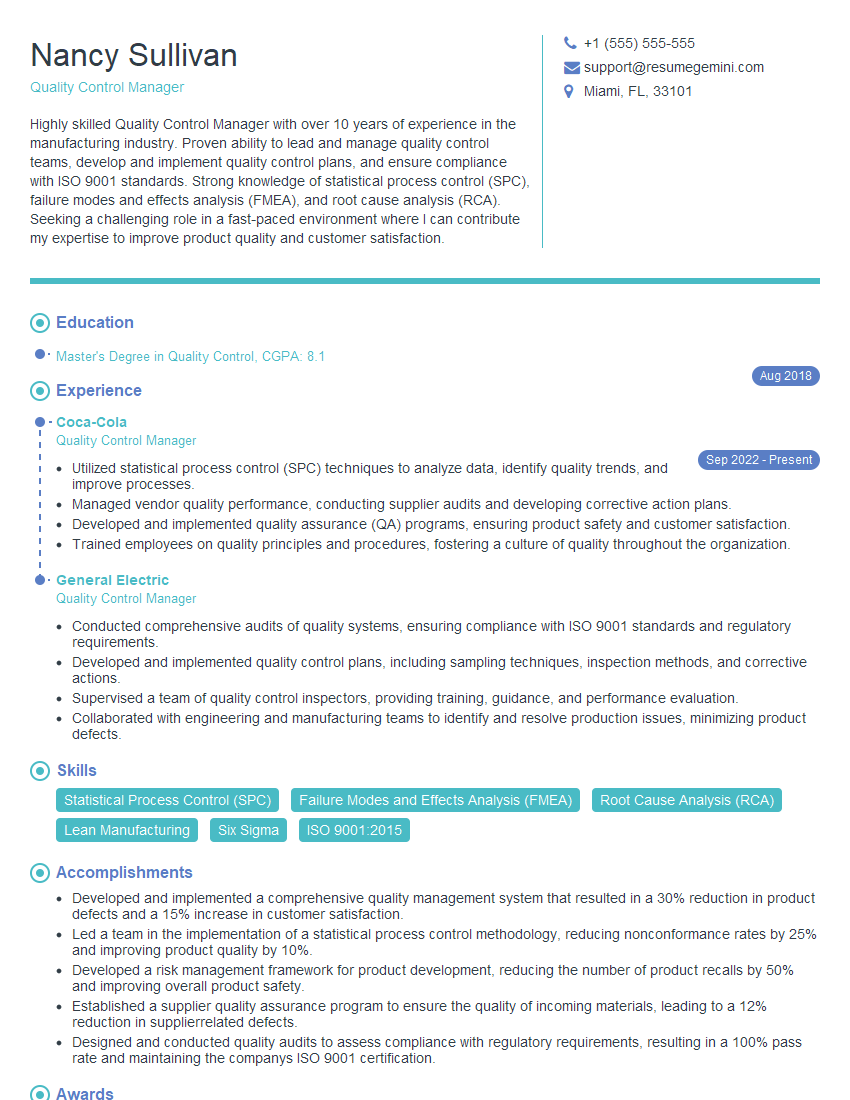
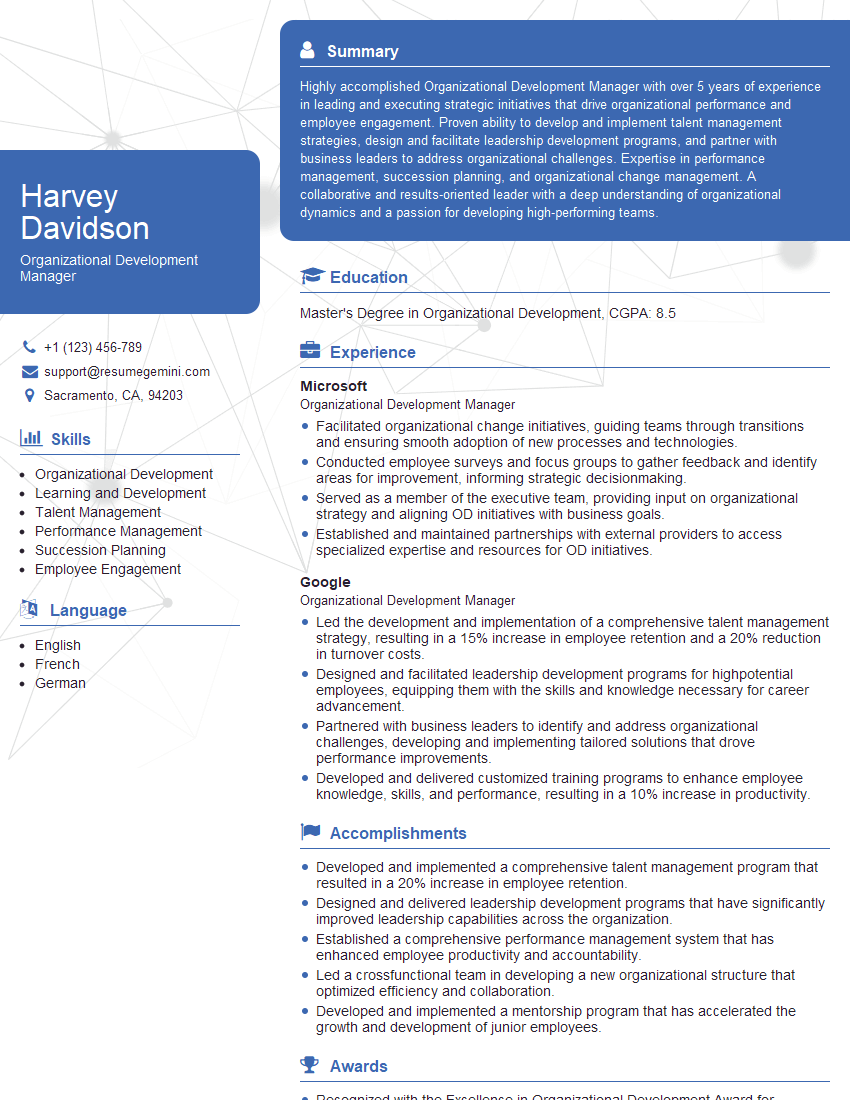
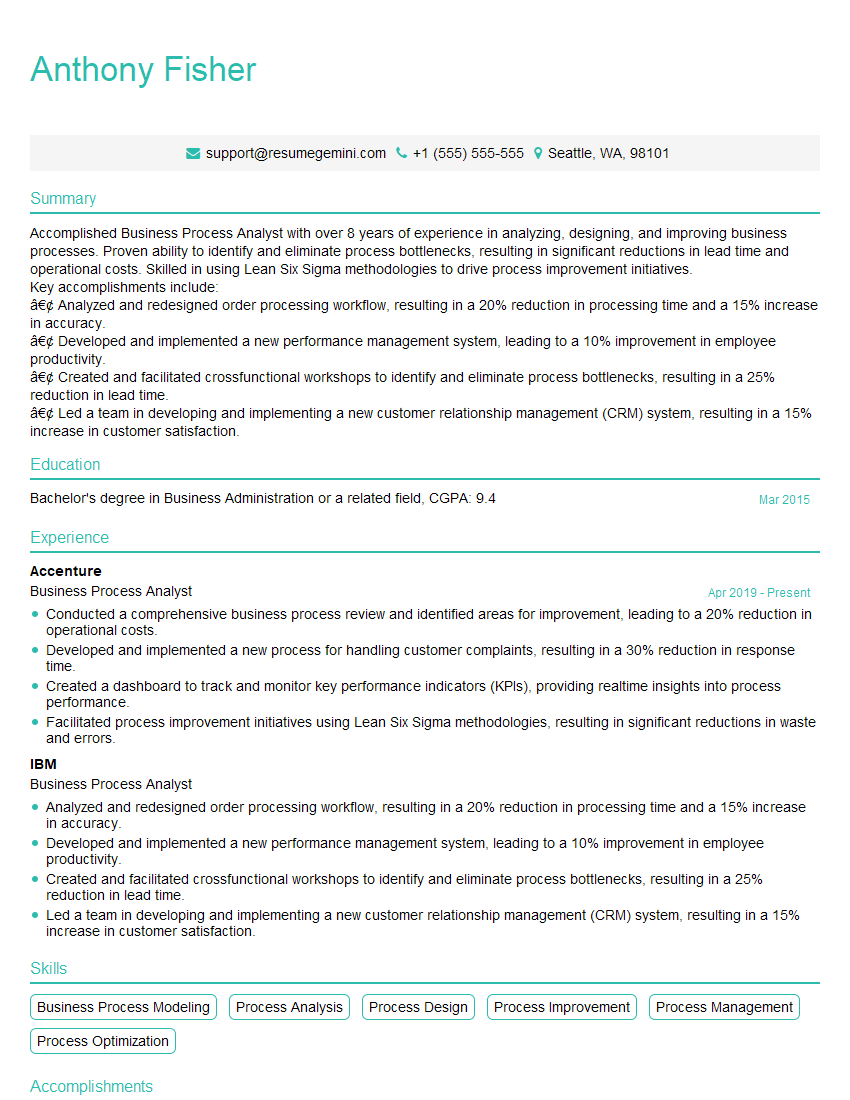
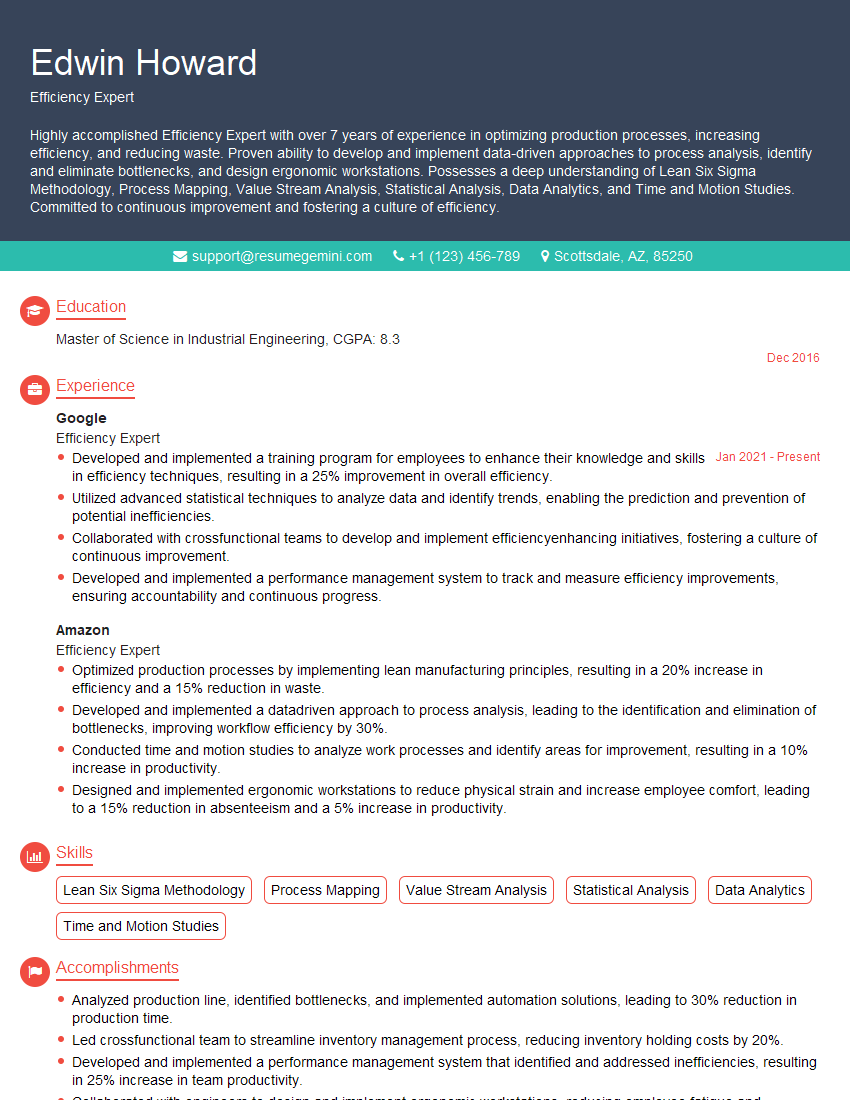
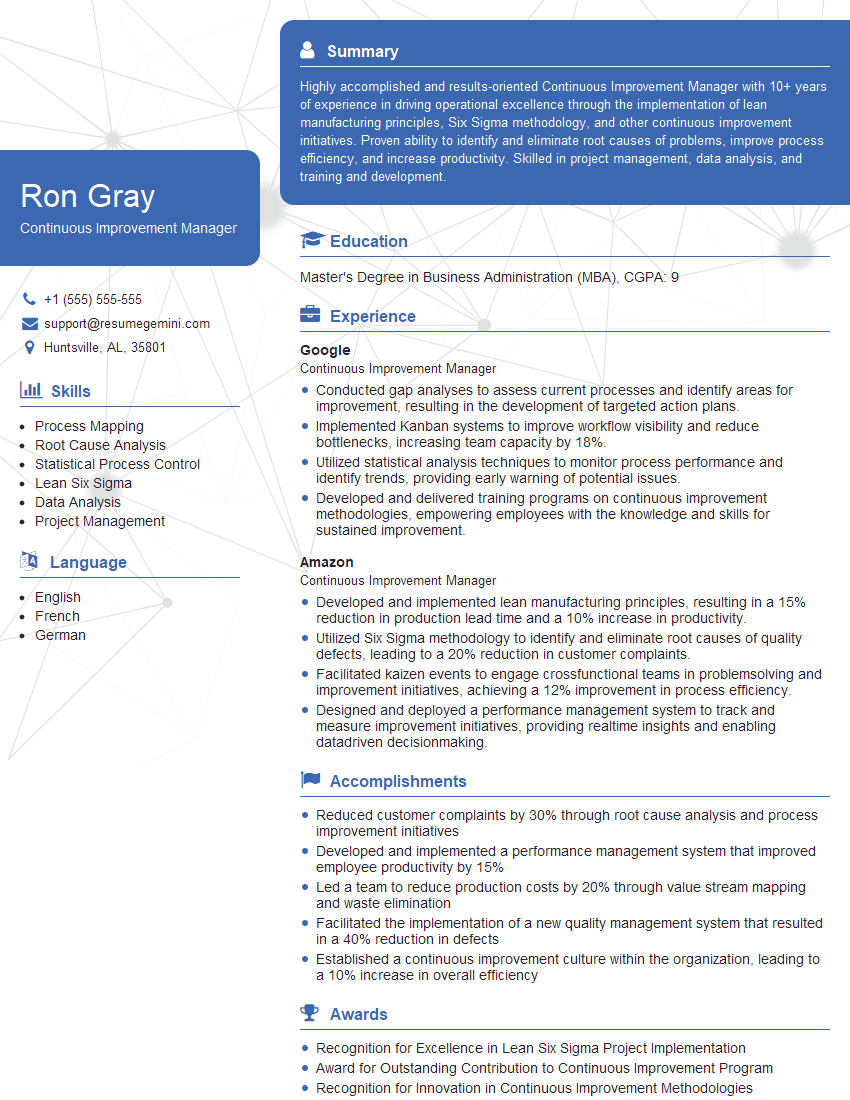
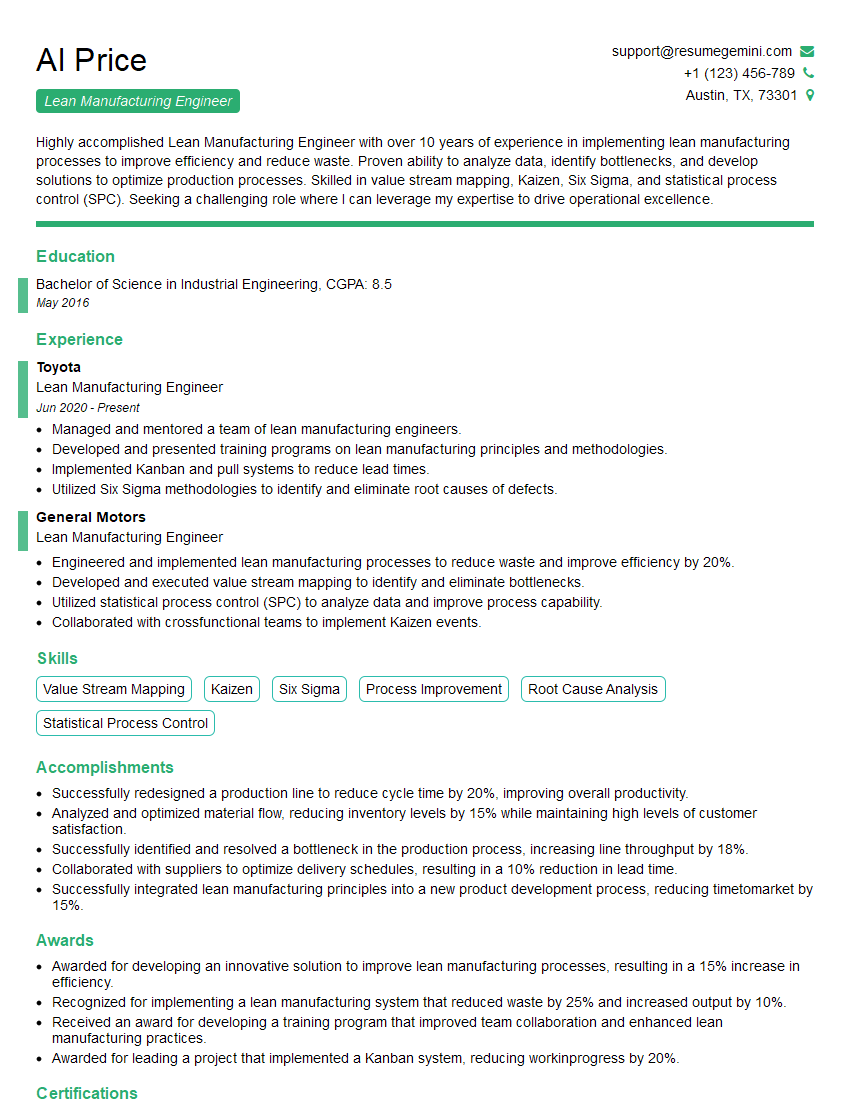
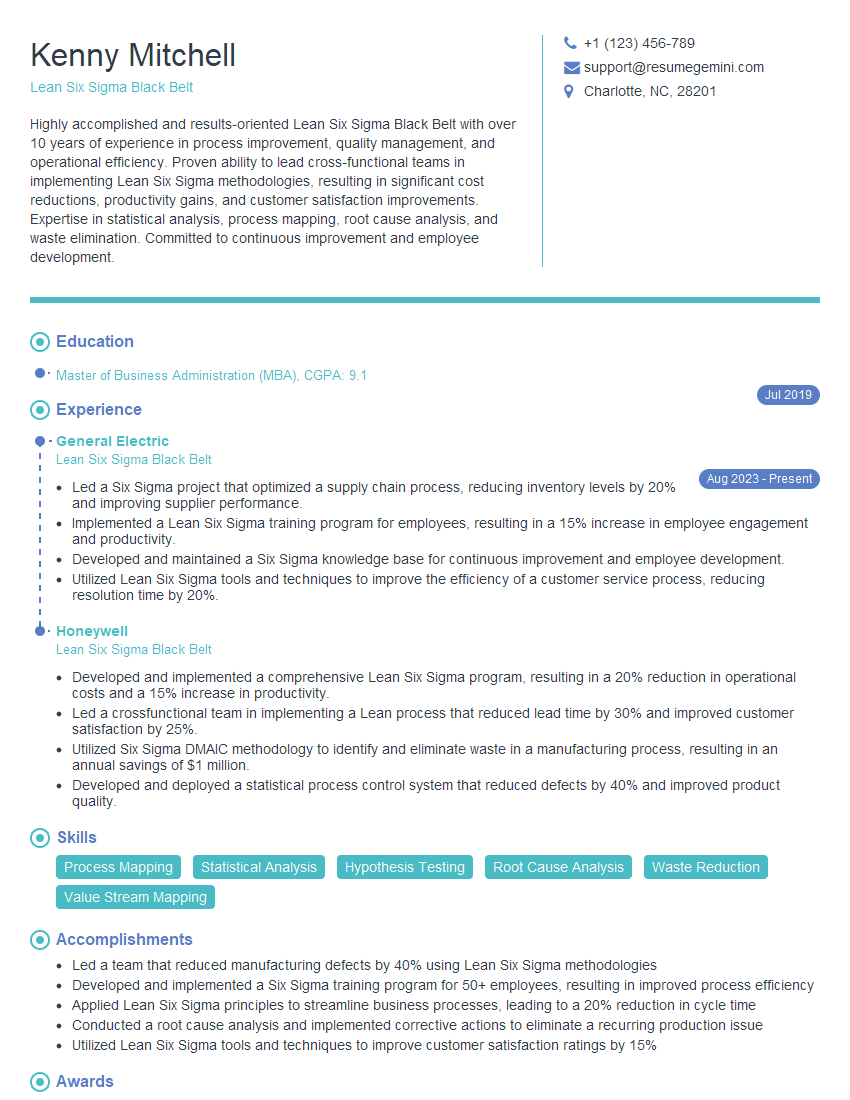
Mastering experience in implementing continuous improvement projects significantly enhances your career prospects, showcasing your problem-solving abilities and commitment to organizational efficiency. A strong resume is crucial for highlighting these skills to potential employers. Creating an ATS-friendly resume is essential for maximizing your chances of getting your application noticed. ResumeGemini is a trusted resource that can help you build a professional and impactful resume tailored to your specific experience. Examples of resumes tailored to showcasing experience in implementing continuous improvement projects are available – use them to inspire your own compelling narrative!
Explore more articles
Users Rating of Our Blogs
Share Your Experience
We value your feedback! Please rate our content and share your thoughts (optional).
What Readers Say About Our Blog
Amazing blog
hello,
Our consultant firm based in the USA and our client are interested in your products.
Could you provide your company brochure and respond from your official email id (if different from the current in use), so i can send you the client’s requirement.
Payment before production.
I await your answer.
Regards,
MrSmith
hello,
Our consultant firm based in the USA and our client are interested in your products.
Could you provide your company brochure and respond from your official email id (if different from the current in use), so i can send you the client’s requirement.
Payment before production.
I await your answer.
Regards,
MrSmith
These apartments are so amazing, posting them online would break the algorithm.
https://bit.ly/Lovely2BedsApartmentHudsonYards
Reach out at BENSON@LONDONFOSTER.COM and let’s get started!
Take a look at this stunning 2-bedroom apartment perfectly situated NYC’s coveted Hudson Yards!
https://bit.ly/Lovely2BedsApartmentHudsonYards
Live Rent Free!
https://bit.ly/LiveRentFREE
Interesting Article, I liked the depth of knowledge you’ve shared.
Helpful, thanks for sharing.
Hi, I represent a social media marketing agency and liked your blog
Hi, I represent an SEO company that specialises in getting you AI citations and higher rankings on Google. I’d like to offer you a 100% free SEO audit for your website. Would you be interested?