Are you ready to stand out in your next interview? Understanding and preparing for Experience in using remote sensing technologies for survey purposes interview questions is a game-changer. In this blog, we’ve compiled key questions and expert advice to help you showcase your skills with confidence and precision. Let’s get started on your journey to acing the interview.
Questions Asked in Experience in using remote sensing technologies for survey purposes Interview
Q 1. Explain the difference between passive and active remote sensing.
The core difference between passive and active remote sensing lies in how they acquire data. Passive sensors, like cameras and multispectral scanners, detect naturally occurring electromagnetic radiation (EMR) reflected or emitted from the Earth’s surface. Think of it like taking a photograph – you’re relying on existing light. Active sensors, on the other hand, emit their own EMR and then measure the energy reflected back. LiDAR (Light Detection and Ranging) is a prime example; it sends out laser pulses and records the time it takes for them to return, allowing for precise 3D measurements.
In simpler terms: Passive sensing is like taking a picture with your phone; you rely on the sun’s light. Active sensing is like using a flashlight to illuminate an object in the dark, then observing how the light reflects.
- Passive: Uses sunlight or other naturally occurring radiation sources. Examples: Aerial photography, multispectral imagery from Landsat or Sentinel satellites.
- Active: Emits its own radiation source and measures the return signal. Examples: LiDAR, RADAR (Radio Detection and Ranging).
Q 2. Describe the electromagnetic spectrum and its relevance to remote sensing.
The electromagnetic (EM) spectrum encompasses all forms of electromagnetic radiation, ranging from very long radio waves to very short gamma rays. Remote sensing utilizes a specific portion of this spectrum, primarily the visible, near-infrared (NIR), shortwave infrared (SWIR), and microwave regions. Each region provides unique information about the Earth’s surface.
Relevance to Remote Sensing: Different materials interact differently with various wavelengths of EMR. For example, healthy vegetation reflects strongly in the NIR, while water absorbs most visible and NIR wavelengths. This spectral signature allows us to distinguish between land cover types. The choice of sensor depends on the target features and the information needed. For example, thermal infrared sensors can reveal temperature variations, crucial for monitoring volcanic activity or detecting heat stress in crops.
Imagine a rainbow; each color represents a different wavelength of visible light. Remote sensing expands this concept beyond what we can see with the naked eye, incorporating invisible portions of the spectrum to gather comprehensive information.
Q 3. What are the advantages and disadvantages of using LiDAR for surveying?
LiDAR, using laser pulses, offers unparalleled accuracy for elevation data acquisition in surveying. However, it’s not without limitations.
- Advantages:
- High accuracy: Provides highly accurate 3D point cloud data, ideal for terrain modeling and digital elevation models (DEMs).
- Penetration capability: Can penetrate vegetation, offering data on the ground surface even in dense forests.
- Detailed data: Generates massive amounts of detailed data points, leading to highly precise surface representations.
- Disadvantages:
- Cost: LiDAR systems are expensive to purchase and operate.
- Weather dependency: Atmospheric conditions like fog or heavy rain can significantly impact data quality.
- Data processing: Processing LiDAR data requires specialized software and expertise, which can be time-consuming.
- Shadowing effects: Steep slopes and dense vegetation can lead to shadowing effects, creating gaps in data coverage.
Real-world example: I used LiDAR to generate a highly accurate DEM for a landslide-prone area. The high accuracy allowed for precise identification of unstable slopes and informed effective mitigation strategies. The penetration capability allowed us to map the ground surface under dense vegetation, crucial for assessing the landslide risk more accurately.
Q 4. How does atmospheric correction impact remote sensing data?
Atmospheric correction is a crucial step in remote sensing data processing. The Earth’s atmosphere interacts with EMR, causing scattering and absorption, which alters the signal received by the sensor. This distortion needs to be corrected to obtain accurate and reliable reflectance values representing the true surface features.
Impact: Uncorrected data will show inaccurate reflectance values, potentially leading to misinterpretations of land cover or other features. For instance, atmospheric scattering can make objects appear brighter or dimmer than they actually are. Absorption by atmospheric gases, such as water vapor, can also affect specific wavelengths, reducing the accuracy of spectral analysis.
Methods: Several techniques exist, including empirical methods (using ground measurements or reference sites) and radiative transfer models that simulate atmospheric effects. The choice of method depends on the type of data, sensor used, and desired accuracy.
Example: In a project assessing water quality, accurate atmospheric correction was vital to precisely measure water reflectance, enabling the identification of pollution levels.
Q 5. Explain the process of image rectification and georeferencing.
Image rectification and georeferencing are essential steps to transform raw remote sensing images into geographically accurate and usable data. They involve aligning the image to a known coordinate system.
Image Rectification: This process corrects geometric distortions in the image caused by factors like sensor orientation, Earth curvature, and atmospheric refraction. It involves transforming the image from its original perspective (often skewed) to a standard map projection.
Georeferencing: This assigns geographic coordinates (latitude and longitude) to each pixel in the rectified image, accurately placing it on the Earth’s surface. It often involves using ground control points (GCPs) – points with known geographic coordinates, identified in both the image and a reference map.
Process: Typically, GCPs are identified, their coordinates are measured in both the image and a reference dataset (like a map). This information is used to create a transformation model that mathematically corrects the image geometry and assigns geographic coordinates to each pixel. Software like ArcGIS or ENVI automates much of this process.
Q 6. What are different types of spatial resolutions and their implications?
Spatial resolution refers to the size of the smallest discernible detail in a remote sensing image. It determines the level of detail visible in the data. Different types include:
- High Spatial Resolution: Images show fine details, like individual trees or buildings. Examples include imagery from very high-resolution satellites or aerial photography.
- Medium Spatial Resolution: Provides moderate detail, suitable for identifying land cover types at a broader scale. Examples include Landsat or Sentinel imagery.
- Low Spatial Resolution: Shows coarser details, suitable for large-scale analysis. Examples include MODIS imagery, where individual objects may be too small to distinguish.
Implications: The choice of spatial resolution depends on the scale of the study and the desired level of detail. High-resolution images are essential when fine features need to be mapped, while lower resolution imagery is more efficient for broad-scale analysis. For example, studying individual tree health requires high resolution while monitoring deforestation over a large region is better suited to medium or low resolution.
Q 7. Describe your experience with various remote sensing software (e.g., ArcGIS, ENVI, QGIS).
Throughout my career, I’ve extensively used various remote sensing software packages. My experience includes:
- ArcGIS: I routinely utilize ArcGIS for geoprocessing, data management, and visualization. For example, I’ve used it to create maps of deforestation rates using Landsat imagery, combining image classification results with vector data to generate precise area estimates.
- ENVI: ENVI is my primary tool for image processing and analysis. I’ve utilized its spectral analysis capabilities for diverse applications, including water quality assessment using hyperspectral imagery and mineral mapping using airborne data.
- QGIS: QGIS has been invaluable for open-source GIS tasks, particularly for data visualization and simple geoprocessing operations. I’ve used it to create preliminary maps and explore datasets before moving to more specialized software like ENVI or ArcGIS.
My proficiency in these software packages allows me to efficiently process and analyze data from diverse sources, producing high-quality outputs that effectively address a range of remote sensing applications. My expertise extends beyond basic functions; I am skilled in applying advanced techniques like image fusion, object-based image analysis, and change detection within these environments.
Q 8. How do you handle cloud cover issues in satellite imagery?
Cloud cover is a major challenge in satellite imagery analysis because clouds obscure the Earth’s surface, preventing us from seeing the features we’re interested in. To handle this, I employ several strategies. First, I carefully select the acquisition date and time, consulting cloud cover probability maps provided by various satellite data providers. This helps to maximize the chances of obtaining cloud-free imagery. If complete cloud-free coverage is impossible, I utilize image compositing techniques. This involves combining multiple images from different dates to create a single composite image with minimal cloud cover. Sophisticated algorithms can seamlessly blend cloud-free areas while effectively removing or filling in cloudy regions using data interpolation. In some cases, I may use cloud masking techniques, which digitally identify and remove cloud pixels from the image, leaving behind only cloud-free areas for analysis. Finally, for particularly challenging situations, I might have to explore alternative datasets like those acquired with different sensors or at different times of the year.
For example, in a recent project mapping deforestation in the Amazon, cloud cover was a significant problem. I employed a combination of image compositing, using Landsat 8 imagery over several months, and cloud masking techniques to produce a nearly cloud-free composite image, allowing for accurate forest cover assessment.
Q 9. Explain the concept of spectral signature and its application.
The spectral signature refers to the unique way different materials reflect and absorb electromagnetic radiation across different wavelengths. Think of it like a fingerprint for each material. Each substance has its own unique combination of absorption and reflection across the electromagnetic spectrum. This unique pattern is what allows us to identify it using remote sensing technologies.
For example, healthy vegetation strongly absorbs red light and reflects near-infrared light, while bare soil reflects more evenly across the visible spectrum. This difference in spectral signatures is what enables us to differentiate between vegetation and soil in satellite imagery. We can use this information to map vegetation types, identify stressed crops, assess deforestation, and many other applications.
In practice, I use spectral signature analysis to identify land cover types, differentiate between healthy and diseased vegetation, or even pinpoint the presence of specific minerals.
Q 10. What are different types of satellite sensors and their capabilities?
Satellite sensors come in many varieties, each with specific capabilities. Broadly, we can categorize them based on their spatial resolution, spectral resolution, and temporal resolution.
- Spatial Resolution: This refers to the size of the smallest object that can be distinguished on the ground. High spatial resolution (e.g., WorldView-3) allows for detailed mapping, while lower resolution (e.g., MODIS) is more suitable for large-area monitoring.
- Spectral Resolution: This refers to the number and width of the electromagnetic bands the sensor detects. Multispectral sensors (e.g., Landsat 8) measure light in a few broad bands, while hyperspectral sensors (e.g., AVIRIS) measure hundreds of narrow bands, providing much more detailed spectral information.
- Temporal Resolution: This refers to how often the sensor acquires data over the same area. Sensors like MODIS have high temporal resolution (daily), while others like Landsat 8 have lower temporal resolution (every 16 days).
For instance, I might use Landsat 8 for its multispectral data and relatively high spatial resolution to map land use and land cover changes over large areas. For very high-resolution imagery needed for detailed urban planning or infrastructure assessment, I may choose a sensor like WorldView-3.
Q 11. Describe your experience with data processing techniques for remote sensing.
My experience in data processing involves a multi-step workflow. It starts with data pre-processing, where I correct for geometric distortions (georeferencing) and atmospheric effects (atmospheric correction). Then, I move to image enhancement, using techniques like contrast stretching or filtering to improve the visual quality and clarity of the data. This is followed by image classification, where I use algorithms to assign land cover classes to each pixel in the image (e.g., supervised classification using Maximum Likelihood or Support Vector Machines, or unsupervised classification using K-means clustering).
I frequently use software packages like ENVI and ArcGIS to perform these tasks. For example, in a recent project mapping urban sprawl, I used a combination of atmospheric correction, principal component analysis (PCA) for dimensionality reduction, and a support vector machine (SVM) classifier to accurately delineate urban areas from surrounding rural landscapes.
Q 12. How do you perform accuracy assessment of remote sensing data?
Accuracy assessment is crucial for validating the reliability of remote sensing data. I typically perform this by comparing my classified map to ground truth data. This ground truth data can be collected through field surveys, GPS measurements, or high-resolution aerial photography. A common method is to create a confusion matrix, which summarizes the agreement between the classified map and the reference data. From this matrix, we can calculate various metrics such as overall accuracy, producer’s accuracy, user’s accuracy, and the Kappa coefficient. The Kappa coefficient is particularly useful because it accounts for the probability of agreement due to chance.
For instance, in a project mapping wetland areas, I’d collect GPS coordinates of different wetland types during field visits. These locations would then be used to compare with the wetland classification produced from satellite imagery, allowing for a quantitative assessment of the classification accuracy.
Q 13. Explain the concept of NDVI and its use in vegetation analysis.
The Normalized Difference Vegetation Index (NDVI) is a simple yet powerful tool used to assess vegetation health and density. It’s calculated using the near-infrared (NIR) and red (R) spectral bands of satellite imagery using the formula:
NDVI = (NIR - R) / (NIR + R)Healthy vegetation reflects strongly in the NIR and absorbs strongly in the red, resulting in a high NDVI value (close to +1). Conversely, bare soil or water has a low NDVI value (close to 0 or negative). This allows us to monitor vegetation growth, assess drought conditions, or even detect changes in forest cover.
In my work, I often use NDVI time series to monitor crop growth throughout a growing season, helping farmers optimize irrigation and fertilization practices. I’ve also used NDVI to assess the impact of wildfires on vegetation recovery.
Q 14. Describe your experience with creating and interpreting thematic maps from remote sensing data.
Creating and interpreting thematic maps from remote sensing data is a core part of my work. The process involves several steps, starting with image pre-processing and classification (as described previously). Once the image is classified, I use GIS software (like ArcGIS) to create a thematic map displaying different land cover classes. The map’s symbology is carefully chosen to clearly convey information. For instance, different colors or patterns could represent various land cover types such as forest, agriculture, urban areas, or water bodies.
After creating the map, I need to interpret the results in the context of the project’s objectives. This could involve analyzing the spatial distribution of land cover, quantifying the area covered by each class, or identifying patterns and trends over time. For example, I’ve used thematic maps generated from remote sensing data to visualize urban expansion, assess deforestation rates, and evaluate the impact of natural disasters on land cover.
Q 15. How do you manage large volumes of remote sensing data?
Managing large volumes of remote sensing data effectively requires a multi-pronged approach. Think of it like organizing a massive library – you need a system to find what you need quickly and efficiently. This involves several key strategies:
- Data Compression: Lossless compression techniques like GeoTIFF or HDF5 reduce storage space without data loss. Lossy compression, while reducing file sizes significantly, is only suitable when minor data loss is acceptable.
- Cloud Storage: Services like AWS S3, Google Cloud Storage, or Azure Blob Storage provide scalable, cost-effective storage solutions for massive datasets. These platforms allow for efficient data management and retrieval.
- Data Processing Frameworks: Software such as GDAL/OGR, Python libraries (Rasterio, xarray), and dedicated remote sensing software packages (e.g., ENVI, ERDAS IMAGINE) provide tools for pre-processing, analysis, and efficient data handling. Parallel processing capabilities significantly speed up tasks on large datasets.
- Database Management Systems (DBMS): For metadata management and linking various data sources (remote sensing imagery, GPS data, field observations), a spatial DBMS like PostGIS (with PostgreSQL) is indispensable. This allows for querying and analyzing data efficiently.
- Data Subsetting: Instead of working with the entire dataset at once, focus on smaller, relevant subsets. This improves processing speed and reduces computational resources.
For instance, in a project involving nationwide land cover mapping, we utilized cloud storage for raw data, GDAL for pre-processing, and a PostGIS database to manage metadata and integrate ground truth data. This approach allowed us to efficiently manage and analyze terabytes of data.
Career Expert Tips:
- Ace those interviews! Prepare effectively by reviewing the Top 50 Most Common Interview Questions on ResumeGemini.
- Navigate your job search with confidence! Explore a wide range of Career Tips on ResumeGemini. Learn about common challenges and recommendations to overcome them.
- Craft the perfect resume! Master the Art of Resume Writing with ResumeGemini’s guide. Showcase your unique qualifications and achievements effectively.
- Don’t miss out on holiday savings! Build your dream resume with ResumeGemini’s ATS optimized templates.
Q 16. Explain your experience with different coordinate reference systems (CRS).
Coordinate Reference Systems (CRS) are fundamental in remote sensing. Think of them as the ‘address’ of a location on Earth. Different CRS represent the Earth’s surface in different ways. My experience encompasses a wide range, including:
- Geographic Coordinate Systems (GCS): Latitude and longitude based, using a spherical or ellipsoidal model of the Earth (e.g., WGS84). This is suitable for global applications.
- Projected Coordinate Systems (PCS): Transform the spherical Earth onto a flat plane, leading to distortions. Many projections exist (UTM, Albers Equal-Area, etc.), each optimized for different regions and applications. Choosing the right projection is crucial for accurate measurements and analysis. For example, UTM zones are ideal for regional mapping, minimizing distortions within a specific zone.
- Local Coordinate Systems: Used for small-scale projects, often defined relative to a local datum. They might be relevant for highly localized mapping projects.
I have extensive experience transforming data between different CRS using tools like GDAL’s gdalwarp command. For example, I’ve converted Landsat imagery from its native GCS to a UTM projection suitable for regional analysis, ensuring accurate distance and area calculations. Mismatching CRS can lead to significant errors in analysis, so proper understanding and conversion are paramount.
Q 17. Describe your experience in using GPS data in conjunction with remote sensing data.
GPS data provides crucial ground truth information for remote sensing. It’s like adding detailed street addresses to a satellite map. Integrating GPS with remote sensing involves:
- Georeferencing: Using GPS coordinates to align remote sensing imagery with a known geographic location. This is crucial for accurate spatial analysis. Software like ArcGIS or QGIS facilitates this process.
- Ground Control Points (GCPs): GPS-measured locations on the ground that are identifiable in the remote sensing imagery. These points are used to geometrically correct and register the imagery.
- Accuracy Assessment: Comparing GPS measurements with data extracted from remote sensing imagery allows for evaluating the accuracy of the remote sensing data and the overall mapping process.
In a recent project involving precision agriculture, we used GPS data to accurately locate field plots within high-resolution aerial imagery. This allowed for precise measurement of crop yields and assessment of the effectiveness of different agricultural practices. Without GPS integration, the accuracy of our results would have been significantly reduced.
Q 18. How do you identify and correct errors in remote sensing data?
Identifying and correcting errors in remote sensing data is crucial. These errors can stem from atmospheric effects, sensor limitations, or geometric distortions. A systematic approach is needed:
- Atmospheric Correction: Techniques like dark object subtraction or radiative transfer modeling remove atmospheric influences on the raw data.
- Geometric Correction: Techniques like orthorectification remove geometric distortions due to sensor viewing angles and terrain variations, using GCPs and DEM (Digital Elevation Model) data.
- Radiometric Correction: Addresses variations in sensor response and illumination. This involves calibrating the raw sensor data to reflect true ground reflectance values.
- Noise Reduction: Filtering techniques remove spurious noise in the data. The choice of filter depends on the type of noise present.
- Data Validation: Comparing the processed data with independent ground truth data to assess the accuracy and identify remaining errors. This could involve field surveys or using high-accuracy reference datasets.
For example, cloud cover can significantly affect the quality of satellite imagery. We address this by employing cloud masking techniques to identify and exclude cloudy areas from analysis, ensuring reliable results. Identifying and addressing these errors is vital to maintain the integrity and reliability of the derived information.
Q 19. What are the ethical considerations involved in using remote sensing data?
Ethical considerations in using remote sensing data are paramount. The power of this technology demands responsible usage:
- Privacy: High-resolution imagery can potentially reveal sensitive personal information. Anonymization techniques and careful data handling are essential to protect individual privacy.
- Data Security: Ensuring the confidentiality and integrity of remote sensing data is crucial, especially when dealing with sensitive information like infrastructure or military installations. Appropriate security measures must be implemented.
- Transparency: Data acquisition, processing, and analysis methodologies should be transparent and clearly documented. This promotes accountability and allows for independent verification of results.
- Informed Consent: If imagery is used to monitor individuals or groups, informed consent is crucial, especially in vulnerable communities. Ethical review boards play a vital role in assessing the ethical implications of such research.
- Bias and Misinterpretation: Remote sensing data can be subject to bias or misinterpretation. Results should be presented in a clear and unbiased manner, acknowledging potential limitations.
For instance, in a project involving urban planning, we ensured that any images showing individuals were anonymized before analysis and presentation. This ethical approach safeguards privacy while still allowing valuable insights to be gained for urban planning.
Q 20. Describe your experience with 3D modeling from remote sensing data.
3D modeling from remote sensing data is becoming increasingly important, offering detailed visualizations of the Earth’s surface. This involves creating 3D representations of terrain and objects from imagery and elevation data:
- Data Sources: LiDAR (Light Detection and Ranging), stereo imagery from aerial or satellite platforms, and digital elevation models (DEMs) are commonly used data sources.
- Software: Specialized software packages like Pix4D, Agisoft Metashape, and CloudCompare are used for processing and modeling. These programs use photogrammetry techniques to create 3D point clouds and meshes.
- Workflow: The typical workflow involves image pre-processing, feature extraction, point cloud generation, mesh creation, and texture mapping.
- Applications: 3D modeling has diverse applications, including terrain modeling, urban planning, volume estimation (e.g., in mining), and visualization of historical sites.
In a recent project involving the creation of a 3D model of a historic city center, we used aerial imagery and structure-from-motion (SfM) photogrammetry to generate a highly detailed 3D model. This model provided valuable insights into the city’s morphology and helped plan for preservation efforts. The ability to virtually ‘walk’ through the 3D model enhanced understanding and facilitated stakeholder communication.
Q 21. Explain your experience in change detection using remote sensing techniques.
Change detection using remote sensing involves identifying and analyzing changes in the Earth’s surface over time. It’s like comparing old and new photographs to see what has altered. This is typically achieved through:
- Image Registration: Aligning images acquired at different times to a common coordinate system. This is crucial for accurate comparison.
- Image Differencing: Subtracting the pixel values of two images to highlight areas of change. Different methods exist, such as image differencing, vegetation indices (NDVI) differencing, and post-classification comparison.
- Classification Methods: Classifying images at different time points and comparing the classification results to identify changes in land cover or other features.
- Object-Based Image Analysis (OBIA): Analyzing image objects (segments) rather than individual pixels. This can improve accuracy and reduce noise.
In a project monitoring deforestation in the Amazon rainforest, we utilized multi-temporal Landsat imagery to detect changes in forest cover over a decade. By employing image differencing and classification techniques, we generated maps showing areas of deforestation and quantified the extent of forest loss over time. This information provided critical insights for conservation efforts.
Q 22. What are the different methods for classifying remote sensing imagery?
Remote sensing image classification involves assigning predefined categories to pixels in an image based on their spectral characteristics. Think of it like sorting a huge pile of colorful beads – each bead’s color represents a unique spectral signature, and we’re grouping them based on those signatures. There are two primary approaches:
- Pixel-based classification: This traditional method analyzes individual pixels independently. Algorithms like Maximum Likelihood Classification (MLC) or Support Vector Machines (SVM) assign a class label to each pixel based on its spectral values. For instance, an MLC might classify pixels with high near-infrared reflectance as vegetation and low reflectance in the visible spectrum as bare soil.
- Object-based image analysis (OBIA): This more sophisticated approach groups pixels into meaningful objects (e.g., buildings, trees) before classification. It leverages both spectral and spatial information, leading to improved accuracy, particularly in heterogeneous landscapes. We’ll discuss OBIA in more detail in the next answer.
The choice between pixel-based and OBIA depends on factors like data resolution, landscape complexity, and project requirements. For highly heterogeneous areas, OBIA generally provides better results.
Q 23. Describe your experience with object-based image analysis (OBIA).
Object-based image analysis (OBIA) has been a cornerstone of my work. Instead of classifying individual pixels, OBIA first segments the image into meaningful objects – imagine it like grouping similar colored beads into distinct clusters. These objects are then classified based on their spectral, spatial, and textural properties. I’ve extensively used software like eCognition and ArcGIS Pro for OBIA.
For example, in a project mapping urban areas, I used OBIA to segment buildings from roads and vegetation. By defining rules based on shape, size, and spectral characteristics, we accurately identified buildings even in areas with complex shadows or mixed pixels. We used spectral indices like the Normalized Difference Vegetation Index (NDVI) to distinguish vegetation from built-up areas and combined this with object size and shape parameters to effectively classify buildings, roads and open spaces. This approach yielded significantly better results than traditional pixel-based classification, especially in dealing with mixed pixels at the edges of buildings.
The power of OBIA lies in its ability to handle the inherent spatial heterogeneity of real-world landscapes – something pixel-based methods struggle with. The improved accuracy and reduced classification errors justify the slightly more complex workflow.
Q 24. How do you integrate remote sensing data with other GIS data sources?
Integrating remote sensing data with other GIS data sources is crucial for comprehensive analysis. Think of it as combining different puzzle pieces to create a complete picture. Remote sensing provides spatial data about Earth’s surface, while other GIS data, such as cadastral maps, demographic data, or soil maps, offer valuable contextual information. I’ve used various methods to achieve this integration:
- Georeferencing: Ensuring all data sets align spatially using common coordinate systems is fundamental. This involves aligning the remote sensing imagery with a known coordinate system like UTM or WGS84.
- Database integration: Linking spectral data from remote sensing with attribute data from other sources using spatial joins. For example, I might join land cover classifications from satellite imagery with soil property data to study the relationship between land use and soil erosion.
- Raster-vector overlay analysis: Combining raster data (e.g., satellite imagery) with vector data (e.g., roads, boundaries) using techniques like spatial intersection or clipping. This helps to analyze specific areas of interest.
Software like ArcGIS and QGIS provide powerful tools for data integration, allowing for seamless visualization and analysis of combined datasets. The integrated analysis facilitates more insightful conclusions than examining individual datasets in isolation.
Q 25. Explain your experience with using remote sensing data for environmental monitoring.
Remote sensing is invaluable for environmental monitoring, providing synoptic views of large areas over time. I’ve used it extensively for various applications:
- Deforestation monitoring: Tracking changes in forest cover using time-series analysis of satellite imagery (e.g., Landsat, Sentinel). Changes in NDVI over time are very useful to detect deforestation events and monitor forest regeneration efforts.
- Water quality assessment: Using spectral indices to estimate turbidity, chlorophyll concentration, and other water quality parameters from satellite or airborne imagery. This is useful for monitoring pollution sources and water quality changes over time.
- Coastal zone monitoring: Studying coastal erosion, habitat change, and sea level rise using high-resolution imagery, change detection and spectral analysis.
- Disaster response: Rapid assessment of damage after natural disasters (e.g., floods, wildfires) using pre- and post-event satellite imagery.
The ability of remote sensing to provide regular, large-scale coverage makes it ideal for long-term environmental monitoring, informing effective conservation and management strategies.
Q 26. Describe a challenging remote sensing project you worked on and how you overcame the obstacles.
One challenging project involved mapping mangrove forests in a highly dynamic coastal area prone to cloud cover. The frequent cloud cover significantly limited the availability of cloud-free imagery. Traditional methods would have been insufficient due to data scarcity. To overcome this, we employed a sophisticated cloud masking and image fusion technique combining multiple satellite images acquired over several months. We used a combination of cloud masking algorithms and time series analysis to create a composite image with minimal cloud cover. We implemented atmospheric correction algorithms to minimize the effects of atmospheric scattering and absorption. This method, while computationally intensive, allowed us to obtain a comprehensive map of the mangrove forest area with significantly higher accuracy than relying on single images.
We also utilized a data fusion technique combining Landsat and Sentinel-2 images to take advantage of the finer spatial resolution of Sentinel-2 and the longer temporal history available from Landsat.
This project demonstrated that with careful planning and innovative data processing techniques, even challenging situations can lead to successful and reliable results.
Q 27. What are the future trends in remote sensing technology?
The future of remote sensing is incredibly exciting, driven by several key trends:
- Increased resolution and spectral range: Higher-resolution sensors provide finer detail, while broader spectral ranges enable the detection of more subtle features. Hyperspectral imaging is a prime example of this trend.
- Advances in artificial intelligence (AI) and machine learning (ML): AI and ML are revolutionizing image processing, classification, and analysis. Deep learning algorithms are significantly improving the accuracy and efficiency of various tasks.
- Integration of UAV (Unmanned Aerial Vehicle) technology: Drones provide highly detailed imagery at lower costs and with greater flexibility compared to traditional aerial surveys, ideal for site-specific studies.
- Big data and cloud computing: Handling and processing the massive datasets generated by modern sensors requires advanced computing capabilities, which cloud computing is providing effectively.
- Sensor fusion and data integration: Combining data from multiple sources (e.g., LiDAR, hyperspectral, multispectral) will provide a more holistic understanding of the observed features.
These advancements will lead to more accurate, efficient, and cost-effective remote sensing applications across various fields.
Key Topics to Learn for Experience in using remote sensing technologies for survey purposes Interview
- Fundamentals of Remote Sensing: Understanding the electromagnetic spectrum, sensor types (e.g., LiDAR, multispectral, hyperspectral), and data acquisition techniques.
- Data Preprocessing and Analysis: Familiarize yourself with image correction (geometric and atmospheric), data filtering, and enhancement techniques. Understand the limitations of different processing methods.
- Specific Remote Sensing Applications in Surveying: Explore the use of remote sensing for topographic mapping, land cover classification, change detection, and volumetric measurements. Be ready to discuss specific examples from your experience.
- GIS Integration: Mastering the integration of remote sensing data with Geographic Information Systems (GIS) for spatial analysis, data visualization, and reporting. Demonstrate understanding of different GIS software packages.
- Accuracy Assessment and Error Analysis: Be prepared to discuss methods for evaluating the accuracy of remote sensing data and identifying potential sources of error. Understanding precision and reliability is crucial.
- Software Proficiency: Highlight your experience with relevant software such as ArcGIS, ENVI, ERDAS IMAGINE, QGIS, or other specialized remote sensing software packages.
- Problem-Solving Scenarios: Practice explaining how you have overcome challenges related to data quality, processing limitations, or conflicting data sources in past projects.
- Emerging Trends: Demonstrate awareness of current advancements in remote sensing technologies, such as UAV-based surveying and the use of AI/machine learning in image analysis.
Next Steps
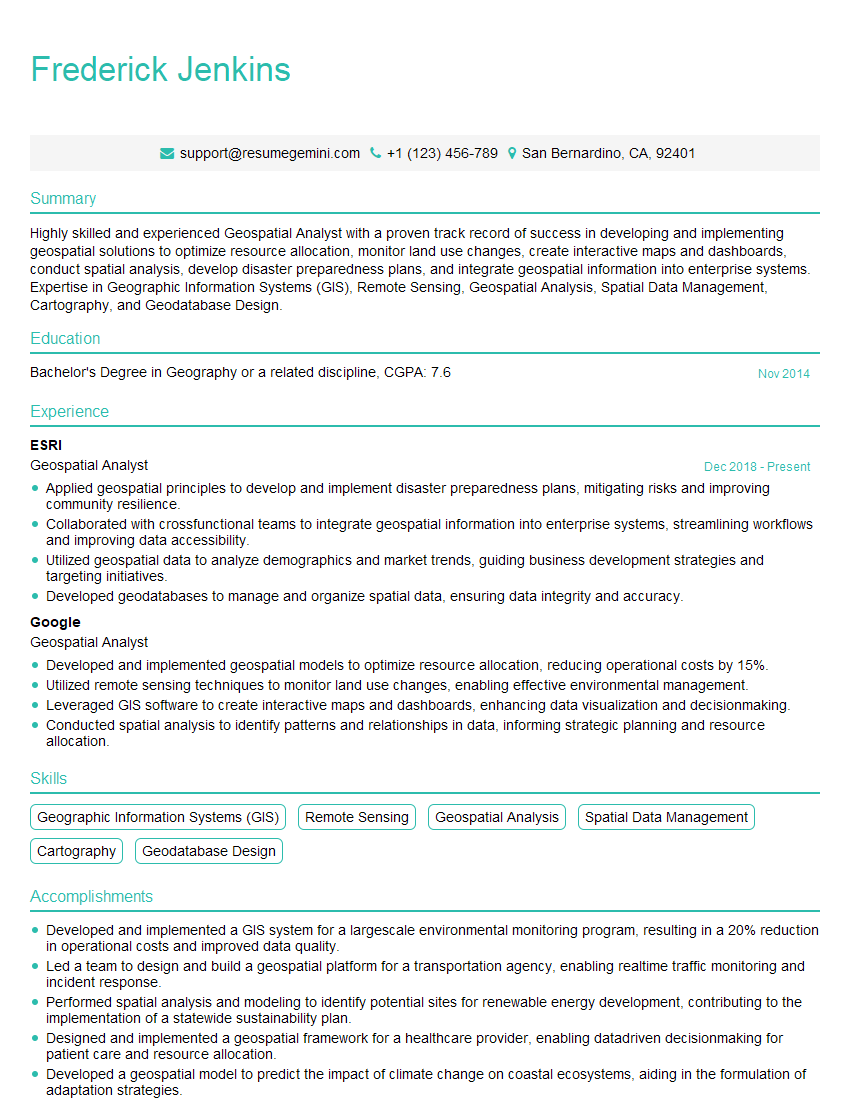
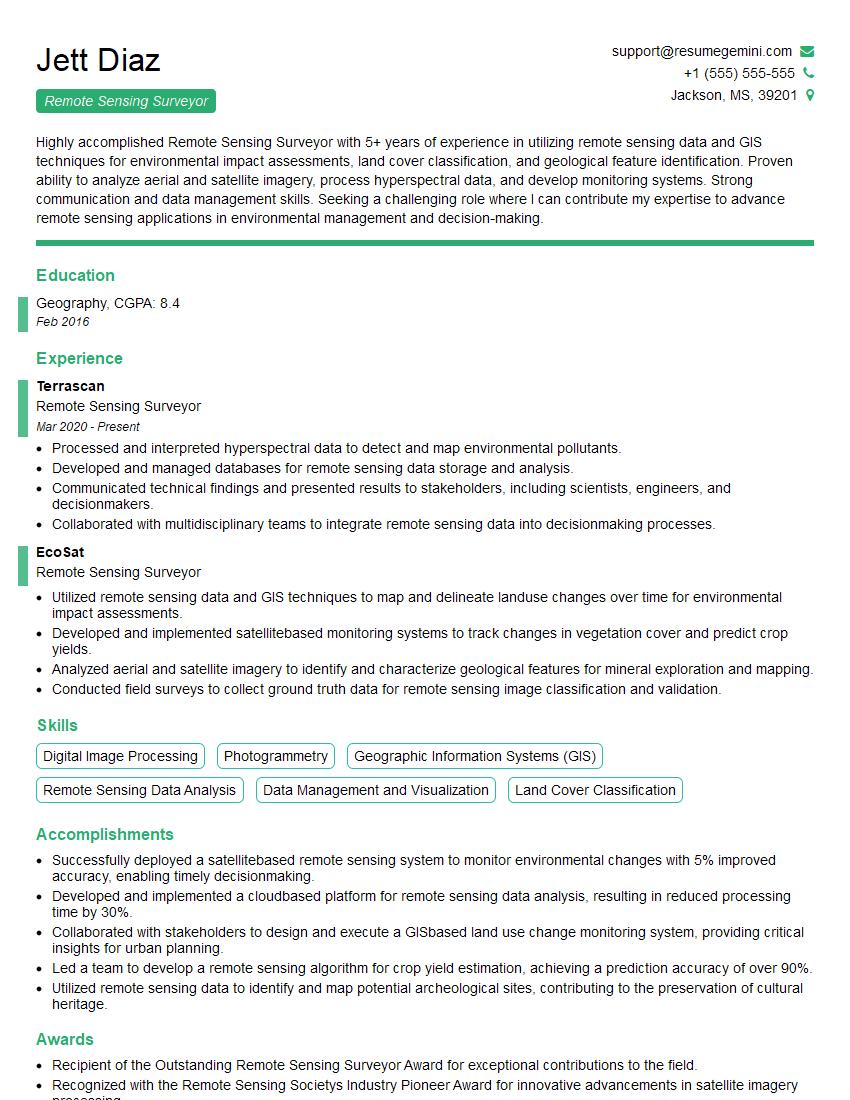
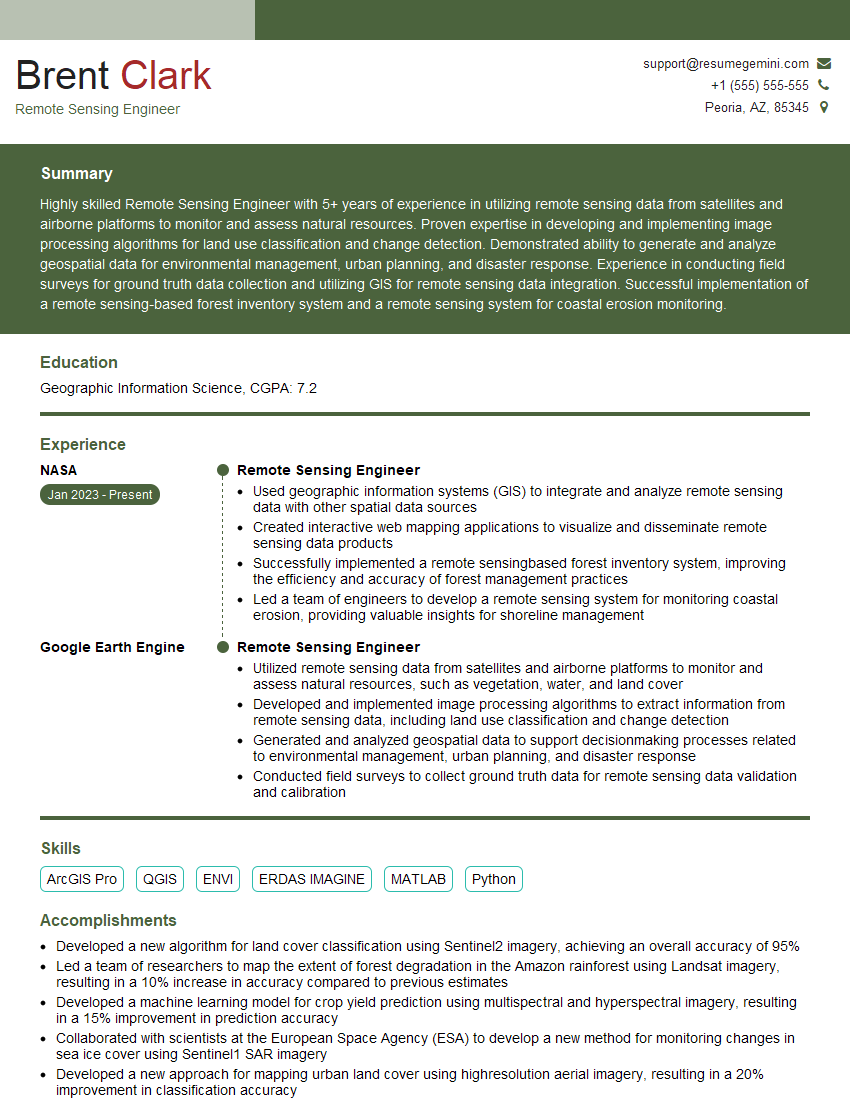
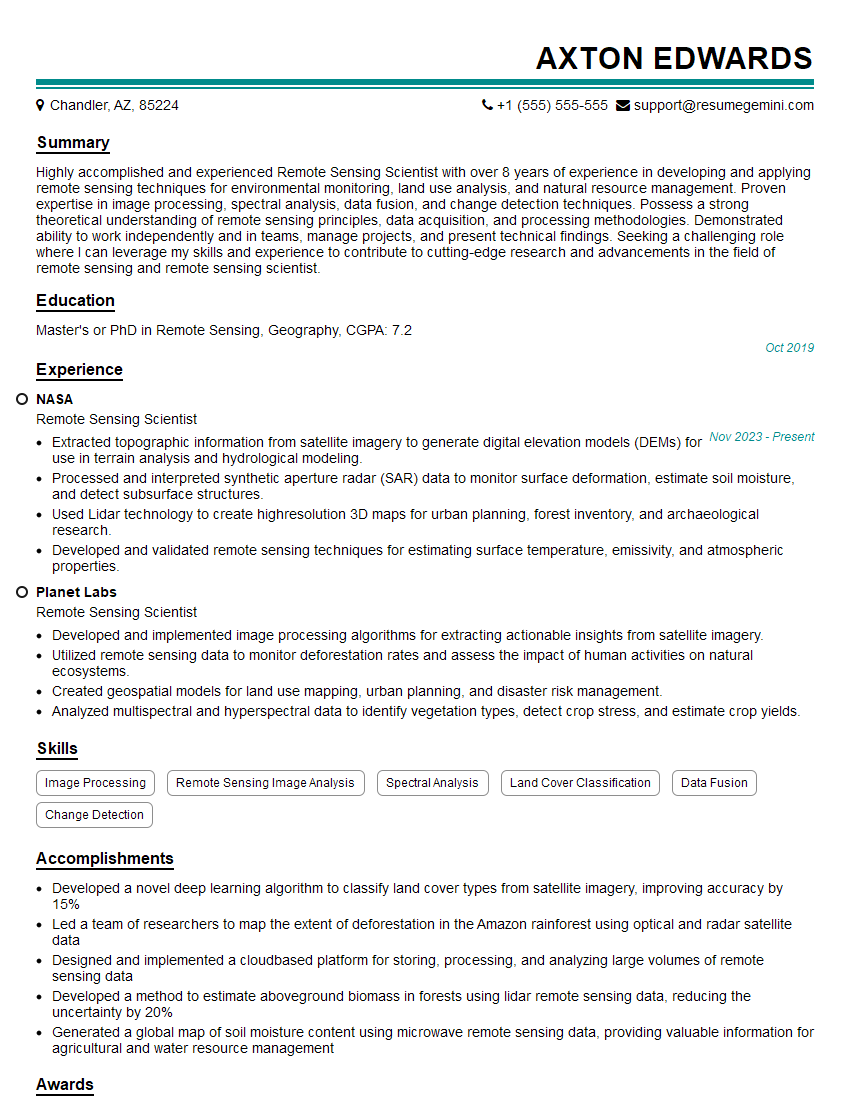
Mastering the use of remote sensing technologies for survey purposes significantly enhances your career prospects in geomatics, environmental science, and related fields. It opens doors to exciting roles with high demand and growth potential. To maximize your chances of landing your dream job, creating a strong, ATS-friendly resume is paramount. ResumeGemini is a trusted resource to help you build a professional and effective resume that highlights your skills and experience. Examples of resumes tailored to showcasing experience in using remote sensing technologies for survey purposes are available, further assisting your job search.
Explore more articles
Users Rating of Our Blogs
Share Your Experience
We value your feedback! Please rate our content and share your thoughts (optional).
What Readers Say About Our Blog
Amazing blog
hello,
Our consultant firm based in the USA and our client are interested in your products.
Could you provide your company brochure and respond from your official email id (if different from the current in use), so i can send you the client’s requirement.
Payment before production.
I await your answer.
Regards,
MrSmith
hello,
Our consultant firm based in the USA and our client are interested in your products.
Could you provide your company brochure and respond from your official email id (if different from the current in use), so i can send you the client’s requirement.
Payment before production.
I await your answer.
Regards,
MrSmith
These apartments are so amazing, posting them online would break the algorithm.
https://bit.ly/Lovely2BedsApartmentHudsonYards
Reach out at BENSON@LONDONFOSTER.COM and let’s get started!
Take a look at this stunning 2-bedroom apartment perfectly situated NYC’s coveted Hudson Yards!
https://bit.ly/Lovely2BedsApartmentHudsonYards
Live Rent Free!
https://bit.ly/LiveRentFREE
Interesting Article, I liked the depth of knowledge you’ve shared.
Helpful, thanks for sharing.
Hi, I represent a social media marketing agency and liked your blog
Hi, I represent an SEO company that specialises in getting you AI citations and higher rankings on Google. I’d like to offer you a 100% free SEO audit for your website. Would you be interested?