Are you ready to stand out in your next interview? Understanding and preparing for Experience with Magazine Production and Editorial Processes interview questions is a game-changer. In this blog, we’ve compiled key questions and expert advice to help you showcase your skills with confidence and precision. Let’s get started on your journey to acing the interview.
Questions Asked in Experience with Magazine Production and Editorial Processes Interview
Q 1. Describe your experience with the entire magazine production workflow, from manuscript to print.
My experience encompasses the entire magazine production lifecycle, from initial manuscript submission to the final printed product. It’s a collaborative process involving several key stages.
- Manuscript Acquisition and Editing: This involves receiving and reviewing submitted articles, working with authors on revisions, fact-checking, and copyediting to ensure clarity, consistency, and accuracy according to the publication’s style guide.
- Layout and Design: Once the edited content is approved, the design team, using software like InDesign, creates the visual layout, incorporating images, graphics, and typography to enhance readability and visual appeal. I’ve been involved in discussions on design elements, offering editorial input to ensure the visual presentation complements the content.
- Proofreading and Quality Control: Multiple rounds of proofreading are essential to catch any errors that may have slipped through earlier stages. This includes checking for typos, grammatical inconsistencies, and factual inaccuracies. We utilize a collaborative proofreading system to ensure multiple eyes review each page.
- Pre-press and Production: This stage involves preparing the finalized files for printing. It involves checking color accuracy, image resolution, and ensuring the files are compatible with the printing press. I’ve worked closely with printers to ensure the final product meets our quality standards.
- Printing and Distribution: Finally, the magazine is printed and distributed to subscribers and retailers. My role often involves overseeing the printing process and coordinating with distribution channels.
For example, on a recent project involving a lifestyle magazine, I managed the editorial process for a feature article on sustainable living. This involved collaborating with the author, copyediting, fact-checking sources, liaising with the designer on image selection, and reviewing the final layouts before printing.
Q 2. Explain your familiarity with different editorial styles and style guides (e.g., AP, Chicago).
I’m proficient in various editorial styles, including the Associated Press (AP) style and the Chicago Manual of Style. Understanding these style guides is crucial for maintaining consistency and accuracy in publications.
- AP Style: This style is widely used in journalism and emphasizes conciseness, clarity, and objectivity. It has specific rules for capitalization, punctuation, numerals, and abbreviations. I’ve consistently applied AP style in news-oriented magazines.
- Chicago Manual of Style: This is a more comprehensive style guide, commonly used in academic and scholarly publications. It offers detailed guidance on various aspects of writing, including citation formats, grammar, and punctuation. My experience includes working with publications that adhered to Chicago style for more in-depth articles and research-based content.
The ability to switch seamlessly between these different styles demonstrates adaptability and precision in my editorial work. For instance, a recent project involved adapting a scientific paper for a popular science magazine, requiring a careful shift from Chicago style to a more accessible AP-influenced style.
Q 3. How do you manage deadlines and competing priorities in a fast-paced editorial environment?
Managing deadlines and competing priorities in a fast-paced editorial environment requires efficient planning, organization, and effective communication. I utilize several strategies to stay on track.
- Detailed Editorial Calendars: I create and maintain meticulously detailed editorial calendars that outline all deadlines, tasks, and assigned personnel. This provides a clear overview of the project timelines.
- Prioritization and Task Management: I prioritize tasks based on their urgency and importance, focusing on critical path items first. This involves utilizing project management tools like Trello or Asana to effectively manage workflows.
- Regular Team Communication: Open and consistent communication with the editorial team, designers, and production staff is crucial. This ensures everyone is aware of deadlines, potential roadblocks, and any necessary adjustments.
- Contingency Planning: I always build in buffer time for unexpected delays or unforeseen circumstances. This proactive approach minimizes the impact of potential setbacks.
For example, during a particularly hectic period leading up to a magazine’s deadline, I used a Kanban board to visualize the workflow, allowing me to quickly identify bottlenecks and re-allocate resources as needed.
Q 4. Describe your experience with content management systems (CMS) used in magazine publishing.
I have experience working with several Content Management Systems (CMS) commonly used in magazine publishing, including WordPress, Drupal, and proprietary systems tailored to specific publications.
- WordPress: Its flexibility and user-friendly interface make it suitable for managing various aspects of content, including articles, images, and multimedia.
- Drupal: Offers robust features and customization options, ideal for complex magazine websites with advanced functionalities.
- Proprietary Systems: These systems are often custom-built for larger publishers, offering tailored workflows and integrations with other publishing tools.
My experience encompasses not just content input but also workflow management within these systems, ensuring efficient collaboration between writers, editors, and designers. I’m adept at configuring user roles and permissions to maintain content security and streamline the publishing process. For instance, on one project, I implemented a new workflow within a custom CMS that reduced the time it took to publish an article by 25%.
Q 5. How do you ensure the accuracy and consistency of content throughout the editorial process?
Ensuring content accuracy and consistency is paramount in magazine publishing. My approach involves a multi-layered process.
- Style Guides and Editorial Standards: Adhering strictly to style guides ensures consistency in terminology, formatting, and tone across the entire publication.
- Multiple Proofreading Stages: Implementing multiple rounds of proofreading by different individuals catches errors that might be missed in a single review.
- Fact-Checking and Verification: Rigorous fact-checking procedures, including cross-referencing sources and verifying information with experts, ensure the accuracy of the published content. I personally implement and oversee this process.
- Content Management Systems: Using CMS features like version control allows for easy tracking of revisions and comparison of different versions of content.
A case in point was an article on historical events. Through careful fact-checking and cross-referencing with multiple primary and secondary sources, I was able to correct several inaccuracies in the original manuscript, preventing the dissemination of misinformation.
Q 6. What software are you proficient in for layout, design, and image editing (e.g., InDesign, Photoshop)?
I am proficient in industry-standard software for layout, design, and image editing. My skills include:
- Adobe InDesign: For creating and managing the layout of magazine pages, including text formatting, image placement, and pagination.
- Adobe Photoshop: For advanced image editing, including retouching, color correction, and image manipulation.
- Adobe Illustrator: For creating and editing vector graphics, illustrations, and logos.
I’m comfortable working with both print and digital layouts, adapting my skills to different formats and publication requirements. My experience in these programs is not limited to basic functionalities; I actively utilize advanced features to improve efficiency and design quality. For example, I designed a complex infographic in Illustrator and seamlessly integrated it into an InDesign layout for a recent publication.
Q 7. Explain your experience with fact-checking and verification of information for publication.
Fact-checking and information verification are crucial for maintaining the credibility of a publication. My experience involves a structured approach.
- Source Verification: I meticulously verify all sources cited in articles, checking their reliability and credibility. This includes assessing the source’s expertise, potential biases, and the overall context of the information.
- Cross-referencing: I cross-reference information from multiple sources to ensure consistency and accuracy. This helps to identify any discrepancies or potential inaccuracies.
- Expert Consultation: For complex or specialized topics, I often consult with subject-matter experts to verify the accuracy and validity of the information.
- Documentation: I maintain detailed records of all fact-checking processes, including sources consulted and any corrections made. This ensures transparency and accountability.
In a recent project, a writer cited a statistic without a clear source. Through thorough research, I traced the statistic to an unreliable website, and by consulting with an expert in the field, we were able to find the correct, verifiable data. This rigorous approach is essential for building and maintaining trust with our readers.
Q 8. How do you handle disagreements or conflicts within the editorial team?
Disagreements are inevitable in collaborative environments like magazine production. My approach focuses on constructive dialogue and finding solutions that benefit the publication. I believe in creating a safe space where team members feel comfortable expressing their opinions and concerns.
- Open Communication: I encourage open and honest communication from the outset, fostering a culture where differing viewpoints are welcomed, not feared.
- Collaborative Problem-Solving: When disagreements arise, I facilitate collaborative brainstorming sessions, guiding the team towards a consensus that aligns with the magazine’s overall vision and editorial goals. We weigh the pros and cons of each approach, considering factors like audience engagement, editorial integrity, and feasibility.
- Mediation and Facilitation: If necessary, I act as a mediator, ensuring that all voices are heard and that discussions remain respectful and productive. I focus on understanding the underlying concerns and finding common ground.
- Documentation and Decision-Making: Once a decision is reached, I ensure it’s documented clearly, so everyone understands the rationale and is committed to the agreed-upon path. This avoids future misunderstandings.
For example, in one instance, we had a disagreement about the cover story. One team member favored a more sensationalist approach, while another preferred a more in-depth, analytical piece. Through collaborative discussion, we found a middle ground – a compelling story that combined both elements, resulting in increased readership.
Q 9. Describe your experience working with freelance writers, photographers, and designers.
Working with freelancers is a cornerstone of magazine production. My experience spans managing writers, photographers, and designers across numerous projects. I prioritize clear communication, detailed briefs, and timely feedback to ensure smooth collaboration and high-quality outputs.
- Detailed Briefs: I provide freelancers with comprehensive briefs outlining project scope, deadlines, style guides, and target audience. This clarity minimizes misunderstandings and ensures everyone’s on the same page.
- Regular Communication: I maintain regular contact with freelancers through email, calls, and video conferencing, providing updates and addressing questions promptly. This proactive approach fosters a positive working relationship and minimizes potential issues.
- Constructive Feedback: I provide detailed and constructive feedback on their work, offering suggestions for improvement while acknowledging their strengths. This approach ensures the final product meets the magazine’s standards.
- Contract Management: I ensure that all contracts are properly negotiated and signed, clearly outlining payment terms, deadlines, and intellectual property rights. This protects both the magazine and the freelancers involved.
For instance, when working with a photographer on a nature-themed spread, I ensured the brief detailed the desired lighting, composition, and image resolution. This precise communication resulted in stunning visuals perfectly aligning with the magazine’s aesthetics.
Q 10. How do you adapt your editorial approach for different magazine formats (print, digital, online)?
Adapting the editorial approach for different formats (print, digital, online) is crucial for maximizing reach and impact. The core message may remain the same, but the delivery method must be tailored to suit the specific platform.
- Print: Print editions emphasize high-quality visuals, impactful layouts, and concise storytelling. We focus on the tactile experience and the longevity of the physical magazine. The design might prioritize larger images and a less cluttered layout compared to the digital versions.
- Digital (e-Magazines): Digital editions offer greater interactivity. We may incorporate hyperlinks, videos, and interactive elements to enhance engagement. The design might incorporate more visual elements for a more interactive reader experience.
- Online (Website): Online content demands shorter, more easily digestible pieces with strong SEO optimization. We prioritize content that is shareable and easily navigated on various devices. The tone might be more conversational and informal compared to print.
For example, a lengthy interview in the print magazine might be broken into smaller, web-friendly chunks for the online version, accompanied by embedded video clips.
Q 11. Explain your understanding of copyright and legal considerations in publishing.
Copyright and legal considerations are paramount in publishing. Understanding and adhering to these laws is crucial to avoid legal disputes and maintain the integrity of the magazine.
- Copyright Permissions: We obtain written permission from copyright holders before using any copyrighted material, including text, images, and illustrations. We meticulously track these permissions and maintain accurate records.
- Image Licensing: We use only properly licensed images, either through stock photography services or through direct agreements with photographers. We understand the difference between royalty-free and rights-managed licenses.
- Fair Use Doctrine: We understand the limitations of the fair use doctrine and apply it judiciously, ensuring that any use of copyrighted material falls within its legal parameters. We seek legal counsel when necessary to ensure compliance.
- Plagiarism Prevention: We utilize plagiarism-detection software to ensure that all original content is genuinely unique. We have strict editorial guidelines against plagiarism.
For example, before using any image, we thoroughly review the licensing agreement to ensure we have the rights to reproduce it in our specific format and distribution channels.
Q 12. How do you prioritize and manage multiple editorial projects simultaneously?
Managing multiple editorial projects simultaneously requires efficient organizational skills and a structured approach. My strategy centers around detailed planning, effective delegation, and consistent monitoring of progress.
- Project Management Tools: I utilize project management software (e.g., Asana, Trello) to track deadlines, assign tasks, and monitor progress across various projects. This allows me to maintain a clear overview of the workflow and identify potential bottlenecks.
- Prioritization and Scheduling: I prioritize projects based on their deadlines, importance, and impact. I create a detailed editorial calendar that allocates resources efficiently.
- Teamwork and Delegation: I delegate tasks effectively to team members based on their skills and expertise. This ensures that workload is distributed evenly and that each task is completed by the most qualified individual.
- Regular Check-ins: I conduct regular check-ins with team members to monitor progress, address challenges, and offer support. This ensures we stay on track and resolve any potential roadblocks.
For instance, I might use a Gantt chart to visualize the timeline of different editorial projects, allowing me to quickly identify potential conflicts and adjust the schedule as necessary.
Q 13. Describe your experience with pre-press and print production processes.
My experience encompasses the entire pre-press and print production process, from preparing files for printing to overseeing the final product. I’m familiar with various printing techniques and quality control measures.
- File Preparation: I ensure that all files are prepared according to the printer’s specifications, including correct resolution, color profiles, and file formats. This ensures a smooth printing process and optimal print quality.
- Proofreading and Quality Control: I conduct thorough proofreading and quality control checks at each stage of the production process, identifying and correcting any errors before printing. We use proof copies to check for any errors.
- Color Management: I understand color management principles and ensure consistency across different stages of the production process, from design to printing. We use standardized color profiles to ensure consistency.
- Printer Communication: I maintain effective communication with the printer throughout the process, providing necessary information and addressing any concerns promptly.
For example, I meticulously check color accuracy using calibrated monitors and proof prints to ensure that the final print aligns perfectly with the design specifications. This attention to detail has helped prevent costly reprint errors.
Q 14. How familiar are you with different types of magazine advertising and their placement?
I am familiar with various types of magazine advertising and their placement strategies. Effective ad placement is crucial for maximizing revenue and enhancing the reader experience.
- Ad Types: I understand different ad formats, including full-page ads, half-page ads, quarter-page ads, and various specialty ads (e.g., gatefolds, inserts). I also have knowledge of digital ad formats like banner ads and video ads.
- Ad Placement Strategies: I consider factors like target audience, ad content, and editorial context when placing advertisements. For example, a luxury car ad would ideally be placed near articles targeting a high-net-worth readership.
- Ad Sales Collaboration: I collaborate closely with the advertising sales team to understand their clients’ needs and ensure that ads are placed effectively and appropriately within the magazine’s design and editorial context.
- Ad Revenue Management: I assist in tracking and managing ad revenue, ensuring accurate billing and reconciliation.
For example, I might strategically place an ad for a skincare product near an article about beauty and wellness to maximize its impact and relevance to the readership. This targeted placement increases the likelihood of engagement and conversions.
Q 15. How do you optimize content for different target audiences?
Optimizing content for diverse audiences is crucial for a magazine’s success. It involves understanding your readers’ demographics, interests, and reading habits. This isn’t a one-size-fits-all approach; instead, it requires a segmented strategy.
- Demographic Segmentation: Consider age, gender, location, income, education, and occupation. A magazine targeting young professionals will have vastly different content than one aimed at retirees. For example, a young professional magazine might feature articles on career advancement, financial planning, and tech trends, while a retirement magazine might focus on health, travel, and financial security.
- Psychographic Segmentation: This delves into readers’ values, lifestyles, and interests. Are they environmentally conscious? Do they prioritize family? Understanding these aspects helps tailor content that resonates emotionally. A magazine targeting environmentally conscious readers might feature articles on sustainable living, eco-tourism, and green technology.
- Behavioral Segmentation: Analyze how readers interact with the magazine. Do they prefer long-form articles or short, impactful pieces? What topics do they engage with the most? This data, often gleaned from analytics, informs content creation and placement.
- Content Diversification: Offering a variety of content formats—articles, interviews, infographics, photo essays—caters to different preferences. Some readers prefer in-depth analysis, while others appreciate quick, visually appealing information.
Ultimately, creating audience personas—detailed representations of your ideal readers—is key to effective content optimization. This allows the editorial team to create content that directly speaks to their needs and interests.
Career Expert Tips:
- Ace those interviews! Prepare effectively by reviewing the Top 50 Most Common Interview Questions on ResumeGemini.
- Navigate your job search with confidence! Explore a wide range of Career Tips on ResumeGemini. Learn about common challenges and recommendations to overcome them.
- Craft the perfect resume! Master the Art of Resume Writing with ResumeGemini’s guide. Showcase your unique qualifications and achievements effectively.
- Don’t miss out on holiday savings! Build your dream resume with ResumeGemini’s ATS optimized templates.
Q 16. What strategies do you use to ensure the quality and consistency of a magazine’s visual style?
Maintaining a consistent visual style is paramount for a magazine’s brand identity. This involves establishing clear guidelines and employing effective communication within the editorial team.
- Style Guide: A comprehensive style guide is the cornerstone. This document outlines typography (fonts, sizes, styles), color palettes, image styles (photography, illustration), layout templates, and overall design principles. It acts as a bible for all design decisions.
- Design Templates: Creating pre-designed templates for articles, sections, and features ensures consistency across the magazine. This streamlines the design process and reduces the likelihood of stylistic inconsistencies.
- Image Selection & Editing: Consistent image quality and style are critical. Clear guidelines on image resolution, color grading, and editing techniques are essential. Using a consistent photography style—for example, natural lighting or a specific color tone—further enhances the visual unity.
- Collaboration & Communication: Regular meetings between the editorial and design teams are crucial to ensure everyone understands and adheres to the style guide. Providing design feedback and actively addressing inconsistencies are key.
- Software & Tools: Using consistent design software and tools across the team, like Adobe InDesign, ensures that everyone works with the same standards and capabilities.
For instance, in my previous role, we created a detailed style guide with examples of acceptable fonts, color combinations, and image treatments. This ensured a consistent look and feel across every issue, reinforcing the magazine’s brand identity.
Q 17. Describe your experience with managing budgets and resources within an editorial team.
Managing editorial budgets and resources requires meticulous planning and efficient allocation. This involves understanding the various cost components, setting realistic budgets, and tracking expenses diligently.
- Budget Planning: The process begins with a thorough assessment of all costs: writer fees, editor salaries, design costs, printing, distribution, and marketing. A detailed budget breakdown is crucial.
- Resource Allocation: This involves prioritizing projects based on their potential impact and alignment with the magazine’s goals. It might involve deciding which articles warrant higher writer fees or more extensive design work.
- Expense Tracking: Regular monitoring of expenses against the budget is vital to identify potential overruns and make timely adjustments. Software tools can assist greatly in this process.
- Negotiation & Procurement: Securing favorable rates with freelancers, printers, and other vendors is important. Developing strong vendor relationships can often yield cost savings.
- Contingency Planning: Allocating a portion of the budget for unexpected expenses is prudent. This acts as a safety net for unforeseen circumstances, like last-minute revisions or printing delays.
In a previous project, I utilized a spreadsheet-based budget tracking system to monitor all expenses, ensuring we stayed within our allocated funds. This involved close collaboration with the finance department to ensure all payments were processed effectively.
Q 18. How do you measure the success and impact of a magazine’s content?
Measuring the success and impact of a magazine’s content goes beyond simply counting sales. It requires a multi-faceted approach that examines various metrics.
- Sales & Circulation: This is a fundamental indicator of success. Tracking subscription numbers, newsstand sales, and digital downloads provides insights into reader engagement and market penetration.
- Website Analytics: For online content, website analytics (e.g., Google Analytics) are crucial. Tracking page views, bounce rates, time on site, and social media shares reveals reader engagement with digital content.
- Social Media Engagement: Monitoring social media interactions—likes, shares, comments—provides a measure of how readers interact with the magazine’s content online.
- Reader Feedback: Collecting reader feedback through surveys, feedback forms, and social media interactions provides valuable qualitative data on reader satisfaction and preferences. This allows for course correction and improved content strategy.
- Advertising Revenue: For magazines that rely on advertising, revenue generated is a significant indicator of the magazine’s value and influence.
- Brand Awareness & Sentiment: Monitoring brand mentions and sentiment analysis provides insights into the magazine’s overall brand perception and reputation.
For example, we once used a combination of print circulation figures, website analytics, and social media engagement to assess the success of a particular issue focused on sustainability. The data revealed high engagement across all platforms, indicating the topic resonated strongly with our audience.
Q 19. What is your experience with social media promotion and content marketing for magazines?
Social media and content marketing are vital for extending a magazine’s reach and enhancing its visibility. A strategic approach is needed to leverage these platforms effectively.
- Social Media Strategy: This involves identifying the most relevant platforms for the magazine’s target audience (e.g., Instagram for visually driven content, Twitter for breaking news, Facebook for community building). A content calendar is crucial for planning posts and maintaining consistent engagement.
- Content Repurposing: Transforming long-form articles into shorter, shareable content for social media—snippets, quotes, infographics—increases reach and engagement. For example, excerpts from feature articles can be posted with engaging images on Instagram.
- Social Media Advertising: Targeted advertising campaigns on social media platforms can significantly boost reach and audience engagement, enabling precise targeting of specific demographics.
- Influencer Marketing: Collaborating with relevant influencers to promote the magazine and its content can reach a wider and highly engaged audience. This could include partnerships with bloggers, journalists or relevant personalities.
- Content Marketing Initiatives: Creating valuable content beyond the magazine itself—blog posts, webinars, ebooks—attracts potential readers and positions the magazine as a thought leader in its field.
In my experience, we successfully used Instagram to showcase visually stunning photography from our magazine. We also created short, engaging videos summarizing key points from our feature articles, which dramatically improved our online reach and engagement.
Q 20. How do you handle feedback and criticism from editors, writers, or stakeholders?
Handling feedback and criticism requires a professional and constructive approach. It’s an opportunity for improvement and growth.
- Active Listening: Carefully listen to the feedback without interrupting. Seek to understand the perspective of the editor, writer, or stakeholder.
- Empathy & Understanding: Attempt to understand the concerns and reasoning behind the feedback. Even if you disagree, acknowledge their perspective.
- Constructive Dialogue: Engage in a respectful dialogue. Ask clarifying questions to ensure you fully understand the criticism.
- Actionable Steps: Outline specific actions based on the feedback. For instance, if a writer suggests improving clarity, commit to revising the article with specific edits.
- Documentation & Follow-Up: Document the feedback and the actions taken in response. Follow up with the individuals who provided feedback to update them on the progress.
I once received critical feedback on an article’s structure. Instead of getting defensive, I engaged in a constructive dialogue with the editor, understanding their concerns regarding reader flow. This resulted in significant improvements to the article, ultimately leading to a stronger publication.
Q 21. Describe your process for identifying and resolving editorial errors before publication.
Identifying and resolving editorial errors before publication is a critical aspect of magazine production. A multi-layered approach is necessary to ensure accuracy and quality.
- Multiple Proofreading Stages: Employing multiple proofreaders at different stages of the process—copy editing, fact-checking, and final proofreading—significantly reduces errors. Each proofreader should have a different focus and use different methods to catch errors.
- Fact-Checking Procedures: Establish strict fact-checking protocols for all articles, particularly those containing data, statistics, or information requiring verification. Use reliable sources and cross-reference information whenever possible.
- Style Guide Adherence: Ensuring adherence to the style guide is key to maintaining consistency and avoiding stylistic errors. The use of a style guide checker in the publishing software is beneficial.
- Automated Tools: Utilize grammar and spell-checking software, but remember that these tools are not foolproof. Human review is essential.
- Team Collaboration: Collaboration and communication among editors, writers, and designers during the proofreading process is crucial to catch and address errors effectively.
- Final Review: A final review by a senior editor or production manager before publication acts as a final quality check to catch any remaining errors.
In one instance, we implemented a three-stage proofreading process—copy editing, fact-checking, and final proofreading—which significantly reduced the number of errors in our publications. We even instituted a system where multiple editors reviewed each other’s work to avoid blind spots.
Q 22. How familiar are you with analytics and tracking metrics related to magazine performance?
Magazine performance analytics are crucial for understanding audience engagement and the overall success of a publication. My familiarity extends beyond simply looking at numbers; I understand how to interpret data to drive strategic decisions. This includes a deep understanding of various metrics, their interrelationships, and how to use them to optimize content and marketing strategies.
- Website Analytics: I’m proficient in using tools like Google Analytics to track website traffic, bounce rates, time on page, and user demographics. For example, analyzing time spent on specific articles helps identify high-performing content and informs future editorial choices.
- Print Circulation Data: I can analyze subscription rates, renewal rates, and single-copy sales to assess the publication’s reach and audience loyalty. Understanding fluctuations helps predict future sales trends and inform distribution strategies.
- Social Media Metrics: I leverage social media analytics to understand engagement with content across different platforms. Analyzing likes, shares, comments, and reach helps us to tailor content to resonate better with our target audience. For example, high engagement on Instagram might indicate a need for more visually appealing content.
- Reader Surveys and Feedback: Analyzing reader surveys and feedback provides invaluable qualitative data. This complements quantitative data from analytics platforms providing deeper insights into reader preferences and content satisfaction.
Ultimately, my approach is data-driven. I use analytics not just to measure performance but to inform the entire editorial process, from content creation to marketing and distribution.
Q 23. Explain your approach to improving the efficiency of the editorial workflow.
Improving editorial workflow efficiency requires a multifaceted approach. It’s about streamlining processes, leveraging technology, and fostering a collaborative environment.
- Project Management Software: Implementing a project management tool like Asana or Trello allows for centralized task management, deadline tracking, and improved communication among editors, writers, designers, and fact-checkers. This helps prevent bottlenecks and keeps projects on track.
- Standardized Editorial Guidelines: Clear, concise, and consistently applied style guides ensure uniformity in content and reduce editing time. This includes everything from headline style to citation formats.
- Content Calendars and Planning: Thorough planning and the use of editorial calendars prevent last-minute rushes and help anticipate potential resource conflicts. This allows for better allocation of resources and workload management.
- Automation of Repetitive Tasks: Automating tasks like scheduling social media posts or using style-checking software reduces manual workload and frees up editors to focus on more strategic tasks, like content ideation and quality control.
- Regular Team Meetings and Feedback Sessions: Open communication and regular feedback sessions help identify workflow inefficiencies and foster a culture of continuous improvement. This ensures that the team is continuously adapting and optimizing its processes.
For instance, in a previous role, we implemented a cloud-based collaboration platform which improved communication and reduced the time spent on proofreading and fact-checking by 20%.
Q 24. How would you approach developing a new magazine concept or section?
Developing a new magazine concept or section begins with thorough market research and audience analysis. It’s a process that requires creativity, strategic thinking, and a deep understanding of the publishing landscape.
- Market Research and Trend Analysis: I would start by researching existing publications in the target niche, identifying gaps in the market, and analyzing emerging trends. This includes understanding competitor publications, their strengths and weaknesses, and the needs of the target audience.
- Audience Segmentation and Persona Development: Defining the target audience is key. Creating detailed reader personas (representing ideal readers) helps focus content and marketing efforts. Understanding demographics, interests, and media consumption habits provides crucial insights.
- Content Strategy and Brainstorming: Brainstorming sessions with the editorial team are essential to generate potential themes, article ideas, and overall content strategy. This includes identifying unique angles and voices that will set the publication apart.
- Prototype Development and Testing: Developing a prototype of the new magazine concept or section allows for early testing and feedback. This could involve creating a sample issue or pilot section to gauge reader response.
- Resource Allocation and Budget Planning: Once the concept is refined, it’s crucial to develop a comprehensive budget and resource plan, considering editorial staffing, design, printing, and marketing costs.
For example, I once helped develop a new section for a health magazine focusing on mindfulness and wellness. Through market research, we identified a growing audience interest in this area and developed content that resonated with their needs, resulting in a significant increase in readership and engagement.
Q 25. Describe a time you had to make a difficult decision in a high-pressure editorial situation.
In a previous role, we faced a significant challenge just before the print deadline for a major issue. A key contributor experienced a personal emergency and couldn’t complete their assigned piece. The pressure was immense, as delays would have significant financial and reputational consequences.
My approach was to prioritize calm and decisive action. First, I ensured the well-being of the contributor, offering support and understanding. Second, I immediately assessed the situation, identifying the scope of the missing content and available resources. We quickly assembled a small team, assigning different sections of the article to other writers and editors who were already familiar with the subject matter. We used a collaborative writing process, with frequent check-ins to ensure consistency and quality. We worked late into the night, and through intensive teamwork, successfully completed the article on time.
This situation taught me the importance of adaptability, resourcefulness, and clear communication under pressure. It also highlighted the value of a strong and supportive editorial team that can rally together in challenging circumstances.
Q 26. How do you stay current with industry trends and best practices in magazine publishing?
Staying current in the dynamic magazine publishing industry requires a proactive and multi-faceted approach.
- Industry Publications and Websites: I regularly read trade publications such as Folio:, and Magazine:, and follow relevant blogs and websites to stay informed about industry trends, best practices, and technological advancements.
- Conferences and Workshops: Attending industry conferences and workshops offers opportunities to network with peers, learn from experts, and discover new tools and techniques.
- Professional Organizations: Membership in professional organizations, like the American Society of Magazine Editors (ASME), provides access to resources, networking opportunities, and continuing education.
- Competitor Analysis: I regularly review competitor publications, paying close attention to their content strategy, design, and overall performance. This analysis helps identify both opportunities and potential threats.
- Data and Analytics: Keeping a close eye on publishing industry data and analytics provides insights into audience behaviour, content consumption patterns, and emerging technologies.
Continuous learning is crucial. I actively seek out opportunities to expand my knowledge and skills to remain competitive and provide value to my employers.
Q 27. How do you maintain strong communication and collaboration with other departments within the publishing company?
Effective communication and collaboration are vital in a magazine publishing environment. I foster strong relationships with other departments through proactive communication, open feedback, and a collaborative spirit.
- Regular Meetings and Updates: I believe in regular communication and scheduled meetings with departments like design, production, marketing, and sales. This ensures transparency and allows us to anticipate potential challenges.
- Clear and Concise Communication: I prioritize clear and concise communication, using specific language and avoiding ambiguity. This includes thorough briefing documents, clear project specifications, and timely updates.
- Open Feedback and Collaboration: I encourage a culture of open feedback and collaboration, where all team members feel comfortable expressing their ideas and concerns. This requires active listening and a willingness to incorporate feedback from others.
- Project Management Tools: Utilizing project management software, as mentioned earlier, helps improve communication and coordination across different departments.
- Building Rapport and Trust: I make an effort to build strong rapport and trust with my colleagues, recognizing that strong working relationships are essential for smooth collaboration.
For instance, by regularly collaborating with the marketing department, we were able to align our editorial content with marketing campaigns, resulting in a noticeable improvement in engagement metrics.
Q 28. What are your salary expectations for this role?
My salary expectations are commensurate with my experience and skills in magazine production and editorial processes, as well as the specific requirements of this role and the overall compensation package offered. I’m open to discussing this further after learning more about the full scope of responsibilities and benefits.
Key Topics to Learn for Experience with Magazine Production and Editorial Processes Interview
- Editorial Workflow & Processes: Understanding the entire magazine production lifecycle, from initial concept to final print/digital publication. This includes understanding stages like brainstorming, pitching, fact-checking, editing, layout, and proofing.
- Content Strategy & Planning: Developing and implementing content strategies aligned with magazine goals and target audience. This involves market research, topic selection, and content calendar creation.
- Style Guides & Editorial Standards: Applying consistent style guides and adhering to editorial best practices to maintain quality and brand consistency across all content.
- Collaboration & Communication: Working effectively with editors, writers, designers, photographers, and printers to ensure seamless project execution. This includes managing deadlines and providing clear communication.
- Proofreading & Fact-checking: Identifying and correcting errors in grammar, style, accuracy, and factual information before publication.
- Digital Publishing & Platforms: Familiarity with digital publishing platforms and formats, including online magazine layouts, SEO optimization, and social media promotion.
- Image Selection & Management: Selecting appropriate images, obtaining necessary permissions, and managing image assets within a magazine production workflow. Understanding copyright and usage rights.
- Problem-Solving & Adaptability: Demonstrating the ability to adapt to changing priorities, resolve unexpected issues, and meet deadlines under pressure.
- AP Style & other style guides: Practical application of style guides to ensure consistency and accuracy in writing and editing.
- Budget Management (if applicable): Understanding the budgetary constraints of magazine production and managing resources effectively.
Next Steps
Mastering magazine production and editorial processes is crucial for career advancement in publishing and related fields. A strong understanding of these skills showcases your efficiency, attention to detail, and ability to contribute significantly to a team. To maximize your job prospects, it’s essential to create a compelling and ATS-friendly resume that highlights your relevant experience and skills. ResumeGemini is a trusted resource that can help you craft a professional resume tailored to your experience. We provide examples of resumes specifically designed for candidates with experience in Magazine Production and Editorial Processes to help you build a standout application.
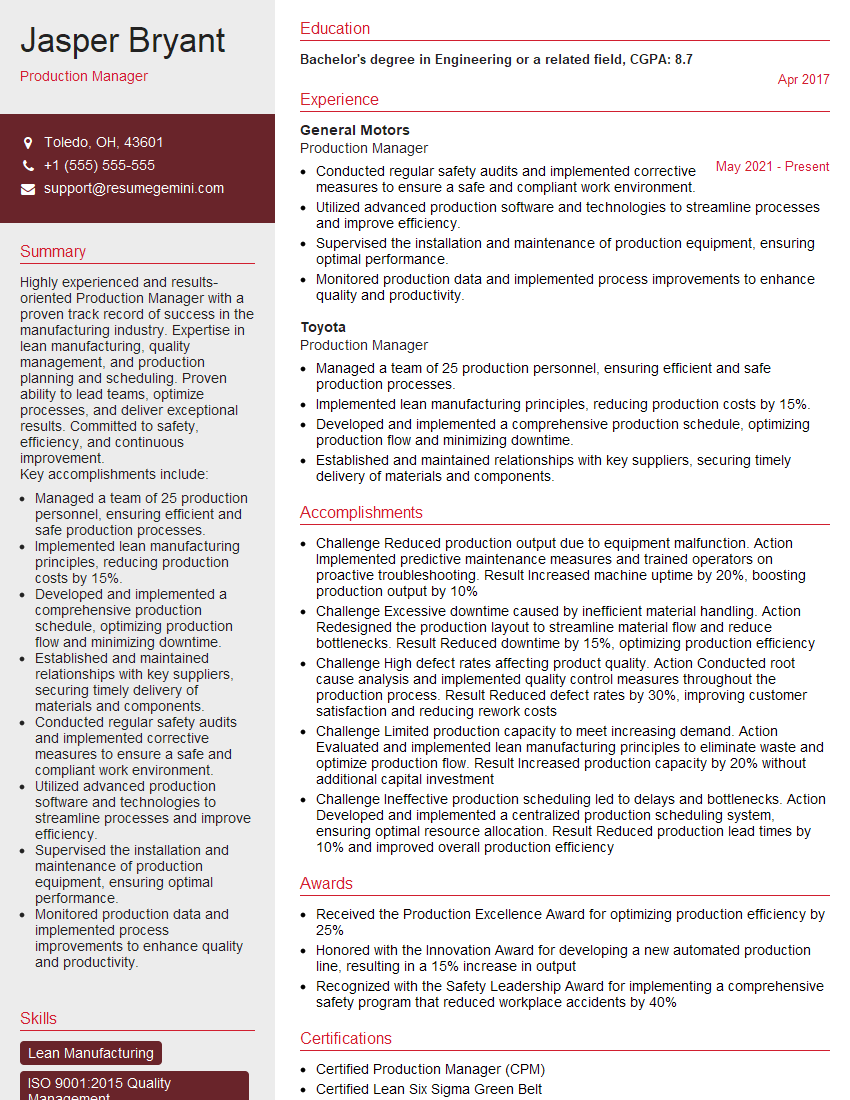
Production Manager Resume Sample
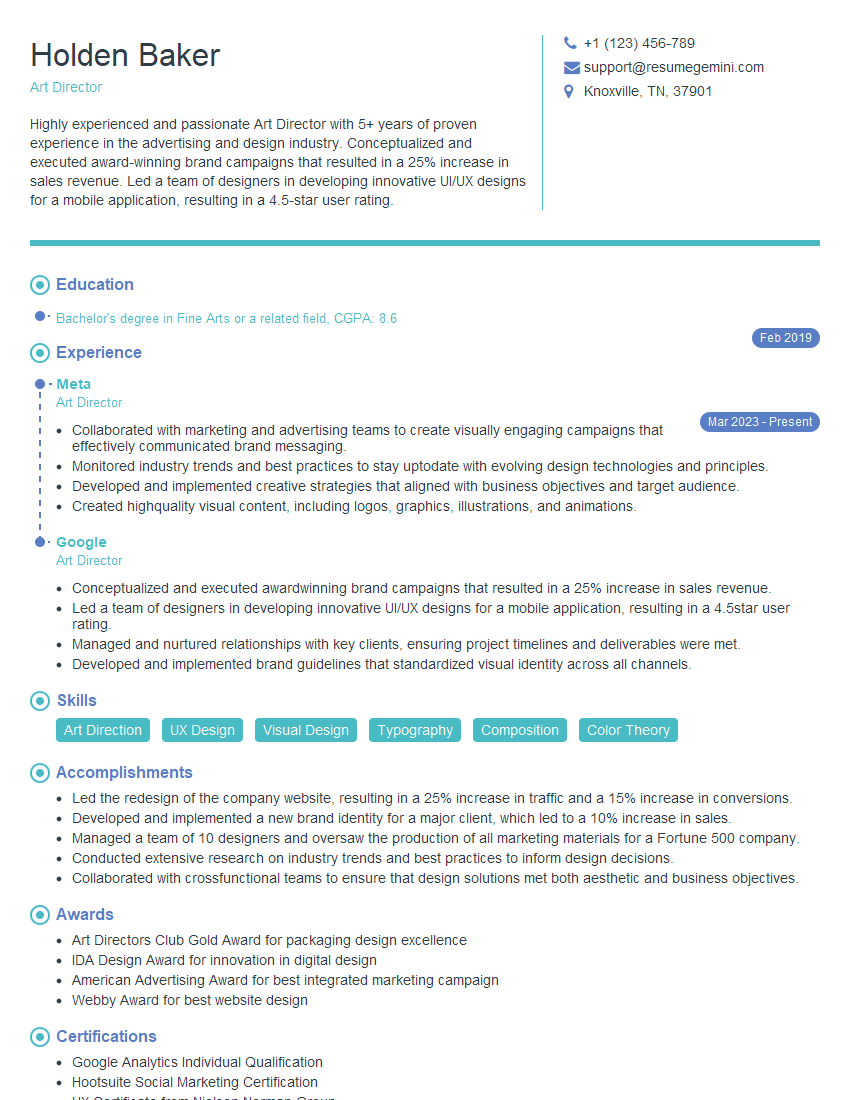
Art Director Resume Sample

Production Coordinator Resume Sample
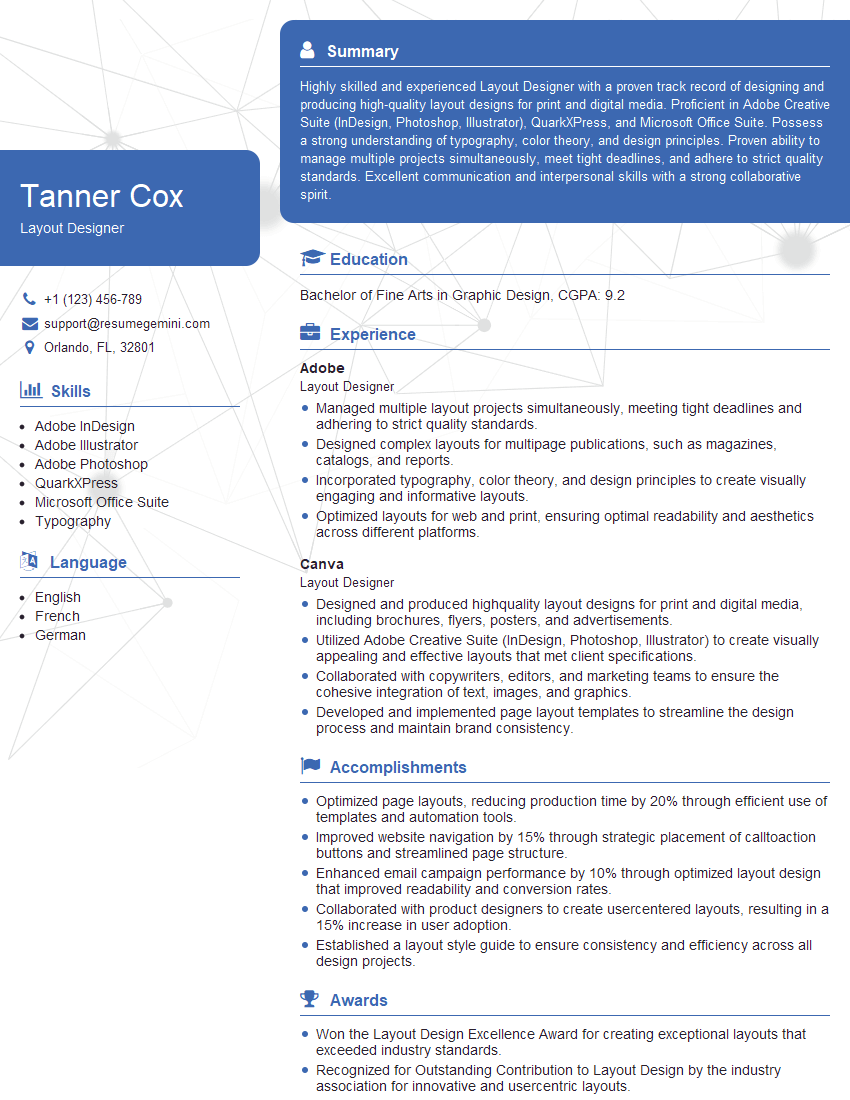
Layout Designer Resume Sample
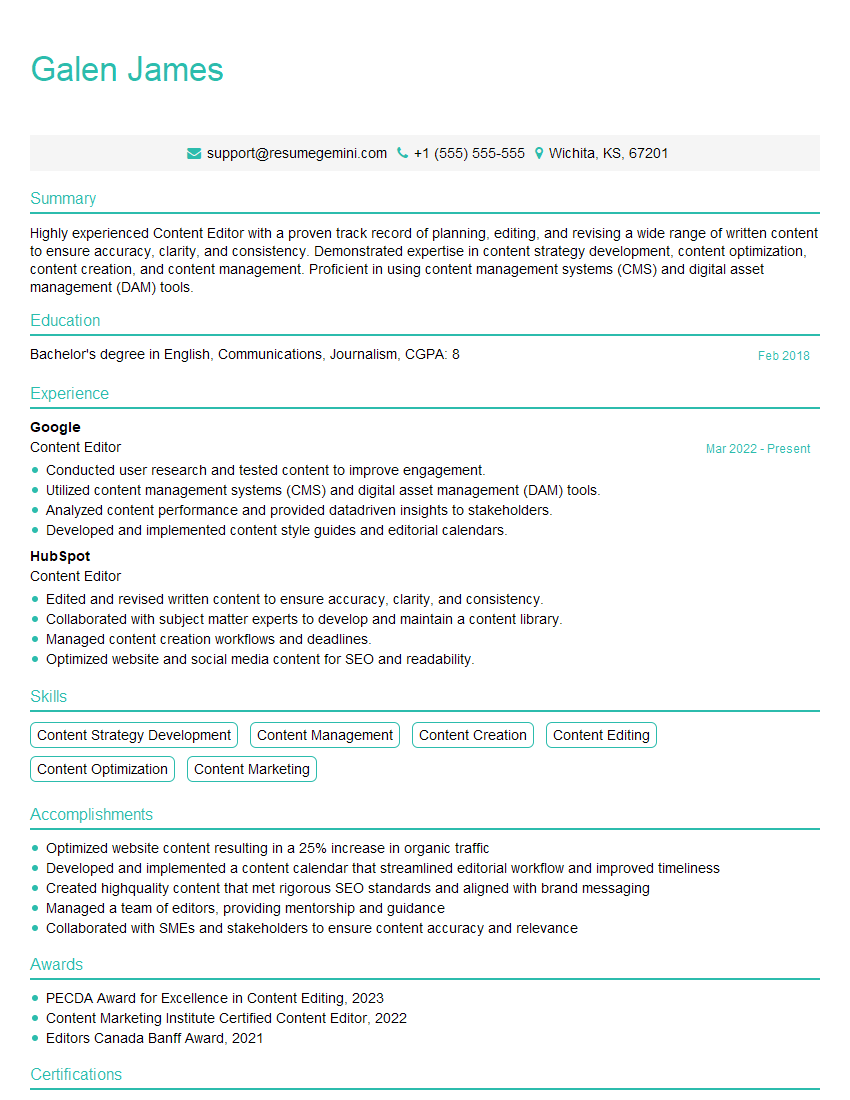
Content Editor Resume Sample
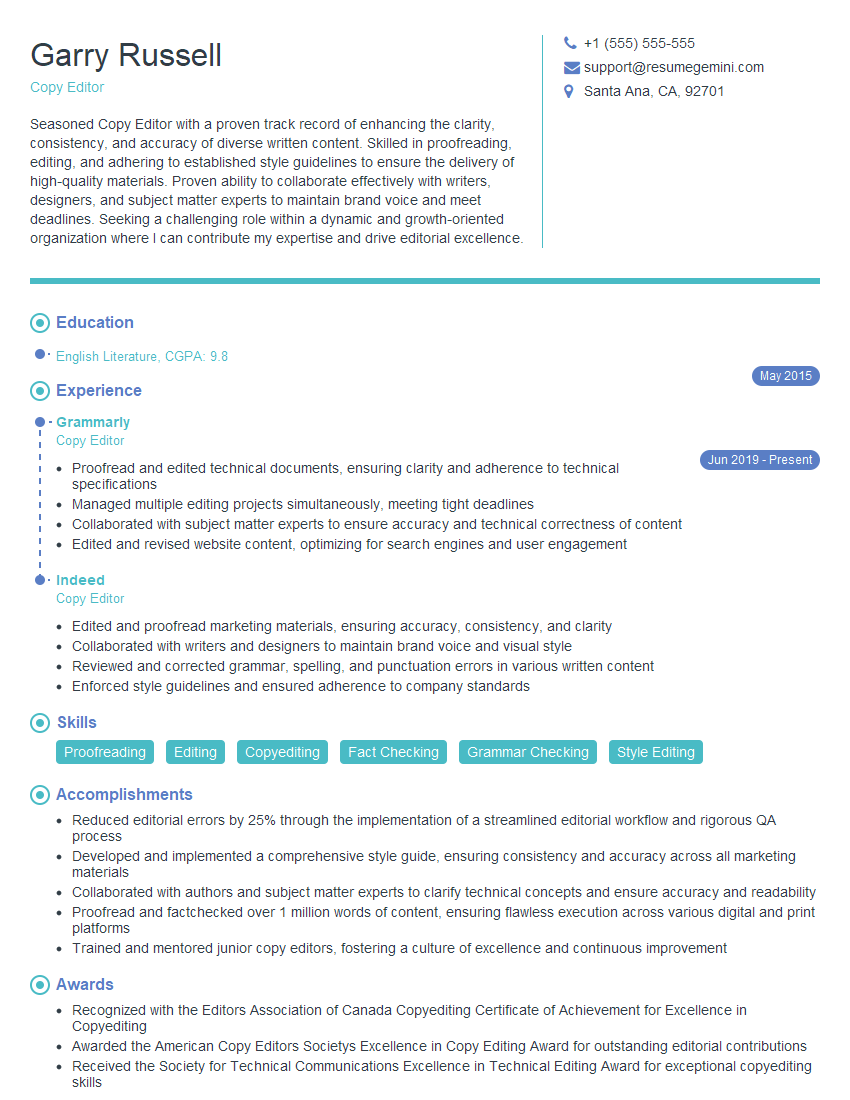
Copy Editor Resume Sample
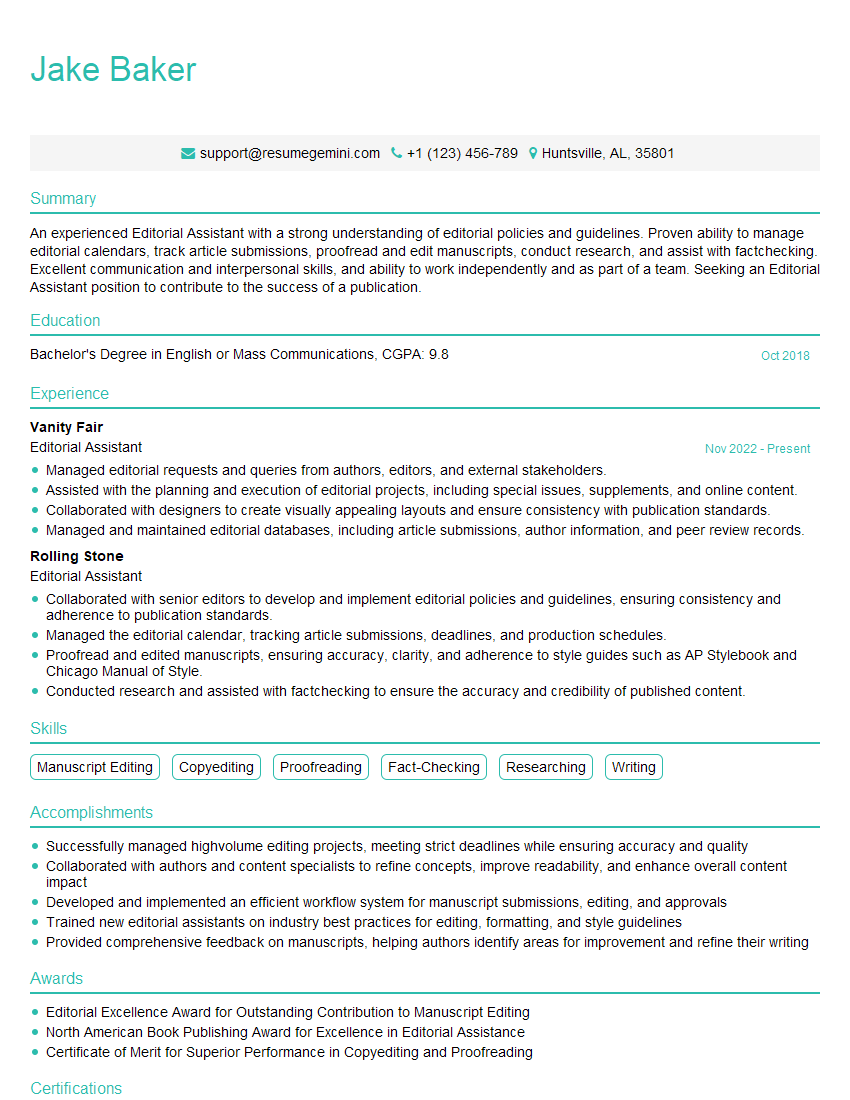
Editorial Assistant Resume Sample
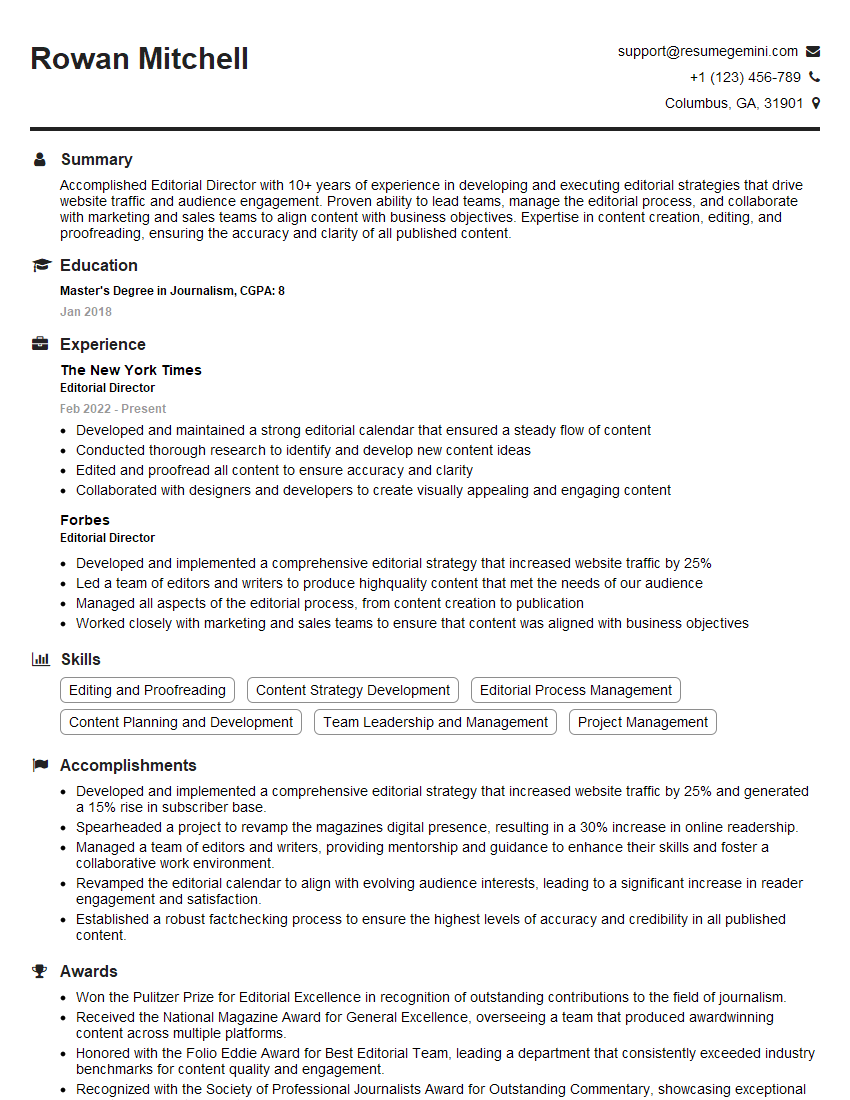
Editorial Director Resume Sample
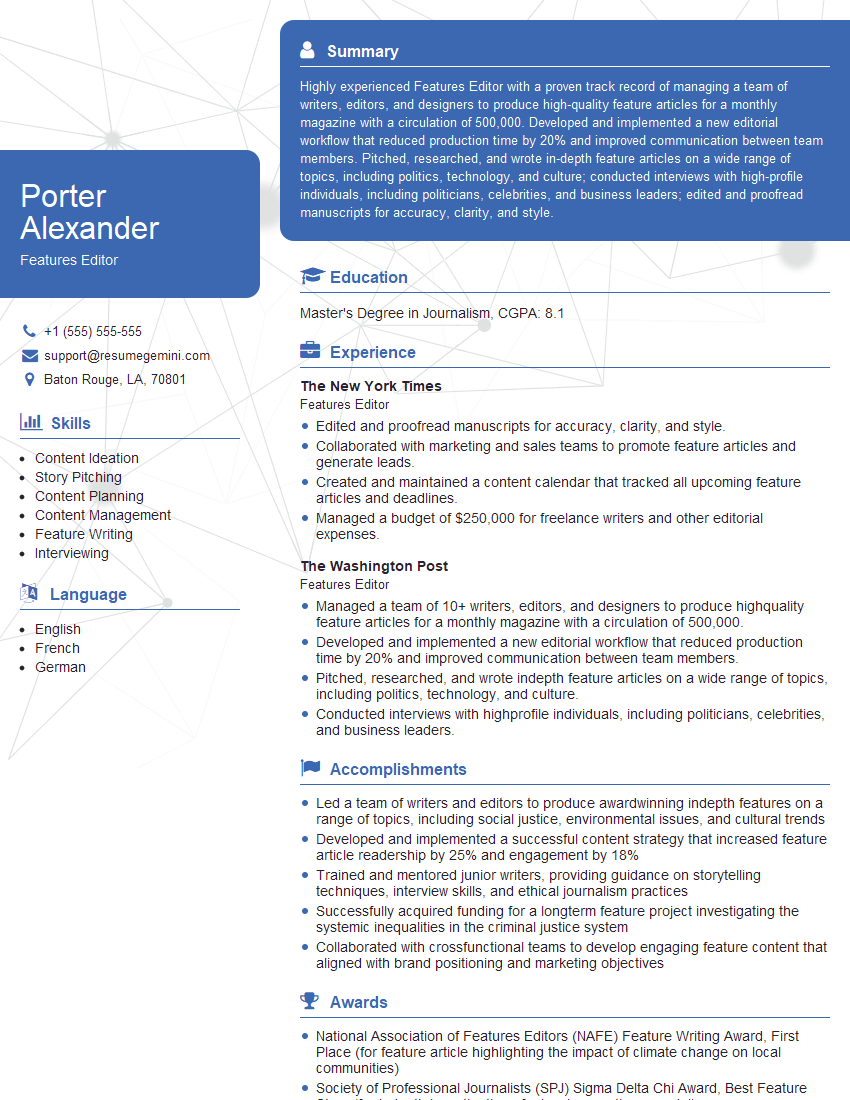
Features Editor Resume Sample
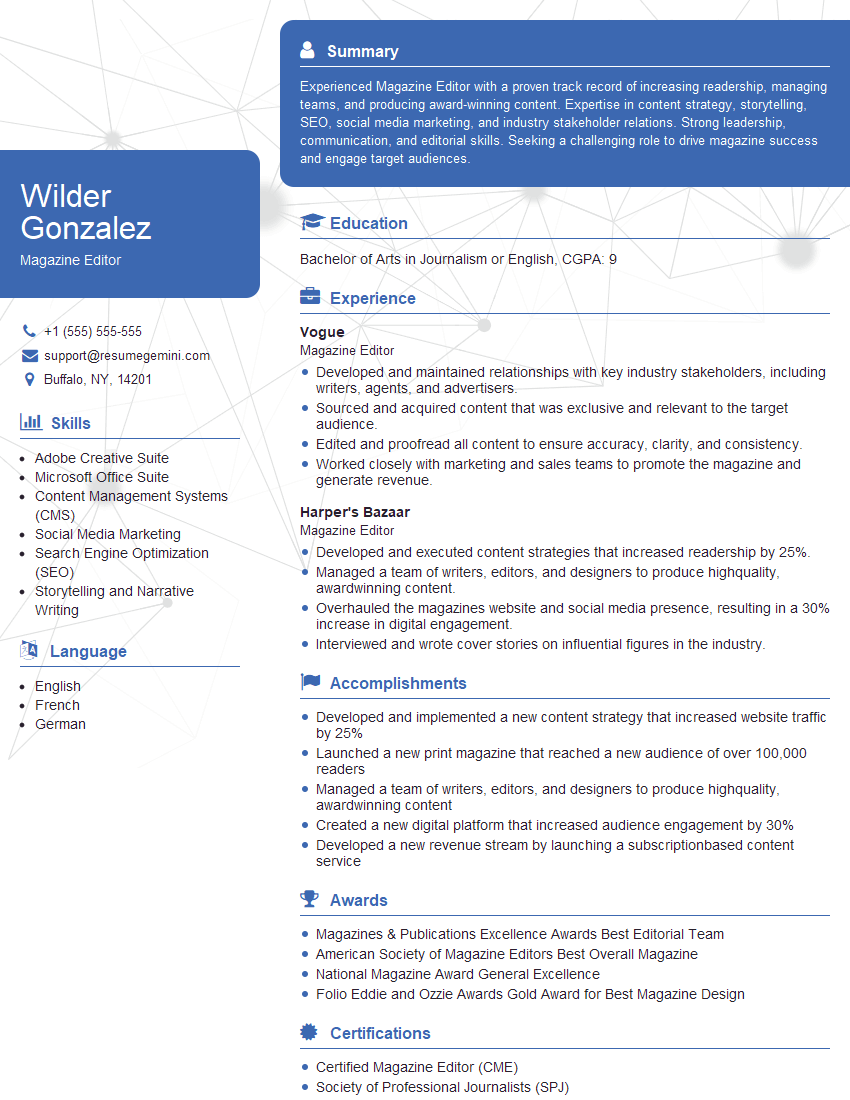
Magazine Editor Resume Sample
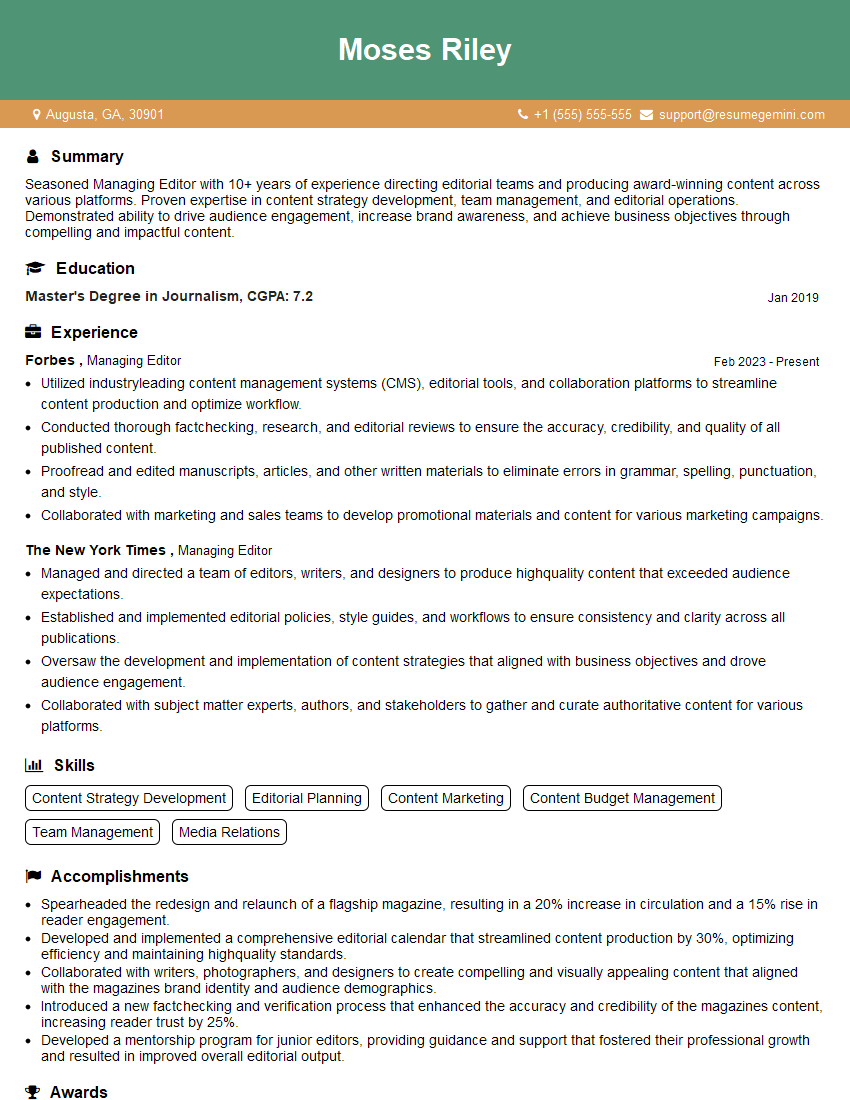
Managing Editor Resume Sample
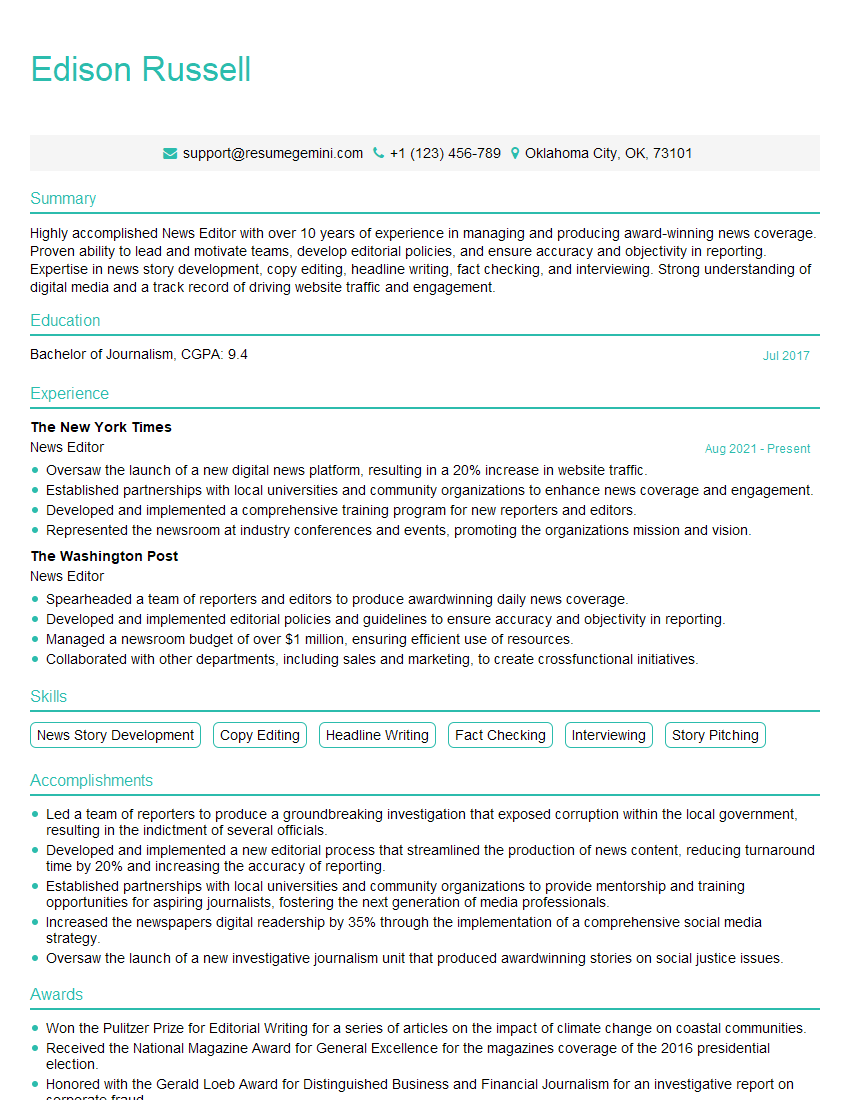
News Editor Resume Sample
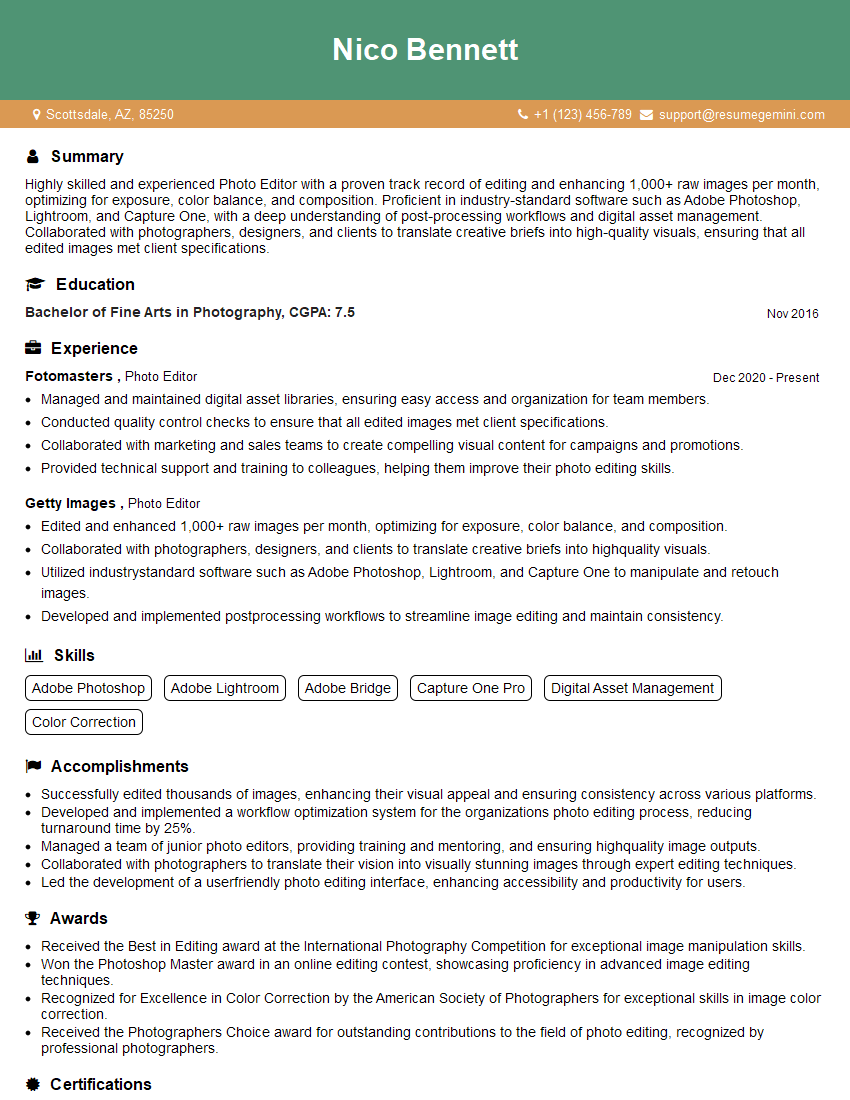
Photo Editor Resume Sample
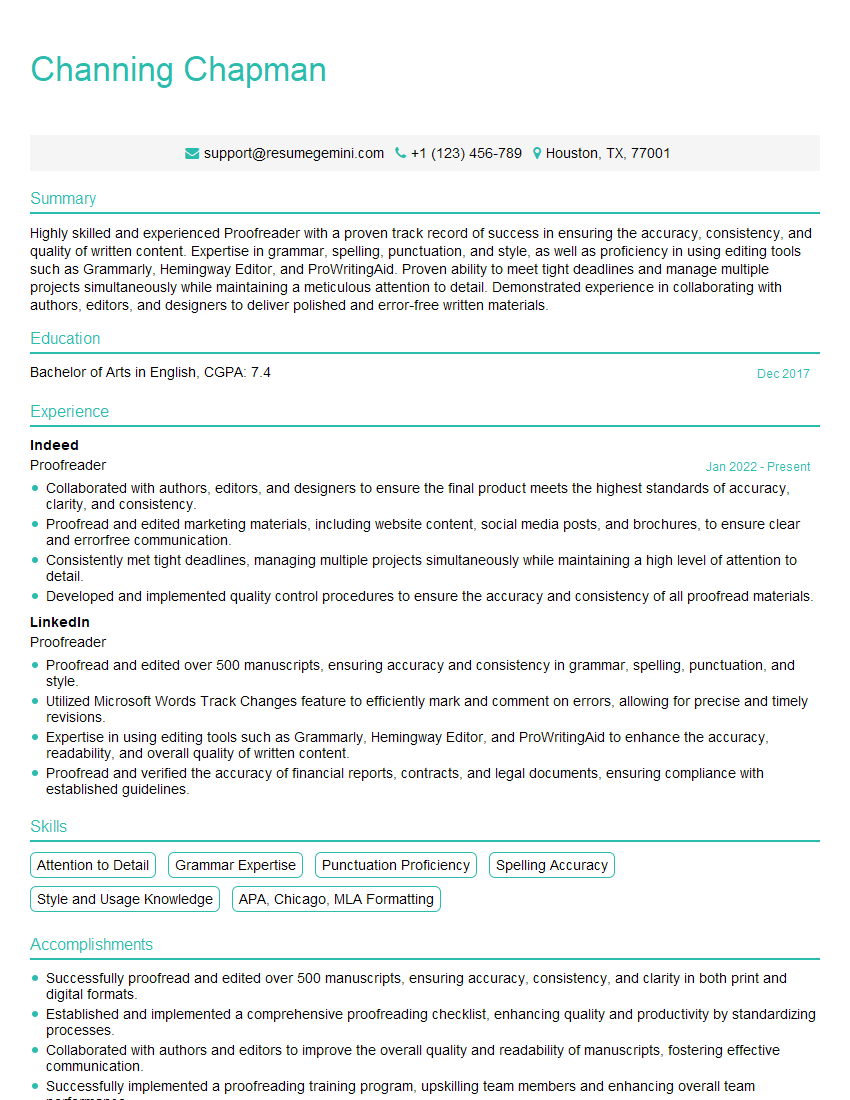
Proofreader Resume Sample
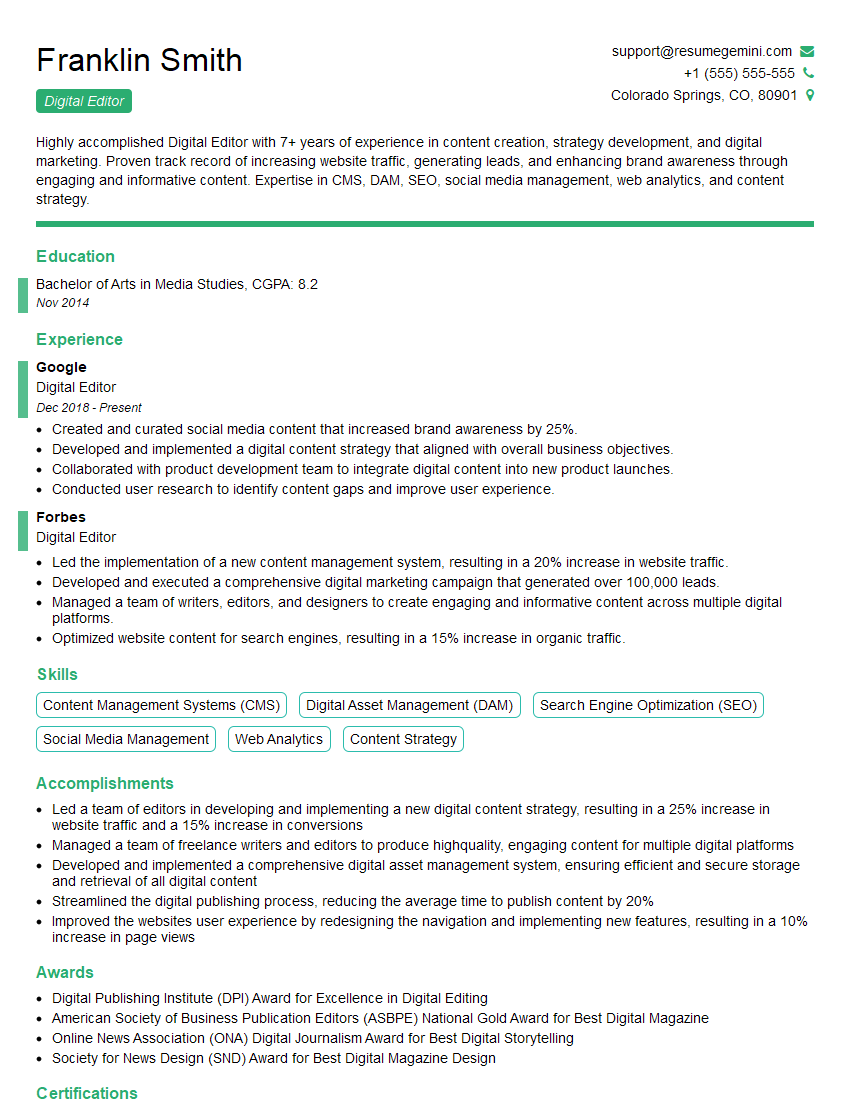
Digital Editor Resume Sample
Explore more articles
Users Rating of Our Blogs
Share Your Experience
We value your feedback! Please rate our content and share your thoughts (optional).
What Readers Say About Our Blog
Amazing blog
hello,
Our consultant firm based in the USA and our client are interested in your products.
Could you provide your company brochure and respond from your official email id (if different from the current in use), so i can send you the client’s requirement.
Payment before production.
I await your answer.
Regards,
MrSmith
hello,
Our consultant firm based in the USA and our client are interested in your products.
Could you provide your company brochure and respond from your official email id (if different from the current in use), so i can send you the client’s requirement.
Payment before production.
I await your answer.
Regards,
MrSmith
These apartments are so amazing, posting them online would break the algorithm.
https://bit.ly/Lovely2BedsApartmentHudsonYards
Reach out at BENSON@LONDONFOSTER.COM and let’s get started!
Take a look at this stunning 2-bedroom apartment perfectly situated NYC’s coveted Hudson Yards!
https://bit.ly/Lovely2BedsApartmentHudsonYards
Live Rent Free!
https://bit.ly/LiveRentFREE
Interesting Article, I liked the depth of knowledge you’ve shared.
Helpful, thanks for sharing.
Hi, I represent a social media marketing agency and liked your blog
Hi, I represent an SEO company that specialises in getting you AI citations and higher rankings on Google. I’d like to offer you a 100% free SEO audit for your website. Would you be interested?