Cracking a skill-specific interview, like one for Experience with Regulatory Agencies Worldwide, requires understanding the nuances of the role. In this blog, we present the questions you’re most likely to encounter, along with insights into how to answer them effectively. Let’s ensure you’re ready to make a strong impression.
Questions Asked in Experience with Regulatory Agencies Worldwide Interview
Q 1. Describe your experience navigating the FDA’s drug approval process.
Navigating the FDA’s drug approval process is a complex, multi-stage journey requiring meticulous planning and execution. It involves a deep understanding of regulations, extensive documentation, and robust communication with the agency. The process generally begins with pre-IND meetings to discuss the drug’s development plan and ensure alignment with FDA expectations. This is followed by the Investigational New Drug (IND) application submission, initiating clinical trials. Each phase of clinical trials demands rigorous data collection, analysis, and reporting, culminating in a New Drug Application (NDA) submission. The NDA comprehensively details the drug’s safety, efficacy, and manufacturing processes. The FDA then reviews the NDA, potentially requesting additional information or clarification before making an approval decision. Throughout this entire process, proactive communication and responsiveness to FDA queries are critical for a successful outcome.
For example, in a previous role, I was instrumental in securing approval for a novel oncology drug. We successfully navigated several FDA queries during the NDA review phase, leveraging our comprehensive data package and addressing their concerns promptly and transparently. This proactive approach significantly expedited the approval process.
Another example involved navigating a complete response letter (CRL) from the FDA after our initial NDA submission. This involved meticulously analyzing the CRL, identifying the deficiencies, and working collaboratively with various departments – from clinical research to manufacturing – to rectify the issues and submit a robust amendment. This experience underscored the importance of thorough preparation and contingency planning during the NDA submission process.
Q 2. Explain your familiarity with ISO 13485.
ISO 13485 is the internationally recognized standard for quality management systems (QMS) specific to medical devices. It outlines the requirements for designing, developing, producing, and servicing medical devices while ensuring their safety and effectiveness. Compliance with ISO 13485 is essential for manufacturers seeking to market their medical devices globally. The standard covers various aspects, including risk management, documentation control, internal audits, and corrective and preventive actions (CAPA).
My familiarity with ISO 13485 extends to both its implementation and auditing. I’ve been directly involved in establishing and maintaining ISO 13485-compliant QMS in several organizations. This involved developing and implementing documented procedures, conducting internal audits, and participating in management review meetings. Furthermore, I have conducted numerous audits of organizations seeking ISO 13485 certification, assessing their compliance with the standard’s requirements. This experience has provided me with a comprehensive understanding of the standard’s intricacies and practical applications.
For example, I led the implementation of an ISO 13485-compliant QMS for a medical device company, which resulted in a successful certification audit. This included the development of robust risk management procedures and the establishment of a CAPA system that effectively addressed potential quality issues.
Q 3. How would you handle a regulatory discrepancy discovered during an audit?
Discovering a regulatory discrepancy during an audit is a serious matter requiring a prompt, systematic, and transparent response. The first step is to immediately document the discrepancy, including its nature, location, and potential impact. A thorough investigation is crucial to understand the root cause and extent of the non-compliance. This investigation should involve relevant personnel, including quality, manufacturing, and regulatory affairs teams.
Once the root cause is identified, a corrective action plan (CAPA) must be developed and implemented to rectify the issue and prevent its recurrence. This plan should include specific actions, timelines, responsibilities, and verification measures. It’s critical to maintain accurate documentation throughout this process. The regulatory agency should be promptly notified of the discrepancy and the corrective actions taken, demonstrating proactive engagement and commitment to compliance.
I’ve encountered such situations multiple times. For instance, during a GMP audit, we discovered a documentation error in batch records. We immediately documented the discrepancy, launched a thorough investigation, identified the root cause – inadequate staff training – implemented a retraining program, updated our procedures, and reported the findings to the agency. This proactive response demonstrated our commitment to quality and compliance, averting a more severe outcome.
Q 4. What is your experience with preparing and submitting regulatory submissions?
Preparing and submitting regulatory submissions is a critical aspect of bringing products to market. It requires a deep understanding of the applicable regulations, meticulous attention to detail, and strong writing and communication skills. The process usually involves gathering all necessary data, formatting the submission according to regulatory requirements, and ensuring its completeness and accuracy before submission. Post-submission, it is crucial to monitor the submission’s progress and respond efficiently to any queries or requests for information from the regulatory agency.
My experience encompasses preparing and submitting various regulatory submissions, including INDs, NDAs, 510(k)s, and marketing authorization applications (MAAs) for different regions. This involved working with cross-functional teams, managing timelines, and ensuring that submissions met stringent regulatory requirements. For example, I led the preparation and submission of a 510(k) application for a novel medical device, successfully navigating the agency’s review process and obtaining market approval.
In another instance, I managed the submission of a complex NDA for a pharmaceutical product, successfully addressing several queries from the FDA and ensuring timely approval. This experience showcased my ability to manage complex submissions, ensuring compliance and coordinating efforts across multiple teams.
Q 5. Describe your understanding of Good Manufacturing Practices (GMP).
Good Manufacturing Practices (GMP) are a set of guidelines that ensure the consistent design, production, and quality control of pharmaceutical products and medical devices. They cover various aspects, including facilities, equipment, personnel, materials, production processes, quality control testing, and documentation. GMP aims to minimize risks associated with manufacturing, ensuring product safety, efficacy, and quality.
My understanding of GMP encompasses both pharmaceutical and medical device manufacturing. I’ve been involved in developing and implementing GMP compliant systems in manufacturing facilities. This includes conducting GMP audits, identifying and addressing non-conformances, and providing training to manufacturing personnel. I have extensive experience in reviewing manufacturing records and reports to verify compliance with GMP regulations.
For instance, I led an internal audit of a pharmaceutical manufacturing facility, identifying several minor GMP deviations. We developed and implemented corrective and preventive actions, ensuring compliance and preventing future deviations. This experience highlighted the importance of proactive GMP compliance for producing high-quality products that meet regulatory expectations.
Q 6. How have you managed conflicting regulatory requirements across different jurisdictions?
Managing conflicting regulatory requirements across different jurisdictions can be challenging but is essential for companies operating globally. It requires a thorough understanding of the specific regulations in each target market and a strategic approach to navigate these differences. This involves identifying the key differences, prioritizing the most stringent requirements, and developing a compliant strategy that addresses all applicable regulations. It often necessitates the creation of customized product specifications or labeling to meet the unique demands of each region.
I’ve successfully managed such conflicts in multiple instances, for example, when launching a medical device in both the US and the European Union. The US and EU have different regulatory pathways and requirements regarding clinical trials and labeling. I developed a comprehensive strategy that ensured compliance with all applicable regulations in both markets, including tailoring the clinical study design and device labeling to meet the specific requirements of each region.
Another instance involved the development of a pharmaceutical product for several international markets. This required harmonizing the regulatory strategy across multiple jurisdictions while addressing unique requirements related to clinical trials, registration processes, and post-market surveillance.
Q 7. What is your experience with post-market surveillance?
Post-market surveillance (PMS) is the ongoing process of monitoring the safety and efficacy of a product after it’s been released to the market. It’s a crucial aspect of ensuring patient safety and maintaining product quality. PMS involves collecting and analyzing data from various sources, including adverse event reports, field safety complaints, and post-market clinical studies. The data is used to identify potential safety issues, assess the product’s effectiveness, and make any necessary changes or updates to the product or its labeling.
My experience with PMS includes establishing and managing PMS systems for both pharmaceutical and medical devices. This includes developing plans, establishing reporting procedures, analyzing data, and communicating findings to regulatory agencies. I have experience in implementing systems for capturing and analyzing post-market data, including adverse event reporting systems, and have been involved in conducting post-market studies to assess long-term safety and efficacy.
For example, I developed and implemented a PMS system for a newly launched medical device, ensuring compliance with applicable regulations and enabling the timely detection and response to any safety concerns. This resulted in effective monitoring of the product’s performance in the field and a proactive approach to addressing any potential safety issues.
Q 8. Explain your experience with Health Canada’s regulations.
My experience with Health Canada regulations spans over ten years, encompassing various aspects of the drug development lifecycle. I’ve been directly involved in navigating the regulatory pathways for numerous products, from pre-clinical development through to post-market surveillance. This includes preparing and submitting New Drug Submissions (NDSs) and Natural Health Products (NHPs) dossiers, managing interactions with Health Canada reviewers, and addressing any deficiencies or requests for additional information. I’ve worked extensively with the various guidelines and regulations pertaining to Good Manufacturing Practices (GMP), Good Clinical Practices (GCP), and Good Laboratory Practices (GLP), ensuring our submissions were compliant with all applicable requirements. For example, I led a team that successfully navigated a complex NDS submission for a novel therapeutic, overcoming challenges related to demonstrating efficacy and safety, ultimately securing market approval.
A significant part of my work has been in understanding and interpreting Health Canada’s evolving guidance documents, and anticipating future regulatory shifts to proactively manage risk. This proactive approach has proven invaluable in streamlining the approval processes and avoiding costly delays. Another key aspect of my work has involved staying abreast of changes to the regulatory landscape relating to labelling requirements, adverse event reporting, and post-market surveillance, ensuring continuous compliance. I’ve found that effective communication and building strong relationships with Health Canada inspectors and reviewers is crucial to ensuring a smooth process.
Q 9. How familiar are you with the European Medicines Agency (EMA) guidelines?
My familiarity with the European Medicines Agency (EMA) guidelines is extensive. I’ve worked on several projects requiring compliance with EMA regulations, including the preparation and submission of Common Technical Documents (CTDs) for marketing authorization applications (MAAs). My experience encompasses navigating the intricacies of the EMA’s centralized procedure, as well as the decentralized and mutual recognition procedures. I understand the importance of fulfilling the requirements for quality, safety and efficacy as laid out in the various EMA guidelines, and I’m adept at interpreting and applying these principles to diverse therapeutic areas.
I’m particularly experienced with the EMA’s requirements for clinical trial design and reporting, pharmacovigilance, and post-authorization safety studies. For instance, I was involved in a project that required a successful navigation of the EMA’s scientific advice process, significantly influencing the clinical development strategy and strengthening the overall regulatory strategy. My knowledge extends to understanding the various EMA guidance documents on different aspects of drug development, including medicinal products for human use, veterinary products, and advanced therapy medicinal products (ATMPs).
Q 10. Describe your experience with regulatory risk assessments.
Regulatory risk assessments are an integral part of my work. I approach them methodically, using a structured approach that begins with identifying potential risks related to regulatory compliance. This involves carefully reviewing the applicable regulations, understanding the potential consequences of non-compliance (like delays, fines or product withdrawals), and assessing the likelihood of those risks occurring. Factors I consider include the complexity of the product, the novelty of the technology, and the specific requirements of the target regulatory agency.
Once the risks are identified, I prioritize them based on their severity and likelihood. This prioritization helps focus resources on mitigating the most critical risks. Mitigation strategies can range from implementing additional quality control measures, enhancing training programs, strengthening documentation systems, or proactive engagement with regulatory agencies. I then establish key performance indicators (KPIs) to track the effectiveness of the mitigation strategies and regularly review and update the risk assessment as needed. For example, during a recent project we identified a significant risk related to data integrity in our clinical trials. Through a detailed risk assessment, we implemented new data management systems and enhanced training for our staff, which effectively mitigated the risk. I document this process fully, providing a transparent record of our risk assessment, mitigation strategies, and ongoing monitoring.
Q 11. How do you stay updated on evolving global regulatory changes?
Staying updated on evolving global regulatory changes is crucial in this field. My strategy is multifaceted and involves a combination of proactive measures. I subscribe to leading regulatory newsletters and journals, actively participate in industry conferences and webinars, and maintain professional memberships with relevant organizations. This allows me to stay informed about new regulations, proposed changes, and guidance updates from various agencies worldwide.
I also leverage online resources like regulatory agency websites and specialized databases. Furthermore, I maintain a network of contacts within regulatory agencies and across the industry. This network allows me to access the latest information, insights, and best practices. The ability to network and maintain close contacts with regulatory officials in different countries allows for quick identification of issues and the development of proactive compliance solutions. Lastly, I conduct regular internal training sessions to ensure that my team is abreast of the latest regulatory developments and that we are all working with the same understanding of compliance requirements.
Q 12. Explain your experience with preparing for and participating in regulatory inspections.
Preparing for and participating in regulatory inspections is a critical aspect of my work. This involves a multi-stage process. First, I ensure all necessary documentation is well-organized and readily accessible to inspectors. This includes manufacturing records, testing data, quality control procedures, and all relevant regulatory submissions. We conduct comprehensive mock inspections to identify any gaps or weaknesses in our processes and documentation before a real inspection occurs. This practice helps identify and fix issues proactively, thereby minimising the chance of any non-compliance issues.
During the inspection itself, I maintain open communication with the inspectors, providing prompt responses to their questions and readily providing all requested documentation. After the inspection, a detailed follow-up process is implemented to address any identified observations or deficiencies, including the creation of corrective and preventive actions (CAPAs). For example, during a GMP inspection at one of our manufacturing facilities, a minor discrepancy in documentation was identified. Thanks to our robust preparation, including our thorough mock inspection, we were able to address it swiftly and efficiently, ensuring a successful inspection outcome. Post-inspection follow-up is equally vital to ensure the implementation of any agreed-upon CAPAs.
Q 13. What strategies do you use to ensure regulatory compliance within a company?
Ensuring regulatory compliance within a company requires a proactive and multi-pronged approach. I employ a system that combines robust processes, thorough training, and consistent monitoring. At the core of this system is a comprehensive quality management system (QMS) that adheres to international standards like ISO 9001. This framework ensures consistent processes, documented procedures, and clear lines of responsibility for regulatory compliance.
Regular training is critical, ensuring all staff understand their roles and responsibilities in maintaining compliance. This training encompasses all relevant regulations, procedures, and best practices. We use various methods, including online modules, workshops, and on-the-job training. Moreover, we conduct regular internal audits to verify compliance with regulations and identify areas for improvement. These audits assess the effectiveness of our processes and ensure that we are adhering to the highest standards of regulatory compliance. The findings from these audits are used to refine our processes and enhance our overall compliance program. Continuous monitoring allows for early identification of any compliance gaps, enabling timely interventions.
Q 14. How would you address a delay in regulatory approvals?
Delays in regulatory approvals can have significant consequences, impacting timelines, budgets, and market entry strategies. Addressing these delays requires a thorough understanding of the reasons behind the delay. This involves careful review of the regulatory agency’s feedback, identifying any deficiencies in our submissions, and determining the steps needed to address these issues. Effective communication with the regulatory agency is crucial, proactively engaging with reviewers to understand their concerns and collaboratively work towards a resolution.
My approach involves developing a detailed action plan outlining the necessary steps to address the deficiencies identified by the regulatory agency. This plan includes clearly defined timelines, assigned responsibilities, and measurable milestones. We may need to provide additional data, clarify aspects of our submission, or amend our product development strategy. Regular updates are provided to relevant stakeholders, keeping everyone informed of the progress and any potential implications of the delay. Transparency and proactive communication are key to mitigating the impact of the delay on the overall project. In some cases, seeking a pre-submission meeting to discuss potential issues early can help proactively address potential delays and prevent setbacks later in the process.
Q 15. Describe your experience working with external regulatory consultants.
Throughout my career, I’ve collaborated extensively with external regulatory consultants, primarily to navigate the complexities of international regulations. These collaborations have ranged from securing expert advice on specific regulatory hurdles to managing the entire regulatory submission process for new products. For instance, when launching a novel medical device in the EU, we partnered with a consultant specializing in the MDR (Medical Device Regulation). Their deep understanding of the Annex II requirements, including clinical evaluation plans and post-market surveillance, was instrumental in ensuring a smooth and timely approval.
I value consultants who possess not just regulatory knowledge but also strong project management skills and the ability to effectively communicate complex information. Successful collaborations hinge on clear communication, shared goals, and well-defined responsibilities. Regular check-ins and transparent reporting are crucial for maintaining alignment and addressing any arising challenges.
- Example: In one project, our consultant’s familiarity with specific EU Notified Bodies (NBs) expedited the selection process and minimized delays.
- Example: Another successful collaboration involved leveraging the consultant’s network to navigate a challenging situation with a regulatory agency, resulting in a favorable outcome.
Career Expert Tips:
- Ace those interviews! Prepare effectively by reviewing the Top 50 Most Common Interview Questions on ResumeGemini.
- Navigate your job search with confidence! Explore a wide range of Career Tips on ResumeGemini. Learn about common challenges and recommendations to overcome them.
- Craft the perfect resume! Master the Art of Resume Writing with ResumeGemini’s guide. Showcase your unique qualifications and achievements effectively.
- Don’t miss out on holiday savings! Build your dream resume with ResumeGemini’s ATS optimized templates.
Q 16. What is your experience with the development and implementation of compliance programs?
Developing and implementing robust compliance programs is a cornerstone of my professional experience. I’ve led the creation of these programs across diverse industries, encompassing pharmaceuticals, medical devices, and cosmetics. The key to success lies in a systematic approach, starting with a thorough risk assessment to identify potential non-compliance areas.
This assessment is followed by the development of tailored policies and procedures, clear communication channels for disseminating information, and comprehensive training programs for employees at all levels. Regular audits and monitoring are essential to identify weaknesses and ensure continuous improvement. I utilize a risk-based approach, prioritizing compliance efforts based on the severity and likelihood of potential risks.
For example, in the pharmaceutical industry, we implemented a comprehensive system for managing adverse events, ensuring prompt reporting and investigation. In the medical device sector, we focused on post-market surveillance, enabling us to quickly react to any safety concerns.
- Key Elements of Successful Compliance Programs: Clear Policies, Comprehensive Training, Regular Audits, Proactive Risk Management, Continuous Improvement
Q 17. How do you prioritize competing regulatory requirements?
Prioritizing competing regulatory requirements often involves navigating a complex web of deadlines, resources, and potential risks. I employ a risk-based prioritization framework, considering factors such as the severity of potential consequences for non-compliance, the likelihood of those consequences, and the resources required to address each requirement.
Think of it like triage in a hospital – you address the most critical cases first. Similarly, requirements with the most severe potential penalties and the highest likelihood of non-compliance receive top priority. I also use a matrix that weighs the urgency and impact of each requirement, allowing for a data-driven approach to resource allocation.
For example, if a critical regulatory deadline is approaching that could result in market withdrawal of a product, that takes precedence over a less urgent requirement. Effective communication and collaboration with various stakeholders – legal, technical, and business teams – are vital for consensus and efficient resource deployment.
Q 18. What software or tools do you use to manage regulatory information?
Managing regulatory information effectively requires leveraging appropriate software and tools. Over the years, I’ve used several systems, each offering unique advantages. These include dedicated Regulatory Information Management Systems (RIMS), which provide a centralized repository for storing and managing documents, tracking deadlines, and facilitating collaboration. These systems help ensure compliance with various regulatory requirements and streamline the review process, reducing manual work.
In addition to RIMS, I utilize project management tools like Jira to track submissions, manage tasks and deadlines, and foster collaboration among team members. These tools are invaluable for keeping the regulatory submission process well-organized and transparent. For regulatory updates and information, I rely on subscription-based databases which offer the most current and accurate information, complemented by specialized search engines for specific regulations.
- Example: A well-structured RIMS allows us to efficiently search and retrieve relevant documents during regulatory audits.
Q 19. Explain your understanding of the differences between regulatory requirements for pharmaceuticals and medical devices.
The regulatory pathways for pharmaceuticals and medical devices differ significantly, reflecting their distinct roles in healthcare. Pharmaceuticals undergo rigorous testing to demonstrate safety and efficacy before approval for marketing. This process, overseen by agencies like the FDA (in the US) or EMA (in Europe), involves extensive clinical trials and post-market surveillance. Approval is granted based on a comprehensive assessment of the benefit-risk profile of the drug.
Medical devices, on the other hand, face a regulatory landscape focused on safety and performance. The level of scrutiny varies depending on the device’s risk classification, ranging from simple devices requiring minimal regulatory oversight to high-risk devices demanding extensive clinical evidence and stringent quality control systems. Both regulatory paths necessitate rigorous documentation, adherence to Good Manufacturing Practices (GMP), and meticulous record-keeping.
The key difference lies in the demonstration of efficacy. While pharmaceuticals require robust clinical data to prove efficacy, medical devices generally need to demonstrate safety and intended performance through design validation and testing.
Q 20. Describe your experience with the process of obtaining regulatory approvals for new products.
Obtaining regulatory approvals for new products is a complex, multi-stage process that demands meticulous planning and execution. It typically begins with pre-submission meetings with regulatory agencies to discuss the proposed product and its development plan. This helps ensure that the submission meets all necessary requirements and minimizes delays.
Next, a comprehensive regulatory submission is prepared. This submission includes all pre-clinical and clinical data, manufacturing information, and labeling details. The review process can be lengthy, requiring multiple rounds of interactions with the agency to address any questions or concerns. Once approved, the product can be commercialized in the relevant markets. Post-market surveillance and reporting remain vital for continuously monitoring the product’s safety and efficacy.
Each regulatory agency has its own specific requirements and timelines, adding complexity. For example, navigating the FDA’s 510(k) process for medical devices differs significantly from seeking approval for a new drug through a New Drug Application (NDA).
Q 21. How do you handle disagreements with regulatory authorities?
Disagreements with regulatory authorities are not uncommon. When they arise, a professional and collaborative approach is essential. It starts with a thorough review of the regulatory agency’s feedback, ensuring a complete understanding of their concerns. We then engage in constructive dialogue, presenting clear and well-supported arguments based on scientific evidence and regulatory guidelines.
This involves preparing thorough responses to any deficiencies raised, potentially involving further testing or additional data generation. Maintaining a respectful and professional tone is critical throughout the process. In some cases, mediation or a formal appeal process may be necessary. The goal is always to find a mutually agreeable solution that ensures both regulatory compliance and the timely launch of the product.
Documentation of all communication with the agency is paramount, ensuring a clear audit trail for future reference. Sometimes, engaging external legal counsel is warranted for complex or high-stakes disagreements.
Q 22. How do you ensure that your organization maintains accurate and complete regulatory records?
Maintaining accurate and complete regulatory records is paramount for any organization operating globally. It’s not just about compliance; it’s about mitigating risk, demonstrating responsible conduct, and ensuring business continuity. Our approach involves a multi-layered strategy focusing on a robust system, trained personnel, and regular audits.
Centralized Record Management System: We utilize a centralized, secure, and auditable system for storing all regulatory documents. This system employs robust version control, ensuring we always have access to the most up-to-date versions. Think of it as a meticulously organized library, but for regulatory information.
Standardized Procedures and Training: We have established clear, documented procedures for record creation, storage, retrieval, and retention, aligned with global best practices. All relevant personnel receive comprehensive training on these procedures, emphasizing the importance of accuracy and completeness. Regular refresher training keeps everyone updated.
Regular Audits and Internal Reviews: Internal audits and reviews are conducted regularly to verify the accuracy and completeness of the records. This includes spot checks, full-scale audits, and periodic assessments of our record-keeping processes. This helps identify gaps early and prevent potential problems.
Data Validation and Quality Control Checks: We employ automated checks and manual validation processes at multiple points in the document lifecycle. This ensures data integrity and reduces human error, acting as a safeguard against inaccuracies.
For example, in one instance, a thorough audit revealed a minor discrepancy in a filing. Addressing it proactively prevented a potential regulatory issue. This emphasizes the importance of ongoing vigilance.
Q 23. What are the key challenges in managing global regulatory compliance?
Managing global regulatory compliance presents unique challenges, primarily stemming from the sheer diversity of jurisdictions, laws, and interpretations. Imagine trying to navigate a complex maze with constantly shifting pathways!
Jurisdictional Differences: Each country or region has its own regulatory framework, with varying levels of complexity and enforcement. What’s acceptable in one jurisdiction may be a violation in another.
Evolving Regulations: Regulations are constantly evolving. Staying current requires continuous monitoring and adaptation, demanding significant resources and expertise.
Data Privacy and Security: The management of data, especially personal data, is subject to rigorous regulations, like GDPR in Europe and CCPA in California. Ensuring compliance across multiple jurisdictions requires a sophisticated and secure system.
Language Barriers and Cultural Nuances: Translating regulations and ensuring cultural sensitivity in compliance strategies can be challenging.
Resource Constraints: Managing global compliance can be expensive, requiring investment in technology, training, and expert personnel.
For example, launching a new product globally requires careful consideration of each market’s specific requirements, potentially involving different agencies and processes for registration or approval.
Q 24. Describe your experience with the development and implementation of a regulatory strategy.
I have extensive experience in developing and implementing regulatory strategies, from inception to full operationalization. The process usually follows a structured approach:
Risk Assessment: Identifying potential regulatory risks and prioritizing them based on their likelihood and potential impact.
Gap Analysis: Comparing current practices to regulatory requirements to pinpoint areas needing improvement.
Strategy Development: Developing a comprehensive plan to address identified gaps, outlining timelines, responsibilities, and resource allocation.
Implementation: Putting the strategy into action, involving training, process changes, and technological upgrades.
Monitoring and Evaluation: Regularly tracking progress, making adjustments as needed, and assessing the effectiveness of the strategy.
In a previous role, I spearheaded the development of a global regulatory compliance program for a multinational pharmaceutical company. This involved navigating complex regulations in multiple markets, including those related to clinical trials, product registration, and data privacy. We implemented a centralized compliance platform, reducing compliance costs by 15% within the first year and improving operational efficiency.
Q 25. How do you measure the effectiveness of your regulatory compliance efforts?
Measuring the effectiveness of regulatory compliance efforts involves both quantitative and qualitative metrics. Simply having policies isn’t enough; we need to assess their practical impact.
Key Performance Indicators (KPIs): Tracking metrics like the number of regulatory audits successfully completed, the number of non-compliance incidents, and the cost of compliance.
Audit Scores and Findings: Regularly reviewing audit results to identify areas for improvement.
Employee Training and Awareness: Assessing employee knowledge of regulatory requirements and compliance procedures through testing and feedback mechanisms.
Benchmarking: Comparing our compliance performance against industry best practices and competitors.
Stakeholder Feedback: Gathering feedback from internal and external stakeholders on the effectiveness of our compliance programs.
For instance, we might track the number of successful regulatory inspections, aiming for zero critical findings. Reduction in the number of minor findings would also indicate improvement. This ensures that our efforts are consistently effective.
Q 26. Describe your experience with conducting regulatory due diligence.
Regulatory due diligence is a critical part of mergers, acquisitions, and investments, ensuring that the target company is compliant with all relevant regulations. It’s like a thorough health check for a company’s regulatory standing.
Review of Regulatory Documentation: Examining all relevant regulatory filings, licenses, permits, and approvals.
Assessment of Compliance Programs: Evaluating the effectiveness of the target company’s existing compliance programs and procedures.
Identification of Potential Liabilities: Identifying any potential regulatory liabilities or non-compliance issues.
Interviews with Key Personnel: Conducting interviews with key personnel involved in regulatory compliance to gain firsthand insights.
Third-Party Audits: Engaging third-party auditors to conduct independent assessments of the target company’s compliance status.
In one acquisition, our due diligence uncovered a potential compliance violation that was not initially disclosed. This prevented a significant financial and reputational risk for the acquiring company. Thorough due diligence is invaluable.
Q 27. What is your understanding of the role of technology in regulatory compliance?
Technology plays a transformative role in regulatory compliance, enhancing efficiency, accuracy, and effectiveness. It’s about leveraging technology to make the complex simpler.
Regulatory Information Management Systems (RIMS): These systems help manage regulatory documents, track compliance deadlines, and automate reporting.
Compliance Automation Tools: These tools automate tasks such as data collection, analysis, and reporting, reducing manual effort and errors.
Data Analytics and Machine Learning: These technologies can identify patterns and trends in compliance data, predicting potential risks and proactively addressing them.
Blockchain Technology: This can enhance data security and transparency, facilitating secure record keeping and audit trails.
For instance, automated systems can track licenses, certifications, and other compliance documents, issuing alerts when renewals are due, removing the possibility of overlooking critical dates.
Q 28. How would you communicate complex regulatory information to non-technical audiences?
Communicating complex regulatory information to non-technical audiences requires clear, concise, and relatable language. Avoid jargon and technical terms whenever possible. Think of it like translating a scientific paper into everyday language.
Use Simple Language and Analogies: Explain complex concepts using everyday language and relatable analogies.
Visual Aids: Utilize charts, graphs, and infographics to make information more accessible.
Interactive Sessions: Conduct interactive sessions with Q&A to address questions and concerns.
Storytelling: Use real-life examples and case studies to illustrate key points.
Tailor the Message to the Audience: Adapt the message and delivery method based on the audience’s level of understanding and knowledge.
For example, when explaining GDPR to a marketing team, I wouldn’t use legal terminology. Instead, I’d focus on the practical implications for their work, emphasizing the importance of obtaining consent and protecting customer data. Clear and straightforward communication is key.
Key Topics to Learn for Experience with Regulatory Agencies Worldwide Interview
- Navigating International Regulatory Landscapes: Understanding the diverse approaches and complexities of regulatory frameworks across different countries and regions. This includes recognizing key differences in legal systems and enforcement styles.
- Compliance Strategies and Best Practices: Developing and implementing effective compliance programs tailored to specific regulatory requirements. This involves practical application of risk assessment, policy development, and internal controls.
- Stakeholder Management and Communication: Effectively communicating with regulatory bodies, building strong relationships, and proactively addressing potential compliance issues. This includes preparing and presenting documentation, and managing audits.
- Data Privacy and Security in a Global Context: Understanding and adhering to international data privacy regulations (e.g., GDPR, CCPA) and implementing robust data security measures to protect sensitive information across borders.
- Regulatory Change Management: Adapting to evolving regulatory environments and proactively responding to changes in laws and guidelines. This includes anticipating potential impacts and implementing necessary adjustments to compliance programs.
- Problem-Solving in Cross-Border Regulatory Matters: Analyzing complex regulatory issues, identifying potential conflicts, and developing creative solutions that satisfy multiple jurisdictions and stakeholders.
- Ethical Considerations in Global Compliance: Understanding ethical dilemmas that may arise in navigating international regulations and maintaining the highest standards of integrity and transparency.
Next Steps
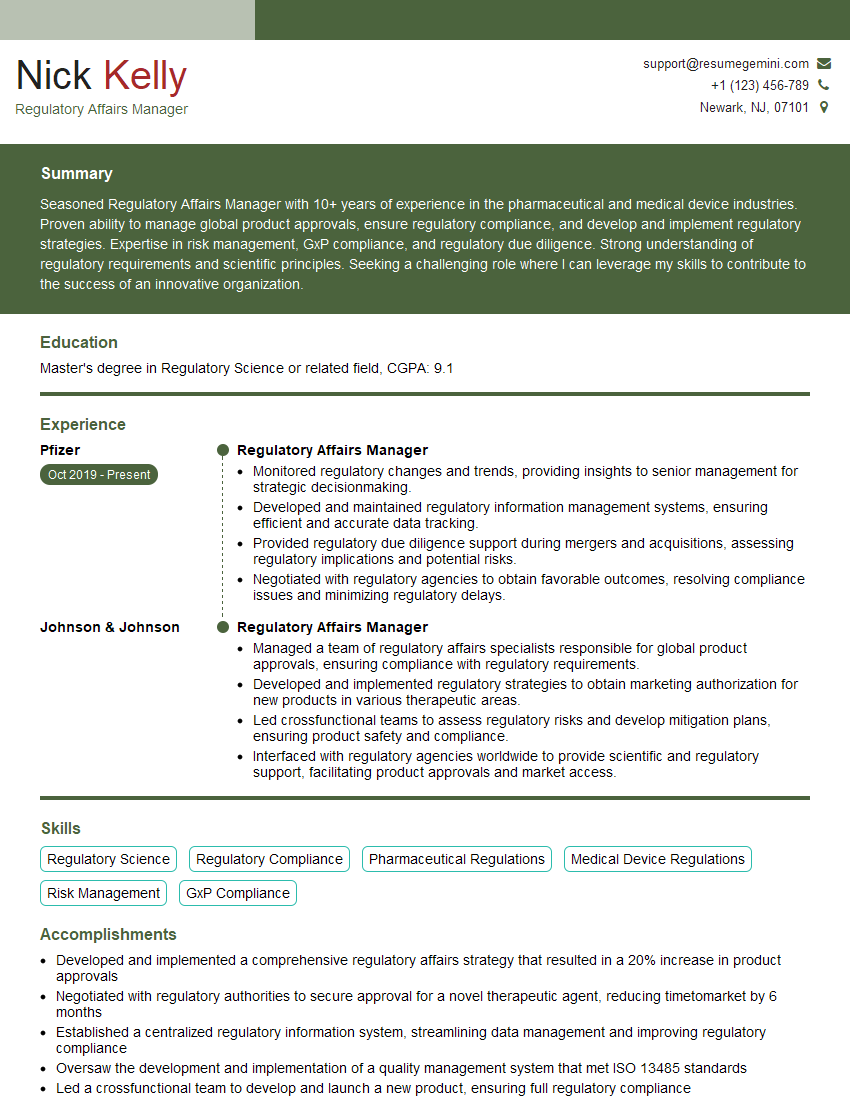
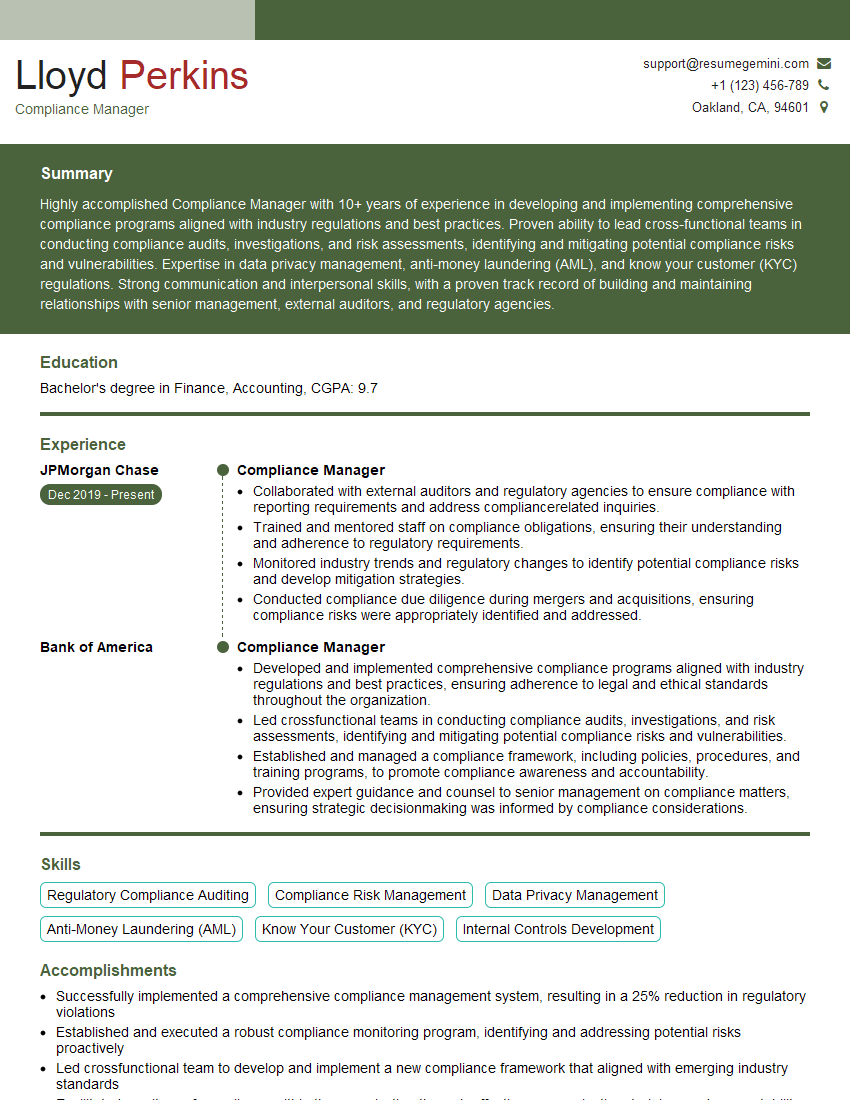
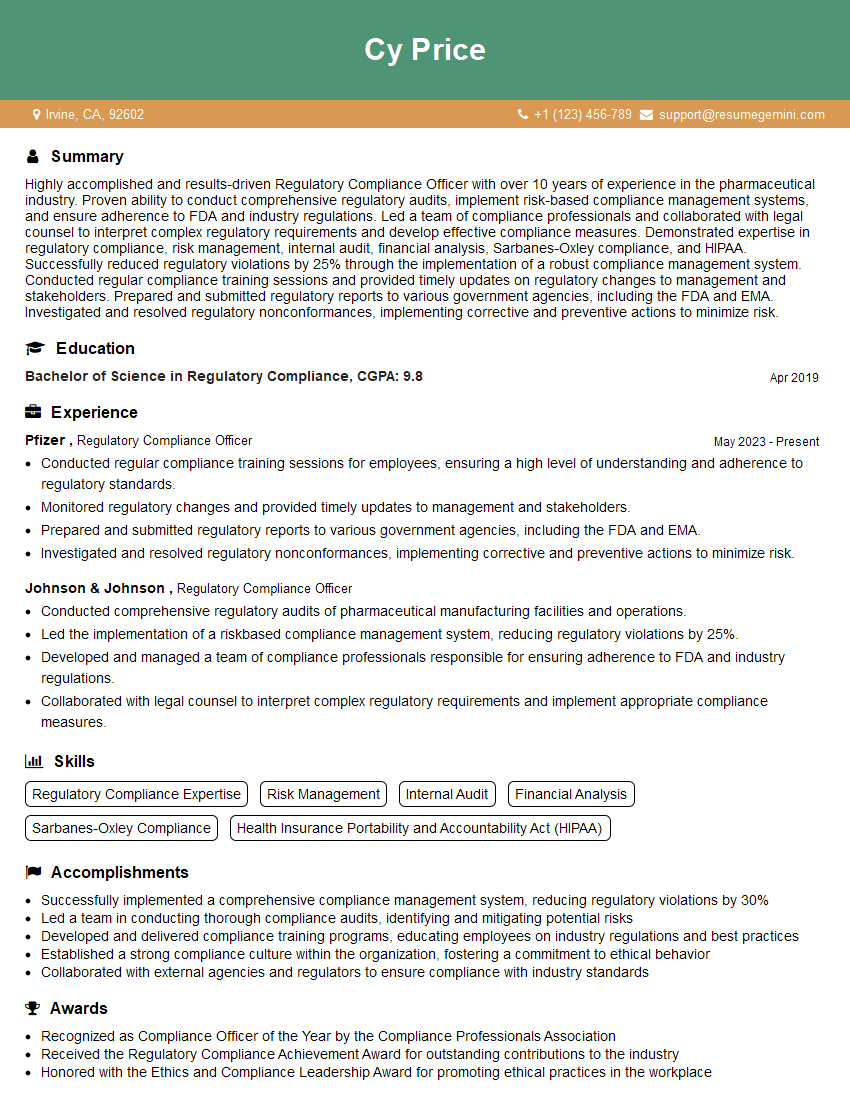
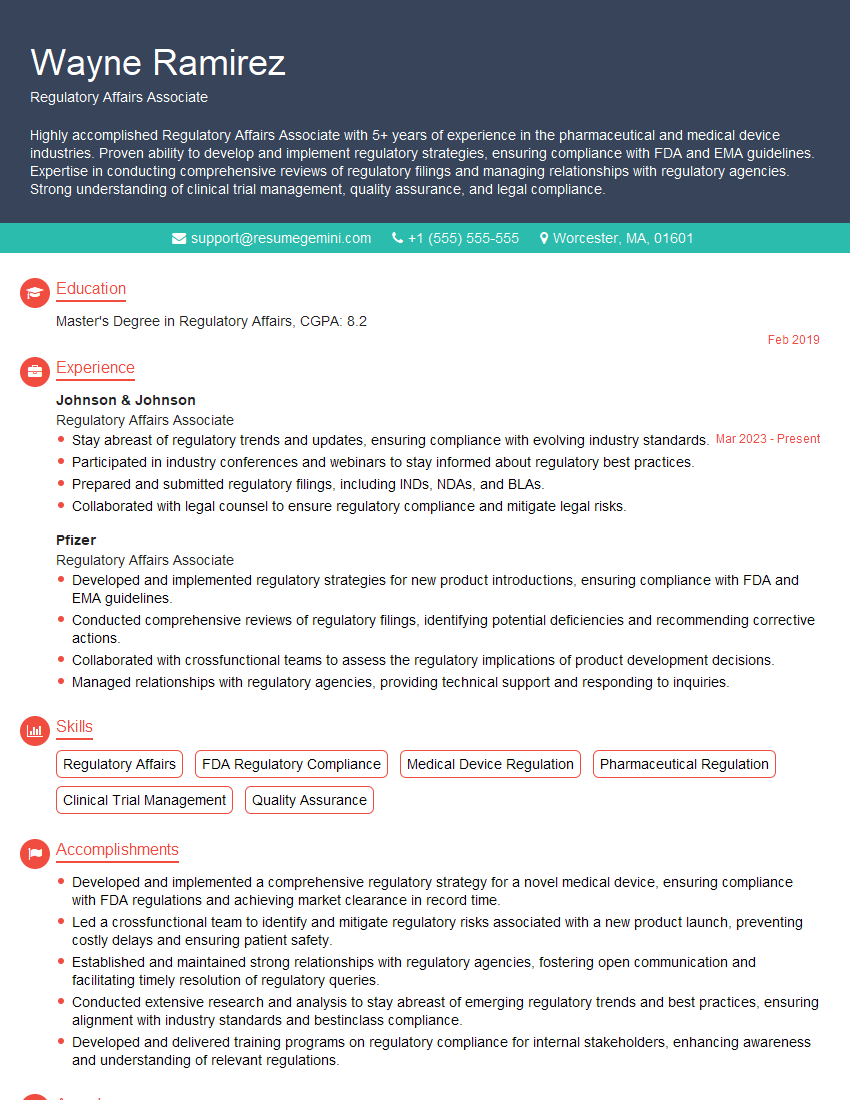
Mastering Experience with Regulatory Agencies Worldwide is crucial for career advancement in today’s globalized business environment. Demonstrating this expertise significantly increases your competitiveness and opens doors to exciting opportunities with multinational corporations and international organizations. To make the most of your job search, focus on building an ATS-friendly resume that effectively showcases your skills and experience. ResumeGemini is a trusted resource to help you create a professional and impactful resume that highlights your capabilities in this critical area. Examples of resumes tailored to “Experience with Regulatory Agencies Worldwide” are available to guide you through the process.

Explore more articles
Users Rating of Our Blogs
Share Your Experience
We value your feedback! Please rate our content and share your thoughts (optional).
What Readers Say About Our Blog
hello,
Our consultant firm based in the USA and our client are interested in your products.
Could you provide your company brochure and respond from your official email id (if different from the current in use), so i can send you the client’s requirement.
Payment before production.
I await your answer.
Regards,
MrSmith
hello,
Our consultant firm based in the USA and our client are interested in your products.
Could you provide your company brochure and respond from your official email id (if different from the current in use), so i can send you the client’s requirement.
Payment before production.
I await your answer.
Regards,
MrSmith
These apartments are so amazing, posting them online would break the algorithm.
https://bit.ly/Lovely2BedsApartmentHudsonYards
Reach out at [email protected] and let’s get started!
Take a look at this stunning 2-bedroom apartment perfectly situated NYC’s coveted Hudson Yards!
https://bit.ly/Lovely2BedsApartmentHudsonYards
Live Rent Free!
https://bit.ly/LiveRentFREE
Interesting Article, I liked the depth of knowledge you’ve shared.
Helpful, thanks for sharing.
Hi, I represent a social media marketing agency and liked your blog
Hi, I represent an SEO company that specialises in getting you AI citations and higher rankings on Google. I’d like to offer you a 100% free SEO audit for your website. Would you be interested?