The thought of an interview can be nerve-wracking, but the right preparation can make all the difference. Explore this comprehensive guide to Experience with Wardrobe Budgeting interview questions and gain the confidence you need to showcase your abilities and secure the role.
Questions Asked in Experience with Wardrobe Budgeting Interview
Q 1. What methods do you use to track and manage wardrobe budgets?
Wardrobe budgeting requires meticulous tracking. I employ a multi-pronged approach. Firstly, I use spreadsheets to meticulously record every item: its purchase price, vendor, date of acquisition, and intended use (e.g., specific project, recurring role). This allows for easy cost analysis. Secondly, I categorize expenses – for example, separating costs for rentals, purchases, alterations, and cleaning. This granular level of detail allows for identifying areas of overspending and optimization. Finally, I utilize visual tools like charts and graphs to represent the data, making it easier to understand spending patterns over time. For instance, a bar chart clearly shows the cost distribution across different categories, allowing for quick identification of cost-heavy areas.
For example, on a recent film project, I tracked 250 individual costume items across categories including period pieces, contemporary clothing and accessories. The detailed spreadsheet highlighted that accessory costs, particularly bespoke jewelry, constituted a significant portion of the budget, leading to targeted cost-saving strategies in that area.
Q 2. How do you prioritize spending within a constrained wardrobe budget?
Prioritization within a constrained budget involves a strategic approach. I begin by analyzing the script or project requirements, identifying key characters and scenes needing significant wardrobe investment. Costumes crucial to storytelling or character development receive higher priority. I then create a tiered system: ‘Essential’ items are budgeted first; ‘Desirable’ items are considered only if funds allow; and ‘Non-essential’ items are often eliminated to remain within budget. Furthermore, I explore cost-effective alternatives like renting instead of buying, using existing inventory, or sourcing items from thrift stores or vintage shops for unique, budget-friendly options.
For instance, in a theater production with a limited budget, I prioritized creating high-quality costumes for the lead actors, focusing on fabrics and details that enhanced their presence on stage. I used more affordable fabrics and simpler designs for the supporting characters, ensuring the overall visual impact was maintained without exceeding the budget.
Q 3. Describe your experience negotiating with vendors to achieve budget-friendly options.
Negotiating with vendors is a critical skill. I approach negotiations with a collaborative spirit, always focusing on building rapport. I begin by presenting a clear and concise budget outline, explaining the project’s scope and limitations. I then explore various options, such as bulk discounts, staggered payments, or in-kind trades. I also leverage my knowledge of the market to justify fair pricing, demonstrating my understanding of current rates and competitive offerings. It’s often beneficial to offer long-term partnerships in exchange for better pricing. Transparency is key; openly sharing my budget constraints fosters trust and encourages vendors to find mutually beneficial solutions.
For example, in a recent project, I negotiated a 15% discount with a costume rental company by committing to a longer rental period and pre-paying a significant portion of the cost. This allowed me to secure high-quality costumes without compromising the overall budget.
Q 4. How do you forecast wardrobe costs for a project or season?
Forecasting wardrobe costs involves a detailed, phased approach. I begin by meticulously reviewing the script, analyzing character arcs, location settings, and time periods. Then I identify costume requirements per character, including the number of outfits and necessary accessories. This is followed by a market research phase, where I gather pricing data from potential vendors (rental houses, costume designers, fabric suppliers). Considering anticipated inflation, I create a preliminary budget that accounts for potential cost fluctuations and unforeseen expenses – generally adding a contingency buffer of 10-15%. This allows for agile adjustments during the project.
For instance, while forecasting for a period drama, I factored in the higher cost of authentic fabrics and potential expenses related to bespoke tailoring and historical accuracy. This resulted in a more realistic and detailed budget, minimizing the chances of significant overruns.
Q 5. What strategies do you use to identify cost savings in wardrobe management?
Cost savings are achieved through a blend of creative and strategic methods. Firstly, I optimize existing wardrobe inventories – assessing existing stock to identify items that can be repurposed or altered for new projects. This significantly reduces purchase costs. Secondly, I explore sustainable options, such as renting instead of buying, prioritizing durable and versatile fabrics, and opting for alterations over purchasing entirely new items. Finally, I engage in proactive sourcing – identifying cost-effective vendors, negotiating discounts, and exploring collaborative partnerships. I also advocate for digital asset management solutions to enhance workflow efficiency and minimize wasteful spending.
For example, I successfully repurposed a collection of military uniforms from a past project, tailoring them to suit a new historical drama, saving thousands on new purchases.
Q 6. How do you handle budget overruns during a project?
Budget overruns are addressed promptly and transparently. The first step is to identify the cause of the overrun – whether it’s unforeseen circumstances, inaccurate initial estimates, or rising material costs. Once the cause is pinpointed, I present a detailed report to relevant stakeholders, explaining the situation and proposing solutions. These solutions might involve renegotiating with vendors, re-evaluating less crucial aspects of the wardrobe, adjusting the design plans to simplify some costumes, or seeking additional funding. Open communication and proactive problem-solving are crucial to mitigate the impact of overruns.
In a past project, an unexpected increase in fabric costs led to a budget overrun. I promptly addressed this by renegotiating with suppliers, identifying more cost-effective alternatives, and subtly modifying some costume designs without compromising the overall aesthetic. This allowed us to minimize the impact of the overrun and keep the project within a manageable financial scope.
Q 7. Explain your experience using budgeting software or tools.
I have extensive experience using various budgeting software and tools. Spreadsheets (like Google Sheets or Microsoft Excel) form the backbone of my budget management, providing granular control over data entry and analysis. I also utilize project management software such as Asana or Trello to track expenses against specific tasks and deadlines. These tools help ensure accountability and maintain project transparency. More sophisticated tools, like dedicated budgeting apps, are considered for larger projects or when more complex analysis is required. These applications often include features like automated expense tracking, budget visualization, and reporting tools.
For example, on a large-scale theatrical production, I leveraged a combination of Excel for detailed cost tracking and Asana to link wardrobe expenses to individual scenes and costume requirements. This holistic approach provided a clear and organized view of our budgeting and spending across the project.
Q 8. How do you allocate budget across different wardrobe items (e.g., costumes, accessories)?
Budget allocation across wardrobe items requires a strategic approach, prioritizing needs and balancing cost with visual impact. I typically begin with a thorough understanding of the project’s requirements – be it a film, play, or photoshoot. This includes analyzing the script or brief to identify the number of characters, the variety of scenes and settings, and the overall aesthetic. Then, I create a percentage-based allocation model. For example, a period drama might allocate a larger percentage (e.g., 60%) to costumes, reflecting the importance of historical accuracy and intricate detail. Accessories might receive 20%, with the remaining 20% allocated to shoes, undergarments, and other supporting elements. A modern-setting project might shift these percentages, perhaps favouring 40% costumes and 30% accessories to reflect contemporary fashion trends.
For instance, in a recent production, a historical piece, I allocated 65% to principal character costumes, 15% to supporting character costumes, 10% to accessories (jewelry, hats, bags) and 10% for shoes, alterations, and miscellaneous items. This helped maintain accuracy and manage costs effectively. The budget allocation is dynamic and adjusted during the process based on actual costs and unexpected needs.
Q 9. How do you ensure accurate record-keeping of wardrobe expenses?
Accurate record-keeping is crucial for effective wardrobe budgeting. I utilize a combination of digital and physical methods. A spreadsheet software like Google Sheets or Excel is my primary tool. I meticulously track every expense, including vendor invoices, receipts for materials, and labor costs. Each entry includes details like date, item description, vendor, quantity, and unit cost. This enables me to easily generate reports on spending, identify discrepancies, and predict future costs. I also maintain a physical file containing original receipts and invoices as a backup and for auditing purposes.
Additionally, I use a barcoding system for tracking rented or purchased items, streamlining inventory management and providing a clear record of their cost. This detailed approach ensures accountability and enables efficient budget tracking throughout the production lifecycle.
Q 10. Describe your experience managing inventory for a wardrobe department.
Managing inventory for a wardrobe department demands organization and precision. My approach involves a multi-faceted system. I start by cataloging every item with clear descriptions, including size, color, material, and any special features. This detailed catalog is digitally stored and regularly updated. I utilize a database software, often customized with fields specific to our needs (e.g., rental status, repair history). This database allows for efficient searching, filtering and sorting, enabling quick retrieval of information.
Furthermore, I maintain a visual inventory with photographs of each item. This significantly speeds up the selection process and reduces confusion. A crucial element of my inventory management is regular stock checks, to identify missing, damaged, or lost items. This allows for timely action, preventing last-minute problems or budget overruns. Finally, I leverage barcodes for each item which links seamlessly to the digital catalog. This system ensures clear tracking from purchase or rental to eventual return or disposal.
Q 11. How do you assess the value and cost-effectiveness of different wardrobe options?
Assessing the value and cost-effectiveness of wardrobe options requires considering both aesthetic impact and budgetary constraints. I first establish a clear understanding of the project’s overall aesthetic requirements and target audience. Then, I explore various options, comparing prices from different vendors, considering factors such as material quality, durability, and potential for reuse or resale.
For example, a custom-made costume might be more expensive initially but offers better fit and longevity, potentially saving money in the long run compared to multiple rentals. I create detailed cost comparisons for each option, accounting for rental fees (if applicable), purchase price, alterations, cleaning, and any potential repair costs. This comparative analysis allows for informed decision-making, ensuring that the chosen option provides optimal value within the allocated budget. The use of cost-per-wear calculation helps me determine the long-term value proposition of each garment.
Q 12. How do you communicate budget updates to stakeholders?
Communicating budget updates to stakeholders requires clarity and transparency. I regularly provide concise reports, utilizing visuals like graphs and charts to illustrate spending patterns and projected costs. These reports are tailored to the specific audience – a detailed financial report for producers and a more summarized overview for directors or actors. I use a consistent reporting schedule, often weekly or bi-weekly, depending on the production schedule. This consistent communication proactively identifies potential issues and allows for prompt adjustments, mitigating risks.
Furthermore, I use regular meetings to discuss budget status, addressing concerns and answering questions. I advocate for open communication, ensuring that all stakeholders are well-informed, fostering collaborative decision-making and minimizing misunderstandings.
Q 13. What metrics do you use to track the success of your wardrobe budget management?
Tracking the success of wardrobe budget management relies on key metrics. These include the percentage of budget spent versus allocated amount, the accuracy of initial budget projections, and the number of cost overruns or savings achieved. I also track the number of wardrobe malfunctions or issues, as this indicates potential weaknesses in planning or procurement. Furthermore, I evaluate the overall aesthetic success of the wardrobe choices in relation to the project’s goals. Qualitative feedback from stakeholders is also essential, gauging satisfaction with the final result.
Analyzing these metrics helps to identify areas for improvement and refine budgeting practices for future projects. For example, a low percentage of budget spent may suggest over-estimation, while a high number of wardrobe malfunctions might point to the need for higher quality materials or better maintenance procedures.
Q 14. Describe your experience with different budgeting methodologies (e.g., zero-based budgeting).
I have experience with various budgeting methodologies, including zero-based budgeting. Traditional budgeting often starts with the previous year’s budget as a base. In contrast, zero-based budgeting requires justification for every expense. Every line item starts at zero, and funds are allocated based on demonstrable need and anticipated value. This approach can be highly effective in streamlining expenses and identifying inefficiencies.
In practice, this involves meticulously documenting the rationale for each wardrobe expense, showing its contribution to the overall project. This ensures that every item is evaluated for its necessity and cost-effectiveness. While more time-consuming initially, zero-based budgeting leads to more focused and efficient spending.
Q 15. How do you adapt to changes in budget throughout a project?
Adapting to budget changes in a wardrobe project requires a flexible yet structured approach. It’s crucial to have a well-defined initial budget, broken down into categories like garments, accessories, alterations, and potential rentals. When changes occur, I prioritize a collaborative process. I’ll first analyze the variance: Is it a slight increase or a significant reduction? What caused the change? Was it unforeseen circumstances (like a sudden increase in fabric costs) or a strategic shift in project direction?
For minor adjustments, I’d re-allocate funds within existing categories. For example, if we saved on accessories, we could allocate those savings towards higher-quality fabrics. For significant budget cuts, I would work with stakeholders to prioritize key elements. We’d discuss which items are essential versus desirable and potentially scale back on the less crucial items. This might involve sourcing more affordable alternatives, reducing the quantity of items, or postponing certain purchases to a later phase.
Regular budget monitoring through detailed spreadsheets or project management software is essential. This allows me to identify potential overspending early and take corrective measures. Transparency with all parties involved is also paramount. Clear communication about budget shifts minimizes surprises and ensures everyone remains on the same page.
Career Expert Tips:
- Ace those interviews! Prepare effectively by reviewing the Top 50 Most Common Interview Questions on ResumeGemini.
- Navigate your job search with confidence! Explore a wide range of Career Tips on ResumeGemini. Learn about common challenges and recommendations to overcome them.
- Craft the perfect resume! Master the Art of Resume Writing with ResumeGemini’s guide. Showcase your unique qualifications and achievements effectively.
- Don’t miss out on holiday savings! Build your dream resume with ResumeGemini’s ATS optimized templates.
Q 16. How do you ensure compliance with budget guidelines and regulations?
Ensuring compliance with budget guidelines and regulations is paramount. This involves several key steps. Firstly, I begin with a thorough understanding of all relevant regulations and guidelines, which may vary based on the project type (e.g., a film production versus a theatrical show). This understanding guides initial budget planning. I then establish a robust tracking system, meticulously recording all expenses with corresponding receipts and invoices. This detailed record-keeping facilitates easy auditing and ensures transparency.
I employ a system of checks and balances by having multiple people review purchase orders and invoices before final approval. This minimizes the risk of errors or unauthorized spending. For larger purchases, I obtain multiple quotes to ensure cost-effectiveness and compliance with procurement policies. Finally, I create regular budget reports that compare actual spending to the projected budget, flagging any deviations promptly. These reports are essential for proactive management and identification of potential issues.
Q 17. Describe a time you had to make difficult budget decisions.
In a recent project for a historical drama, we faced an unexpected challenge. The initial budget allocated for period-accurate fabrics was significantly underestimated due to a market fluctuation. This meant we had to make difficult choices to stay within the overall budget. The options were: compromise on the quality of fabrics, reduce the number of costumes, or seek additional funding.
After careful analysis, we chose a hybrid approach. We prioritized the costumes needed for the most crucial scenes, opting for higher-quality fabrics for those. For less prominent scenes, we carefully sourced more affordable, yet still historically appropriate, fabrics. This approach involved creative problem-solving and close collaboration with the costume designer to ensure the visual integrity of the production wasn’t significantly compromised. While difficult, this experience highlighted the importance of contingency planning and flexible budget management.
Q 18. How do you handle unexpected expenses related to wardrobe?
Handling unexpected expenses requires a proactive and methodical approach. The first step is to identify the cause of the unexpected cost. Was it damage to a garment, an unforeseen alteration need, or a sudden price increase from a supplier? Once the cause is identified, I assess the severity of the expense relative to the overall budget. Minor expenses might be absorbed within existing contingency funds (a crucial element of any wardrobe budget).
For larger, more significant expenses, I immediately document the issue, including supporting evidence (e.g., photos of damaged items, invoices detailing the increased cost). I then communicate this to the stakeholders, providing options for addressing the issue. This might include renegotiating with suppliers, finding more cost-effective alternatives, or requesting a budget adjustment. Transparency and prompt communication are key in these situations to avoid escalation and maintain project stability.
Q 19. What is your approach to evaluating the long-term cost implications of wardrobe decisions?
Evaluating the long-term cost implications of wardrobe decisions necessitates a holistic perspective that extends beyond the initial purchase price. I consider factors like the garment’s durability, the ease of maintenance (cleaning, repairs), its versatility (how many different outfits can it be used in), and its potential resale value. For instance, investing in high-quality, classic pieces, even if more expensive upfront, is often a wiser long-term investment than buying many trendy, low-quality items that will quickly become outdated or unusable.
I utilize cost-per-wear calculations to determine the true value of each garment. This involves dividing the initial cost by the estimated number of times the garment will be worn. This helps to prioritize items with a high cost-per-wear ratio, ensuring the budget is allocated effectively. Additionally, I consider the potential for rental versus purchase, particularly for items that will only be needed for a single event or project.
Q 20. How familiar are you with different types of purchasing contracts for apparel?
My experience encompasses various purchasing contracts for apparel, including wholesale agreements, consignment contracts, and individual purchase orders. Wholesale agreements typically involve bulk purchasing at discounted rates, often requiring a minimum order quantity. These are suitable when large volumes of similar items are needed, such as uniforms or bulk production runs. Consignment agreements are beneficial when dealing with unique or high-value items; the supplier retains ownership until the item is sold, reducing financial risk.
Individual purchase orders are commonly used for smaller purchases or one-off items. Each contract type has its own terms and conditions, including payment schedules, delivery times, and return policies. I am adept at negotiating favorable terms within each contract type, ensuring the best value for money while mitigating potential risks. A deep understanding of these contract structures is vital for effective wardrobe budgeting and ensuring compliance.
Q 21. Describe your experience with cost analysis in the context of wardrobe management.
Cost analysis in wardrobe management is crucial for informed decision-making. My approach involves a multi-faceted analysis that goes beyond simply adding up the costs. I use a combination of methods to gain a comprehensive understanding of the financial picture. This includes creating detailed budgets that break down costs by category (garments, accessories, alterations, rentals, etc.), tracking actual spending against the budget, and conducting regular variance analyses.
Furthermore, I perform cost-per-wear calculations to evaluate the long-term value of each garment, as previously discussed. I also analyze supplier quotes and pricing structures to identify potential cost savings through bulk purchasing, negotiations, or sourcing alternative suppliers. Finally, I use data visualization techniques (charts and graphs) to present cost information clearly to stakeholders, facilitating informed decision-making and ensuring transparency regarding the wardrobe’s financial aspects.
Q 22. How do you utilize data analysis to improve wardrobe budget efficiency?
Data analysis is crucial for optimizing wardrobe budgets. I begin by collecting data on various aspects, including purchase history (item type, cost, brand, purchase date), usage frequency (tracked through a personal system or app), and the lifespan of each item. This data is then analyzed to identify trends. For instance, I might discover that I overspend on impulse buys of fast fashion items that have short lifespans, or that I underutilize certain expensive pieces. This analysis informs future purchasing decisions, allowing me to prioritize high-quality, versatile items with a longer lifespan over numerous low-quality, trendy pieces.
Specifically, I might use tools like spreadsheets (Excel or Google Sheets) to track spending and create visualizations like charts and graphs to illustrate spending patterns over time. This allows for a clear visual representation of where money is being spent and helps identify areas for potential savings. For instance, a bar chart could show spending per clothing category (e.g., tops, bottoms, outerwear) clearly indicating areas of overspending.
By understanding these trends, I can create a more effective budget that aligns with my personal style and needs, rather than reacting to impulsive purchases. This data-driven approach ensures that the money allocated towards the wardrobe directly reflects its value and use.
Q 23. What is your understanding of return on investment (ROI) in relation to wardrobe expenses?
Return on Investment (ROI) in wardrobe expenses refers to the value derived from each clothing item relative to its cost. A high ROI wardrobe features items that are worn frequently, last a long time, and maintain their appearance and functionality. Think of it like this: an expensive, high-quality coat that lasts for ten winters and remains stylish offers a much higher ROI than a cheaper coat that wears out after a single season, regardless of the initial price difference.
To calculate a simplified ROI, consider the cost of the item and divide it by the number of times you wear it, factoring in its lifespan. For example, a $200 coat worn 50 times over five years has a cost per wear of $0.80, representing a relatively good ROI. Conversely, a $50 shirt worn only 10 times before fading or tearing has a cost per wear of $5, showcasing a low ROI.
Therefore, maximizing ROI in a wardrobe necessitates strategic purchasing decisions, prioritizing quality, versatility and longevity. I often leverage the data analysis I mentioned before to understand my ROI on past purchases, to inform my future investments.
Q 24. How do you collaborate with other departments to manage wardrobe budgets effectively?
Effective wardrobe budget management requires collaboration with different departments, particularly if working within a professional context such as a theater company or a film production. For instance, if working on a film, I would collaborate with the costume department, ensuring the allocated budget meets their specific needs while adhering to the overall financial goals of the production.
Communication is key. Regular meetings to discuss upcoming projects, anticipated needs, and potential cost-saving measures (e.g., sourcing affordable but high-quality materials, renting instead of buying) ensure everyone is informed and aligned. For example, I might work with the production designer to identify wardrobe pieces that can be reused across multiple scenes or projects, reducing overall costs.
Transparent budgeting and regular reporting on expenses help maintain fiscal accountability and allow for any necessary adjustments. This collaborative process promotes efficiency and resource optimization, resulting in successful wardrobe management within budget constraints.
Q 25. What software or tools are you proficient in using for wardrobe budget tracking?
I am proficient in several software and tools for wardrobe budget tracking. Spreadsheets like Microsoft Excel and Google Sheets are invaluable for recording purchases, tracking expenses, and creating visual representations of spending patterns.
I also utilize budgeting apps designed for personal finance, many of which allow for category-specific tracking (like assigning clothing to a separate category). These apps often provide features like setting budget limits, generating reports, and providing insights into spending habits. Depending on the complexity of the wardrobe needs, I might also use project management software (like Asana or Trello) to collaborate with others, manage inventory, and track the progress of wardrobe-related tasks if working within a team context.
Ultimately, the best tool depends on the scale and complexity of the project and personal preference. The key is consistent record-keeping and utilizing the software’s features for analysis and reporting.
Q 26. Describe a situation where you successfully managed a tight wardrobe budget.
I once managed a very tight wardrobe budget for a student theater production. Our funding was limited, yet we needed to create diverse and historically accurate costumes for a period piece. Instead of immediately purchasing everything new, I prioritized resourceful solutions.
First, I thoroughly researched online marketplaces like eBay and secondhand clothing stores for affordable but suitable pieces. We also organized a costume drive within the school community, collecting usable items from students and staff. Then, I collaborated with the set design team to repurpose existing fabrics and materials for alterations and costume creations. We held clothing-swapping events where students could trade pieces they no longer needed.
This multi-pronged approach, combining thrifting, repurposing and community engagement, allowed us to meet the costume requirements while staying significantly under budget. It also offered a fantastic learning opportunity to embrace sustainable and cost-effective practices within a creative field.
Q 27. How would you handle a discrepancy between projected and actual wardrobe costs?
Discrepancies between projected and actual wardrobe costs require immediate investigation. My first step is to meticulously review all transactions against the initial budget, identifying the source of the variance. Was it due to unexpected repairs, higher-than-anticipated pricing of essential items, or unforeseen additional purchases?
Next, I would analyze the reasons behind the discrepancy. Were there any inaccuracies in the initial budget projections? Did unanticipated circumstances necessitate additional spending? Once the cause is identified, I create a revised budget, detailing necessary adjustments to expenditure. This might involve cutting back on less-essential items or seeking alternative, more cost-effective options for future purchases.
Finally, I document the entire process, including the initial budget, the variance, the reasons, and the adjustments made, to improve future budget accuracy and prevent similar discrepancies from arising. Transparency and thorough record-keeping are crucial for resolving budget issues and learning from past experiences.
Q 28. What are your strategies for minimizing waste and maximizing the life of wardrobe items?
Minimizing waste and maximizing the lifespan of wardrobe items is paramount for effective budget management. This involves a holistic approach encompassing careful purchasing decisions, proper care, and creative repurposing.
- Prioritizing Quality over Quantity: Investing in high-quality, durable items that withstand regular wear and tear significantly reduces replacement costs in the long run.
- Versatile Clothing Choices: Selecting versatile items that can be mixed and matched to create multiple outfits expands their usability and value.
- Proper Clothing Care: Following care instructions, using appropriate cleaning methods, and storing clothes properly helps preserve their quality and extend their lifespan.
- Creative Repurposing: Old garments can be transformed into new items through simple alterations or upcycling projects.
- Supporting Sustainable Brands: Opting for brands committed to sustainable production practices reduces environmental impact and often supports higher quality materials and construction, enhancing longevity.
By adopting these strategies, you not only save money by reducing waste and prolonging the life of your wardrobe but also contribute to environmentally responsible consumption patterns.
Key Topics to Learn for Experience with Wardrobe Budgeting Interview
- Understanding Cost Analysis: Learn to break down wardrobe costs into categories (materials, labor, production, etc.) and analyze spending patterns.
- Budget Allocation Strategies: Explore different budgeting methods (e.g., zero-based budgeting, incremental budgeting) and their applicability to wardrobe planning.
- Forecasting & Planning: Develop skills in predicting future wardrobe needs based on trends, sales cycles, and seasonal demands.
- Negotiation & Vendor Management: Practice strategies for negotiating favorable pricing with suppliers and managing vendor relationships effectively.
- Inventory Management & Control: Understand the importance of tracking inventory levels, preventing waste, and optimizing stock turnover.
- Data Analysis & Reporting: Learn to use data to monitor budget performance, identify areas for improvement, and create insightful reports for stakeholders.
- Risk Management & Contingency Planning: Develop strategies for mitigating potential risks, such as supply chain disruptions or unexpected cost increases.
- Sustainability & Ethical Sourcing: Discuss environmentally and socially responsible practices within wardrobe budgeting.
- Technology & Software Applications: Familiarize yourself with relevant software for budgeting, inventory management, and data analysis.
Next Steps
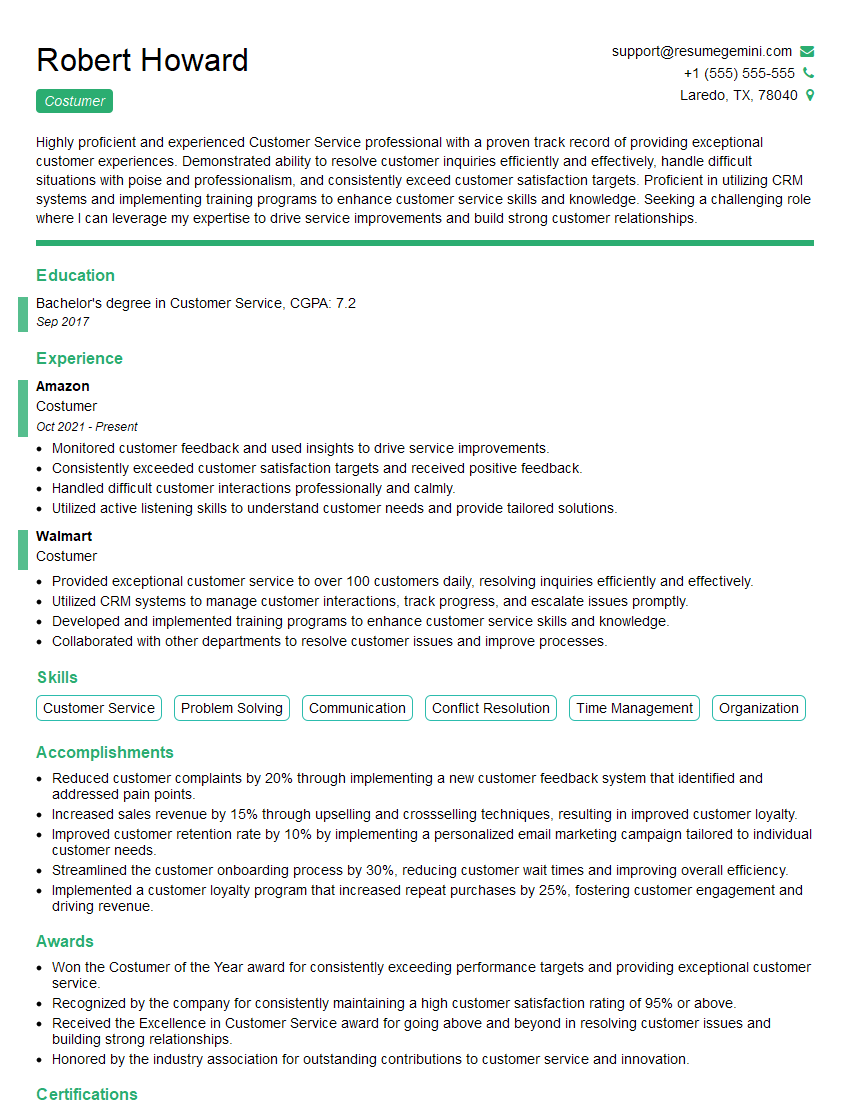
Mastering wardrobe budgeting demonstrates crucial financial management and planning skills highly valued across various industries. A strong understanding of these concepts significantly enhances your career prospects and showcases your ability to handle responsibility and make informed decisions. To maximize your job search success, focus on creating an ATS-friendly resume that effectively highlights your relevant skills and experience. ResumeGemini is a trusted resource that can help you build a professional and impactful resume, ensuring your qualifications stand out. We provide examples of resumes tailored to Experience with Wardrobe Budgeting to guide you in crafting your own compelling application.
Explore more articles
Users Rating of Our Blogs
Share Your Experience
We value your feedback! Please rate our content and share your thoughts (optional).
What Readers Say About Our Blog
Amazing blog
hello,
Our consultant firm based in the USA and our client are interested in your products.
Could you provide your company brochure and respond from your official email id (if different from the current in use), so i can send you the client’s requirement.
Payment before production.
I await your answer.
Regards,
MrSmith
hello,
Our consultant firm based in the USA and our client are interested in your products.
Could you provide your company brochure and respond from your official email id (if different from the current in use), so i can send you the client’s requirement.
Payment before production.
I await your answer.
Regards,
MrSmith
These apartments are so amazing, posting them online would break the algorithm.
https://bit.ly/Lovely2BedsApartmentHudsonYards
Reach out at BENSON@LONDONFOSTER.COM and let’s get started!
Take a look at this stunning 2-bedroom apartment perfectly situated NYC’s coveted Hudson Yards!
https://bit.ly/Lovely2BedsApartmentHudsonYards
Live Rent Free!
https://bit.ly/LiveRentFREE
Interesting Article, I liked the depth of knowledge you’ve shared.
Helpful, thanks for sharing.
Hi, I represent a social media marketing agency and liked your blog
Hi, I represent an SEO company that specialises in getting you AI citations and higher rankings on Google. I’d like to offer you a 100% free SEO audit for your website. Would you be interested?