Interviews are opportunities to demonstrate your expertise, and this guide is here to help you shine. Explore the essential Fashion Business Knowledge interview questions that employers frequently ask, paired with strategies for crafting responses that set you apart from the competition.
Questions Asked in Fashion Business Knowledge Interview
Q 1. Explain the difference between a fast-fashion and a luxury fashion business model.
Fast fashion and luxury fashion represent diametrically opposed business models, differing significantly in their design, production, pricing, and marketing strategies.
Fast fashion prioritizes speed and affordability. It leverages trend replication, mass production, and low-cost materials to offer consumers the latest styles at budget-friendly prices. Think Zara or H&M: frequent collections, short lifecycles, and readily available styles. The business model relies on high volume and fast turnover to generate profit.
Luxury fashion, conversely, emphasizes exclusivity, craftsmanship, and heritage. It utilizes high-quality materials, intricate designs, limited production runs, and premium pricing to establish a brand identity associated with prestige and status. Brands like Chanel or Hermès are prime examples. Their business model focuses on maintaining a strong brand image, creating a sense of desire, and delivering a luxurious customer experience.
In essence, fast fashion is about accessibility and trend-driven consumption, while luxury fashion is about exclusivity, timeless appeal, and investment value.
Q 2. Describe your experience with fashion trend forecasting and its impact on product development.
Trend forecasting is crucial to my work. I’ve consistently leveraged trend analysis to inform product development across several brands. My process begins with researching various sources: fashion shows, street style photography, social media trends (TikTok, Instagram), color reports from Pantone, and market research data.
For example, I identified a growing interest in upcycled and sustainable fashion via social media. This informed the development of a capsule collection using recycled materials, which proved incredibly successful. I presented my findings visually – using mood boards, trend reports, and data visualizations – to the product development team. This allowed us to align on design direction and material selection, ultimately improving the collection’s market fit and minimizing potential waste due to misaligned design and market preference.
Predicting trends is never perfect, but a rigorous and multi-faceted approach, combined with data analysis, substantially reduces risk and enhances product development efficiency.
Q 3. How do you analyze sales data to inform future purchasing decisions?
Analyzing sales data is vital for informed purchasing. I use a multi-step approach:
- Data Aggregation: I consolidate sales data from various sources – point-of-sale (POS) systems, e-commerce platforms, and warehouse inventory – to get a comprehensive view.
- Performance Metrics: I calculate key metrics like sell-through rate (percentage of inventory sold), gross margin, and average order value (AOV). This reveals which products performed well and which underperformed.
- Trend Identification: I identify trends by analyzing sales data over time. Are sales for a particular style increasing or decreasing? Which color or size is selling fastest? This helps predict future demand.
- Customer Segmentation: I segment customers based on purchase history and demographics to understand different buying patterns. This allows for more targeted purchasing decisions.
- Future Purchasing: Based on these insights, I adjust future purchasing orders accordingly. If a particular item has a high sell-through rate, I increase the order quantity for future seasons. Conversely, if an item performs poorly, I reduce future orders.
For instance, by tracking sales of specific denim washes across different demographics, I can pinpoint successful styles and adjust future orders to match consumer preferences, ensuring a lower risk of unsold inventory.
Q 4. What are the key performance indicators (KPIs) you would monitor in a retail setting?
In a retail setting, several KPIs are crucial for assessing performance. Here are a few:
- Sales per square foot: Measures sales generated per square foot of retail space, reflecting space efficiency.
- Conversion rate: The percentage of shoppers who make a purchase, indicating marketing and customer service effectiveness.
- Average transaction value (ATV): The average amount spent per transaction, revealing opportunities for upselling and cross-selling.
- Inventory turnover: How quickly inventory is sold, showcasing stock management efficiency.
- Customer acquisition cost (CAC): The cost of acquiring a new customer, helping evaluate marketing ROI.
- Customer lifetime value (CLTV): The predicted revenue a customer will generate over their relationship with the brand.
- Return on investment (ROI): Measures the profitability of marketing campaigns or individual products.
By consistently tracking these metrics, I can make data-driven decisions to optimize operations and boost profitability.
Q 5. Explain your understanding of supply chain management in the fashion industry.
Supply chain management in fashion is a complex process involving the flow of raw materials, design, manufacturing, distribution, and retail. Effective management requires meticulous planning and collaboration across multiple stages.
My experience includes working with various manufacturers, overseeing quality control, negotiating contracts, managing logistics, and tracking shipments. I utilize technology such as ERP (Enterprise Resource Planning) systems to monitor inventory, track orders, and optimize workflows. I also employ strategies to mitigate risk – for example, diversifying sourcing to avoid over-reliance on a single supplier and ensuring timely delivery by establishing strong partnerships with logistics providers.
A strong supply chain is essential for ensuring timely product delivery, maintaining quality, and controlling costs. In today’s market, ethical and sustainable sourcing is also gaining immense importance, and incorporating these aspects into supply chain strategies is crucial for long-term success.
Q 6. How do you identify and manage risk in the fashion business?
Risk management is paramount in the fashion industry, where trends change rapidly and unforeseen events can significantly impact operations. My risk management strategy involves:
- Identifying potential risks: This includes analyzing geopolitical factors, economic fluctuations, supply chain disruptions, and changes in consumer demand.
- Assessing the likelihood and impact: Determining the probability of each risk occurring and its potential consequences.
- Developing mitigation strategies: Creating contingency plans to address potential problems. For example, having alternative suppliers or diversifying product lines.
- Monitoring and review: Continuously monitoring the identified risks and reviewing mitigation strategies to ensure their effectiveness.
For instance, during the COVID-19 pandemic, we diversified our sourcing to mitigate the risk of factory closures, and we also shifted our marketing efforts towards digital platforms to adapt to changing consumer behavior.
Q 7. Describe your experience with visual merchandising and its impact on sales.
Visual merchandising significantly impacts sales by enhancing the overall shopping experience and influencing purchasing decisions. My experience includes creating visually appealing displays, managing store layouts, and ensuring consistent branding across all retail channels.
I’ve used various techniques, including color psychology, strategic product placement, and storytelling through displays to increase sales. For instance, strategically placing high-margin items near the entrance or creating eye-catching displays to showcase new collections has directly led to increased sales. Data analysis plays a role here too; by tracking sales from specific displays, I can optimize store layouts and visual merchandising strategies for maximum impact. This continuous improvement loop ensures the visual aspects of our retail spaces drive sales effectively.
Q 8. How do you stay current with fashion trends and market changes?
Staying current in the dynamic fashion industry requires a multi-pronged approach. It’s not enough to simply browse magazines; you need a systematic method for gathering and analyzing information. My strategy involves a combination of techniques:
- Trend Forecasting Services: I subscribe to reputable trend forecasting agencies like WGSN and Fashion Snoops. These provide in-depth analyses of emerging trends, color palettes, and materials, offering valuable insights months before they hit mainstream markets.
- Industry Publications and Blogs: I regularly read trade publications like Women’s Wear Daily (WWD), Vogue Business, and Business of Fashion, as well as influential fashion blogs and podcasts. This keeps me informed about market shifts, brand strategies, and emerging designers.
- Social Media Monitoring: Platforms like Instagram, TikTok, and Pinterest are invaluable for understanding consumer preferences and identifying emerging trends organically. I actively monitor relevant hashtags and influencers to gauge public sentiment and spot nascent trends.
- Market Research and Data Analysis: I utilize market research reports from companies like Statista and Euromonitor to understand consumer behavior, market size, and competitive landscapes. This data provides a more quantitative perspective on trends.
- Networking and Industry Events: Attending fashion shows, trade fairs (like Premiere Vision), and conferences provides invaluable networking opportunities and allows me to directly engage with industry leaders and learn firsthand about upcoming trends.
By combining these methods, I ensure a holistic understanding of current and future fashion trends and market changes, allowing me to make informed decisions.
Q 9. Explain your experience with negotiating with vendors or suppliers.
Negotiating with vendors and suppliers is a crucial aspect of my work, requiring a balance of assertiveness and collaboration. My approach centers around building strong relationships built on mutual respect and understanding. I begin by clearly defining my needs and expectations, including quality standards, delivery timelines, and payment terms. I meticulously research the market to understand prevailing prices and ensure I’m negotiating from a position of informed strength.
During negotiations, I focus on establishing a collaborative atmosphere. I actively listen to the supplier’s perspective, understanding their constraints and challenges. This helps me find mutually beneficial solutions. For instance, in one instance, I negotiated a longer payment term in exchange for a larger order volume, benefiting both parties. I also employ a variety of negotiation tactics, including:
- Value-based negotiation: Focusing on the value the supplier provides, not just the price.
- Strategic concessions: Making compromises on less critical aspects to secure more favorable terms on crucial ones.
- Win-win outcomes: Always striving for agreements that benefit both parties, fostering long-term partnerships.
Documentation is key. Every agreement is meticulously documented, ensuring clarity and reducing the potential for disputes.
Q 10. Describe your understanding of different pricing strategies in the fashion industry (e.g., cost-plus, value-based).
Pricing strategies are fundamental to a fashion business’s success. They dictate profitability and influence brand perception. Different strategies exist, each with its own advantages and disadvantages:
- Cost-Plus Pricing: This is a straightforward approach where you calculate the cost of goods sold (COGS), including materials, labor, and manufacturing, and add a predetermined markup percentage to determine the selling price. It’s simple to implement but doesn’t account for market demand or competitive pricing.
- Value-Based Pricing: This strategy focuses on the perceived value of the product to the customer. High-quality materials, unique designs, and brand prestige justify higher prices. This requires strong brand building and marketing to convince consumers of the product’s worth. For example, a luxury brand might use this, charging a premium for exclusivity and craftsmanship.
- Competitive Pricing: This involves setting prices based on the prices of similar products from competitors. It’s vital to consider your brand positioning – are you aiming to be a premium, mid-range, or budget brand?
- Penetration Pricing: This involves setting a low initial price to quickly gain market share. Often used for new product launches or brands entering a market.
- Skimming Pricing: This sets a high initial price to maximize profits from early adopters, then gradually lowers the price as the product matures. Often used for innovative or highly desirable products.
The optimal pricing strategy depends on factors like target market, brand positioning, product uniqueness, and competitive landscape. Often, a combination of strategies is used.
Q 11. How do you manage a fashion marketing campaign budget effectively?
Managing a fashion marketing campaign budget effectively requires meticulous planning and tracking. I utilize a zero-based budgeting approach, starting from scratch each time, and allocate resources based on a clear understanding of campaign objectives, target audience, and available channels. This involves:
- Defining Clear Objectives: Setting specific, measurable, achievable, relevant, and time-bound (SMART) goals. For example: increase brand awareness by 20% in three months.
- Target Audience Segmentation: Identifying specific customer segments to tailor messaging and channel selection. A young, trendy audience might respond well to TikTok, while an older, more established demographic might prefer print advertising or influencer collaborations.
- Channel Prioritization: Selecting the most effective channels based on the target audience and budget constraints. It’s essential to analyze the ROI of each channel.
- Detailed Budgeting: Allocating funds across different marketing activities like paid advertising (Google Ads, social media ads), content creation (photography, videography), public relations, influencer marketing, and events.
- Regular Monitoring and Reporting: Continuously tracking key performance indicators (KPIs) like website traffic, social media engagement, conversion rates, and return on investment (ROI). This allows for adjustments during the campaign to maximize efficiency.
Utilizing marketing automation tools helps streamline processes and provides valuable data for analysis and optimization.
Q 12. What strategies would you employ to increase brand awareness for a new fashion label?
Increasing brand awareness for a new fashion label requires a strategic and multi-faceted approach. I would focus on a combination of the following strategies:
- Targeted Social Media Marketing: Leverage platforms like Instagram, TikTok, and Pinterest to reach the target audience with visually appealing content. Utilize influencer marketing to generate buzz and credibility. Paid social media advertising helps reach a wider audience.
- Public Relations and Media Outreach: Secure press coverage in relevant fashion publications and blogs to generate organic reach and credibility. Press releases announcing new collections or collaborations are key.
- Content Marketing: Create valuable and engaging content such as blog posts, lookbooks, behind-the-scenes videos, and style guides to showcase the brand’s personality and aesthetic. This helps to establish thought leadership and authority.
- Strategic Partnerships and Collaborations: Collaborate with complementary brands or influencers to broaden reach and access new customer segments. A collaboration with a popular beauty brand could open your label to a new audience.
- Experiential Marketing: Create engaging events like pop-up shops, fashion shows, or trunk shows to provide a direct brand experience for customers.
- Search Engine Optimization (SEO): Optimize the brand website and online content for relevant keywords to improve search engine ranking and organic website traffic.
- Email Marketing: Build an email list to nurture customer relationships and promote new collections and offers. This provides a more direct form of communication than social media.
These strategies, combined with a strong brand identity and compelling product offering, will effectively raise brand awareness for a new label.
Q 13. How would you address a situation where a product launch fails to meet sales expectations?
When a product launch fails to meet sales expectations, a thorough investigation is crucial to identify the root causes. This requires a systematic approach:
- Data Analysis: Examine sales data, website analytics, and customer feedback to pinpoint areas of weakness. Were there issues with marketing, pricing, product quality, or distribution?
- Customer Feedback Analysis: Gather feedback through surveys, online reviews, and social media monitoring to understand customer perceptions of the product. What did customers like or dislike? Were there any unmet needs?
- Competitive Analysis: Evaluate competitor offerings to identify gaps and opportunities. What are competitors doing better? How can we differentiate our product?
- Market Research: Conduct additional market research to validate initial assumptions about target market, product positioning, or demand. Have market conditions changed since the product was developed?
- Marketing Campaign Review: Assess the effectiveness of the marketing campaign. Were the right channels used? Was the messaging compelling enough? Were there any misaligned strategies?
Based on these findings, corrective actions can be taken. These might include adjusting pricing, improving product design or functionality, re-evaluating marketing strategies, or adjusting the distribution network. Open communication and adaptability are essential to turn the situation around.
Q 14. Describe your experience working with fashion designers and/or manufacturers.
I have extensive experience working collaboratively with fashion designers and manufacturers. I understand the importance of clear communication, mutual respect, and shared goals throughout the entire product lifecycle. My approach emphasizes:
- Clear Communication and Collaboration: I establish open communication channels and facilitate regular meetings to ensure everyone is informed and aligned on design specifications, production timelines, and quality standards. This often includes detailed briefs with sketches, mood boards, and technical drawings to ensure the designers’ vision is clearly understood.
- Strong Supplier Relationships: I foster strong relationships with manufacturers based on trust and transparency. This involves selecting reliable and ethical manufacturers who adhere to high quality and sustainability standards. Regular site visits and quality control checks are essential.
- Effective Project Management: I employ robust project management techniques to ensure projects are completed on time and within budget. This involves setting realistic timelines, tracking progress, and addressing any potential roadblocks proactively. This typically involves creating detailed production schedules and managing the associated documentation (e.g. purchase orders, shipping manifests).
- Constructive Feedback and Problem Solving: I provide constructive feedback to designers on design feasibility, production costs, and market suitability. When problems arise (such as production delays or quality issues), I collaborate with designers and manufacturers to find swift and effective solutions.
This collaborative approach ensures efficient and high-quality product development and production, optimizing timelines and costs while maintaining design integrity.
Q 15. Explain your understanding of intellectual property rights in fashion.
Intellectual property rights (IPR) in fashion protect the unique designs, branding, and other creative elements of a fashion brand. This protection prevents unauthorized copying and ensures that designers and brands can profit from their creative work. Key IPR areas in fashion include:
- Copyright: Protects original designs, sketches, patterns, and other creative works. This is automatically granted upon creation, but registration provides stronger legal protection and the ability to sue for infringement.
- Trademarks: Protect brand names, logos, and other distinctive brand identifiers that differentiate a fashion brand from its competitors. Registration is crucial for securing exclusive rights and preventing others from using similar marks.
- Trade secrets: Protect confidential information that provides a competitive edge, such as unique manufacturing processes, design techniques, or customer lists. These are not formally registered but rely on confidentiality agreements and security measures.
- Design patents: Offer protection for the ornamental design of an article of manufacture, such as the shape or surface decoration of clothing or accessories. They protect the visual aspects, not the functionality.
For example, a designer’s unique dress silhouette could be protected by copyright and potentially a design patent, while the brand’s logo would be protected by a trademark. Understanding and leveraging these various forms of IPR is crucial for safeguarding a fashion brand’s assets and competitive advantage.
Career Expert Tips:
- Ace those interviews! Prepare effectively by reviewing the Top 50 Most Common Interview Questions on ResumeGemini.
- Navigate your job search with confidence! Explore a wide range of Career Tips on ResumeGemini. Learn about common challenges and recommendations to overcome them.
- Craft the perfect resume! Master the Art of Resume Writing with ResumeGemini’s guide. Showcase your unique qualifications and achievements effectively.
- Don’t miss out on holiday savings! Build your dream resume with ResumeGemini’s ATS optimized templates.
Q 16. How do you ensure that your product development is aligned with your brand’s identity?
Aligning product development with a brand’s identity is paramount for building brand recognition and customer loyalty. It’s about creating a cohesive narrative across all aspects of the product, from design and materials to packaging and marketing. I accomplish this through a multi-stage process:
- Defining Brand DNA: This involves carefully articulating the brand’s core values, target audience, aesthetic, and unique selling proposition (USP). For example, a brand might define itself as sustainable, minimalist, or luxurious.
- Mood Boards and Trend Forecasting: We create visual representations of the brand’s aesthetic, incorporating relevant trends while staying true to the brand’s DNA. This helps guide design choices.
- Material Selection: Fabric choices, textures, and trims must align with the brand’s identity. A sustainable brand might prioritize organic cotton, while a luxury brand might choose high-quality silk.
- Design Development: Designers work within the established guidelines, creating prototypes and samples that embody the brand’s aesthetic and functionality.
- Quality Control: Rigorous quality checks throughout the process ensure that the final product meets the brand’s standards for craftsmanship and quality.
For instance, if a brand positions itself as eco-conscious, every aspect of the product, from the materials to the packaging, must reflect this commitment. Inconsistency can confuse the consumer and damage the brand’s reputation.
Q 17. Describe your experience with e-commerce and its impact on the fashion industry.
E-commerce has revolutionized the fashion industry, offering unprecedented opportunities for brands to reach global audiences and increase sales. My experience includes managing online stores, implementing digital marketing strategies, and analyzing e-commerce data. The impact on the fashion industry is multifaceted:
- Increased Accessibility: Consumers can access a wider range of products and brands from anywhere in the world.
- Direct-to-Consumer Sales: Brands can bypass traditional retail channels and sell directly to consumers, improving margins and gaining valuable customer data.
- Enhanced Customer Experience: E-commerce platforms offer personalized recommendations, interactive tools, and seamless checkout processes, enhancing the overall shopping experience.
- Data-Driven Decision Making: E-commerce provides access to valuable data on customer behavior, preferences, and sales trends, allowing for more informed decision-making.
- Increased Competition: The ease of entry into the e-commerce space has led to increased competition, requiring brands to constantly innovate and differentiate themselves.
However, challenges exist, such as managing logistics, handling returns, and maintaining a consistent brand experience across different online channels. Successfully navigating the e-commerce landscape requires a strong understanding of digital marketing, customer service, and supply chain management.
Q 18. Explain your understanding of sustainable fashion practices.
Sustainable fashion practices encompass environmentally and socially responsible approaches to design, production, and consumption of clothing. It’s about minimizing the negative impact of the fashion industry on the planet and its people. Key aspects include:
- Sustainable Materials: Using eco-friendly fabrics like organic cotton, recycled materials, and innovative plant-based alternatives.
- Ethical Production: Ensuring fair wages, safe working conditions, and responsible labor practices throughout the supply chain.
- Reduced Waste: Minimizing textile waste through efficient production processes, innovative design techniques, and promoting clothing longevity.
- Circular Economy: Implementing strategies such as clothing rental, recycling, and upcycling to extend the lifecycle of garments and reduce landfill waste.
- Transparency and Traceability: Providing clear information about the origins of materials, manufacturing processes, and the social and environmental impact of the products.
A commitment to sustainable practices not only benefits the environment but also enhances a brand’s image and attracts environmentally conscious consumers. Examples include brands using recycled polyester, promoting clothing swaps, or partnering with organizations that support fair trade practices.
Q 19. What are the ethical considerations in the fashion supply chain?
Ethical considerations in the fashion supply chain are crucial for ensuring fair and responsible practices throughout the entire process, from raw material sourcing to product delivery. Key issues include:
- Worker Exploitation: Ensuring fair wages, safe working conditions, and reasonable working hours for garment workers, especially in developing countries.
- Environmental Impact: Minimizing the environmental footprint of production by reducing water and energy consumption, limiting pollution, and responsibly managing waste.
- Animal Welfare: Avoiding the use of materials derived from animals through cruel or unsustainable practices.
- Supply Chain Transparency: Ensuring transparency and traceability throughout the supply chain to monitor and address ethical concerns.
- Child Labor: Preventing the exploitation of children in any stage of the supply chain.
Addressing these ethical concerns requires robust auditing processes, strong supplier relationships, and a commitment to fair trade principles. Brands are increasingly held accountable for the ethical practices of their suppliers, and consumers are demanding greater transparency and sustainability.
Q 20. How would you build relationships with key influencers or bloggers?
Building relationships with key influencers and bloggers requires a strategic and authentic approach. It’s not about simply sending free products; it’s about fostering genuine partnerships that benefit both parties. My strategy includes:
- Identifying Relevant Influencers: Researching influencers whose audience aligns with the brand’s target market and whose style and values resonate with the brand’s identity.
- Personalized Outreach: Reaching out to influencers with personalized messages, demonstrating an understanding of their work and audience.
- Collaborative Campaigns: Developing mutually beneficial campaigns that align with the influencer’s content strategy and brand values. This could involve sponsored posts, product reviews, or participation in events.
- Building Long-Term Relationships: Cultivating long-term relationships with influencers through consistent communication, mutual respect, and shared success.
- Measuring Campaign Performance: Tracking key metrics such as engagement, reach, and website traffic to assess the effectiveness of influencer marketing campaigns.
Authenticity is key. Influencers can easily detect inauthentic attempts at collaboration, so transparency and genuine engagement are crucial for building trust and achieving successful partnerships.
Q 21. Describe your experience with using data analytics in fashion business decision-making.
Data analytics plays a critical role in fashion business decision-making, providing valuable insights into consumer behavior, market trends, and sales performance. My experience involves leveraging data to optimize various aspects of the business:
- Sales Analysis: Tracking sales data to identify best-selling products, seasonal trends, and customer preferences. This helps inform inventory management and future product development.
- Customer Segmentation: Analyzing customer data to create distinct customer segments based on demographics, purchase history, and online behavior. This allows for targeted marketing campaigns and personalized recommendations.
- Website Analytics: Monitoring website traffic, bounce rates, and conversion rates to optimize website design, content, and marketing strategies.
- Social Media Analytics: Tracking social media engagement, reach, and sentiment to measure the effectiveness of social media marketing campaigns and understand consumer perception of the brand.
- Predictive Modeling: Utilizing data to forecast future sales, trends, and demand, enabling proactive inventory planning and informed business decisions.
For example, by analyzing website data, we can identify which product categories are performing well and which need improvement. This data-driven approach allows for more effective resource allocation and minimizes risks associated with inventory management and marketing strategies.
Q 22. How would you utilize social media to promote a fashion brand?
Social media is crucial for modern fashion brand promotion. It’s not just about posting pretty pictures; it’s about building a community and creating a consistent brand narrative. My strategy involves a multi-platform approach, tailored to each platform’s strengths.
- Instagram: High-quality visuals are king. I’d leverage Instagram’s visual focus through stunning product shots, behind-the-scenes glimpses into the design process, and user-generated content showcasing customers wearing the brand. I’d utilize relevant hashtags and collaborate with influencers to reach a wider audience. Instagram Stories and Reels are perfect for quick, engaging content, like styling tips or sneak peeks of upcoming collections.
- TikTok: This platform thrives on short-form video. I’d create engaging video content showcasing trends, styling hacks, behind-the-scenes looks at photoshoots, or even fun challenges related to the brand. Collaborating with micro-influencers on TikTok is especially effective.
- Pinterest: A visual search engine, Pinterest is ideal for driving traffic to the brand’s website. I would create visually appealing pins featuring product shots, style guides, and mood boards linked directly to the e-commerce site.
- Facebook: Facebook allows for more in-depth engagement through longer-form posts, community building, and targeted advertising campaigns. Running contests and giveaways can increase brand awareness and engagement.
- Paid Advertising: Across all platforms, strategic paid advertising is vital. I would carefully target ads based on demographics, interests, and behaviors to reach the ideal customer profile effectively.
Data analytics are crucial. I would consistently track key metrics like engagement rate, reach, website traffic from social media, and conversion rates to optimize the strategy over time. This iterative process ensures the social media strategy remains effective and delivers a strong return on investment.
Q 23. What is your understanding of the current fashion market landscape?
The current fashion market is dynamic and highly competitive. Several key trends shape the landscape:
- Sustainability and Ethical Production: Consumers are increasingly conscious of the environmental and social impact of their purchases. Brands that prioritize sustainable materials, ethical labor practices, and transparency are gaining traction.
- Personalization and Customization: The demand for personalized experiences is growing. Brands are offering bespoke services, allowing customers to customize products to their preferences.
- Digital Transformation: E-commerce continues to grow rapidly, with online shopping becoming the norm for many consumers. Brands need a robust online presence and a seamless digital customer experience.
- Fast Fashion vs. Slow Fashion: The tension between fast fashion’s affordability and speed and slow fashion’s focus on quality, longevity, and sustainability continues to define the market. Consumers are seeking a balance between these two approaches.
- Influencer Marketing and Social Commerce: Social media platforms are becoming major drivers of sales. Brands are collaborating with influencers and leveraging social commerce features to directly sell products through social media.
- Inclusivity and Diversity: Consumers expect brands to represent a diverse range of body types, ethnicities, and styles. Brands that prioritize inclusivity are resonating with a wider audience.
Understanding these trends is critical for success in today’s fashion market. Brands need to be agile, adaptable, and responsive to evolving consumer preferences.
Q 24. Describe your understanding of different retail channels (e.g., brick-and-mortar, online, wholesale).
Retail channels offer diverse ways to reach customers. Each has unique advantages and disadvantages:
- Brick-and-Mortar: Traditional physical stores offer a tangible experience, allowing customers to touch and try products. However, they have higher overhead costs and are limited by geographical reach.
- Online (E-commerce): E-commerce provides a global reach, 24/7 availability, and lower overhead than brick-and-mortar stores. However, it requires a strong online presence, excellent website design, and efficient logistics to handle online orders and shipping.
- Wholesale: Selling products to retailers or other businesses allows for greater volume sales and expansion into new markets. However, it involves managing relationships with multiple retailers and often entails lower profit margins per unit.
Many successful fashion brands utilize a multi-channel approach, combining the strengths of all three channels to maximize reach and revenue. A well-integrated omnichannel strategy allows brands to offer a seamless shopping experience across all channels.
Q 25. How do you manage inventory levels effectively?
Effective inventory management is crucial for profitability and customer satisfaction. My approach involves a multi-faceted strategy:
- Demand Forecasting: Accurately predicting future demand based on historical sales data, market trends, and seasonality is paramount. Sophisticated forecasting techniques can significantly improve accuracy.
- Inventory Tracking System: Using a robust inventory management system (IMS) is essential for real-time visibility into stock levels, allowing for timely replenishment or adjustments.
- Just-in-Time (JIT) Inventory: Minimizing storage costs and reducing the risk of obsolescence by ordering materials and producing goods only when needed. This requires precise demand forecasting and strong supplier relationships.
- Safety Stock: Maintaining a certain level of buffer stock to account for unexpected demand spikes or supply chain disruptions.
- Regular Inventory Audits: Conducting regular physical inventory counts to reconcile with system records and identify discrepancies.
- Sales Data Analysis: Closely analyzing sales data to identify best-selling items, slow-moving inventory, and seasonal trends, which informs future purchasing decisions.
The goal is to balance having enough stock to meet customer demand without overstocking, which ties up capital and increases storage costs. An effective inventory management system improves efficiency, reduces waste, and ultimately contributes to higher profitability.
Q 26. Explain your experience with fashion photography and styling.
My experience encompasses both fashion photography and styling. I understand the importance of visual storytelling in conveying a brand’s identity and aesthetic.
In photography, I’m proficient in working with various styles, from editorial shoots to e-commerce product photography. I understand lighting techniques, composition, and post-production editing to ensure high-quality, consistent visuals. I collaborate closely with photographers to achieve a cohesive visual language reflecting the brand’s identity. I’ve worked on numerous shoots, ensuring that images aligned with marketing campaigns and brand identity.
In styling, I have a keen eye for detail and understand how to create compelling looks that resonate with the target audience. I select clothing, accessories, and hairstyles that highlight the product’s features and create a specific mood or style. My understanding of current fashion trends helps me create relevant and visually appealing imagery. I can adapt my styling approach to various contexts, from high-fashion editorial spreads to more casual e-commerce product shots.
Essentially, I can see a project from conception to final product, ensuring a cohesive and effective visual outcome.
Q 27. How do you handle conflicts within a fashion team?
Conflicts are inevitable in any team, especially in creative environments like fashion. My approach to conflict resolution prioritizes open communication and collaboration.
- Active Listening: I begin by actively listening to all parties involved, seeking to understand their perspectives and concerns without judgment.
- Identifying the Root Cause: I work to identify the underlying cause of the conflict, rather than focusing solely on the symptoms.
- Facilitating Discussion: I create a safe and respectful space for open discussion, encouraging team members to express their thoughts and feelings constructively.
- Finding Common Ground: I help team members find common ground and work towards mutually acceptable solutions.
- Mediation, if necessary: In some cases, external mediation may be needed to facilitate a resolution.
- Focus on Solutions: The goal is always to focus on solutions, not blame.
I believe that conflicts can be opportunities for growth and improved teamwork. By addressing conflicts effectively, we can build stronger, more collaborative relationships within the team, leading to a more productive and creative environment.
Q 28. Describe a successful project in your fashion career, highlighting your contribution.
One successful project involved launching a capsule collection for a sustainable clothing brand. The challenge was to create a collection that was both stylish and environmentally responsible, appealing to a younger, ethically conscious consumer base. My contribution was multifaceted:
- Market Research and Trend Analysis: I conducted extensive market research to understand consumer preferences and identify emerging trends in sustainable fashion.
- Concept Development: I played a key role in developing the overall concept and design direction for the collection, focusing on using eco-friendly materials and ethical manufacturing processes.
- Sourcing and Production: I worked closely with suppliers to source sustainable materials and ensure ethical production practices throughout the supply chain.
- Marketing and Promotion: I developed a marketing strategy to promote the collection, emphasizing the brand’s commitment to sustainability and ethical values.
- Sales Analysis: Post-launch, I tracked the sales performance of the collection, providing valuable insights for future product development.
The collection exceeded sales targets, receiving positive media coverage and strengthening the brand’s reputation for sustainability. This project showcased my ability to manage all aspects of a project, from concept to launch, demonstrating a deep understanding of sustainable fashion and a commitment to ethical practices.
Key Topics to Learn for Your Fashion Business Knowledge Interview
Ace your interview by mastering these essential areas of Fashion Business Knowledge. We’ve broken down the key concepts, practical applications, and problem-solving approaches you’ll need to impress.
- Market Analysis & Trends: Understanding current fashion trends, consumer behavior, and market segmentation. Practical Application: Analyze a competitor’s marketing strategy and propose improvements.
- Merchandising & Product Development: The process of bringing a product from concept to consumer, including sourcing, manufacturing, and pricing strategies. Practical Application: Develop a cost-effective product development plan for a new apparel line.
- Brand Management & Marketing: Building and maintaining a strong brand identity, developing effective marketing campaigns, and managing brand reputation. Practical Application: Create a social media strategy for a new sustainable fashion brand.
- Retail & Distribution: Understanding different retail channels, supply chain management, and inventory control. Practical Application: Analyze the pros and cons of different retail strategies for a luxury fashion brand.
- Financial Management in Fashion: Budgeting, forecasting, profit & loss statements, and key performance indicators (KPIs) within the fashion industry. Practical Application: Interpret financial data to identify areas for improvement in a fashion company’s profitability.
- Global Fashion Business: Understanding international trade, ethical sourcing, and cultural nuances in different markets. Practical Application: Develop a market entry strategy for a fashion brand expanding into a new international market.
- Legal & Ethical Considerations: Intellectual property rights, fair labor practices, and environmental sustainability in the fashion industry. Practical Application: Evaluate the ethical sourcing practices of a fashion supplier.
Next Steps: Unlock Your Fashion Career
Mastering Fashion Business Knowledge is crucial for career advancement. A strong understanding of these concepts demonstrates your capability and sets you apart from the competition. To maximize your job prospects, creating a compelling and ATS-friendly resume is essential.
We strongly recommend using ResumeGemini to build a professional and impactful resume. ResumeGemini offers a user-friendly platform to craft a resume that highlights your skills and experience effectively. Examples of resumes tailored to Fashion Business Knowledge are available within the platform to help you get started.
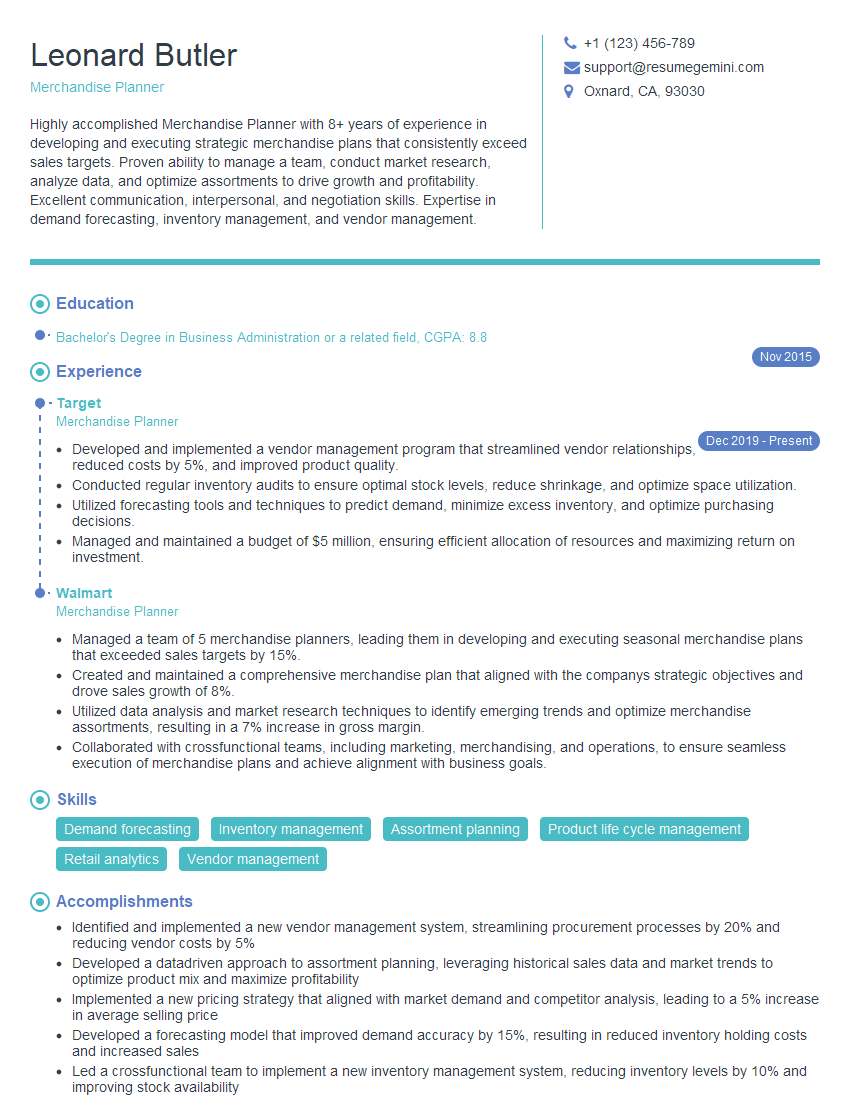
Merchandise Planner Resume Sample
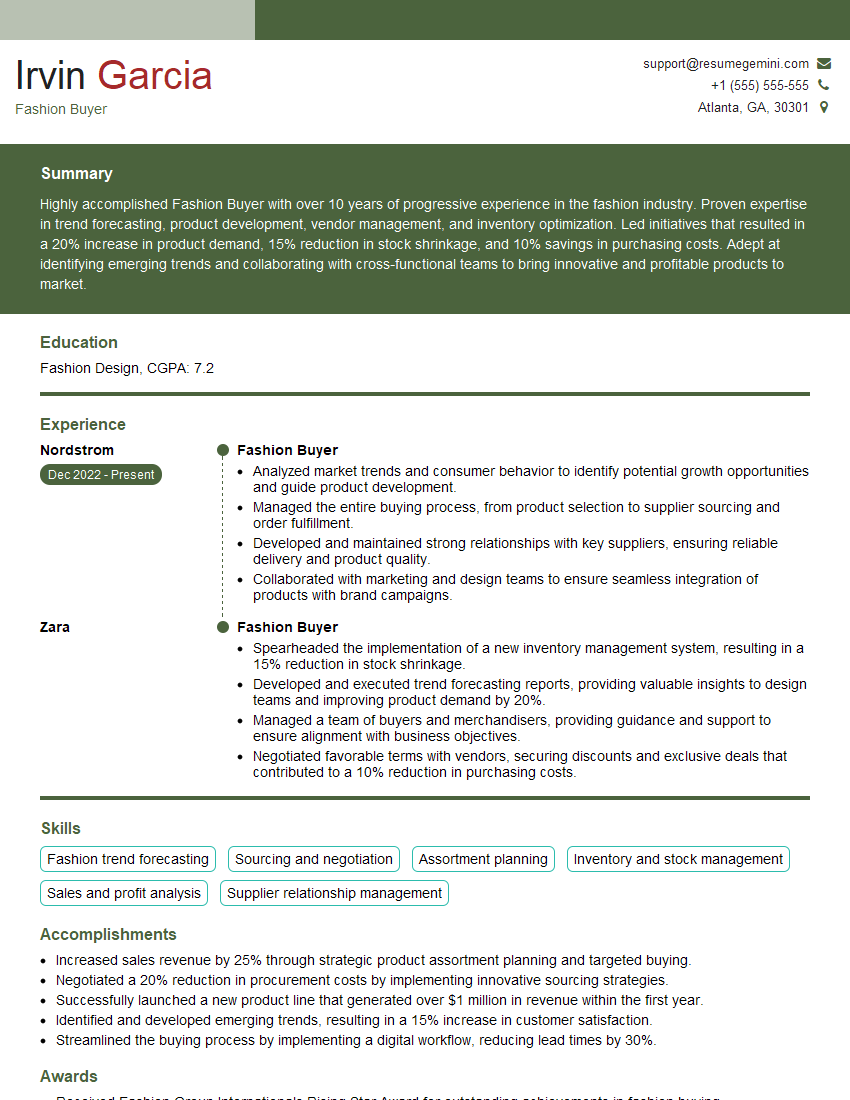
Fashion Buyer Resume Sample
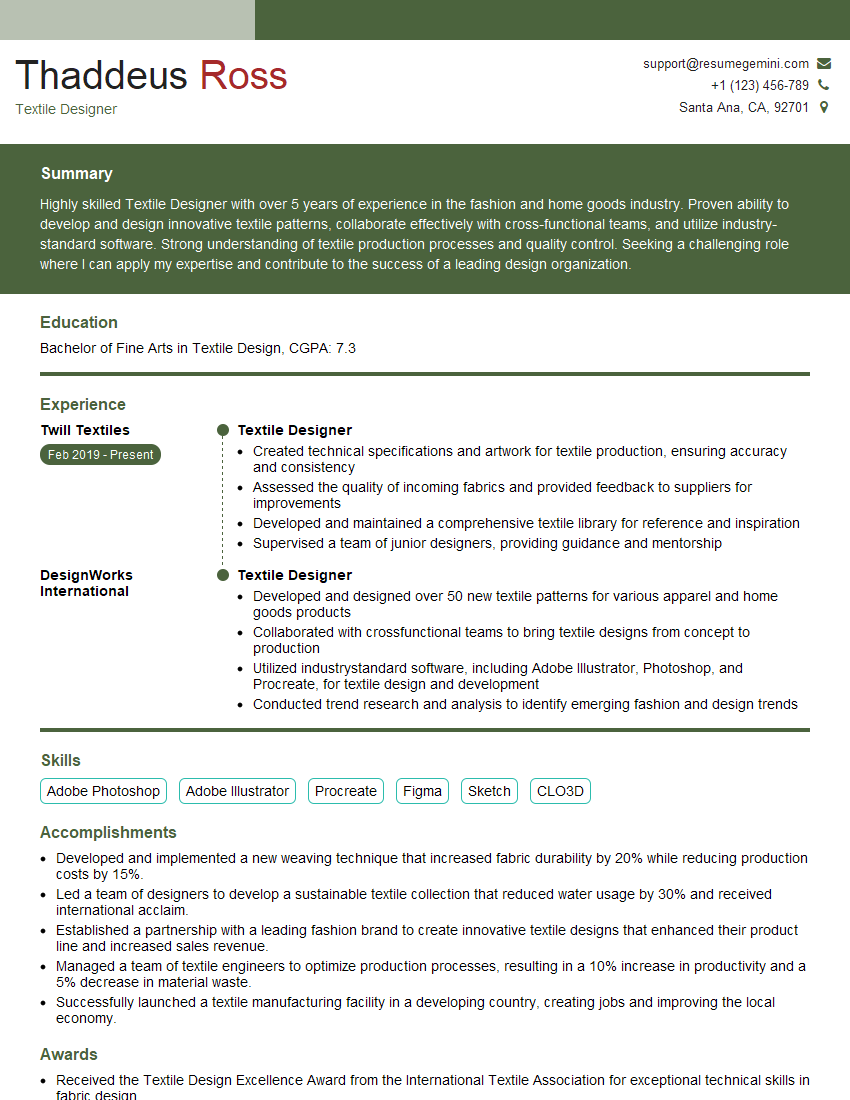
Textile Designer Resume Sample
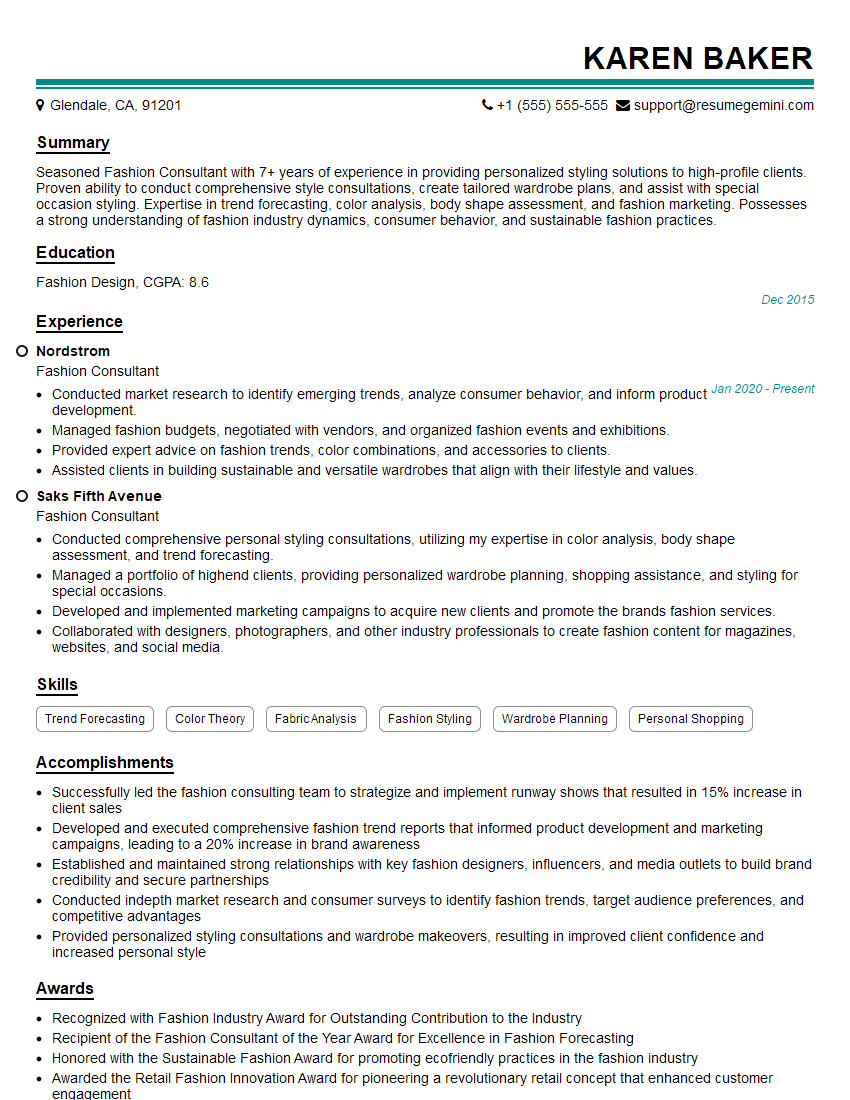
Fashion Consultant Resume Sample
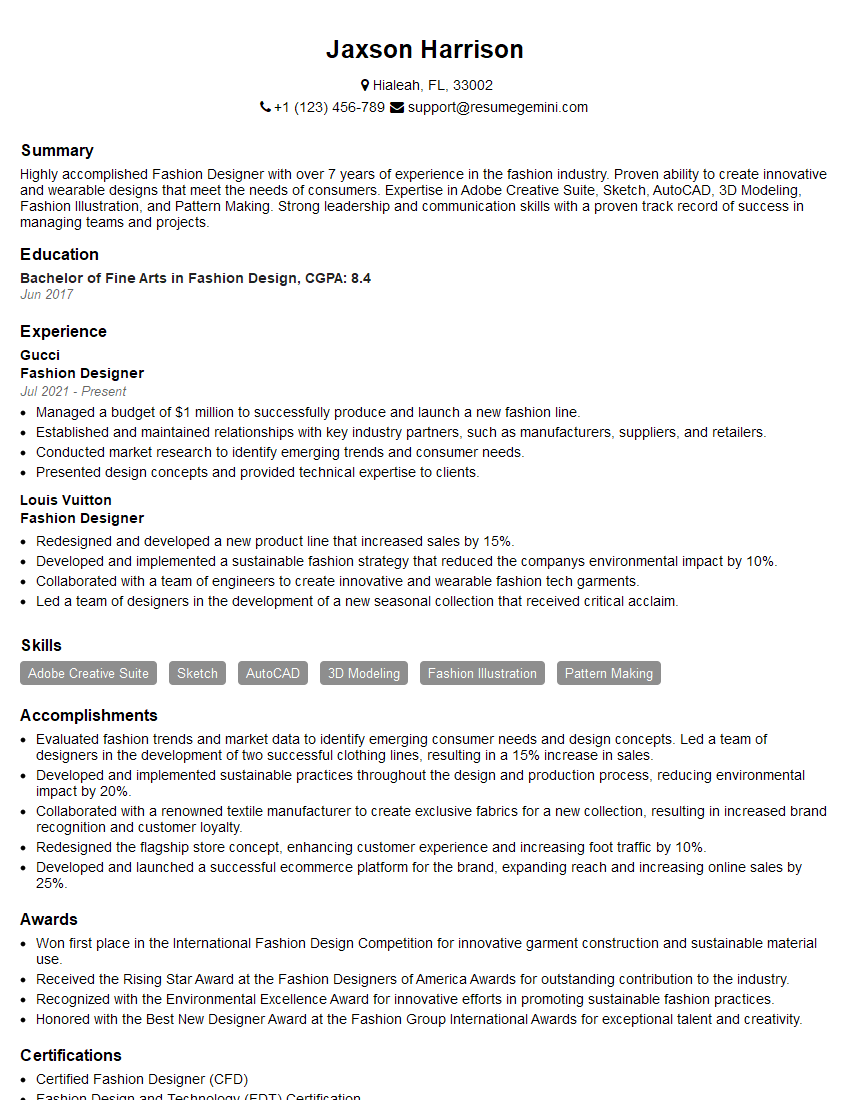
Fashion Designer Resume Sample
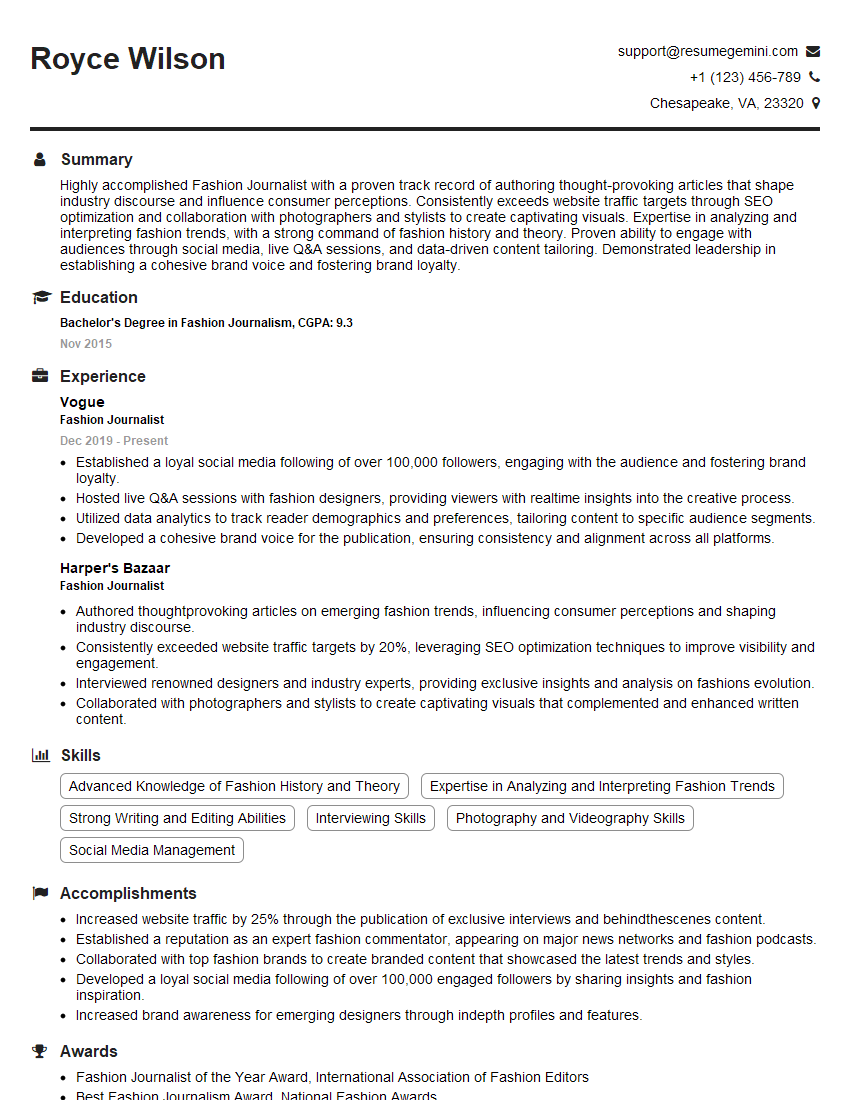
Fashion Journalist Resume Sample
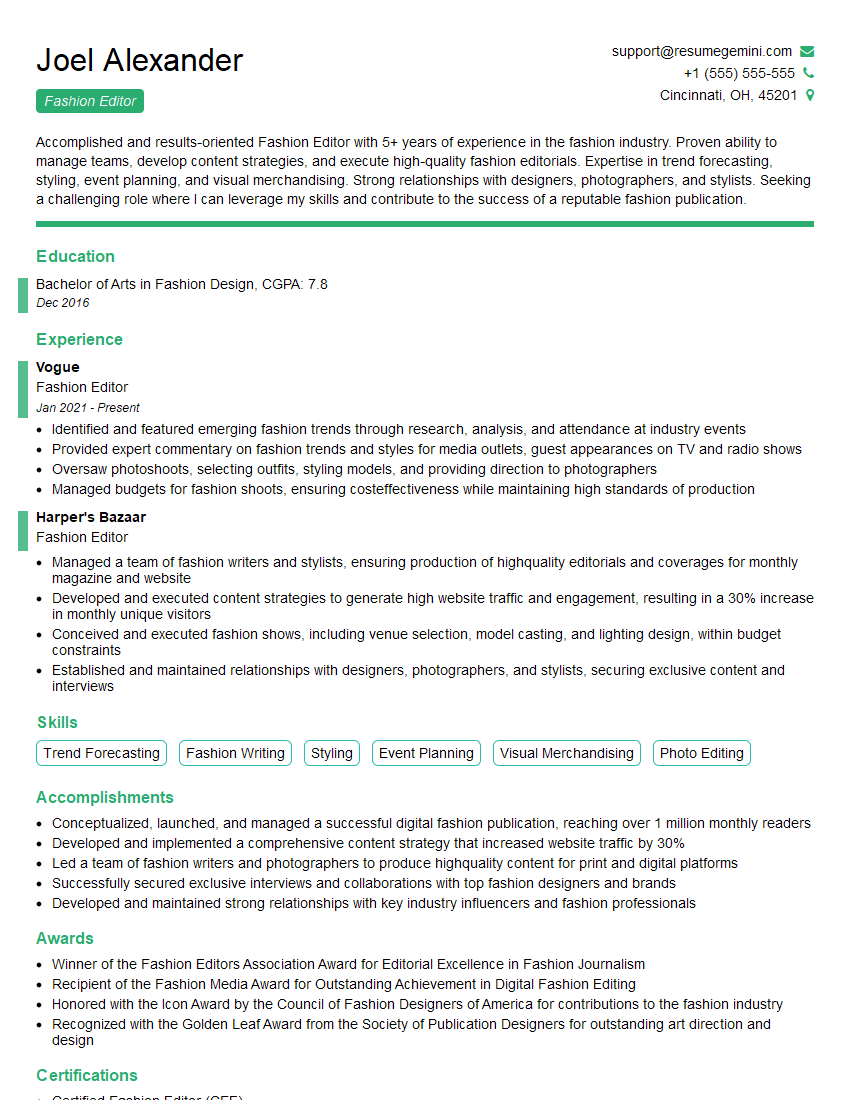
Fashion Editor Resume Sample
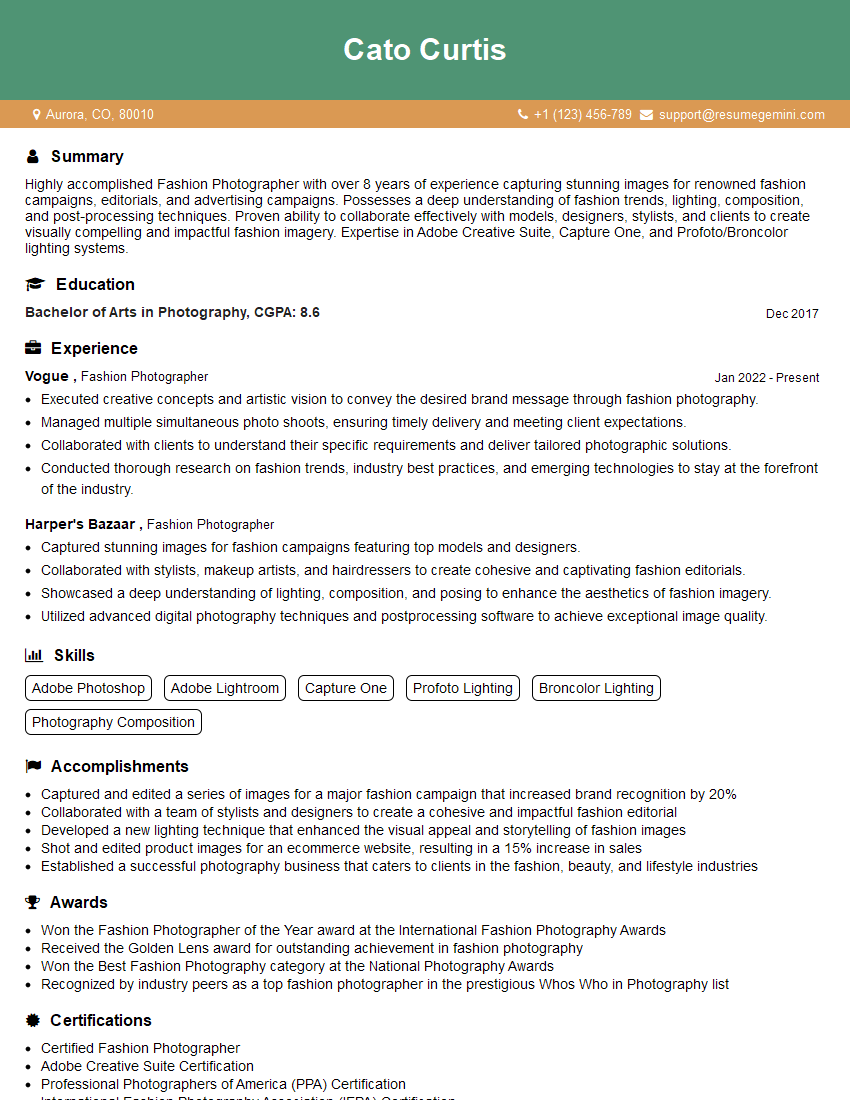
Fashion Photographer Resume Sample
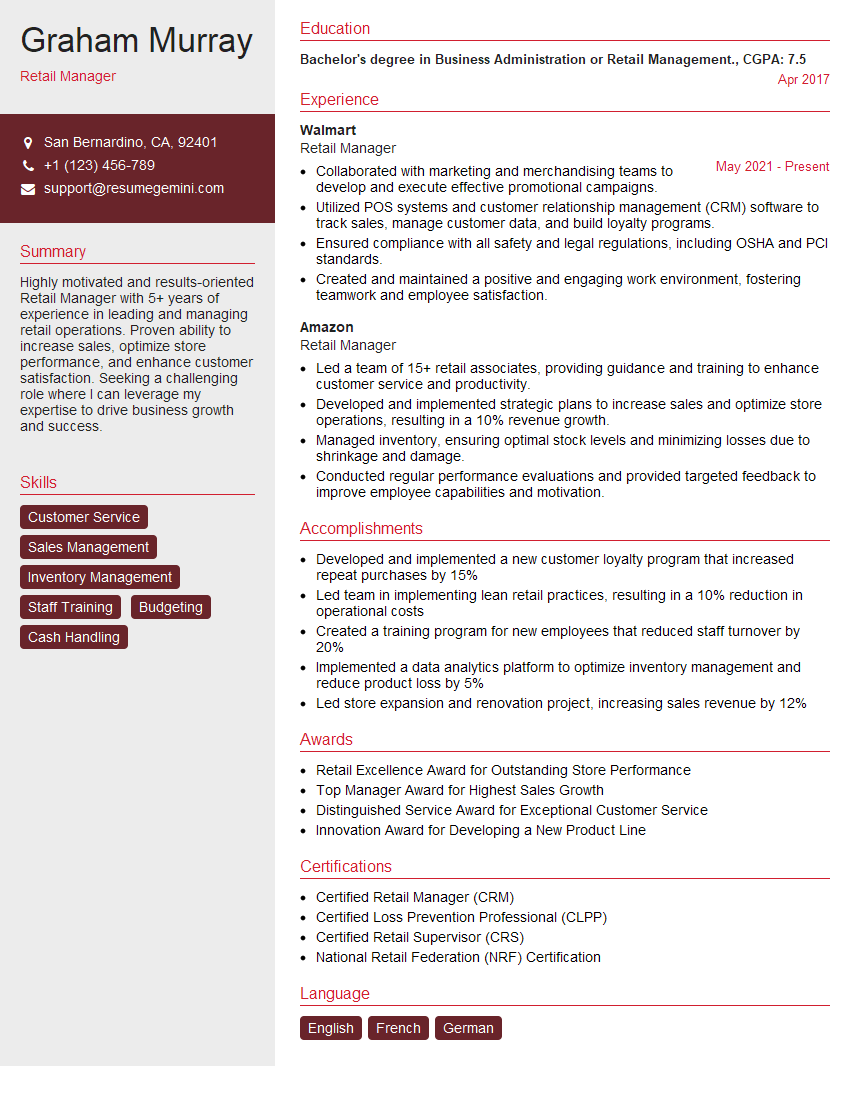
Retail Manager Resume Sample
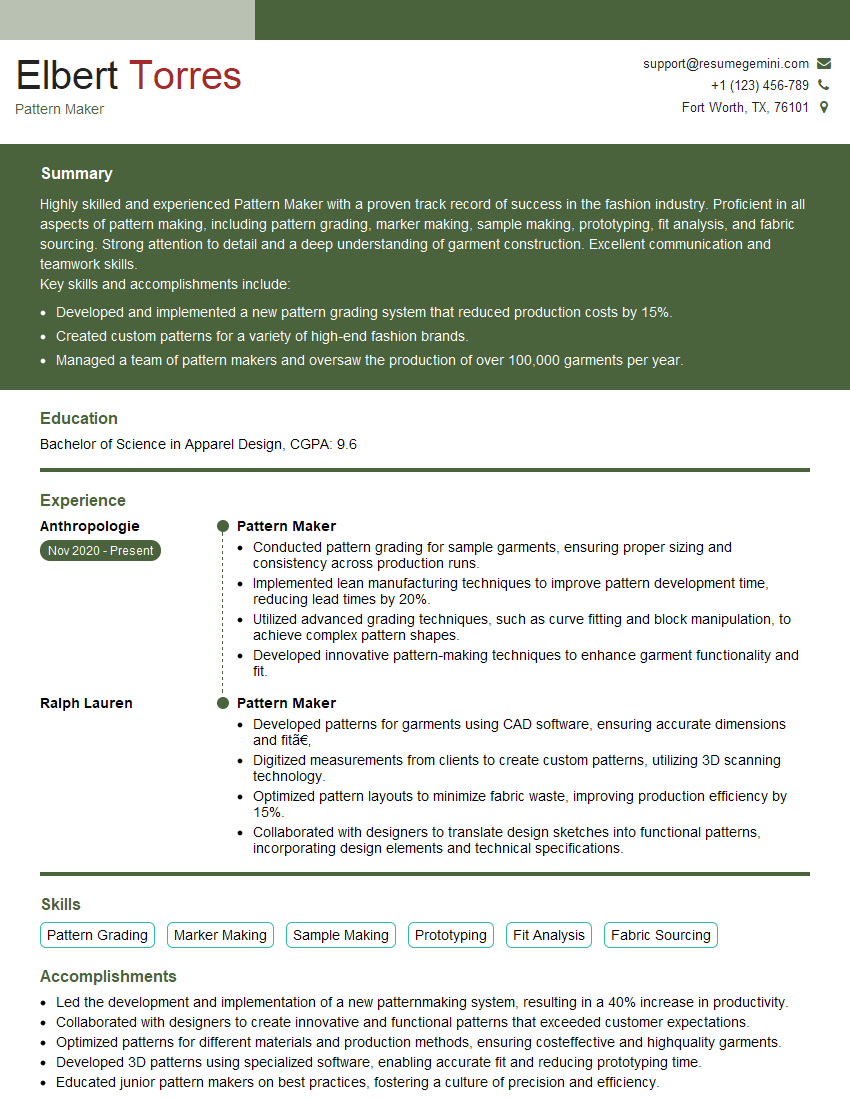
Pattern Maker Resume Sample
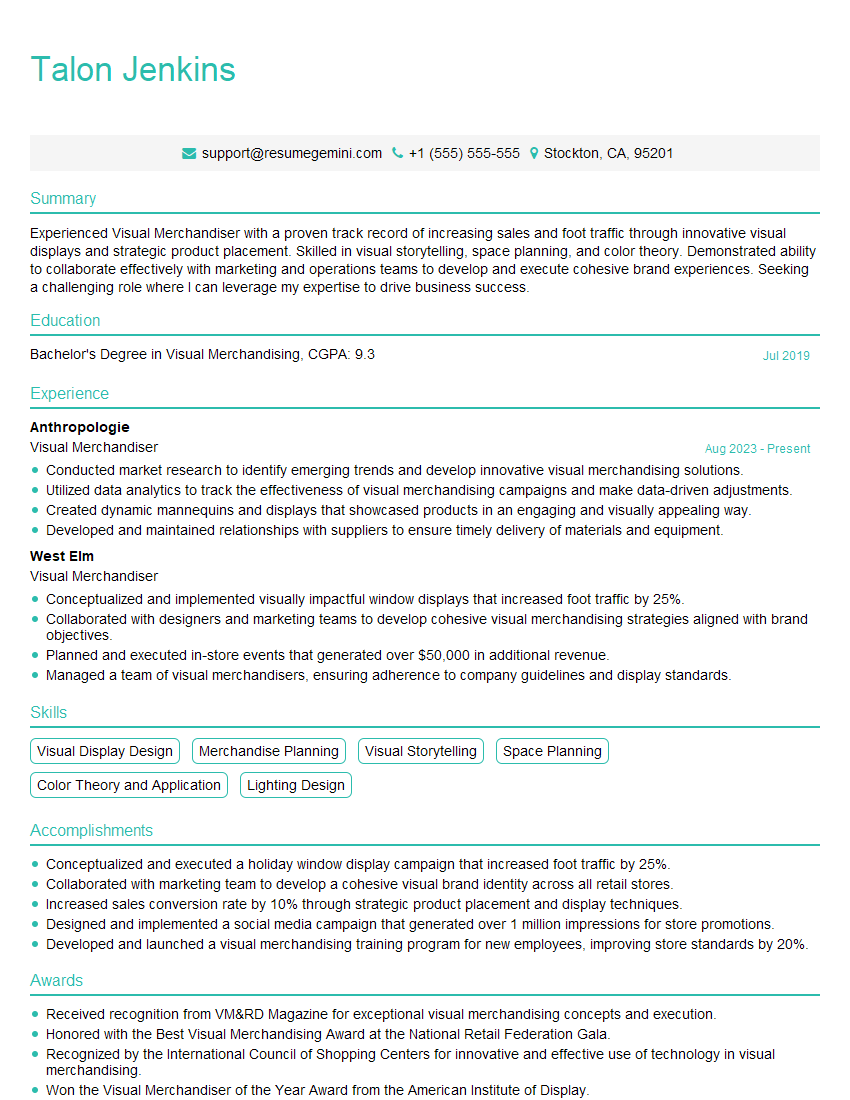
Visual Merchandiser Resume Sample
Explore more articles
Users Rating of Our Blogs
Share Your Experience
We value your feedback! Please rate our content and share your thoughts (optional).
What Readers Say About Our Blog
hello,
Our consultant firm based in the USA and our client are interested in your products.
Could you provide your company brochure and respond from your official email id (if different from the current in use), so i can send you the client’s requirement.
Payment before production.
I await your answer.
Regards,
MrSmith
hello,
Our consultant firm based in the USA and our client are interested in your products.
Could you provide your company brochure and respond from your official email id (if different from the current in use), so i can send you the client’s requirement.
Payment before production.
I await your answer.
Regards,
MrSmith
These apartments are so amazing, posting them online would break the algorithm.
https://bit.ly/Lovely2BedsApartmentHudsonYards
Reach out at [email protected] and let’s get started!
Take a look at this stunning 2-bedroom apartment perfectly situated NYC’s coveted Hudson Yards!
https://bit.ly/Lovely2BedsApartmentHudsonYards
Live Rent Free!
https://bit.ly/LiveRentFREE
Interesting Article, I liked the depth of knowledge you’ve shared.
Helpful, thanks for sharing.
Hi, I represent a social media marketing agency and liked your blog
Hi, I represent an SEO company that specialises in getting you AI citations and higher rankings on Google. I’d like to offer you a 100% free SEO audit for your website. Would you be interested?