Cracking a skill-specific interview, like one for Field News Gathering, requires understanding the nuances of the role. In this blog, we present the questions you’re most likely to encounter, along with insights into how to answer them effectively. Let’s ensure you’re ready to make a strong impression.
Questions Asked in Field News Gathering Interview
Q 1. Describe your experience with live reporting in challenging environments.
Live reporting in challenging environments demands a unique blend of technical skill, adaptability, and resilience. My experience includes covering breaking news events in areas with limited infrastructure, unstable political situations, and even natural disasters. For example, during a major hurricane, I had to rely on satellite phones for communication while operating a camera in torrential rain and high winds. The key is to prioritize safety while maintaining a professional demeanor and delivering accurate information under pressure. This often involves working closely with a team, relying on backup equipment, and having contingency plans for communication and transportation failures. I’ve also learned to anticipate potential hazards, from extreme weather to security threats, and have developed strategies to mitigate those risks. This includes wearing appropriate safety gear, utilizing local contacts for guidance, and always having an evacuation plan.
Q 2. Explain your process for verifying information obtained from multiple sources in the field.
Verifying information from multiple sources in the field is crucial for journalistic integrity. My process involves a multi-step approach. First, I assess the credibility of each source, considering their background, potential biases, and track record. I then cross-reference the information received with independent sources, looking for corroboration. This might include checking official statements, reviewing documents, or speaking with eyewitnesses who offer different perspectives. I prioritize sources with verifiable evidence or those who are willing to be identified publicly. Disagreement amongst sources is not necessarily a sign of untrustworthiness, but it does highlight the need for deeper investigation. I document all sources meticulously, noting the date, time, location, and method of contact. Finally, I carefully analyze all gathered data, identifying inconsistencies and potential biases before constructing my report.
Q 3. How do you prioritize news stories in a fast-paced field environment?
Prioritizing news stories in a fast-paced field environment relies on a combination of factors. News value is assessed using factors like timeliness (breaking news is prioritized), impact (how many people are affected), prominence (involvement of well-known figures), proximity (local news is usually prioritized), and human interest. For example, a sudden disaster causing mass casualties would trump a smaller local event, even if the smaller event is closer geographically. I use a system of triage, starting with assessing the immediacy and potential impact of each event. Then, I consider my available resources – time, personnel, and equipment – to determine which stories I can realistically cover effectively. It’s often a process of balancing hard news with features and other aspects that create a well-rounded news package.
Q 4. Detail your experience using different types of recording equipment (cameras, audio recorders).
My experience with recording equipment is extensive. I’m proficient with various professional-grade cameras, from DSLR cameras to ENG (electronic newsgathering) cameras, and their associated accessories such as tripods, microphones, and lighting equipment. I’m also experienced with different audio recording devices, ranging from handheld recorders to wireless lavalier microphones. I understand the importance of sound quality, image stabilization, and optimal lighting conditions for producing high-quality video and audio. I regularly conduct tests to ensure equipment is functioning correctly before each assignment, and I’m adept at troubleshooting technical problems in the field. For instance, knowing how to adjust audio levels in real-time or quickly replace a malfunctioning battery can be critical for capturing a timely and effective news report.
Q 5. How do you ensure the accuracy and integrity of your reporting?
Ensuring the accuracy and integrity of my reporting is paramount. This starts with fact-checking every piece of information using multiple sources, as described previously. I carefully review my notes and recordings before writing a story. I follow established journalistic ethics, ensuring that my reporting is fair, unbiased, and does not misrepresent or manipulate information. For instance, I avoid using loaded language or emotionally charged words that might sway the audience’s perception. I also strive for context, ensuring I provide sufficient background information to fully understand the story’s nuances. I’m mindful of potential biases in my own perspective and actively seek out diverse viewpoints to ensure a balanced perspective. Finally, I always follow the fact-checking and editing processes set by my news organization to maintain the highest standards of accuracy.
Q 6. Describe a time you had to adapt quickly to an unexpected event in the field.
During a live broadcast of a political rally, a sudden and unexpected protest erupted near the stage. My initial plan was to focus on the politician’s speech. However, I quickly reassessed the situation and realized the protest was becoming the more significant, developing story. I immediately adapted by switching my camera angle to capture the protest’s unfolding events, while simultaneously communicating the changing scene to my team. I transitioned seamlessly between covering the initial speech and reporting on the unexpected protest, ensuring viewers received a comprehensive and timely account of the evolving situation. This required quick thinking, adaptability, and a thorough understanding of how to efficiently switch between different reporting focuses while maintaining a coherent narrative.
Q 7. How familiar are you with newsgathering ethics and legal considerations?
I’m intimately familiar with newsgathering ethics and legal considerations. I understand the importance of adhering to strict journalistic ethics, including accuracy, fairness, impartiality, and avoiding conflicts of interest. I’m knowledgeable about libel and slander laws, copyright regulations, and privacy concerns. I always obtain informed consent before recording interviews and am mindful of the legal implications of publishing sensitive information. My understanding extends to the ethical dilemmas faced in the field, such as deciding whether to identify sources and balancing public interest with privacy. Regular training and ethical guidelines provided by my news organization ensures I am always up-to-date on legal and ethical standards.
Q 8. Explain your experience with editing video footage in the field.
My field editing experience involves using lightweight, portable editing software on laptops and tablets. I’m proficient in quickly logging footage, selecting the best takes, constructing a narrative flow, and performing basic color correction and audio adjustments all in the field. This allows for immediate turnaround, especially crucial for breaking news. For example, during a recent protest, I was able to edit a short highlight package for social media within an hour of the event concluding, using Adobe Premiere Pro on my laptop. This quick edit significantly improved our news reach and engagement. I also frequently utilize simpler tools like iMovie for even quicker edits when necessary, depending on the urgency and platform.
Beyond basic cuts and corrections, I’m also experienced in syncing audio and video to eliminate any discrepancies which maintain broadcast quality. This includes cleaning up any ambient noise to improve clarity, creating a smoother professional product. My experience also extends to working within strict deadlines and space constraints, optimizing file sizes for faster uploads and efficient sharing across various platforms.
Q 9. How do you maintain composure and professionalism during stressful situations?
Maintaining composure under pressure is paramount in field newsgathering. I’ve found that thorough preparation is key. This includes having a solid understanding of the assignment, researching potential scenarios, and having backup plans in place. For instance, I always have a second camera and extra batteries ready. Beyond physical preparation, a positive mental attitude is essential. I remind myself of the importance of accuracy and objectivity. I utilize deep breathing exercises and focus on my journalistic role to help quell any anxiety. During particularly chaotic situations, such as a natural disaster, I remind myself to focus on the facts and to prioritize the safety of myself and others. This professional approach, coupled with preparation, ensures that even in challenging circumstances, I can perform my duties effectively and calmly.
Q 10. How proficient are you in using social media for newsgathering?
I’m highly proficient in using social media for newsgathering. I actively monitor platforms like Twitter, Facebook, and Instagram for breaking news, citizen journalism, and potential story leads. I understand the nuances of each platform and can adapt my strategy accordingly. For example, Twitter allows for real-time updates and quick engagement with sources, while Instagram’s visual format is ideal for sharing impactful photos and videos. I’m skilled at verifying information gleaned from social media using multiple sources to ensure accuracy and avoid the spread of misinformation. I also know how to use social media ethically and responsibly, respecting privacy and adhering to journalistic standards. I’m also adept at using social listening tools to gauge public reaction and opinion on developing stories, thus shaping our reporting and allowing us to adapt to the evolving news landscape.
Q 11. Describe your experience working with a news team in a collaborative setting.
Collaboration is fundamental to effective newsgathering. I thrive in team environments and have extensive experience working with reporters, photographers, editors, and producers. I understand the importance of clear communication and coordination. We usually have pre-assignment briefings and meetings to discuss strategy, roles, and expectations. During the assignment, constant communication through walkie-talkies or other communication systems ensures everyone is on the same page. I also contribute actively by sharing my observations and insights, ensuring everyone has access to relevant information. For example, during a large-scale event, I might identify a compelling angle for a story that could complement a reporter’s angle. My ability to quickly process information and efficiently communicate in a fast-paced environment enhances team productivity and storytelling.
Q 12. How do you ensure the safety and security of yourself and your equipment in the field?
Safety is my top priority. Before each assignment, I conduct a thorough risk assessment, considering potential dangers and formulating appropriate safety measures. This involves checking weather conditions, researching the location, and informing someone of my whereabouts and planned route. I always carry appropriate personal protective equipment (PPE), such as high-visibility clothing and safety gear, depending on the assignment’s nature. Protecting my equipment involves keeping it in secure cases, using appropriate weather protection, and ensuring it’s adequately insured. I also regularly back up my footage and data to prevent loss. For high-risk situations, like covering protests or natural disasters, I work closely with security personnel or law enforcement to ensure my own safety and the safety of my team. This proactive approach reduces risks and ensures we can complete our assignments effectively.
Q 13. What strategies do you use for obtaining interviews with sources who are hesitant to talk?
Gaining interviews from hesitant sources requires building trust and rapport. I start by clearly explaining the purpose of the interview, emphasizing the importance of their perspective to the story. I present myself professionally and respectfully, demonstrating empathy and understanding for their concerns. I offer anonymity or limited attribution where appropriate and allow them to set the terms of the interview. Active listening and asking open-ended questions are crucial. I let the source lead the conversation, providing a safe and comfortable space for them to share their story. Building a connection and expressing genuine interest in their experiences helps to alleviate their hesitations. Sometimes, offering to conduct the interview off-camera or at a time and location of their choosing increases their comfort level. Persistence, patience, and empathy are crucial in overcoming reluctance.
Q 14. How do you handle difficult questions from the public during live reporting?
Handling challenging questions during live reporting requires quick thinking and professional demeanor. I always listen carefully, ensuring I fully understand the question before responding. I maintain eye contact and offer a calm and reassuring response, even if I don’t have immediate answers. If the question is irrelevant to the current report, I diplomatically redirect the focus back to the key message. If the question is unclear or aggressive, I reiterate it to ensure understanding and then deliver a measured and factual response, avoiding emotional reactions. I aim to provide accurate and concise information while maintaining my composure. If I don’t know the answer, I will state that honestly and promise to follow up. Above all, remaining impartial and professional is vital to maintaining credibility and trust with the audience.
Q 15. How familiar are you with different video editing software?
My familiarity with video editing software is extensive. I’m proficient in Adobe Premiere Pro, Final Cut Pro, and DaVinci Resolve, each offering different strengths depending on the project’s needs and complexity. Premiere Pro, for instance, is my go-to for its robust features and industry-standard compatibility. Final Cut Pro excels in its intuitive interface, particularly helpful for quick turnaround times in breaking news situations. DaVinci Resolve is invaluable for color grading and advanced post-production tasks. My experience encompasses everything from basic cuts and transitions to advanced techniques like color correction, audio mixing, and motion graphics.
For example, during a recent live-reporting event, we faced a sudden power outage mid-interview. Using Premiere Pro’s advanced features, I was able to seamlessly stitch together the footage, eliminating any noticeable disruption, despite working under immense pressure. In another instance, using DaVinci Resolve, I enhanced the visual appeal of a piece shot in challenging lighting conditions, delivering a professional final product.
Career Expert Tips:
- Ace those interviews! Prepare effectively by reviewing the Top 50 Most Common Interview Questions on ResumeGemini.
- Navigate your job search with confidence! Explore a wide range of Career Tips on ResumeGemini. Learn about common challenges and recommendations to overcome them.
- Craft the perfect resume! Master the Art of Resume Writing with ResumeGemini’s guide. Showcase your unique qualifications and achievements effectively.
- Don’t miss out on holiday savings! Build your dream resume with ResumeGemini’s ATS optimized templates.
Q 16. How do you manage deadlines and work under pressure?
Managing deadlines and working under pressure are integral to field newsgathering. My approach relies on meticulous planning and prioritization. Before embarking on any assignment, I thoroughly assess the timeline, identify potential bottlenecks, and create a detailed schedule. I utilize project management tools to track progress and allocate time effectively. When unforeseen challenges arise – a common occurrence in field reporting – I adapt quickly, focusing on the most critical tasks first and employing efficient workflows to stay on track. This often involves prioritizing core elements and minimizing unnecessary complexity.
For instance, during a breaking news event, a sudden shift in location required a rapid readjustment of our filming schedule. By communicating effectively with the team and strategically streamlining our process, we successfully met the deadline, delivering a timely and accurate report despite the unexpected changes. I thrive in high-pressure environments; the adrenaline actually enhances my focus and efficiency.
Q 17. Describe your experience with writing news copy under tight deadlines.
Writing news copy under tight deadlines is a skill honed over years of experience. My approach centers around speed and accuracy. I’ve learned to rapidly synthesize information, structure concise and impactful sentences, and rigorously adhere to journalistic style guidelines. This involves strong headline writing skills and the ability to craft a compelling narrative within the constraints of a specific word count.
I recall covering a major political rally where I had to file multiple updates within minutes. The key was focusing on the most impactful information – key speeches, crowd reactions, and significant events – rather than getting bogged down in less crucial details. Speed, conciseness, and accuracy were paramount. This requires an innate ability to quickly asses the information and prioritize efficiently.
Q 18. How do you utilize various news gathering tools (e.g., social media, databases)?
News gathering tools are invaluable in modern journalism. I utilize social media platforms (Twitter, Facebook, Instagram) to monitor real-time events, identify emerging trends, and source citizen journalism. Databases like LexisNexis and Factiva are crucial for background research and verification of information. I also use geolocation tools to confirm locations and track the movement of events. Furthermore, I leverage various communication platforms – Slack, email, etc. – for seamless collaboration with the news team.
For example, during a natural disaster, social media provided crucial, real-time information about the extent of the damage and the location of affected areas. This allowed us to focus our reporting efforts effectively. Databases were invaluable in verifying the details of government responses and historical precedents. The combined usage of these tools enabled rapid and comprehensive news gathering.
Q 19. How do you identify and mitigate potential risks in field newsgathering?
Identifying and mitigating risks in field newsgathering is paramount. Before any assignment, I conduct a thorough risk assessment, considering potential threats like political instability, natural disasters, crime, and health hazards. This assessment informs the development of a comprehensive safety plan that outlines emergency procedures, communication protocols, and necessary safety equipment. I always prioritize personal safety and ensure that I have the necessary training and support to handle unexpected situations.
For example, when covering protests, I maintain a safe distance from potentially volatile situations, wear appropriate protective gear, and have established escape routes. In areas with limited infrastructure, I ensure I have backup communication systems and sufficient supplies. Risk mitigation is an ongoing process, requiring continuous evaluation and adaptation throughout the reporting process.
Q 20. Explain your experience in conducting interviews and obtaining quality sound bites.
Conducting interviews and obtaining quality sound bites is a crucial skill in field newsgathering. My approach involves thorough preparation, including researching the interviewee and formulating insightful questions. I focus on establishing rapport to encourage open and honest communication. I utilize active listening skills to guide the conversation and extract compelling sound bites. During the interview, I pay close attention to audio quality, ensuring clear and undistorted recordings. Post-interview, I carefully review the footage to select the most impactful and informative segments.
For example, in a recent interview with a victim of a natural disaster, I created a safe and comfortable environment by addressing their emotional state before moving to questions about their experiences. This approach yielded heartfelt and moving sound bites that effectively conveyed the impact of the disaster. The key is to listen carefully, understand the emotional context, and select the appropriate segments that most effectively tell the story.
Q 21. How do you approach fact-checking and verification in real-time?
Fact-checking and verification in real-time are critical to maintaining journalistic integrity. My approach involves cross-referencing information from multiple reliable sources. I use a combination of online tools, databases, and direct contact with experts to verify the accuracy of claims. When dealing with sensitive or controversial information, I exercise extra caution, seeking multiple independent confirmations before publishing.
For example, during a breaking news story, I received conflicting reports about the number of casualties. Instead of hastily publishing the first figure I encountered, I cross-referenced the information with official statements, news agencies, and social media reports. This careful verification prevented the dissemination of inaccurate information and maintained the integrity of the reporting.
Q 22. Describe your experience with different types of news formats (e.g., print, broadcast, online).
My experience spans across various news formats, each presenting unique challenges and opportunities. In print journalism, I honed my skills in concise writing and meticulous fact-checking, crafting narratives that would resonate with readers through the written word. The focus is on detail and accuracy, ensuring every sentence contributes to the overall story. For instance, I worked on a local newspaper where I covered city council meetings, requiring thorough note-taking and precise reporting on complex policy debates. Broadcast journalism, on the other hand, demanded a different approach – a quicker pace, strong vocal delivery, and the ability to convey information effectively within a limited timeframe. I’ve presented live reports on breaking news events for a regional television station, requiring quick thinking and adaptability under pressure. Online news reporting, with its ever-changing landscape, has involved mastering multimedia storytelling, incorporating visuals, social media integration, and data visualization to engage audiences digitally. I’ve written interactive features for an online news platform, using data to enhance the story and create a more immersive reading experience.
Q 23. How do you maintain objectivity and impartiality in your reporting?
Maintaining objectivity and impartiality is paramount in journalism. It’s about presenting facts fairly, without bias or personal opinion. This involves consciously striving to represent all sides of a story, seeking multiple perspectives, and verifying information from multiple reliable sources. I use a checklist to guide my reporting, ensuring I’m not inadvertently shaping the narrative. This includes questions like: ‘Have I presented all relevant viewpoints?’ ‘Are my sources credible and diverse?’ ‘Is my language neutral and free of loaded terms?’ For example, when covering a political protest, I ensure I interview participants from various factions and present the different perspectives without favoring one over the other. Any personal opinions remain strictly separate from the reported facts, maintaining the integrity of the news.
Q 24. Explain your experience working with diverse populations and cultures.
Working with diverse populations and cultures is essential in field news gathering. It involves understanding and respecting cultural nuances, communication styles, and sensitivities. I’ve had extensive experience covering stories in communities with vastly different backgrounds, including linguistic and religious diversity. This involves learning basic phrases in the local languages whenever possible, and being sensitive to cultural norms and customs when interviewing individuals. For instance, when reporting on a community event in a predominantly Spanish-speaking neighborhood, I made sure to have a translator available and ensured my questions were culturally appropriate. Building trust and rapport is crucial – it takes time and effort to demonstrate respect and gain the confidence of the community.
Q 25. Describe your knowledge of copyright and intellectual property laws.
Understanding copyright and intellectual property laws is crucial in journalism. It dictates what can and cannot be used in news reporting. I am familiar with the concept of fair use, which allows limited use of copyrighted material for news reporting under specific circumstances. However, I always strive to obtain permission from copyright holders whenever possible, especially for extensive use of content. I regularly consult with legal counsel when there is any doubt about the legality of using specific material. I meticulously attribute all sources, providing proper citations to avoid any infringement. For instance, if I use a photograph from a stock photo agency, I always ensure I have the necessary license to use the image. This rigorous adherence to copyright laws is crucial to uphold ethical journalistic standards.
Q 26. How do you troubleshoot technical problems with equipment in the field?
Troubleshooting technical problems in the field is a regular occurrence. My approach is systematic and involves a combination of practical skills and problem-solving techniques. I always carry a basic toolkit with spare batteries, memory cards, and cables. I start with the simplest checks, such as ensuring the equipment is switched on and properly connected. I regularly test all my equipment before heading out into the field to minimize potential disruptions. If the issue persists, I follow a troubleshooting flowchart – for instance, if my microphone isn’t working, I check the connections, battery level, and then the microphone settings. If the problem is more complex, I often consult online manuals or contact technical support. I also document the issues encountered and the steps I took to resolve them, this helps in future troubleshooting and helps prevent similar issues.
Q 27. How would you handle a situation where your equipment malfunctions during a live report?
Equipment malfunctioning during a live report is a stressful but not uncommon scenario. My immediate response involves maintaining composure and minimizing disruption to the audience. If the problem is minor, such as a slight audio issue, I may attempt a quick fix while continuing to report. If it’s more significant, I’d immediately inform my control room and switch to a backup plan, perhaps switching to a simpler setup or even ending the live report early if necessary. Prioritizing clear communication with my team is paramount, ensuring they are aware of the problem and can take appropriate action. After the report, I thoroughly investigate the cause of the malfunction and make necessary adjustments to prevent similar incidents. Experience has taught me to be prepared for unexpected situations.
Q 28. Describe your experience working with diverse news teams and stakeholders.
Working with diverse news teams and stakeholders is a fundamental aspect of successful newsgathering. It necessitates effective communication, collaboration, and respect for diverse perspectives. I’ve worked on teams with individuals from various backgrounds, skill sets, and expertise levels. My approach involves clear and concise communication, ensuring everyone understands their roles and responsibilities. I actively foster a collaborative environment where everyone feels valued and empowered to contribute. I value the diverse perspectives that different team members bring, leveraging their strengths to achieve a common goal. I also prioritize building strong relationships with stakeholders, ensuring open communication and trust, necessary for obtaining information and navigating complex situations. For instance, in covering a local government project, I maintain open communication with the authorities while ensuring the accuracy and objectivity of my reporting.
Key Topics to Learn for Field News Gathering Interview
- News Judgment and Prioritization: Understanding what constitutes a newsworthy event and determining the urgency and importance of different stories. Practical application: Deciding which breaking news to cover first in a fast-paced environment.
- Source Verification and Fact-Checking: Developing rigorous fact-checking skills and strategies to ensure accuracy and credibility of information gathered in the field. Practical application: Independently verifying information from multiple sources before reporting.
- Interviewing Techniques: Mastering the art of conducting effective interviews, including open-ended questioning, active listening, and building rapport with sources. Practical application: Gathering compelling quotes and insightful information from diverse individuals.
- Reporting Styles and Formats: Familiarity with different news writing styles (inverted pyramid, narrative, etc.) and adapting your approach to various media platforms (print, broadcast, online). Practical application: Structuring reports effectively for maximum impact.
- Multimedia Storytelling: Integrating various media elements (text, audio, video, photos) to enhance storytelling and engagement. Practical application: Capturing and editing multimedia content to support your reporting.
- Ethical Considerations in News Gathering: Understanding and applying journalistic ethics, including accuracy, fairness, objectivity, and respect for sources. Practical application: Navigating challenging ethical dilemmas in the field.
- Technical Proficiency: Familiarity with relevant technologies including audio and video recording equipment, digital editing software, and newsgathering apps. Practical application: Efficiently using technology to capture and deliver high-quality news content.
- Safety and Security in the Field: Prioritizing personal safety and security while working in diverse and sometimes unpredictable environments. Practical application: Developing risk assessment and mitigation strategies.
Next Steps
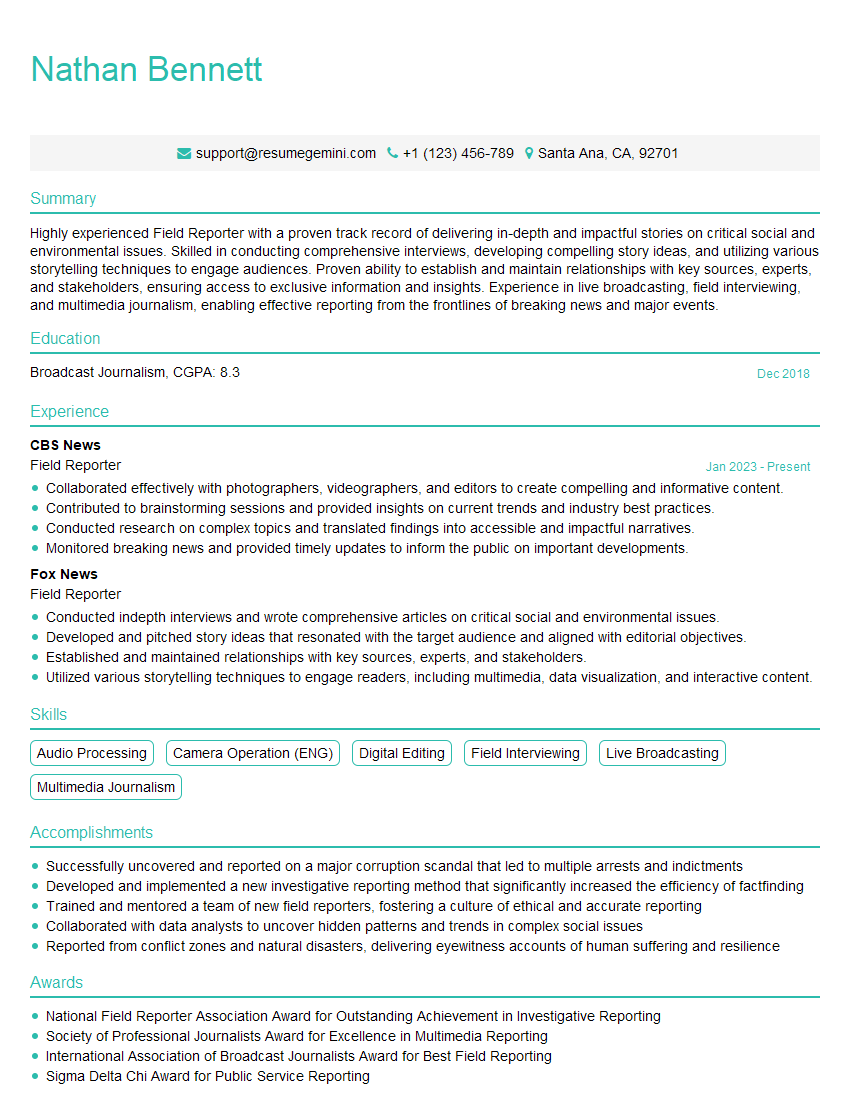
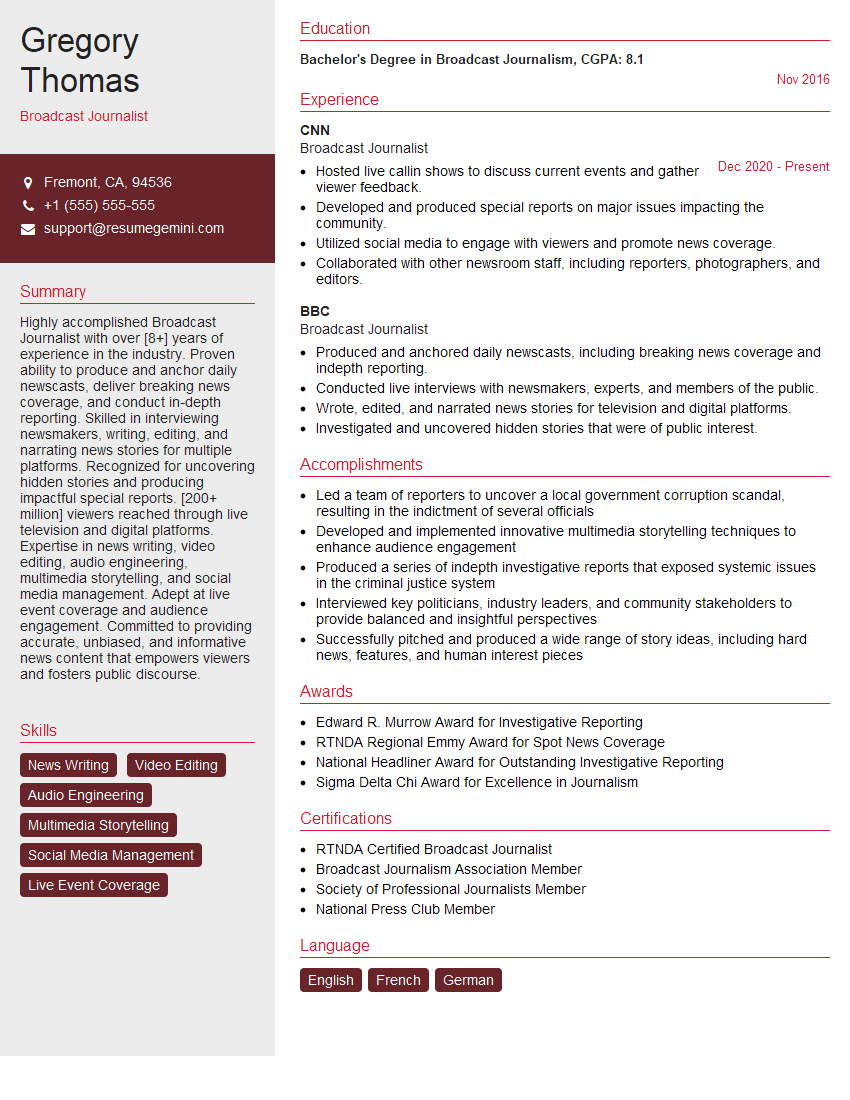
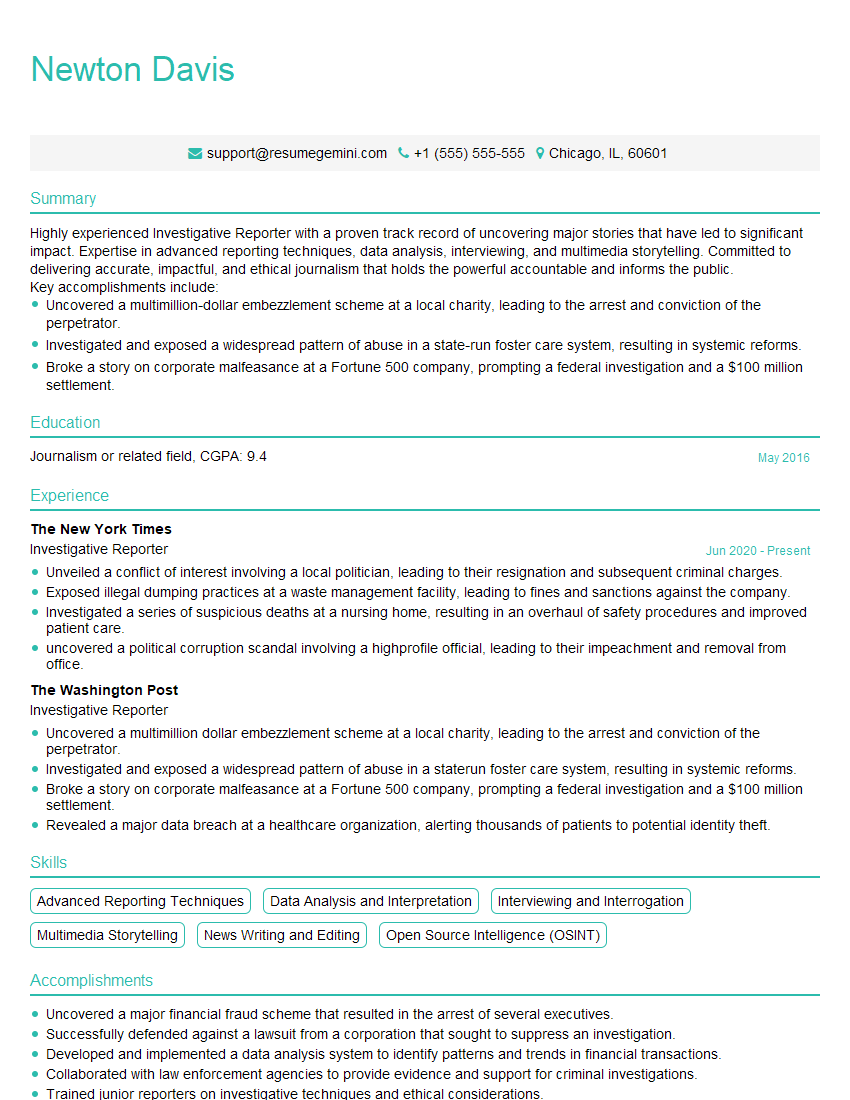
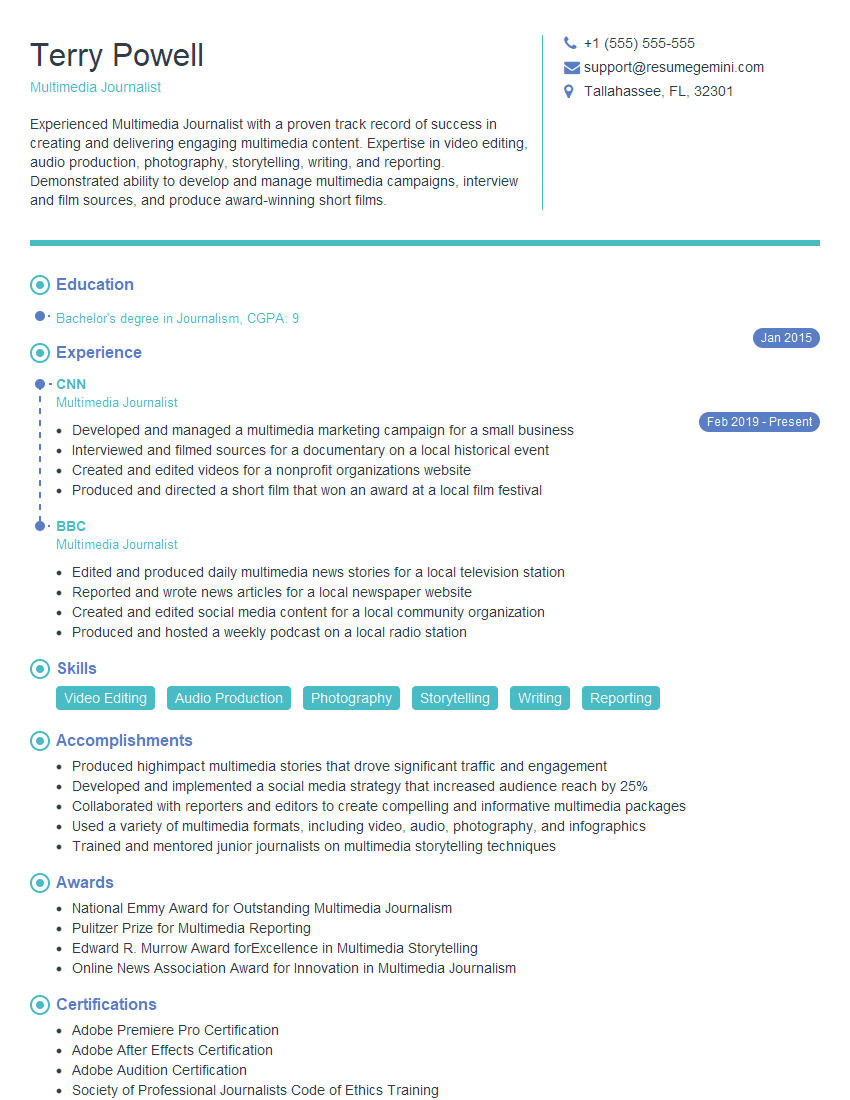
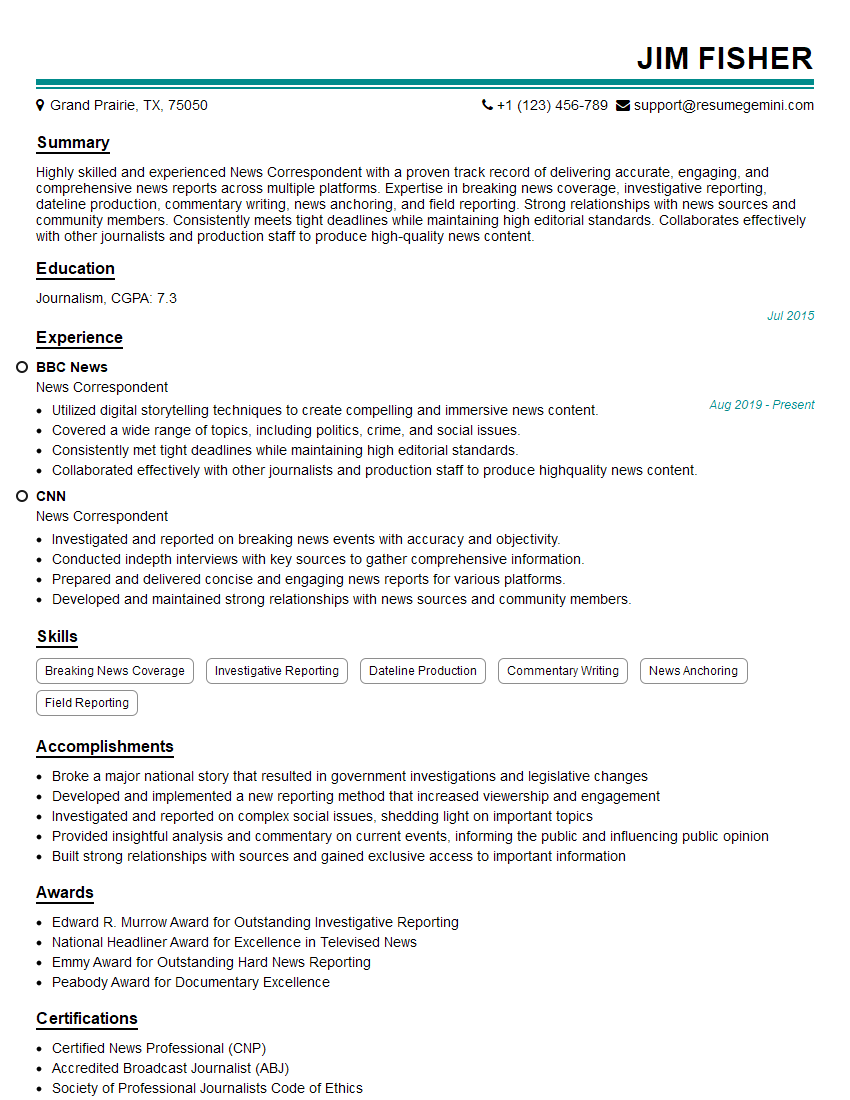
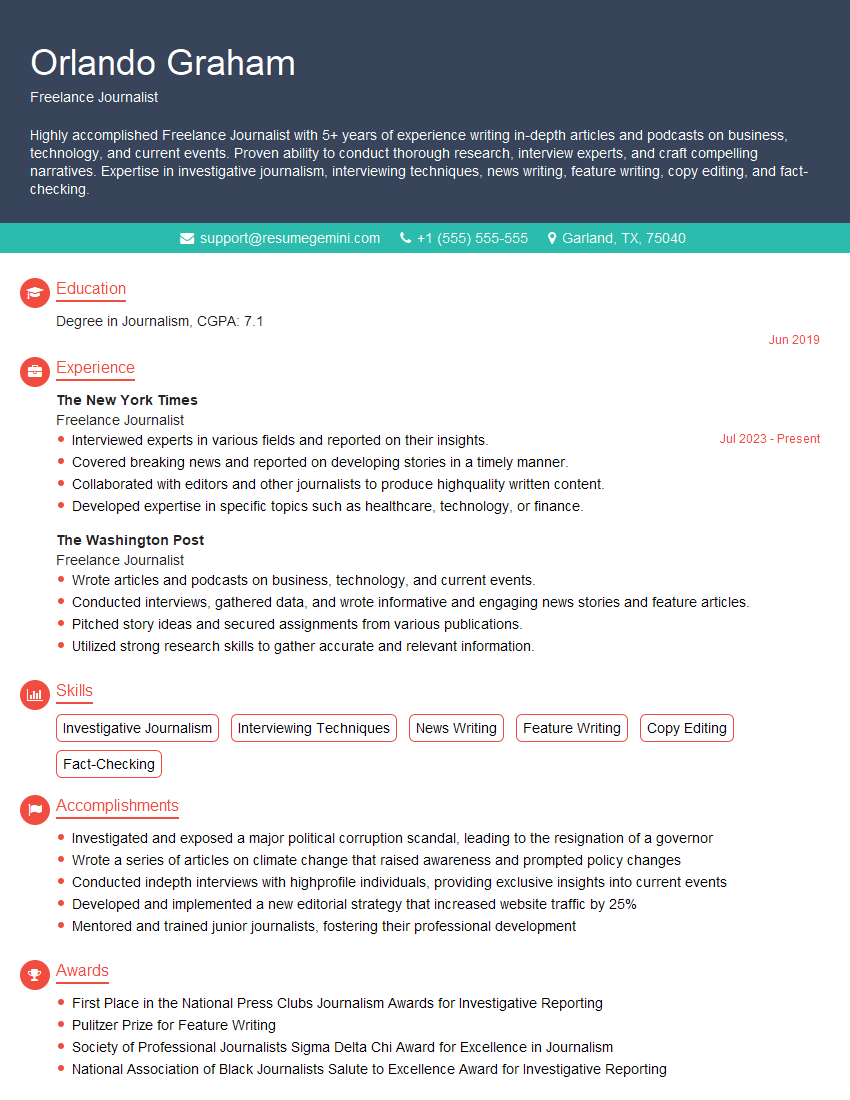
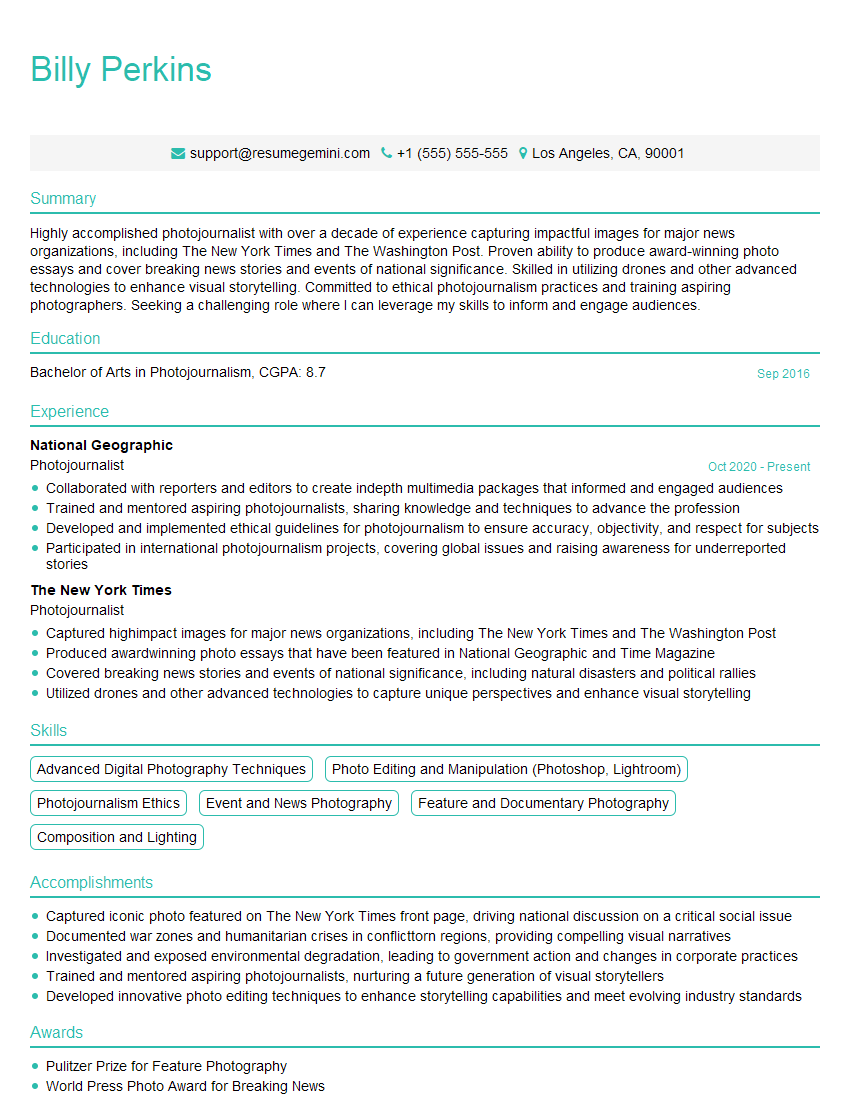
Mastering Field News Gathering skills is crucial for career advancement in journalism. A strong foundation in these areas will significantly increase your job prospects and open doors to exciting opportunities. To make your application stand out, creating a compelling and ATS-friendly resume is essential. We strongly recommend leveraging ResumeGemini to build a professional resume that highlights your skills and experience effectively. ResumeGemini offers valuable tools and resources, including examples of resumes tailored to Field News Gathering, to help you create a winning application.

Explore more articles
Users Rating of Our Blogs
Share Your Experience
We value your feedback! Please rate our content and share your thoughts (optional).
What Readers Say About Our Blog
Amazing blog
hello,
Our consultant firm based in the USA and our client are interested in your products.
Could you provide your company brochure and respond from your official email id (if different from the current in use), so i can send you the client’s requirement.
Payment before production.
I await your answer.
Regards,
MrSmith
hello,
Our consultant firm based in the USA and our client are interested in your products.
Could you provide your company brochure and respond from your official email id (if different from the current in use), so i can send you the client’s requirement.
Payment before production.
I await your answer.
Regards,
MrSmith
These apartments are so amazing, posting them online would break the algorithm.
https://bit.ly/Lovely2BedsApartmentHudsonYards
Reach out at BENSON@LONDONFOSTER.COM and let’s get started!
Take a look at this stunning 2-bedroom apartment perfectly situated NYC’s coveted Hudson Yards!
https://bit.ly/Lovely2BedsApartmentHudsonYards
Live Rent Free!
https://bit.ly/LiveRentFREE
Interesting Article, I liked the depth of knowledge you’ve shared.
Helpful, thanks for sharing.
Hi, I represent a social media marketing agency and liked your blog
Hi, I represent an SEO company that specialises in getting you AI citations and higher rankings on Google. I’d like to offer you a 100% free SEO audit for your website. Would you be interested?