Interviews are more than just a Q&A session—they’re a chance to prove your worth. This blog dives into essential Food and Nutrition Service Management interview questions and expert tips to help you align your answers with what hiring managers are looking for. Start preparing to shine!
Questions Asked in Food and Nutrition Service Management Interview
Q 1. Describe your experience managing food budgets and controlling costs.
Effective food budget management is crucial for the financial health of any food service operation. It involves a multi-faceted approach combining careful planning, diligent tracking, and proactive cost-control strategies. In my experience, this begins with a thorough analysis of historical data to establish baseline costs for ingredients, labor, and operational expenses. This forms the foundation for creating a realistic budget, broken down into categories such as food costs, labor costs, utilities, and marketing.
Next, I employ strategies to minimize waste and maximize efficiency. This includes implementing precise inventory management systems to prevent spoilage, negotiating favorable contracts with suppliers, and optimizing staffing levels based on peak demand. For example, in a previous role, we successfully reduced food waste by 15% by implementing a first-in, first-out (FIFO) inventory system and implementing more precise portion control. We also saved significantly on labor costs by using scheduling software to optimize staff deployment based on predicted demand.
Regular monitoring and reporting are essential. I consistently track actual spending against the budgeted amounts, identifying any variances and investigating their root causes. This allows for prompt corrective action, ensuring we remain within budget and avoid potential financial shortfalls. This process includes regular budget reviews with the team, allowing for transparency and collaborative problem-solving.
Q 2. How do you ensure compliance with all relevant food safety regulations?
Food safety is paramount. Compliance with regulations like HACCP (Hazard Analysis and Critical Control Points) is non-negotiable. My approach involves a comprehensive system built on prevention, rather than reaction. This begins with staff training that encompasses all aspects of food safety, from proper handwashing techniques to safe temperature control and the prevention of cross-contamination. We conduct regular training sessions, often incorporating hands-on exercises and quizzes to reinforce learning and ensure everyone is well-versed in best practices.
Beyond training, we maintain meticulous records of all food temperatures, supplier certifications, and cleaning schedules. This documentation is vital for traceability and ensures we can quickly identify and address any potential issues. We also conduct regular internal audits to assess our compliance with all relevant regulations and identify areas for improvement. Furthermore, we engage in external audits to ensure independent verification of our food safety practices. Maintaining a high level of sanitation and food safety isn’t just a matter of compliance; it’s a matter of protecting our customers’ well-being and maintaining our reputation.
For instance, we established a system using digital thermometers with logging capabilities to precisely track the temperature of our food at every stage, from receiving to service. This provides irrefutable evidence of our commitment to food safety in the event of an audit or investigation. This proactive, documented approach ensures consistent compliance and minimizes risk.
Q 3. Explain your process for developing and implementing menus.
Menu development is a creative and strategic process that involves balancing several factors. I begin by understanding our target audience, considering their dietary preferences, cultural background, and any specific dietary needs or restrictions. For example, if serving in a hospital, menu planning will incorporate patient needs and preferences based on their clinical diagnoses and dietary requirements.
Next, I analyze market trends and competitor offerings to identify opportunities for innovation and differentiation. This could involve incorporating seasonal ingredients or introducing new culinary concepts. Then, I work collaboratively with the culinary team to create menus that are both appealing and operationally feasible. We consider factors such as ingredient availability, cost-effectiveness, and the efficiency of preparation methods. For instance, we might choose recipes with similar cooking times to optimize kitchen workflow and reduce preparation time.
Once developed, the menu is tested and refined through trial runs and feedback. This iterative process allows us to ensure that the dishes are both delicious and meet our quality standards. We gather customer feedback through surveys, reviews, and direct interactions to further improve our menu offerings. This cyclical approach ensures that our menu remains relevant, appealing, and profitable.
Q 4. What strategies do you use to improve employee morale and productivity in a food service setting?
High employee morale directly translates to improved productivity and service quality in a food service setting. My approach focuses on creating a positive and supportive work environment. This starts with clear communication, ensuring that all employees understand their roles, responsibilities, and expectations. Regular staff meetings are crucial for sharing updates, addressing concerns, and fostering team cohesion.
I also believe in recognizing and rewarding exceptional performance. This could involve anything from verbal praise and public recognition to bonuses and promotions. It’s also important to provide opportunities for professional development, such as attending workshops or taking on new challenges. For example, I implemented a ‘Employee of the Month’ program that recognized outstanding contributions and fostered friendly competition, improving overall motivation and productivity.
Beyond rewards, fostering a sense of teamwork is critical. This could involve team-building exercises, encouraging collaboration on projects, and creating a culture of mutual respect and support. Creating a safe and enjoyable work environment allows employees to focus on their roles without undue stress or conflict, thus positively impacting their performance.
Q 5. How do you handle customer complaints and maintain positive customer relationships?
Handling customer complaints effectively is crucial for maintaining positive customer relationships. My approach is based on empathy, efficiency, and a commitment to resolution. I always listen carefully to the customer’s concerns without interruption, showing genuine understanding and acknowledging their feelings. I use active listening to confirm that I have fully understood their complaint.
Next, I take prompt action to address the issue. This might involve offering a refund, replacement, or a complimentary item. The goal is to make things right as quickly and efficiently as possible. I make sure to keep the customer informed of the steps being taken to resolve their complaint. For example, if an order is incorrect, I immediately make it right and apologize for the inconvenience.
After resolving the complaint, I follow up with the customer to ensure that they are satisfied with the outcome. This shows that I value their business and am committed to building a long-term relationship. By addressing complaints effectively, turning negative experiences into positive ones, we strengthen customer loyalty and maintain a strong reputation.
Q 6. Describe your experience with inventory management and waste reduction.
Effective inventory management and waste reduction are interconnected and vital for profitability. My approach begins with a robust inventory tracking system, often leveraging technology such as barcode scanners or dedicated inventory management software. This provides real-time visibility into stock levels, allowing for accurate forecasting and timely reordering. We use the FIFO (First-In, First-Out) method to ensure that older items are used before newer ones, minimizing spoilage.
To minimize waste, we implement portion control measures and optimize recipes to reduce unnecessary ingredient use. We also regularly review our menu to identify underperforming items or items that contribute significantly to waste. For example, if a particular dish consistently has leftovers, we might adjust the portion sizes or remove it from the menu altogether. We engage in composting initiatives to minimize waste that can be used in other applications, or we develop programs for donating surplus food to community organizations.
Employee training is also crucial. We educate our staff on proper storage techniques, portion control, and the importance of minimizing waste. Regular inventory checks and waste audits allow us to identify trends, pinpoint areas for improvement, and monitor the effectiveness of our waste-reduction strategies. This data-driven approach ensures that our efforts are targeted and result in tangible reductions in food waste and cost savings.
Q 7. How do you ensure the quality and consistency of food preparation?
Maintaining consistent food quality and preparation is essential for customer satisfaction and brand reputation. My approach combines standardized recipes, thorough staff training, and regular quality checks. We use standardized recipes with precise ingredient measurements and cooking instructions, ensuring consistency across all preparations. This minimizes variability and prevents inconsistencies that can affect the taste and quality of our food.
Comprehensive staff training is crucial. We conduct regular training sessions, focusing on proper food handling techniques, knife skills, and cooking methods. We provide ongoing feedback and coaching, ensuring that our staff members consistently meet our quality standards. For instance, we conduct blind taste tests of dishes prepared by different staff members to ensure consistency in flavor and presentation.
Regular quality checks are a cornerstone of our approach. This involves regular taste tests by management and staff, checking for proper seasoning, texture, and temperature. We also conduct visual inspections of the finished product, ensuring that it meets our presentation standards. Customer feedback is also valuable; we actively solicit feedback and use it to continuously improve our recipes and procedures, making sure to follow up with customers whose meals have issues, and ensure proper processes are in place to prevent future mistakes.
Q 8. What are your strategies for managing staff scheduling and labor costs?
Effective staff scheduling and labor cost management are crucial for a successful food service operation. My strategy involves a multi-pronged approach focusing on forecasting, optimization, and continuous monitoring.
Forecasting Demand: I utilize historical data on meal counts, event schedules, and seasonal fluctuations to accurately predict staffing needs. This prevents overstaffing during slow periods and ensures sufficient coverage during peak demand.
Labor Scheduling Software: I leverage scheduling software to optimize staff assignments, minimizing labor costs while ensuring adequate coverage across all shifts. These tools allow for easy adjustments based on real-time needs, such as unexpected absences.
Cross-Training: Cross-training employees allows for flexibility in scheduling. Staff members trained in multiple roles can fill in where needed, reducing the risk of over-reliance on specific individuals and minimizing overtime costs.
Performance Monitoring: Regularly reviewing labor costs against production output helps identify areas for improvement. This might involve adjusting shift lengths, streamlining workflows, or evaluating the efficiency of different staffing models.
Employee Engagement: Happy employees are productive employees. Offering competitive wages, benefits, and a supportive work environment reduces staff turnover and training costs, which directly impact labor expenses.
For example, in my previous role, we implemented a new scheduling software that reduced labor costs by 12% within six months by optimizing shift coverage and minimizing overtime.
Q 9. What technology or software do you utilize for food service management?
Technology plays a vital role in modern food service management. I utilize a suite of integrated software solutions, including:
Point of Sale (POS) Systems: These systems manage orders, track sales data, and provide valuable insights into customer preferences and menu popularity.
Inventory Management Software: This software helps manage stock levels, minimizing waste and ensuring timely procurement of ingredients. Features like automated ordering based on pre-set thresholds save time and prevent shortages.
Nutrition Analysis Software: This software allows for precise calculation of nutritional content in meals, facilitating menu planning that meets dietary guidelines and customer needs.
Labor Scheduling Software: As mentioned previously, this is essential for efficient staff management.
Recipe Management Software: This allows for standardized recipes, portion control, and streamlined cooking processes.
Using integrated systems ensures seamless data flow between departments, leading to more efficient operations and better decision-making. For instance, having sales data integrated with inventory management allows for accurate forecasting of ingredient needs and proactive ordering to avoid stockouts.
Q 10. How do you adapt menus to accommodate dietary restrictions and allergies?
Adapting menus to accommodate dietary restrictions and allergies requires meticulous planning and attention to detail. My approach involves:
Detailed Information Gathering: I utilize online forms, questionnaires, and direct communication with clients/patients to collect thorough information about dietary restrictions, allergies, and intolerances.
Menu Design: I design menus with flexibility in mind. Offering a variety of choices that cater to different dietary needs, including vegetarian, vegan, gluten-free, dairy-free, and other common restrictions.
Ingredient Substitution: I am adept at finding suitable substitutes for allergenic ingredients without compromising taste or nutritional value. For example, substituting almond flour for wheat flour in baking or using plant-based milks instead of dairy.
Clear Labeling: All menu items must be clearly labeled, indicating ingredients and potential allergens. This helps clients make informed choices and minimizes the risk of accidental exposure.
Staff Training: Thorough staff training is crucial to ensure that everyone understands the dietary restrictions and allergens and can prepare food safely and accurately.
In a previous role serving a diverse client base, I developed a successful system using color-coded labels and detailed allergy information on menus, resulting in a significant reduction in allergy-related incidents.
Q 11. Explain your experience with food procurement and vendor management.
Effective food procurement and vendor management are critical for maintaining food quality, minimizing costs, and ensuring consistent service. My experience encompasses:
Vendor Selection: I establish strong relationships with reputable vendors who meet our quality standards, offer competitive pricing, and demonstrate reliable delivery services. This involves reviewing vendor credentials, conducting audits, and negotiating favorable contracts.
Inventory Management: I leverage inventory management software to track stock levels, minimizing waste and preventing stockouts. This also allows for optimized ordering based on projected needs, reducing storage costs and spoilage.
Negotiation & Contracts: I am skilled in negotiating contracts with vendors to secure favorable pricing, payment terms, and delivery schedules. This often involves leveraging bulk purchasing agreements to maximize cost savings.
Quality Control: I implement strict quality control measures to ensure that all food items meet our standards for freshness, safety, and quality. This includes regular inspections of deliveries and feedback mechanisms with vendors.
Supplier Relationship Management: Maintaining positive and collaborative relationships with vendors is key to ensuring consistent supply and addressing any challenges proactively.
For instance, by implementing a competitive bidding process and negotiating better contract terms, I was able to reduce food costs by 8% in my previous role, significantly impacting the bottom line.
Q 12. Describe a time you had to solve a challenging problem related to food safety.
During a large-scale event, we experienced a power outage that compromised our refrigeration system. This posed a significant food safety risk. My immediate response involved:
Assessment of the Situation: First, I assessed the extent of the power outage and the impact on temperature-sensitive foods.
Emergency Measures: We immediately implemented emergency procedures, including relocating perishable items to cooler areas and utilizing alternative refrigeration methods like ice chests and refrigerated trucks.
Food Safety Checks: We conducted thorough temperature checks on all potentially compromised food items, discarding anything that exceeded safe temperature limits. Detailed records were kept of all actions taken.
Communication: I promptly communicated with the event organizers, informing them of the situation and the steps we were taking to address it.
Post-Incident Review: After the event, we conducted a thorough review of our emergency response plan, identifying areas for improvement. This included establishing backup power sources and implementing a more robust temperature monitoring system.
This experience highlighted the importance of proactive planning, robust emergency protocols, and clear communication in maintaining food safety under unexpected circumstances.
Q 13. How do you ensure the nutritional adequacy of meals?
Ensuring the nutritional adequacy of meals is paramount. My approach involves a multi-faceted strategy:
Menu Planning: Menus are carefully planned using nutrition analysis software to ensure meals meet recommended daily allowances for essential nutrients. This includes considering macronutrient balance (proteins, carbohydrates, fats), micronutrients (vitamins, minerals), and fiber content.
Recipe Development: Recipes are developed or modified to optimize nutritional value. This might involve incorporating more fruits, vegetables, and whole grains, reducing sodium and saturated fat content.
Portion Control: Precise portion control helps ensure individuals consume the appropriate amount of nutrients per meal.
Dietary Considerations: Menus are adapted to accommodate various dietary needs and preferences, considering factors such as age, activity level, and specific health conditions.
Regular Monitoring & Evaluation: Regularly reviewing nutrient data and evaluating client feedback allows for continuous improvement in menu planning and recipe development.
For example, we implemented a program to increase vegetable consumption in our meals, which led to a noticeable improvement in the overall nutritional quality and client satisfaction.
Q 14. What are your strategies for training and developing food service staff?
Investing in staff training and development is essential for maintaining a high-quality food service operation. My strategy involves:
Onboarding Program: A comprehensive onboarding program familiarizes new employees with food safety protocols, sanitation procedures, and our specific operational procedures. This includes both theoretical and practical training.
Ongoing Training: Regular training sessions cover topics such as food handling, allergen awareness, kitchen safety, and customer service. We incorporate interactive methods, including hands-on demonstrations and role-playing.
Cross-Training: As mentioned earlier, cross-training helps improve staff flexibility and efficiency.
Professional Development Opportunities: We encourage staff participation in workshops, conferences, and other professional development opportunities to enhance their skills and knowledge.
Performance Feedback: Regular performance reviews and constructive feedback help identify strengths and areas needing improvement, fostering staff growth and development.
In a previous role, I implemented a mentorship program that paired experienced staff with newer employees, which resulted in improved employee retention and enhanced skill development.
Q 15. How do you evaluate the success of your food service operations?
Evaluating the success of food service operations isn’t just about profit; it’s about meeting multiple key performance indicators (KPIs). We use a multifaceted approach, focusing on customer satisfaction, operational efficiency, and financial health.
Customer Satisfaction: We regularly solicit feedback through surveys, comment cards, and online reviews. High ratings in taste, presentation, service speed, and overall dining experience are crucial. For example, a recent survey showed a 92% satisfaction rate, indicating strong customer loyalty. We also monitor social media for mentions and address any negative feedback promptly.
Operational Efficiency: This involves tracking metrics like food waste, labor costs, and inventory turnover. We aim for minimal waste, efficient staffing levels, and quick order fulfillment. Implementing a new inventory management system reduced our food waste by 15%, illustrating positive operational improvements. We also analyze labor hours per meal served to identify areas for optimization.
Financial Health: Profitability is vital. We meticulously track revenue, costs (food, labor, utilities), and profit margins. Comparing these figures against budgets and past performance helps us identify areas for cost reduction or revenue enhancement. For instance, a recent menu price adjustment, carefully analyzed based on food cost and market trends, resulted in a 10% increase in profit margin.
By holistically analyzing these KPIs, we gain a clear picture of our food service operation’s success and identify areas for improvement.
Career Expert Tips:
- Ace those interviews! Prepare effectively by reviewing the Top 50 Most Common Interview Questions on ResumeGemini.
- Navigate your job search with confidence! Explore a wide range of Career Tips on ResumeGemini. Learn about common challenges and recommendations to overcome them.
- Craft the perfect resume! Master the Art of Resume Writing with ResumeGemini’s guide. Showcase your unique qualifications and achievements effectively.
- Don’t miss out on holiday savings! Build your dream resume with ResumeGemini’s ATS optimized templates.
Q 16. Describe your experience with HACCP (Hazard Analysis and Critical Control Points).
HACCP, or Hazard Analysis and Critical Control Points, is a systematic preventative approach to food safety. My experience involves implementing and maintaining a robust HACCP plan across all stages of food handling, from receiving to service.
Hazard Analysis: We identify potential biological, chemical, and physical hazards at each stage (e.g., bacterial contamination during storage, cross-contamination during preparation, allergen presence in ingredients).
Critical Control Points (CCPs): We determine CCPs – points in the process where control is essential to prevent or eliminate hazards. Examples include cooking temperatures (CCP for bacterial elimination), proper handwashing (CCP for cross-contamination prevention), and supplier verification (CCP for allergen control).
Critical Limits: For each CCP, we establish critical limits (e.g., minimum internal temperature of 165°F for poultry).
Monitoring: We regularly monitor CCPs using temperature probes, visual inspections, and documentation. This data is recorded and analyzed.
Corrective Actions: If a CCP deviates from the critical limit, we have predefined corrective actions to address the issue and prevent further hazards. This might involve discarding contaminated food, retraining staff, or adjusting equipment settings.
Records: Meticulous record-keeping is essential. We maintain detailed HACCP plan documentation, monitoring records, and corrective action logs for audits and traceability.
Our HACCP plan is regularly reviewed and updated to reflect changes in regulations, practices, and potential hazards. This proactive approach ensures consistently safe food handling and minimizes risks.
Q 17. What are your strategies for managing peak demand periods?
Managing peak demand requires a strategic approach that balances efficient service with customer satisfaction. Our strategies focus on forecasting, staff scheduling, and process optimization.
Demand Forecasting: We use historical data and trend analysis to predict peak demand periods (e.g., lunch rushes, special events). This helps in proactive planning.
Staff Scheduling: We strategically schedule staff to meet anticipated demand, ensuring adequate coverage during peak times. This includes cross-training employees to handle multiple roles if necessary.
Process Optimization: We streamline processes to minimize wait times during peak periods. This could involve pre-preparing components, optimizing kitchen workflows, and utilizing efficient ordering and serving systems. For example, we implemented a pre-plated system for high-demand items, significantly reducing wait times during lunch.
Customer Communication: During exceptionally high demand, we might communicate expected wait times to customers to manage their expectations and ensure fairness.
Regularly reviewing our peak demand management strategies, analyzing wait times, and gathering customer feedback allows us to refine our approach and maintain optimal efficiency.
Q 18. How do you maintain a clean and sanitary food service environment?
Maintaining a clean and sanitary environment is paramount in food service. Our approach follows strict protocols based on established food safety guidelines.
Regular Cleaning and Sanitizing: We have a detailed cleaning schedule that covers all surfaces, equipment, and utensils. We use appropriate cleaning and sanitizing agents and follow proper procedures to eliminate bacteria and other contaminants. For example, food contact surfaces are cleaned and sanitized after each use, and floors are mopped daily.
Pest Control: We employ regular pest control measures to prevent infestations. This involves professional pest control services and maintaining a clean environment to discourage pests.
Waste Management: We have a system for proper waste disposal, separating food waste, recyclables, and general trash to prevent contamination and attract pests.
Employee Training: All staff receive thorough training in proper hygiene practices, including handwashing, glove use, and food handling techniques. This includes regular refresher training to ensure consistent adherence to standards.
Regular Inspections: We conduct regular internal inspections to monitor cleanliness and sanitation and address any issues promptly. We also comply with external health inspections and address any recommendations.
Maintaining a clean environment is not just about compliance; it’s a fundamental aspect of food safety and customer trust. Our commitment to cleanliness ensures a positive dining experience and helps prevent foodborne illnesses.
Q 19. What is your experience with food costing and pricing?
Food costing and pricing are crucial for profitability and menu planning. My experience involves a thorough understanding of both.
Food Costing: We use standardized recipes to accurately calculate the cost of each menu item. This involves tracking the cost of each ingredient, factoring in waste and spoilage. We use software to assist in this process, creating detailed cost sheets.
Pricing Strategies: We consider various pricing strategies, including cost-plus pricing (adding a markup to the food cost), value-based pricing (setting prices based on perceived value to the customer), and competitive pricing (adjusting prices based on market analysis). The selection of a pricing strategy depends on factors like customer base, competition, and operational costs.
Menu Engineering: We use menu engineering techniques to analyze the profitability and popularity of each menu item. This helps in identifying high-profit items and low-profit items, allowing us to optimize the menu for profitability and customer appeal. For instance, a menu engineering analysis revealed a less popular but highly profitable dish, prompting a marketing effort to increase its appeal.
Portion Control: Careful portion control is essential for managing food costs and maintaining consistency. We ensure consistent portion sizes across all servings. This also reduces waste and improves profitability.
By meticulously tracking food costs and implementing effective pricing strategies, we ensure profitability and sustainability while maintaining competitive pricing.
Q 20. How do you stay up-to-date on the latest food trends and regulations?
Staying current with food trends and regulations is essential for any food service operation. We utilize several methods to achieve this:
Industry Publications and Journals: We subscribe to industry publications and journals that offer insights into the latest food trends, culinary innovations, and regulatory changes.
Professional Organizations: Membership in professional organizations like the National Restaurant Association provides access to resources, networking opportunities, and educational programs that keep us abreast of industry developments.
Government Websites and Regulatory Bodies: We regularly check government websites and the websites of regulatory bodies (like the FDA) for updated food safety regulations, labeling requirements, and other compliance matters.
Food Industry Events and Conferences: Attending industry events and conferences provides opportunities to network with peers, learn about new trends, and hear presentations from experts.
Food Service Consultants: Engaging with food service consultants provides expert advice and insights that assist in staying updated with industry standards and best practices.
By continuously monitoring these sources, we ensure our operations remain compliant, efficient, and responsive to evolving customer preferences and regulatory requirements.
Q 21. Describe your experience with managing staff performance.
Managing staff performance is critical for a successful food service operation. My approach focuses on clear communication, training, performance evaluation, and motivation.
Clear Expectations: From the outset, I ensure clear communication of job responsibilities, performance expectations, and company policies. This includes providing well-defined job descriptions and performance standards.
Ongoing Training and Development: Regular training and development opportunities, including cross-training and specialized skill development, enhance employee competence and motivation. We provide opportunities for professional growth to improve skills and job satisfaction.
Performance Evaluation: We utilize a structured performance evaluation system with regular feedback sessions. This involves reviewing performance against established goals, providing constructive criticism, and recognizing achievements. This feedback is documented and used for improvement and promotion decisions.
Motivation and Recognition: A positive work environment with opportunities for recognition and reward enhances staff morale and productivity. We use various strategies to motivate employees, including performance-based incentives, employee appreciation events, and team-building activities. For instance, a recent “employee of the month” program saw a significant boost in staff morale and productivity.
Addressing Performance Issues: We address performance issues promptly and fairly, through a progressive discipline process that includes coaching, warnings, and, if necessary, termination. Documentation of these processes is meticulous and adheres to legal compliance.
By focusing on these elements, we cultivate a high-performing team committed to providing excellent customer service and maintaining high standards of food quality and safety.
Q 22. How do you handle foodborne illness outbreaks or incidents?
Handling foodborne illness outbreaks requires a swift, coordinated response prioritizing safety and transparency. My approach follows a structured protocol:
- Immediate Action: Isolate affected individuals, cease service from the suspected source, and initiate thorough cleaning and sanitization of all potentially contaminated areas. We would also contact local health authorities immediately to report the incident.
- Investigation: A detailed investigation is launched to trace the source of the contamination. This involves reviewing food handling logs, employee health records, temperature logs, and supplier information. Interviews with affected individuals and staff are conducted.
- Corrective Actions: Based on the investigation’s findings, we implement corrective actions, which could range from retraining staff on proper food handling techniques to discarding contaminated food items, changing suppliers, and implementing new safety protocols. Thorough retraining on handwashing, temperature control, and proper food storage is vital.
- Prevention Measures: To prevent future outbreaks, we review and update our HACCP (Hazard Analysis and Critical Control Points) plan, enhancing existing food safety protocols, and reinforcing employee training. Regular internal audits and external inspections further strengthen our preventive approach.
- Communication: Transparent communication with affected individuals, staff, and regulatory bodies is crucial. We provide updates on the investigation and implemented actions to build trust and ensure accountability.
For example, in a previous role, a suspected norovirus outbreak was swiftly addressed by isolating affected guests, immediately ceasing service from the suspected buffet line, initiating a deep clean, and contacting public health officials. Our investigation pinpointed the source to undercooked shellfish, leading to supplier changes and strengthened temperature monitoring protocols.
Q 23. What are your experience with different service styles (e.g., buffet, plated, room service)?
My experience encompasses a wide range of service styles, each requiring a unique approach to staffing, food preparation, and presentation.
- Buffet Service: Requires meticulous attention to food safety, attractive displays, and replenishing food items frequently to maintain quality and prevent waste. Effective space planning is crucial for smooth guest flow and minimizing congestion.
- Plated Service: Demands precise portion control, elegant plating, and efficient timing to ensure timely delivery of courses. This style often necessitates a larger waitstaff and a well-coordinated kitchen brigade system.
- Room Service: Focuses on speed, accuracy, and maintaining food temperature during delivery. Efficient order-taking and tracking systems are essential, along with appropriate packaging to prevent spills and maintain quality.
In one instance, I successfully transitioned a large catering operation from a buffet to a plated service for a high-profile event. This required careful menu redesign, staff training on plating techniques, and the implementation of a new delivery system to maintain service quality.
Q 24. How do you manage food waste and implement sustainable practices?
Managing food waste and implementing sustainable practices are crucial for environmental responsibility and cost-effectiveness. My approach is multi-faceted:
- Inventory Management: Precise forecasting and inventory control minimize overstocking and reduce spoilage. We utilize FIFO (First-In, First-Out) methods for inventory management.
- Portion Control: Accurate portioning ensures less waste and helps control costs. We train staff on appropriate portion sizes for different dishes.
- Menu Planning: Menus are designed to utilize ingredients efficiently, minimizing leftovers. We consider seasonal ingredients and local sourcing to reduce transportation emissions.
- Composting and Recycling: We actively participate in composting programs and implement robust recycling systems for packaging and other waste materials.
- Donation Programs: Excess food that is still safe for consumption is donated to local charities and food banks.
For example, I implemented a composting system in a previous facility, reducing landfill waste by 30% and saving the organization money on waste disposal fees. We also partnered with a local food bank, donating surplus food items daily, reducing waste while supporting the community.
Q 25. What is your approach to staff motivation and retention?
Staff motivation and retention are paramount for a successful food service operation. I focus on:
- Competitive Compensation and Benefits: Offering fair wages, comprehensive health insurance, and opportunities for advancement attract and retain skilled employees.
- Positive Work Environment: Fostering a collaborative and respectful atmosphere, recognizing achievements, and offering opportunities for feedback creates a sense of belonging and boosts morale.
- Training and Development: Investing in continuous training and development improves employee skills and fosters career growth, increasing job satisfaction.
- Employee Empowerment: Empowering staff by involving them in decision-making processes and providing opportunities for innovation increases commitment and ownership.
- Open Communication: Maintaining open communication channels and actively seeking feedback enables prompt issue resolution and keeps employees informed.
In my previous role, employee turnover was reduced by 25% after introducing a comprehensive training program, implementing regular staff meetings for feedback, and creating an employee recognition program. This fostered a stronger team dynamic and improved overall performance.
Q 26. Describe your experience with contract negotiations for food service providers.
Contract negotiation for food service providers requires a thorough understanding of both the client’s needs and the provider’s capabilities. My approach is systematic:
- Needs Assessment: A detailed assessment of the client’s requirements, including budget, service specifications, and desired outcomes, is the starting point.
- Vendor Selection: Identifying potential providers with a proven track record, relevant experience, and a strong commitment to food safety and quality.
- Negotiation Strategy: Developing a comprehensive negotiation strategy that outlines key priorities, acceptable compromises, and potential alternatives.
- Contract Review: Thoroughly reviewing the contract to ensure all terms and conditions are clear, concise, and mutually beneficial. This includes clauses related to service levels, payment terms, liability, and termination.
- Performance Monitoring: Establishing clear metrics for monitoring provider performance and ensuring accountability throughout the contract term.
For instance, in a recent negotiation, I secured a favorable contract by highlighting the provider’s commitment to sustainability and their proven ability to reduce food waste. This aligned with the client’s priorities and resulted in a cost-effective and environmentally responsible solution.
Q 27. How do you ensure efficient workflow and productivity in your kitchen?
Efficient workflow and kitchen productivity rely on careful planning and execution. My strategy incorporates:
- Efficient Layout: Optimizing the kitchen layout for efficient movement of food and staff, minimizing unnecessary steps.
- Standardized Recipes and Procedures: Implementing standardized recipes and procedures ensures consistency and minimizes errors.
- Proper Equipment Usage: Ensuring staff are properly trained on equipment usage optimizes productivity and safety.
- Inventory Management: Effective inventory control prevents waste and ensures ingredients are available when needed.
- Staff Scheduling: Strategic staff scheduling ensures adequate coverage during peak hours and minimizes labor costs.
- Performance Monitoring: Regularly monitoring key performance indicators (KPIs) such as food production time, waste levels, and staff productivity identifies areas for improvement.
In one kitchen, I implemented a color-coded system for food preparation, resulting in a 15% increase in efficiency. This streamlined the workflow and reduced the risk of cross-contamination.
Q 28. What is your experience with implementing and monitoring food service quality control measures?
Implementing and monitoring food service quality control measures is critical for maintaining consistent standards and ensuring customer satisfaction and safety. My approach focuses on:
- HACCP Plan: Developing and maintaining a comprehensive HACCP plan identifies potential hazards and establishes control measures throughout the food production process.
- Temperature Monitoring: Regularly monitoring food temperatures at critical control points ensures food safety and prevents spoilage. We use temperature data loggers for accurate record-keeping.
- Food Safety Audits: Conducting regular internal and external audits assesses compliance with food safety standards and identifies areas for improvement.
- Supplier Management: Establishing strong relationships with reliable suppliers who meet quality and safety standards ensures the quality of raw materials. We verify supplier certifications and conduct regular assessments.
- Customer Feedback: Actively soliciting and analyzing customer feedback helps identify areas needing improvement and enhance customer satisfaction.
- Employee Training: Providing ongoing training to staff on food safety and quality control procedures is crucial for maintaining consistent standards.
In a previous role, I successfully implemented a new quality control system, resulting in a 20% reduction in customer complaints and a significant improvement in food safety scores during health inspections.
Key Topics to Learn for Food and Nutrition Service Management Interview
- Menu Planning & Development: Understanding principles of balanced nutrition, cost-effective sourcing, and dietary restrictions (e.g., allergies, religious observances). Consider practical application: Developing a sample menu for a specific target population (e.g., school children, hospital patients).
- Food Safety & Sanitation: Mastering HACCP principles, food handling procedures, and regulatory compliance (e.g., FDA guidelines). Practical application: Describe your experience implementing and maintaining a safe food handling environment.
- Inventory Management & Cost Control: Optimizing inventory levels, minimizing waste, and managing food costs effectively. Practical application: Explain methods for tracking inventory and forecasting demand.
- Staff Management & Training: Leading and motivating a team, ensuring proper training on food safety and service procedures. Practical application: Describe a situation where you successfully managed a team to achieve a specific goal.
- Nutrition Education & Counseling: (If applicable to the role) Developing and delivering nutrition education programs, providing individual counseling. Practical application: Describe your experience in educating clients or staff on nutrition principles.
- Procurement & Purchasing: Negotiating contracts with suppliers, ensuring quality and cost-effectiveness. Practical application: Explain your experience in evaluating different suppliers and choosing the best option.
- Technology in Food Service: Utilizing technology for menu planning, inventory management, and point-of-sale systems. Practical application: Describe your experience with relevant software or technologies.
- Quality Assurance & Customer Service: Maintaining high standards of food quality and customer satisfaction. Practical application: Describe how you would address a customer complaint.
Next Steps
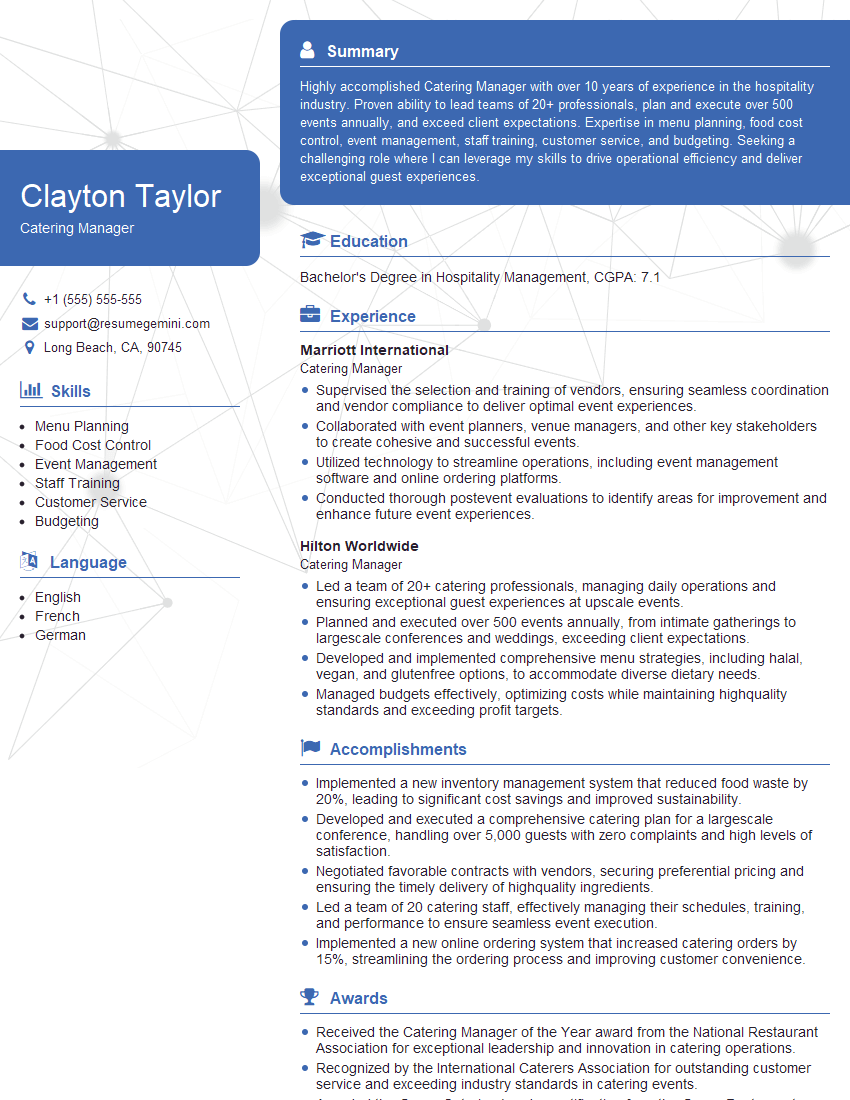
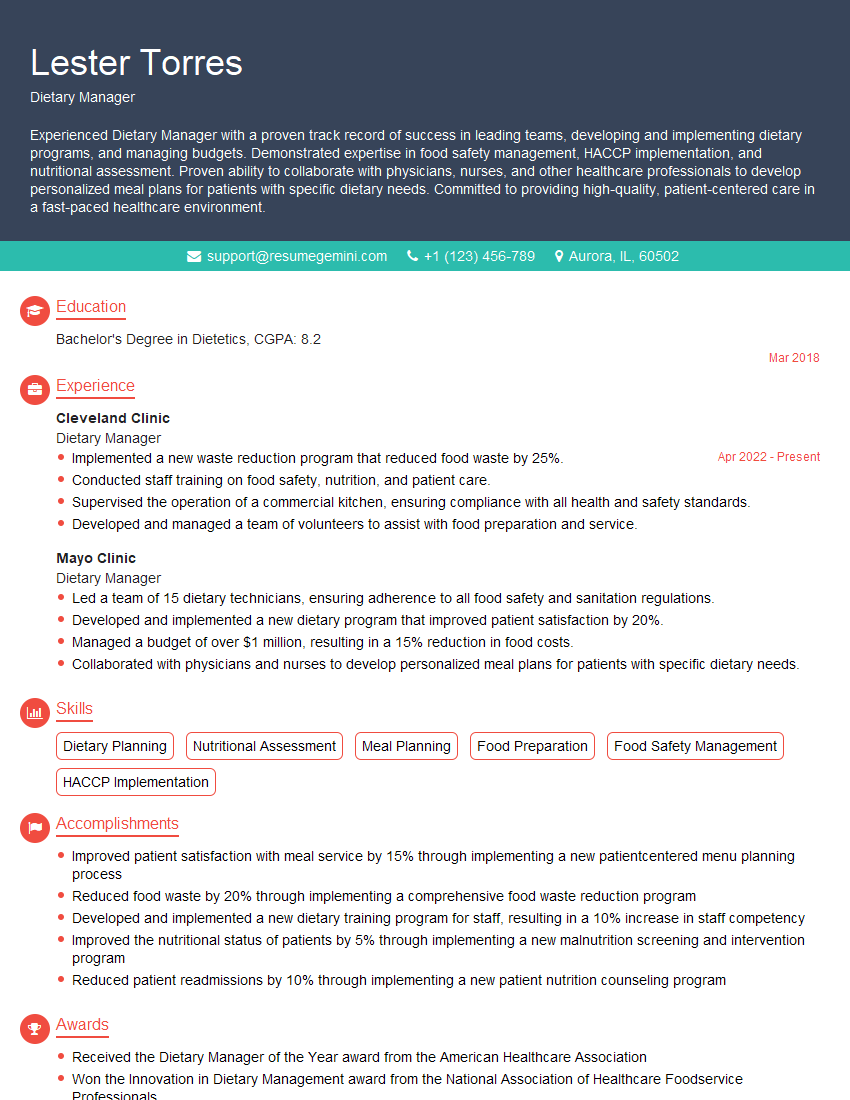
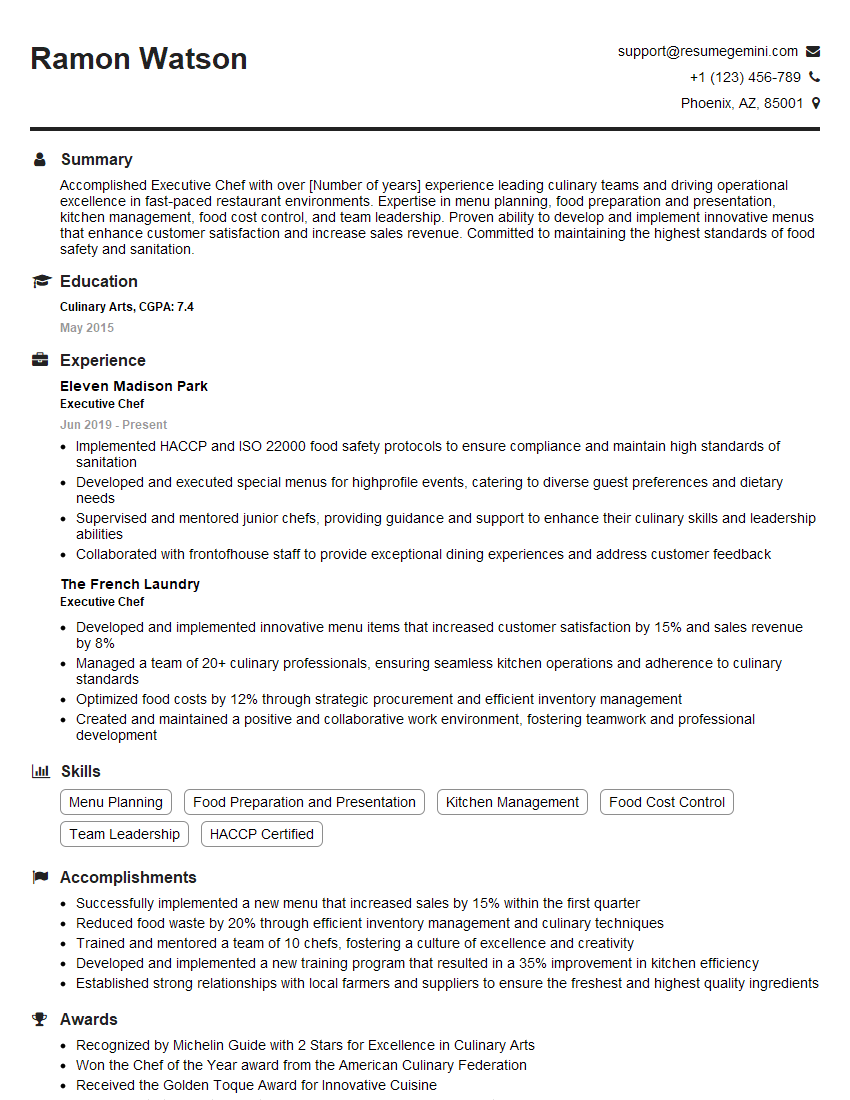
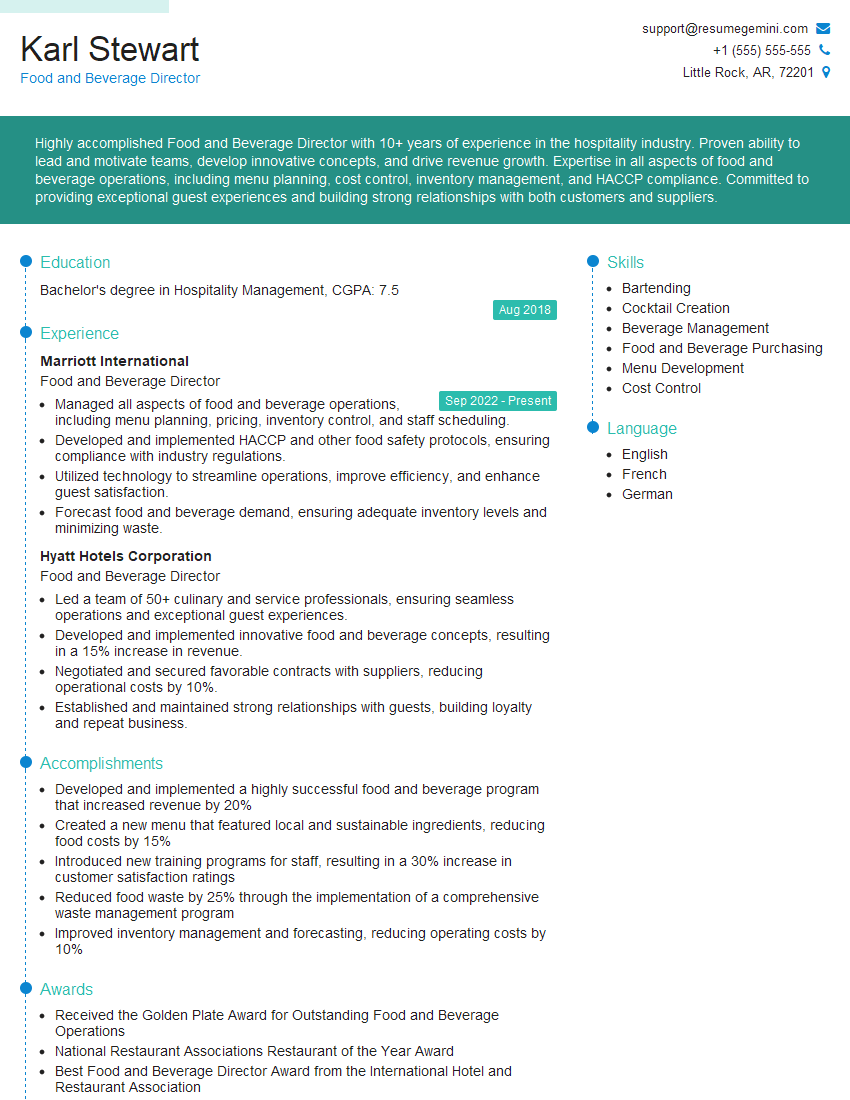
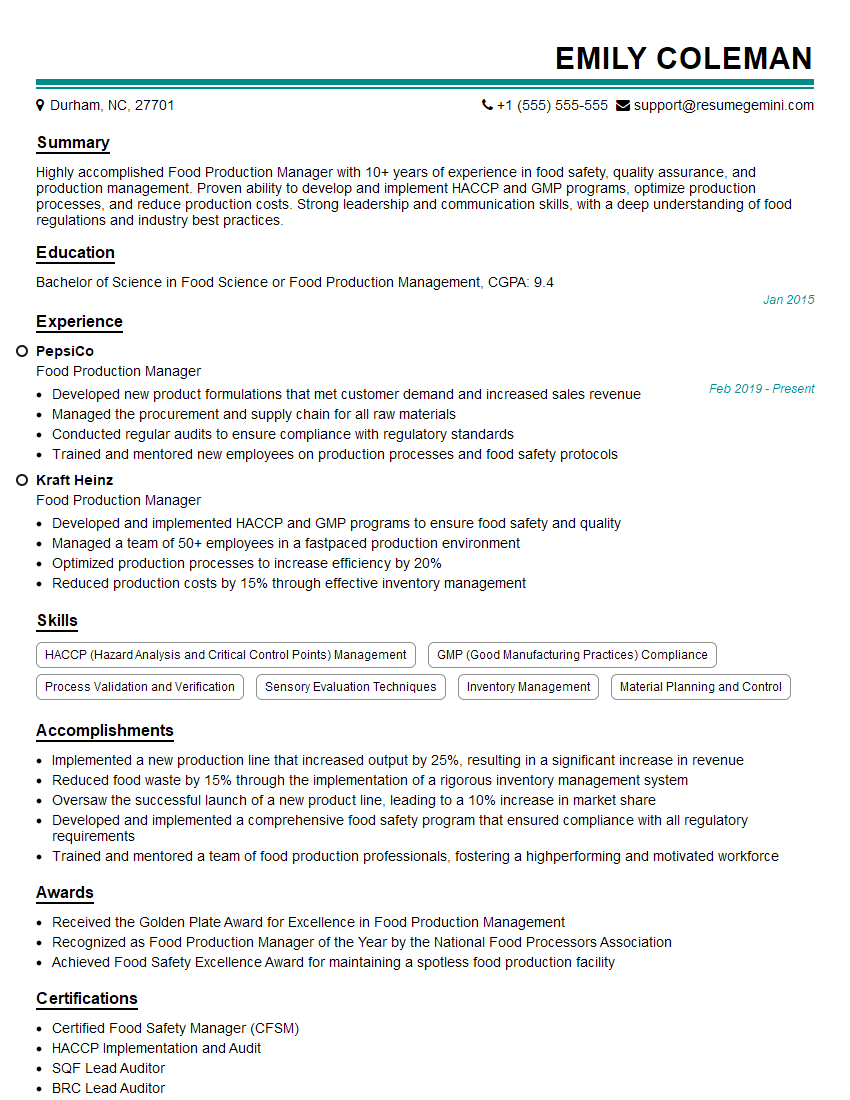
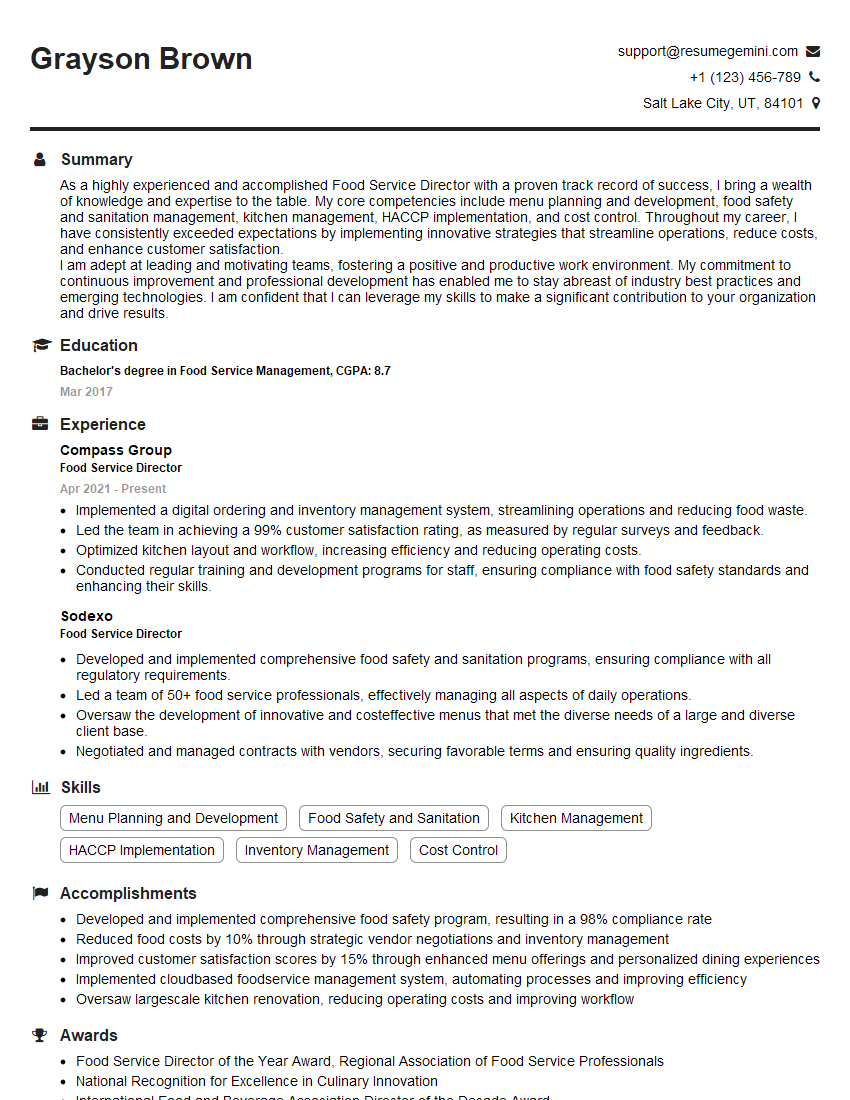
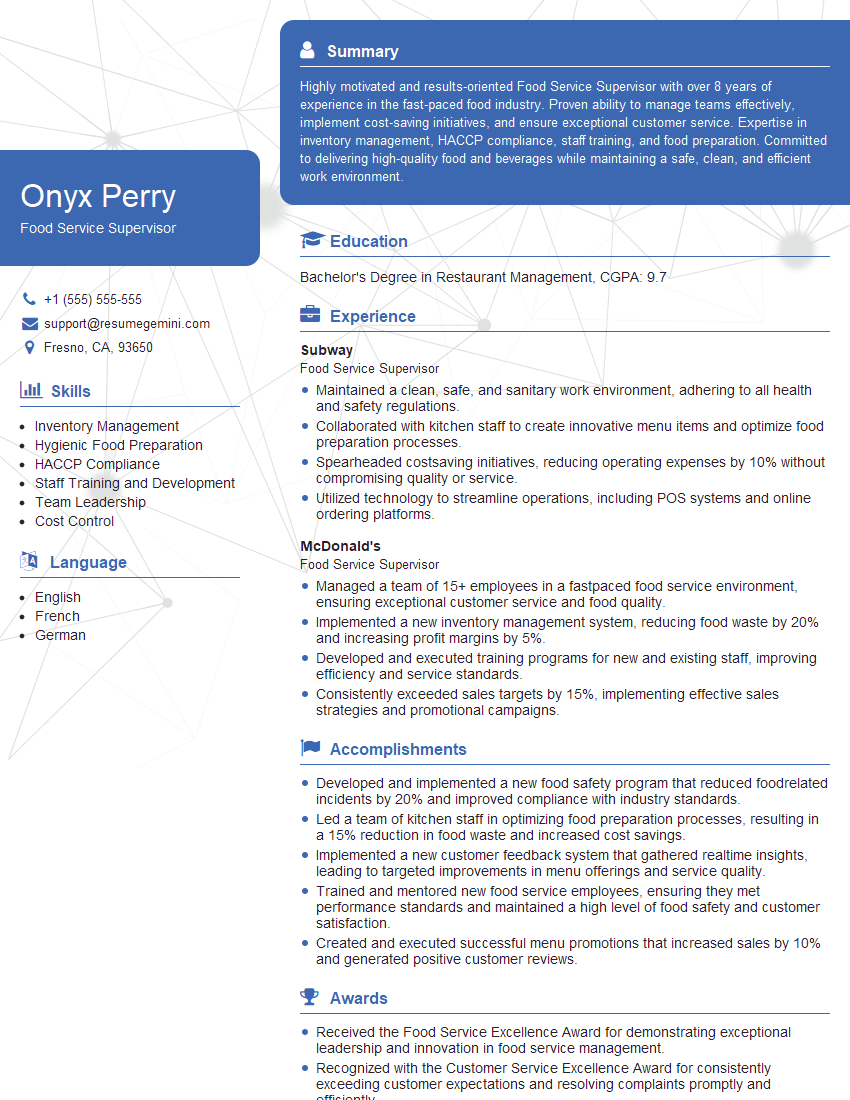
Mastering Food and Nutrition Service Management is crucial for career advancement in this dynamic field. It demonstrates your comprehensive understanding of the industry and your ability to manage complex operations efficiently. To significantly increase your chances of landing your dream role, focus on creating a compelling and ATS-friendly resume that showcases your skills and experience effectively. ResumeGemini is a trusted resource that can help you build a professional and impactful resume tailored to the specific requirements of Food and Nutrition Service Management positions. Examples of resumes tailored to this field are available to guide your resume creation process.
Explore more articles
Users Rating of Our Blogs
Share Your Experience
We value your feedback! Please rate our content and share your thoughts (optional).
What Readers Say About Our Blog
hello,
Our consultant firm based in the USA and our client are interested in your products.
Could you provide your company brochure and respond from your official email id (if different from the current in use), so i can send you the client’s requirement.
Payment before production.
I await your answer.
Regards,
MrSmith
hello,
Our consultant firm based in the USA and our client are interested in your products.
Could you provide your company brochure and respond from your official email id (if different from the current in use), so i can send you the client’s requirement.
Payment before production.
I await your answer.
Regards,
MrSmith
These apartments are so amazing, posting them online would break the algorithm.
https://bit.ly/Lovely2BedsApartmentHudsonYards
Reach out at [email protected] and let’s get started!
Take a look at this stunning 2-bedroom apartment perfectly situated NYC’s coveted Hudson Yards!
https://bit.ly/Lovely2BedsApartmentHudsonYards
Live Rent Free!
https://bit.ly/LiveRentFREE
Interesting Article, I liked the depth of knowledge you’ve shared.
Helpful, thanks for sharing.
Hi, I represent a social media marketing agency and liked your blog
Hi, I represent an SEO company that specialises in getting you AI citations and higher rankings on Google. I’d like to offer you a 100% free SEO audit for your website. Would you be interested?