The right preparation can turn an interview into an opportunity to showcase your expertise. This guide to Forensic Investigation and Evidence Collection interview questions is your ultimate resource, providing key insights and tips to help you ace your responses and stand out as a top candidate.
Questions Asked in Forensic Investigation and Evidence Collection Interview
Q 1. Describe the proper chain of custody for evidence.
Maintaining the chain of custody is paramount in forensic investigations. It’s a meticulous record-keeping process that documents every person who has handled a piece of evidence, from the moment it’s discovered at the crime scene to its presentation in court. This unbroken trail ensures the evidence’s integrity and admissibility in legal proceedings. Think of it like a relay race – each runner (individual handling the evidence) must pass the baton (evidence) to the next, documenting the transfer each time.
- Initial Discovery and Collection: The first responder documents the evidence’s location, condition, and any initial observations. They then properly package the evidence and sign a chain of custody form.
- Transportation and Storage: Each individual transporting or storing the evidence signs the form, noting date, time, and their role. Secure storage is crucial to prevent tampering or degradation.
- Analysis and Testing: Forensic scientists analyzing the evidence document their handling and any alterations made to the evidence (e.g., cutting a sample for DNA testing). Again, they sign the chain of custody form.
- Court Presentation: The final step involves presenting the evidence in court, with the chain of custody form demonstrating its unbroken journey. Any breaks in this chain can severely compromise the evidence’s value in court.
Example: Imagine a bloody knife found at a murder scene. The responding officer bags and labels it, noting the case number, location, and time. They sign the chain of custody form. A detective then transports it to the lab. The forensic technician analyzing the DNA signs the form after completion. This documented process ensures the knife’s integrity and its admissibility as evidence.
Q 2. Explain the different types of fingerprints and their classification.
Fingerprints are unique patterns of friction ridges on the fingertips, palms, and soles of feet. These patterns, formed during fetal development, remain largely unchanged throughout life, making them valuable for identification. They are broadly classified into three main categories:
- Arches: These patterns are characterized by ridges that enter from one side of the finger and exit on the other, forming a wave-like pattern. They are the least common type.
- Loops: Loops have ridges that enter and exit on the same side of the finger, curving around a central point. They are the most common type.
- Whorls: Whorls have circular or spiral patterns. They are characterized by two or more deltas (triangular areas where ridge patterns diverge).
Sub-classification: Each of these categories has further sub-classifications based on specific ridge characteristics like ridge count, delta position, and pattern details. These detailed classifications aid in precise identification and comparison.
Practical Application: In investigations, latent fingerprints (invisible prints left at a crime scene) are collected and compared against known prints (fingerprints from suspects). Advanced techniques like AFIS (Automated Fingerprint Identification System) aid in the rapid comparison of thousands of fingerprints.
Q 3. What are the common methods used for DNA extraction and analysis?
DNA extraction and analysis are crucial in forensic investigations. DNA, unique to each individual (except identical twins), can link suspects to crime scenes or victims.
- DNA Extraction: This involves isolating DNA from biological samples like blood, saliva, semen, hair, or skin cells. Several methods exist, including:
- Organic Extraction: This traditional method uses chemicals (phenol-chloroform) to separate DNA from cellular components. It is effective but requires careful handling due to the hazardous chemicals.
- Chelex Extraction: A simpler, faster method using Chelex resin to bind contaminants and release purified DNA. It’s useful for smaller samples.
- Automated Extraction: Automated systems streamline the process, increasing throughput and reducing human error. These are increasingly common in high-volume forensic labs.
- DNA Analysis: Once extracted, DNA is analyzed using various techniques:
- Polymerase Chain Reaction (PCR): PCR amplifies specific DNA regions, making analysis possible even with trace amounts. This is crucial for degraded or limited samples.
- DNA Sequencing: Determining the exact order of nucleotides (A, T, C, G) in DNA fragments. This provides a highly detailed profile of the DNA.
- STR (Short Tandem Repeat) Analysis: Analyzing short repeating sequences of DNA that are highly variable between individuals. This is commonly used for forensic identification, establishing paternity, and genealogical research.
Example: A DNA sample from a bloodstain at a crime scene is extracted using an automated system. Then, specific STR markers are amplified via PCR and analyzed to generate a DNA profile. This profile is then compared to profiles from suspects to determine a match.
Q 4. How do you ensure the integrity of digital evidence during acquisition?
Ensuring the integrity of digital evidence is critical. Digital evidence is easily altered or lost, so meticulous procedures are essential. This involves a layered approach focusing on data acquisition, validation, and storage.
- Write Blocking: Use a write-blocking device to prevent any changes to the original digital source (hard drive, phone, etc.). This is critical as writing to the original data can alter or destroy evidence.
- Hashing: Create cryptographic hash values (like MD5 or SHA-256) of the data before and after acquisition. These ‘fingerprints’ ensure data hasn’t changed during acquisition or storage. Any difference indicates tampering.
- Forensic Imaging: Create a bit-by-bit copy (forensic image) of the original device. This provides a working copy for investigation without risking the original.
- Chain of Custody: Like physical evidence, maintain strict chain-of-custody documentation for digital evidence, recording who had access and when.
- Secure Storage: Store the original and forensic images securely in a controlled environment to prevent unauthorized access or data corruption.
Example: Imagine investigating a computer suspected of being used in a cybercrime. A write-blocking device is attached before creating a forensic image of the hard drive. The hash value is recorded. Then, the investigation is performed on the image, leaving the original untouched. The hash value is verified after analysis to ensure integrity.
Q 5. Describe the process of photographing a crime scene.
Crime scene photography is crucial for documenting the scene’s condition and evidence placement before anything is moved or altered. It provides a visual record for investigators, juries, and future reference.
- Overview Photographs: Start with wide shots to establish the overall scene context – showing the location and surrounding area.
- Mid-range Photographs: Then, take medium-range shots focusing on specific areas of interest, including evidence or key features.
- Close-up Photographs: Finally, take close-up shots of the evidence itself, using scales for size reference. Multiple angles may be necessary.
- Establishing Shots: Include photographs that show the scene’s relationship to its surroundings, such as street signs or building numbers.
- Evidence Markers: Use evidence markers to identify and label each piece of evidence in the photographs.
- Photo Log: Maintain a detailed photographic log including image numbers, descriptions, dates, times, and locations.
Important Considerations: Use appropriate lighting to avoid shadows. Maintain consistent angles and perspectives. Photographs must be high-resolution, clear, and accurately represent the crime scene.
Q 6. What are the different types of trace evidence, and how are they collected?
Trace evidence encompasses tiny fragments of material found at a crime scene that can link a suspect to the scene or victim. These are often overlooked but can be highly significant.
- Hair and Fibers: Hair samples can reveal DNA, and fiber analysis can link clothing or materials to suspects or victims.
- Paint Chips: Paint fragments can be analyzed to match specific cars or objects.
- Glass Fragments: Analysis of glass fragments can link suspects to broken windows or other objects.
- Soil and Debris: Soil samples can reveal location information, and debris analysis can identify tools or materials used in a crime.
- Gunshot Residue (GSR): Tiny particles expelled from a firearm can be found on the shooter’s hands or clothing.
Collection Techniques: Trace evidence requires careful and meticulous collection. This frequently involves:
- Vacuuming: Using specialized vacuums with filters to collect minute particles.
- Tape Lifting: Using adhesive tape to lift trace evidence from surfaces.
- Tweezers: Using tweezers to carefully collect larger pieces of evidence.
- Proper Packaging: Each item must be packaged separately in appropriate containers to avoid contamination or loss.
Q 7. Explain the principles of Locard’s Exchange Principle.
Locard’s Exchange Principle is a fundamental concept in forensic science, stating that ‘every contact leaves a trace’. This means that when two objects come into contact, there is an exchange of material between them. This exchanged material can be used as evidence.
Explanation: The principle emphasizes that any interaction leaves behind microscopic or macroscopic traces, even if not immediately apparent. These traces could be fibers from clothing, hairs, skin cells, or other materials. The principle highlights the potential for finding evidence that connects a suspect to a crime scene or victim.
Practical Application: This principle guides the search for evidence. Investigators understand that even seemingly insignificant contacts might leave traces, making thorough examination crucial. For instance, a suspect breaking into a house might leave behind fibers from their clothing on the door handle, or the victim’s skin cells on the suspect’s knife. These trace amounts of evidence, using Locard’s principle, can be identified and used for forensic analysis.
Q 8. How do you handle contaminated evidence?
Handling contaminated evidence is paramount in forensic investigations. Contamination compromises the integrity of evidence, potentially leading to inaccurate conclusions or even the dismissal of a case. My approach involves a multi-step process beginning with meticulous documentation of the contamination. This includes photographing and noting the nature and extent of the contamination, as well as documenting the chain of custody meticulously. Then, I prioritize minimizing further contamination. This might involve using appropriate personal protective equipment (PPE), such as gloves, masks, and shoe covers, and working in a controlled environment. Depending on the type of contamination, specialized cleaning techniques may be employed. For example, biological contamination might require careful cleaning with sterile solutions. If cleaning isn’t feasible or might further damage the evidence, the contaminated areas are carefully documented, and the evidence is handled and packaged in a way to isolate the contaminated portion. Finally, the entire process is carefully documented in detailed reports for review and potential legal challenges.
For instance, imagine a bloodstained knife found at a crime scene. If it’s accidentally touched with bare hands, contaminating it with the investigator’s DNA, this compromises the original sample. Careful handling with gloves, photographing the knife in its original state, and packaging it appropriately to avoid further contamination becomes crucial. Proper documentation would then explicitly note the initial contamination and subsequent steps taken. This transparency helps ensure the admissibility of the evidence in court.
Q 9. What are the ethical considerations in forensic investigations?
Ethical considerations are the bedrock of forensic investigations. Our work directly impacts individuals’ lives and the pursuit of justice, so maintaining the highest ethical standards is non-negotiable. This includes maintaining objectivity and impartiality, striving to avoid bias in evidence collection, analysis, and interpretation. We must ensure the accuracy and reliability of our findings, rigorously adhering to established scientific methods and protocols. Confidentiality is crucial; we must protect the privacy of individuals involved in the investigation, even if they are suspects. Integrity demands honest reporting, transparently disclosing any limitations in our analysis or potential sources of error. Finally, professional conduct requires adherence to all applicable laws and regulations, treating everyone involved with dignity and respect.
For example, imagine a scenario where preliminary analysis suggests the suspect is innocent, despite the initial pressure to focus on a conviction. An ethical investigator would continue the investigation, exploring alternative leads and possibilities, even if it means potentially releasing a suspect. Compromising ethics for results undermines the integrity of the entire system.
Q 10. Describe your experience with different forensic software and tools.
My experience encompasses a range of forensic software and tools. I’m proficient in using digital forensic software like EnCase and FTK for analyzing hard drives and other digital media, recovering deleted files, and reconstructing user activity. In DNA analysis, I have extensive experience with GeneMapper and other software for analyzing genetic profiles and comparing them to databases. For image analysis, I utilize tools like Adobe Photoshop and specialized software for enhancing images, identifying and analyzing trace evidence in photographs and videos. Furthermore, my experience extends to using Geographic Information Systems (GIS) software to map crime scenes and analyze spatial patterns. Finally, I frequently employ database management systems to track and organize evidence, maintain the chain of custody, and manage case files effectively.
For example, in a cybercrime investigation, EnCase would be used to painstakingly examine a suspect’s computer hard drive for deleted files, email logs, and browser history, providing crucial evidence for prosecution. The use of these digital forensics tools allows investigators to recover evidence that might otherwise be missed or destroyed.
Q 11. How do you determine the time of death?
Determining the time of death (post-mortem interval or PMI) is a complex process that uses a variety of methods and factors. There’s no single definitive test. Instead, investigators use a combination of techniques depending on the circumstances. Early indicators include algor mortis (cooling of the body), rigor mortis (stiffening of the muscles), and livor mortis (settling of blood). However, these are influenced by environmental factors like temperature. More advanced techniques such as forensic entomology (study of insect activity on the body), analyzing the decomposition stage, and examining stomach contents provide more accurate estimations. In cases with a known time of last activity, comparing that with the physiological changes can refine the PMI estimation. Advanced techniques may involve analyzing vitreous humor potassium levels or measuring the level of decomposition products.
For example, finding the victim in a location with high temperature might significantly affect the rate of cooling and the onset of rigor mortis, requiring adjustment to the standard PMI calculations. The presence of insect larvae on the body can often give a more precise estimation of the elapsed time since death.
Q 12. Explain the different types of forensic analysis used in arson investigations.
Arson investigations utilize several forensic techniques to determine the origin and cause of a fire. Gas chromatography-mass spectrometry (GC-MS) is used to analyze accelerant residues. This technique separates and identifies the components of a liquid, allowing investigators to identify the type of accelerant used (e.g., gasoline, kerosene). Examination of fire patterns helps determine the point of origin and the direction of fire spread, providing crucial clues about whether the fire was accidental or intentionally set. Microscopic analysis of burned materials can reveal the presence of specific chemicals or substances that may indicate the presence of an accelerant. Finally, investigators examine the overall circumstances of the fire, including witness statements, security footage, and the history of the structure, to build a comprehensive understanding of the event.
For instance, finding a distinct ‘pour pattern’ on the floor, indicating the deliberate pouring of an accelerant, might be accompanied by GC-MS results confirming the presence of gasoline residues. Combining these lines of evidence leads to a stronger conclusion.
Q 13. What are the limitations of forensic techniques?
Forensic techniques, while powerful, have limitations. One major limitation is the possibility of contamination or degradation of evidence, affecting the reliability of results. The quality and quantity of evidence available are also crucial; limited samples can hinder accurate analysis. The interpretation of forensic evidence can be subjective, leading to differences of opinion among experts. Additionally, some techniques are more sensitive than others. Certain forensic tests, such as DNA analysis, have a higher sensitivity and specificity, while other techniques may yield less conclusive results. Moreover, the reliability of forensic techniques relies heavily on the proper application of the methods and the experience of the forensic scientist.
For instance, trace evidence, such as fibers or hairs, might be too degraded or scarce to provide definitive conclusions. Or, two different experts might interpret the same DNA profile slightly differently based on their experience and methodology, ultimately leading to discrepancies in the interpretation of results.
Q 14. How do you deal with conflicting evidence?
Dealing with conflicting evidence requires a methodical and objective approach. First, I meticulously review all evidence, ensuring complete understanding of each piece and the methods used to obtain it. Then, I evaluate the validity and reliability of each piece of evidence based on its source, methodology, and potential for contamination or error. I carefully examine potential biases in the collection, analysis, and interpretation of the evidence. I cross-reference the different evidence to identify inconsistencies and possible explanations. This might involve additional investigation, seeking further corroborating evidence or expert opinions to resolve conflicting findings. It’s important to document all findings and interpretations transparently, recognizing the limitations of each piece of evidence. In some cases, the conflicting evidence simply highlights the lack of clear definitive conclusions, requiring a careful presentation of the different interpretations and their limitations.
Imagine a case with conflicting witness testimonies. One witness might claim the suspect was wearing a blue shirt, while another says a red shirt. Careful consideration of factors like lighting, distance, and the witness’s potential biases is required. Further evidence, such as security footage or forensic evidence on the suspect’s clothing, might help resolve the conflict. If a resolution cannot be reached, both conflicting accounts would be presented and discussed in the report.
Q 15. Describe your experience with documenting and presenting findings in court.
Documenting and presenting findings in court requires meticulous attention to detail and a clear, concise communication style. My approach begins with comprehensive, contemporaneous record-keeping at every stage of the investigation. This includes detailed notes, photographs, videos, and chain-of-custody documentation for every piece of evidence. I utilize specialized software to manage this data, ensuring its integrity and traceability.
In court, I present my findings using clear and simple language, avoiding technical jargon where possible. I use visual aids like photographs, diagrams, and timelines to enhance understanding. My testimony focuses on presenting the factual evidence objectively and explaining its significance in a way that is easily grasped by the jury. For example, in one case involving a cybercrime, I meticulously documented the timeline of events through digital forensic analysis, presenting this in court via a clear, chronological timeline showing the attacker’s access points and actions. This visual representation made the complex technical details much easier for the jury to understand and ultimately contributed to a successful prosecution.
Career Expert Tips:
- Ace those interviews! Prepare effectively by reviewing the Top 50 Most Common Interview Questions on ResumeGemini.
- Navigate your job search with confidence! Explore a wide range of Career Tips on ResumeGemini. Learn about common challenges and recommendations to overcome them.
- Craft the perfect resume! Master the Art of Resume Writing with ResumeGemini’s guide. Showcase your unique qualifications and achievements effectively.
- Don’t miss out on holiday savings! Build your dream resume with ResumeGemini’s ATS optimized templates.
Q 16. How do you handle pressure and stress in a high-pressure environment?
Forensic investigation often involves high-pressure situations with tight deadlines and emotionally charged environments. I handle this stress through a combination of preparation, organizational skills, and mindful self-care. Before entering a high-pressure situation, I meticulously plan my approach, anticipating potential challenges and developing contingency plans. During the investigation, I focus on maintaining a methodical and systematic workflow, prioritizing tasks and delegating when appropriate. After a high-pressure event, I make sure to decompress through activities like exercise, spending time with family, or pursuing hobbies – anything that helps me to re-center and reduce stress.
Think of it like a high-stakes game – proper preparation minimizes the anxiety and allows me to focus on the strategic elements rather than getting overwhelmed by the pressure.
Q 17. Describe a time you had to solve a complex forensic problem.
One particularly challenging case involved a seemingly random series of arson attacks. Initial evidence pointed in various directions. The complexity stemmed from the lack of apparent connection between the crime scenes and the absence of clear forensic indicators like fingerprints or DNA at the initial sites. To solve this, I employed a multi-pronged approach. First, I meticulously analyzed the fire patterns at each location, identifying subtle similarities in the ignition methods and the spread of the flames. This analysis suggested a common origin for the accelerant. Next, we examined witness statements, looking for patterns in timing and descriptions. Finally, by using geographic profiling software, we mapped the crime scenes and identified a common area that linked the locations. This geographic analysis pointed to a suspect who lived near the central location. Combining the various pieces of evidence, including the accelerant analysis and geographic profiling, we were able to build a strong case that led to the successful arrest and conviction of the arsonist.
Q 18. What are your strengths and weaknesses as a forensic investigator?
My greatest strengths lie in my meticulous attention to detail, my analytical skills, and my ability to collaborate effectively with a team. I am known for my thoroughness in documenting every aspect of an investigation and for my ability to synthesize complex information into clear, concise reports. Furthermore, I am adept at working effectively within diverse teams, often involving specialists from different fields. I thrive in collaborative environments because this type of casework often demands a wide range of expertise.
One area I am constantly working to improve is my delegation skills. While I am naturally detail-oriented, I sometimes find it difficult to relinquish control over certain aspects of an investigation. I’m actively working on improving my confidence in trusting team members and assigning tasks accordingly, which allows for more efficient investigation.
Q 19. Explain your understanding of different types of forensic databases.
Forensic databases are crucial for efficient investigation. Several types exist, each serving a specific purpose. For example, AFIS (Automated Fingerprint Identification System) allows for rapid comparison of fingerprints collected from crime scenes with those in a large database of known individuals. CODIS (Combined DNA Index System) is a similar system for DNA profiles, enabling matching across cases and jurisdictions. NIBIN (National Integrated Ballistics Information Network) compares ballistic evidence, such as spent cartridge casings, to link firearms used in different crimes. Other databases exist for things such as chemical substances, latent fingerprints, and even digital evidence such as images and computer artifacts. My familiarity with these databases is extensive, and I understand their limitations and the importance of proper data entry and validation to avoid false matches.
Q 20. How familiar are you with relevant legal and regulatory frameworks?
I am intimately familiar with relevant legal and regulatory frameworks, including rules of evidence, chain-of-custody protocols, and privacy laws. Understanding these frameworks is vital for ensuring the admissibility of evidence in court and for maintaining the ethical integrity of the investigation. My understanding extends to both federal and state regulations specific to different types of forensic evidence, such as the handling and preservation of digital evidence, the use of search warrants, and the protection of individual rights during an investigation. For instance, I am very familiar with the nuances of the 4th Amendment and its implications for digital forensics in my work.
Q 21. Describe your proficiency in various laboratory techniques.
My proficiency encompasses a broad range of laboratory techniques, including DNA extraction and analysis, fingerprint processing, trace evidence examination (such as fibers and hairs), blood spatter analysis, and digital forensic analysis (including data recovery, network forensics, and mobile device forensics). I am skilled in using various instruments, such as microscopes, spectrophotometers, and gas chromatographs, to analyze samples. Furthermore, I possess expertise in chemical analysis techniques for detecting and identifying substances such as accelerants, explosives, and drugs. My experience extends to both traditional laboratory methods and cutting-edge analytical techniques used in modern forensic investigations. I am also proficient in documenting all procedures using standardized reporting and chain-of-custody methods.
Q 22. How do you prioritize tasks and manage your time effectively during an investigation?
Prioritizing tasks in a forensic investigation requires a structured approach. Think of it like a meticulously planned search and rescue mission; every piece of information is a potential clue. I utilize a triage system, assessing the immediate urgency and potential impact of each task. This often involves creating a timeline based on the evidence found at the crime scene, determining which actions will yield the most valuable information first. For instance, securing a volatile crime scene takes precedence over analyzing latent fingerprints. Then, I list tasks in order of importance, assigning deadlines where feasible. This is critical for maintaining efficiency, managing expectations, and ensuring nothing is overlooked. I utilize project management tools to track progress and allocate resources effectively, including assigning specific personnel to certain tasks.
For example, in a case involving a suspected homicide, securing the crime scene and processing evidence for DNA and trace materials would be top priority. Only after these crucial steps have been taken would I move to interviewing witnesses or analyzing financial records.
Q 23. What are the most common challenges in forensic investigations?
Forensic investigations present several unique challenges. One of the most significant is the inherent limitations of the evidence itself. Evidence can be degraded, contaminated, or simply insufficient to draw definitive conclusions. We’re often working with fragmented pieces of a puzzle, requiring us to be highly analytical and adept at drawing inferences.
- Contamination: Preventing contamination of the crime scene and evidence is paramount. A single stray hair or improperly collected sample can compromise the entire investigation.
- Degradation: Evidence degrades over time, particularly biological materials. Speed and precision are essential to preserve its integrity.
- Complexity of Cases: Modern crimes often involve sophisticated technology and multiple perpetrators, making the investigation more complex and time-consuming.
- Chain of Custody: Maintaining an unbroken chain of custody is crucial for ensuring the admissibility of evidence in court. Any lapse can lead to the evidence being deemed inadmissible.
Dealing with these challenges necessitates meticulous planning, strict adherence to protocols, and a thorough understanding of forensic techniques.
Q 24. How do you ensure the accuracy and reliability of your findings?
Accuracy and reliability are the cornerstones of forensic science. To ensure these, I meticulously follow standardized procedures and protocols at every stage, from securing the crime scene to analyzing the data. This includes rigorous documentation, utilizing validated methodologies and technologies, and conducting independent verifications whenever possible. For instance, I always have at least one colleague review my findings before submitting a report.
Consider DNA analysis: We use multiple independent testing methods to confirm our findings, reducing the chance of error. Likewise, when examining digital evidence, I use validated forensic software and techniques to ensure the integrity and authenticity of the data recovered. This multi-layered approach significantly improves the accuracy and dependability of my conclusions.
Q 25. Explain your experience with different types of forensic reports.
My experience encompasses various forensic report types, each serving a specific purpose. I’ve prepared reports ranging from simple crime scene summaries detailing findings and observations to comprehensive reports with detailed analysis of complex pieces of evidence such as digital forensics and trace evidence.
- Crime Scene Reports: These provide a detailed overview of the crime scene, including photographs, sketches, and descriptions of the evidence collected.
- Laboratory Reports: These documents the results of forensic analyses, such as DNA testing, toxicology, and ballistics.
- Expert Witness Reports: These are more detailed and are used when providing expert testimony in court; they explain the findings in a clear, concise and legally sound manner, highlighting the scientific basis of the conclusions.
- Digital Forensic Reports: These reports detail the findings from the analysis of computers, mobile devices, and other digital media.
The format and content of each report are adapted to its intended audience and purpose, always emphasizing clarity and objectivity.
Q 26. Describe your experience working within a team.
Teamwork is fundamental to successful forensic investigations. I’ve been part of numerous multidisciplinary teams, collaborating with scientists, investigators, and legal professionals. I consider myself a strong team player, adept at communicating effectively, sharing information, and contributing my expertise to the collective effort. I understand the importance of different roles and perspectives, fostering a collaborative environment that values constructive feedback.
For example, in a recent case, we had a team including crime scene investigators, DNA specialists, digital forensics experts, and a forensic pathologist. Effective communication ensured that everyone was up to date on the progress and that we could coordinate our efforts efficiently, resulting in a successful resolution of the case.
Q 27. How do you stay updated on the latest advancements in forensic science?
Staying current in forensic science is critical. I accomplish this through continuous professional development, including attending conferences, participating in workshops, and actively engaging in professional organizations like the American Academy of Forensic Sciences. Reading peer-reviewed journals, attending webinars, and taking online courses keep me updated on the latest advancements in techniques and technologies. I also participate in professional networking opportunities to exchange insights and learn from colleagues and experts in the field. This commitment to lifelong learning is crucial to maintain my proficiency and contribute effectively to investigations.
Q 28. Describe your experience with analyzing blood spatter patterns.
Analyzing blood spatter patterns is a crucial aspect of crime scene reconstruction. It helps to determine the events that occurred, often providing insights into the weapon used, the number of blows inflicted, and the position of the victim and assailant at the time of the incident. I’m experienced in interpreting different types of bloodstain patterns, including passive stains (such as drops, flows, and pools), transfer stains (such as wipes, swipes, and patterns from contact), and projected stains (such as arterial spurts and cast-off patterns).
The analysis involves careful observation, photography, and documentation of the size, shape, and distribution of bloodstains. Using this information, along with other evidence, we can reconstruct the sequence of events leading to the injury or death. For example, the presence of cast-off patterns on a wall can indicate the approximate location of the assailant when the weapon was swung.
Key Topics to Learn for Forensic Investigation and Evidence Collection Interview
- Crime Scene Investigation Fundamentals: Understanding protocols, securing the scene, and initial observations. Practical application: Describing your approach to a staged crime scene and the rationale behind your actions.
- Evidence Collection and Preservation Techniques: Proper handling, packaging, and chain of custody for various evidence types (biological, trace, digital). Practical application: Explaining the differences in handling DNA evidence versus fingerprint evidence.
- Forensic Photography and Documentation: Creating comprehensive and admissible photographic records. Practical application: Illustrating the importance of scale and perspective in crime scene photography.
- Trace Evidence Analysis: Understanding the principles and techniques used in analyzing hairs, fibers, paint, glass, etc. Practical application: Explaining how trace evidence can link a suspect to a crime scene.
- Digital Forensics: Data recovery, mobile device forensics, and network security investigation. Practical application: Describing your experience with data acquisition and analysis tools.
- Report Writing and Testimony: Preparing clear, concise, and legally sound reports and delivering confident testimony in court. Practical application: Outlining the key components of a comprehensive forensic report.
- Forensic Science Technologies: Familiarity with advanced technologies like DNA profiling, spectroscopy, and microscopy. Practical application: Discussing the limitations and applications of specific technologies.
- Legal and Ethical Considerations: Understanding the legal framework governing forensic investigations and maintaining ethical conduct. Practical application: Analyzing a hypothetical scenario involving ethical dilemmas in evidence collection.
Next Steps
Mastering Forensic Investigation and Evidence Collection opens doors to a rewarding and impactful career, offering opportunities for growth and specialization. A strong resume is crucial for showcasing your skills and experience to potential employers. To increase your chances of securing an interview, create an ATS-friendly resume that highlights your accomplishments and keywords relevant to the field. ResumeGemini is a trusted resource that can help you build a professional and impactful resume. They offer examples of resumes tailored to Forensic Investigation and Evidence Collection to guide you through the process. Invest time in crafting a compelling resume – it’s your first impression and a key step towards your successful career in forensic science.
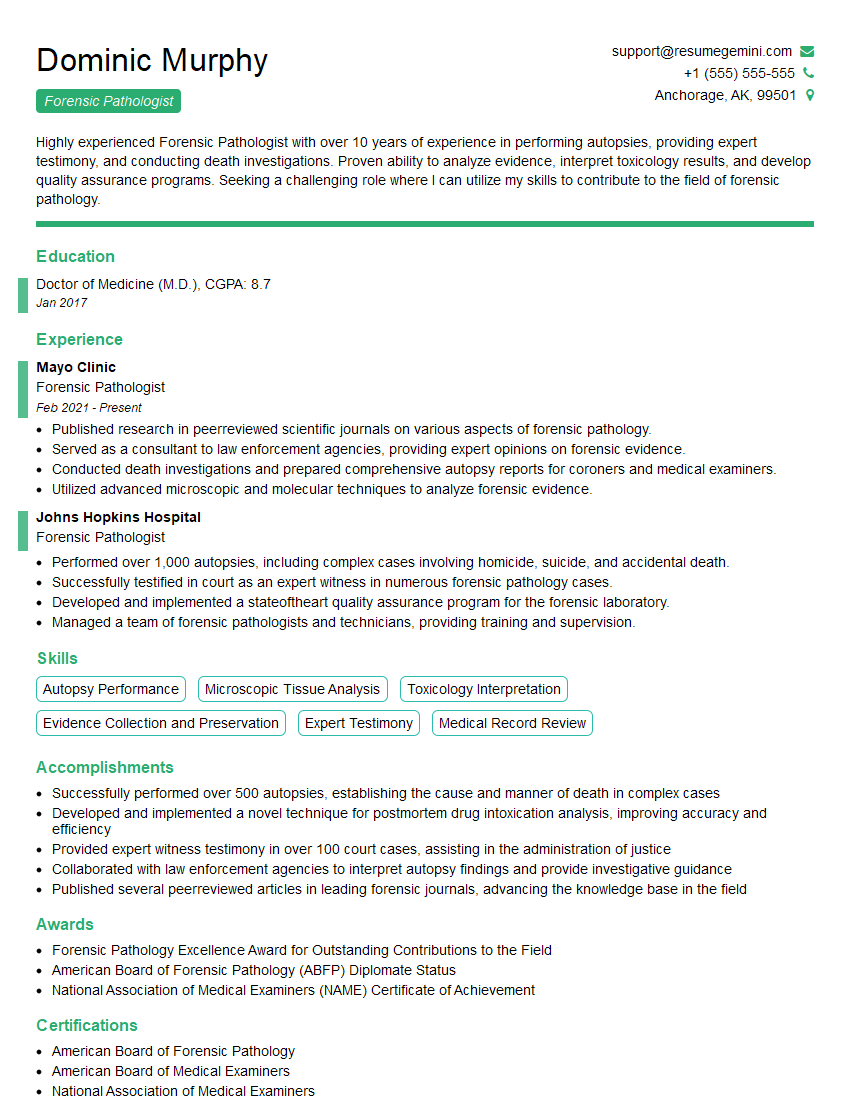
Forensic Pathologist Resume Sample
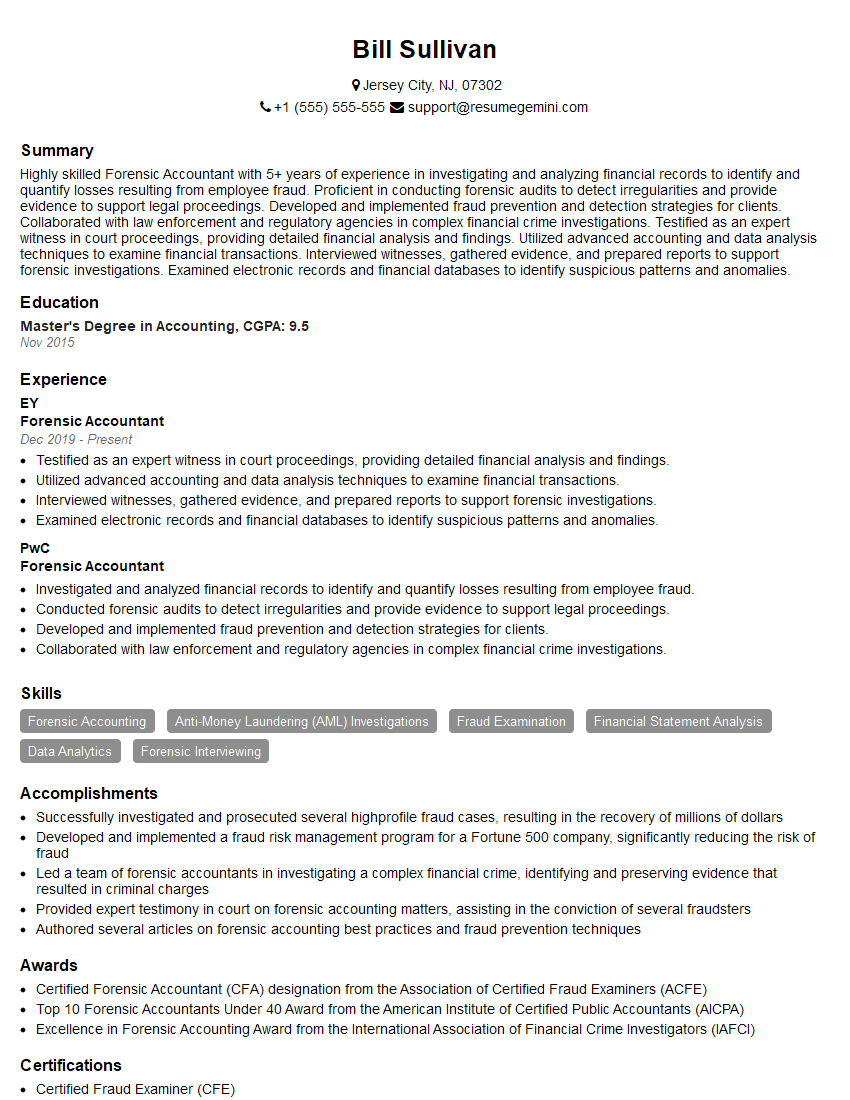
Forensic Accountant Resume Sample
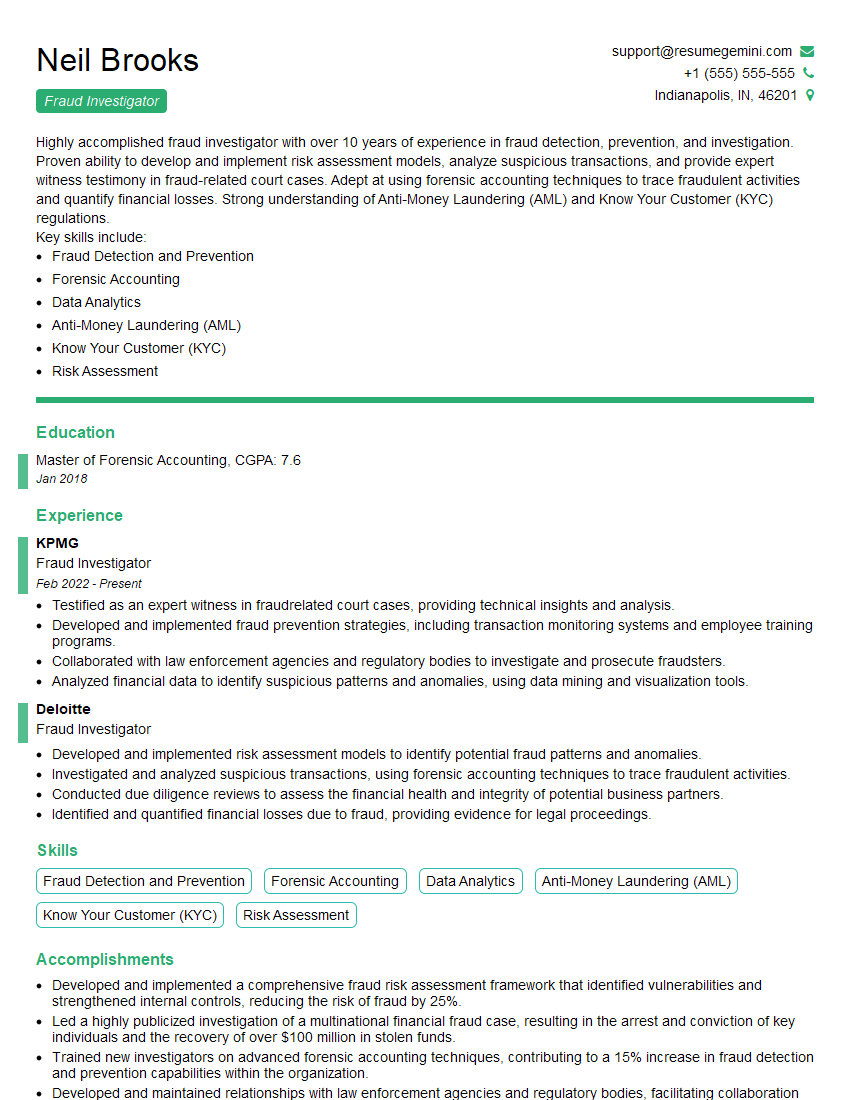
Fraud Investigator Resume Sample
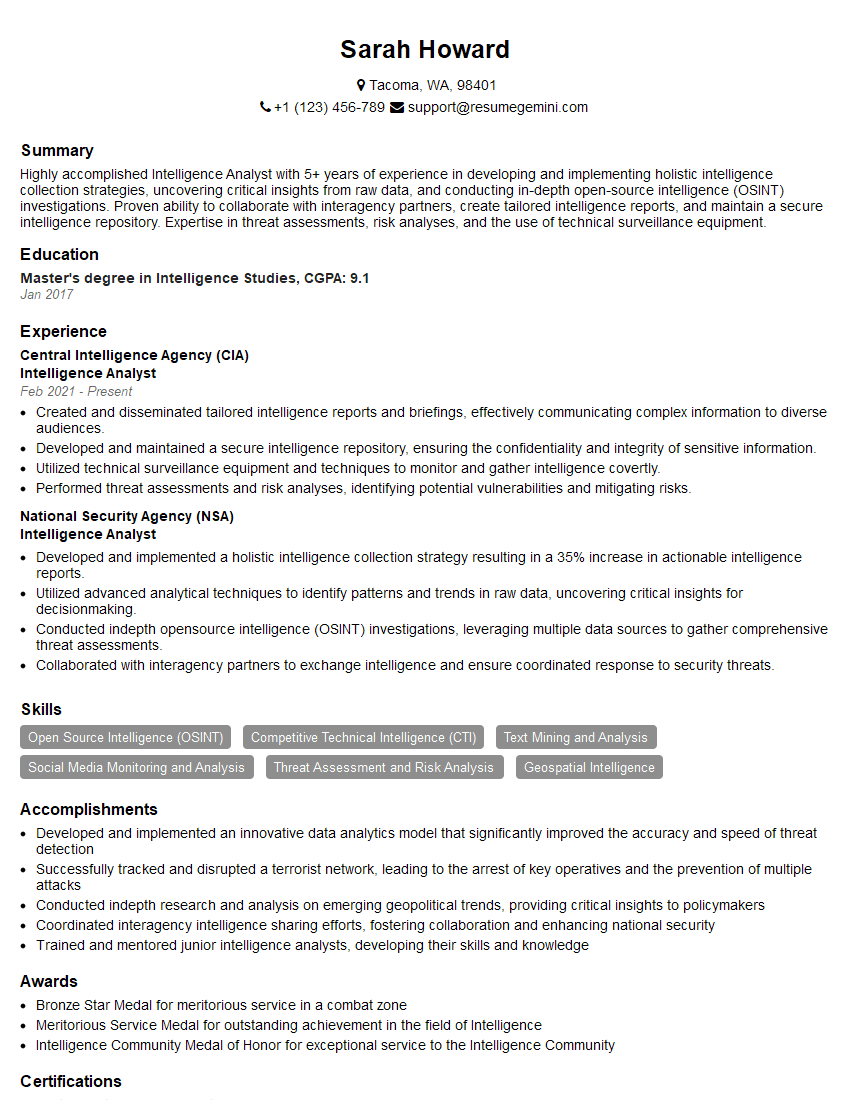
Intelligence Analyst Resume Sample
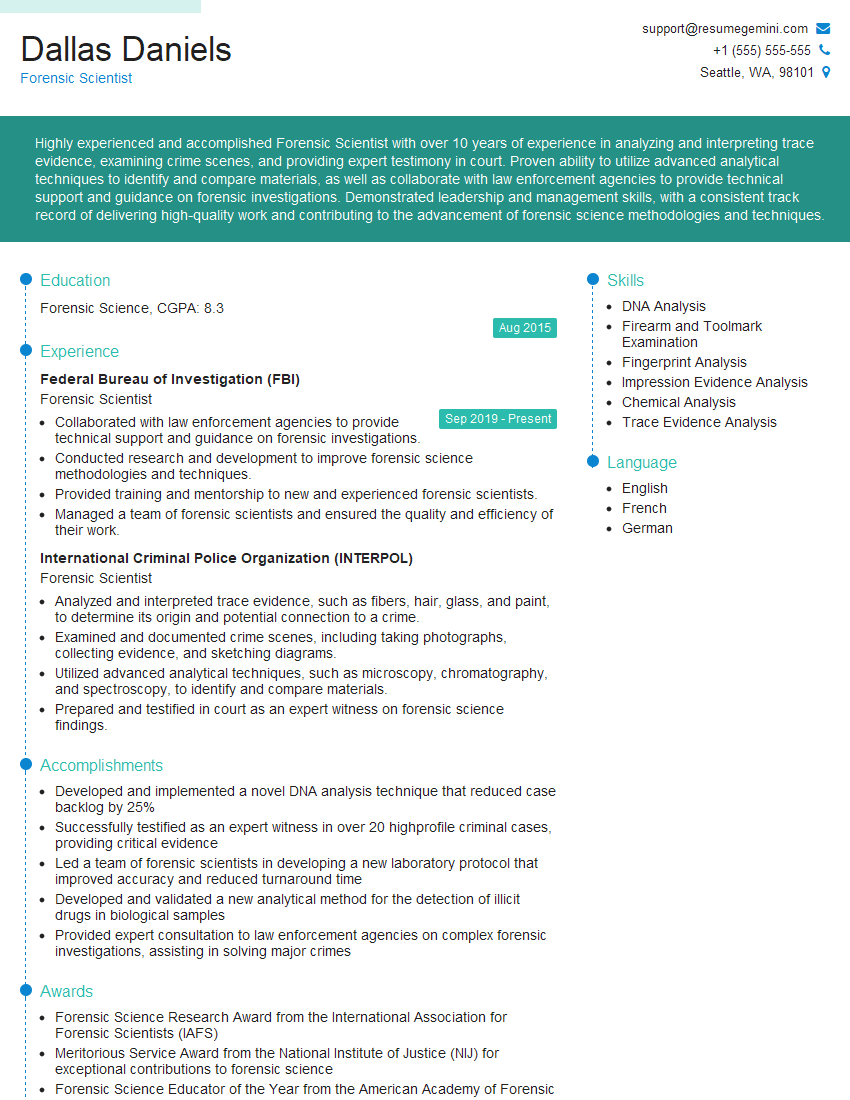
Forensic Scientist Resume Sample
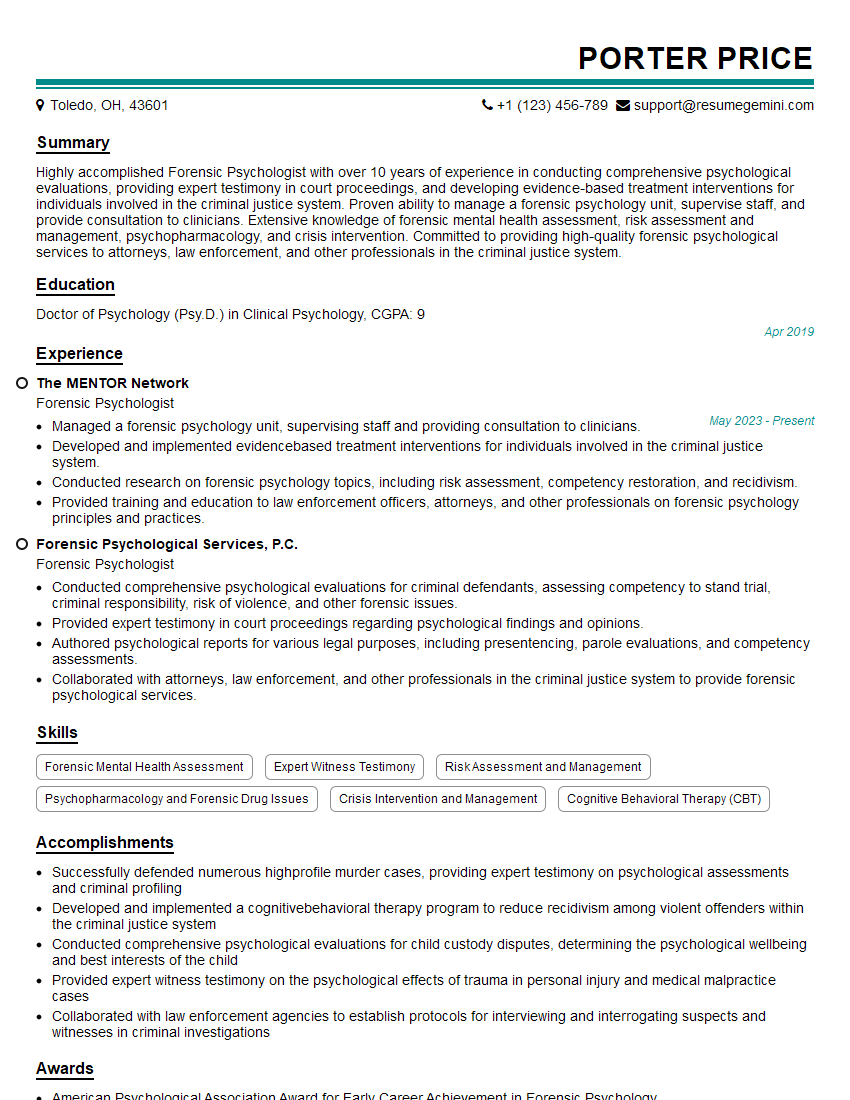
Forensic Psychologist Resume Sample
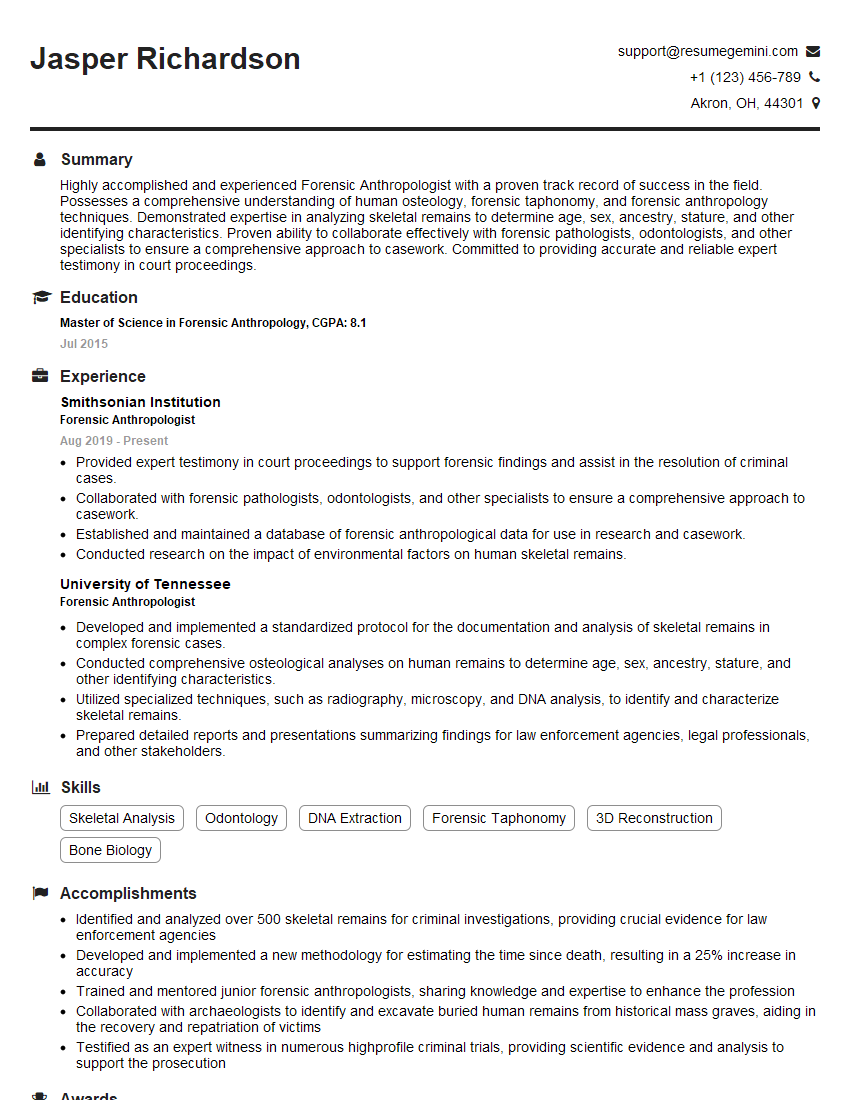
Forensic Anthropologist Resume Sample
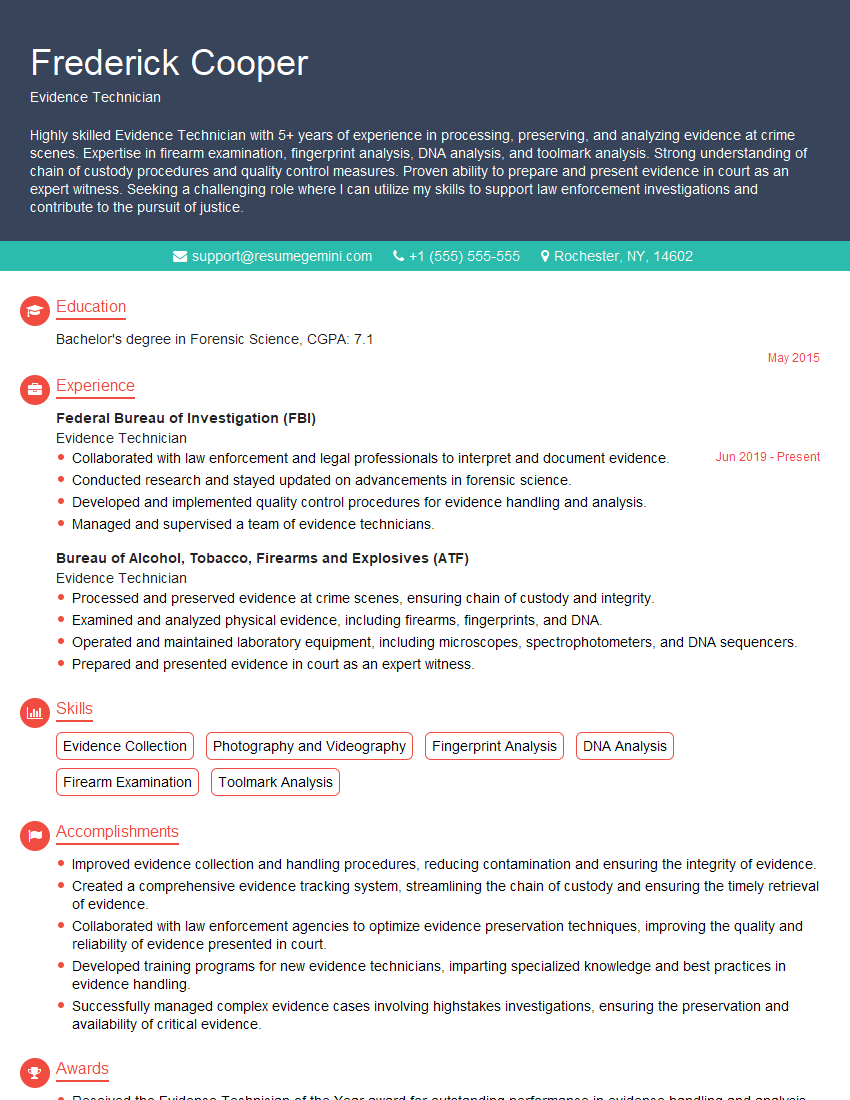
Evidence Technician Resume Sample
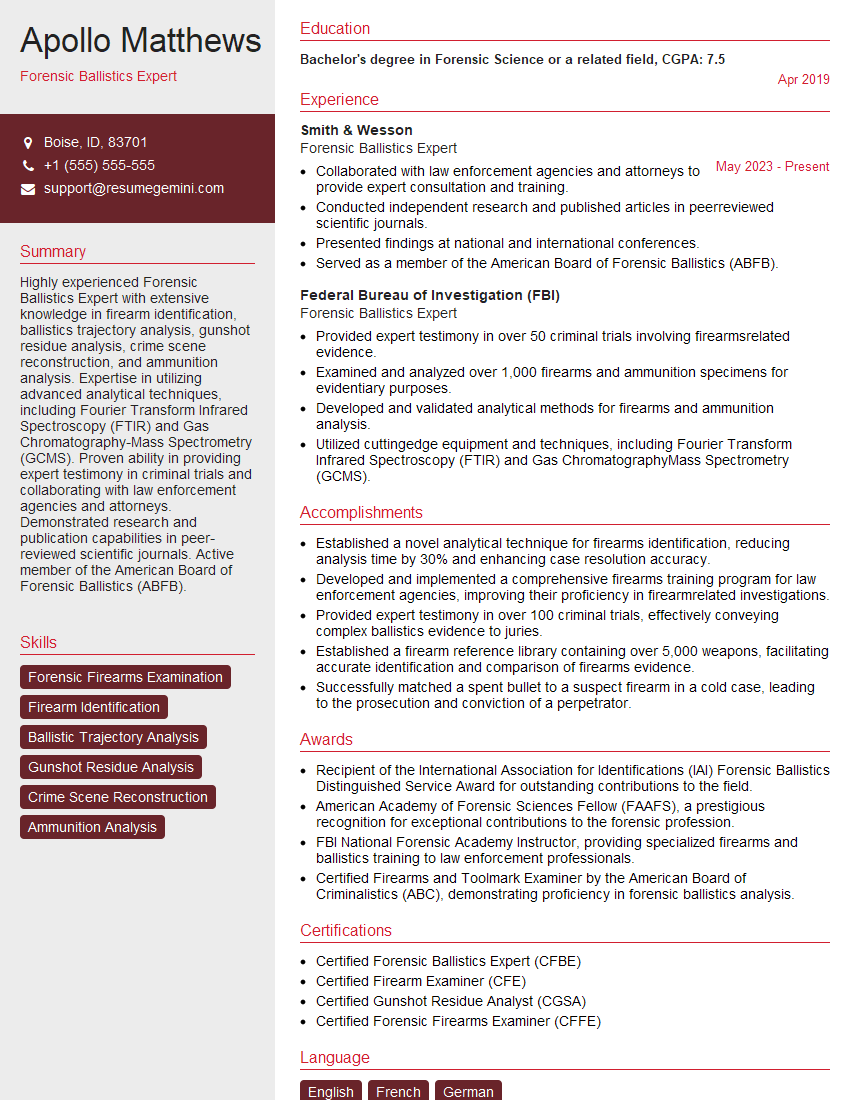
Forensic Ballistics Expert Resume Sample
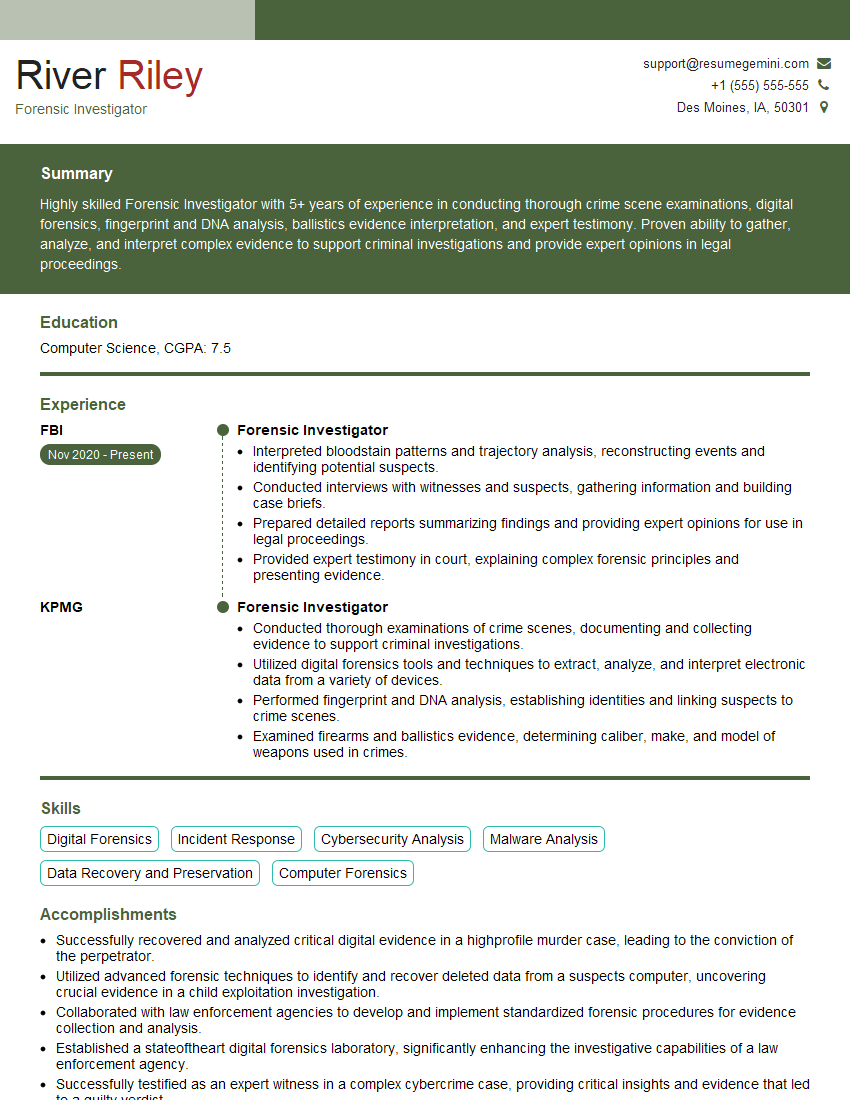
Forensic Investigator Resume Sample
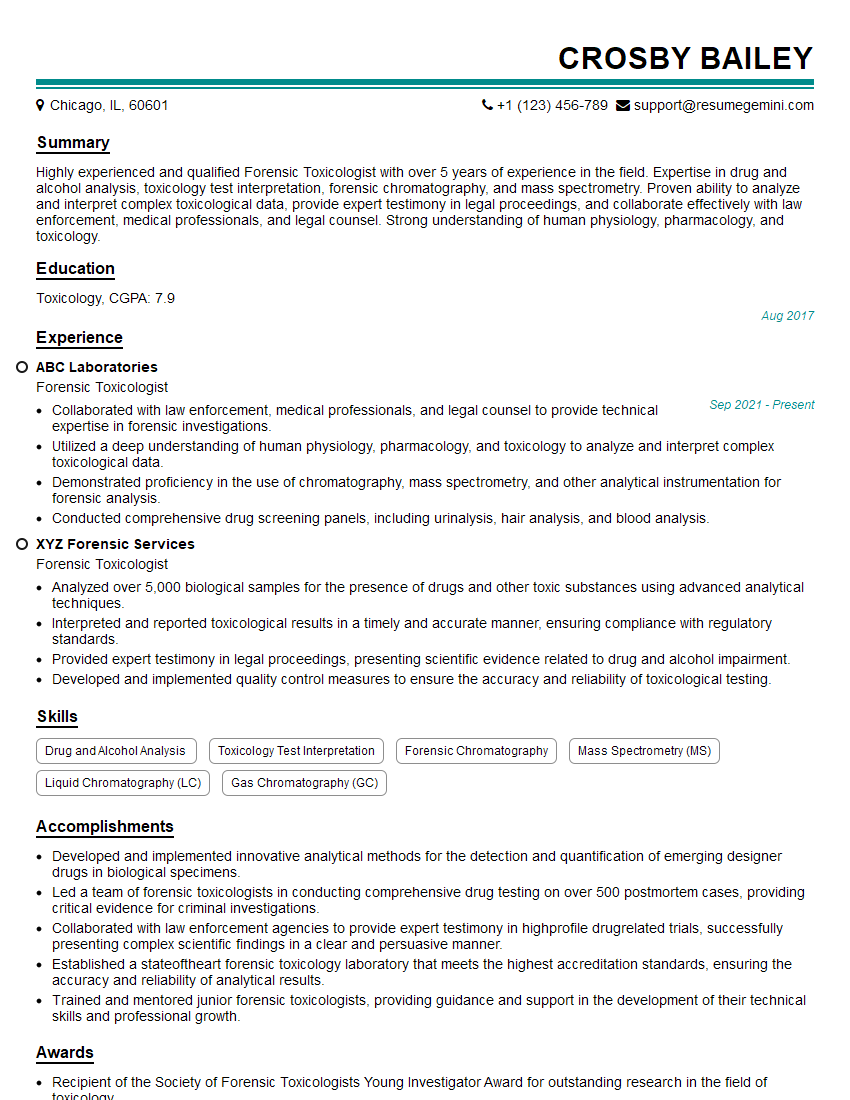
Forensic Toxicologist Resume Sample
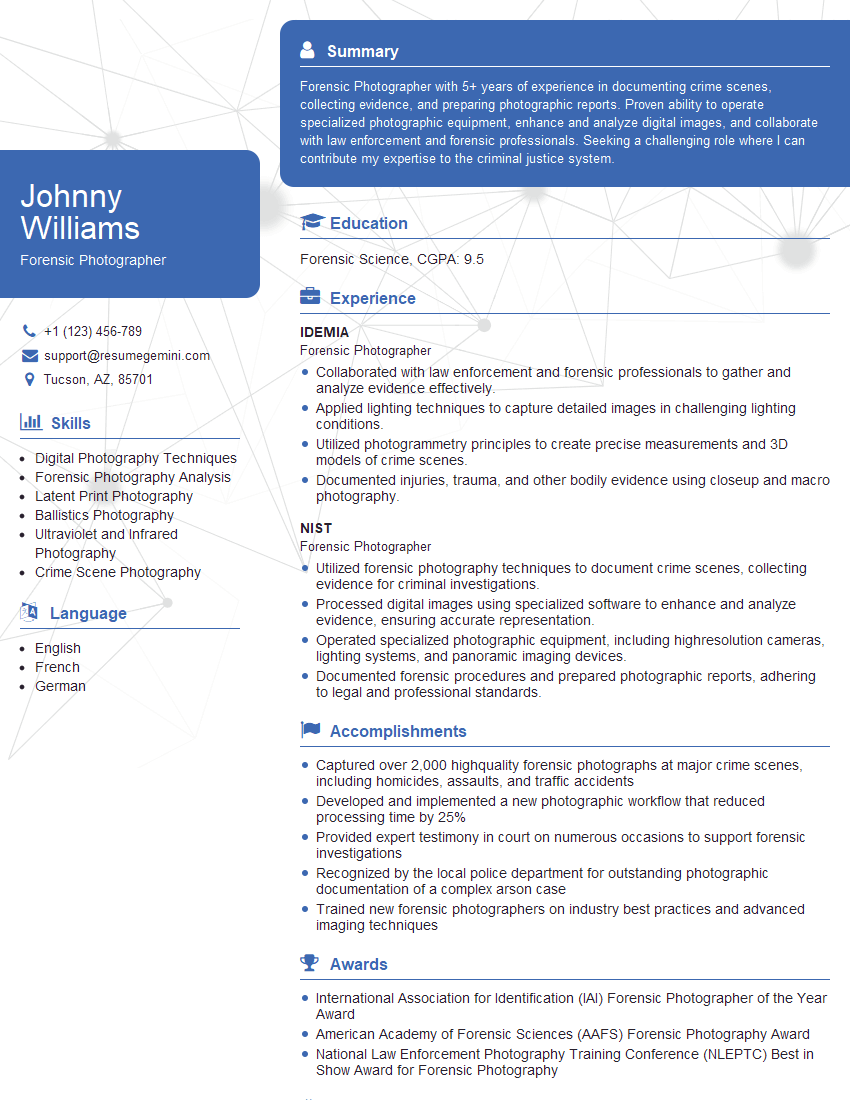
Forensic Photographer Resume Sample

Crime Scene Technician Resume Sample
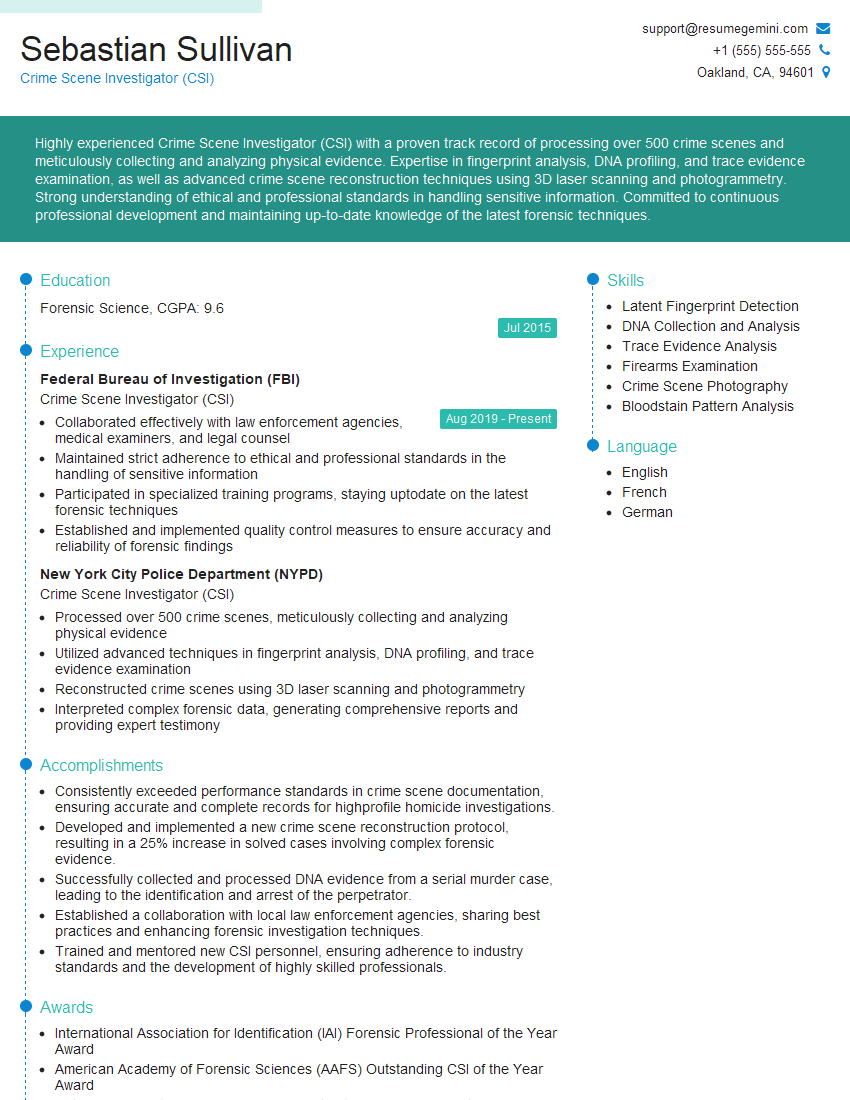
Crime Scene Investigator (CSI) Resume Sample
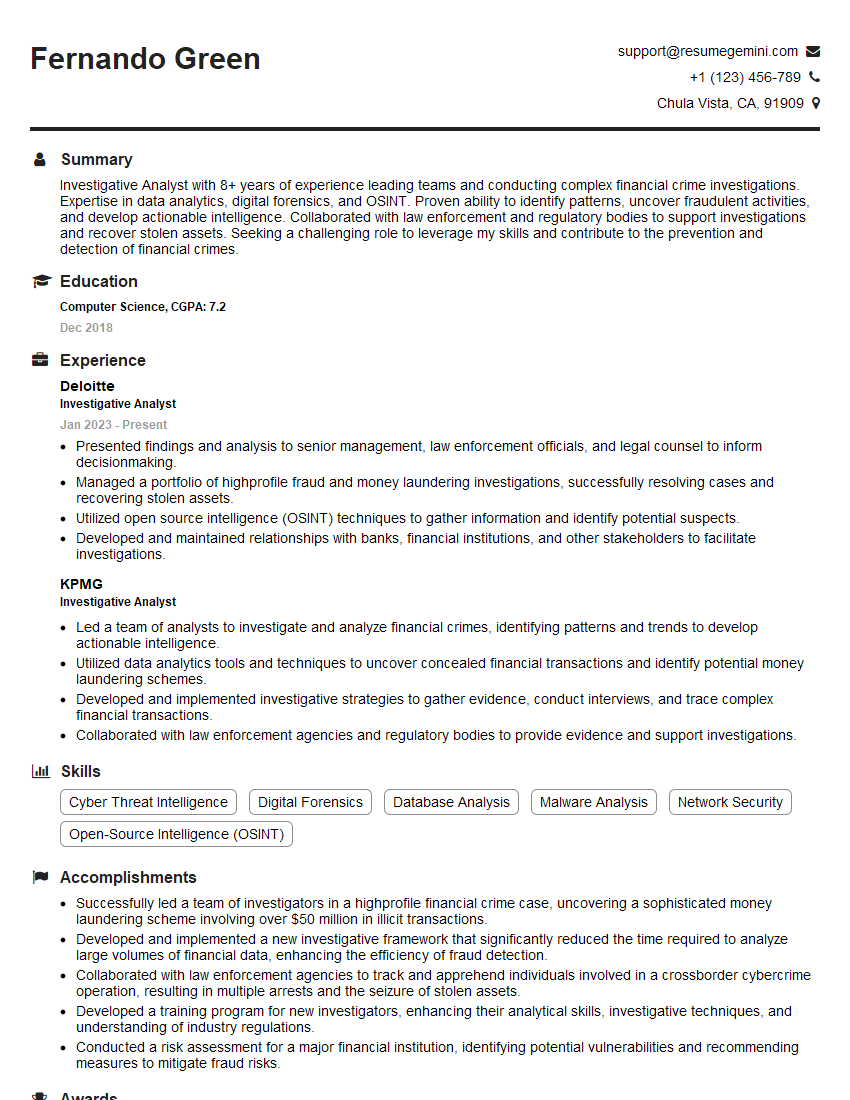
Investigative Analyst Resume Sample
- Forensic Pathologist
- Forensic Accountant
- Fraud Investigator
- Intelligence Analyst
- Forensic Scientist
- Forensic Psychologist
- Forensic Anthropologist
- Evidence Technician
- Forensic Ballistics Expert
- Forensic Investigator
- Forensic Toxicologist
- Forensic Photographer
- Crime Scene Technician
- Crime Scene Investigator (CSI)
- Investigative Analyst
Explore more articles
Users Rating of Our Blogs
Share Your Experience
We value your feedback! Please rate our content and share your thoughts (optional).
What Readers Say About Our Blog
Amazing blog
hello,
Our consultant firm based in the USA and our client are interested in your products.
Could you provide your company brochure and respond from your official email id (if different from the current in use), so i can send you the client’s requirement.
Payment before production.
I await your answer.
Regards,
MrSmith
hello,
Our consultant firm based in the USA and our client are interested in your products.
Could you provide your company brochure and respond from your official email id (if different from the current in use), so i can send you the client’s requirement.
Payment before production.
I await your answer.
Regards,
MrSmith
These apartments are so amazing, posting them online would break the algorithm.
https://bit.ly/Lovely2BedsApartmentHudsonYards
Reach out at BENSON@LONDONFOSTER.COM and let’s get started!
Take a look at this stunning 2-bedroom apartment perfectly situated NYC’s coveted Hudson Yards!
https://bit.ly/Lovely2BedsApartmentHudsonYards
Live Rent Free!
https://bit.ly/LiveRentFREE
Interesting Article, I liked the depth of knowledge you’ve shared.
Helpful, thanks for sharing.
Hi, I represent a social media marketing agency and liked your blog
Hi, I represent an SEO company that specialises in getting you AI citations and higher rankings on Google. I’d like to offer you a 100% free SEO audit for your website. Would you be interested?