Interviews are more than just a Q&A session—they’re a chance to prove your worth. This blog dives into essential In Vitro and In Vivo Toxicology interview questions and expert tips to help you align your answers with what hiring managers are looking for. Start preparing to shine!
Questions Asked in In Vitro and In Vivo Toxicology Interview
Q 1. Explain the difference between in vitro and in vivo toxicology.
In vitro and in vivo toxicology are two distinct approaches to evaluating the toxicity of substances. In vitro toxicology involves studying the effects of a substance on cells or tissues outside of a living organism, typically in a petri dish or cell culture. This allows for controlled experiments and the study of specific cellular mechanisms. In vivo toxicology, conversely, involves testing the substance on a whole, living organism, such as a mouse, rat, or other animal model. This method provides a more holistic picture of toxicity, reflecting systemic effects and interactions within the entire body.
Think of it like this: in vitro is like testing a single engine part on a test bench – you isolate the part and see how it functions. In vivo is like testing the whole car on a racetrack – you see how all the parts work together in a complex system.
Q 2. Describe the limitations of in vitro toxicology studies.
While in vitro studies offer significant advantages in terms of cost and ethical considerations, they possess several limitations. One major drawback is the lack of complex interactions found in a living organism. Cell cultures, even sophisticated 3D models, cannot perfectly replicate the intricate interplay of different organs and systems, including the immune system, metabolism, and distribution of the substance within the body. Furthermore, extrapolating results to humans can be challenging, as the response of human cells can differ significantly from those of the animal cells used in the study. Another limitation is the simplification of the environment; the cell culture medium doesn’t fully reflect the complexity of the in vivo environment.
For example, a drug might be highly effective in killing cancer cells in vitro, but its efficacy or toxicity might be drastically different in vivo due to metabolic breakdown, immune system responses, or distribution to other organs.
Q 3. What are the advantages of in vivo toxicology studies?
In vivo toxicology studies offer several crucial advantages. The most significant is the ability to observe the whole-body effects of a substance, including systemic toxicity, organ-specific effects, and interactions between different organs and systems. This provides a more realistic assessment of toxicity compared to in vitro studies. In vivo studies also allow for the evaluation of pharmacokinetic parameters (ADME – Absorption, Distribution, Metabolism, and Excretion), which are essential in understanding how a substance is processed by the body. Furthermore, in vivo models can mimic the complexity of human disease, allowing for the study of toxicity in specific disease states. They are also better for studying chronic toxicity, as they allow for long-term exposure to the substance.
For instance, an in vivo study can reveal if a drug accumulates in a specific organ, causing long-term damage, which would be difficult to predict solely from in vitro data.
Q 4. What are the ethical considerations in in vivo toxicology?
Ethical considerations are paramount in in vivo toxicology. The use of animals raises significant ethical concerns, including the potential for pain, suffering, and distress. Researchers are obligated to adhere to strict ethical guidelines, such as the 3Rs: Replacement (using non-animal methods whenever possible), Reduction (minimizing the number of animals used), and Refinement (minimizing pain and distress). Rigorous protocols must be developed and approved by Institutional Animal Care and Use Committees (IACUCs), ensuring that animal welfare is prioritized and that studies are justified and conducted humanely. The use of alternative methods, such as in silico models and advanced in vitro techniques, is constantly being explored to reduce reliance on animal testing.
Examples of ethical considerations include proper anesthesia, post-procedural analgesia, and humane endpoints to ensure animals don’t suffer unnecessarily. IACUCs play a crucial role in overseeing these aspects.
Q 5. Describe the OECD guidelines for in vitro toxicity testing.
The Organisation for Economic Co-operation and Development (OECD) has established a series of guidelines for in vitro toxicity testing. These guidelines aim to harmonize testing methods across countries and ensure the reliability and reproducibility of results. They cover a range of assays, including those for assessing cytotoxicity, genotoxicity, and skin sensitization. The guidelines provide detailed protocols, including cell types, exposure concentrations, and endpoints that should be measured. Following these guidelines is crucial for regulatory submissions and international acceptance of the data generated. Examples of specific OECD guidelines include those for the in vitro micronucleus test (OECD TG 487), the in vitro mammalian cell gene mutation test (OECD TG 476), and the in vitro skin sensitization test (OECD TG 442C).
Adherence to OECD guidelines is essential for ensuring the quality and comparability of in vitro toxicity data used for regulatory purposes, like chemical safety assessments.
Q 6. Explain the concept of ADME in toxicology.
ADME, which stands for Absorption, Distribution, Metabolism, and Excretion, is a critical pharmacokinetic concept in toxicology. It describes the processes by which a substance enters the body, circulates throughout the body, is chemically modified, and is ultimately eliminated from the body. Understanding ADME is crucial for assessing the toxicity of a substance because it determines the concentration of the substance (or its metabolites) at the site of toxicity. For instance, poor absorption can lead to low efficacy, while rapid metabolism can reduce toxicity. Conversely, slow excretion can lead to accumulation and increased toxicity.
Imagine a drug intended to target a specific organ. ADME helps us understand whether it even reaches the target organ in sufficient concentration and whether it gets metabolized along the way, altering its effectiveness or toxicity. This process is vital in drug development and safety assessment.
Q 7. What are the different types of toxicity endpoints?
Toxicity endpoints are the specific parameters measured to assess the adverse effects of a substance. They can be broadly classified into several categories:
- Cytotoxicity: Cell death or damage (e.g., loss of cell viability, changes in cell morphology).
- Genotoxicity: Damage to DNA (e.g., mutations, chromosomal aberrations).
- Immunotoxicity: Effects on the immune system (e.g., immunosuppression, hypersensitivity).
- Neurotoxicity: Effects on the nervous system (e.g., behavioral changes, neurodegeneration).
- Hepatotoxicity: Effects on the liver (e.g., liver damage, enzyme release).
- Nephrotoxicity: Effects on the kidneys (e.g., kidney damage, changes in urine production).
- Cardiotoxicity: Effects on the heart (e.g., changes in heart rate, arrhythmias).
- Reproductive toxicity: Effects on reproductive organs and function.
- Developmental toxicity: Effects on the developing organism (e.g., birth defects).
- Carcinogenicity: Ability to cause cancer.
The choice of toxicity endpoints depends on the specific substance being tested and the potential health effects of concern. For example, when evaluating a new pesticide, neurotoxicity and reproductive toxicity might be primary endpoints of interest.
Q 8. Describe the process of hazard identification in toxicology.
Hazard identification in toxicology is the first step in assessing the potential harm a substance may cause. It involves systematically identifying the adverse effects a chemical, biological, or physical agent can produce. This process relies heavily on existing data, including previous studies, case reports, and structure-activity relationships (SAR). We look for clues on how a substance might interact with biological systems, focusing on its inherent properties and potential mechanisms of toxicity.
For example, if a new chemical bears structural similarity to a known carcinogen, we’d flag it as a potential hazard and prioritize further testing. Alternatively, if a chemical is known to disrupt endocrine function in preliminary assays (in vitro tests), this raises a hazard flag for reproductive or developmental toxicity. Hazard identification isn’t about quantifying risk—that comes later—but establishing the potential for adverse effects.
- Literature review: Examining existing data on the chemical’s properties and effects.
- In vitro assays: Testing the chemical’s effects on cells or tissues in a lab setting.
- In silico modeling: Using computer simulations to predict potential toxic effects.
- Structure-activity relationships (SAR): Comparing a chemical’s structure to those of known toxicants.
Q 9. Explain the concept of dose-response relationships.
The dose-response relationship is a fundamental concept in toxicology. It describes the connection between the amount of a substance an organism is exposed to (dose) and the intensity of the resulting effect (response). Typically, a higher dose leads to a greater response, but this isn’t always linear. We often see a threshold below which no adverse effect is observed and a maximum response beyond which increasing the dose doesn’t increase the severity of the effect.
Imagine giving different doses of a painkiller. A low dose might provide pain relief, a higher dose might increase the relief, and a very high dose could lead to dangerous side effects like organ damage. This illustrates the dose-response relationship: The response (pain relief or side effects) depends on the dose (amount of painkiller administered). Graphically, this is often represented by a sigmoidal curve. Understanding dose-response relationships is crucial for setting safe exposure limits for various chemicals. We utilize this data extensively to develop regulatory standards.
Q 10. How do you assess the risk associated with a chemical?
Risk assessment is the process of evaluating the likelihood and potential severity of harmful effects from exposure to a hazard. It’s a crucial step that integrates hazard identification with exposure assessment. The risk is determined by combining the hazard’s potency (how harmful it is) with the level and duration of exposure to the hazard. The classic risk assessment framework involves four steps:
- Hazard Identification: Determining if the substance can cause harm.
- Dose-Response Assessment: Establishing the relationship between dose and the magnitude of the adverse effect.
- Exposure Assessment: Determining the magnitude, frequency, and duration of exposure.
- Risk Characterization: Combining the hazard, dose-response, and exposure information to estimate the probability and severity of adverse effects.
For example, a highly toxic chemical (high hazard) with minimal environmental exposure (low exposure) presents a lower overall risk than a less potent chemical with extensive environmental exposure. A risk assessment might conclude that regulatory action is needed if the risk is deemed unacceptable.
Q 11. Explain the difference between NOAEL and LOAEL.
NOAEL (No-Observed-Adverse-Effect Level) and LOAEL (Lowest-Observed-Adverse-Effect Level) are critical endpoints in toxicology studies. They are used to define the dose of a substance that produces no observable harmful effects (NOAEL) and the lowest dose that produces a noticeable adverse effect (LOAEL).
Imagine testing a new drug. NOAEL represents the highest dose tested where no adverse effects were seen in the animals. LOAEL, on the other hand, is the lowest dose where a detectable negative effect was observed. These values are vital in determining safe exposure limits. The difference between the two is crucial for setting safety margins and establishing acceptable daily intakes (ADIs) for chemicals in food or environmental exposure.
Q 12. What are the key components of a GLP-compliant toxicology study?
Good Laboratory Practice (GLP) guidelines are a set of principles ensuring the uniformity, consistency, reliability, reproducibility, quality, and integrity of non-clinical laboratory studies. GLP compliance is mandatory for many regulatory submissions. Key components include:
- Study Plan: A detailed protocol outlining the objectives, methodology, and statistical analysis plan before the study begins.
- Qualified Personnel: Trained and experienced personnel conducting the study.
- Facilities and Equipment: Well-maintained facilities and calibrated equipment with proper maintenance logs.
- Test System: Appropriate selection of animal species or cell lines.
- Data Management: Complete and accurate recording of all data with a comprehensive audit trail.
- Quality Assurance (QA): Independent monitoring and audit of the entire process, ensuring GLP compliance.
- Reporting: A comprehensive, detailed report summarizing the methods, results, and conclusions.
GLP compliance ensures that the data generated is credible and defensible, crucial for regulatory agencies evaluating the safety of substances.
Q 13. Describe different in vitro models used in toxicology (e.g., cell lines, organ-on-a-chip).
In vitro toxicology utilizes cell cultures, tissues, or organs grown outside of a living organism to assess the toxicity of a substance. Several models are employed:
- Cell Lines: Immortalized cells from various origins (e.g., liver, kidney, neuronal) are widely used for their ease of handling and proliferation. They are cost-effective and allow for high-throughput screening of many chemicals. However, they lack the complexity of whole organs.
- Primary Cell Cultures: Cells directly isolated from tissues have a finite lifespan but better mimic in vivo conditions than cell lines. They’re more physiologically relevant but are more expensive and challenging to work with.
- Organotypic Cultures: These systems attempt to recreate the 3D structure and cell-cell interactions of tissues or organs. They provide greater physiological relevance than cell monolayers.
- Organ-on-a-Chip: These advanced microfluidic devices mimic the structure and function of specific organs. They allow researchers to study the effects of substances on complex organ systems and drug interactions, significantly improving predictive power compared to simpler cell culture models. They offer an increased level of physiological relevance and better predict in vivo outcomes.
The choice of model depends on the specific research question, available resources, and desired level of physiological realism.
Q 14. Explain the importance of positive and negative controls in toxicology studies.
Positive and negative controls are essential for validating the results of toxicology studies. They provide a benchmark for comparison and ensure the reliability of the assays.
- Positive Controls: These are substances known to produce a specific toxic effect in the chosen test system. They confirm that the assay is working correctly and is sensitive enough to detect the expected response. If the positive control doesn’t produce the anticipated result, it suggests a problem with the assay itself, and the results of the experiment are compromised.
- Negative Controls: These are substances known to be non-toxic in the test system. They help rule out non-specific effects and ensure that the observed effects are due to the test substance and not background noise or artifacts. If the negative control shows a response, it could indicate non-specific toxicity or assay interference.
Both positive and negative controls are critical for ensuring the validity and interpretation of experimental results. They allow for accurate assessment of the test chemical’s toxicity and minimize false positives and negatives.
Q 15. How do you interpret histopathological findings in toxicology studies?
Interpreting histopathological findings in toxicology studies involves a systematic approach combining microscopic examination of tissue samples with a thorough understanding of the study’s design and objectives. It’s like being a detective, piecing together clues to understand the effects of a substance on an organism.
First, we meticulously examine the tissue slides under a microscope, noting any abnormalities in cellular architecture, tissue organization, and the presence of inflammatory cells or lesions. We systematically document the severity, distribution, and type of lesions observed (e.g., necrosis, inflammation, hyperplasia, metaplasia). For example, observing widespread hepatocyte necrosis in a liver sample suggests severe liver damage.
Second, we correlate these microscopic findings with the study’s experimental design, including the dose levels of the test substance and the duration of exposure. A dose-response relationship, where the severity of lesions increases with increasing dose, strongly suggests a causal link between the test substance and the observed pathology. We also consider the species and strain of the animal, as well as any background diseases. For instance, a certain strain of mice may have a higher propensity for spontaneous liver lesions.
Finally, we write a comprehensive report summarizing our observations and interpreting their toxicological significance. This involves comparing our findings to existing literature on the target organ’s pathology and potentially identifying key events in the mechanism of toxicity. The conclusion may suggest whether the observed changes represent an adverse effect and their potential relevance to human health.
Career Expert Tips:
- Ace those interviews! Prepare effectively by reviewing the Top 50 Most Common Interview Questions on ResumeGemini.
- Navigate your job search with confidence! Explore a wide range of Career Tips on ResumeGemini. Learn about common challenges and recommendations to overcome them.
- Craft the perfect resume! Master the Art of Resume Writing with ResumeGemini’s guide. Showcase your unique qualifications and achievements effectively.
- Don’t miss out on holiday savings! Build your dream resume with ResumeGemini’s ATS optimized templates.
Q 16. What are some common statistical methods used in toxicology data analysis?
Toxicology data analysis heavily relies on statistical methods to determine if observed effects are statistically significant and not due to random chance. Think of it as rigorously testing whether a treatment group really differs from a control group.
- Descriptive Statistics: We start with descriptive statistics (mean, standard deviation, etc.) to summarize the data. This gives a first look at the data’s distribution.
- t-tests and ANOVA: These are used to compare means between groups, for example, comparing the mean body weight of treated animals to the control group. A t-test is used for comparing two groups, while ANOVA handles multiple groups.
- Non-parametric tests: If the data doesn’t follow a normal distribution, non-parametric tests like the Mann-Whitney U test or the Kruskal-Wallis test are used as alternatives to t-tests and ANOVA.
- Regression analysis: This helps us model the relationship between the dose of a substance and the observed effect. We can determine if the relationship is linear or non-linear.
- Survival analysis: In studies where the endpoint is time to death or another time-to-event variable, Kaplan-Meier curves and Cox proportional hazards models are used to analyze survival data.
Proper statistical analysis is crucial to ensure that our conclusions are scientifically sound and reliable, guiding appropriate risk assessment and regulatory decision-making.
Q 17. Describe your experience with specific in vitro assays (e.g., Ames test, MTT assay).
I have extensive experience with various in vitro assays, crucial for early-stage toxicity screening and mechanistic studies. These assays allow us to test the effects of chemicals on isolated cells or tissues, saving resources and reducing animal use when appropriate.
- Ames Test: This bacterial reverse mutation assay evaluates a substance’s potential to cause gene mutations. I have used the Ames test numerous times to assess the mutagenic potential of diverse compounds. A positive result indicates a potential carcinogenic risk. The assay uses bacteria with specific mutations that are easily reversed and detected upon exposure to mutagens.
- MTT Assay: This colorimetric assay measures cell viability and proliferation, providing insights into a substance’s cytotoxicity. I’ve employed the MTT assay in numerous studies to assess the effect of various compounds on different cell lines. It helps determine the concentration of a substance that causes a 50% reduction in cell viability (IC50).
Both assays are essential tools in toxicology, offering cost-effective ways to screen compounds for potential hazards before progressing to in vivo studies. The results are often used to guide the design of animal studies and determine appropriate dose ranges.
Q 18. Explain your experience designing and conducting in vivo studies (e.g., rodent studies).
My experience with in vivo studies encompasses the entire process, from study design to data interpretation, primarily focusing on rodent models (rats and mice). Designing a robust in vivo study is critical. It requires careful consideration of many factors.
Study Design: This includes selecting the appropriate species and strain, defining the study endpoints, determining the dose range and route of administration, and choosing an appropriate control group. For example, if we are testing a drug’s effect on the liver, we might choose a rat strain known for its sensitivity to hepatotoxicity. The route of administration mirrors how the chemical might be encountered, such as oral, dermal, or inhalation routes.
Study Conduct: This involves administering the test substance according to a carefully planned schedule, collecting samples (blood, tissues, etc.) at designated time points, and monitoring the animals for any signs of toxicity, such as changes in body weight, food consumption, and clinical signs.
Data Analysis: This requires carefully analyzing the data obtained from various analyses and correlating it with histopathology and clinical chemistry results.
For instance, a recent study I led investigated the long-term effects of a novel pesticide in rats, examining various endpoints including mortality, body weight changes, organ weights, clinical chemistry parameters, and histopathology. The study followed all ethical guidelines and was conducted in accordance with Good Laboratory Practice (GLP) principles.
Q 19. How do you handle unexpected results in a toxicology study?
Unexpected results in toxicology studies are common and often lead to valuable new insights. The key is to systematically investigate the cause and avoid jumping to premature conclusions.
Systematic Investigation: The first step is to carefully review the study’s conduct to rule out any procedural errors. This may include checking the accuracy of compound preparation, administration, and sample handling. We might also analyze the quality control data to see if there were any issues.
Data Rechecking: If no procedural errors are identified, a thorough re-examination of the data is needed. Statistical analysis should be reviewed, and additional statistical tests might be considered.
Alternative Explanations: We would explore alternative explanations for the unexpected findings, such as unanticipated interactions with the test substance or confounding factors. Additional studies, perhaps with different species or endpoints, might be necessary to confirm the findings or to gain a better understanding of the cause.
Transparency: Openly reporting the unexpected findings, along with the investigation and conclusions, is crucial for maintaining the integrity of the scientific process.
Q 20. What are your experience with regulatory submissions involving toxicology data?
I have extensive experience in preparing and submitting toxicology data for regulatory submissions to agencies such as the FDA and EPA. This involves adhering to strict guidelines and formatting requirements to ensure the data are presented clearly and accurately.
Data Compilation: This process includes compiling all relevant data from in vitro and in vivo studies, including raw data, statistical analysis results, and pathology reports. The data needs to be presented in a way that is easy for regulators to review and understand.
Report Writing: I have written numerous toxicology reports that meet regulatory requirements and clearly present the findings and conclusions. These reports describe study methods, results, and conclusions, as well as safety assessments.
Regulatory Guidance: Understanding the specific requirements of the target regulatory agency is paramount. Each agency has its own specific guidelines for format, content, and data requirements. Compliance is essential for ensuring that the submission is reviewed effectively. For instance, a submission to the FDA for a new drug will differ significantly from a submission to the EPA for a pesticide.
Q 21. Explain the concept of uncertainty factors in risk assessment.
Uncertainty factors (UFs) are crucial components in risk assessment, adding safety margins to protect public health. It’s like adding a buffer to an equation to account for the unknown and ensure our decisions are on the side of caution.
Purpose: UFs account for the limitations and uncertainties in extrapolating data from animal studies (or in vitro studies) to humans. These uncertainties can include species differences in metabolism, sensitivity to toxic effects, differences between high-dose animal data and low-dose human exposures, and the potential for human variability.
Application: The process involves applying a series of UFs to the No Observed Adverse Effect Level (NOAEL) or the Benchmark Dose (BMD) obtained from animal toxicity studies. Each UF addresses a specific uncertainty. Common UFs include:
- Inter-species uncertainty factor: Accounts for differences in sensitivity between animals and humans.
- Intra-species uncertainty factor: Accounts for variability in sensitivity within the human population.
- Uncertainty factor for data quality: Accounts for limitations in the quality or completeness of the data set (e.g., NOAEL derived from a poorly conducted study).
- Uncertainty factor for database limitations: Added for studies that lack adequate data on critical endpoints.
By including UFs, regulators can set safe exposure limits that account for scientific uncertainty and protect the public from potential harm.
Q 22. Describe the different types of toxicity (acute, subchronic, chronic).
Toxicity studies categorize the adverse effects of substances based on the exposure duration. Acute toxicity refers to the harmful effects occurring after a single exposure or within 24 hours of repeated exposure. Subchronic toxicity evaluates the effects of repeated exposure over a period of 1-3 months, allowing for the observation of cumulative effects. Chronic toxicity examines the long-term effects of repeated exposure, typically lasting for more than 3 months, often encompassing a significant portion of an organism’s lifespan. Think of it like this: acute is a sudden punch, subchronic is a series of punches over a few months, and chronic is a slow, sustained beating over years.
- Acute Toxicity: For instance, a single, high dose of acetaminophen can lead to liver damage. LD50 (lethal dose for 50% of a population) is a common metric used in acute toxicity studies.
- Subchronic Toxicity: Repeated exposure to a pesticide might lead to subtle organ damage that only becomes apparent after a few months of exposure. This is observed by monitoring changes in blood work, organ weights and histology.
- Chronic Toxicity: Exposure to asbestos over many years increases the risk of lung cancer, illustrating a classic chronic toxicity effect. Longitudinal studies track effects over extended periods.
Q 23. What are the key considerations for selecting appropriate animal models for in vivo studies?
Selecting the right animal model for in vivo studies is crucial for obtaining relevant and reliable results. The choice depends on several factors, including the specific research question, the route of exposure, the species sensitivity to the test substance, the availability of genetic background information and the ethical considerations.
- Species Sensitivity: Some species are inherently more sensitive to certain toxins than others. For example, rats are commonly used for general toxicology studies, while primates might be preferred for studies involving human-specific effects if justified. We need to choose the species that is most relevant to the human risk assessment.
- Strain Selection: Even within a species, different strains can exhibit varying responses. Inbred strains offer genetic homogeneity, facilitating reproducibility, while outbred strains reflect greater genetic diversity, which may more closely mimic human populations.
- Route of Exposure: The route of exposure (oral, dermal, inhalation) influences the toxicity profile. The animal model should be appropriate for the intended exposure route.
- Ethical Considerations: The ‘3Rs’ – Replacement, Reduction, and Refinement – are paramount. We must justify the use of animals, minimize the number used, and design studies to minimize animal suffering.
For example, if studying a drug’s effects on the cardiovascular system, a species with a cardiovascular system similar to humans, like pigs or dogs, might be considered. However, ethical and cost considerations often drive the use of rodents.
Q 24. Explain your experience with data management and reporting in toxicology studies.
My experience with data management and reporting in toxicology studies is extensive, encompassing all aspects from study design and data capture to analysis and regulatory reporting. I’m proficient in using laboratory information management systems (LIMS) for sample tracking, data entry, and quality control. I also have experience with electronic laboratory notebooks (ELNs) and sophisticated statistical software packages.
A key aspect of my work involves ensuring data integrity and compliance with Good Laboratory Practices (GLP) and other relevant regulations. This includes detailed documentation, proper validation of analytical methods, and robust quality assurance procedures. Generating clear and concise reports, tailored to the specific needs of the audience (e.g., regulatory agencies, sponsors), is also critical. I routinely prepare comprehensive reports that include tables, figures, and statistical analyses to communicate the study findings effectively and accurately.
For example, in a recent study, I was responsible for managing data from multiple laboratories, ensuring data consistency and harmonization using LIMS, before finalizing the data analysis and report for submission to regulatory bodies.
Q 25. How do you stay current with advances in toxicology?
Staying current in toxicology requires continuous learning and engagement with the scientific community. I actively participate in professional organizations like the Society of Toxicology (SOT), attend conferences and workshops, and regularly review scientific publications in leading toxicology journals. I subscribe to relevant journals and newsletters to receive updates on new research and regulatory changes. I also leverage online resources such as databases like PubMed and Toxnet to access the latest scientific literature and regulatory guidance.
Furthermore, I maintain professional networks through collaborations with colleagues and experts in the field. This allows me to stay informed about cutting-edge research, emerging trends, and new methodologies in toxicology. This constant pursuit of knowledge ensures I remain at the forefront of my field and can apply the most advanced and ethical practices in my work.
Q 26. Describe your experience with different types of toxicity testing (genotoxicity, carcinogenicity, reproductive toxicity).
My experience encompasses a wide range of toxicity testing methodologies, including genotoxicity, carcinogenicity, and reproductive toxicity studies.
- Genotoxicity: I’ve conducted in vitro assays such as the Ames test (detecting bacterial mutations) and in vivo assays such as the micronucleus test (detecting chromosomal damage in bone marrow cells) to assess the potential of chemicals to cause DNA damage and mutations. I understand the importance of selecting appropriate assays and interpreting results within the context of other available information.
- Carcinogenicity: I’ve worked on long-term carcinogenicity studies in rodents, involving detailed histopathological examinations of tissues to identify tumors and assess the potential of compounds to cause cancer. This requires significant experience in data interpretation, understanding of statistical methods for analyzing tumor incidence, and familiarity with regulatory guidelines.
- Reproductive Toxicity: My experience includes conducting studies to assess the effects of chemicals on fertility, embryo-fetal development, and postnatal development in animals. This involves meticulous evaluation of reproductive parameters such as litter size, gestation length, and offspring survival and development, as well as detailed histopathological examination of reproductive organs.
These types of studies require rigorous adherence to GLP and specific guidelines, detailed record keeping, and a strong understanding of statistical analysis. The ultimate aim is to identify the potential hazards and risks associated with a compound and inform risk assessment strategies.
Q 27. What software or tools are you familiar with for toxicology data analysis?
I am proficient in various software and tools for toxicology data analysis, including:
- Statistical software: SAS, R, GraphPad Prism – used for statistical analysis of toxicological data, including survival analysis, dose-response modeling, and other relevant statistical tests.
- Specialized toxicology software: This includes software dedicated to managing and analyzing toxicological data, facilitating data visualization, and reporting.
- Spreadsheet software: Microsoft Excel, Google Sheets – used for data entry, organization, and basic calculations.
- Database Management Systems (DBMS): For managing large datasets and ensuring data integrity and accessibility.
The choice of software depends on the specific study design, data type, and analytical needs. My expertise allows me to select the most appropriate tools for any given project and ensure accurate and efficient data analysis.
Q 28. Describe a challenging situation you faced in a toxicology study and how you overcame it.
In one study, we encountered unexpected high mortality in the control group of animals, jeopardizing the integrity of the entire study. This was initially perplexing, as the control group should have had minimal mortality. We systematically investigated potential causes, including:
- Environmental factors: We checked for temperature fluctuations, air quality, and potential contamination of the feed or water.
- Animal husbandry: We reviewed animal handling procedures to ensure they were consistent with GLP guidelines.
- Pathology: We conducted thorough post-mortem examinations of the deceased animals, including histopathology and microbiological analysis.
Through this rigorous investigation, we discovered that a previously unnoticed batch of feed contained a higher-than-acceptable level of aflatoxin, a potent toxin produced by certain fungi. Once the contaminated feed was identified and replaced, the mortality rate returned to normal levels in subsequent study groups. This experience highlighted the importance of meticulous attention to detail in all aspects of study design and execution, including rigorous quality control of materials and supplies.
Key Topics to Learn for In Vitro and In Vivo Toxicology Interview
- In Vitro Toxicology Fundamentals: Cell culture techniques, assay development and validation (e.g., cytotoxicity, genotoxicity assays), high-throughput screening (HTS), interpretation of in vitro data, limitations of in vitro models.
- In Vivo Toxicology Fundamentals: Study design (acute, subchronic, chronic toxicity studies), route of administration, dose selection, pharmacokinetic and pharmacodynamic principles, toxicopathology (organ pathology and histopathology), regulatory guidelines (GLP, OECD guidelines).
- Comparative Analysis of In Vitro and In Vivo Data: Understanding the strengths and weaknesses of each approach, correlating in vitro findings with in vivo observations, predictive modeling and extrapolation of in vitro data to in vivo settings.
- Specific Toxicities: Understanding mechanisms of toxicity for specific chemical classes (e.g., hepatotoxicity, nephrotoxicity, neurotoxicity, immunotoxicity), ADME (Absorption, Distribution, Metabolism, Excretion) processes and their influence on toxicity.
- Risk Assessment and Safety Evaluation: Application of toxicology data in risk assessment, understanding safety margins and NOAEL/LOAEL determinations, regulatory submissions and communication of toxicology findings.
- Practical Applications: Case studies of successful drug development or safety assessment programs, problem-solving scenarios related to interpreting ambiguous toxicological data, discussion of emerging technologies in toxicology (e.g., omics, 3D cell cultures).
- Advanced Topics (for Senior-level roles): Toxicogenomics, toxicoproteomics, systems toxicology, regulatory affairs in toxicology, developing and implementing safety testing strategies.
Next Steps
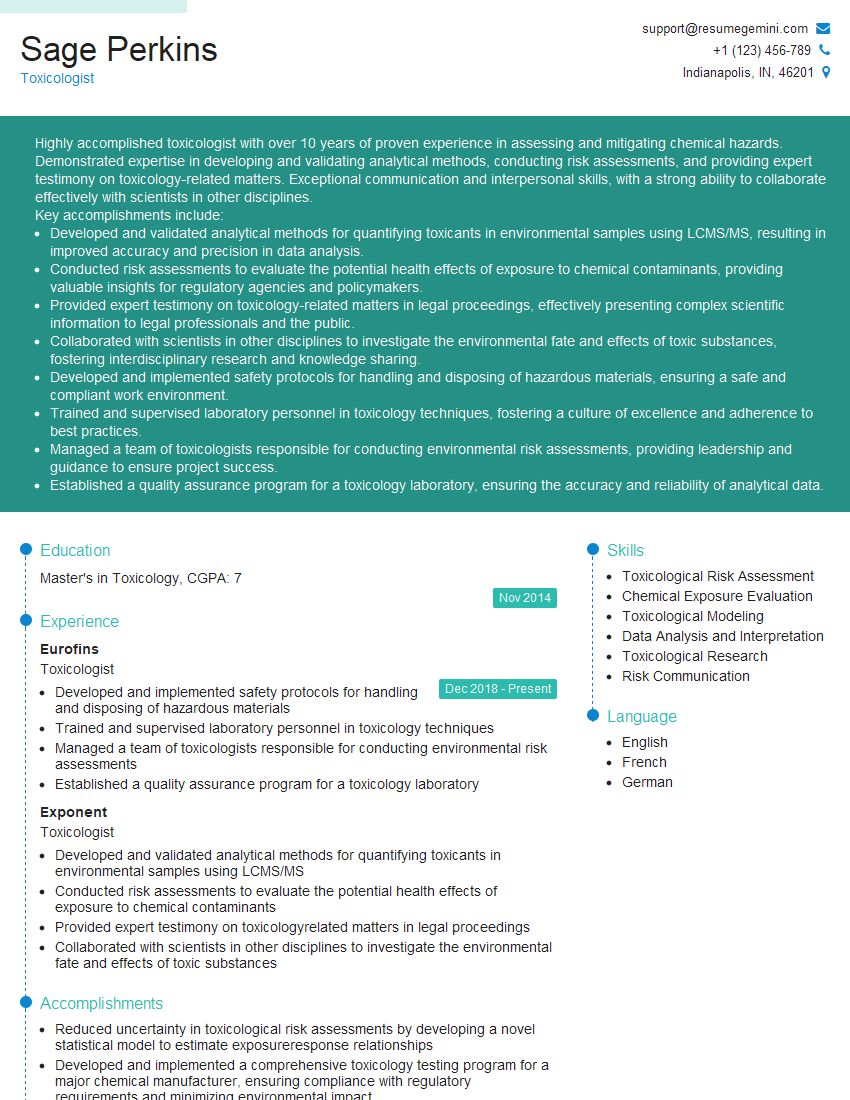
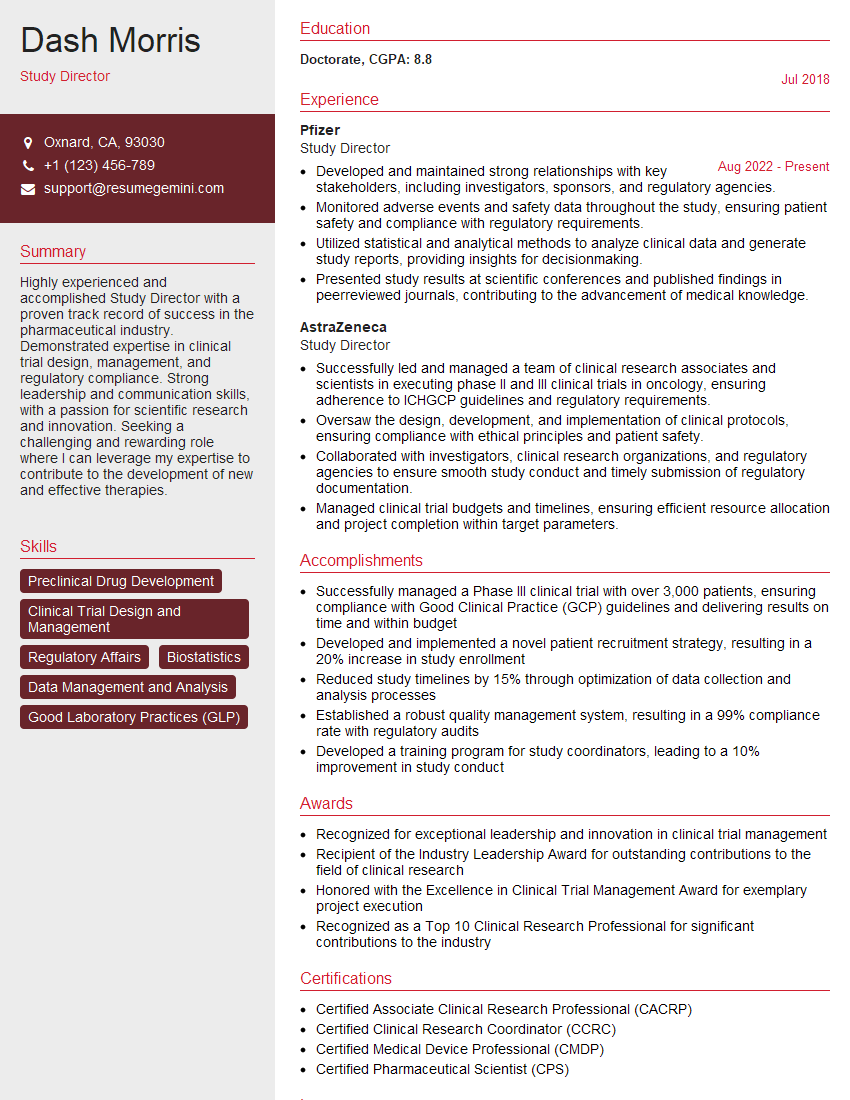
Mastering In Vitro and In Vivo Toxicology opens doors to exciting and impactful careers in pharmaceutical development, regulatory science, and safety assessment. A strong understanding of these principles is crucial for success. To significantly improve your job prospects, create a compelling and ATS-friendly resume that highlights your skills and experience effectively. ResumeGemini is a trusted resource that can help you build a professional resume tailored to your unique qualifications. We provide examples of resumes specifically designed for candidates in In Vitro and In Vivo Toxicology to help you get started. Take the next step towards your dream career by crafting a standout resume today.

Explore more articles
Users Rating of Our Blogs
Share Your Experience
We value your feedback! Please rate our content and share your thoughts (optional).
What Readers Say About Our Blog
hello,
Our consultant firm based in the USA and our client are interested in your products.
Could you provide your company brochure and respond from your official email id (if different from the current in use), so i can send you the client’s requirement.
Payment before production.
I await your answer.
Regards,
MrSmith
hello,
Our consultant firm based in the USA and our client are interested in your products.
Could you provide your company brochure and respond from your official email id (if different from the current in use), so i can send you the client’s requirement.
Payment before production.
I await your answer.
Regards,
MrSmith
These apartments are so amazing, posting them online would break the algorithm.
https://bit.ly/Lovely2BedsApartmentHudsonYards
Reach out at [email protected] and let’s get started!
Take a look at this stunning 2-bedroom apartment perfectly situated NYC’s coveted Hudson Yards!
https://bit.ly/Lovely2BedsApartmentHudsonYards
Live Rent Free!
https://bit.ly/LiveRentFREE
Interesting Article, I liked the depth of knowledge you’ve shared.
Helpful, thanks for sharing.
Hi, I represent a social media marketing agency and liked your blog
Hi, I represent an SEO company that specialises in getting you AI citations and higher rankings on Google. I’d like to offer you a 100% free SEO audit for your website. Would you be interested?