Every successful interview starts with knowing what to expect. In this blog, we’ll take you through the top Knowledge of aerospace industry interview questions, breaking them down with expert tips to help you deliver impactful answers. Step into your next interview fully prepared and ready to succeed.
Questions Asked in Knowledge of aerospace industry Interview
Q 1. Explain the difference between subsonic, supersonic, and hypersonic flight.
The classification of flight based on speed relative to the speed of sound is crucial in aerospace engineering. Subsonic flight is any flight speed below the speed of sound (Mach 1, approximately 343 m/s at sea level). Supersonic flight occurs when the speed exceeds Mach 1, often characterized by the formation of a shock wave. Hypersonic flight pushes the boundaries even further, reaching speeds five times or more the speed of sound (Mach 5 and above). This extreme speed regime presents unique challenges in terms of material science, aerodynamics, and propulsion.
Think of it like this: a regular passenger jet flies subsonically. A Concorde, now retired, flew supersonically. Hypersonic flight is still largely experimental, with applications in advanced military aircraft and potentially future high-speed spaceplanes. The differences are not just in speed; they dramatically impact the design and operation of aircraft, demanding different materials, propulsion systems, and flight control strategies.
Q 2. Describe the principles of Bernoulli’s principle and its application in aerodynamics.
Bernoulli’s principle is a cornerstone of aerodynamics. It states that an increase in the speed of a fluid (like air) occurs simultaneously with a decrease in pressure or a decrease in the fluid’s potential energy. This is often simplified to ‘faster air, lower pressure’.
In aerodynamics, this is applied to the design of airfoils (wings). The curved upper surface of a wing forces air to travel a longer distance than the air flowing underneath. According to Bernoulli’s principle, this faster airflow over the top creates an area of lower pressure compared to the higher-pressure area below. This pressure difference generates an upward force called lift, enabling an aircraft to fly.
Consider the classic demonstration of blowing over a piece of paper. The faster air above the paper creates lower pressure, causing the paper to lift. This same principle, though more complex in reality due to factors like viscosity and angle of attack, is fundamental to how aircraft wings generate lift.
Q 3. What are the different types of aircraft propulsion systems?
Aircraft propulsion systems are diverse, each with its strengths and weaknesses. They can be broadly categorized as:
- Reciprocating Engines: These piston engines, similar to those in cars, were prevalent in early aviation. They are relatively simple but less efficient at higher speeds.
- Turboprops: These combine the power of a turbine engine to drive a propeller. They offer good fuel efficiency, particularly at lower speeds.
- Turbojets: These engines use a turbine to compress air and mix it with fuel, creating thrust through hot gas expulsion. They are efficient at high speeds but less so at lower speeds.
- Turbofans: A refinement of turbojets, these incorporate large fan blades to increase the amount of air moved, resulting in improved fuel efficiency and lower noise levels. Many modern airliners use turbofans.
- Ramjets: These engines rely on the forward motion of the aircraft to compress air, requiring high speeds to operate effectively. They are used in some missiles and experimental hypersonic vehicles.
- Scramjets: An even more advanced form of ramjet, scramjets maintain supersonic airflow throughout the combustion process, enabling operation at hypersonic speeds. These are at the forefront of research for future high-speed flight.
The choice of propulsion system depends heavily on factors such as the aircraft’s intended speed, altitude, mission profile, and fuel efficiency requirements.
Q 4. Explain the concept of lift and drag in relation to aircraft design.
Lift and drag are fundamental aerodynamic forces acting on an aircraft. Lift is the upward force that opposes gravity, allowing the aircraft to fly. Drag is the resistance to motion through the air, acting in the opposite direction of flight. Both are crucial considerations in aircraft design.
Lift is generated primarily by the shape of the wings (airfoils) and their interaction with the airflow, as explained by Bernoulli’s principle. The angle of attack (the angle between the wing and the oncoming airflow) also significantly impacts lift. A higher angle of attack generates more lift up to a critical point, after which it stalls.
Drag is caused by friction between the air and the aircraft’s surface, and by the pressure differences created by the airflow around the aircraft. Minimizing drag is vital for fuel efficiency and speed. Designers use techniques like streamlining, reducing surface roughness, and optimizing wing shapes to minimize drag.
The balance between lift and drag is essential for efficient and stable flight. An aircraft must generate enough lift to overcome its weight and enough thrust to overcome drag.
Q 5. What are the challenges in designing lightweight yet strong aerospace structures?
Designing lightweight yet strong aerospace structures is a constant challenge in aerospace engineering. The primary goal is to maximize strength-to-weight ratio, meaning achieving high strength with minimal weight. This is crucial because reducing weight directly translates to lower fuel consumption, increased payload capacity, and improved maneuverability.
The challenges involve the use of advanced materials like carbon fiber composites, titanium alloys, and aluminum alloys, which offer high strength-to-weight ratios. However, these materials can be expensive and difficult to process. Other challenges include:
- Fatigue: Repeated stress cycles can lead to material failure, requiring careful design and testing to mitigate fatigue.
- Corrosion: Exposure to harsh environments can cause corrosion, impacting structural integrity. Protective coatings and material selection are crucial.
- Manufacturing complexity: Advanced materials often require specialized manufacturing techniques, adding to the cost and complexity.
- Thermal management: High temperatures encountered during flight, especially at supersonic and hypersonic speeds, require materials with excellent thermal resistance.
Advanced computational techniques like Finite Element Analysis (FEA) are used extensively to simulate the structural behavior under various loading conditions and optimize designs for maximum strength and minimum weight.
Q 6. Describe various types of aircraft control surfaces and their functions.
Aircraft control surfaces are movable parts that enable pilots to control the aircraft’s attitude (orientation) and flight path. Key types include:
- Ailerons: Located on the trailing edges of the wings, ailerons move differentially (one up, one down) to control roll (rotation around the longitudinal axis).
- Elevators: Located on the horizontal stabilizer (tailplane), elevators control pitch (rotation around the lateral axis), causing the nose to move up or down.
- Rudder: Located on the vertical stabilizer (fin), the rudder controls yaw (rotation around the vertical axis), turning the aircraft left or right.
- Flaps: Located on the trailing edges of the wings, flaps increase lift at lower speeds, aiding takeoff and landing. They also increase drag, helping with deceleration.
- Slats: Located on the leading edges of the wings, slats extend to increase lift at low speeds, similar to flaps, but often deployed at a higher airspeed.
- Spoilers: These surfaces can be deployed on the top of the wings to reduce lift (spoiling the lift) and increase drag. They’re used during landing for deceleration and reducing lift.
The precise design and control of these surfaces are crucial for ensuring safe and efficient flight, integrating seamlessly with flight control systems and the aircraft’s overall aerodynamic performance.
Q 7. What are the key considerations in designing a satellite for orbit?
Designing a satellite for orbit involves many key considerations encompassing various engineering disciplines. The primary goal is to ensure the satellite successfully reaches its intended orbit, performs its mission, and maintains its operational capability for its designed lifespan.
Key considerations include:
- Mission objectives: The satellite’s purpose dictates its design, including the instruments, power systems, and communication systems.
- Orbit selection: The chosen orbit determines the satellite’s altitude, inclination, and period, influencing its mission capabilities and lifespan. Geostationary orbits, for example, are ideal for communication satellites due to their fixed position relative to the Earth.
- Structure and materials: The satellite’s structure must withstand the rigors of launch, the harsh conditions of space (extreme temperatures, radiation), and micro-meteoroid impacts. Lightweight yet strong materials are essential.
- Power systems: Solar panels or radioisotope thermoelectric generators (RTGs) provide power, depending on the orbit and mission requirements. Efficient energy management is crucial for extended operation.
- Thermal control: Maintaining the satellite’s internal temperature within acceptable limits is critical for its instruments’ function. This often involves insulation, heat pipes, and radiators.
- Attitude control: Maintaining the satellite’s orientation in space is essential for accurate pointing of instruments and communication antennas. Reaction wheels, thrusters, and other attitude control systems are used.
- Communication systems: Reliable communication links between the satellite and ground stations are needed for data transmission and command reception.
- Launch vehicle compatibility: The satellite must be compatible with the chosen launch vehicle in terms of size, weight, and environmental requirements.
The design process involves extensive simulations, testing, and analyses to ensure the satellite meets all mission requirements and can operate reliably in the challenging space environment.
Q 8. Explain the principles of rocket propulsion.
Rocket propulsion relies on Newton’s Third Law of Motion: for every action, there’s an equal and opposite reaction. Essentially, rockets expel propellant (a mixture of fuel and oxidizer) at high velocity out of a nozzle. This expulsion generates thrust, a force pushing the rocket in the opposite direction. The magnitude of the thrust depends on the mass flow rate of the expelled propellant and its exhaust velocity. Think of it like a balloon—when you let go of the air, the balloon moves in the opposite direction.
Different types of rocket engines utilize various propellant combinations and combustion methods to achieve this. For instance, solid rocket motors burn a pre-mixed solid propellant, offering simplicity and high thrust, but less control. Liquid-propellant rockets, on the other hand, burn liquid fuel and oxidizer, offering greater control over thrust and the ability to throttle the engine. Hybrid rockets use a combination of solid and liquid propellants, balancing the advantages of both.
The equation governing rocket thrust is:
F = ṁVe + (Pe - Pa)Aewhere:
- F = Thrust
- ṁ = Mass flow rate of propellant
- Ve = Exhaust velocity
- Pe = Exit pressure
- Pa = Ambient pressure
- Ae = Exit area of the nozzle
Understanding this fundamental principle and its variations is crucial for designing and optimizing rocket engines for specific missions.
Q 9. What are the different stages of a typical rocket launch?
A typical rocket launch involves several distinct stages, each crucial for successful mission completion. The exact number of stages varies depending on the mission’s requirements and the desired altitude or orbital insertion.
- Liftoff and Initial Ascent: This stage focuses on overcoming gravity and atmospheric drag. The rocket accelerates rapidly, shedding weight as propellant is consumed. This is usually the most intense part of the flight, subject to extreme g-forces.
- Atmospheric Flight: As the rocket ascends through the atmosphere, aerodynamic forces become significant. The rocket’s trajectory is precisely controlled to minimize drag and maintain stability.
- Stage Separation: Once the propellant in the first stage is exhausted, it is jettisoned to reduce weight. Subsequent stages ignite, continuing the ascent to the desired altitude or orbit. This process might repeat multiple times, depending on the mission’s complexity.
- Orbital Insertion (for orbital missions): The final stage performs maneuvers to achieve the target orbit. This involves precise control of the rocket’s velocity and direction to match the desired orbital parameters.
- Payload Deployment (for orbital missions): Once in orbit, the payload (satellite, spacecraft, etc.) is deployed. This might involve separation mechanisms and further maneuvering to ensure proper positioning.
Each stage involves careful choreography of engine ignition, throttling, guidance, and navigation, all precisely timed and controlled to ensure a safe and successful mission. A failure in any stage can jeopardize the entire mission.
Q 10. Describe the role of avionics systems in modern aircraft.
Avionics systems are the electronic systems onboard aircraft, vital for navigation, communication, flight control, and monitoring. They represent a crucial technological advancement that has significantly enhanced safety, efficiency, and performance in modern aviation.
Key components include:
- Flight Management System (FMS): This system acts as the brain, integrating data from various sensors and controlling the aircraft’s navigation, guidance, and flight path. It calculates optimal routes, manages fuel, and automates many aspects of flight control.
- Navigation Systems: These use GPS, inertial navigation systems (INS), and other technologies to determine the aircraft’s position, velocity, and heading.
- Communication Systems: These enable communication with air traffic control, other aircraft, and ground stations, ensuring safe and efficient air traffic management.
- Flight Control Systems: These systems receive pilot inputs and use actuators to control the aircraft’s flight surfaces (ailerons, elevators, rudder), ensuring stability and maneuverability.
- Displays and Interfaces: Sophisticated displays and interfaces present pilots with critical flight information, making it easy to monitor and manage all aspects of flight.
- Integrated Modular Avionics (IMA): Modern architectures utilize IMA, which consolidates many functionalities onto fewer, more powerful processing units, reducing weight and complexity.
The integration and reliability of these systems are paramount for ensuring flight safety and operational efficiency. Avionics advancements are constantly pushing the boundaries of aviation technology, paving the way for autonomous flight and improved operational effectiveness.
Q 11. What are the challenges in designing for extreme temperatures in aerospace applications?
Designing for extreme temperatures in aerospace applications presents numerous challenges. Aircraft and spacecraft components must withstand significant variations in temperature, from the extremely cold temperatures of outer space to the intense heat generated during hypersonic flight or re-entry.
Key challenges include:
- Material Selection: Finding materials that maintain their structural integrity and functional properties over a wide temperature range is critical. Materials must withstand thermal expansion, creep, and potential degradation at both high and low temperatures.
- Thermal Protection Systems (TPS): For spacecraft re-entry, TPS are crucial for protecting the vehicle from the extreme heat generated by atmospheric friction. These systems often involve sophisticated ablative materials or active cooling techniques.
- Thermal Management: Efficiently managing heat dissipation and minimizing temperature gradients within components is essential to prevent thermal stresses and failures. This might involve using heat sinks, insulation, or active cooling systems.
- Testing and Validation: Rigorous testing is required to validate the performance and reliability of components under extreme temperature conditions. This involves subjecting materials and components to simulated environmental conditions in specialized testing facilities.
- Joints and Interfaces: Designing robust and reliable joints and interfaces that can withstand thermal expansion and contraction without compromising structural integrity is a significant challenge.
The development of advanced materials, such as high-temperature alloys, ceramics, and composites, as well as innovative thermal management techniques, is crucial for addressing these challenges and enabling continued progress in aerospace exploration.
Q 12. Explain the importance of material selection in aerospace engineering.
Material selection is paramount in aerospace engineering because it directly impacts the safety, performance, and cost-effectiveness of aircraft and spacecraft. The choice of materials must carefully balance various competing factors to ensure optimal design.
Key considerations include:
- Strength-to-Weight Ratio: Aerospace applications demand materials with high strength and stiffness but low weight to minimize fuel consumption and improve performance. This is particularly critical for aircraft.
- Durability and Fatigue Resistance: Components are subject to cyclic loading and potential fatigue failures. Materials must exhibit high fatigue resistance to ensure long-term reliability and prevent catastrophic failures.
- Thermal Properties: Materials must withstand extreme temperatures, both high and low, without significant degradation in properties. Thermal expansion and thermal conductivity are vital considerations.
- Corrosion Resistance: Exposure to various environmental factors, such as moisture and chemicals, can lead to corrosion. Materials must exhibit good corrosion resistance to prevent degradation and maintain structural integrity.
- Cost and Availability: Balancing performance requirements with cost and material availability is crucial. Advanced materials often offer superior properties but can be expensive and challenging to manufacture.
The selection process often involves extensive analysis, material testing, and computer simulations to ensure the chosen material meets all requirements and contributes to a safe and reliable design. Examples include the use of titanium alloys for their high strength-to-weight ratio in airframes and carbon fiber composites for their lightweight and high stiffness in modern aircraft.
Q 13. What are some common failure modes in aerospace components?
Aerospace components can fail due to a variety of modes, many of which are intricately linked and influenced by factors such as material properties, operating conditions, and manufacturing processes.
Common failure modes include:
- Fatigue: Cyclic loading over time can lead to crack initiation and propagation, eventually resulting in component failure. This is a particularly significant concern in aircraft structures.
- Creep: At high temperatures, materials can deform slowly under sustained stress, leading to gradual dimensional changes and potential failure. This is a concern in high-temperature engine components.
- Fracture: Sudden failure due to excessive stress or flaws in the material. This can be brittle fracture, ductile fracture, or fatigue fracture.
- Corrosion: Chemical degradation of materials due to exposure to various environmental factors. This can weaken components and lead to premature failure.
- Buckling: Structural instability under compressive loads, leading to collapse or deformation of thin-walled components.
- Thermal Shock: Rapid changes in temperature can induce thermal stresses, leading to cracking or other types of failure.
Understanding these failure modes is critical for designing robust and reliable aerospace components. This involves applying appropriate design margins, using suitable materials, implementing effective quality control measures, and conducting rigorous testing and analysis to ensure component integrity throughout their operational life.
Q 14. Describe different types of wind tunnels and their applications.
Wind tunnels are essential tools for testing the aerodynamic characteristics of aircraft and other aerospace vehicles. Different types of wind tunnels cater to specific testing needs, offering unique capabilities.
Some common types include:
- Low-speed wind tunnels: These are typically used for testing at speeds up to about 200 mph. They are often used for initial design evaluations, measuring lift, drag, and moments.
- High-speed wind tunnels: Designed for testing at supersonic and hypersonic speeds. These tunnels are essential for evaluating the aerodynamic performance of high-speed aircraft and spacecraft, studying shock waves and boundary layer phenomena. They often require specialized technologies to achieve and maintain high-speed flows.
- Transonic wind tunnels: These tunnels operate in the transonic speed range (around the speed of sound), where complex flow phenomena occur. They are particularly useful for studying the effects of compressibility and shock wave interactions.
- Cryogenic wind tunnels: These wind tunnels use extremely cold temperatures to reduce the viscosity of the test gas, allowing higher Reynolds numbers (a dimensionless quantity characterizing the flow regime) to be achieved at lower speeds. This is important for accurately simulating high-speed flight conditions.
- Icing wind tunnels: These are specifically designed to simulate icing conditions, essential for evaluating the effects of ice accretion on aircraft performance and safety.
The choice of wind tunnel depends on the specific testing objectives. Each type has its advantages and limitations, requiring careful consideration to ensure accurate and meaningful results. Wind tunnel testing is an integral part of the design process, allowing engineers to validate designs, improve aerodynamic performance, and identify and mitigate potential problems before the actual flight testing.
Q 15. How are computational fluid dynamics (CFD) techniques used in aerospace design?
Computational Fluid Dynamics (CFD) is a powerful tool in aerospace design, allowing engineers to simulate the flow of fluids (like air) around aircraft and spacecraft. It uses numerical methods and algorithms to solve the Navier-Stokes equations, which govern fluid motion. This allows us to predict aerodynamic forces, pressure distributions, and other crucial parameters without building numerous physical prototypes.
For example, CFD helps optimize airfoil shapes for minimal drag and maximum lift. By simulating different airfoil designs in a virtual wind tunnel, we can identify the best performer before ever building a physical model. This saves significant time and resources. We can also analyze complex flow phenomena like shock waves and turbulence, essential for supersonic aircraft design. CFD is also instrumental in analyzing internal flows, like those within jet engines, to improve efficiency and performance.
In practice, CFD involves creating a 3D model of the aircraft, defining boundary conditions (like freestream velocity and temperature), and selecting an appropriate turbulence model. The simulation then calculates the fluid flow characteristics, providing detailed visualizations and data for analysis. This iterative process allows for design refinement until optimal performance is achieved.
Career Expert Tips:
- Ace those interviews! Prepare effectively by reviewing the Top 50 Most Common Interview Questions on ResumeGemini.
- Navigate your job search with confidence! Explore a wide range of Career Tips on ResumeGemini. Learn about common challenges and recommendations to overcome them.
- Craft the perfect resume! Master the Art of Resume Writing with ResumeGemini’s guide. Showcase your unique qualifications and achievements effectively.
- Don’t miss out on holiday savings! Build your dream resume with ResumeGemini’s ATS optimized templates.
Q 16. Explain the concept of flight stability and control.
Flight stability and control refers to an aircraft’s ability to maintain a desired flight path and respond predictably to pilot inputs. Stability refers to the aircraft’s natural tendency to return to its original flight path after a disturbance (like a gust of wind), while control refers to the pilot’s ability to maneuver the aircraft.
Think of a well-balanced bicycle: it’s inherently stable because it tends to self-correct if it starts to lean. An airplane, however, requires control surfaces (ailerons, elevators, rudder) to maintain stability and control. These surfaces alter the airflow over the aircraft, generating forces and moments that adjust its attitude and trajectory.
There are different types of stability, including longitudinal (pitch), lateral (roll), and directional (yaw). Each involves complex interactions between aerodynamic forces and moments. Control systems, which can be mechanical or fly-by-wire, work in conjunction with the aircraft’s inherent stability characteristics to ensure safe and effective flight. Sophisticated control algorithms are often used to enhance stability and maneuverability, particularly in high-performance aircraft.
Q 17. What are the regulatory requirements for aerospace designs?
Regulatory requirements for aerospace designs are stringent and vary depending on the type of aircraft and its intended use. They are primarily governed by national aviation authorities like the FAA (Federal Aviation Administration) in the US and EASA (European Union Aviation Safety Agency) in Europe. These regulations cover all aspects of design, manufacture, and operation.
- Airworthiness Certification: Aircraft must meet stringent airworthiness standards to demonstrate their safety and reliability. This involves rigorous testing and documentation to prove compliance with numerous regulations.
- Material Certification: Materials used in aircraft construction must meet specific standards regarding strength, durability, and resistance to fatigue and corrosion.
- Design Standards: Detailed design standards address critical aspects like structural integrity, stability, control systems, and emergency procedures.
- Manufacturing Processes: Manufacturing processes are subject to strict quality control to ensure consistency and adherence to design specifications.
- Environmental Regulations: Aircraft must meet emission standards to minimize their environmental impact.
Non-compliance can lead to significant delays, fines, and even grounding of the aircraft. Meeting these regulations is a crucial part of the aerospace design process and requires close collaboration between engineers, regulatory bodies, and manufacturers.
Q 18. Describe your experience with CAD software in aerospace design.
I have extensive experience using various CAD (Computer-Aided Design) software packages in aerospace design, including CATIA, NX, and SolidWorks. My expertise encompasses the entire design lifecycle, from initial conceptual design to detailed component modeling and assembly. I’m proficient in creating 3D models of aircraft components and assemblies, generating detailed drawings, and performing design analyses using integrated CAD functionalities.
For example, in a recent project involving the design of a new UAV (Unmanned Aerial Vehicle) wing, I utilized CATIA to model the complex airfoil shape, perform structural analysis using integrated FEA tools within the CAD software, and generate manufacturing-ready drawings. I also collaborated with other engineers using data management tools within the CAD software to ensure smooth teamwork and version control.
My proficiency extends to utilizing advanced CAD features like surface modeling, parametric design, and assembly modeling. I can efficiently manage large and complex assemblies, and I am adept at creating detailed visualizations and animations for presentations and design reviews.
Q 19. Explain your understanding of Finite Element Analysis (FEA).
Finite Element Analysis (FEA) is a numerical method used to analyze the stress, strain, and deformation of structures under various loads and conditions. It involves dividing a complex structure into smaller, simpler elements, and then applying mathematical equations to each element to determine its behavior. The results are then assembled to obtain the overall response of the structure.
Imagine trying to calculate the stress on a complex wing structure. FEA allows us to break the wing down into thousands of small elements (like tiny triangles or tetrahedra), each with simpler stress calculations. By combining the results from these smaller elements, we get a highly accurate overall stress distribution across the entire wing. This is invaluable in identifying potential weak points and ensuring structural integrity.
In aerospace design, FEA is crucial for analyzing the structural performance of aircraft components under various load cases (e.g., flight loads, landing loads, gusts). It helps ensure the structure can withstand the expected stresses throughout its operational lifespan, leading to safer and lighter designs. We also use FEA for optimizing designs for weight reduction while maintaining structural integrity, a critical aspect in aerospace where every ounce counts.
Q 20. How do you approach problem-solving in a complex aerospace project?
My approach to problem-solving in complex aerospace projects is systematic and collaborative. I employ a structured approach incorporating several key steps:
- Problem Definition: Clearly define the problem, including its scope, constraints, and objectives. This often involves multiple discussions with stakeholders to ensure a shared understanding.
- Root Cause Analysis: Use tools like Fishbone diagrams or 5 Whys to identify the root cause of the problem rather than just addressing the symptoms.
- Brainstorming and Solution Generation: Engage in brainstorming sessions with a diverse team to generate creative solutions. This approach encourages different perspectives and helps identify innovative solutions.
- Feasibility Assessment: Evaluate the feasibility of each solution considering factors like cost, technical challenges, and regulatory compliance.
- Solution Implementation: Develop a detailed implementation plan, clearly outlining tasks, timelines, and responsibilities.
- Validation and Verification: Thoroughly validate and verify the implemented solution using simulations, testing, and data analysis to ensure it meets the predefined objectives.
- Documentation and Lessons Learned: Document the entire problem-solving process, including the solutions implemented and any lessons learned. This helps improve future project outcomes.
This structured approach, combined with strong communication and teamwork, ensures efficient and effective problem resolution even in the most challenging aerospace projects.
Q 21. Describe your experience with aerospace testing and validation procedures.
My experience in aerospace testing and validation involves a wide range of procedures, from environmental testing to flight testing. These procedures are essential to verify the design’s compliance with regulatory requirements and ensure its safety and performance in real-world conditions.
Environmental Testing: This includes exposure to extreme temperatures, humidity, pressure, and vibration to simulate harsh operational environments. We use specialized chambers to test the durability and reliability of aircraft components. I’ve been involved in thermal vacuum testing for spacecraft components, where we simulate the extreme temperature and vacuum conditions of space.
Structural Testing: Static and fatigue testing are used to verify the structural integrity of aircraft components under various loads. This may involve loading components to their ultimate strength to confirm they meet design criteria. I’ve personally overseen several fatigue tests on airframe components to ensure they can withstand repeated stress cycles over their operational life.
Flight Testing: This involves rigorous testing of the entire aircraft in real-world conditions to verify flight characteristics, performance, and handling qualities. I’ve participated in flight test programs, where data is collected from numerous sensors to evaluate the aircraft’s performance against predicted values. These tests are critical for final validation before certification.
Data analysis is an integral part of the validation process, using statistical methods to assess the test results and draw conclusions on the aircraft’s performance and safety.
Q 22. How do you ensure the reliability and safety of aerospace systems?
Ensuring the reliability and safety of aerospace systems is paramount, demanding a multi-faceted approach throughout the entire lifecycle, from design to operation. It’s not just about avoiding accidents; it’s about building systems that consistently perform as intended, even under unexpected conditions.
- Redundancy and Fail-Safes: Critical systems often have backups. Think of a commercial airliner’s multiple flight control computers – if one fails, others take over. This redundancy dramatically improves safety.
- Rigorous Testing and Certification: Aerospace systems undergo extensive testing, including environmental simulations (extreme temperatures, pressures, vibrations), fatigue testing, and functional testing. Certification bodies, like the FAA (Federal Aviation Administration) in the US or EASA (European Union Aviation Safety Agency) in Europe, then rigorously validate these systems meet stringent safety standards.
- Quality Control and Management: Maintaining consistent quality throughout the manufacturing process is crucial. This involves meticulous inspections, trace-ability of materials, and adherence to established quality management systems like AS9100.
- Data Analysis and Predictive Maintenance: Modern systems leverage sensors and data analytics to predict potential failures before they occur. This allows for proactive maintenance, minimizing downtime and enhancing safety.
- Human Factors Engineering: The design of cockpits and control systems needs to be intuitive and minimize human error. Careful consideration of human capabilities and limitations is critical.
For example, the development of fly-by-wire systems, initially met with skepticism, has dramatically improved aircraft safety by eliminating mechanical linkages susceptible to failure. The extensive testing and redundancy built into these systems ensured their eventual acceptance and widespread adoption.
Q 23. What are the latest trends in aerospace technology?
The aerospace industry is constantly evolving. Several key trends are shaping its future:
- Sustainable Aviation Fuels (SAFs): The industry is actively pursuing SAFs to reduce its carbon footprint. These fuels, derived from renewable sources, can significantly lower greenhouse gas emissions.
- Additive Manufacturing (3D Printing): 3D printing is revolutionizing aerospace manufacturing by enabling the creation of complex, lightweight components with reduced lead times and material waste. This is particularly relevant for creating customized parts and prototypes.
- Advanced Materials: Research into lighter, stronger, and more heat-resistant materials, such as advanced composites and metallic alloys, is crucial for improving aircraft efficiency and performance. This reduces fuel consumption and extends aircraft lifespan.
- Autonomous Flight Systems: Unmanned Aerial Vehicles (UAVs) or drones are becoming increasingly sophisticated, finding applications in various sectors, from surveillance and delivery to agriculture and infrastructure inspection. Development of autonomous flight capabilities for larger aircraft is also gaining traction.
- Artificial Intelligence (AI) and Machine Learning (ML): AI and ML are enhancing various aspects of aerospace, from predictive maintenance and flight optimization to air traffic management and flight simulation.
These trends are interconnected; for instance, the use of advanced composites and 3D printing facilitates the development of more efficient and sustainable aircraft designs, while AI helps optimize their operation and maintenance.
Q 24. Explain your understanding of composite materials in aerospace applications.
Composite materials are fiber-reinforced polymers that offer a compelling combination of high strength-to-weight ratio, stiffness, and design flexibility. They’re extensively used in aerospace because they allow for the creation of lightweight yet strong aircraft structures.
These materials typically consist of a reinforcing fiber (such as carbon fiber, glass fiber, or aramid fiber) embedded in a polymer matrix (like epoxy resin). The fibers provide the strength and stiffness, while the matrix binds the fibers together and distributes loads.
- Advantages: High strength-to-weight ratio, improved fatigue resistance, corrosion resistance, design flexibility, enabling complex shapes.
- Disadvantages: Can be susceptible to damage from impact, manufacturing processes can be complex and expensive, potential for delamination (separation of layers).
Examples of aerospace applications include aircraft fuselages, wings, control surfaces, and engine components. The Boeing 787 Dreamliner is a prime example of extensive composite material use, showcasing their impact on fuel efficiency and aircraft performance.
Q 25. Describe your experience working with different aerospace materials (e.g., aluminum alloys, titanium, composites).
My experience encompasses a wide range of aerospace materials, each with its unique properties and applications.
- Aluminum Alloys: Widely used due to their excellent strength-to-weight ratio, relatively low cost, and ease of fabrication. I’ve worked extensively with various aluminum alloys, such as 2026-T3 and 7075-T6, in projects involving aircraft structures and components.
- Titanium Alloys: Possessing high strength, excellent corrosion resistance, and high melting point, titanium alloys are ideal for high-temperature applications, such as engine components and airframe parts requiring extreme durability. I’ve been involved in projects evaluating the fatigue performance of titanium alloys under various stress conditions.
- Composites: My experience with composites spans various fiber types (carbon fiber, glass fiber) and matrix systems (epoxy, phenolic). I’ve been involved in projects assessing the mechanical properties of composites and optimizing their design for specific aerospace applications, such as aircraft wings and fuselages.
This experience has provided me with a deep understanding of material selection criteria, manufacturing processes, and the critical importance of material characterization and testing in ensuring the reliability and safety of aerospace systems. For example, in one project, we were able to optimize the layup of carbon fiber composite to reduce the weight of a wing component by 15% without compromising its strength.
Q 26. What is your experience with aerospace manufacturing processes?
My aerospace manufacturing process experience is extensive and covers several key areas:
- Machining: I am proficient in various machining techniques, including milling, turning, drilling, and grinding, used for creating precise metal components. I’ve worked with CNC (Computer Numerical Control) machines to manufacture high-precision parts for aircraft engines and airframes.
- Casting: I have experience with investment casting and die casting, crucial for creating complex shapes and high-volume production of metal parts.
- Composite Manufacturing: My expertise encompasses various composite manufacturing techniques, including autoclave molding, resin transfer molding (RTM), and filament winding, all essential for creating lightweight and high-strength composite structures.
- Joining Processes: I’m familiar with various joining techniques, such as riveting, bolting, welding (including friction stir welding for aluminum and titanium alloys), and adhesive bonding for composites. Understanding the strengths and limitations of these techniques is critical for creating reliable joints.
- Quality Control: Throughout the manufacturing process, I’ve emphasized stringent quality control measures, including non-destructive testing (NDT) methods such as ultrasonic inspection, radiography, and liquid penetrant inspection, to ensure the integrity of manufactured components.
For instance, in a recent project involving the manufacturing of composite wing components, I played a key role in optimizing the autoclave curing cycle, resulting in a significant reduction in manufacturing time and improved part quality.
Q 27. Explain the concept of airworthiness certification.
Airworthiness certification is a crucial process that ensures an aircraft, its systems, and its components meet stringent safety standards before it can be operated commercially or privately. It’s a demonstration of compliance with regulations set by aviation authorities like the FAA or EASA.
The process involves a series of steps including:
- Design Review: The aircraft’s design is meticulously reviewed to ensure it meets safety requirements.
- Testing and Validation: Extensive testing of the aircraft and its systems verifies their performance and reliability. This includes flight testing to demonstrate the aircraft’s airworthiness.
- Manufacturing Inspection: Manufacturing processes and quality control procedures are inspected to ensure that the aircraft is built to the approved design specifications.
- Certification Issuance: If all requirements are met, the aviation authority issues an airworthiness certificate, allowing the aircraft to operate.
- Continued Airworthiness: Even after certification, ongoing maintenance, inspections, and modifications are subject to regulations and oversight to maintain airworthiness throughout the aircraft’s operational life.
Think of it like a rigorous safety check for a car, but on a far larger and more complex scale, with far higher stakes. The certification process is vital in protecting passengers and the public.
Q 28. Discuss your knowledge of different flight control systems.
Flight control systems are critical for maintaining aircraft stability and maneuverability. They’ve evolved considerably, moving from purely mechanical systems to sophisticated fly-by-wire systems.
- Mechanical Flight Control Systems: These systems use a direct mechanical linkage between the pilot’s controls (stick, rudder pedals) and the control surfaces (ailerons, elevators, rudder). They’re relatively simple but susceptible to mechanical failures and wear.
- Fly-by-Wire (FBW) Systems: In FBW systems, the pilot’s inputs are transmitted electronically to actuators that move the control surfaces. This offers advantages in terms of enhanced reliability, improved handling qualities, and reduced control forces. However, sophisticated redundancy and fail-safe mechanisms are crucial to prevent system failures.
- Stability Augmentation Systems (SAS): SAS uses sensors and actuators to automatically adjust control surfaces, improving aircraft stability and reducing pilot workload. This is particularly important for aircraft with inherently unstable flight characteristics.
- Autopilot Systems: Autopilots use sophisticated control algorithms and sensors to maintain a desired flight path or altitude, relieving pilot workload and improving flight efficiency. Modern autopilots are highly reliable and often incorporate GPS and inertial navigation systems.
The choice of flight control system depends on several factors, including aircraft size, mission requirements, and safety standards. For instance, smaller general aviation aircraft might still use mechanical flight controls, while large commercial airliners rely on sophisticated FBW systems with multiple layers of redundancy and fail-safe mechanisms.
Key Topics to Learn for Your Aerospace Industry Interview
Preparing for an aerospace interview requires a multifaceted approach. Understanding the theoretical underpinnings alongside practical applications will significantly boost your confidence and showcase your expertise.
- Aircraft Design and Aerodynamics: Explore fundamental principles like lift, drag, and thrust. Consider practical applications such as designing for fuel efficiency or high-speed flight.
- Aerospace Materials and Manufacturing: Familiarize yourself with common materials used in aircraft construction (e.g., aluminum alloys, composites) and their properties. Understand various manufacturing processes like machining, forging, and composite layup.
- Propulsion Systems: Gain a working knowledge of different engine types (e.g., turbofan, turboprop, rocket engines) and their operational principles. Be prepared to discuss fuel efficiency, thrust-to-weight ratios, and emission control.
- Avionics and Flight Control Systems: Understand the role of avionics in modern aircraft, including navigation, communication, and flight control systems. Explore concepts like flight management systems and autopilot functionality.
- Space Systems and Technologies: If your role involves space applications, familiarize yourself with rocket propulsion, satellite technology, orbital mechanics, and space environment considerations.
- Safety and Regulations: Understand the importance of safety regulations and certification processes within the aerospace industry. Consider researching relevant agencies like the FAA or EASA.
- Problem-Solving and Analytical Skills: Prepare to discuss your approach to problem-solving, particularly in scenarios requiring critical thinking and technical expertise. Be ready to explain how you’ve overcome challenges in previous roles.
Next Steps: Launch Your Aerospace Career
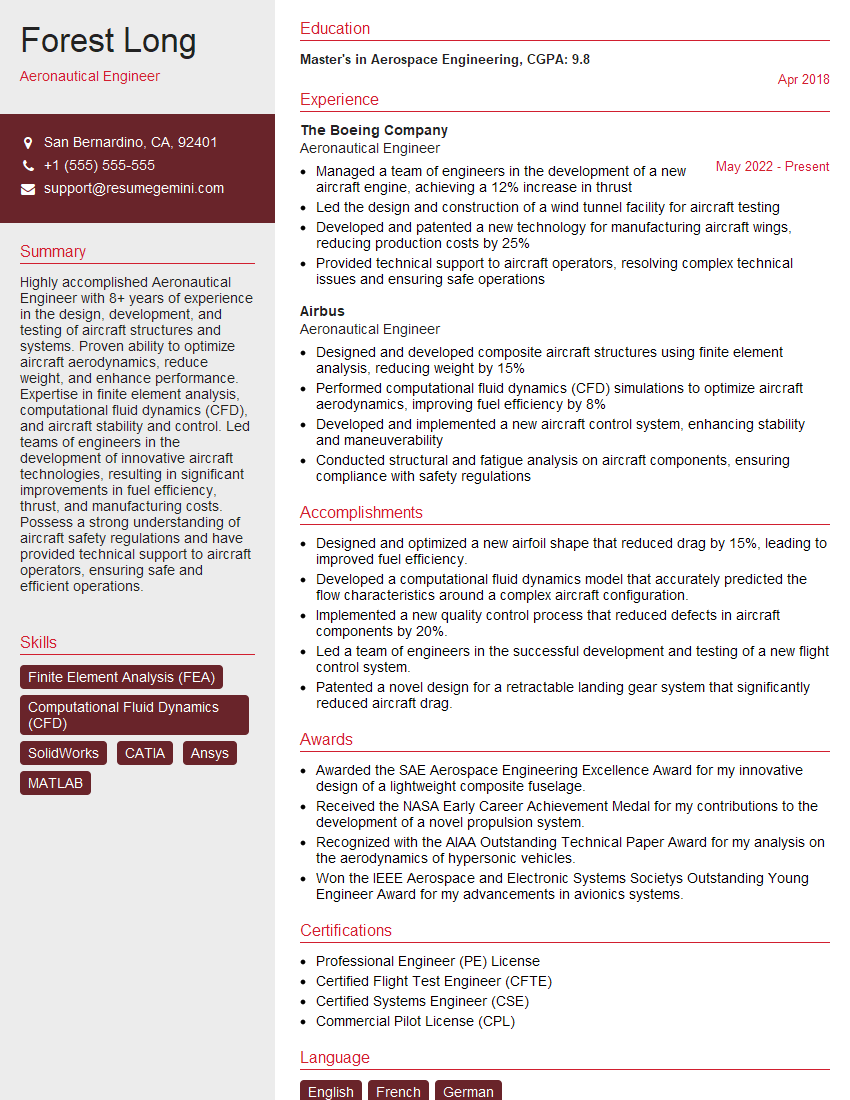
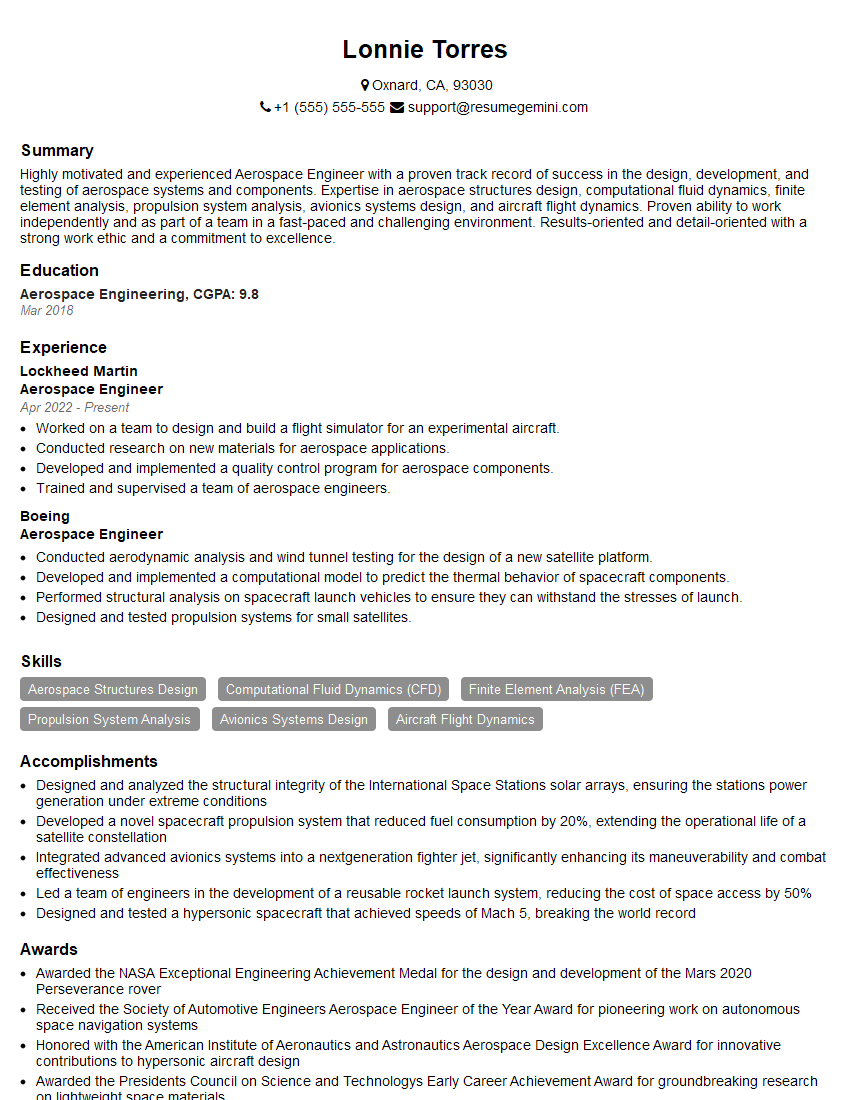
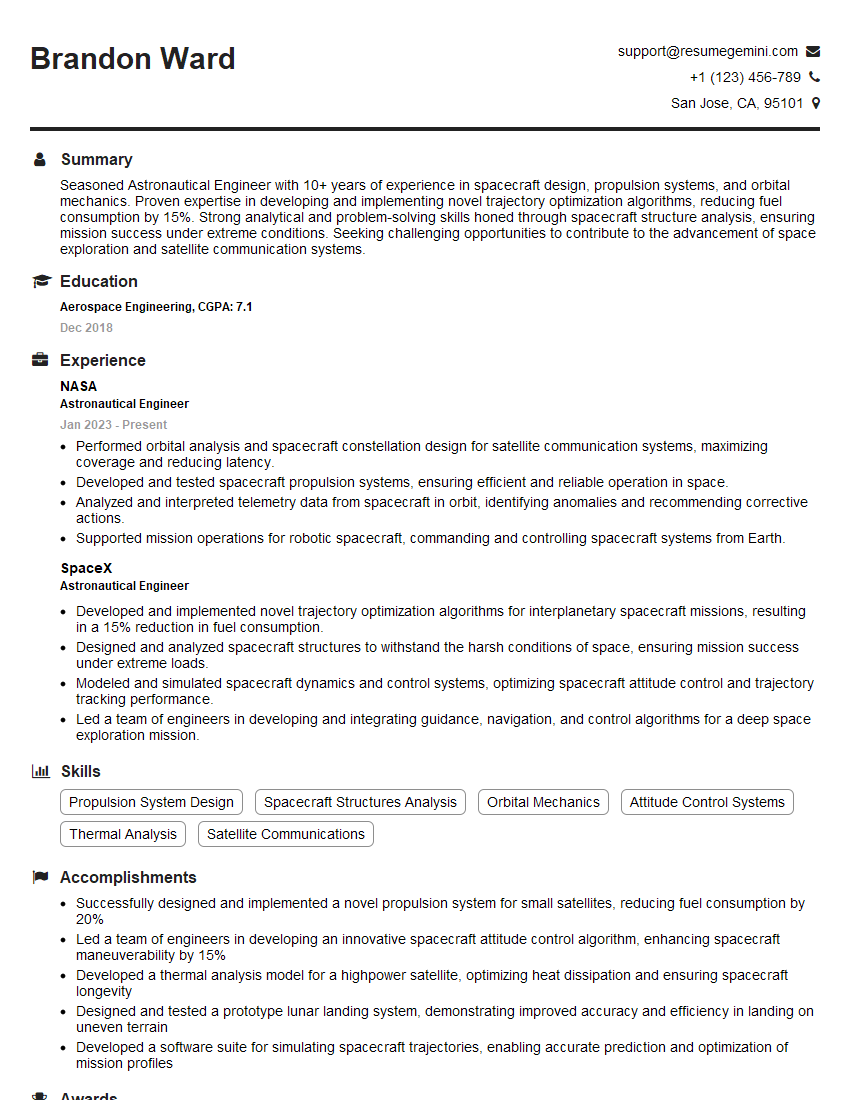
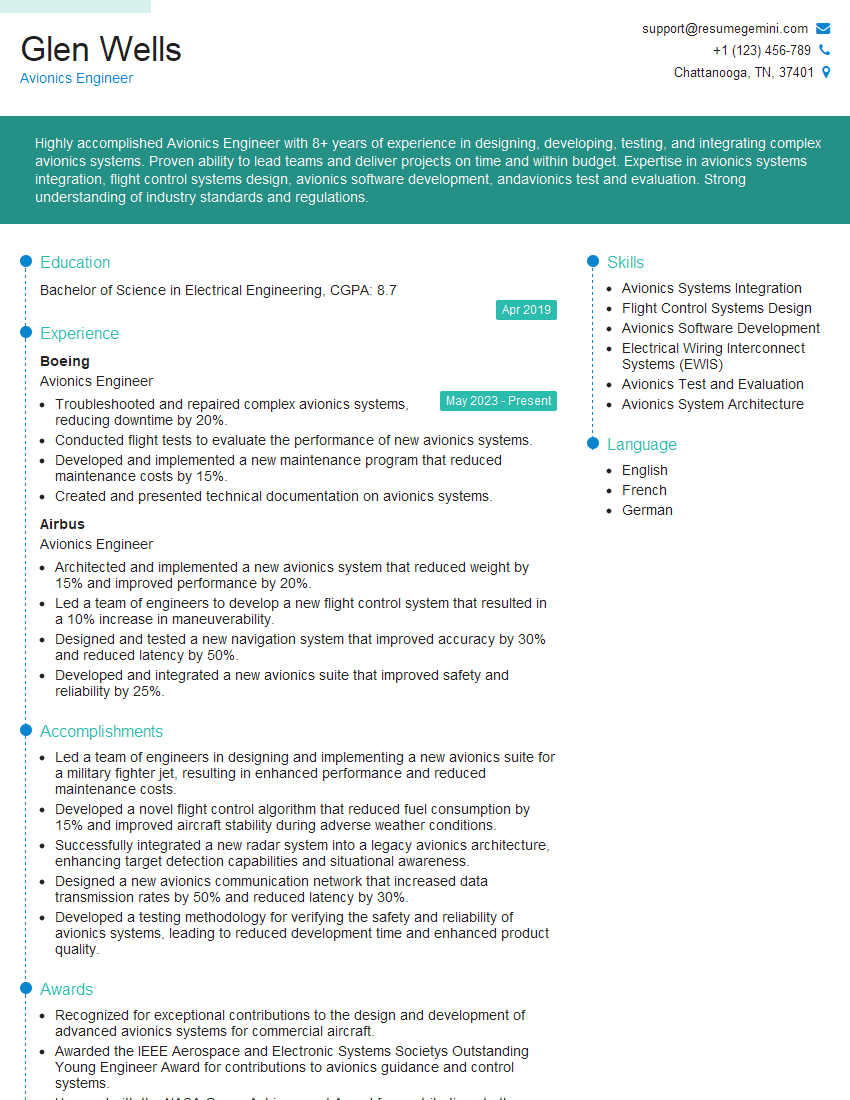
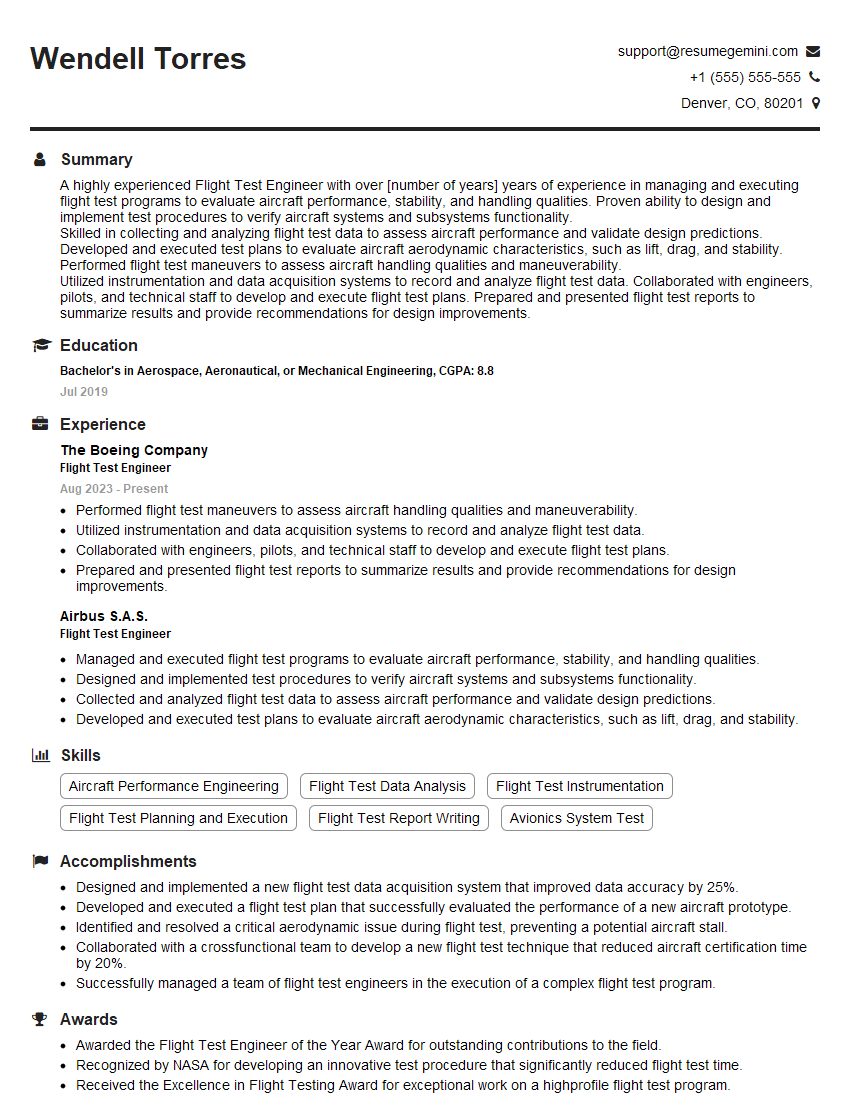
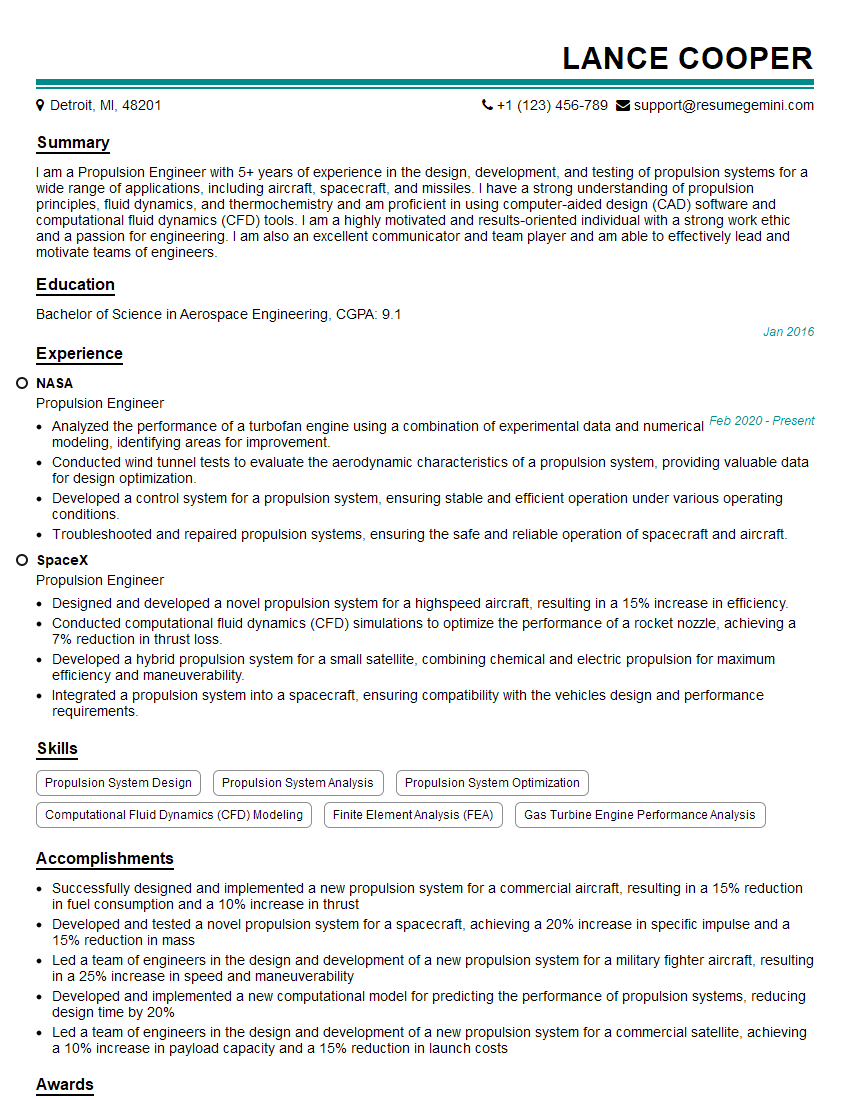
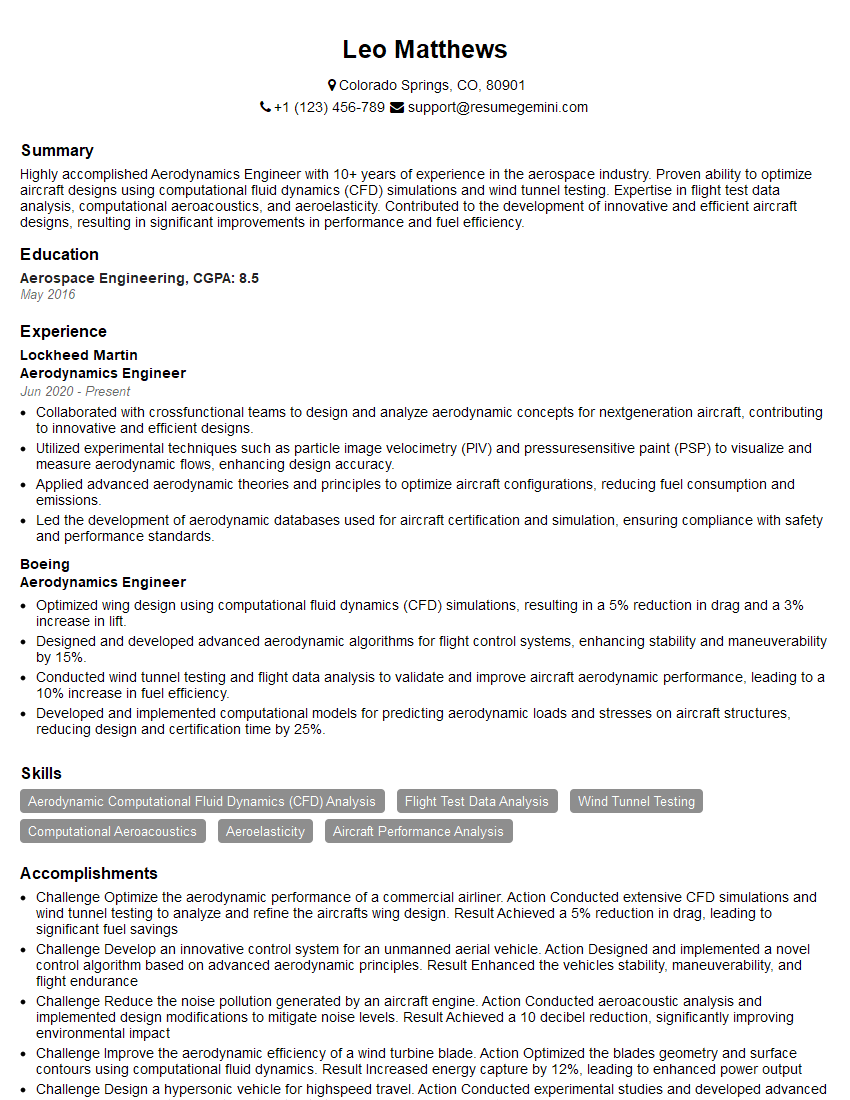
Mastering these key areas will significantly enhance your interview performance and demonstrate your commitment to a successful career in the aerospace industry. A well-crafted resume is crucial for showcasing your skills and experience effectively to Applicant Tracking Systems (ATS). Building an ATS-friendly resume increases your chances of getting your application noticed. We highly recommend using ResumeGemini to create a professional and impactful resume tailored to the aerospace industry. ResumeGemini provides examples of resumes specifically designed for aerospace roles to guide you in creating your own.
Explore more articles
Users Rating of Our Blogs
Share Your Experience
We value your feedback! Please rate our content and share your thoughts (optional).
What Readers Say About Our Blog
Amazing blog
hello,
Our consultant firm based in the USA and our client are interested in your products.
Could you provide your company brochure and respond from your official email id (if different from the current in use), so i can send you the client’s requirement.
Payment before production.
I await your answer.
Regards,
MrSmith
hello,
Our consultant firm based in the USA and our client are interested in your products.
Could you provide your company brochure and respond from your official email id (if different from the current in use), so i can send you the client’s requirement.
Payment before production.
I await your answer.
Regards,
MrSmith
These apartments are so amazing, posting them online would break the algorithm.
https://bit.ly/Lovely2BedsApartmentHudsonYards
Reach out at BENSON@LONDONFOSTER.COM and let’s get started!
Take a look at this stunning 2-bedroom apartment perfectly situated NYC’s coveted Hudson Yards!
https://bit.ly/Lovely2BedsApartmentHudsonYards
Live Rent Free!
https://bit.ly/LiveRentFREE
Interesting Article, I liked the depth of knowledge you’ve shared.
Helpful, thanks for sharing.
Hi, I represent a social media marketing agency and liked your blog
Hi, I represent an SEO company that specialises in getting you AI citations and higher rankings on Google. I’d like to offer you a 100% free SEO audit for your website. Would you be interested?