Every successful interview starts with knowing what to expect. In this blog, we’ll take you through the top Knowledge of Asphalt Paving Materials interview questions, breaking them down with expert tips to help you deliver impactful answers. Step into your next interview fully prepared and ready to succeed.
Questions Asked in Knowledge of Asphalt Paving Materials Interview
Q 1. Explain the different types of asphalt binders and their applications.
Asphalt binders are the glue that holds asphalt pavement together. They’re primarily composed of petroleum-derived hydrocarbons and are categorized based on their properties, primarily their viscosity and penetration grade. The choice of binder significantly impacts the pavement’s performance and lifespan.
- Straight Run Asphalt Cements (SRAC): These are the most basic binders, directly refined from crude oil. They offer a balance of properties and are widely used in various applications. Think of them as the ‘all-purpose’ binder.
- Modified Asphalt Cements (MAC): These are enhanced with polymers (like styrene-butadiene-styrene, or SBS; or ethylene-propylene-diene monomer, or EPDM) or other additives to improve their performance characteristics. Imagine adding super strength to the basic binder. This leads to better durability and resistance to cracking, making them ideal for high-traffic areas or extreme climates. SBS-modified binders, for example, enhance the pavement’s resistance to rutting (permanent deformation) at high temperatures, while EPDM improves low-temperature cracking resistance.
- Polymer-Modified Asphalt Binders (PMAB): These are similar to MACs, utilizing polymers for enhanced properties. The specific polymer type and the modification process significantly affect the final product’s performance and thus its application. These are often tailor-made for specific project requirements.
- Cutback Asphalt: This involves dissolving asphalt cement in a volatile solvent. It’s used in surface treatments and prime coats, where the solvent evaporates, leaving the asphalt binder behind. Think of it as a diluted version of the asphalt cement, easy to work with in initial stages of construction.
- Emulsified Asphalt: This is asphalt cement dispersed in water with an emulsifying agent. It allows for easier handling and application, especially in cold weather, as it is water-based. This is like having a pre-mixed, ready-to-go version of the asphalt binder.
The application of each type depends on factors like traffic volume, climate, and the overall project requirements. For example, a high-traffic highway might benefit from an SBS-modified binder for its rutting resistance, while a low-traffic residential street could use a more cost-effective straight run asphalt cement.
Q 2. Describe the process of asphalt mix design.
Asphalt mix design is a crucial process to ensure the pavement performs as intended. It involves determining the optimal combination of aggregate (rocks, sand, etc.), asphalt binder, and any other additives to meet specific performance requirements. It’s like creating a perfect recipe for a long-lasting road.
The process typically involves:
- Defining Performance Requirements: This step sets the target for pavement properties based on the anticipated traffic loads, environmental conditions, and service life expectations. This involves considering factors like traffic volume and types of vehicles that will be using the road.
- Aggregate Selection and Gradation: Choosing aggregates that meet size and strength specifications is crucial. Proper gradation (distribution of particle sizes) ensures sufficient void space for binder, impacting stability and durability.
- Binder Selection: As described previously, choosing the right binder type and grade is vital for performance. It needs to be compatible with the aggregates and climate conditions of the region.
- Laboratory Mix Design: Different binder contents are tested in the lab to determine the optimum mix that provides stability and other desirable properties like moisture resistance, while meeting the specifications established earlier. This involves performing tests like Marshall stability, Hveem stability, and other mix design parameters that ensure long-term pavement quality.
- Field Verification: After the lab testing, the chosen mix design needs to be verified in the field during construction. This will validate the lab results and adjust the mix based on real-world conditions.
Advanced techniques, such as Superpave mix design, use performance-based criteria to ensure the pavement will satisfy the required performance characteristics under expected traffic and environmental conditions. A good mix design is a foundation of a long-lasting, safe and efficient road.
Q 3. What are the key factors influencing the performance of asphalt pavements?
Many factors influence asphalt pavement performance. These can be broadly categorized into material properties, environmental factors, and traffic characteristics. It’s like a complex recipe where each ingredient plays a crucial role in the final outcome.
- Material Properties: The quality of the asphalt binder and aggregates significantly impacts pavement performance. Things like binder grade, aggregate gradation, and the overall mix design affect durability, rutting, and cracking resistance.
- Environmental Factors: Climate plays a major role. Hot climates can cause rutting, while cold climates can lead to cracking. Rainfall and freeze-thaw cycles impact moisture damage and pavement lifespan. The overall environment needs to be factored into the mix design.
- Traffic Characteristics: Traffic volume and the types of vehicles using the road are critical factors. Heavy traffic loads increase the risk of rutting and fatigue cracking. The number of heavy trucks passing through the area daily is a vital component in determining suitable pavement design.
- Construction Practices: The quality of construction impacts pavement performance. Proper compaction is vital to achieve desired pavement density, while a proper base layer will provide the necessary support.
Understanding and accounting for these factors during the design and construction phases are crucial for ensuring a long-lasting and safe pavement.
Q 4. How do you ensure the quality control of asphalt materials during construction?
Quality control is essential throughout the asphalt pavement construction process. Think of it as ongoing monitoring to ensure the final product meets the required standards.
Key aspects of quality control include:
- Material Testing: Regular testing of aggregates and asphalt binder to ensure they meet specifications. This starts from the source of the materials and continues throughout production.
- Mix Design Verification: Testing the asphalt mix throughout the production and placement process to check for uniformity and compliance with the approved mix design.
- In-Place Density Testing: Monitoring the compaction of the asphalt layers during construction to ensure they achieve the desired density. This is crucial for strength and durability.
- Thickness Verification: Ensuring the pavement layers are constructed to the specified thicknesses. This is important for structural integrity and durability.
- Visual Inspection: Regular visual inspection to identify any defects or inconsistencies during construction. This ensures there are no visible problems with the quality of the asphalt layers.
- Documentation: Maintaining thorough records of all testing and inspection results.
Implementing a robust quality control program minimizes defects, extends pavement life, and ultimately saves money in the long run.
Q 5. What are the common types of asphalt pavement distresses and their causes?
Asphalt pavements can experience various distresses over their lifespan. These indicate problems with the pavement structure or materials.
- Rutting: Permanent deformation of the pavement surface, often caused by excessive traffic loads at high temperatures. Imagine the road surface sinking under heavy traffic.
- Cracking: This can manifest as longitudinal, transverse, or alligator cracking. Causes include thermal stresses, fatigue, and moisture damage. Alligator cracks appear like broken tiles on a floor, indicating underlying weakness.
- Ravelling: The loosening and disintegration of the asphalt surface, often due to inadequate compaction or poor mix design. This looks like small aggregate particles breaking away from the road surface.
- Potholes: Localized depressions in the pavement surface caused by water infiltration and freeze-thaw cycles. They are very common, but can lead to hazardous driving conditions.
- Shoulder drop-offs: The edge of the road deteriorates and loses structural integrity faster than the rest of the asphalt surface.
Understanding the causes of these distresses is crucial for effective pavement maintenance and rehabilitation strategies. The causes of distress are often related to material selection, construction quality, and environmental conditions.
Q 6. Explain the importance of compaction in asphalt paving.
Compaction is the process of densifying the asphalt mix to achieve the desired density. It’s like squeezing a sponge to remove excess air and water. Proper compaction is critical for pavement performance.
Benefits of adequate compaction include:
- Increased Strength and Durability: Higher density leads to greater resistance to traffic loads and environmental stresses.
- Reduced Rutting and Cracking: Proper compaction minimizes void space, reducing the susceptibility to rutting and cracking.
- Improved Water Resistance: Dense asphalt pavements are less susceptible to water infiltration, which can cause significant damage.
- Longer Service Life: All the above factors contribute to a longer pavement lifespan, reducing the need for frequent repairs.
Insufficient compaction, on the other hand, leads to a weak, porous pavement prone to early failure. Achieving the specified density using appropriate rollers, density testing, and adjustments in construction techniques is crucial.
Q 7. What are the different methods of asphalt pavement construction?
Several methods are employed for asphalt pavement construction. The choice depends on factors such as project scale, traffic conditions, and available resources.
- Full-Depth Asphalt Pavement (FDAP): This involves constructing the entire pavement structure using asphalt layers. It’s typically used for high-volume roads where strength and durability are paramount.
- Hot Mix Asphalt (HMA): This involves mixing aggregates and hot asphalt binder in a plant and then paving the mix at high temperatures. It’s the most common method for new pavement construction.
- Cold Mix Asphalt (CMA): Uses asphalt binder modified to allow for placement at lower temperatures. It is suitable for small projects or temporary repairs.
- Surface Treatments: These involve applying thin layers of asphalt to improve the surface texture and extend the pavement life. Prime coats are initial layers used to improve bonding, tack coats further increase adhesion between asphalt layers. Seal coats use emulsion or cutback asphalt to fill fine cracks.
- Recycling: Involves reusing existing asphalt materials to create new pavement. This offers environmental and economic benefits and may include cold in-place recycling, hot in-place recycling, or reclaiming asphalt millings.
Each method has its advantages and disadvantages, and selecting the most appropriate method requires careful consideration of several factors. Understanding the characteristics of the project, the materials used, and the long-term expectations from the road structure is key.
Q 8. Describe your experience with different asphalt paving equipment.
My experience with asphalt paving equipment spans a wide range, from the initial site preparation to the final compaction. I’m proficient in operating and overseeing the use of various machines, including:
- Pavers: I’ve worked extensively with both smaller, slip-form pavers for smaller projects and larger, high-capacity pavers for large-scale highway construction. Understanding their settings—like screed adjustments for accurate thickness and temperature control for optimal compaction—is critical.
- Rollers: I’m familiar with different roller types, including pneumatic, static, and vibratory rollers. The choice depends on the lift thickness and material type. For instance, pneumatic rollers are ideal for initial compaction, while vibratory rollers provide denser finishes. Knowing when and how to use each is crucial for quality control.
- Loaders and Excavators: These are essential for material handling. Efficient material loading and stockpiling are vital for smooth paving operations. I have experience managing these machines to minimize delays and ensure consistent material supply.
- Other Equipment: My experience also includes working with milling machines for surface repairs, tack distributors for ensuring proper adhesion between layers, and various support vehicles like water trucks for dust control.
Throughout my career, I’ve prioritized safe and efficient equipment operation, always adhering to manufacturer specifications and safety protocols. For example, on a recent project, we used a GPS-guided paver to ensure precise placement and minimize material waste. This technology allowed for a smoother, more consistent paving process than traditional methods.
Q 9. How do you handle delays or unexpected issues during asphalt paving projects?
Handling delays and unexpected issues during asphalt paving requires a proactive and problem-solving approach. My strategy involves:
- Proactive Planning: Thorough planning, including detailed scheduling and contingency plans, is paramount. This includes anticipating potential weather delays or material supply disruptions.
- Communication: Open and consistent communication with the project team, subcontractors, and clients is vital. Early identification of problems allows for faster resolution.
- Problem Assessment: When faced with unforeseen challenges, like equipment malfunctions or unexpected subsurface conditions, I focus on a systematic assessment. This involves identifying the root cause, assessing its impact, and developing viable solutions.
- Resource Management: Efficiently allocating resources—personnel, equipment, and materials—is key. This might involve bringing in extra equipment or personnel to accelerate the work or finding creative solutions to overcome material shortages.
- Documentation: Meticulous documentation of all changes, delays, and solutions is crucial for transparency and future project improvement. This includes daily reports and incident logs.
For example, on one project, we encountered unexpected subsurface utilities. Through clear communication with the utility companies, we adjusted the work plan, secured necessary permits, and avoided costly delays. The proactive communication prevented the project from escalating into a major setback.
Q 10. What are the environmental considerations in asphalt paving?
Environmental considerations are increasingly important in asphalt paving. Minimizing the environmental impact involves strategies like:
- Reducing emissions: Using equipment with lower emissions, such as those powered by alternative fuels, and employing dust suppression techniques during paving operations.
- Recycling and reuse: Incorporating reclaimed asphalt pavement (RAP) into new mixes reduces the need for virgin materials, conserving natural resources and lowering the carbon footprint.
- Stormwater management: Implementing measures to prevent pollutants from entering waterways, such as using sedimentation basins and erosion control practices.
- Noise control: Utilizing noise reduction strategies during construction to minimize disruption to surrounding communities.
- Waste Management: Proper disposal and recycling of waste materials generated during the construction process. This includes construction debris and excess asphalt.
For instance, many projects now prioritize using RAP as a sustainable alternative. By replacing a percentage of virgin aggregates with RAP, we reduce landfill waste and lower greenhouse gas emissions. This commitment to sustainability is increasingly valued by clients and regulatory bodies.
Q 11. Explain the concept of Superpave mix design.
Superpave (Superior Performing Asphalt Pavements) is a performance-graded asphalt mix design system. Unlike older methods that focused primarily on empirical testing, Superpave uses a mechanistic-empirical approach. This means it considers the properties of the asphalt binder, aggregates, and the expected stresses on the pavement to predict pavement performance. The key elements are:
- Performance Grading: The mix design is tailored to specific performance requirements, such as traffic load and climatic conditions. This ensures the pavement will meet its expected service life.
- Binder Selection: The asphalt binder is selected based on its rheological properties (flow behavior) at different temperatures, ensuring sufficient stiffness at high temperatures and flexibility at low temperatures. PG grades (e.g., PG 64-22) specify this behavior.
- Aggregate Properties: The aggregate gradation is optimized for density, stability, and durability. This involves carefully selecting the aggregate size distribution to achieve the desired void structure in the mix.
- Mix Design Procedures: Superpave utilizes laboratory testing, such as gyratory compaction and resilient modulus testing, to simulate field conditions and determine optimal mix properties.
Superpave allows for a more scientifically based mix design, resulting in pavements that are better suited to withstand specific traffic and environmental conditions. The result is a more durable and longer-lasting pavement, improving safety and reducing lifecycle costs.
Q 12. Describe different types of aggregate used in asphalt mixes and their properties.
Asphalt mixes utilize a variety of aggregates, each with specific properties impacting the final pavement performance. Common types include:
- Crushed Stone: Highly durable and provides good strength and stability. The type of stone (limestone, granite, etc.) influences its characteristics.
- Gravel: Naturally occurring aggregates, often less durable than crushed stone, but readily available and cost-effective in some regions. The quality varies significantly.
- Sand: Fills the voids between larger aggregates, improving mix density and workability. The grading and properties are crucial for optimum performance.
- Recycled Materials: Reclaimed asphalt pavement (RAP) and other recycled materials can be used to improve sustainability and reduce costs.
The selection of aggregates is critical. For example, using a high-quality crushed stone with good angularity and hardness is preferable for high-traffic areas, while a more cost-effective gravel mix might be suitable for low-traffic applications. A well-graded aggregate blend ensures optimal density and stability, preventing issues like rutting and cracking.
Q 13. What are the benefits and drawbacks of using recycled materials in asphalt?
Using recycled materials, particularly Reclaimed Asphalt Pavement (RAP), in asphalt mixes offers significant benefits but also presents some drawbacks:
- Benefits:
- Environmental: Reduced landfill waste, conservation of natural resources, and lowered greenhouse gas emissions.
- Economic: Lower material costs compared to virgin aggregates.
- Performance: RAP can improve some mix properties, especially workability.
- Drawbacks:
- Quality Control: Maintaining consistent RAP quality is crucial. Contaminants or variations in the source material can negatively affect the pavement’s performance.
- Aging: The age and condition of the RAP can affect its properties. Older RAP may have reduced stiffness.
- Compatibility: Careful consideration is needed to ensure compatibility between the RAP and the new binder and aggregates.
Successful RAP incorporation requires careful management. This includes proper source material selection, quality testing, and precise blending with virgin materials. When done correctly, it’s a cost-effective and environmentally responsible way to build high-quality pavements.
Q 14. Explain the role of asphalt emulsions in pavement construction.
Asphalt emulsions are mixtures of asphalt binder and water (or other liquids), stabilized with an emulsifier. They play a crucial role in pavement construction because they offer several advantages over hot asphalt cement:
- Lower Temperatures: Emulsions can be applied at significantly lower temperatures than hot asphalt, reducing energy consumption and improving worker safety.
- Improved Adhesion: They provide excellent adhesion to various surfaces, even damp ones, making them suitable for surface treatments and tack coats.
- Versatility: Different emulsion types (anionic, cationic, etc.) are available to meet specific application needs, such as stabilizing base courses or creating a durable surface seal.
- Ease of Application: Emulsions are easier to handle and apply than hot asphalt, allowing for increased efficiency.
For instance, cationic emulsions are often used for surface treatments because they adhere well to aggregate surfaces. Anionic emulsions, on the other hand, are frequently used in base stabilization. Understanding the properties of different emulsion types is crucial for selecting the appropriate one for a specific application. Choosing the wrong type can lead to poor adhesion, reduced durability, or even project failure.
Q 15. How do you determine the optimal asphalt pavement thickness?
Determining the optimal asphalt pavement thickness is crucial for ensuring long-term pavement performance and minimizing lifecycle costs. It’s not a one-size-fits-all solution, but rather a complex calculation based on several factors. Think of it like building a house – you need a strong foundation (base layers) and the right amount of structural support (asphalt layers) to withstand the weight and stresses it will face.
The process typically involves using structural design methods, such as the AASHTO (American Association of State Highway and Transportation Officials) design guide. This involves considering:
- Traffic loading: Heavier traffic requires thicker pavements. For instance, a highway carrying heavy trucks will need a significantly thicker pavement than a residential street.
- Subgrade strength: A strong subgrade (the soil beneath the pavement) can support a thinner pavement, while a weak subgrade necessitates a thicker one. We assess subgrade strength through things like CBR (California Bearing Ratio) tests.
- Climate conditions: Freeze-thaw cycles and temperature fluctuations can affect pavement performance. Colder climates might require thicker pavements to withstand these stresses.
- Design life: The desired lifespan of the pavement is another key factor. A longer design life generally translates to a thicker pavement.
- Material properties: The strength and durability of the asphalt binder and aggregates significantly influence the required thickness. Higher-quality materials can allow for thinner pavements.
Software programs and specialized engineering calculations are employed to analyze these factors and determine the optimal layer thicknesses for each component of the pavement structure – typically including a base layer, subbase layer, and asphalt surface layer.
For example, I once worked on a project where we needed to pave a section of road near a construction site. The heavy truck traffic expected there dictated a significantly thicker pavement than what was originally planned for the rest of the road, which was designed for mainly light vehicle traffic.
Career Expert Tips:
- Ace those interviews! Prepare effectively by reviewing the Top 50 Most Common Interview Questions on ResumeGemini.
- Navigate your job search with confidence! Explore a wide range of Career Tips on ResumeGemini. Learn about common challenges and recommendations to overcome them.
- Craft the perfect resume! Master the Art of Resume Writing with ResumeGemini’s guide. Showcase your unique qualifications and achievements effectively.
- Don’t miss out on holiday savings! Build your dream resume with ResumeGemini’s ATS optimized templates.
Q 16. What are the common testing methods for asphalt materials?
Numerous testing methods ensure the quality and performance of asphalt materials throughout the entire process, from the source materials to the finished pavement. These tests are critical to avoid costly failures and ensure the pavement meets design specifications.
- Material characterization: This involves testing the aggregate (rocks, gravel) for properties like gradation (particle size distribution), strength, and durability. Tests like sieve analysis, Los Angeles abrasion, and soundness tests are used.
- Asphalt binder testing: This examines the asphalt cement’s properties, including viscosity, penetration, ductility, and aging characteristics. Common tests include Superpave tests (such as Dynamic Shear Rheometer (DSR) and Bending Beam Rheometer (BBR)) which assess the binder’s performance under various conditions.
- Mix design testing: This evaluates the performance of the asphalt concrete mixture, which is a combination of asphalt binder and aggregate. Tests such as Marshall stability, Hveem stability, and gyratory compaction are conducted to determine the mix’s strength, density, and stability.
- In-place testing: Once the pavement is constructed, in-place density tests (nuclear density gauge) and core sampling are performed to verify the quality of the construction and to determine density and strength of the finished pavement.
In one project, we discovered that a particular aggregate source had higher-than-acceptable moisture content, which could lead to pavement instability. By implementing stricter quality control measures and using appropriate drying techniques, we were able to mitigate this issue and prevent potential pavement failures.
Q 17. Explain the importance of proper drainage in asphalt pavement design.
Proper drainage is paramount for the longevity and performance of asphalt pavements. Water infiltration can weaken the pavement structure, causing potholes, cracking, and premature failure. Think of it like a sponge; when it’s saturated, it loses its strength and structural integrity. Similarly, water weakens the pavement’s base and sub-base layers, leading to instability.
Effective drainage strategies include:
- Proper cross-slope and longitudinal slope: This ensures that water flows away from the pavement surface, preventing ponding and water accumulation. This is similar to how a roof is designed to shed rainwater.
- Shoulder ditches and culverts: These provide pathways for water to drain off the road, preventing water from collecting near the pavement edges.
- Subbase and base layers with good drainage properties: Using granular materials that allow water to percolate down helps prevent the build-up of water beneath the pavement.
- Drainage structures: This might include catch basins, inlets, and pipes designed to collect and remove surface water from the pavement.
I once worked on a project where poor drainage led to significant pavement distress just a few years after construction. By incorporating improved drainage features into the redesign, we were able to significantly extend the pavement’s life expectancy and save considerable cost in the long run.
Q 18. Describe your experience with different types of asphalt pavement markings.
My experience encompasses a range of asphalt pavement markings, each serving a specific purpose and requiring different application techniques. The choice of marking type depends on factors such as traffic volume, visibility needs, and budget.
- Thermoplastic markings: These are durable and long-lasting, commonly used for centerlines, lane lines, and crosswalks in high-traffic areas. They are applied hot, adhere well to the pavement and provide high reflectivity.
- Paint markings: These are less durable and suitable for temporary or low-traffic areas. They are applied cold and are generally less expensive than thermoplastic markings.
- Preformed markings: These are factory-produced markings applied on-site. They often provide high durability and reflectivity and are suitable for specific applications like crosswalks or symbols.
- Raised pavement markers (RPMs): These are highly visible, durable markers used in areas with limited visibility or challenging conditions. They’re often used on shoulders, curves, and other safety-critical locations.
I have extensive experience selecting the appropriate type of marking for each project. For instance, while thermoplastic is ideal for major highways, paint markings are sufficient for low-traffic residential streets. The selection must account for factors like traffic volume, weather conditions and maintenance budget.
Q 19. How do you interpret and utilize asphalt pavement design specifications?
Asphalt pavement design specifications are essential documents that define the materials, construction methods, and quality control standards for a project. They are the blueprint for ensuring a successful and durable pavement. My interpretation and utilization of these specifications involve a multi-step process.
- Review and understanding: I thoroughly review all specifications, paying close attention to materials requirements, layer thicknesses, density requirements, and testing procedures. Any ambiguities are clarified with the project engineers.
- Material selection: I select materials that meet or exceed the specified requirements. This involves working closely with material suppliers to ensure quality assurance.
- Construction supervision: I oversee the construction process, ensuring that the contractors adhere to the specifications. This includes regular monitoring and testing of materials and in-place pavement quality.
- Quality control: Throughout the construction phase, I implement a robust quality control program using the specified testing methods to verify that the pavement meets the design criteria. This often involves reviewing and verifying the contractor’s testing and quality control data.
- Documentation: I maintain meticulous records of all materials used, tests conducted, and construction activities, ensuring complete compliance with the specifications.
One project involved a very detailed specification that included advanced testing protocols. By carefully reviewing and understanding these specifications from the outset, we avoided any conflicts and delivered a high-quality pavement that met all the required standards.
Q 20. What are the safety procedures you follow during asphalt paving operations?
Safety is my top priority during asphalt paving operations. We employ a comprehensive safety program that incorporates several key elements.
- Site safety planning: We conduct thorough site assessments, identify hazards, and develop site-specific safety plans that address these potential risks. This includes traffic control plans, designated work zones, and emergency response procedures.
- Personal protective equipment (PPE): All personnel are required to wear appropriate PPE, including hard hats, safety glasses, gloves, and high-visibility clothing. This minimizes the risk of injuries from hot asphalt, moving equipment, and falling objects.
- Traffic control: We implement comprehensive traffic control measures, including flaggers, warning signs, and lane closures, to protect both workers and the public. Proper traffic control prevents accidents and keeps the construction site safe.
- Equipment maintenance: We ensure that all equipment is properly maintained and operated to prevent malfunctions and accidents. Regular inspections and preventative maintenance are vital.
- Training and communication: All personnel receive thorough safety training and are well-informed about the risks associated with asphalt paving. This includes regular safety meetings and communication of safety procedures.
In one instance, we had to implement emergency procedures during unexpected weather conditions. Having a pre-established safety plan allowed us to quickly respond, safely evacuate the site, and secure the equipment, ensuring the safety of the entire crew.
Q 21. How do you manage a project budget and timeline for asphalt paving?
Managing a project budget and timeline effectively requires careful planning, meticulous tracking, and proactive problem-solving. It’s like orchestrating a complex symphony; each instrument (task) must be played at the right time and with the right intensity to achieve a harmonious result.
- Detailed cost estimating: We begin with a comprehensive cost estimate that includes all materials, labor, equipment, and contingency costs. This allows us to establish a realistic budget.
- Project scheduling: We create a detailed project schedule that outlines all tasks and their dependencies. This schedule should include milestones and critical path analysis to highlight potential delays.
- Regular monitoring and reporting: Throughout the project, we monitor progress against the budget and schedule. Regular progress reports and variance analyses help us identify potential problems early on and take corrective actions.
- Change management: We have a formal change management process for handling any modifications or unforeseen circumstances that may impact the budget or schedule. This process ensures that all changes are documented, reviewed, and approved.
- Risk management: We identify and assess potential risks that could affect the project’s success and develop mitigation strategies. This includes considering factors like weather, material availability, and equipment breakdowns.
On one occasion, we faced unexpected delays due to inclement weather. By carefully analyzing the impact on the schedule and proactively adjusting the work plan, we managed to complete the project within a reasonable timeframe without exceeding the budget. This required clear communication, effective resource allocation, and a collaborative approach.
Q 22. Describe your experience working with different stakeholders on asphalt paving projects.
My experience working with stakeholders on asphalt paving projects spans over a decade, encompassing collaborations with clients, engineers, contractors, and regulatory bodies. I’ve learned the importance of clear communication and proactive problem-solving throughout all phases of a project. For example, on a recent highway resurfacing project, I worked closely with the client to adjust the project scope to accommodate unexpected subsurface conditions. This involved transparently communicating the cost implications and timeline adjustments, securing their approval, and then coordinating with the contractor to implement the revised plan. Early and open communication prevented costly delays and maintained a positive working relationship.
Another key aspect is managing expectations. I’ve found that regularly scheduled meetings, detailed progress reports, and prompt responses to inquiries are essential to maintain trust and transparency. On a large-scale airport runway project, I used a collaborative project management software to keep all stakeholders updated on the progress, milestones, and potential risks, fostering a sense of shared responsibility and accountability.
Finally, I believe in fostering a collaborative environment where everyone feels heard and valued. This helps to resolve conflicts effectively and encourages innovative solutions. For instance, during a challenging project involving a complex intersection, I facilitated a brainstorming session with the engineering team and contractors, leading to a creative solution that minimized disruption to traffic flow and reduced project costs.
Q 23. What are the current trends and innovations in asphalt paving technology?
The asphalt paving industry is experiencing significant advancements. One major trend is the increased focus on sustainability. This includes the use of recycled materials like reclaimed asphalt pavement (RAP) in asphalt mixes, reducing the need for virgin aggregates. RAP incorporation not only reduces environmental impact but can also improve the performance characteristics of the asphalt.
Another key innovation is the development of warm-mix asphalt (WMA) technologies. WMA uses lower production temperatures compared to traditional hot-mix asphalt (HMA), resulting in reduced energy consumption and emissions. This also leads to improved worker safety due to lower workplace temperatures.
Furthermore, advancements in pavement design and analysis software allow for more accurate prediction of pavement performance and life-cycle costs. This enables better decision-making regarding pavement maintenance strategies and optimization of material usage. For example, using sophisticated finite element analysis (FEA) software, we can simulate the stresses on a pavement under various traffic loads and environmental conditions, helping to select the optimal design and material specifications.
Finally, the increased use of automation and technology in paving operations is improving efficiency and quality. Automated paving machines with advanced sensors and GPS guidance systems ensure better accuracy and consistency in asphalt placement, resulting in smoother and longer-lasting pavements.
Q 24. Explain how climate conditions affect asphalt paving operations.
Climate conditions significantly impact asphalt paving operations. Temperature plays a crucial role in both the production and placement of asphalt. For example, extremely hot temperatures can cause rapid asphalt cooling and hardening, making it difficult to achieve proper compaction. Conversely, cold temperatures can make the asphalt too stiff and difficult to work with, leading to uneven placement and reduced durability.
Moisture is another critical factor. Rain can significantly disrupt paving operations, as water can prevent proper adhesion between the asphalt and the underlying layers. High humidity can also negatively affect the workability of the asphalt mix. This often necessitates implementing contingency plans like postponing paving activities until suitable weather conditions prevail. This might include using weather forecasting tools and having backup plans for covered storage of materials or alternative project scheduling.
Extreme weather events, such as freezing temperatures or heavy rainfall, can also cause delays and increase project costs. It’s crucial to have a clear understanding of local weather patterns and to include provisions in the project schedule to mitigate the risk of weather-related disruptions.
Q 25. What is your experience with asphalt pavement rehabilitation and maintenance?
I have extensive experience in asphalt pavement rehabilitation and maintenance, encompassing various techniques such as crack sealing, patching, milling and overlaying, and full-depth reconstruction. My approach is always data-driven, starting with a thorough pavement assessment to identify the extent and type of distress. This typically involves visual inspections, pavement condition surveys, and advanced testing techniques, such as Falling Weight Deflectometer (FWD) testing, to determine the structural capacity of the existing pavement.
Based on the assessment results, I recommend the most cost-effective and sustainable rehabilitation strategy. For instance, minor cracking might only require crack sealing, whereas more severe distress might necessitate milling and overlaying. In cases of significant structural damage, full-depth reconstruction becomes necessary. This process also involves selecting the appropriate asphalt mix design to address the specific pavement deficiencies and anticipate future traffic loads.
I’ve been involved in numerous projects ranging from small residential street repairs to large-scale highway rehabilitations, always emphasizing quality control and adherence to industry best practices. Proper compaction and quality control during each phase of rehabilitation are crucial for ensuring a long-lasting and safe pavement.
Q 26. How do you troubleshoot problems during asphalt paving operations?
Troubleshooting during asphalt paving operations requires a systematic approach. I typically follow a five-step process: Firstly, I identify the problem by carefully observing the symptoms, such as segregation of aggregates, uneven surface texture, or rutting. Secondly, I analyze the problem by considering factors like mix design, paving equipment settings, environmental conditions, and the underlying pavement structure.
Thirdly, I develop potential solutions based on my experience and knowledge of asphalt technology. For instance, if segregation is observed, I might adjust the mix design or the paving equipment’s settings. If the problem is related to poor compaction, I might adjust the roller passes or the compactive effort.
Fourthly, I implement the chosen solution and closely monitor its effectiveness. This often requires collaboration with the paving crew and close attention to detail. Finally, I document the problem, the solution, and the outcome to ensure continuous improvement and prevent similar issues in the future.
A prime example is an instance where a section of pavement exhibited excessive rutting. After analyzing the situation, we discovered that the asphalt mix was not adequately compacted due to issues with the roller settings. By modifying the roller settings and increasing the number of roller passes, we successfully resolved the issue and ensured a smooth pavement.
Q 27. Describe your experience with using different software for asphalt pavement design and analysis.
I possess significant experience using various software packages for asphalt pavement design and analysis. This includes specialized design software such as AASHTOWare Pavement ME Design, which helps determine optimal pavement layer thicknesses and material properties based on traffic and environmental considerations. I’m also proficient in using finite element analysis (FEA) software for performing more detailed stress analysis and assessing the long-term performance of pavement structures.
Furthermore, I’m familiar with data acquisition and analysis software used to process pavement condition surveys and Falling Weight Deflectometer (FWD) data. This data is crucial for conducting pavement evaluations, assessing distress levels, and planning rehabilitation strategies. My proficiency in these tools enables me to effectively evaluate existing pavement conditions, design new pavement structures, and optimize maintenance strategies. I’m also adept at using GIS software to spatially analyze pavement data and integrate it with other relevant information, such as traffic volume data.
Q 28. What are your salary expectations for this asphalt paving position?
My salary expectations for this asphalt paving position are in the range of $100,000 to $130,000 per year, depending on the specific responsibilities and benefits package. This range reflects my extensive experience, expertise, and proven track record of successfully managing and delivering complex asphalt paving projects. I’m confident that my skills and contributions will significantly benefit your organization.
Key Topics to Learn for Knowledge of Asphalt Paving Materials Interview
- Asphalt Binder Properties: Understanding viscosity, aging, and the impact of temperature on performance. Practical application: Explaining the selection of appropriate binder grades for different climatic conditions and project requirements.
- Aggregate Properties and Selection: Knowledge of aggregate gradation, shape, and size distribution. Practical application: Discussing the impact of aggregate properties on the mix design and pavement performance, including considerations for durability and stability.
- Mix Design Principles: Understanding the process of designing asphalt mixes to meet specific performance requirements (e.g., stability, durability, rutting resistance). Practical application: Describing the role of different testing methods in evaluating mix performance.
- Construction Methods and Quality Control: Familiarity with various paving techniques (e.g., hot-mix asphalt, cold-mix asphalt) and quality control measures employed throughout the construction process. Practical application: Troubleshooting common issues encountered during asphalt paving operations.
- Pavement Design and Analysis: Understanding the principles of pavement structural design and the use of analytical tools to predict pavement performance. Practical application: Interpreting pavement distress and recommending appropriate rehabilitation strategies.
- Sustainability and Environmental Considerations: Awareness of environmental regulations and sustainable practices in asphalt paving, including recycled materials and reduced emissions. Practical application: Discussing the benefits of using recycled materials in asphalt mixtures.
- Troubleshooting and Problem Solving: Ability to identify and address common issues related to asphalt pavement performance, such as cracking, rutting, and stripping. Practical application: Developing solutions to address specific pavement distress scenarios.
Next Steps
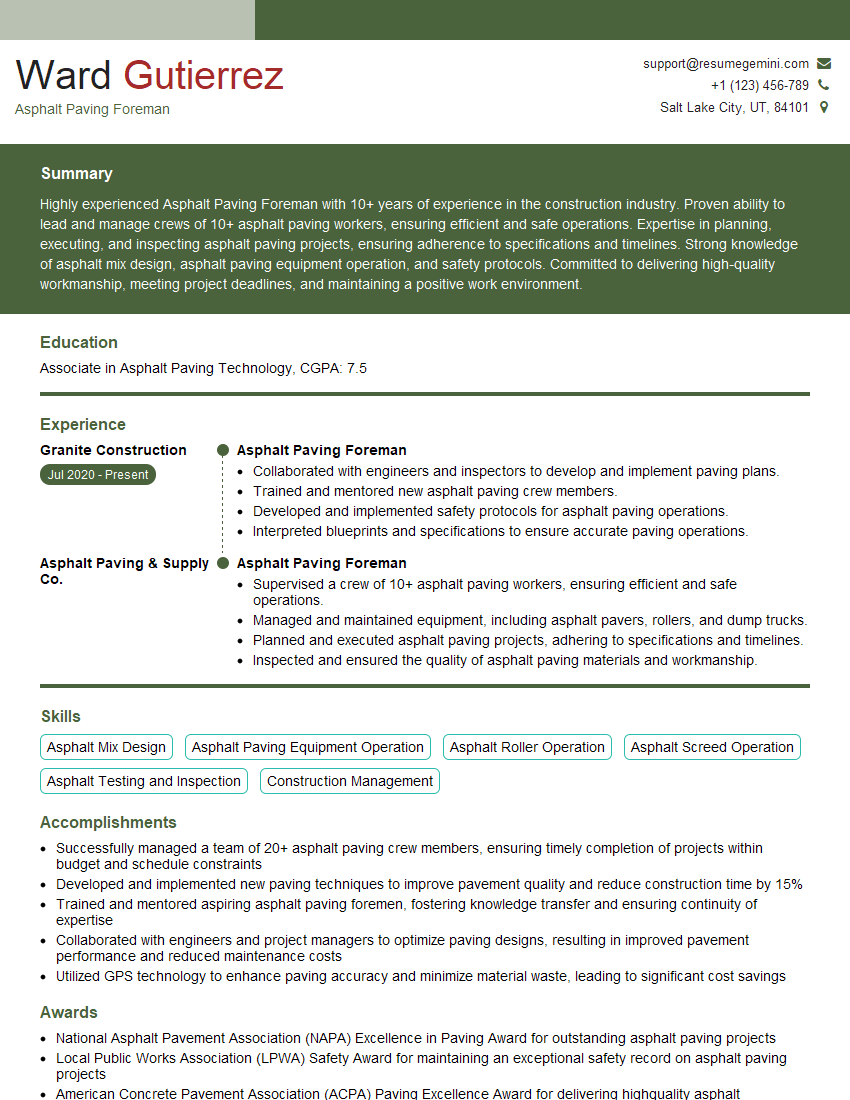
Mastering knowledge of asphalt paving materials is crucial for career advancement in the construction and civil engineering industries. A strong understanding of these concepts will significantly enhance your interview performance and open doors to exciting opportunities. To maximize your job prospects, focus on crafting an ATS-friendly resume that highlights your skills and experience effectively. ResumeGemini is a valuable resource to help you build a professional and impactful resume. Examples of resumes tailored to showcasing expertise in Knowledge of Asphalt Paving Materials are available to guide you. Invest in your future – create a resume that reflects your expertise and makes you stand out from the competition.

Explore more articles
Users Rating of Our Blogs
Share Your Experience
We value your feedback! Please rate our content and share your thoughts (optional).
What Readers Say About Our Blog
Amazing blog
hello,
Our consultant firm based in the USA and our client are interested in your products.
Could you provide your company brochure and respond from your official email id (if different from the current in use), so i can send you the client’s requirement.
Payment before production.
I await your answer.
Regards,
MrSmith
hello,
Our consultant firm based in the USA and our client are interested in your products.
Could you provide your company brochure and respond from your official email id (if different from the current in use), so i can send you the client’s requirement.
Payment before production.
I await your answer.
Regards,
MrSmith
These apartments are so amazing, posting them online would break the algorithm.
https://bit.ly/Lovely2BedsApartmentHudsonYards
Reach out at BENSON@LONDONFOSTER.COM and let’s get started!
Take a look at this stunning 2-bedroom apartment perfectly situated NYC’s coveted Hudson Yards!
https://bit.ly/Lovely2BedsApartmentHudsonYards
Live Rent Free!
https://bit.ly/LiveRentFREE
Interesting Article, I liked the depth of knowledge you’ve shared.
Helpful, thanks for sharing.
Hi, I represent a social media marketing agency and liked your blog
Hi, I represent an SEO company that specialises in getting you AI citations and higher rankings on Google. I’d like to offer you a 100% free SEO audit for your website. Would you be interested?