Preparation is the key to success in any interview. In this post, we’ll explore crucial Knowledge of Fabric Care interview questions and equip you with strategies to craft impactful answers. Whether you’re a beginner or a pro, these tips will elevate your preparation.
Questions Asked in Knowledge of Fabric Care Interview
Q 1. Explain the difference between natural and synthetic fibers.
Natural fibers originate from plants or animals, while synthetic fibers are created artificially from chemicals. This fundamental difference significantly impacts their properties and care requirements.
- Natural Fibers: Examples include cotton (plant-based), wool (animal-based), silk (animal-based), and linen (plant-based). They are generally breathable, absorbent, and often more comfortable against the skin. However, they can be more prone to wrinkling, shrinking, and damage from harsh chemicals.
- Synthetic Fibers: Examples include polyester, nylon, acrylic, and rayon. These are typically more durable, wrinkle-resistant, and less expensive than natural fibers. They often require less care but may not be as breathable or comfortable, and some can retain moisture, leading to potential discomfort or odor.
Think of it like this: natural fibers are like handcrafted items – unique, comfortable, but requiring more care. Synthetic fibers are more like mass-produced items – durable and low-maintenance, but potentially less luxurious.
Q 2. Describe various fabric finishes and their impact on care.
Fabric finishes are treatments applied to fabrics to enhance their properties. These finishes greatly influence how we care for the garment.
- Pre-shrinking: Reduces shrinkage during washing. Care is generally less demanding than unshrunk fabrics.
- Water-repellent finishes: Prevent water absorption. These fabrics usually require special detergents and can be cleaned with a damp cloth rather than a full wash.
- Stain-resistant finishes: Make fabrics less susceptible to staining. While often easier to clean, harsh chemicals should still be avoided.
- Wrinkle-resistant finishes: Minimize wrinkling. Though usually requiring less ironing, some finishes might degrade with repeated washing.
- Flame-retardant finishes: Enhance fire safety. These fabrics often have specific washing instructions that need to be followed carefully.
For example, a water-repellent jacket might only need spot cleaning, whereas a wrinkle-resistant shirt may require less ironing after washing.
Q 3. What are the common causes of fabric shrinkage?
Fabric shrinkage is primarily caused by the relaxation of fibers during washing or drying. Several factors contribute:
- Fiber type: Natural fibers like wool and cotton are more prone to shrinkage than synthetics.
- Water temperature: Hot water causes fibers to relax and shrink more than cold water.
- Washing machine agitation: Aggressive agitation can cause fibers to become tangled and compress.
- Drying method: High heat in dryers can cause significant shrinkage.
- Fabric construction: Loosely woven fabrics are more likely to shrink than tightly woven fabrics.
Imagine a wool sweater – the fibers are loosely bound and will naturally shrink if subjected to hot water and high heat. Understanding these factors helps prevent shrinkage by choosing appropriate wash and dry settings.
Q 4. How do you identify different types of stains and recommend appropriate treatments?
Identifying and treating stains requires observation and appropriate techniques.
- Protein stains (blood, milk, egg): Cold water and enzyme detergents are best. Avoid hot water, which sets the stain.
- Oil-based stains (grease, oil, makeup): Use a pre-treatment stain remover or dish soap to break down the oil before washing.
- Tannin stains (coffee, tea, wine): Cold water rinse immediately followed by a stain remover.
- Dye stains: These are trickier and may require specialized stain removers or professional cleaning.
Always test any stain remover on an inconspicuous area of the fabric first to avoid damage. For example, blotting a wine stain with cold water immediately can prevent it from setting, while a grease stain might require dish soap to emulsify the oil before washing.
Q 5. Explain the proper washing and drying techniques for different fabrics (e.g., cotton, wool, silk).
Washing and drying techniques vary significantly based on fabric type:
- Cotton: Generally durable and can withstand machine washing and drying in warm or hot water. Always check care labels for specific recommendations.
- Wool: Delicate and should be hand-washed in cold water with a gentle detergent, or machine-washed on a delicate cycle with cold water. Air drying is best to prevent shrinkage and damage.
- Silk: Extremely delicate. Hand-washing in cold water with a gentle detergent is recommended. Avoid harsh scrubbing and wringing. Air dry flat away from direct sunlight.
Imagine washing a delicate silk scarf the same way you wash a sturdy cotton t-shirt – the results would be disastrous! Gentle handling and appropriate washing techniques are crucial for preserving the quality and longevity of different fabrics.
Q 6. What are the safety precautions to consider when handling different cleaning agents?
Safety when handling cleaning agents is paramount:
- Always read and follow product instructions carefully. This includes dilution ratios, application methods, and safety precautions.
- Wear appropriate protective gear. Gloves, eye protection, and a respirator may be necessary, depending on the product.
- Work in a well-ventilated area. Avoid inhaling fumes.
- Keep cleaning agents out of reach of children and pets.
- Store cleaning agents properly. Follow storage instructions on the product label to prevent spills or accidents.
- Never mix cleaning agents. This can create dangerous chemical reactions.
For example, bleach can cause severe skin irritation if not handled carefully. Always prioritize safety by following instructions and using protective gear.
Q 7. How do you handle delicate fabrics such as lace or embroidery?
Delicate fabrics like lace and embroidery require special care:
- Hand-washing is generally recommended. Use a gentle detergent and cool water. Avoid harsh scrubbing or wringing.
- Support the fabric during washing. A mesh laundry bag or a soft surface can prevent damage.
- Rinse thoroughly. Remove all traces of detergent to prevent stiffness.
- Air dry flat. Avoid hanging, which can stretch or distort the fabric.
- Consider professional cleaning for valuable or intricate items.
Imagine trying to machine-wash a delicate antique lace tablecloth – the results would be irreversible damage! Gentle hand-washing and careful drying are essential for preserving the beauty of these delicate fabrics.
Q 8. Describe the process of dry cleaning.
Dry cleaning is a process of cleaning fabrics using a liquid solvent instead of water. Unlike washing with water, dry cleaning employs a specialized machine and a solvent (typically perchlorethylene or hydrocarbon) to remove dirt and stains. The process involves several key steps:
- Pre-spotting: Identifying and treating individual stains before the main cleaning process. This often involves using specialized stain removers tailored to the stain type.
- Washing: The garment is placed in a dry cleaning machine, where it’s tumbled in the solvent. The solvent loosens and dissolves dirt and grime.
- Extraction: The solvent is then removed from the garment through a filtration and distillation process within the machine. This ensures most of the solvent is recovered and reused.
- Drying: The garment is dried in a large, industrial dryer, usually using low heat to prevent damage.
- Finishing: Finally, the garment is pressed and finished to restore its original shape and appearance. This often involves specialized techniques depending on the fabric type.
Think of it like giving your clothes a gentle spa day – a thorough cleanse without the harshness of water that could damage delicate materials. For example, a silk scarf or a wool suit would be severely damaged by a typical washing machine, making dry cleaning the preferred choice.
Q 9. Explain the differences between various dry cleaning solvents.
Several solvents are used in dry cleaning, each with its own properties and environmental impact. The most common are:
- Perchloroethylene (Perc): Traditionally the most widely used, Perc is a very effective solvent, but it’s also known to be a potential health hazard and is being phased out in many areas due to environmental concerns.
- Hydrocarbons: These are a newer generation of solvents considered more environmentally friendly and less toxic than Perc. They are typically derived from petroleum or other sustainable sources. Different hydrocarbon blends exist, each having slightly different cleaning properties. For example, some are better suited for delicate fabrics.
- Silicone-based solvents: These are often used for specialty cleaning and are generally considered gentler on fabrics. They’re less effective at removing certain types of stains, however.
The choice of solvent depends on the fabric type, the type of stains, and environmental regulations. The dry cleaner should be able to explain which solvent they use and why.
Q 10. What are the common problems encountered in laundry and how are they addressed?
Common laundry problems range from simple to complex:
- Shrinkage: Caused by using high temperatures or improper washing techniques. Addressing this requires careful attention to washing labels and using appropriate water temperatures.
- Fading: Results from exposure to sunlight or harsh detergents. Pre-treating stains, using cold water, and air-drying can minimize fading.
- Stains: These require prompt treatment; different stain types require specific approaches. Knowing the stain’s origin (e.g., grease, wine, blood) is vital for selecting the right treatment method. For instance, blotting a fresh grease stain with cornstarch is a good first step.
- Stretching/Damage: This can happen from overloading washing machines or using rough handling. Always follow the care label’s instructions and treat garments gently.
- Color bleeding: This happens when dyes aren’t colorfast. Washing new colored clothes separately and using a color-catching sheet can prevent this.
Preventing these problems relies on following care instructions, using appropriate detergents and water temperatures, and handling garments with care.
Q 11. How do you handle fabric damage, such as tears or holes?
Handling fabric damage, like tears or holes, often depends on the fabric type and the extent of the damage. For minor tears or holes:
- Small tears in delicate fabrics: These might be repairable with a delicate hand stitch using thread that closely matches the fabric color.
- Larger tears or holes in sturdy fabrics: Patching with fabric remnants (darning) is a viable solution. This involves weaving new threads into the damaged area to reinforce and cover the hole.
- Professional repair: For valuable or complicated garments, a professional tailor or seamstress can provide the best repair, especially if intricate embroidery or designs are involved.
Prevention is key – careful handling and prompt attention to small snags can often prevent bigger problems. Always inspect clothes before washing them and mend small issues promptly.
Q 12. What are the best practices for storing different types of fabrics?
Proper storage is crucial for preserving the quality and lifespan of fabrics. Here’s a breakdown:
- Natural fibers (cotton, linen, wool, silk): These should be stored in breathable fabric bags or drawers to prevent moisture buildup and pest infestation. Avoid plastic bags as they can trap moisture.
- Synthetic fibers (polyester, nylon): These are generally more resilient, but storing them folded neatly in a cool, dry place is still best practice.
- Delicate fabrics (lace, chiffon): These need extra care. Store them loosely in tissue paper to prevent creasing and wrinkling.
- Knitwear: Knit items should be folded and stored flat to prevent stretching and misshaping.
A dark, cool, and dry environment is generally ideal for storing all fabrics, minimizing damage from sunlight and moisture.
Q 13. What are the environmental concerns related to fabric care?
Environmental concerns related to fabric care are significant, largely stemming from:
- Water consumption: Washing clothes consumes considerable amounts of water, especially with frequent washing cycles. Reducing water use through efficient washing machines and air-drying can help.
- Energy consumption: Washing machines and dryers use significant energy. Using energy-efficient appliances and lower temperatures can significantly reduce environmental impact.
- Detergents and chemicals: Many conventional detergents contain harmful chemicals that pollute waterways. Opting for eco-friendly, biodegradable detergents is essential.
- Microplastics: Synthetic fabrics release microplastics during washing which pollute our oceans. Using laundry bags to catch these can help.
- Dry cleaning solvents: Perc is a significant pollutant, emphasizing the need for cleaner, more sustainable alternatives.
Choosing sustainable fabrics, reducing washing frequency, and employing eco-friendly cleaning methods are crucial for minimizing the environmental footprint of fabric care.
Q 14. Explain the concept of colorfastness.
Colorfastness refers to a fabric’s ability to retain its color despite washing, exposure to light, or other environmental factors. A colorfast fabric won’t bleed or fade easily.
It’s essential because colorfastness ensures that your clothes retain their appearance over time and washing. For instance, a shirt that is not colorfast might bleed its dye onto other garments during washing. Manufacturers test for colorfastness using standardized methods, helping consumers identify which fabrics will maintain their color over time.
Checking care labels for colorfastness information is crucial when buying new clothes. If you’re unsure, it’s always best to wash new garments separately the first time to prevent any color bleeding.
Q 15. What are the different methods of removing wrinkles?
Removing wrinkles depends heavily on the fabric type and the severity of the wrinkles. Gentle wrinkles can often be removed without heat, while deeply creased fabrics may require ironing or steaming.
Steaming: Holding a garment over a steaming kettle or using a handheld steamer is a great way to remove wrinkles from delicate fabrics like silk or wool. The steam relaxes the fibers, smoothing out the creases. Think of it like giving the fabric a gentle spa treatment!
Ironing: This is a more aggressive approach, using heat to smooth out wrinkles. Different fabrics require different iron temperatures (see question 4 for details). Always test a hidden area first!
Pressing: Pressing uses the weight of the iron rather than its movement to remove wrinkles. It’s ideal for delicate fabrics or areas with embellishments.
Hanging: For some less-wrinkled fabrics, simply hanging them up for a day or two can allow gravity to smooth out the creases. This works best on lightweight fabrics.
Dampening and Stretching: For particularly stubborn wrinkles on knits or t-shirts, lightly dampening the fabric and carefully stretching it can help.
Career Expert Tips:
- Ace those interviews! Prepare effectively by reviewing the Top 50 Most Common Interview Questions on ResumeGemini.
- Navigate your job search with confidence! Explore a wide range of Career Tips on ResumeGemini. Learn about common challenges and recommendations to overcome them.
- Craft the perfect resume! Master the Art of Resume Writing with ResumeGemini’s guide. Showcase your unique qualifications and achievements effectively.
- Don’t miss out on holiday savings! Build your dream resume with ResumeGemini’s ATS optimized templates.
Q 16. Discuss the impact of water temperature on fabric.
Water temperature significantly impacts fabric fibers. Using the wrong temperature can lead to shrinking, fading, or damage.
Cold Water: Ideal for delicate fabrics like silk, wool, and lace, as well as dark-colored garments to prevent color bleeding. Think of it as a gentle rinse for sensitive skin.
Warm Water: Suitable for most everyday fabrics like cotton and linen. It helps remove dirt and grime effectively without harshness.
Hot Water: Best for very durable fabrics like heavy cotton and some synthetics. However, overuse can lead to shrinking and fading.
Always check the care label for specific water temperature recommendations. Ignoring this can lead to irreversible damage.
Q 17. How do you determine the appropriate detergent for different fabrics?
Choosing the right detergent is key to keeping your clothes looking their best. Fabric type and color are important factors.
Delicate Fabrics (silk, wool, lace): Use a gentle, pH-neutral detergent designed specifically for delicates. Harsh detergents can damage these fibers.
Everyday Fabrics (cotton, linen): Most standard detergents work well. Consider using a detergent for bright colors to prevent fading.
Dark-Colored Fabrics: A detergent designed for dark colors helps prevent fading and keeps colors vibrant. Think of it as a special sunscreen for your clothes!
Sensitive Skin: Opt for hypoallergenic and fragrance-free detergents to minimize irritation.
Remember, less is more! Using too much detergent can leave residue on your clothes, making them stiff and possibly attracting more dirt.
Q 18. Explain the process of ironing different fabrics.
Ironing different fabrics requires adjusting the temperature and technique to avoid damage.
Cotton & Linen: These durable fabrics can withstand high heat. Use a high iron setting and steam for crisp results. Imagine making them as smooth as a freshly pressed shirt.
Silk & Wool: These delicate fabrics require low heat and no steam. Use a pressing cloth between the iron and the garment to prevent shine or damage. This is like a gentle massage for your delicate clothing.
Synthetics (Polyester, Nylon): These fabrics generally require a medium heat setting and low steam or no steam. High heat can melt synthetic fibers.
Rayon: Rayon can be tricky. It often does best with low heat and a pressing cloth.
Always test a hidden area before ironing the entire garment to ensure the setting is appropriate.
Q 19. What are the different types of fabric finishes and their effects on cleaning?
Fabric finishes alter a fabric’s characteristics, impacting its care and cleaning.
Pre-shrunk: Treated to minimize shrinking during washing. This makes laundering much less stressful.
Water-resistant/Waterproof: These finishes repel water, often requiring specialized cleaning methods. These finishes are like a shield for your clothing.
Stain-resistant: These finishes help prevent stains from setting into the fabric, making cleaning easier. This is like giving your clothing superpowers!
Wrinkle-resistant: Treated to resist wrinkling, simplifying care. This reduces ironing time and frustration.
Understanding these finishes helps determine the appropriate cleaning method and prevents damage during washing.
Q 20. How do you identify the fiber content of a garment?
Identifying fiber content is crucial for proper care. Several methods can be used:
Care Label: The most reliable method. The care label usually lists the fiber content percentages.
Burn Test (Caution): A small, inconspicuous thread can be burned to observe the way it burns and smells. This is a risky method and should only be used as a last resort.
Microscopic Examination: This requires specialized equipment and expertise to examine the fiber structure.
Feel and Appearance: Experienced individuals can sometimes determine fiber type by feel and visual appearance. This involves recognizing the characteristic textures and appearances of different fibers (e.g. the softness of cashmere).
The care label should always be the primary source of information. Don’t be afraid to use a magnifying glass if the label is small or faded.
Q 21. Describe the different types of stains and their appropriate treatments.
Different stains require different treatments. Acting quickly is crucial for successful stain removal.
Oil-based stains (grease, oil): Use a solvent-based stain remover or dish soap. Blot (don’t rub!) the stain and launder as usual.
Water-based stains (juice, wine): Rinse immediately with cold water. Blot gently. Use a stain remover if needed.
Protein stains (blood, milk): Rinse with cold water immediately. Use an enzyme-based stain remover, then launder.
Dye stains: These can be tricky. Testing a small hidden area with a stain remover is recommended. Sometimes professional cleaning is the only option.
Ink stains: Many ink stains respond to rubbing alcohol or specialized ink removers. Always test a hidden area first.
Always check the care label before treating a stain. For persistent stains, consider professional cleaning. Remember that the quicker you address a stain, the greater your chance of removing it completely.
Q 22. How do you address issues related to fabric fading or discoloration?
Fabric fading and discoloration are common issues caused by exposure to sunlight, harsh detergents, improper washing techniques, or the inherent nature of the dye. Addressing these issues requires a multi-pronged approach focusing on prevention and remediation.
Prevention: Always wash dark-colored clothes inside out to minimize friction and sun exposure. Use cold water and a gentle detergent. Avoid over-drying, as heat can accelerate fading. Line drying in the shade is ideal. When storing clothes, keep them away from direct sunlight. Consider using color-safe detergents specifically designed to preserve color.
Remediation: Unfortunately, once a fabric has significantly faded or discolored, it’s difficult to fully restore its original color. However, some methods can help minimize the appearance of fading. For instance, you might try using color-enhancing products, available at most fabric stores, designed to refresh dull colors. If the discoloration is minor and localized, spot cleaning with a gentle stain remover may be effective.
Example: A client brought in a favorite red shirt that had faded significantly from repeated machine washing in hot water and sun-drying. We advised future cold-water washes, line drying, and the use of a color-safe detergent. We also suggested she rotate her wardrobe to reduce the frequency of wear for that particular shirt.
Q 23. What are the best practices for handling different types of zippers and buttons?
Handling zippers and buttons correctly extends the life of garments and prevents damage. Different types require different care techniques.
Zippers: Before washing, always zip zippers completely to prevent snagging or damage to the fabric and other garments. For delicate zippers, consider hand washing or using a mesh laundry bag. If a zipper gets stuck, try applying a little bit of lubricant like wax or soap to help it slide smoothly. Avoid pulling on a stuck zipper forcefully.
Buttons: Examine buttons before washing. Loose buttons should be re-sewn securely to prevent loss. For delicate buttons or garments, hand washing is recommended. Alternatively, turn the garment inside out and use a mesh laundry bag. Avoid harsh scrubbing around buttons, which may cause damage or dislodging.
Example: A client’s expensive jacket had a delicate zipper that got damaged during a harsh machine wash. By advising careful handling, zipper lubrication, and the use of mesh bags, we’ve helped her avoid similar issues in the future.
Q 24. How do you deal with pilling on knit fabrics?
Pilling, the formation of small balls of fiber on the surface of knit fabrics, is a common issue. It’s caused by friction during wear and washing.
Prevention: Turn knit garments inside out before washing to minimize friction. Use gentle detergents and avoid harsh agitation. Dry on a low heat setting or line dry to avoid excessive heat causing further pilling.
Remediation: For minor pilling, a fabric shaver or de-piller is effective. These tools gently remove pills without damaging the fabric. However, excessive pilling can significantly affect the appearance, and in those cases, more extreme methods might not be successful.
Example: A client’s favorite cashmere sweater was covered in pills. We demonstrated proper care techniques for the future and provided instructions on using a fabric shaver to remove the existing pills, restoring the sweater’s appearance significantly.
Q 25. What are the signs of fabric damage and what steps should be taken?
Recognizing signs of fabric damage is crucial for appropriate treatment. Damage can range from minor snags to severe tears.
Signs: Holes, tears, snags, runs (in hosiery), discoloration (beyond fading), stretching or warping, shrinking, and weakening of fabric are all indicators of damage.
Steps: The best course of action depends on the type and severity of damage. Minor snags can be carefully mended with a needle and thread. Small holes can sometimes be repaired invisibly. Larger tears may require professional mending or patching. Severe damage, such as significant shrinking, may be irreparable.
Example: A client had a significant tear in her favorite silk scarf. We assessed the damage and advised her on options: attempting a delicate repair herself or seeking professional help from a tailor specializing in delicate fabrics. We emphasized the importance of preventing further damage by careful handling.
Q 26. Explain the importance of proper labeling and care instructions.
Proper labeling and care instructions are critical for garment longevity and maintaining its quality. These instructions guide consumers on appropriate cleaning methods, preventing damage and extending the garment’s lifespan.
Importance: Clear and concise labels provide instructions on washing temperature, drying methods (machine or air drying, tumble-drying temperature), ironing temperature, and any special care requirements. Following these instructions prevents accidental damage like shrinking, fading, or fabric weakening.
Impact: Ignoring care instructions can lead to irreversible damage, significantly reducing the garment’s lifespan and potentially rendering it unusable. The cost of replacing a damaged item far exceeds the time spent following the care instructions.
Example: A garment labeled ‘Dry Clean Only’ was accidentally washed in a machine, resulting in significant shrinkage and damage. This highlights the importance of adhering to the provided care instructions.
Q 27. How do you maintain laundry equipment and ensure its efficiency?
Maintaining laundry equipment ensures its efficiency and longevity, reducing potential problems and saving money in the long run.
Washing Machines: Regularly clean the detergent dispenser to prevent residue buildup. Wipe down the interior after each use to prevent mold and mildew growth. Periodically check and clean the lint filter or drain pump to maintain optimal performance. Consider running a cleaning cycle with a washing machine cleaner every few months.
Dryers: Clean the lint trap after every load to prevent fire hazards and improve efficiency. Periodically check and clean the venting system to ensure proper airflow and prevent lint buildup. This reduces the drying time and energy consumption.
Example: By regularly cleaning the lint trap, a client significantly reduced her dryer’s energy consumption and extended its lifespan, avoiding costly repairs or replacements.
Q 28. How do you ensure the safety and hygiene of the laundry area?
Maintaining a safe and hygienic laundry area is paramount for both health and efficiency.
Safety: Ensure proper ventilation to prevent buildup of harmful gases and fumes. Keep the area well-lit to prevent accidents. Securely store cleaning supplies out of reach of children. Regularly inspect electrical appliances for damage and ensure proper grounding.
Hygiene: Regularly clean and disinfect all surfaces, including washing machines, dryers, and countertops. Dispose of laundry properly to avoid attracting pests. Wear appropriate protective gear, such as gloves, when handling harsh chemicals.
Example: By implementing a regular cleaning schedule and proper storage of cleaning products, a client avoided mold growth and ensured a safe and hygienic laundry space for themselves and their family.
Key Topics to Learn for Knowledge of Fabric Care Interview
- Fiber Identification and Properties: Understanding natural (cotton, wool, silk, linen) and synthetic (polyester, nylon, acrylic) fibers; their characteristics (strength, absorbency, wrinkle resistance), and how these impact care instructions.
- Fabric Construction and Weaves: Knowledge of different weave types (plain, twill, satin) and their influence on fabric durability and care requirements. Practical application: Identifying appropriate washing methods based on weave structure.
- Stain Removal Techniques: Understanding the principles of stain removal for various fabric types and stain sources (e.g., oil-based, water-based). Practical application: Describing effective methods for removing common stains while avoiding fabric damage.
- Laundry Processes and Equipment: Familiarity with washing machine cycles, drying methods (air drying, machine drying), ironing techniques, and the use of appropriate detergents and fabric softeners. Practical application: Explaining how to select the optimal laundry settings for different fabrics to maintain their quality.
- Fabric Care Symbols and Labels: Interpreting care symbols found on clothing labels and understanding their implications for washing, drying, ironing, and bleaching. Practical application: Accurately following care instructions to prevent fabric damage.
- Fabric Damage and Repair: Identifying common fabric damages (e.g., shrinking, fading, pilling) and understanding preventative measures and basic repair techniques. Practical application: Troubleshooting common fabric issues and suggesting solutions.
- Sustainable Fabric Care Practices: Understanding environmentally friendly laundry practices, including water conservation, energy efficiency, and the use of eco-friendly detergents. Practical application: Discussing strategies for reducing the environmental impact of laundry.
Next Steps
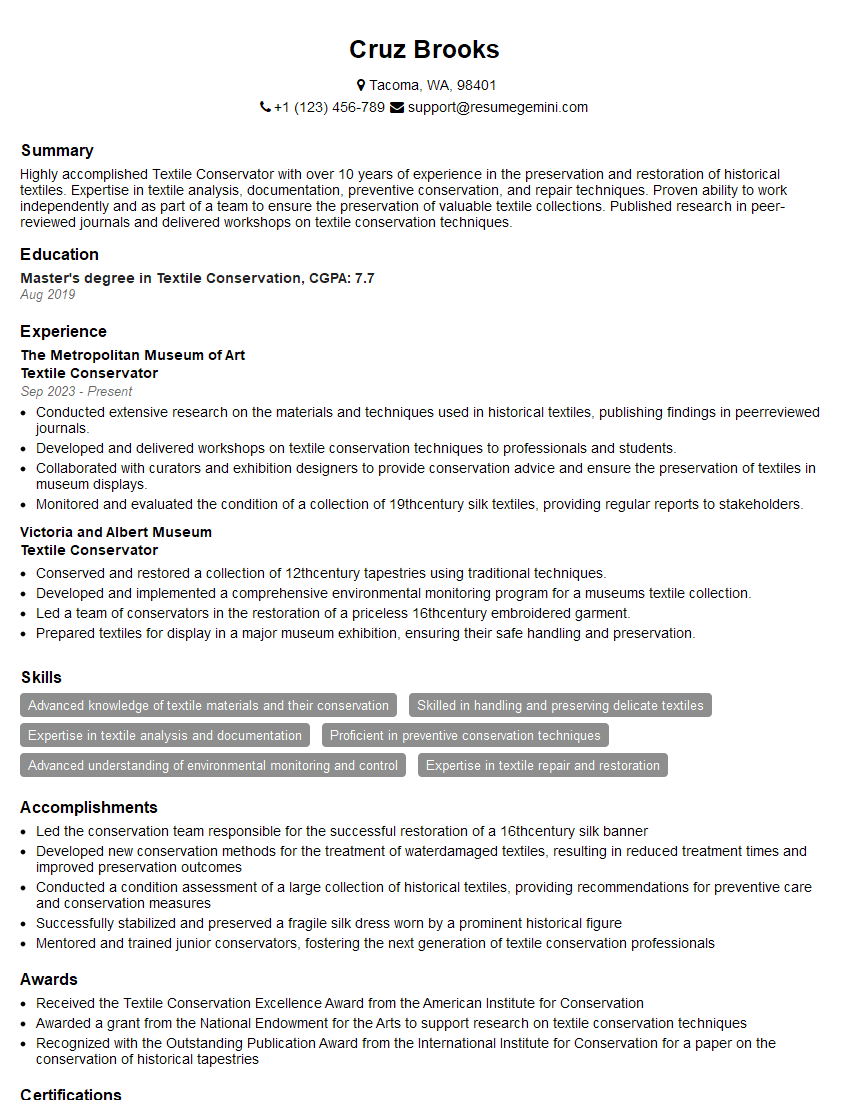
Mastering knowledge of fabric care is crucial for career advancement in various industries, including textile manufacturing, fashion design, dry cleaning, and retail. A strong understanding of these principles demonstrates professionalism and attention to detail, making you a highly valuable candidate. To further enhance your job prospects, create an ATS-friendly resume that effectively highlights your skills and experience. ResumeGemini is a trusted resource to help you build a professional resume that stands out. Examples of resumes tailored to Knowledge of Fabric Care are available to guide you. Invest time in crafting a compelling resume – it’s your first impression on potential employers.



Explore more articles
Users Rating of Our Blogs
Share Your Experience
We value your feedback! Please rate our content and share your thoughts (optional).
What Readers Say About Our Blog
Amazing blog
hello,
Our consultant firm based in the USA and our client are interested in your products.
Could you provide your company brochure and respond from your official email id (if different from the current in use), so i can send you the client’s requirement.
Payment before production.
I await your answer.
Regards,
MrSmith
hello,
Our consultant firm based in the USA and our client are interested in your products.
Could you provide your company brochure and respond from your official email id (if different from the current in use), so i can send you the client’s requirement.
Payment before production.
I await your answer.
Regards,
MrSmith
These apartments are so amazing, posting them online would break the algorithm.
https://bit.ly/Lovely2BedsApartmentHudsonYards
Reach out at BENSON@LONDONFOSTER.COM and let’s get started!
Take a look at this stunning 2-bedroom apartment perfectly situated NYC’s coveted Hudson Yards!
https://bit.ly/Lovely2BedsApartmentHudsonYards
Live Rent Free!
https://bit.ly/LiveRentFREE
Interesting Article, I liked the depth of knowledge you’ve shared.
Helpful, thanks for sharing.
Hi, I represent a social media marketing agency and liked your blog
Hi, I represent an SEO company that specialises in getting you AI citations and higher rankings on Google. I’d like to offer you a 100% free SEO audit for your website. Would you be interested?