Are you ready to stand out in your next interview? Understanding and preparing for Language Proficiency (Desired Languages) interview questions is a game-changer. In this blog, we’ve compiled key questions and expert advice to help you showcase your skills with confidence and precision. Let’s get started on your journey to acing the interview.
Questions Asked in Language Proficiency (Desired Languages) Interview
Q 1. What are the key differences between interpretation and translation?
Interpretation and translation, while both involving languages, differ significantly in their mode and purpose. Interpretation is the oral conversion of spoken or signed language from one language to another, happening in real-time. Think of simultaneous interpretation at a UN conference or consecutive interpretation during a business meeting. Translation, on the other hand, is the written conversion of text from one language to another. This allows for more careful word choice and editing, unlike the immediacy required in interpretation.
Here’s an analogy: Imagine a phone call versus a letter. Interpretation is like the phone call – immediate, dynamic, and requiring quick thinking. Translation is like the letter – allowing for careful crafting and revision before sending.
- Interpretation: Real-time, oral, often involves specialized techniques like note-taking (consecutive interpretation) or simultaneous interpretation using headsets.
- Translation: Written, allows for revision and editing, focuses on accuracy and stylistic appropriateness.
Q 2. Explain the concept of linguistic relativity.
Linguistic relativity, also known as the Sapir-Whorf hypothesis, proposes that the structure of a language influences the way its speakers perceive and conceptualize the world. It’s not about language determining thought entirely, but rather suggesting a strong correlation. Different languages might categorize colors, time, or spatial relationships differently, leading speakers to perceive these concepts in subtly unique ways.
For example, some languages have grammatical genders for nouns (masculine, feminine, neuter), which might subtly influence how speakers perceive objects. A language with a rich vocabulary for describing snow (like Inuit languages) might lead speakers to a more nuanced understanding of snow’s various forms than a language with fewer snow-related terms.
It’s important to note that the strong version of the Sapir-Whorf hypothesis, suggesting language *determines* thought, is widely debated. The weaker version, highlighting the influence of language on perception, is more widely accepted within the linguistic community.
Q 3. Describe your experience with CAT tools (Computer-Assisted Translation).
I have extensive experience with various CAT tools, including SDL Trados Studio, MemoQ, and Across. My proficiency extends beyond simply using the tools; I understand their underlying functionalities and leverage them strategically to enhance efficiency and consistency in my translations. For example, I utilize translation memories (TM) to ensure consistent terminology across projects and leverage computer-aided translation features to speed up the process, particularly with repetitive segments.
In one project involving the translation of a large technical manual, I used SDL Trados Studio’s quality assurance features to identify inconsistencies in terminology and formatting. This allowed me to deliver a high-quality translation while significantly reducing turnaround time compared to traditional methods. Furthermore, I’m comfortable with the use of terminology management systems integrated with these CAT tools, ensuring consistent use of client-approved terminology throughout the project.
Q 4. How do you handle ambiguous terminology in translation?
Handling ambiguous terminology requires a meticulous approach. My strategy involves a multi-step process:
- Research: I thoroughly research the term’s context using dictionaries, specialized glossaries, and online resources. I look for clues within the surrounding text to determine the intended meaning.
- Client Consultation: When ambiguity persists, I consult with the client to clarify the intended meaning. This ensures the translation accurately reflects their intentions.
- Note-Taking: I meticulously document my research and decisions regarding ambiguous terms. This documentation is invaluable for future projects and helps maintain consistency.
- Contextual Clues: I carefully examine the surrounding sentences and paragraphs for clues to resolve ambiguity. The context often provides crucial information about the intended meaning.
For example, the word “bank” can refer to a financial institution or the side of a river. By analyzing the surrounding text, I can determine which meaning is appropriate within the given context. Failure to address such ambiguities leads to inaccuracies that can significantly affect the overall quality of the translation.
Q 5. What strategies do you employ to ensure accuracy in interpretation?
Accuracy in interpretation hinges on several key strategies:
- Active Listening: Paying close attention to the speaker’s words, tone, and body language is crucial. This ensures I capture not only the literal meaning but also the nuances of their message.
- Note-Taking (Consecutive Interpretation): In consecutive interpretation, effective note-taking systems are vital for recalling information accurately. I utilize a shorthand system adapted for different subject areas.
- Clarification: If I encounter any ambiguities, I don’t hesitate to politely ask the speaker for clarification to avoid misinterpretations.
- Cultural Sensitivity: Understanding cultural context is crucial. A direct translation might not always convey the intended meaning due to cultural differences. I consider cultural nuances to ensure accurate and appropriate rendering.
- Professional Development: Continuous learning and professional development are vital to enhance accuracy and improve skills. This includes workshops, attending conferences, and regular practice.
For instance, a subtle shift in tone can drastically change the meaning. Failure to grasp this subtle detail can lead to inaccurate interpretation, potentially causing misunderstandings or miscommunication.
Q 6. How familiar are you with different translation memory systems?
I am highly familiar with various Translation Memory (TM) systems, including those integrated within CAT tools like SDL Trados Studio, MemoQ, and Across. I understand the importance of TM in ensuring consistency, reducing translation costs, and speeding up the translation process. My experience involves managing and utilizing TMs effectively, including the creation, import, and maintenance of TMs tailored to specific clients and projects.
I also understand the concept of leveraging TM leveraging different TM strategies, such as fuzzy matching and leveraging concordances to confirm context and accuracy. I’m experienced in identifying and resolving conflicts within TMs and ensuring that the TM remains up-to-date and relevant to the ongoing projects.
Q 7. Describe your process for quality assurance in translation projects.
My quality assurance (QA) process in translation projects is comprehensive and multi-layered:
- Self-Review: I conduct a thorough self-review of my own work, checking for accuracy, consistency, and stylistic appropriateness.
- Peer Review: I often involve a colleague in the peer review process, providing a fresh perspective and helping to catch any errors or inconsistencies I may have missed.
- CAT Tool QA: I leverage the built-in QA features of CAT tools, such as consistency checks and terminology validation.
- Client Review: I always provide the client with an opportunity to review the final translation and provide feedback. This ensures the translation meets their specific needs and expectations.
- Automated Checks: I utilize automated tools to detect potential grammatical errors, stylistic inconsistencies, and spelling mistakes.
This multi-faceted approach helps ensure high-quality translations and minimizes errors before delivery to the client.
Q 8. Explain the importance of cultural context in translation and interpretation.
Cultural context is paramount in translation and interpretation because language isn’t just about words; it’s deeply interwoven with cultural nuances, values, and beliefs. A direct, word-for-word translation often fails to capture the intended meaning and can even be offensive or misleading. For example, a seemingly simple phrase like “break a leg” in English, wishing someone good luck, would be utterly confusing – if not insulting – if translated literally into another language.
Effective translation requires understanding the source culture’s idioms, humor, social conventions, and even unspoken assumptions. It involves adapting the message to resonate with the target audience’s cultural framework, ensuring that the translation is not only accurate but also culturally appropriate and effective. This might involve adjusting register (formal vs. informal), employing culturally relevant metaphors, or even opting for a different linguistic structure entirely to preserve the original meaning and impact.
- Example: Translating marketing materials for a product launch. Humor in one culture might not translate well into another, and a marketing campaign that works effectively in the US may not be received well in Japan due to cultural differences in advertising style and consumer behavior.
Q 9. How do you manage simultaneous interpretation challenges?
Simultaneous interpretation presents unique challenges due to the real-time nature of the process. The interpreter must listen, comprehend, and translate almost simultaneously, often under pressure with limited time for reflection. Managing this requires several key strategies:
- Active Listening: Concentrating intensely on the speaker’s message to accurately capture every nuance.
- Mental Agility: Quickly processing information and formulating equivalent expressions in the target language.
- Note-Taking (when appropriate): Using shorthand techniques to capture key information, especially numbers, names, or complex ideas, as a memory aid.
- Maintaining Pace: Adjusting the interpretation speed to match the speaker without sacrificing accuracy.
- Managing Stress: Developing coping mechanisms to handle the pressure of the moment.
I regularly practice shadowing (simultaneously interpreting while following along with an audio recording) to hone my skills and maintain my speed and accuracy. Regular professional development, working with experienced colleagues, and receiving feedback are essential for continuous improvement.
Q 10. How do you handle conflicting deadlines in a translation project?
Conflicting deadlines are a common challenge in translation projects. My approach prioritizes clear communication and proactive management. The first step is to immediately assess the urgency and impact of each deadline. I then prioritize tasks based on their importance and urgency, using a project management system to track progress and identify potential bottlenecks.
This often involves openly discussing the situation with the client to manage expectations and explore potential solutions like adjusting the scope of work or allocating additional resources, if feasible. In cases where meeting all deadlines is impossible, I clearly communicate the limitations and prioritize tasks to minimize the impact on the overall project quality.
Prioritization matrices, such as the Eisenhower Matrix (urgent/important), are useful tools. Open communication with clients is crucial to avoid surprises and maintain a positive working relationship.
Q 11. What is your preferred method for researching terminology?
My preferred method for researching terminology involves a multi-faceted approach. I start with reliable, specialized dictionaries and glossaries specific to the subject matter. For example, I might use industry-specific glossaries for medical or legal translation. I then supplement this with online resources such as reputable terminology databases, professional websites, and even relevant scholarly articles or technical documentation.
I always verify the information from multiple sources to ensure accuracy and consistency. Whenever possible, I consult with subject matter experts to clarify ambiguities or validate my findings. Keeping a personal terminology database helps maintain consistency across projects.
Q 12. Explain your experience with various language styles (formal, informal, etc.).
I possess extensive experience adapting my language style to various contexts. For formal documents like legal contracts or academic papers, I maintain a precise, objective tone and employ formal vocabulary. In contrast, when translating marketing materials or social media posts, I employ a more informal and engaging style that aligns with the target audience’s preferences.
My experience spans various registers, from the highly formal language of legal documents to the colloquial expressions found in everyday conversations. I adapt my writing to suit each audience, always considering the overall context and purpose of the text.
- Example: The language used in a government report would be drastically different from the language used in a children’s book, even if both are translated from the same source language.
Q 13. How do you adapt your communication style based on the target audience?
Adapting my communication style to the target audience is crucial for ensuring effective communication. I consider several factors: age, educational background, cultural background, and the purpose of the communication. For instance, when translating a technical manual, I will use precise and unambiguous language, potentially employing technical terms that a specialist audience understands.
Conversely, when translating a children’s book, I would use simpler vocabulary, shorter sentences, and possibly incorporate elements of playfulness or humor appropriate for the age group. Understanding the audience’s needs and expectations is vital for successful communication, ensuring the translated text is clear, accessible, and impactful for its intended audience.
Q 14. Describe a situation where you had to overcome a translation challenge.
In one project, I was translating a marketing brochure for a high-end watch company from English into Japanese. The original English text used idioms and expressions that didn’t directly translate well into Japanese without losing the original meaning and brand voice. The phrase “timeless elegance,” for instance, while evocative in English, required a more nuanced approach in Japanese to avoid sounding cliché or unnatural.
To overcome this, I researched the brand’s history and target audience in Japan. I then consulted with marketing professionals in Japan to understand the most effective way to convey the brand’s message. Ultimately, I found an elegant solution using a blend of traditional Japanese aesthetics and more modern phrasing to reflect both the heritage of the company and its appeal to a contemporary Japanese audience.
Q 15. What are some common errors to avoid in translation?
Common translation errors stem from a lack of understanding of both the source and target languages’ nuances, including cultural context. They can significantly impact the accuracy and effectiveness of the translated material. Here are some key errors to avoid:
False Friends: These are words that look or sound similar in two languages but have different meanings. For example, ‘embarazada‘ in Spanish means ‘pregnant,’ not ’embarrassed.’ Careful attention to context is crucial.
Incorrect Idiom Translation: Direct, word-for-word translation often fails with idioms (expressions whose meaning isn’t literal). Translating ‘it’s raining cats and dogs‘ literally wouldn’t make sense in another language. The translator needs to find an equivalent idiom in the target language conveying the same intensity of rainfall.
Ignoring Cultural Context: Direct translation can lead to misunderstandings when cultural references aren’t adapted. A joke in one culture might be offensive or meaningless in another. The translator must be sensitive to this.
Lack of Consistency: Maintaining consistent terminology and style throughout a translation is crucial for clarity and professionalism. Inconsistent use of names, titles, or technical terms can confuse the reader.
Grammatical Errors: Basic grammatical mistakes can seriously undermine the credibility of a translation. Thorough proofreading and editing are essential.
By being mindful of these pitfalls and employing thorough research and verification techniques, translators can significantly improve the quality and impact of their work.
Career Expert Tips:
- Ace those interviews! Prepare effectively by reviewing the Top 50 Most Common Interview Questions on ResumeGemini.
- Navigate your job search with confidence! Explore a wide range of Career Tips on ResumeGemini. Learn about common challenges and recommendations to overcome them.
- Craft the perfect resume! Master the Art of Resume Writing with ResumeGemini’s guide. Showcase your unique qualifications and achievements effectively.
- Don’t miss out on holiday savings! Build your dream resume with ResumeGemini’s ATS optimized templates.
Q 16. How do you prioritize tasks in a high-pressure environment?
Prioritizing tasks under pressure requires a systematic approach. I utilize a combination of techniques, including:
Eisenhower Matrix (Urgent/Important): This framework helps categorize tasks based on urgency and importance. Urgent and important tasks are tackled immediately, important but not urgent ones are scheduled, and less important tasks are delegated or eliminated.
Time Blocking: Allocating specific time slots for particular tasks allows for focused work and prevents multitasking, which can decrease efficiency.
Clear Communication: Open communication with clients and colleagues about deadlines and priorities is crucial. This ensures everyone is on the same page and prevents misunderstandings.
Break Down Large Tasks: Overwhelming projects can be made manageable by breaking them into smaller, more achievable sub-tasks. This provides a sense of accomplishment and keeps motivation high.
Adaptability is key. I’m comfortable adjusting my priorities as new information or urgent requests emerge, ensuring that the most critical tasks receive the necessary attention.
Q 17. What software or tools are you proficient in for translation/interpretation?
My proficiency encompasses a variety of translation and interpretation software and tools. I’m adept at using CAT (Computer-Assisted Translation) tools like Trados Studio and MemoQ, which enhance productivity and consistency through features like translation memories and terminology management. I’m also familiar with specialized software for subtitling and voice-over projects. In addition, I’m comfortable using various research tools, including online dictionaries and encyclopedias to ensure accuracy and context.
Q 18. What is your experience with subtitling or voice-over work?
I have significant experience in subtitling and voice-over work. My subtitling experience involves adapting scripts to fit screen space and timing constraints while maintaining accuracy and readability. This often involves creative solutions to convey meaning concisely. My voice-over work includes ensuring natural-sounding delivery and accurate pronunciation, paying close attention to intonation and pace to reflect the source material’s emotional tone. I have worked on various projects, from documentaries to commercials, adapting my style to suit different genres and target audiences.
Q 19. Explain the importance of maintaining confidentiality in translation projects.
Confidentiality is paramount in translation projects, as translated materials often contain sensitive information. Breaching confidentiality could have severe legal and ethical consequences. It’s crucial to handle client data with the utmost discretion, respecting intellectual property rights and adhering to any non-disclosure agreements. This includes secure storage of documents, careful handling of digital files, and refraining from discussing project details with unauthorized individuals. Building trust with clients relies heavily on demonstrating a strong commitment to confidentiality.
Q 20. How do you handle feedback on your translation or interpretation work?
I view feedback as a valuable opportunity for professional growth. I actively seek feedback on my work and approach it constructively. I carefully analyze the feedback, identifying areas for improvement and applying the learnings to future projects. If the feedback is unclear or requires clarification, I engage in open communication with the client or editor to understand the specific concerns. I document all feedback received, creating a record that helps me refine my skills and improve the quality of my work over time.
Q 21. Describe your experience working with diverse teams.
Throughout my career, I’ve collaborated extensively with diverse teams, both in-person and remotely. I value the richness of perspectives that diverse teams offer and have honed my ability to communicate effectively across cultures and backgrounds. I actively listen to understand different viewpoints, respecting individual work styles and communication preferences. In remote settings, I ensure seamless collaboration through proactive communication, utilizing project management tools, and maintaining consistent updates to keep everyone informed. My approach centers on mutual respect and understanding to foster a productive and inclusive team environment.
Q 22. What is your approach to continuous professional development in language proficiency?
Continuous professional development is paramount in the ever-evolving field of language proficiency. My approach is multifaceted and includes a combination of formal and informal learning strategies. Formally, I regularly attend workshops and conferences focused on translation and interpretation best practices, new technologies, and emerging linguistic trends. I also actively pursue professional certifications and advanced degrees to enhance my skillset. Informally, I engage in consistent self-study, utilizing online resources such as language learning apps, professional journals, and webinars. I also actively seek feedback on my work from colleagues and clients, using this constructive criticism to identify areas for improvement and refine my approach. For example, recently I completed a course on legal translation which significantly improved my accuracy and efficiency when dealing with contracts and legal documents.
Q 23. How do you stay updated on changes in the field of translation or interpretation?
Staying updated in translation and interpretation necessitates a proactive approach. I subscribe to several professional journals and online publications, such as the ATA Chronicle, which provide insights into industry trends, technological advancements, and ethical considerations. I also actively participate in online forums and communities of practice, engaging in discussions with other professionals and sharing knowledge. Attending industry conferences and webinars is crucial, as they provide opportunities to learn from leading experts and network with colleagues. Furthermore, I regularly review style guides and glossaries to ensure I am utilizing the most up-to-date terminology and best practices. For instance, I recently attended a workshop on the ethical implications of AI in translation, which significantly impacted my understanding of the evolving landscape.
Q 24. What are the ethical considerations in translation and interpretation?
Ethical considerations are fundamental to translation and interpretation. Confidentiality is paramount; I treat all information received as strictly private and confidential. Accuracy and fidelity to the source text are non-negotiable; I strive to convey the intended meaning without bias or alteration. Transparency is key; I clearly communicate any potential conflicts of interest and adhere to professional codes of conduct. Objectivity is critical; I avoid imposing my personal opinions or biases into the translation or interpretation. For instance, during a medical interpretation, I made sure to convey every nuance of the physician’s message without adding or subtracting information, ensuring a complete understanding by the patient.
- Confidentiality: Protecting sensitive information.
- Accuracy: Maintaining fidelity to the source text.
- Transparency: Avoiding conflicts of interest.
- Objectivity: Avoiding bias.
Q 25. How do you deal with sensitive or politically charged language?
Handling sensitive or politically charged language requires a nuanced and careful approach. My strategy involves meticulous research to fully understand the context and cultural implications of the language used. I strive to remain neutral and objective, avoiding any interpretation that could be perceived as biased or inflammatory. I carefully consider word choice and phrasing to ensure accurate and culturally appropriate conveyance of meaning. Where necessary, I consult with subject matter experts to ensure accuracy and sensitivity. For example, I recently translated a political speech and consulted a history professor to ensure accurate representation of historical events referenced in the text. It’s crucial to be aware that a single word choice can greatly alter the meaning and impact of the message.
Q 26. Describe your experience with different translation methodologies (e.g., direct, indirect).
I’m proficient in both direct and indirect translation methodologies. Direct translation, also known as literal translation, involves a word-for-word rendering of the source text. This approach is suitable when the source and target languages share similar structures and grammar. However, direct translation may sometimes lead to awkward or unnatural phrasing in the target language. Indirect translation, on the other hand, prioritizes conveying the meaning and style of the source text in a natural and idiomatic way in the target language. This may involve paraphrasing, restructuring sentences, and adapting the text to the cultural context of the target audience. I select the most appropriate methodology depending on the specific text, the source and target languages, and the purpose of the translation. For instance, I used direct translation for a technical manual, focusing on precision, and indirect translation for a literary work to preserve the author’s unique style.
Q 27. What are your strengths and weaknesses as a translator/interpreter?
My strengths lie in my strong linguistic abilities, meticulous attention to detail, and adaptability to various translation contexts. I possess excellent research skills and a keen understanding of cultural nuances. My weakness, as with many translators, is the ever-present possibility of overlooking subtle errors, even with rigorous proofreading. To mitigate this, I often use a second pair of eyes to review my work before submission. I also maintain a detailed record of my translation projects and continuously refine my workflow to improve accuracy and efficiency. For instance, I always utilize CAT tools to improve consistency and speed.
Q 28. What are your salary expectations?
My salary expectations are commensurate with my experience, skills, and the specific demands of the role. I am open to discussing a competitive compensation package that reflects the industry standard for professionals with my qualifications and expertise. I am also open to discussing different compensation structures, such as hourly rates or project-based fees, depending on the nature of the work.
Key Topics to Learn for Language Proficiency (Desired Languages) Interview
Ace your interview by focusing on these key areas. Remember, practical application is key – think about how you’ve used these skills in the past.
- Reading Comprehension & Analysis: Understand the nuances of complex texts in your desired language(s). Practice analyzing different text types (articles, reports, literature).
- Written Communication: Demonstrate your ability to write clearly, concisely, and accurately in your desired language(s). Focus on grammar, style, and adapting your writing to different audiences and purposes.
- Oral Communication & Fluency: Practice speaking fluently and confidently. Prepare for discussions on various topics, focusing on clear articulation and appropriate vocabulary.
- Cultural Sensitivity & Awareness: Show your understanding of cultural contexts and how language use varies across cultures. This demonstrates your awareness and adaptability.
- Translation & Interpretation (if applicable): If the role involves translation or interpretation, practice translating different text types and demonstrating your ability to convey meaning accurately.
- Technical Terminology (if applicable): If your desired language is used in a specific field (e.g., medical, legal, technical), review and practice relevant terminology.
- Problem-solving in a multilingual context: Consider how you’ve overcome communication challenges in multilingual environments. Be prepared to discuss these experiences.
Next Steps
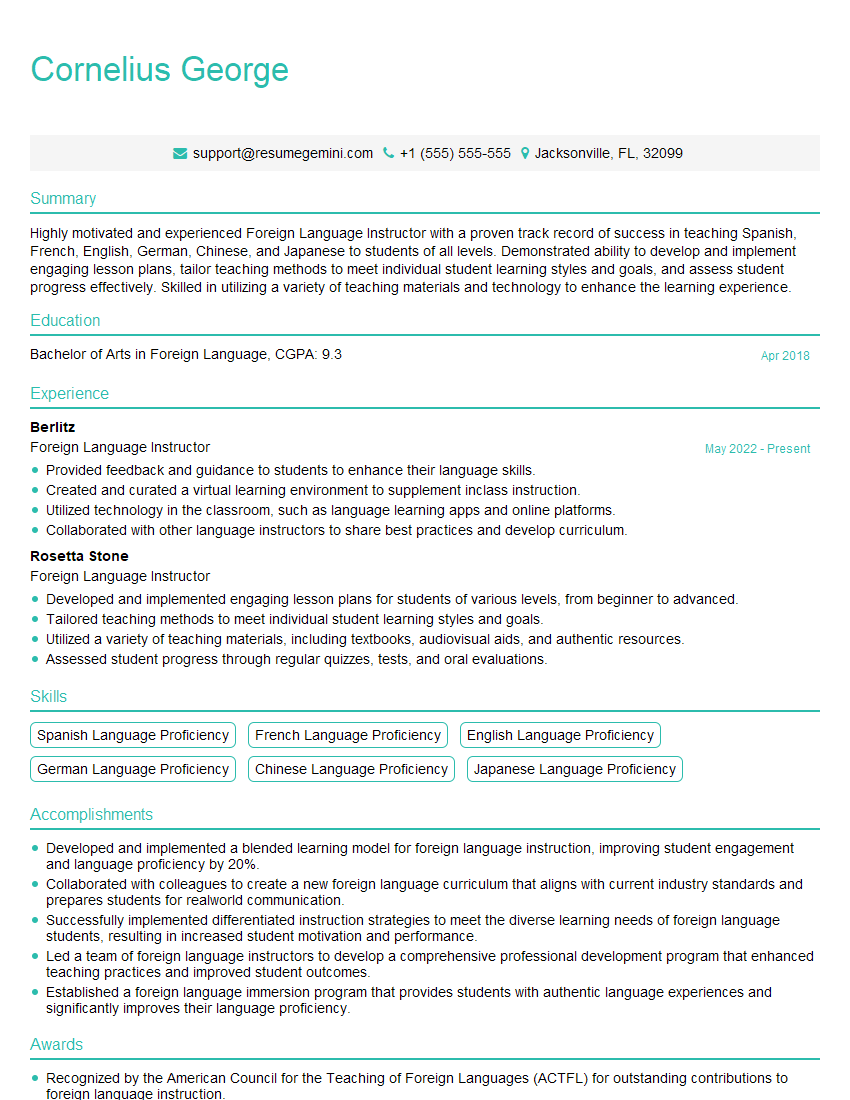
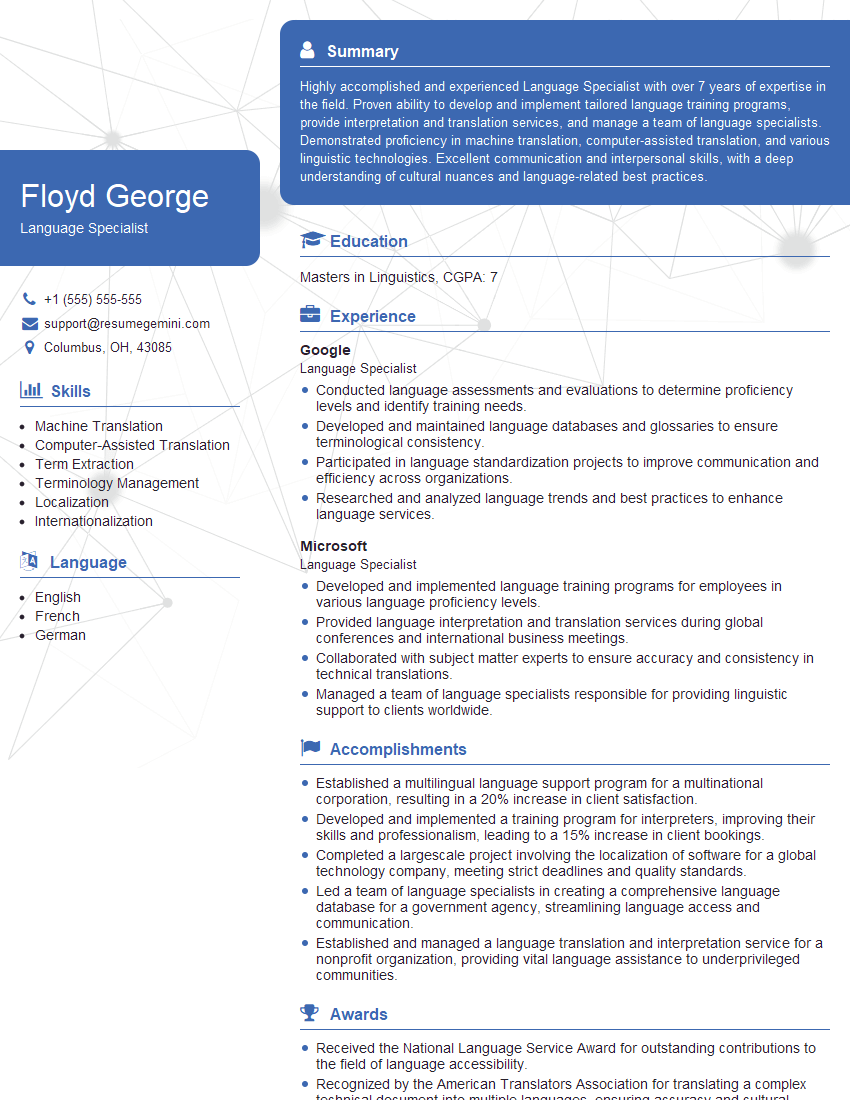
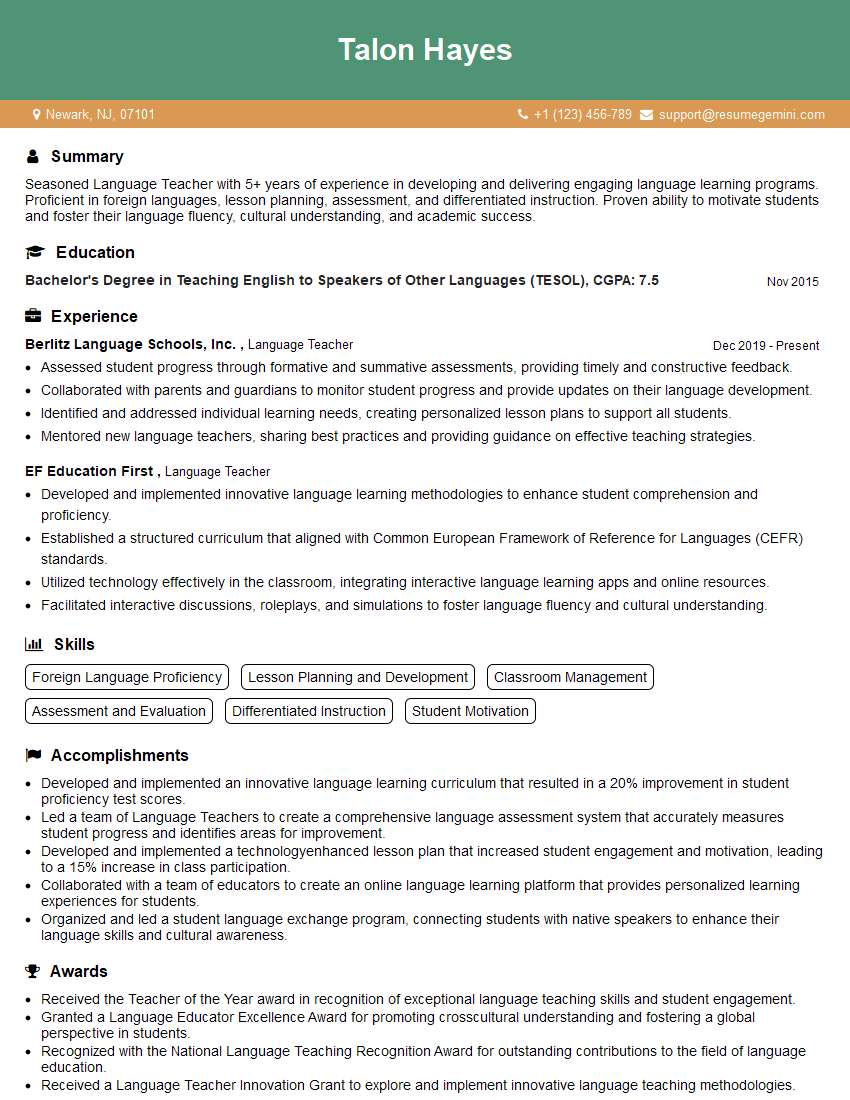
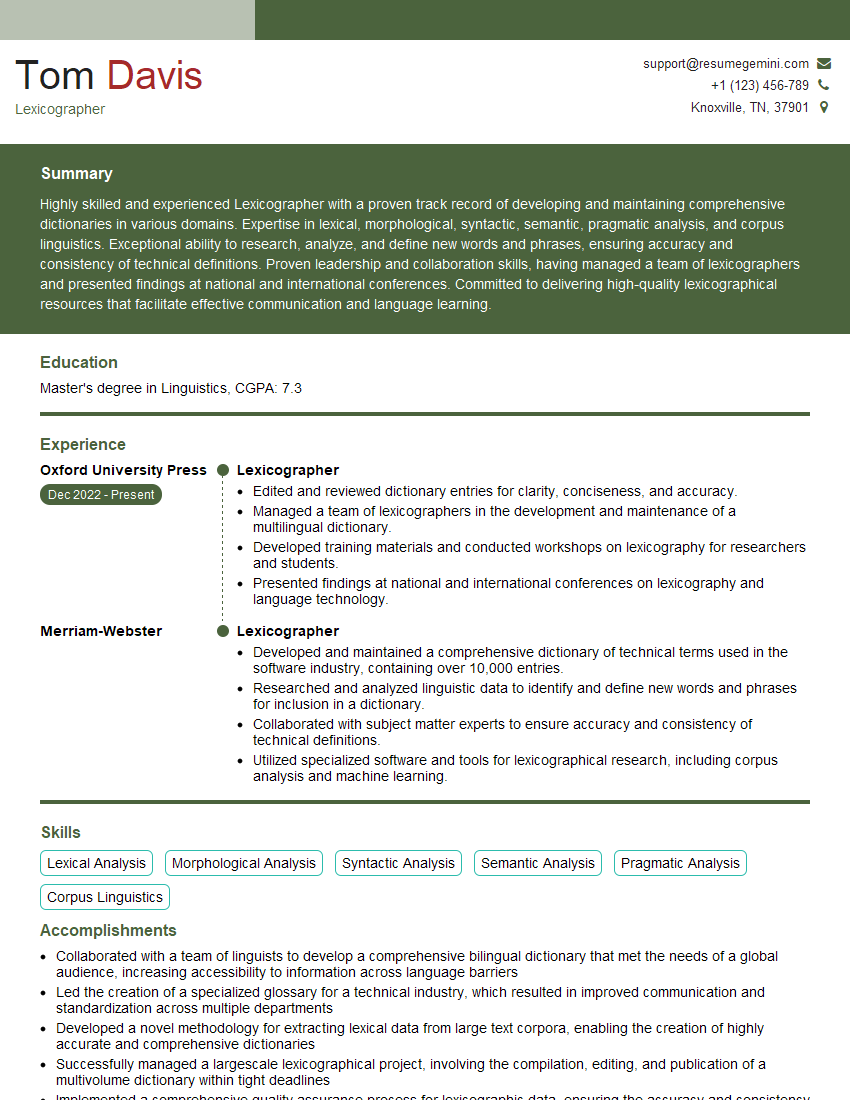
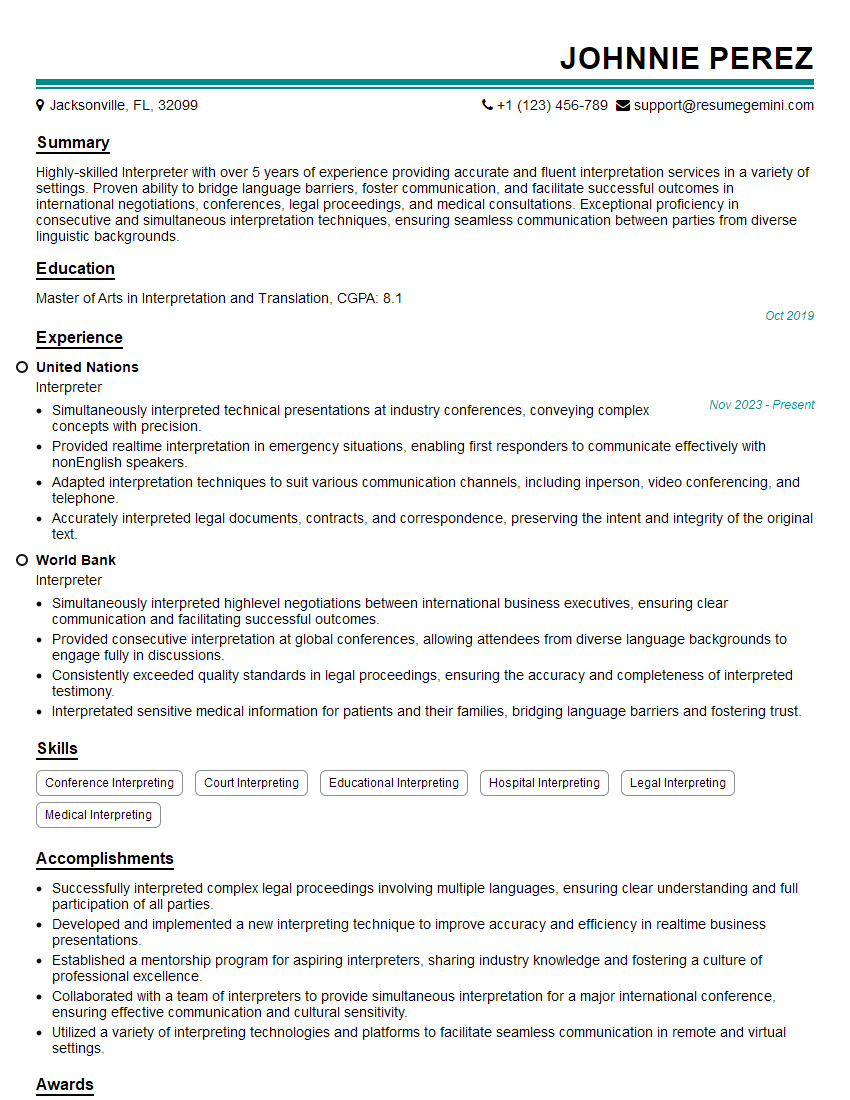
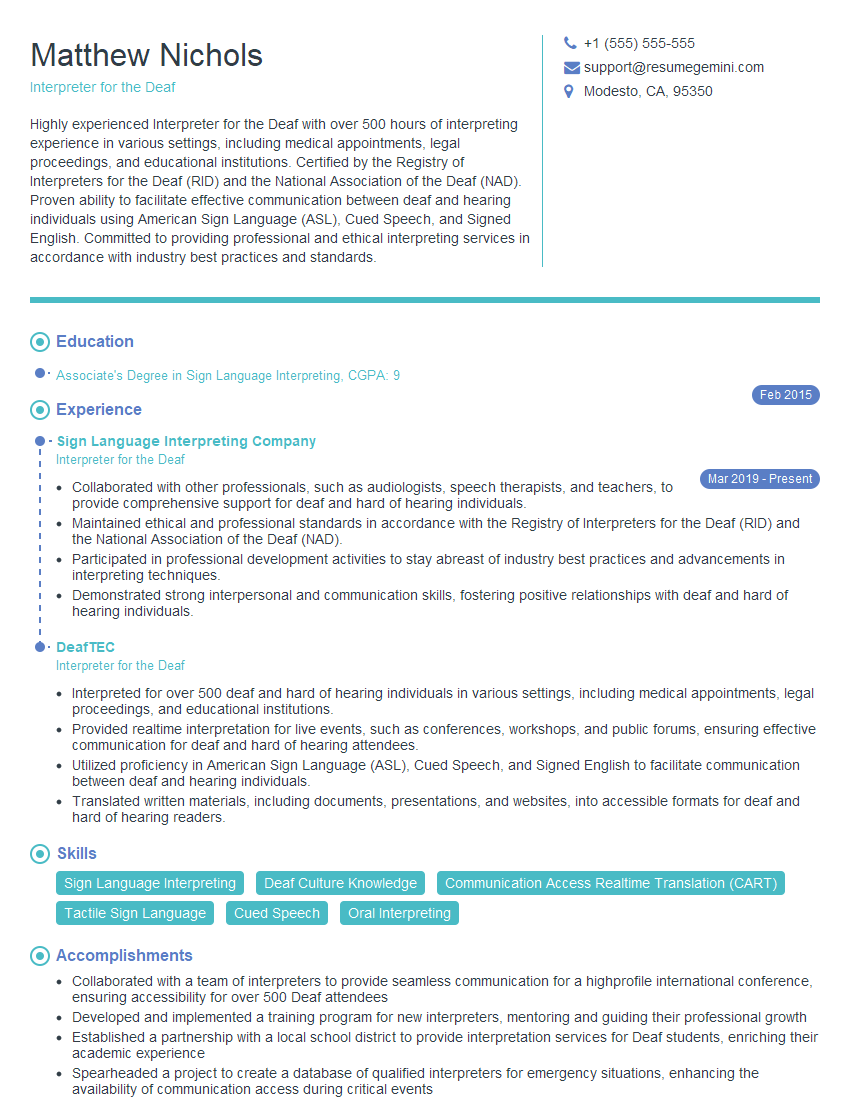
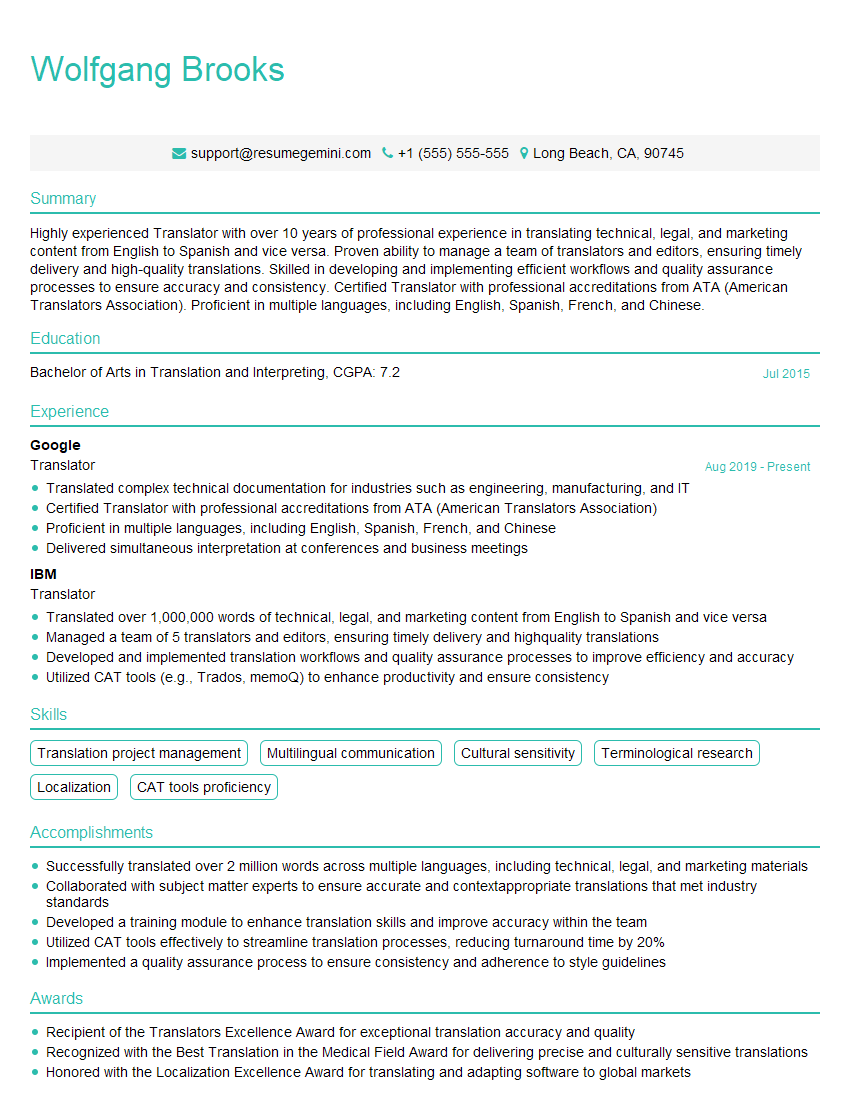
Mastering Language Proficiency significantly enhances your career prospects, opening doors to diverse and rewarding opportunities. A well-crafted, ATS-friendly resume is crucial for getting your foot in the door. ResumeGemini is a trusted resource to help you build a professional and effective resume that highlights your language skills. We provide examples of resumes tailored to Language Proficiency roles – leverage these resources to create a compelling application that showcases your abilities.
Explore more articles
Users Rating of Our Blogs
Share Your Experience
We value your feedback! Please rate our content and share your thoughts (optional).
What Readers Say About Our Blog
Amazing blog
hello,
Our consultant firm based in the USA and our client are interested in your products.
Could you provide your company brochure and respond from your official email id (if different from the current in use), so i can send you the client’s requirement.
Payment before production.
I await your answer.
Regards,
MrSmith
hello,
Our consultant firm based in the USA and our client are interested in your products.
Could you provide your company brochure and respond from your official email id (if different from the current in use), so i can send you the client’s requirement.
Payment before production.
I await your answer.
Regards,
MrSmith
These apartments are so amazing, posting them online would break the algorithm.
https://bit.ly/Lovely2BedsApartmentHudsonYards
Reach out at [email protected] and let’s get started!
Take a look at this stunning 2-bedroom apartment perfectly situated NYC’s coveted Hudson Yards!
https://bit.ly/Lovely2BedsApartmentHudsonYards
Live Rent Free!
https://bit.ly/LiveRentFREE
Interesting Article, I liked the depth of knowledge you’ve shared.
Helpful, thanks for sharing.
Hi, I represent a social media marketing agency and liked your blog
Hi, I represent an SEO company that specialises in getting you AI citations and higher rankings on Google. I’d like to offer you a 100% free SEO audit for your website. Would you be interested?