Interviews are more than just a Q&A session—they’re a chance to prove your worth. This blog dives into essential Maintenance Inventory Control interview questions and expert tips to help you align your answers with what hiring managers are looking for. Start preparing to shine!
Questions Asked in Maintenance Inventory Control Interview
Q 1. Explain the importance of accurate inventory records in maintenance operations.
Accurate inventory records are the backbone of efficient maintenance operations. Think of it like this: if you don’t know what parts you have, where they are, and how many, you’ll be constantly scrambling, leading to costly downtime and frustrated technicians. Accurate records prevent these issues.
- Improved Planning: Knowing your stock levels allows for proactive ordering of parts, preventing unexpected delays during repairs.
- Reduced Downtime: Having the right parts available when needed minimizes equipment downtime, saving both time and money.
- Optimized Inventory Costs: Accurate records help prevent overstocking of slow-moving items and stockouts of critical parts, balancing inventory investment and operational efficiency.
- Better Budgeting and Forecasting: Data-driven inventory management allows for more accurate budgeting and future forecasting of maintenance costs.
- Enhanced Accountability: Accurate tracking ensures responsibility for parts, minimizing loss and theft.
Q 2. Describe your experience with different inventory management systems (e.g., FIFO, LIFO).
I’ve worked extensively with various inventory management systems, including FIFO (First-In, First-Out) and LIFO (Last-In, First-Out). The choice often depends on the type of parts and their shelf life. FIFO is ideal for perishable items or those with expiration dates, ensuring older items are used first. I’ve used FIFO successfully in managing lubricants and specialized chemicals with limited shelf life. LIFO, on the other hand, can be beneficial for items with minimal spoilage, where newer items are used first. This approach might be suitable for certain standardized mechanical parts. In one project, I optimized inventory costs by implementing FIFO for sensitive electronics and LIFO for standard fasteners.
Beyond FIFO and LIFO, I’m also experienced with more sophisticated methods like ABC analysis (categorizing items based on their value and consumption), and using lot-tracking systems for high-value or critical components to ensure traceability.
Q 3. How do you identify and manage obsolete or slow-moving inventory items?
Identifying and managing obsolete or slow-moving inventory is crucial for maintaining a lean and efficient system. This process typically involves a combination of strategies:
- Regular Inventory Audits: Conducting physical inventory counts and comparing them to system records helps identify discrepancies and highlight slow-moving items.
- ABC Analysis: As mentioned earlier, ABC analysis categorizes items by their value and consumption rate. Focusing on ‘C’ items (low value, low consumption) allows for more aggressive strategies to clear them out.
- Sales Data Analysis: Reviewing historical sales data pinpoints items that haven’t been used for a significant period, potentially indicating obsolescence.
- Disposal Strategies: For obsolete items, implementing a clear process for disposal, including proper recycling or scrapping, is key. This could involve internal auctions, donations to charities, or partnering with specialized recycling companies.
- Supplier Collaboration: Discussing slow-moving parts with suppliers might yield options like returns, credits, or revised ordering strategies.
For example, in a previous role, we identified a large quantity of obsolete circuit boards. By partnering with a recycling company, we recovered a substantial amount of the initial investment, and simultaneously ensured responsible environmental practices.
Q 4. What are the key performance indicators (KPIs) you would use to measure the effectiveness of a maintenance inventory control system?
The effectiveness of a maintenance inventory control system is best measured using several key performance indicators (KPIs):
- Inventory Turnover Rate: This indicates how quickly inventory is used and replenished. A higher turnover rate usually suggests efficient inventory management.
- Fill Rate: This KPI measures the percentage of demand met from available inventory. A high fill rate demonstrates the system’s ability to meet maintenance needs promptly.
- Stockout Rate: This is the percentage of times a needed part was unavailable. A low stockout rate signifies effective inventory planning and control.
- Inventory Holding Cost: This represents the cost of storing and managing inventory, including storage space, insurance, and potential obsolescence. Lower costs are preferred.
- Order Cycle Time: This measures the time from placing an order to receiving it. Short order cycle times indicate efficient procurement processes.
By tracking these KPIs, we can pinpoint areas for improvement and justify investments in better inventory management systems or processes.
Q 5. How do you determine the optimal reorder point and reorder quantity for maintenance parts?
Determining the optimal reorder point and reorder quantity is crucial to avoid stockouts and excess inventory. Several factors influence these calculations:
- Lead Time: The time between placing an order and receiving it.
- Demand Rate: The average rate at which parts are consumed.
- Safety Stock: Extra inventory held to account for unexpected demand fluctuations or delays.
- Economic Order Quantity (EOQ): A model that calculates the order quantity that minimizes total inventory costs (ordering and holding costs).
The reorder point is calculated as: Reorder Point = (Lead Time Demand) + Safety Stock
The reorder quantity can be determined using the EOQ formula or simpler methods based on historical data and supplier lead times. In practice, I typically use a combination of quantitative methods (like EOQ) and qualitative judgment, considering factors like supplier reliability and potential price discounts for bulk orders.
Q 6. Explain your experience with using a Computerized Maintenance Management System (CMMS).
I possess extensive experience using Computerized Maintenance Management Systems (CMMS). These systems are invaluable for managing maintenance inventory, streamlining processes, and improving efficiency. I’ve used CMMS platforms to:
- Track Inventory Levels: Maintain real-time visibility of inventory levels and locations.
- Manage Parts and Components: Create and maintain a comprehensive database of parts, including specifications, costs, and suppliers.
- Generate Work Orders: Integrate inventory management with work order creation, ensuring the necessary parts are allocated to specific jobs.
- Generate Reports: Access detailed reports on inventory usage, costs, and turnover rates to inform strategic decisions.
- Automate Reordering: Utilize automated alerts to trigger reordering processes when inventory reaches predefined levels.
For example, in a previous role, implementing a CMMS resulted in a 15% reduction in inventory holding costs and a 10% improvement in equipment uptime due to improved parts availability.
Q 7. How do you reconcile physical inventory with system records?
Reconciling physical inventory with system records is a critical step to ensure accuracy and identify discrepancies. This process typically involves:
- Physical Inventory Count: Conducting a thorough physical count of all inventory items, verifying quantities and locations.
- Data Entry and Reconciliation: Entering the physical count data into the system and comparing it to the existing records. Discrepancies should be investigated and documented.
- Root Cause Analysis: For significant discrepancies, identifying and addressing the root causes is crucial, such as data entry errors, theft, or inaccurate stock movements.
- Adjustment of Records: Correcting system records to reflect the actual physical inventory count.
- Regular Cycle Counting: Implementing a regular cycle counting program helps identify discrepancies early on, reducing the need for large-scale physical inventories.
In practice, I often use barcode scanners and mobile data collection devices to streamline the physical inventory count and minimize manual data entry errors. I also create clear and concise reconciliation reports that highlight discrepancies and highlight any action taken to correct them.
Q 8. Describe a time you had to deal with a critical inventory shortage. What was your approach?
One time, we experienced a critical shortage of a specific bearing crucial for our main production line. This resulted in a significant production slowdown, threatening to miss crucial deadlines and impacting customer orders. My approach involved a multi-pronged strategy. First, I immediately identified the extent of the shortage and its impact on production. Then, I initiated an emergency requisition with our primary supplier, expediting the order with a focus on fast-tracked shipping. Simultaneously, I performed a thorough analysis of our inventory management system to pinpoint the root cause of the shortage—we discovered a flaw in our demand forecasting model that underestimated future needs. To address this, we implemented a revised forecasting method that incorporated more data points, including seasonality and historical trend analysis. Finally, I explored alternative suppliers for this crucial part to mitigate future risks of a similar shortage and ensure business continuity. This allowed us to get the immediate supply needed and address the systemic problem causing the shortage in the first place.
Q 9. How do you manage inventory for critical or high-value items?
Managing inventory for critical or high-value items requires a more stringent approach compared to everyday parts. We use a combination of techniques, including:
- Just-in-Time (JIT) Inventory: For high-value, low-volume items, JIT minimizes storage costs and reduces obsolescence risks. This requires close collaboration with suppliers to ensure timely delivery.
- Two-Bin System: A simple yet effective system. One bin contains the working stock, and the other holds the safety stock. When the first bin is empty, it triggers a reorder. This approach is easy to implement and provides a visual cue for reordering.
- Consignment Inventory: The supplier retains ownership of the inventory until it’s used. This reduces our investment risk and frees up storage space. Regular stock checks remain crucial.
- Regular Stock Audits: For high-value items, we increase the frequency of cycle counting and perform more stringent physical verification against our inventory management system. This identifies discrepancies immediately.
- Enhanced Security Measures: Access control and surveillance are crucial to prevent theft or damage.
The specific method depends on the item’s value, criticality to production, and the associated risks. For example, a highly specialized electronic component would warrant a JIT and consignment approach, while a common, yet still critical, fastener might leverage a two-bin system with stricter inventory monitoring.
Q 10. What methods do you use for cycle counting and inventory audits?
We employ a combined approach for cycle counting and inventory audits:
- Cycle Counting: We use a stratified sampling method where high-value, frequently used items are counted more frequently than low-value, infrequently used ones. This enables us to identify discrepancies earlier and correct them promptly. We use barcode scanners and handheld devices to streamline the process and improve accuracy. We also assign accountability for cycle counting to specific team members.
- Inventory Audits: We conduct full physical inventory counts at least annually. These are more comprehensive and involve a complete verification of all items against our inventory management system. During the audit, we investigate any inconsistencies identified during the cycle counting process. Discrepancies are documented and analyzed to identify and rectify errors in our inventory control procedures.
The data collected from these methods feeds directly into our inventory management system, allowing us to refine our forecasting and ordering practices. We use spreadsheet software and dedicated inventory management software to document and analyze this data.
Q 11. Explain your experience with ABC analysis for inventory prioritization.
ABC analysis is a vital inventory management technique that categorizes inventory items based on their consumption value. Items are ranked into three categories:
- A: High-value items that contribute to a significant percentage (e.g., 80%) of the total inventory cost. These require tight control, close monitoring, and accurate forecasting.
- B: Medium-value items contributing a moderate percentage (e.g., 15%) of the total cost. These need regular monitoring.
- C: Low-value items contributing a small percentage (e.g., 5%) of the total cost. These require less rigorous control.
For example, in a manufacturing plant, expensive machinery parts would fall under category A, requiring rigorous tracking and monitoring, while standard nuts and bolts might fall under category C, requiring less stringent control but still routine inventory checks. Using ABC analysis helps prioritize our resources, focusing our efforts on the items that have the most significant impact on costs and production.
Q 12. How do you handle damaged or defective inventory items?
Damaged or defective items are handled through a structured process:
- Identification and Segregation: Damaged or defective items are immediately identified and physically separated from usable inventory to avoid accidental use. We use clear labeling to prevent reuse.
- Root Cause Analysis: We investigate the cause of damage or defects to prevent recurrence. This could involve analyzing storage conditions, handling procedures, or even supplier quality issues.
- Disposition: Depending on the item’s condition and the cost of repair, we may choose to repair, scrap, or return the items to the supplier under warranty. Scrap items are documented and disposed of according to environmental regulations.
- Documentation: All actions related to damaged items, including the reasons for damage, disposition method, and costs involved are carefully documented.
This systematic approach minimizes waste, reduces losses, and helps maintain accurate inventory records. Regular reviews of our damaged inventory reports help identify trends and suggest improvements in our handling and storage practices.
Q 13. How do you ensure inventory data accuracy and integrity?
Maintaining accurate inventory data is paramount. We utilize a combination of techniques:
- Regular Cycle Counts and Audits: As previously discussed, these physical counts ensure that our system reflects reality.
- Barcode and RFID Technology: This automates data capture, reducing manual errors. Real-time tracking improves data accuracy significantly.
- Inventory Management Software: This software provides a central repository for all inventory information, enabling better tracking, forecasting and analysis.
- Data Reconciliation: Periodically, we compare the data in our system with physical counts to identify and rectify any discrepancies.
- Staff Training: We train our staff on proper inventory handling, data entry procedures, and the importance of accuracy.
By implementing these measures, we minimize data errors and discrepancies, ensuring that our decisions are based on reliable information.
Q 14. What is your experience with vendor managed inventory (VMI)?
Vendor-Managed Inventory (VMI) is a collaborative approach where the supplier manages our inventory levels. The supplier takes responsibility for replenishing stock based on our consumption data and pre-agreed service levels. My experience with VMI includes:
- Successful Implementation: I have successfully implemented VMI programs with several key suppliers, leading to improved inventory accuracy and reduced storage costs. This included negotiating key performance indicators (KPIs) with suppliers to ensure their accountability and performance.
- Relationship Management: VMI requires a high degree of trust and collaboration with suppliers. Effective communication and clearly defined responsibilities are critical for success.
- Data Sharing: Secure and reliable data sharing between our systems and the supplier’s systems is crucial. This allows for real-time inventory tracking and avoids stock-outs.
- Performance Monitoring: We regularly monitor supplier performance against agreed-upon KPIs, ensuring they meet our expectations for accuracy and responsiveness.
VMI is beneficial when implemented correctly, resulting in better inventory control, reduced costs, and increased efficiency. However, it requires careful selection of suppliers and robust monitoring to ensure success.
Q 15. Describe your experience with forecasting maintenance parts demand.
Forecasting maintenance parts demand is crucial for effective inventory management. It involves predicting future needs based on historical data, equipment condition, and anticipated maintenance activities. I use a combination of methods, adapting my approach based on the specific context.
For instance, I might employ time series analysis for frequently used parts, identifying trends and seasonality in their consumption. This involves techniques like moving averages or exponential smoothing to smooth out fluctuations and project future demand.
For less frequently used, critical parts, I might use a more qualitative approach, consulting with maintenance technicians to assess the likelihood of failure and the potential impact of downtime. This is often supplemented by analyzing equipment maintenance logs and historical repair orders to understand failure patterns and replacement cycles.
Furthermore, I leverage software solutions with advanced forecasting capabilities, which often incorporate machine learning algorithms for more accurate predictions. These systems can integrate data from various sources – CMMS (Computerized Maintenance Management Systems), ERP (Enterprise Resource Planning) systems, and even external market intelligence – to generate robust forecasts.
Finally, regular review and adjustment of forecasts are vital. I track actual consumption against predicted demand and use this information to refine forecasting models, ensuring ongoing accuracy and efficiency.
Career Expert Tips:
- Ace those interviews! Prepare effectively by reviewing the Top 50 Most Common Interview Questions on ResumeGemini.
- Navigate your job search with confidence! Explore a wide range of Career Tips on ResumeGemini. Learn about common challenges and recommendations to overcome them.
- Craft the perfect resume! Master the Art of Resume Writing with ResumeGemini’s guide. Showcase your unique qualifications and achievements effectively.
- Don’t miss out on holiday savings! Build your dream resume with ResumeGemini’s ATS optimized templates.
Q 16. How do you collaborate with other departments to optimize inventory management?
Effective inventory management is a collaborative effort. I work closely with various departments to ensure alignment and optimization. For example, I regularly collaborate with:
- Maintenance Department: Understanding their planned and unplanned maintenance schedules, equipment criticality, and potential failure modes is essential to accurately forecast demand and set appropriate stock levels.
- Procurement Department: I work with procurement to negotiate favorable contracts with suppliers, establish efficient ordering processes, and manage lead times. This ensures that parts are available when needed, without excessive inventory buildup.
- Finance Department: Close collaboration with finance is critical for managing inventory carrying costs. We work together to define acceptable inventory levels, balancing the risk of stockouts with the costs of holding excess inventory.
- Engineering Department: Incorporating information about new equipment, design changes, and potential obsolescence from engineering is vital for avoiding obsolete parts and optimizing inventory decisions.
These collaborations involve regular meetings, shared data, and a collaborative approach to problem-solving. The key is open communication and a shared understanding of the goals and challenges of inventory management.
Q 17. Explain your understanding of inventory carrying costs.
Inventory carrying costs represent the expenses associated with holding inventory. These costs are often overlooked but significantly impact profitability. They include:
- Storage costs: Rent, utilities, and insurance for warehouse space.
- Capital costs: The cost of the money tied up in inventory. This is often calculated as the opportunity cost of the funds that could be invested elsewhere.
- Insurance and taxes: Costs associated with insuring the inventory and paying property taxes on it.
- Obsolescence and spoilage: The potential loss in value due to technological advancements, product expiration, or damage.
- Handling and administrative costs: The expenses associated with moving, counting, and tracking inventory.
Understanding these costs is crucial for setting optimal inventory levels. A simple example: if the cost of holding one unit of a specific part for a year is $10, and we hold 100 extra units, we are incurring an extra $1000 in carrying costs annually. Minimizing these costs without compromising operational effectiveness is a key objective of inventory management.
Q 18. What are the advantages and disadvantages of using just-in-time (JIT) inventory management?
Just-in-Time (JIT) inventory management aims to minimize inventory holding by receiving materials only when needed for production or maintenance.
Advantages:
- Reduced inventory carrying costs: Less money tied up in inventory, freeing up capital for other purposes.
- Lower storage costs: Less warehouse space needed.
- Improved space utilization: More space available for other productive activities.
- Reduced risk of obsolescence: Less chance of parts becoming obsolete before they are used.
Disadvantages:
- Increased reliance on suppliers: Any supply chain disruption can severely impact operations.
- Higher risk of stockouts: Insufficient inventory can lead to production delays or maintenance downtime.
- Requires close coordination with suppliers: Reliable suppliers with accurate delivery schedules are essential.
- Less buffer against demand fluctuations: Unexpected surges in demand can be difficult to manage.
Whether JIT is suitable depends on factors such as supply chain reliability, demand predictability, and the consequences of stockouts. It’s often most effective in environments with stable demand and strong supplier relationships.
Q 19. How do you utilize barcodes or RFID technology in inventory management?
Barcodes and RFID (Radio-Frequency Identification) technology are essential tools for efficient inventory management. They enable accurate and real-time tracking of inventory items.
Barcodes: These are visual representations of data, scanned using barcode readers. They provide a relatively inexpensive way to track inventory, but require line-of-sight scanning. This makes it less suitable for large volumes or items stored in difficult-to-access locations.
RFID: This technology uses radio waves to identify and track tagged items without needing direct line-of-sight. RFID tags can contain more information than barcodes, and multiple items can be scanned simultaneously, making it ideal for high-volume or fast-moving inventory. However, RFID is more expensive to implement than barcodes.
In practice, I often use a combination of both. For instance, we might use barcodes for smaller, slower-moving items and RFID for high-value or frequently used parts. The choice depends on cost, accuracy requirements, and the specific characteristics of the inventory.
The data captured through barcodes and RFID are integrated into our inventory management system, providing real-time visibility into stock levels, location, and movement. This supports better decision-making and improves efficiency.
Q 20. Describe your experience with implementing or improving an inventory control system.
In a previous role, I led the implementation of a new inventory management system to replace an outdated and inefficient spreadsheet-based approach. The old system lacked real-time visibility, accurate reporting, and integration with other systems.
The implementation involved a phased approach:
- Needs Assessment: We started by clearly defining requirements and key performance indicators (KPIs) for the new system.
- System Selection: After evaluating several options, we selected a cloud-based CMMS system with integrated inventory management capabilities.
- Data Migration: The existing inventory data was carefully migrated to the new system, ensuring data accuracy and integrity.
- Training and Rollout: Thorough training was provided to all relevant personnel, followed by a phased rollout to minimize disruption.
- Post-Implementation Review: We regularly monitored system performance, user feedback, and KPIs to identify areas for improvement and optimization.
This new system significantly improved our inventory accuracy, reduced stockouts, and optimized carrying costs. It also provided valuable data insights that supported better decision-making across the maintenance operation.
Q 21. How do you manage inventory in a geographically dispersed organization?
Managing inventory in a geographically dispersed organization presents unique challenges. To effectively address this, a centralized inventory management system is essential. This system should provide a unified view of inventory across all locations, regardless of their physical distance.
Key strategies include:
- Centralized Database: A single, shared database provides real-time visibility into inventory levels at each location.
- Inventory Allocation: Sophisticated allocation algorithms can optimize inventory placement across different sites based on demand, lead times, and transportation costs.
- Regional Warehousing: Establishing regional warehouses can reduce transportation costs and improve response times to local demand.
- Standardized Processes: Consistent inventory management processes across all locations ensure data accuracy and consistency.
- Regular Audits: Conducting regular physical inventory counts at each location helps to maintain accuracy and identify discrepancies.
- Robust Communication and Collaboration: Effective communication between different sites is crucial to ensure efficient inventory management.
Technology plays a critical role here. Real-time inventory tracking systems, coupled with robust communication platforms, can significantly improve efficiency and reduce costs associated with managing inventory across multiple locations.
Q 22. How do you handle discrepancies between planned and actual inventory levels?
Discrepancies between planned and actual inventory levels are a common challenge in maintenance inventory control. Addressing them requires a systematic approach involving investigation, analysis, and corrective actions.
First, I investigate the root cause of the discrepancy. This might involve checking for data entry errors in the inventory management system, verifying physical counts against system records, and investigating potential theft or damage. For example, if a critical part shows a significant shortage, I might review the maintenance work orders to see if more of the part was used than anticipated, or examine storage areas for possible damage or loss.
Next, I analyze the data. This could involve comparing usage rates over time, identifying trends, and assessing the accuracy of our demand forecasting. If the discrepancy is consistently occurring with a particular part, this suggests a problem with our forecasting methodology, requiring a refinement of our demand prediction model.
Finally, I implement corrective actions. This might involve improving data entry procedures, enhancing physical inventory control measures like regular cycle counts, tightening security protocols, or revising our demand forecasting techniques to be more responsive to actual usage patterns. For instance, implementing a barcode scanning system can significantly reduce data entry errors and improve the accuracy of physical counts.
Q 23. How do you ensure compliance with safety regulations related to inventory storage and handling?
Ensuring compliance with safety regulations is paramount in maintenance inventory control. This involves a multi-faceted approach focusing on safe storage, handling, and disposal of inventory items.
Firstly, I establish and maintain a safe storage environment. This includes proper labeling of hazardous materials, segregation of incompatible substances, adequate ventilation in storage areas, clear aisleways for easy access, and the use of appropriate shelving and racking systems to prevent collapses. I also ensure compliance with fire safety regulations, such as having fire extinguishers readily available and conducting regular fire safety inspections.
Secondly, I implement safe handling procedures. This involves providing proper training to all personnel on the safe handling of hazardous materials, including the use of personal protective equipment (PPE) such as gloves, goggles, and respirators. We use Material Safety Data Sheets (MSDS) to guide safe handling practices and to ensure that everyone is aware of potential hazards and necessary precautions. Regular audits ensure procedures are followed.
Finally, I ensure compliant disposal of obsolete or hazardous inventory. This involves working with licensed waste disposal contractors to manage the safe and environmentally sound disposal of hazardous waste, following all relevant environmental regulations and obtaining necessary permits.
Q 24. Describe your experience with inventory optimization techniques.
My experience with inventory optimization techniques encompasses a range of strategies aimed at minimizing inventory holding costs while maintaining sufficient stock levels to meet operational needs.
I’ve implemented just-in-time (JIT) inventory systems in several projects, which significantly reduced storage costs by only procuring materials as they are needed. This required close collaboration with suppliers and precise forecasting, but the benefits in reduced warehousing and obsolescence were substantial.
I also have experience with ABC analysis, a method of prioritizing inventory items based on their value and consumption. By focusing on high-value (‘A’ items), we can implement stricter control measures, improving forecasting accuracy and minimizing stockouts. ‘C’ items, with lower value and consumption, can be managed with less stringent controls, reducing overall management effort.
Furthermore, I’ve successfully utilized economic order quantity (EOQ) models to determine optimal order sizes, balancing ordering costs with holding costs. This has resulted in reduced overall inventory costs and smoother supply chain operations.
Data analytics plays a critical role. I use historical data to analyze consumption patterns, predict future demand, and fine-tune inventory levels. For example, identifying seasonal spikes in demand allowed us to proactively adjust inventory levels and avoid stockouts during peak periods.
Q 25. What software or tools are you proficient in for inventory management?
I am proficient in several software and tools for inventory management. My experience includes using Enterprise Resource Planning (ERP) systems such as SAP and Oracle, which offer comprehensive inventory management modules with features like demand forecasting, inventory tracking, and reporting.
I’m also skilled in using specialized inventory management software such as Infor EAM (Enterprise Asset Management) and IBM Maximo, specifically designed for maintenance environments. These tools provide advanced functionalities for managing spare parts, tracking equipment maintenance, and optimizing inventory levels.
Beyond dedicated software, I’m comfortable working with spreadsheet programs like Microsoft Excel and Google Sheets for data analysis, reporting, and basic inventory tracking. I frequently leverage these tools to create custom reports and visualizations to gain deeper insights into inventory performance and identify areas for improvement.
Q 26. How do you stay current with best practices in Maintenance Inventory Control?
Staying current with best practices in maintenance inventory control is crucial for optimizing efficiency and minimizing costs. I achieve this through a combination of strategies:
- Professional Development: I actively participate in industry conferences, workshops, and webinars to learn about the latest trends and technologies in inventory management.
- Industry Publications: I regularly read industry journals and publications such as Maintenance Technology and Plant Engineering to keep abreast of best practices and innovative solutions.
- Networking: I maintain a professional network with other maintenance inventory control professionals through industry associations and online forums, exchanging knowledge and experiences.
- Continuous Improvement Initiatives: Within my own work environment, I actively participate in and lead initiatives to improve our inventory management processes and implement new technologies.
This multi-pronged approach ensures I remain informed and adaptable to the ever-evolving landscape of maintenance inventory control.
Q 27. How do you handle returns and disposal of obsolete inventory?
Handling returns and disposal of obsolete inventory requires a structured process to minimize waste and ensure compliance with regulations.
For returns, I first inspect the returned items to determine their condition and identify the reason for return. Depending on the condition and reason, items may be put back into inventory, repaired, or scrapped. We have a clear return authorization process to ensure traceability and accountability.
For obsolete inventory, I conduct a thorough review to identify items that are no longer needed or usable. This involves analyzing usage patterns, technological advancements, and potential obsolescence. We use a combination of inventory age analysis and demand forecasting to flag potential obsolete items.
Once obsolete items are identified, I explore several disposal options. These might include selling them through online marketplaces or auctions, donating them to charitable organizations, or recycling or disposing of them according to environmental regulations, working with certified waste management companies to ensure proper handling and disposal.
Proper documentation throughout the entire process is critical, enabling accurate tracking of inventory movements and facilitating efficient financial management and audit trails.
Key Topics to Learn for Maintenance Inventory Control Interview
- Inventory Management Systems: Understanding various inventory management systems (e.g., ERP, CMMS) and their application in maintenance contexts. This includes knowledge of database structures and data analysis techniques used for inventory tracking.
- Demand Forecasting & Planning: Applying forecasting methods to predict future parts needs based on historical data, equipment failure rates, and maintenance schedules. Practical application involves optimizing stock levels to minimize downtime and storage costs.
- Inventory Control Techniques: Mastering techniques like ABC analysis, FIFO/LIFO, and cycle counting to effectively manage inventory levels and minimize waste. This includes understanding the practical implications of each method on overall efficiency.
- Cost Control & Budgeting: Analyzing inventory costs (holding, ordering, shortage), developing budgets for maintenance parts, and implementing strategies to reduce overall inventory expenses. This includes demonstrating an understanding of Return on Investment (ROI) related to inventory management decisions.
- Procurement & Vendor Management: Understanding the procurement process, negotiating with vendors, managing supplier relationships, and ensuring timely delivery of parts. This also encompasses strategies for identifying and mitigating supply chain risks.
- Data Analysis & Reporting: Utilizing data to identify trends, optimize inventory levels, and generate reports on key performance indicators (KPIs) like inventory turnover rate and fill rate. This involves demonstrating proficiency with data analysis tools and techniques.
- Best Practices & Industry Standards: Familiarity with best practices and industry standards related to maintenance inventory control, demonstrating a commitment to continuous improvement and adherence to regulatory compliance.
- Problem-Solving & Decision-Making: Demonstrating the ability to identify and solve problems related to inventory discrepancies, shortages, and inefficiencies. This includes showcasing critical thinking skills and a proactive approach to risk management.
Next Steps
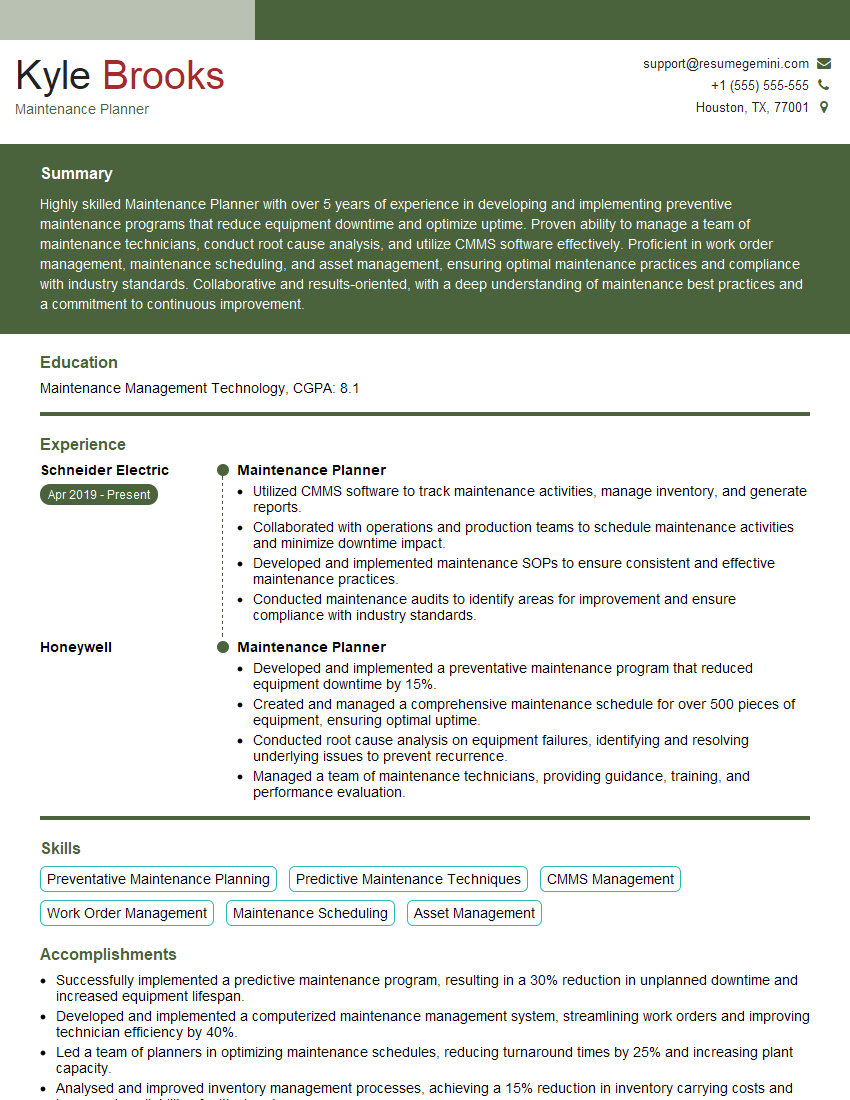
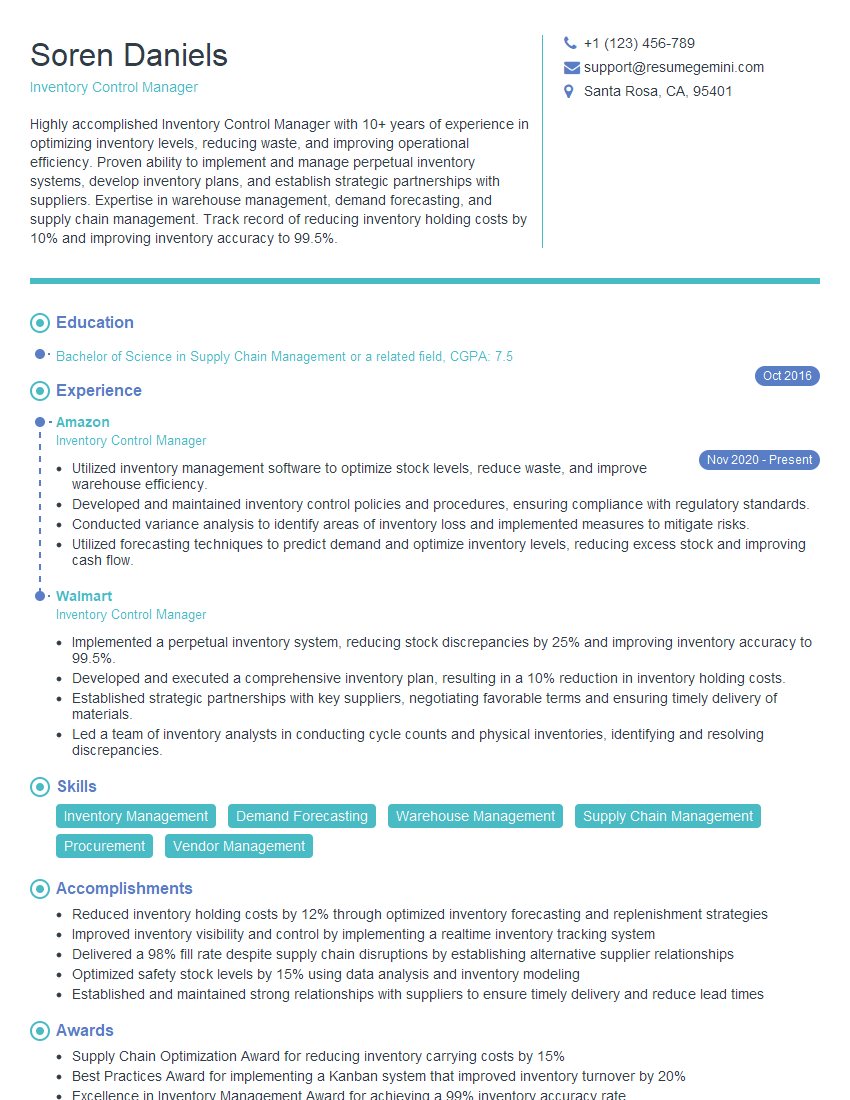
Mastering Maintenance Inventory Control significantly enhances your career prospects, opening doors to higher-level positions with increased responsibility and compensation. An ATS-friendly resume is crucial for getting your application noticed. To make your resume stand out, leverage the power of ResumeGemini. ResumeGemini provides a streamlined approach to building professional, effective resumes, helping you showcase your skills and experience in the best possible light. Examples of resumes tailored to Maintenance Inventory Control are available to guide you. Invest the time to create a compelling resume – it’s your key to unlocking exciting opportunities in this field.
Explore more articles
Users Rating of Our Blogs
Share Your Experience
We value your feedback! Please rate our content and share your thoughts (optional).
What Readers Say About Our Blog
Amazing blog
Interesting Article, I liked the depth of knowledge you’ve shared.
Helpful, thanks for sharing.