Unlock your full potential by mastering the most common Minimum Viable Product (MVP) interview questions. This blog offers a deep dive into the critical topics, ensuring you’re not only prepared to answer but to excel. With these insights, you’ll approach your interview with clarity and confidence.
Questions Asked in Minimum Viable Product (MVP) Interview
Q 1. Define Minimum Viable Product (MVP).
A Minimum Viable Product (MVP) is a development technique in which a new product is developed with sufficient features to satisfy early adopters. It allows a team to collect customer feedback early in the software development process to iterate and improve the product before a final version is released. Think of it like baking a cake – you wouldn’t bake a ten-layer masterpiece without first testing a single layer to ensure it tastes good. The MVP is that single layer, allowing you to test the core concept and gather crucial feedback before investing heavily in the full product.
Q 2. What are the key benefits of building an MVP?
Building an MVP offers several key benefits:
- Reduced Development Costs: By focusing on core features, you significantly reduce development time and expenses.
- Faster Time to Market: Getting your product in front of users quickly allows you to gain valuable market insights and establish an early presence.
- Early Customer Feedback: MVPs provide invaluable feedback, guiding product development in the right direction and preventing costly mistakes later on.
- Validated Business Idea: An MVP helps validate the market demand for your product, ensuring you’re not building something nobody wants.
- Improved Product-Market Fit: Through iterative development based on user feedback, you can continuously improve your product-market fit, leading to higher user adoption and satisfaction.
For example, imagine a company developing a new social media platform. Instead of building every feature at once, they might launch an MVP with just the core functionalities – creating a profile, posting text updates, and following other users. This allows them to test the basic concept and gather feedback before adding more complex features like messaging or video sharing.
Q 3. What are the risks associated with building an MVP?
While building an MVP offers many advantages, there are also inherent risks:
- Negative First Impressions: A poorly designed or incomplete MVP could create a negative perception of your product, impacting future adoption.
- Limited Functionality: An MVP’s limited features might frustrate users and fail to meet their expectations.
- Security Vulnerabilities: Focusing on speed can sometimes compromise security, leaving the MVP vulnerable to attacks.
- Unforeseen Technical Challenges: Building an MVP can still uncover unexpected technical hurdles during development.
- Lack of Scalability: The architecture of an MVP might not be easily scalable to handle increased user traffic or data volume in the future.
Mitigating these risks requires careful planning, thorough testing, and a commitment to addressing user feedback promptly. For instance, a thorough security audit should be conducted even on a minimal product to prevent security vulnerabilities from becoming a major issue down the line.
Q 4. How do you identify the core features of an MVP?
Identifying the core features of an MVP is crucial. The process involves a combination of techniques:
- Prioritize User Needs: Understand the most important problems your product solves for your target audience. What are their must-have features?
- Value Proposition Canvas: Use this tool to align your value proposition with customer needs and pain points.
- Competitive Analysis: Identify the key features of your competitors and determine what differentiates your product.
- Minimum Feature Set: Focus on the smallest set of features required to deliver value and test your core hypothesis.
- User Stories: Write user stories describing how users will interact with the core features (e.g., “As a user, I want to be able to create an account so I can save my progress”).
Imagine building a ride-sharing app. The core features might include user registration, setting a pickup location, finding available drivers, and processing payments. Features like ride sharing, advanced route planning and user rating could be added later.
Q 5. Describe your process for prioritizing features in an MVP.
Feature prioritization is critical for an MVP. I use a combination of methods:
- MoSCoW Method: Categorize features as Must have, Should have, Could have, and Won’t have.
- Prioritization Matrix: Plot features based on their value and effort required, prioritizing high-value, low-effort items.
- Value vs. Risk Matrix: Evaluate the potential value and risk associated with each feature, focusing on high-value, low-risk features first.
- User Feedback: Incorporate feedback from early adopters to refine feature prioritization.
- Data-Driven Decisions: Use data from user testing and analytics to make informed decisions about feature prioritization.
For example, using the MoSCoW method for a to-do list app, ‘creating and deleting tasks’ would be a ‘Must have’, while ‘calendar integration’ might be a ‘Should have’ and ‘recurring tasks’ a ‘Could have’.
Q 6. How do you measure the success of an MVP?
Measuring the success of an MVP isn’t solely about revenue. It’s about validating your core assumptions and gathering valuable data to inform future development. Key aspects to measure include:
- User Acquisition: How many users are signing up and actively using the product?
- User Engagement: How frequently are users interacting with the product and which features are most popular?
- Customer Feedback: What are users saying about the product – are they finding it valuable and usable?
- Key Performance Indicators (KPIs): Are you meeting the target KPIs defined for the MVP?
- Learning Outcomes: What key learnings have you gained from building and testing the MVP?
Success might mean proving the core concept is viable even if it doesn’t generate substantial revenue at this stage. A high level of user engagement and positive feedback validates the direction and informs further development.
Q 7. What metrics would you track for an MVP?
The specific metrics tracked will depend on the product and its goals, but common metrics for an MVP include:
- Daily/Monthly Active Users (DAU/MAU): Indicates user engagement and stickiness.
- Conversion Rate: Measures the percentage of users who complete a desired action (e.g., signing up, making a purchase).
- Customer Acquisition Cost (CAC): The cost of acquiring a new user.
- Churn Rate: The rate at which users stop using the product.
- Net Promoter Score (NPS): Measures customer satisfaction and loyalty.
- Feature Usage: Tracks how frequently users use different features to identify what works and what doesn’t.
These metrics, along with qualitative feedback, provide a comprehensive picture of the MVP’s performance and guide iterative improvements.
Q 8. How do you handle feedback received from MVP users?
Handling feedback from MVP users is crucial for iterative development. It’s not just about collecting data; it’s about understanding the why behind the user’s experience. We employ a multi-pronged approach:
- Structured Feedback Mechanisms: We utilize surveys, in-app feedback forms, and user interviews to gather both quantitative and qualitative data. For example, a survey might ask users to rate features on a scale, while interviews allow for deeper exploration of their reasoning.
- Qualitative Analysis: We go beyond simple metrics. We analyze user comments and interview transcripts to identify recurring themes, pain points, and areas for improvement. This might reveal that while a feature’s usage is high, user comments reveal frustration with its complexity.
- Prioritization & Action: We prioritize feedback based on its impact and feasibility. We use a prioritization matrix, considering factors like user impact, implementation effort, and alignment with the overall product vision. High-impact, low-effort changes are tackled first.
- Iteration & Transparency: We communicate back to users about the changes being made based on their feedback, fostering a sense of community and showing that their input is valued. This might involve a blog post detailing updates or sending a personalized email to users who provided particularly insightful feedback.
Ultimately, the goal is to create a continuous feedback loop, constantly improving the MVP based on real user interaction.
Q 9. Explain the difference between an MVP and a prototype.
While both MVPs and prototypes are used in the product development process, they serve different purposes. Think of a prototype as a rough sketch, while an MVP is a functional model, albeit a simplified one.
- Prototype: A prototype is a basic representation of the product. It focuses on testing specific aspects, like the user interface or a core feature. It’s often low-fidelity, using tools like paper sketches or basic wireframes. The goal is to quickly validate ideas and gather early feedback. A clickable prototype might demonstrate the basic user flow but lack actual backend functionality.
- MVP (Minimum Viable Product): An MVP is a stripped-down version of the final product that contains only the core features necessary to attract early adopters and validate a product’s core value proposition. It is fully functional, allowing users to interact with a real representation of the product, even if it lacks polish or advanced features. For instance, a social media MVP might have core features like posting, commenting, and following, but it might lack advanced analytics or messaging features.
The key difference lies in functionality. A prototype demonstrates the ‘what’, while an MVP demonstrates the ‘what’ and the ‘how’ – at a minimum level.
Q 10. How do you involve stakeholders in the MVP development process?
Involving stakeholders effectively in MVP development is crucial for success. We use a collaborative approach, ensuring everyone understands the MVP’s purpose and feels ownership:
- Clearly Defined Roles & Responsibilities: We establish clear roles and responsibilities for each stakeholder group (e.g., developers, designers, marketing, product owners). This ensures everyone knows their contribution.
- Regular Communication & Feedback Loops: Frequent meetings, progress updates, and feedback sessions keep stakeholders informed and involved. Tools like project management software (Jira, Asana) can facilitate this.
- Collaborative Design Sprints: We use design sprints to quickly prototype and test key features, bringing stakeholders together for intensive brainstorming and prototyping. This allows for real-time feedback and iterative refinement.
- Transparent Decision-Making: We ensure that key decisions are made transparently, with clear rationale shared with all stakeholders. This builds trust and reduces conflicts.
- Early & Frequent Demonstrations: We present early demos of the MVP to stakeholders, enabling them to provide feedback and course-correct early in the process.
By fostering open communication and collaboration, we ensure that the MVP aligns with the overall business objectives and stakeholder expectations.
Q 11. What are some common mistakes to avoid when building an MVP?
Building an MVP can be tempting to rush, but common mistakes can derail the entire process. Avoid these pitfalls:
- Building Too Much Too Soon: Trying to include too many features dilutes the focus and increases development time and cost. Remember, ‘minimum’ is key.
- Ignoring User Feedback: Failing to actively solicit and incorporate user feedback renders the MVP exercise futile. The feedback is the most valuable data.
- Poor Prioritization: Not prioritizing features based on user value and business goals leads to wasted effort on non-essential aspects.
- Neglecting Technical Debt: Cutting corners on code quality and technical aspects creates a messy foundation that hinders future scaling and development.
- Unrealistic Expectations: Assuming that the MVP will be a perfect representation of the final product leads to disappointment and unmet expectations.
- Lack of a Clear Definition of Success: Failing to define clear, measurable success metrics for the MVP makes it difficult to assess its effectiveness.
Remember, the goal is to learn and iterate quickly, not to build a perfect product immediately.
Q 12. How do you ensure the MVP aligns with the overall product vision?
Aligning the MVP with the overall product vision is paramount. We achieve this by:
- Defining a Clear Product Vision: We begin with a well-defined product vision statement that outlines the long-term goals and target audience. This provides a North Star for all development efforts.
- Identifying Core Value Proposition: We pinpoint the core value proposition that the MVP needs to deliver. This helps focus development efforts on the most critical features.
- Creating a Roadmap: We develop a high-level roadmap outlining the key phases of development and their relation to the overall product vision. This provides a clear path towards the ultimate product.
- Regularly Reviewing Progress: We regularly review the MVP’s progress against the product vision and roadmap, making adjustments as needed. This ensures the MVP stays on track.
- Using a Backlog: Prioritizing features in a backlog helps ensure that the MVP includes the elements most critical to proving the product’s core value proposition.
This ensures that the MVP is not just a standalone project but a stepping stone toward achieving the larger product vision.
Q 13. Describe a time you had to pivot an MVP strategy based on user feedback.
During the development of a fitness tracking app MVP, we initially focused on detailed calorie tracking and complex workout planning. User feedback, however, revealed that simplicity and ease of use were prioritized over advanced features. Many users found the interface overwhelming.
Based on this, we pivoted. We simplified the user interface, focusing on a core set of features: step tracking, basic workout logging, and motivational progress dashboards. We eliminated the complex calorie counter and replaced it with a simpler system. This pivot led to a significant increase in user engagement and positive feedback.
This experience taught us the importance of iterative development and the value of listening closely to user feedback, even if it means deviating from the initial plan.
Q 14. How do you balance speed and quality when building an MVP?
Balancing speed and quality when building an MVP requires a strategic approach. We use techniques like:
- Prioritization & Scope Management: Focus on delivering a small set of high-value features quickly rather than trying to build a fully featured product. This allows for a fast iteration cycle.
- Agile Development Methodologies: Utilizing agile methodologies like Scrum allows for flexible development, frequent iterations, and continuous feedback integration. This promotes both speed and quality.
- Technical Debt Management: While speed is important, we also acknowledge the need to manage technical debt. This means making conscious decisions about what compromises are acceptable in the MVP, and planning to address them later.
- Automation: Automating testing and deployment processes speeds up development and reduces the risk of errors. Continuous Integration/Continuous Deployment (CI/CD) plays a significant role here.
- Code Reviews & Testing: Despite focusing on speed, we don’t compromise on code quality. Code reviews and thorough testing help ensure that the MVP is stable and reliable, even if it’s feature-limited.
The key is to find the optimal balance, ensuring a functional MVP that can be iteratively improved without sacrificing long-term maintainability.
Q 15. What frameworks or methodologies do you use for MVP development?
For MVP development, I leverage a blend of agile methodologies like Scrum and Lean Startup principles. Scrum’s iterative approach allows for frequent adjustments based on feedback, while Lean Startup focuses on validating assumptions quickly and minimizing wasted effort. I often use a Kanban board to visualize workflow and track progress. For example, in a recent project building an educational app, we used Scrum’s sprints to deliver functional modules (e.g., user registration, lesson viewing) iteratively, gathering feedback after each sprint to refine the next iteration. This allowed us to adapt to user needs rapidly and avoid building unnecessary features.
Beyond these core methodologies, I also incorporate design thinking principles, focusing on user-centered design and problem-solving. This ensures the MVP is solving a real problem for the target audience effectively.
Career Expert Tips:
- Ace those interviews! Prepare effectively by reviewing the Top 50 Most Common Interview Questions on ResumeGemini.
- Navigate your job search with confidence! Explore a wide range of Career Tips on ResumeGemini. Learn about common challenges and recommendations to overcome them.
- Craft the perfect resume! Master the Art of Resume Writing with ResumeGemini’s guide. Showcase your unique qualifications and achievements effectively.
- Don’t miss out on holiday savings! Build your dream resume with ResumeGemini’s ATS optimized templates.
Q 16. What is the role of user research in MVP development?
User research is absolutely critical in MVP development; it’s the backbone of making informed decisions. It prevents building something nobody wants! Before even writing a line of code, I conduct thorough user research to understand the target audience, their needs, pain points, and behaviors. This involves a mix of methods: user interviews, surveys, competitive analysis, and usability testing.
For instance, during the development of a food delivery app, we conducted user interviews to understand ordering habits, preferred payment methods, and key frustrations with existing services. This research directly informed our MVP’s features, ensuring we focused on the most valuable aspects for our users.
The results of user research directly influence the MVP’s features, prioritization, and overall design, ensuring we build something relevant and desirable.
Q 17. How do you determine the right technology stack for an MVP?
Choosing the right technology stack for an MVP is a strategic decision balancing speed of development, scalability, and cost. It’s not about picking the shiniest new technology; it’s about selecting tools that best meet the MVP’s specific needs. I consider several factors:
- Project scope and complexity: A simple MVP might only require basic technologies, while a complex one might need a more robust stack.
- Development team expertise: Choosing technologies the team is already proficient in reduces development time and costs.
- Scalability requirements: While the MVP might be small, it’s crucial to consider the potential for future growth and ensure the chosen technologies can handle increased load.
- Cost considerations: Some technologies are more expensive than others in terms of licensing or maintenance.
For example, for a low-complexity MVP, I might choose a simpler framework like React for the front-end and Node.js with a lightweight database like MongoDB for the back-end. This allows for rapid development and easy scaling later. However, for a more complex MVP requiring high performance, I might opt for a different technology stack, perhaps using a more robust database like PostgreSQL.
Q 18. How do you manage budget constraints when developing an MVP?
Managing budget constraints in MVP development is crucial. It requires prioritizing features, making smart technology choices, and utilizing efficient development practices. I typically begin by creating a detailed budget breakdown, identifying essential costs like development, design, testing, and deployment. Then, I prioritize features based on user research and their impact on achieving the MVP’s core goals.
Techniques like timeboxing (allocating specific time for each task), using open-source tools wherever possible, and outsourcing specific tasks (if feasible) can help reduce costs without compromising quality. For instance, instead of building all features at once, I might focus on the core functionality first and add other features iteratively as budget permits.
Regular monitoring of expenses and comparing them against the initial budget is crucial to stay on track. This involves tracking time spent on tasks and aligning those with estimated costs.
Q 19. How do you iterate on an MVP after launch?
Iterating on an MVP post-launch is vital for continuous improvement and market validation. It begins with close monitoring of key performance indicators (KPIs) such as user engagement, conversion rates, and customer feedback. This data provides insights into what’s working, what’s not, and areas for improvement.
The iteration process involves:
- Analyzing data: Identifying patterns and trends in user behavior and feedback.
- Prioritizing improvements: Focusing on changes that will have the most significant impact based on the data.
- Implementing changes: Developing and deploying updates to address issues and enhance features.
- Testing changes: Conducting A/B testing or usability testing to assess the effectiveness of implemented changes.
- Repeating the cycle: Continuously monitoring, analyzing, and iterating based on new data and feedback.
Q 20. Describe your experience with A/B testing in an MVP context.
A/B testing is a powerful tool for making data-driven decisions about an MVP. It allows me to compare two versions of a feature (A and B) to determine which performs better. This could involve testing different calls to action, layouts, or design elements. I typically use platforms like Optimizely or Google Optimize to run these tests.
In a recent project for an e-commerce website, we A/B tested two different button designs for the ‘Add to Cart’ button. Version A had a standard design, while Version B had a more prominent design. The results showed Version B significantly increased conversion rates, leading us to implement it across the site.
The key to successful A/B testing is to test only one variable at a time, have a sufficient sample size, and run the test for a long enough period to get statistically significant results.
Q 21. How do you handle technical debt in an MVP?
Technical debt in an MVP is unavoidable; the focus is on delivering core functionality quickly. However, it’s crucial to manage it effectively to avoid future problems. I employ a few strategies:
- Prioritization: Not all technical debt is created equal. I prioritize addressing debt that impacts performance, scalability, or maintainability the most.
- Documentation: Clearly documenting technical debt, including its impact and potential solutions, ensures it’s not forgotten.
- Refactoring: Allocating time during subsequent iterations to refactor code and improve its quality. This helps reduce the risk of future problems.
- Using a modular design: Designing the MVP in a modular fashion makes it easier to replace or upgrade components without affecting the entire system.
For example, if a particular module in the MVP is built using a quick-and-dirty solution, I might document it as technical debt and allocate time in the next iteration to rewrite it using a more robust approach. This approach balances speed of delivery with long-term maintainability.
Q 22. What is your preferred method for gathering user feedback?
My preferred method for gathering user feedback is a multi-pronged approach, combining quantitative and qualitative data. I believe in starting with early and frequent user testing, ideally with the target audience. This could involve usability testing sessions, where we observe users interacting with the MVP and note pain points. Alongside this, I incorporate surveys (both pre and post-testing) to quantify user satisfaction and identify areas for improvement. Finally, I find incorporating feedback mechanisms directly within the MVP, such as in-app feedback forms or suggestion boxes, invaluable for capturing real-time reactions and insights.
For example, during the development of an e-commerce MVP, we conducted usability tests with five users, observed their shopping journey, and noted where they struggled with navigation or checkout. Post-testing surveys quantified their overall experience and identified areas for improvement in the product description. Integrating an in-app feedback form allowed us to gather ongoing insights about functionality and performance. This blended approach provides a well-rounded understanding of user needs and preferences.
Q 23. How do you communicate the progress of an MVP to stakeholders?
Communicating MVP progress to stakeholders requires transparency and clear, concise updates. I regularly use a combination of methods, tailored to the stakeholder’s preferences and technical understanding. I favor visual progress trackers, like Kanban boards or burn-down charts, to visually represent our progress against deadlines and milestones. Regular progress meetings, supplemented with detailed reports, provide a deeper dive into technical details and challenges.
For instance, we might share a Kanban board during stand-up meetings to demonstrate task completion. A weekly email report summarises progress, highlights any roadblocks encountered, and offers projected completion dates. For executive-level updates, we use a concise presentation with key performance indicators (KPIs) such as user engagement metrics or feature completion.
Q 24. What are some examples of successful MVPs you’ve seen?
Several successful MVPs stand out as excellent examples. Dropbox’s initial MVP was a simple video demonstrating its core functionality, proving the market demand before significant investment. Zappos, initially, focused on a limited inventory and outsourced fulfillment, validating their business model before investing heavily in warehousing and logistics. These examples show how a small, functional core can be used to prove the market’s acceptance of an idea and attract further investment.
Another noteworthy example is Airbnb. Initially, it was a basic website, showcasing a very limited selection of properties in a specific location. The MVP focused on the core functionality of connecting hosts and guests; additional features were added incrementally based on user feedback.
Q 25. How do you define the scope of an MVP?
Defining the scope of an MVP involves a careful balancing act between delivering value and maintaining a manageable project. The process starts with identifying the core value proposition of your product – what problem are you solving and for whom? Then, identify the absolute minimum features needed to test this value proposition. Anything that’s not crucial for testing the core hypothesis should be cut.
For example, if we’re building a social media app, the MVP might only include the core functionality of posting and viewing messages. Features like direct messaging, group chats, or notification settings could be added later based on initial user feedback. It’s crucial to avoid ‘feature creep’ – adding features that aren’t necessary for validating the core idea.
Q 26. How do you manage expectations around the limitations of an MVP?
Managing expectations around an MVP’s limitations involves upfront communication and transparency. From the outset, it’s critical to clearly articulate that the MVP is a work in progress, lacking some features of the final product. This is done via regular updates and presentations that clearly outline both the MVP’s strengths and its limitations. Demonstrating an agile approach where changes are accepted as part of the learning process is helpful.
For example, we might explicitly state in marketing materials that this is a beta version and that some features are subject to change. We also actively solicit feedback and communicate a roadmap for future improvements to demonstrate a commitment to development based on user needs and preferences.
Q 27. Describe a time you had to make difficult trade-offs during MVP development.
During the development of a mobile app for a fitness company, we faced a crucial trade-off. Initially, we planned to integrate a complex AI-powered workout recommendation system. However, testing revealed that the system was overly complicated and caused significant delays. We recognized the risk of missing our launch deadline if we persisted.
After thorough deliberation, we opted to remove the AI recommendation system from the MVP and launch with a simplified workout selection system instead. This allowed us to meet our deadline and gather user feedback on the core app functionalities. The AI system was added later, after the core MVP provided valuable user data that informed its development and fine-tuning. Prioritizing timely launch over a potentially flawed feature proved to be a crucial decision.
Q 28. What are your thoughts on using no-code/low-code tools for MVP development?
No-code/low-code tools can be extremely valuable for MVP development, particularly for projects with limited budgets or development resources. These tools significantly reduce development time and costs, allowing for faster iteration and testing. However, their limitations must be carefully considered. The flexibility and scalability of a solution built using traditional coding might be higher.
The suitability depends on the complexity of the MVP. For a simple MVP, a no-code platform could be ideal, enabling faster prototyping and testing. However, for more complex applications with extensive customization requirements, a low-code platform, offering greater control and extensibility, might be a better choice. Using these tools requires a strategic approach, understanding where they add value and where traditional coding might be more appropriate.
Key Topics to Learn for Minimum Viable Product (MVP) Interview
- Defining MVP: Understand the core principles of an MVP – its purpose, limitations, and benefits. Consider the various approaches to MVP development (e.g., Lean Startup methodology).
- Identifying Core Features: Learn how to prioritize features based on user needs and business goals. Practice identifying the absolute essential features for a successful launch.
- Agile Development & Iteration: Grasp the importance of iterative development in the MVP process. Understand how to incorporate feedback and adapt the product based on real-world data.
- Market Research & Validation: Explore methods for validating your MVP idea before committing significant resources. Understand the importance of user testing and feedback loops.
- Metrics & Measurement: Learn how to define key performance indicators (KPIs) for your MVP and track progress towards your goals. Know how to interpret data to inform future development.
- Risk Mitigation & Failure: Discuss the potential risks involved in MVP development and strategies for mitigating them. Understand that failure is a learning opportunity and a crucial part of the process.
- Technology Selection: Explore various technologies suitable for MVP development and the trade-offs involved in choosing specific stacks. Consider factors like scalability, cost, and development time.
Next Steps
Mastering Minimum Viable Product (MVP) principles significantly enhances your value to any technology-driven company. It demonstrates your understanding of efficient development, user-centric design, and data-driven decision-making – all highly sought-after skills. To maximize your job prospects, create an ATS-friendly resume that highlights your MVP-related experience and skills. ResumeGemini is a trusted resource to help you build a professional and impactful resume. Examples of resumes tailored to Minimum Viable Product (MVP) roles are available to guide you.
Marketing Manager Resume Sample
Product Manager Resume Sample

Project Manager Resume Sample
Engineering Manager Resume Sample
Business Analyst Resume Sample
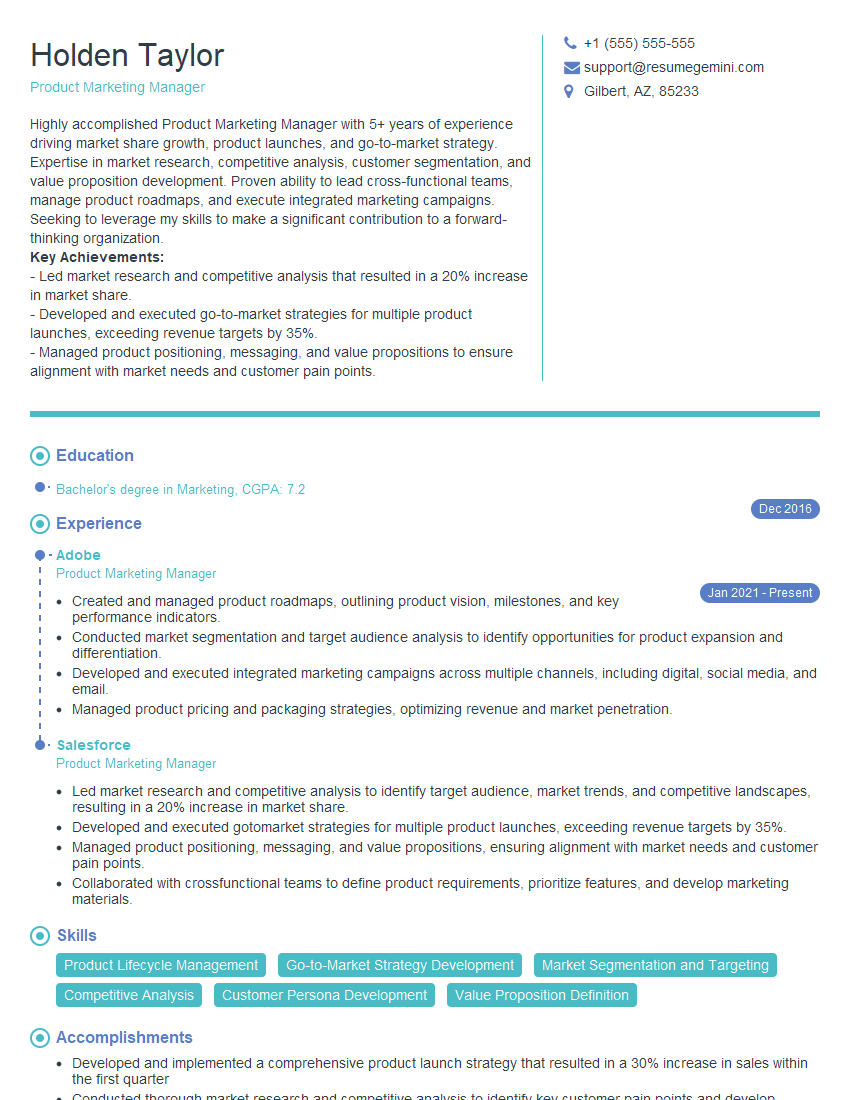
Product Marketing Manager Resume Sample
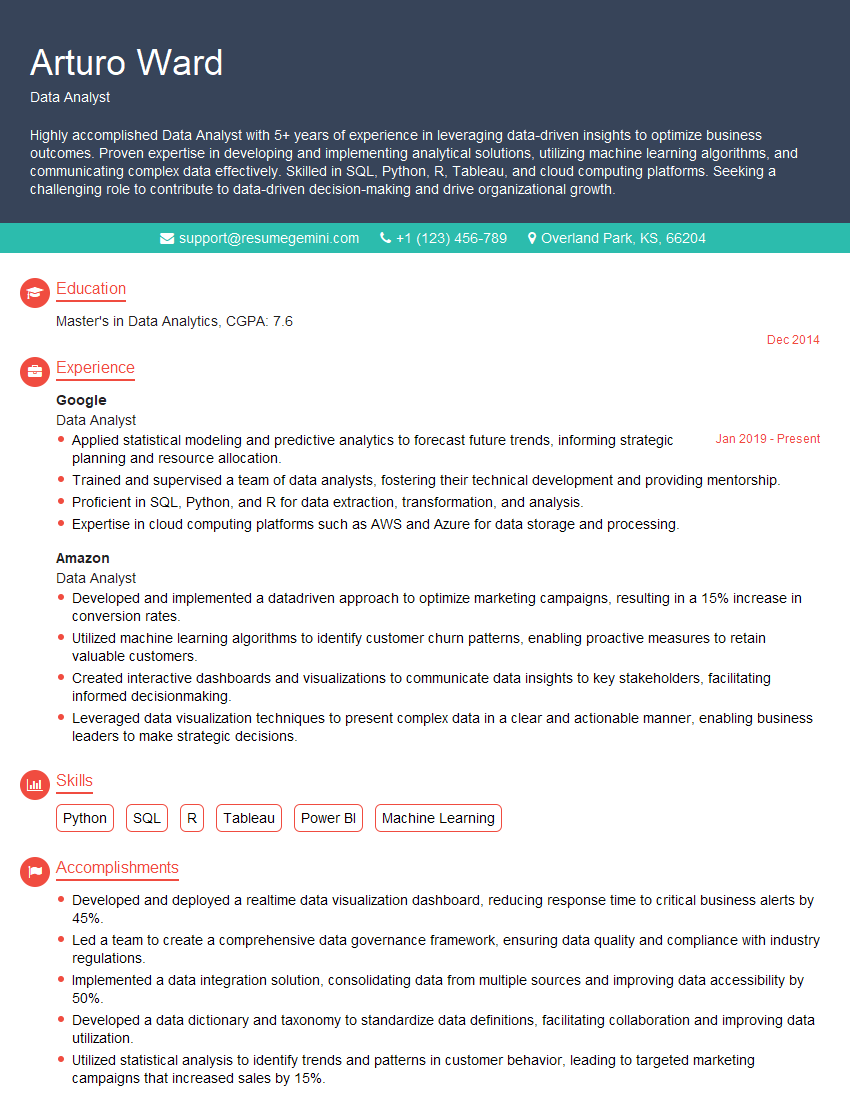
Data Analyst Resume Sample
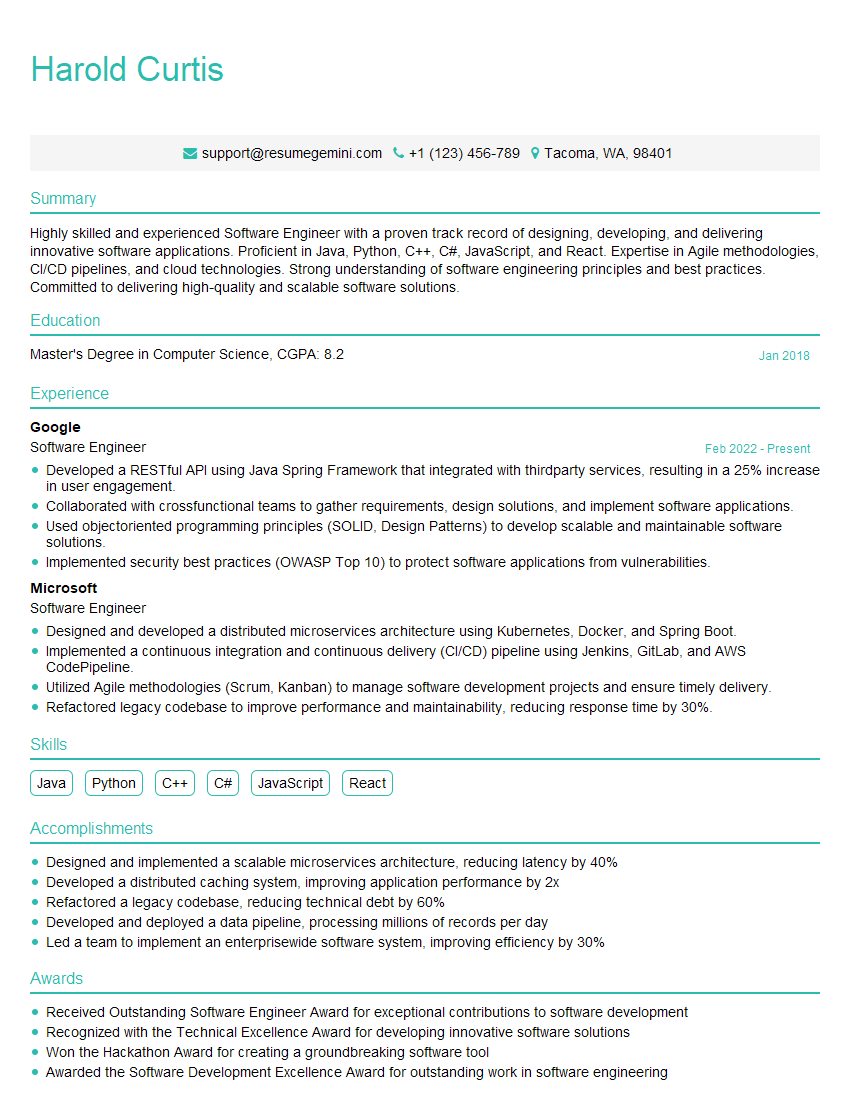
Software Engineer Resume Sample

Senior Software Engineer Resume Sample
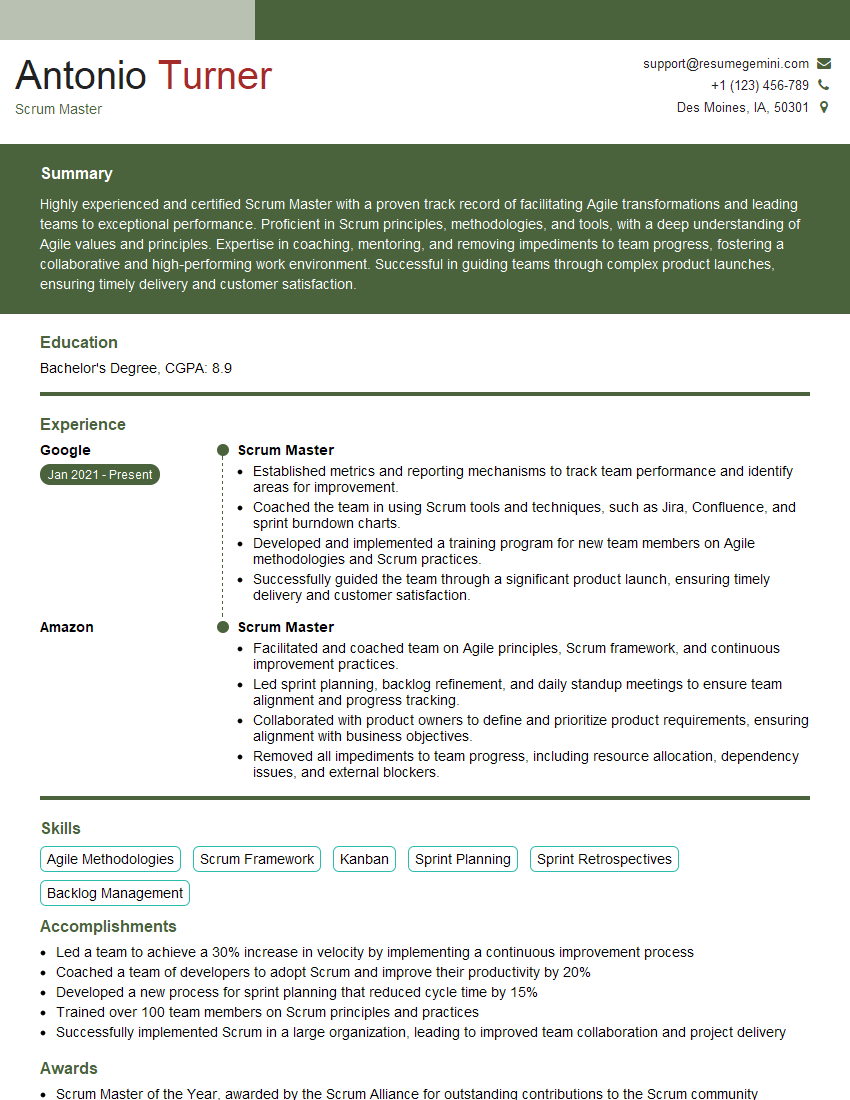
Scrum Master Resume Sample

Growth Hacker Resume Sample
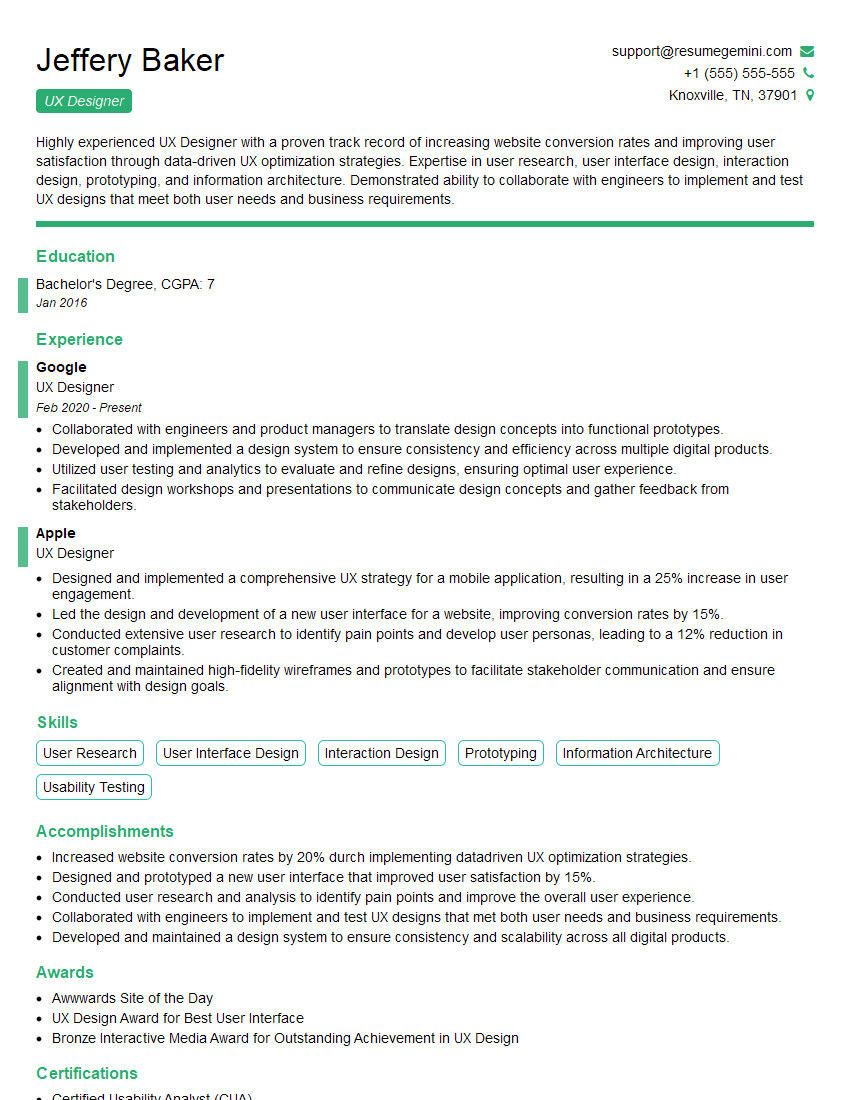
UX Designer Resume Sample
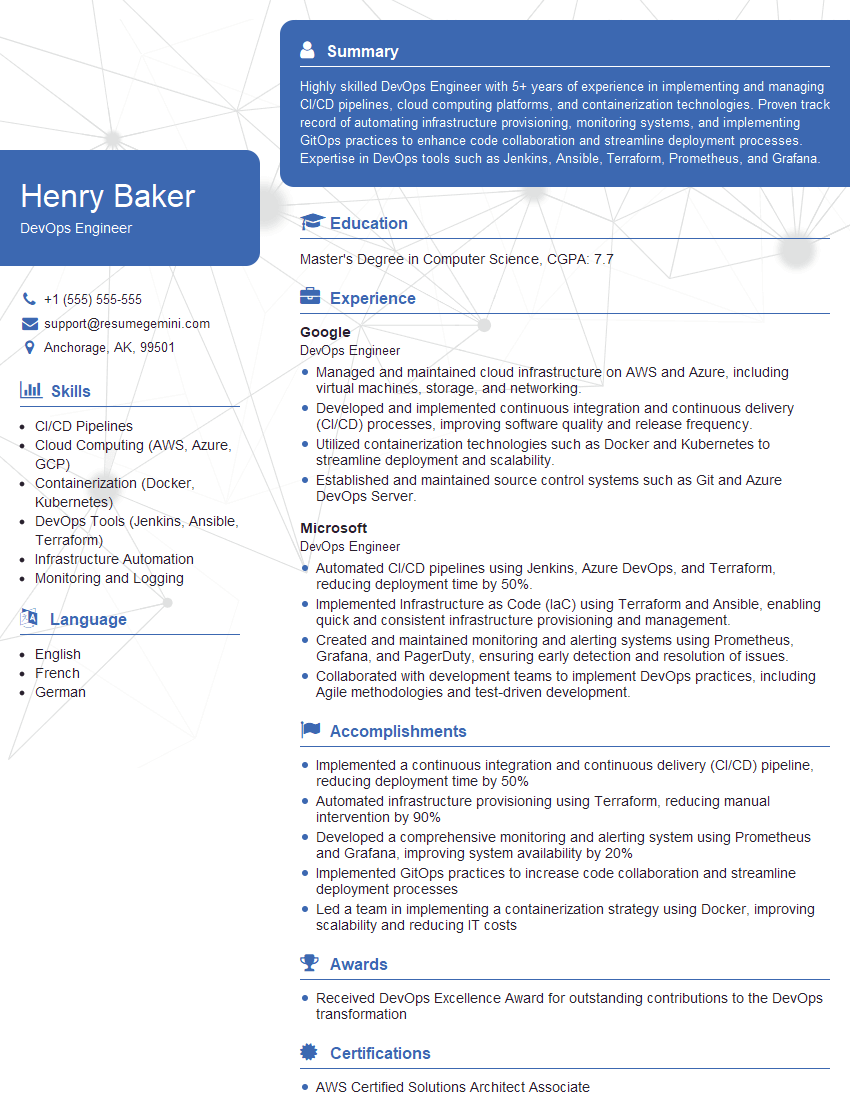
DevOps Engineer Resume Sample
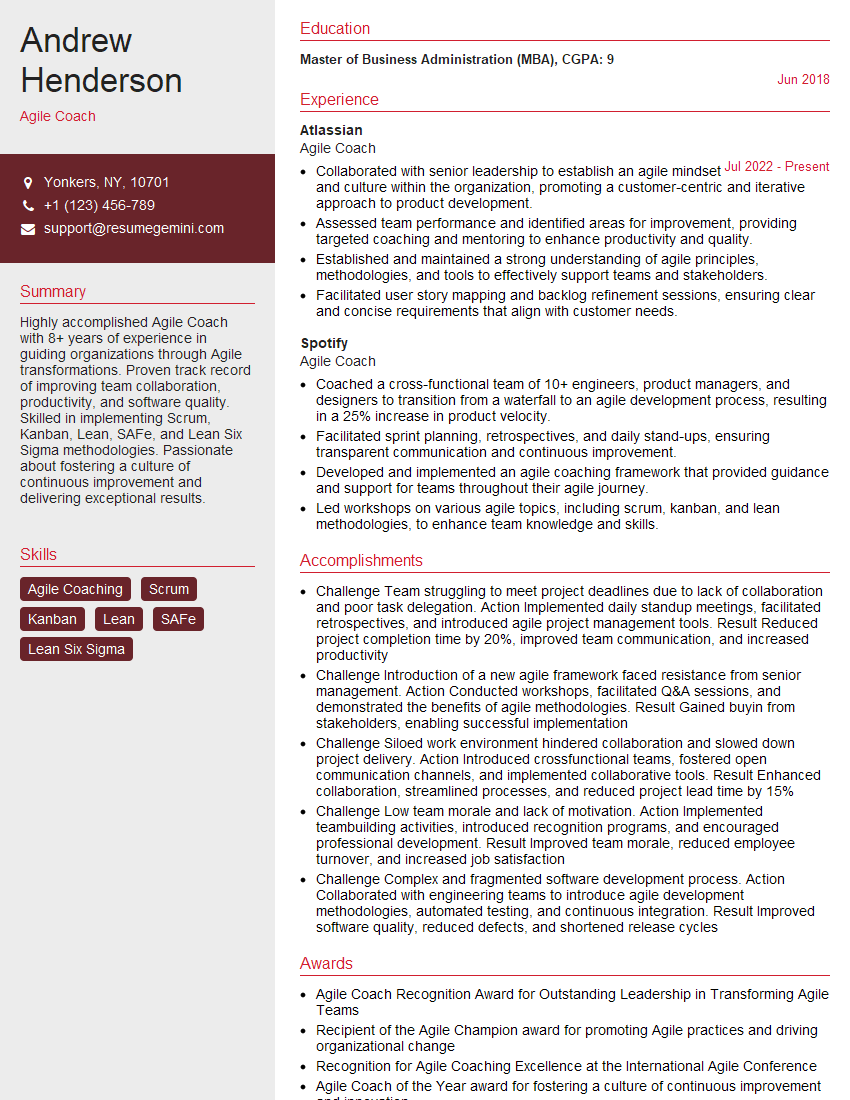
Agile Coach Resume Sample
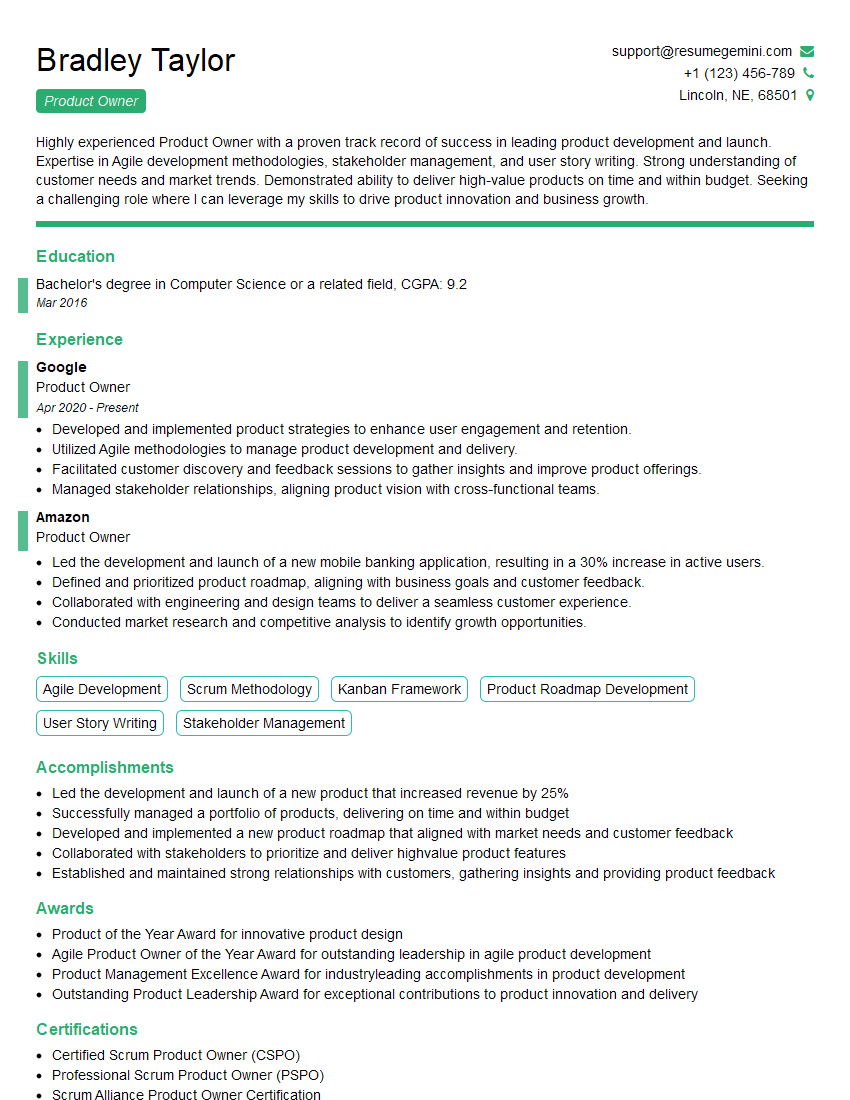
Product Owner Resume Sample
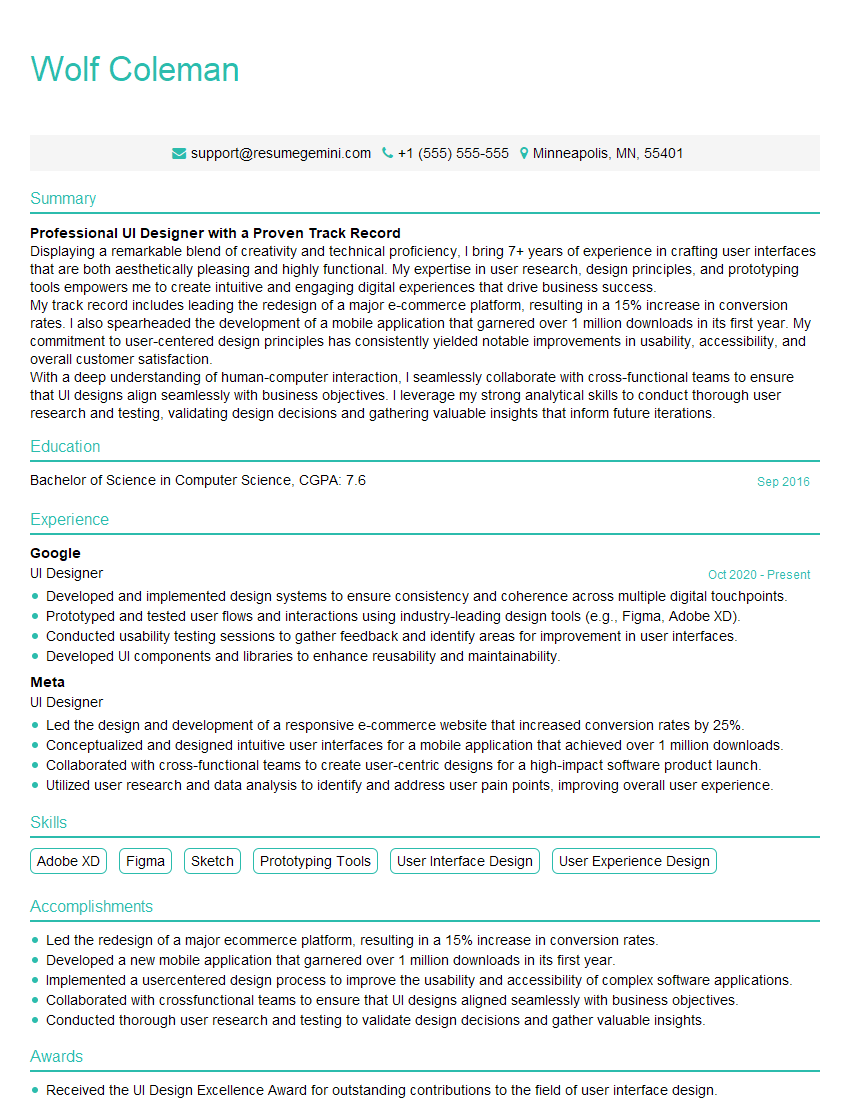
UI Designer Resume Sample
Explore more articles
Users Rating of Our Blogs
Share Your Experience
We value your feedback! Please rate our content and share your thoughts (optional).
What Readers Say About Our Blog
hello,
Our consultant firm based in the USA and our client are interested in your products.
Could you provide your company brochure and respond from your official email id (if different from the current in use), so i can send you the client’s requirement.
Payment before production.
I await your answer.
Regards,
MrSmith
hello,
Our consultant firm based in the USA and our client are interested in your products.
Could you provide your company brochure and respond from your official email id (if different from the current in use), so i can send you the client’s requirement.
Payment before production.
I await your answer.
Regards,
MrSmith
These apartments are so amazing, posting them online would break the algorithm.
https://bit.ly/Lovely2BedsApartmentHudsonYards
Reach out at [email protected] and let’s get started!
Take a look at this stunning 2-bedroom apartment perfectly situated NYC’s coveted Hudson Yards!
https://bit.ly/Lovely2BedsApartmentHudsonYards
Live Rent Free!
https://bit.ly/LiveRentFREE
Interesting Article, I liked the depth of knowledge you’ve shared.
Helpful, thanks for sharing.
Hi, I represent a social media marketing agency and liked your blog
Hi, I represent an SEO company that specialises in getting you AI citations and higher rankings on Google. I’d like to offer you a 100% free SEO audit for your website. Would you be interested?