Unlock your full potential by mastering the most common Proficient in Nuclear Medicine Procedures interview questions. This blog offers a deep dive into the critical topics, ensuring you’re not only prepared to answer but to excel. With these insights, you’ll approach your interview with clarity and confidence.
Questions Asked in Proficient in Nuclear Medicine Procedures Interview
Q 1. Describe the principles of radioisotope decay.
Radioisotope decay is the process by which an unstable atomic nucleus loses energy by emitting radiation, transforming into a more stable form. This decay happens spontaneously and at a predictable rate, characterized by the isotope’s half-life – the time it takes for half of the atoms in a sample to decay.
There are several types of decay, including alpha decay (emission of an alpha particle, consisting of two protons and two neutrons), beta decay (emission of a beta particle, which is an electron or positron), and gamma decay (emission of a gamma ray, a high-energy photon). Each type alters the nucleus’s composition and energy level. For instance, in beta-minus decay, a neutron transforms into a proton, releasing an electron and an antineutrino. This changes the element’s atomic number, but not its mass number. Gamma decay, on the other hand, doesn’t change the atomic number or mass number; it simply releases excess energy.
Understanding decay principles is crucial in Nuclear Medicine because we use the emitted radiation to create images. The half-life determines how long a radioisotope remains usable for imaging, and the type of decay influences the detector’s design and image quality. For example, Technetium-99m, a commonly used radioisotope, undergoes gamma decay, making it ideal for SPECT imaging because its gamma rays can be readily detected.
Q 2. Explain the difference between SPECT and PET imaging.
Both SPECT (Single Photon Emission Computed Tomography) and PET (Positron Emission Tomography) are nuclear medicine imaging techniques that provide functional information about the body. However, they differ significantly in the type of radiation they detect and the radiotracers they use.
- SPECT uses gamma-emitting radioisotopes. A single gamma ray is emitted during the decay process. These isotopes are generally injected intravenously and accumulate in specific organs or tissues. The gamma rays are detected by a gamma camera that rotates around the patient to acquire multiple projections. The data is then reconstructed to create 3D images.
- PET uses positron-emitting radioisotopes. When a positron (anti-electron) is emitted, it annihilates with an electron, producing two gamma rays that travel in nearly opposite directions. These simultaneous gamma rays are detected by a PET scanner, which uses coincidence detection to locate the annihilation event. This allows for higher resolution images than SPECT.
In essence, SPECT is like taking many individual photos from different angles and combining them to create a 3D model, whereas PET is like pinpointing the location of many tiny light sources based on where they emit light from. The choice between SPECT and PET depends on the clinical question. PET typically offers better resolution and more specific information about metabolic processes, while SPECT is often more cost-effective and readily available.
Q 3. What are the safety precautions for handling radioactive materials?
Handling radioactive materials requires strict adherence to safety protocols to minimize radiation exposure to personnel and the environment. These precautions include:
- Time: Minimize the time spent near the source. The longer you’re exposed, the greater the dose.
- Distance: Increase the distance from the radioactive source. Radiation intensity decreases rapidly with distance (inverse square law).
- Shielding: Use appropriate shielding materials, like lead, to absorb radiation. The type and thickness of shielding depend on the type and energy of the radiation.
- Monitoring: Use radiation monitoring devices (e.g., Geiger counters, dosimeters) to measure radiation levels and ensure exposure stays within safe limits.
- Proper Disposal: Radioactive waste must be handled and disposed of according to strict regulatory guidelines to prevent environmental contamination.
- Personal Protective Equipment (PPE): Use appropriate PPE, such as lead aprons, gloves, and eye protection, when handling radioactive materials.
Regular training and competency assessments are crucial to ensure staff are well-versed in these safety procedures. A well-structured radiation safety program is essential for any facility working with radioactive materials.
Q 4. How do you ensure the quality control of nuclear medicine imaging equipment?
Quality control (QC) of nuclear medicine imaging equipment is crucial to ensure the accuracy and reliability of the images produced. A comprehensive QC program includes:
- Daily QC: This involves checking the functionality of the gamma camera, including energy resolution, uniformity, and linearity. These parameters are checked using specific phantoms and procedures outlined by the manufacturer and regulatory bodies.
- Weekly/Monthly QC: More in-depth tests may be performed less frequently, such as checking the accuracy of the collimator, the spatial resolution of the system, and the sensitivity of the detectors.
- Annual QC: More extensive testing, sometimes involving external qualified experts, is done to ensure the system’s continued performance within acceptable limits.
- Preventative Maintenance: Regular preventative maintenance checks are critical to the long-term functioning and reliability of the equipment.
Detailed records of all QC procedures and results must be kept, as these are required by regulatory authorities and are essential for identifying and rectifying problems promptly. Deviation from established QC standards may affect image quality and diagnosis, highlighting the importance of a proactive QC strategy.
Q 5. Describe the process of patient preparation for a nuclear medicine procedure.
Patient preparation for a nuclear medicine procedure varies depending on the specific procedure but generally involves:
- Medical History and Assessment: A thorough medical history is taken, including allergies, current medications, and pregnancy status. The patient’s renal function might be assessed for procedures involving radiopharmaceuticals excreted by the kidneys.
- Dietary Restrictions: Some procedures may require specific dietary restrictions before the study, such as fasting or avoiding certain foods or drinks.
- Medication Review: The physician reviews the patient’s medication list to identify any potential interactions with the radiopharmaceutical.
- Radiopharmaceutical Administration: The radiopharmaceutical is administered intravenously, orally, or through inhalation, depending on the procedure. The patient is then monitored for any adverse reactions.
- Imaging Acquisition: The patient is positioned correctly on the imaging equipment. The length of the imaging acquisition varies depending on the procedure.
- Post-Procedure Instructions: Patients are given instructions on hydration and potential side effects to watch for after the procedure.
Effective communication with the patient is paramount to ensuring their comfort and understanding of the procedure. This includes clearly explaining the purpose of the procedure, the preparation required, and any potential risks or side effects.
Q 6. Explain the role of a nuclear medicine technologist in patient care.
A nuclear medicine technologist plays a vital role in patient care, encompassing both technical and interpersonal skills. Their responsibilities include:
- Patient Preparation and Administration of Radiopharmaceuticals: They prepare patients for the procedure, including explaining the procedure and administering the radiopharmaceuticals safely and accurately.
- Image Acquisition and Quality Control: They operate the imaging equipment, ensure the quality of the images acquired, and perform quality control checks.
- Data Processing and Analysis: They process the acquired images and perform basic analyses to identify potential issues.
- Radiation Safety: They are responsible for maintaining radiation safety standards, including minimizing radiation exposure to patients and themselves.
- Patient Education and Communication: They provide clear and concise explanations of the procedure to patients, addressing any concerns or questions they may have.
- Collaboration with Physicians: They work closely with nuclear medicine physicians to ensure the images are of high quality and appropriate for diagnosis.
Essentially, the technologist acts as a bridge between the physician’s request and the final image interpretation, ensuring accuracy, safety, and patient comfort throughout the entire process. They are crucial to the success and safety of nuclear medicine procedures.
Q 7. What are the common artifacts seen in nuclear medicine images and how are they mitigated?
Several artifacts can appear in nuclear medicine images, potentially obscuring or misrepresenting the underlying anatomy and physiology. Some common artifacts and their mitigation strategies include:
- Motion Artifacts: Patient movement during image acquisition leads to blurring or distortion. Mitigation involves proper patient positioning, immobilization techniques, and short scan times.
- Scatter Radiation: Scattered gamma rays from the patient’s body can degrade image quality. Mitigation involves using collimators to reduce scatter and employing software correction techniques.
- Attenuation Artifacts: Differences in tissue density cause variations in the detected gamma rays. Mitigation can involve using correction algorithms that account for these attenuation effects.
- Metal Artifacts: Metallic objects (e.g., surgical clips, dental fillings) produce high signal intensity regions in the image. Careful planning and use of specialized imaging techniques can minimize their effect.
- Partial Volume Effects: Small structures may appear smaller or blurred due to the finite resolution of the imaging system. This is inherent to the imaging technique and can only be partly mitigated with improved imaging technology.
Recognizing these artifacts and understanding their causes is critical for accurate image interpretation. Proper patient preparation, careful image acquisition techniques, and sophisticated software correction methods are key to minimizing artifacts and improving image quality.
Q 8. How do you interpret and analyze nuclear medicine images?
Interpreting nuclear medicine images involves analyzing the distribution and concentration of a radiopharmaceutical within the body. We look for patterns of uptake, which indicate the function and health of specific organs or tissues. This isn’t just about looking at pretty pictures; it’s about understanding the physiological processes underlying the image. For example, in a bone scan, increased uptake might indicate a fracture or infection. In a thyroid scan, uneven uptake may point to nodules or hyperthyroidism. The process involves several steps:
- Visual Inspection: Initially, we visually assess the images for obvious abnormalities like areas of increased or decreased uptake.
- Quantitative Analysis: We use software to quantify the radioactivity in specific regions of interest (ROIs). This provides numerical data, allowing for objective comparisons between different areas or over time.
- Correlation with Clinical Information: The image interpretation is always done in the context of the patient’s clinical history, symptoms, and other diagnostic tests. A solitary hot spot in a thyroid scan, for instance, may be benign, but coupled with a patient’s history of thyroid problems, it would warrant further investigation.
- Comparison with Normal Anatomy: We carefully compare the patient’s scan with established norms to identify deviations from the expected pattern.
For example, in a myocardial perfusion study (MPS), we assess blood flow to the heart muscle. Reduced uptake in a specific area suggests ischemia (lack of blood flow), potentially indicating coronary artery disease. The quantitative data from the MPS helps us objectively determine the severity of the perfusion defect.
Q 9. What are the different types of radiopharmaceuticals used in nuclear medicine?
Radiopharmaceuticals are radioactive drugs used in nuclear medicine. They’re designed to target specific organs or tissues, allowing us to visualize their function. The choice of radiopharmaceutical depends on the specific organ or system being studied. Here are some examples:
- Technetium-99m (99mTc): A versatile radionuclide used in a wide array of studies, including bone scans, myocardial perfusion imaging (MPI), and thyroid scans. Its short half-life (6 hours) reduces patient radiation exposure.
- Iodine-123 (123I): Used primarily in thyroid imaging and therapy. Its longer half-life compared to 99mTc allows for longer imaging times.
- Gallium-67 (67Ga): Used in oncology to detect and stage certain types of cancers.
- Indium-111 (111In): Used in white blood cell scans to identify sites of infection or inflammation.
- Fluorodeoxyglucose (FDG) labeled with Fluorine-18 (18F-FDG): A crucial radiopharmaceutical in Positron Emission Tomography (PET) scans, widely used in oncology to detect cancerous tumors based on their increased glucose metabolism.
The choice of radiopharmaceutical requires careful consideration of several factors, including the organ of interest, the desired imaging characteristics, and the potential for radiation exposure to the patient.
Q 10. Describe the principles of radiation protection.
Radiation protection is paramount in nuclear medicine. It involves minimizing the radiation dose received by patients, staff, and the public. The principles are based on the ALARA principle (As Low As Reasonably Achievable) and include:
- Time: Minimizing the time spent near a radiation source. This includes efficient procedural techniques and use of shielding.
- Distance: Increasing the distance from the radiation source. Inverse square law states radiation intensity decreases rapidly with distance.
- Shielding: Using shielding materials like lead to attenuate radiation. Lead aprons and barriers are standard equipment in nuclear medicine.
- Containment: Ensuring that radioactive materials are safely contained and handled according to strict protocols to prevent spills or leaks.
For example, during a nuclear medicine procedure, we minimize the time a patient spends undergoing the scan and use shielding to protect staff. Proper disposal of radioactive waste is also crucial to prevent environmental contamination.
Q 11. Explain the ALARA principle in the context of nuclear medicine.
ALARA, or As Low As Reasonably Achievable, is the guiding principle in radiation protection. It emphasizes that all radiation exposure should be kept to the lowest level possible, while considering practical and economic factors. In nuclear medicine, this means:
- Optimizing Procedures: Using the lowest possible radioactive dose to obtain diagnostic quality images. This includes using the optimal radiopharmaceutical, administering the correct dosage, and employing efficient imaging techniques.
- Using Appropriate Shielding: Employing lead shielding to protect staff and patients from unnecessary radiation exposure. The use of lead aprons and barriers is a clear example.
- Regular Equipment Calibration and Maintenance: This ensures that imaging equipment is operating efficiently and at optimal settings, minimizing radiation exposure to patients while achieving diagnostic quality images.
- Training and Education: Staff should receive regular training on radiation safety practices and procedures.
A practical example is choosing 99mTc over other radionuclides whenever possible due to its shorter half-life. This reduces the radiation burden on the patient while still providing clear images.
Q 12. What is the role of the radiation safety officer in a nuclear medicine department?
The Radiation Safety Officer (RSO) plays a critical role in ensuring compliance with radiation safety regulations in a nuclear medicine department. Their responsibilities include:
- Developing and Implementing Radiation Safety Programs: Creating and enforcing policies and procedures to minimize radiation exposure.
- Training Staff: Providing education and training to personnel on radiation safety protocols.
- Monitoring Radiation Levels: Regularly monitoring radiation levels in the department to ensure they are within acceptable limits.
- Managing Radioactive Waste: Overseeing the safe handling, storage, and disposal of radioactive waste.
- Conducting Radiation Surveys: Performing regular inspections of the facility to identify and address potential radiation safety hazards.
- Maintaining Records: Keeping accurate records of radiation doses received by personnel and patients.
The RSO acts as a liaison between the department and regulatory bodies. They are essential for ensuring the safety of patients, staff, and the environment.
Q 13. Describe your experience with quality assurance and quality control procedures.
Quality assurance (QA) and quality control (QC) are vital for ensuring the accuracy and reliability of nuclear medicine procedures. My experience encompasses:
- QC of Imaging Equipment: Regularly performing QC tests on gamma cameras, PET scanners, and other equipment to verify their proper functioning and calibration. This involves evaluating various parameters like energy resolution, uniformity, and spatial resolution.
- QC of Radiopharmaceuticals: Checking the purity, activity concentration, and expiration date of radiopharmaceuticals before administration to patients. This is crucial to ensure the reliability of the study.
- QA of Procedures: Participating in the development and implementation of standardized procedures for all aspects of nuclear medicine, from patient preparation and injection to image acquisition and interpretation.
- Review of Images and Reports: Regularly reviewing images and reports to identify areas for improvement in technique or interpretation.
- Participation in Audits: Collaborating in internal and external audits to ensure compliance with regulatory standards and best practices.
For example, I routinely participate in phantom studies to ensure the quality of our gamma camera images. This involves scanning a known source to check for uniformity and resolution, allowing us to identify and correct any issues before performing patient studies.
Q 14. How do you handle patient anxiety or concerns during a nuclear medicine procedure?
Addressing patient anxiety is a crucial aspect of providing compassionate care in nuclear medicine. Many patients feel apprehensive about radiation exposure. My approach involves:
- Providing Clear and Concise Explanations: I explain the procedure in detail, using simple language avoiding jargon, emphasizing the benefits and minimizing the risks. I answer all their questions patiently.
- Addressing Concerns About Radiation: I explain that the radiation dose is carefully controlled and minimized, emphasizing that the benefits of the procedure outweigh the risks. I use analogies to make it easier to grasp. For example, I may compare the radiation dose to a routine x-ray.
- Creating a Calm and Reassuring Environment: I strive to create a comfortable and supportive environment by providing reassurance and offering support during the procedure.
- Active Listening and Empathy: I listen carefully to patients’ concerns and address them with empathy and understanding.
- Providing Follow-up: I offer to answer any questions after the procedure and provide the results in a timely manner.
One example is explaining to a patient undergoing a bone scan that the tracer will only stay in the body for a short period and that the procedure helps to precisely diagnose their condition, helping them understand and feel more at ease.
Q 15. Explain the concept of half-life in relation to radioisotopes.
Half-life, in the context of radioisotopes, refers to the time it takes for half of the radioactive atoms in a sample to decay. It’s a crucial concept because it dictates how long a radioisotope remains active and, therefore, usable in nuclear medicine procedures. Each radioisotope has a specific, characteristic half-life, ranging from fractions of a second to many years.
For example, Technetium-99m (99mTc), a commonly used radioisotope in nuclear medicine, has a half-life of approximately 6 hours. This means that after 6 hours, half of the initial amount of 99mTc will have decayed into Technetium-99 (99Tc), a stable isotope. After another 6 hours (12 hours total), half of the remaining 99mTc will decay, leaving only a quarter of the original amount. This predictable decay pattern allows us to accurately calculate the administered dose and the expected radiation levels over time.
Understanding half-life is vital for radiation safety, ensuring that patients receive the appropriate dose while minimizing radiation exposure to both the patient and healthcare personnel. It also impacts the scheduling of procedures and the interpretation of imaging results, as the activity of the radioisotope changes predictably over time.
Career Expert Tips:
- Ace those interviews! Prepare effectively by reviewing the Top 50 Most Common Interview Questions on ResumeGemini.
- Navigate your job search with confidence! Explore a wide range of Career Tips on ResumeGemini. Learn about common challenges and recommendations to overcome them.
- Craft the perfect resume! Master the Art of Resume Writing with ResumeGemini’s guide. Showcase your unique qualifications and achievements effectively.
- Don’t miss out on holiday savings! Build your dream resume with ResumeGemini’s ATS optimized templates.
Q 16. What are the limitations of nuclear medicine imaging?
While nuclear medicine imaging provides invaluable diagnostic information, it does have limitations. One key limitation is resolution. Compared to other imaging modalities like MRI or CT, the spatial resolution of nuclear medicine images is generally lower. This means that small structures or lesions may be difficult to visualize clearly.
Another limitation is the potential for radiation exposure to the patient. While efforts are made to minimize the dose, radiation exposure, even at low levels, carries inherent risks. The type and amount of radioisotope used, as well as the imaging technique, influence the radiation dose.
Sensitivity and specificity can also be limitations. While nuclear medicine is excellent at detecting certain abnormalities, it may not always be sensitive enough to detect small lesions or specific to certain types of disease. False positive or false negative results are possible and require careful interpretation in conjunction with clinical findings.
Finally, cost and the need for specialized equipment and personnel can be limiting factors in widespread accessibility.
Q 17. How do you maintain accurate patient records in nuclear medicine?
Maintaining accurate patient records in nuclear medicine is paramount for both patient safety and legal compliance. We utilize a comprehensive electronic health record (EHR) system which includes dedicated modules for nuclear medicine procedures. This system tracks a wide range of data points, from patient demographics and medical history to the specific radioisotope used, the administered dose, imaging parameters, and the interpretation of results. All steps are meticulously documented.
Crucially, our system incorporates robust quality control measures, including automatic alerts for potential discrepancies or missing data points. Furthermore, we adhere strictly to HIPAA regulations and other relevant privacy laws to ensure patient confidentiality. Regular audits are performed to maintain the integrity and accuracy of our records. In addition to the EHR, we maintain detailed logs of equipment calibration and quality control checks.
We train our staff extensively in proper documentation practices, emphasizing the importance of clarity, completeness, and adherence to established protocols. Any errors or omissions are immediately addressed and rectified through established correction procedures, which are again meticulously documented.
Q 18. Describe your experience with different types of nuclear medicine cameras.
My experience encompasses a variety of nuclear medicine cameras, including both single-photon emission computed tomography (SPECT) and positron emission tomography (PET) systems. I’ve worked with both conventional Anger cameras and more advanced hybrid systems that combine SPECT/CT and PET/CT functionalities.
Anger cameras, the older technology, rely on scintillation detectors to detect gamma rays emitted by the radioisotope. I have extensive experience in their operation, calibration, and quality control, including daily QC checks and troubleshooting minor malfunctions. I am familiar with various collimators and their impact on image resolution.
SPECT cameras are Anger cameras capable of acquiring images from multiple angles to create three-dimensional images. I’m proficient in setting up and conducting SPECT studies, ensuring proper patient positioning and data acquisition parameters. My experience includes using various reconstruction algorithms to optimize image quality.
PET cameras detect the annihilation photons produced by positron-emitting radioisotopes. My experience includes working with PET/CT systems which combine PET imaging with CT for anatomical localization and improved image interpretation. This integrated system enhances the precision and accuracy of diagnosing various conditions, including cancer.
Q 19. Explain the process of image reconstruction in nuclear medicine.
Image reconstruction in nuclear medicine is a complex process that transforms the raw data acquired by the camera into meaningful diagnostic images. The process involves sophisticated algorithms that mathematically reconstruct the three-dimensional distribution of the radioisotope within the patient’s body. This is not a simple process of directly displaying raw count data; instead, it involves multiple steps.
The initial data collected consists of projections – measurements of radiation emitted from various angles. These projections are incomplete and need to be processed using mathematical techniques like Filtered Back Projection (FBP) or Iterative Reconstruction (IR) algorithms. FBP is a faster, simpler approach but might introduce artifacts. IR algorithms, on the other hand, are computationally more intensive but usually deliver better image quality with reduced noise and artifacts.
Once the reconstruction is complete, the resulting images undergo post-processing steps such as attenuation correction (to compensate for the absorption of radiation by tissues), scatter correction (to reduce the influence of scattered radiation), and potentially further image enhancement to improve visualization. The final images are then reviewed by a nuclear medicine physician for interpretation.
The choice of reconstruction algorithm and post-processing steps is influenced by various factors, including the type of radioisotope, the imaging technique (SPECT or PET), and the specific clinical question being addressed. I have experience in utilizing and adjusting parameters for different reconstruction algorithms to optimize image quality for various clinical scenarios.
Q 20. What are the ethical considerations in nuclear medicine practice?
Ethical considerations in nuclear medicine are crucial due to the use of ionizing radiation and the potential impact on patient health. ALARA (As Low As Reasonably Achievable) is a fundamental principle, guiding us to minimize radiation exposure to both patients and staff. This involves carefully selecting the appropriate radioisotope, optimizing imaging protocols, and using appropriate shielding and safety measures.
Informed consent is paramount. Patients must receive a comprehensive explanation of the procedure, including potential benefits and risks, before consenting to the examination. This includes an explanation of the radiation dose involved and its potential long-term effects.
Confidentiality of patient information is also a major concern, requiring adherence to strict privacy regulations (like HIPAA). We treat all patient information with the utmost discretion and employ rigorous security measures to protect sensitive data.
Justice and equity in access to nuclear medicine services is also an ethical concern. We strive to ensure that all patients, regardless of their socioeconomic status or background, have access to the necessary diagnostic services.
Furthermore, maintaining professional competence through continuous education and adherence to professional guidelines is essential for ethical practice. Regular quality assurance programs ensure the delivery of high-quality and safe nuclear medicine services.
Q 21. How do you troubleshoot equipment malfunctions in nuclear medicine?
Troubleshooting equipment malfunctions requires a systematic approach. First, I assess the nature of the problem: is it a software issue, a hardware malfunction, or a problem with data acquisition? A clear description of the error message or the observed malfunction is crucial.
For software issues, I would first check for any error logs, consult the system’s help documentation, or contact the vendor’s technical support. Simple problems may be solved through a restart or software update. For more complex software issues, I might need to collaborate with IT support.
Hardware problems require a more hands-on approach, and I follow established safety protocols before inspecting any equipment. This might involve checking power supplies, connections, and the status of various components. If the problem is beyond my immediate expertise, or if it involves radiation safety concerns, I immediately contact a qualified biomedical engineer or radiation safety officer.
Data acquisition problems are often related to settings or improper patient positioning. I review the acquisition parameters to ensure they are correct and appropriately configured for the specific procedure. I might repeat the acquisition steps, ensuring proper patient preparation and correct imaging protocols. In more complex cases, I would refer to manufacturer guidelines and potentially consult colleagues for additional support. Detailed documentation of the malfunction and the troubleshooting steps taken is always maintained.
Q 22. Describe your experience with different types of radiation detectors.
My experience encompasses a wide range of radiation detectors used in nuclear medicine, each with its strengths and weaknesses depending on the specific application. These include:
- Scintillation detectors (NaI(Tl)): These are the workhorses of nuclear medicine, used in gamma cameras for SPECT and planar imaging. The thallium-activated sodium iodide crystal interacts with gamma rays, producing light photons that are then converted into electrical signals. Their high detection efficiency makes them ideal for many diagnostic procedures. I’ve extensively used these in myocardial perfusion imaging and bone scans.
- Semiconductor detectors (HPGe): High-purity germanium detectors offer superior energy resolution compared to scintillation detectors, crucial for precise measurements of radionuclide activity in samples. I’ve utilized these in quality control procedures to verify the activity of administered radiopharmaceuticals, ensuring patient safety.
- Photomultiplier tubes (PMTs): Essential components of scintillation detectors, these amplify the weak light signals produced by the crystal interaction. Understanding their operation is critical for maintaining optimal image quality. Troubleshooting issues with PMTs has been a frequent part of my routine.
- Anger cameras: These are the most common type of gamma camera, consisting of a scintillation crystal, PMTs, and a collimator. I’ve worked extensively with these cameras, performing various maintenance tasks and calibrations to ensure image accuracy and patient safety.
My experience extends beyond just using these detectors. I am proficient in troubleshooting issues, performing quality control checks, and understanding the physics behind their operation to optimize image acquisition and analysis. For example, I’ve had to troubleshoot a situation where uneven PMT responses were degrading image quality. By systematically testing each PMT and carefully adjusting the gain settings, I was able to restore optimal performance.
Q 23. What is your experience with the use of PACS (Picture Archiving and Communication Systems)?
PACS systems are essential for efficient management and distribution of medical images in any modern healthcare setting, and nuclear medicine is no exception. My experience with PACS involves:
- Image acquisition and storage: I’m proficient in uploading nuclear medicine images (SPECT, PET, planar images) onto the PACS system, ensuring proper labeling and metadata are included for efficient retrieval.
- Image viewing and interpretation: I routinely access and interpret nuclear medicine images using PACS workstations, utilizing advanced image processing tools for optimal visualization and diagnostic analysis. This includes tools for manipulating image contrast, applying different filters, and performing measurements on regions of interest.
- Image sharing and collaboration: PACS facilitates seamless sharing of images with colleagues, including radiologists and referring physicians, for collaborative case discussions and improved patient care. I regularly utilize these features for consultation and second opinions.
- Quality control and maintenance: I’m familiar with PACS quality assurance procedures, including ensuring image integrity, maintaining proper archive storage, and troubleshooting technical issues. I know the importance of maintaining the archival integrity of these images which may need to be accessed long after the patient’s visit.
For example, I once had to troubleshoot a situation where a specific set of images weren’t showing up on a referring physician’s workstation. By working with IT support and tracking the image routing through the PACS system, I was able to quickly identify and resolve the issue, preventing diagnostic delays.
Q 24. How do you calculate radiation doses for nuclear medicine procedures?
Calculating radiation doses in nuclear medicine involves a multi-step process, primarily focused on minimizing radiation exposure to the patient while ensuring diagnostic accuracy. We use a combination of factors:
- Radiopharmaceutical activity: The amount of radioactivity administered to the patient (measured in Becquerels or millicuries) is the fundamental parameter. We carefully check and record the exact administered activity.
- Patient weight and size: Body size influences the distribution and uptake of the radiopharmaceutical, directly impacting radiation dose. We always consider patient-specific factors.
- Radiopharmaceutical properties: Each radiopharmaceutical has different physical and biological properties influencing its uptake, clearance, and effective half-life. These properties are critical factors in determining the radiation absorbed dose.
- Organ-specific dosimetry: Using established models (like the MIRD formalism), we estimate radiation dose absorbed by different organs and tissues. Software programs and look-up tables assist in these calculations.
- Effective dose calculations: Finally, we calculate the effective dose (in Sieverts), representing the overall risk to the patient, considering the radiation dose to each organ and its radiosensitivity.
The calculation process uses established mathematical models and is often aided by specialized software that simplifies the calculations based on the administered radiopharmaceutical and patient data. These calculations are crucial for assessing risk and justifying the procedure. I always ensure these calculations are done meticulously, keeping patient safety as my top priority.
Q 25. Describe your understanding of the regulations governing nuclear medicine procedures.
Nuclear medicine is heavily regulated to ensure patient safety and protect the environment from radioactive materials. My understanding of these regulations includes:
- Licensing and permits: Facilities must obtain and maintain specific licenses from regulatory bodies (e.g., the NRC in the US) to operate nuclear medicine equipment and handle radioactive materials. I understand the importance of adhering to these licenses.
- Radiation safety protocols: Strict protocols are in place to minimize radiation exposure to both patients and staff. This includes proper handling and disposal of radioactive waste, radiation shielding procedures, and regular radiation safety training. I am a firm adherent to these protocols.
- Quality control and quality assurance: Regular quality control checks and calibration of equipment are mandatory to ensure accurate image acquisition and reliable dosimetry. We follow strict protocols for equipment quality control procedures.
- Record-keeping and reporting: Meticulous record-keeping of administered radiopharmaceuticals, radiation doses, and procedural details is crucial for regulatory compliance. I ensure all records are accurately and promptly maintained.
- Emergency preparedness: Facilities must have plans in place to handle spills, accidents, or other emergencies involving radioactive materials. I understand our facility’s emergency procedures and know how to respond appropriately.
Compliance with these regulations is paramount and forms the bedrock of safe and ethical nuclear medicine practice. Regular training updates ensure I stay current with evolving regulations and best practices.
Q 26. Explain the difference between diagnostic and therapeutic nuclear medicine procedures.
The key difference between diagnostic and therapeutic nuclear medicine procedures lies in their objectives:
- Diagnostic procedures: These aim to visualize and assess organ function or identify disease processes. Small amounts of radiopharmaceuticals are administered, and the emitted radiation is detected to create images. Examples include myocardial perfusion imaging, bone scans, and thyroid scans. The goal is to diagnose a condition.
- Therapeutic procedures: These utilize radioactivity to treat disease. Larger amounts of radiopharmaceuticals, specifically designed for targeted therapy, are administered to destroy or inhibit the growth of abnormal cells. Examples include radioiodine therapy for hyperthyroidism or radioembolization for liver cancer. The goal is to treat a condition.
While both types involve radioactive materials, the amount administered, the type of radiopharmaceutical, and the overall goal differ significantly. Diagnostic procedures emphasize image quality and radiation safety, whereas therapeutic procedures focus on delivering a therapeutic dose of radiation while mitigating potential side effects. I have experience in both areas and understand the critical distinctions between them.
Q 27. What are the emerging technologies and trends in nuclear medicine?
Nuclear medicine is a dynamic field, constantly evolving with advancements in technology and techniques. Some emerging trends include:
- Molecular imaging: This approach focuses on visualizing specific molecular processes within the body, offering greater sensitivity and specificity in disease detection. This includes advances in PET tracers targeting various cancer markers.
- Theranostics: Combining diagnostic and therapeutic capabilities in a single radiopharmaceutical is becoming increasingly important. This allows for precise targeting and personalized treatment based on individual patient characteristics.
- Improved detector technology: Advances in detector technology lead to higher resolution images, reduced scan times, and enhanced sensitivity. This includes the development of new scintillators and improved digital signal processing.
- Artificial intelligence (AI): AI algorithms are being integrated into image analysis and processing, enabling automated interpretation, improved diagnostic accuracy, and quantification of disease severity.
- Radiomics: Extracting quantitative features from medical images to predict treatment response and outcomes using computational algorithms is an area of rapid expansion. This approach offers the potential for improved risk stratification and personalized treatment planning.
Staying abreast of these advancements is crucial for providing the highest quality patient care. I actively engage in continuing education to maintain proficiency in these emerging technologies. The field is rapidly advancing, and I look forward to integrating these innovative techniques into my practice.
Key Topics to Learn for Proficient in Nuclear Medicine Procedures Interview
- Radiopharmaceutical Handling and Administration: Understanding safety protocols, dosage calculations, and proper administration techniques for various radiopharmaceuticals.
- Nuclear Medicine Imaging Techniques: In-depth knowledge of procedures like SPECT, PET, and planar imaging, including patient preparation, image acquisition, and quality control.
- Image Interpretation and Analysis: Developing the ability to identify normal and abnormal findings on nuclear medicine images, correlating them with patient history and clinical findings.
- Radiation Safety and Protection: Mastering ALARA principles, radiation safety regulations, and the use of protective equipment to minimize radiation exposure to patients and staff.
- Quality Control and Quality Assurance: Understanding and implementing quality control procedures for equipment and radiopharmaceuticals to ensure accurate and reliable results.
- Instrumentation and Equipment Operation: Familiarity with the operation and maintenance of nuclear medicine imaging equipment, including gamma cameras, PET scanners, and related technology.
- Patient Care and Communication: Developing strong communication skills to effectively interact with patients, explaining procedures, addressing concerns, and ensuring a comfortable experience.
- Troubleshooting and Problem-Solving: Developing the ability to identify and resolve technical issues related to equipment malfunctions, image artifacts, and procedural complications.
- Nuclear Medicine Physics and Instrumentation Basics: A solid grasp of the underlying physics principles governing nuclear medicine procedures, including radioactive decay, radiation detection, and image reconstruction.
- Regulatory Compliance: Understanding and adhering to relevant regulations and guidelines governing the practice of nuclear medicine.
Next Steps
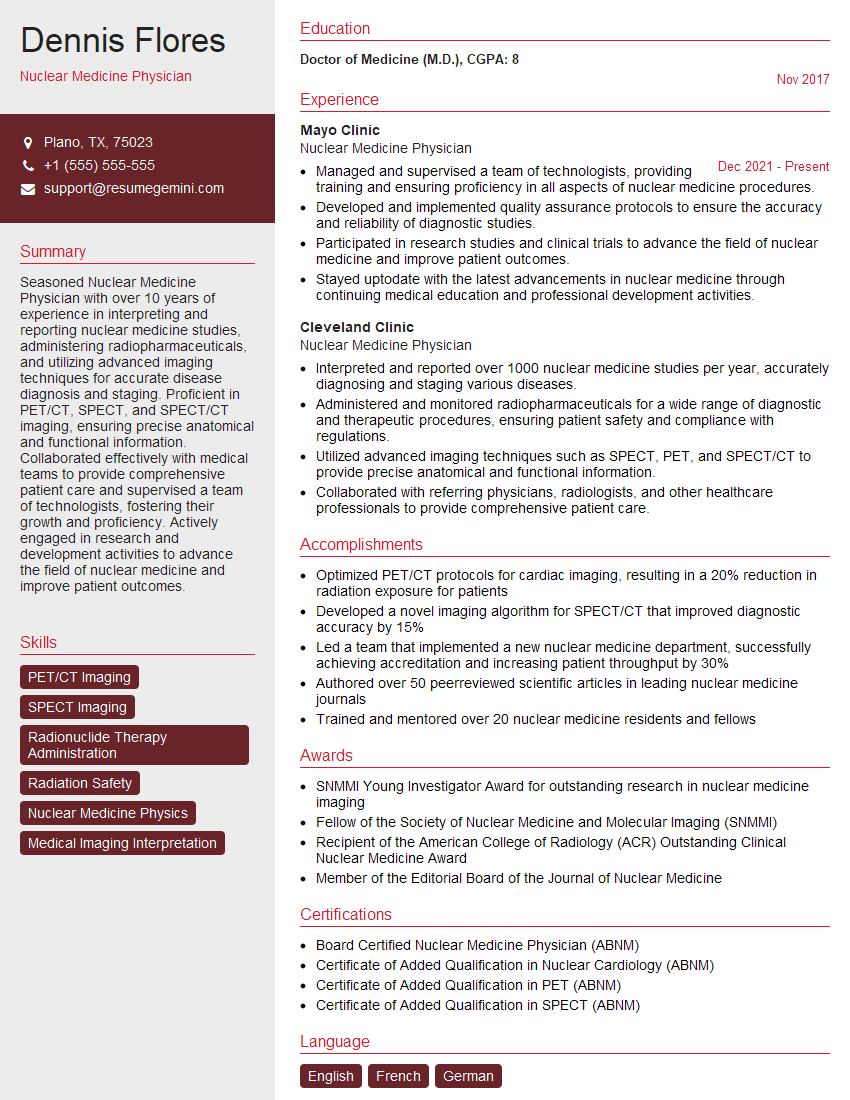
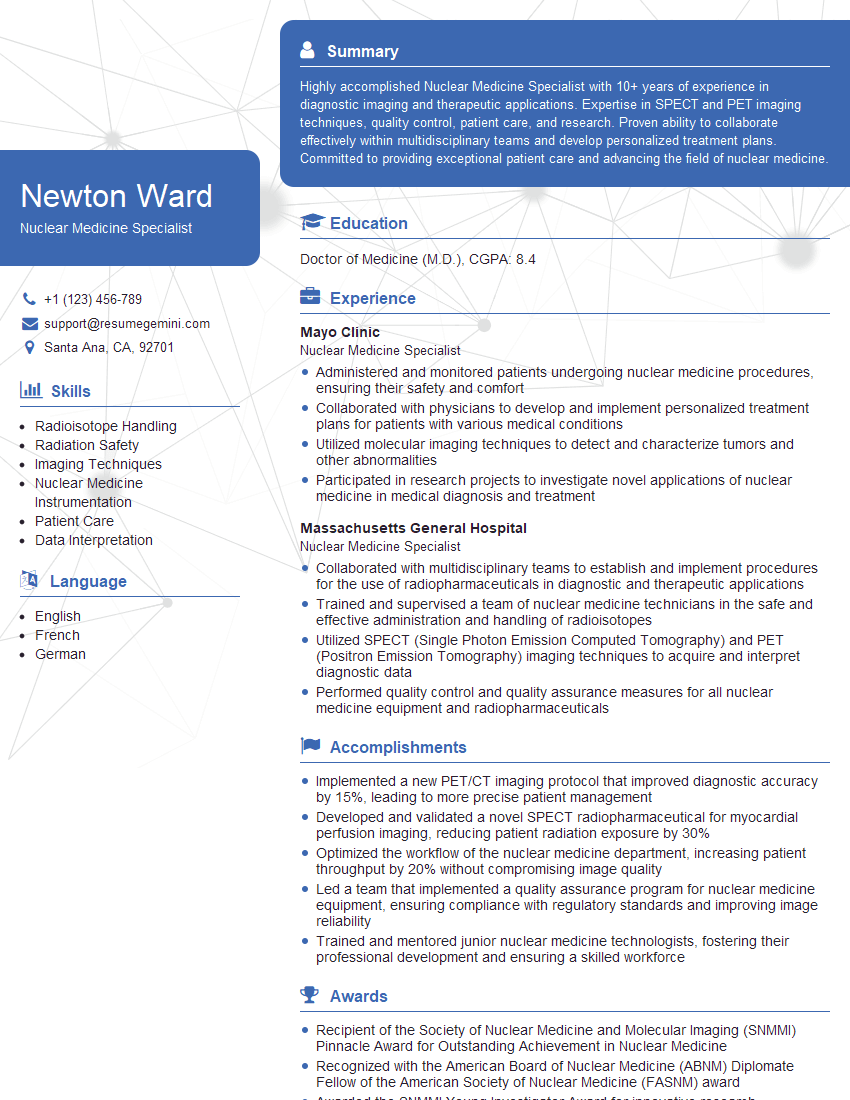
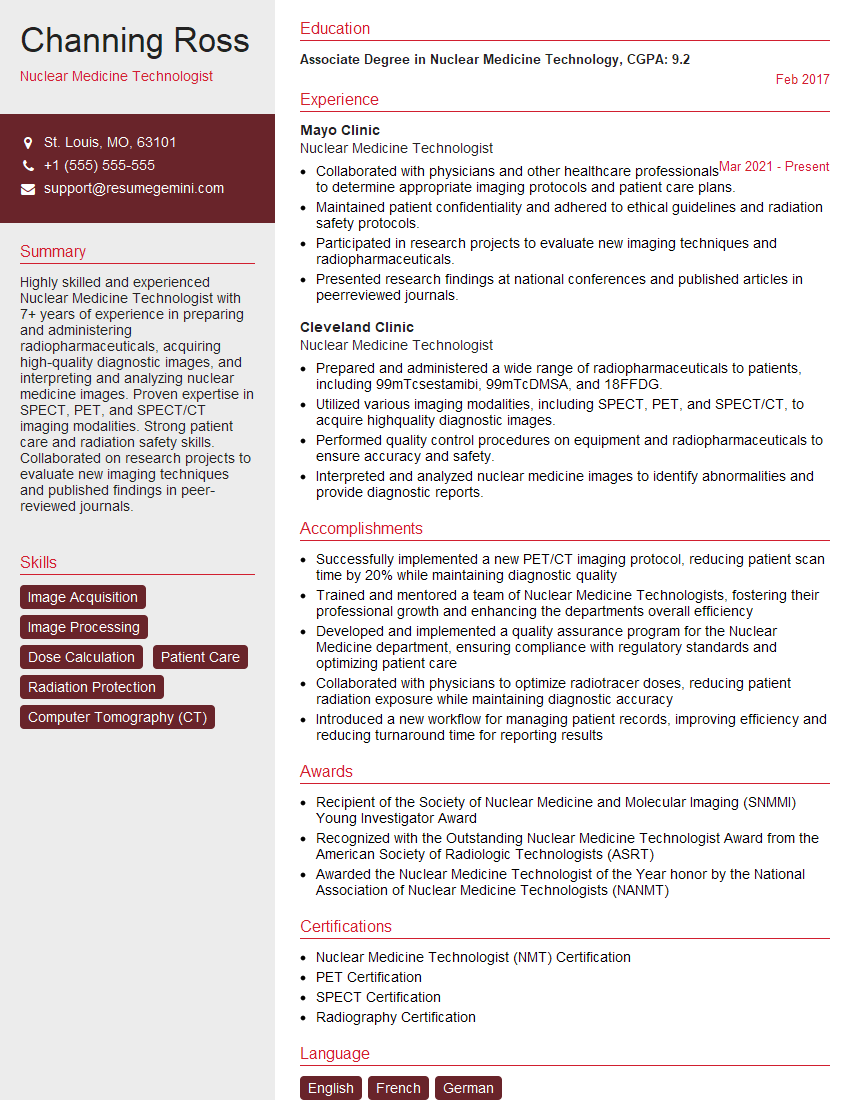
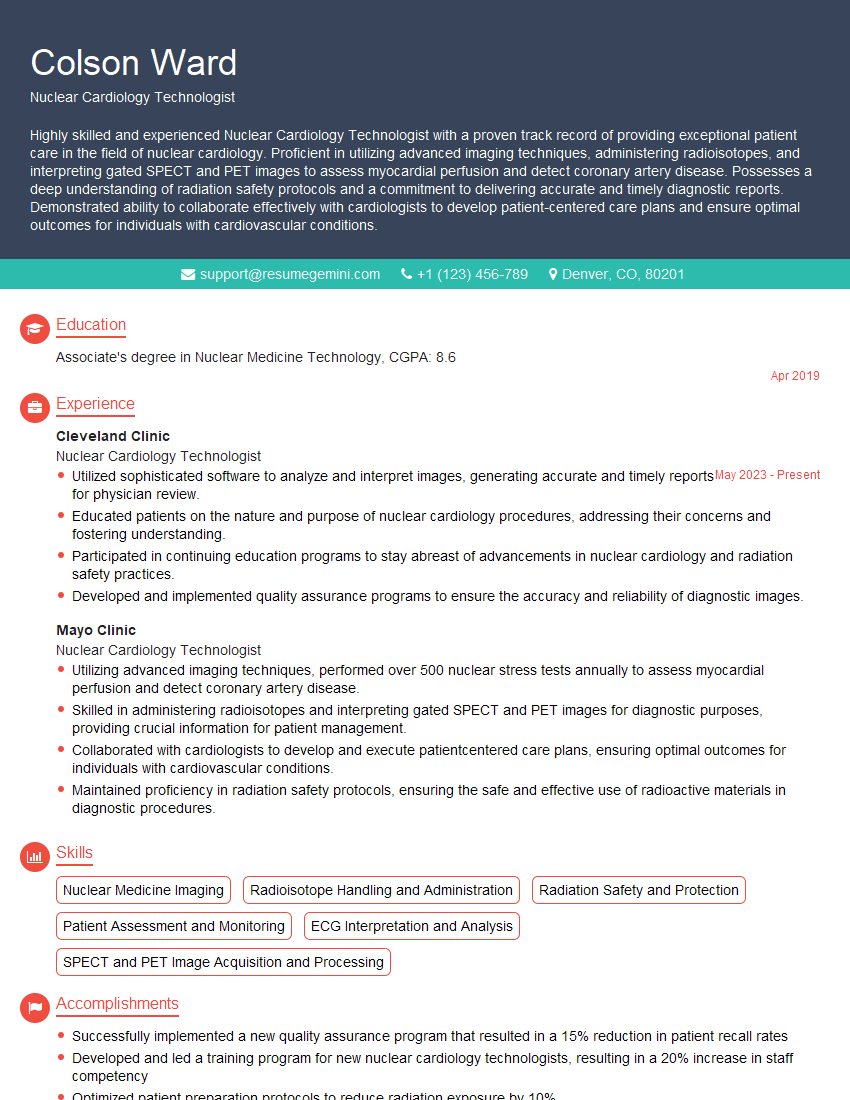
Mastering Proficient in Nuclear Medicine Procedures is crucial for career advancement in this dynamic field. A strong understanding of these topics will significantly enhance your interview performance and open doors to exciting opportunities. To maximize your job prospects, focus on building an ATS-friendly resume that effectively highlights your skills and experience. ResumeGemini is a trusted resource to help you create a professional and impactful resume. Examples of resumes tailored to showcasing proficiency in Nuclear Medicine Procedures are available to guide you through the process. Invest in your future – craft a compelling resume that showcases your expertise and lands you your dream job.
Explore more articles
Users Rating of Our Blogs
Share Your Experience
We value your feedback! Please rate our content and share your thoughts (optional).
What Readers Say About Our Blog
Amazing blog
hello,
Our consultant firm based in the USA and our client are interested in your products.
Could you provide your company brochure and respond from your official email id (if different from the current in use), so i can send you the client’s requirement.
Payment before production.
I await your answer.
Regards,
MrSmith
hello,
Our consultant firm based in the USA and our client are interested in your products.
Could you provide your company brochure and respond from your official email id (if different from the current in use), so i can send you the client’s requirement.
Payment before production.
I await your answer.
Regards,
MrSmith
These apartments are so amazing, posting them online would break the algorithm.
https://bit.ly/Lovely2BedsApartmentHudsonYards
Reach out at BENSON@LONDONFOSTER.COM and let’s get started!
Take a look at this stunning 2-bedroom apartment perfectly situated NYC’s coveted Hudson Yards!
https://bit.ly/Lovely2BedsApartmentHudsonYards
Live Rent Free!
https://bit.ly/LiveRentFREE
Interesting Article, I liked the depth of knowledge you’ve shared.
Helpful, thanks for sharing.
Hi, I represent a social media marketing agency and liked your blog
Hi, I represent an SEO company that specialises in getting you AI citations and higher rankings on Google. I’d like to offer you a 100% free SEO audit for your website. Would you be interested?