Preparation is the key to success in any interview. In this post, we’ll explore crucial Rapid Learning interview questions and equip you with strategies to craft impactful answers. Whether you’re a beginner or a pro, these tips will elevate your preparation.
Questions Asked in Rapid Learning Interview
Q 1. Define ‘Rapid Learning’ and differentiate it from traditional learning methods.
Rapid learning, also known as rapid instructional design (RID), is a streamlined approach to creating training materials that prioritizes speed and efficiency without sacrificing quality. Unlike traditional learning methods, which often involve lengthy development cycles and extensive resources, rapid learning focuses on delivering focused, effective training quickly. Traditional learning might involve months of curriculum development, pilot testing, and revision. Rapid learning aims to achieve similar results in a fraction of the time, often utilizing readily available resources and leveraging existing content.
For example, imagine training employees on a new software update. Traditional methods might involve a lengthy instructor-led training session followed by a workbook and quizzes. A rapid learning approach could utilize short, engaging video tutorials, interactive simulations, and concise knowledge checks, all delivered within a week.
Q 2. Describe your experience designing and implementing rapid learning programs.
In my previous role at a leading financial institution, I was tasked with designing and implementing a rapid learning program to onboard new compliance officers. We were facing a critical deadline and needed to get these officers up to speed quickly on complex regulations. My approach involved first identifying the critical knowledge and skills required, and then leveraging existing compliance documents and presentations. I curated this material, transforming it into a series of short, interactive e-learning modules, supplemented by short quizzes and scenario-based exercises. This approach allowed us to train over 50 officers in under two weeks, resulting in significant time and cost savings compared to a traditional training program.
Another project involved the rollout of a new CRM system. Instead of lengthy classroom training, we developed a series of short, engaging videos demonstrating key functionalities, combined with interactive exercises within the system itself. This blended learning approach fostered immediate application of knowledge, leading to faster adoption and improved user proficiency.
Q 3. What are the key principles of effective rapid learning strategies?
Effective rapid learning strategies hinge on several key principles: Focus: identifying and prioritizing only the most critical information needed; Simplicity: using clear, concise language and avoiding unnecessary jargon; Relevance: ensuring the content directly addresses learners’ needs and context; Engagement: incorporating interactive elements, visuals, and diverse learning styles; Iteration: continuously refining the learning materials based on feedback and performance data; and finally, Measurability: tracking and analyzing learning outcomes to assess effectiveness.
- Focus: Instead of a comprehensive overview, focus on specific tasks or skills.
- Simplicity: Use straightforward language and visuals.
- Relevance: Relate the content to the learners’ jobs and daily tasks.
- Engagement: Incorporate interactive elements like quizzes and simulations.
- Iteration: Gather feedback and revise based on learner performance.
- Measurability: Track key metrics like completion rates and knowledge retention.
Q 4. Explain how you assess learning needs and design tailored rapid learning solutions.
Assessing learning needs begins with a thorough needs analysis. This often involves surveys, interviews, and performance data analysis to identify knowledge gaps and skill deficiencies. For example, conducting interviews with subject matter experts and analyzing error logs from a software application can reveal common areas where training is needed. Once learning needs are identified, I design tailored solutions by selecting the most appropriate delivery methods (e.g., microlearning modules, videos, simulations, job aids). The content is then developed, keeping in mind the identified learning styles and preferences of the target audience. Consideration is given to accessibility requirements and diversity of learning styles. A well-designed solution aligns with the identified needs, ensuring the training is targeted, effective, and efficient.
Q 5. What methodologies do you utilize for rapid learning content development?
My methodology for rapid learning content development frequently utilizes a combination of techniques. Storyboarding is key for planning the flow of information and interaction. I frequently employ Agile development principles, using iterative development cycles with frequent feedback loops to ensure the learning material meets learners’ needs. Templates and reuse of existing content are used to accelerate the development process. Tools like authoring software (e.g., Articulate Storyline, Adobe Captivate) are leveraged for creating interactive e-learning modules. Microlearning principles, focused on delivering small, digestible chunks of information, are central to my approach. The final deliverable is tested through pilot programs involving a representative sample of the target learners, enabling immediate adjustments and refinements based on feedback.
Q 6. How do you measure the effectiveness of a rapid learning initiative?
Measuring the effectiveness of a rapid learning initiative goes beyond simple completion rates. I utilize a multi-faceted approach. Knowledge checks and post-training assessments measure knowledge acquisition. Performance data, such as improved efficiency or reduced error rates on the job, demonstrate practical application of learning. Learner feedback through surveys or focus groups provides valuable qualitative data. Return on investment (ROI) calculations, considering development costs, training time, and performance improvements, provide a comprehensive evaluation. This comprehensive approach ensures a complete picture of the program’s success and informs future iterations.
Q 7. What are some common challenges in implementing rapid learning programs, and how do you overcome them?
Common challenges in rapid learning include time constraints, limited resources, and stakeholder buy-in. To overcome these, I prioritize clear communication and project management. Utilizing readily available resources and adopting efficient development methodologies are crucial. Addressing concerns proactively and demonstrating the value of rapid learning through early successes can foster stakeholder buy-in. Managing expectations realistically and focusing on delivering high-impact learning outcomes rather than exhaustive coverage helps mitigate the pressure of tight deadlines. Effective communication and collaboration with stakeholders are paramount in overcoming these hurdles, ensuring everyone is aligned on goals, timelines and expectations.
Q 8. How do you adapt rapid learning strategies for different learning styles and preferences?
Adapting rapid learning strategies for diverse learners hinges on understanding and catering to individual learning styles and preferences. We can’t treat everyone the same; a one-size-fits-all approach is ineffective. Instead, I use a multi-modal approach, incorporating various learning methods to engage different cognitive styles.
- Visual Learners: For visual learners, I incorporate plenty of diagrams, infographics, videos, and interactive simulations. For example, instead of just explaining a complex process through text, I’d create a visually engaging flowchart or animation.
- Auditory Learners: Audio recordings, podcasts, and interactive lectures become crucial elements. I might include audio summaries of key concepts or incorporate narrated animations.
- Kinesthetic Learners: Hands-on activities, simulations, and role-playing are vital. For instance, if training on software, I would incorporate a practical exercise where learners use the software directly rather than just watching a demonstration.
- Read/Write Learners: These learners benefit from detailed written materials, summaries, and opportunities for note-taking and self-assessment. This could include providing detailed handouts, quizzes, and reflection prompts.
By offering diverse learning materials and activities, I ensure that every learner, regardless of their preferred learning style, can find effective ways to engage with the content and achieve their learning objectives. I also employ pre-assessments to understand learner’s existing knowledge and tailor the learning experience accordingly.
Q 9. Describe your experience using various rapid learning technologies (e.g., LMS, authoring tools).
My experience with rapid learning technologies is extensive. I’ve worked extensively with various Learning Management Systems (LMS) such as Moodle, Canvas, and Articulate 360, leveraging their features for content delivery, tracking progress, and facilitating communication. I’m proficient in authoring tools like Articulate Storyline and Adobe Captivate to create interactive e-learning modules, simulations, and branched scenarios.
For example, in a recent project, we used Articulate Storyline to develop a series of microlearning modules on customer service best practices. The interactive nature of the modules, incorporating quizzes and branching scenarios, resulted in increased engagement and knowledge retention. The LMS then allowed us to track learner progress, identify knowledge gaps, and provide targeted feedback.
Beyond the technical aspects, I understand the importance of selecting the right technology to meet specific project needs and budget constraints. This involves careful consideration of user experience, scalability, integration with existing systems, and overall cost-effectiveness.
Q 10. How do you ensure the scalability and sustainability of a rapid learning program?
Scalability and sustainability are paramount in rapid learning. A program can’t be successful if it’s expensive to maintain or difficult to adapt for a growing number of learners. My approach focuses on building a robust and flexible framework.
- Modular Design: I design learning content in small, reusable modules. This allows for easy updating and expansion of the program without requiring a complete overhaul.
- Technology Choice: Selecting scalable and adaptable technologies (like cloud-based LMS) is critical. This ensures that the system can handle a growing learner base and future changes in technology.
- Content Reusability: Content created should be adaptable and reusable across multiple training programs or contexts. For instance, a module on communication skills could be used in various training programs.
- Ongoing Maintenance: A plan for regular content updates and system maintenance is crucial for long-term sustainability. This involves setting up processes for feedback collection, content review, and system upgrades.
By focusing on these elements, I create rapid learning programs that are not only effective but also capable of serving a growing population of learners over an extended period without significant additional resource investment.
Q 11. Explain your approach to knowledge transfer and retention in rapid learning contexts.
Knowledge transfer and retention are crucial in rapid learning. My approach focuses on active learning and spaced repetition.
- Active Recall Techniques: Instead of passive learning, I incorporate activities like quizzes, flashcards, and knowledge checks throughout the learning process to encourage active recall and reinforce learning.
- Spaced Repetition: I design the learning experience to incorporate spaced repetition, where learners revisit key concepts at increasing intervals to strengthen memory consolidation. This could involve follow-up quizzes or reminders of key information.
- Community of Practice: Establishing a community of practice, either online or in-person, where learners can interact, share experiences, and support each other, is extremely effective for long-term retention.
- Gamification: Introducing game mechanics like points, badges, and leaderboards can improve engagement and enhance the learning experience, leading to better retention.
For instance, I’ve incorporated spaced repetition software into a project, which sent learners reminders about key concepts at strategic intervals, dramatically improving retention rates compared to traditional methods. The combination of these techniques significantly boosts learners’ ability to retain the information.
Q 12. How do you incorporate feedback and continuous improvement into your rapid learning designs?
Feedback and continuous improvement are central to the rapid learning process. It’s not a one-off event; it’s an iterative cycle.
- Learner Feedback: I consistently incorporate mechanisms for gathering learner feedback through surveys, quizzes, focus groups, and informal discussions. This feedback helps identify areas where the learning material can be improved or made more effective.
- Performance Data: I analyze performance data from the LMS, such as completion rates, quiz scores, and time spent on modules, to understand where learners are struggling and where the learning content needs adjustments.
- Agile Development: Employing an agile development methodology allows for incremental improvements and adaptations based on the feedback and data collected. We test and refine the learning content in short cycles.
- A/B Testing: In some cases, I conduct A/B testing of different learning materials or approaches to determine which is more effective. This data-driven approach ensures that changes are based on evidence rather than assumptions.
This continuous cycle of feedback collection, analysis, and improvement ensures that the rapid learning program remains relevant, engaging, and effective over time.
Q 13. Describe your experience with needs analysis techniques for rapid learning projects.
Needs analysis is the foundation of any successful rapid learning project. It’s about identifying the performance gap and determining the specific knowledge and skills learners need to acquire. I utilize a variety of techniques:
- Performance Data Analysis: Reviewing existing performance data (e.g., sales figures, customer satisfaction scores) to pinpoint areas needing improvement.
- Stakeholder Interviews: Conducting interviews with stakeholders (managers, supervisors, learners) to gather their perspectives on training needs.
- Surveys and Questionnaires: Using surveys and questionnaires to gather data from a larger group of learners or stakeholders.
- Focus Groups: Facilitating focus groups to gain in-depth insights from learners and identify potential barriers to learning.
- Observation: Observing learners in their work environment to directly identify skill gaps and performance issues.
For example, in a recent project, we used a combination of performance data analysis and stakeholder interviews to identify a significant gap in employee knowledge of a new software system. This needs analysis guided the design of a rapid learning program that directly addressed the identified gap, leading to a measurable improvement in employee performance.
Q 14. How do you manage time constraints when designing and implementing rapid learning solutions?
Time constraints are inherent in rapid learning. My approach focuses on efficiency and prioritization:
- Prioritization: Clearly define the most critical learning objectives and focus on delivering content that directly addresses those objectives. Less critical information can be incorporated later or omitted entirely.
- Microlearning: Breaking down learning content into small, focused modules allows learners to acquire knowledge in short bursts, making it easier to integrate into busy schedules.
- Reusing Existing Content: Identifying and repurposing existing training materials, wherever possible, significantly reduces development time.
- Templates and Frameworks: Using standardized templates and frameworks for creating learning materials speeds up the development process.
- Collaboration and Teamwork: Employing a team of designers, developers, and subject matter experts allows for parallel tasks and faster development.
For instance, in a time-sensitive project, we leveraged existing video content and repurposed it into shorter microlearning modules, significantly reducing development time without sacrificing learning effectiveness. This streamlined approach ensured that the critical training was delivered to employees promptly, even under tight deadlines.
Q 15. What are your preferred methods for delivering rapid learning content (e.g., online, in-person)?
My preferred methods for delivering rapid learning content are highly adaptable and depend on the specific learning objectives, target audience, and available resources. I believe in a blended learning approach, leveraging the strengths of both online and in-person modalities.
Online: I utilize various online platforms like learning management systems (LMS), interactive e-learning modules, microlearning videos, and gamified learning experiences. This allows for accessibility, scalability, and self-paced learning, catering to diverse schedules and learning styles. For example, I recently developed a series of short, engaging videos using screen recording software for a client needing quick onboarding for a new software system. Each video focused on a single key function, improving knowledge retention significantly.
In-person: While online learning is powerful, I find in-person workshops, facilitated discussions, and coaching sessions incredibly valuable, particularly for complex topics or when collaborative learning is desired. The interactive element fosters immediate feedback and stronger community building. A recent example involves a leadership development program where role-playing and group activities were central to participants’ learning and application of newly acquired skills.
Blended Learning: The most effective approach often involves a blend. For instance, pre-learning modules online can prepare participants before an in-person session, maximizing engagement and minimizing wasted time during face-to-face interaction. Post-session online resources then offer continued support and reinforcement of learning.
Career Expert Tips:
- Ace those interviews! Prepare effectively by reviewing the Top 50 Most Common Interview Questions on ResumeGemini.
- Navigate your job search with confidence! Explore a wide range of Career Tips on ResumeGemini. Learn about common challenges and recommendations to overcome them.
- Craft the perfect resume! Master the Art of Resume Writing with ResumeGemini’s guide. Showcase your unique qualifications and achievements effectively.
- Don’t miss out on holiday savings! Build your dream resume with ResumeGemini’s ATS optimized templates.
Q 16. How do you assess learner motivation and engagement in rapid learning programs?
Assessing learner motivation and engagement in rapid learning programs requires a multifaceted approach. It’s not just about completion rates; it’s about understanding the depth of learning and the application of knowledge.
Pre-training surveys: These help gauge initial interest and identify potential barriers to learning.
Regular check-ins and informal feedback: I use quick polls, quizzes, and open-ended questions within online modules or during in-person sessions to assess understanding and address any confusion immediately. Active participation in discussions also provides valuable insights.
Gamification and progress tracking: Using points, badges, leaderboards (judiciously, to avoid unhealthy competition), and clear progress indicators helps maintain learner motivation and provides a sense of accomplishment.
Post-training surveys and knowledge checks: These measure knowledge retention and identify areas for improvement. Feedback is crucial here, both to understand individual challenges and to refine future programs. I often use Kirkpatrick’s four levels of evaluation (reaction, learning, behavior, results) as a framework.
Observation and informal feedback: For in-person sessions, observing participants’ active participation, asking questions, and engaging in discussions provides valuable data on their level of engagement.
Q 17. How do you handle resistance to change or adoption challenges in rapid learning initiatives?
Resistance to change is a common hurdle in rapid learning initiatives. Addressing it requires a thoughtful and empathetic approach that acknowledges concerns and proactively addresses them.
Communicate the “Why”: Clearly articulate the need for the learning and how it will benefit learners and the organization. Highlighting tangible benefits and addressing anxieties early on is crucial.
Involve stakeholders: Engage learners and key stakeholders in the design process. This fosters a sense of ownership and reduces resistance. Conducting focus groups to understand needs and concerns is vital.
Champion early adopters: Identify and support early adopters who can act as role models and advocates for the new learning. Their positive experiences can influence others.
Provide ongoing support: Offer ample opportunities for questions, feedback, and troubleshooting. Mentorship and coaching can be especially helpful. Regular communication is key.
Address concerns directly: Actively listen to concerns and address them honestly and openly. If resistance persists, consider revisiting the design to address the underlying issues.
Celebrate successes: Acknowledge and reward progress to reinforce positive behaviors and build momentum.
Q 18. Describe your experience developing assessments to measure learning outcomes in rapid learning.
Developing effective assessments in rapid learning requires focusing on measuring learning outcomes efficiently and relevantly. I avoid lengthy exams and instead favor varied methods that assess different learning styles.
Knowledge checks integrated within modules: Short quizzes embedded within online courses provide immediate feedback and reinforce learning. This is formative assessment, focused on improving the learning process itself.
Performance-based assessments: These might involve simulations, case studies, or practical exercises that test application of knowledge in real-world scenarios. This allows measuring the learner’s ability to use their newly gained skills.
Short answer and essay questions: These offer insights into deeper understanding and analytical skills. However, they are often time consuming for both the learner and the grader. I use these strategically.
Surveys and feedback forms: These gather data on learner satisfaction, the effectiveness of the training, and areas for improvement. This helps make iterative improvements to the rapid learning programs.
For example, in a recent project training customer service representatives, we used a combination of short quizzes embedded in the e-learning modules, role-playing scenarios to assess communication skills, and a post-training survey to gauge overall satisfaction and identify areas needing improvement.
Q 19. What are the ethical considerations in designing and implementing rapid learning solutions?
Ethical considerations in rapid learning are paramount. They involve ensuring fairness, accessibility, and responsible use of data.
Accessibility: Ensuring content is accessible to learners with diverse needs, including those with disabilities. This requires adherence to accessibility guidelines like WCAG.
Bias and fairness: Avoiding bias in content and assessment materials. Using inclusive language and diverse examples is crucial.
Data privacy: Protecting learners’ personal data and ensuring compliance with relevant privacy regulations (like GDPR or CCPA).
Transparency: Being transparent about the purpose of data collection and how it will be used. Obtaining informed consent from learners is essential.
Authenticity: Ensuring learning materials are accurate and up-to-date. Avoiding misleading or manipulative techniques is vital for maintaining credibility.
Intellectual property: Respecting copyright and intellectual property rights when developing and using learning materials.
Q 20. Explain your understanding of cognitive load theory and its application to rapid learning.
Cognitive load theory (CLT) is crucial in rapid learning design. It emphasizes the limitations of working memory and suggests strategies to manage the cognitive load on learners.
Reducing extraneous cognitive load: This involves simplifying content, using clear and concise language, and minimizing distractions. For example, using consistent visual design, avoiding unnecessary animations, and breaking down complex information into smaller chunks are effective.
Optimizing intrinsic cognitive load: This involves structuring information logically and presenting it in a way that is easy to understand and process. This might involve using schemas, analogies, and examples to connect new information to existing knowledge.
Managing germane cognitive load: This involves encouraging learners to actively engage with the material, to reflect on what they’ve learned and connect it to their existing knowledge. This promotes deep processing and meaningful learning. Activities such as self-explanation prompts, concept mapping, and problem-solving are helpful here.
Applying CLT to rapid learning means designing concise, well-structured learning experiences that minimize distractions and maximize learner engagement. It’s about focusing on essential information and making it readily accessible to learners’ working memory.
Q 21. How do you leverage adult learning principles in your rapid learning designs?
Adult learning principles, such as those outlined by Malcolm Knowles’ Andragogy, are fundamental to successful rapid learning design. Adults are self-directed, experience-rich, and goal-oriented learners.
Learner autonomy: Providing learners with choices and control over their learning experience. This can involve offering various learning formats or allowing learners to choose topics or projects.
Relevance and applicability: Connecting learning content to learners’ real-world experiences and demonstrating its immediate applicability to their jobs or personal lives. Real-world case studies and simulations are effective tools.
Experiential learning: Incorporating hands-on activities, simulations, and problem-solving exercises to allow learners to actively apply their knowledge.
Collaboration and peer learning: Encouraging collaboration and peer-to-peer learning through group discussions, team projects, and mentoring opportunities.
Immediate feedback and reinforcement: Providing frequent feedback to learners and reinforcing learning through regular review and practice. Microlearning, spaced repetition, and immediate feedback mechanisms are useful tools.
By applying these principles, I ensure that rapid learning experiences are engaging, relevant, and ultimately effective in helping learners achieve their goals.
Q 22. Describe your experience with microlearning and its role in rapid learning.
Microlearning is a rapid learning approach that delivers content in short, focused bursts. Think of it as bite-sized learning nuggets, perfect for today’s busy professionals. It’s incredibly effective within a rapid learning framework because it tackles specific skills or knowledge points, allowing for quicker comprehension and retention compared to lengthy training sessions. I’ve successfully used microlearning modules, such as short videos (under 5 minutes), interactive quizzes, and infographics, to train employees on new software updates, compliance procedures, and customer service best practices. The key is to keep it concise, engaging, and directly relevant to the learner’s needs.
For instance, instead of a one-hour session on a new software feature, I’d create three 2-minute videos: one explaining the feature, one demonstrating its use, and one testing comprehension with a short quiz. This approach significantly improves completion rates and knowledge retention because learners can easily fit these short modules into their busy schedules.
Q 23. How do you integrate technology to enhance the effectiveness of rapid learning programs?
Technology is crucial for enhancing rapid learning programs. I leverage various tools to create engaging and effective learning experiences. Learning Management Systems (LMS) like Moodle or Canvas provide a structured platform for delivering content, tracking progress, and assessing learner performance. I also utilize authoring tools such as Articulate Storyline or Adobe Captivate to develop interactive e-learning modules with scenarios, simulations, and gamification elements. Mobile-first design is essential, ensuring accessibility across devices. Furthermore, I incorporate video conferencing tools like Zoom for live training sessions and webinars, fostering real-time interaction and feedback.
Data analytics play a key role. LMS dashboards provide insights into learner progress, identifying areas where learners struggle and requiring adjustments to the training materials. For example, if a significant portion of learners struggle with a specific module, I’ll revise that module to make it clearer or more engaging. This data-driven approach ensures continuous improvement and optimization of the learning process.
Q 24. What are the benefits and limitations of different rapid learning methods?
Several rapid learning methods exist, each with its own set of advantages and disadvantages.
- Microlearning: Benefits: Highly focused, easily digestible, improves completion rates. Limitations: May not be suitable for complex topics requiring in-depth understanding, requires careful planning to ensure comprehensive coverage.
- Gamification: Benefits: Increases engagement and motivation, improves knowledge retention through active participation. Limitations: Can be expensive to develop, may not be appropriate for all learning objectives.
- Blended Learning: Benefits: Combines online and offline learning methods, caters to different learning styles. Limitations: Requires careful coordination of different learning components, may be more time-consuming to implement.
- Just-in-Time Learning: Benefits: Delivers information precisely when needed, improving immediate application. Limitations: Requires a robust system for identifying and delivering the right information at the right time.
The optimal method depends on the specific learning objectives, target audience, available resources, and the complexity of the subject matter. A blended approach often yields the best results, combining the strengths of different methods.
Q 25. Explain your experience using data analytics to inform rapid learning strategies.
Data analytics are integral to my rapid learning strategies. I consistently track key performance indicators (KPIs) such as completion rates, time-on-task, quiz scores, and learner feedback. This data informs my decisions regarding content development, instructional design, and program effectiveness. For example, if completion rates are low for a particular module, I analyze the data to identify potential issues, such as overly complex content or a lack of engagement. I then revise the module based on the insights gained, perhaps simplifying the language, adding interactive elements, or breaking it down into smaller, more manageable chunks.
Example: Analyzing learner data revealed that employees struggled with a specific section of a software training module. By reviewing their quiz scores and feedback, I identified the cause as confusing terminology. I then updated the module to use simpler language and included visual aids, resulting in a significant improvement in learner performance.
Q 26. How do you ensure that rapid learning programs align with organizational goals?
Alignment with organizational goals is paramount. Before designing any rapid learning program, I conduct a thorough needs analysis to identify the skills gap and connect it to the organization’s strategic objectives. This involves collaborating with stakeholders from different departments to understand their needs and expectations. The learning objectives are then clearly defined, focusing on measurable outcomes that directly contribute to the organization’s goals. For example, if the organization aims to improve customer satisfaction, the rapid learning program might focus on enhancing customer service skills. Post-training assessments and ongoing performance monitoring ensure that the program is achieving its intended impact and remains aligned with the organization’s evolving needs.
Q 27. Describe a time you had to adapt your rapid learning approach due to unexpected challenges.
In one project, we were implementing a new CRM system. The initial rapid learning plan involved a series of e-learning modules followed by a hands-on workshop. However, due to an unexpected delay in the CRM system’s rollout, the hands-on component became impossible. To adapt, I quickly repurposed the e-learning modules, incorporating more realistic simulations and interactive exercises within the modules themselves. This allowed learners to gain practical experience without the physical access to the system, ensuring the training remained relevant and effective despite the unexpected challenge. Regular communication with stakeholders kept everyone informed and managed expectations, minimizing disruptions.
Q 28. What are your future goals in the field of rapid learning?
My future goals in rapid learning involve exploring the potential of Artificial Intelligence (AI) and machine learning to personalize the learning experience further. I aim to develop intelligent learning systems that adapt to individual learner needs, providing customized content and feedback in real time. This includes investigating the use of AI-powered tools for content creation, assessment, and performance analysis, enhancing efficiency and effectiveness. I also want to contribute to the field by researching and sharing best practices in the design and implementation of effective and scalable rapid learning programs, promoting continuous improvement and innovation within the field.
Key Topics to Learn for Rapid Learning Interview
- Learning Styles and Techniques: Understanding different learning approaches (visual, auditory, kinesthetic) and adapting techniques for optimal knowledge retention. Practical application: Analyzing your own learning style and applying effective strategies for interview preparation.
- Information Processing and Retention: Exploring strategies for efficient information processing, including active recall, spaced repetition, and interleaving. Practical application: Designing a personalized study plan leveraging these techniques for mastering Rapid Learning concepts.
- Effective Note-Taking and Summarization: Mastering techniques for concise and effective note-taking during learning and summarizing complex information for better understanding. Practical application: Creating comprehensive summaries of key Rapid Learning principles.
- Problem-Solving and Critical Thinking within Rapid Learning Contexts: Applying critical thinking skills to analyze problems, identify solutions, and make informed decisions quickly in scenarios relevant to Rapid Learning. Practical application: Practice solving hypothetical problems related to efficient learning and knowledge application.
- Knowledge Transfer and Application: Understanding how to effectively apply learned knowledge to new situations and contexts. Practical application: Preparing examples demonstrating your ability to translate theoretical concepts into practical solutions.
- Self-Assessment and Improvement: Identifying strengths and weaknesses in your learning process and implementing strategies for continuous improvement. Practical application: Regularly evaluating your learning methods and adjusting your approach as needed.
Next Steps
Mastering Rapid Learning techniques is crucial for career advancement, enabling you to quickly adapt to new challenges and efficiently acquire the skills needed for success. To maximize your job prospects, creating an ATS-friendly resume is essential. We strongly encourage you to leverage ResumeGemini, a trusted resource, to build a professional and impactful resume that highlights your Rapid Learning capabilities. Examples of resumes tailored to Rapid Learning are available below, providing valuable insights into crafting a compelling application.
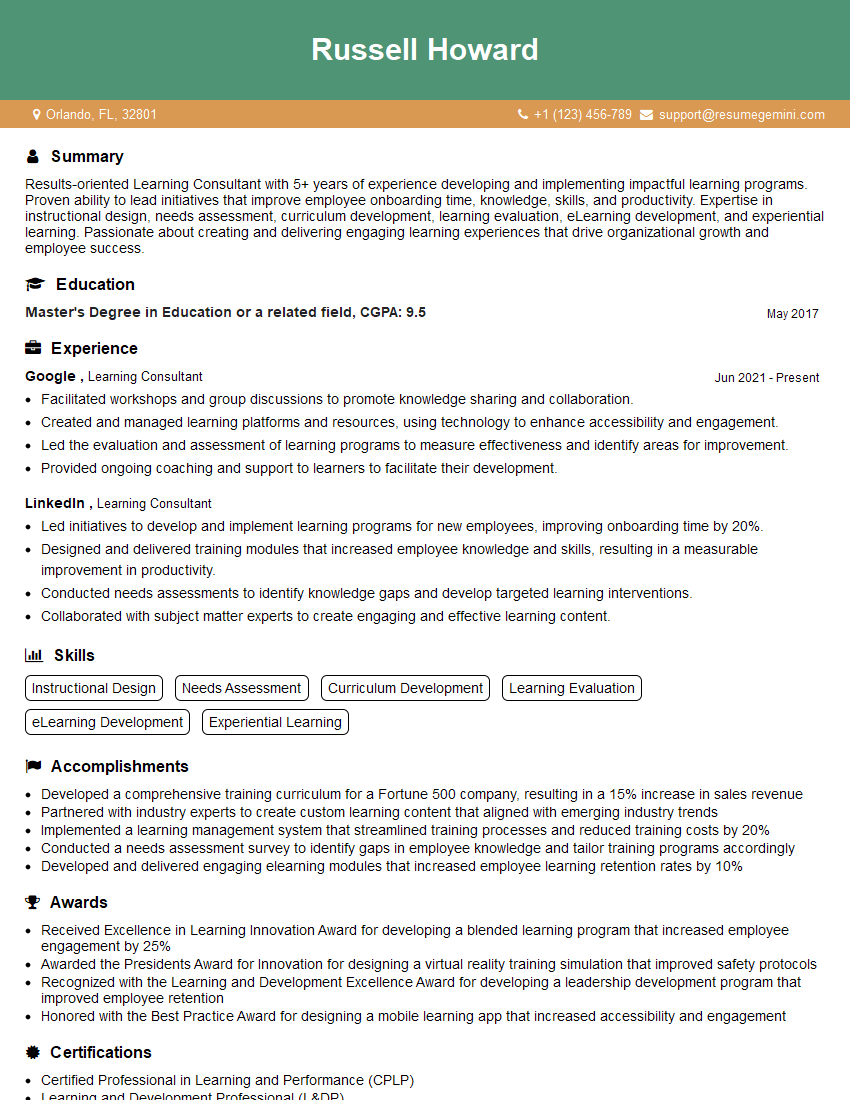
Learning Consultant Resume Sample
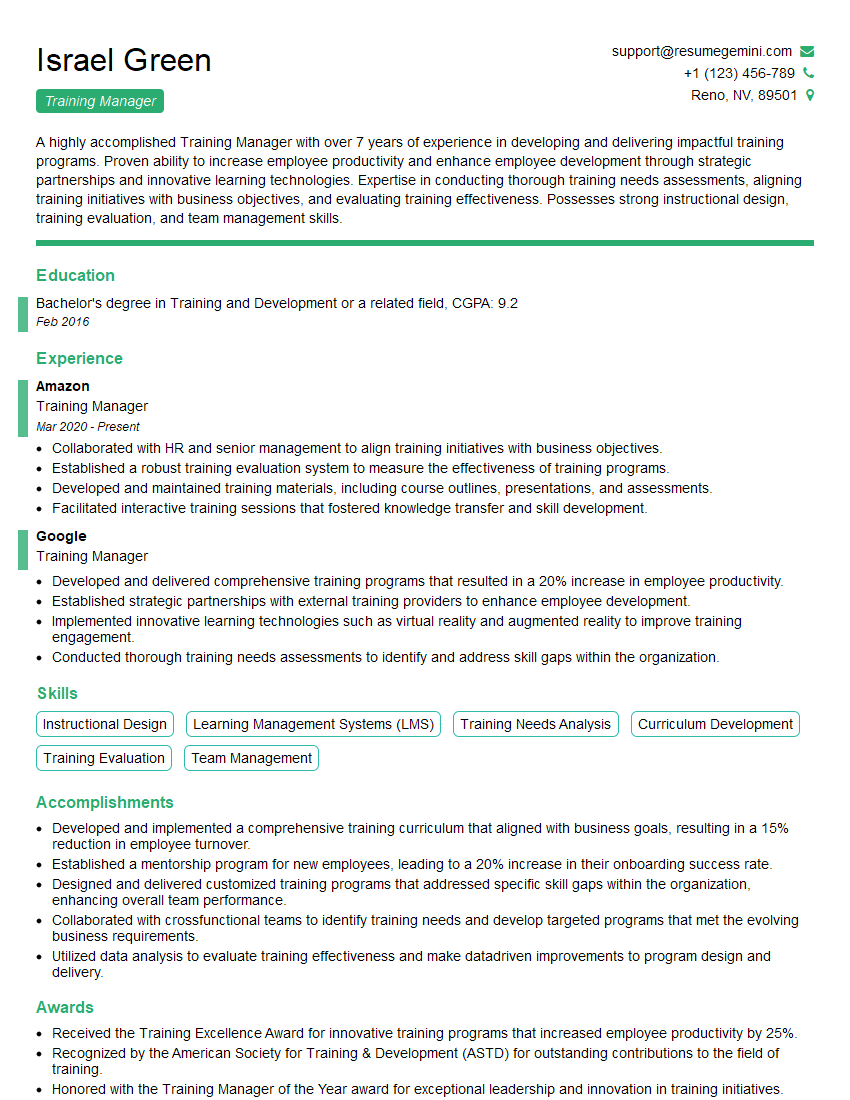
Training Manager Resume Sample
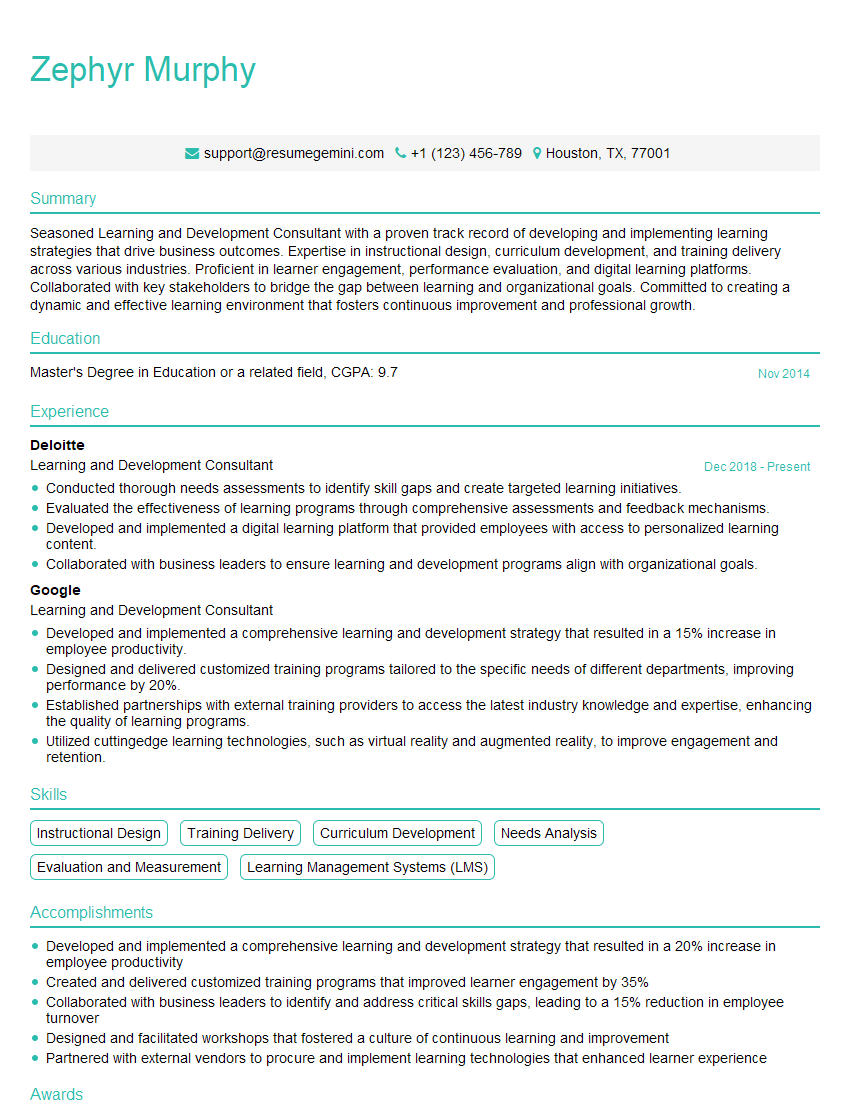
Learning and Development Consultant Resume Sample
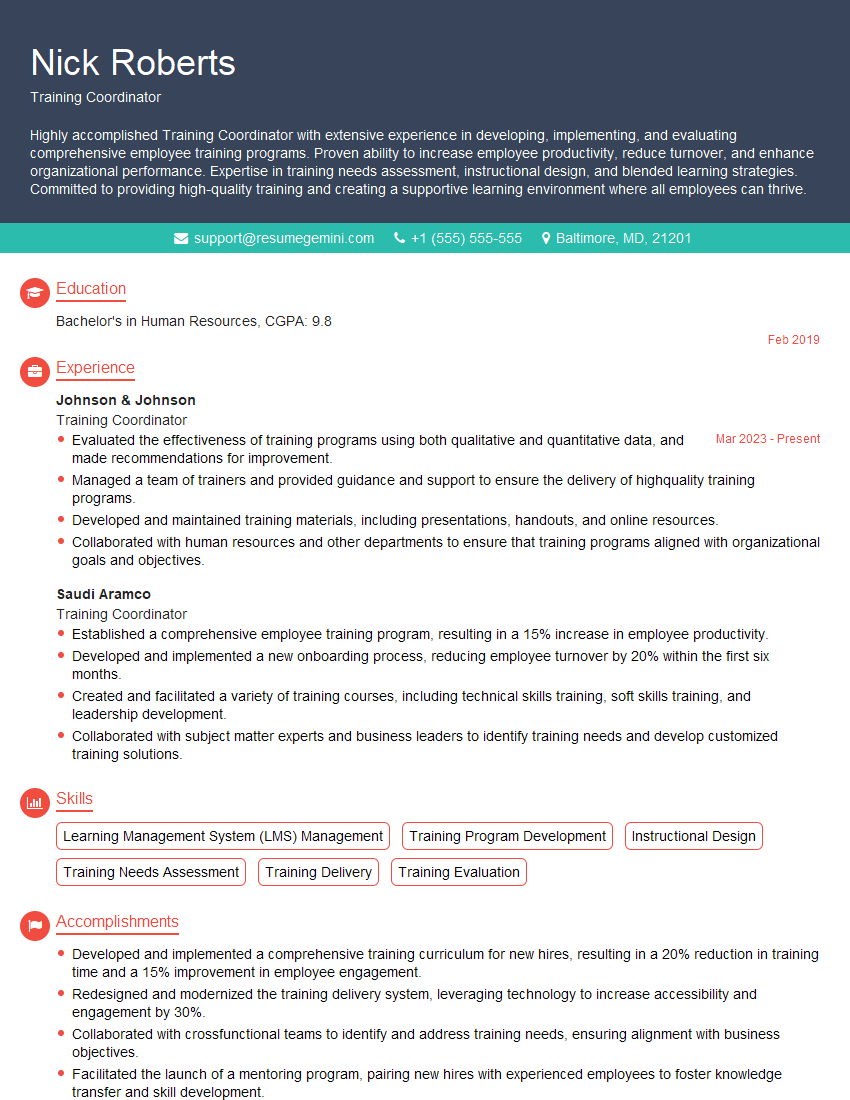
Training Coordinator Resume Sample
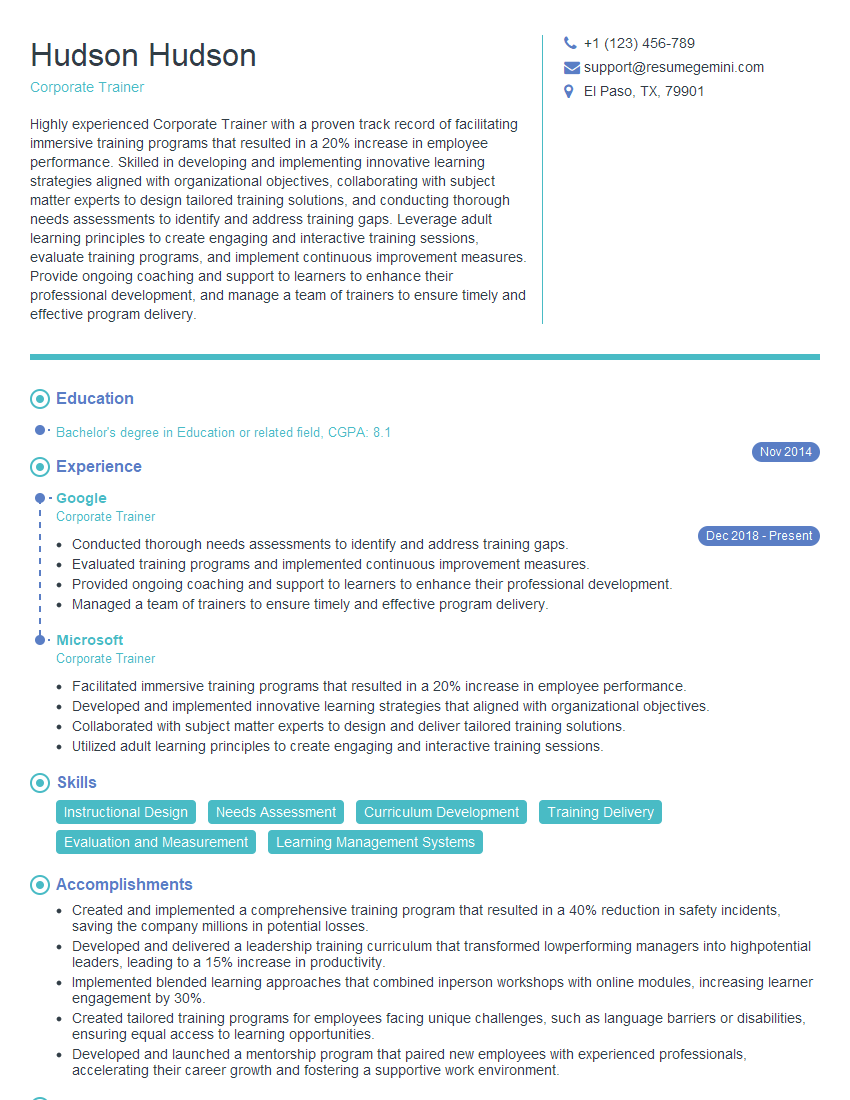
Corporate Trainer Resume Sample

Curriculum Developer Resume Sample
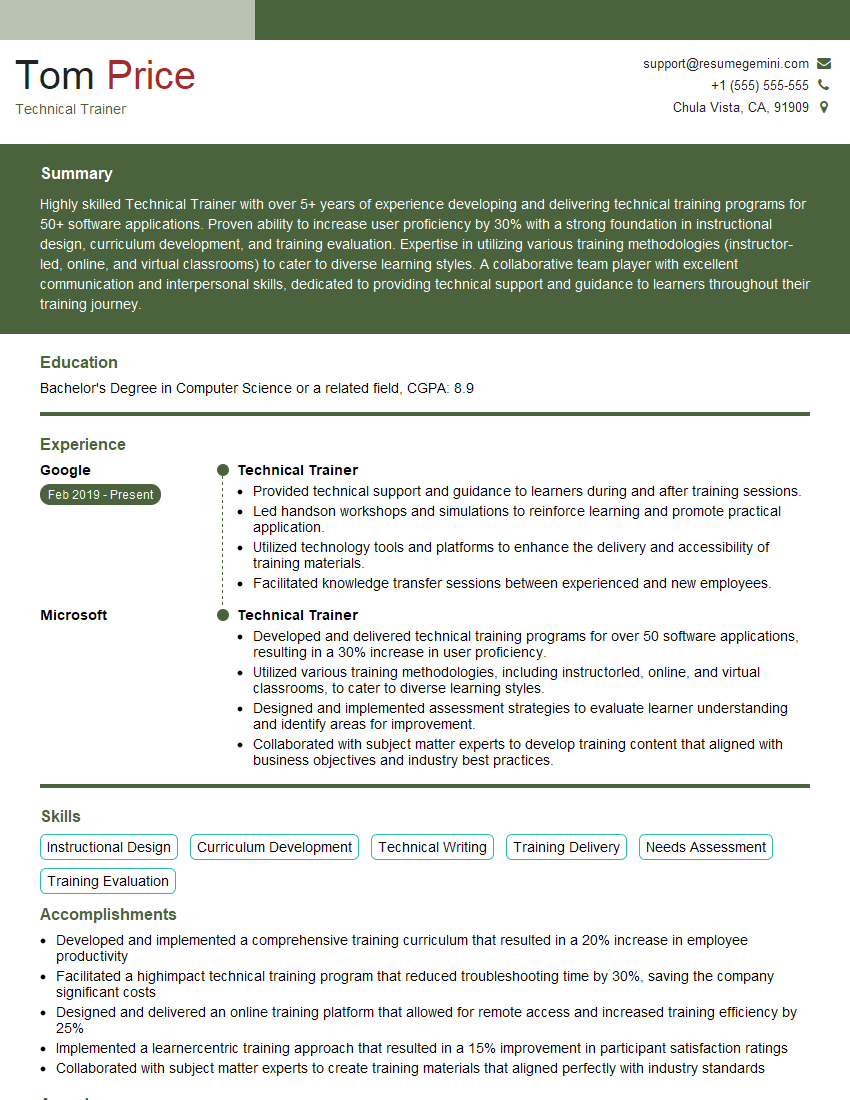
Technical Trainer Resume Sample

Training Specialist Resume Sample
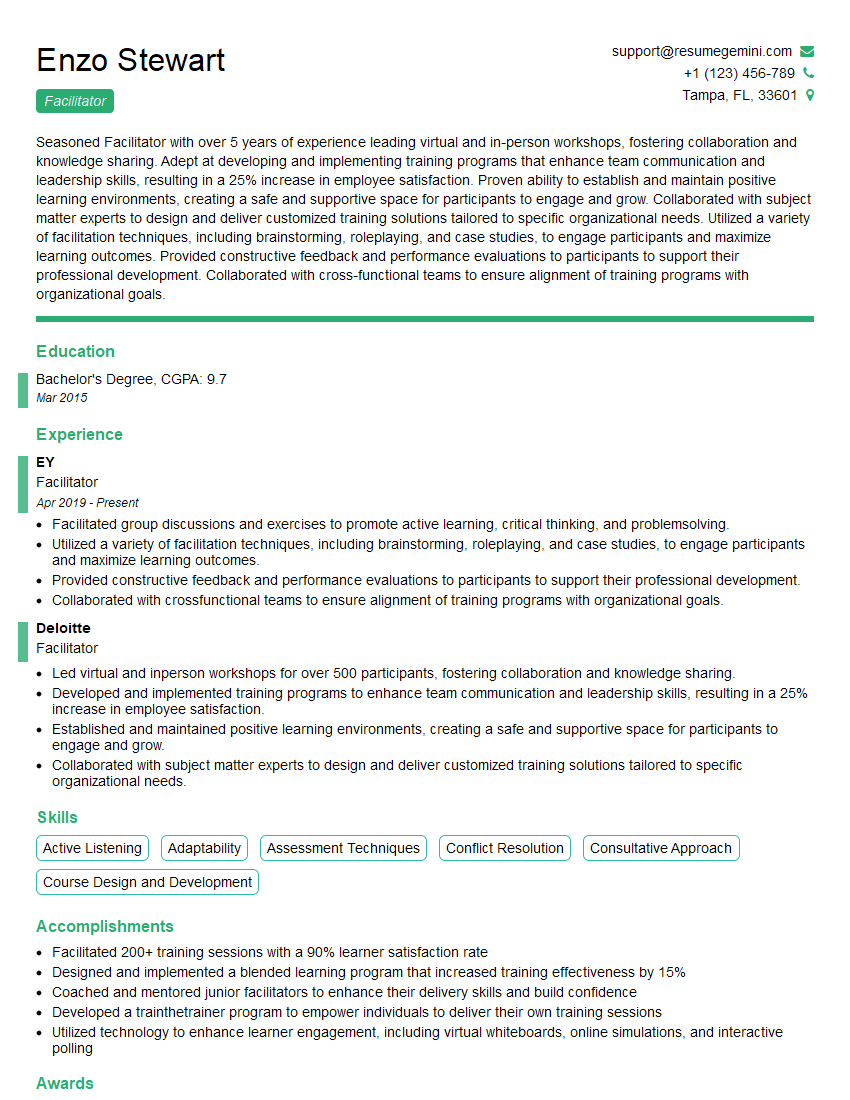
Facilitator Resume Sample
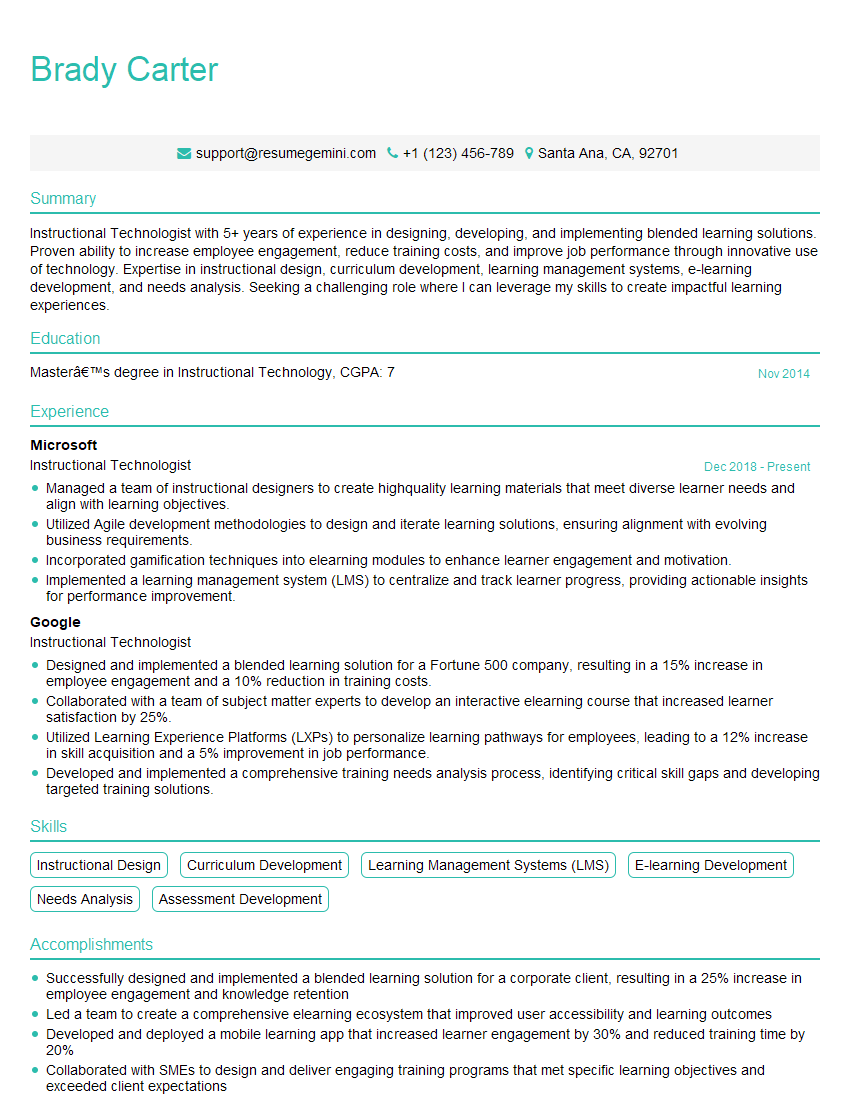
Instructional Technologist Resume Sample
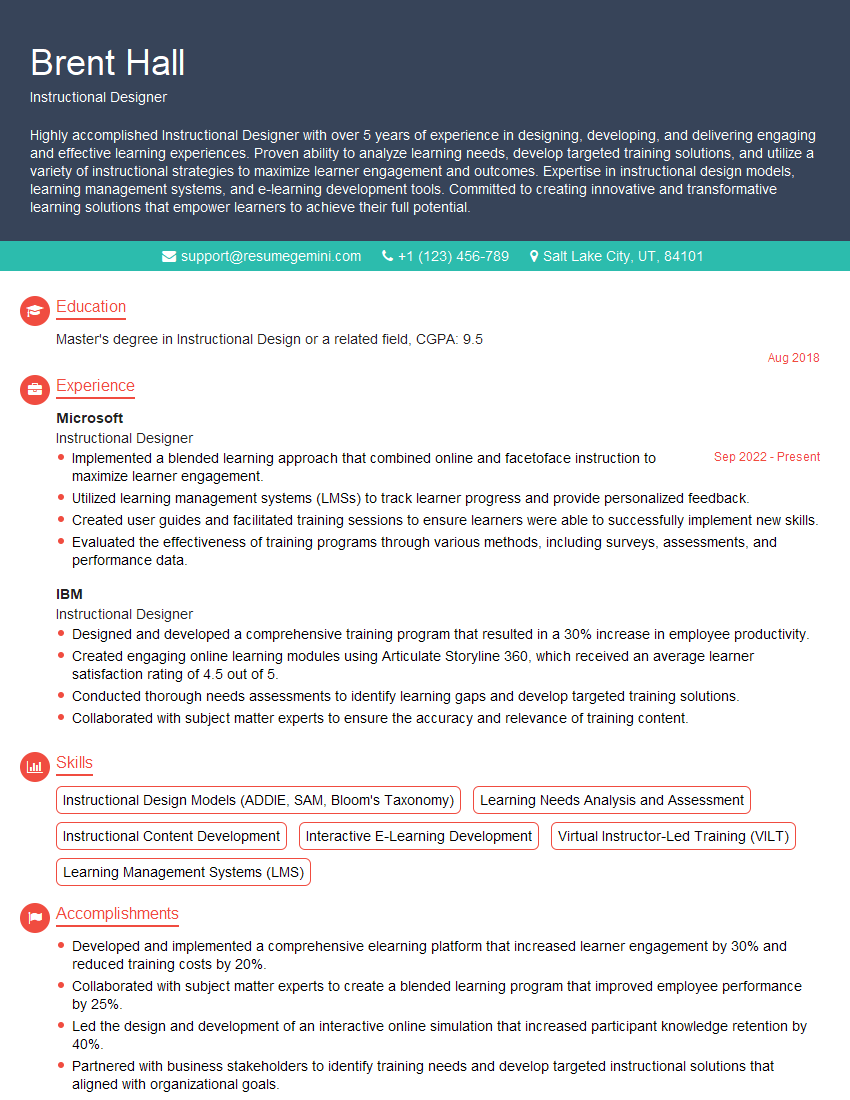
Instructional Designer Resume Sample
Explore more articles
Users Rating of Our Blogs
Share Your Experience
We value your feedback! Please rate our content and share your thoughts (optional).
What Readers Say About Our Blog
Amazing blog
Interesting Article, I liked the depth of knowledge you’ve shared.
Helpful, thanks for sharing.