Interviews are more than just a Q&A session—they’re a chance to prove your worth. This blog dives into essential Recruitment Process Optimization interview questions and expert tips to help you align your answers with what hiring managers are looking for. Start preparing to shine!
Questions Asked in Recruitment Process Optimization Interview
Q 1. Describe your experience optimizing recruitment processes in a previous role.
In my previous role at a fast-growing tech startup, we faced a significant challenge: scaling our recruitment process to keep pace with our expanding teams. Our initial process was largely manual, leading to inefficiencies and a high time-to-hire. To optimize this, I implemented a multi-pronged approach. First, we transitioned to an Applicant Tracking System (ATS), specifically Lever, which automated many tasks like candidate screening and communication. This significantly reduced administrative burden. Second, I redesigned the interview process, streamlining it to three rounds instead of five, focusing on competency-based questions for better candidate assessment. Third, I introduced a standardized offer letter template to expedite the offer process. The results were dramatic. We reduced time-to-hire by 40%, improved candidate experience scores by 25%, and increased the number of hires by 30% within six months.
I also focused on improving internal communication. We implemented a system where recruiters and hiring managers regularly communicated through shared documents and weekly check-ins, minimizing confusion and delays. Finally, I worked to create more detailed and consistent job descriptions, leading to a better match between candidates and roles.
Q 2. What key performance indicators (KPIs) do you track to measure recruitment process efficiency?
Measuring recruitment process efficiency requires tracking several key performance indicators (KPIs). These can be broadly categorized into:
- Time-to-hire: The time elapsed between job posting and offer acceptance. A shorter time-to-hire indicates efficiency.
- Cost-per-hire: The total cost of recruiting a candidate, including advertising, recruiter time, and agency fees. Lower cost-per-hire shows cost-effectiveness.
- Source of hire: Identifying where successful candidates are found (e.g., LinkedIn, referrals, job boards) to optimize recruitment strategies.
- Candidate quality: Measured by metrics like offer acceptance rate, candidate satisfaction, and employee retention rate of new hires. Higher acceptance rates and longer employee tenure indicate better quality hires.
- Application completion rate: Measures how many applicants complete the entire application process. A low rate may point to cumbersome applications.
- Time-to-fill: The time it takes to fill a vacant position. Similar to time-to-hire but focuses solely on filling the role, regardless of offer acceptance.
By tracking these KPIs, we can pinpoint areas needing improvement and measure the impact of optimization initiatives.
Q 3. How do you identify bottlenecks in the recruitment process?
Identifying bottlenecks requires a systematic approach. I typically start by mapping the entire recruitment process, from job posting to onboarding. This could involve creating a flowchart or a process map that visually represents each step and its associated timeframe. Then, I analyze the data collected from the KPIs, focusing on areas with the longest processing times or the highest drop-off rates. For example, if the time spent in the interview stage is exceptionally long, it indicates a potential bottleneck.
Additionally, I conduct interviews with recruiters, hiring managers, and candidates to gather qualitative data. Candidate feedback, especially, is invaluable in uncovering pain points in the process. For instance, negative feedback regarding confusing application forms or lengthy questionnaires suggests a bottleneck in the application stage. Finally, I might use process mining tools to visualize the flow of candidates through the process, providing a granular view of potential bottlenecks.
Q 4. Explain your approach to improving candidate experience.
Improving candidate experience is crucial for attracting top talent and building a strong employer brand. My approach is multifaceted:
- Streamlined application process: Making the application process as quick and easy as possible, ideally using a mobile-friendly application form.
- Prompt and transparent communication: Keeping candidates informed throughout the process, with automated email updates and timely responses to inquiries.
- Engaging interviews: Conducting structured interviews that are engaging and respectful of the candidates’ time.
- Meaningful feedback: Providing feedback, even if the candidate isn’t selected, to help them in future job applications. This also strengthens employer brand reputation.
- Personalized experience: Tailoring communication and the interview process to the specific role and candidate.
Think of it like this: a positive candidate experience is like a great first impression; it leaves a lasting impact regardless of the outcome. A poor candidate experience can damage your employer brand and dissuade future applications.
Q 5. What strategies do you employ to reduce time-to-hire?
Reducing time-to-hire involves optimizing each stage of the recruitment process. Strategies I employ include:
- Improving job descriptions: Writing clear and concise job descriptions that attract qualified candidates and reduce the number of unsuitable applications.
- Utilizing effective sourcing strategies: Leveraging multiple channels like social media, employee referrals, and specialized job boards to reach a wider pool of qualified candidates quickly.
- Automating screening processes: Using Applicant Tracking Systems (ATS) and AI-powered tools to automate screening and filtering of resumes, reducing manual workload.
- Streamlining interviews: Conducting effective interviews with structured questions and a clear evaluation process.
- Accelerated offer process: Having a clear and efficient offer process, with pre-approved compensation packages to speed up the final stage.
- Parallel processing: Conducting multiple stages of the interview process concurrently whenever possible.
Remember, it’s about making every step in the recruitment journey faster without sacrificing the quality of the hires.
Q 6. How do you measure the ROI of recruitment process optimization initiatives?
Measuring the ROI of recruitment process optimization initiatives is crucial to demonstrate its value. We calculate this by comparing the costs and benefits before and after the implementation of optimization strategies.
Costs: These include the cost of implementing new technologies, training staff, and any associated consulting fees.
Benefits: These are measured by improvements in KPIs like time-to-hire, cost-per-hire, and quality of hire. For example, a reduction in time-to-hire translates to faster filling of vacant positions, leading to quicker revenue generation and less disruption to workflow. A decrease in cost-per-hire directly reduces recruitment expenditure. Improvements in candidate quality lead to higher employee retention rates, resulting in long-term cost savings associated with hiring and training replacements.
By calculating the difference between the costs and the value of the benefits (e.g., increased productivity from faster hiring), we can determine the overall ROI, demonstrating the financial impact of our optimization efforts.
Q 7. What recruitment technologies are you familiar with and how have you utilized them to improve efficiency?
I’m proficient with various recruitment technologies, including Applicant Tracking Systems (ATS) like Taleo, Workday, and Lever; candidate relationship management (CRM) systems like Greenhouse; and AI-powered tools such as those offered by Eightfold AI and Pymetrics.
In a previous role, we implemented Lever ATS to manage the entire recruitment lifecycle. This automated tasks such as candidate sourcing, screening, and communication, significantly reducing manual effort and improving efficiency. The integration with our calendar also simplified scheduling interviews. We also utilized LinkedIn Recruiter to proactively target and engage passive candidates. This resulted in a more diverse candidate pool and faster filling of specialized roles. Furthermore, integrating AI-powered tools for candidate screening helped us identify the most promising candidates more quickly, improving the quality of our applicant pool. The use of these technologies allowed us to focus on higher-value tasks, like building relationships with candidates and conducting more in-depth interviews.
Q 8. Describe a time you had to implement a significant change to a recruitment process. What was the outcome?
In my previous role at a rapidly growing tech startup, we were using a highly manual and inefficient recruitment process. Candidate tracking was done via spreadsheets, communication was fragmented across various platforms, and the overall experience for both candidates and recruiters was cumbersome. I proposed a significant shift to a centralized Applicant Tracking System (ATS) and a streamlined recruitment workflow. This involved a multi-stage process:
- Selection and Implementation of ATS: We thoroughly evaluated various ATS solutions, considering features like candidate relationship management (CRM), automated communication tools, and reporting capabilities. We chose one that best fit our budget and organizational needs.
- Training and Adoption: We conducted comprehensive training sessions for all recruiters and hiring managers on the new system, focusing on its functionalities and best practices for data management.
- Process Mapping and Optimization: We mapped out the existing recruitment process, identifying bottlenecks and inefficiencies. We then redesigned the workflow leveraging the ATS features to automate tasks such as candidate screening, scheduling interviews, and sending automated communications.
The outcome was remarkable. We saw a 40% reduction in time-to-hire, a 25% increase in candidate application volume, and a significant improvement in candidate experience, as evidenced by increased positive feedback and improved Net Promoter Score (NPS). The centralized data also improved our ability to track key metrics and make data-driven decisions.
Q 9. How do you ensure data accuracy and integrity in recruitment metrics?
Data accuracy and integrity are paramount in recruitment metrics. Inaccurate data can lead to flawed insights and poor decision-making. My approach centers around:
- Standardized Data Collection: I implement standardized data collection methods across all stages of the recruitment process. This includes clearly defined metrics and consistent data entry protocols.
- Regular Data Validation: I regularly validate data against source documents to ensure accuracy and consistency. This involves spot-checking data entries and reconciling them with original application forms, interview notes, and offer letters.
- Data Governance Policies: I establish clear data governance policies, including guidelines for data access, modification, and deletion. This ensures accountability and minimizes the risk of errors.
- Use of Automated Systems: Employing an ATS greatly reduces manual data entry, minimizing human error. Integration with other HR systems further enhances data integrity.
- Training and Awareness: Regular training programs for recruiters and hiring managers emphasize the importance of data accuracy and the consequences of errors.
Think of it like building a house – you need a solid foundation (accurate data) to build a sturdy structure (informed decisions). Compromising on data integrity is like using faulty building materials; it risks the entire project’s success.
Q 10. What is your experience with applicant tracking systems (ATS)?
I have extensive experience with various Applicant Tracking Systems (ATS), including Taleo, Workday, and Greenhouse. My expertise extends beyond simply using the systems; I understand how to configure them to optimize our specific recruitment needs. This involves:
- Customization of workflows: Tailoring the ATS to our specific hiring processes, including job posting templates, interview scheduling, and candidate communication.
- Integration with other systems: Connecting the ATS with other HR and payroll systems for seamless data flow and automation. This minimizes manual data entry and enhances efficiency.
- Reporting and analytics: Using the ATS reporting features to track key recruitment metrics, analyze trends, and identify areas for improvement.
- Data migration: Successfully migrating data from legacy systems to new ATS platforms, ensuring minimal disruption and data loss.
For instance, in a previous project, I successfully implemented Greenhouse, resulting in a 30% reduction in administrative tasks and a significant improvement in candidate communication.
Q 11. How do you handle situations where different stakeholders have conflicting priorities in the recruitment process?
Conflicting stakeholder priorities are common in recruitment. My approach involves:
- Facilitated Discussion: I create a collaborative environment where all stakeholders can express their priorities and concerns.
- Prioritization Framework: We work together to define a prioritization framework based on factors like business urgency, candidate quality, and budget constraints.
- Compromise and Negotiation: I facilitate constructive dialogue and negotiation to find mutually acceptable solutions.
- Data-Driven Decision Making: Using data and metrics to support decisions and demonstrate the impact of different options.
- Clear Communication and Transparency: Maintaining clear and consistent communication to ensure all stakeholders are informed and aligned.
For example, if the hiring manager wants a candidate with very specific technical skills while the budget restricts the salary range, I facilitate a discussion that explores alternatives like adjusting the job description or extending the search timeline.
Q 12. Describe your experience with creating and managing recruitment budgets.
I have significant experience in creating and managing recruitment budgets. My approach involves:
- Budget Planning: Working with stakeholders to forecast recruitment needs and develop a detailed budget that aligns with overall organizational goals.
- Cost Analysis: Analyzing various recruitment channels and strategies to determine their cost-effectiveness.
- Tracking and Monitoring: Regularly monitoring expenses against the budget and identifying any variances.
- Cost Optimization: Implementing strategies to optimize costs without compromising quality, such as leveraging internal talent pools or using cost-effective recruitment channels.
- Reporting and Forecasting: Providing regular budget reports and forecasting future recruitment costs.
In a previous role, I implemented a cost-saving initiative by leveraging social media recruitment, reducing external agency fees by 15%.
Q 13. How do you ensure compliance with relevant employment laws and regulations throughout the recruitment process?
Compliance with employment laws and regulations is non-negotiable. My approach ensures adherence through:
- Staying Updated: I stay abreast of the latest employment laws and regulations, including those related to equal opportunity, data protection, and workplace safety.
- Policy Development and Implementation: I ensure the organization has robust recruitment policies that are aligned with legal requirements.
- Training and Education: I provide training to recruiters and hiring managers on legal compliance requirements.
- Regular Audits: I conduct periodic audits of recruitment processes to ensure compliance.
- Legal Counsel: I collaborate with legal counsel to address any compliance-related issues.
Failing to comply can result in significant legal and reputational damage. Proactive compliance is crucial for minimizing risk.
Q 14. What are some common challenges in recruitment process optimization, and how have you overcome them?
Common challenges in recruitment process optimization include:
- Slow Time-to-Hire: This can be addressed by streamlining the recruitment process, automating tasks, and improving communication.
- High Candidate Drop-off Rates: This can be tackled by improving candidate experience, providing timely communication, and offering a positive employer brand.
- Lack of Qualified Candidates: This requires targeted recruitment strategies, focusing on specific skill sets and leveraging niche platforms.
- Bias in Hiring: Implementing structured interviews, blind resume screening, and diversity training can mitigate bias.
- Ineffective Candidate Sourcing: This requires a multi-channel approach, utilizing various sourcing techniques and analytics to optimize efforts.
For example, to address a high candidate drop-off rate, I implemented a multi-stage automated communication system, providing candidates with regular updates on their application status. This resulted in a significant reduction in drop-off rates.
Q 15. Explain your understanding of different sourcing strategies and their effectiveness.
Sourcing strategies are the methods used to identify and attract potential candidates. Effectiveness depends heavily on the role, industry, and company culture. Here are a few key strategies and their strengths and weaknesses:
- Direct Sourcing: This involves proactively identifying and contacting candidates directly through platforms like LinkedIn. It’s highly effective for niche roles and allows for personalized outreach, but it’s time-consuming. Example: Directly messaging experienced data scientists on LinkedIn who fit a specific project profile.
- Job Boards: Platforms like Indeed, Monster, and CareerBuilder reach a broad audience, but can lead to high volumes of unqualified applicants. Example: Posting a job description on Indeed and filtering applications based on keywords.
- Social Media Recruiting: Using platforms like LinkedIn, Twitter, and even Instagram to engage with passive candidates. It’s great for employer branding and reaching specific demographics, but requires a strong social media presence and consistent engagement. Example: Running a targeted LinkedIn ad campaign for software engineers with specific skillsets.
- Employee Referrals: Leveraging your existing employees’ networks. It leads to higher-quality hires and faster onboarding, but relies heavily on employee participation and a positive company culture. Example: Implementing a referral bonus program to incentivize employees to refer qualified candidates.
- Recruitment Agencies (RPOs): Outsourcing the sourcing process to specialized firms. This frees up internal resources but can be costly. Example: Partnering with a recruitment agency specializing in finance professionals to fill a senior finance role.
The most effective strategy often involves a multi-pronged approach, combining several methods to maximize reach and candidate quality.
Career Expert Tips:
- Ace those interviews! Prepare effectively by reviewing the Top 50 Most Common Interview Questions on ResumeGemini.
- Navigate your job search with confidence! Explore a wide range of Career Tips on ResumeGemini. Learn about common challenges and recommendations to overcome them.
- Craft the perfect resume! Master the Art of Resume Writing with ResumeGemini’s guide. Showcase your unique qualifications and achievements effectively.
- Don’t miss out on holiday savings! Build your dream resume with ResumeGemini’s ATS optimized templates.
Q 16. How do you build and maintain strong relationships with hiring managers?
Building strong relationships with hiring managers is crucial for successful recruitment. It’s a two-way street built on trust, open communication, and mutual respect. I approach it in a few key ways:
- Proactive Communication: I regularly check in with hiring managers, providing updates on the recruitment progress, even if there are no major developments. This keeps them informed and builds confidence.
- Understanding their Needs: Before starting the search, I conduct thorough intake sessions to understand not only the job requirements but also the team dynamics, company culture, and the hiring manager’s leadership style. This helps me find candidates who are a great fit for the entire organization.
- Collaboration and Feedback: I involve hiring managers in all crucial stages of the process, from reviewing resumes to conducting interviews. Their feedback is invaluable, and it ensures we’re both aligned on the candidate criteria.
- Transparency and Honesty: I am always upfront about the challenges encountered and realistic expectations. Open communication fosters trust and prevents misunderstandings.
- Demonstrating Value: I continuously demonstrate the value I bring to the process, not just by filling positions but also by providing insights into market trends and talent acquisition strategies.
For example, I once worked with a particularly demanding hiring manager known for changing requirements frequently. By consistently communicating changes, collaborating on candidate selection, and demonstrating patience, I built a trusting relationship that allowed us to find the perfect candidate even with the evolving needs.
Q 17. How do you stay up-to-date on the latest trends and best practices in recruitment process optimization?
Staying current in recruitment is paramount. I utilize a multi-faceted approach:
- Industry Publications and Blogs: I regularly read publications like SHRM, HR Dive, and various recruitment-focused blogs to keep abreast of industry trends and best practices.
- Conferences and Webinars: I attend industry conferences and participate in webinars to network with other professionals and learn about new technologies and strategies. This also helps to build relationships with other recruiters.
- Professional Networks: I actively participate in professional networking groups, both online and offline, to engage with peers and share insights.
- Continuous Learning Platforms: I use online learning platforms like Coursera and LinkedIn Learning to enhance my knowledge of specific areas such as AI in recruiting, candidate experience, and diversity and inclusion initiatives.
- Data Analysis: Constantly analyzing recruitment data allows me to identify areas for improvement and stay ahead of industry trends.
Essentially, it’s about continuous learning and a proactive approach to acquiring new knowledge. I see professional development as an ongoing process, not a one-time event.
Q 18. How do you use data analytics to inform recruitment strategies?
Data analytics is essential for optimizing recruitment strategies. I use data to track key metrics, identify areas for improvement, and make data-driven decisions.
- Time-to-Fill: Analyzing the time it takes to fill open positions helps to identify bottlenecks and areas for process improvement.
- Cost-per-Hire: This metric helps determine the efficiency of the recruitment process and identifies areas where costs can be reduced without compromising quality.
- Source of Hire: Tracking where successful candidates come from allows me to optimize the allocation of resources across different sourcing channels. For instance, if employee referrals consistently yield high-quality hires, I will prioritize that channel.
- Candidate Experience: Gathering feedback on candidate experience helps to identify areas for improvement and ensure a positive brand image.
- Diversity Metrics: Tracking diversity metrics allows us to assess progress toward diversity goals and identify potential biases in the recruitment process.
By analyzing this data using tools such as applicant tracking systems (ATS) and spreadsheets, I create reports showing trends and areas for improvement. For example, if the time-to-fill for a particular role is consistently high, I might investigate if the job description is unclear, the screening process is too lengthy, or the interview process needs streamlining.
Q 19. What is your experience with recruitment marketing?
Recruitment marketing is about promoting the employer brand and attracting top talent. My experience encompasses various strategies:
- Employer Branding: Developing and maintaining a strong employer brand to attract and retain top talent. This involves crafting compelling narratives about the company culture, values, and employee experiences.
- Content Marketing: Creating and sharing engaging content (blog posts, videos, infographics) that showcase the company culture and attract potential candidates.
- Social Media Marketing: Utilizing social media platforms to engage with potential candidates and build relationships.
- Search Engine Optimization (SEO): Optimizing job postings and company website content to improve search engine rankings and attract passive candidates.
- Paid Advertising: Running targeted advertising campaigns on job boards and social media platforms to reach specific demographics.
For example, I recently helped a client redesign their careers page, creating engaging content that highlighted employee testimonials and company culture. This increased applications by 30% within three months. It shows that effective recruitment marketing is more than just posting job ads; it’s about telling a compelling story about the company and its employees.
Q 20. Describe your process for evaluating the effectiveness of different recruitment channels.
Evaluating the effectiveness of recruitment channels requires a systematic approach. I utilize several key metrics:
- Cost per Hire (CPH): Comparing the cost of using a particular channel with the number of successful hires. A lower CPH indicates better efficiency.
- Time to Fill (TTF): Measuring the time taken to fill a role using a specific channel. Shorter TTF indicates a faster and more efficient process.
- Quality of Hire: Assessing the performance and retention rate of candidates hired through each channel. Higher performance and retention suggest a more effective channel.
- Application Volume and Quality: Tracking the number of applications received from each channel and the quality of those applications. A high volume of qualified applications indicates a successful channel.
- Candidate Satisfaction (Candidate Experience): Gathering feedback from candidates throughout the recruitment process. Positive feedback indicates a positive candidate experience and can lead to a stronger employer brand.
I use a combination of these metrics to compare the performance of different channels. For example, if a channel has a low CPH but a high TTF, it indicates efficiency but slow turnaround. By analyzing this data, I can adjust our recruitment strategy to optimize resource allocation and improve the overall efficiency of the process.
Q 21. How do you manage multiple recruitment projects simultaneously?
Managing multiple recruitment projects simultaneously requires strong organizational skills and a structured approach. I use a few key strategies:
- Prioritization: I prioritize projects based on urgency and business impact. This allows me to focus on the most critical needs first.
- Project Management Tools: I utilize project management software such as Asana or Trello to track deadlines, tasks, and communication across different projects. This ensures I stay organized and don’t miss any critical deadlines.
- Time Blocking: I allocate specific time blocks to work on each project. This prevents task switching and improves focus.
- Delegation: When possible, I delegate tasks to team members or other resources to leverage their expertise and distribute the workload efficiently.
- Regular Review and Adjustment: I regularly review the progress of each project and make necessary adjustments to the plan as needed. This helps to identify and address any potential delays or challenges early on.
For example, I might use a color-coded system in my project management software, where different colors represent different project priorities or stages of the recruitment process (e.g., sourcing, screening, interviewing). This helps me visualize my workload and stay on track even when managing several projects simultaneously.
Q 22. What is your approach to onboarding new hires?
My approach to onboarding new hires is multifaceted and focuses on ensuring a smooth transition and rapid integration into the company culture. It’s not just about paperwork; it’s about fostering a sense of belonging and setting them up for success from day one.
- Pre-boarding: Before the start date, I initiate contact, providing necessary information like paperwork, IT access details, and a welcome package. This reduces anxiety and prepares them for their first day.
- Orientation: The first day includes a structured orientation covering company culture, values, and expectations. I make sure they meet key team members and understand their immediate responsibilities.
- Mentorship & Buddy System: I assign a mentor and/or buddy—a more senior employee who can provide guidance and support—to act as a go-to person for questions and assistance. This fosters a sense of community and helps address any challenges the new hire may face.
- Regular Check-ins: I conduct regular check-in meetings during the first few months to assess progress, address concerns, and provide ongoing support. This shows the new hire that their integration and well-being are important.
- Training & Development: Depending on the role, I ensure access to relevant training programs and development opportunities to enhance their skills and knowledge. This ensures continuous growth within the company.
For example, in my previous role, implementing a structured onboarding program reduced employee turnover by 15% within the first year. The key was personalized attention and making the new hires feel valued from the start.
Q 23. How do you ensure diversity and inclusion throughout the recruitment process?
Ensuring diversity and inclusion isn’t just a box to tick; it’s a strategic imperative for building a high-performing and innovative team. My approach is proactive and integrated throughout the entire recruitment process.
- Diverse Sourcing: I utilize diverse talent platforms and networks to reach a broader pool of candidates. This goes beyond simply posting on job boards; it involves engaging with underrepresented groups and attending relevant events.
- Bias-Free Job Descriptions: I ensure job descriptions are gender-neutral and avoid language that might inadvertently exclude certain groups. Using inclusive language is crucial. For instance, instead of ‘rockstar programmer,’ I might use ‘experienced software developer.’
- Blind Resume Screening: Whenever possible, I employ blind resume screening techniques to minimize unconscious bias during the initial screening stages, focusing solely on skills and experience.
- Structured Interviews: I develop structured interview questions focused on competency and experience, ensuring all candidates are evaluated using the same criteria, reducing potential biases.
- Diverse Interview Panels: I strive to include diverse members on interview panels to get various perspectives and ensure a fair assessment.
- Data Tracking & Analysis: I consistently monitor diversity metrics throughout the process to identify areas for improvement and measure the effectiveness of our initiatives.
For example, by implementing blind resume screening in a previous recruitment drive, we saw a 20% increase in the number of female candidates selected for interviews.
Q 24. What are your salary expectations?
My salary expectations are commensurate with my experience, skills, and the responsibilities of the role. I’m confident in my ability to contribute significantly to your organization, and I’m open to discussing a competitive compensation package that reflects my value. I’m comfortable reviewing salary ranges for similar roles in the market to help determine a fair and mutually beneficial agreement.
Q 25. What are your strengths and weaknesses in the context of Recruitment Process Optimization?
My strengths lie in my analytical approach to recruitment process optimization. I excel at identifying bottlenecks, analyzing data, and implementing data-driven solutions to improve efficiency and effectiveness. I’m proficient in using Applicant Tracking Systems (ATS) and data analytics tools to track key metrics and make informed decisions. My experience in developing and implementing targeted recruitment strategies has consistently yielded positive results.
One area for development is my delegation skills. While I can effectively manage multiple projects, I aim to improve my ability to delegate tasks efficiently and trust team members to handle certain responsibilities, enabling me to focus on higher-level strategic initiatives. I’m actively working on this by participating in leadership training and seeking out opportunities to delegate more effectively.
Q 26. What are your long-term career goals?
My long-term career goals involve becoming a recognized leader in the field of Recruitment Process Optimization. I aspire to contribute to the development of innovative strategies and technologies that transform the way organizations attract and retain top talent. I envision myself leading a team, mentoring others, and shaping the future of recruitment within a forward-thinking organization.
Q 27. Why are you interested in this position?
I’m interested in this position because it aligns perfectly with my career aspirations and provides an exciting opportunity to leverage my skills and experience in a challenging and rewarding environment. I’m particularly drawn to [Company Name]’s commitment to [mention company value or initiative, e.g., innovation, employee development, diversity and inclusion]. The opportunity to contribute to a company with such a strong reputation and a clear vision is incredibly appealing to me.
Q 28. Do you have any questions for me?
Yes, I do. I’d be interested in learning more about [mention specific aspect of the role or company, e.g., the company’s current recruitment challenges, future growth plans, the team’s dynamics]. Also, could you elaborate on the professional development opportunities available within the company?
Key Topics to Learn for Recruitment Process Optimization Interview
- Candidate Sourcing Strategies: Understanding and applying various sourcing methods (e.g., Boolean search, LinkedIn Recruiter, job boards) to identify and attract top talent. Practical application: Analyze the effectiveness of different sourcing channels and propose improvements based on data analysis.
- Applicant Tracking Systems (ATS): Mastering ATS functionality, including job posting optimization, resume parsing, and candidate management. Practical application: Optimize job descriptions for better ATS parsing and improve candidate ranking within the system.
- Interview Process Optimization: Designing and implementing structured interviews, behavioral questions, and assessment methods to ensure fair and effective candidate evaluation. Practical application: Develop a standardized interview process to reduce bias and improve hiring quality.
- Data Analytics in Recruitment: Utilizing recruitment metrics (e.g., time-to-hire, cost-per-hire, offer acceptance rate) to identify bottlenecks and areas for improvement. Practical application: Analyze recruitment data to identify areas needing optimization and propose data-driven solutions.
- Employer Branding and Candidate Experience: Understanding the importance of employer branding in attracting top talent and optimizing the candidate experience throughout the recruitment process. Practical application: Develop strategies to improve candidate engagement and satisfaction.
- Recruitment Technology and Automation: Exploring and evaluating various recruitment technologies (e.g., AI-powered tools, chatbots) to automate tasks and improve efficiency. Practical application: Research and propose the implementation of new technologies to streamline the recruitment process.
- Diversity, Equity, and Inclusion (DE&I) in Recruitment: Implementing strategies to ensure a diverse and inclusive candidate pool and foster a fair hiring process. Practical application: Develop and implement DE&I initiatives to attract and retain a diverse workforce.
Next Steps
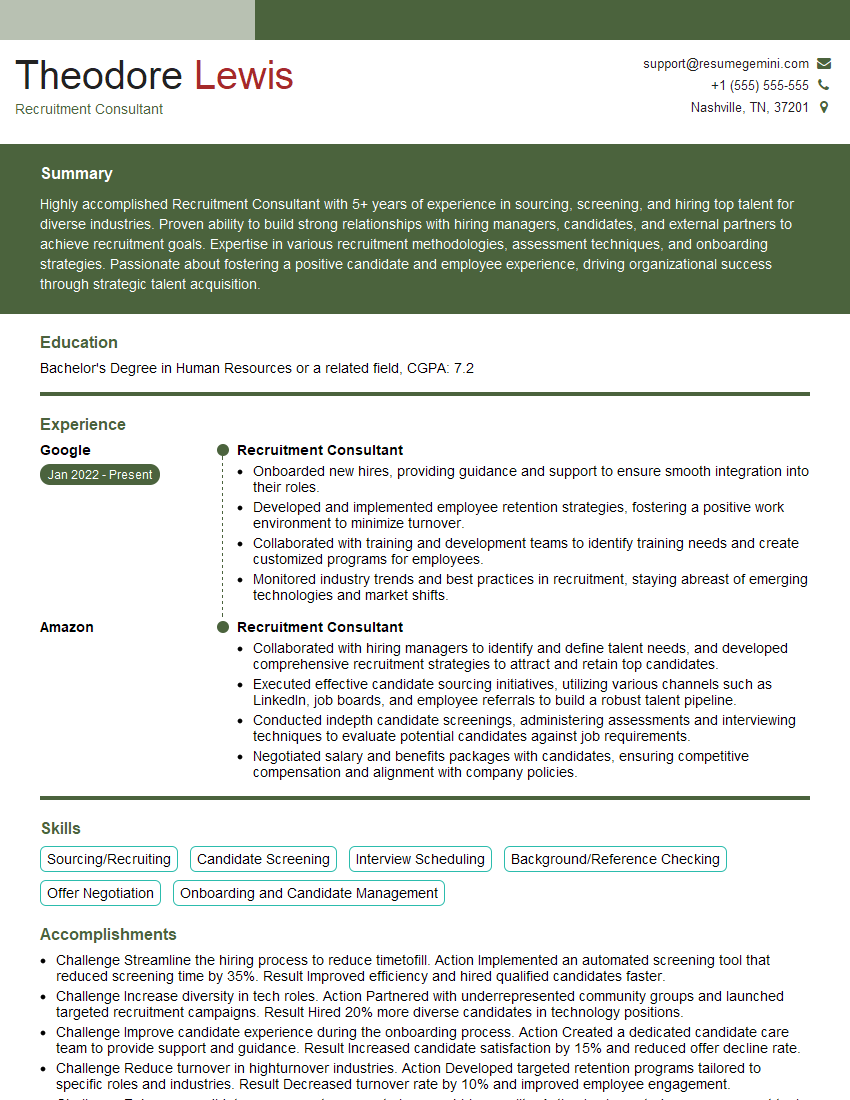
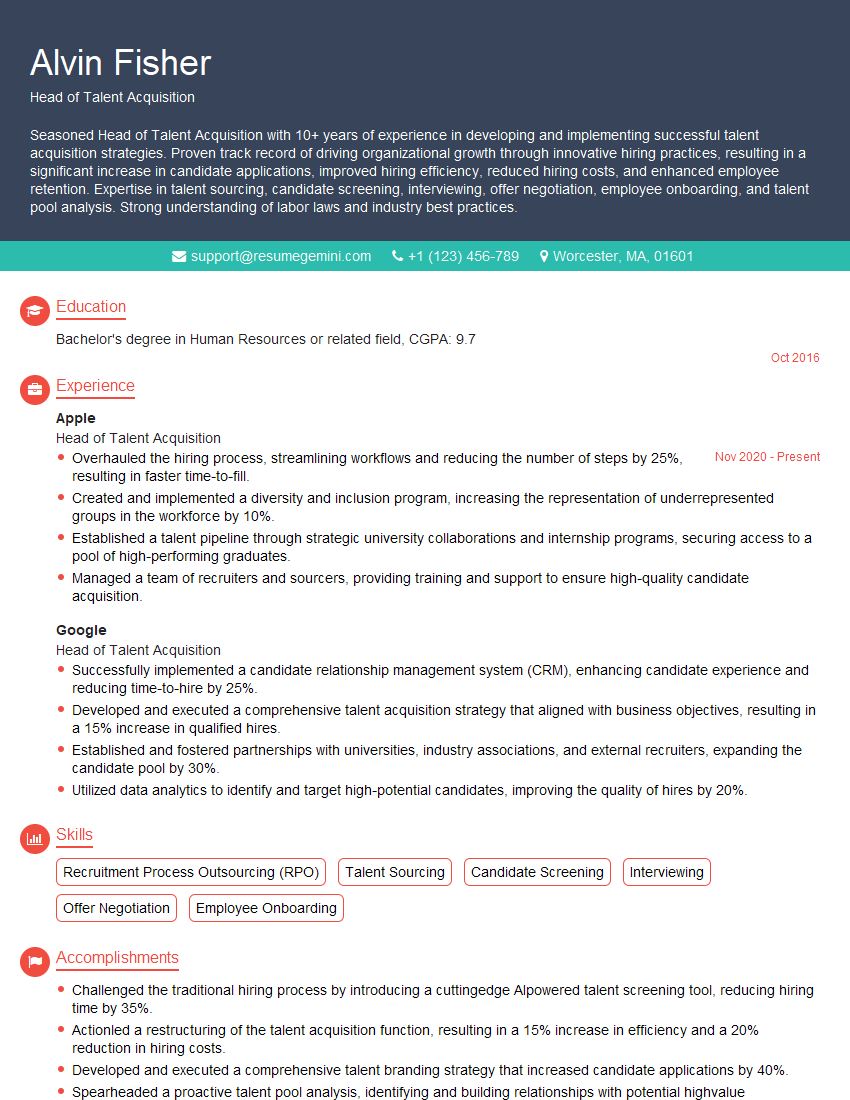
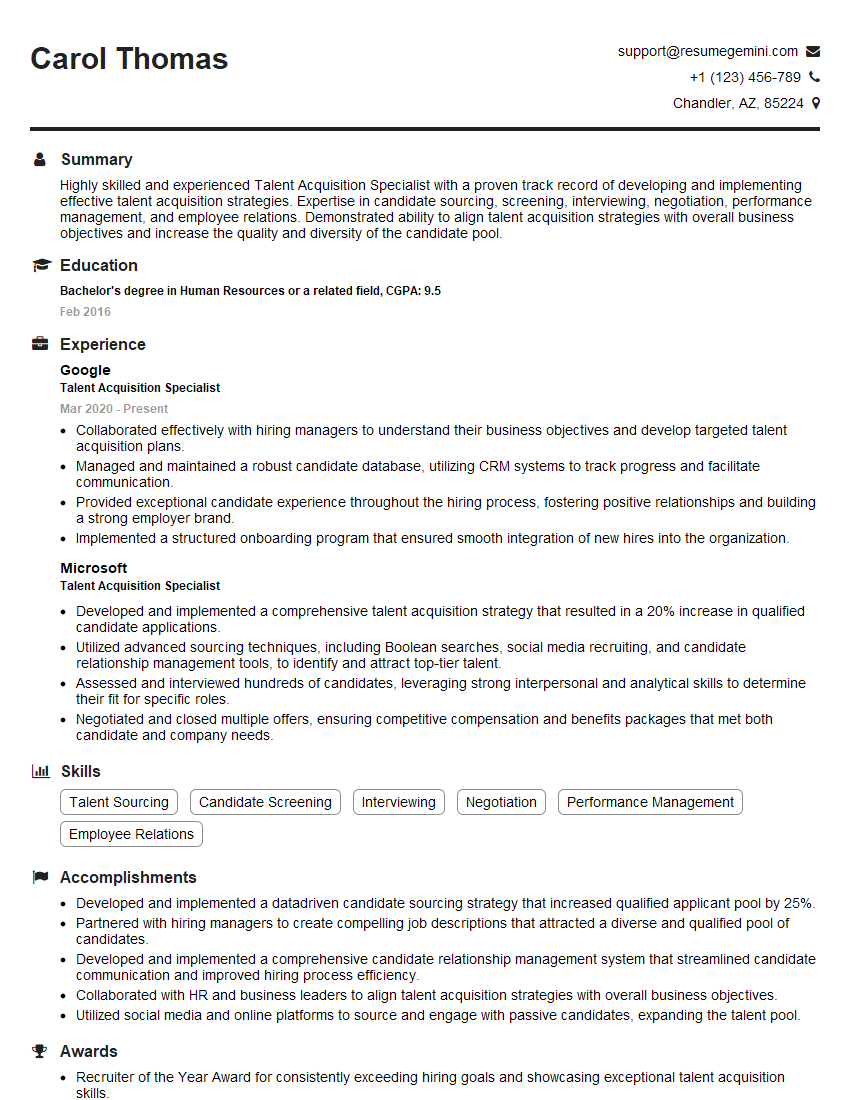
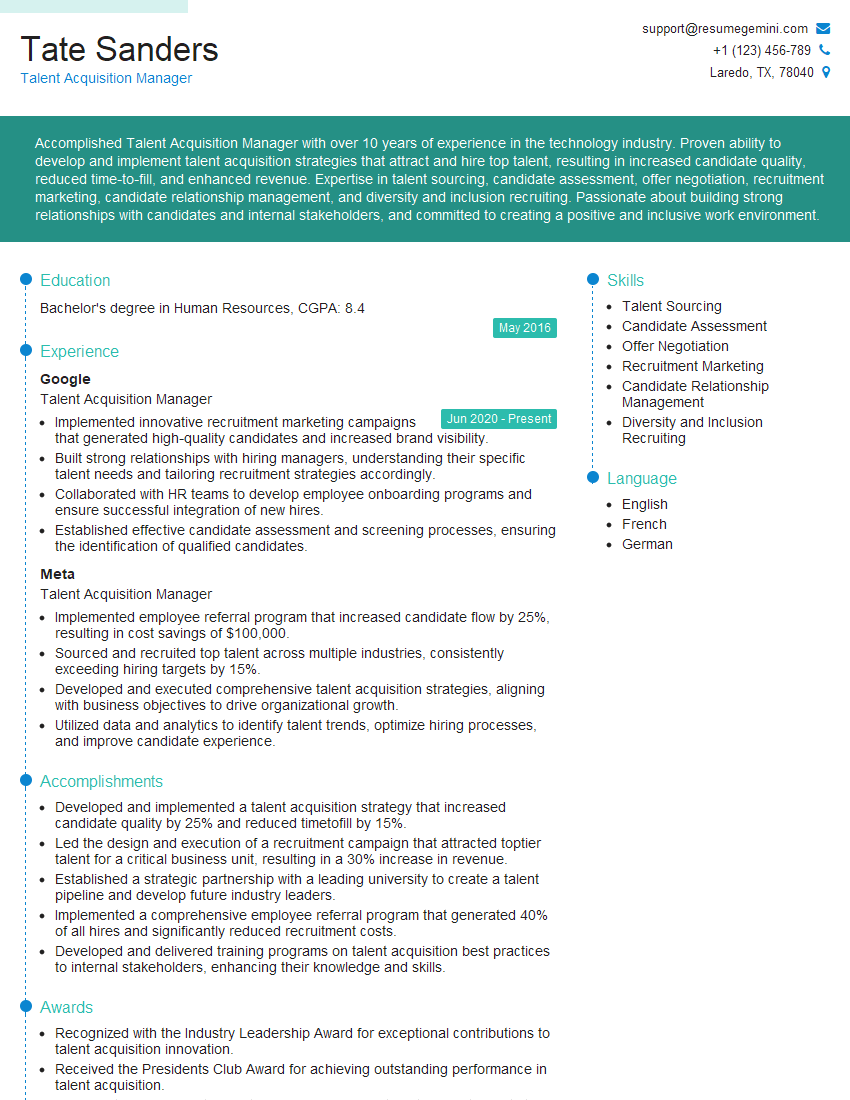
Mastering Recruitment Process Optimization is crucial for advancing your career in Human Resources and talent acquisition. It demonstrates your ability to drive efficiency, improve hiring quality, and reduce costs. To significantly enhance your job prospects, create a compelling and ATS-friendly resume that showcases your skills and experience. ResumeGemini is a trusted resource to help you build a professional and effective resume, ensuring your application stands out. Examples of resumes tailored to Recruitment Process Optimization are provided to further assist you in this process.

Explore more articles
Users Rating of Our Blogs
Share Your Experience
We value your feedback! Please rate our content and share your thoughts (optional).
What Readers Say About Our Blog
Amazing blog
hello,
Our consultant firm based in the USA and our client are interested in your products.
Could you provide your company brochure and respond from your official email id (if different from the current in use), so i can send you the client’s requirement.
Payment before production.
I await your answer.
Regards,
MrSmith
hello,
Our consultant firm based in the USA and our client are interested in your products.
Could you provide your company brochure and respond from your official email id (if different from the current in use), so i can send you the client’s requirement.
Payment before production.
I await your answer.
Regards,
MrSmith
These apartments are so amazing, posting them online would break the algorithm.
https://bit.ly/Lovely2BedsApartmentHudsonYards
Reach out at BENSON@LONDONFOSTER.COM and let’s get started!
Take a look at this stunning 2-bedroom apartment perfectly situated NYC’s coveted Hudson Yards!
https://bit.ly/Lovely2BedsApartmentHudsonYards
Live Rent Free!
https://bit.ly/LiveRentFREE
Interesting Article, I liked the depth of knowledge you’ve shared.
Helpful, thanks for sharing.
Hi, I represent a social media marketing agency and liked your blog
Hi, I represent an SEO company that specialises in getting you AI citations and higher rankings on Google. I’d like to offer you a 100% free SEO audit for your website. Would you be interested?