Feeling uncertain about what to expect in your upcoming interview? We’ve got you covered! This blog highlights the most important Resource Economics interview questions and provides actionable advice to help you stand out as the ideal candidate. Let’s pave the way for your success.
Questions Asked in Resource Economics Interview
Q 1. Explain the concept of opportunity cost in resource allocation.
Opportunity cost, in the context of resource allocation, is the value of the next best alternative forgone when making a choice. It’s not just about the money spent, but what you could have gained by using those resources differently. Imagine you have $10,000 to invest. You choose to invest in a business venture, foregoing the opportunity to put that money in a high-yield savings account. The potential return from the savings account represents the opportunity cost of your investment decision. Every resource allocation decision, whether it’s a government deciding on infrastructure projects or a company choosing a new production method, involves trading off potential benefits. The opportunity cost is crucial in determining the efficiency and effectiveness of resource allocation; a good decision minimizes this cost.
Example 1: A farmer with limited land must decide whether to plant wheat or corn. If she chooses wheat, the potential profit from growing corn is her opportunity cost. Example 2: A government chooses to invest in a new highway instead of funding a public education program. The potential improvements in education, such as increased skills and higher earning potential for future generations, are the opportunity cost of the highway project. Effective resource allocation involves carefully evaluating these opportunity costs to make informed decisions.
Q 2. Describe the difference between private and social costs in resource depletion.
The key difference between private and social costs in resource depletion lies in who bears the burden. Private costs are the direct expenses incurred by individuals or firms involved in the depletion of a resource. This includes things like extraction costs, processing costs, and transportation costs. Social costs, on the other hand, include all the costs associated with resource depletion, whether borne directly by those involved or indirectly by society as a whole. This broader scope encompasses environmental damage, health issues from pollution, lost recreational opportunities, and any other negative externalities generated by resource depletion.
For instance, a mining company’s private cost includes labor, equipment, and materials. However, the social cost also encompasses environmental damage from habitat destruction and water contamination, which are not directly paid for by the mining company but are still costs incurred by society. Often, private costs are significantly lower than social costs, leading to inefficient resource allocation and market failure. A key challenge for policymakers is internalizing these external social costs to promote sustainability.
Q 3. Define externalities and provide examples relevant to resource economics.
Externalities are the costs or benefits of an economic activity that are not reflected in the market price. In resource economics, these often involve environmental impacts. These ‘spillover effects’ can be positive or negative, but in resource depletion, we mostly focus on negative externalities. These happen when the production or consumption of a good or service imposes costs on a third party not involved in the transaction.
- Negative Externality Example 1: Air pollution from a coal-fired power plant. The plant’s private costs focus on coal, labor, and equipment, but the air pollution imposes health costs on the surrounding community, a cost not considered in the power plant’s operations.
- Negative Externality Example 2: Deforestation for logging. The logging company’s private cost is tied to labor and equipment, but the loss of biodiversity and increased soil erosion create costs for society at large, impacting ecosystems and water quality.
- Positive Externality Example (rare in depletion): Reforestation projects. While having private costs, they also provide a public benefit by improving air quality and creating carbon sinks, benefits not fully captured by the reforestation company itself.
Understanding externalities is critical because their absence in market pricing leads to overexploitation of resources and environmental degradation.
Q 4. How does the Coase Theorem apply to environmental resource management?
The Coase Theorem suggests that if property rights are well-defined and transaction costs are low, then private bargaining can lead to an efficient allocation of resources, even in the presence of externalities. In environmental resource management, this means that if the rights to pollute or utilize a resource are clearly assigned, those affected by the externality can negotiate with the polluter or resource user to reach a mutually beneficial agreement that internalizes the external costs.
Example: A factory polluting a river. If the downstream residents have well-defined property rights to clean water and can effectively bargain with the factory, they could negotiate a payment for the factory to reduce pollution. The factory might choose to reduce pollution if the payment offered exceeds the cost of reducing emissions. This solution leads to a socially efficient outcome without the need for government intervention. However, the Coase Theorem’s applicability is limited in reality due to high transaction costs, difficulties in defining property rights (especially in environmental resources), and the involvement of numerous parties.
Q 5. Explain the concept of sustainable development and its relevance to resource economics.
Sustainable development aims to meet present needs without compromising the ability of future generations to meet their own needs. In resource economics, this translates to using resources at a rate that doesn’t deplete them faster than they can be replenished and minimizing negative environmental impacts. It requires a long-term perspective that considers the intergenerational equity of resource use.
For example, sustainable forestry involves harvesting trees at a rate that allows for reforestation and maintaining biodiversity. Sustainable fisheries manage fish stocks to prevent overfishing and ensure future generations can continue to benefit from them. The concept is directly linked to resource economics because it challenges the traditional economic approach of maximizing immediate profits without considering the long-term consequences. Sustainable development integrates environmental, social, and economic considerations to make resource management decisions.
Q 6. What are the economic instruments used to manage common pool resources?
Common pool resources (CPRs), like fisheries, forests, and groundwater, are resources that are difficult to exclude people from using, leading to the potential for overuse and degradation (‘tragedy of the commons’). Several economic instruments can help manage CPRs:
- Taxes and Fees: Charging users for access or use can reduce consumption and create revenue for resource management. This helps to internalize the environmental costs.
- Quotas and Permits: Limiting the total amount of resource extraction through quotas or assigning tradable permits can create scarcity and incentivize efficient resource use. These allow for a market-based approach to resource allocation.
- Community-Based Management: Empowering local communities to manage CPRs can lead to sustainable outcomes by aligning the incentives of users with the long-term health of the resource.
- Investment in Research and Monitoring: Improving the understanding of resource dynamics and ensuring effective monitoring of usage are essential for informed management decisions.
The optimal combination of these instruments often depends on the specific characteristics of the CPR and the social and political context.
Q 7. Discuss the role of market-based mechanisms in environmental resource management.
Market-based mechanisms are increasingly important in environmental resource management. These mechanisms leverage market forces to incentivize efficient resource use and pollution reduction. They generally involve creating a market for environmental goods or services, using prices to signal scarcity and promote conservation.
- Emissions Trading Schemes (ETS): Cap-and-trade systems establish a limit on emissions and allow firms to buy and sell permits to emit pollutants. This creates a market for pollution permits, driving down overall emissions. The European Union Emissions Trading System (EU ETS) is a prime example.
- Payments for Ecosystem Services (PES): PES programs compensate landowners or communities for managing their land in ways that provide environmental benefits, like carbon sequestration, biodiversity conservation, or watershed protection. This approach links environmental benefits to economic incentives.
- Taxation: Pigouvian taxes, levied on activities that generate negative externalities, can internalize the costs of pollution and resource depletion. Carbon taxes are a well-known example.
Market-based mechanisms offer several advantages: they can be cost-effective, incentivize innovation, and promote flexibility in how pollution reduction is achieved. However, their effectiveness depends on the design of the mechanisms, the enforcement of regulations, and the overall political and economic context.
Q 8. Explain the concept of discounting in environmental economics.
Discounting in environmental economics reflects the fact that money received today is worth more than the same amount received in the future. This is because money received today can be invested and earn interest, growing its value over time. We discount future environmental benefits or costs to their present value because we need a common basis for comparing values across different time periods when making decisions about long-term resource management. This principle is crucial because environmental projects often involve long-term investments with returns far into the future (e.g., protecting a forest for carbon sequestration over 50 years).
The discount rate used is a crucial parameter, and its choice can significantly impact project appraisal. A higher discount rate gives less weight to future benefits, potentially leading to the rejection of projects with long-term payoffs. A lower discount rate prioritizes long-term sustainability. The selection of an appropriate discount rate is often debated and depends on factors such as the opportunity cost of capital and societal time preference.
For example, consider a project that prevents $10 million of environmental damage 20 years from now. If the discount rate is 5%, the present value of this benefit would be significantly less than $10 million. This highlights the importance of considering the time value of money in environmental decision-making.
Q 9. How do you evaluate the economic efficiency of different resource management policies?
Evaluating the economic efficiency of resource management policies requires comparing the costs and benefits of different approaches. The most common framework used is cost-benefit analysis (CBA), which systematically weighs the present value of all costs against the present value of all benefits. A policy is considered economically efficient if the present value of its net benefits (benefits minus costs) is positive and greater than alternative policies.
We often use tools like benefit-cost ratios (BCRs), where a ratio greater than 1 indicates a net benefit. Furthermore, we can use techniques like dynamic programming or simulation modeling to analyze policies under different scenarios and uncertainty (e.g., fluctuating commodity prices or unexpected climate change impacts).
For instance, comparing two fisheries management strategies – one allowing unlimited fishing and another implementing catch limits – would involve assessing the costs of enforcement (for the catch limits strategy) against the benefits of maintaining a sustainable fish stock (avoiding collapse and ensuring long-term yields).
Q 10. Describe the challenges in valuing environmental resources.
Valuing environmental resources presents significant challenges because many of these resources are ‘non-market’ goods and services, meaning they are not typically traded in markets. This lack of market transactions makes it difficult to directly observe their prices. The absence of market prices requires using indirect methods to estimate value, introducing several challenges:
- Non-use values: Many environmental resources provide benefits to people who never directly use them (e.g., the satisfaction of knowing an endangered species is being protected). Capturing these non-use values is crucial but difficult.
- Aggregation issues: Combining different types of values (use vs. non-use, consumptive vs. non-consumptive) into a single monetary estimate requires careful consideration and can lead to aggregation bias.
- Uncertainty and risk: Estimating values often involves making assumptions and dealing with inherent uncertainties associated with future environmental changes and human behavior.
- Distributional issues: Environmental goods and services often benefit some groups more than others, posing challenges in determining a socially acceptable valuation.
For example, assessing the value of a pristine rainforest is complex. It’s easy to quantify timber value but harder to capture its contribution to biodiversity, climate regulation, or the cultural or spiritual significance to indigenous communities.
Q 11. What are the different methods used to estimate the value of non-market goods and services?
Several methods exist for estimating the value of non-market goods and services:
- Revealed Preference Methods: These methods infer values from observed behavior in markets related to the environmental good. Examples include:
- Hedonic pricing: This method infers environmental values from differences in market prices of similar goods, such as houses near a park vs. houses farther away.
- Travel cost method: This method estimates the value of recreational areas by analyzing the costs people incur to visit them.
- Stated Preference Methods: These methods directly ask individuals to state their preferences for environmental goods and services through surveys or experiments. Examples include:
- Contingent valuation: This method presents individuals with hypothetical scenarios to elicit their willingness to pay (WTP) or willingness to accept (WTA) compensation for changes in environmental quality.
- Choice experiments: This method provides individuals with a set of choices and asks them to select their preferred option, allowing for the estimation of preferences for different attributes of the environmental good.
The choice of method depends on the specific environmental good, available data, and research objectives. Each method has its strengths and limitations, and ideally, multiple methods are employed for robust valuation.
Q 12. How do you account for uncertainty and risk in resource management decisions?
Uncertainty and risk are inherent in resource management decisions, stemming from unpredictable factors such as climate change, technological advancements, and shifts in consumer demand. Accounting for these uncertainties is crucial for making informed decisions. Several approaches are employed:
- Scenario planning: Developing multiple scenarios representing different possible futures allows for the evaluation of policy options under a range of conditions.
- Sensitivity analysis: Examining how changes in key input parameters (e.g., discount rate, growth rate) affect the results helps to assess the robustness of the findings.
- Probabilistic modeling: Integrating probability distributions into the analysis captures the uncertainty associated with different variables and generates a distribution of potential outcomes.
- Decision analysis: Utilizing decision trees or other formal decision-making tools helps to structure the problem, evaluate potential options, and incorporate risk preferences.
For example, when assessing a coastal protection project, uncertainty about sea-level rise needs to be considered through scenario planning, integrating various sea-level rise projections to evaluate the effectiveness of different levels of coastal protection.
Q 13. Explain the concept of cost-benefit analysis and its application in resource management projects.
Cost-benefit analysis (CBA) is a systematic approach to evaluating the economic efficiency of a project or policy by comparing the total discounted costs and benefits. It involves identifying all relevant costs and benefits, assigning monetary values to them, and then comparing the present value of benefits to the present value of costs.
In resource management, CBA can be used to assess the economic merits of various projects such as dam construction, forest preservation, or pollution control. The process involves:
- Identifying costs and benefits: This step includes both direct costs (e.g., construction costs) and indirect costs (e.g., opportunity costs of land use), and both direct benefits (e.g., increased water supply) and indirect benefits (e.g., improved water quality).
- Quantifying costs and benefits: This often involves using market prices where available and applying non-market valuation techniques for environmental benefits.
- Discounting future costs and benefits: This translates future values into their present-day equivalents, using a chosen discount rate.
- Comparing net present values: The net present value (NPV) is the difference between the present value of benefits and the present value of costs. A positive NPV indicates that the project is economically viable.
A CBA of a proposed hydroelectric dam would assess the economic benefits from electricity generation against the costs of construction, land inundation (loss of agricultural land and ecosystems), displacement of communities, and potential environmental impacts (e.g., on downstream water quality).
Q 14. What are some of the challenges in implementing environmental regulations?
Implementing environmental regulations often faces significant challenges:
- High compliance costs: Businesses may face substantial costs in complying with new regulations, potentially leading to reduced competitiveness and job losses. This is especially relevant for smaller businesses with fewer resources.
- Enforcement difficulties: Monitoring and enforcing regulations can be costly and complex, particularly for dispersed pollution sources or activities that are difficult to observe.
- Political resistance: Regulations can encounter strong opposition from industries affected, potentially leading to delays or weakening of the regulations.
- Lack of public support: Public understanding and support for environmental regulations can be limited, hindering effective implementation. This lack of support can manifest as resistance to paying higher prices for environmentally friendly products or services.
- International cooperation challenges: Addressing global environmental problems like climate change requires international cooperation, which can be difficult to achieve due to differing national interests and priorities.
- Technological limitations: Some environmental regulations require technological advancements that may not yet be available or economically feasible at the time of implementation.
For example, implementing stricter carbon emission limits for power plants might lead to increased electricity prices, prompting resistance from consumers and industries. Effective implementation requires careful consideration of these challenges and the development of strategies to mitigate them (e.g., phased implementation, financial incentives, technological innovation).
Q 15. Describe the role of government in resource management.
Governments play a crucial role in resource management, acting as stewards of public resources and ensuring their sustainable use for present and future generations. Their involvement stems from the fact that many resources are public goods – non-excludable and often rivalrous – leading to market failures if left solely to private entities.
Government intervention typically involves:
- Regulation: Establishing rules and regulations to control extraction rates, pollution levels, and land use, preventing overexploitation and environmental degradation. For example, setting fishing quotas or limiting deforestation.
- Property Rights: Defining and enforcing property rights, clarifying who owns or has access to resources, preventing conflicts and encouraging responsible management. The establishment of national parks is a prime example.
- Taxation and Subsidies: Using taxes to discourage environmentally damaging activities (e.g., carbon tax) and subsidies to encourage sustainable practices (e.g., incentives for renewable energy). Carbon pricing schemes are a prominent example of this approach.
- Investment in Research and Development: Funding research into sustainable resource management techniques, promoting innovation and the development of cleaner technologies. Investment in sustainable agriculture research is a key example.
- Education and Awareness: Raising public awareness about resource scarcity and the importance of sustainable practices. Public service announcements and educational programs illustrate this.
The effectiveness of government intervention hinges on factors like political will, enforcement capabilities, and the design of effective policies. Well-designed policies often incorporate economic instruments, like Pigouvian taxes, to internalize environmental externalities.
Career Expert Tips:
- Ace those interviews! Prepare effectively by reviewing the Top 50 Most Common Interview Questions on ResumeGemini.
- Navigate your job search with confidence! Explore a wide range of Career Tips on ResumeGemini. Learn about common challenges and recommendations to overcome them.
- Craft the perfect resume! Master the Art of Resume Writing with ResumeGemini’s guide. Showcase your unique qualifications and achievements effectively.
- Don’t miss out on holiday savings! Build your dream resume with ResumeGemini’s ATS optimized templates.
Q 16. Discuss the impact of technological advancements on resource management.
Technological advancements have profoundly impacted resource management, offering both opportunities and challenges. On one hand, they enhance efficiency in extraction, processing, and utilization of resources; on the other, they can lead to increased consumption and potentially exacerbate environmental problems if not managed carefully.
Examples of positive impacts include:
- Precision Agriculture: Using GPS, sensors, and data analytics to optimize resource use in farming, reducing water and fertilizer waste.
- Remote Sensing and GIS: Monitoring deforestation, pollution, and other environmental changes using satellite imagery and geographic information systems, improving surveillance and enforcement.
- Renewable Energy Technologies: Developing solar, wind, and other renewable energy sources, reducing reliance on fossil fuels and mitigating climate change.
- Resource Recycling and Waste Management Technologies: Improving recycling processes, reducing waste, and recovering valuable materials from waste streams.
However, some technologies can also be detrimental if not carefully considered:
- Fracking: While increasing natural gas production, it raises concerns about water contamination and greenhouse gas emissions.
- Deep-Sea Mining: Potentially unlocking valuable minerals but posing significant risks to fragile marine ecosystems.
Therefore, technological advancement in resource management requires a holistic approach, considering both the benefits and potential risks. Careful policy design and responsible innovation are critical to ensure that technology contributes to sustainable resource management.
Q 17. How does climate change affect resource availability and management?
Climate change significantly impacts resource availability and management through various mechanisms. Changes in temperature and precipitation patterns directly affect water resources, agricultural yields, and the distribution of species. Rising sea levels threaten coastal communities and ecosystems, while extreme weather events, such as droughts and floods, disrupt supply chains and infrastructure.
Specific impacts include:
- Water scarcity: Changes in precipitation patterns and increased evaporation lead to droughts and water shortages, impacting agriculture, industry, and human populations.
- Reduced agricultural productivity: Higher temperatures and altered rainfall patterns reduce crop yields and livestock production, threatening food security.
- Increased pest and disease outbreaks: Shifting climatic conditions can favor the spread of pests and diseases affecting crops and livestock.
- Damage to infrastructure: Extreme weather events, such as hurricanes and floods, damage infrastructure, disrupting resource extraction and distribution.
- Loss of biodiversity: Changes in temperature and habitat lead to species extinction and disruptions to ecosystems.
Effective resource management in the face of climate change requires adaptation and mitigation strategies. Adaptation involves adjusting to the impacts of climate change, for instance, through drought-resistant crops or improved water management techniques. Mitigation focuses on reducing greenhouse gas emissions to slow down the rate of climate change.
Q 18. Explain the concept of environmental Kuznets curve.
The Environmental Kuznets Curve (EKC) is a hypothesized relationship between environmental degradation and economic growth. It suggests that initially, as an economy grows, environmental degradation worsens. However, after reaching a certain level of income per capita, environmental degradation begins to decline. It’s often depicted as an inverted U-shaped curve.
The underlying idea is that initially, economic development prioritizes industrialization and production, leading to increased pollution and resource depletion. As income levels rise, societies prioritize environmental quality, investing in cleaner technologies and stricter environmental regulations. This shift leads to a reduction in pollution and resource degradation.
Criticisms of the EKC:
- Empirical evidence is mixed: The shape and existence of the EKC vary across different pollutants and countries.
- Spatial displacement of pollution: Pollution might decrease in one location but increase in another due to outsourcing or trade.
- Assumption of substitutability: The EKC implicitly assumes that environmental quality can be substituted for other goods and services, which might not always be the case.
Despite the criticisms, the EKC remains a useful concept for understanding the complex relationship between economic growth and environmental quality. It highlights the potential for economic development to lead to environmental improvement, but also emphasizes the need for proactive environmental policies to accelerate this transition.
Q 19. Discuss the role of international cooperation in managing global resources.
International cooperation is essential for managing global resources effectively, especially for resources that transcend national borders, such as oceans, atmosphere, and migratory species. Many environmental problems are transboundary, meaning their impact extends beyond national jurisdictions, requiring coordinated action among nations.
Examples of international cooperation include:
- International environmental agreements: Treaties and agreements, such as the Paris Agreement on climate change or the Montreal Protocol on ozone depletion, set targets and establish mechanisms for cooperation.
- International organizations: Organizations like the United Nations Environment Programme (UNEP) play a crucial role in coordinating global environmental efforts, providing scientific information, and promoting policy coherence.
- Transboundary resource management: Joint management of shared resources, such as rivers or fisheries, through agreements and institutions that foster cooperation among affected countries.
- Technology transfer and capacity building: Developed countries assisting developing countries in adopting sustainable technologies and improving their resource management capacity.
Challenges to international cooperation include:
- Differing national interests: Conflicts of interest among nations regarding resource allocation and environmental regulations.
- Lack of enforcement mechanisms: Difficulty in enforcing international agreements, especially in the absence of strong penalties for non-compliance.
- Free-rider problem: The temptation for countries to benefit from the efforts of others without contributing their fair share.
Successful international cooperation requires trust, mutual benefit, strong institutions, and effective enforcement mechanisms. It is crucial for addressing global environmental challenges and ensuring the sustainable use of shared resources.
Q 20. What are the economic implications of biodiversity loss?
Biodiversity loss has significant economic implications, affecting various sectors and potentially hindering economic growth. The loss of biodiversity reduces the availability of ecosystem services, which are the benefits humans derive from ecosystems, such as clean water, pollination, climate regulation, and recreation.
Economic impacts include:
- Reduced agricultural productivity: Loss of pollinators and soil fertility impacts crop yields and food security.
- Increased vulnerability to pests and diseases: Reduced biodiversity weakens ecosystems, making them more susceptible to pest and disease outbreaks, impacting agriculture and forestry.
- Decreased fisheries yields: Overfishing and habitat destruction reduce fish stocks, impacting livelihoods and food security.
- Increased healthcare costs: Loss of biodiversity can lead to the emergence of new diseases and the resurgence of old ones.
- Reduced tourism revenue: Loss of biodiversity negatively impacts ecotourism, affecting local economies that depend on nature-based tourism.
- Loss of potential resources: Biodiversity is a source of many valuable resources, including medicines and genetic material. Loss of biodiversity eliminates potential discoveries.
The economic costs of biodiversity loss are substantial and difficult to quantify fully. Valuing ecosystem services and incorporating biodiversity considerations into economic decision-making are crucial for mitigating these impacts and promoting sustainable development.
Q 21. How do you assess the sustainability of resource extraction practices?
Assessing the sustainability of resource extraction practices requires a multifaceted approach, considering environmental, social, and economic factors. It’s not merely about maximizing short-term profits but ensuring long-term viability and minimizing negative impacts.
Key aspects of the assessment include:
- Environmental impact assessment: Evaluating the environmental consequences of extraction, including greenhouse gas emissions, habitat destruction, water pollution, and waste generation. This often involves Life Cycle Assessments (LCAs).
- Social impact assessment: Assessing the social consequences of extraction, including impacts on local communities, indigenous populations, and cultural heritage. This considers factors like displacement, employment, and social equity.
- Economic viability: Analyzing the economic feasibility of the extraction project, considering costs, revenues, and long-term profitability. This ensures that the extraction is financially sustainable.
- Resource depletion rate: Evaluating the rate at which resources are being extracted to ensure it’s within the limits of regeneration or availability of substitutes. This often involves analysis of reserve estimates and extraction curves.
- Waste management: Assessing the effectiveness of waste management strategies to minimize pollution and environmental degradation.
- Stakeholder engagement: Consulting with local communities, indigenous groups, and other stakeholders affected by the extraction project to ensure their concerns are considered.
Sustainability assessment often employs indicators and metrics to quantify the impacts of resource extraction and measure progress toward sustainability goals. A holistic approach that integrates environmental, social, and economic aspects is essential for making informed decisions about the sustainability of resource extraction practices.
Q 22. What are the ethical considerations in resource management?
Ethical considerations in resource management are paramount because our choices today directly impact future generations and the planet’s health. It’s about balancing competing interests and values in using resources responsibly. Key considerations include:
- Intergenerational equity: Ensuring future generations have access to the same resources we enjoy. This necessitates sustainable practices.
- Environmental justice: Distributing the benefits and burdens of resource use fairly, especially considering the disproportionate impact on vulnerable communities.
- Precautionary principle: Acting cautiously when the potential consequences of resource exploitation are uncertain, especially when those consequences might be irreversible.
- Transparency and accountability: Openly sharing information about resource management decisions and practices, allowing for public scrutiny and stakeholder participation.
- Indigenous rights: Recognizing and respecting the rights and traditional knowledge of indigenous communities regarding resource management on their ancestral lands.
For example, consider the ethical dilemma of mining rare earth minerals crucial for green technologies. While these minerals are essential for transitioning to renewable energy, their extraction can cause significant environmental damage. Ethical management requires finding sustainable mining practices, responsible recycling, and equitable distribution of the benefits.
Q 23. Explain the concept of intergenerational equity in resource allocation.
Intergenerational equity in resource allocation is the principle that current generations should not deplete resources to such an extent that it compromises the ability of future generations to meet their own needs. It’s about fairness across time. Think of it like inheriting a house: you wouldn’t want to receive it in a dilapidated state, having been stripped of its resources. Similarly, we have a moral obligation to preserve the planet’s resources for our children and grandchildren.
This principle manifests in various ways: setting aside protected areas for biodiversity, investing in renewable energy sources, managing fisheries sustainably, and reducing our carbon footprint. Implementing a carbon tax, for example, internalizes the cost of carbon emissions, making future generations less burdened by the consequences of our actions today.
A classic example is the debate over fossil fuels. Burning fossil fuels provides immediate energy benefits but leads to climate change, imposing significant costs on future generations. Intergenerational equity demands that we move towards more sustainable energy solutions, even if it means incurring some short-term economic costs.
Q 24. Describe the role of data analytics in resource management.
Data analytics plays a crucial role in modern resource management by providing insights that enable better decision-making. By analyzing large datasets, we can gain a deeper understanding of resource availability, usage patterns, and environmental impacts. This allows for more efficient resource allocation and more effective conservation strategies.
- Predictive modeling: Using historical data and advanced algorithms to forecast future resource needs and potential scarcity.
- Resource monitoring: Tracking resource levels (e.g., water levels, forest cover) in real-time using remote sensing and GIS technologies.
- Optimization: Developing algorithms to identify the most efficient ways to allocate and utilize resources, minimizing waste and maximizing output.
- Impact assessment: Quantifying the environmental and social impacts of resource management decisions.
For instance, data analytics can help optimize irrigation schedules in agriculture, reducing water waste and improving crop yields. Similarly, it can be used to monitor deforestation rates and identify areas needing conservation efforts. The application of machine learning algorithms can predict the spread of invasive species, allowing for proactive management interventions.
Q 25. How do you model resource scarcity and its economic consequences?
Resource scarcity is modeled using various economic approaches, primarily focusing on supply and demand dynamics. When demand exceeds supply, prices rise, signaling scarcity. This can lead to several economic consequences.
Models often incorporate:
- Supply functions: Describing the relationship between the price of a resource and the quantity supplied.
- Demand functions: Showing the relationship between the price of a resource and the quantity demanded.
- Stock-flow models: Analyzing the dynamics of resource depletion over time, considering both extraction rates and regeneration (if applicable).
- Dynamic optimization models: Finding optimal extraction paths that maximize economic benefits over time, considering resource constraints and future prices.
Consequences of scarcity include:
- Higher prices: Increased competition drives up prices, potentially impacting consumers and businesses.
- Resource substitution: Finding alternative resources to replace the scarce one.
- Technological innovation: Developing new technologies to improve resource efficiency or find substitutes.
- Economic slowdown: Scarcity can constrain economic growth, especially if the resource is essential for production.
For example, modeling peak oil—the hypothetical point at which global oil production reaches its maximum rate—helps economists analyze the potential economic disruptions from declining oil availability. Similar models can be applied to water scarcity, predicting the economic impact of water shortages in agriculture and industry.
Q 26. Explain the concept of resource rent.
Resource rent is the economic profit earned from extracting a resource, exceeding the normal profit that would be earned in a competitive market. It’s essentially the difference between the market price of a resource and the cost of extracting it. This ‘rent’ accrues to the owner of the resource—whether it’s a government, a private company, or an individual.
Imagine a scenario where oil extraction costs $30 per barrel, but the market price is $70 per barrel. The resource rent in this case is $40 per barrel, reflecting the scarcity value of the oil. This rent can be used in various ways, such as funding government services, investing in future resource management initiatives, or distributing profits to shareholders (in the case of private companies).
The concept of resource rent is crucial for efficient resource allocation. Well-designed resource rent policies can encourage responsible extraction practices and provide incentives for exploring and developing alternative resources. However, poor resource rent management can lead to resource depletion, corruption, and economic inequality. Think of situations where rent is not collected properly or is diverted to special interests rather than utilized for the public benefit. This highlights the need for transparency and robust governance in resource management.
Q 27. Discuss the economic implications of pollution control policies.
Pollution control policies, while environmentally beneficial, have significant economic implications. These policies often involve costs and trade-offs that need careful consideration.
Economic Impacts:
- Increased production costs: Firms may face higher production costs due to regulations on emissions, waste disposal, or resource use. This can lead to higher prices for consumers.
- Job displacement: Some industries might experience job losses due to pollution control measures. However, green technologies and environmental remediation often create new jobs.
- Innovation and technological change: Environmental regulations can spur innovation in cleaner technologies and more efficient resource use.
- Changes in competitiveness: Companies in regions with stricter environmental regulations might face a competitive disadvantage compared to those in less regulated areas.
- Government revenue: Policies like carbon taxes or emission trading schemes can generate revenue for the government, which can be used to fund environmental programs or reduce other taxes.
Examples: The implementation of stricter vehicle emission standards can lead to higher car prices but reduce air pollution. Cap-and-trade systems, while effectively reducing greenhouse gas emissions, can create a market for carbon credits, impacting energy prices and potentially leading to a shift towards renewable energy sources. The economic analysis of such policies requires careful consideration of both the costs and benefits, using tools like cost-benefit analysis to determine the optimal level of environmental protection.
Q 28. How do you evaluate the effectiveness of conservation programs?
Evaluating the effectiveness of conservation programs requires a multifaceted approach, combining quantitative and qualitative methods. The goal is to assess whether the program achieved its intended objectives, such as preserving biodiversity, improving water quality, or enhancing ecosystem services.
Methods for Evaluation:
- Monitoring and data collection: Tracking key indicators (e.g., species populations, habitat size, water quality parameters) before, during, and after the program’s implementation.
- Statistical analysis: Using statistical methods to determine whether changes in indicators are statistically significant and attributable to the conservation program.
- Cost-benefit analysis: Assessing the economic costs and benefits of the program, considering both direct and indirect effects.
- Stakeholder engagement: Gathering feedback from local communities, landowners, and other stakeholders about their experiences with the program.
- Adaptive management: Using ongoing monitoring and evaluation data to adjust the program’s strategies and improve its effectiveness over time.
For example, evaluating the success of a reforestation program would involve monitoring tree growth, assessing changes in biodiversity, and evaluating the economic impacts on local communities. Effective evaluation requires clear objectives, robust data collection, rigorous analysis, and an iterative process of learning and adaptation.
Key Topics to Learn for Your Resource Economics Interview
Ace your upcoming interview by focusing on these key areas within Resource Economics. Understanding these concepts, both theoretically and practically, will significantly boost your confidence and showcase your expertise.
- Resource Scarcity and Allocation: Explore different models of resource allocation, including market-based mechanisms, government intervention, and common-pool resource management. Consider the implications of scarcity on economic efficiency and environmental sustainability.
- Environmental Economics: Understand the economic principles behind environmental issues like pollution, climate change, and biodiversity loss. Be prepared to discuss cost-benefit analysis, externalities, and policy instruments used to address these challenges.
- Renewable and Non-Renewable Resources: Analyze the economic characteristics of renewable (solar, wind) and non-renewable (oil, gas) resources. Discuss sustainable resource management strategies and the challenges of transitioning to a low-carbon economy.
- Valuation of Natural Resources: Learn various methods for valuing natural resources, including market-based approaches, contingent valuation, and hedonic pricing. Understand the limitations of each method and their practical applications.
- Resource Management Policies: Familiarize yourself with different policy approaches to resource management, such as taxes, subsidies, quotas, and tradable permits. Analyze their effectiveness in achieving environmental and economic goals.
- Natural Capital Accounting: Understand the concept of natural capital and its integration into national accounts. Discuss the importance of measuring and accounting for the economic value of natural resources.
- Economic Modeling and Forecasting: Be prepared to discuss your experience with economic modeling techniques relevant to resource economics, such as econometric analysis and simulation modeling. This might also include discussing the interpretation and application of forecasting techniques.
Next Steps: Launch Your Resource Economics Career
Mastering Resource Economics opens doors to exciting and impactful careers. To maximize your job prospects, create a compelling resume that highlights your skills and experience effectively. An ATS-friendly resume is crucial for getting your application noticed. We highly recommend using ResumeGemini to build a professional and impactful resume tailored to the specific demands of the Resource Economics field. ResumeGemini offers examples of resumes designed for Resource Economics roles, providing you with a head start in crafting a winning application.
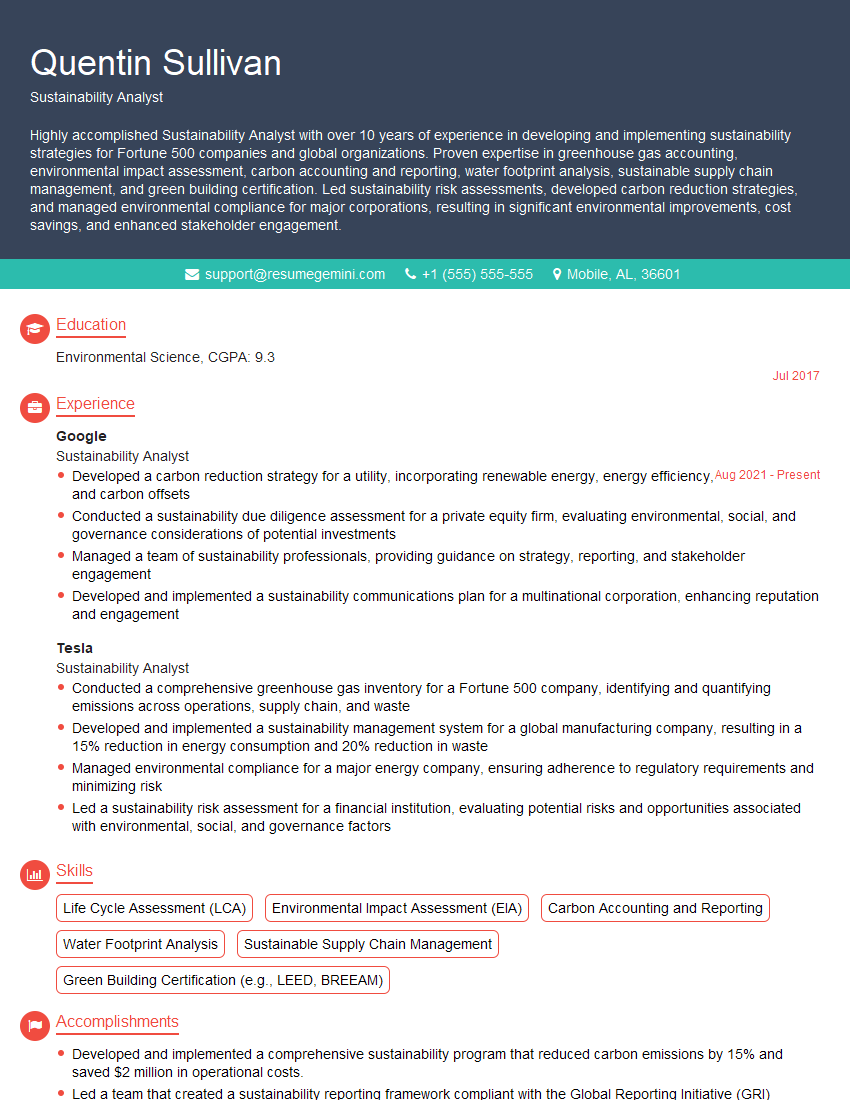
Sustainability Analyst Resume Sample

Sustainability Consultant Resume Sample
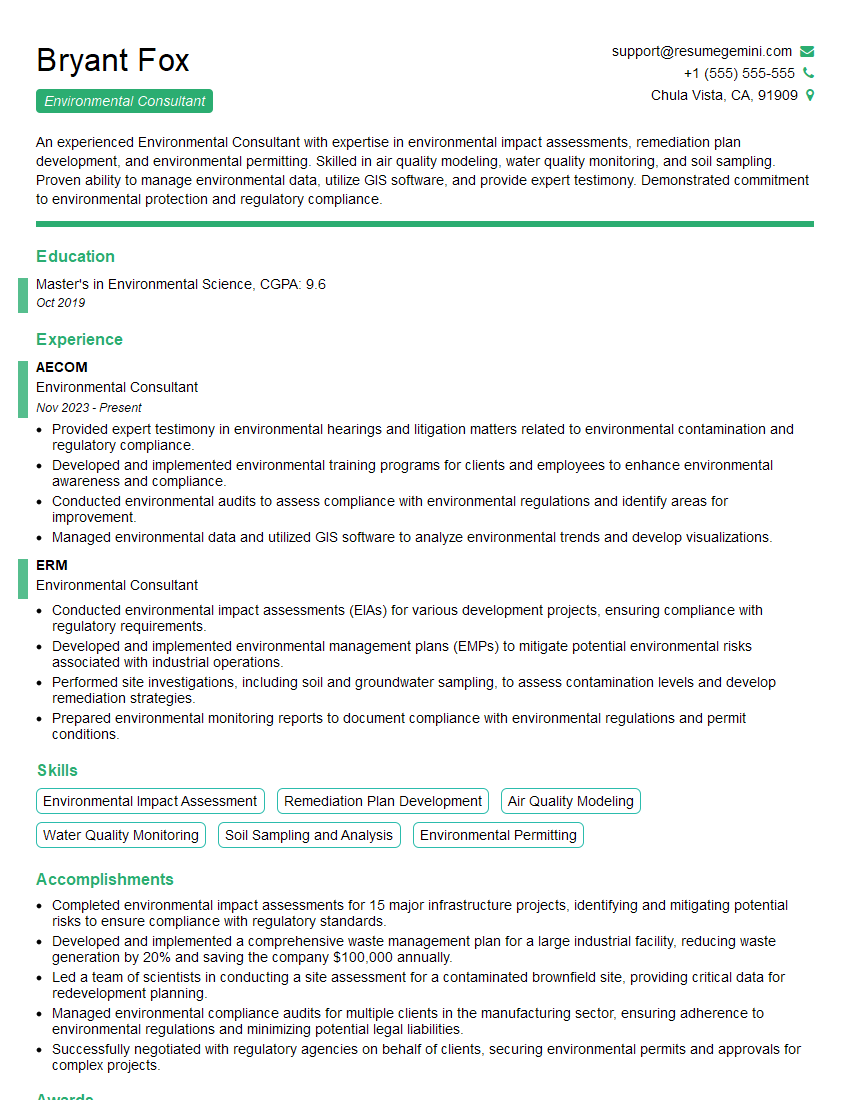
Environmental Consultant Resume Sample
Land Use Planner Resume Sample
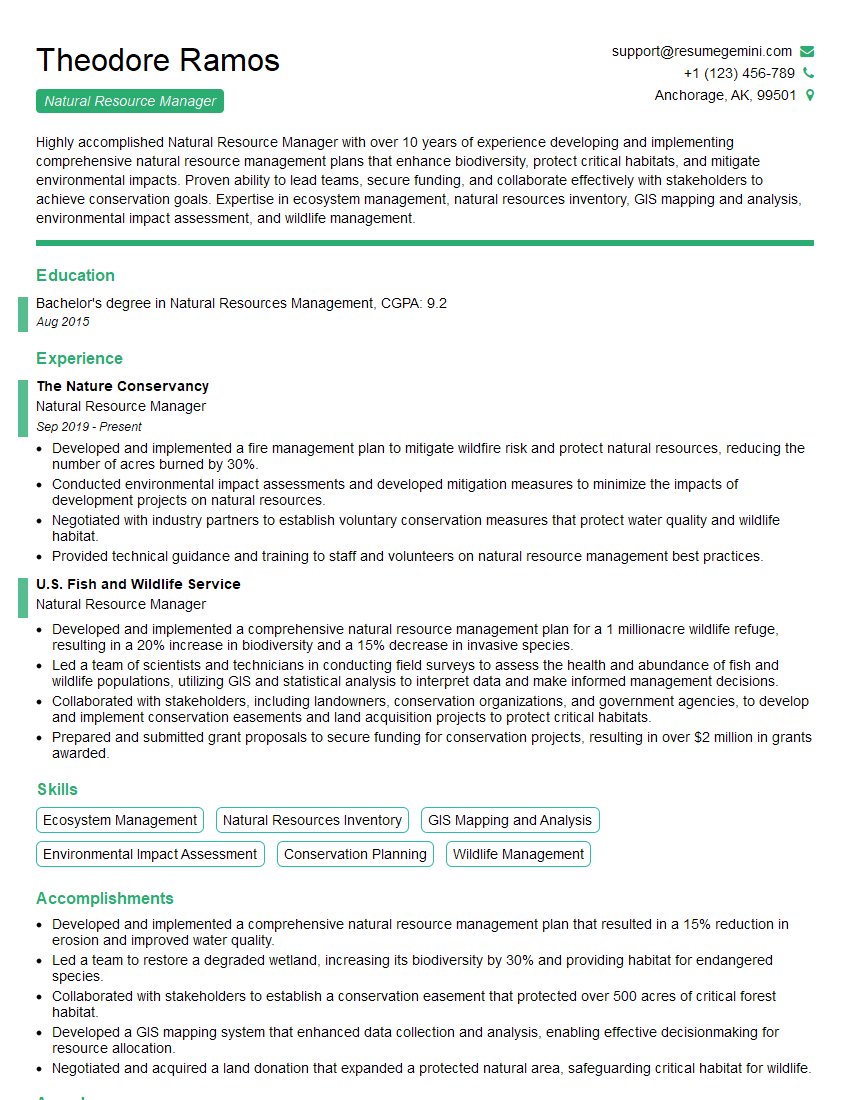
Natural Resource Manager Resume Sample
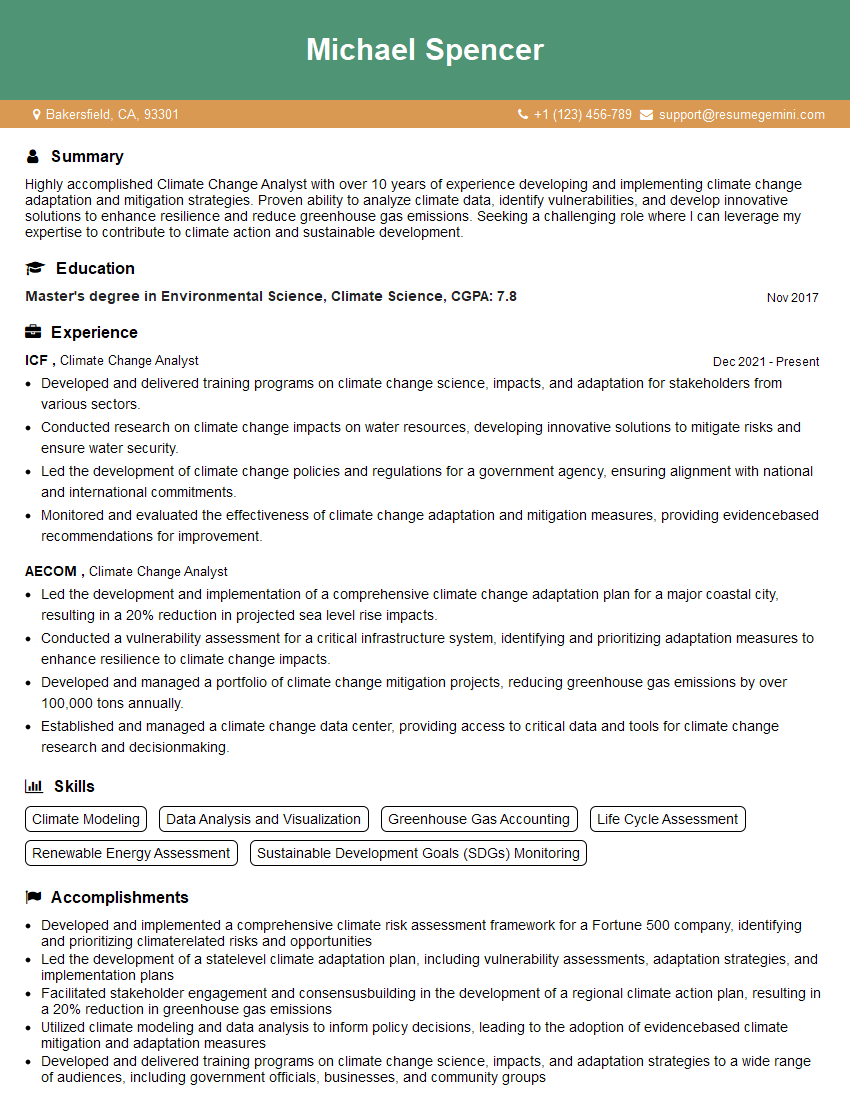
Climate Change Analyst Resume Sample
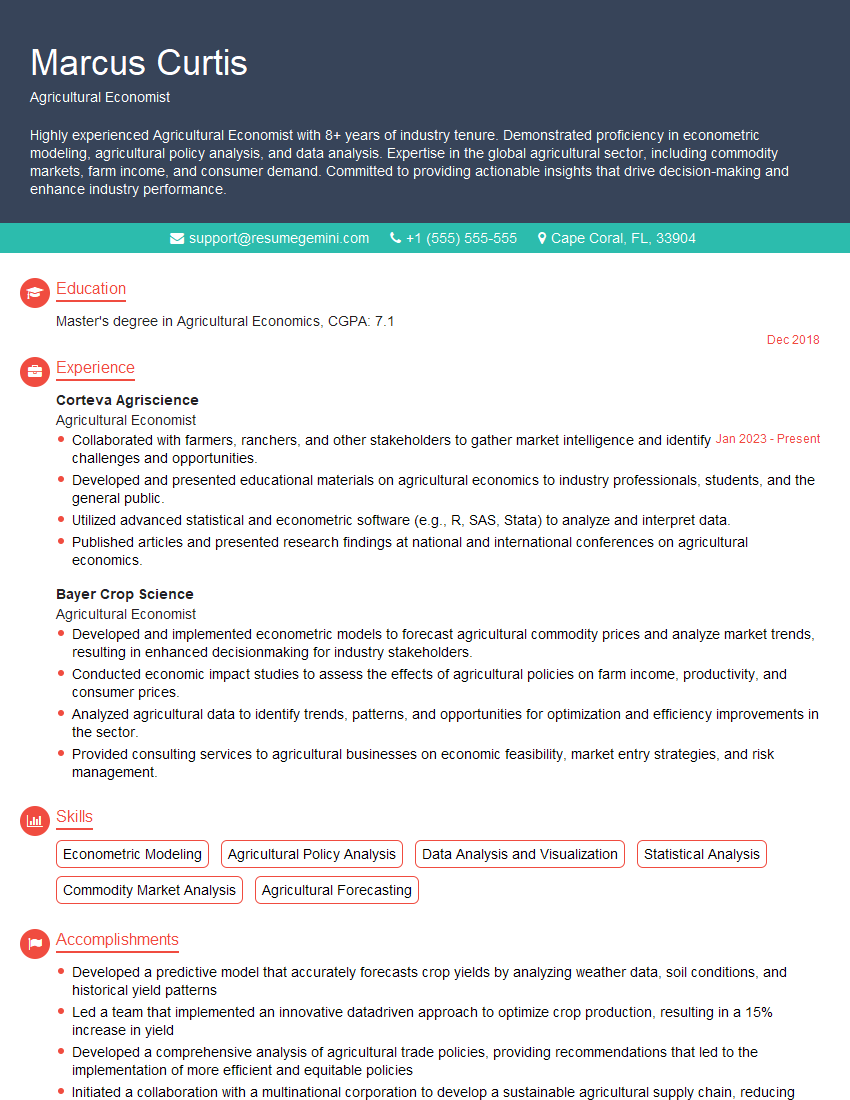
Agricultural Economist Resume Sample
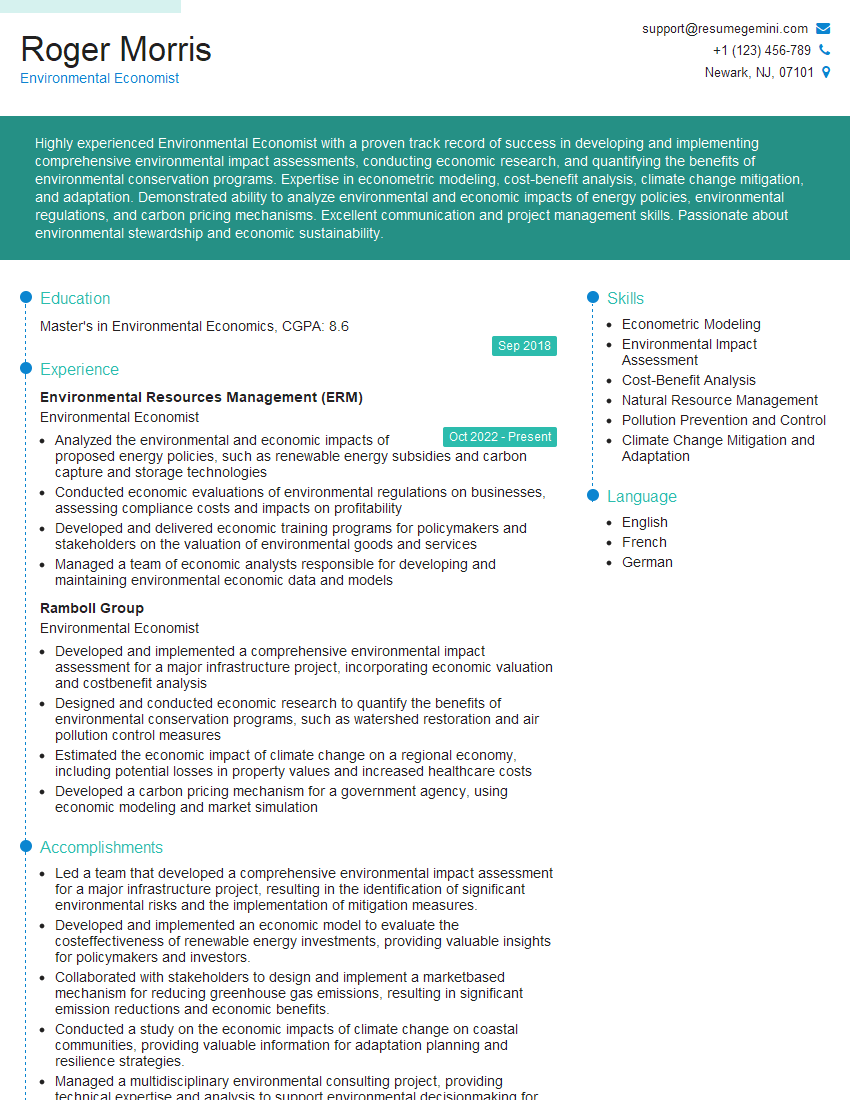
Environmental Economist Resume Sample
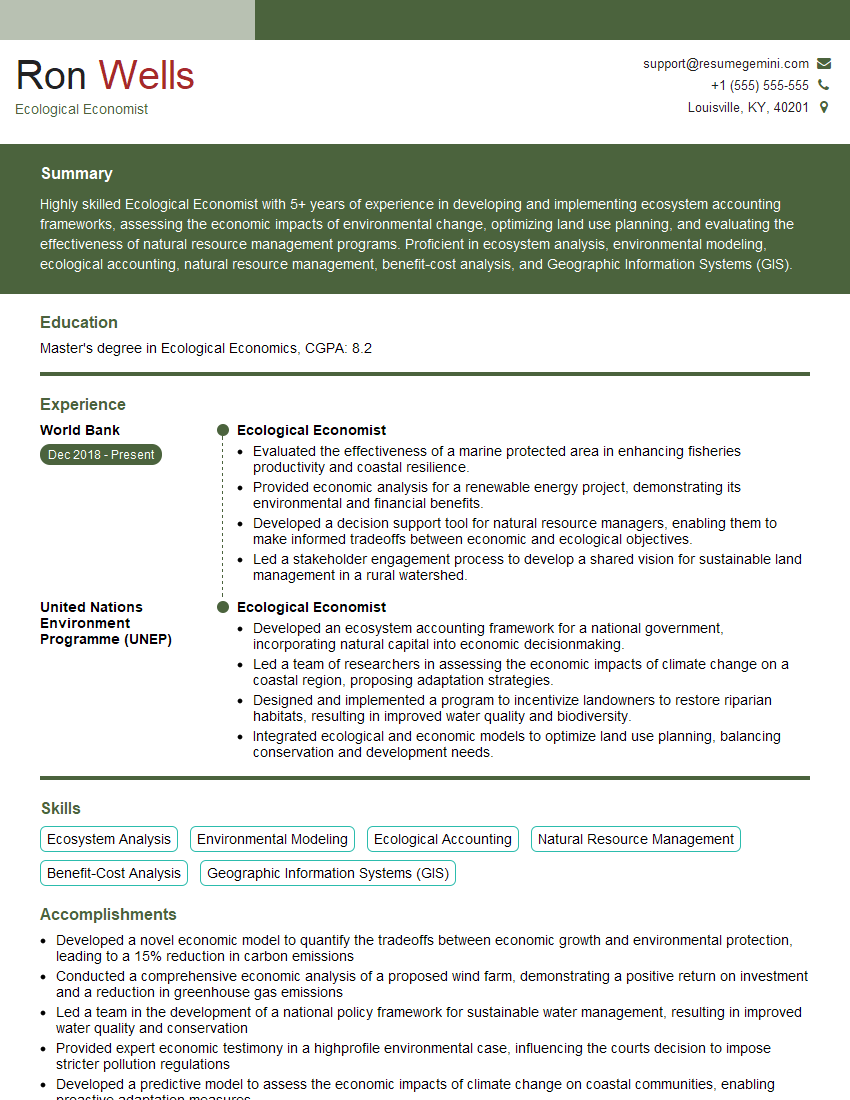
Ecological Economist Resume Sample
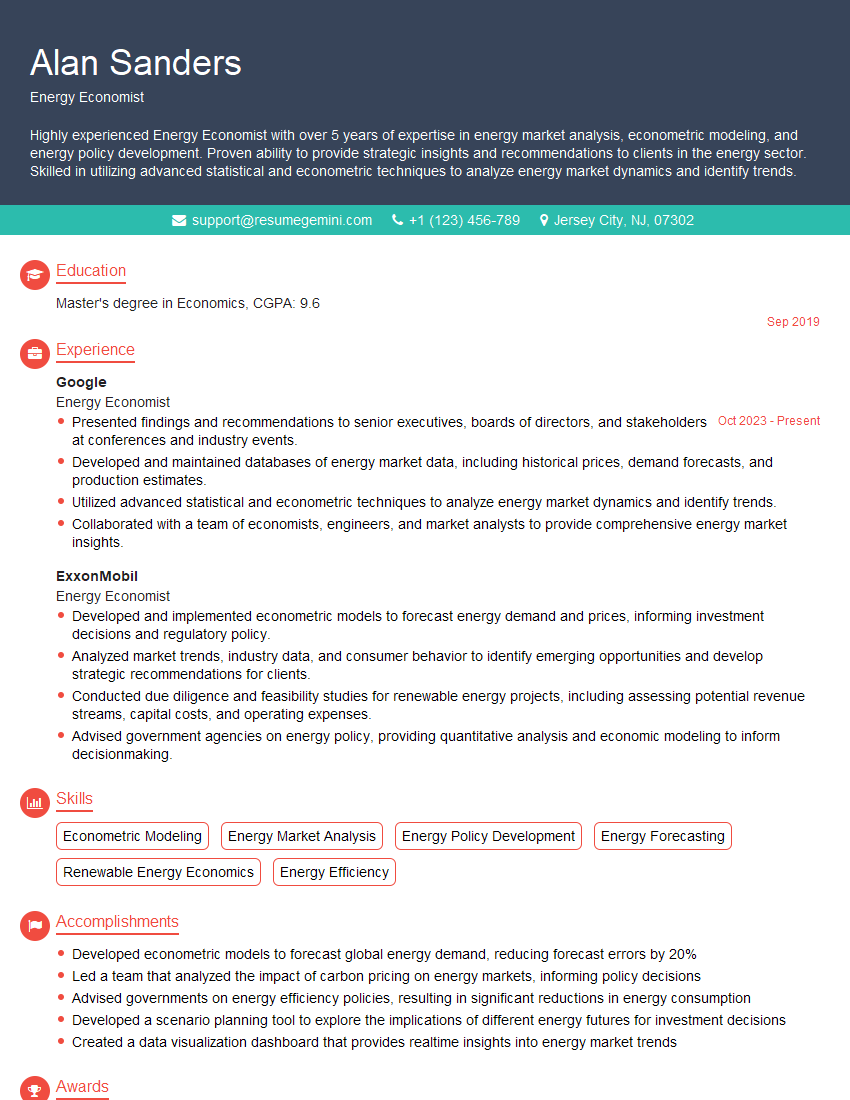
Energy Economist Resume Sample
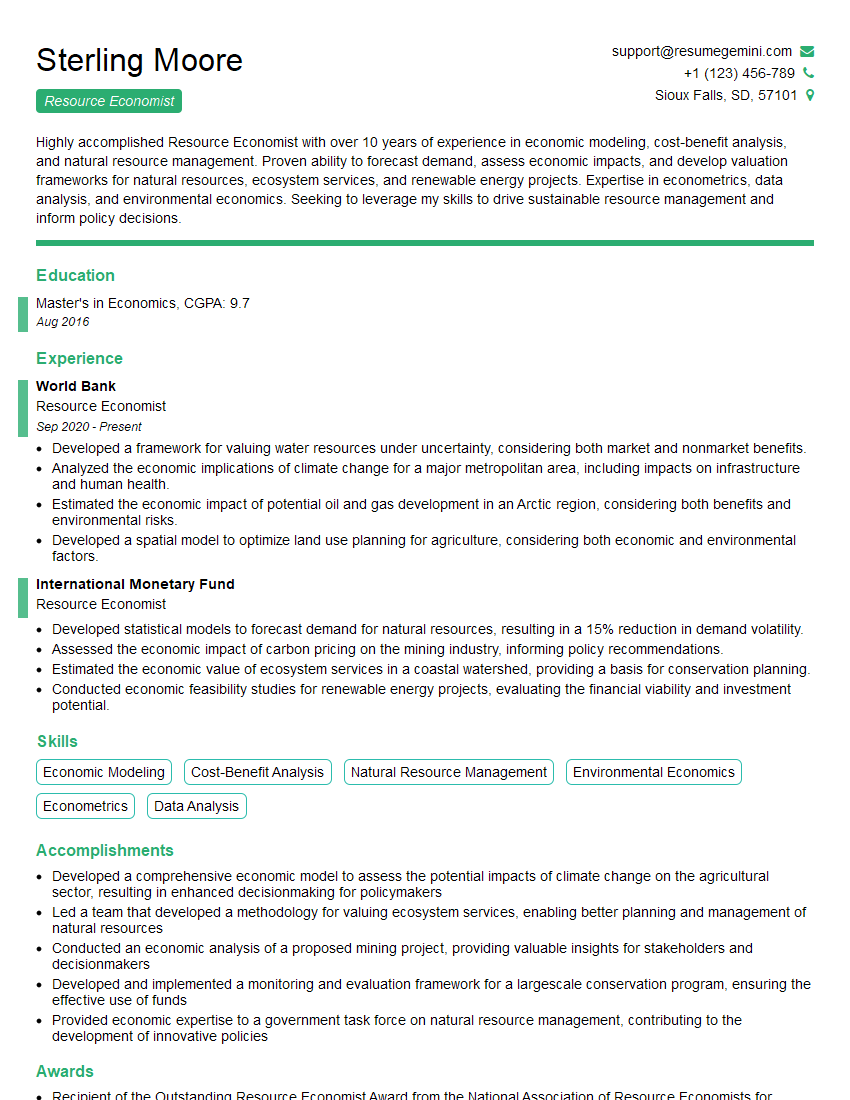
Resource Economist Resume Sample
Explore more articles
Users Rating of Our Blogs
Share Your Experience
We value your feedback! Please rate our content and share your thoughts (optional).
What Readers Say About Our Blog
Amazing blog
hello,
Our consultant firm based in the USA and our client are interested in your products.
Could you provide your company brochure and respond from your official email id (if different from the current in use), so i can send you the client’s requirement.
Payment before production.
I await your answer.
Regards,
MrSmith
hello,
Our consultant firm based in the USA and our client are interested in your products.
Could you provide your company brochure and respond from your official email id (if different from the current in use), so i can send you the client’s requirement.
Payment before production.
I await your answer.
Regards,
MrSmith
These apartments are so amazing, posting them online would break the algorithm.
https://bit.ly/Lovely2BedsApartmentHudsonYards
Reach out at BENSON@LONDONFOSTER.COM and let’s get started!
Take a look at this stunning 2-bedroom apartment perfectly situated NYC’s coveted Hudson Yards!
https://bit.ly/Lovely2BedsApartmentHudsonYards
Live Rent Free!
https://bit.ly/LiveRentFREE
Interesting Article, I liked the depth of knowledge you’ve shared.
Helpful, thanks for sharing.
Hi, I represent a social media marketing agency and liked your blog
Hi, I represent an SEO company that specialises in getting you AI citations and higher rankings on Google. I’d like to offer you a 100% free SEO audit for your website. Would you be interested?