Interviews are more than just a Q&A session—they’re a chance to prove your worth. This blog dives into essential Root Canal Treatment interview questions and expert tips to help you align your answers with what hiring managers are looking for. Start preparing to shine!
Questions Asked in Root Canal Treatment Interview
Q 1. Describe the process of accessing the root canal system.
Accessing the root canal system is the first crucial step in root canal treatment. It involves carefully removing the overlying tooth structure to expose the pulp chamber and then navigating the canals within the root. Think of it like exploring a tiny, complex cave system within the tooth.
We begin by isolating the tooth with a rubber dam to maintain a sterile field and protect the patient. Then, using high-speed rotary instruments and specialized endodontic files, we carefully remove the decayed or infected tooth structure until we reach the pulp chamber – the central cavity containing the nerve and blood vessels. Once the pulp chamber is accessed, we use smaller, more flexible files to carefully navigate and clean the root canals. The process requires precision and patience to avoid perforating the tooth or damaging the surrounding structures. Radiographs (X-rays) are used throughout the procedure to guide the instruments and confirm canal location and cleaning.
For example, in a molar with multiple canals, we may use different sized files to negotiate each canal, ensuring thorough cleaning of each pathway. The use of magnification, like an operating microscope, further enhances precision and allows for better visualization of the intricate canal anatomy.
Q 2. Explain the different types of root canal obturation techniques.
Root canal obturation refers to the process of filling the cleaned and shaped root canals to prevent reinfection. Several techniques exist, each with its advantages and disadvantages.
- Gutta-percha with lateral condensation: This is a classic technique using gutta-percha points (a natural rubber derivative) and a sealer to fill the canals. The points are warmed and compacted laterally, filling the space tightly.
- Gutta-percha with warm vertical condensation: A variation of lateral condensation, this technique utilizes a heated plugger to better adapt the gutta-percha to the canal walls and achieve a tighter seal.
- Gutta-percha with continuous wave obturation: This uses a thermoplastic gutta-percha delivery system with a controlled dispensing of gutta-percha and sealer into the canal. It offers more consistent filling.
- Single-cone technique: Involves using a single gutta-percha point to obturate the canal, often combined with a sealer. Suitable for simpler canal anatomies.
The choice of technique depends on factors such as canal morphology, the clinician’s experience, and the availability of equipment. The goal is always to create a three-dimensional seal that completely fills the canal space, preventing bacteria from re-entering.
Q 3. What are the indications and contraindications for root canal treatment?
Indications for root canal treatment primarily involve the presence of irreversible pulpitis (inflammation of the nerve) or periapical periodontitis (infection at the root tip). Symptoms might include severe pain, swelling, sensitivity to temperature changes, or a persistent dull ache. Radiographic evidence of bone loss or periapical lesions also indicate the need for treatment.
Contraindications are relatively rare but include severe systemic diseases that might impair healing, such as uncontrolled diabetes or immunocompromised states. Cases with severe tooth fracture or extensive bone loss that compromise the tooth’s longevity may also be considered for extraction rather than root canal therapy. Unrestorable teeth where the structural integrity is compromised beyond repair would also be a contraindication.
Q 4. How do you manage a root canal with a curved canal?
Managing a root canal with a curved canal requires specialized techniques and instrumentation. The key is to negotiate the curve gently and avoid perforating the canal walls. Using smaller, more flexible files (like nickel-titanium rotary instruments) is crucial. We use a step-back technique where we repeatedly advance and withdraw the file, ensuring it follows the canal’s natural curvature.
Another important consideration is pre-operative assessment and planning with radiographs. This helps in determining the degree of curvature and the overall canal anatomy. Digital radiography offers additional advantages due to its immediate availability. Finally, the use of an operating microscope significantly improves visibility and precision, especially in complex root canal systems.
For example, in a severely curved canal, we might use a series of increasingly smaller files to gradually navigate the curve, using radiographs at each step to confirm the file’s position. We always prioritize gentle instrumentation to avoid forceful maneuvers that could cause perforation or instrument fracture within the canal.
Q 5. What are the signs and symptoms of a failed root canal?
Signs and symptoms of a failed root canal can vary, but common indicators include persistent or recurring pain, swelling, tenderness to percussion (tapping on the tooth), and the presence of a sinus tract (a small opening draining pus from the infected area). Radiographic evidence of persistent or worsening periapical lesions (bone loss around the root tip) is also a key indicator of failure. Sometimes, the patient may experience a dull ache, especially when biting down, which could indicate a persistent infection.
It’s important to differentiate between immediate post-operative discomfort, which is often transient, and a true failure. A failed root canal often indicates that the infection was not fully eliminated during the initial procedure or that there has been a re-infection. A thorough clinical and radiographic examination is necessary to assess whether retreatment or extraction is needed.
Q 6. How do you diagnose a vertical root fracture?
Diagnosing a vertical root fracture (VRF) is challenging because it often presents subtly. Clinical symptoms can be vague and may mimic other conditions, making accurate diagnosis crucial. Patients may report pain, especially during biting or chewing, which is usually localized to the affected tooth.
Radiographic examination, however, is critical. While VRFs aren’t always readily apparent on standard radiographs, specific views and techniques, such as parallel-beam radiography or cone-beam computed tomography (CBCT), can be helpful to identify the fracture line. Fractures may be visualized as radiolucent lines extending from the root apex to the coronal portion, sometimes appearing as thin, subtle lines that are easily missed on conventional radiographs. Clinically, a tooth with a VRF often has poor prognosis and may require extraction. We can also assess the tooth for mobility or sensitivity when applying pressure to the tooth.
Q 7. Describe your approach to managing a periapical abscess.
Managing a periapical abscess, a localized collection of pus at the root tip, requires a multi-pronged approach. The primary goal is to drain the abscess and eliminate the infection. This typically begins with incision and drainage, where a small incision is made to release the pus. This provides immediate relief from the pain and pressure.
Following drainage, the next step usually involves initiating root canal treatment. The infected root canal system must be thoroughly cleaned and disinfected to remove the source of the infection. Antibiotics are often prescribed to help control the spread of infection systemically. If the infection is severe, hospitalization or intravenous antibiotics might be necessary. Pain management is also crucial, providing analgesics to alleviate discomfort. Regular follow-up appointments are critical to monitor healing and assess the success of the treatment.
A significant aspect of management is patient education and providing appropriate post-operative instructions to aid the healing process. For instance, proper oral hygiene, rinsing with antiseptic mouthwashes, and avoiding irritating foods are vital to ensuring proper healing.
Q 8. What are the different types of irrigation solutions used in root canal treatment and their properties?
Irrigating the root canal system is crucial for removing debris and bacteria. We use several solutions, each with unique properties.
- Sodium Hypochlorite (NaOCl): This is the workhorse. Its potent oxidizing properties effectively kill bacteria and dissolve necrotic tissue (dead tissue within the tooth). Different concentrations are used depending on the stage of the procedure. For example, a lower concentration might be used initially to avoid tissue irritation, followed by a higher concentration later for disinfection.
- Chlorhexidine (CHX): This is a broad-spectrum antimicrobial agent with excellent substantivity (it adheres to the root canal walls, providing prolonged antimicrobial action). It’s often used in conjunction with NaOCl to enhance the disinfection process. It’s particularly useful against biofilms, which are stubborn bacterial communities.
- EDTA (Ethylenediaminetetraacetic acid): This chelating agent helps remove the smear layer, a thin layer of debris left on the root canal walls after instrumentation. By removing the smear layer, we improve the penetration of irrigants and sealers, leading to a better outcome.
- Saline (Physiological Saline): Used for rinsing and flushing away debris after the use of other irrigants. It’s a simple yet essential irrigant.
Choosing the right irrigant and sequence is critical. For instance, using EDTA before NaOCl can improve the effectiveness of NaOCl penetration.
Q 9. Explain the use of different endodontic files and their properties.
Endodontic files are used to shape and clean the root canal system. They are categorized by their design and properties.
- K-files: These are relatively simple files with a triangular cross-section. They are primarily used for initial exploration and shaping of the canal.
- Hedstrom files: These have a cutting action that’s more aggressive than K-files. Their design allows for efficient removal of dentin during canal preparation.
- Rotary Files (e.g., ProTaper, WaveOne): These files are used in a rotary motion with the help of an endodontic motor, offering faster and more efficient canal preparation. They are designed with varying tapers and cross-sections for different stages of shaping. They are generally preferred over hand files for their efficiency and better control.
Each file type has a specific purpose, and choosing the right one depends on the canal’s anatomy and the stage of the procedure. For example, I might start with K-files for initial exploration, then switch to Hedstrom files for more aggressive shaping, and finish with rotary files for final shaping and cleaning. Proper technique is paramount to avoid perforation or ledge formation.
Q 10. What are the common complications of root canal treatment and how do you manage them?
Root canal treatment, while highly successful, can have complications.
- Persistent Infection: This is a major concern, often due to inadequate cleaning or canal anatomy complexities. Retreatment, involving re-access, cleaning, and refilling the canal, might be necessary.
- Perforation: This is a hole created accidentally in the tooth structure during instrumentation. Careful technique and proper assessment of canal anatomy minimize this risk. Management may involve surgical repair or, in severe cases, tooth extraction.
- Ledge Formation: This occurs when the file gets stuck in the canal. Carefully negotiating the canal with smaller files can help dislodge the file. If not successful, it might need surgical intervention.
- Root Fracture: Though rare, a root can fracture during the procedure. Careful instrumentation, particularly in teeth with pre-existing cracks, is crucial. This often necessitates extraction.
Careful diagnosis, meticulous technique, and appropriate management strategies, which may include microsurgery and/or endodontic surgery, reduce the risk and improve outcomes.
Q 11. How do you determine the working length of a root canal?
Determining the working length is vital to ensure we treat the entire canal without going too far and perforating. We use several methods:
- Radiographic Measurement: A periapical radiograph is taken after inserting a file to a presumed length. Measuring the file length on the radiograph helps determine the distance from the apex (tip of the root).
- Electronic Apex Locator: This device measures the electrical resistance between the file tip and the periapical tissues, providing a reading that approximates the apex location. It is not foolproof and should be used in conjunction with radiographic assessment.
- Clinical Assessment: Assessing the tooth’s anatomy and taking into account factors like the patient’s medical history will help avoid issues. Careful tactile feedback during instrumentation also plays a crucial role.
It’s crucial to use a combination of these methods to ensure accurate working length determination, minimizing the risks of complications.
Q 12. What are the different types of root canal sealers?
Root canal sealers fill the space within the canal after cleaning and shaping, hermetically sealing it off from oral bacteria. Different sealers offer varying properties.
- Zinc Oxide Eugenol (ZOE): This is a traditional sealer known for its biocompatibility and ease of use. It sets slowly.
- Calcium Hydroxide: This has excellent antibacterial properties and is often used as an interim sealer, particularly in cases of persistent infection.
- Resin-based Sealers: These sealers offer excellent sealing ability, dimensional stability, and radiopacity, making them easier to monitor on radiographs.
- MTA (Mineral Trioxide Aggregate): MTA is known for its superior sealing properties and biocompatibility; it’s often used for perforations and apexification (inducing root-end closure in immature teeth).
The choice of sealer depends on the specific needs of the case. For instance, I might use calcium hydroxide as an interim sealer to address persistent infection, followed by a resin-based sealer for long-term sealing.
Q 13. Explain the importance of proper isolation during root canal treatment.
Proper isolation is essential to maintain a sterile environment during root canal treatment and to prevent contamination. This involves using a rubber dam, a thin sheet of latex or silicone placed around the tooth to isolate it from the rest of the oral cavity.
Without proper isolation, saliva and oral bacteria can contaminate the root canal system, compromising the treatment’s success. The rubber dam keeps the operating field dry and prevents the inadvertent swallowing of instruments or irrigant solutions. This not only helps ensure treatment success but also protects the patient.
Think of it like performing surgery in a clean operating room—we need a sterile environment to avoid complications. Proper isolation is a cornerstone of effective root canal treatment.
Q 14. How do you manage a root canal with multiple canals?
Many teeth, particularly molars, have multiple root canals. Locating and treating all canals is critical for treatment success.
We use various techniques to locate and instrument all canals:
- Careful Examination: Using a microscope and careful exploration with fine instruments helps reveal the presence of additional canals.
- Radiographic Assessment: Radiographs taken from different angles help visualize the canal anatomy and identify additional canals, though it’s not foolproof.
- Dyeing Techniques: Using a dye to stain the canals makes them more visible, assisting in their identification and instrumentation.
Failing to identify and treat all canals can lead to persistent infection and ultimately treatment failure. Meticulous attention to detail and the use of advanced technologies are essential for successful treatment of teeth with multiple canals.
Q 15. How do you assess the success of a root canal treatment?
Assessing the success of a root canal treatment is a multi-faceted process that relies on both clinical examination and radiographic evaluation. Initially, we look for the absence of symptoms – no pain, swelling, or sensitivity to percussion or palpation. This clinical assessment is crucial. However, the radiograph provides vital information about the long-term prognosis.
Radiographically, we look for proper obturation (filling) of the root canal system. The ideal scenario is a homogenous, three-dimensional fill extending to the apex (tip of the root). We also carefully assess the surrounding bone for any signs of inflammation or resorption (bone loss), indicative of persistent infection. A well-healed periapical area (the area at the root tip) is a strong indicator of success. Sometimes, we might see a small radiolucency (dark area) that may persist even after a successful root canal; this doesn’t automatically mean failure, but needs to be monitored carefully.
Long-term monitoring involves periodic check-ups, often including radiographic assessments. Ultimately, a successful root canal treatment will result in a tooth that is asymptomatic, functionally sound, and shows no signs of periapical pathology on radiographs over the long term. Think of it like building a solid foundation for a house; if the foundation is weak, the house will eventually have problems, just as an incompletely filled root canal may lead to future issues.
Career Expert Tips:
- Ace those interviews! Prepare effectively by reviewing the Top 50 Most Common Interview Questions on ResumeGemini.
- Navigate your job search with confidence! Explore a wide range of Career Tips on ResumeGemini. Learn about common challenges and recommendations to overcome them.
- Craft the perfect resume! Master the Art of Resume Writing with ResumeGemini’s guide. Showcase your unique qualifications and achievements effectively.
- Don’t miss out on holiday savings! Build your dream resume with ResumeGemini’s ATS optimized templates.
Q 16. Describe your experience with apical surgery.
Apical surgery, also known as periapical surgery, is a microsurgical procedure used when root canal treatment fails to resolve the infection at the root tip. My experience encompasses a wide range of cases, from simple apicoectomies (removal of the root tip) to more complex procedures involving root-end fillings (retrograde fillings) and the use of regenerative materials. The key to success lies in meticulous surgical technique, precise instrumentation, and appropriate postoperative management.
For instance, I recently performed an apicoectomy on a molar with a persistent periapical lesion despite a previously performed root canal. Using magnification and microsurgical techniques, I carefully removed the infected root tip and thoroughly cleaned the area. A retrograde filling was placed, sealing the root end effectively. The patient responded well, and follow-up radiographs demonstrated healing of the periapical lesion. Careful patient selection is vital; apical surgery is not a first-line treatment, but rather a valuable option when conservative root canal therapy fails.
Q 17. What is your approach to managing a patient with a history of previous root canal failure?
Managing a patient with a history of previous root canal failure requires a cautious and thorough approach. The first step is a comprehensive assessment, including a detailed medical history, thorough clinical examination, and high-quality radiographs. This allows us to understand the cause of the initial failure – was it an inadequate initial root canal, a persistent infection, or another contributing factor?
Often, we find that the original root canal treatment was incomplete, leaving some infected tissue or debris within the canal system. In such cases, we might need to perform a retreatment, which involves carefully removing the old filling material and thoroughly cleaning and disinfecting the canals before undertaking a new root canal procedure. Sometimes, especially if there’s significant bone loss or a large periapical lesion, apical surgery may be necessary.
It’s essential to have an open and honest conversation with the patient about the potential challenges and outcomes. The chances of success with retreatment are lower than with initial treatment, and I always ensure my patients understand the risks and alternatives, such as extraction and replacement.
Q 18. Explain the principles of three-dimensional root canal obturation.
Three-dimensional root canal obturation refers to completely filling the entire root canal system, including all canals and ramifications, in a three-dimensional sense. This is crucial for preventing future infection and ensuring the longevity of the treatment. It’s more than just filling the main canal; it’s about ensuring that all the little branches and complexities within the root are completely sealed.
The principles involve using techniques and materials that allow for complete adaptation of the filling material to the canal walls. This may include the use of specialized obturation techniques, such as warm vertical compaction or lateral condensation, combined with advanced materials like gutta-percha and sealers that provide a three-dimensional seal. Radiographic confirmation is essential to verify complete obturation.
Think of it like filling a complex network of pipes; simply filling the main pipe isn’t enough; all the smaller branches must also be completely filled to prevent leaks. Achieving three-dimensional obturation significantly improves the success rate of root canal treatments.
Q 19. How do you manage a root canal with calcified canals?
Managing root canals with calcified canals presents a significant challenge. Calcification, the deposition of calcium salts within the canal, makes it difficult to instrument and clean the canal effectively. My approach involves using a combination of techniques to navigate and prepare these challenging canals.
I often begin with careful radiographic assessment to understand the extent and location of the calcification. Then, I might use specialized instruments, such as small, flexible nickel-titanium files and ultrasonic tips, to carefully negotiate through the calcified areas. Patience and a gradual, step-wise approach are crucial; aggressive instrumentation can cause perforations or fracture of the root. The use of chemical agents can also aid in softening the calcified dentin, making it easier to instrument. Sometimes, even with these techniques, complete cleaning and shaping might not be possible, and we need to accept a less-than-ideal result while prioritizing canal disinfection. The goal is to achieve the best possible cleaning and filling given the limitations imposed by the calcification.
Q 20. Describe your experience with using rotary nickel-titanium files.
Rotary nickel-titanium (NiTi) files have revolutionized endodontics. My extensive experience with these files demonstrates their significant advantages over traditional hand files. Their flexibility and memory allow for efficient shaping of complex canals with reduced risk of instrument fracture, which is crucial in navigating curved canals. They also allow for faster and more predictable canal preparation.
However, it’s crucial to use these files properly. Understanding the file design, appropriate rotational speed, and torque settings is paramount to avoid complications such as instrument separation or canal transportation. Continuous education and refinement of technique are vital in using these powerful tools effectively and safely. I consistently incorporate training and updates in my practice to ensure I am utilizing the latest techniques and technology.
Q 21. What are the latest advancements in endodontic technology?
Endodontics is a constantly evolving field. Recent advancements include improved rotary instrumentation, advanced imaging techniques like cone-beam computed tomography (CBCT), which provides 3D visualization of the root canal system, and the development of new biocompatible sealers and obturation techniques. Digital radiography enhances image quality and reduces radiation exposure for patients.
Furthermore, regenerative endodontics is gaining traction, focusing on stimulating the natural repair mechanisms of the periapical tissues. This involves using materials that encourage tissue regeneration and healing. The use of lasers and other advanced technologies is also being explored to enhance root canal disinfection and healing. The future of endodontics will likely involve even more precise and minimally invasive techniques, personalized treatment approaches, and improved materials for enhanced treatment outcomes.
Q 22. How do you handle challenging anatomical variations during root canal treatment?
Handling challenging anatomical variations during root canal treatment requires a combination of advanced imaging techniques, meticulous instrumentation, and a thorough understanding of root canal morphology. Many teeth have complex canal systems – extra canals, curved canals, or canals that are extremely narrow or blocked.
Advanced Imaging: We utilize CBCT (Cone Beam Computed Tomography) scans to visualize the root canal system in three dimensions. This allows us to identify the number, location, and shape of canals, which is crucial in complex cases. For example, a molar might show on a standard X-ray to have three canals, but a CBCT scan can reveal a fourth, previously undetected canal that needs treatment to prevent future infection.
Specialized Instruments: We employ microscopes and specialized endodontic files (such as nickel-titanium rotary instruments) that are designed to navigate through curved and calcified canals effectively. These instruments are more flexible and less likely to fracture than traditional hand files, allowing for safer and more complete canal preparation. For instance, a severely curved root canal might require the use of smaller, more flexible instruments to negotiate the bends without perforating the root.
Obturation Techniques: Once the canals are prepared, achieving a three-dimensional obturation (filling) is critical. We use techniques like warm vertical condensation of gutta-percha to ensure a complete seal of the root canal system, preventing future infection and re-treatment. In complex cases, this might involve using different materials and techniques to adapt to the unique morphology of each root.
Ultimately, careful planning, precise execution, and the use of modern technology are all essential for successfully navigating these challenging anatomical variations.
Q 23. What are your strategies for managing patient anxiety during root canal treatment?
Managing patient anxiety during root canal treatment is paramount. A comfortable and relaxed patient makes for a smoother procedure. My strategies focus on building trust, providing clear communication, and offering pain management options.
Open Communication: I take the time to thoroughly explain the procedure, answer all questions patiently, and address any concerns the patient might have. I use simple language, avoiding technical jargon, and always welcome questions. For example, if a patient expresses fear of needles, I explain the process step-by-step and offer topical anesthetic to numb the area before administering any injections.
Pain Management: Local anesthetic is routinely used to ensure the patient feels minimal to no discomfort during the procedure. I also offer nitrous oxide (laughing gas) as a mild sedative for patients who have high levels of anxiety. The use of nitrous oxide helps alleviate anxiety without causing drowsiness or significant side effects.
Relaxing Atmosphere: I create a calm and comfortable environment in my office. This includes playing relaxing music, offering warm blankets, and creating a distraction-free zone. I also provide opportunities for breaks during the procedure if the patient feels overwhelmed.
Building Rapport: Building a strong doctor-patient relationship is crucial. I focus on active listening, empathy, and showing genuine concern for the patient’s well-being. A trusting relationship can significantly reduce patient anxiety and improve the overall experience.
My ultimate goal is to ensure the patient feels safe, informed, and comfortable throughout their treatment.
Q 24. How do you maintain infection control protocols during root canal procedures?
Maintaining rigorous infection control protocols is absolutely non-negotiable in endodontic practice. Infection control prevents cross-contamination and protects both the patient and the clinician. My protocol adheres to the highest standards set by the American Dental Association and the CDC.
Personal Protective Equipment (PPE): I consistently use appropriate PPE, including gloves, masks, eye protection, and protective gowns. This provides a barrier against potential exposure to infectious agents.
Surface Disinfection: Before and after each procedure, all surfaces in the operatory are thoroughly disinfected using EPA-registered disinfectants. This includes the dental chair, operatory light, and all instruments. We also utilize barrier protection, such as plastic covers, to minimize the need for extensive surface cleaning after each procedure.
Instrument Sterilization: All instruments used are sterilized using a steam autoclave. This method ensures the complete elimination of microorganisms. We maintain meticulous records to track sterilization cycles and ensure that equipment is properly sterilized.
Hand Hygiene: Meticulous hand hygiene is practiced before and after each patient encounter, using appropriate handwashing techniques and antimicrobial solutions. This is a crucial step in preventing the spread of infection.
High-Volume Evacuation (HVE): Using a high-volume evacuation system helps minimize the aerosols produced during the procedure, reducing the risk of airborne transmission. This system continuously removes debris, bacteria, and fluids from the treatment area. In addition to this we use a rubber dam, isolating the teeth and minimizing bacterial spread.
Our commitment to these protocols ensures a safe and infection-free environment for all our patients.
Q 25. Discuss your experience with different types of dental materials used in endodontics.
Various dental materials play crucial roles in endodontic procedures, each with its unique properties and applications. Selection depends on the specific clinical situation and desired outcome.
Gutta-Percha: This is the primary material used for root canal obturation (filling). It’s a biocompatible material that’s easily shaped and adapted to the canal’s anatomy. Its plasticity allows for a good seal. We often use warm vertical condensation to ensure a three-dimensional fill.
Root Canal Sealers: These cements are used to fill the spaces between gutta-percha points and the root canal walls, ensuring a hermetic seal. Various sealers, such as AH Plus and epoxy resin-based sealers, each offering different properties in terms of biocompatibility and setting time.
Temporary Fillings: These are used to protect the treated tooth after root canal therapy is complete but before the crown is placed. They allow healing and prevent secondary infection.
Permanent Restorative Materials: Following root canal treatment, a crown or other restoration is usually placed to protect the weakened tooth structure. The choices are many, including porcelain fused to metal (PFM), all-ceramic crowns, or composite resin.
Dentin Bonding Agents: These agents improve the adhesion of restorative materials to the tooth structure, contributing to the longevity of the restoration.
The selection of appropriate materials is paramount for successful endodontic treatment and long-term tooth preservation. We constantly evaluate and adapt our materials based on scientific evidence and advances in dental materials science.
Q 26. Describe your protocol for post-operative care and patient education.
Post-operative care and patient education are vital components of successful root canal treatment. Proper post-operative instructions can significantly improve patient outcomes and prevent complications.
Pain Management: I prescribe appropriate pain medication as needed, along with instructions on managing post-operative pain and swelling. I also advise on the use of cold compresses.
Oral Hygiene: I emphasize maintaining excellent oral hygiene practices. This includes regular brushing and flossing, avoiding excessive pressure around the treated tooth.
Dietary Recommendations: I advise patients to avoid chewing on the treated tooth until the permanent restoration is placed to prevent further damage. In addition, I often suggest avoiding very hot or cold foods immediately following the procedure.
Follow-up Appointments: I schedule regular follow-up appointments to monitor the healing process and ensure the treatment is successful. These appointments are also an opportunity to address any questions or concerns.
Patient Education: I provide patients with detailed written instructions outlining the post-operative care plan. I also take time to discuss expectations, potential complications, and the importance of future preventative care.
Comprehensive post-operative care and patient education are crucial for ensuring a positive and successful treatment outcome.
Q 27. How do you stay current with the latest advancements in endodontic techniques and research?
Staying current with the latest advancements in endodontic techniques and research is critical for providing the highest quality care to my patients. I employ several strategies to maintain my expertise.
Continuing Education Courses: I actively participate in continuing education courses, conferences, and workshops offered by reputable organizations like the American Association of Endodontists. These courses cover new techniques, materials, and technologies used in endodontics.
Professional Journals and Publications: I regularly read peer-reviewed journals and publications, keeping abreast of the latest research findings and clinical studies. This ensures that I’m aware of the most effective and up-to-date treatment approaches. Publications from the Journal of Endodontics and other relevant journals are integral parts of my continued education.
Professional Organizations: Membership in professional organizations allows access to networking opportunities with other endodontists, access to resources, and participation in continuing education programs. I am an active member of both state and national endodontic organizations.
Collaboration with Colleagues: I maintain a strong network of colleagues and specialists in related fields. Regular discussions and case presentations help share knowledge and stay informed about new developments in the field.
Technology and Innovation: I’m committed to adopting new technologies and innovations. This includes the utilization of advanced imaging techniques, such as CBCT, and the use of the latest endodontic instruments and materials.
My ongoing commitment to professional development ensures that my patients receive the most advanced and effective endodontic care available.
Key Topics to Learn for Your Root Canal Treatment Interview
- Diagnosis and Treatment Planning: Understanding the indications and contraindications for root canal treatment, patient assessment, and formulating a comprehensive treatment plan. This includes recognizing radiographic signs of pathology and considering alternative treatment options.
- Access Cavity Preparation: Mastering the techniques for gaining proper access to the root canal system while preserving tooth structure. This includes understanding different access cavity designs based on tooth morphology and the use of various rotary instruments.
- Biomechanical Preparation: Gaining a thorough understanding of the principles of shaping and cleaning the root canal system, including the use of various instrumentation techniques (e.g., hand files, rotary instruments, reciprocating instruments), and irrigation protocols to achieve optimal debridement.
- Obturation Techniques: Mastering different obturation techniques (e.g., lateral condensation, warm vertical condensation, single-cone technique) to achieve a three-dimensional seal of the root canal system. This also includes understanding the properties of different obturation materials.
- Post-Treatment Considerations: Understanding the importance of post-operative care, including pain management, infection control, and recognizing potential complications. This involves effective communication with the patient regarding expectations and follow-up care.
- Modern Advances in Endodontics: Staying updated on the latest technologies and techniques in endodontics, such as digital radiography, CBCT interpretation, and the use of innovative materials. Understanding the advantages and limitations of these advancements.
- Medical Emergencies and Complications: Knowing how to handle potential medical emergencies during root canal treatment and effectively manage complications such as perforation, ledge formation, or instrument fracture. This includes understanding appropriate referral criteria.
Next Steps: Elevate Your Career in Endodontics
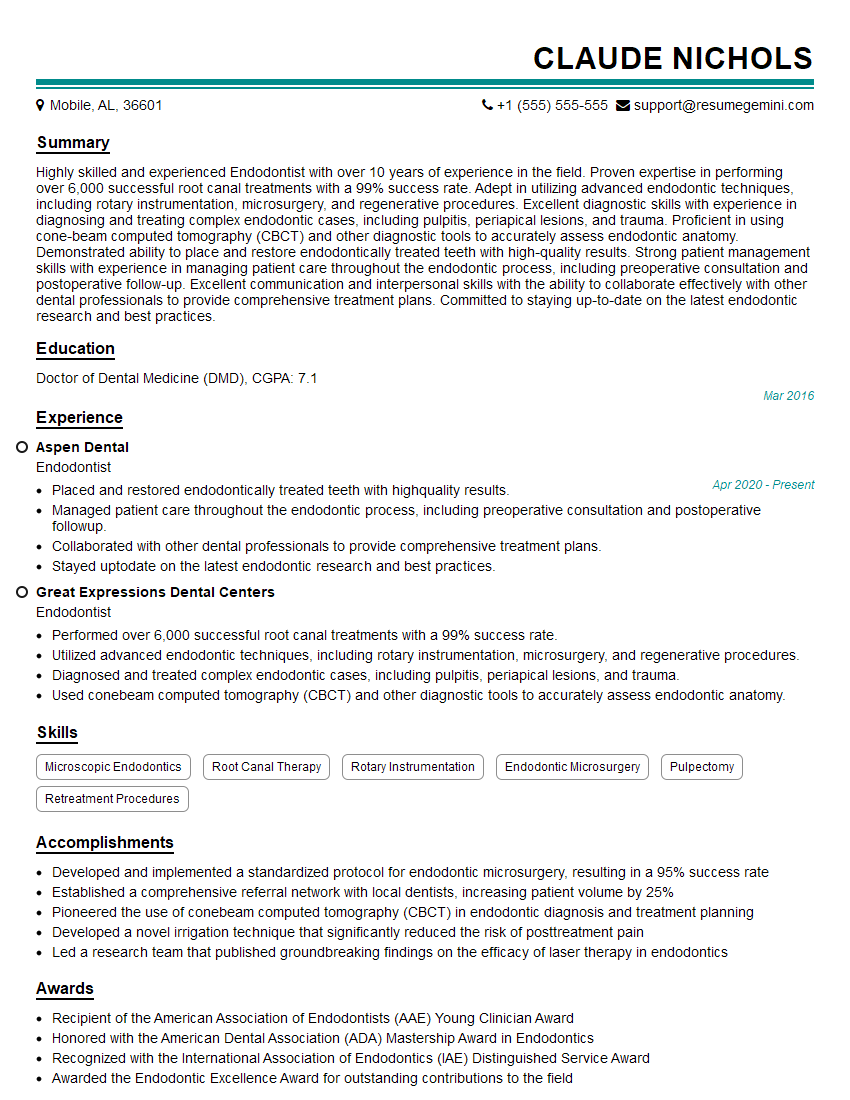
Mastering root canal treatment is crucial for career advancement in dentistry. A strong foundation in these techniques demonstrates competence and opens doors to specialized practice or leadership roles. To maximize your job prospects, create an ATS-friendly resume that showcases your skills and experience effectively. ResumeGemini is a trusted resource that can help you build a professional, impactful resume. They provide examples of resumes tailored to Root Canal Treatment to guide you, ensuring your qualifications are clearly presented to potential employers.
Explore more articles
Users Rating of Our Blogs
Share Your Experience
We value your feedback! Please rate our content and share your thoughts (optional).
What Readers Say About Our Blog
Amazing blog
hello,
Our consultant firm based in the USA and our client are interested in your products.
Could you provide your company brochure and respond from your official email id (if different from the current in use), so i can send you the client’s requirement.
Payment before production.
I await your answer.
Regards,
MrSmith
hello,
Our consultant firm based in the USA and our client are interested in your products.
Could you provide your company brochure and respond from your official email id (if different from the current in use), so i can send you the client’s requirement.
Payment before production.
I await your answer.
Regards,
MrSmith
These apartments are so amazing, posting them online would break the algorithm.
https://bit.ly/Lovely2BedsApartmentHudsonYards
Reach out at BENSON@LONDONFOSTER.COM and let’s get started!
Take a look at this stunning 2-bedroom apartment perfectly situated NYC’s coveted Hudson Yards!
https://bit.ly/Lovely2BedsApartmentHudsonYards
Live Rent Free!
https://bit.ly/LiveRentFREE
Interesting Article, I liked the depth of knowledge you’ve shared.
Helpful, thanks for sharing.
Hi, I represent a social media marketing agency and liked your blog
Hi, I represent an SEO company that specialises in getting you AI citations and higher rankings on Google. I’d like to offer you a 100% free SEO audit for your website. Would you be interested?