Preparation is the key to success in any interview. In this post, we’ll explore crucial scenic construction interview questions and equip you with strategies to craft impactful answers. Whether you’re a beginner or a pro, these tips will elevate your preparation.
Questions Asked in scenic construction Interview
Q 1. Describe your experience with different types of wood used in scenic construction.
My experience with wood in scenic construction is extensive, encompassing a wide range of species chosen for their specific properties. Pine, for instance, is a common choice due to its affordability and ease of working, ideal for large-scale structures or less visible components. However, it’s softer and can dent more easily, limiting its use in high-wear areas. Birch, on the other hand, offers a finer grain and a more polished finish, making it suitable for detailed trim work or visible elements. It’s more expensive but offers superior durability. Then there’s plywood, a staple in scenic construction, providing stability and a large, flat surface for building various components. Different plywood grades exist; we choose based on strength requirements and visibility. For example, a higher-grade Baltic birch plywood is excellent for intricate cuts and visible surfaces, whereas a standard grade might suffice for internal framing.
Finally, I have experience working with hardwoods like oak and maple. These are harder-wearing, offering excellent durability and a beautiful finish when properly treated, but they’re more challenging to work with and significantly more expensive. The choice of wood always depends on the budget, the design’s visual requirements, and the functionality of the scenic piece. On one particularly memorable project, we used a combination of pine for the main structure and birch for the intricate crown molding of a large castle set. The cost-effectiveness of pine and the beautiful detail enabled by birch provided the ideal balance.
Q 2. Explain your process for reading and interpreting scenic construction drawings.
Reading scenic construction drawings requires a meticulous and systematic approach. I begin by thoroughly reviewing the title block to understand the scale, revision date, and any relevant notes or specifications. Next, I examine the overall layout to grasp the set’s design and structure. Then, I focus on individual elements, identifying materials, dimensions, and assembly instructions. This typically involves interpreting orthographic projections (front, side, and top views) to create a 3D understanding of the piece. Often, detailed sections and elevations are provided to clarify complex elements.
I pay close attention to symbols and abbreviations – for example, understanding the difference between solid and dashed lines to represent visible and hidden edges. Dimensioning is crucial, so I carefully measure and double-check all given values. I also look for notes that clarify specific construction methods or material specifications. If there’s any ambiguity, I always clarify with the designer or production team to avoid mistakes. Think of it like reading a complex recipe – each element and instruction is vital to achieving the desired outcome, and misinterpreting a detail can easily lead to problems.
Q 3. What safety precautions do you prioritize when using power tools in scenic construction?
Safety is paramount in scenic construction. When using power tools, I always prioritize these precautions: Firstly, I ensure all tools are properly maintained and sharp. Dull blades are more likely to bind and kickback. Secondly, I wear appropriate personal protective equipment (PPE), including safety glasses, hearing protection, and dust masks. The latter is particularly important when working with wood, which can generate fine particles that are harmful to the lungs.
Thirdly, I always use the correct tool for the job. Attempting to force a tool beyond its capabilities can lead to accidents. I also regularly inspect the work area, ensuring it’s clear of obstructions and properly lit. Finally, and this is crucial, I never rush the process. Taking my time allows for more focus and reduces the risk of mistakes. Each time I start a new project or use a different tool, I will always briefly remind myself and others about the safety concerns, because complacency is a major hazard. We even have regular tool and safety inspections on our sites to proactively identify and solve potential hazards. This commitment to safety ensures a safe and productive work environment for everyone.
Q 4. How do you manage time and resources effectively on a scenic construction project?
Effective time and resource management is essential in scenic construction, where tight deadlines and budgets are common. I use several strategies: First, I create a detailed schedule that breaks down the project into manageable tasks, assigning realistic timelines to each. This schedule often incorporates a buffer to account for unforeseen delays. Then, I meticulously track progress, comparing the actual work done against the planned schedule. This helps identify any potential issues early on.
Resource management involves careful inventory control of materials and tools, anticipating needs and ordering well in advance. I also work closely with the project team to ensure clear communication and coordination, avoiding any bottlenecks or duplicated efforts. We often use collaborative software to track progress, share updates, and manage resources. Additionally, I prioritize tasks based on their urgency and importance, focusing on critical path activities to maintain the project timeline. It’s like managing a complex orchestra – each instrument (resource) needs to be played at the right time (schedule) and with the correct intensity (effort) to create the perfect symphony (finished product).
Q 5. Describe your experience with various painting techniques used in scenic construction.
My experience in scenic painting encompasses various techniques, from basic brushwork to more advanced methods. I’m proficient in stippling, which creates a textured surface, often used to depict rough surfaces or aged materials. Dry brushing, where a limited amount of paint is applied with a stiff brush, adds a weathered effect. Sponging offers a more irregular and mottled appearance, ideal for creating unique textures. I’m also adept at using stencils, which allows for the creation of repetitive patterns and details – perfect for things like brickwork or intricate designs.
Beyond these techniques, I use airbrushing for smooth gradients and fine details. Graining, a technique to simulate different types of wood, requires both skill and precision. Finally, I’m experienced in scenic washes, applying diluted paint to create subtle color transitions and depth. For a recent production, we used a combination of stippling and dry brushing to age the look of a rustic wooden tavern set, while airbrushing was utilized to create a stunning sunset backdrop. Each technique is chosen to serve a specific artistic purpose.
Q 6. What types of paint and finishes are you familiar with, and which ones would you choose for specific applications?
I am familiar with a wide range of paints and finishes used in scenic construction. These include acrylics, latex, and water-based paints – favored for their quick drying time and easy cleanup. For durability, especially in high-traffic areas, I often opt for high-gloss enamels. I also use specialty paints like metallics and fluorescents to achieve specific effects. For wood finishes, I use stains to enhance the natural grain and sealers to protect against moisture and wear. The choice of paint and finish depends on the surface being painted, the intended effect, and the project’s budget and longevity.
For a recent show involving a futuristic cityscape, I used metallic paints to create shimmering effects on the buildings, while water-based paints were used for other surface details. In contrast, for a historical drama, I applied stains to enhance the wooden textures of furniture and set pieces. A high-gloss finish was selected for floor surfaces which are more susceptible to heavy foot traffic. Understanding the properties of each material and how they interact with different surfaces is vital to achieve the desired aesthetic and functionality.
Q 7. How do you ensure the accurate mixing and application of paints to match color samples?
Ensuring accurate color matching is crucial in scenic construction. I begin by carefully reviewing the provided color samples, paying close attention to their undertones and subtleties. When mixing paints, I start with a small batch, making incremental adjustments until I achieve a close match. I use standardized color mixing systems, such as those based on the Munsell or Pantone color systems, to ensure consistency across larger batches. I always measure the quantities of each paint meticulously to reproduce the mix precisely.
If necessary, I utilize color charts and spectrophotometers for accurate measurement. Once the mix is approved, I document the exact formula to allow for replication if more paint is needed. Test swatches are always painted and allowed to dry to compare against the original sample under the same lighting conditions. Thorough quality control at each stage is vital to ensure color consistency throughout the project. In one instance, we used a spectrophotometer to match a very specific shade of blue for a water effect, ensuring the color remained consistent across different panels.
Q 8. How familiar are you with theatrical rigging and safety procedures?
Theatrical rigging and safety are paramount in scenic construction. My experience encompasses a deep understanding of counterweight systems, rope systems, and motorized rigging, including the use of winches and electric hoists. I’m proficient in inspecting rigging hardware for wear and tear, ensuring proper load ratings are adhered to, and understanding the importance of regular maintenance. Safety procedures are ingrained in my workflow; I’m familiar with OSHA regulations and best practices for fall protection, proper use of safety harnesses and lanyards, and emergency procedures in case of rigging failure. For instance, on a recent production of Hamlet, I was responsible for the safe rigging of a massive castle facade, meticulously checking every component and ensuring the crew followed all safety protocols during the installation and operation. This prevented any incidents and ensured a smooth, accident-free performance.
Q 9. Describe your experience working with different types of fabrics in scenic construction.
My experience with fabrics in scenic construction is extensive, ranging from lightweight muslin and silks used for drapes and backdrops to heavier canvas and vinyl for more durable set pieces. I understand the properties of different fabrics – their drape, weight, durability, and fire resistance. Choosing the right fabric is crucial; for example, a delicate silk might be perfect for a romantic scene but utterly unsuitable for a rough-and-tumble fight sequence. I’ve worked extensively with flame-retardant fabrics, which are mandatory for safety in most theatrical productions. I’m adept at dying and painting fabrics to achieve specific colors and textures. Recently, I crafted a series of intricately painted silk banners for a historical drama, carefully selecting a fabric that would allow for nuanced color blending while maintaining the integrity of the paint job.
Q 10. How do you measure and cut fabric accurately for scenic elements?
Accurate fabric cutting is essential. I typically start with a detailed drawing or digital blueprint. Measurements are meticulously taken, usually twice to eliminate errors. I then lay out the fabric on a large cutting table, precisely aligning the pattern pieces according to the plan. For complex cuts, I use specialized cutting tools like rotary cutters and pattern weights. I also account for seam allowances, ensuring that the final product will fit perfectly. To illustrate, imagine constructing a large circular backdrop. Careful calculation of the circumference and radius is essential to avoid any mismatches or wasted material. A slight miscalculation could result in an improperly fitting backdrop, which can easily ruin the visual impact of the production. A measuring wheel can also aid in obtaining accurate lengths of fabric for straight cuts.
Q 11. Explain your experience in building and installing various scenic elements, such as walls, platforms, and arches.
I have extensive experience in constructing a wide variety of scenic elements. Building walls involves careful framing, sheathing, and finishing – from simple flat walls to complex curved structures. Platforms require accurate calculations for load-bearing capacity and stability, using appropriate materials like plywood and steel supports. Arches can range from simple semi-circular designs to more complex shapes, often requiring custom fabrication techniques. For instance, I recently built a two-story castle wall for a Shakespearean production. This involved intricate carpentry, accurate measurements, and the integration of stage lighting into the wall structure. Each element required meticulous planning, and coordination with other crew members to ensure stability and integration with other set pieces. We ensured the wall met all weight and safety specifications for the planned stage movement.
Q 12. What software programs are you proficient in for drafting and designing scenic elements?
I’m proficient in several software programs crucial for scenic design and drafting. AutoCAD is my primary tool for creating detailed 2D and 3D models of sets, ensuring accuracy and precision in construction plans. I also use Vectorworks, which allows for effective collaboration among designers and builders. SketchUp is useful for quick model generation and visualization. Furthermore, I’m comfortable using Photoshop for manipulating images and creating textures for virtual set renders. Proficiency in these programs allows me to create efficient and accurate construction documents and effectively visualize the finished product.
Q 13. How do you collaborate effectively with other scenic construction team members?
Effective collaboration is crucial in scenic construction. I believe in clear communication, proactively sharing updates, and actively listening to my team members’ ideas and concerns. I contribute to a positive work environment through teamwork, mutual respect, and a collaborative problem-solving approach. During a recent production, we encountered a significant challenge when a key set piece was damaged unexpectedly. Through immediate communication with the designer, carpenters, and painters, we collaborated to devise a creative solution using readily available materials and completed the repair within the tight deadline.
Q 14. Describe your experience troubleshooting problems during scenic construction.
Troubleshooting is an inevitable part of scenic construction. I approach problems systematically, starting by identifying the root cause. This might involve inspecting materials, reviewing blueprints, or consulting with other team members. I’m adept at finding creative solutions to unexpected challenges, often adapting existing plans or improvising new techniques. For instance, during a show, a crucial backdrop unexpectedly ripped. By quickly assessing the damage and understanding the properties of the fabric, I devised a temporary repair using stage tape and strategically placed lighting to minimize visibility of the damage. This ensured the show could continue without significant interruption. This solution focused on a fast, effective fix without compromising the overall performance.
Q 15. How do you handle unexpected changes or challenges during a scenic construction project?
Unexpected changes are the norm in scenic construction. Think of it like building a castle in a sandstorm – you need adaptability. My approach is threefold: proactive planning, effective communication, and creative problem-solving.
Proactive Planning: Detailed blueprints and contingency plans are crucial. We anticipate potential issues like material delays or design modifications and build in buffers for time and resources. For example, if a specific wood type is prone to warping, we’ll pre-treat it or select an alternative.
Effective Communication: Open and frequent communication with the design team, production team, and clients is vital. If a challenge arises, we immediately discuss solutions, keeping everyone informed and aligned. This prevents misunderstandings and delays.
Creative Problem-Solving: When the unexpected hits (a broken piece, a material shortage), we brainstorm solutions. We might substitute materials, adjust the design slightly, or even improvise a fix. For instance, once, we had a last-minute change in set dimensions. Instead of scrapping the existing elements, we creatively re-purposed them, saving time and cost.
Career Expert Tips:
- Ace those interviews! Prepare effectively by reviewing the Top 50 Most Common Interview Questions on ResumeGemini.
- Navigate your job search with confidence! Explore a wide range of Career Tips on ResumeGemini. Learn about common challenges and recommendations to overcome them.
- Craft the perfect resume! Master the Art of Resume Writing with ResumeGemini’s guide. Showcase your unique qualifications and achievements effectively.
- Don’t miss out on holiday savings! Build your dream resume with ResumeGemini’s ATS optimized templates.
Q 16. What is your experience with various woodworking joints?
Woodworking joints are fundamental to scenic construction. My expertise spans a wide range, including:
Mortise and Tenon: A strong, traditional joint ideal for load-bearing structures. Think of the sturdy supports for a large platform.
Dovetail: Used for drawers and boxes, providing exceptional strength and aesthetic appeal. Imagine the intricate detailing on an antique chest within the set.
Dado: A simple, effective joint perfect for shelving or creating frames. This is a workhorse for constructing background walls.
Lap Joint: A robust joint used to join two pieces end-to-end, useful for creating longer beams or supports.
Biscuit Joint: A quick and convenient joint, often used for less-stressful applications where speed is a factor.
The choice of joint depends on the specific application, required strength, and aesthetic considerations. I carefully assess each scenario and select the most appropriate joint.
Q 17. Explain your experience with different types of metal working techniques used in scenic construction.
Metalworking plays a critical role, especially in creating strong, reliable support structures and decorative elements. My experience encompasses:
Welding (MIG, TIG): Essential for creating robust frames, supports, and custom metal pieces. Think of the steel framework supporting a large hanging structure.
Metal Fabrication: This includes cutting, bending, and shaping metal using tools like shears, brakes, and rollers. This is crucial for creating custom metal brackets or decorative elements.
Riveting: A reliable joining technique, particularly for scenarios requiring strength and resistance to vibration. You might see this in creating sturdy hinges or connections.
Soldering/Brazing: Used for joining thinner metals and creating intricate details. This is useful in creating decorative elements or small metal fittings.
Safety is paramount in metalworking. I adhere strictly to safety protocols, using appropriate PPE (Personal Protective Equipment) and ensuring all equipment is properly maintained.
Q 18. How do you ensure the structural integrity of scenic elements?
Structural integrity is paramount. We achieve this through meticulous planning, proper material selection, and robust construction techniques. Think of it like building a house – you wouldn’t use cardboard for the foundation!
Detailed Plans: We create detailed structural calculations to ensure that scenic elements can withstand the loads they will experience. This includes accounting for wind load, audience interaction, and the weight of other elements.
Appropriate Materials: Choosing the right materials is critical. We select strong, durable materials suitable for their intended use. For example, using engineered wood for load-bearing applications.
Robust Construction: We use appropriate joining techniques, such as strong mortise and tenon joints or welded metal connections, to ensure structural stability. We also incorporate bracing and reinforcement where necessary.
Regular Inspections: We conduct regular inspections throughout the construction process and during the run of the show, addressing any potential issues promptly.
Q 19. What methods do you use to prevent warping and damage to wooden scenic pieces?
Preventing warping and damage is crucial for the longevity of scenic pieces. We use a multi-pronged approach:
Proper Acclimation: Wood needs to acclimate to the environment before use. We store wood in a climate-controlled space to prevent rapid changes in moisture content.
Pre-Treatment: Applying sealants and finishes helps protect the wood from moisture damage and warping. We use high-quality, professional-grade finishes designed for theatrical use.
Proper Construction Techniques: Using appropriate joining methods and avoiding stress points reduces the chances of warping. Proper alignment and support during construction are also essential.
Storage and Handling: Carefully storing and handling scenic pieces helps avoid accidental damage. We use protective covers and padding to prevent scuffs and scratches.
Imagine a beautifully painted backdrop – preventing warping keeps that artwork perfect throughout the production run.
Q 20. How do you clean and maintain your tools and equipment?
Tool and equipment maintenance is crucial for safety and efficiency. Sharpening blades, cleaning surfaces and lubricating moving parts prevents damage and extends lifespan. Think of it like regularly servicing your car – it runs smoother and lasts longer.
Cleaning: After each use, tools are cleaned thoroughly. Woodworking tools are wiped clean of sawdust, while metalworking tools are brushed and cleaned of debris. This prevents rust and corrosion.
Sharpening: Blades and cutting edges are sharpened regularly to maintain efficiency and safety. Dull tools are more dangerous and produce poor results.
Lubrication: Moving parts of tools and machinery are regularly lubricated to prevent wear and tear and ensure smooth operation.
Storage: Tools are stored properly in designated areas, organized and protected from damage.
Q 21. Describe your experience with prop construction and finishing.
Prop construction and finishing are essential aspects of scenic construction. My experience includes crafting a wide variety of props, ranging from simple to incredibly complex.
Construction Techniques: I utilize a variety of techniques depending on the prop, from woodworking and metalworking to sculpting and casting. This might involve anything from building a simple chair to creating a fantastical creature.
Finishing Techniques: The finishing process transforms a basic prop into a believable element. Techniques such as painting, staining, distressing, and texturing bring realism and authenticity.
Materials: I select materials based on the prop’s purpose and desired look. This might include wood, metal, plastics, fabrics, foam, and other materials.
Safety: Safety is paramount, especially when handling tools and working with potentially hazardous materials. I always prioritize safety procedures and use appropriate protective gear.
For example, I once created a detailed, aging wooden chest for a historical drama. This involved careful wood selection, precise joinery, aging techniques to simulate wear, and a final coat of realistic paint to complete the illusion.
Q 22. How familiar are you with different types of theatrical hardware?
My familiarity with theatrical hardware is extensive, encompassing everything from basic rigging components to sophisticated automated systems. I’m proficient with various types of:
- Rigging: Including counterweight systems (both single and double purchase), hemp lines, steel cables, motorized chain hoists, and various types of shackles, clamps, and safety equipment. I understand the importance of proper weight distribution and safety protocols.
- Trusses: I’m experienced with different truss types – square, round, and circular – and their applications. This includes assembling, rigging, and securing trusses for lighting, sound, and scenic elements. I am familiar with the load-bearing capacities of various truss materials and configurations.
- Lifting and Moving Equipment: I’m comfortable operating forklifts, scissor lifts, and other machinery used in scenic construction, ensuring adherence to safety guidelines and weight limits.
- Stage Hardware: This includes platforms, wagons, rolling stages, and other movable elements, understanding their construction and safe operation.
- Automated Systems: I have experience working with computerized lighting and rigging systems, including motor control systems and their programming. This involves understanding safety protocols and troubleshooting potential issues.
Understanding these systems isn’t just about knowing how they work, but also about predicting potential problems and proactively addressing them. For example, knowing the limitations of a particular counterweight system can prevent accidents and delays.
Q 23. How do you handle hazardous materials safely in the scenic shop?
Safety with hazardous materials is paramount in our shop. We follow strict protocols to minimize risks. Our procedures include:
- Proper Storage: Hazardous materials are stored in designated, clearly labeled areas, following all relevant OSHA guidelines and using appropriate secondary containment.
- Personal Protective Equipment (PPE): Appropriate PPE is always used, including respirators, gloves, safety glasses, and protective clothing, depending on the specific material. We have regular PPE training to ensure correct usage and maintenance.
- Material Safety Data Sheets (MSDS): We maintain up-to-date MSDS for all hazardous materials and ensure everyone working with them understands the potential risks and handling procedures. This information is readily accessible.
- Waste Disposal: We have established procedures for the safe disposal of hazardous waste, in compliance with all local and national regulations. This includes proper labeling and handling of containers.
- Emergency Procedures: Clear emergency procedures are in place, including spill response plans and the location of emergency equipment like eye wash stations and safety showers. Regular drills ensure everyone is prepared.
For example, when working with paints containing solvents, we always ensure adequate ventilation, wear respirators, and properly dispose of leftover paint and thinner according to regulations. This is a standard procedure we meticulously follow to maintain a safe work environment.
Q 24. Describe your experience working in a fast-paced, high-pressure environment.
I thrive in fast-paced, high-pressure environments. My experience on numerous productions, often with tight deadlines and unexpected challenges, has honed my ability to prioritize tasks, manage time effectively, and remain calm under pressure. I’ve learned to anticipate potential problems, proactively find solutions, and delegate tasks effectively within a team. For instance, during a recent show where a critical scenic element was damaged just days before opening, I coordinated the team, sourced replacement materials, redesigned the affected piece, and oversaw its construction and installation – all within the tight deadline.
My approach is based on clear communication, prioritization, and maintaining a positive and supportive team atmosphere, even under stress. Flexibility and problem-solving skills are essential in this environment, and I believe I possess both in abundance.
Q 25. What are your strengths and weaknesses as a scenic construction professional?
Strengths: My strengths lie in my problem-solving abilities, my meticulous attention to detail, and my strong leadership skills. I excel at coordinating teams, managing multiple tasks simultaneously, and finding creative solutions to challenging problems. I’m also adept at reading and interpreting blueprints and technical drawings, a crucial aspect of scenic construction. My experience in budgeting and cost estimation ensures projects stay within budget and timelines.
Weaknesses: While I’m a strong leader, I sometimes need to improve delegating tasks to less experienced team members. I can be overly detail-oriented which, while a strength in execution, sometimes needs to be balanced against the need for speed and overall project flow. To improve this, I actively focus on providing clear instruction and setting realistic expectations, fostering trust in my team’s ability.
Q 26. How do you stay current with new technologies and trends in scenic construction?
Staying current in scenic construction requires continuous learning. I utilize several methods to stay updated:
- Industry Publications: I regularly read trade magazines and online publications focusing on theatre technology and scenic design to keep abreast of new materials, techniques, and software.
- Workshops and Conferences: I attend workshops and conferences to learn from leading professionals and network with other scenic artists and technicians.
- Online Resources: I actively engage with online communities, forums, and educational platforms that share the latest innovations in scenic construction and design.
- Hands-on Experience: Continuously experimenting with new materials and techniques on smaller projects allows me to gain practical experience and adapt my skillset.
For example, I recently completed a workshop on using digital fabrication techniques for scenic elements, which has expanded my capabilities in creating complex and intricate designs.
Q 27. Describe a time you had to solve a complex problem during a scenic construction project.
During a recent large-scale production, we encountered a significant challenge with a massive rotating set piece. The mechanism responsible for its rotation failed unexpectedly during the technical rehearsal. This was a major problem, as the set piece was central to the production and its failure risked jeopardizing the entire show’s opening night.
My approach involved:
- Assessment: I immediately assembled a team and we conducted a thorough assessment of the failed mechanism, identifying the root cause of the failure.
- Brainstorming: We brainstormed several alternative solutions, considering the time constraints and available resources.
- Solution Development: We decided to temporarily modify the mechanism using readily available materials, simplifying its operation to ensure its functionality for the show’s run.
- Implementation: The team worked around the clock to implement the solution, ensuring the set piece was fully operational for opening night.
- Post-Mortem: After the production, we conducted a thorough post-mortem to analyze the failure and develop a preventive maintenance plan to avoid similar issues in the future.
This experience highlighted the importance of creative problem-solving, effective teamwork, and the ability to adapt under extreme pressure.
Q 28. Explain your experience with budgeting and cost estimation for scenic construction projects.
I possess considerable experience in budgeting and cost estimation for scenic construction projects. My approach is multifaceted and includes:
- Detailed Material Lists: I create comprehensive material lists that account for all necessary materials, including lumber, hardware, paint, and other consumables. This ensures accurate costing and minimizes material waste.
- Labor Cost Estimation: I accurately estimate labor costs based on the complexity of the project, the required skill levels, and the anticipated timeline. This incorporates factors like overtime and potential delays.
- Contingency Planning: I always include a contingency buffer in the budget to account for unforeseen expenses or delays. This is crucial for managing risks and preventing budget overruns.
- Software Utilization: I’m proficient in using various software programs for budgeting and project management, allowing for accurate cost tracking and reporting.
- Vendor Negotiations: I have experience negotiating favorable pricing with material suppliers and contractors, securing competitive rates and optimizing the budget.
For example, on a recent project, I developed a detailed spreadsheet that broke down all costs, from materials to labor, allowing for precise tracking and proactive adjustments throughout the construction process. This resulted in the project being completed on time and within budget.
Key Topics to Learn for a Scenic Construction Interview
- Shop Drawings & Blueprint Reading: Understanding and interpreting technical drawings to accurately fabricate scenic elements. This includes comprehending scale, dimensions, materials, and assembly instructions.
- Materials & Fabrication Techniques: Knowledge of various materials used in scenic construction (wood, metal, plastics, fabrics) and proficiency in common construction techniques like woodworking, welding, painting, and upholstery. Practical application includes estimating material needs for a project and selecting appropriate materials based on design and budget.
- Construction Safety & Regulations: Familiarity with OSHA standards and safe work practices within a scenic construction environment. This includes proper tool usage, hazard identification, and accident prevention.
- Assembly & Rigging: Understanding the process of assembling scenic elements, including the use of appropriate tools and techniques for safe and efficient construction. Knowledge of rigging principles for hanging and supporting scenery is crucial.
- Problem-Solving & Troubleshooting: Ability to identify and resolve construction challenges on the job site. This includes adapting to unexpected issues, finding creative solutions within constraints, and maintaining project timelines.
- Budgeting & Cost Estimation: Understanding the process of estimating material costs, labor hours, and overall project budgets. This involves accurate measurement, material pricing, and efficient resource allocation.
- Collaboration & Communication: Effective communication with designers, other craftspeople, and clients to ensure project accuracy and timely completion. This involves clear communication of project needs and potential challenges.
Next Steps
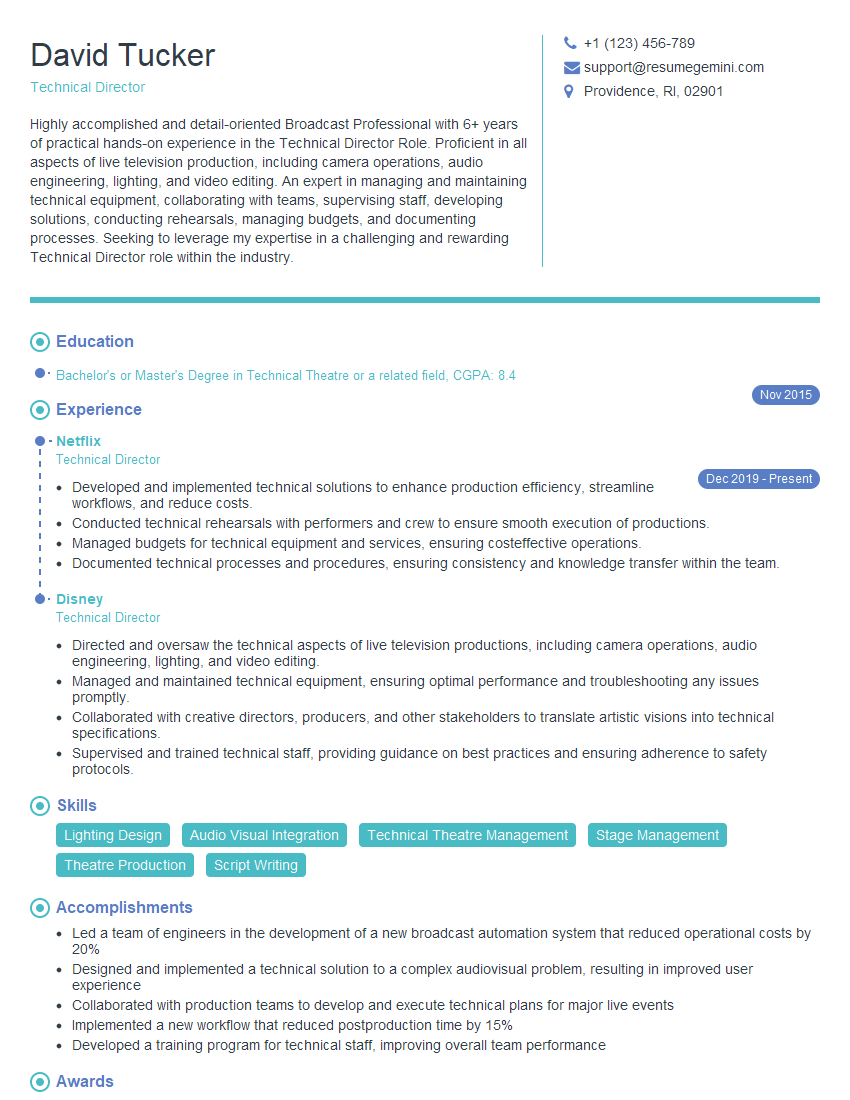
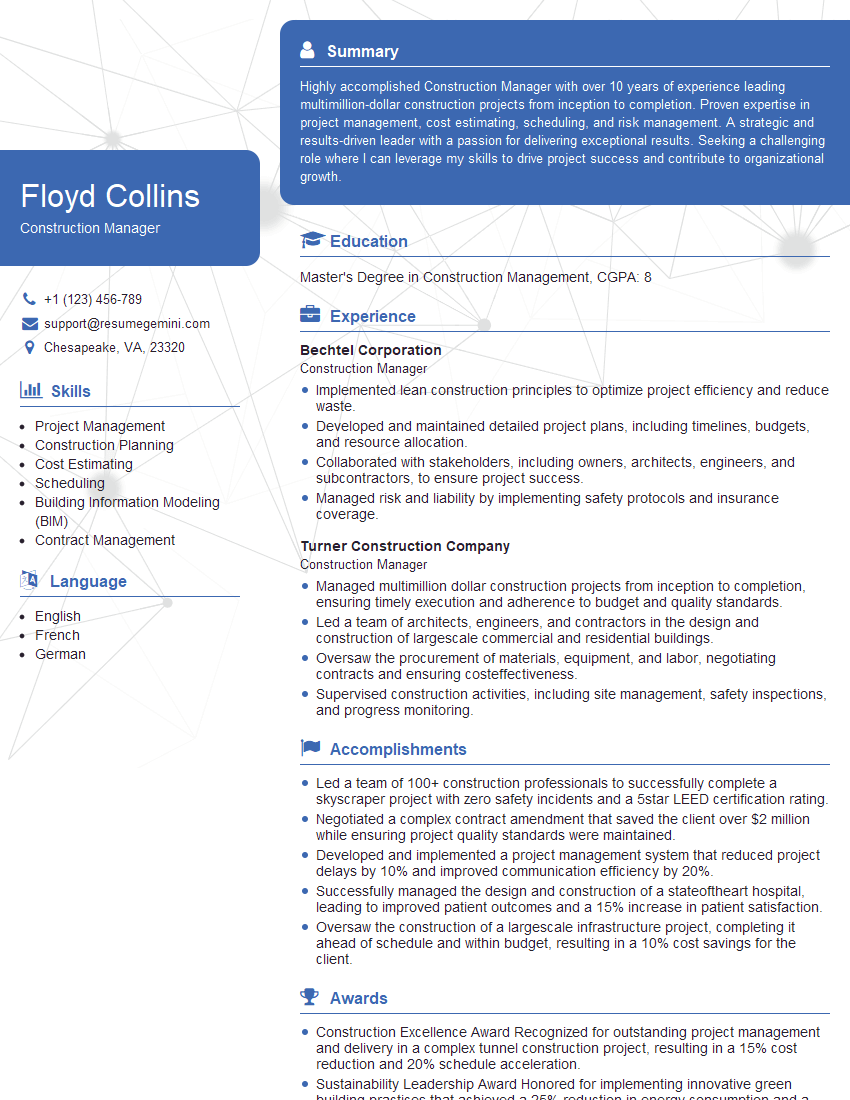
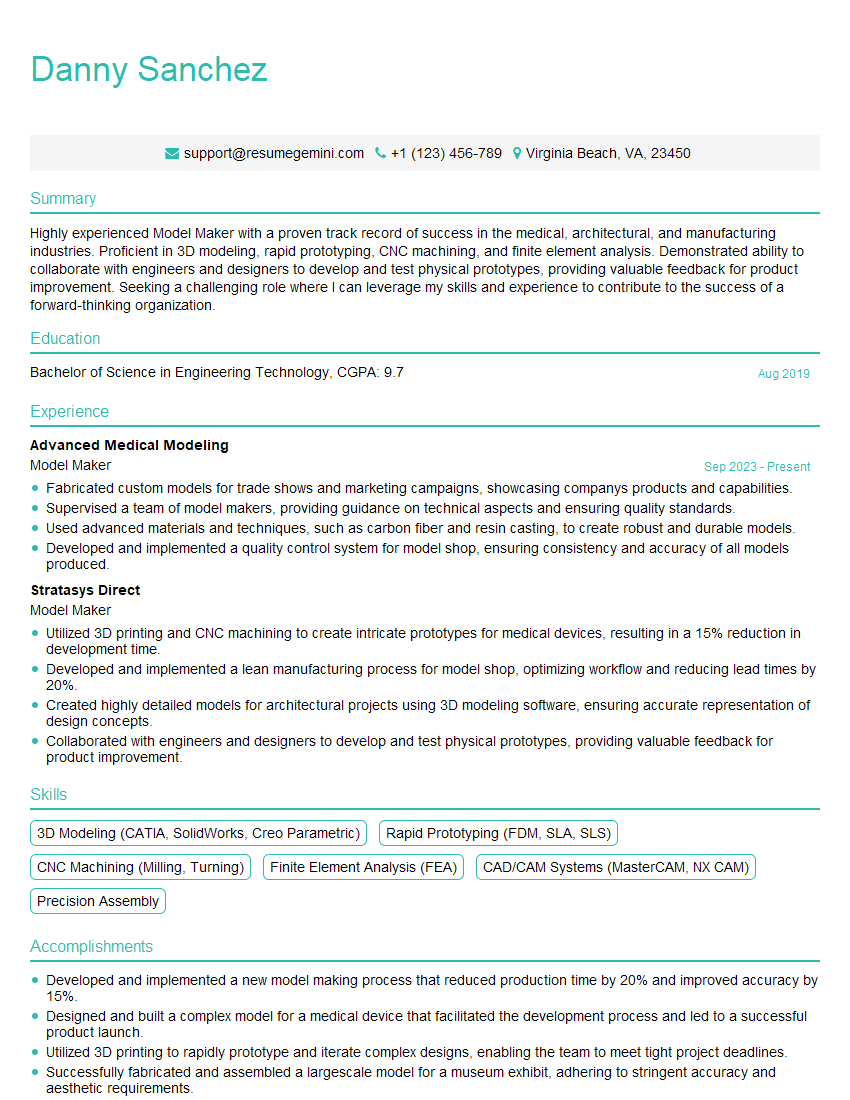
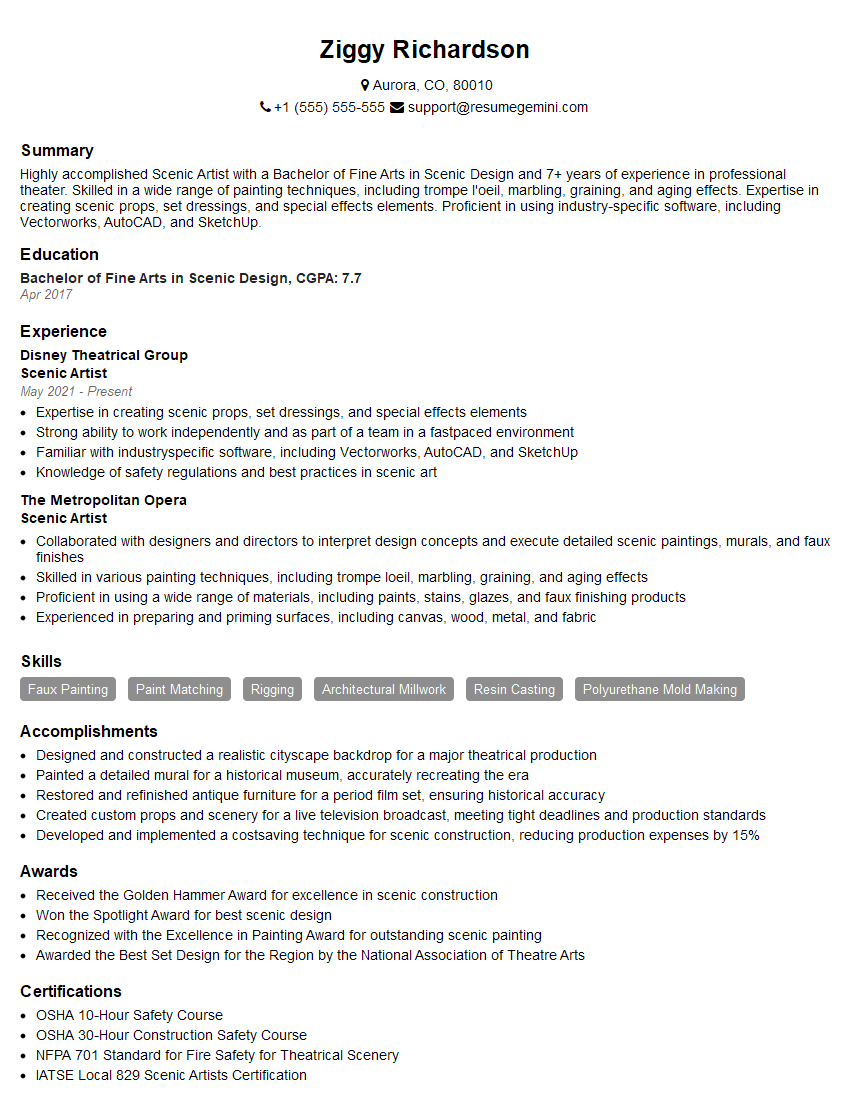
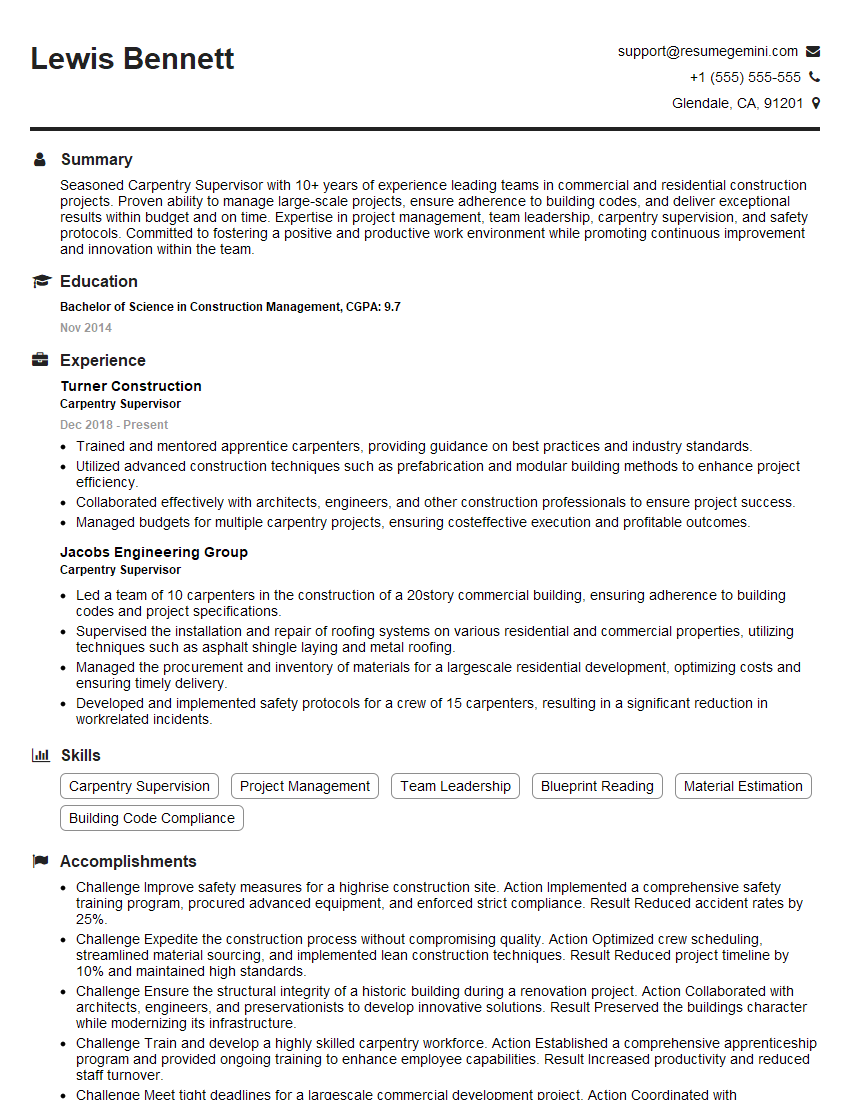
Mastering scenic construction opens doors to exciting and rewarding careers in theatre, film, television, and events. A strong foundation in these skills is highly sought after, leading to diverse opportunities and career growth. To maximize your chances of landing your dream job, creating a professional and ATS-friendly resume is vital. ResumeGemini is a trusted resource to help you build a compelling resume that highlights your skills and experience effectively. Examples of resumes tailored to scenic construction are available to help guide you.
Explore more articles
Users Rating of Our Blogs
Share Your Experience
We value your feedback! Please rate our content and share your thoughts (optional).
What Readers Say About Our Blog
Amazing blog
hello,
Our consultant firm based in the USA and our client are interested in your products.
Could you provide your company brochure and respond from your official email id (if different from the current in use), so i can send you the client’s requirement.
Payment before production.
I await your answer.
Regards,
MrSmith
hello,
Our consultant firm based in the USA and our client are interested in your products.
Could you provide your company brochure and respond from your official email id (if different from the current in use), so i can send you the client’s requirement.
Payment before production.
I await your answer.
Regards,
MrSmith
These apartments are so amazing, posting them online would break the algorithm.
https://bit.ly/Lovely2BedsApartmentHudsonYards
Reach out at BENSON@LONDONFOSTER.COM and let’s get started!
Take a look at this stunning 2-bedroom apartment perfectly situated NYC’s coveted Hudson Yards!
https://bit.ly/Lovely2BedsApartmentHudsonYards
Live Rent Free!
https://bit.ly/LiveRentFREE
Interesting Article, I liked the depth of knowledge you’ve shared.
Helpful, thanks for sharing.
Hi, I represent a social media marketing agency and liked your blog
Hi, I represent an SEO company that specialises in getting you AI citations and higher rankings on Google. I’d like to offer you a 100% free SEO audit for your website. Would you be interested?