Every successful interview starts with knowing what to expect. In this blog, we’ll take you through the top Sewing and Upholstery Techniques interview questions, breaking them down with expert tips to help you deliver impactful answers. Step into your next interview fully prepared and ready to succeed.
Questions Asked in Sewing and Upholstery Techniques Interview
Q 1. What types of sewing machines are you proficient with?
My expertise spans a variety of sewing machines, from basic mechanical models to advanced computerized machines. I’m highly proficient with industrial sewing machines, frequently used in upholstery projects, as well as domestic machines suitable for garment construction. My experience includes using single-needle and double-needle machines, sergers (overlock machines) for professional seam finishes, and even specialized machines for quilting and embroidery. I’m comfortable troubleshooting and maintaining these machines, ensuring optimal performance for any project.
- Mechanical Machines: Offer great control and durability, perfect for heavy-duty fabrics in upholstery.
- Computerized Machines: Allow for intricate stitch patterns and programmable settings, advantageous for precise garment construction.
- Sergers: Essential for creating clean, professional-looking seams and preventing fraying, crucial for both garment and upholstery projects.
Q 2. Describe your experience with different stitch types and their applications.
Stitch selection is critical; the wrong stitch can compromise the durability and aesthetics of a project. I’m experienced with a wide range of stitches, understanding their unique applications.
- Straight Stitch: The workhorse stitch, used for seams, topstitching, and general construction. I adjust the stitch length depending on the fabric weight and stress points.
- Zigzag Stitch: Used for preventing fraying on raw edges, sewing on elastic, and decorative stitching. The width and length are adjustable for varied applications.
- Overlock Stitch (Serger): Creates a professional, finished seam edge while simultaneously sewing the fabric together, preventing fraying and adding durability. Great for both garments and upholstery.
- Blind Hem Stitch: Almost invisible stitch perfect for hemming delicate fabrics or creating a neat finish on garments.
- Buttonhole Stitch: Creates functional and aesthetically pleasing buttonholes with various options for buttonhole types.
For example, I’d use a short, strong straight stitch for the seams of a heavy-duty canvas bag, but a longer, looser straight stitch for a lightweight chiffon garment. The zigzag stitch would be essential for finishing the raw edges of denim upholstery.
Q 3. How do you select the appropriate needle and thread for various fabrics?
Choosing the correct needle and thread is fundamental. The wrong choice can lead to broken needles, skipped stitches, or damaged fabric. My selection process considers the fabric type, weight, and construction.
- Fabric Type: Delicate fabrics like silk or chiffon require fine needles (size 60/8 or smaller) and fine thread (e.g., 50wt). Heavier fabrics such as denim or canvas need heavier needles (size 100/16 or larger) and heavier thread (e.g., 30wt).
- Fabric Weight: The weight determines the needle size; thicker fabrics need stronger needles to penetrate the material cleanly. This also dictates the thread weight for optimal seam strength.
- Needle Type: Different needle types are designed for specific fabrics, including universal, ballpoint, sharp, and stretch needles. Ballpoint needles are great for knit fabrics, while sharp needles are ideal for woven fabrics.
- Thread Type: Thread types like polyester or cotton are chosen for their durability and suitability with the fabric and project. Polyester thread is generally stronger and more resistant to fading.
For instance, when sewing a silk blouse, I’d choose a size 60/8 sharp needle and a fine 50wt silk or polyester thread. Conversely, working with heavy upholstery fabric would require a size 100/16 denim needle and a strong 30wt polyester thread.
Q 4. Explain your process for creating a professional seam finish.
A professional seam finish is crucial for durability and aesthetics. My process depends on the fabric and project, but generally involves one of the following:
- Serging/Overlocking: The most common method for professional seam finishes. It encloses raw edges, preventing fraying and adding strength and a clean look.
- Zigzag Stitch: A simple and effective alternative to serging for lighter weight fabrics. Adjust the stitch width to fully enclose the raw edges.
- Pinking Shears: Creates a decorative and slightly frayed edge that works well on thicker fabrics. This method is primarily aesthetic and offers less protection against fraying than serging or zigzagging.
- French Seams: Used for high-quality garment construction; raw edges are enclosed within the seam itself, creating a clean and durable finish.
- Hong Kong Finish: A decorative seam finish where bias binding covers the raw seam allowance; creates an elegant, high-end finish.
The choice depends on the desired look and fabric. For instance, I would use a serger for a pair of jeans for maximum durability and a clean finish, whereas a French seam would be suitable for a delicate silk dress for a refined and lasting finish.
Q 5. Describe your experience with pattern making and alterations.
Pattern making and alteration are essential skills. I’m proficient in drafting patterns from scratch, adapting existing patterns, and making alterations to achieve a perfect fit. My process involves:
- Understanding body measurements: Accurate measurements are fundamental for drafting or adapting patterns.
- Choosing the right pattern: Selecting a pattern that closely matches the desired style and body type simplifies adjustments.
- Adjusting for fit: Understanding and applying pattern alterations (e.g., shoulder adjustments, waist shaping, length adjustments) is critical.
- Muslin mock-ups: Creating a test garment from muslin fabric allows for accurate fit adjustments before working with the final fabric.
- Grading patterns: Adjusting pattern sizes to accommodate different body measurements.
For example, I recently altered a commercial dress pattern to fit a client with a fuller bust. I carefully increased the bust dart and adjusted the shoulder slope to achieve a better fit, all while keeping the overall style of the garment.
Q 6. How do you handle fabric irregularities or defects during the sewing process?
Fabric irregularities are inevitable. My approach involves careful assessment and creative solutions.
- Inspection: Before cutting, I thoroughly examine the fabric for flaws such as holes, stains, or uneven weaves. I plan cutting to minimize the impact of these flaws.
- Pre-treatment: Depending on the type and nature of the defect, I may pre-treat the fabric to minimize the defect’s impact (e.g., using fabric glue to repair minor holes, pre-washing to address potential shrinkage).
- Strategic Cutting: I strategize the placement of pattern pieces to avoid major defects.
- Seam placement: If the flaws are unavoidable, I place seams strategically to hide or minimize their appearance.
- Embellishments: Sometimes, a minor flaw can be camouflaged using decorative elements like appliqués or embroidery.
For instance, if I encounter a small hole in a garment, I might strategically place a patch or decorative embroidery over it to create a unique design element.
Q 7. What are your preferred methods for measuring and cutting fabric?
Accurate measuring and cutting are essential. I utilize several techniques to ensure precision:
- Pre-washing: I always pre-wash fabrics, especially natural fibers, to account for shrinkage. This prevents alterations needed later.
- Accurate Measurements: I use a flexible measuring tape, ensuring the fabric is smooth and taut during measurements. I double-check all measurements.
- Cutting Tools: I use sharp fabric shears for precise cutting, avoiding jagged edges that affect final aesthetics.
- Cutting Surface: A large, flat, clean surface (like a cutting table) is essential for accurate cutting. This ensures even pressure and precise lines.
- Pattern Placement: Following the instructions on the pattern, I carefully align pattern pieces on the fabric using weights or pins, paying close attention to grainlines.
- Using a Rotary Cutter (for large pieces): A rotary cutter and cutting mat are excellent tools for cutting large amounts of fabric swiftly and accurately.
For example, before cutting a complex garment pattern, I would accurately mark and measure the fabric against the pattern pieces, checking multiple times to avoid mistakes.
Q 8. What safety precautions do you adhere to when operating sewing machinery?
Safety is paramount when working with sewing machinery. My routine begins with a thorough inspection of the machine, ensuring all guards are in place and securely fastened. Loose clothing, jewelry, and long hair are always secured to prevent entanglement. I always use the correct needle and thread for the fabric type to avoid breakage and accidents. Before starting, I make sure the area around the machine is clear of obstructions and well-lit. Finally, I never operate the machine if I’m tired or distracted – a clear mind is crucial for safe operation. Think of it like driving a car; you wouldn’t drive if you were tired, and the same applies to powerful machinery.
- Regular Maintenance: I perform regular maintenance checks on my machines to ensure they are in optimal working condition. A well-maintained machine is a safer machine.
- Emergency Stop: I always know the location of the emergency stop button and how to use it quickly and effectively.
Q 9. Explain your experience with different upholstery techniques (e.g., button tufting, welt cord, piping).
I’m proficient in a variety of upholstery techniques. Button tufting, for instance, requires precision and patience. It’s a beautiful detail that adds a classic touch. I meticulously space and secure each button to create a uniform, elegant pattern. For welt cord, I’m skilled in creating clean, crisp welts that perfectly accentuate the edges of cushions and arms. The process involves creating a tightly bound cord that’s then stitched into the seam allowance. Piping, similar to welt cord, uses fabric wrapped around a cord to create a decorative edge, but the technique is slightly different, requiring careful fabric manipulation to maintain a consistent shape. I’ve used these techniques on diverse projects, from restoring antique chairs to creating custom-designed sofas.
- Button Tufting: Requires precise button placement and consistent tension for a professional look.
- Welt Cord: Needs accuracy in cutting and stitching for a neat, finished edge.
- Piping: Requires careful fabric wrapping to maintain a consistent shape and size along the seams.
Q 10. Describe your experience with various upholstery materials (e.g., leather, vinyl, fabric).
My experience encompasses a wide range of upholstery materials. Leather, for instance, requires specialized tools and techniques. I understand how to assess its thickness and condition, choosing the right needle and thread for optimal stitching. Vinyl is more durable and easier to clean than leather, but it can be more challenging to work with due to its stiffness and tendency to stretch. Fabric, on the other hand, comes in countless varieties, each requiring specific handling and care. From delicate silks to robust canvas, I tailor my techniques to each material’s unique properties. Each material presents unique challenges and rewards, demanding specific skills and attention to detail.
- Leather: Requires specialized needles and thread to avoid tearing.
- Vinyl: Needs careful handling to avoid stretching or cracking.
- Fabric: Requires understanding of fiber content and weave structure for optimal results.
Q 11. How do you assess the condition of existing furniture before reupholstering?
Assessing furniture before reupholstering is crucial. I start by examining the frame for structural soundness, checking for cracks, loose joints, or pest infestation. Then, I carefully evaluate the existing upholstery, noting the type of fabric, its condition, and any underlying damage. I examine the cushioning, looking for sagging, wear, or degradation. The springs (if present) are checked for tension and alignment. A thorough inspection ensures that all necessary repairs are identified before beginning the reupholstering process, preventing costly mistakes down the line. It’s like giving the furniture a complete physical before a major operation.
Q 12. Explain your process for removing and installing upholstery.
Removing and installing upholstery is a methodical process. First, I carefully document the existing design, taking photos and notes on the placement of components. Next, I carefully remove the old upholstery, taking note of how it was constructed. Staple removal is a key part of this, ensuring the removal is careful to avoid damaging the underlying frame. The new fabric is then cut and assembled according to the original pattern or a new design, carefully noting the orientation of patterns and designs. Once the new fabric is ready, I carefully stretch it onto the frame, maintaining even tension and ensuring a smooth, wrinkle-free finish. Finally, I securely attach the upholstery with new staples, trimming excess fabric.
Q 13. How do you handle challenging upholstery repairs?
Challenging repairs demand creativity and problem-solving. For example, I recently repaired a severely torn antique chair arm. The initial assessment revealed significant damage to the underlying structure. This required repairing the underlying wood with wood filler and glue before proceeding with the upholstery. I had to create a custom patch using matching material and carefully integrate it into the existing structure. The key is patience, detailed examination of the damage, and a careful approach to ensure the repair is both structurally sound and aesthetically pleasing. I always aim to use appropriate techniques that enhance the longevity of the piece while preserving its original character and integrity.
Q 14. What tools and equipment are essential for upholstery work?
Essential tools for upholstery work are numerous, but some are indispensable. These include heavy-duty sewing machines with various stitch types and needle sizes. A staple gun is critical for securing upholstery to the frame. Various pliers and screwdrivers are needed to disassemble and reassemble frames. Measuring tapes, shears, and cutting mats are for accurate fabric cutting. Other essentials include upholstery needles, heavy-duty thread, and specialized tools for tasks like button tufting. A good quality hammer, especially for working with staples is also very important.
- Sewing Machine: A robust machine capable of handling thick fabrics and heavy-duty stitching.
- Staple Gun: For securing fabric to the frame.
- Shears: For accurate and clean fabric cutting.
- Measuring Tape: Essential for accurate measurements.
- Upholstery Needles: Strong needles capable of piercing heavy fabrics.
Q 15. How do you ensure the durability and longevity of your upholstery work?
Ensuring the durability and longevity of upholstery relies on meticulous attention to detail at every stage, from material selection to final stitching. Think of it like building a strong house – a weak foundation will compromise the entire structure.
High-Quality Materials: I always prioritize durable fabrics like heavy-duty cotton duck, durable leather, or performance fabrics designed for high-traffic areas. The foam’s density and resilience are crucial; I avoid cheap, low-density foam that will quickly flatten and lose its shape. Similarly, the quality of thread, ideally polyester or nylon, directly impacts the seam strength.
Proper Construction Techniques: Using techniques like double stitching on stress points, reinforcing seams with seam binding, and employing proper padding distribution prevents tearing and sagging. For example, on chair arms, I’ll reinforce the seams where the fabric experiences the most stress from repeated use.
Careful Preparation: Properly preparing the substrate (the piece being upholstered) is vital. This involves cleaning and repairing any existing damage before applying new materials. Ignoring minor flaws can lead to larger problems down the line.
Appropriate Padding: Selecting the right type and thickness of padding for the piece and its intended use is paramount. Too little padding leads to discomfort and premature wear; too much results in bulky, uncomfortable seating. I often use a layering system combining different densities to achieve optimum comfort and support.
Career Expert Tips:
- Ace those interviews! Prepare effectively by reviewing the Top 50 Most Common Interview Questions on ResumeGemini.
- Navigate your job search with confidence! Explore a wide range of Career Tips on ResumeGemini. Learn about common challenges and recommendations to overcome them.
- Craft the perfect resume! Master the Art of Resume Writing with ResumeGemini’s guide. Showcase your unique qualifications and achievements effectively.
- Don’t miss out on holiday savings! Build your dream resume with ResumeGemini’s ATS optimized templates.
Q 16. Describe your experience with measuring and cutting foam for upholstery projects.
Measuring and cutting foam is a precise process demanding accuracy. A single mistake can ruin the entire project. I always start with precise measurements of the piece being upholstered, accounting for seam allowances. Think of it like baking a cake – precise measurements ensure the perfect outcome.
Accurate Measurements: I use a measuring tape and a sharp pencil to meticulously mark the foam. I double-check all measurements before cutting to avoid errors.
Appropriate Tools: I utilize an electric knife for clean cuts, especially with denser foams. This provides straight edges and minimizes crumbling. For smaller projects or intricate shapes, a very sharp utility knife is sufficient, but always with a new blade.
Test Cutting: Before cutting the main piece of foam, I often cut a scrap piece to practice the technique and ensure the proper angle and depth of the cut.
Consideration for Seam Allowance: I always account for seam allowance when cutting the foam. The amount will vary depending on the fabric and the construction technique but it’s crucial for a snug fit and to prevent gaps or bunching.
Q 17. How do you create a professional finish on upholstered edges and corners?
Achieving a professional finish on upholstered edges and corners is key to a high-quality result. It elevates the piece from amateur to professional, significantly influencing the overall aesthetic appeal and longevity.
Casing Corners: For clean corners, I use a casing technique, carefully mitering the fabric and neatly tucking it into the corner to create a smooth, tailored look. This prevents any bulkiness or visible seams.
Welting Cord: Adding welting cord to edges provides a clean, defined finish and adds a touch of elegance. The welting is carefully sewn in, ensuring a smooth, even line along the edge.
Edge Stitching: Precise stitching, using a consistent stitch length and tension, is crucial. I often use a walking foot to maintain an even fabric feed, which prevents puckering or uneven stitches. This is where professional-grade sewing machines really shine.
Blind Stitching: For a truly invisible finish, blind stitching is ideal for certain applications, especially when using a less structured fabric. It expertly conceals the stitches, creating a seamless appearance.
Q 18. Explain your experience with working with different types of stuffing materials.
Experience with various stuffing materials is fundamental to achieving the desired comfort, support, and aesthetic in upholstery. Each material has unique properties influencing its application. I choose materials based on the project’s specific needs and the client’s preferences.
Foam: Different densities of foam (high-resilience, memory foam, etc.) offer varied levels of firmness and support. High-density foam provides lasting support, while memory foam conforms to the body’s shape.
Fiberfill: Used for cushioning and shaping, fiberfill offers softness and breathability. It’s often used in conjunction with foam to create a layered effect.
Down and Feathers: While luxurious, these materials require specialized handling to prevent shifting or clumping. They offer exceptional softness but require more maintenance.
Cotton Batting: A natural fiber offering good drape and softness. It’s frequently used as a layer under the upholstery fabric to add cushioning and prevent the fabric from wrinkling.
Selecting the right combination of these materials is crucial to creating comfortable and durable upholstery. For example, I might combine high-density foam for support with a layer of cotton batting for softness and a top layer of fiberfill to create a plush, luxurious feel.
Q 19. What methods do you use to create custom patterns for unusual shapes?
Creating custom patterns for unusual shapes requires a blend of creativity, technical skill, and precise measurement. It often involves breaking down complex shapes into simpler, manageable sections.
Draping: For irregular shapes, I often use the draping method. This involves pinning the fabric directly onto the form, shaping it to fit the contours, and then cutting the fabric to the desired shape. It’s a hands-on method, perfect for unique curves and angles.
Template Making: I create templates from cardboard or other sturdy materials, carefully tracing the contours of the item being upholstered. These templates are then used to cut the fabric. This is particularly effective for repetitive shapes like curved arms.
Digital Pattern Making: For very intricate shapes, I might utilize digital pattern-making software, allowing for greater precision and control. This involves creating a digital representation of the form, which can then be used to generate a precise pattern.
Often, a combination of these methods is necessary, especially for complex projects. The key is to think methodically, breaking the project down into smaller, more manageable pieces, each with its own precise pattern.
Q 20. How do you maintain your sewing and upholstery equipment?
Maintaining sewing and upholstery equipment is vital for ensuring longevity, efficiency, and the quality of the finished product. Regular maintenance prevents costly repairs and downtime.
Cleaning: I regularly clean my sewing machine, removing lint and dust from the bobbin case, feed dogs, and other critical areas. I also clean my upholstery tools and equipment after each use to avoid the buildup of materials that might cause damage.
Lubrication: Regular lubrication of the sewing machine keeps it running smoothly. This typically involves applying a few drops of specialized sewing machine oil to the appropriate points.
Sharp Needles and Blades: Using sharp needles and blades for both sewing and cutting minimizes fabric damage and increases efficiency. Dull blades are more likely to tear fabrics, while dull needles can cause skipped stitches and breaks.
Storage: Proper storage of equipment, including storing needles and blades safely, prevents damage and ensures longevity.
My equipment is an investment, so I treat it with care. Regular maintenance ensures the tools serve me well for years.
Q 21. What is your experience with working from technical drawings or specifications?
Working from technical drawings or specifications is a crucial skill in upholstery and sewing, ensuring accuracy and adherence to the client’s vision. It allows me to translate two-dimensional designs into three-dimensional reality. I approach this with meticulous attention to detail.
Understanding Drawings: I carefully study the drawings, noting all dimensions, materials, and construction details. I confirm any unclear aspects with the client or designer to ensure I’m on the same page.
Scale and Proportion: I carefully consider the scale and proportion of the design, ensuring that the final product matches the intent.
Material Selection: I choose materials according to the specifications, ensuring that they meet the required standards for durability, texture, and appearance.
Construction Methods: I carefully follow the specified construction methods, paying close attention to any unique techniques or instructions outlined in the documentation.
For example, I recently worked on a project based on architectural drawings for custom-upholstered seating in a theater. Accurate interpretation of the drawings was vital to ensure the pieces seamlessly integrated into the overall design.
Q 22. How do you manage your time and prioritize tasks in a fast-paced environment?
In a fast-paced environment, effective time management is crucial. I utilize a combination of strategies to prioritize tasks and ensure timely project completion. This includes:
- Detailed Project Breakdown: Before starting any project, whether it’s reupholstering a Victorian armchair or creating a bespoke curtain, I meticulously break it down into smaller, manageable tasks. This allows for clear milestones and better progress tracking.
- Prioritization Matrix: I employ a prioritization matrix (like Eisenhower’s Urgent/Important matrix) to categorize tasks based on urgency and importance. This helps me focus on high-impact activities first.
- Time Blocking: I allocate specific time slots for particular tasks, minimizing distractions and maximizing focus. For example, I might dedicate two hours to cutting fabric and another two hours to sewing specific seams.
- Regular Check-ins: Throughout the day, I conduct short check-ins to review progress, adjust my schedule as needed, and address any unforeseen issues promptly.
- Realistic Expectations: I avoid overcommitting and set realistic deadlines, accounting for potential delays and unexpected challenges. This prevents burnout and ensures high-quality work.
For instance, during a recent rush order for five custom-made cushions, I used this system. Breaking down each cushion into its individual components (cutting fabric, sewing seams, attaching zippers, filling) allowed me to manage my time effectively and deliver all five cushions on time and to the client’s specifications.
Q 23. Describe a time you had to troubleshoot a problem during a sewing or upholstery project.
During a recent upholstery project involving a vintage chaise lounge, I encountered a significant challenge. The original frame was severely warped, impacting the overall fit and appearance of the new upholstery fabric. My initial approach of simply stretching the fabric proved unsuccessful, as it resulted in uneven tension and puckering.
To troubleshoot, I first carefully assessed the extent of the warping. I then employed a multi-step solution:
- Frame Repair: I carefully repaired the warped frame using woodworking techniques, including steam bending and reinforcement with additional bracing. This restored the structural integrity of the frame.
- Pattern Adjustment: I adjusted my fabric cutting pattern to account for the frame’s irregularities. This required precise measurements and some creative pattern making to ensure a smooth, wrinkle-free finish.
- Strategic Padding: I used additional padding in strategic areas to compensate for remaining minor imperfections in the frame. This provided a uniform surface for the upholstery fabric.
This problem-solving process demonstrates my ability to adapt to unexpected situations and combine my skills in both upholstery and woodworking to achieve a high-quality result. The final product was a beautifully reupholstered chaise lounge that met the client’s expectations.
Q 24. How do you stay updated on the latest trends and techniques in sewing and upholstery?
Staying updated in the dynamic fields of sewing and upholstery is essential. I employ several strategies to remain current:
- Industry Publications: I regularly read trade magazines and online publications focused on sewing, upholstery, and textile design. This keeps me informed about new materials, techniques, and industry trends.
- Workshops and Courses: I actively participate in workshops and short courses offered by experienced professionals. These hands-on learning experiences expose me to the latest techniques and innovations.
- Online Communities: I engage with online forums and social media groups dedicated to sewing and upholstery. This provides opportunities to learn from other professionals, share knowledge, and discuss emerging trends.
- Trade Shows: Attending industry trade shows allows me to see new products, meet suppliers, and connect with other professionals in the field.
- Experimentation: I dedicate time to experimenting with new materials and techniques in my own projects. This allows me to gain practical experience and develop my skills.
For example, recently I attended a workshop on using digital printing techniques for upholstery fabrics, opening up new creative possibilities for my work.
Q 25. What are your strengths and weaknesses as a sewing or upholstery professional?
My strengths lie in my meticulous attention to detail, problem-solving abilities, and creative flair. I consistently deliver high-quality workmanship and am adept at adapting to different design styles and client needs. I also possess excellent communication skills, allowing me to effectively collaborate with clients and understand their vision.
One area I’m continually working to improve is my speed of production. While I prioritize quality over speed, I am actively exploring efficient workflow strategies to enhance my productivity without compromising the quality of my work.
Q 26. What are your salary expectations?
My salary expectations are commensurate with my experience and skills, and are in line with the industry standard for a professional with my expertise. I am open to discussing a specific salary range based on the details of the position and the associated responsibilities.
Q 27. Do you have any questions for me?
I am eager to learn more about the company culture and the specific projects that this role entails. I would also appreciate hearing about any opportunities for professional development and growth within the company.
Q 28. Describe your experience working independently and as part of a team.
I have extensive experience working both independently and collaboratively. When working independently, I am highly self-motivated and disciplined, able to manage my time effectively and consistently deliver high-quality results. I thrive in environments that allow for creative freedom and independent problem-solving.
However, I also appreciate the value of teamwork. In collaborative projects, I actively contribute to the team’s success by sharing my expertise, listening to others’ ideas, and contributing to a positive and productive work environment. I’ve found that diverse perspectives often lead to more innovative and effective solutions.
For example, in a recent large-scale upholstery project for a hotel lobby, I worked collaboratively with a team of designers, other upholsterers, and installation specialists. My role involved creating and executing the upholstery plans, coordinating with the team to ensure seamless integration of the different components, and providing quality control throughout the project.
Key Topics to Learn for Your Sewing and Upholstery Techniques Interview
- Fabric Selection and Properties: Understanding different fabric types (e.g., cotton, linen, leather, vinyl), their drape, durability, and suitability for various upholstery projects. Practical application: Choosing the right fabric for a specific piece of furniture based on its intended use and style.
- Sewing Machine Operation and Maintenance: Proficiency in operating various sewing machines, including industrial models. Understanding basic maintenance and troubleshooting common issues. Practical application: Efficiently completing complex sewing tasks with minimal downtime.
- Pattern Making and Cutting: Creating and modifying patterns to fit specific shapes and sizes. Accurate fabric cutting techniques to minimize waste and ensure precise seams. Practical application: Adapting a pattern to upholster an antique chair with unique curves.
- Upholstery Techniques: Mastering various upholstery techniques like tufting, welt cord application, buttoning, and zipper installation. Practical application: Creating a tailored and professional finish on a variety of upholstered pieces.
- Finishing and Detailing: Understanding the importance of precise stitching, clean edges, and professional finishing techniques. Practical application: Producing high-quality, durable, and aesthetically pleasing upholstery work.
- Safety Procedures and Workplace Practices: Adhering to safety protocols when using machinery and handling sharp tools. Understanding proper workplace organization and efficiency. Practical application: Maintaining a safe and productive work environment.
- Problem-Solving and Adaptability: Troubleshooting common issues during the upholstery process, adapting to unexpected challenges, and finding creative solutions. Practical application: Effectively resolving a pattern-fitting issue or a machine malfunction.
Next Steps
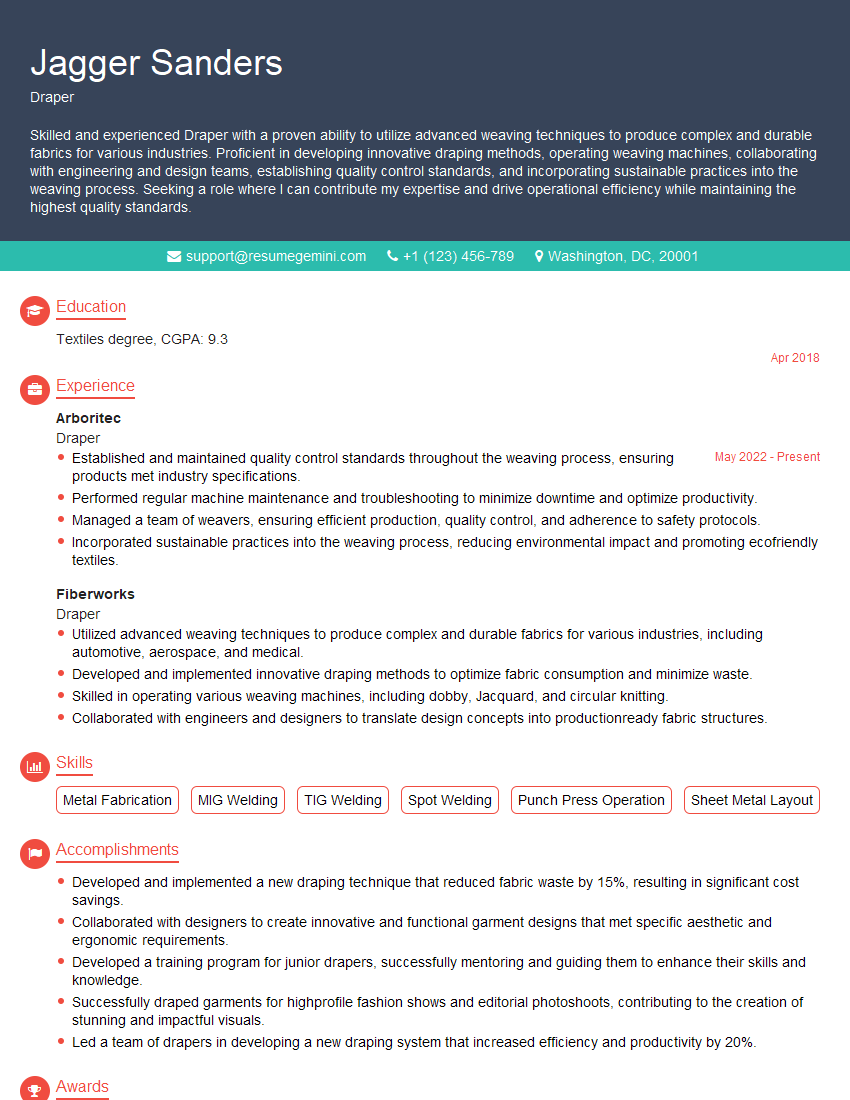
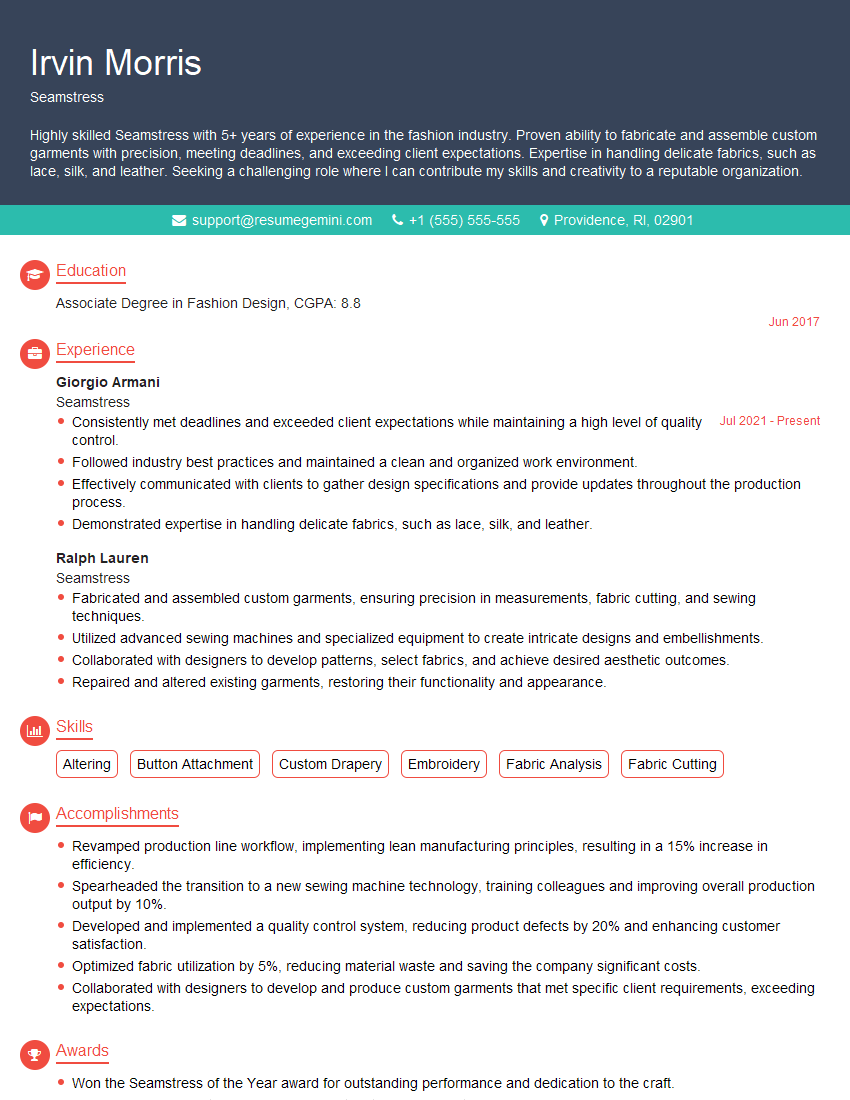
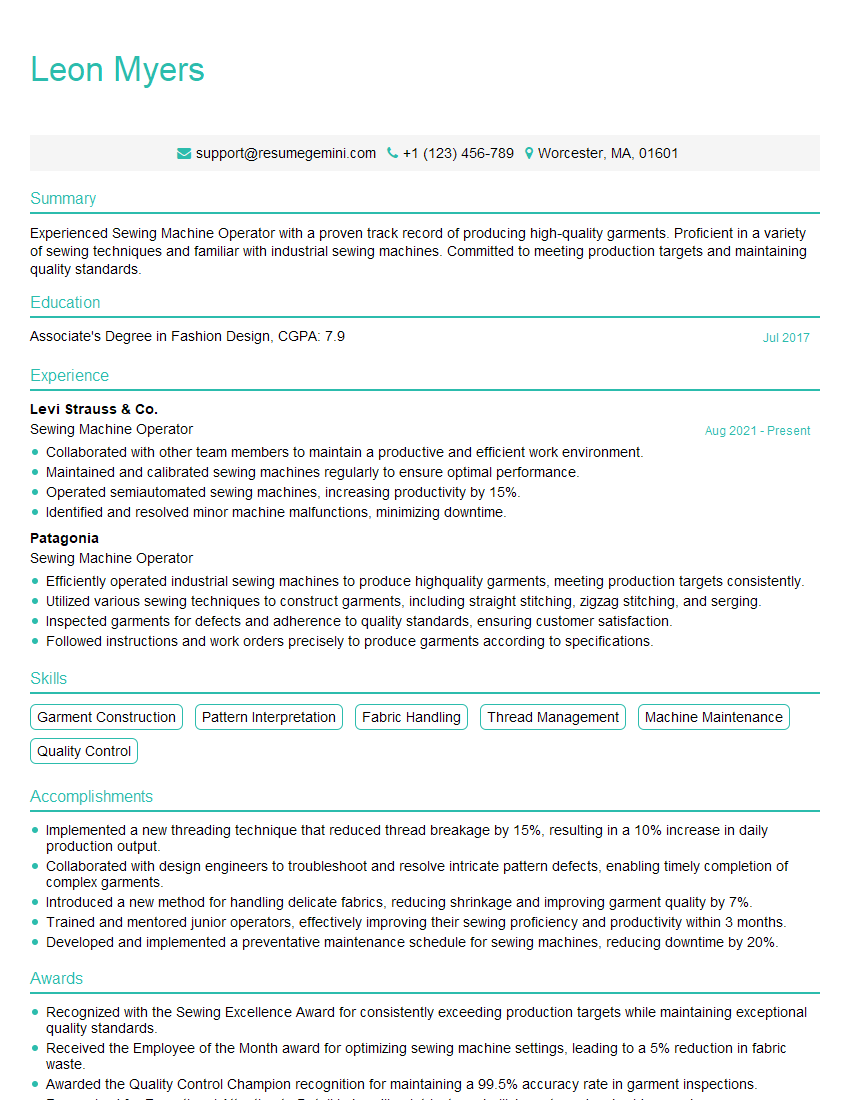
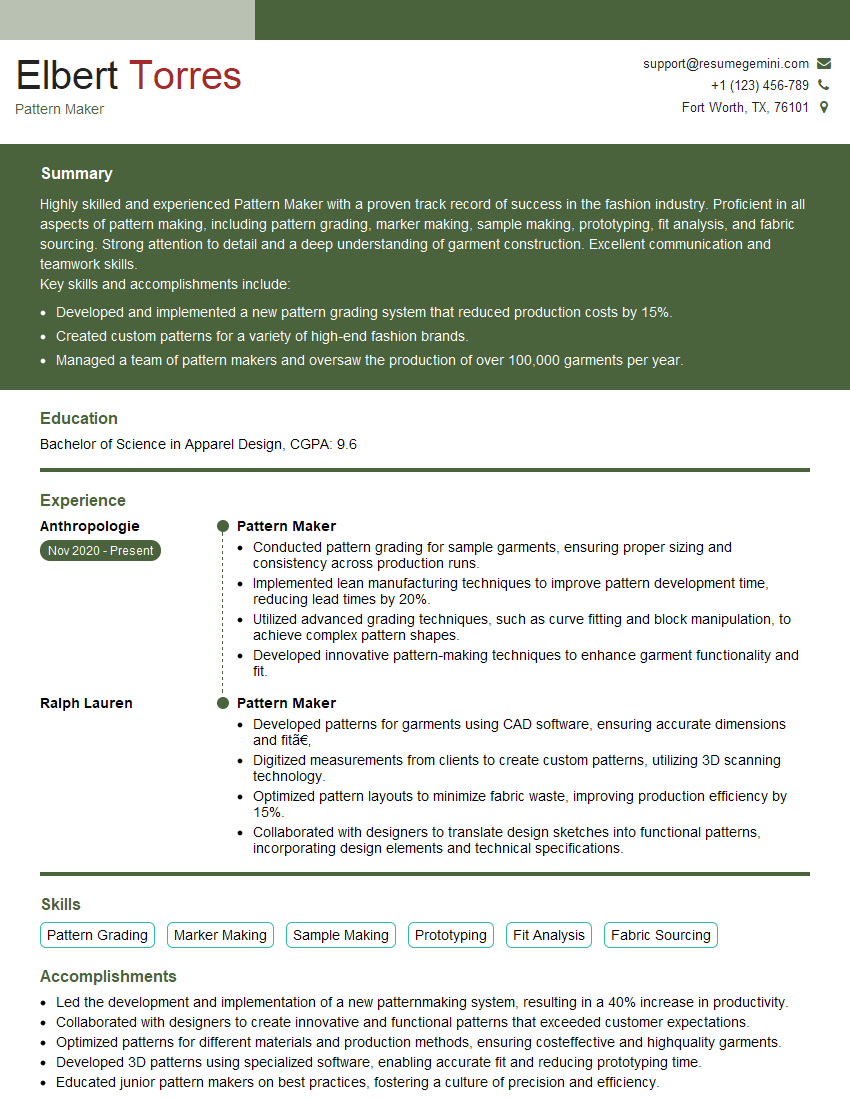
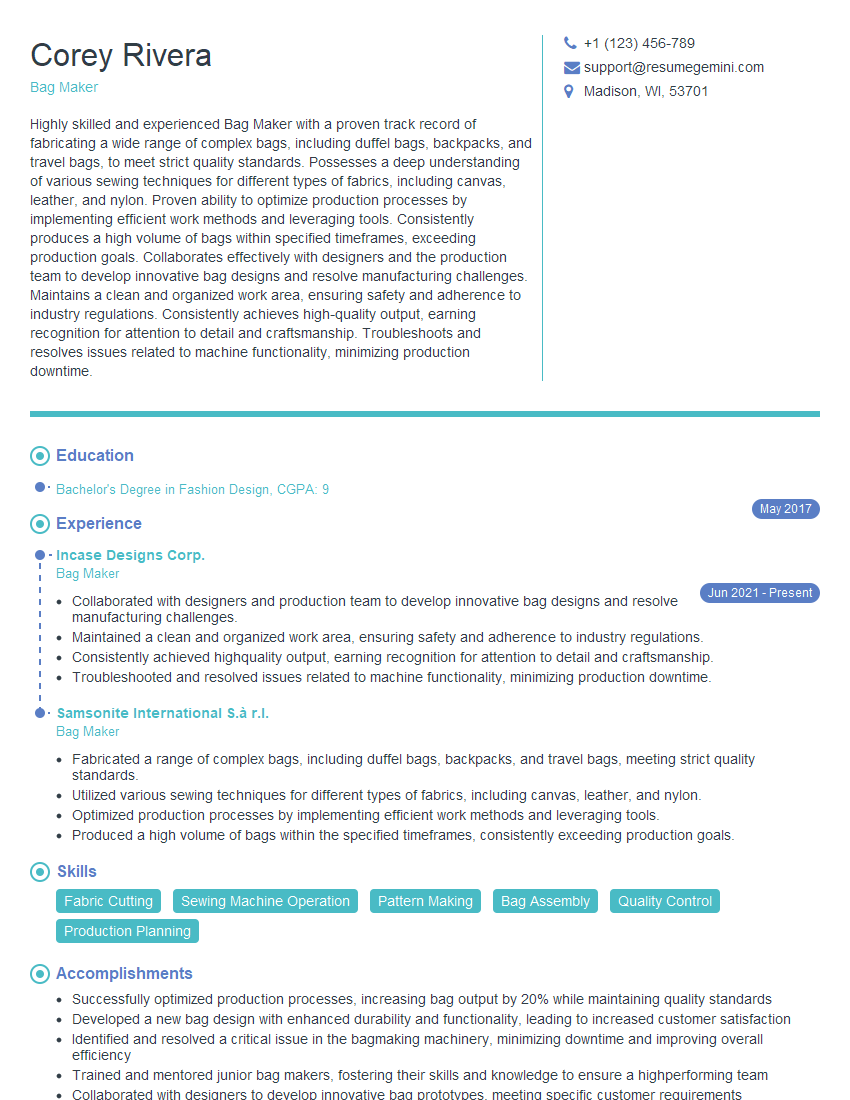
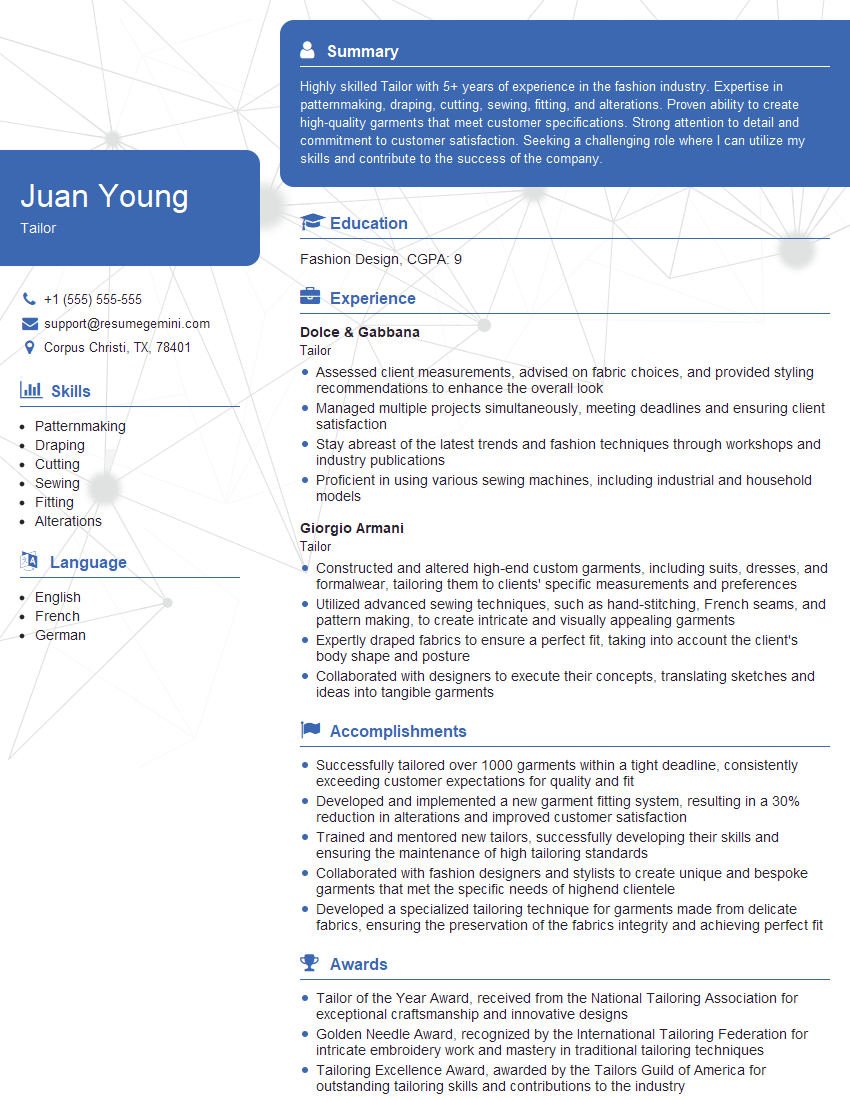
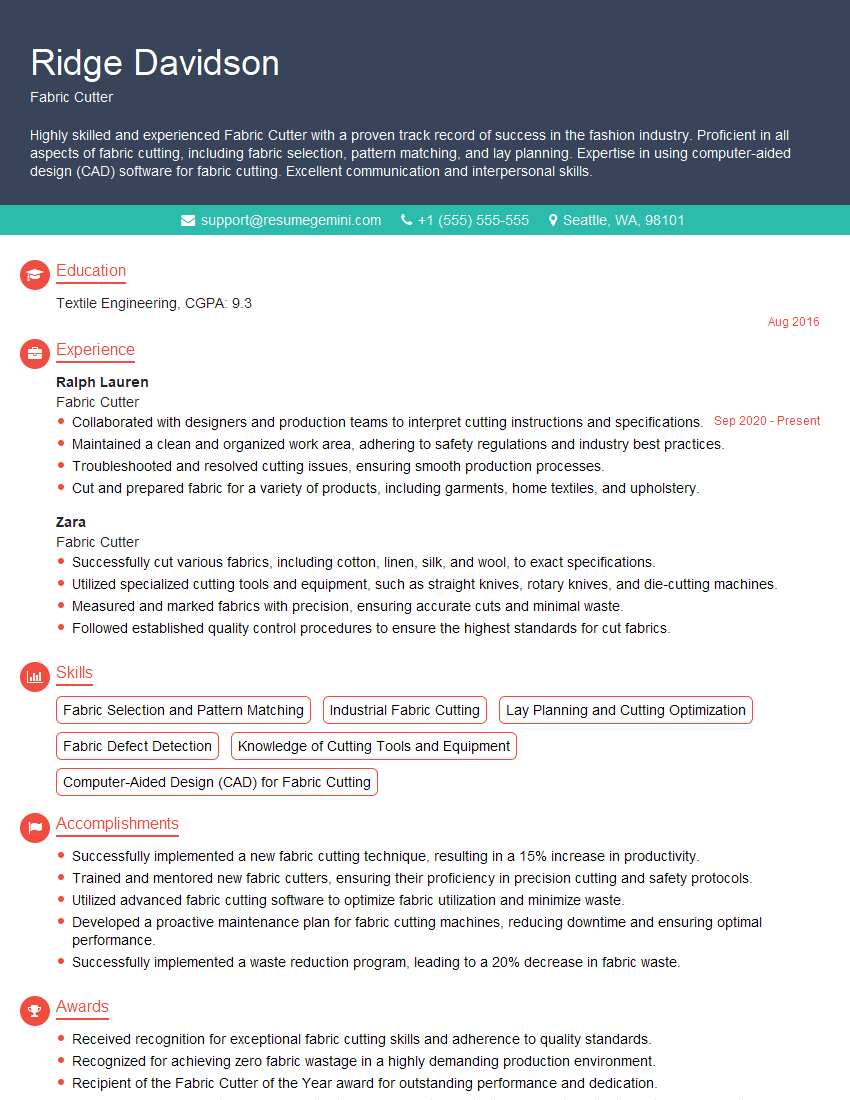
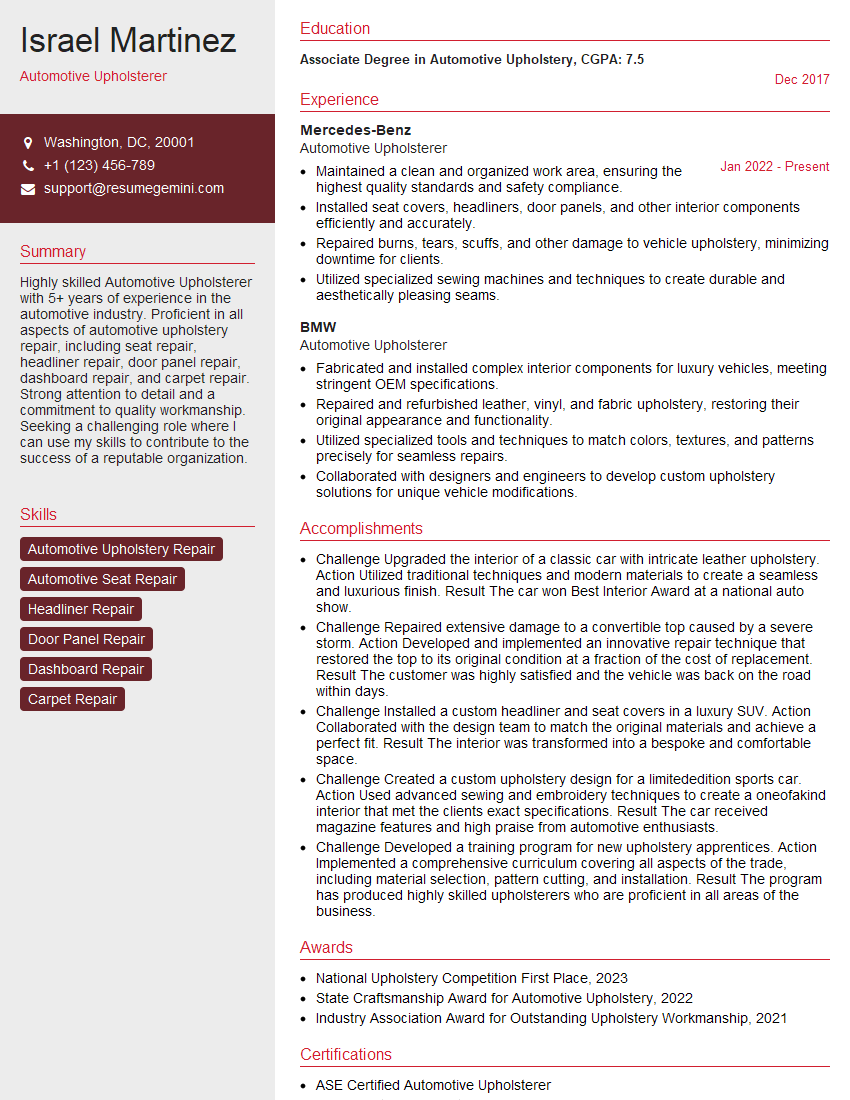
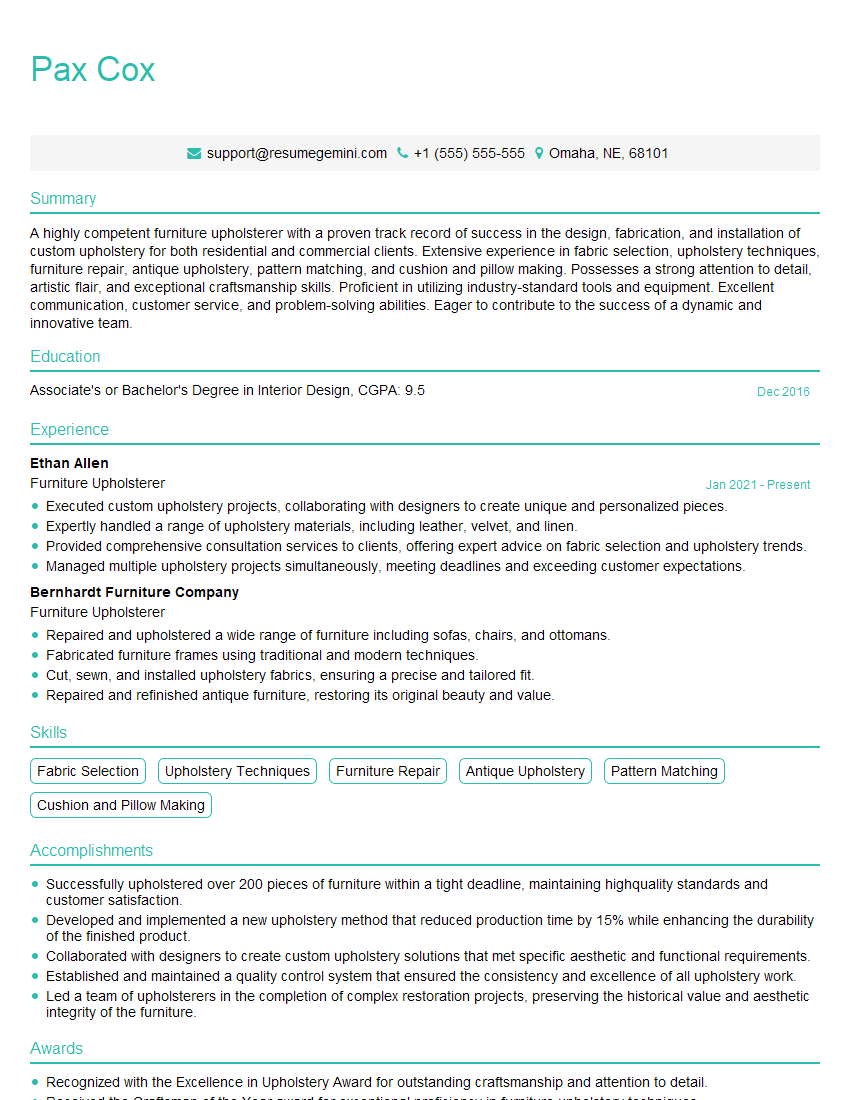
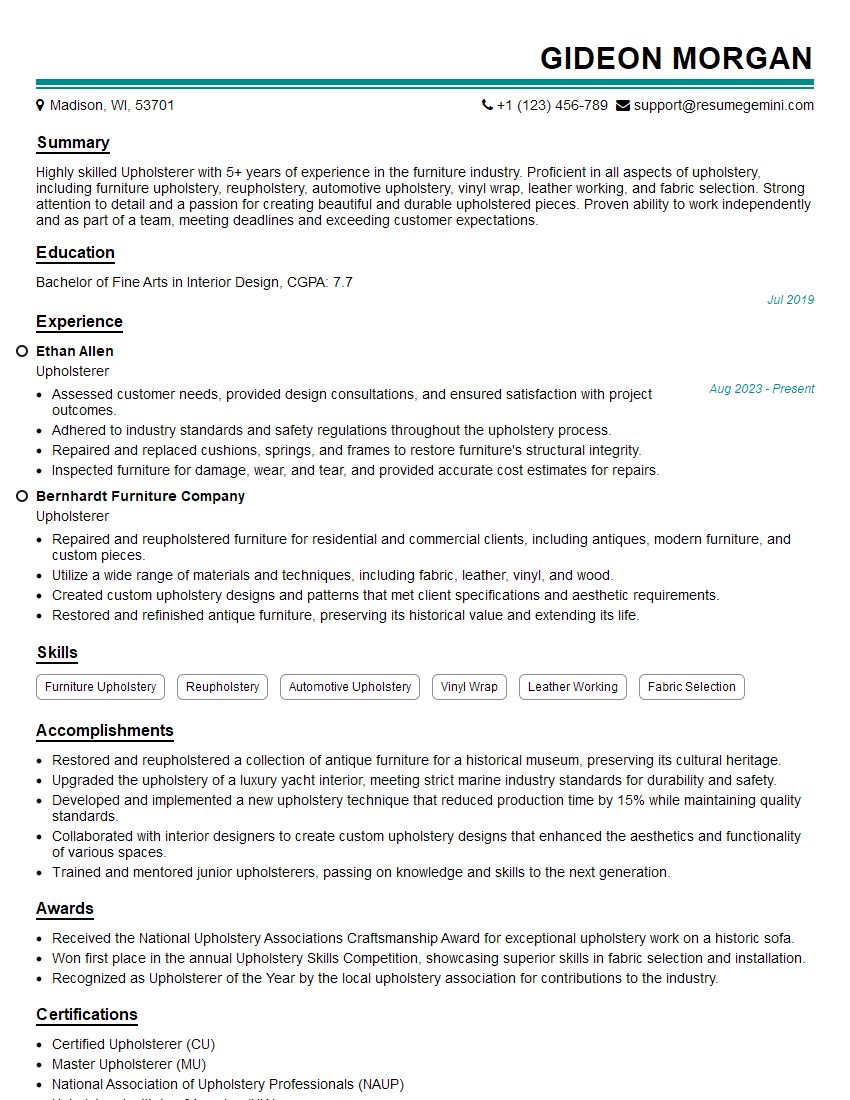
Mastering Sewing and Upholstery Techniques is crucial for career advancement in this skilled trade. A strong understanding of these techniques will set you apart from other candidates and demonstrate your commitment to quality workmanship. To significantly boost your job prospects, create an ATS-friendly resume that highlights your skills and experience effectively. ResumeGemini is a trusted resource for building professional resumes that catch the eye of hiring managers. We provide examples of resumes tailored to the Sewing and Upholstery Techniques field to help you craft a compelling application.
Explore more articles
Users Rating of Our Blogs
Share Your Experience
We value your feedback! Please rate our content and share your thoughts (optional).
What Readers Say About Our Blog
Amazing blog
hello,
Our consultant firm based in the USA and our client are interested in your products.
Could you provide your company brochure and respond from your official email id (if different from the current in use), so i can send you the client’s requirement.
Payment before production.
I await your answer.
Regards,
MrSmith
hello,
Our consultant firm based in the USA and our client are interested in your products.
Could you provide your company brochure and respond from your official email id (if different from the current in use), so i can send you the client’s requirement.
Payment before production.
I await your answer.
Regards,
MrSmith
These apartments are so amazing, posting them online would break the algorithm.
https://bit.ly/Lovely2BedsApartmentHudsonYards
Reach out at BENSON@LONDONFOSTER.COM and let’s get started!
Take a look at this stunning 2-bedroom apartment perfectly situated NYC’s coveted Hudson Yards!
https://bit.ly/Lovely2BedsApartmentHudsonYards
Live Rent Free!
https://bit.ly/LiveRentFREE
Interesting Article, I liked the depth of knowledge you’ve shared.
Helpful, thanks for sharing.
Hi, I represent a social media marketing agency and liked your blog
Hi, I represent an SEO company that specialises in getting you AI citations and higher rankings on Google. I’d like to offer you a 100% free SEO audit for your website. Would you be interested?