The thought of an interview can be nerve-wracking, but the right preparation can make all the difference. Explore this comprehensive guide to Sewing seams, darts, and gathers interview questions and gain the confidence you need to showcase your abilities and secure the role.
Questions Asked in Sewing seams, darts, and gathers Interview
Q 1. Explain the different types of seams and their applications.
Seams are the foundation of garment construction, joining two fabric pieces. The choice of seam depends on the garment’s style, fabric type, and desired finish. Different seams offer varying levels of durability and visibility.
- Plain Seam: The simplest seam, created by placing two fabric edges together, stitching, and pressing open. Ideal for lightweight fabrics and where durability isn’t paramount. Think of a simple pillowcase.
- French Seam: A very neat and durable seam, ideal for sheer fabrics and garments where a clean finish is essential. It encloses all raw edges.
- Seam: A strong seam, suitable for heavier fabrics and areas under stress like seams on jeans.
- Flat-felled Seam: Extremely durable and used extensively in menswear, often seen on denim and workwear. One seam allowance is enclosed within the other, creating a clean, flat finish.
- Hong Kong Seam: A luxurious seam finish where the raw edges are bound with bias binding, offering a clean, professional look. Perfect for high-end garments.
The selection of the appropriate seam type is crucial for the overall quality and longevity of the garment.
Q 2. Describe the process of creating a French seam.
Creating a French seam involves two stitching steps that enclose the raw edges. Imagine it like wrapping a present – you’re completely hiding the paper edges inside.
- First Seam: Wrong sides of the fabric together, stitch a 1/4 inch seam allowance. Trim the seam allowance to 1/8 inch.
- Second Seam: Turn the fabric right-side out, so the first seam is now inside. Fold over the seam allowance (about 3/8-inch) so that the first seam allowance is completely enclosed and stitch again, leaving the seam smooth and clean on the outside. Press carefully.
This method is best suited for delicate fabrics where raw edges are prone to fraying.
Q 3. How do you ensure a clean finish on a seam?
A clean seam finish prevents fraying and adds a professional touch. Several techniques ensure this:
- Overlocking/Serging: Using a serger machine to stitch and cut the raw edges simultaneously, preventing fraying.
- Zigzag Stitch: A simple machine stitch that encloses raw edges, offering decent protection against fraying.
- Pinked Edges: Using pinking shears creates a jagged edge that minimizes fraying, especially effective with stable fabrics.
- Seam Binding/Bias Tape: Covering the raw edge with bias tape or seam binding provides a neat, durable finish and adds a decorative element.
The best method depends on the fabric, project requirements, and available tools.
Q 4. What are the different types of darts and how are they used?
Darts are stitched folds of fabric used to shape garments and create curves. They are an essential shaping technique.
- Standard Dart: A pointed dart, commonly used to shape shoulders, busts, and waists. Imagine it as a ‘V’ shape.
- Double Dart: Two darts stitched next to each other, providing more shaping in a specific area. This is useful where a single dart isn’t enough, like a curved waist.
- French Dart: A curved dart, often used in sleeves or for more subtle shaping. Its curved shape makes it less visible than a standard dart.
- Inverted Dart: A dart that opens outwards, creating a raised area of fabric, used for adding fullness or shaping.
The type of dart chosen depends on the desired shaping and the area of the garment being shaped.
Q 5. Explain the purpose of easing and how it relates to darts.
Easing involves gently stretching fabric to fit a curved area without distorting it. It’s crucial when working with darts because the fabric around the dart often needs to be adjusted to lay smoothly.
Imagine trying to fit a smaller piece of fabric into a larger space. Easing allows you to gently stretch the fabric to fill the space without creating puckers or wrinkles. This is essential to prevent stress points around darts and create a smooth, even surface.
Q 6. How do you create a well-shaped dart?
A well-shaped dart should be flat, smooth, and invisible, or at least minimally visible depending on the fabric and dart type. Key steps include:
- Precise Marking: Accurately mark the dart points and lines using tailor’s chalk or a marking pen.
- Accurate Stitching: Stitch from the widest part of the dart towards the point. A small stitch length is ideal for precise control.
- Proper Pressing: Carefully press the dart towards the center, ensuring the seam is flat and the dart lies smoothly.
- Testing the fit: Try on the garment and observe whether the dart is positioned and shaped correctly before finalizing the seams.
Mistakes can be easily identified and fixed by careful re-stitching or careful use of seam ripper.
Q 7. What are the different methods for creating gathers?
Gathers are used to add fullness to fabric, often at necklines, sleeves, or waistbands.
- Machine Gathering: Use a long stitch length to create loose stitching lines. Then, pull the bobbin threads to gather the fabric to the desired size.
- Hand Gathering: Using a running stitch, gather the fabric manually. This method offers finer control over the gathering process.
- Elastic Gathering: Sew elastic thread into the seam allowance to create gathers. This method is particularly suitable for adding gathers to a fitted area of clothing like a waistband.
The best method depends on the fabric’s weight, project demands, and your personal preference.
Q 8. How do you control the fullness of gathers?
Controlling the fullness of gathers is all about managing the tension of the stitches and the amount of fabric you’re gathering. Think of it like gently pulling a curtain together – you want even pleats, not bunches in one area.
Stitch Length: A longer stitch length (e.g., 3-4mm) creates looser gathers, while a shorter stitch length (e.g., 2mm or less) creates tighter gathers. Experiment to find the ideal balance for your fabric and desired look.
Gathering Threads: Use two or three strands of gathering thread for better control and to prevent breakage. This distributes the tension more evenly.
Even Distribution: Before pulling the gathering threads, distribute the fabric evenly along the seam line. This helps prevent uneven puckering.
Gradual Pulling: Gently pull the gathering threads, evenly distributing the gathers as you go. Avoid pulling too hard in one spot, which can create distortions.
Ease: Consider the ‘ease’ you need. This is the difference in length between the gathered section and the section it will be attached to. More ease equals more fullness.
For instance, when gathering a skirt waistband, you’d use a longer stitch length and possibly multiple threads to achieve soft, even folds. In contrast, gathering a sleeve cap might require a shorter stitch length and careful distribution to create a structured, controlled fullness.
Q 9. Explain the difference between shirring and gathering.
While both shirring and gathering create fullness, they achieve it differently. Think of gathering as creating random, soft pleats, while shirring is more structured and uniform.
Gathering: Involves sewing two parallel rows of basting stitches, then pulling the threads to create fullness. The result is uneven, soft folds.
Shirring: Achieves fullness through multiple rows of closely spaced parallel stitching. Each row is pulled independently, creating even, smaller pleats that are tightly controlled. It often uses elastic thread in at least one of the rows.
Imagine making a simple gathered skirt versus a professional-looking shirred top. Gathering would provide a more relaxed, casual look, while shirring results in a more fitted, refined appearance with consistent pleating.
Q 10. How do you prevent puckering when creating gathers?
Puckering is the enemy of beautiful gathers! It happens when the tension isn’t evenly distributed. Here’s how to prevent it:
Pre-wash Fabrics: Always pre-wash your fabric to prevent shrinkage after the garment is finished.
Use Sharp Needles: Dull needles create skipped stitches and uneven tension.
Appropriate Stitch Length: As mentioned earlier, choosing the correct stitch length is crucial. Experiment to find what works best for your fabric.
Evenly Distribute Fabric: Before pulling the gathering threads, gently spread the fabric evenly along the seam line to ensure an even distribution of gathers.
Pressing: Press the gathers gently after sewing to set them in place and help reduce puckering. Use a pressing cloth to protect delicate fabrics.
Use a Gathering Foot (if available): A specialized gathering foot on your sewing machine can help to create even gathers by automatically gathering the fabric as you sew.
For example, if you’re gathering chiffon, a delicate fabric, you would use a longer stitch length and a gentle touch to avoid any unwanted pulling or puckering. Conversely, a heavier fabric might require a shorter stitch length and more careful tension control.
Q 11. Describe your experience with different types of sewing machines.
My experience spans various sewing machine types, from basic mechanical machines to computerized models with advanced features. I’m comfortable using both industrial and domestic machines.
Mechanical Machines: These offer a good understanding of fundamental sewing principles. Their simplicity allows for a deep grasp of stitch formation and tension control. I’ve utilized Singer and Brother mechanical models extensively for projects requiring precise stitch control.
Computerized Machines: These offer greater precision and automation, including features like adjustable stitch width and length, programmable stitches, and automatic needle threading. I’ve worked with Brother and Janome computerized machines for faster production and more intricate designs.
Industrial Machines: I have experience with industrial sewing machines, including single and double needle models. These machines are built for durability and speed, ideal for large-scale projects or specialized techniques like topstitching.
Understanding the nuances of each machine type allows me to adapt my techniques for optimal results depending on the project’s demands and the available equipment.
Q 12. What types of fabrics are most challenging to work with, and why?
Certain fabrics present unique challenges. The most difficult often involve a combination of factors like texture, weight, and fiber content.
Silk: Its delicate nature and tendency to slip make it prone to snagging and puckering. Careful handling, sharp needles, and appropriate tension are essential.
Leather and Suede: Their thickness and density require specialized needles and presser feet. Stitches need to be strong and even to prevent breakage and damage.
Stretch Fabrics: These require special needles and a walking foot to prevent slippage and maintain even tension when sewing curves or seams.
Woven Fabrics with Low Thread Count: These can be difficult to work with due to their tendency to fray and unravel. Using a zigzag stitch or serger to finish the seams prevents this.
For example, sewing a silk scarf requires a completely different approach than sewing a leather jacket – understanding these fabric-specific needs is crucial for achieving a professional finish.
Q 13. How do you troubleshoot common sewing machine problems?
Troubleshooting sewing machine problems often involves a systematic approach:
Check the Bobbin: Make sure the bobbin is properly wound and inserted. A poorly wound bobbin is a common source of problems.
Needle Issues: Ensure you are using the correct needle size and type for your fabric. A bent or dull needle can cause skipped stitches or breakage.
Tension Problems: Improper tension can lead to uneven stitches. Adjust the upper and lower tension dials to achieve balanced tension.
Thread Issues: Use the correct thread type for your fabric and machine. Knots or tangles in the thread can disrupt the stitching process.
Timing Belt: On mechanical machines, inspect the timing belt. Worn belts need replacing to ensure proper operation.
I’ve learned, over time, to systematically go through these steps, starting with the simplest and moving towards more complex mechanical issues. It’s like solving a puzzle; identifying the problem one step at a time leads to the solution.
Q 14. How do you select the appropriate needle and thread for different fabrics?
Needle and thread selection is critical for achieving the best results. The wrong combination can damage your fabric or create poor stitches.
Needle Size: This is determined by the fabric weight. Fine needles for lightweight fabrics and heavy-duty needles for heavier fabrics.
Needle Type: Different needle types are designed for different fabrics. Ballpoint needles for knits, sharp needles for wovens, and leather needles for leather and suede.
Thread Type: Cotton threads for cotton fabrics, polyester threads for synthetics, silk threads for silk fabrics, etc. Match the thread to your fabric to achieve balanced stitching.
Thread Weight: Match the thread weight to the needle size and fabric weight. Using overly heavy or light thread can cause damage or produce inconsistent stitches.
For instance, sewing a delicate silk blouse would require a very fine needle (e.g., size 60/8) and a high-quality silk thread. In contrast, sewing denim would call for a heavy-duty needle (e.g., size 14/90) and a strong thread like polyester.
Q 15. Describe your experience with pattern reading and alteration.
Pattern reading and alteration are fundamental to garment construction. My experience spans years of working with various patterns, from simple to complex designs. I’m proficient in understanding pattern markings, such as notches, grainlines, and seam allowances, which are crucial for accurate assembly. I’ve worked with both commercially produced patterns and custom-drafted ones. Alterations are a significant part of my skillset; I regularly adjust patterns to fit diverse body shapes and sizes, using techniques like full-bust adjustments, swayback adjustments, and shoulder adjustments. For example, I recently adapted a vintage dress pattern to fit a client with a fuller bust by adding width to the bodice pattern piece while maintaining the original design aesthetic.
I typically start by tracing the pattern pieces onto suitable material, like tissue paper or pattern paper. This allows for multiple size adjustments without affecting the original pattern. Then I carefully measure the client and compare these measurements to the pattern’s measurements. Any discrepancies are addressed using techniques specific to the area of the garment requiring adjustment. I always check my work carefully to ensure a smooth, well-fitting garment after the alterations are made. This is crucial for a professional finish.
Career Expert Tips:
- Ace those interviews! Prepare effectively by reviewing the Top 50 Most Common Interview Questions on ResumeGemini.
- Navigate your job search with confidence! Explore a wide range of Career Tips on ResumeGemini. Learn about common challenges and recommendations to overcome them.
- Craft the perfect resume! Master the Art of Resume Writing with ResumeGemini’s guide. Showcase your unique qualifications and achievements effectively.
- Don’t miss out on holiday savings! Build your dream resume with ResumeGemini’s ATS optimized templates.
Q 16. Explain your understanding of seam allowances and their importance.
Seam allowances are the amount of fabric left beyond the stitching line. They’re essential for several reasons. First, they provide space for stitching, ensuring there’s enough fabric to manipulate without hindering the process or compromising the seams’ strength. Second, seam allowances are crucial for creating neat, finished seams, preventing fabric edges from fraying and enhancing durability. Lastly, they allow for alterations post-construction. In my experience, the standard seam allowance is 5/8 inch (1.5cm), but this can vary depending on the fabric type and garment style. For example, a heavier fabric might require a larger seam allowance to accommodate the bulk, while couture garments might necessitate smaller allowances for a cleaner, more refined silhouette.
Seam allowance inconsistencies can lead to ill-fitting garments and affect overall quality. Precise seam allowances are critical for ensuring the structural integrity of the garment and achieving the intended fit. Therefore, I am meticulous in maintaining consistent seam allowances throughout a project.
Q 17. How do you ensure accurate seam alignment?
Accurate seam alignment is paramount for professional-quality garments. My approach focuses on precision at every stage. Before stitching, I carefully pin the fabric pieces together, ensuring the notches and other markings perfectly align. I use a variety of techniques depending on the project, including using pins to secure seams at regular intervals, clipping curves to facilitate smooth turning, and using a tailor’s chalk to mark seam lines for complex projects. For example, when working with intricate curved seams, I frequently clip the seam allowance to ease fabric stress during turning.
During stitching, I maintain a consistent speed and tension to avoid distortions. After stitching, I press the seams open to ensure crisp alignment and prevent bulkiness. If a seam misaligns, I meticulously undo and re-stitch, always double-checking for perfect alignment.
Q 18. What methods do you use to press seams effectively?
Effective seam pressing is crucial for achieving a high-quality finish and a well-fitting garment. I employ different pressing techniques depending on the seam type and fabric. For example, open seams are pressed flat to enhance the visual appeal and reduce bulk, while enclosed seams are pressed to one side to maintain a clean, crisp line. I always use a tailor’s ham, a pressing cloth, and a well-maintained iron to protect the fabric and ensure even heat distribution. Pressing should be done while the garment is still constructed and seams are still flexible.
A common mistake is pressing directly onto seams, potentially causing visible imprints. To prevent this, I always use a pressing cloth to shield the fabric from direct heat, preserving the fibers and preventing damage. My approach focuses on pressing with firm but controlled pressure, moving the iron smoothly along the seam to prevent creases and burns.
Q 19. How do you handle fabric that frays easily?
Working with fabrics prone to fraying requires careful handling and specific techniques. Prior to cutting, I check for fraying and often pre-treat the fabric edges to prevent further unraveling. Techniques such as pinking shears (which create a zig-zag edge) can help significantly, or using a serger to create a neat, professional finish. Alternatively, I might use a zigzag stitch along the edge to prevent fraying. For delicate fabrics, hand-finishing the edges with a blind stitch or whip stitch might be a gentler and more appropriate approach. The choice of method depends heavily on the fabric type, garment style, and intended finish.
For example, when sewing a silk garment that frays easily, I’d opt for a hand-finished edge to avoid any potential damage. If, however, I were working with cotton, using a serger would be time-efficient and effective.
Q 20. Describe your experience with working with different types of interfacing.
My experience with interfacing is extensive; I’ve worked with various types, each with unique properties. I select interfacing based on the fabric weight, garment type, and desired outcome. For instance, lightweight fabrics, like silk or chiffon, require lightweight interfacing to avoid adding stiffness or bulk. Heavier fabrics might necessitate heavier interfacing for better support and structure. I commonly use fusible interfacing for ease of application; however, sew-in interfacing offers more precise placement and is ideal when working with intricate patterns or delicate fabrics.
I’m familiar with different interfacing materials, including woven, non-woven, and knit. Each type has its advantages and disadvantages. For example, woven interfacing provides excellent structure, but it can be less forgiving if misaligned. Non-woven interfacing is easily fusible and blends well, but it might not offer the same level of support. Knit interfacing is stretchy and ideal for garments with curves or stretch fabrics. My knowledge allows me to choose the most suitable interfacing for each specific project to enhance the structural integrity and overall finish.
Q 21. How do you adapt to different sewing techniques or patterns?
Adaptability is crucial in sewing. I’m comfortable working with various techniques and patterns, from traditional methods to contemporary ones. When encountering unfamiliar techniques or patterns, my first step is thorough research and careful reading of instructions. I analyze the construction steps, paying close attention to details and ensuring a comprehensive understanding of each stage. I might even create a sample garment using inexpensive fabric before tackling the main project. This allows me to practice new techniques and identify potential challenges, so I can adjust my approach accordingly.
For instance, when tasked with a pattern featuring a new type of seam finish, I’ll research the technique, perhaps consult tutorials or videos, and create a sample before implementing it in the main project. This approach ensures I’m confident and knowledgeable before starting the actual garment construction. I continually strive to expand my sewing knowledge and adapt to new techniques, which keeps my work fresh and innovative.
Q 22. What is your experience with industrial sewing equipment?
My experience with industrial sewing equipment is extensive. I’ve worked with a wide range of machines, from single-needle and double-needle machines to overlockers, coverstitch machines, and even specialized machines like buttonhole attachments and computerized embroidery machines. I’m proficient in operating and maintaining these machines, understanding their various functionalities and limitations. This includes threading, tension adjustment, needle changes, and basic troubleshooting. For example, I’m adept at adjusting the differential feed on an overlocker to achieve precise seam allowances on stretchy fabrics, or using the different stitch patterns on a coverstitch machine to create a professional-looking finish on hems. I’m comfortable working with both high-speed production equipment and more specialized machines for smaller-scale projects.
Q 23. Describe a time you had to troubleshoot a complex sewing issue.
During a high-volume production run of tailored jackets, we encountered a consistent issue with the stitching on the shoulder seams – the seams were puckering and uneven, resulting in a significant number of rejects. Initially, we suspected a problem with the fabric itself, but careful inspection revealed the issue stemmed from inconsistent feed dog pressure in the industrial sewing machine. I systematically checked the machine’s settings, ensuring the presser foot pressure was properly calibrated and the feed dogs were moving smoothly. I also inspected the needle for any damage or bending. After meticulously adjusting the feed dog pressure, replacing the needle, and conducting a test run, the puckering was eliminated, and we were able to successfully complete the production run with minimal waste. This experience highlighted the importance of careful machine maintenance and systematic troubleshooting.
Q 24. How do you maintain quality control in your sewing work?
Maintaining quality control is paramount in my sewing work. My process involves multiple checks throughout the production cycle. First, I carefully inspect the fabric for any defects before cutting. Then, after cutting, I check the pattern placement to ensure accuracy and symmetry. During the sewing process, I regularly monitor the stitch quality, seam allowance consistency, and overall neatness. Finally, after completing the garment, I conduct a thorough final inspection for any flaws, including loose threads, uneven hems, and incorrect stitching. Regularly cleaning and maintaining my equipment also contributes significantly to quality control. In addition, I maintain detailed records of fabric and thread types used for each project, allowing for better traceability and troubleshooting should issues arise.
Q 25. What safety precautions do you observe while sewing?
Safety is my top priority. I always ensure the sewing machine is properly grounded and unplugged when not in use. I consistently use a seam ripper with a blunt tip to avoid needle pricks. When working with sharp objects such as pins and needles, I use a pincushion or magnetic needle holder to prevent accidental injuries. I’m careful to keep my work area organized and clutter-free, ensuring ample space to maneuver and avoid tripping hazards. I also regularly check for any loose threads or frayed materials that might snag or tangle. When using industrial machinery, I always follow the manufacturer’s safety guidelines and wear appropriate protective equipment like safety glasses.
Q 26. What are your preferred methods for finishing seams on different fabrics?
Finishing seams depends heavily on the fabric type and the garment’s intended look. For woven fabrics like cotton or linen, I often use a French seam for a clean, professional finish, especially on areas that will be frequently exposed. For delicate fabrics like silk, I might opt for a rolled hem or a blind stitch. With knits, an overlocked seam offers both durability and a neat appearance. For heavier fabrics like denim, a zig-zag stitch is sturdy and prevents fraying. Sometimes, I use a combination of techniques to achieve the desired result. For instance, I might overlock the seam allowance first for strength and then topstitch it for a decorative finish.
Q 27. How do you manage your time and workload when working on multiple projects?
Managing multiple projects requires effective time management and prioritization. I use a project management system, either a physical planner or a digital tool, to list all my projects with deadlines. I break down large projects into smaller, manageable tasks. I prioritize tasks based on deadlines and urgency, focusing on the most time-sensitive projects first. I allocate specific time blocks for each project, avoiding multitasking to maintain focus and efficiency. Regularly reviewing my schedule and adjusting as needed ensures I stay on track and meet deadlines.
Q 28. What are your strengths and weaknesses as a sewer?
My strengths lie in my meticulous attention to detail, my proficiency with a wide range of sewing techniques, and my ability to troubleshoot sewing problems effectively. I also pride myself on my adaptability and ability to work with diverse fabrics and sewing projects. A weakness I’m actively working on is delegating tasks more effectively when working on large-scale projects. While I’m highly efficient, learning to trust others with certain aspects of the process will allow me to focus on more complex aspects of the work and improve overall productivity.
Key Topics to Learn for Sewing Seams, Darts, and Gathers Interview
- Seam Construction: Understanding different seam types (French seams, flat-felled seams, etc.), their applications, and when to choose each based on fabric type and garment function. Explore the impact of seam finishes on durability and overall garment appearance.
- Dart Manipulation: Mastering the creation of darts – understanding their purpose in shaping garments, different dart techniques (single, double, shaped), and how to effectively press and finish darts for a clean, professional look. Consider how dart placement affects the fit and drape of a garment.
- Gather Techniques: Exploring various gathering methods (hand-gathering, machine gathering), understanding the importance of even gathers, and how to incorporate gathers into different garment components. Analyze how fabric weight and type influence the appropriate gathering method.
- Fabric Selection and its Impact: Learn how fabric type (e.g., woven, knit, stretch) impacts seam selection, dart placement, and gathering techniques. This includes understanding the need for appropriate needle and thread choices for different fabrics.
- Troubleshooting Common Issues: Developing problem-solving skills to address common challenges such as uneven seams, puckering, and distorted darts. Learn to identify causes and implement corrective measures.
- Advanced Techniques: Explore advanced seam and dart variations (e.g., lapped seams, princess seams, shaped darts), showcasing a deeper understanding of construction techniques.
Next Steps
Mastering sewing seams, darts, and gathers is crucial for career advancement in the garment industry, showcasing your fundamental skills and attention to detail. A strong understanding of these techniques opens doors to more advanced roles and projects. To maximize your job prospects, create an ATS-friendly resume that highlights your abilities clearly. ResumeGemini is a trusted resource to help you build a professional and effective resume. Examples of resumes tailored to showcase expertise in sewing seams, darts, and gathers are available to help you craft the perfect application.

Quilter Resume Sample

Clothing Designer Resume Sample
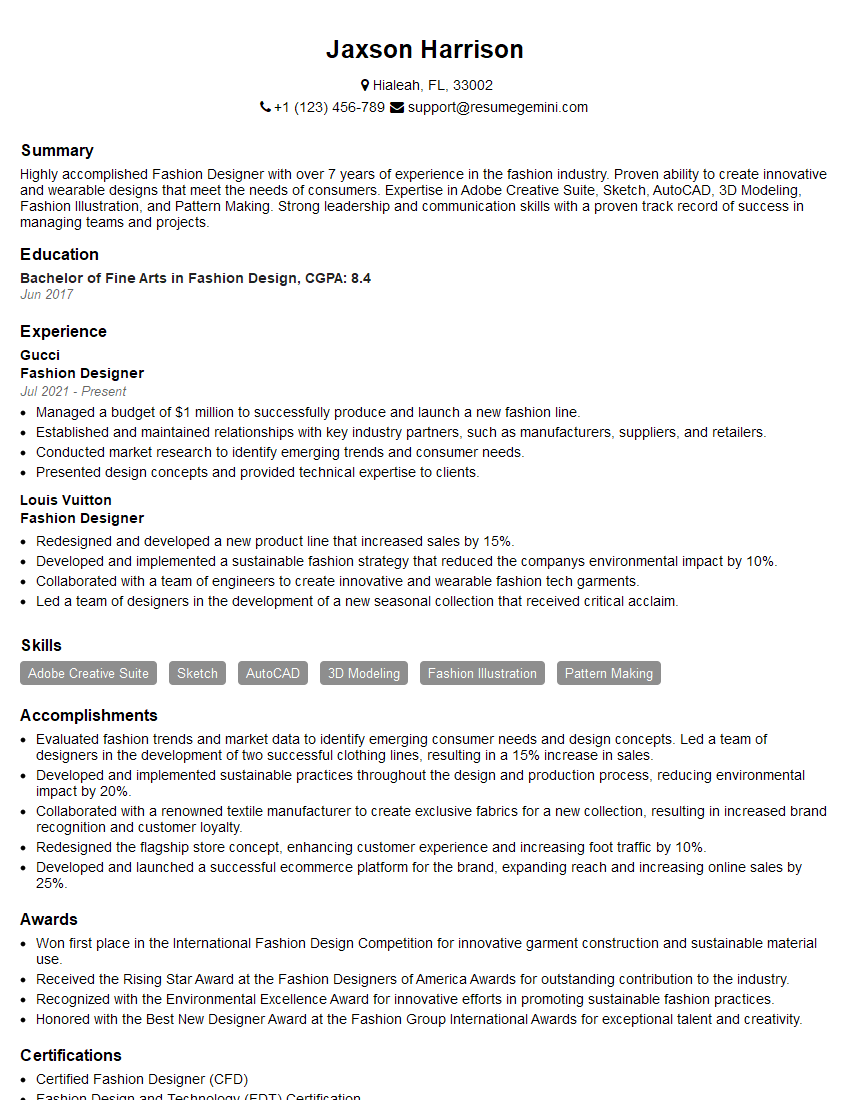
Fashion Designer Resume Sample

Draper Resume Sample
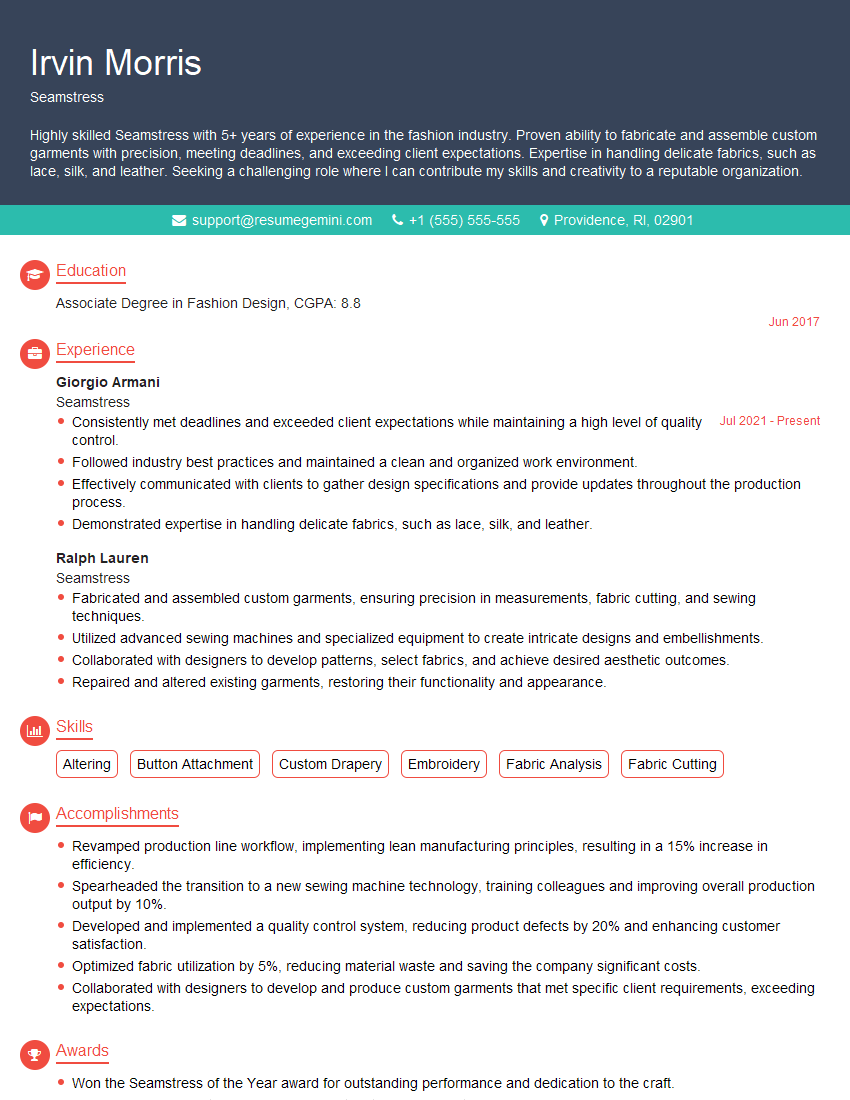
Seamstress Resume Sample
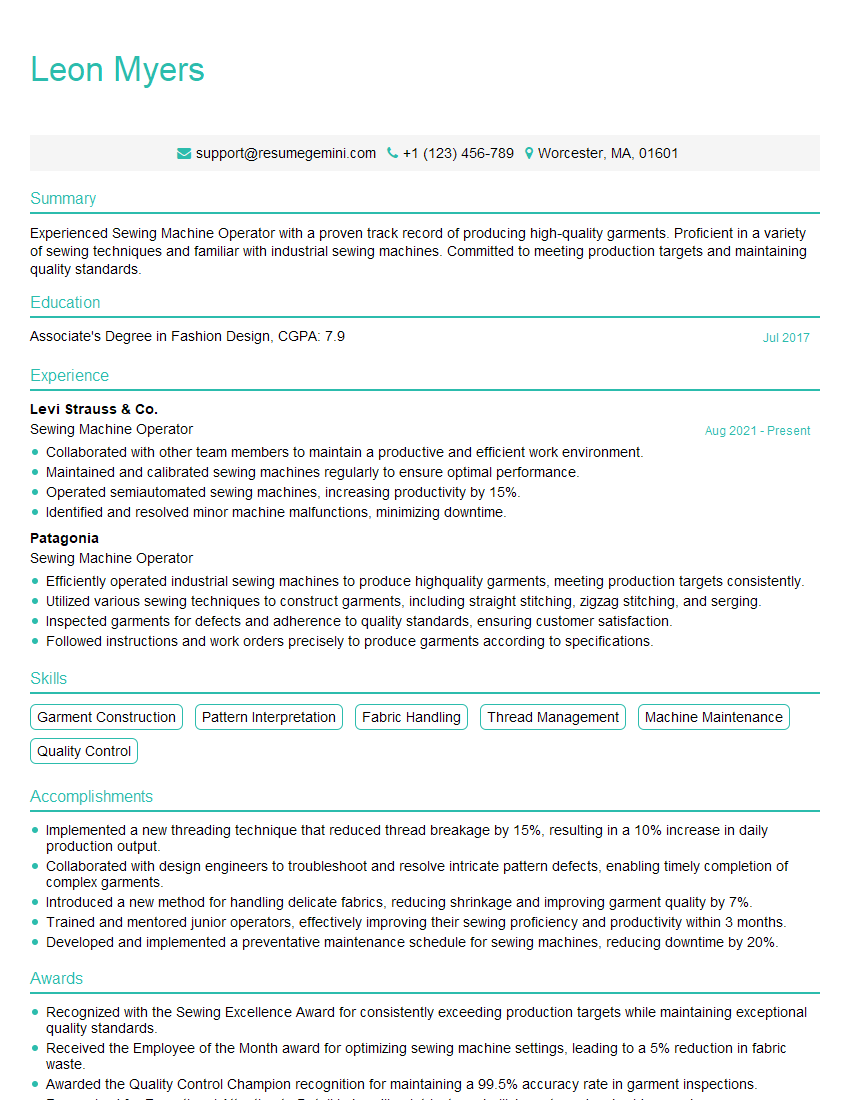
Sewing Machine Operator Resume Sample
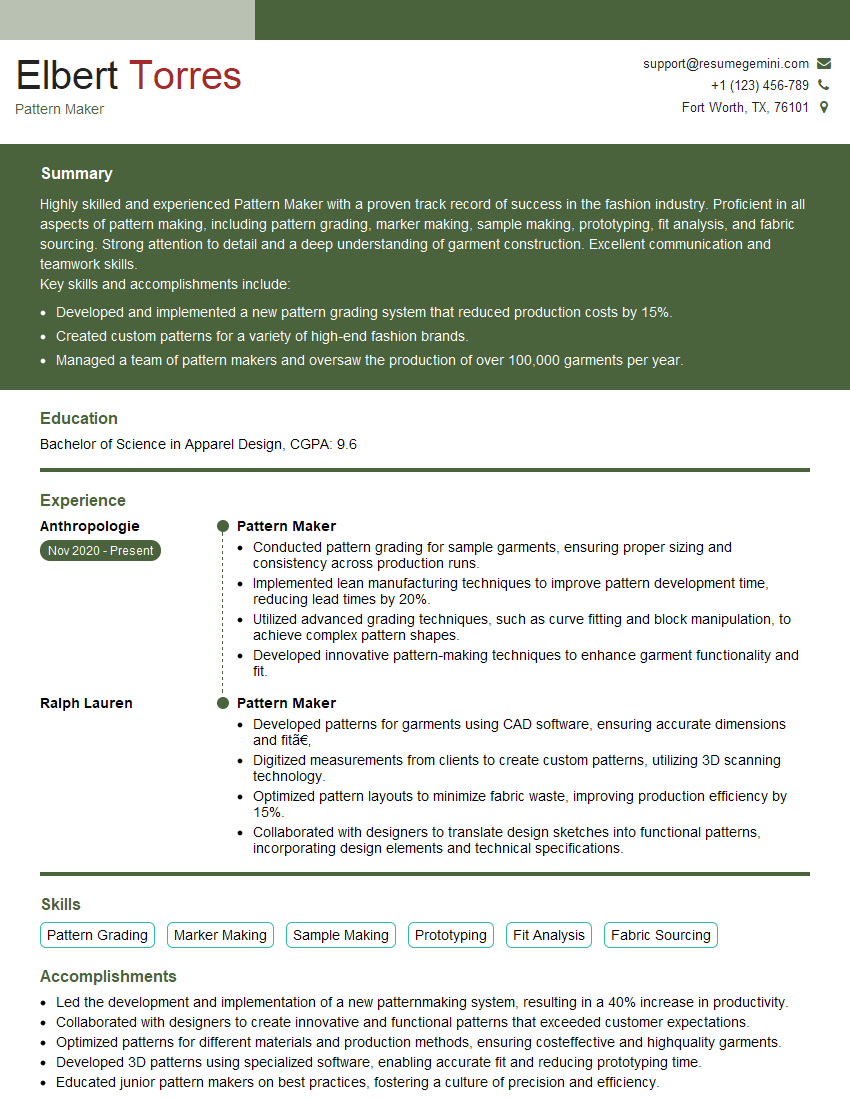
Pattern Maker Resume Sample

Drapery Maker Resume Sample

Embroiderer Resume Sample
Sample Maker Resume Sample
Tailor Resume Sample
Couturier Resume Sample
Pattern Grader Resume Sample

Upholsterer Resume Sample
Explore more articles
Users Rating of Our Blogs
Share Your Experience
We value your feedback! Please rate our content and share your thoughts (optional).
What Readers Say About Our Blog
Amazing blog
hello,
Our consultant firm based in the USA and our client are interested in your products.
Could you provide your company brochure and respond from your official email id (if different from the current in use), so i can send you the client’s requirement.
Payment before production.
I await your answer.
Regards,
MrSmith
hello,
Our consultant firm based in the USA and our client are interested in your products.
Could you provide your company brochure and respond from your official email id (if different from the current in use), so i can send you the client’s requirement.
Payment before production.
I await your answer.
Regards,
MrSmith
These apartments are so amazing, posting them online would break the algorithm.
https://bit.ly/Lovely2BedsApartmentHudsonYards
Reach out at BENSON@LONDONFOSTER.COM and let’s get started!
Take a look at this stunning 2-bedroom apartment perfectly situated NYC’s coveted Hudson Yards!
https://bit.ly/Lovely2BedsApartmentHudsonYards
Live Rent Free!
https://bit.ly/LiveRentFREE
Interesting Article, I liked the depth of knowledge you’ve shared.
Helpful, thanks for sharing.
Hi, I represent a social media marketing agency and liked your blog
Hi, I represent an SEO company that specialises in getting you AI citations and higher rankings on Google. I’d like to offer you a 100% free SEO audit for your website. Would you be interested?