Every successful interview starts with knowing what to expect. In this blog, we’ll take you through the top Structural Support System Inspection interview questions, breaking them down with expert tips to help you deliver impactful answers. Step into your next interview fully prepared and ready to succeed.
Questions Asked in Structural Support System Inspection Interview
Q 1. Explain the different types of structural support systems.
Structural support systems are the backbone of any building or infrastructure, ensuring stability and safety. They can be broadly categorized into several types:
- Beams: Horizontal structural members that support loads over spans. Think of the long, horizontal pieces of wood or steel in a roof structure. These can be simple beams, cantilever beams (fixed at one end and extending into space), or continuous beams (supported at multiple points).
- Columns: Vertical structural members that transfer loads from beams or other structural elements to the foundation. Imagine the pillars holding up a porch or the vertical supports in a multi-story building. These can be made of concrete, steel, or wood, and their design varies based on the load they need to bear.
- Walls: Vertical elements that provide both structural support and enclosure. Bearing walls carry loads from above, while non-bearing walls only support their own weight. An example of a bearing wall would be an interior wall in a home supporting the load of the roof and upper floors.
- Foundations: The base of a structure, transferring the entire load to the ground. These can include spread footings (individual concrete pads), continuous footings (long concrete strips), or pile foundations (deeply driven piles for unstable soil). Consider the deep foundation system used for skyscrapers to prevent settling in soft soil.
- Trusses: Assembled structures composed of interconnected triangular units, used for roofs or bridges. They are highly efficient at distributing loads and are common in large-span structures such as gymnasiums or bridges. These work by distributing stress across the connected members.
- Arches: Curved structures that transfer loads to abutments at the sides. These are aesthetically pleasing and can span significant distances, as seen in bridges and ancient Roman buildings. The curved shape distributes the load effectively.
The choice of structural support system depends on factors like the building’s size, function, materials, and the soil conditions.
Q 2. Describe your experience with non-destructive testing (NDT) methods used in structural inspections.
My experience with non-destructive testing (NDT) methods in structural inspections is extensive. I routinely utilize several techniques depending on the material and suspected defects:
- Visual Inspection: This is the first and often most important step, allowing for identification of obvious cracks, corrosion, or damage. For instance, I recently identified significant rust on a steel beam during a visual inspection, which led to further investigation.
- Ultrasonic Testing (UT): This uses high-frequency sound waves to detect internal flaws like cracks or voids within materials like concrete or steel. It’s particularly useful for identifying subsurface defects invisible to the naked eye. I’ve used UT to successfully detect delamination in a concrete slab, preventing a potential collapse.
- Magnetic Particle Inspection (MPI): This technique is used to detect surface and near-surface cracks in ferromagnetic materials like steel. It involves magnetizing the material and applying magnetic particles that accumulate at crack locations, making them visible. I have used MPI on several steel bridge components, uncovering previously undetected fatigue cracks.
- Ground Penetrating Radar (GPR): Used to map subsurface features in materials such as concrete or soil, GPR can locate voids, pipes, or rebar placement. It is particularly useful when evaluating the condition of foundations.
The choice of NDT method depends on the type of material, the expected type of defect, and accessibility. I always ensure that the selected methods are appropriate and provide reliable data.
Q 3. What are the common signs of structural deterioration you look for during inspections?
Identifying signs of structural deterioration is crucial for preventing catastrophic failures. During inspections, I pay close attention to:
- Cracks: Their location, size, width, and orientation are all important. For instance, vertical cracks in masonry walls could indicate foundation settlement, while diagonal cracks in concrete might suggest tensile stress.
- Corrosion: Rust on steel members significantly reduces their strength. I assess the extent of corrosion and its potential impact on the structure’s integrity.
- Spalling: The chipping or breaking away of concrete surfaces indicates deterioration from freeze-thaw cycles, chemical attack, or poor mix design. This is commonly found in areas exposed to the elements.
- Deflection: Excessive bending or sagging of beams or floors can indicate overloading or structural weakness. This is often measured using surveying instruments.
- Settlement: Uneven settling of foundations leads to cracking and tilting of walls. I measure settlement using levelling techniques.
- Signs of Water Damage: Water infiltration weakens building materials, causing degradation and structural problems. Signs include staining, efflorescence (salt deposits), and mold growth.
By carefully analyzing these signs, I can accurately assess the condition of the structure and recommend appropriate remedial measures.
Q 4. How do you assess the load-bearing capacity of a structural element?
Assessing the load-bearing capacity of a structural element requires a thorough understanding of its material properties, geometry, and the applied loads. This involves several steps:
- Material Testing: Samples of the material are tested in a laboratory to determine its compressive strength, tensile strength, and other relevant properties. This is especially crucial for older structures or where the material’s condition is questionable.
- Geometric Analysis: The dimensions of the structural element are measured precisely. These dimensions are used in calculations to determine the element’s cross-sectional area, moment of inertia, and other geometric properties.
- Load Calculation: The loads acting on the element are calculated, including dead loads (the weight of the structure itself), live loads (occupancy loads, snow, etc.), and environmental loads (wind, seismic). Software such as structural analysis programs are widely used here.
- Analysis: Structural analysis techniques, often using software, are employed to determine the stresses and strains within the element under the calculated loads. This step determines whether the stresses exceed the material’s allowable stress.
- Comparison with Allowable Stress: The calculated stresses are compared with the allowable stress for the material, obtained from building codes and material standards. If the calculated stress exceeds the allowable stress, the element is considered overloaded.
The process often involves sophisticated calculations and engineering judgment. In cases of uncertainty, it’s often prudent to conduct a thorough structural analysis by a qualified structural engineer.
Q 5. What are the safety regulations and procedures you follow during inspections?
Safety is paramount during structural inspections. I strictly adhere to a comprehensive set of safety regulations and procedures, including:
- Risk Assessment: Before any inspection, I conduct a thorough risk assessment to identify potential hazards and implement appropriate control measures. This includes identifying potential fall hazards, electrical hazards, and exposure to hazardous materials.
- Personal Protective Equipment (PPE): I always use appropriate PPE, including safety helmets, high-visibility clothing, safety harnesses, and eye protection, depending on the specific site conditions.
- Access and Egress: I carefully plan access and egress routes, ensuring safe access to all inspection areas and establishing clear escape routes in case of emergency.
- Communication: Clear communication with the client and other personnel on-site is vital, ensuring that everyone understands the inspection procedures and potential risks.
- Emergency Procedures: I have a plan in place for handling emergencies, including contacting emergency services if necessary. This includes pre-determined emergency contact numbers.
- Compliance with Regulations: All my work adheres to relevant national, regional, and local regulations and building codes.
My safety-first approach ensures that inspections are carried out efficiently and without compromising the safety of myself or others.
Q 6. Describe your experience with report writing and documentation in structural inspections.
Report writing and documentation are critical aspects of my work. My reports are comprehensive, detailed, and easy to understand. They typically include:
- Project Information: Details about the structure, the date of inspection, and the client.
- Inspection Methods: A description of the methods used, including NDT techniques.
- Findings: A clear and concise account of the inspection findings, including photographs and sketches of any defects or damage.
- Assessment: An assessment of the severity of the identified problems and their potential impact on the structure’s safety and serviceability.
- Recommendations: Specific recommendations for repair or remedial actions, with cost estimates where appropriate.
- Appendices: Supporting documentation, such as test results or calculations.
I utilize specialized software for report generation and maintain detailed records of all inspections. I believe in clear, unambiguous communication, ensuring that the client understands the findings and recommendations.
For instance, I recently completed a report detailing significant corrosion on a steel-framed building. The report included detailed photographs of the affected areas, quantified the extent of the corrosion, and recommended specific repair techniques along with a comprehensive cost breakdown. This ensured the client had a clear understanding of the situation and the necessary actions to take.
Q 7. Explain your understanding of different types of structural failures.
Structural failures can be broadly classified into several types:
- Brittle Failure: This occurs suddenly without warning, often due to high stress concentrations and a lack of ductility in the material. A sudden snap in a brittle material is an example.
- Ductile Failure: This is characterized by significant deformation before failure, giving warning signs before collapse. A slow bending and eventual yielding of a ductile metal is an example.
- Fatigue Failure: This happens due to repeated cycles of loading and unloading, leading to the propagation of cracks and eventual failure. This is often seen in components subjected to vibration.
- Creep Failure: This is a slow deformation of a material under sustained stress at high temperatures. This is more relevant to certain materials used in power plants or high-temperature environments.
- Buckling Failure: This occurs when a slender structural element under compression loses stability and bends or collapses. This is often seen in columns that are too slender for their height and the load applied.
- Shear Failure: Failure occurs along a plane parallel to the applied shear stress. This is a common failure mode in bolted joints or where the load is applied at a plane to a structural member.
Understanding the different types of failure mechanisms is crucial for designing and inspecting structures effectively. Each type of failure demands a different approach to prevention and remediation.
Q 8. How do you determine the root cause of a structural defect?
Determining the root cause of a structural defect is a systematic process that requires a blend of observation, analysis, and engineering judgment. It’s like detective work, where we need to gather clues to piece together the story of what went wrong.
My approach involves several key steps:
- Visual Inspection: A thorough visual examination of the defect, noting its location, size, shape, and any associated damage. For example, a crack in a concrete beam might indicate overloading, settlement issues, or corrosion of reinforcing steel.
- Data Collection: Gathering relevant data such as material properties (concrete strength, steel grade), loading history, environmental conditions (temperature, moisture), and construction documents.
- Non-Destructive Testing (NDT): Employing NDT methods like ultrasonic testing or ground penetrating radar to assess the internal condition of the structure without causing damage. This helps us understand the extent of the damage beyond what’s visible.
- Finite Element Analysis (FEA): For complex cases, I would utilize FEA software to model the structure and simulate different loading scenarios to identify potential causes. This allows for quantitative assessment and hypothesis testing.
- Material Testing: In some instances, we may need to perform laboratory testing on samples of the affected material to determine its strength and other properties. This helps confirm our suspicions about material degradation.
- Hypothesis Formulation and Verification: Based on the collected data and analysis, we develop hypotheses about the root cause, and then test these hypotheses using the available evidence. A careful elimination process helps pinpoint the most likely cause.
For instance, I once investigated a leaning wall. Initial inspection suggested soil settlement. However, after conducting ground penetration radar, we discovered a void beneath the foundation caused by improper backfilling during construction. This highlighted the importance of thorough investigation beyond initial observations.
Q 9. What software or tools do you use for structural analysis and reporting?
My toolkit for structural analysis and reporting includes a combination of software and tools tailored to the specific project requirements.
- Finite Element Analysis (FEA) Software: I am proficient in using software like ABAQUS, ANSYS, and SAP2000 to perform detailed structural analysis, model various loading conditions, and assess the structural behavior.
- Computer-Aided Design (CAD) Software: I utilize AutoCAD and Revit to review structural drawings, create detailed inspection reports with sketches and annotations, and generate 3D models to visualize complex structures.
- NDT Equipment: I’m experienced in using ultrasonic testing equipment, ground penetrating radar, and other NDT tools to assess the internal condition of structures without causing damage. The results of NDT inspections are critical to a full understanding of the structural conditions
- Data Analysis Software: I use spreadsheets and statistical software (like Excel and Minitab) to organize and analyze data collected during inspections, and to generate meaningful reports.
- Reporting Software: I use word processing and presentation software like Microsoft Word and PowerPoint to generate professional and easy-to-understand inspection reports and presentations for clients.
Q 10. Describe your experience with interpreting structural drawings and specifications.
Interpreting structural drawings and specifications is fundamental to my work. It’s like reading a blueprint for a complex puzzle. Years of experience have honed my ability to accurately understand the design intent and identify potential discrepancies between the design and the as-built condition.
My process typically includes:
- Reviewing Design Documents: Carefully examining architectural, structural, and MEP (Mechanical, Electrical, and Plumbing) drawings to understand the overall design, material specifications, and construction details.
- Identifying Key Elements: Focusing on critical structural elements like beams, columns, foundations, and connections, paying close attention to details like dimensions, reinforcement, and material types.
- Analyzing Details: Thoroughly studying details like connection designs, reinforcement placement, and material specifications to identify any potential weaknesses or design flaws.
- Cross-Referencing Documents: Checking for consistency between different sets of drawings and specifications. Discrepancies between documents need to be resolved for accurate assessment.
- Recognizing Design Conventions: Being familiar with common design practices, symbols, and notations used in structural drawings. Understanding these conventions allows for efficient interpretation.
I’ve often encountered situations where the as-built condition differed from the original design. By carefully comparing the drawings to the actual structure, I can identify areas requiring attention and ensure the safety and integrity of the structure.
Q 11. How do you prioritize identified structural deficiencies?
Prioritizing structural deficiencies is crucial for effective and efficient remediation. My approach employs a risk-based methodology, considering several factors.
The prioritization process typically involves:
- Severity: Assessing the severity of the deficiency. This involves evaluating the potential consequences of failure, including the potential for collapse, injury, or property damage. A large crack in a primary load-bearing member would be considered much more severe than minor surface cracks.
- Urgency: Determining the urgency of addressing the deficiency. Factors such as the rate of deterioration, environmental exposure, and the potential for rapid escalation of the problem influence urgency. A rapidly corroding steel beam would be more urgent than a minor cosmetic defect.
- Probability of Failure: Estimating the likelihood of failure, taking into account the severity of the defect, the loading conditions, and the material properties.
- Risk Assessment: Combining the severity, urgency, and probability of failure to quantify the overall risk associated with each deficiency. This may involve a numerical scoring system or a qualitative risk matrix.
I then rank the identified deficiencies based on the risk assessment. High-risk deficiencies are addressed first, followed by medium and then low-risk deficiencies. This ensures that the most critical issues are addressed promptly, minimizing the potential for harm and cost overruns.
Q 12. What is your experience with working at heights or in confined spaces during inspections?
Safety is paramount in my profession. I possess extensive experience working at heights and in confined spaces, adhering strictly to all relevant safety regulations and best practices.
My experience includes:
- Working at Heights: I am certified in fall protection techniques and proficient in using safety harnesses, ropes, and other fall arrest systems. I regularly perform inspections on elevated structures such as bridges, high-rise buildings, and elevated tanks, ensuring strict adherence to safety procedures.
- Confined Space Entry: I am trained in confined space entry procedures, including atmospheric monitoring, rescue techniques, and the use of appropriate personal protective equipment (PPE). Inspections in confined spaces such as tanks, pipes, and tunnels are conducted with extreme caution and adherence to safety protocols.
- Use of Specialized Equipment: I’m skilled in using various access equipment like scaffolds, aerial lifts, and climbing equipment. My training allows for safe and efficient access to hard-to-reach areas during inspections.
- Safety Planning: Before every inspection, I meticulously plan the work, identifying potential hazards and selecting appropriate safety measures. This planning includes risk assessments, emergency procedures and communication protocols.
Safety is not just a protocol; it’s a mindset. I treat every inspection as a potential hazard and take all necessary precautions to protect myself and my team.
Q 13. How do you communicate your findings to engineers, contractors, and clients?
Effective communication is vital for ensuring that my findings are understood and acted upon appropriately. I tailor my communication style to the audience, ensuring clarity and accessibility.
My communication approach includes:
- Detailed Written Reports: I prepare comprehensive written reports that include detailed descriptions of the identified deficiencies, supporting photographs and diagrams, and recommendations for remediation. These reports are written in clear, concise language, avoiding technical jargon where possible.
- On-site Discussions: I discuss my findings with engineers, contractors, and clients on-site, providing immediate feedback and answering questions. This allows for a more interactive and collaborative approach.
- Visual Aids: I use photographs, sketches, and 3D models to visually illustrate my findings, making it easier for stakeholders to understand complex issues. Visual aids aid in effective understanding.
- Presentations: For large or complex projects, I prepare detailed presentations to summarize my findings and recommendations for a wider audience. These presentations are designed to be easy to understand.
- Technical Language Adaptation: I adjust my terminology to suit the audience’s technical knowledge. I avoid using overly technical jargon when communicating with clients while maintaining technical accuracy with engineers.
My goal is to make complex technical information understandable and accessible to all stakeholders, fostering collaboration and ensuring appropriate action is taken.
Q 14. How do you manage your time effectively during inspections?
Efficient time management during inspections is crucial for maximizing productivity and minimizing project costs. I utilize several strategies to achieve this.
My time management techniques include:
- Pre-Inspection Planning: Thoroughly reviewing the design documents, site plans, and previous inspection reports before commencing the inspection to focus on critical areas and avoid unnecessary time spent searching for information.
- Structured Inspection Approach: Following a systematic inspection process, ensuring that all critical elements are inspected consistently and efficiently. Checklists and standardized forms are invaluable.
- Prioritization: Prioritizing the inspection tasks based on risk assessment, focusing on high-risk areas first, and allocating sufficient time to those areas. This ensures that critical issues are addressed promptly.
- Efficient Data Collection: Employing efficient data collection methods, including digital photography, electronic data forms, and mobile devices to speed up recording and reduce time spent on paperwork.
- Teamwork and Delegation: Where applicable, working as part of a team to leverage expertise and divide tasks for increased efficiency. Proper delegation ensures all tasks are completed within the time constraints.
- Contingency Planning: Planning for potential delays and unexpected events, such as weather conditions, equipment malfunction, and access limitations. Contingency plans help avoid significant time losses.
By employing these strategies, I ensure that the inspections are carried out effectively and efficiently, without compromising the quality or safety of the assessment.
Q 15. Describe your experience with different types of construction materials and their vulnerabilities.
My experience encompasses a wide range of construction materials, each with its unique vulnerabilities. Think of it like this: each material is a character in a building’s story, and understanding their strengths and weaknesses is crucial for a safe narrative.
Concrete: While incredibly strong in compression, concrete is susceptible to cracking due to shrinkage, temperature changes, and poor workmanship. I’ve seen many instances where inadequate curing led to premature cracking, compromising the structural integrity. Identifying these cracks early, using techniques like visual inspection and sometimes even ground-penetrating radar, is vital.
Steel: Steel boasts high tensile strength, but it’s vulnerable to corrosion, especially in environments with high humidity or salt exposure. Regular inspections, looking for signs of rust and pitting, are essential. Sometimes, we use specialized techniques like ultrasonic testing to assess the extent of internal corrosion that isn’t visible on the surface.
Timber: Wood is a natural material prone to decay, insect infestation, and weakening from moisture. During inspections, I carefully check for signs of rot, fungal growth, and insect borings. Understanding wood species and their inherent properties is crucial for assessing their structural capacity.
Masonry (Brick, Stone): These materials can be affected by settlement, freeze-thaw cycles, and mortar deterioration. Visual inspections are primary, but sometimes we use specialized tools to assess mortar strength and detect hidden cracks.
Understanding these material-specific vulnerabilities allows me to develop targeted inspection strategies and accurately assess the overall structural health of a building.
Career Expert Tips:
- Ace those interviews! Prepare effectively by reviewing the Top 50 Most Common Interview Questions on ResumeGemini.
- Navigate your job search with confidence! Explore a wide range of Career Tips on ResumeGemini. Learn about common challenges and recommendations to overcome them.
- Craft the perfect resume! Master the Art of Resume Writing with ResumeGemini’s guide. Showcase your unique qualifications and achievements effectively.
- Don’t miss out on holiday savings! Build your dream resume with ResumeGemini’s ATS optimized templates.
Q 16. How do you ensure the accuracy and completeness of your inspection reports?
Accuracy and completeness are paramount in my inspection reports. I employ a rigorous, multi-step process to ensure both.
Detailed checklists: I use pre-prepared checklists tailored to the specific structure and its components, ensuring no aspect is overlooked. This is like having a detailed script for a performance – everything is accounted for.
Thorough documentation: I meticulously document all findings, including photographic and video evidence, detailed sketches, and precise measurements. Clear documentation allows for easy review and avoids ambiguity.
Peer review (where applicable): In complex cases, I involve a second experienced inspector to review my findings. This acts as a quality control measure, akin to proofreading an important document.
Clear and concise reporting: My reports are written in plain language, avoiding technical jargon whenever possible, and are structured for easy understanding. I always include recommendations for remediation or further investigation.
Version control: For large or ongoing projects, I maintain version control on my reports, tracking all revisions and updates. This ensures traceability and accuracy over time.
This systematic approach minimizes errors and ensures the reports are reliable and actionable for the client.
Q 17. Explain your understanding of relevant building codes and standards.
My understanding of building codes and standards is comprehensive and constantly updated. I’m proficient in interpreting and applying codes like the International Building Code (IBC), and any relevant local or regional codes. These codes are the rule book for structural safety.
For example, I’m familiar with requirements for load calculations, material specifications, detailing requirements for connections, and allowable stresses. I know how to interpret design drawings and specifications to verify if the as-built structure complies with the approved design. I also understand the implications of deviations from these codes and how to assess their impact on structural safety.
Staying current is crucial; I regularly attend professional development seminars and workshops to keep abreast of code revisions and best practices. This ensures my inspections always adhere to the latest safety regulations.
Q 18. How do you handle unexpected findings or emergencies during an inspection?
Unexpected findings during an inspection are part of the job. My approach prioritizes safety and informed decision-making.
Immediate safety assessment: If I encounter something potentially dangerous (e.g., significant structural damage, signs of imminent collapse), I immediately halt the inspection and secure the area, notifying the appropriate authorities and the client. Safety is always the top priority.
Detailed documentation: I thoroughly document the unexpected finding, including photos, sketches, and measurements. This is crucial for later analysis and remedial work.
Expert consultation (if needed): For complex or unusual situations, I might consult with structural engineers or other specialists to obtain expert advice on the best course of action.
Revised inspection plan: The initial inspection plan might need to be revised based on the unexpected finding. This could involve additional tests, further investigations, or a more comprehensive assessment.
Communication with the client: I maintain open communication with the client, keeping them informed of the findings and any necessary changes to the inspection process.
Handling unexpected situations calmly and efficiently, with a focus on safety, is crucial in minimizing risks and ensuring the integrity of the inspection process.
Q 19. Describe a challenging structural inspection you’ve conducted and how you overcame the challenges.
One challenging inspection involved an old timber-framed building showing significant signs of age and neglect. The structure had undergone several renovations over the years, with questionable additions and modifications. The challenge was to accurately assess the structural integrity of the original frame while dealing with the complexities of the later work.
To overcome these challenges, I employed a phased approach:
Non-destructive testing: I used techniques such as sonic tomography to assess the condition of the timber members without causing damage. This provided valuable information about the internal state of the wood.
Detailed visual inspection: I meticulously examined every joint and connection, noting signs of decay, insect infestation, or inadequate fastening. Photography and detailed sketches helped capture the nuances.
Load calculations: I performed load calculations to determine the capacity of the existing structure. This involved considering the original design, modifications, and accumulated deterioration.
Consultation with specialists: I collaborated with a timber preservation expert to assess the extent of decay and propose remediation strategies. A structural engineer helped validate the load calculations and provide recommendations.
Through this multi-faceted approach, I delivered a comprehensive report that accurately assessed the structural condition and provided a clear roadmap for repair and strengthening. The client was able to make informed decisions about the building’s future based on the detailed information provided.
Q 20. How do you stay updated on the latest advancements in structural inspection techniques?
Staying updated in this field is essential. I actively engage in several strategies:
Professional organizations: I’m a member of relevant professional organizations (e.g., ASCE, ACI) that offer continuing education opportunities, conferences, and publications.
Industry publications and journals: I regularly read industry publications and journals to stay informed about the latest research, new technologies, and evolving best practices. This is like reading the industry’s news and staying on top of the latest trends.
Webinars and online courses: I participate in webinars and online courses offered by reputable institutions and industry experts. This ensures I am current on advancements without needing extensive travel.
Networking with colleagues: I actively network with other professionals in the field, sharing experiences, discussing challenges, and learning from each other’s insights. Discussions with peers help expand knowledge beyond individual experiences.
This multifaceted approach ensures my knowledge base remains current and relevant to the dynamic world of structural inspection.
Q 21. What is your experience with using specialized equipment for structural inspections (e.g., ultrasonic testing, thermal imaging)?
I have significant experience using specialized equipment for structural inspections. These tools significantly enhance the accuracy and detail of my assessments.
Ultrasonic testing: This non-destructive method allows me to assess the internal condition of materials like concrete and steel, identifying defects such as voids, cracks, or corrosion that aren’t visible on the surface. Think of it as an X-ray for building materials.
Thermal imaging: Thermal cameras detect temperature variations, which can help identify moisture intrusion, insulation deficiencies, or areas of structural weakness. This can reveal hidden problems like leaks or thermal bridging, often overlooked in standard visual inspections.
Ground-penetrating radar (GPR): GPR allows me to scan beneath the surface to detect subsurface voids, rebar placement, or other anomalies. This is especially helpful when assessing foundations or looking for buried utilities.
Moisture meters: These are vital for assessing moisture content in wood and other building materials, helping to identify potential rot or decay.
My proficiency in operating and interpreting data from these tools significantly improves the quality and reliability of my structural assessments. I always select the most appropriate technology for the specific task and material being inspected. This ensures I am gathering the most informative data.
Q 22. How do you ensure the safety of yourself and others during an inspection?
Safety is paramount during any structural inspection. My approach is multifaceted and begins with thorough planning. Before even stepping onto a site, I review all available documentation: blueprints, previous inspection reports, and any known hazards. This allows me to anticipate potential risks and prepare accordingly.
On-site, I always employ appropriate personal protective equipment (PPE), including hard hats, safety glasses, high-visibility vests, and fall protection gear as needed, depending on the structure’s height and condition. I adhere strictly to all relevant safety regulations and guidelines, including OSHA standards in the US or equivalent international standards. I also ensure the work area is properly secured and that warning signs are in place to alert others to potential dangers. I never work alone; a buddy system ensures immediate assistance if an emergency arises. Before commencing the inspection, a thorough site survey is conducted to identify potential trip hazards, unstable surfaces, or other unexpected dangers.
For example, during an inspection of a high-rise building, I’d use harnesses and ropes for access to upper levels, working in tandem with another qualified inspector. On a bridge inspection, we’d use specialized scaffolding or elevated platforms, always adhering to strict lockout/tagout procedures for any active equipment. Continuous communication with my team and the site personnel is crucial for maintaining a safe working environment.
Q 23. Explain your understanding of corrosion and its effects on structural elements.
Corrosion is the deterioration of a material, usually a metal, caused by a chemical or electrochemical reaction with its environment. In structural elements, this most commonly manifests as rust (iron oxide) on steel or other metals. The effects of corrosion are significant, weakening the structural member and potentially leading to catastrophic failure.
Corrosion weakens the cross-sectional area of a member, reducing its load-bearing capacity. It can also lead to pitting or cracking, concentrating stresses and further compromising the structural integrity. The rate of corrosion is influenced by various factors such as environmental exposure (humidity, salt spray), the type of metal, and the presence of contaminants. For example, chloride ions in marine environments significantly accelerate corrosion in steel structures.
Imagine a steel beam supporting a bridge. If corrosion significantly reduces the beam’s cross-section, its strength will be dramatically reduced, making it vulnerable to failure under load. This is why regular inspections and appropriate protective measures (coatings, cathodic protection) are essential to mitigate the risks posed by corrosion. During inspections, I carefully assess the extent and severity of corrosion, using tools such as ultrasonic testing or visual assessments to quantify the degradation and determine if repairs or replacement are necessary.
Q 24. How do you assess the impact of environmental factors on structural integrity?
Environmental factors significantly impact the long-term performance and integrity of structures. These factors need to be carefully assessed during inspections to understand their potential effects. Key environmental considerations include:
- Weathering: Exposure to rain, snow, ice, and temperature fluctuations can cause cracking, spalling (chipping) of concrete, and deterioration of materials.
- Temperature changes: Repeated expansion and contraction due to temperature variations can induce stresses that lead to fatigue cracking in structural members.
- Humidity: High humidity promotes corrosion and the growth of mold and mildew, weakening structural materials.
- UV radiation: Prolonged exposure to sunlight can degrade some materials, affecting their strength and durability.
- Chemical exposure: Industrial pollutants or de-icing salts can accelerate corrosion and damage building materials.
- Seismic activity: The potential for earthquakes needs to be factored in, assessing the structure’s vulnerability and any potential damage from past seismic events.
Assessing these factors involves visual inspections, material testing, and reviewing historical weather data. For instance, a coastal structure would require a more rigorous assessment of salt spray corrosion than one located inland. The inspection plan should explicitly address environmental factors relevant to the specific structure and its location.
Q 25. What is your experience with different types of foundation systems and their inspection?
My experience encompasses a wide range of foundation systems, including shallow foundations (spread footings, strip footings, rafts), deep foundations (piles, caissons, drilled shafts), and retaining walls. Inspection techniques vary depending on the foundation type.
For shallow foundations, I assess the settlement, cracking, and overall stability of the footings and walls. This often involves visual inspections, checking for signs of distress like cracks or uneven settlement, as well as using instruments to measure settlement. With deep foundations, I examine the pile heads for damage and assess their load-bearing capacity through various non-destructive testing methods (NDT), such as sonic testing or dynamic load testing. Retaining wall inspections focus on the integrity of the wall structure, checking for signs of overturning, sliding, or bulging, carefully assessing the drainage systems.
For example, during the inspection of a building showing signs of uneven settlement, I would use leveling instruments to precisely measure the settlement and determine if it poses a structural risk. In another case, inspecting a bridge supported by piles, I’d use a sonic testing device to verify the integrity of the piles, ensuring they possess sufficient strength to support the load.
Q 26. Describe your experience with seismic design considerations in structural inspections.
Seismic design considerations are crucial, particularly in seismically active regions. During inspections, I assess the structure’s vulnerability to earthquakes by examining its design features and identifying potential weaknesses. This includes checking for adequate lateral bracing, the strength of connections, and the overall ductility of the structure. Ductility refers to a material’s ability to deform significantly before failure, which is vital in resisting earthquake forces.
My experience involves reviewing seismic design plans, assessing the quality of construction according to the design specifications, and detecting any potential damage from past seismic events. I use various NDT methods to evaluate the integrity of structural components, identifying any cracks or damage that could compromise the structure’s seismic performance. I also analyze the soil conditions, as the soil’s response during an earthquake significantly impacts the building’s stability.
For instance, in a post-earthquake inspection, I’d carefully inspect connections, looking for signs of yielding or fracture. I’d also assess the structural elements for signs of damage such as cracks or buckling. My report would include recommendations for strengthening or retrofitting to improve the structure’s seismic resilience.
Q 27. How do you collaborate with other professionals (e.g., engineers, architects) during a project?
Collaboration is key in structural inspections. I regularly work with engineers, architects, and other specialists to ensure a comprehensive and accurate assessment. Communication is paramount throughout the project. Before commencing the inspection, I meet with the relevant engineers and architects to discuss the scope of work, the objectives of the inspection, and any specific concerns. This allows me to tailor the inspection plan to their needs and ensures everyone is on the same page.
During the inspection, I regularly communicate my findings to the project team, using clear and concise language to describe my observations. This might involve showing them damaged sections or discussing specific areas of concern. Following the inspection, I prepare a detailed report summarizing my findings, incorporating input from other specialists, and recommending appropriate actions.
For example, when inspecting a historic building, I’d collaborate closely with a historical architect to understand the building’s unique construction and potential vulnerabilities before determining the inspection methodology. Working with a structural engineer ensures that my findings can be interpreted correctly and informed repair solutions can be devised.
Q 28. Describe your experience in developing and implementing inspection plans.
Developing and implementing inspection plans is a crucial part of my work. The process begins by understanding the project objectives and the scope of work. This involves reviewing existing documentation such as blueprints, previous inspection reports, and any relevant codes or standards. The inspection plan should outline the specific areas to be inspected, the methods to be used, the frequency of inspections, and the reporting requirements.
The plan must incorporate risk assessment, identifying potential hazards and outlining appropriate safety precautions. It should also define acceptance criteria, outlining the acceptable level of damage or deterioration. Following the development of the plan, I implement it meticulously, carefully documenting all observations and findings. This documentation forms the basis for the final inspection report.
For example, a newly constructed building might have an inspection plan focused on ensuring adherence to the design specifications and identifying any construction defects. In contrast, an older structure might have a plan that emphasizes detecting signs of deterioration and potential safety hazards, such as corrosion or settlement. The plan is then adapted based on the findings during the inspection process, ensuring a comprehensive and effective assessment.
Key Topics to Learn for Structural Support System Inspection Interview
- Load Bearing Capacity & Analysis: Understanding different load types (dead, live, wind, seismic), methods for calculating load distribution, and interpreting structural drawings to assess capacity.
- Material Properties & Degradation: Identifying common materials used in structural support systems (steel, concrete, timber), recognizing signs of material degradation (corrosion, cracking, decay), and understanding the implications for structural integrity.
- Inspection Techniques & Methods: Mastering visual inspection techniques, understanding the use of non-destructive testing (NDT) methods like ultrasonic testing or magnetic particle inspection, and knowing when to utilize specialized equipment.
- Code Compliance & Standards: Familiarity with relevant building codes and industry standards (e.g., IBC, ACI) and their application during inspections. Understanding permitting processes and documentation requirements.
- Reporting & Documentation: Creating clear, concise, and accurate inspection reports, including detailed descriptions of findings, photographic evidence, and recommendations for repairs or remediation.
- Safety Procedures & Risk Assessment: Prioritizing safety during inspections, understanding fall protection protocols, and conducting thorough risk assessments before commencing work.
- Problem-Solving & Critical Thinking: Analyzing inspection data to identify potential structural issues, developing solutions to address identified problems, and justifying recommendations based on engineering principles.
- Communication & Collaboration: Effectively communicating inspection findings to clients, engineers, and other stakeholders, collaborating with other professionals involved in the project.
Next Steps
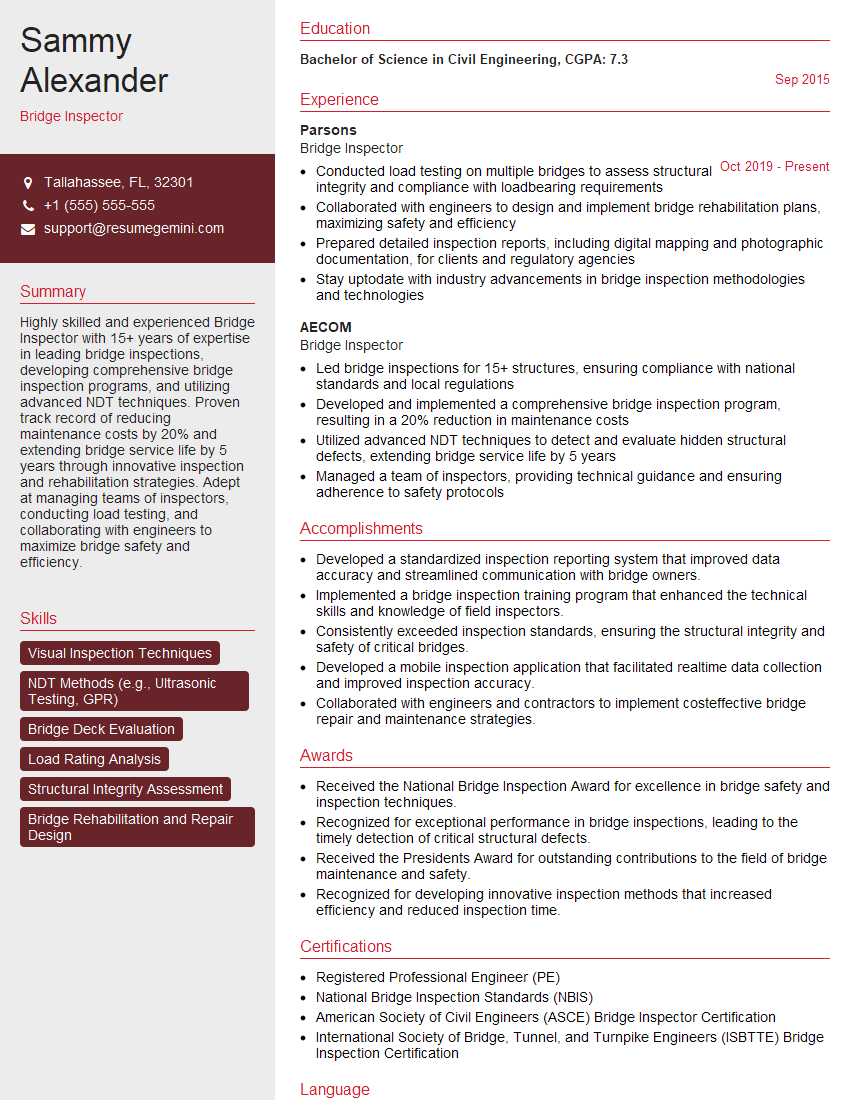
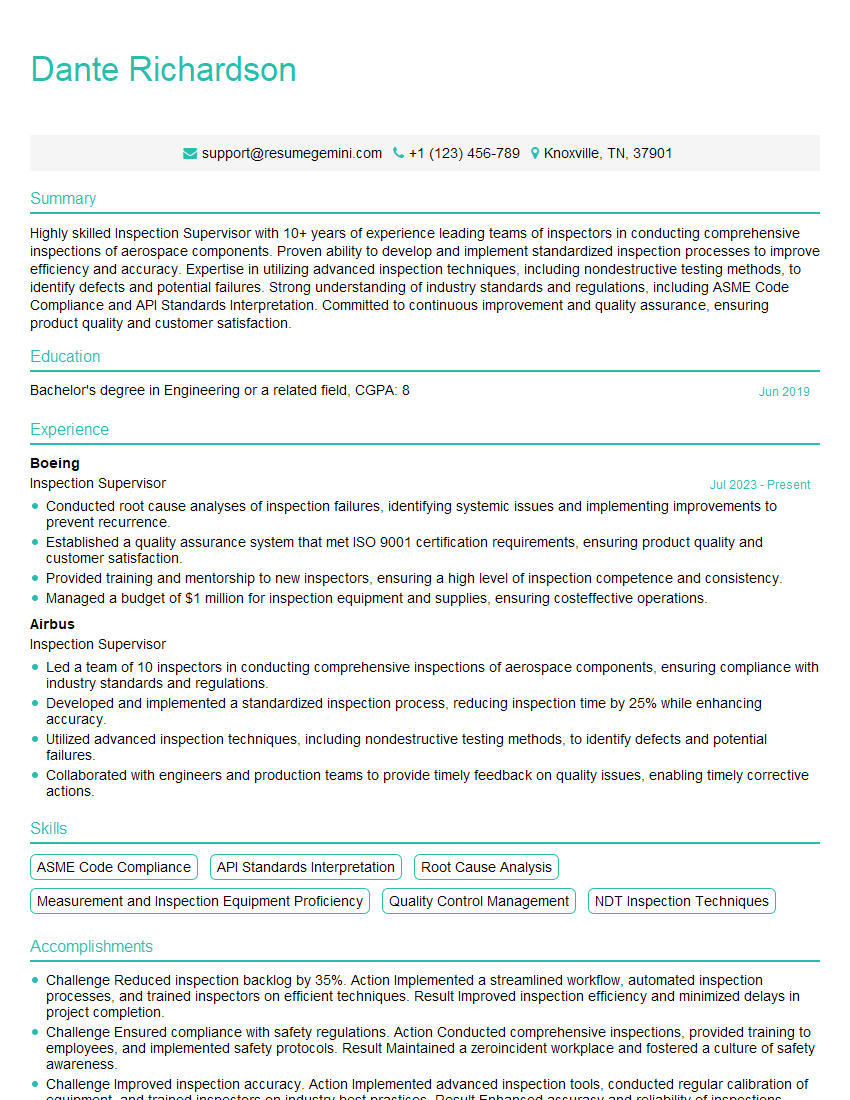
Mastering Structural Support System Inspection opens doors to exciting career advancements, offering opportunities for specialization, increased responsibility, and higher earning potential. To maximize your job prospects, a strong, ATS-friendly resume is crucial. ResumeGemini can help you craft a compelling resume that highlights your skills and experience effectively. ResumeGemini provides examples of resumes tailored to Structural Support System Inspection, guiding you in showcasing your qualifications to potential employers. Invest time in creating a professional resume – it’s your first impression and a key step towards landing your dream job.
Explore more articles
Users Rating of Our Blogs
Share Your Experience
We value your feedback! Please rate our content and share your thoughts (optional).
What Readers Say About Our Blog
Amazing blog
hello,
Our consultant firm based in the USA and our client are interested in your products.
Could you provide your company brochure and respond from your official email id (if different from the current in use), so i can send you the client’s requirement.
Payment before production.
I await your answer.
Regards,
MrSmith
hello,
Our consultant firm based in the USA and our client are interested in your products.
Could you provide your company brochure and respond from your official email id (if different from the current in use), so i can send you the client’s requirement.
Payment before production.
I await your answer.
Regards,
MrSmith
These apartments are so amazing, posting them online would break the algorithm.
https://bit.ly/Lovely2BedsApartmentHudsonYards
Reach out at BENSON@LONDONFOSTER.COM and let’s get started!
Take a look at this stunning 2-bedroom apartment perfectly situated NYC’s coveted Hudson Yards!
https://bit.ly/Lovely2BedsApartmentHudsonYards
Live Rent Free!
https://bit.ly/LiveRentFREE
Interesting Article, I liked the depth of knowledge you’ve shared.
Helpful, thanks for sharing.
Hi, I represent a social media marketing agency and liked your blog
Hi, I represent an SEO company that specialises in getting you AI citations and higher rankings on Google. I’d like to offer you a 100% free SEO audit for your website. Would you be interested?