Feeling uncertain about what to expect in your upcoming interview? We’ve got you covered! This blog highlights the most important Terrazzo Applying Sealers interview questions and provides actionable advice to help you stand out as the ideal candidate. Let’s pave the way for your success.
Questions Asked in Terrazzo Applying Sealers Interview
Q 1. What types of sealers are commonly used for terrazzo surfaces?
Terrazzo sealers come in various types, each offering different properties and benefits. The most common include:
- Penetrating Sealers: These sealers soak into the pores of the terrazzo, protecting it from within. They enhance durability and stain resistance without altering the appearance significantly. Think of it like waterproofing the terrazzo from the inside out. They’re excellent for maintaining the natural look of the stone.
- Topical Sealers: These form a film on the surface of the terrazzo, providing a protective barrier. They offer excellent protection against staining and wear, and can enhance the shine. Imagine it as adding a protective layer on top, similar to a clear coat on furniture. They’re often chosen for high-traffic areas.
- Epoxy Sealers: Known for their exceptional durability and resistance to chemicals, epoxy sealers are ideal for heavily used areas. However, they can alter the appearance slightly, making the surface seem less porous. They are a very strong protective barrier, perfect for industrial settings.
- Solvent-Based Sealers: These sealers offer good protection and often dry quickly, but may have a stronger odor and require more ventilation during application.
- Water-Based Sealers: Generally lower in VOCs (Volatile Organic Compounds), making them a more environmentally friendly choice. They offer good protection but may not be as durable as solvent-based options in high-traffic situations.
The choice depends on the specific needs of the terrazzo and the desired level of protection and aesthetics.
Q 2. Describe the process of preparing a terrazzo surface before applying a sealer.
Proper preparation is crucial for optimal sealer penetration and performance. The process typically involves:
- Cleaning: Thoroughly clean the terrazzo surface to remove dirt, grime, grease, and any old sealer residue. A strong detergent solution and a scrubbing brush or pressure washer might be needed. Think of it like prepping a wall before painting; you wouldn’t paint over dirt!
- Grouting Repair: Repair any damaged or missing grout before sealing. This ensures the sealer doesn’t penetrate the cracks and compromises the integrity of the surface. A well-grouted terrazzo is a foundation for a successful seal.
- Drying: Allow the terrazzo to dry completely. This is essential because moisture can interfere with the sealer’s ability to penetrate the surface. A damp surface can lead to uneven sealing and potentially damage the sealer.
- Diamond Grinding (Optional): For older or heavily worn terrazzo, diamond grinding can restore the surface and improve sealer adhesion. This step removes superficial imperfections, creating a smoother base.
After these steps, the terrazzo is ready for sealing. Skipping these steps can result in poor sealer adhesion, uneven application, and reduced protection.
Q 3. What are the different methods for applying terrazzo sealers (e.g., brush, roller, spray)?
Several methods exist for applying terrazzo sealers, each with its pros and cons:
- Brush Application: This method offers excellent control, especially in hard-to-reach areas, but it can be time-consuming and labor-intensive for large surfaces. Think of painting a small intricate design; a brush provides precision.
- Roller Application: Ideal for larger, flat surfaces, rollers provide faster coverage than brushes. However, they may not reach crevices as effectively. This is like painting a large wall; a roller makes it much faster.
- Spray Application: Spray application is the fastest method, perfect for large projects. However, it requires specialized equipment and careful technique to prevent overspray and ensure even coverage. It’s like using a paint sprayer; efficient but requires more expertise.
The best method depends on the size and complexity of the terrazzo surface, as well as your experience and available equipment.
Q 4. How do you determine the appropriate type and quantity of sealer for a specific terrazzo surface?
Determining the right sealer type and quantity involves several factors:
- Terrazzo Type: Different terrazzo compositions (e.g., cement, resin-based) may require specific sealers. Some sealers are designed for specific types of materials.
- Traffic Level: High-traffic areas need more durable sealers than low-traffic areas. Areas with heavy foot traffic will need a much stronger protection than areas with little usage.
- Desired Finish: Some sealers enhance shine, while others maintain a more natural appearance. Your desired appearance will drive your sealer choice.
- Porosity: The porosity of the terrazzo dictates how much sealer will be absorbed. A highly porous surface will require more sealer than a less porous one.
The manufacturer’s instructions should provide guidance on application rates per square foot. It’s always better to err on the side of slightly less sealer, as excess can lead to problems, than too little.
Q 5. Explain the importance of proper ventilation when applying terrazzo sealers.
Proper ventilation is paramount, especially when working with solvent-based sealers. These sealers release volatile organic compounds (VOCs) that can be harmful if inhaled. VOCs can be headache-inducing, so good ventilation is crucial.
Adequate ventilation prevents the buildup of VOCs, safeguarding the health of both the applicator and anyone else in the area. This often requires opening windows and doors, or using exhaust fans to draw out fumes. In confined spaces or larger projects, respiratory protection is also necessary.
Ignoring ventilation can result in headaches, dizziness, nausea, and other health issues. Always prioritize worker safety and ensure a well-ventilated workspace.
Q 6. What are the safety precautions associated with handling and applying terrazzo sealers?
Safety precautions when handling and applying terrazzo sealers include:
- Wear appropriate personal protective equipment (PPE): This includes gloves, eye protection, and a respirator, particularly when working with solvent-based sealers. It is always crucial to protect yourself against harsh chemicals.
- Work in a well-ventilated area: As mentioned before, adequate ventilation is crucial to reduce exposure to VOCs.
- Follow manufacturer’s instructions: Carefully read and follow the instructions on the sealer packaging regarding application, drying time, and cleanup procedures. The manufacturer provides specific instructions to achieve the best outcome and avoid problems.
- Store sealers properly: Store sealers in a cool, dry place, away from heat and ignition sources. Proper storage prevents unexpected problems and keeps chemicals safe.
- Dispose of waste properly: Follow local regulations for the disposal of empty containers and any excess sealer. Environmental protection and safe disposal practices are crucial.
Prioritizing safety ensures a healthy and productive work environment, minimizing risks and avoiding potential health hazards.
Q 7. How do you ensure even sealer application and avoid streaks or uneven coverage?
Achieving even sealer application requires careful technique and attention to detail. Here’s how to avoid streaks and uneven coverage:
- Use the right application method: Choose the application method best suited for the surface and your skill level. The correct tool is crucial for even application.
- Work in small sections: Apply the sealer in manageable sections, ensuring complete coverage before moving on to the next. This prevents the sealer from drying unevenly.
- Maintain a consistent application pressure: Apply the sealer with consistent pressure, avoiding applying too much in one spot. Even application means an even outcome.
- Overlap coats slightly: If multiple coats are needed, slightly overlap each coat to ensure complete coverage. This approach provides a uniform surface.
- Use a clean applicator: Clean your applicator regularly to prevent buildup and uneven application. Keeping the applicator clean is key for even coating.
- Work in the right conditions: Avoid applying sealer in direct sunlight or high temperatures, as this can accelerate drying and cause unevenness. Conditions play a role in ensuring even application.
Practice makes perfect. With experience, you will develop the skill to efficiently and evenly apply sealers. Consider practicing on a small, inconspicuous area before tackling a large surface.
Q 8. What are the common problems encountered when applying terrazzo sealers, and how do you troubleshoot them?
Common problems encountered when applying terrazzo sealers often stem from improper surface preparation, incorrect sealer selection, or application errors. For instance, applying sealer to a dirty or damp surface can lead to poor penetration and uneven finish. Using the wrong type of sealer (e.g., a water-based sealer on a heavily stained surface) can also result in failure. Applying too much sealer at once can create a sticky, uneven surface that takes forever to cure.
- Troubleshooting Dirty/Damp Surface: Thoroughly clean the terrazzo with a suitable cleaner, allowing ample time for drying. A low-humidity environment is ideal.
- Troubleshooting Incorrect Sealer Selection: Review the manufacturer’s specifications to ensure compatibility with the terrazzo type and existing conditions. Sometimes a test patch in an inconspicuous area is prudent before full application.
- Troubleshooting Uneven Application: Practice on a scrap piece of terrazzo first. Use consistent pressure and even strokes. Thin coats are better than thick ones. Always follow the manufacturer’s recommended application method (brush, roller, spray).
- Troubleshooting Insufficient Curing Time: Allow ample time for the sealer to fully cure. Excessive foot traffic or exposure to moisture before curing can ruin the finish. Check manufacturer’s instructions.
Q 9. How do you clean and maintain application tools after sealing terrazzo?
Cleaning and maintaining application tools after sealing terrazzo is crucial for prolonging their lifespan and preventing cross-contamination. The process depends largely on the type of sealer used.
- Water-Based Sealers: These are generally easier to clean. Immediately after use, rinse tools thoroughly with warm, soapy water. For brushes, ensure you work the soap into the bristles to remove all residue. Allow to air dry completely.
- Solvent-Based Sealers: These require a different approach. Use the recommended thinner specified by the sealer manufacturer to clean brushes and rollers. This is critical because water will not effectively remove solvent-based sealers. Always follow safety precautions when handling solvents, ensuring proper ventilation.
- General Tip: Never leave tools to sit with sealer dried on them. The longer the sealer sits, the harder it is to remove.
Q 10. What are the signs of sealer failure, and how can they be addressed?
Signs of sealer failure can manifest in various ways. One common sign is a dull or cloudy appearance; the terrazzo might lose its shine or appear hazy. Another is increased staining; the surface may become more susceptible to spills and discoloration. The sealer might also exhibit peeling, cracking, or flaking. These often happen if the surface preparation wasn’t adequate, if the wrong sealer was used, or if the curing process was disrupted.
- Addressing Sealer Failure: The solution depends on the severity and cause of the failure. Minor issues like dullness might be addressed with a recoating, after proper cleaning. More extensive damage, such as cracking, requires complete removal of the old sealer before reapplication. Sometimes professional help is needed for extensive damage.
Identifying the root cause is crucial. Was it poor application, incorrect sealer choice, or underlying substrate issues? Addressing the root cause prevents recurrence.
Q 11. Describe the curing process of different terrazzo sealers.
The curing process of terrazzo sealers varies significantly depending on the type of sealer (water-based or solvent-based) and the specific product. Manufacturers provide detailed curing times on their labels. Water-based sealers usually cure faster than solvent-based sealers, often within hours to a day. However, full cure can sometimes take several days. Solvent-based sealers, due to their slower evaporation, generally require longer curing times, possibly 24-72 hours or more. The curing process involves the solvent evaporating (for solvent-based sealers) or the water evaporating and the resin polymerizing (for water-based sealers), forming a protective layer.
Factors Affecting Curing: Temperature and humidity play a role; higher temperatures and lower humidity generally lead to faster curing. Proper ventilation is crucial, especially for solvent-based sealers. Following the manufacturer’s instructions is paramount for optimum results.
Q 12. How do you determine when a terrazzo surface is adequately sealed?
Determining if a terrazzo surface is adequately sealed requires a multi-pronged approach. A simple water bead test can give an initial assessment: If water beads up and doesn’t penetrate readily, the sealing is likely adequate. However, this isn’t foolproof.
- Visual Inspection: A uniformly glossy surface without visible patches suggests even sealing. Inspect for any dull spots, which could indicate poor penetration.
- Water Absorption Test: Apply a small amount of water to a less visible area. Measure the absorption rate. Compare to the manufacturer’s specifications.
- Touch Test: Once cured, the surface should feel smooth and even, not tacky or sticky.
If you’re unsure, conducting a more comprehensive test, or even consulting a professional, is recommended. Remember that a properly sealed surface will enhance the durability and appearance of your terrazzo.
Q 13. What are the differences between water-based and solvent-based terrazzo sealers?
Water-based and solvent-based terrazzo sealers differ significantly in their composition, application, and environmental impact.
- Water-Based Sealers: These are generally low-odor, environmentally friendly, and quicker to cure. They’re easier to clean up with soap and water. However, they might not penetrate as deeply as solvent-based sealers, and they are less durable in heavily trafficked areas.
- Solvent-Based Sealers: These typically offer superior durability and penetration. They provide a harder, more protective finish. However, they tend to have stronger odors and require solvents for cleanup, posing more environmental and health concerns. They also usually take longer to cure.
The choice between them depends on the specific project requirements and priorities. For high-traffic areas needing exceptional durability, solvent-based sealers are often preferred. For environmentally conscious projects or areas with less foot traffic, water-based sealers are suitable.
Q 14. Explain the importance of following manufacturer instructions when applying sealers.
Following manufacturer instructions when applying sealers is paramount for achieving optimal results and avoiding problems. Each sealer is formulated differently, with specific application techniques and curing requirements.
- Surface Preparation: Manufacturers often specify cleaning procedures and necessary surface preparations (e.g., grinding, polishing). Ignoring these steps can lead to poor adhesion and sealer failure.
- Application Method: The instructions detail whether to brush, roll, or spray the sealer and the appropriate coat thickness. Improper application can create an uneven finish or a buildup of sealer.
- Curing Time and Conditions: The instructions indicate the necessary curing time and environmental conditions (temperature, humidity, ventilation). Ignoring these can result in poor cure, reducing sealer performance and longevity.
- Safety Precautions: Manufacturers provide safety guidelines for handling sealers, including ventilation and personal protective equipment (PPE). Neglecting safety measures can lead to health hazards.
The manufacturer’s instructions are essentially a recipe for success. Deviation can result in wasted materials, time, and a subpar finish.
Q 15. How do you handle spills or accidents during sealer application?
Spills during sealer application are a common occurrence, but quick action is key to preventing damage. My first step is always to immediately absorb the excess sealer with absorbent cloths, avoiding spreading the spill. The type of sealer dictates the cleaning method; water-based sealers can be cleaned with water, while solvent-based sealers require a suitable solvent as specified by the manufacturer. For larger spills, I might use a wet vacuum to remove excess material. The affected area should then be allowed to dry completely before proceeding with the application. If a significant amount of sealer has pooled and caused unevenness, I would gently abrade the area with a fine grit pad to level it and reapply sealer once completely dry. Think of it like a paint spill – the faster you respond, the better the outcome.
Career Expert Tips:
- Ace those interviews! Prepare effectively by reviewing the Top 50 Most Common Interview Questions on ResumeGemini.
- Navigate your job search with confidence! Explore a wide range of Career Tips on ResumeGemini. Learn about common challenges and recommendations to overcome them.
- Craft the perfect resume! Master the Art of Resume Writing with ResumeGemini’s guide. Showcase your unique qualifications and achievements effectively.
- Don’t miss out on holiday savings! Build your dream resume with ResumeGemini’s ATS optimized templates.
Q 16. What are the environmental considerations associated with terrazzo sealers?
Environmental considerations are paramount in my work. Many terrazzo sealers contain volatile organic compounds (VOCs), which contribute to air pollution. Therefore, I always prioritize sealers with low or zero VOC content. Proper ventilation is crucial during application to minimize indoor air quality issues. I also ensure that all waste materials are disposed of responsibly, following local and national regulations. For example, using sealers with recycled content or opting for water-based alternatives demonstrates a commitment to sustainability. Choosing a sealer with a long lifespan minimizes the need for frequent reapplications, reducing waste in the long run.
Q 17. How do you dispose of leftover terrazzo sealers and related materials responsibly?
Responsible disposal of leftover sealers and related materials is non-negotiable. I never pour sealers down drains or into the environment. Instead, I meticulously follow the manufacturer’s instructions for disposal, often involving specific hazardous waste disposal facilities. Containers are carefully rinsed and cleaned, and all rags used for application are placed in sealed containers designed for flammable waste. This prevents accidental ignition and safeguards against environmental contamination. It’s essential to check local regulations as disposal methods may vary depending on the specific sealer and your location. This responsible disposal practice protects both the environment and the health of workers and the wider community.
Q 18. What are the different types of terrazzo (e.g., Venetian, classic)? How does this impact sealer selection?
Terrazzo comes in many variations, each demanding a slightly different approach to sealing. Venetian terrazzo, with its finer aggregate and polished surface, typically requires a sealer that enhances its glossy sheen without obscuring the intricate detail. Classic terrazzo, with its larger chips, might benefit from a sealer that provides robust protection against staining and wear. Highly porous terrazzo might need multiple coats of a penetrating sealer to improve its durability. The sealer selection must consider the porosity, finish, and desired outcome. For example, a matte finish might be preferred for classic terrazzo, whilst a high-gloss finish better suits Venetian terrazzo. Always test a small inconspicuous area first to ensure the sealer interacts properly with the specific terrazzo type.
Q 19. Describe your experience with various types of terrazzo sealants (e.g., acrylic, epoxy, polyurethane).
My experience encompasses a wide range of terrazzo sealants. Acrylic sealers offer a good balance of protection and breathability, making them suitable for many terrazzo types. They’re generally easy to apply and clean up. Epoxy sealers provide superior durability and chemical resistance, making them ideal for high-traffic areas but can be more challenging to apply. Polyurethane sealers offer excellent protection against abrasion and staining and provide a durable, long-lasting finish. The choice depends heavily on the specific project requirements. I’ve found that acrylic sealers are great for less demanding settings while epoxy and polyurethane are excellent for commercial spaces or areas subject to heavy wear and tear. Each type demands a specific application technique, requiring careful attention to detail to ensure a consistent, even finish.
Q 20. How do you handle different surface conditions (e.g., porous, non-porous) when applying sealers?
Surface condition significantly influences sealer selection and application. Highly porous terrazzo requires a penetrating sealer to fill the pores and prevent staining. This typically involves multiple thin coats, allowing each layer to fully penetrate before applying the next. Non-porous terrazzo may require a topical sealer, focusing on creating a protective film over the surface. I always assess the porosity by testing the absorption rate of a small area before proceeding with full-scale application. This could involve applying a small amount of water and observing how quickly it is absorbed. A thorough cleaning before sealing is also crucial for both porous and non-porous surfaces to ensure optimal adhesion of the sealer.
Q 21. What are the best practices for maintaining the longevity of a terrazzo sealer?
Maintaining the longevity of a terrazzo sealer involves a multi-faceted approach. Regular cleaning with neutral pH cleaners is essential to remove dirt and debris that could compromise the sealer. Avoid harsh chemicals or abrasive cleaners. Protecting the floor from excessive moisture and high-impact damage is vital; placing protective mats in high-traffic areas can significantly extend the life of the sealer. Periodically inspecting the sealer for wear and tear and prompt addressing of any damage, such as chipping or scratches, will prevent further deterioration. Depending on the sealer type and traffic, re-sealing may be required every few years to ensure continued protection. Following the manufacturer’s recommendations regarding maintenance is key to achieving a long-lasting, beautiful finish.
Q 22. What is the typical drying time for different terrazzo sealers?
Drying time for terrazzo sealers varies significantly depending on the type of sealer, the environmental conditions (temperature and humidity), and the number of coats applied. Generally, water-based sealers tend to dry faster than solvent-based ones.
- Water-based acrylic sealers: These typically dry to the touch within 1-2 hours, and are usually recoatable within 4-6 hours. However, full cure might take 24-48 hours.
- Solvent-based sealers: These often require longer drying times, potentially 6-8 hours to the touch and 24-72 hours, or even longer, for a full cure, depending on the formulation. Proper ventilation is crucial during application and drying.
- Penetrating sealers: These sealers don’t form a surface film; instead they soak into the terrazzo. Drying times are usually shorter, often within a few hours, but again this depends on the product and environmental factors.
Always consult the manufacturer’s instructions for precise drying times, as this information is crucial to avoid issues like trapping moisture or premature wear.
Q 23. How do you address areas with significant damage or wear before sealer application?
Addressing significant damage or wear before sealer application is critical for a long-lasting, aesthetically pleasing finish. Ignoring these issues will result in a subpar outcome where the sealer can’t fully protect the damaged areas.
- Cracks and chips: Small cracks can be filled with an epoxy resin matched to the terrazzo color. Larger chips might require more extensive repairs involving patching and grinding to achieve a seamless blend.
- Staining: Stains need to be treated before sealing. The best approach depends on the type of stain. Some can be removed with specialized cleaners, while others might require professional intervention.
- Erosion and pitting: Severe erosion or pitting may need grinding and polishing to restore a level surface before applying the sealer. This step ensures the sealer is applied evenly and protects the terrazzo effectively.
In essence, the pre-sealing preparation is akin to prepping a wall for painting. You wouldn’t paint over holes and cracks; the same logic applies to terrazzo. Thorough preparation is key to a professional finish.
Q 24. What tools and equipment are essential for effective terrazzo sealer application?
The tools needed for effective terrazzo sealer application depend on the area’s size and the type of sealer used, but some essentials include:
- Sealer: Choose a high-quality sealer appropriate for the terrazzo type and desired finish (e.g., matte, satin, gloss).
- Application tools: This could include a lambswool applicator, a microfiber mop, or a low-nap roller, depending on the sealer and the surface area. For larger areas, a pump sprayer may be more efficient.
- Mixing containers and stirring tools: For proper mixing of the sealer, particularly if it requires multiple components.
- Protective gear: Gloves, eye protection, and respiratory protection are crucial, especially when working with solvent-based sealers.
- Cleaning supplies: Rags, buckets, and a suitable cleaner are needed for cleanup.
- Measuring tools: To accurately measure sealer quantities.
For larger projects, power tools like floor buffers might be beneficial for applying and buffing the sealer for an even finish. However, careful selection of pads is necessary to avoid scratching the terrazzo.
Q 25. Describe your experience with different application techniques for large vs. small terrazzo areas.
Application techniques adapt depending on the scale of the terrazzo area.
- Small areas: For smaller areas, a lambswool applicator or a high-quality microfiber mop works well. This provides greater control and allows for more attention to detail. Careful application ensures even coverage and avoids pooling.
- Large areas: In larger spaces, using a low-nap roller or a pump sprayer can significantly improve efficiency. Using a pump sprayer ensures even distribution. However, proper techniques are crucial to avoid over-application or leaving streaks. In such instances, a floor buffer (with appropriate pads) can be used to help evenly spread the sealer.
Regardless of the area size, the key is to work in manageable sections, ensuring each area receives even coverage before moving on. Overlapping slightly between sections helps prevent visible seams in the final finish. I’ve found that the best approach involves meticulous planning, breaking down large projects into smaller, more manageable tasks.
Q 26. How do you ensure the sealer is compatible with the existing terrazzo finish?
Ensuring sealer compatibility is crucial to prevent damage or discoloration. Before applying any sealer, it is vital to:
- Identify the type of terrazzo: Different terrazzo types (e.g., cement-based, resin-based) react differently to various sealers. Incorrect sealer choice can lead to discoloration, staining, or even deterioration.
- Test the sealer in an inconspicuous area: This is a critical step to check for any adverse reactions. Apply a small amount of sealer to a hidden corner and observe for discoloration, bubbling, or any other undesirable changes for at least 24 hours.
- Consult the manufacturer’s specifications: The sealer’s label will usually indicate compatible materials. Ignoring this advice can void warranties and damage the terrazzo.
For example, using a solvent-based sealer on a resin-based terrazzo could cause the resin to soften or discolor. Careful testing and due diligence significantly reduce risks.
Q 27. How do you maintain quality control throughout the terrazzo sealing process?
Maintaining quality control is essential for a successful outcome. I usually implement the following:
- Thorough surface preparation: Proper cleaning and repair of damage before sealer application is fundamental. This avoids issues like uneven sealer absorption or incomplete protection.
- Careful sealer application: Following the manufacturer’s instructions and using appropriate application techniques ensures even coverage and minimizes the risk of streaks or pooling.
- Regular inspection during application: Constantly check for unevenness or missed spots. Addressing problems immediately avoids extensive rework.
- Post-application inspection: After the sealer has dried, a thorough inspection reveals any defects. Minor flaws can often be corrected with careful touch-ups.
- Documentation: Maintaining records of the sealer used, application methods, and any issues encountered ensures future maintenance is easier. This is vital for quality assurance and warranty claims.
My philosophy is that proactive quality control is far more efficient than corrective measures after the job is complete.
Q 28. What are some common mistakes to avoid when applying terrazzo sealers?
Several common mistakes can compromise the quality of a terrazzo sealing job:
- Applying sealer to a dirty or damp surface: This can significantly reduce adhesion, potentially leading to peeling or uneven finishes. Always ensure the surface is thoroughly cleaned and completely dry before application.
- Using the wrong type of sealer: Selecting an incompatible sealer can damage the terrazzo or cause discoloration.
- Over-applying the sealer: Excessive sealer can lead to pooling, uneven drying, and a less durable finish.
- Ignoring the drying time: Prematurely exposing the sealed surface to foot traffic or moisture can compromise the seal’s integrity.
- Neglecting proper ventilation: Solvent-based sealers release fumes that require adequate ventilation to prevent health hazards and ensure proper curing.
Each of these errors can easily be avoided with proper planning, adherence to manufacturer instructions, and attention to detail. A little extra care at each step guarantees the best outcome.
Key Topics to Learn for Terrazzo Applying Sealers Interview
- Types of Terrazzo Sealers: Understanding the differences between solvent-based, water-based, and penetrating sealers, and their respective applications and limitations.
- Surface Preparation: Mastering the crucial steps involved in preparing a terrazzo surface for sealer application, including cleaning, grinding, and patching.
- Sealer Application Techniques: Learning different application methods (e.g., brush, roller, spray) and their suitability for various terrazzo types and sealer types. Understanding proper coverage and application rates.
- Curing and Drying Time: Knowing the importance of proper curing time and environmental factors affecting the drying process. Understanding potential issues arising from improper curing.
- Troubleshooting Common Issues: Identifying and addressing problems like uneven sealer application, discoloration, and sealer failure. Developing effective problem-solving strategies.
- Health and Safety Regulations: Familiarity with relevant safety precautions and handling procedures for sealers and related materials, including PPE requirements and disposal methods.
- Maintenance and Longevity: Understanding the long-term maintenance requirements of sealed terrazzo and the factors influencing the lifespan of the sealer.
- Material Selection: Knowing how to select the appropriate sealer based on the terrazzo type, location, and intended use (e.g., high-traffic areas).
Next Steps
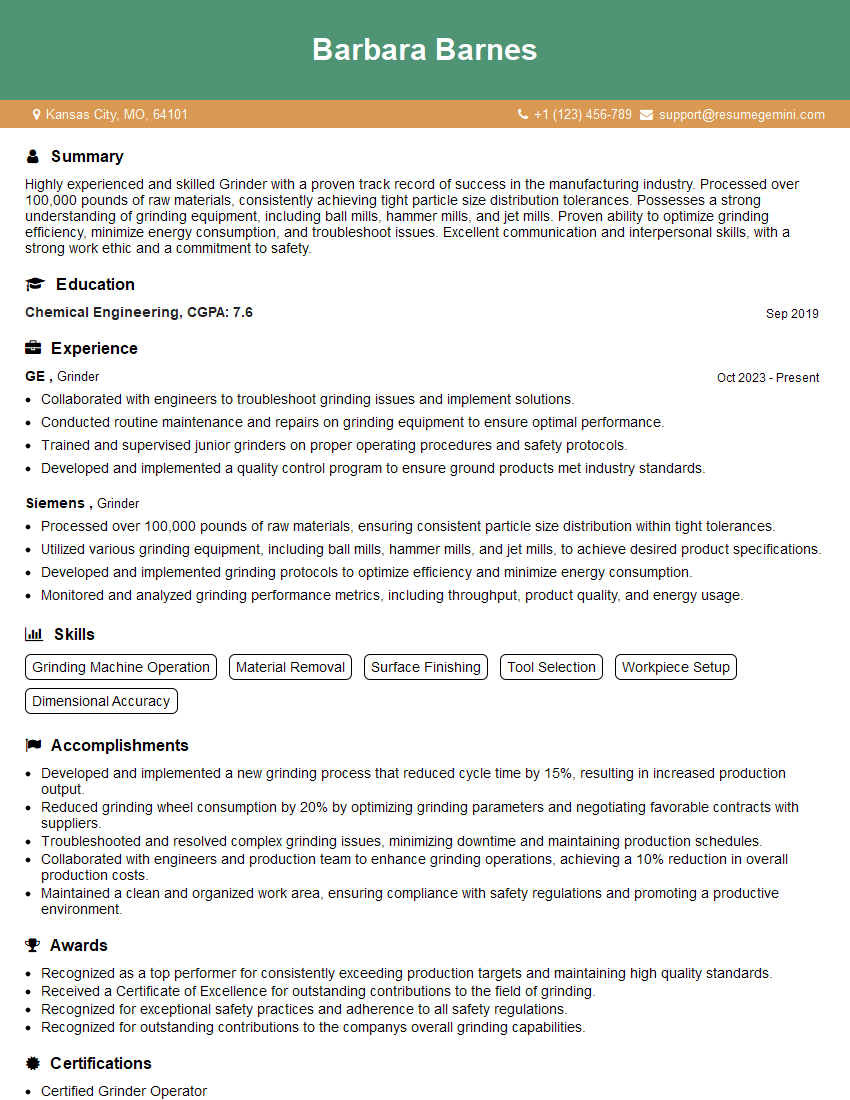
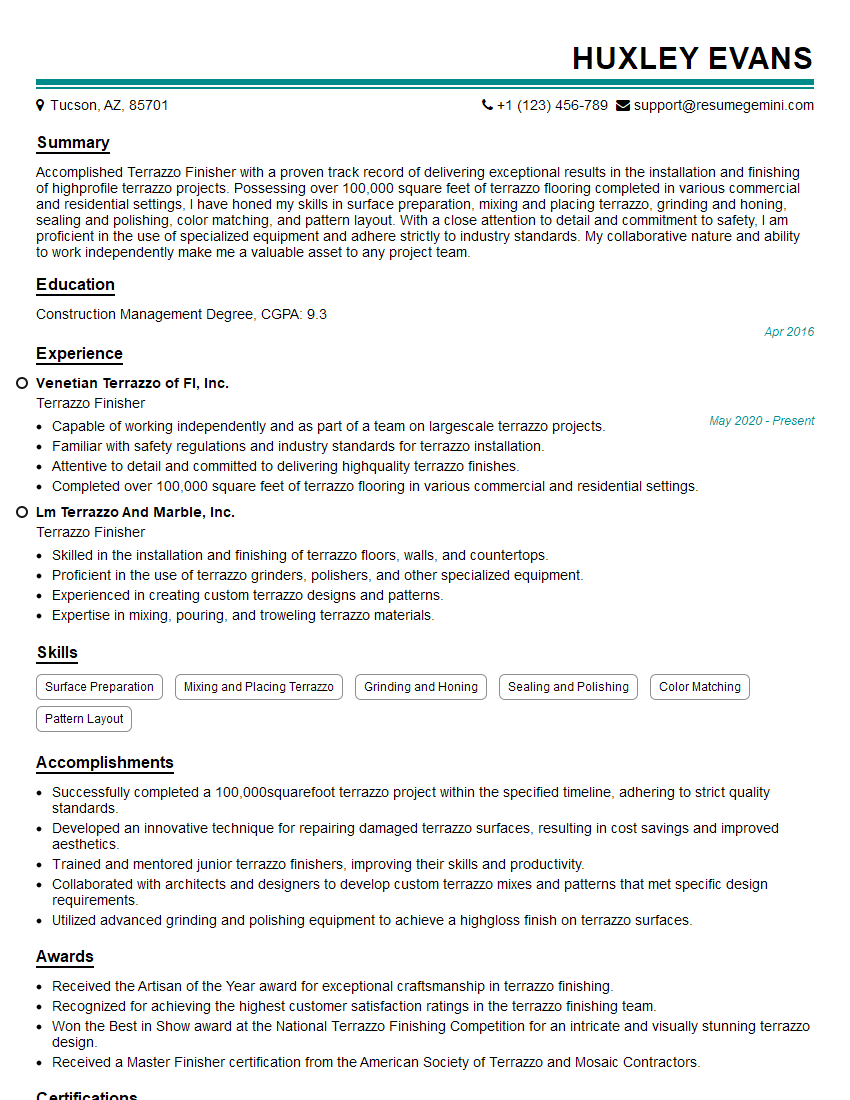
Mastering Terrazzo Applying Sealers opens doors to rewarding career opportunities in the construction and restoration industries. A strong understanding of these techniques demonstrates valuable skills and expertise, making you a highly competitive candidate. To further enhance your job prospects, creating an ATS-friendly resume is crucial. ResumeGemini is a trusted resource to help you build a professional and impactful resume that highlights your skills and experience. Examples of resumes tailored to Terrazzo Applying Sealers are available to help you get started.






Explore more articles
Users Rating of Our Blogs
Share Your Experience
We value your feedback! Please rate our content and share your thoughts (optional).
What Readers Say About Our Blog
Amazing blog
hello,
Our consultant firm based in the USA and our client are interested in your products.
Could you provide your company brochure and respond from your official email id (if different from the current in use), so i can send you the client’s requirement.
Payment before production.
I await your answer.
Regards,
MrSmith
hello,
Our consultant firm based in the USA and our client are interested in your products.
Could you provide your company brochure and respond from your official email id (if different from the current in use), so i can send you the client’s requirement.
Payment before production.
I await your answer.
Regards,
MrSmith
These apartments are so amazing, posting them online would break the algorithm.
https://bit.ly/Lovely2BedsApartmentHudsonYards
Reach out at BENSON@LONDONFOSTER.COM and let’s get started!
Take a look at this stunning 2-bedroom apartment perfectly situated NYC’s coveted Hudson Yards!
https://bit.ly/Lovely2BedsApartmentHudsonYards
Live Rent Free!
https://bit.ly/LiveRentFREE
Interesting Article, I liked the depth of knowledge you’ve shared.
Helpful, thanks for sharing.
Hi, I represent a social media marketing agency and liked your blog
Hi, I represent an SEO company that specialises in getting you AI citations and higher rankings on Google. I’d like to offer you a 100% free SEO audit for your website. Would you be interested?