Preparation is the key to success in any interview. In this post, we’ll explore crucial Terrazzo Flooring interview questions and equip you with strategies to craft impactful answers. Whether you’re a beginner or a pro, these tips will elevate your preparation.
Questions Asked in Terrazzo Flooring Interview
Q 1. Describe the different types of terrazzo flooring.
Terrazzo flooring comes in various types, primarily categorized by their manufacturing method and aggregate placement. The most common types include:
- Precast Terrazzo: This involves manufacturing the terrazzo panels off-site, in a controlled environment. They are then installed like large tiles, offering faster installation and reduced on-site mess. Think of it like pre-fabricated concrete slabs, but far more aesthetically pleasing.
- In-situ Terrazzo: This is the traditional method, where the terrazzo is poured and finished directly on the job site. This allows for greater design flexibility and intricate patterns, but requires more time and skilled labor. It’s like painting a mural directly onto a wall, but with a much harder and longer-lasting material.
- Thin-set Terrazzo: A modern variation, typically using smaller aggregate sizes and thinner applications. It reduces weight and material costs, making it suitable for renovations or applications where load-bearing is a concern. Think of it as a lighter, quicker version of in-situ terrazzo.
- Venetian Terrazzo: Often associated with higher-end projects, Venetian terrazzo features smaller aggregate and finer polishing, resulting in a smoother, more refined finish. It’s like the fine jewelry of the terrazzo world.
Choosing the right type depends on budget, design requirements, and the project’s timeline and complexity.
Q 2. Explain the process of terrazzo installation, from subfloor preparation to final polishing.
Terrazzo installation is a multi-step process demanding precision and expertise. It begins with:
- Subfloor Preparation: This crucial step involves ensuring a level, clean, and structurally sound substrate. Any cracks or imperfections must be repaired. Think of this as preparing a canvas for a masterpiece – it has to be perfectly smooth.
- Base Coat Application: A cement-based mixture (often with bonding agents) is applied to level the subfloor and provide a stable base for the terrazzo mix. This layer ensures even distribution of the terrazzo.
- Terrazzo Mix Placement: The terrazzo mix, consisting of aggregate, cement, and other binding agents, is carefully placed and troweled to the desired thickness and level. Ensuring even distribution of aggregate is key for a uniform look.
- Aggregate Embedding: The aggregate is fully embedded in the mix, ensuring all stones are securely set. This is achieved through careful troweling and possibly vibrating the surface to settle any air pockets.
- Grinding and Polishing: This is a multi-stage process involving progressively finer diamond abrasives to achieve the desired sheen. It’s like refining a gemstone, slowly revealing its brilliance.
- Sealing: A protective sealant is applied to guard against staining and damage. This sealant protects the beauty of the terrazzo and helps in easier maintenance.
Each stage requires meticulous attention to detail to ensure a high-quality finish. Skipping steps or rushing the process can result in significant problems down the line.
Q 3. What are the common problems encountered during terrazzo installation, and how are they addressed?
Common problems during terrazzo installation include:
- Uneven Subfloor: This leads to an uneven terrazzo surface. Solution: Proper subfloor preparation and leveling before installation.
- Poor Mix Proportioning: Using the wrong mix ratios can result in cracking, crumbling, or inconsistent color. Solution: Adhere strictly to the manufacturer’s instructions and use quality materials.
- Insufficient Curing: Improper curing leads to weakness and susceptibility to damage. Solution: Proper environmental controls and adequate curing time (details in the next answer).
- Inconsistent Polishing: Inadequate polishing leaves a dull or uneven finish. Solution: Employ experienced polishers and use high-quality diamond abrasives.
- Cracking: This can happen due to movement in the subfloor or improper curing. Solution: Address subfloor issues, correct mix proportioning, and allow sufficient curing time.
Thorough planning, quality materials, and skilled craftsmanship are essential to minimize these problems. A seasoned terrazzo installer knows how to identify and rectify issues as they arise.
Q 4. How do you ensure the proper curing time for terrazzo?
Proper curing is critical for terrazzo’s strength and durability. It’s a process of allowing the cement to fully hydrate and harden. This involves:
- Maintaining Moisture: Keeping the terrazzo surface damp is vital, especially during the initial curing phase. This prevents rapid drying and cracking. Techniques involve covering the surface with damp burlap and periodically spraying water.
- Controlling Temperature: Excessive heat can accelerate drying, leading to problems. Similarly, extreme cold can slow down the curing process. Ideal temperatures generally fall within 60-80°F (15-27°C).
- Time: The required curing time varies depending on the mix design, environmental conditions, and thickness of the terrazzo. Generally, it’s advisable to avoid heavy traffic for several days to weeks.
The curing process is like baking a cake – you need the right temperature and time for optimal results. Improper curing can weaken the terrazzo, leading to future problems.
Q 5. What are the different methods for polishing terrazzo?
Terrazzo polishing is a multi-step process employing progressively finer diamond abrasives. The methods can broadly be categorized as:
- Manual Polishing: This traditional method uses hand-held tools and various grades of diamond grits. It allows for fine control but is labor-intensive and time-consuming. It’s like hand-carving a sculpture – slow, precise, and rewarding.
- Mechanical Polishing: This utilizes specialized machines equipped with diamond grinding and polishing pads. This method offers higher efficiency and consistency. It’s more like using a powerful tool to shape the material.
Regardless of the method used, the process involves several stages with increasingly finer grits of diamond abrasives to achieve the desired level of polish, from a matte finish to a high gloss.
Q 6. Describe the different types of terrazzo aggregates and their properties.
Terrazzo aggregates are the decorative chips and stones embedded within the cement matrix. They vary greatly in type, size, color, and properties. Common types include:
- Marble: Provides a classic, elegant look with various colors and veining patterns. It’s strong but can be prone to staining if not properly sealed.
- Granite: Offers superior durability and scratch resistance. Its speckled patterns create a bold, sophisticated look.
- Quartz: A highly durable option known for its hardness, resistance to staining and scratching. It comes in various colors and often provides a more uniform look.
- Glass: Adds a modern, sleek touch, with a wide range of colors and shapes. It is less durable than stone aggregates but adds a unique aesthetic.
The choice of aggregate depends on design preferences, budget, and required durability. The aggregate significantly influences the final look and performance of the terrazzo.
Q 7. How do you select the appropriate terrazzo mix design for a specific project?
Selecting the right terrazzo mix design is crucial for a successful project. Factors to consider include:
- Intended Use: High-traffic areas require more durable aggregates and a thicker mix. A low-traffic area can use a thinner, more aesthetically-focused design.
- Aesthetics: The color, size, and type of aggregate, along with the binder color, will impact the final aesthetic. This needs to match the overall design of the space.
- Budget: Different aggregates and binders vary in cost. A balance must be found between aesthetic appeal, performance, and budget constraints.
- Maintenance Requirements: Some aggregates are easier to maintain than others. For example, polished marble may require more care than a quartz aggregate.
Often, collaboration with architects, designers, and experienced terrazzo installers is key to creating a mix design that optimally meets the project’s requirements and long-term goals. It’s like creating a recipe – you need the right ingredients in the right proportions to get the desired outcome.
Q 8. Explain the importance of proper surface preparation before terrazzo installation.
Proper surface preparation is paramount for a successful and long-lasting terrazzo floor. Think of it like building a house – you wouldn’t start constructing without a solid foundation. A poorly prepared substrate will lead to issues like cracking, delamination, and uneven surfaces, ultimately compromising the beauty and durability of the terrazzo. The process involves several crucial steps:
- Substrate Evaluation: Thoroughly assess the existing floor for cracks, moisture content, and structural soundness. A moisture meter is crucial here to ensure the substrate is adequately dry. Excessive moisture can lead to problems down the road.
- Cleaning and Repair: Remove any loose debris, dust, oil, or contaminants. Repair any significant cracks or damage in the underlying concrete using appropriate patching compounds. This ensures a smooth, level base.
- Priming: Apply a suitable primer to improve adhesion between the substrate and the terrazzo mix. The type of primer will depend on the substrate material and its condition. A proper primer creates a strong bond, preventing later detachment.
- Leveling: If the substrate is uneven, a self-leveling compound is necessary to create a perfectly smooth surface. This is crucial for ensuring the finished terrazzo is even and aesthetically pleasing. Using a laser level helps achieve consistent results.
For example, I once worked on a project where the previous contractor skipped the proper priming step. The result? Within a year, sections of the terrazzo started to lift and detach from the substrate, necessitating costly repairs. Proper prep is simply not a step to be overlooked.
Q 9. What are the different types of resin systems used in terrazzo?
Resin systems are the binding agents that hold the terrazzo aggregate together, creating a durable and aesthetically pleasing surface. Different resins offer unique properties, affecting the final look and performance of the floor. Common types include:
- Epoxy Resins: Known for their exceptional strength, durability, and chemical resistance. They’re ideal for high-traffic areas and locations with potential chemical exposure. Epoxy terrazzo is harder and more resistant to wear.
- Polyester Resins: Offer a good balance of strength, durability, and cost-effectiveness. They are widely used in various applications and are easier to work with than epoxy resins. They generally have a shorter curing time.
- Methyl Methacrylate (MMA) Resins: These are fast-curing resins, often chosen for projects where quick turnaround is crucial. They’re known for their exceptional strength but can be more expensive than epoxy or polyester options. However, their fast curing is a big advantage.
The choice of resin system depends on factors like budget, desired performance characteristics, and the specific application. For instance, a high-end commercial kitchen might benefit from the superior chemical resistance of epoxy resin, while a residential setting might find polyester resin sufficient and cost-effective.
Q 10. How do you prevent cracking and chipping in terrazzo flooring?
Preventing cracking and chipping in terrazzo flooring requires attention to detail throughout the entire process, from preparation to installation and ongoing maintenance. Key strategies include:
- Proper Substrate Preparation: As discussed earlier, a level and stable base is crucial. Cracks and imperfections in the substrate will transfer to the terrazzo surface.
- Controlled Curing: Allowing the terrazzo to cure properly and avoid rapid drying is vital. This involves controlling temperature and humidity during the curing process to prevent stress cracks. Rapid drying can lead to shrinkage and cracking.
- Expansion Joints: Incorporating expansion joints into larger terrazzo installations helps accommodate thermal expansion and contraction, preventing stress buildup and potential cracking. These joints are designed to allow for movement without compromising the integrity of the floor.
- Proper Mixing and Placement: Ensuring the correct mix ratio of aggregate and resin is essential for optimal strength and durability. Improper mixing can lead to weak points and increased susceptibility to damage.
- Protective Coatings: Applying a high-quality sealant after installation helps protect the surface from wear and tear, reducing the risk of chipping and cracking.
Imagine a poorly mixed cake – it might look fine on top, but the inside is weak and crumbly. Similarly, improperly mixed terrazzo will be prone to damage.
Q 11. What safety precautions are necessary during terrazzo installation and maintenance?
Safety is paramount throughout the terrazzo installation and maintenance process. Several precautions should always be taken:
- Respiratory Protection: Work with appropriate respirators when handling dust and resin components, as they can be harmful to respiratory health. Always follow the manufacturer’s safety guidelines on respirators and personal protective equipment (PPE).
- Eye Protection: Wear safety glasses or goggles to protect eyes from flying debris during grinding and polishing. Resin splashes can also cause eye irritation.
- Skin Protection: Wear gloves, long sleeves, and protective clothing to avoid skin contact with resins and other potentially irritating materials. Epoxy and other resins can cause skin reactions.
- Proper Ventilation: Ensure adequate ventilation during installation and grinding to avoid inhaling harmful fumes. This is especially important when working with epoxy and MMA resins.
- Machine Safety: Operate grinding and polishing machines according to manufacturer’s instructions, maintaining proper safety procedures and precautions.
- Chemical Handling: Follow the manufacturer’s safety guidelines for handling and disposing of resins and other chemicals. Ensure proper storage and disposal of chemicals in compliance with local regulations.
Ignoring these safety measures can lead to serious injuries. A single careless moment can have devastating consequences.
Q 12. How do you estimate the cost of a terrazzo flooring project?
Estimating the cost of a terrazzo flooring project involves several factors. It’s not a simple square-footage calculation; many variables come into play:
- Square Footage: The size of the area to be covered is a primary driver of cost.
- Type of Resin: Epoxy resins tend to be more expensive than polyester or MMA resins.
- Aggregate Selection: The type and size of aggregate used can impact the cost. Premium materials naturally add to the expense.
- Labor Costs: Labor costs vary depending on location, project complexity, and the contractor’s experience.
- Substrate Preparation: The extent of substrate preparation required significantly impacts the overall cost. Extensive repairs add expense.
- Design Complexity: Intricate designs or patterns will increase labor and material costs.
To provide an accurate estimate, I usually conduct a thorough site assessment, discuss the client’s requirements, and gather material quotes. I then create a detailed breakdown of costs including material, labor, and other associated expenses. It’s always recommended to get multiple estimates from qualified contractors for comparison.
Q 13. Describe the process of repairing damaged terrazzo flooring.
Repairing damaged terrazzo requires careful attention to detail to ensure a seamless and long-lasting fix. The process typically involves:
- Assessment: Carefully examine the damaged area to determine the extent of the problem. Small chips might require simple patching, while larger cracks or damage may need more extensive repair.
- Preparation: Clean the damaged area thoroughly to remove any loose debris or contaminants. This ensures proper adhesion of the repair material.
- Matching Materials: Select a patching compound that closely matches the color and texture of the existing terrazzo. This is often a custom blend that needs to be expertly prepared by a professional.
- Application: Apply the patching compound carefully, ensuring it fills the damaged area completely and is level with the surrounding surface. It’s often helpful to use a small tool to pack the mixture completely into the crevices.
- Grinding and Polishing: Once the patching compound has cured, carefully grind and polish the repaired area to match the surrounding surface. This requires skill and the appropriate tools.
Remember, a poorly executed repair will be noticeable and can affect the overall look of the floor. It’s best to seek expert help for significant terrazzo repairs.
Q 14. How do you maintain and clean terrazzo flooring?
Maintaining and cleaning terrazzo flooring helps to preserve its beauty and longevity. Regular cleaning and preventative maintenance are key:
- Regular Sweeping or Vacuuming: Remove loose dirt and debris regularly to prevent scratches and soil buildup. Daily sweeping or vacuuming is ideal, especially in high-traffic areas.
- Mopping: Use a neutral pH cleaner and lukewarm water to mop the floor. Avoid harsh chemicals or abrasive cleaners that could damage the surface. Rinse thoroughly after cleaning.
- Sealing: Periodically reseal the terrazzo floor to protect it from stains and wear. The frequency of resealing depends on the type of sealant used and the level of foot traffic.
- Spot Cleaning: Address spills immediately to prevent staining. Use a soft cloth and a gentle cleaning solution to remove stains.
- Professional Maintenance: Periodically engage a professional terrazzo cleaning and maintenance service for deeper cleaning and polishing. This helps preserve the shine and restores the floor to its original luster.
Imagine neglecting your car – it would soon become rusty and rundown. Similarly, neglecting terrazzo flooring will lead to its premature deterioration. Consistent cleaning and maintenance are vital to keeping this beautiful and durable flooring looking its best for years to come.
Q 15. What are the advantages and disadvantages of terrazzo flooring compared to other flooring options?
Terrazzo flooring, a composite material of aggregates bound together by cement or resin, offers a unique blend of durability and aesthetics. Compared to other flooring options, it boasts several advantages and disadvantages.
- Advantages:
- Durability: Terrazzo is incredibly resistant to wear and tear, making it ideal for high-traffic areas. Think of it like a reinforced concrete floor, but much more visually appealing.
- Customization: The vast array of aggregates (marble chips, glass, quartz, etc.) and binder colors allows for nearly limitless design possibilities, creating truly unique floors.
- Sustainability: Using recycled materials in the aggregate mix makes terrazzo a relatively eco-friendly choice.
- Low Maintenance: Once sealed properly, terrazzo requires minimal upkeep, simply regular sweeping and occasional mopping.
- Hygiene: The non-porous nature of well-sealed terrazzo makes it easy to clean and prevents the growth of bacteria and mold.
- Disadvantages:
- Cost: Terrazzo can be more expensive than other flooring materials upfront due to the specialized installation process.
- Installation Time: Installation is time-consuming and requires skilled labor.
- Cold Feel: Terrazzo can feel cold underfoot, especially in colder climates. Underfloor heating can mitigate this issue.
- Potential for Cracking: Improper installation or poor subfloor preparation can lead to cracking over time.
- Repair Difficulty: Repairing damaged sections can be challenging and may require professional expertise.
Career Expert Tips:
- Ace those interviews! Prepare effectively by reviewing the Top 50 Most Common Interview Questions on ResumeGemini.
- Navigate your job search with confidence! Explore a wide range of Career Tips on ResumeGemini. Learn about common challenges and recommendations to overcome them.
- Craft the perfect resume! Master the Art of Resume Writing with ResumeGemini’s guide. Showcase your unique qualifications and achievements effectively.
- Don’t miss out on holiday savings! Build your dream resume with ResumeGemini’s ATS optimized templates.
Q 16. Explain the importance of color matching in terrazzo installations.
Color matching in terrazzo is paramount to achieving a cohesive and visually appealing result. Inconsistent color can drastically detract from the overall design, creating an unprofessional and jarring effect. Imagine a beautiful mosaic where the colors clash – the same principle applies to terrazzo.
Achieving accurate color matching involves careful selection of aggregates and binder, considering factors like the size and distribution of aggregates, the binder’s shade, and the desired overall tone. Sample boards are crucial for visualizing the final product before committing to a large-scale installation. This allows for adjustments to aggregate ratios and binder color until the desired result is attained. Careful consideration must also be given to lighting conditions, as perceived color can shift based on the light source.
Q 17. How do you handle variations in aggregate size and color during installation?
Variations in aggregate size and color are inherent characteristics of terrazzo, adding to its unique charm. However, uncontrolled variations can lead to an uneven or unattractive finish. Managing these variations requires a strategic approach during installation.
Careful pre-mixing and sorting of aggregates is essential to achieve a consistent color and texture throughout the floor. This often involves dividing the aggregates into different size and color groups and then blending them in a controlled manner according to a pre-determined mix design. Additionally, the installer must pay close attention to the distribution of aggregates during the placement of the mixture. This may involve hand-spreading and leveling to ensure an even distribution. Larger aggregates might require specific placement strategies to avoid clustering.
Think of it like baking a cake: you carefully measure and combine ingredients to ensure a consistent result. The same level of care and precision is required when handling aggregates in terrazzo.
Q 18. What are the different methods for creating patterns and designs in terrazzo?
Terrazzo offers incredible versatility in pattern and design creation. The possibilities are virtually endless, limited only by the creativity of the designer and the skill of the installer.
- Simple Scattered Aggregate: This is the most basic method, where aggregates are randomly distributed throughout the binder.
- Venetian Terrazzo: This classic style uses larger, uniformly sized and colored aggregates that create a more structured and refined appearance.
- Patterned Terrazzo: This technique involves creating intricate designs by carefully arranging aggregates in specific patterns before pouring the binder. This can include geometric designs, logos, or even artistic representations.
- Inlaid Terrazzo: This approach involves setting pre-formed patterns or shapes made from other materials (e.g., marble strips, metal insets) directly into the terrazzo mix before finishing.
- Combined Techniques: Multiple techniques can be combined to create complex and visually stunning designs.
Creating intricate patterns often involves using templates, stencils, or carefully marked guidelines to ensure accuracy during placement.
Q 19. How do you determine the appropriate thickness for a terrazzo floor?
Determining the appropriate thickness for a terrazzo floor depends on several factors, including the intended use of the space, the anticipated traffic load, and the desired structural integrity. There’s no one-size-fits-all answer.
For residential applications with moderate foot traffic, a thickness of 1 1/2 inches to 2 inches is typically sufficient. High-traffic commercial areas, such as shopping malls or airports, may require thicker installations, ranging from 2 inches to even 4 inches, for increased durability and load-bearing capacity. The thickness of the subfloor, its strength, and any underlying structure will also influence the optimal terrazzo thickness.
Consulting structural engineers and experienced terrazzo installers is crucial to determine the precise thickness for a specific project to ensure both aesthetic appeal and structural longevity.
Q 20. Explain the process of sealing terrazzo flooring.
Sealing terrazzo flooring is essential for protecting it from staining, moisture damage, and wear. A properly sealed terrazzo floor will be easier to maintain and will last significantly longer. This is often overlooked, but critical for long-term health.
The sealing process typically involves several steps:
- Cleaning: The floor is thoroughly cleaned to remove any dirt, debris, or old sealant.
- Grinding and Polishing: This step creates a smooth, even surface and opens the pores of the terrazzo to allow for better sealant penetration. This is often done in stages with progressively finer grit diamond pads.
- Primer Application (if needed): Depending on the type of terrazzo and the chosen sealant, a primer may be applied to enhance adhesion.
- Sealant Application: A high-quality penetrating sealer is applied in thin, even coats, allowing sufficient drying time between coats, usually according to manufacturer’s instructions. The number of coats needed depends on the porosity of the terrazzo and the desired level of protection.
- Final Polishing: After the sealer has fully cured, the floor may be lightly polished to restore its shine.
Different sealants are available, including solvent-based, water-based, and epoxy sealers. The choice of sealant should be based on the specific requirements of the project and the type of terrazzo.
Q 21. What are some common issues encountered with terrazzo restoration?
Terrazzo, while durable, is not immune to issues, especially if poorly maintained or improperly installed. Common problems encountered during restoration include:
- Cracking: Cracks can occur due to settling, subfloor movement, or impact damage. Repair requires careful cleaning, filling the cracks with a suitable epoxy resin, and then grinding and polishing to blend the repair with the surrounding terrazzo.
- Staining: Stains can penetrate the surface if the terrazzo is not properly sealed. Restoration may involve various cleaning methods, depending on the type of stain. Sometimes, local grinding and resealing are required.
- Erosion or Wear: High-traffic areas may show significant wear and tear over time, requiring grinding and polishing to restore the original shine and smoothness. This may involve multiple stages of grinding and polishing, using successively finer grit.
- Delamination: This is the separation of the aggregate from the binder, and is often caused by poor installation or moisture damage. It requires extensive repair, possibly involving removal and replacement of damaged sections.
- Efflorescence: This white powdery deposit appears on the surface due to moisture migration and salt deposits. Cleaning and proper sealing are crucial to prevent it.
Successful terrazzo restoration requires expertise, the right tools, and a methodical approach. It’s essential to choose a qualified professional to ensure the long-term integrity and beauty of the floor.
Q 22. How do you address water damage in terrazzo flooring?
Water damage in terrazzo is a serious issue, but thankfully, often preventable and repairable. The key is quick action and proper diagnosis. Surface water usually evaporates, but penetration into the substrate is problematic. Identifying the source of the leak is paramount – a faulty plumbing fixture, roof leak, or even poor drainage around the building.
Addressing the damage depends on the severity:
- Minor Surface Staining: Often, a thorough cleaning with a neutral pH cleaner and scrubbing will suffice. Allow the area to dry completely.
- Moderate Water Damage (Penetration into the top layer): This often requires grinding away the affected section of the terrazzo to reveal undamaged material. This is then repaired using a matching mix of aggregate and binder, followed by polishing to match the surrounding floor.
- Severe Water Damage (Deep Penetration & Substrate Damage): This is the most challenging situation. It may involve extensive repairs, potentially including replacing damaged substrate materials (such as concrete) before the terrazzo is restored. A professional assessment is critical here.
Prevention is crucial. Proper sealing of the terrazzo surface prevents water penetration, and regular inspections of plumbing and drainage systems are essential to avoid costly repairs. Remember, tackling water damage quickly minimizes the extent of the repair.
Q 23. What types of tools and equipment are used in terrazzo work?
Terrazzo work requires a range of specialized tools and equipment. The selection varies depending on the project’s scope and the finishing techniques employed. Here are some key items:
- Grinding Machines: These range from small hand-held grinders to large, powerful floor grinders used for initial leveling and smoothing.
- Polishing Machines: These are used to achieve the desired level of shine, from a matte finish to a high gloss. Diamond abrasive pads are integral to this process, each with a different grit size.
- Mixing Equipment: Cement mixers are used to thoroughly blend the cement, aggregates, and pigments in the terrazzo mix. This needs to be consistent for a uniform color and texture.
- Measuring and Mixing Tools: Buckets, shovels, trowels, and measuring instruments ensure accurate proportions during the mix preparation. This is vital to the integrity and final appearance of the terrazzo.
- Cutting Tools: Diamond saws are necessary for creating cuts and shapes in the terrazzo during installation or repairs.
- Safety Equipment: This is paramount. Proper respirators, safety glasses, ear protection, and sturdy work boots are non-negotiable. Dust collection systems are also often employed to keep the work area safe and clean.
The proper selection and maintenance of these tools directly impact the quality, safety, and efficiency of a terrazzo project.
Q 24. Describe your experience with different terrazzo finishing techniques.
My experience spans various terrazzo finishing techniques, each offering unique aesthetic and performance characteristics. The finishing process significantly impacts the final look and durability of the flooring.
- Honed Finish: This provides a smooth, low-sheen surface, which is both elegant and practical for high-traffic areas. It’s achieved through a series of grinding and polishing steps using increasingly finer grit diamond pads.
- Polished Finish: This results in a high-gloss, reflective surface, showcasing the beauty of the aggregates. It requires more extensive polishing, often with multiple stages, and is more susceptible to scratching, but offers exceptional visual appeal.
- Satin Finish: A balance between the honed and polished finishes, it offers a subtle sheen that’s durable and less prone to showing wear and tear than a high-gloss finish. It’s a popular choice for modern designs.
- Antique Finish: This creates a timeworn, aged look through careful control of the grinding and polishing process, often with the intentional incorporation of some patina or distress.
I’ve worked on projects using each of these techniques, tailoring the finish to the client’s design preferences and the functional requirements of the space. The choice ultimately depends on the desired aesthetic and the level of maintenance required.
Q 25. How do you ensure quality control throughout the terrazzo installation process?
Quality control is integral to every stage of a terrazzo installation. My approach involves a multi-layered strategy:
- Material Selection: Sourcing high-quality aggregates, cement, and pigments from reputable suppliers is crucial. I meticulously inspect each delivery to ensure consistency and compliance with project specifications.
- Substrate Preparation: A level and well-prepared concrete substrate is the foundation of a successful terrazzo installation. I carefully assess for imperfections and ensure proper curing time before proceeding.
- Mix Consistency: I use precise measurements and carefully monitor the mixing process to guarantee a consistent color and texture throughout the installation. Inconsistency leads to an uneven and unprofessional finish.
- Grinding and Polishing: I use a systematic approach, following a sequence of diamond pads of increasing fineness. Regular checks and inspections ensure proper leveling and the desired finish is achieved.
- Regular Inspections and Documentation: Throughout the process, I conduct regular inspections and maintain detailed records, including photos, to track progress and identify any potential problems early on. This provides a clear audit trail.
A proactive approach to quality control avoids costly rework and ensures the longevity and beauty of the finished terrazzo floor.
Q 26. What are your methods for troubleshooting common terrazzo problems?
Troubleshooting common terrazzo problems requires a systematic approach. Here are some examples:
- Cracking: This can stem from poor substrate preparation, improper mixing of the terrazzo, or excessive stress on the floor. Assessment involves identifying the cause and often requires localized repair or, in severe cases, replacement.
- Uneven Surface: This usually points to improper grinding or polishing. Addressing this often means additional grinding and polishing to achieve the correct level and finish.
- Discoloration: This can result from using low-quality pigments or inconsistent mixing. Repair options include localized grinding and re-pouring or applying a surface treatment to improve the overall appearance, although localized replacement is sometimes necessary.
- Pitting: This often indicates aggregate popping out from the terrazzo. Careful inspection reveals the extent of the problem; repairs include filling and polishing the affected areas.
Effective troubleshooting relies on careful observation, thorough investigation, and the appropriate application of repair techniques. Experience helps in identifying the root cause and choosing the optimal solution.
Q 27. Describe your experience working with different types of terrazzo designs.
My experience includes working with a variety of terrazzo designs, catering to diverse architectural styles and client preferences:
- Classic Venetian Terrazzo: This style features a blend of larger, contrasting aggregates, often with a highly polished finish. I’ve worked on projects recreating this timeless look in both residential and commercial settings.
- Modern Terrazzo: This approach embraces simpler designs, often with smaller, more uniformly sized aggregates and a range of colors and finishes, from matte to polished.
- Custom Designs: I’ve collaborated with designers and architects to create bespoke terrazzo designs, incorporating logos, patterns, and unique color combinations to meet specific project needs. These projects showcase creativity and precision.
- Recycled Aggregate Terrazzo: This environmentally conscious approach uses recycled materials, often incorporating reclaimed glass, stone, or porcelain. I’m passionate about this trend and have seen firsthand its sustainable benefits.
Adaptability is crucial in terrazzo design. Each project presents unique challenges and opportunities, requiring flexibility in design selection and execution to meet client vision.
Q 28. How do you manage a terrazzo installation project schedule and budget?
Managing a terrazzo installation project effectively hinges on meticulous planning and execution. My approach integrates schedule and budget management from the outset:
- Detailed Project Scope: A comprehensive scope of work clarifies all aspects of the project, including materials, labor, and timeline. This ensures a shared understanding with the client and the project team.
- Realistic Scheduling: Creating a detailed schedule considers factors like material delivery times, curing times, and potential delays. I utilize project management software to track progress and manage resources effectively.
- Budgeting and Cost Control: A well-defined budget accounts for all project costs – materials, labor, equipment rental, permits, and potential contingencies. Regular cost tracking prevents overruns. Value engineering strategies can be used to find cost-effective solutions without compromising quality.
- Communication and Collaboration: Open and consistent communication with the client, subcontractors, and project team is vital. Regular progress meetings and updates help to manage expectations and address potential issues promptly.
Proactive project management, coupled with detailed planning and open communication, ensures the timely completion of terrazzo projects within budget, maintaining high-quality standards throughout.
Key Topics to Learn for Your Terrazzo Flooring Interview
- Material Composition & Properties: Understand the different types of aggregates, binders (cement, epoxy, etc.), and pigments used in terrazzo. Be prepared to discuss their respective strengths and weaknesses in various applications.
- Installation Methods: Familiarize yourself with the various installation techniques, including in-situ pouring, precast terrazzo, and tile application. Be ready to discuss the advantages and disadvantages of each method.
- Finishing & Polishing: Understand the grinding, polishing, and sealing processes required to achieve a high-quality finish. Be able to discuss different levels of polish and their impact on the final appearance and durability.
- Design & Aesthetics: Explore the diverse design possibilities offered by terrazzo, including color palettes, aggregate size and type, and pattern variations. Discuss how design choices impact the overall look and feel of the finished product.
- Maintenance & Repair: Learn about common maintenance procedures and how to address potential issues such as cracking, staining, and damage repair. This demonstrates practical knowledge and problem-solving skills.
- Sustainability & Eco-Friendly Practices: Research the environmental aspects of terrazzo production and installation. Understanding sustainable sourcing of materials and minimizing waste is increasingly important.
- Cost Estimation & Budgeting: Develop an understanding of the factors that influence the cost of terrazzo flooring projects, including material selection, labor, and installation methods.
- Safety Regulations & Procedures: Familiarize yourself with relevant safety regulations and procedures related to handling materials, using equipment, and working at heights (where applicable).
Next Steps
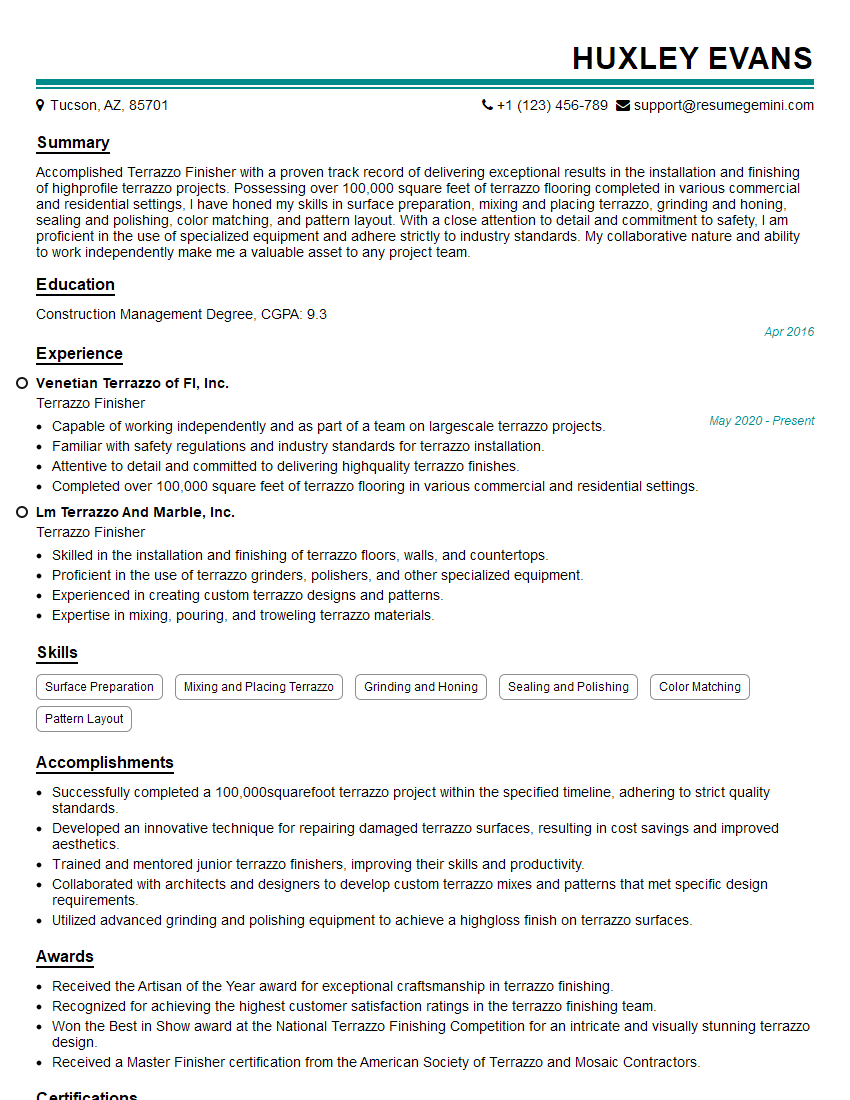
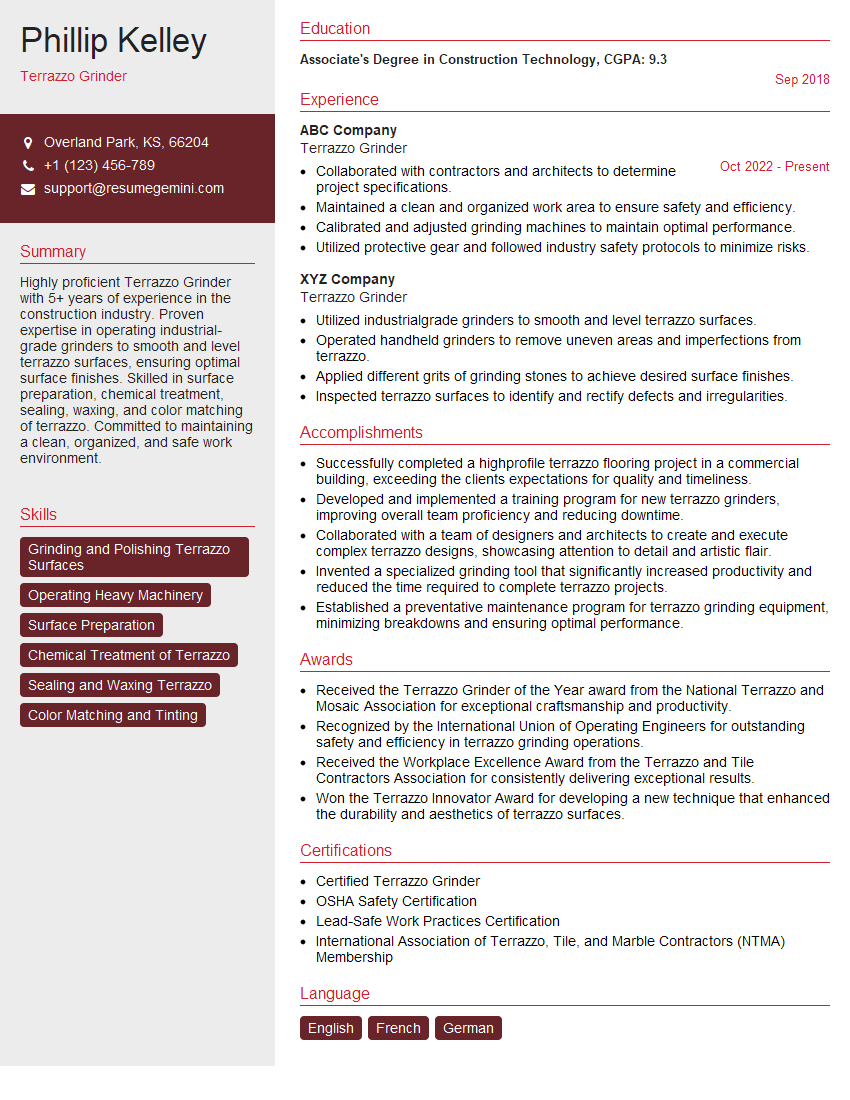
Mastering the intricacies of terrazzo flooring positions you for exciting career advancements in a growing industry. A strong understanding of these key areas will significantly improve your interview performance. To maximize your job prospects, create an ATS-friendly resume that showcases your skills and experience effectively. ResumeGemini is a trusted resource that can help you build a professional and compelling resume tailored to the specific requirements of terrazzo flooring positions. Examples of resumes tailored to the Terrazzo Flooring industry are available for your review, guiding you in crafting a standout application.


Explore more articles
Users Rating of Our Blogs
Share Your Experience
We value your feedback! Please rate our content and share your thoughts (optional).
What Readers Say About Our Blog
hello,
Our consultant firm based in the USA and our client are interested in your products.
Could you provide your company brochure and respond from your official email id (if different from the current in use), so i can send you the client’s requirement.
Payment before production.
I await your answer.
Regards,
MrSmith
hello,
Our consultant firm based in the USA and our client are interested in your products.
Could you provide your company brochure and respond from your official email id (if different from the current in use), so i can send you the client’s requirement.
Payment before production.
I await your answer.
Regards,
MrSmith
These apartments are so amazing, posting them online would break the algorithm.
https://bit.ly/Lovely2BedsApartmentHudsonYards
Reach out at [email protected] and let’s get started!
Take a look at this stunning 2-bedroom apartment perfectly situated NYC’s coveted Hudson Yards!
https://bit.ly/Lovely2BedsApartmentHudsonYards
Live Rent Free!
https://bit.ly/LiveRentFREE
Interesting Article, I liked the depth of knowledge you’ve shared.
Helpful, thanks for sharing.
Hi, I represent a social media marketing agency and liked your blog
Hi, I represent an SEO company that specialises in getting you AI citations and higher rankings on Google. I’d like to offer you a 100% free SEO audit for your website. Would you be interested?