Are you ready to stand out in your next interview? Understanding and preparing for Understanding of pattern alteration and fit assessment interview questions is a game-changer. In this blog, we’ve compiled key questions and expert advice to help you showcase your skills with confidence and precision. Let’s get started on your journey to acing the interview.
Questions Asked in Understanding of pattern alteration and fit assessment Interview
Q 1. Explain the process of grading a pattern.
Grading a pattern involves systematically increasing or decreasing its size to create different sizes. Imagine you have a perfectly fitting size medium shirt pattern. Grading would allow you to create a size small or a size large from that base pattern. This is crucial for mass production and offering a wider range of sizes to consumers.
The process typically involves scaling the pattern pieces proportionally. This often uses a specific grading ruler or specialized software. Individual pattern pieces, like the sleeve or bodice, are each adjusted according to the size difference. For example, if you’re grading up from a size medium to a large, you might add 1/2 inch to each seam allowance across the bust, back width, etc., according to established grading rules specific to the pattern company and style of garment.
Advanced grading might also consider changes in the proportions of the body as size increases. For instance, the armhole might need a different adjustment than the sleeve length to maintain a balanced and aesthetically pleasing fit across sizes.
Q 2. Describe different methods for adjusting a pattern for ease.
Adjusting a pattern for ease involves adding extra fabric to allow for comfort and movement. Ease is different from seam allowance (which is added for sewing) and is crucial for a garment’s final fit and feel.
- Full Ease: This is the most generous amount of ease, commonly found in loose-fitting garments where fabric drapes freely. Think of oversized sweaters or flowing dresses.
- Ease at Specific Points: This involves adding ease only in areas needing more room for movement like bust, hips, or biceps. This is more typical for fitted garments. You might add 1-2 inches to the bust curve on a shirt pattern to allow for ease.
- Differential Ease: This method adds varying amounts of ease to different areas of the pattern. For instance, you’d add more ease to the bust and hips of a dress but less in the waist. This yields a more flattering and sophisticated fit.
The amount of ease added depends on the garment type, fabric, and desired fit. A structured woven fabric will require less ease than a drapey knit fabric. The method chosen also depends on design preference and intended fit.
Q 3. How do you identify and correct a pattern that results in a garment too tight across the bust?
A garment too tight across the bust indicates the pattern’s bust area is too small. The solution lies in expanding this area.
- Identify the Problem Area: Pin the muslin to yourself, noting where it feels tight. This is usually near the bust point and around the armhole.
- Make Adjustments to the Pattern: Add seam allowance to the center front and the side seams of the bodice pattern pieces. You’ll likely want to add more at the bust point. The exact amount depends on how tight the garment is. Begin with small increments (1/4 – 1/2 inch) and test in a new muslin.
- Consider a Full Bust Adjustment: For significant adjustments, a full bust adjustment might be needed. This involves reshaping the entire bust area of the pattern, rather than just adding at the seams. This technique involves adding a dart or reshaping the neckline.
- Retest and Refine: After making changes, create a new muslin to ensure the adjustment is correct. Repeat adjustments until a comfortable fit is achieved.
Q 4. How would you adjust a pattern to accommodate a swayback posture?
A swayback posture (where the lower back curves inward) requires lengthening the back bodice pattern. If not compensated, the garment will ride up in the back and cause discomfort.
- Identify the Swayback: This is usually visually apparent, but a full-length mirror and a friend’s help is invaluable. Measure from the high point of the shoulder to the waist in the front and the back. This difference reveals the extent of the swayback.
- Adjust the Pattern: To accommodate a swayback, lengthen the back bodice. This often involves extending the center back seam. Divide the difference between the front and back measurements and add that amount to the center back below the waistline. Gradually taper the added length upwards toward the waist to maintain a natural curve.
- Check the Armholes: The armhole on the back pattern might also need adjustments to maintain a balanced and smooth fit after lengthening the center back. It might need to be slightly lowered.
- Test and Refine: Make a new muslin with your adjustment and try it on. You’ll likely need several iterations before it fits properly.
Q 5. Explain the difference between ease and tolerance in pattern making.
Ease and tolerance are often confused, but they serve different functions in pattern making. Ease refers to the extra fabric added for comfort and movement, while tolerance refers to the amount of leeway permitted during construction or fit.
Ease: Added to the pattern before cutting. It allows the garment to fit comfortably without being too tight or restrictive. Ease varies depending on garment style, fabric, and the desired fit (e.g., close-fitting, semi-fitted, or loose-fitting).
Tolerance: This accounts for variations in sewing techniques, fabric shrinkage or stretch, and minor discrepancies during pattern construction. It’s essentially a buffer to avoid making the garment too small. This might mean adding 1/4 to 1/2 inch to seam allowances in high-stress areas or areas using stretchy fabric.
Think of it this way: ease is for comfort, tolerance is for error mitigation.
Q 6. Describe the process of fitting a muslin and making adjustments.
Fitting a muslin is a crucial step in patternmaking. It allows you to identify and correct fitting issues before using your expensive and beautiful final fabric. A muslin is a test garment made from inexpensive fabric to check the fit and pattern alterations.
- Construct the Muslin: Sew the muslin according to your pattern instructions. Ensure proper seam allowances and finishings (although they don’t need to be perfect for fitting).
- Pin and Try On: Put on the muslin and carefully pin areas that are too tight or loose. Use a mirror to check all angles. Ask a friend to help if needed.
- Mark Adjustments: Once all areas are pinned, carefully remove the muslin and mark the adjustments directly on the muslin. Transfer these markings onto your original pattern.
- Make Pattern Adjustments: Based on the pin markings, alter the pattern piece. This might include adding or removing fabric, making adjustments to curves, or shifting seams.
- Repeat: Repeat this process until your muslin fits properly. It might take several iterations. Each new muslin will be an improvement.
Remember to pay close attention to detail and mark all adjustments clearly. This process often involves several iterations of muslins, and patience is crucial.
Q 7. How do you address a pattern that causes pulling or bagging at the seams?
Pulling or bagging at the seams indicates fitting issues that need correcting. Pulling implies the fabric is too tight, while bagging means it’s too loose.
- Pulling: This usually signifies an area with not enough ease or possibly incorrect shaping. You need to add ease, often in small increments (1/4 inch at a time), to the seam allowance of the affected pattern piece, particularly at the areas of pulling. You might also need to check for shaping issues. If the pull occurs in a curve, you might need to adjust the curve of the pattern.
- Bagging: This usually means there is too much ease or the pattern needs to be reshaped. You need to reduce the seam allowance of the affected pattern piece, or consider adjusting the shape of the pattern piece to better conform to the body curve.
To identify the precise location, pay close attention to where the pulling or bagging occurs and adjust accordingly. Sometimes, a combination of both pulling and bagging will be present on the same garment.
Always test your adjustments with new muslins. A well-fitting garment avoids both pulls and bags, resulting in a well-tailored and flattering appearance.
Q 8. How do you adjust a sleeve cap to improve fit?
Adjusting a sleeve cap for a better fit involves understanding its components: the cap height, the ease, and the sleeve head shape. A poorly fitting sleeve often presents as too tight, too loose, or with unwanted wrinkles. The goal is to create a smooth, comfortable fit that follows the natural contours of the arm.
Common Adjustments:
- Reducing Cap Height: If the sleeve cap is too high and bunches at the top of the arm, you’ll need to lower the cap. This is achieved by reducing the depth of the sleeve cap curve along the apex. You can do this by taking small amounts off the apex and easing them out along the armscye curve.
- Increasing Cap Height: If the sleeve cap is too low and wrinkles at the elbow, you’ll need to increase the cap height. This is done by adding depth to the sleeve cap curve. This will make the sleeve sit higher on the arm.
- Adjusting Ease: Too much ease (extra fabric) leads to wrinkles; too little creates tightness. Adjusting the ease involves adding or removing fabric from the sleeve cap curve, carefully distributing any changes.
- Reshaping the Sleeve Head: The sleeve head is the part that connects to the armhole. An ill-fitting sleeve head often causes pulling or bunching at the shoulder seam. We can reshape the sleeve head by making adjustments at the top of the sleeve cap, either widening or narrowing it to match the armhole better.
Practical Example: Imagine a sleeve cap that’s too tight across the upper arm. I would first assess if the issue is primarily cap height or ease. If it’s ease, I’d carefully add small amounts of fabric evenly across the curve of the sleeve cap. If it’s cap height, I would lower the apex slightly and redistribute the fabric evenly. Multiple adjustments are often necessary and require multiple fittings.
Q 9. What are the common fit issues encountered in women’s apparel?
Women’s apparel fit issues are diverse, reflecting the wide range of body types and preferences. Common problems include:
- Bust Fit: Too tight or too loose across the bust, resulting in pulling or gaping.
- Waist Fit: Issues with waist circumference, often too tight or too loose, impacting the overall silhouette and comfort.
- Hip Fit: Similar to waist fit, hip circumference can be too tight, restricting movement, or too loose, resulting in a poor drape.
- Shoulder Fit: Uneven shoulder seams, too tight or too wide shoulders.
- Sleeve Fit: Wrinkles, puckering, or tightness in the sleeves.
- Length issues: Tops, dresses, or jackets being too short or too long.
- Across back width: Too tight or loose across the upper back, affecting garment drape and comfort.
Often, these problems are intertwined. For example, a tight bust can cause pulling in the shoulder or back.
Q 10. What are the common fit issues encountered in men’s apparel?
Men’s apparel presents a different set of fit challenges, often related to shoulder width, chest, and overall body proportions. Common issues include:
- Shoulder Fit: Shoulders that are too narrow or too wide, creating a mismatched silhouette and discomfort.
- Chest Fit: Tightness across the chest, especially common in more muscular builds.
- Sleeve Length and Width: Sleeves that are too short, too long, too tight, or too wide.
- Neck Fit: A collar that’s too tight or too loose, impacting comfort and aesthetics.
- Waist and Hip Fit: Often less crucial than in women’s wear but still important for a proper fit. Issues can manifest as tightness or excess fabric in these areas.
- Overall Length: Similar to women’s apparel, shirts, jackets, and trousers require the correct length.
The simpler construction of many men’s garments can make some fit issues more apparent, as there’s less draping or shaping fabric to hide imperfections.
Q 11. How do you interpret fit comments from a fit model?
Interpreting fit comments from a fit model requires careful listening and observation. A skilled fit model provides valuable qualitative information that is difficult to obtain through measurements alone.
Effective interpretation involves:
- Active Listening: Pay attention not only to what they say, but how they say it. Tone and body language provide crucial context.
- Specificity: Encourage precise descriptions of the problems. Instead of ‘it’s tight’, seek ‘it’s tight across the bust, specifically on the right side’.
- Location: Pinpoint the exact location of issues, using garment markings as references.
- Visualization: Mentally picture the problem they describe to better understand the correction needed.
- Multiple Fittings: Often, multiple fittings are required to refine the pattern. Each fitting provides additional data.
Example: If a model says, ‘The sleeve cap pulls at the back of the armhole,’ it tells you the sleeve cap height needs adjusting and is probably too high in that area. You may need to lower the cap in the back.
Q 12. Explain how to adjust a pattern for different body shapes (e.g., full bust, broad shoulders).
Adjusting patterns for different body shapes involves understanding how to manipulate the pattern pieces to accommodate varying measurements. Full busts and broad shoulders require different adjustments.
Full Bust Adjustment:
- Increase Bust Width: Add width to the front bodice pattern piece, proportionally increasing both sides from the center front.
- Raise Bust Darts: Raise the bust darts to accommodate a larger bust point. This moves the fullest part of the garment to match the body’s shape.
- Adjust Neckline: The neckline may require adjustment to account for the increased bust width.
Broad Shoulders Adjustment:
- Widen Shoulder Seam: Increase the shoulder width of the bodice and sleeve pattern pieces proportionally.
- Adjust Armhole: The armhole might require a slight adjustment in height and shape to ensure a comfortable fit over the shoulders.
- Sleeve Cap: The sleeve cap may need adjustment to correspond to the wider shoulder.
These alterations are typically done through a series of small adjustments, refined through multiple fittings. Careful consideration of the body’s shape is vital.
Note: These are general guidelines. The specific adjustments needed depend on the degree of variation from the standard size and the style of the garment.
Q 13. Describe your experience using different types of patternmaking software.
My experience with patternmaking software includes extensive use of both industry-standard and specialized programs. I am proficient in using CAD software like Optitex, Lectra, and Gerber Accumark for creating, grading, and manipulating patterns.
Specific Experiences:
- Optitex: I’ve used Optitex for its efficient grading capabilities and its ability to create complex designs. It’s a strong choice for high-volume production.
- Lectra: Lectra is ideal for precision and flexibility when developing patterns for a wide variety of garment types and sizes. Its collaborative tools benefit team workflow.
- Gerber Accumark: This software is excellent for precision pattern making and marker making and offers powerful functionalities for streamlining pattern production.
I also have familiarity with simpler, more design-focused software, helping me create sketches and refine technical drawings. I find that my proficiency across these different programs enables me to select the best tool for each particular task.
Q 14. How do you create a sloper?
A sloper, also known as a basic block, is a foundational pattern piece that serves as the basis for designing and drafting various garments. It’s essentially a flat representation of the body’s basic shape, reflecting the essential curves and proportions.
Creating a sloper involves a meticulous process:
- Accurate Measurements: Taking precise body measurements is crucial. This involves measuring circumference, length, and other key dimensions.
- Drafting the Pattern: Using standard drafting methods or software, a base pattern is created based on the measurements.
- Muslin Mock-Up: A muslin (cheap fabric) mock-up is constructed from the drafted pattern. This allows for adjustments based on the actual fit on a body form or a live model.
- Fitting and Adjustments: This is a crucial step. Based on observations during the fitting, adjustments are made to the muslin and then the pattern. This process is iterative, and several fittings might be required.
- Final Pattern: Once the fit is satisfactory, the final pattern is drafted, and it’s the sloper, forming the foundation for more complex patterns.
It’s critical to understand the principles of body proportion, ease, and balance when creating a sloper. A well-made sloper ensures consistency in garment design and fit across various styles and sizes.
Q 15. How do you adjust a neckline for improved fit?
Neckline adjustments are crucial for a flattering and comfortable fit. The approach depends on the specific issue – too high, too low, too tight, or too wide. For example, if a neckline is too tight, easing the neckline curve is a common solution. This involves lengthening the neckline edge of the pattern piece, ensuring the increase is distributed smoothly. This prevents pulling across the bust and shoulders. Conversely, if the neckline is too low or gapey, you would reduce the neckline’s length. This can involve taking small amounts off at strategic points, such as the shoulder seams, or taking a consistent amount off all along the curve. It’s important to test fit and adjust in small increments to achieve the perfect fit.
Example: If a V-neck is too wide, I’d pinch out excess fabric at the center front and redraw the neckline curve, preserving the V shape but reducing its overall width. The change would then be transferred to the pattern piece.
Practical Application: When working with a client, I’ll always conduct a thorough fitting, observing the drape and fit of the neckline before determining the necessary alterations. I’ll explain the process to the client to ensure they understand the changes being made and why.
Career Expert Tips:
- Ace those interviews! Prepare effectively by reviewing the Top 50 Most Common Interview Questions on ResumeGemini.
- Navigate your job search with confidence! Explore a wide range of Career Tips on ResumeGemini. Learn about common challenges and recommendations to overcome them.
- Craft the perfect resume! Master the Art of Resume Writing with ResumeGemini’s guide. Showcase your unique qualifications and achievements effectively.
- Don’t miss out on holiday savings! Build your dream resume with ResumeGemini’s ATS optimized templates.
Q 16. How do you adjust a dart to improve fit?
Dart manipulation is fundamental to shaping a garment and achieving a proper fit. Darts are used to create curves and shape fabric to the body. Adjustments depend on whether the garment is too tight, too loose, or pulling in the wrong area. If a garment is pulling at the bust, for instance, I might need to increase the bust dart. This is done by extending the dart length and carefully shifting the apex of the dart to provide more room. Conversely, if the bust area is too baggy, I’d reduce the dart length.
Example: A common issue is a front bodice that’s too full. To remedy this, I’d reduce the depth of the bust dart by pivoting the dart point, reducing the fabric in that area while proportionally re-shaping the dart to maintain the curve. Similarly, shoulder darts are adjusted to fine-tune shoulder fit – a too-tight shoulder might need the shoulder dart to be slightly lengthened or re-positioned.
Practical Application: I use this skill regularly when tailoring suits or dresses, adjusting darts to achieve a clean, flattering silhouette that follows the client’s natural curves and posture. It’s a crucial skill for creating truly customized garments.
Q 17. What are the typical measurements taken during a fit session?
A thorough fit session involves a series of crucial measurements to assess the garment’s fit and guide alterations. These typically include:
- Full Bust, High Bust, and Underbust: To assess bust fit and dart placement.
- Waist Circumference and Waist Height: To determine waist placement and fit.
- Hip Circumference: To check hip fit.
- Shoulder Width (across back and across front): To ensure proper shoulder fit and balance.
- Shoulder Length: For accurate sleeve placement.
- Sleeve Length and Girth: For comfortable and well-fitting sleeves.
- Back Neck to Waist, Back Waist to Hip, Front Neck to Waist, Front Waist to Hip: Provide vertical dimension and balance across the garment.
- Across Back and Across Shoulder Width (across back and front): To determine the balance and drape of the garment.
- Neck Circumference: For neckline fit.
- Full length measurements (e.g., center back, center front): To gauge overall garment length.
In addition to these standard measurements, I might also take additional ones depending on the garment’s style and the client’s individual needs. This could include sleeve cap height or specific measurements across curves.
Q 18. Describe your experience working with different fabric types and how this impacts pattern alterations.
Fabric type significantly influences pattern alterations. Different fabrics behave differently—some drape well, others hold their shape rigidly. Understanding these properties is essential.
- Woven fabrics (e.g., cotton, linen, silk): These often require precise alterations. They don’t stretch as much, so any changes need to be carefully measured and applied. A slight change in a seam allowance can have a noticeable impact on the final fit.
- Knit fabrics (e.g., jersey, rib knit): Knit fabrics have more give and are more forgiving. Alterations can be less precise, but still require consideration of fabric stretch. You need to account for the fabric’s drape and potential for distortion during wear.
- Stretch fabrics: Stretch fabrics need accurate assessment of recovery and stretch properties. Alterations might involve a combination of adjustments to the pattern and ease adjustments in cutting to accommodate the stretch.
Example: When working with a stiff fabric like linen, I might need to add extra seam allowance to accommodate its lack of drape and prevent the finished garment from looking too tight. With a drapey fabric like silk charmeuse, I might need to ensure the pattern is carefully adjusted to prevent excessive wrinkling or sagging. A very stretchy fabric, like a scuba knit, requires a different approach to ensure the pattern accommodates its drape and avoids twisting or pulling.
Q 19. How do you document pattern alterations for future reference?
Accurate documentation is paramount to ensure that future projects using the altered pattern proceed smoothly. I meticulously document all alterations using a combination of methods:
- Notation directly on the pattern: I use a pen to clearly mark all adjustments, including the amount changed (e.g., “+ 1/2” added to sleeve length”), and their location. This ensures that all changes are immediately visible upon revisiting the pattern.
- Detailed written notes: I maintain a written log for every pattern alteration, including date, garment style, fabric type, and a complete list of all adjustments with accompanying sketches and measurements. This provides a comprehensive record.
- Digital record-keeping: I photograph the original and altered patterns. A digital format facilitates easy access and comparison between the original and altered versions of the pattern. I also sometimes use digital pattern-making software which allows for detailed pattern documentation and alteration history.
Example: I might write “Increased center back seam by 1 inch to accommodate fuller back” on the pattern itself and then further document it with a sketch highlighting the adjustment in my log book.
Q 20. What are the key considerations when altering a pattern for different sizes?
Altering a pattern for different sizes requires a careful understanding of body proportions. Simply scaling up or down a pattern will usually lead to ill-fitting results because the proportions of different sizes don’t scale uniformly. Key considerations include:
- Proportional changes: Different body parts grow at different rates. Adjustments need to take this into account. For example, increasing the bust size by two inches may necessitate a smaller increase in the hip size. Changes may need to be made independently on the front and back pattern pieces.
- Seam allowances: Seam allowances need to be consistent across sizes to avoid inconsistencies in fit.
- Grading: Grading is the process of scaling a pattern to multiple sizes. Professional grading tools or software are often used to ensure that the proportions are correctly scaled across sizes.
- Drafting vs. slopers: For multiple sizes, using a sloper (a basic pattern block) and drafting from it provides more consistent results across size ranges than simply scaling an existing pattern.
Example: When grading a dress pattern from a size 8 to a size 16, I wouldn’t simply multiply all measurements by two. Instead, I’d adjust individual pattern pieces based on their purpose, considering the added volume required in the bust, waist, and hips. I would always test fit and refine.
Q 21. Explain how you would correct a pattern that results in a garment that is too long or too short.
Adjusting garment length involves altering the pattern pieces responsible for the length: usually the bodice and skirt (for dresses) or the pants/trousers (for bottoms).
Too Long: To shorten a garment, I’d reduce the length of the relevant pattern pieces by the desired amount. This is best done at the hemline, ensuring the adjustments are balanced to maintain the garment’s overall proportions. If only the front or back is too long, adjust that piece specifically.
Too Short: Lengthening a garment is achieved by adding to the relevant pattern pieces. Add fabric at the hemline. For a more polished look, especially on fitted garments, the additional length should be blended into the existing seamline to prevent a sudden break in the silhouette.
Example: If a skirt is too long, I’d mark the desired length on a test garment and then transfer this to the pattern. I would carefully cut the skirt pattern piece to the new length, preserving the shape of the hemline. To lengthen a shirt tail, I might add to the tail portion of the pattern piece by extending the hemline, then adding seam allowances to accommodate the new length. It is essential to ensure that the added length doesn’t affect the garment’s fit or alignment.
Practical Application: When working with a client and a garment is too long, I may do a ‘pinch test’, lightly pinching out the excess length to see how it impacts the garment’s drape and fit before transferring these changes to the pattern.
Q 22. How do you handle pattern adjustments required for different body proportions?
Handling pattern adjustments for diverse body proportions involves a deep understanding of body types and how they affect garment fit. We can’t just use a ‘one-size-fits-all’ approach. Instead, we meticulously analyze the body measurements – bust, waist, hip, shoulder width, and back width – comparing them to the pattern’s measurements. Discrepancies indicate areas requiring alteration.
For example, a client with a high bust and full hips would require adjustments to the bodice and skirt blocks. We’d likely need to raise the bust dart and adjust the hip area by adding width to accommodate the fuller hips. This might involve a full hip adjustment where we add or remove fabric wedges at the side seams to create a better shape. Conversely, a client with a swayback requires adjustments to the back bodice to alleviate pulling and create a smooth fit. This often involves adding length to the back bodice below the waist.
The process often involves creating a sloper (a basic pattern block) tailored to their unique measurements if significant alterations are needed. From this personalized sloper, we can construct a more accurate pattern for any garment.
Q 23. Describe a challenging fit issue you encountered and how you resolved it.
One particularly challenging fit issue involved a client with a prominent swayback and a very high bust. The standard pattern kept pulling across the upper back and gaping at the bust. Simply raising the bust dart wasn’t sufficient.
My solution involved a multi-step approach: Firstly, I performed a full back adjustment, adding length to the lower back section of the bodice pattern piece below the waistline to accommodate the swayback. This relieved the pulling at the back. Next, I re-evaluated the bust dart placement. Instead of just raising it, I adjusted its angle and depth to work in harmony with the swayback adjustment. This ensured the bust area fit smoothly without creating excess fabric or pulling. Finally, I made minor adjustments to the shoulder seams to ensure proper shoulder drape. I created a muslin fitting sample at each stage to check for correct fit and make further fine-tuning.
The result was a perfectly fitting garment that showcased the client’s figure beautifully and also emphasized the garment’s intended design features. The key was a methodical approach, focusing on understanding the underlying cause of the fit problem and tackling each aspect systematically. This emphasizes the importance of careful observation, iterative fitting, and a flexible approach to pattern alteration.
Q 24. What tools and equipment do you typically use for pattern alteration?
My pattern alteration toolkit is a blend of traditional and modern tools. This includes:
- Pattern shears: Sharp shears are essential for clean, precise cutting.
- Rotary cutter and mat: For fast and accurate cutting, especially on larger pattern pieces.
- French curve: For shaping curves and creating smooth lines.
- Measuring tape: Accurate measurement is crucial for effective alteration.
- Tailor’s chalk or marking pen: For precise marking of alterations.
- Tracing wheel and paper: To create copies of altered patterns.
- Seam ripper: For correcting errors during muslin fitting.
- Ruler and square: For precise measurements and straight lines.
- Pattern weights: To keep the pattern pieces flat while cutting.
- Muslin fabric: For creating test garments to check the fit before cutting into expensive fabrics.
Digital tools like CAD software can also be incorporated for more advanced pattern making and alteration, offering precision and efficiency. This software allows for precise adjustments and virtual fitting.
Q 25. How do you ensure accuracy and consistency in pattern alterations?
Accuracy and consistency are paramount in pattern alteration. My approach involves:
- Precise Measurements: Always take accurate measurements and use a consistent measuring technique.
- Detailed Notations: Carefully note all alterations made on the pattern, including the location and amount of adjustment. This ensures reproducibility and aids in future adjustments.
- Test Garments (Muslins): Creating and fitting muslin test garments is crucial. It allows for iterative fitting and adjustment before cutting into final fabric.
- Graded Alterations: If altering a size, it’s important to grade alterations correctly to maintain pattern proportions in all sizes.
- Symmetry: Always double-check that alterations are symmetrical. Unless a design choice requires asymmetry.
- Pattern Notches and Markings: Utilize notches and markings to maintain accurate placement of design features during alteration.
By maintaining meticulous documentation and using a methodical approach, we can ensure consistent and accurate alterations.
Q 26. Describe your understanding of different fitting techniques.
My understanding of fitting techniques includes various methods. It’s not a one-size-fits-all approach. The choice of technique depends on the garment type, fabric, and the specific fit issues.
- Basic Fitting: This involves assessing the garment’s fit on a dress form or the client, identifying areas needing alteration, and making adjustments directly to the muslin or pattern.
- Full-Bust Adjustment (FBA): A technique to increase the bust area of a pattern without altering other areas.
- Small-Bust Adjustment (SBA): Conversely, this adjustment reduces the bust area.
- Swayback Adjustment: To accommodate a pronounced curve in the lower back.
- Shoulder Adjustment: Adjustments to the shoulder slope and width.
- Hip Adjustment: For adjusting the hip area of the garment.
- Length Adjustment: Adjusting the overall length or the length of specific parts of the garment.
Effective fitting involves a blend of these techniques, combined with intuition and experience, to create a perfect fit.
Q 27. How do you balance aesthetic design with functional fit?
Balancing aesthetic design and functional fit requires a nuanced approach. It’s not always about just getting the measurements right; it’s about integrating the fit into the overall design concept.
For example, a fitted bodice might require dart manipulation to achieve a flattering silhouette without compromising comfort. A too-tight fit might ruin the intended drape of a fabric, making the garment unwearable, despite looking elegant on paper. Understanding the fabric’s drape is key here. A stiffer fabric can tolerate more shaping than a fluid one. Likewise, dart manipulation can shift a design feature’s intended impact, so we need to carefully consider design elements, such as seams and pockets.
I often utilize draping techniques to explore different options and visualize the outcome. Sometimes, a small design change, such as moving a seam or adjusting the placement of a design detail, can significantly improve both fit and appearance. The process involves constant iteration and refinement, blending technical skill with artistic vision.
Q 28. Explain the importance of understanding fabric drape and how it affects pattern alteration.
Understanding fabric drape is absolutely critical. Fabric drape refers to the way a fabric hangs and falls. Different fabrics drape differently. A stiff fabric like linen will hold its shape and require less alteration for a structured look, while a fluid fabric like silk will need different treatment to create a suitable silhouette.
For example, when working with a lightweight, draping fabric like chiffon, altering the pattern to create a more fitted style may result in unwanted wrinkles or pulling. In this case, you might choose to rely more on design details and seaming to achieve the desired look, rather than drastic pattern changes. Conversely, a heavier fabric may require more significant adjustments to accommodate ease and avoid distortion. We might need to account for the weight of the fabric pulling the garment down during the fitting process.
Therefore, the pattern alterations must be tailored to the fabric’s drape characteristics to ensure the final garment looks as intended and fits comfortably.
Key Topics to Learn for Understanding of Pattern Alteration and Fit Assessment Interview
- Pattern Manipulation Techniques: Understanding basic pattern adjustments like adding or removing fullness, altering sleeve length and cap height, and adjusting darts for better fit.
- Body Measurement and Fit Analysis: Mastering accurate body measurements and interpreting them to identify areas needing alteration. Knowing how to assess fit issues like gaping, pulling, or excess fabric.
- Grading and Sizing: Comprehending the principles of grading patterns to create different sizes and adapting patterns for various body types.
- Muslin Mock-ups: Understanding the importance of creating and using muslin mock-ups for testing pattern alterations before cutting into final fabric.
- Fabric Considerations: Recognizing how fabric drape and properties influence pattern alterations and fit. Adapting techniques for different fabrics (e.g., woven vs. knit).
- Advanced Alterations: Exploring more complex adjustments like altering necklines, shoulders, and waistlines for a perfect fit. Understanding fitting adjustments for different body shapes and sizes.
- Problem-Solving Strategies: Developing a systematic approach to identify and resolve fit issues, including troubleshooting common fitting problems.
- Tools and Equipment: Familiarity with essential tools for pattern alteration, such as rulers, measuring tapes, French curves, and other relevant equipment.
Next Steps
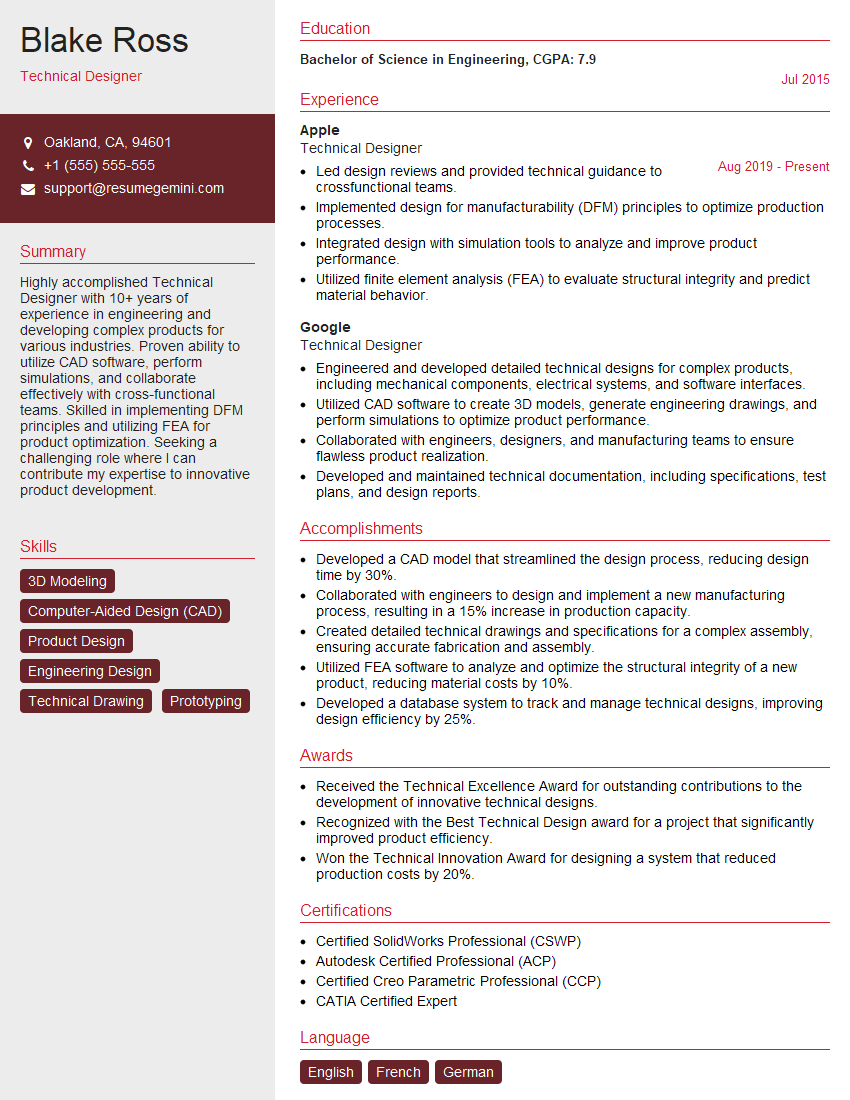
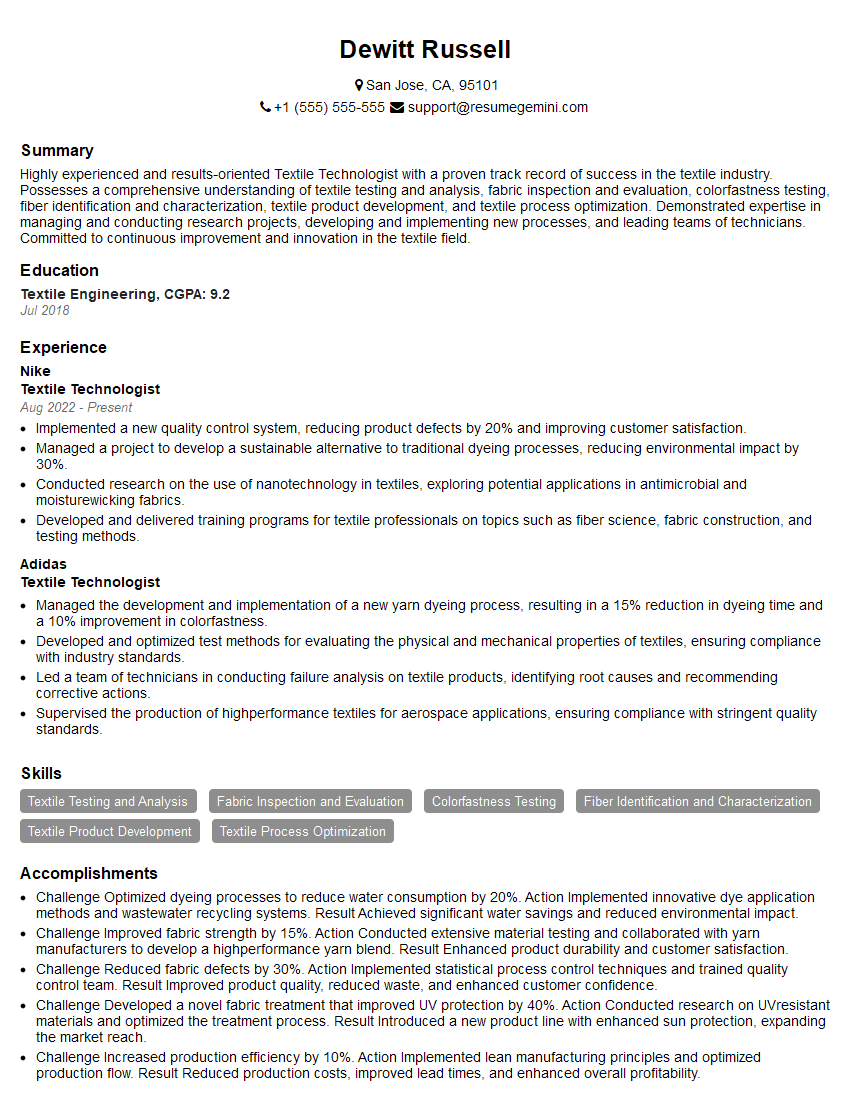
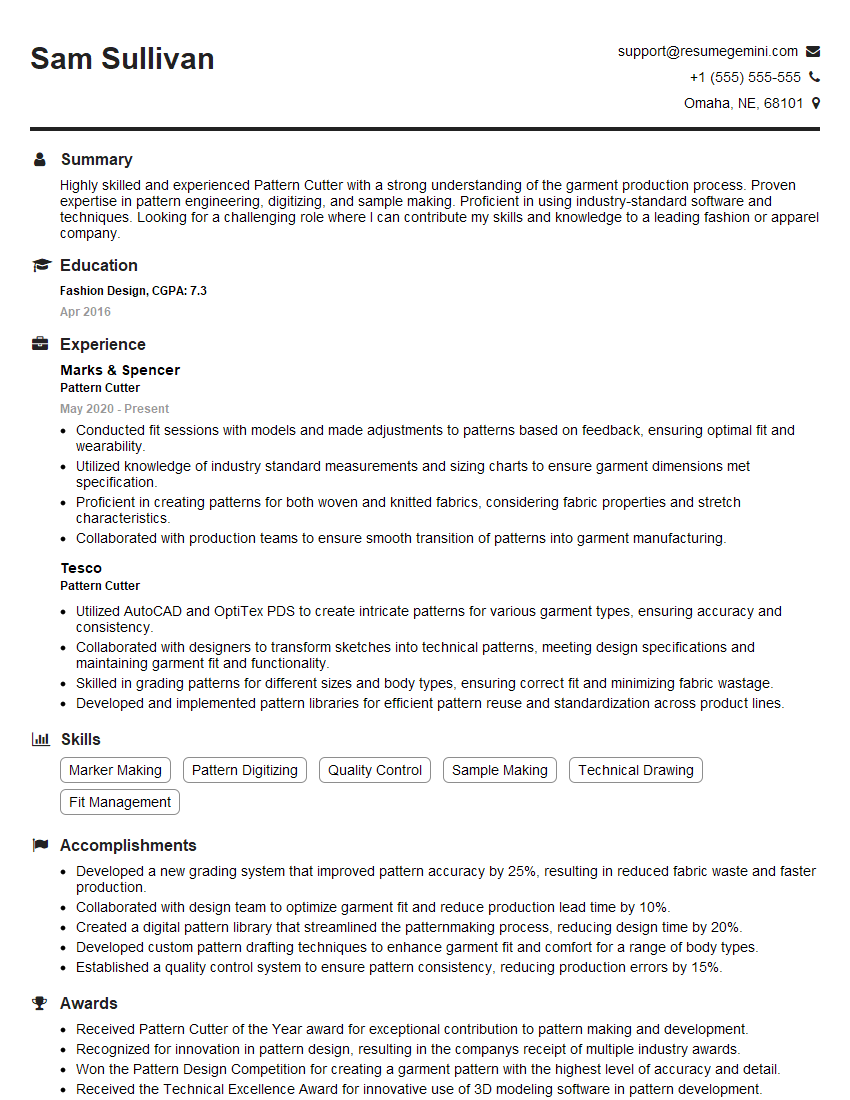
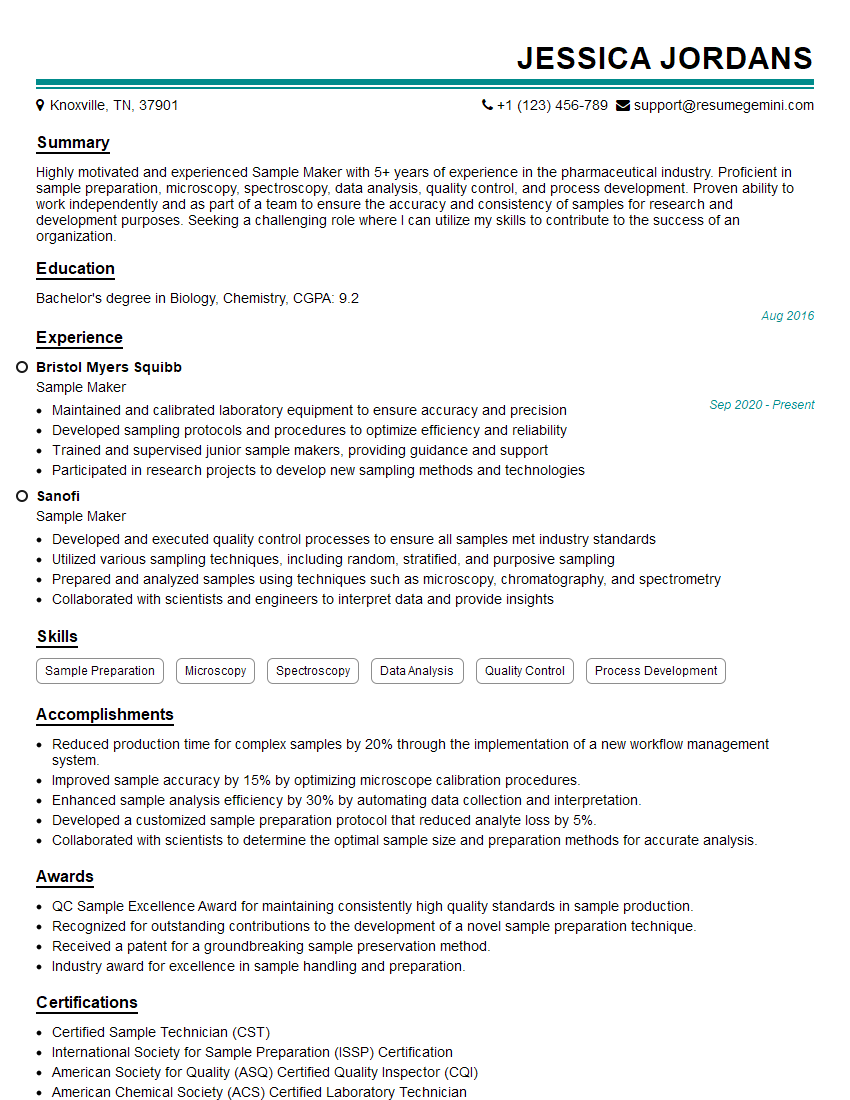
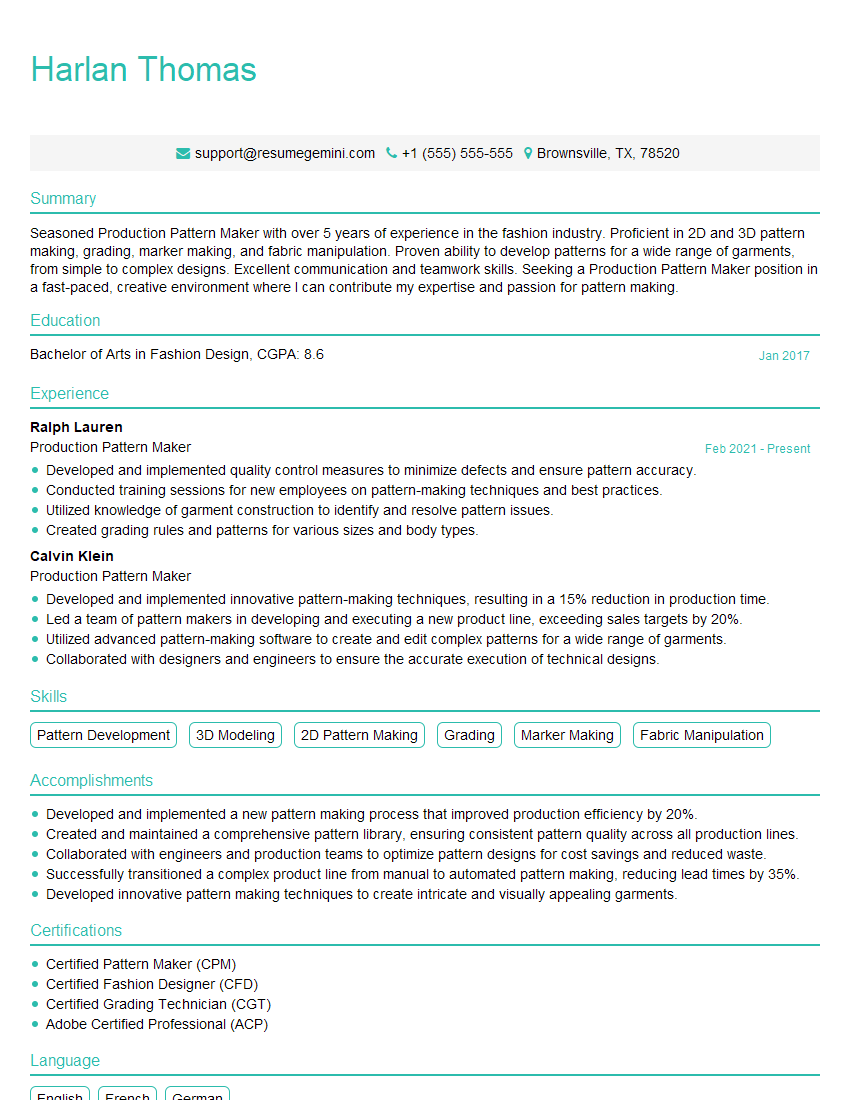
Mastering pattern alteration and fit assessment is crucial for career advancement in the fashion and apparel industry, opening doors to specialized roles and higher earning potential. A strong understanding of these skills demonstrates your expertise and attention to detail, making you a highly valuable asset to any team. To significantly increase your job prospects, create an ATS-friendly resume that effectively highlights your skills and experience. ResumeGemini is a trusted resource to help you build a professional and impactful resume that stands out. We provide examples of resumes tailored to showcasing expertise in Understanding of pattern alteration and fit assessment to guide you through the process.
Explore more articles
Users Rating of Our Blogs
Share Your Experience
We value your feedback! Please rate our content and share your thoughts (optional).
What Readers Say About Our Blog
hello,
Our consultant firm based in the USA and our client are interested in your products.
Could you provide your company brochure and respond from your official email id (if different from the current in use), so i can send you the client’s requirement.
Payment before production.
I await your answer.
Regards,
MrSmith
hello,
Our consultant firm based in the USA and our client are interested in your products.
Could you provide your company brochure and respond from your official email id (if different from the current in use), so i can send you the client’s requirement.
Payment before production.
I await your answer.
Regards,
MrSmith
These apartments are so amazing, posting them online would break the algorithm.
https://bit.ly/Lovely2BedsApartmentHudsonYards
Reach out at [email protected] and let’s get started!
Take a look at this stunning 2-bedroom apartment perfectly situated NYC’s coveted Hudson Yards!
https://bit.ly/Lovely2BedsApartmentHudsonYards
Live Rent Free!
https://bit.ly/LiveRentFREE
Interesting Article, I liked the depth of knowledge you’ve shared.
Helpful, thanks for sharing.
Hi, I represent a social media marketing agency and liked your blog
Hi, I represent an SEO company that specialises in getting you AI citations and higher rankings on Google. I’d like to offer you a 100% free SEO audit for your website. Would you be interested?