Unlock your full potential by mastering the most common Understanding of search engine optimization interview questions. This blog offers a deep dive into the critical topics, ensuring you’re not only prepared to answer but to excel. With these insights, you’ll approach your interview with clarity and confidence.
Questions Asked in Understanding of search engine optimization Interview
Q 1. Explain the difference between on-page and off-page SEO.
On-page and off-page SEO are two distinct but interconnected strategies for improving a website’s search engine rankings. Think of it like this: on-page SEO is optimizing what’s on your website, while off-page SEO is optimizing what’s around it.
- On-page SEO focuses on optimizing elements within your website itself. This includes factors like keyword optimization in title tags, meta descriptions, and header tags (H1-H6); improving website content quality and relevance; ensuring proper internal linking; optimizing images with alt text; and improving website speed and mobile-friendliness.
- Off-page SEO concentrates on building your website’s authority and reputation outside your website. Key activities include link building (acquiring backlinks from other reputable websites), social media marketing, brand mentions, and managing your online reputation.
For example, optimizing your product page with relevant keywords (on-page) and getting other websites to link to that product page (off-page) will work together to improve your search ranking for that specific product.
Q 2. What are the key factors influencing search engine rankings?
Search engine rankings are complex and influenced by many factors. Search engines like Google use sophisticated algorithms to determine which websites should appear at the top of search results for a given query. Some key factors include:
- Relevance: How well your website content matches the user’s search query.
- Authority: The trustworthiness and credibility of your website, often determined by the number and quality of backlinks.
- Technical SEO: Ensuring your website is easily crawlable and indexable by search engine bots (e.g., site speed, mobile-friendliness, proper XML sitemaps).
- User Experience (UX): How easy it is for users to navigate your website and find what they’re looking for (e.g., bounce rate, time on site).
- Content Quality: Providing valuable, original, high-quality content that satisfies user search intent.
- Mobile-Friendliness: Ensuring your website is responsive and displays well on all devices.
- Page Speed: A fast-loading website improves user experience and search engine ranking.
- Security (HTTPS): Having an SSL certificate ensures a secure connection.
It’s crucial to remember that no single factor guarantees top rankings. It’s a holistic process requiring optimization across all these elements.
Q 3. Describe your experience with keyword research tools and methodologies.
I have extensive experience using various keyword research tools and methodologies. My approach is data-driven and combines quantitative and qualitative research.
- Tools: I’m proficient with tools like SEMrush, Ahrefs, Moz Keyword Explorer, and Google Keyword Planner. Each tool has its strengths, and I select the most appropriate one based on the project’s needs.
- Methodologies: I employ a multi-faceted approach. It starts with understanding the client’s business goals and target audience. Then, I use keyword research tools to identify relevant keywords with high search volume and low competition. I also perform competitor analysis to identify keywords they’re ranking for, and I explore long-tail keywords (more specific phrases) to target niche audiences. Finally, I analyze the search intent behind keywords to ensure the content I create effectively addresses user needs.
- Example: For a client selling handmade jewelry, I wouldn’t just target ‘jewelry.’ Instead, I’d identify long-tail keywords like ‘handmade silver earrings for weddings’ or ‘unique gemstone necklaces for bridesmaids’ to target more specific searches with less competition.
My process ensures that the chosen keywords are relevant, have sufficient search volume, and are achievable within a reasonable timeframe.
Q 4. How do you perform a technical SEO audit?
A technical SEO audit is a systematic examination of your website’s technical aspects to identify and fix issues that hinder search engine crawlability, indexability, and overall performance. It’s like giving your website a thorough health check.
My process typically involves these steps:
- Crawling and Indexing Analysis: Using tools like Screaming Frog to crawl the website and identify broken links, crawl errors, and issues with sitemaps.
- Site Structure Analysis: Examining the website’s architecture to ensure it’s well-organized and easy for search engines to navigate.
- Performance Analysis: Using tools like Google PageSpeed Insights to assess website speed and identify areas for improvement (e.g., image optimization, caching).
- Mobile-Friendliness Check: Using Google’s Mobile-Friendly Test to ensure the site is responsive and displays well on mobile devices.
- Schema Markup Analysis: Checking for the implementation and correctness of schema markup to enhance search results.
- Security Analysis: Verifying the website has an SSL certificate and is secure (HTTPS).
- Log File Analysis: Reviewing server log files to identify crawl errors and other technical issues.
After identifying problems, I create a prioritized list of recommendations for improvement, outlining the severity of each issue and the steps required to fix it. This approach ensures that the most critical issues are addressed first, maximizing the positive impact on SEO.
Q 5. Explain the importance of schema markup for SEO.
Schema markup, also known as structured data, is crucial for SEO because it helps search engines better understand the content on your website. It’s like providing a detailed explanation to search engines, clarifying the meaning and context of your data. This leads to richer and more informative search results.
By using schema markup, you can add context to your content, improving the chances that your pages will appear as rich snippets in search results. These snippets include things like star ratings for products, author information for articles, or event details. This enriched information makes your listings stand out from the competition and increases click-through rates.
Example: Adding Product schema markup to an e-commerce product page can display the product’s name, price, rating, and image directly in search results, attracting more clicks.
Implementing schema markup involves adding specific code to your website’s HTML. While it doesn’t directly impact ranking algorithms, it significantly enhances your search result appearance and improves user experience.
Q 6. What are some common SEO mistakes you’ve encountered and how did you fix them?
Throughout my career, I’ve encountered several common SEO mistakes. One frequent issue is keyword stuffing—overusing keywords to manipulate search engine rankings. This can lead to penalties and harm your website’s reputation.
Another common problem is neglecting website speed optimization. Slow loading times negatively impact user experience and search rankings. I’ve addressed this by optimizing images, leveraging browser caching, and minimizing HTTP requests.
Poor internal linking is also a common mistake. It hinders search engine crawlers from accessing all pages on a website. To fix this, I strategize a strong internal linking structure that logically connects relevant pages.
In each case, the fix involved a combination of technical adjustments, content improvements, and a renewed focus on providing a great user experience. By addressing these issues systematically, I’ve seen significant improvements in website rankings and organic traffic.
Q 7. How do you measure the success of an SEO campaign?
Measuring the success of an SEO campaign requires tracking key performance indicators (KPIs) over time. It’s not just about looking at rankings; it’s about understanding how your efforts translate into business goals.
- Organic Traffic: Tracking increases in organic traffic from search engines using Google Analytics.
- Keyword Rankings: Monitoring the position of your website for target keywords using rank tracking tools.
- Conversion Rates: Measuring the percentage of website visitors who complete desired actions (e.g., purchases, sign-ups).
- Bounce Rate: Assessing the percentage of visitors who leave your website after viewing only one page.
- Time on Site: Measuring the average time visitors spend on your website.
- Backlinks: Tracking the number and quality of backlinks pointing to your website.
I use Google Analytics and other SEO tools to monitor these KPIs regularly. This allows for data-driven decisions and adjustments to the SEO strategy. Ultimately, the success of an SEO campaign is measured by its contribution to achieving the client’s business objectives, whether it’s increased brand awareness, lead generation, or sales.
Q 8. Explain the concept of Google’s algorithm updates and their impact on SEO.
Google’s algorithm updates are regular modifications to the complex set of rules Google uses to rank websites in its search results. These updates aim to improve the quality and relevance of search results, ensuring users find what they’re looking for efficiently. Think of it as Google constantly refining its recipe for serving up the best results. Some updates target specific areas, like combating spam or enhancing mobile-friendliness, while others are broader, impacting many aspects of SEO.
The impact on SEO is significant. A major algorithm update can drastically change a website’s ranking, potentially leading to increased or decreased traffic. For example, the ‘Panda’ update targeted low-quality content, penalizing sites with thin or duplicate content, while ‘Penguin’ focused on unnatural link building. Understanding and adapting to these updates is crucial for maintaining a strong online presence. SEO professionals need to stay vigilant, monitoring changes and adjusting their strategies accordingly to keep their clients’ websites ranking well.
Q 9. How do you handle duplicate content issues?
Duplicate content refers to substantially similar content appearing on multiple URLs. This confuses search engines, leading to diluted ranking power and potentially penalties. There are several ways to handle this:
- Canonicalization: Using the
rel="canonical"tag within the<head>section of your HTML, you specify the preferred version of a page. This tells Google which page to index, preventing duplicate content issues. - 301 Redirects: For truly duplicate pages that shouldn’t exist independently, a 301 redirect permanently points one URL to another, consolidating the ranking power. For example, if you have
example.com/pageandexample.com/page/index.html, redirect the latter to the former. - Content Consolidation: If you have multiple pages with slightly different content, consolidate the information onto a single, comprehensive page. This creates a richer, more valuable resource for users.
- Noindex Tag: For pages that are genuinely redundant and should not be indexed, use the
<meta name="robots" content="noindex, nofollow">tag.
By implementing these strategies, we ensure that only the best version of content is indexed, maximizing your SEO performance.
Q 10. What is the role of backlinks in SEO?
Backlinks are links from other websites to your website. They are a crucial ranking factor for search engines, acting as ‘votes of confidence.’ Search engines view backlinks as an indicator of a website’s authority and trustworthiness. A website with many high-quality backlinks from reputable sources is seen as more relevant and credible than a website with few or low-quality backlinks.
Think of it like academic citations – a paper cited by many respected journals is generally considered more important. Similarly, a website linked to by authoritative sites earns more credibility in the eyes of search engines.
Q 11. Explain your understanding of link building strategies.
Link building is the process of acquiring high-quality backlinks to improve a website’s search engine ranking. It’s not just about quantity but quality. Effective link building strategies focus on earning links naturally and ethically.
- Guest Blogging: Contributing high-quality articles to relevant blogs in your niche, naturally including links to your website.
- Broken Link Building: Identifying broken links on authoritative websites and suggesting your relevant content as a replacement.
- Resource Creation: Creating valuable resources (e.g., infographics, ebooks, tools) that other websites will naturally want to link to.
- Outreach: Directly contacting websites and influencers in your industry to promote your content and potentially earn a backlink.
- Directory Submissions (with caution): Submitting your website to relevant and high-quality online directories. Overuse can be detrimental.
The key is to focus on building relationships and creating valuable content that people naturally want to share and link to. Avoid black-hat techniques like buying links or participating in link schemes, as these can severely harm your website’s ranking.
Q 12. How do you stay updated with the latest SEO trends and algorithm changes?
Staying updated in the dynamic world of SEO requires a multi-pronged approach:
- Following reputable SEO blogs and publications: Reading industry news from leading sources keeps me informed about algorithm updates and emerging trends.
- Attending industry conferences and webinars: Networking with other experts and learning about the latest developments firsthand.
- Monitoring Google’s official announcements: Google’s Webmaster Central Blog and Search Central Help are essential resources for official updates.
- Using SEO monitoring tools: Tools like SEMrush or Ahrefs provide insights into keyword rankings, competitor analysis, and algorithm changes.
- Participating in online communities: Forums and groups dedicated to SEO offer opportunities to discuss trends and learn from others’ experiences.
Continuous learning is paramount in this ever-evolving field. I treat it as an ongoing process, not a one-time task.
Q 13. What is your experience with SEO analytics tools like Google Analytics and Google Search Console?
I have extensive experience with both Google Analytics and Google Search Console. Google Analytics provides in-depth website traffic data, allowing me to analyze user behavior, track conversions, and identify areas for improvement. I use it to monitor key metrics like bounce rate, time on site, and conversion rates to understand how users interact with the website and make data-driven decisions.
Google Search Console, on the other hand, offers insights into how Google views your website. It helps identify technical SEO issues, monitor website performance in search results, and track backlinks. I utilize it to submit sitemaps, resolve indexing errors, and monitor crawl errors – critical aspects of ensuring good website visibility.
Combining these two tools gives a comprehensive view of a website’s performance, enabling effective optimization strategies.
Q 14. How do you prioritize SEO tasks within a larger marketing strategy?
Prioritizing SEO tasks within a broader marketing strategy involves a careful balancing act. I typically use a framework that prioritizes impact and feasibility.
- Keyword Research and Analysis: Understanding the target audience and their search behavior is paramount. This guides content creation and optimization efforts.
- On-Page Optimization: Addressing technical SEO issues, optimizing content for target keywords, and improving website structure and navigation are high priorities.
- Off-Page Optimization: This includes link building and other activities to build website authority and credibility. It’s usually a longer-term strategy.
- Technical SEO: Ensuring site speed, mobile-friendliness, and other technical aspects are addressed. This often requires collaboration with developers.
- Content Strategy: Creating high-quality, relevant, and engaging content is the cornerstone of SEO. This is an ongoing process that needs consistent effort.
The prioritization process involves aligning SEO goals with overall marketing objectives, assessing the potential impact of each task, and considering resource constraints. Regular monitoring and analysis help adapt and refine the strategy over time.
Q 15. Explain your understanding of mobile-first indexing.
Mobile-first indexing means Google primarily uses the mobile version of your website’s content to understand what your site is about, index it, and rank it in search results. Think of it like this: Google is now primarily looking at your website through the lens of a smartphone, not a desktop computer. Before mobile-first indexing, Google often used the desktop version as the primary source of information. Now, a well-optimized mobile site is crucial for good rankings.
This shift reflects the reality that most users access the internet via mobile devices. Google wants to ensure that mobile users have a positive experience, so they prioritize the mobile version in their ranking algorithms. If your mobile site is slow, difficult to navigate, or doesn’t display content properly, your rankings can suffer. Ensuring your desktop and mobile content is consistent is also important. In short, a great mobile user experience directly correlates to search success.
Career Expert Tips:
- Ace those interviews! Prepare effectively by reviewing the Top 50 Most Common Interview Questions on ResumeGemini.
- Navigate your job search with confidence! Explore a wide range of Career Tips on ResumeGemini. Learn about common challenges and recommendations to overcome them.
- Craft the perfect resume! Master the Art of Resume Writing with ResumeGemini’s guide. Showcase your unique qualifications and achievements effectively.
- Don’t miss out on holiday savings! Build your dream resume with ResumeGemini’s ATS optimized templates.
Q 16. What is the role of content in SEO?
Content is king in SEO. It’s the foundation upon which all other SEO efforts are built. High-quality, relevant content is what attracts users and keeps them engaged. Search engines analyze your content to determine what your website is about and how well it satisfies user search intent. Think of it as a conversation between you and the search engine – your content is what you’re saying, and the search engine is listening to understand your website’s value proposition.
This includes various elements, such as:
- Keyword research and optimization: Strategically using relevant keywords throughout your content (without keyword stuffing).
- Compelling writing: Creating clear, concise, and engaging copy that answers user queries effectively.
- High-quality visuals: Using images, videos, and infographics to improve user experience and comprehension.
- Regular updates: Consistently publishing fresh and valuable content to keep your website relevant.
For example, if you’re a bakery, your content should not only talk about the types of bread you offer but also engaging recipes, blog posts about baking techniques, and high-quality images of your delicious products.
Q 17. How do you build a high-quality backlink profile?
Building a high-quality backlink profile is about earning links from reputable, relevant websites. It’s not about quantity but quality. Think of backlinks as votes of confidence from other websites, telling Google that your content is valuable and trustworthy.
Here’s a structured approach:
- Create exceptional content: The best way to attract backlinks is to create content that other websites want to link to because it’s useful, informative, and engaging.
- Guest blogging: Write guest posts for relevant websites in your niche, including a link back to your site within the author bio or within the body of the content.
- Outreach: Identify websites that would benefit from linking to your content and reach out to them directly. Explain why your content is relevant and valuable to their audience.
- Broken link building: Find broken links on relevant websites and offer your content as a replacement.
- Resource page outreach: Identify resource pages within your niche and reach out to the owners, suggesting that your content would be a valuable addition.
Avoid black hat techniques like buying links, which can severely harm your website’s ranking. Focus on earning links organically through valuable content and outreach.
Q 18. How do you identify and address website technical SEO issues?
Identifying and addressing website technical SEO issues is a crucial part of improving search engine visibility. I utilize a multi-pronged approach:
- Website crawls: Using tools like Google Search Console and Screaming Frog to crawl my website and identify issues such as broken links, crawl errors, and slow page speed.
- XML sitemaps and robots.txt analysis: Ensuring the sitemap is correctly structured and submitted to Google Search Console, and the robots.txt file isn’t blocking important pages from being crawled.
- Page speed testing: Using tools like Google PageSpeed Insights to identify and fix performance bottlenecks.
- Mobile-friendliness check: Ensuring the site is responsive and displays correctly on all devices using Google’s Mobile-Friendly Test.
- Structured data markup: Implementing schema markup to help search engines understand your content better.
- HTTPS implementation: Ensuring the website uses a secure connection (HTTPS).
Addressing these issues ensures search engines can easily access, understand, and index your content, leading to better rankings.
Q 19. Explain the importance of user experience (UX) in SEO.
User experience (UX) is paramount in SEO. Search engines prioritize websites that offer a positive user experience because it directly correlates with user satisfaction and engagement. A great UX means users spend more time on your site, navigate easily, and return for more, all positive signals to search engines.
Key UX factors influencing SEO include:
- Page load speed: Faster loading pages improve user experience and lower bounce rates.
- Site navigation: Easy-to-use navigation allows users to find what they’re looking for quickly.
- Mobile-friendliness: A responsive website adapts to different screen sizes providing a seamless experience on all devices.
- Content readability: Clear and concise content is easily digestible and keeps users engaged.
- Intuitive design: Visually appealing and organized design enhances user satisfaction.
If your website is difficult to use or doesn’t meet users’ expectations, they’ll likely leave quickly, leading to a higher bounce rate which is a negative signal for search engines.
Q 20. What is your experience with website crawlability and indexability?
Website crawlability and indexability are crucial for SEO success. Crawlability refers to how easily search engine crawlers (bots) can access and navigate your website. Indexability refers to whether your website’s content is eligible to appear in search engine results pages (SERPs).
My experience involves using various tools to ensure both crawlability and indexability. This includes:
- Regularly checking for crawl errors in Google Search Console: Addressing any issues that prevent crawlers from accessing your pages.
- Using robots.txt properly: Controlling which pages are accessible to crawlers, avoiding blocking important content.
- Creating and submitting XML sitemaps: Helping search engines discover all the pages on your website.
- Ensuring proper internal linking: Creating a logical site structure that allows crawlers to easily navigate your website.
- Optimizing page load speed: Slow loading pages make it difficult for crawlers to access and index content.
I’ve worked with numerous websites, addressing issues like broken links, incorrect robots.txt settings, and other technical hurdles that negatively impacted crawlability and indexability.
Q 21. How do you use SEO data to inform content strategy?
SEO data is invaluable for informing content strategy. By analyzing data, we can understand what’s working and what’s not, allowing us to create more effective content.
Here’s how I use SEO data:
- Keyword research: Analyzing search volume, competition, and search intent for keywords to identify opportunities for content creation.
- Performance analysis: Examining website traffic data (Google Analytics), keyword rankings (Google Search Console), and backlink profiles to determine which content is performing well and what needs improvement.
- Topic clustering: Grouping related keywords and topics to create comprehensive content pillars and improve internal linking.
- Content gap analysis: Identifying keywords and topics where your website is lacking compared to competitors.
- User behavior analysis: Understanding user engagement metrics (bounce rate, time on page, etc.) to optimize content for better user experience.
For instance, if we notice a high bounce rate on a specific blog post, it might indicate that the content isn’t meeting user expectations, prompting a review and update to better address user needs.
Q 22. What is your experience with local SEO?
Local SEO focuses on optimizing your online presence for local searches. Think of it as getting your business found by people searching for products or services near them. This involves claiming and optimizing your Google My Business profile, building local citations (mentions of your business name, address, and phone number across various websites), and acquiring local backlinks from relevant websites in your community.
My experience includes working with various clients across different industries to improve their local search rankings. For instance, I helped a local bakery improve its Google My Business profile, resulting in a 30% increase in customer inquiries. Another project involved building local citations for a law firm, leading to a significant rise in calls from potential clients within a 20-mile radius. This often involves strategies like targeting specific keywords relevant to the local area, engaging with local online communities, and participating in local events to boost brand visibility and attract local customers.
Q 23. How do you handle negative SEO attacks?
Negative SEO attacks aim to damage a website’s ranking and reputation. These attacks can involve creating low-quality backlinks, spamming comments, or engaging in keyword stuffing on competing websites. Handling these attacks requires a proactive and multi-faceted approach.
Firstly, I’d conduct a thorough website audit to identify any unnatural backlinks. Tools like SEMrush or Ahrefs can help identify and analyze these links. Secondly, I’d use Google Search Console to identify and disavow any harmful links, instructing Google to ignore them. This involves submitting a disavow file containing a list of problematic URLs. Thirdly, I’d focus on building high-quality, relevant backlinks to strengthen the website’s profile and outweigh the impact of negative links. Finally, I’d monitor the website’s rankings and reputation closely, using various tools to track progress and detect any further attacks. Prevention is also key – maintaining a strong website reputation and following best SEO practices minimizes the risk of becoming a target.
Q 24. Explain the difference between white hat and black hat SEO techniques.
White hat SEO refers to ethical and sustainable optimization practices that adhere to search engine guidelines. Think of it as playing by the rules. Black hat SEO, on the other hand, uses unethical and manipulative techniques to boost rankings quickly, often resulting in penalties from search engines. It’s like trying to cheat the system.
- White Hat SEO: Keyword research, high-quality content creation, link building from reputable sources, technical SEO optimization (site speed, mobile-friendliness), and user experience improvement.
- Black Hat SEO: Keyword stuffing, hidden text, cloaking (showing different content to users and search engines), link farms (networks of low-quality websites linking to each other), and buying links.
Choosing white hat methods ensures long-term success and avoids the risks associated with penalties, such as a significant drop in rankings or complete removal from search results. The long-term benefits of ethical SEO significantly outweigh the short-lived gains from black hat tactics.
Q 25. What are your thoughts on the future of SEO?
The future of SEO is likely to be increasingly intertwined with artificial intelligence (AI) and machine learning (ML). Search engines are becoming more sophisticated in understanding user intent and delivering personalized results. This means SEO will need to focus more on creating high-quality, user-centric content that satisfies user needs and keeps them engaged.
Voice search optimization will also become increasingly important, as more people use voice assistants to search online. SEO professionals will need to focus on optimizing for long-tail keywords and conversational queries. Furthermore, the importance of E-E-A-T (Expertise, Experience, Authoritativeness, Trustworthiness) will continue to grow. Search engines prioritize content from trustworthy and authoritative sources, therefore, demonstrating E-E-A-T will become crucial for higher rankings.
Q 26. Describe your experience with international SEO.
International SEO involves optimizing a website for multiple countries and languages. This is significantly more complex than standard SEO, as it requires considering various factors like language, cultural nuances, local search patterns, and legal regulations. My experience includes managing international SEO campaigns for clients with websites in multiple languages and regions. This involves creating multilingual websites with proper hreflang tags to tell search engines which version of the website to show to users in different regions. Also, adapting content to reflect local culture and preferences and building backlinks from relevant websites in target countries is critical.
For example, I helped a multinational company translate its website into Spanish, Portuguese, and French, ensuring proper keyword targeting and cultural adaptation, resulting in a significant increase in traffic and leads from these regions. This includes understanding the cultural relevance of keyword choices and avoiding direct translations that might seem awkward or unnatural to local speakers. Each country’s search engine landscape is unique.
Q 27. How would you approach optimizing a website for a specific niche?
Optimizing a website for a specific niche requires a deep understanding of that niche’s audience, keywords, and competitors. The first step involves thorough keyword research, identifying relevant terms that potential customers would use to search for products or services within that niche. Next, I’d analyze the competition, identifying their strengths and weaknesses. This helps to understand the strategies used by competitors and develop a competitive advantage.
Creating high-quality, engaging content is key. This content should target the identified keywords, address user needs and provide valuable information, while maintaining a consistent brand voice and style. Building high-quality backlinks from reputable websites in the niche is crucial for establishing authority and improving search rankings. Finally, it is crucial to continuously monitor the website’s performance, tracking relevant metrics and making adjustments to the SEO strategy as needed. This iterative process is essential for achieving long-term success in the competitive niche.
Q 28. Explain your understanding of Core Web Vitals.
Core Web Vitals are a set of metrics that measure user experience on a webpage. They are part of Google’s broader effort to provide better user experience and prioritize websites providing a seamless and efficient online experience. These metrics are crucial for SEO because they directly impact Google’s search rankings.
- Largest Contentful Paint (LCP): Measures loading performance, specifically how quickly the largest content element on the page appears. A good LCP is under 2.5 seconds.
- Cumulative Layout Shift (CLS): Measures visual stability, assessing how much unexpected layout shifts occur while the page is loading. A good CLS is under 0.1.
- First Input Delay (FID): Measures interactivity, assessing how quickly the page responds to user input after loading. A good FID is under 100 milliseconds.
Improving Core Web Vitals involves optimizing website performance, minimizing render-blocking resources, ensuring images are optimized, and improving code efficiency. Tools like Google PageSpeed Insights can help diagnose performance issues and provide suggestions for improvement. A good user experience translates to a better user engagement, which positively impacts search rankings.
Key Topics to Learn for Understanding of Search Engine Optimization Interview
- On-Page Optimization: Understanding keyword research, title tag and meta description optimization, header tag (H1-H6) usage, image optimization (alt text), internal linking, and content optimization for readability and SEO.
- Off-Page Optimization: Knowledge of link building strategies (e.g., guest blogging, broken link building), the importance of high-quality backlinks, and understanding link equity and its impact on search rankings.
- Technical SEO: Familiarity with website crawlability, indexability, sitemaps, robots.txt, schema markup, page speed optimization, and mobile-friendliness. Be prepared to discuss troubleshooting common technical SEO issues.
- Keyword Research & Strategy: Demonstrate understanding of keyword research tools and methodologies, including long-tail keywords, keyword difficulty analysis, and competitive analysis. Be ready to discuss how to integrate keywords naturally into content.
- Search Engine Algorithms & Updates: Show awareness of major search engine algorithm updates (e.g., Google’s core updates) and their potential impact on search rankings. Discuss how to adapt SEO strategies in response to these changes.
- SEO Analytics & Reporting: Demonstrate understanding of using analytics tools (e.g., Google Analytics, Google Search Console) to track SEO performance, identify areas for improvement, and report on key metrics (e.g., organic traffic, keyword rankings, click-through rates).
- Content Marketing & SEO: Explain how to create high-quality, engaging content that ranks well in search results. Discuss the relationship between content strategy and SEO strategy.
Next Steps
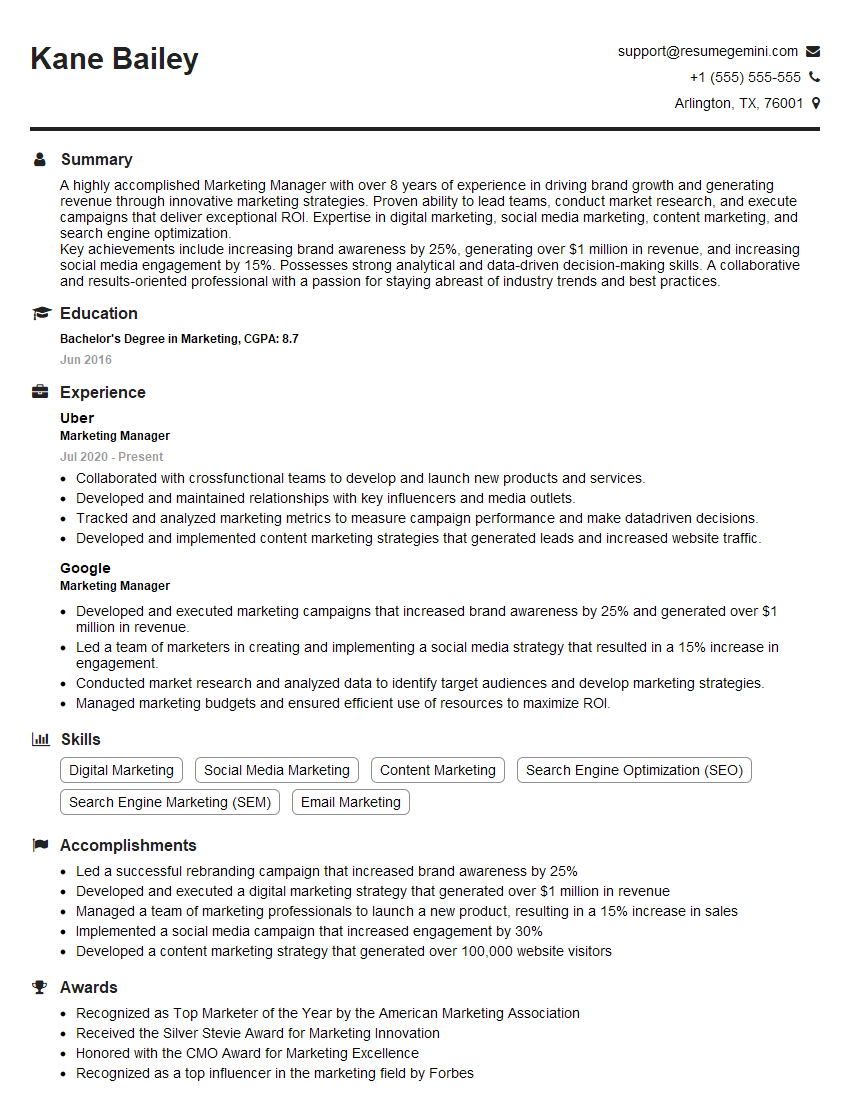
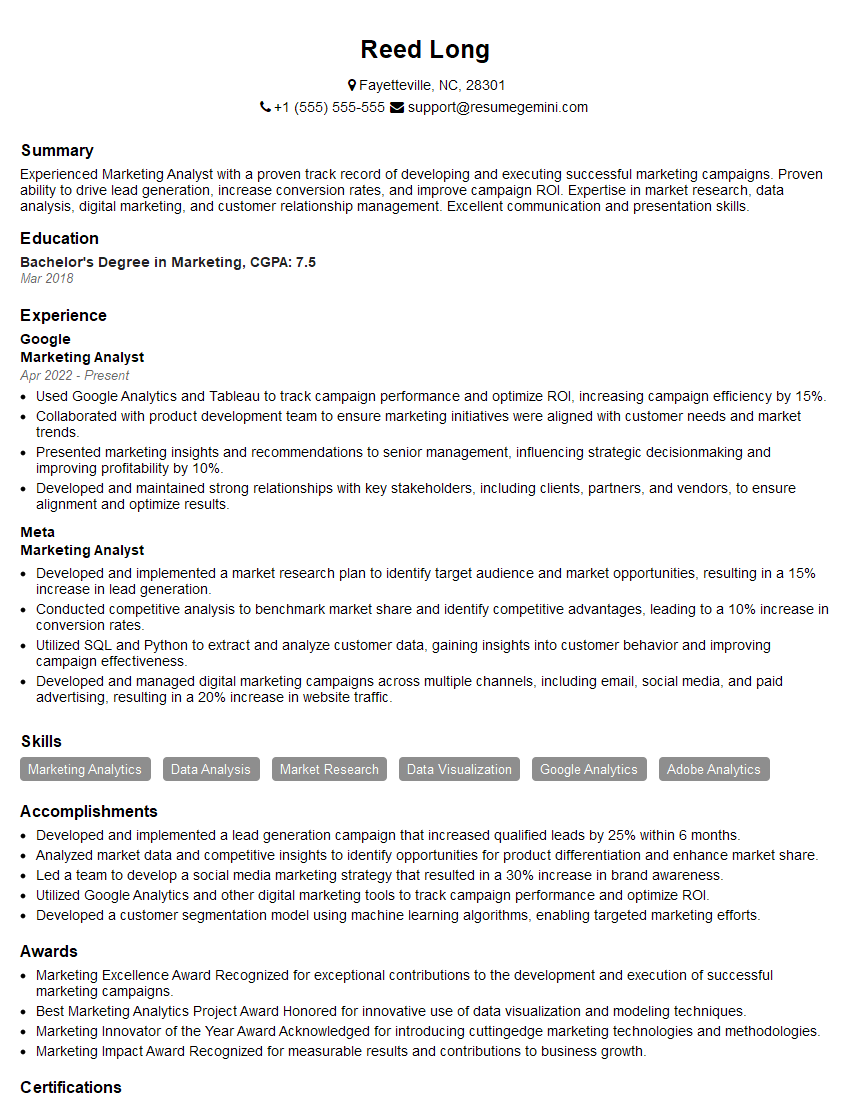
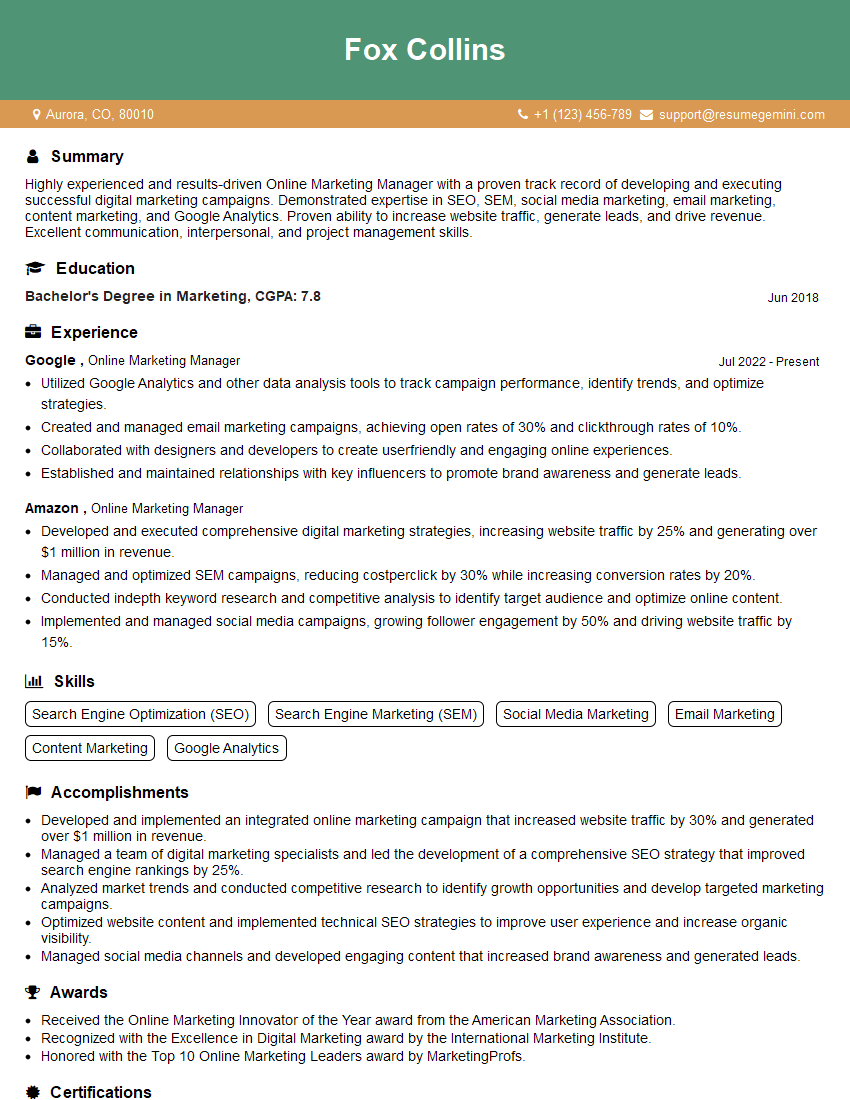
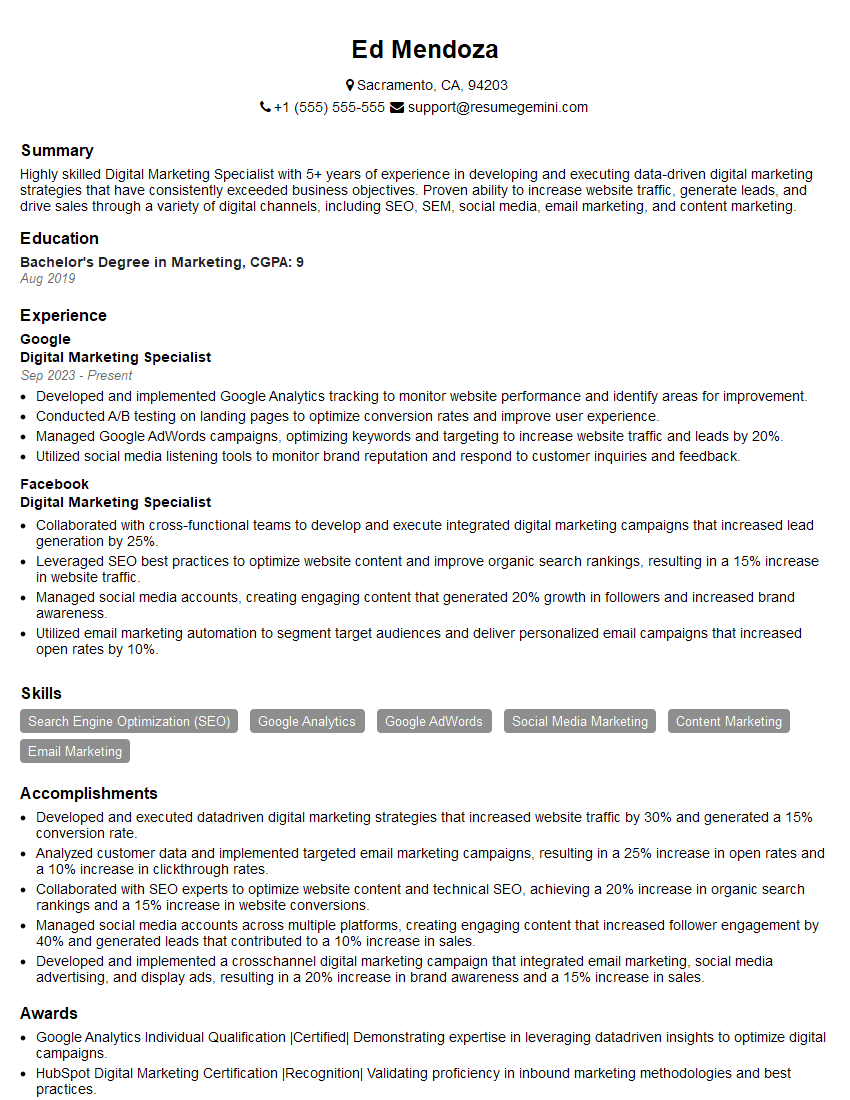
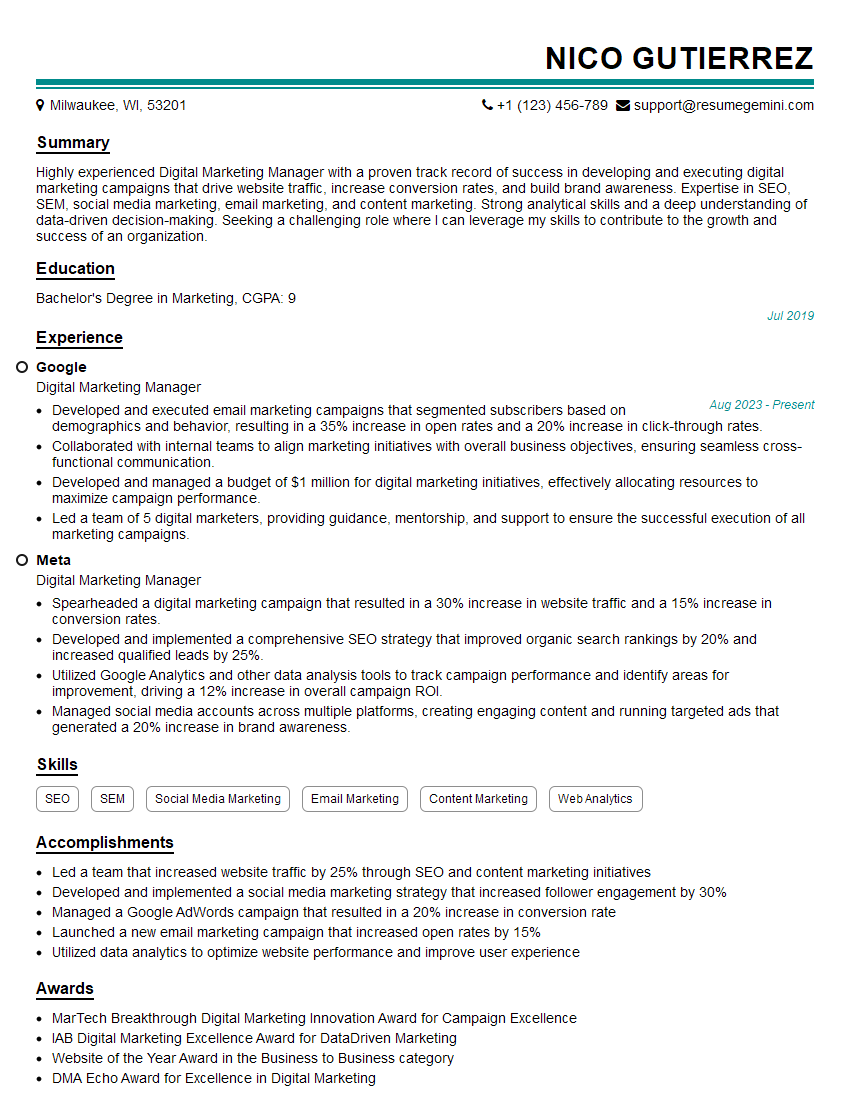
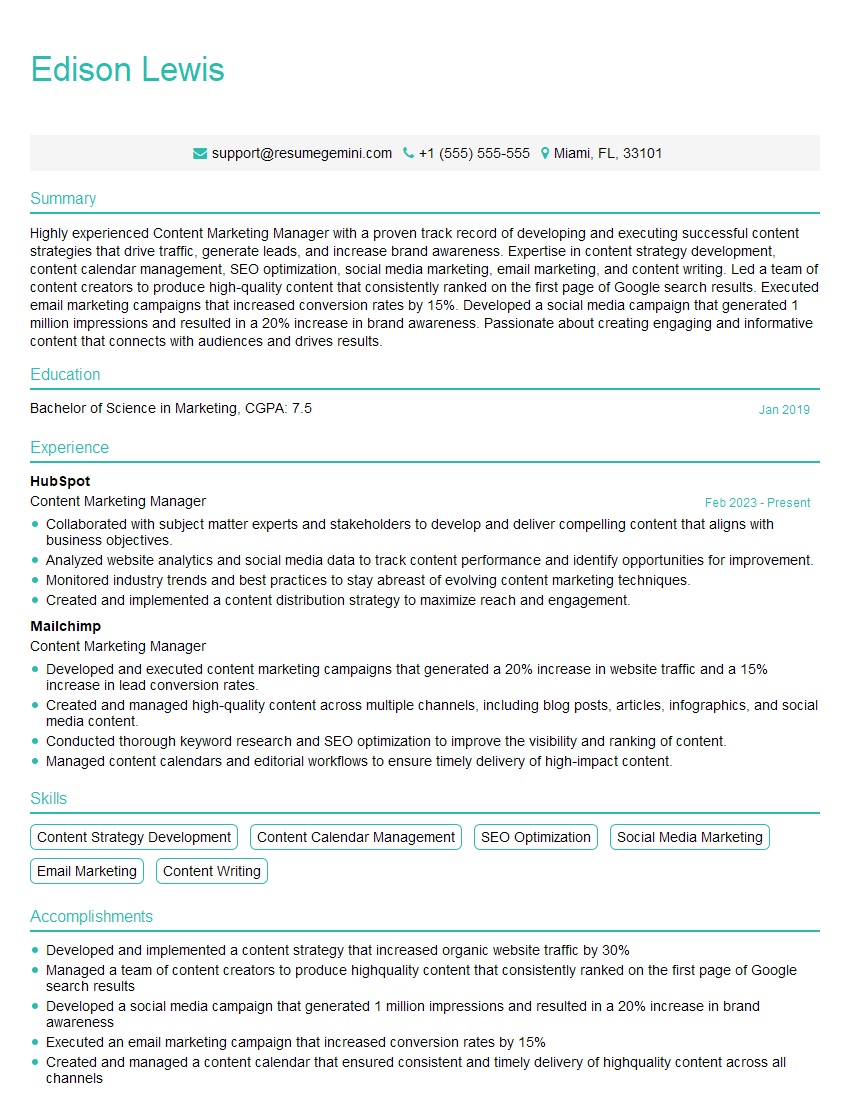
Mastering search engine optimization is crucial for career advancement in digital marketing and related fields. A strong understanding of SEO principles is highly sought after by employers. To maximize your job prospects, create an ATS-friendly resume that clearly highlights your SEO skills and experience. ResumeGemini is a trusted resource that can help you build a professional and impactful resume. Examples of resumes tailored to showcasing expertise in search engine optimization are available to help you get started. Remember to showcase your practical experience and problem-solving abilities – these are highly valued in interviews.

Explore more articles
Users Rating of Our Blogs
Share Your Experience
We value your feedback! Please rate our content and share your thoughts (optional).
What Readers Say About Our Blog
Amazing blog
hello,
Our consultant firm based in the USA and our client are interested in your products.
Could you provide your company brochure and respond from your official email id (if different from the current in use), so i can send you the client’s requirement.
Payment before production.
I await your answer.
Regards,
MrSmith
hello,
Our consultant firm based in the USA and our client are interested in your products.
Could you provide your company brochure and respond from your official email id (if different from the current in use), so i can send you the client’s requirement.
Payment before production.
I await your answer.
Regards,
MrSmith
These apartments are so amazing, posting them online would break the algorithm.
https://bit.ly/Lovely2BedsApartmentHudsonYards
Reach out at BENSON@LONDONFOSTER.COM and let’s get started!
Take a look at this stunning 2-bedroom apartment perfectly situated NYC’s coveted Hudson Yards!
https://bit.ly/Lovely2BedsApartmentHudsonYards
Live Rent Free!
https://bit.ly/LiveRentFREE
Interesting Article, I liked the depth of knowledge you’ve shared.
Helpful, thanks for sharing.
Hi, I represent a social media marketing agency and liked your blog
Hi, I represent an SEO company that specialises in getting you AI citations and higher rankings on Google. I’d like to offer you a 100% free SEO audit for your website. Would you be interested?