Unlock your full potential by mastering the most common Understanding Social Justice Issues interview questions. This blog offers a deep dive into the critical topics, ensuring you’re not only prepared to answer but to excel. With these insights, you’ll approach your interview with clarity and confidence.
Questions Asked in Understanding Social Justice Issues Interview
Q 1. Define social justice. How does it differ from social equality?
Social justice is the fair and equitable distribution of resources, opportunities, and rights within a society. It’s about ensuring that everyone has a chance to thrive and participate fully, regardless of their background or identity. Social equality, on the other hand, focuses solely on equal access to resources and opportunities. While social equality is a component of social justice, social justice goes further by addressing the historical and ongoing systemic injustices that create and maintain inequalities. Think of it this way: social equality is about making the playing field level, while social justice is about ensuring everyone has a fair chance to play and win, even if they start from different positions.
For example, social equality might focus on ensuring everyone has access to education. Social justice, however, would also address the systemic inequalities that make it harder for certain groups (e.g., students from low-income backgrounds or marginalized communities) to succeed even with equal access, such as lack of quality resources in their schools or pervasive biases in the educational system.
Q 2. Explain systemic injustice. Provide a real-world example.
Systemic injustice refers to the deeply ingrained, often unconscious, biases and discriminatory practices embedded within institutions and societal structures. These systems perpetuate inequality across generations, even if individuals within the system don’t consciously intend to discriminate. It’s not about individual acts of prejudice; rather, it’s about the ways institutions and policies create and reinforce disparities.
A real-world example is the historical and ongoing impact of redlining in the United States. Redlining was a discriminatory practice where banks and other lending institutions refused to provide mortgages or other financial services to residents of certain neighborhoods, often based on race. This practice systematically denied Black communities access to homeownership and wealth-building opportunities, leading to significant disparities in wealth accumulation that persist to this day. Even though redlining is officially illegal, its legacy continues to affect housing patterns, access to resources, and overall economic well-being of affected communities.
Q 3. Describe your understanding of intersectionality.
Intersectionality is a framework for understanding how various social and political identities, such as race, class, gender, sexual orientation, and disability, combine to create unique experiences of discrimination and privilege. It recognizes that people don’t experience oppression in isolation; their identities intersect to shape their lived realities. Instead of viewing these identities in isolation, intersectionality emphasizes the interconnected nature of social categorizations such as race, class, and gender, creating overlapping and interdependent systems of discrimination or disadvantage.
For example, a Black woman faces different forms of oppression than a white woman or a Black man. She experiences racism and sexism simultaneously, creating a unique set of challenges and barriers that neither of the other two groups experience to the same extent. Intersectionality helps us to understand these complex and overlapping systems of power and to develop more nuanced and effective strategies for addressing social injustice.
Q 4. What are the key principles of restorative justice?
Restorative justice is an approach to justice that focuses on repairing harm caused by crime or conflict. Unlike the traditional punitive approach, which focuses on punishment, restorative justice emphasizes healing, accountability, and reconciliation. It brings together victims, offenders, and community members to collaboratively address the harm done and find solutions that promote healing and prevent future harm.
Key principles include:
- Repairing harm: Focusing on making amends for the harm caused to victims and the community.
- Accountability: Holding offenders accountable for their actions, often through meaningful participation in the restorative process.
- Community involvement: Engaging the community in finding solutions and supporting both victims and offenders.
- Healing and reconciliation: Promoting dialogue and understanding between victims and offenders to facilitate healing and reconciliation.
Restorative justice processes can take various forms, including victim-offender mediation, restorative circles, and community conferencing.
Q 5. How would you address microaggressions in the workplace?
Addressing microaggressions in the workplace requires a multi-pronged approach. Microaggressions are subtle, often unintentional, acts of discrimination that communicate hostility or negativity toward marginalized groups. They can be verbal, nonverbal, or environmental.
Here’s a step-by-step strategy:
- Education and training: Provide workplace training on microaggressions, their impact, and strategies for avoiding them. This should include examples and role-playing scenarios.
- Establish clear policies: Develop a workplace policy that explicitly addresses microaggressions and outlines consequences for such behavior. This shows a commitment to creating an inclusive environment.
- Create reporting mechanisms: Provide safe and confidential channels for reporting microaggressions, ensuring that reports are taken seriously and investigated promptly.
- Promote bystander intervention: Encourage employees to intervene when they witness microaggressions. Provide them with techniques and resources to do so safely and effectively.
- Foster open dialogue: Create a culture of open communication and respectful dialogue where employees feel comfortable addressing microaggressions and discussing concerns about inclusivity.
- Promote accountability: Consequences for those engaging in microaggressions should be consistent and transparent. This could include education, coaching, or disciplinary action depending on the severity and context.
Q 6. Discuss the challenges of implementing social justice initiatives.
Implementing social justice initiatives faces significant challenges. These challenges are often interconnected and complex.
- Resistance to change: Existing power structures and ingrained biases often resist efforts to address systemic injustice. Individuals and institutions may be reluctant to relinquish power or privilege.
- Lack of resources: Effective social justice initiatives require significant financial and human resources. Funding can be scarce, particularly for programs serving marginalized communities.
- Measuring impact: Demonstrating the effectiveness of social justice initiatives can be difficult. Traditional metrics may not accurately capture the complex and long-term changes needed.
- Political obstacles: Political will and support are essential for enacting and sustaining social justice policies. Political polarization and ideological differences can hinder progress.
- Data gaps and biases: Data used to inform social justice initiatives may reflect existing biases and inequities, hindering accurate assessments and effective interventions. Reliable and representative data is crucial.
Addressing these challenges requires strategic planning, collaboration, community engagement, sustained commitment, and adaptation based on ongoing evaluation.
Q 7. What metrics would you use to measure the success of a social justice program?
Measuring the success of a social justice program requires a multi-faceted approach that goes beyond simple numerical data. It’s crucial to use metrics that capture both quantitative and qualitative changes.
Examples of metrics include:
- Quantitative data: Changes in rates of incarceration, poverty, unemployment, access to healthcare, educational attainment, and homeownership among targeted populations.
- Qualitative data: Changes in community perceptions of safety, trust in institutions, levels of civic engagement, and lived experiences of participants. This can be collected through surveys, focus groups, and interviews.
- Process evaluation: Assessing the fidelity of implementation, the reach and engagement of the program, and its sustainability over time.
- Outcome evaluation: Measuring the impact of the program on its intended goals, considering both short-term and long-term effects.
- Equity analysis: Evaluating whether the program is reaching its intended beneficiaries equitably and addressing underlying disparities.
It’s important to choose metrics that align with the program’s specific goals and are relevant to the context in which it operates. Regular monitoring and evaluation are essential for adaptation and improvement.
Q 8. Explain your experience with community engagement and outreach.
My experience with community engagement and outreach is extensive, spanning over a decade. I’ve worked in various capacities, from grassroots organizing to leading large-scale initiatives. For instance, I spearheaded a project in a low-income neighborhood to establish a community garden, successfully bringing together residents, local businesses, and volunteers. This involved extensive needs assessments, stakeholder meetings, grant writing, and ongoing community maintenance. Another example includes facilitating workshops on civic engagement, empowering marginalized communities to advocate for their needs. My approach prioritizes active listening, building trust, and co-creating solutions with the community, rather than imposing solutions from the outside.
- Needs Assessment: Thoroughly understanding the community’s priorities and challenges through surveys, focus groups, and one-on-one conversations.
- Collaboration: Partnering with local organizations and leaders to leverage resources and expertise.
- Sustainability: Developing initiatives that are self-sustaining and empower communities to continue the work long-term.
Q 9. How do you identify and analyze social inequalities?
Identifying and analyzing social inequalities requires a multi-faceted approach. I start by examining various indicators, including access to resources (healthcare, education, housing), representation in power structures, and the prevalence of discriminatory practices. For example, analyzing disparities in school funding between affluent and low-income districts reveals a clear inequality. I use both quantitative data (e.g., census data, crime statistics) and qualitative data (e.g., interviews, focus groups) to gain a comprehensive understanding. The analysis then involves identifying the root causes of these inequalities – historical oppression, systemic biases, and ongoing discriminatory practices – and understanding their interconnected nature. This often requires looking beyond readily visible symptoms to uncover underlying power dynamics and societal structures.
For instance, a higher rate of incarceration among a particular racial group isn’t just a matter of individual behavior but might reflect systemic biases in policing, prosecution, and sentencing. This deeper analysis helps to develop targeted interventions and policies.
Q 10. What strategies do you use for conflict resolution in diverse settings?
Conflict resolution in diverse settings demands sensitivity, empathy, and a deep understanding of the perspectives involved. My strategy relies on several key principles:
- Active Listening: Creating a safe space for all parties to express their concerns without interruption.
- Neutral Facilitation: Guiding the conversation towards finding common ground and shared goals.
- Restorative Justice Principles: Focusing on repairing harm and restoring relationships, rather than solely on punishment.
- Cultural Sensitivity: Recognizing and respecting the different communication styles and cultural norms of those involved.
For example, in mediating a conflict between community members with differing opinions on a development project, I would facilitate open dialogue, focusing on identifying shared interests and finding compromises that address everyone’s concerns.
Q 11. Describe your approach to working with marginalized communities.
My approach to working with marginalized communities is grounded in principles of respect, collaboration, and empowerment. I prioritize building trust by actively listening to their lived experiences and validating their perspectives. I avoid imposing solutions but instead work collaboratively to co-create solutions that reflect their needs and aspirations. For example, in working with a homeless population, I wouldn’t simply provide services but would actively involve them in decision-making processes regarding shelter design, service provision, and advocacy efforts. This ensures the initiatives are truly relevant and sustainable. It’s crucial to recognize that marginalized communities are not monolithic; diversity exists within these groups, and it’s important to engage with the specific needs of various subgroups within the broader community.
Q 12. How do you ensure inclusivity in your projects and initiatives?
Ensuring inclusivity requires proactive and intentional measures at every stage of a project. This starts with diverse representation in project teams and leadership roles. It also includes designing accessible communication materials, using inclusive language, and providing accommodations for individuals with disabilities. For example, when designing a community event, I would ensure the venue is accessible, the materials are available in multiple languages, and the event scheduling accommodates diverse needs. Furthermore, I consistently solicit feedback from community members to assess the inclusivity of my projects and make necessary adjustments.
Using participatory decision-making processes ensures that all voices are heard and considered in shaping the project’s goals and outcomes. It’s essential to continually reflect on power dynamics and ensure that marginalized groups are not silenced or marginalized in the decision-making process.
Q 13. Explain your understanding of the role of advocacy in social justice.
Advocacy plays a crucial role in advancing social justice. It’s the process of raising awareness, influencing policy, and challenging systems of oppression. This involves several key strategies: research and data analysis to demonstrate the need for change, public education to raise awareness and engage support, lobbying and policy advocacy to influence legislative and regulatory changes, and direct action to challenge discriminatory practices. For instance, advocating for policies that address systemic racism in the criminal justice system requires presenting compelling data on racial disparities in arrests, convictions, and sentencing. It also involves engaging public discourse to shift narratives and influencing policymakers to enact meaningful reforms.
Q 14. What are some common barriers to achieving social justice?
Several significant barriers hinder the achievement of social justice. These include:
- Systemic Inequality: Deep-rooted biases and discriminatory structures embedded in institutions and policies.
- Lack of Awareness and Education: Limited understanding of social justice issues and their impact on individuals and communities.
- Political Polarization and Resistance to Change: Opposition to policies aimed at promoting equality and justice.
- Economic Inequality: Unequal distribution of wealth and resources, exacerbating existing social divisions.
- Lack of Access to Resources: Limited access to education, healthcare, and other essential services, particularly for marginalized communities.
Overcoming these barriers requires a multifaceted approach involving policy changes, public education, community organizing, and sustained collective action. It requires challenging ingrained biases and confronting power structures that perpetuate inequality.
Q 15. How do power dynamics influence social justice issues?
Power dynamics are the intricate ways power is distributed and exercised within a society, significantly shaping social justice issues. They’re not just about overt oppression; they’re about subtle influences on who has access to resources, opportunities, and voice. Essentially, those with more power often shape the systems and norms that benefit them, while those with less power face systematic disadvantages.
- Example 1: Systemic Racism: Racial power imbalances have historically and currently led to disparities in areas like housing, education, and employment. Laws and policies, often unintentionally, can perpetuate these inequalities.
- Example 2: Gender Inequality: Gender power imbalances result in the underrepresentation of women in leadership positions, unequal pay, and disproportionate burdens of caregiving. This can be seen in occupational segregation and the gender pay gap.
- Example 3: Economic Inequality: The concentration of wealth in the hands of a few creates power dynamics that influence social justice issues related to poverty, access to healthcare, and education. This can manifest in lobbying efforts that protect the wealthy and policies that disadvantage marginalized groups.
Understanding these power dynamics is crucial for addressing social justice issues effectively. It means acknowledging the systemic nature of injustice and moving beyond individual biases to address structural barriers.
Career Expert Tips:
- Ace those interviews! Prepare effectively by reviewing the Top 50 Most Common Interview Questions on ResumeGemini.
- Navigate your job search with confidence! Explore a wide range of Career Tips on ResumeGemini. Learn about common challenges and recommendations to overcome them.
- Craft the perfect resume! Master the Art of Resume Writing with ResumeGemini’s guide. Showcase your unique qualifications and achievements effectively.
- Don’t miss out on holiday savings! Build your dream resume with ResumeGemini’s ATS optimized templates.
Q 16. How do you stay informed about current events related to social justice?
Staying informed about current social justice events requires a multi-faceted approach. I rely on a diverse range of sources to avoid echo chambers and ensure a balanced perspective.
- Reputable News Outlets: I regularly read news from various sources, including national and international publications known for their fact-checking and in-depth reporting.
- Academic Journals and Research: Peer-reviewed research provides a deeper understanding of the underlying causes and effects of social justice issues.
- Non-Governmental Organizations (NGOs): Reports and publications from reputable NGOs often offer on-the-ground perspectives and advocacy efforts.
- Social Media (with Caution): While social media can provide immediate updates, it’s essential to critically assess information and verify it with trusted sources to avoid misinformation.
- Podcasts and Documentaries: These media forms often offer insightful narratives and personal accounts related to social justice movements.
Continual learning is key; I regularly engage in professional development to stay abreast of new research and evolving perspectives on social justice issues.
Q 17. Describe a time you had to advocate for a social justice issue.
During my time volunteering at a community center in a low-income neighborhood, I witnessed a significant disparity in access to educational resources for children. Many families lacked the means to afford tutoring or enrichment programs that are often crucial for academic success. This fueled my advocacy for increased funding for after-school programs in underserved communities.
My approach involved several steps:
- Research and Data Collection: I gathered data on the academic performance of children in the neighborhood, comparing it to the performance of children in more affluent areas.
- Community Engagement: I organized meetings with parents, educators, and community leaders to raise awareness about the problem and build consensus on the need for change.
- Collaboration with Local Officials: I worked with local council members and school board representatives to advocate for increased funding and support for after-school programs.
- Grant Writing: I assisted in writing grant proposals to secure funding from private foundations to support these programs.
While the changes were gradual, we eventually secured funding for an after-school program, significantly impacting the lives of many children in the community. This experience underscored the importance of data-driven advocacy and community engagement in effecting positive social change.
Q 18. What are your thoughts on affirmative action?
Affirmative action is a complex topic with both proponents and detractors. It refers to policies designed to address past and present discrimination by providing preferential treatment to individuals from historically marginalized groups in areas like education and employment.
Arguments for Affirmative Action: Proponents argue it’s necessary to level the playing field and counteract systemic inequalities that prevent equal opportunities. It aims to create a more diverse and inclusive environment, benefiting both the individuals receiving preferential treatment and the broader society.
Arguments Against Affirmative Action: Critics argue that it can lead to reverse discrimination, where qualified individuals from majority groups are overlooked in favor of less qualified individuals from minority groups. They also argue that a focus on merit, rather than race or ethnicity, is a more just and equitable approach.
My Perspective: I believe that affirmative action, while well-intentioned, should be carefully designed and implemented to avoid unintended negative consequences. The focus should be on creating pathways to opportunity for all individuals, while also acknowledging and addressing historical injustices. A nuanced approach is needed, considering the specific context and the potential for both benefits and drawbacks.
Q 19. How would you handle a situation where your values conflict with organizational goals?
Situations where personal values conflict with organizational goals are challenging but require careful consideration. My approach would involve:
- Self-Reflection: I would carefully examine my values and the reasons behind the conflict. Is it a fundamental ethical issue, or a matter of differing priorities?
- Open Communication: I would engage in open and respectful dialogue with my supervisor or relevant stakeholders, articulating my concerns and seeking clarification on the organizational goals.
- Explore Alternatives: I would proactively seek alternative solutions that align with both my values and organizational objectives. Perhaps there are ways to modify the approach to achieve the desired outcomes while minimizing ethical compromises.
- Documentation: In cases where a resolution cannot be reached, I would document my concerns and actions taken. This documentation can be crucial if further action is needed.
- Ethical Considerations: I would consider the potential consequences of my actions, both for myself and the organization. Is it possible to remain professionally committed while also maintaining my integrity?
In some cases, the conflict may be irreconcilable, leading to the difficult decision to leave the organization. This is a last resort, but sometimes the only way to uphold one’s values.
Q 20. What is your experience with data analysis related to social justice outcomes?
My experience with data analysis in the context of social justice outcomes involves using quantitative and qualitative data to understand disparities and the effectiveness of interventions. I am proficient in using statistical software like R and SPSS to analyze data sets, identify trends, and draw meaningful conclusions.
Examples:
- Analyzing crime statistics to identify patterns of racial bias in policing.
- Using census data to assess the impact of economic policies on different socioeconomic groups.
- Evaluating program effectiveness by analyzing pre- and post-intervention data related to access to healthcare, education, or employment.
- Analyzing qualitative data such as interview transcripts or focus group discussions to gain a deeper understanding of lived experiences and perspectives.
Data analysis is crucial for evidence-based advocacy. By using data to inform policy decisions and program development, we can create more impactful and effective interventions to address social justice issues.
Q 21. Describe your understanding of different social justice movements.
The landscape of social justice movements is diverse and interconnected. Understanding them requires recognizing their historical context, key figures, goals, and methods.
- Civil Rights Movement: This movement fought against racial segregation and discrimination in the United States, achieving significant legal victories such as the Civil Rights Act of 1964. Key figures include Martin Luther King Jr. and Rosa Parks.
- Women’s Suffrage Movement: This movement advocated for women’s right to vote, ultimately achieving success with the 19th Amendment to the US Constitution. Susan B. Anthony and Elizabeth Cady Stanton were prominent leaders.
- LGBTQ+ Rights Movement: This ongoing movement fights for equal rights and protections for lesbian, gay, bisexual, transgender, and queer individuals. Stonewall Riots marked a turning point in the movement.
- Environmental Justice Movement: This movement addresses the disproportionate impact of environmental hazards on marginalized communities. It highlights the connection between environmental degradation and social inequality.
- Disability Rights Movement: This movement advocates for the rights and inclusion of people with disabilities, promoting accessibility and challenging discriminatory practices.
These are just a few examples, and many movements overlap and intersect. It’s important to recognize the unique histories and strategies of each movement while also appreciating their interconnectedness in the broader struggle for social justice.
Q 22. How would you develop a comprehensive social justice program?
Developing a comprehensive social justice program requires a multi-faceted approach, focusing on identifying the root causes of injustice, creating actionable strategies, and implementing sustainable solutions. It’s not a one-size-fits-all solution; the program must be tailored to the specific community and issues at hand.
- Needs Assessment: Begin with thorough research to understand the specific social justice challenges facing the target community. This involves data collection, community engagement, and stakeholder interviews to identify the most pressing needs and priorities.
- Goal Setting: Define clear, measurable, achievable, relevant, and time-bound (SMART) goals. These goals should directly address the identified needs and contribute to tangible improvements in social justice.
- Strategic Planning: Develop a detailed plan outlining the strategies and actions required to achieve the set goals. This may involve advocacy, education, community organizing, policy reform, and direct service provision.
- Implementation & Monitoring: Put the plan into action, ensuring effective resource allocation, collaboration with stakeholders, and continuous monitoring of progress. This phase often involves regular evaluation to make necessary adjustments.
- Evaluation & Sustainability: Regularly evaluate the program’s impact using relevant metrics and feedback from stakeholders. This evaluation informs future program development and ensures its long-term sustainability.
For example, a program addressing food insecurity might involve community gardens, partnerships with food banks, and advocacy for policies that increase access to affordable healthy food. The program’s success would be measured by factors such as increased food access, improved nutrition levels within the community, and changes in relevant policies.
Q 23. What are some ethical considerations in social justice work?
Ethical considerations in social justice work are paramount. We must prioritize fairness, transparency, accountability, and respect for human dignity in all our actions. Some key ethical considerations include:
- Power Dynamics: Being mindful of power imbalances between social justice workers and the communities they serve. This requires humility and a commitment to empowering those most affected by injustice.
- Cultural Sensitivity: Respecting diverse cultural values, beliefs, and practices. Approaching social justice issues with cultural humility prevents imposing external solutions onto communities.
- Confidentiality & Privacy: Protecting the confidentiality and privacy of individuals and communities involved in the work. This is crucial for building trust and ensuring safety.
- Avoiding Harm: Prioritizing the well-being of individuals and communities and avoiding any action that might cause harm, even unintentionally. This includes careful consideration of potential unintended consequences.
- Transparency & Accountability: Maintaining transparency in all actions and being accountable for the impact of our work. This includes openness to feedback and criticism.
For instance, a worker conducting research should ensure informed consent and data anonymization. In advocacy efforts, transparency in funding sources and potential conflicts of interest are essential.
Q 24. Explain your understanding of implicit bias and its impact.
Implicit bias refers to the unconscious attitudes or stereotypes that affect our understanding, actions, and decisions. These biases are often ingrained and operate outside of our conscious awareness. They can significantly impact social justice efforts because they can lead to unfair or discriminatory treatment, even when we consciously strive for equity.
For example, implicit bias against certain racial groups might lead to harsher sentencing in the justice system or unconscious discrimination in hiring processes. Implicit bias against people with disabilities might lead to exclusion from opportunities. The impact is widespread and perpetuates inequality.
Addressing implicit bias involves self-reflection, education, and the implementation of strategies to mitigate its effects. This can include bias training, using blind recruitment practices, and developing objective criteria in decision-making processes.
Q 25. How would you create a safe and inclusive environment for stakeholders?
Creating a safe and inclusive environment for stakeholders requires a proactive and multifaceted approach focusing on fostering trust, respect, and equitable participation.
- Establish clear guidelines: Develop and communicate clear guidelines on respectful communication, conflict resolution, and reporting mechanisms for harassment or discrimination.
- Provide diversity and inclusion training: Equip stakeholders with the knowledge and skills to understand and address their own biases and promote inclusivity.
- Create accessible spaces: Ensure physical accessibility for individuals with disabilities and consider diverse communication styles and preferences.
- Foster open dialogue: Encourage open communication and feedback, creating a safe space for sharing perspectives and concerns.
- Celebrate diversity: Acknowledge and celebrate the unique contributions of all stakeholders, creating a sense of belonging and value.
For example, using inclusive language in communications, creating accessible meeting spaces, and actively soliciting diverse viewpoints during discussions fosters an inclusive environment. Regularly reviewing and updating policies to reflect inclusivity is also crucial.
Q 26. What strategies would you use to measure and improve diversity in an organization?
Measuring and improving diversity within an organization requires a multi-pronged approach involving data collection, analysis, and the implementation of targeted strategies.
- Collect Data: Gather demographic data on employees at all levels (race, ethnicity, gender, sexual orientation, disability status, etc.). This data should be disaggregated to identify disparities.
- Analyze Data: Analyze the collected data to identify areas where diversity is lacking and potential disparities in hiring, promotion, and compensation.
- Set Targets & Goals: Establish specific, measurable, achievable, relevant, and time-bound (SMART) goals for improving diversity at various levels of the organization.
- Implement Strategies: Implement evidence-based strategies to achieve diversity goals, such as inclusive recruitment practices, bias training, mentorship programs, and flexible work arrangements.
- Monitor & Evaluate: Regularly monitor progress towards diversity goals and evaluate the effectiveness of implemented strategies, making adjustments as needed. Feedback mechanisms are crucial.
For instance, an organization might set a goal to increase representation of women in leadership positions by a certain percentage within a specified time frame. This would involve reviewing hiring and promotion practices, providing leadership training to women, and offering mentorship opportunities.
Q 27. Describe your experience working collaboratively on social justice projects.
I have extensive experience collaborating on social justice projects, emphasizing collaborative teamwork and leveraging diverse perspectives to achieve shared goals. In a recent project addressing affordable housing access, I worked with community organizers, policymakers, and legal professionals. We successfully established a community land trust, expanding affordable housing options and demonstrating the power of cross-sectoral collaboration.
Successful collaboration requires clear communication, shared goals, respect for diverse perspectives, and a commitment to equitable decision-making processes. It is crucial to actively listen to and value the contributions of all team members, fostering an environment of mutual respect and trust.
Q 28. How do you adapt your approach to different social justice contexts?
Adapting my approach to different social justice contexts is crucial for effective work. This involves understanding the unique cultural, historical, political, and economic factors that shape the specific challenges in each context.
For example, addressing racial injustice in the United States requires a different approach than addressing gender inequality in a specific region of the developing world. This requires cultural sensitivity, building trust with local stakeholders, and adapting strategies to the local context while upholding universal human rights principles.
Contextual awareness allows for the development of culturally sensitive and effective interventions that address the unique needs of specific communities while promoting universally held values of justice and human rights.
Key Topics to Learn for Understanding Social Justice Issues Interview
- Social Inequality: Explore different forms of social inequality (economic, racial, gender, etc.) and their historical and contemporary manifestations. Understand the theoretical frameworks used to analyze these inequalities (e.g., intersectionality, critical race theory).
- Systemic Oppression: Analyze how social structures and institutions perpetuate inequality. Consider examples of systemic racism, sexism, and classism and explore strategies for dismantling these systems.
- Social Justice Movements: Examine the history and impact of various social justice movements, including their strategies, successes, and limitations. Understand the role of advocacy, activism, and community organizing in achieving social change.
- Human Rights and Social Justice: Connect the concepts of human rights to social justice issues. Discuss the universality of human rights and the challenges in ensuring their realization for marginalized groups.
- Policy and Legislation: Analyze the role of policy and legislation in addressing social justice issues. Understand how policies can either perpetuate or mitigate inequality. Consider the process of policy development and advocacy for social justice.
- Ethical Considerations and Dilemmas: Explore the ethical dimensions of social justice issues. Consider the challenges of balancing competing values and interests in achieving equitable outcomes. Develop your ability to analyze complex ethical dilemmas related to social justice.
- Data Analysis and Research Methods: Understand how quantitative and qualitative data are used to analyze social justice issues and inform policy decisions. Familiarize yourself with common research methodologies in this field.
Next Steps
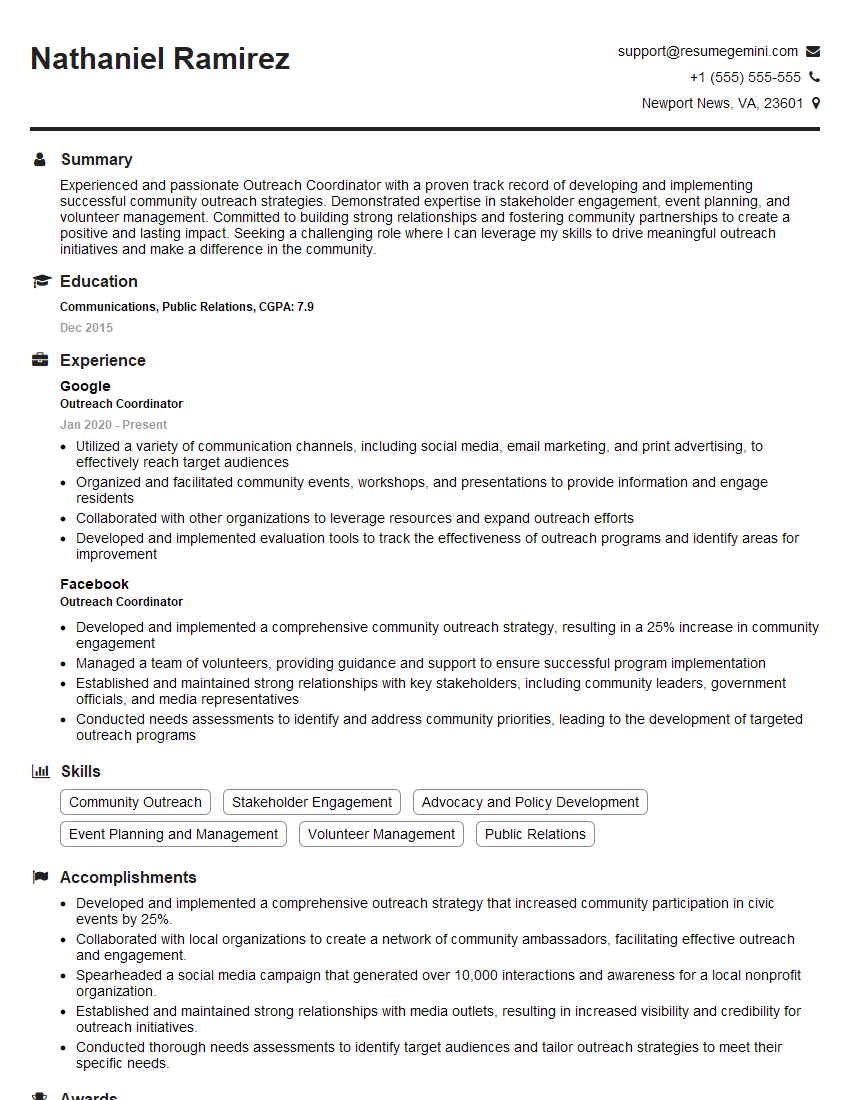
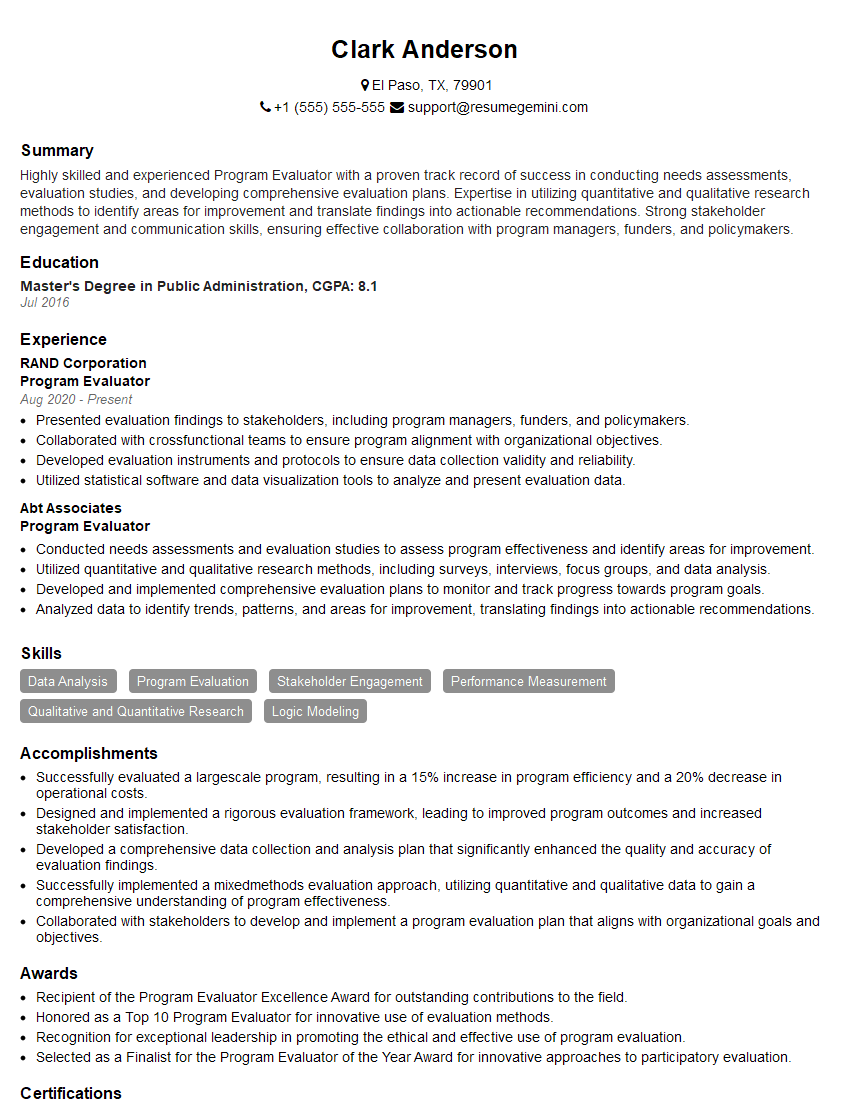
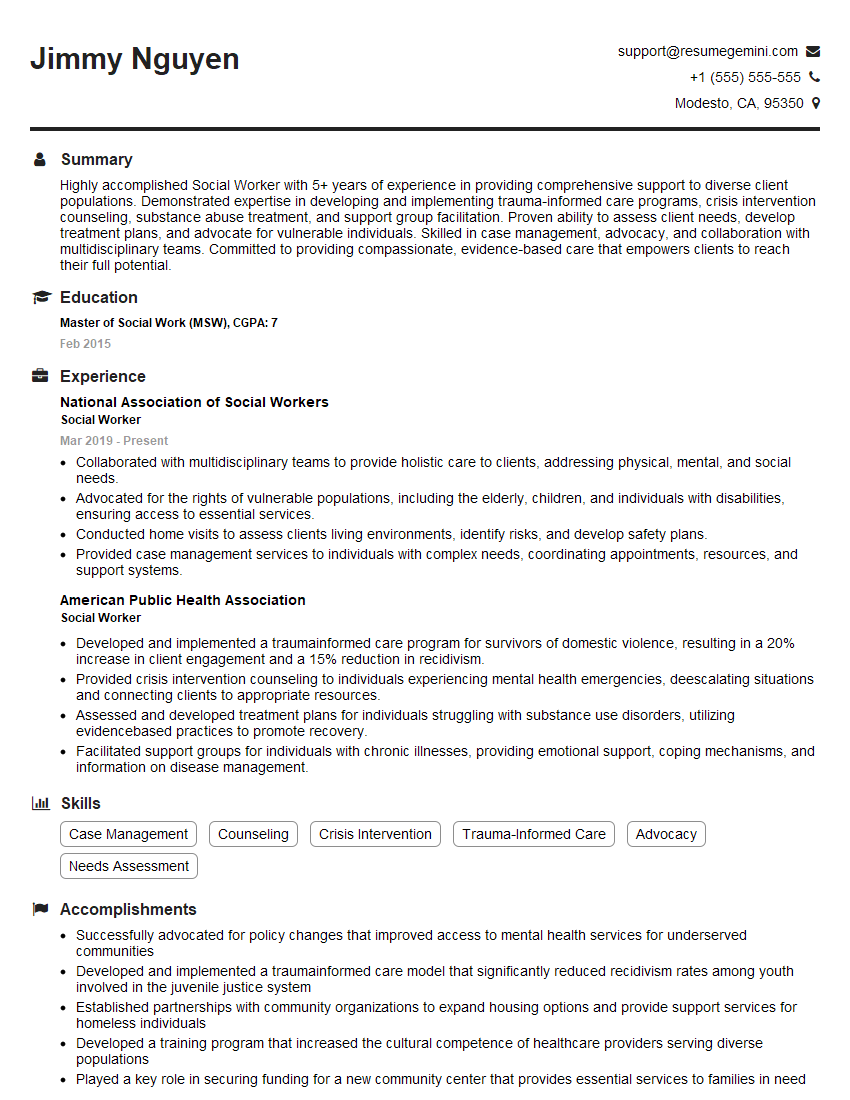
Mastering the understanding of social justice issues is crucial for career advancement in many fields, including social work, public policy, non-profit management, and community development. A strong understanding of these issues demonstrates your commitment to social impact and your ability to contribute meaningfully to organizations working towards a more equitable world. To stand out to potential employers, crafting a compelling and ATS-friendly resume is vital. Use ResumeGemini to create a professional resume that showcases your skills and experience effectively. ResumeGemini offers examples of resumes tailored to social justice roles to guide you. Take the next step today and build the resume that lands you your dream job!


Explore more articles
Users Rating of Our Blogs
Share Your Experience
We value your feedback! Please rate our content and share your thoughts (optional).
What Readers Say About Our Blog
Amazing blog
hello,
Our consultant firm based in the USA and our client are interested in your products.
Could you provide your company brochure and respond from your official email id (if different from the current in use), so i can send you the client’s requirement.
Payment before production.
I await your answer.
Regards,
MrSmith
hello,
Our consultant firm based in the USA and our client are interested in your products.
Could you provide your company brochure and respond from your official email id (if different from the current in use), so i can send you the client’s requirement.
Payment before production.
I await your answer.
Regards,
MrSmith
These apartments are so amazing, posting them online would break the algorithm.
https://bit.ly/Lovely2BedsApartmentHudsonYards
Reach out at BENSON@LONDONFOSTER.COM and let’s get started!
Take a look at this stunning 2-bedroom apartment perfectly situated NYC’s coveted Hudson Yards!
https://bit.ly/Lovely2BedsApartmentHudsonYards
Live Rent Free!
https://bit.ly/LiveRentFREE
Interesting Article, I liked the depth of knowledge you’ve shared.
Helpful, thanks for sharing.
Hi, I represent a social media marketing agency and liked your blog
Hi, I represent an SEO company that specialises in getting you AI citations and higher rankings on Google. I’d like to offer you a 100% free SEO audit for your website. Would you be interested?