Are you ready to stand out in your next interview? Understanding and preparing for Wood Coating interview questions is a game-changer. In this blog, we’ve compiled key questions and expert advice to help you showcase your skills with confidence and precision. Let’s get started on your journey to acing the interview.
Questions Asked in Wood Coating Interview
Q 1. Explain the difference between solvent-based and water-based wood coatings.
The primary difference between solvent-based and water-based wood coatings lies in their solvent systems. Solvent-based coatings, also known as oil-based coatings, use organic solvents like mineral spirits or toluene to dissolve the resins and allow for easy application. These solvents evaporate, leaving behind the hardened coating. Water-based coatings, conversely, use water as the solvent. This makes them significantly more environmentally friendly as they produce fewer volatile organic compounds (VOCs) which contribute to air pollution and have a stronger odor.
Solvent-based advantages: Often offer superior durability, hardness, and water resistance. They typically provide a smoother, richer finish. However, they take longer to dry and require more careful cleanup due to the use of solvents.
Water-based advantages: Faster drying times, lower odor, and easier cleanup with soap and water. They are better for the environment and are often preferred for indoor projects. However, they might not offer the same level of durability or water resistance as solvent-based coatings in all applications. The final finish can sometimes appear slightly less glossy.
In essence: Choose solvent-based for applications requiring extreme durability and a richer finish, and water-based for projects prioritizing environmental friendliness, ease of use, and faster drying times.
Q 2. Describe the process of preparing wood for coating.
Preparing wood for coating is crucial for achieving a lasting, attractive finish. It involves a series of steps designed to create a clean, smooth surface that will properly adhere to the coating. This process typically includes:
- Cleaning: Remove any dirt, dust, grease, or other contaminants using a suitable cleaner. For heavily soiled wood, a mild detergent and water solution works well. Always allow to dry completely.
- Sanding: Smooth the wood surface with progressively finer grit sandpaper, typically starting with a coarser grit (e.g., 80-grit) and finishing with a finer grit (e.g., 220-grit). This removes any imperfections and creates a uniform surface. Always sand in the direction of the wood grain to prevent scratches.
- Filling: Fill any gaps, holes, or knots with wood filler. Allow the filler to dry completely before sanding it flush with the surface.
- Priming (Optional): Applying a primer helps to improve adhesion, block stains, and create a uniform base for the topcoat. Primers are especially beneficial on porous woods or if you’re applying a drastically different color.
Proper surface preparation is the cornerstone of a successful wood coating project; neglecting this step will almost always result in a subpar finish.
Q 3. What are the common types of wood finishes and their applications?
Many types of wood finishes are available, each with unique properties and applications:
- Varnishes: Provide a hard, durable, and glossy finish that protects against moisture and wear. They’re ideal for high-traffic areas like floors or furniture. They can be either solvent or water based.
- Lacquers: Dry quickly, producing a smooth, hard finish. They’re popular for furniture and other projects where a fast turnaround is needed. They tend to be more brittle than varnish.
- Polyurethanes: Offer excellent durability and water resistance, making them suitable for outdoor projects, floors, and furniture that gets a lot of use. They can come in gloss, satin, or matte finishes.
- Shellac: A natural resin finish that produces a warm, amber tone. It’s relatively easy to apply and repair, but less durable than polyurethane or varnish. Often used on fine furniture.
- Oil finishes (e.g., tung oil, linseed oil): Penetrate the wood, enhancing its natural beauty while providing some protection. They offer a more natural look and feel, but are generally less durable than film-forming finishes like varnish or polyurethane.
The choice depends largely on the intended use of the wood and the desired aesthetic.
Q 4. How do you select the appropriate wood coating for a specific project?
Selecting the right wood coating involves considering several factors:
- Intended Use: Will the item be indoors or outdoors? Will it experience high traffic or be purely decorative? Outdoor projects demand durable, water-resistant coatings like marine-grade polyurethane.
- Wood Type: The porosity and density of the wood affect how well it accepts the coating. Porous woods might benefit from a wood conditioner or primer before applying the finish.
- Desired Appearance: Do you want a high-gloss, satin, or matte finish? Different coatings offer different levels of sheen.
- Durability Requirements: How much wear and tear will the finished piece endure? High-traffic areas need robust coatings.
- Personal Preferences: Some people prefer the feel and appearance of natural oil finishes, while others prefer the durability of polyurethane.
- Environmental Concerns: Water-based coatings are generally a more environmentally friendly option.
For example, a fine antique table might warrant shellac for its classic look and ease of repair, while a garden bench would require a highly durable exterior-grade polyurethane.
Q 5. What safety precautions should be taken when working with wood coatings?
Working with wood coatings requires careful attention to safety. Always follow these precautions:
- Ventilation: Work in a well-ventilated area or wear a respirator to avoid inhaling fumes. Solvent-based coatings release strong VOCs.
- Eye Protection: Wear safety glasses to protect your eyes from splashes or dust.
- Gloves: Use appropriate gloves to protect your skin from contact with the coating and solvents.
- Fire Safety: Keep away from open flames and sparks. Many coatings are flammable.
- Proper Disposal: Dispose of used rags and coatings properly according to local regulations. Soaked rags can spontaneously combust.
- Read and Follow Labels: Always read and follow the manufacturer’s instructions and safety warnings on the product label.
Remember, safety is paramount. A small investment in safety gear can prevent serious injury or health problems.
Q 6. Explain the importance of proper surface preparation before applying a wood coating.
Proper surface preparation is essential for the success of any wood coating project. It directly impacts the adhesion, durability, and appearance of the final finish. If the surface isn’t properly prepared, the coating may:
- Peel or chip: Uneven surfaces or the presence of dirt and grease will prevent proper adhesion.
- Appear uneven: Imperfections in the wood will show through the coating.
- Not last as long: A poorly prepared surface will reduce the durability and lifespan of the coating.
Think of it like painting a wall – you wouldn’t paint over dirt and cracks; you’d clean, fill, and sand it first for a smooth, even finish. The same principle applies to wood coating. The time spent on surface preparation is an investment in the quality and longevity of the final product.
Q 7. Describe the different methods of applying wood coatings (e.g., brushing, spraying, wiping).
Several methods exist for applying wood coatings, each with its advantages and disadvantages:
- Brushing: A versatile method suitable for most coatings and projects. It allows for good control and penetration into the wood grain, but can leave brush marks if not applied carefully. Ideal for smaller projects and detailed work.
- Spraying: Provides a smooth, even finish, especially for large surfaces. It’s efficient but requires specialized equipment (spray gun and compressor) and proper safety precautions. Overspray needs to be carefully considered.
- Wiping: Used primarily with oil finishes. It involves applying the oil with a rag and then wiping off the excess. This method creates a more natural look, allowing the wood grain to show through.
- Rolling: Efficient for large flat surfaces such as doors and tabletops, but not ideal for detailed work. Can leave a textured finish depending on roller nap size.
The best method depends on the project size, the type of coating, and your experience level. Practice is key to mastering each technique for a professional result.
Q 8. How do you troubleshoot common issues encountered during wood coating application (e.g., bubbling, sagging, blushing)?
Troubleshooting coating application issues like bubbling, sagging, and blushing requires a systematic approach. Let’s break down each problem:
- Bubbling: This often indicates trapped air, either in the finish itself (due to improper mixing or stirring) or underneath the coating (due to moisture in the wood). The solution involves ensuring thorough mixing, applying thin coats, and ensuring the wood is properly dried and sanded. In extreme cases, it might indicate the underlying wood is releasing gases.
- Sagging: Sagging happens when the coating is too thick, or the wood is vertical and the finish runs downwards. The fix is simple: use thinner coats and allow sufficient drying time between coats. For vertical surfaces, use a slower-drying finish or a product specifically designed for vertical applications.
- Blushing: This milky or cloudy appearance is usually caused by moisture in the air reacting with the finish. The solution involves applying the finish in a drier environment, or using a product that’s less susceptible to blushing. Sometimes simply waiting and letting the blush evaporate works, but this may result in a less-than-optimal finish.
Remember, proper surface preparation (cleaning, sanding) is crucial to prevent all three issues. If the problem persists, consider checking the environmental conditions (temperature and humidity) and verifying the finish is compatible with the wood type and previous coats.
Q 9. What are the different types of sanding techniques used in wood finishing?
Sanding is a critical step in wood finishing, ensuring a smooth surface for optimal coating adhesion. There are several techniques:
- Screen Sanding: Using sanding screens (abrasive mesh) provides a less aggressive sanding action than sandpaper. Ideal for removing minor imperfections and smoothing between coats.
- Hand Sanding: Great for detailed work and smaller projects, providing precise control. You’ll need a sanding block for even pressure and to prevent scratches.
- Machine Sanding: Random orbital sanders, belt sanders, and drum sanders offer efficient sanding for larger projects. Different grits (coarseness) are used depending on the stage. Start with coarser grits and gradually move to finer ones.
- Wet Sanding: Used with very fine grits and water to create an exceptionally smooth surface for high-gloss finishes. It helps minimize dust and prevents clogging of the sandpaper.
Choosing the right technique depends on the project size, desired finish, and the wood’s condition. Always use the appropriate grit for the sanding stage and avoid aggressive sanding which can damage the wood’s surface.
Q 10. How do you determine the correct drying time for a wood coating?
Determining the correct drying time for a wood coating isn’t simply about looking at the manufacturer’s instructions; environmental conditions play a crucial role.
Manufacturers provide recommended drying times, but these are ideal conditions. Factors like temperature, humidity, and airflow significantly impact drying time. Higher temperatures and lower humidity generally speed up drying; while cooler, more humid conditions slow it down. A well-ventilated area is always beneficial.
To determine practical drying times, I usually check the coating’s tackiness. It should be dry to the touch before proceeding to the next coat. If in doubt, waiting an extra hour won’t harm the project but rushing can lead to problems. For large-scale projects, consider using a moisture meter to accurately measure the moisture content of the coating.
Q 11. Explain the process of color matching wood stains.
Color matching wood stains is a bit of an art and science. It requires careful observation and understanding of color theory.
Firstly, you need to understand that wood’s inherent color will influence the final result. The same stain will look different on different wood species (e.g., oak vs. pine). Consider the wood’s grain and density too.
The process typically begins by selecting a base stain color close to the desired shade. Then, you perform test applications on scrap wood of the same species as your project. Using stain mixing charts provided by manufacturers can be helpful. Small adjustments in stain concentration (mixing with thinner) or layering different colors can create subtle color changes.
Using a color fan deck or spectrophotometer allows for more precise color selection and matching. There is also the option of creating a custom color by combining different commercially available stains and pigments.
Remember to allow enough time for the stain to dry and settle, before making any further adjustments. The final color will also depend on the finish applied over the stain.
Q 12. What are the different types of wood sealers and their purposes?
Wood sealers are essential for protecting wood and enhancing the final finish. There are several types:
- Oil-based sealers: These penetrate deeply into the wood, providing excellent protection against moisture and stains. They enhance the wood’s natural color and are often used as a pre-finish before applying topcoats.
- Water-based sealers: Similar in some aspects to oil-based sealers, but they are easier to clean up and have lower VOCs (volatile organic compounds), making them more environmentally friendly. They offer good protection but may not penetrate as deeply as oil-based products.
- Shellac-based sealers: A natural resin sealer that creates a hard, durable surface. Often used as a sanding sealer to provide a smooth surface before applying topcoats. It’s known for its fast drying time.
- Varnish-based sealers: These offer strong protection and a glossy finish. However, they tend to be more challenging to apply than other sealers and require good ventilation.
The purpose of a sealer is to create a barrier between the wood and the environment, preventing moisture damage, staining, and insect infestation. It also improves the adhesion of the subsequent topcoats.
Q 13. How do you maintain and clean coating equipment?
Maintaining and cleaning coating equipment is crucial for longevity, efficiency, and preventing contamination.
Spray Guns: After each use, immediately clean the gun thoroughly. Disassemble it, following the manufacturer’s instructions. Use the appropriate solvent (often mineral spirits for oil-based finishes or water for water-based) to remove all traces of the finish. Pay attention to the nozzle and air cap; these are critical for a smooth finish. Regular lubrication of moving parts is also important.
Airless Sprayers: These require more diligent cleaning due to the higher pressure. Flush the entire system with the appropriate solvent, running it for several minutes. Disassemble the tip and filter, cleaning them thoroughly. Storing the sprayer with the pump filled with solvent can prevent build-up.
For both types of equipment, proper storage in a clean, dry place is essential. Regular inspection of the equipment, including checking the hoses and seals, is crucial to prevent any issues.
Q 14. Describe your experience with different types of coating application equipment (e.g., spray guns, airless sprayers).
My experience encompasses a wide range of coating application equipment. I’m proficient with both spray guns and airless sprayers.
Spray Guns: I’ve worked extensively with HVLP (high-volume, low-pressure) spray guns for their excellent atomization and reduced overspray, which results in less waste and better control. The ability to adjust the fan width and fluid flow allows for customized application depending on the surface and finish.
Airless Sprayers: These are very efficient for larger projects where speed is a concern. The high pressure delivers a fast application, which is ideal for large areas. However, it requires more attention to detail to prevent runs and sags, and the cleaning process is more extensive. I also have experience with different types of airless spray tips, offering varying spray patterns and fluid flow rates.
In addition to these, I’ve used brushes and rollers for smaller projects or applications where a spray finish is not appropriate. The choice of equipment largely depends on the project’s scale, the type of finish being applied, and the desired final result.
Q 15. How do you ensure a consistent finish across multiple pieces of wood?
Achieving a consistent finish across multiple wood pieces requires meticulous preparation and application. Think of it like baking a cake – you need the same recipe and baking conditions for each cake to come out identical. In wood coating, this means:
- Consistent Wood Preparation: Sanding to the same grit, ensuring even moisture content across all pieces, and cleaning the wood thoroughly are crucial first steps. Variations in wood porosity can impact finish absorption, so evenness is key.
- Controlled Environment: Maintaining consistent temperature and humidity during application is vital. Temperature fluctuations can affect drying time and lead to uneven finishes. Similarly, humidity impacts how the finish adheres.
- Application Technique: Employing the same application method (brush, spray, rag) with consistent pressure and even coverage prevents lap marks and variations in finish thickness. Practice makes perfect here! For example, when spraying, maintain a consistent distance and speed to avoid runs or uneven coats.
- Batch Mixing: When mixing stains or coatings, prepare enough for all pieces at once to ensure color and consistency across the batch. Using different batches can result in noticeable variations in color and sheen.
- Multiple Thin Coats: Applying multiple thin coats rather than one thick coat minimizes runs, sags, and ensures better penetration into the wood for a more even finish. Think of it as building layers of fine paint, each one subtly enhancing the previous one.
By diligently following these steps, you’ll greatly increase your chances of creating a flawless, consistent finish on multiple wood pieces, no matter the project.
Career Expert Tips:
- Ace those interviews! Prepare effectively by reviewing the Top 50 Most Common Interview Questions on ResumeGemini.
- Navigate your job search with confidence! Explore a wide range of Career Tips on ResumeGemini. Learn about common challenges and recommendations to overcome them.
- Craft the perfect resume! Master the Art of Resume Writing with ResumeGemini’s guide. Showcase your unique qualifications and achievements effectively.
- Don’t miss out on holiday savings! Build your dream resume with ResumeGemini’s ATS optimized templates.
Q 16. What are the different types of sheen levels in wood coatings?
Sheen levels in wood coatings describe the amount of light reflected from the surface. It’s a key factor in the overall aesthetic. Common sheen levels include:
- Flat/Matte: Minimal shine, absorbs most light, offering a subtle, rustic look. Often preferred for traditional or rustic furniture.
- Eggshell: A slightly higher gloss than matte, with a soft, low sheen. Provides a good balance between durability and a natural appearance.
- Satin: A moderate sheen, offering good durability and a more elegant look compared to eggshell. A popular choice for many applications.
- Semi-gloss: A noticeable sheen, providing excellent durability and easy cleaning. Ideal for high-traffic areas or surfaces that require frequent cleaning.
- Gloss: High shine, offering maximum durability but often highlighting imperfections in the wood. Used where durability and a polished look are paramount.
The choice of sheen depends entirely on the project and desired aesthetic. A rustic table might benefit from a matte finish, while kitchen cabinets might prefer a semi-gloss for easy cleaning.
Q 17. What is the importance of proper ventilation when applying wood coatings?
Proper ventilation is paramount when applying wood coatings due to the presence of volatile organic compounds (VOCs). VOCs are chemicals that evaporate easily, and many wood finishes contain them. These VOCs can be harmful if inhaled. Poor ventilation can lead to:
- Health Risks: Headaches, dizziness, nausea, and respiratory problems are potential consequences of inhaling excessive VOCs.
- Fire Hazards: Some wood coatings are flammable, and a lack of ventilation can increase the risk of fire, especially with spray applications.
- Uneven Drying: Insufficient ventilation slows down the drying process, increasing the risk of runs, sags, and other finish defects.
Therefore, always work in a well-ventilated area, preferably outdoors or in a space with exhaust fans. When spraying, utilize proper respiratory protection, such as a respirator, to protect yourself from harmful VOCs.
Think of it as this: You wouldn’t bake a cake in an airtight container – you need the air to circulate for proper baking. The same principle applies to wood coating – proper ventilation is essential for a safe and successful project.
Q 18. How do you handle hazardous waste generated during wood coating processes?
Handling hazardous waste from wood coating processes is crucial for environmental protection and worker safety. This involves a multi-step approach:
- Proper Containment: Use appropriate containers for collecting waste materials like rags, used coatings, and sanding dust. Clearly label the containers with hazard warnings.
- Waste Segregation: Separate different types of waste (e.g., solvents, water-based coatings, solid waste) according to local regulations. This ensures proper disposal and recycling methods are used.
- Disposal Procedures: Follow all local, state, and federal regulations for disposing of hazardous waste. This often involves contacting a licensed hazardous waste disposal company.
- Spill Prevention & Cleanup: Implement procedures for handling spills, including proper clean-up materials and techniques to prevent contamination.
- Safety Training: Ensure all personnel involved in the wood coating process are trained on proper hazardous waste handling procedures.
Improper disposal of hazardous waste can lead to serious environmental consequences, such as soil and water contamination. Always prioritize responsible disposal to minimize environmental impact.
Q 19. Describe your experience with different types of wood (e.g., hardwood, softwood, exotic woods).
My experience with various wood types is extensive. Each wood presents unique challenges and opportunities in coating:
- Hardwoods (e.g., Oak, Maple, Cherry): Hardwoods are denser and generally require less filler, though they can be more challenging to sand due to their hardness. Their tight grain structure often results in beautiful, even finishes.
- Softwoods (e.g., Pine, Fir): Softwoods are more porous, requiring more filler to achieve a smooth surface before coating. Their open grain can absorb more stain, potentially leading to uneven color if not properly prepared.
- Exotic Woods (e.g., Mahogany, Zebrawood): Exotic woods often have unique grain patterns and colors. Their density and porosity vary greatly, so careful assessment and preparation are crucial before coating. Some exotic woods might require specialized finishes to maintain their unique character.
For example, I once worked on a project involving a highly figured mahogany table. The intricate grain patterns required careful sanding and multiple thin coats of a high-quality finish to highlight the beauty of the wood without obscuring its details. The choice of finish was critical in complementing the deep richness of the mahogany.
Q 20. Explain the process of repairing damaged wood before coating.
Repairing damaged wood before coating is essential for a professional-looking finish. The process depends on the type and extent of the damage:
- Minor Scratches and Dents: Lightly sand the affected area with fine-grit sandpaper, then apply wood filler to match the wood’s color. Once dry, sand smooth and prepare for coating.
- Larger Holes and Cracks: Use wood filler or epoxy to fill the gaps. Allow sufficient drying time, then sand until flush with the surrounding surface. For deep cracks, wood dowels or splints might be necessary to reinforce the wood’s structural integrity.
- Splits and Checks: These require careful repair. For superficial checks, wood glue can often suffice. Deep splits might require clamping and reinforcement. After repair, sand smooth and apply wood filler as necessary.
- Rotted Areas: Rotted wood must be completely removed. The damaged area should be carefully cut away and replaced with sound wood. This may involve intricate joinery work.
Remember: Proper wood repair is crucial because any imperfections will show through the finish, diminishing the overall aesthetic quality of the project. Always take the necessary time to properly address any damage before proceeding with coating.
Q 21. What are the common defects in wood finishes and how do you prevent them?
Several common defects can occur in wood finishes. Understanding their causes allows for effective prevention:
- Runs and Sags: Caused by applying too much finish at once or using a finish that’s too thin. Prevention involves applying thin, even coats and allowing sufficient drying time between coats.
- Lap Marks: Visible streaks caused by overlapping wet finish during application. Prevention involves proper application techniques, blending each stroke smoothly into the previous one, and working quickly and efficiently.
- Orange Peel Effect: A textured surface resembling an orange peel, often caused by spraying with too much pressure or using a finish that’s too thick. Adjusting spray pressure and using thinner coats usually resolve this.
- Dust Nibs: Tiny particles embedded in the wet finish. Maintaining a clean workspace and using a tack cloth before applying each coat prevent this.
- Fish Eyes: Small craters in the surface, often caused by contamination of the finish or insufficient cleaning of the wood. Thorough cleaning and deglossing are essential for prevention.
- Poor Adhesion: Finish peeling or flaking off due to poor surface preparation or using an incompatible finish. Proper sanding, cleaning, and selecting the appropriate finish for the wood type prevent this.
By focusing on proper preparation, application techniques, and using high-quality materials, you can greatly reduce the likelihood of these common finish defects. Remember, a well-prepared surface is the foundation of a flawless finish.
Q 22. Describe your experience with quality control procedures in wood finishing.
Quality control in wood finishing is crucial for ensuring a high-quality, durable, and aesthetically pleasing final product. My experience involves implementing a multi-stage process, starting from raw material inspection to the final finish inspection. This includes:
- Raw Material Inspection: Checking wood for defects like knots, cracks, and warping before any finishing begins. This prevents issues from propagating through the process.
- Process Monitoring: Closely monitoring each step of the finishing process, from sanding and priming to top coating application. This includes regular checks of temperature, humidity, and film thickness to ensure consistency.
- Visual Inspection: Thorough visual examination of the finished product for defects such as runs, sags, dust nibs, orange peel, and other imperfections. This often involves using standardized lighting conditions for consistency.
- Instrumental Measurement: Utilizing instruments like gloss meters, film thickness gauges, and adhesion testers to objectively assess the quality of the finish. This provides quantifiable data beyond visual inspection.
- Documentation: Maintaining detailed records of the entire process, including material used, process parameters, and inspection results. This allows for traceability and continuous improvement.
For example, in one project, a batch of cherry wood showed inconsistencies in grain density, leading to uneven absorption of stain. By identifying this early, we adjusted our staining process and prevented a batch of defective cabinets. My experience emphasizes proactive quality control measures to minimize defects and maximize efficiency.
Q 23. How do you comply with industry standards and regulations related to wood coatings?
Compliance with industry standards and regulations is paramount in wood coating. My experience includes adherence to:
- VOC Regulations: Understanding and complying with Volatile Organic Compound (VOC) limits set by local and national environmental agencies. This involves selecting low-VOC coatings and implementing proper ventilation systems.
- Safety Data Sheets (SDS): Thoroughly reviewing and understanding the SDS for all coatings and materials used, ensuring safe handling, storage, and disposal. This includes training personnel on safe practices.
- Labeling Requirements: Accurately labeling finished products to meet all regulatory requirements, including the correct identification of the coating type and any relevant health or safety warnings.
- Industry Best Practices: Staying updated on the latest industry best practices and recommendations from organizations like the American Wood Protection Association (AWPA) to ensure environmentally responsible and high-quality finishing.
For instance, we recently transitioned to a water-based polyurethane system to significantly reduce VOC emissions, meeting stricter environmental regulations while maintaining a high-quality finish. This demonstrated a proactive commitment to environmental responsibility.
Q 24. What are your experience with different types of coating systems (e.g., lacquer, polyurethane, varnish)?
I have extensive experience with various coating systems, each with unique properties and applications:
- Lacquer: Fast-drying, typically offering a smooth, hard finish. Ideal for smaller projects where quick turnaround is essential. However, it’s less forgiving of imperfections and may be less durable than other systems.
- Polyurethane: A very durable and versatile system offering excellent protection against scratches, wear, and water damage. Available in water-based and solvent-based formulations, allowing for flexibility in VOC compliance.
- Varnish: Traditionally made from natural resins, varnishes offer a more natural look and can provide excellent protection. They tend to be more susceptible to yellowing over time compared to polyurethane.
Selecting the appropriate system depends on factors like the wood type, intended use of the finished product, desired aesthetic, and environmental regulations. For instance, a high-traffic floor would benefit from the durability of a polyurethane system, while fine furniture might be better suited to the subtle sheen of a varnish.
Q 25. Explain your experience with UV curing coatings.
UV curing coatings have become increasingly popular due to their rapid curing time and low VOC emissions. My experience includes working with UV-curable polyurethane and acrylic systems. The process involves applying a thin layer of coating to the wood and then exposing it to ultraviolet (UV) light, which triggers a rapid polymerization reaction, effectively curing the coating in seconds. This eliminates the need for long drying times associated with traditional solvent-based systems.
However, UV curing requires specialized equipment, such as UV lamps and conveyor systems, and the process can be sensitive to factors like lamp intensity and coating thickness. Proper equipment calibration and operator training are crucial for consistent results. I have experience troubleshooting issues like uneven curing, surface defects, and maintaining the UV equipment to ensure optimal performance.
Q 26. How do you choose the appropriate viscosity for a wood coating?
Viscosity, or the thickness of a coating, is critical for achieving a smooth, even finish. Too thick, and you risk runs and sags; too thin, and you may have poor coverage and insufficient protection. The appropriate viscosity depends on several factors, including the coating type, application method (spray, brush, etc.), environmental conditions (temperature and humidity), and the desired film thickness.
I typically use a Zahn cup or a rotational viscometer to measure viscosity. Adjustments are made by adding thinners or extenders according to the manufacturer’s recommendations. For example, a high-humidity environment might require a slightly higher viscosity to prevent premature drying during application. Accurate viscosity control ensures consistent coating quality and reduces waste.
Q 27. Describe your experience with troubleshooting and repairing coating defects.
Troubleshooting coating defects is a significant part of my expertise. My approach is systematic and involves identifying the root cause before implementing a solution. Common defects include:
- Runs and Sags: Often caused by excessive viscosity or improper application technique. The solution might involve thinning the coating or adjusting the application method.
- Orange Peel: A textured surface caused by rapid evaporation or inadequate atomization during spraying. Adjusting spray parameters or using a slower-drying coating can remedy this.
- Dust Nibs: Small particles embedded in the wet coating. Maintaining a clean environment and using appropriate filtration systems are key preventative measures.
- Poor Adhesion: Inadequate surface preparation or incompatibility between coating layers can lead to peeling. Proper sanding and priming are essential to ensure good adhesion.
Repairing defects often involves sanding, cleaning, and reapplying the coating. In some cases, complete removal and re-coating may be necessary. Careful analysis and a methodical approach are essential to effectively resolve these issues.
Q 28. What is your experience with using color charts and mixing pigments?
Experience with color charts and pigment mixing is fundamental for achieving desired colors in wood finishing. I am proficient in using both pre-mixed stains and mixing custom colors using pigment pastes and colorants. This requires a good understanding of color theory and the ability to accurately match colors to standards.
Color charts serve as a reference for selecting desired colors and matching them across different batches. Accurate pigment mixing involves careful measurement of pigments and binders to achieve the desired hue, chroma, and value. I use precision scales and mixing containers to ensure consistency. Moreover, I can adjust color formulas based on the specific wood species and its inherent color variations to achieve the desired result. This includes understanding the color shifting effects different wood types may have on a given pigment.
Key Topics to Learn for Wood Coating Interview
- Wood Species and Properties: Understanding the impact of different wood types (hardwoods vs. softwoods, density, porosity) on coating adhesion and performance.
- Coating Types and Applications: Familiarize yourself with various coating types (e.g., stains, paints, lacquers, varnishes, sealers) and their respective application methods (spraying, brushing, dipping).
- Surface Preparation: Mastering techniques like sanding, cleaning, and priming to ensure optimal coating adhesion and a high-quality finish. Understand the importance of surface defects and their remediation.
- Finishing Techniques: Explore different finishing techniques to achieve desired effects (e.g., gloss levels, texture). Understand the role of thinners, catalysts, and additives.
- Health and Safety Regulations: Be familiar with relevant safety protocols, handling of hazardous materials (VOCs, solvents), and proper disposal procedures.
- Troubleshooting and Problem Solving: Understand common coating defects (e.g., blistering, peeling, cracking) and their causes. Develop strategies for identifying and resolving these issues.
- Quality Control and Inspection: Learn about quality control methods used to ensure consistent and high-quality finishes. Understand industry standards and best practices.
- Equipment and Tools: Gain familiarity with common equipment and tools used in wood coating (spray guns, sanders, mixers) and their maintenance.
- Color Theory and Matching: Understand color mixing, matching techniques, and the importance of achieving consistent color across projects.
- Sustainability and Environmental Impact: Be aware of environmentally friendly coatings and practices within the industry.
Next Steps
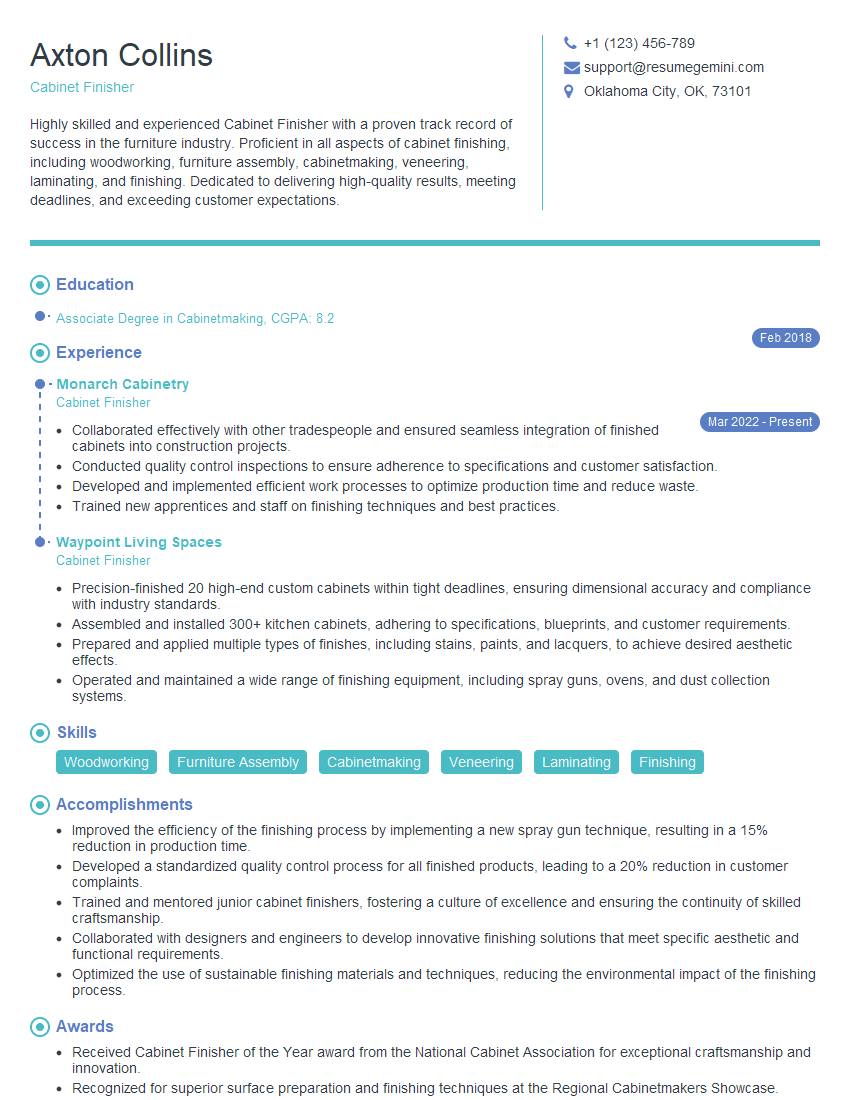
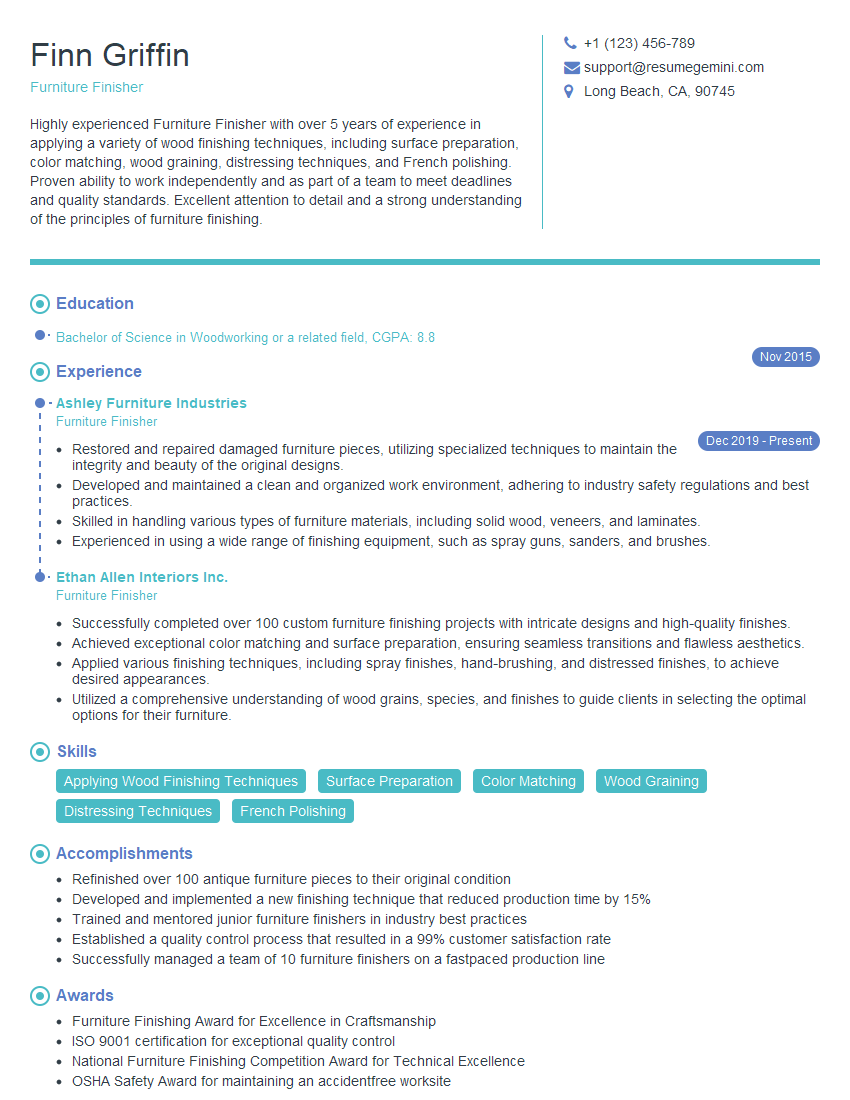
Mastering wood coating techniques and knowledge opens doors to exciting career opportunities in furniture manufacturing, construction, restoration, and more. A strong understanding of this field is highly valued by employers. To significantly boost your job prospects, crafting an ATS-friendly resume is crucial. ResumeGemini is a trusted resource that can help you build a professional and effective resume tailored to highlight your wood coating skills. Examples of resumes tailored to the Wood Coating industry are available to help guide you.

Explore more articles
Users Rating of Our Blogs
Share Your Experience
We value your feedback! Please rate our content and share your thoughts (optional).
What Readers Say About Our Blog
hello,
Our consultant firm based in the USA and our client are interested in your products.
Could you provide your company brochure and respond from your official email id (if different from the current in use), so i can send you the client’s requirement.
Payment before production.
I await your answer.
Regards,
MrSmith
hello,
Our consultant firm based in the USA and our client are interested in your products.
Could you provide your company brochure and respond from your official email id (if different from the current in use), so i can send you the client’s requirement.
Payment before production.
I await your answer.
Regards,
MrSmith
These apartments are so amazing, posting them online would break the algorithm.
https://bit.ly/Lovely2BedsApartmentHudsonYards
Reach out at [email protected] and let’s get started!
Take a look at this stunning 2-bedroom apartment perfectly situated NYC’s coveted Hudson Yards!
https://bit.ly/Lovely2BedsApartmentHudsonYards
Live Rent Free!
https://bit.ly/LiveRentFREE
Interesting Article, I liked the depth of knowledge you’ve shared.
Helpful, thanks for sharing.
Hi, I represent a social media marketing agency and liked your blog
Hi, I represent an SEO company that specialises in getting you AI citations and higher rankings on Google. I’d like to offer you a 100% free SEO audit for your website. Would you be interested?