Interviews are opportunities to demonstrate your expertise, and this guide is here to help you shine. Explore the essential Piping Construction Management interview questions that employers frequently ask, paired with strategies for crafting responses that set you apart from the competition.
Questions Asked in Piping Construction Management Interview
Q 1. Explain the different types of piping systems and their applications.
Piping systems are categorized based on their application and the fluids they transport. Think of them like roads – different types for different purposes.
- High-Pressure Piping Systems: These systems handle fluids at significantly elevated pressures, often requiring thicker pipe walls and specialized fittings. Examples include those found in power plants, refineries, and chemical processing facilities, transporting high-pressure steam or corrosive chemicals. The design needs to account for the immense forces involved.
- Low-Pressure Piping Systems: These systems operate at lower pressures and are used for applications like water distribution networks, HVAC systems, and fire protection systems. Materials are chosen for durability and cost-effectiveness, not necessarily extreme pressure resistance.
- Process Piping Systems: These are crucial for industrial processes, transporting fluids between different units. They can range from low to high pressure, dealing with everything from water and air to hazardous chemicals. Careful selection of materials is critical to avoid corrosion and leaks, with frequent consideration of material compatibility with the transported fluid.
- Drainage Piping Systems: Primarily for removing wastewater and other liquid waste. The focus is on gravity flow and efficient removal. Materials must resist corrosion from various chemicals and biological agents.
- Fire Protection Piping Systems: Designed to rapidly distribute water or fire suppressant agents during a fire. These systems require regular testing and maintenance to ensure reliability and responsiveness.
The selection of a piping system depends heavily on the fluid’s properties (temperature, pressure, corrosiveness), the required flow rate, and safety regulations.
Q 2. Describe your experience with piping isometric drawings and their importance in construction.
Piping isometric drawings are three-dimensional representations of piping systems, providing a comprehensive view of pipe runs, fittings, valves, and supports. They’re like a detailed roadmap for the construction crew.
My experience includes reviewing, interpreting, and utilizing isometric drawings extensively throughout various projects. I’ve used them to:
- Material Takeoff: Accurately determine the quantities of pipe, fittings, valves, and other components needed.
- Fabrication Planning: Guide the shop fabrication process by providing precise measurements and configurations.
- Field Installation: Provide installers with a clear picture of the piping layout, minimizing errors and reducing rework.
- Clash Detection: Identify conflicts with other disciplines (e.g., structural steel, electrical conduits) before construction begins, saving significant time and cost.
The importance of accurate and complete isometric drawings cannot be overstated. They are fundamental for efficient and error-free piping construction. A small mistake on the drawing can lead to costly delays and modifications in the field.
Q 3. How do you manage piping material takeoffs and ensure accurate quantity estimations?
Managing piping material takeoffs requires a methodical approach to ensure accurate quantity estimations. Imagine it as meticulously planning a grocery shopping list based on a detailed recipe.
My process involves:
- Review Isometric Drawings: Carefully analyze the drawings to identify all pipe segments, fittings, valves, and supports.
- Data Extraction: Use software tools (e.g., AutoCAD, specialized piping takeoff software) to extract pipe dimensions and component quantities. This often involves using customized spreadsheets or databases to track the data systematically.
- Component Specifications: Verify the pipe specifications (diameter, schedule, material) and confirm the required components (valves, flanges, gaskets) match the project requirements.
- Quantity Calculation: Calculate the total length of each pipe size and the number of each fitting type. This will often involve accounting for cutting and waste factors.
- Quantity Verification: Cross-check calculations using multiple methods to minimize errors. This is best done by at least two people working independently.
- Material List Creation: Prepare a comprehensive material list specifying each component’s quantity, specifications, and vendor information. This list is a critical document for procurement.
Regular checks and balances throughout this process are crucial to catch errors early and prevent material shortages or overstocking.
Q 4. What are the key considerations for piping stress analysis and support design?
Piping stress analysis and support design are vital to ensure the structural integrity and safety of the piping system. Think of it like building a bridge – you need to ensure it can withstand the loads and maintain its shape.
Key considerations include:
- Fluid Properties: The pressure, temperature, and density of the fluid significantly influence the stresses on the pipes.
- Pipe Material: The material’s strength, elasticity, and corrosion resistance affect its ability to withstand stress.
- Thermal Expansion: Changes in temperature cause pipes to expand and contract, which can create significant stresses if not properly accounted for. Expansion loops, bellows, and flexible joints are common solutions.
- Weight and Dead Loads: The weight of the pipe itself, the fluid, and any insulation adds to the overall load on the supports.
- Dynamic Loads: Operational factors like fluid flow, vibrations, and seismic activity can create dynamic stresses.
- Support Spacing and Type: The placement and type of supports are critical in distributing the loads evenly and minimizing stress concentrations.
Software packages like CAESAR II are commonly used for sophisticated stress analysis. The goal is to design a system that operates safely within allowable stress limits, preventing failures and leaks.
Q 5. Explain your understanding of piping fabrication and installation processes.
Piping fabrication and installation involve a series of steps that transform raw materials into a functional piping system. Think of it as assembling a complex puzzle, with precision and quality control being paramount.
Fabrication:
- Cutting and Beveling: Pipes are cut to length and the edges are beveled for welding.
- Welding: Pipes and fittings are joined using various welding techniques (e.g., SMAW, GMAW). Welding quality is crucial and is rigorously inspected.
- Assembly: Components are assembled according to the isometric drawings, ensuring proper alignment and support.
- Testing: Pressure testing verifies the integrity of welds and the system’s ability to withstand the design pressure.
Installation:
- Support Installation: Supports are installed to hold the pipes securely and distribute the loads evenly.
- Pipe Placement: Pipes are carefully placed and aligned according to the drawings.
- Component Installation: Valves, fittings, and other components are installed with precision.
- Alignment and Support Verification: Ensuring the pipes are correctly aligned and properly supported is crucial for system stability.
- Insulation (if required): Pipes are insulated to prevent heat loss or gain, maintaining fluid temperature.
Throughout both fabrication and installation, adherence to safety standards and quality control procedures is paramount.
Q 6. How do you ensure compliance with relevant piping codes and standards (e.g., ASME B31.1, B31.3)?
Compliance with relevant piping codes and standards like ASME B31.1 (Power Piping) and ASME B31.3 (Process Piping) is non-negotiable for safety and legal reasons. These codes are like rulebooks for building safe and reliable piping systems.
My approach to ensuring compliance includes:
- Code Familiarization: In-depth understanding of the applicable codes and standards, including the design requirements, material specifications, and testing procedures.
- Design Review: Thorough review of design documents to ensure compliance with relevant code requirements. This involves checking pipe materials, wall thicknesses, stress analysis results, and support design.
- Material Selection: Selecting materials according to the code’s specifications based on the fluid’s properties and operating conditions.
- Fabrication and Welding Procedures: Ensuring fabrication and welding processes adhere to code requirements, employing qualified welders and inspectors.
- Inspection and Testing: Implementing a comprehensive inspection and testing program to verify compliance throughout the construction process. This includes non-destructive testing of welds.
- Documentation: Maintaining meticulous documentation to prove compliance with all relevant code requirements, including Material Test Reports (MTRs), Welding Procedure Specifications (WPSs), and inspection reports.
Non-compliance can lead to serious safety hazards and significant legal consequences, making adherence to codes a top priority.
Q 7. Describe your experience with piping pre-commissioning and commissioning activities.
Piping pre-commissioning and commissioning activities verify the system’s readiness for operation. Think of it as a final check-up before driving a new car.
Pre-commissioning: This stage involves inspecting and testing individual components and subsystems before integration into the main system. This includes verifying the functionality of valves, instruments, and pumps. We would check that all components meet specifications and are properly installed.
Commissioning: This involves testing the entire system as a whole. Key activities include:
- Pressure Testing: Verifying the system’s ability to withstand design pressures without leaks.
- Leak Testing: Thoroughly checking for leaks throughout the entire system.
- Functional Testing: Testing the system’s ability to perform its intended function, including flow rate, pressure drop, and temperature control.
- Instrumentation and Control System Testing: Verifying the accuracy and reliability of instruments and control systems.
- Hydrostatic Testing: Filling the system with water and pressurizing it to verify the structural integrity of the piping system.
Documentation of all pre-commissioning and commissioning activities is critical, providing evidence of system readiness and compliance with operational requirements. This also provides a basis for troubleshooting should issues arise during operation.
Q 8. How do you manage and mitigate risks associated with piping construction projects?
Risk management in piping construction is paramount. It’s not just about identifying potential problems; it’s about proactively mitigating them before they impact the project’s schedule, budget, or safety. My approach involves a multi-layered strategy:
- Hazard Identification: We start with a thorough HAZOP (Hazard and Operability) study, identifying potential hazards throughout the project lifecycle, from design to commissioning. This involves brainstorming sessions with engineers, contractors, and safety professionals.
- Risk Assessment: Each identified hazard is assessed based on its likelihood and severity. This helps prioritize which risks need immediate attention.
- Risk Mitigation: We develop and implement control measures to reduce or eliminate identified risks. This could include things like improved design specifications, enhanced safety training, use of specialized equipment, or implementing stricter quality control protocols. For example, if a risk assessment highlights the possibility of pipe corrosion, we might specify corrosion-resistant materials or implement a rigorous inspection program.
- Contingency Planning: We develop detailed contingency plans to handle unforeseen events. This includes having backup suppliers, alternative construction methods, and financial reserves to address unexpected delays or cost overruns.
- Regular Monitoring and Review: Risk management isn’t a one-time event. We continuously monitor the project for emerging risks and adjust our mitigation strategies accordingly. Regular safety meetings and progress reviews are crucial for this process.
For instance, on a recent offshore platform project, our preemptive risk assessment regarding potential equipment failures during deep-sea installation led us to secure backup equipment and establish a rapid response team. This prevented a significant delay when a critical piece of equipment malfunctioned during the operation.
Q 9. What are your strategies for managing piping construction schedules and budgets?
Managing schedules and budgets in piping construction requires a disciplined approach. It’s about balancing speed with precision. My strategies center around:
- Detailed Scheduling: We use critical path method (CPM) scheduling software to create a detailed project schedule that identifies critical tasks and dependencies. This allows for proactive identification and management of potential delays. This schedule isn’t just a static document; we regularly update it based on progress and any unforeseen challenges.
- Cost Estimation: We develop a comprehensive budget by meticulously estimating the cost of materials, labor, equipment, and other project expenses. Contingency reserves are built into the budget to account for potential cost overruns.
- Progress Tracking: Regular progress monitoring is vital. We track actual progress against the scheduled timeline and budget, using earned value management (EVM) techniques. This allows us to identify potential deviations early on and take corrective actions.
- Change Management: In any project, changes are inevitable. We have a formal change management process to evaluate the impact of any changes on the schedule and budget before implementation. This process involves proper documentation, approval, and cost/time impact assessments.
- Communication: Open communication with the client, subcontractors, and the project team is essential. Regular meetings and progress reports keep everyone informed and aligned.
Think of it like building with LEGOs: a detailed plan (schedule) ensures you have all the right pieces (resources) at the right time to build the final structure (project) within the set budget. Any deviation requires adjustments to the plan to stay on track.
Q 10. How do you handle conflicts or challenges during piping installation?
Conflicts and challenges are inevitable in any construction project. My approach to handling them is proactive and collaborative:
- Early Identification: We encourage open communication to identify potential conflicts early on. This might involve regular site meetings and open dialogue between different teams.
- Mediation and Negotiation: When conflicts arise, we strive for amicable resolution through mediation and negotiation. This involves facilitating discussions between the involved parties to find a mutually acceptable solution.
- Documentation: Thorough documentation of all communication, decisions, and agreements is crucial. This helps prevent misunderstandings and provides a record for future reference.
- Escalation Procedure: If negotiation fails, we have a clear escalation procedure to refer the matter to higher management for resolution. This ensures a fair and timely resolution process.
- Lessons Learned: After resolving a conflict, we conduct a post-mortem analysis to understand the root causes and implement preventative measures to avoid similar issues in the future.
For instance, a clash between the piping layout and electrical conduit routing on a recent data center project was resolved by creating a 3D model of the entire system. This visualization allowed the teams to identify the conflict early and redesign the piping layout in a way that avoided interference.
Q 11. Describe your experience with different piping joining methods (e.g., welding, flanges, threaded connections).
My experience encompasses a wide range of piping joining methods, each with its own strengths and weaknesses:
- Welding: Provides a strong, permanent joint. Requires skilled welders and adherence to strict quality control procedures to ensure code compliance and prevent defects such as porosity or incomplete fusion. We use different welding processes like SMAW, GMAW, and GTAW depending on material and application requirements.
- Flanges: Offer a readily detachable joint, ideal for maintenance and repairs. Require precise alignment and torqueing to ensure leak-free performance. Different flange types (e.g., slip-on, weld-neck, blind) are chosen based on pressure rating and application.
- Threaded Connections: Simple and quick to install, suitable for smaller diameter pipes and lower pressure applications. Require proper thread sealing to prevent leaks. Over-tightening can damage the threads.
- Other methods: We also use other methods such as grooved connections, compression fittings, and Victaulic couplings for specific applications depending on the system pressure, temperature, and material.
Choosing the right joining method is critical. It depends on factors such as pipe material, diameter, pressure, temperature, and accessibility. For high-pressure steam lines, welding might be mandatory for safety and reliability, while threaded connections might be suitable for low-pressure water lines.
Q 12. How do you ensure quality control and quality assurance throughout the piping construction process?
Quality control and quality assurance (QC/QA) are integral to successful piping construction. My approach is a proactive, multi-faceted one:
- Material Inspection: We start by verifying the quality of all incoming materials, ensuring they meet the required specifications and certifications. This includes visual inspection, dimensional checks, and material testing (e.g., chemical analysis, tensile strength testing).
- Fabrication Control: During fabrication, we implement rigorous quality control checks at each stage. This involves regular inspections of welds, visual checks for dimensional accuracy, and non-destructive testing (NDT) such as radiography or ultrasonic testing to detect any flaws.
- Installation Verification: Once the pipes are installed, we conduct thorough inspections to ensure proper alignment, support, and correct routing. This includes checking for leaks and ensuring all connections are properly made.
- Documentation: We maintain detailed records of all QC/QA activities, including inspection reports, test results, and non-conformity reports. This documentation is crucial for traceability and auditing.
- Third-Party Inspection: We often engage third-party inspection agencies to provide independent verification of our QC/QA program. This ensures objectivity and adherence to industry standards.
Think of QC/QA as a continuous loop of inspection, verification, and correction, ensuring that every step in the process meets the highest quality standards. A proactive QC/QA program significantly reduces rework and helps prevent costly failures down the line.
Q 13. What are your methods for conducting regular piping inspections and testing?
Regular inspections and testing are crucial for ensuring the long-term integrity and safety of piping systems. Our inspection and testing procedures vary depending on the specific application and system but typically include:
- Visual Inspections: Regular visual inspections are conducted to check for signs of corrosion, damage, leaks, or other anomalies. These inspections might be performed weekly, monthly, or more frequently, depending on the operating conditions and criticality of the system.
- Hydrostatic Testing: This involves pressurizing the piping system with water to verify its ability to withstand the design pressure. This is a crucial step before commissioning.
- Pneumatic Testing: Similar to hydrostatic testing, but uses compressed air instead of water. It is generally used for smaller diameter pipes or systems where water testing is impractical.
- Non-Destructive Testing (NDT): Various NDT methods such as radiography, ultrasonic testing, and magnetic particle inspection are used to detect internal and external flaws in the piping system.
- Leak Detection: We utilize various leak detection methods, including pressure monitoring, acoustic emission testing, and visual inspection, to identify and address any leaks promptly.
Inspection and testing aren’t just about finding problems; they’re about preventing them. Regular inspections allow for the early detection of potential problems before they escalate into major failures, saving time, money, and reducing safety risks.
Q 14. How do you manage and motivate a piping construction crew?
Managing and motivating a piping construction crew is about more than just assigning tasks; it’s about building a high-performing team. My approach is based on:
- Clear Communication: Keeping the team informed about project goals, progress, and expectations is crucial. Regular team meetings and open communication channels foster transparency and trust.
- Respect and Recognition: Treating every team member with respect and acknowledging their contributions is essential. Celebrating successes, both big and small, boosts morale and motivation.
- Training and Development: Investing in the training and development of team members enhances their skills and promotes professional growth. This not only improves productivity but also shows a commitment to their career development.
- Safety Emphasis: Prioritizing safety is paramount. We reinforce safety protocols, provide appropriate personal protective equipment (PPE), and conduct regular safety training. A safe work environment fosters a positive and productive atmosphere.
- Fair Compensation and Benefits: Offering fair compensation and benefits is essential for attracting and retaining skilled workers. A well-compensated team is a motivated team.
Think of a sports team: a successful team is one where members trust each other, communicate effectively, and work towards a common goal. Applying the same principles to a construction crew fosters a productive and collaborative environment.
Q 15. Explain your experience with different piping materials and their properties.
My experience encompasses a wide range of piping materials, each chosen based on the specific application, pressure, temperature, and corrosive environment. Understanding their properties is crucial for successful project delivery.
Carbon Steel: The workhorse of piping systems, offering excellent strength and weldability. However, it’s susceptible to corrosion, particularly in harsh environments. I’ve extensively used carbon steel in numerous projects, including high-pressure steam lines where its strength is paramount. We always consider proper coatings and corrosion inhibitors to extend its lifespan.
Stainless Steel: Known for its corrosion resistance, stainless steel is ideal for applications involving chemicals, acids, or other corrosive substances. Different grades (e.g., 304, 316) offer varying degrees of corrosion resistance and strength. I’ve managed projects involving pharmaceutical and food processing plants where stainless steel was essential for hygiene and product integrity. Proper welding techniques are critical here to maintain the material’s integrity.
PVC and CPVC: These plastics are lightweight, corrosion-resistant, and cost-effective. They are suitable for low-pressure applications such as potable water distribution and drainage systems. I’ve overseen projects utilizing these materials in building construction, where their ease of installation and low maintenance are significant advantages. However, their temperature limitations must be carefully considered.
Ductile Iron: Offers high strength and durability, making it suitable for underground piping systems handling water or wastewater. Its resistance to external loads and corrosion is a key advantage. In one project, we utilized ductile iron to replace aging cast iron pipes in a municipal water distribution system, significantly improving reliability.
Material selection is a complex process. It involves evaluating factors like cost, lifespan, maintenance needs, and regulatory compliance. I always involve experienced engineers and material specialists in the decision-making process to ensure optimal choices.
Career Expert Tips:
- Ace those interviews! Prepare effectively by reviewing the Top 50 Most Common Interview Questions on ResumeGemini.
- Navigate your job search with confidence! Explore a wide range of Career Tips on ResumeGemini. Learn about common challenges and recommendations to overcome them.
- Craft the perfect resume! Master the Art of Resume Writing with ResumeGemini’s guide. Showcase your unique qualifications and achievements effectively.
- Don’t miss out on holiday savings! Build your dream resume with ResumeGemini’s ATS optimized templates.
Q 16. How do you handle changes in piping design or specifications during construction?
Changes in piping design or specifications are inevitable in large-scale projects. My approach involves a systematic process that minimizes disruption and maintains project schedule and budget.
Formal Change Request: All changes must be documented through a formal change request process. This ensures proper review and approval by relevant stakeholders, including engineering, procurement, and construction teams.
Impact Assessment: The engineering team assesses the impact of the proposed changes on the overall project—cost, schedule, and safety. This analysis is crucial for informed decision-making.
Redesign and Documentation: If approved, the design is updated to reflect the changes. All revised drawings and specifications are circulated to the construction team.
Communication and Coordination: Clear and timely communication is paramount. All stakeholders are kept informed of the changes and their implications. We often hold meetings to address concerns and ensure everyone is on the same page.
Cost and Schedule Update: The project schedule and budget are updated to reflect the revised design and any associated costs.
For instance, in a recent petrochemical plant project, a change in pump specifications required redesigning a significant section of the piping system. We followed the formal change request procedure, carefully assessed the implications, and successfully implemented the changes with minimal impact on the project timeline.
Q 17. Describe your experience with using piping construction software and tools.
I am proficient in several piping construction software and tools, including AutoCAD Plant 3D, PDMS (AVEVA), and SPI (SmartPlant Instrumentation). These tools are invaluable for design, modeling, and data management in piping projects.
AutoCAD Plant 3D: I use this extensively for 3D modeling, isometric drawings, and material takeoffs. It helps optimize piping layouts, identify clashes, and generate detailed fabrication drawings.
PDMS (AVEVA): I’ve utilized this for large, complex projects, benefiting from its advanced features for collaboration and data management among multiple disciplines.
SPI (SmartPlant Instrumentation): This software streamlines the design and management of instrumentation and control systems, crucial for integrating them seamlessly with piping systems.
Beyond the software, I’m also experienced with various field tools like laser levels, pipe-fitting tools, and specialized inspection equipment to ensure accurate installation and quality control. Proficient use of these technologies ensures efficiency and accuracy throughout the project lifecycle.
Q 18. How do you ensure safe working practices on a piping construction site?
Safety is my paramount concern. I implement a robust safety program adhering to OSHA (or relevant regional) regulations and best practices. My approach includes:
Pre-construction Safety Planning: Detailed risk assessments, site-specific safety plans, and emergency response procedures are developed before any work commences.
Toolbox Talks and Training: Regular toolbox talks educate workers about potential hazards and safe work practices. Specialized training is provided for tasks like confined space entry, working at heights, and handling hazardous materials.
Personal Protective Equipment (PPE): Strict enforcement of PPE usage, including hard hats, safety glasses, gloves, and fall protection equipment, is crucial.
Permit-to-Work System: A formal permit-to-work system controls high-risk activities, such as hot work (welding, cutting) and confined space entry. This ensures proper precautions are taken before commencing such activities.
Regular Inspections and Audits: Regular site inspections and audits ensure compliance with safety procedures and identify potential hazards.
Incident Reporting and Investigation: A robust system for reporting and investigating incidents helps identify root causes and prevent future occurrences.
Safety isn’t just a policy; it’s a culture I foster on every project. Open communication, proactive hazard identification, and a commitment to continuous improvement are essential for maintaining a safe work environment.
Q 19. What is your approach to resolving piping leaks or other unexpected issues?
Addressing piping leaks or unexpected issues requires a quick, systematic response to minimize downtime and potential damage.
Immediate Isolation: The first step is to isolate the affected section of the piping system to prevent further leakage and potential hazards. This often involves closing valves or employing other isolation methods.
Leak Assessment and Identification: A thorough assessment is conducted to determine the leak’s location, severity, and potential causes. Visual inspection, pressure testing, or other diagnostic techniques may be used.
Repair or Replacement: Depending on the severity and location of the leak, repairs may range from simple leak sealing to complete pipe section replacement. The chosen method considers factors like material availability, accessibility, and project downtime.
Root Cause Analysis: After the repair, a root cause analysis identifies the underlying cause of the leak. This could be due to corrosion, improper installation, material defects, or external damage. Addressing the root cause is crucial to prevent recurrence.
Documentation and Reporting: All actions taken, including the repair method, root cause analysis, and corrective actions, are thoroughly documented and reported.
In one instance, a leak in a critical process line was quickly isolated, the faulty section replaced, and the system restored to operation within a few hours, minimizing production downtime.
Q 20. How do you manage piping insulation and fireproofing requirements?
Managing piping insulation and fireproofing is critical for energy efficiency, personnel safety, and regulatory compliance. My experience covers various aspects of this:
Material Selection: The choice of insulation material depends on factors such as temperature, environmental conditions, and fire safety requirements. Common materials include fiberglass, mineral wool, calcium silicate, and polyurethane foam. Fireproofing materials, such as intumescent coatings or spray-applied fire-resistive material (SFRM), are chosen based on fire rating needs.
Installation Procedures: Proper insulation and fireproofing installation is crucial for effectiveness. This includes ensuring correct thickness, proper sealing, and adherence to manufacturer’s specifications. We use qualified and trained installers to ensure quality workmanship.
Quality Control: Regular inspections and quality control checks during and after installation are essential to ensure the work meets the specified requirements. This includes visual inspections, thickness measurements, and sometimes non-destructive testing.
Regulatory Compliance: We ensure that the insulation and fireproofing meet all relevant codes and standards. This may involve obtaining certifications or third-party inspections.
In a recent power plant project, we carefully selected and installed high-temperature insulation on steam lines to minimize heat loss and meet strict safety regulations. The rigorous quality control measures ensured efficient and safe operation of the system.
Q 21. Explain your experience with hydrotesting and pneumatic testing of piping systems.
Hydrotesting and pneumatic testing are crucial for verifying the integrity of piping systems before commissioning. My experience involves planning, execution, and interpretation of results for both methods.
Hydrotesting: This involves filling the piping system with water and pressurizing it to a specified pressure. The system is then monitored for leaks or pressure drops. Hydrotesting is generally preferred for its safety and the ability to detect small leaks. I’ve overseen many hydrotests, carefully monitoring pressure gauges, and performing visual inspections for any signs of leakage.
Pneumatic Testing: This involves pressurizing the piping system with air or nitrogen. It’s faster than hydrotesting but requires more stringent safety measures due to the potential for sudden pressure releases. I’ve managed pneumatic tests, emphasizing strict safety protocols and using appropriate pressure-relief valves.
The choice between hydrotesting and pneumatic testing depends on factors such as system size, pressure rating, and the presence of sensitive components. Regardless of the method, detailed procedures, safety precautions, and thorough documentation are essential for successful and safe testing.
Q 22. How do you track and manage piping construction progress?
Tracking and managing piping construction progress requires a multi-faceted approach combining meticulous planning with real-time monitoring. I typically employ a combination of methods, starting with a detailed project schedule created using tools like Primavera P6 or MS Project. This schedule breaks down the project into smaller, manageable tasks with defined durations and dependencies. Progress is then tracked against this baseline schedule using various techniques:
- Regular Progress Meetings: Weekly or bi-weekly meetings with the project team, subcontractors, and client representatives to review progress against the schedule, identify potential delays, and implement corrective actions.
- Progress Reporting: Daily or weekly reports are generated, often using project management software, to quantify completed work, outstanding tasks, and resource allocation. These reports often include visuals like Gantt charts and progress curves.
- Field Inspections: Regular site visits are crucial to verify progress, identify potential issues, and ensure quality control. This allows for early identification and resolution of problems, preventing cascading delays.
- Earned Value Management (EVM): For larger, more complex projects, I implement EVM to objectively assess project performance, comparing planned vs. actual costs and schedule. This provides a comprehensive overview of project health and allows for proactive management.
- Document Control: Maintaining a robust document control system is crucial for tracking revisions to drawings, specifications, and other crucial documents. This ensures everyone is working with the most up-to-date information.
For example, on a recent petrochemical plant project, utilizing EVM allowed us to identify a potential cost overrun early on, prompting us to renegotiate contracts with certain subcontractors and optimize resource allocation, thus avoiding significant financial repercussions.
Q 23. Describe your experience with working with different stakeholders on piping projects.
Effective stakeholder management is critical to the success of any piping project. My experience encompasses working with a diverse range of stakeholders, including clients, engineers, designers, fabricators, inspectors, and construction crews. I build strong relationships based on open communication, trust, and mutual respect. This involves:
- Regular Communication: Maintaining clear and consistent communication channels through regular meetings, email updates, and progress reports. This ensures transparency and allows for timely addressing of concerns.
- Conflict Resolution: Proactively identifying and resolving conflicts through collaborative discussions and negotiation. Understanding the perspective of each stakeholder is key to finding mutually agreeable solutions.
- Collaboration: Encouraging collaboration amongst all stakeholders through joint planning sessions and problem-solving workshops. This fosters a team spirit and ensures everyone is working towards the same goals.
- Meeting Expectations: Understanding the specific needs and expectations of each stakeholder and ensuring that they are met throughout the project lifecycle.
For instance, on a refinery upgrade, I successfully navigated a dispute between the client and a subcontractor concerning material specifications by facilitating a technical discussion involving all parties, ultimately resulting in a compromise that satisfied everyone and avoided project delays.
Q 24. How do you ensure compliance with environmental regulations during piping construction?
Ensuring environmental compliance during piping construction is paramount. My approach involves a multi-pronged strategy that begins even before construction commences:
- Pre-Construction Planning: Thorough review of all relevant environmental regulations and permits, including permits for discharge, air emissions, and waste disposal. This includes identifying potential environmental risks and developing mitigation plans.
- Environmental Management Plan (EMP): Development and implementation of a comprehensive EMP outlining procedures for waste management, spill prevention and response, air quality monitoring, and erosion and sedimentation control. This plan is tailored to the specific project site and environmental conditions.
- Training and Awareness: Providing all construction personnel with training on environmental regulations and the EMP to ensure they understand their responsibilities and the importance of environmental protection.
- Regular Monitoring and Reporting: Regular monitoring of environmental parameters, such as air and water quality, to ensure compliance with regulations. Regular reporting of environmental performance is submitted to regulatory bodies.
- Emergency Response Plan: Having a detailed emergency response plan in place to handle potential environmental incidents, including spills or releases of hazardous materials.
For example, on a recent pipeline project, we implemented a comprehensive spill prevention and response plan that included regular inspections, emergency response training, and the use of specialized equipment, ensuring no environmental damage occurred during the construction phase.
Q 25. What is your approach to managing waste and disposal during piping construction?
Waste management and disposal are integral aspects of responsible piping construction. My approach focuses on minimizing waste generation, promoting recycling, and ensuring safe and compliant disposal:
- Waste Minimization Strategies: Implementing strategies to reduce waste generation, such as precise material take-offs and optimized cutting techniques. This involves careful planning and coordination with fabricators and suppliers.
- Waste Segregation and Recycling: Establishing a system for segregating different types of waste (metal, plastic, wood, etc.) to facilitate recycling and proper disposal. This often involves on-site recycling bins and coordination with waste management companies.
- Hazardous Waste Management: Handling hazardous waste materials (e.g., paints, solvents) according to regulations. This includes proper labeling, storage, and transportation to licensed disposal facilities.
- Documentation and Reporting: Maintaining detailed records of waste generation, recycling rates, and disposal methods to demonstrate compliance with environmental regulations.
On a recent power plant project, we implemented a waste management program that resulted in a 25% reduction in overall waste generation and a 40% increase in recycling rates compared to previous projects, significantly reducing our environmental impact.
Q 26. Explain your understanding of piping support design and installation.
Piping support design and installation are critical for the structural integrity and operational safety of piping systems. My understanding encompasses both the design aspects and the practical considerations of installation:
- Design Considerations: Understanding the various types of supports (e.g., anchors, hangers, guides, restraints) and their functions. Selecting appropriate support types based on pipe size, material, operating conditions, and environmental factors. This involves using industry standards like ASME B31.1 or B31.3 for design calculations.
- Stress Analysis: Utilizing software like CAESAR II or AutoPIPE to perform stress analysis to ensure that the piping system can withstand operating loads and seismic events without exceeding allowable stress limits.
- Support Spacing and Location: Proper spacing and location of supports are crucial for minimizing stress and vibration. This involves considering factors like pipe weight, thermal expansion, and dynamic loads.
- Installation Practices: Ensuring proper installation of supports, including accurate alignment, secure fastening, and compliance with design specifications. This involves overseeing the work of skilled installers and performing regular inspections.
For example, I’ve successfully overseen the design and installation of complex piping support systems for high-pressure steam lines in power plants, ensuring the structural integrity and safe operation of these critical systems.
Q 27. Describe your experience with different types of piping valves and their functions.
My experience includes working with a wide range of piping valves, each serving a specific function in controlling the flow of fluids. Here are some examples:
- Gate Valves: Used for on/off service, providing full flow when open and complete closure when shut. They are typically not suitable for throttling (regulating flow).
- Globe Valves: Used for throttling and on/off service. They provide more precise flow control than gate valves, but offer higher pressure drop.
- Ball Valves: Used for on/off service, offering quick opening and closing. They are compact and relatively inexpensive, often used in less demanding applications.
- Butterfly Valves: Used for on/off and throttling service. They are compact and offer relatively quick operation, but may not provide as tight a seal as globe or gate valves.
- Check Valves: Prevent backflow in a piping system. They automatically open in the direction of flow and close when the flow reverses.
- Control Valves: Used to automatically regulate flow, pressure, or temperature in response to process demands. They often incorporate pneumatic or electric actuators.
Understanding the specific characteristics and applications of each valve type is crucial for selecting the right valve for a given application and ensuring the safe and efficient operation of the piping system.
Q 28. How do you use technology to improve efficiency and productivity in piping construction?
Technology plays a vital role in enhancing efficiency and productivity in piping construction. I leverage various technologies to improve different aspects of the project lifecycle:
- Building Information Modeling (BIM): Using BIM software to create 3D models of the piping system, allowing for clash detection, improved coordination with other disciplines, and enhanced visualization for stakeholders.
- Project Management Software: Employing software like Primavera P6 or MS Project for scheduling, cost control, and resource allocation. This improves planning, tracking progress, and identifying potential delays.
- Laser Scanning and 3D Modeling: Using laser scanning technology to create accurate as-built models of existing piping systems, facilitating efficient modifications and retrofits.
- Robotics and Automation: Exploring the use of robots for welding, pipe fitting, and other repetitive tasks, leading to increased efficiency and improved quality.
- Digital Twin Technology: Creating a digital representation of the piping system that mirrors its real-world counterpart, allowing for simulation, predictive maintenance, and optimized operations.
For example, on a recent project, the use of BIM helped us identify and resolve potential clashes between piping and structural elements during the design phase, preventing costly rework and delays during construction.
Key Topics to Learn for Piping Construction Management Interview
- Piping Systems Design & Specifications: Understanding P&IDs (Piping and Instrumentation Diagrams), Isometrics, and Bill of Materials (BOM). Practical application: Interpreting design drawings to determine material requirements and construction sequencing.
- Construction Sequencing & Scheduling: Developing efficient construction schedules, considering critical path analysis and resource allocation. Practical application: Optimizing workflow to minimize delays and maximize productivity.
- Cost Estimation & Budgeting: Accurately estimating material costs, labor hours, and equipment needs. Practical application: Preparing detailed cost breakdowns and managing budgets effectively.
- Safety Regulations & Compliance: Understanding and implementing OSHA regulations and industry best practices for piping construction. Practical application: Ensuring a safe work environment and preventing accidents.
- Quality Control & Assurance: Implementing quality control measures throughout the construction process. Practical application: Performing inspections and testing to ensure compliance with design specifications and industry standards.
- Project Management Techniques: Applying project management methodologies (e.g., Agile, Waterfall) to manage piping construction projects. Practical application: Utilizing project management software and tools to track progress and manage risks.
- Material Handling & Logistics: Planning and managing the efficient delivery and handling of piping materials. Practical application: Minimizing material damage and ensuring timely delivery to the construction site.
- Welding & Fabrication: Familiarity with welding processes and fabrication techniques relevant to piping construction. Practical application: Overseeing fabrication processes and ensuring quality welds.
- Troubleshooting & Problem Solving: Identifying and resolving issues that arise during piping construction. Practical application: Developing solutions to address unexpected challenges and maintain project timelines.
- Contract Administration & Negotiation: Understanding contract terms and conditions and managing relationships with subcontractors. Practical application: Negotiating favorable contracts and resolving disputes.
Next Steps
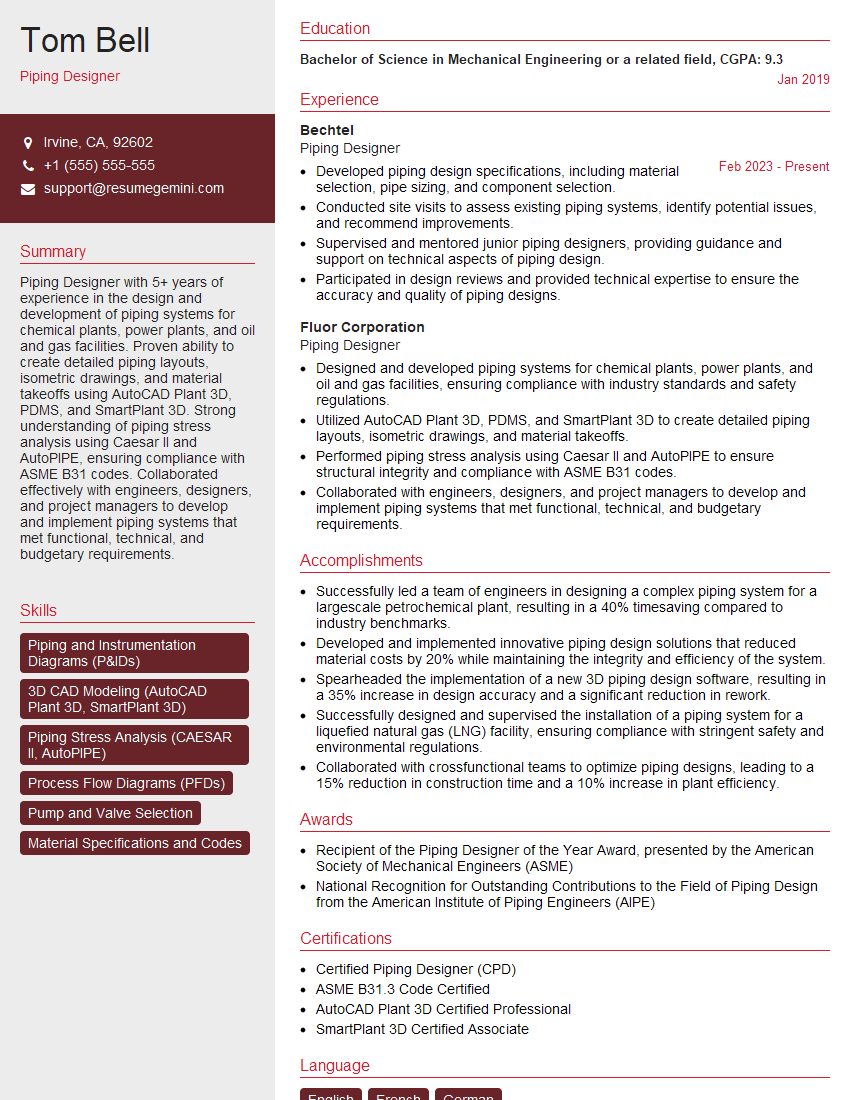
Mastering Piping Construction Management opens doors to exciting career advancements, offering opportunities for leadership roles and higher earning potential. To significantly increase your chances of landing your dream job, focus on creating an ATS-friendly resume that showcases your skills and experience effectively. ResumeGemini is a trusted resource to help you build a professional and impactful resume, ensuring your qualifications stand out. Examples of resumes tailored to Piping Construction Management are available to further guide your preparation.
Explore more articles
Users Rating of Our Blogs
Share Your Experience
We value your feedback! Please rate our content and share your thoughts (optional).
What Readers Say About Our Blog
Amazing blog
hello,
Our consultant firm based in the USA and our client are interested in your products.
Could you provide your company brochure and respond from your official email id (if different from the current in use), so i can send you the client’s requirement.
Payment before production.
I await your answer.
Regards,
MrSmith
hello,
Our consultant firm based in the USA and our client are interested in your products.
Could you provide your company brochure and respond from your official email id (if different from the current in use), so i can send you the client’s requirement.
Payment before production.
I await your answer.
Regards,
MrSmith
These apartments are so amazing, posting them online would break the algorithm.
https://bit.ly/Lovely2BedsApartmentHudsonYards
Reach out at BENSON@LONDONFOSTER.COM and let’s get started!
Take a look at this stunning 2-bedroom apartment perfectly situated NYC’s coveted Hudson Yards!
https://bit.ly/Lovely2BedsApartmentHudsonYards
Live Rent Free!
https://bit.ly/LiveRentFREE
Interesting Article, I liked the depth of knowledge you’ve shared.
Helpful, thanks for sharing.
Hi, I represent a social media marketing agency and liked your blog
Hi, I represent an SEO company that specialises in getting you AI citations and higher rankings on Google. I’d like to offer you a 100% free SEO audit for your website. Would you be interested?