The right preparation can turn an interview into an opportunity to showcase your expertise. This guide to Staying up-to-date on industry trends and best practices interview questions is your ultimate resource, providing key insights and tips to help you ace your responses and stand out as a top candidate.
Questions Asked in Staying up-to-date on industry trends and best practices Interview
Q 1. Describe your process for identifying relevant industry trends.
Identifying relevant industry trends is a systematic process that combines proactive research with mindful observation. I begin by defining the specific area I need to monitor. For example, if I’m focused on improving our customer relationship management (CRM) system, I’ll narrow my focus to CRM trends, rather than broader tech trends. Then, I employ a multi-pronged approach:
Keyword Monitoring: I use tools that track mentions of specific keywords and phrases relevant to my industry on social media, news sites, and industry-specific publications. This helps me catch emerging topics quickly.
Competitor Analysis: I regularly review my competitors’ activities, looking for shifts in their strategies, product offerings, and marketing efforts. This provides valuable insights into evolving industry demands and best practices.
Industry Reports and Publications: I subscribe to reputable industry publications, research reports, and newsletters. These offer in-depth analyses and forecasts of industry trends.
Networking and Conferences: Attending industry events and networking with colleagues allows me to gather firsthand insights and hear about emerging trends directly from experts and peers. Conversations often uncover trends that aren’t yet widely publicized.
Finally, I synthesize all this information, filtering out noise and focusing on trends with significant potential impact on my work.
Q 2. What resources do you utilize to stay current on best practices?
Staying current on best practices requires access to a diverse range of reliable resources. My arsenal includes:
Professional Organizations: Membership in relevant professional organizations (e.g., Project Management Institute, American Marketing Association) provides access to resources, publications, and networking opportunities that highlight best practices.
Online Courses and Webinars: Platforms like Coursera, edX, and LinkedIn Learning offer courses on a wide range of topics, allowing me to learn new skills and stay abreast of the latest techniques. Webinars provide shorter, focused learning opportunities.
Industry Blogs and Podcasts: Many industry leaders and experts maintain blogs and podcasts where they share their insights and best practices. These often offer a more informal and accessible way to learn.
Books and Academic Journals: For deeper understanding, I consult books and academic journals. While they might not always be the fastest source of information, they provide a robust foundation.
Peer Review and Mentorship: I actively seek feedback from colleagues and mentors. Discussing challenges and solutions with others helps identify and refine best practices.
Q 3. How do you evaluate the credibility of industry information sources?
Evaluating the credibility of industry information is crucial to avoid misinformation. I use several criteria:
Author Expertise: I check the author’s credentials and experience to ensure they have the necessary expertise in the subject matter. Looking for publications, professional affiliations, or previous work in the field is helpful.
Source Reputation: I prefer information from established and reputable sources like well-known publications, respected organizations, or academic institutions. I’m more cautious with information from unknown or biased sources.
Data and Evidence: Credible information is typically supported by data, research, or evidence. Claims without supporting evidence should be treated with skepticism.
Peer Review and Validation: If possible, I look for information that has been peer-reviewed or corroborated by multiple independent sources. This reduces the risk of relying on inaccurate or incomplete information.
Date of Publication: The timeliness of information is important, especially in rapidly evolving fields. I prefer the most recent information available, recognizing that best practices can change quickly.
By carefully evaluating information sources using these criteria, I can ensure that I’m basing my decisions on reliable and accurate data.
Q 4. Explain a time you identified a critical industry trend that impacted your work.
During a recent project involving the implementation of a new marketing automation platform, I noticed a significant shift in industry focus towards account-based marketing (ABM). Initially, our strategy was more generalized. However, after researching ABM’s growing effectiveness and its alignment with our target market profile, I proposed a change in our approach. We pivoted our strategy to prioritize high-value accounts and tailor our messaging and outreach specifically to their needs. This led to a significant increase in conversion rates and ultimately, a much higher ROI than what would have been achieved with our initial, more generalized approach. The key takeaway was recognizing the emerging trend of ABM and proactively incorporating it into our project. This highlights the importance of continuous monitoring and adaptation to industry shifts.
Q 5. How do you incorporate new industry trends into your daily tasks?
Incorporating new industry trends into daily tasks isn’t about a complete overhaul, but rather a continuous process of refinement. I do this by:
Experimentation and Small-Scale Implementation: I don’t implement major changes immediately. Instead, I start with small-scale tests and pilot projects to see how new trends and techniques work in practice before widespread adoption.
Iterative Improvement: New information and trends don’t always call for a complete revamp. Often, it’s about making incremental improvements to existing processes. For instance, incorporating a new analytics tool to track performance more effectively, or adjusting our sales process based on newly discovered customer preferences.
Process Optimization: I regularly evaluate existing processes to see where trends can be applied to improve efficiency and effectiveness. This might involve streamlining workflows, adopting new software, or refining communication strategies.
Knowledge Sharing: I share new findings and best practices with my team, fostering a culture of continuous learning and improvement. This collaborative approach ensures that everyone benefits from new industry insights.
Q 6. Describe your approach to continuous professional development.
My approach to continuous professional development is proactive and multifaceted. It’s not just about accumulating certifications, but about consistently improving my skills and knowledge. This includes:
Formal Training: I dedicate time to formal training through online courses, workshops, and conferences relevant to my field. I aim for a balance of broadening my knowledge base and deepening my expertise in specific areas.
Self-Directed Learning: I regularly read industry publications, listen to podcasts, and follow thought leaders on social media. This keeps me abreast of the latest developments and allows me to explore topics of personal interest.
Mentorship and Networking: I seek mentorship opportunities to learn from experienced professionals and actively participate in industry networking events. These interactions provide valuable insights and broaden my perspective.
Project-Based Learning: I actively seek out challenging projects that push me to learn new skills and apply my knowledge in different contexts. This hands-on learning is extremely effective.
Feedback and Reflection: I solicit feedback regularly from colleagues, supervisors, and clients. I use this feedback for self-reflection to identify areas for improvement and refine my approach.
Continuous professional development isn’t a destination, it’s an ongoing journey. I see it as a critical aspect of maintaining my competitiveness and delivering high-quality work.
Q 7. How do you prioritize competing industry trends and best practices?
Prioritizing competing industry trends and best practices requires a strategic approach. I use a framework that combines urgency, impact, and feasibility:
Urgency: How immediate is the need to address this trend or best practice? Trends with immediate relevance (e.g., a new regulation) often take precedence.
Impact: What is the potential positive or negative impact of adopting this trend or best practice? Trends with significant potential benefits often warrant higher priority.
Feasibility: How easy is it to implement this trend or best practice given our current resources and constraints? Trends that are more readily implementable are often prioritized over those that require significant investment or change.
I visualize these criteria as a matrix, allowing me to objectively compare different trends and practices. This prevents me from being overwhelmed by the sheer number of trends and ensures I focus my energy on what will have the greatest positive impact. Sometimes, it involves temporarily shelving less critical trends to focus on higher-priority items, but with a plan to revisit them later.
Q 8. How do you communicate new industry insights to your team?
Communicating new industry insights effectively involves a multi-pronged approach tailored to my team’s needs and learning styles. I wouldn’t simply dump a research report on them!
Targeted Communication Channels: I utilize various methods – team meetings (for broader updates), email digests (for key takeaways), internal wikis (for detailed information and easy access), and even informal chats (for quick updates and discussions). The choice depends on the complexity and urgency of the information.
Visual Aids and Summaries: I find that visually summarizing complex information—using charts, graphs, infographics, or even short videos—greatly improves comprehension and retention. A dense white paper is less effective than a concise presentation with key takeaways.
Interactive Sessions and Workshops: For significant shifts or complex topics, interactive workshops prove incredibly valuable. These allow for collaborative discussion, brainstorming, and the clarification of doubts.
Practical Application Emphasis: I always link new insights to our current projects or challenges. How can this new trend affect our workflow? What opportunities does it present? Making the information relevant to their daily work increases engagement.
Feedback and Open Dialogue: After sharing insights, I actively encourage feedback and questions. This two-way communication ensures everyone is on the same page and understands the implications of the new information. Open discussions foster a culture of continuous learning.
For example, when a new marketing automation tool emerged, I prepared a short presentation with a demo, highlighting its advantages over our current system, and followed up with a Q&A session to address team concerns.
Q 9. How do you measure the impact of adopting a new best practice?
Measuring the impact of adopting a new best practice requires a well-defined strategy involving both qualitative and quantitative data. Simply implementing a new process isn’t enough; we need to track its effects.
Key Performance Indicators (KPIs): Before implementation, identify relevant KPIs aligned with your goals. For example, if the best practice aims to improve efficiency, track metrics like time-to-completion, task throughput, or error rates.
A/B Testing (where applicable): If feasible, use A/B testing to compare the performance of the old and new methods. This offers a controlled comparison of results.
Surveys and Feedback: Gather qualitative feedback from the team involved in using the new best practice. Their insights provide valuable context to the quantitative data.
Data Analysis and Reporting: Regularly analyze the collected data to identify trends, measure improvements (or setbacks), and make adjustments as needed. Visual dashboards can help to make this data readily accessible and understandable.
Return on Investment (ROI): Ultimately, assess the ROI of adopting the new best practice. This might involve comparing the cost of implementation to the gains in efficiency, productivity, or revenue.
For instance, when we implemented a new agile project management methodology, we tracked sprint velocity, bug rates, and client satisfaction scores. By comparing these metrics pre- and post-implementation, we demonstrated a clear improvement in project delivery and client happiness.
Q 10. Have you ever identified an outdated best practice within your field?
Yes, absolutely. In my field, we once heavily relied on a specific type of market research methodology that emphasized large-scale surveys. While effective in certain situations, we found that the massive datasets generated were often difficult to analyze thoroughly, and the focus on broad trends sometimes overlooked important nuanced consumer behaviors.
This outdated best practice led to missed opportunities and inaccurate predictions. We shifted towards a more agile approach, incorporating smaller-scale qualitative research (focus groups, in-depth interviews) alongside quantitative data. This blended approach provides a more comprehensive and insightful understanding of market dynamics and allows for more agile response to changing consumer preferences.
Q 11. How do you adapt to rapid changes in industry trends and technologies?
Adapting to rapid changes demands a proactive and continuous learning mindset. It’s not a one-time event but an ongoing process.
Continuous Learning: I regularly dedicate time to staying updated through industry publications, conferences, online courses, and networking events. This helps me anticipate changes rather than reacting to them.
Experimentation and Iteration: I believe in a culture of experimentation. We try new technologies and approaches, monitor results, and adapt as needed. It’s about embracing calculated risks.
Network and Collaboration: Connecting with peers and experts through industry events and online communities enables me to learn from their experiences and insights. Sharing knowledge within the team is also essential.
Flexibility and Agility: The ability to swiftly adapt our strategies and processes is crucial. We avoid rigid adherence to outdated methods and are ready to pivot when necessary.
Embrace Failure as a Learning Opportunity: Not every experiment succeeds. We view failures as valuable learning experiences, identifying what didn’t work and how we can improve our next attempt.
For example, when a new programming language became dominant in our field, I actively pursued online training and encouraged my team to experiment with it on a side project, gradually integrating it into our main workflow.
Q 12. Describe a situation where you had to make a decision based on incomplete industry data.
Once, we needed to decide whether to invest in a new technology with significant potential but limited market data. The technology was innovative, but its long-term market adoption was uncertain. We had early adopters but no broad-scale evidence of its success.
To navigate this uncertainty, we employed a staged approach. We began with a pilot program involving a small portion of our resources to assess the technology’s feasibility and potential impact. This allowed us to gather real-world data and make a more informed decision before committing a significant investment. This measured approach minimized risk and allowed us to adapt based on the early results.
Q 13. How do you use data and analytics to track industry trends?
Tracking industry trends effectively requires a blend of data sources and analytical techniques.
Industry Reports and Publications: We regularly analyze reports from reputable research firms, industry associations, and market analysis companies. These offer valuable insights into market trends, competitive landscapes, and emerging technologies.
Social Media and Online Forums: Monitoring social media platforms and online industry forums provides a real-time pulse on consumer sentiment, emerging trends, and competitor activities. It allows for early detection of shifts in public opinion.
Web Analytics and SEO Data: Analyzing website traffic, keyword rankings, and search engine data offers insights into consumer search behavior, interests, and information needs.
Competitive Analysis: Keeping a close eye on competitor activities, product launches, and marketing strategies helps in identifying opportunities and threats.
Data Visualization and Dashboards: Tools and techniques are used to effectively visualize the collected data and identify patterns and trends.
For instance, by analyzing Google Trends data and social media mentions, we were able to predict a surge in interest in a particular product category months before it became a mainstream trend.
Q 14. What strategies do you employ to proactively identify emerging industry threats?
Proactive identification of emerging threats involves a combination of predictive analysis and diligent monitoring.
Scenario Planning: We develop various scenarios anticipating potential future challenges (e.g., economic downturns, new regulations, disruptive technologies). This helps prepare for a range of possibilities.
Risk Assessment and Mitigation: Regularly assessing potential threats and implementing mitigation strategies is key. This might involve developing contingency plans, diversifying resources, or investing in protective measures.
Technology Monitoring: Staying updated on technological advancements is crucial to identify potential disruptions or security risks. This also informs strategic decisions related to adopting or mitigating new technologies.
Regulatory Compliance: Staying informed about new and upcoming regulations is paramount in our industry. Failure to comply with regulations can have severe consequences.
Competitive Intelligence: Closely following competitor actions helps us identify potential threats (e.g., new product launches, aggressive marketing campaigns) and develop effective countermeasures.
For example, by analyzing emerging cybersecurity trends, we were able to implement enhanced security protocols before a major breach could occur. This proactive approach saved us significant time, money, and reputational damage.
Q 15. Describe your experience with utilizing industry benchmarks to measure performance.
Utilizing industry benchmarks is crucial for objective performance measurement. I approach this by first identifying relevant benchmarks – these could be anything from market share data to customer satisfaction scores, depending on the specific area of focus. Then, I select appropriate metrics, ensuring they align with our strategic goals and are comparable to the chosen benchmarks. For instance, if we’re evaluating the efficiency of our marketing campaigns, I’d compare our click-through rates and conversion rates against industry averages reported by sources like marketing analytics firms. Finally, I analyze the data to identify areas of strength and weakness, comparing our performance against the benchmarks and utilizing statistical analysis as needed. For example, a consistently lower conversion rate than the industry average might indicate a need to revise our marketing messaging or landing page design.
A recent example involved assessing the performance of our customer support team. We used benchmarks on average response times and customer satisfaction ratings from similar companies in our sector. This analysis highlighted the need to streamline our ticketing system and improve agent training, resulting in a significant improvement in our customer support metrics within the following quarter.
Career Expert Tips:
- Ace those interviews! Prepare effectively by reviewing the Top 50 Most Common Interview Questions on ResumeGemini.
- Navigate your job search with confidence! Explore a wide range of Career Tips on ResumeGemini. Learn about common challenges and recommendations to overcome them.
- Craft the perfect resume! Master the Art of Resume Writing with ResumeGemini’s guide. Showcase your unique qualifications and achievements effectively.
- Don’t miss out on holiday savings! Build your dream resume with ResumeGemini’s ATS optimized templates.
Q 16. How do you differentiate between hype and significant industry trends?
Differentiating hype from significant trends requires a critical and discerning approach. I employ a multi-faceted strategy. First, I evaluate the source of the information – is it from a reputable research firm, an industry thought leader, or a biased source pushing a specific product? Second, I look for corroborating evidence from multiple independent sources. A trend that’s genuinely significant will be supported by data and analysis from various trustworthy sources. Third, I consider the long-term implications. Hyped trends often fade quickly, while significant trends have a lasting impact on the industry and the way businesses operate. For example, the initial hype around virtual reality (VR) applications eventually gave way to a more nuanced understanding of its specific use cases and slower-than-expected market adoption, highlighting the need for careful discernment.
To illustrate, the rise of AI is a significant trend, unlike a short-lived fad in social media filters. The consistent growth of AI in various applications, along with substantial investment and research, points towards sustained impact. I continually monitor multiple sources, cross-referencing data and analyses to validate my assessment of any trend’s longevity and impact.
Q 17. What methods do you use to anticipate future industry changes?
Anticipating future industry changes relies on a combination of proactive methods. I regularly scan industry publications, research reports, and academic journals to understand emerging technologies and shifting consumer behaviors. I actively attend industry conferences and webinars to engage with experts and gain insights from firsthand experiences. Additionally, I analyze macroeconomic trends, such as economic growth, technological advancements, and regulatory changes, to anticipate their ripple effects on the industry. Scenario planning is another valuable tool – I develop different potential future scenarios based on various factors and assess how each might impact our business. This allows us to prepare contingency plans and seize emerging opportunities.
For example, by observing the growing trend of sustainability consciousness, I was able to anticipate increased demand for eco-friendly products and services. This allowed our company to proactively develop and market sustainable offerings, giving us a competitive edge in the market.
Q 18. How do you balance staying current with day-to-day responsibilities?
Balancing staying current with daily responsibilities requires efficient time management and strategic prioritization. I allocate specific time slots each week for professional development activities – this might include reading industry articles, listening to podcasts, or attending webinars. I utilize tools like RSS feeds and newsletters to curate information efficiently. Furthermore, I integrate industry learning into my daily work whenever possible. For example, during client meetings, I often explore how current trends can help improve their performance. This approach ensures that continuous learning becomes a natural part of my workflow rather than a separate task.
I also encourage active participation in professional communities and networks, which are powerful sources of insight and contribute significantly to time efficiency.
Q 19. Describe your familiarity with relevant industry certifications or training programs.
My familiarity with industry certifications and training programs is extensive. I hold several relevant certifications, including [Insert relevant certifications here – tailor to the specific job]. These certifications demonstrate my commitment to continuous learning and provide me with practical skills and knowledge directly applicable to my work. I regularly review new certifications and training opportunities to stay ahead of the curve and ensure my skills remain sharp. This includes exploring relevant online courses and workshops offered by reputable organizations.
Continuous learning is not just about formal certifications; I actively pursue informal learning through online courses, webinars, and industry publications to stay abreast of the newest trends and techniques.
Q 20. How do you incorporate feedback from colleagues into your understanding of industry trends?
I actively solicit and incorporate feedback from colleagues to enhance my understanding of industry trends. I regularly engage in discussions with colleagues from different departments, seeking diverse perspectives. Formal feedback mechanisms such as surveys and performance reviews are also valuable tools. Moreover, I participate in cross-functional projects and team meetings, allowing for a direct exchange of information and insights. This collaborative approach expands my awareness of the industry landscape and helps identify potential blind spots in my own perspective.
For example, a recent discussion with a colleague from the sales team revealed valuable insights into customer concerns about a particular emerging technology. This feedback helped me refine my understanding of the technology’s market potential and its associated challenges.
Q 21. How do you stay abreast of developments in regulatory compliance and best practices?
Staying abreast of regulatory compliance and best practices requires a proactive and systematic approach. I regularly monitor updates from relevant regulatory bodies, subscribing to their newsletters and announcements. I utilize specialized legal databases and industry publications to stay informed about changes in regulations and best practices. I actively participate in industry forums and discussions centered around regulatory compliance to learn from the experiences of other professionals. Furthermore, I collaborate with legal and compliance teams within our organization to ensure our practices are in alignment with all relevant laws and standards. This collaborative approach is key to ensuring consistent compliance and preventing potential issues.
For instance, I’ve been closely monitoring changes in data privacy regulations like GDPR and CCPA to ensure our data handling practices remain compliant. I am also familiar with industry-specific best practices, for example, those defined by [Insert relevant industry bodies and their standards here – tailor to the specific job].
Q 22. Explain how you use industry research to inform strategic decision-making.
Industry research is the cornerstone of effective strategic decision-making. I don’t just passively consume information; I actively seek out data relevant to my field, analyze trends, and identify opportunities and threats. This involves a multi-step process:
- Identifying Key Areas: I begin by pinpointing specific areas crucial to my organization’s success. This could be anything from market analysis of competitor activities to assessing the impact of emerging technologies on our products.
- Data Collection: I utilize a variety of sources – market research reports, industry publications (as detailed in the next answer), competitor analysis, customer feedback, and internal data – to gather comprehensive information.
- Data Analysis & Interpretation: This stage is critical. I use analytical tools and techniques to identify patterns, trends, and potential risks. For example, if a research report indicates a decline in demand for a specific product category, I’d delve deeper into the reasons, analyzing potential substitutes and considering strategic adjustments.
- Strategic Recommendations: Based on the analysis, I develop actionable recommendations. These could involve launching new products, optimizing existing processes, improving marketing strategies, or investing in emerging technologies. I always present my findings with a clear explanation of the rationale and potential impact.
- Monitoring & Evaluation: The process is iterative. Once strategic decisions are implemented, I monitor their effectiveness and make adjustments as needed. This feedback loop ensures continuous improvement and adaptability to evolving market dynamics.
For example, in a previous role, market research revealed a growing demand for sustainable packaging. By analyzing this trend, I recommended a shift towards eco-friendly materials, which resulted in a significant increase in sales and enhanced our brand reputation.
Q 23. What are some key industry publications or websites you regularly consult?
My information gathering involves a diverse range of reputable sources. I regularly consult:
- Industry-Specific Journals and Magazines: These publications often offer in-depth analysis and expert opinions on current trends and breakthroughs. Examples include publications focused on my specific industry (which I’d name in a real interview, tailoring it to the job).
- Online Databases and Research Platforms: Resources like [mention specific reputable databases; e.g., Gartner, Forrester, IBISWorld] provide comprehensive market data, reports, and competitor intelligence. They are essential for detailed analysis.
- Government and Regulatory Websites: Keeping abreast of regulations and policy changes is critical. Government websites often provide valuable insights into industry trends and emerging challenges.
- Industry Blogs and Newsletters: Many thought leaders and companies publish regular blogs and newsletters offering valuable perspectives and updates. I curate a selection of these sources based on their credibility and relevance to my work.
- Trade Associations and Professional Organizations: Participation in such organizations grants access to networking opportunities, conferences, and exclusive research materials. I actively engage to keep my knowledge current.
It’s crucial to maintain a critical eye and cross-reference information from multiple sources to ensure accuracy and avoid biased viewpoints.
Q 24. How do you assess the potential risks associated with adopting new industry practices?
Assessing risks associated with adopting new practices is a systematic process. I employ a framework that considers:
- Technological Feasibility: Is the technology mature enough for practical application? Are the required resources and expertise available?
- Financial Viability: What are the upfront and ongoing costs? What’s the potential return on investment? A cost-benefit analysis is essential here.
- Operational Impact: How will the new practice affect existing workflows and processes? Will it require retraining employees? Are there potential disruptions to business operations?
- Market Acceptability: Will the new practice resonate with our target customers? Will competitors adopt similar approaches? Market research helps assess customer response.
- Regulatory Compliance: Does the new practice comply with all relevant laws and regulations? Are there potential legal risks?
- Security and Privacy Considerations: For technology-related practices, robust security and data privacy measures must be in place to mitigate risks.
I often use a risk matrix to categorize potential risks based on their likelihood and impact. This helps prioritize risk mitigation strategies. For instance, if a new technology has high potential impact but low likelihood of failure, we might proceed cautiously with a pilot program before full implementation.
Q 25. How do you ensure that you’re not overwhelmed by the volume of industry information?
The sheer volume of industry information can indeed be overwhelming. To manage this, I utilize several strategies:
- Targeted Information Seeking: I avoid browsing aimlessly. I define my information needs based on current projects and strategic goals. This allows me to focus on relevant resources.
- RSS Feeds and News Aggregators: These tools automatically deliver updates from my curated list of sources, saving time and ensuring I don’t miss critical information.
- Information Filtering and Summarization Tools: Several tools can filter information based on keywords and summarize key insights from lengthy articles or reports.
- Regular Knowledge Reviews: Instead of continuous passive consumption, I schedule regular time for focused reviews of key industry developments and synthesize information.
- Knowledge Management System: I utilize a system (whether it’s a digital note-taking app or a dedicated knowledge base) to organize and archive information for easy retrieval.
Think of it like a gardener tending a garden—I carefully select what information to cultivate and prune away the irrelevant, ensuring my knowledge base remains healthy and productive.
Q 26. Describe your experience collaborating with others to stay updated on industry developments.
Collaboration is essential for staying updated. I actively seek out opportunities to share knowledge and learn from others:
- Team Meetings and Discussions: Regular team meetings provide a platform to discuss industry trends, share insights from different perspectives, and brainstorm solutions.
- Mentorship and Peer Learning: I actively engage in mentorship programs and seek out opportunities for peer-to-peer learning to broaden my knowledge base.
- Industry Events and Conferences: Attending conferences and workshops allows for networking with industry experts and learning about cutting-edge developments.
- Online Communities and Forums: Participating in relevant online communities provides a platform for sharing knowledge, asking questions, and engaging in discussions with other professionals.
For example, in a recent project, collaborating with a colleague specializing in data analytics provided valuable insights into market segmentation, leading to a more targeted marketing campaign.
Q 27. How would you approach staying informed in a rapidly evolving technological landscape?
Staying informed in a rapidly evolving technological landscape requires continuous learning and adaptability. My approach involves:
- Continuous Learning: I actively participate in online courses, webinars, and workshops to acquire new skills and stay updated on technological advancements.
- Following Key Technology Blogs and Publications: I follow reputable sources that provide insightful analyses and updates on emerging technologies.
- Experimentation and Hands-On Experience: Wherever possible, I seek opportunities to experiment with new technologies to gain firsthand experience and practical knowledge.
- Networking with Technology Experts: I actively network with technologists and developers to gain insights into emerging technologies and best practices.
- Staying Curious and Open-Minded: A willingness to learn and adapt is crucial in a rapidly changing environment. I actively seek out new information and challenge my assumptions.
This proactive approach ensures I remain at the forefront of technological developments and can leverage these advancements effectively.
Q 28. What are your strategies for translating industry insights into actionable steps?
Translating industry insights into actionable steps requires a structured approach:
- Prioritization: Identify the most critical insights based on their potential impact on the organization’s goals.
- Action Planning: Develop specific, measurable, achievable, relevant, and time-bound (SMART) goals based on the prioritized insights.
- Resource Allocation: Allocate the necessary resources – budget, personnel, and time – to implement the action plan.
- Implementation and Monitoring: Put the action plan into motion, and monitor progress closely using relevant metrics.
- Iteration and Adaptation: Regularly review the effectiveness of the implemented steps and adapt the strategy as needed based on feedback and new insights.
For instance, if research indicates a shift in customer preferences, the actionable steps might involve redesigning products, modifying marketing messages, or developing new customer service strategies. Continuous monitoring is crucial to ensure that our actions are aligned with the evolving market.
Key Topics to Learn for Staying up-to-date on industry trends and best practices Interview
- Identifying Relevant Sources: Learn how to effectively identify credible sources for industry news, such as reputable journals, industry publications, conferences, and online communities. Consider the reliability and bias of different sources.
- Analyzing Industry Trends: Practice analyzing industry reports and data to identify emerging trends and their potential impact on your field. This includes understanding market shifts, technological advancements, and regulatory changes.
- Applying Best Practices: Explore how to implement best practices in your area of expertise. Focus on understanding the “why” behind these practices and not just the “how”. Be prepared to discuss examples where you’ve applied or adapted best practices.
- Continuous Learning Strategies: Develop a personal strategy for staying current. This could involve setting aside time for professional development, joining relevant online communities, attending webinars, or pursuing further certifications.
- Problem-Solving with Current Knowledge: Prepare examples where you’ve used your knowledge of industry trends and best practices to solve a problem or improve a process. Highlight your analytical skills and ability to apply new information practically.
- Communicating Knowledge Effectively: Practice articulating your understanding of industry trends and best practices in a clear and concise manner. Be ready to explain complex topics in a way that is easily understood by others.
Next Steps
Mastering the ability to stay current with industry trends and best practices is crucial for career advancement. It demonstrates your commitment to professional growth, adaptability, and your ability to contribute innovative solutions. To showcase this effectively to potential employers, a strong and ATS-friendly resume is vital. ResumeGemini can help you craft a compelling resume that highlights your skills and experience in staying up-to-date. We provide examples of resumes tailored to showcase expertise in staying current, helping you present your qualifications powerfully. Take the next step towards a successful job search; create a resume that stands out!
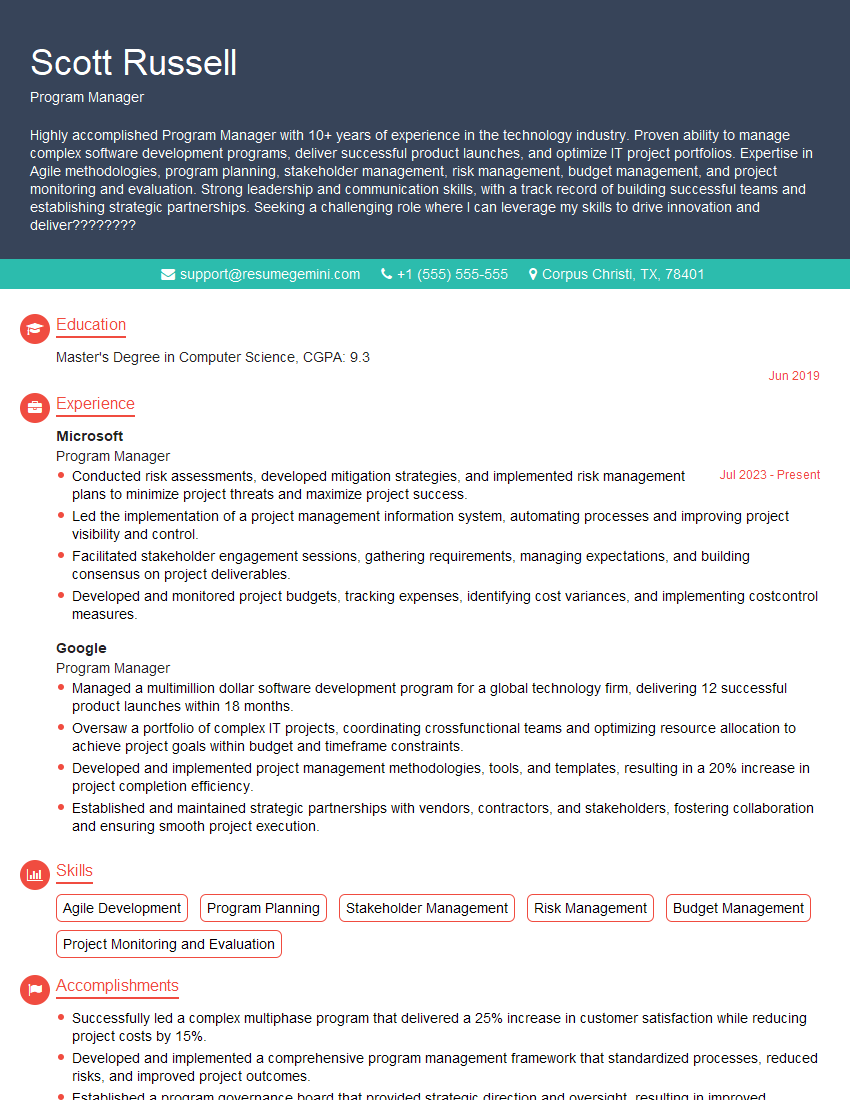
Program Manager Resume Sample
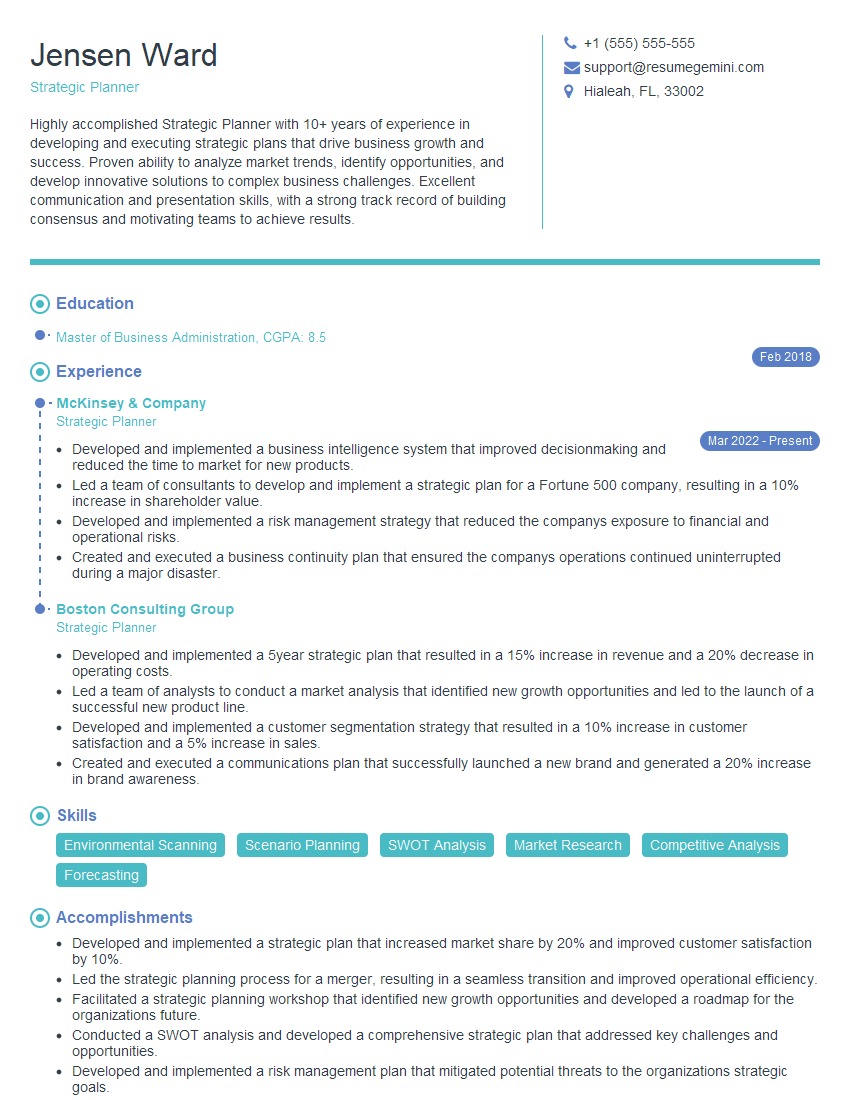
Strategic Planner Resume Sample
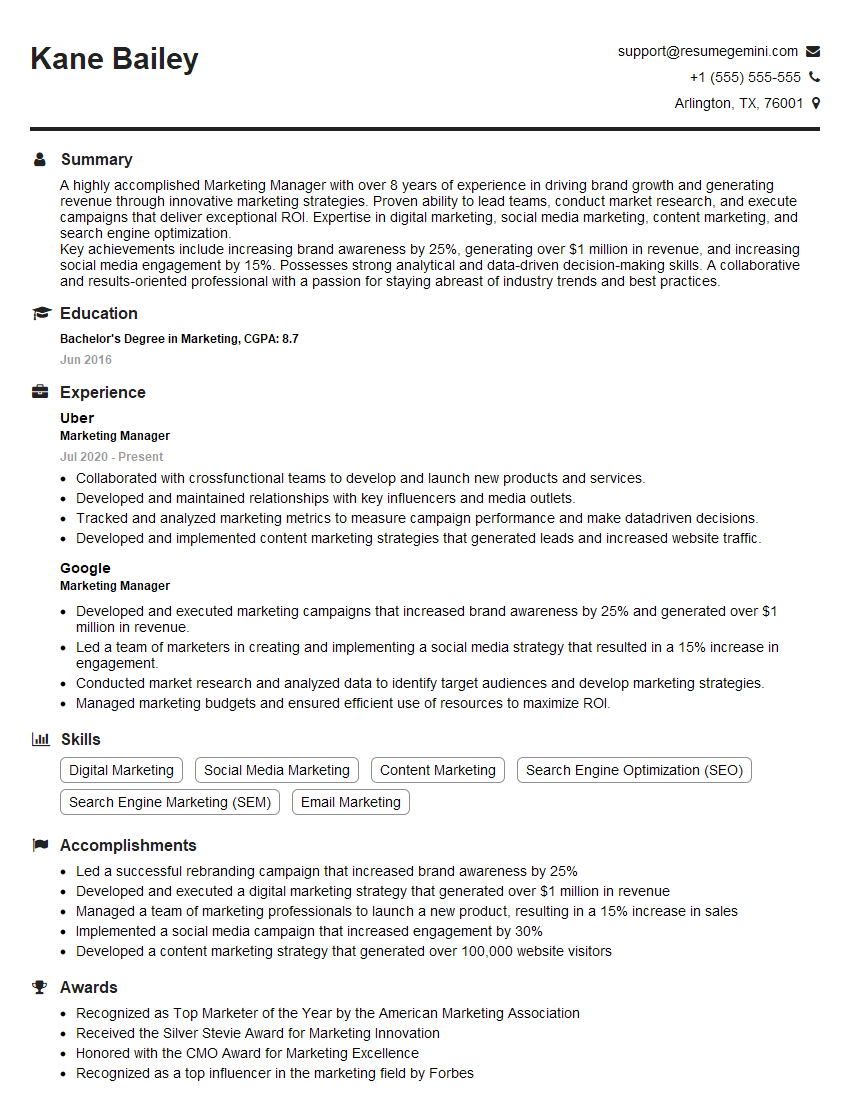
Marketing Manager Resume Sample
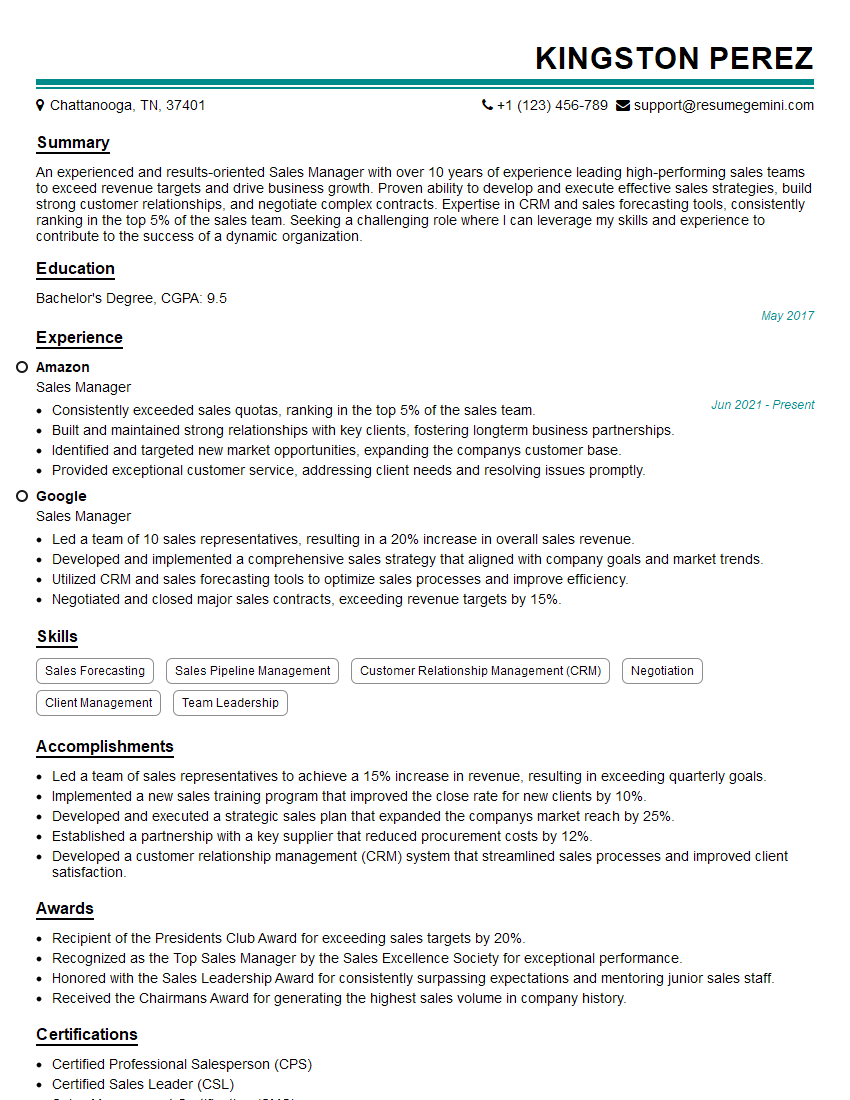
Sales Manager Resume Sample
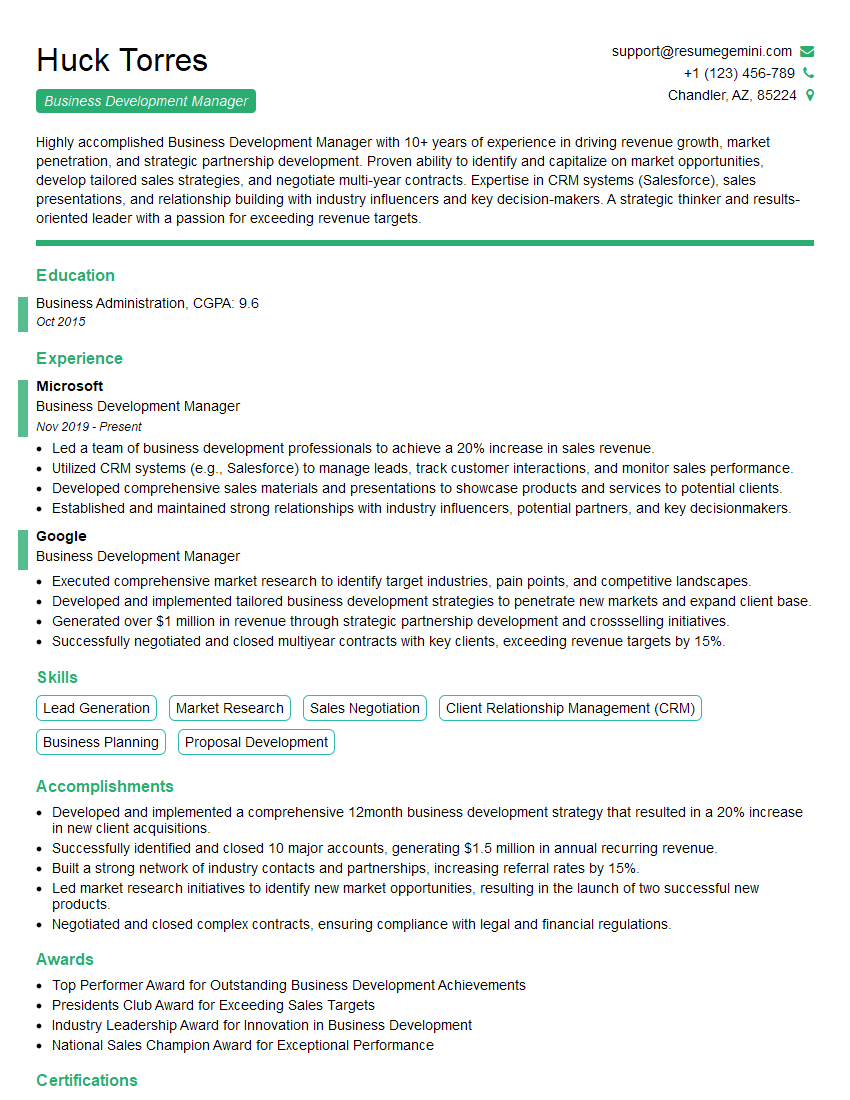
Business Development Manager Resume Sample
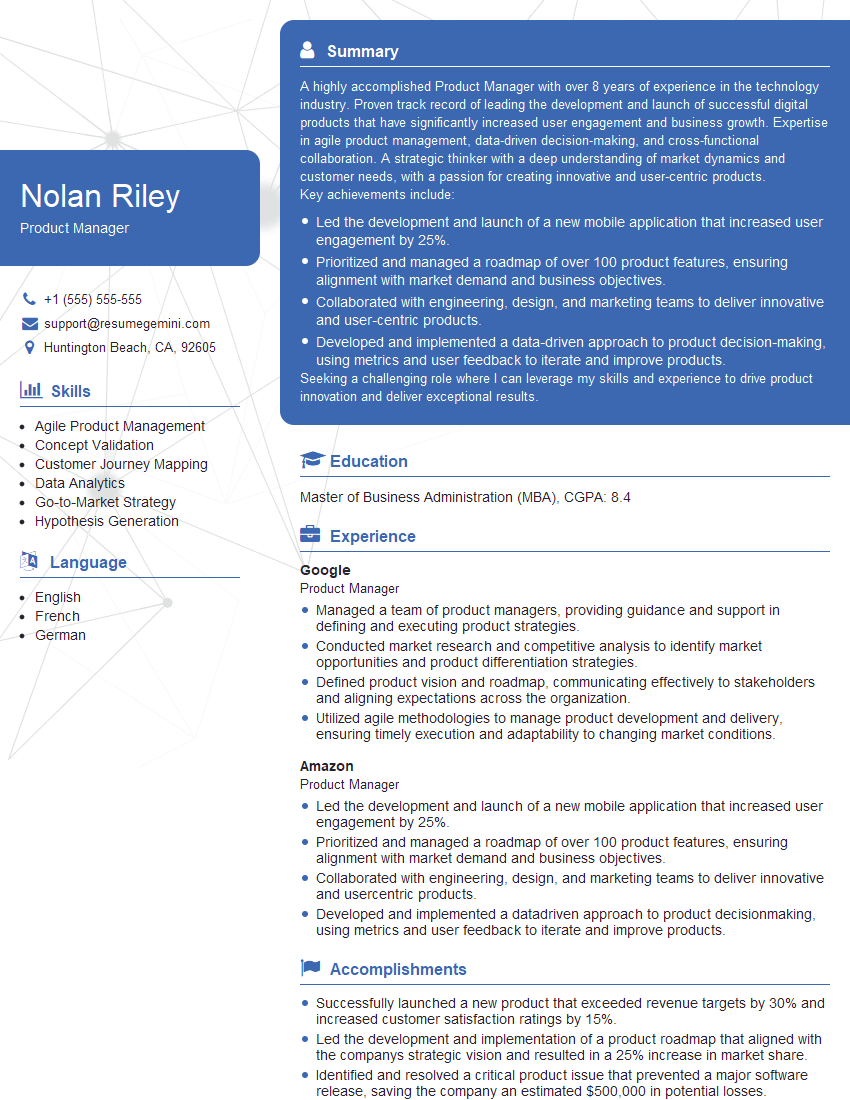
Product Manager Resume Sample
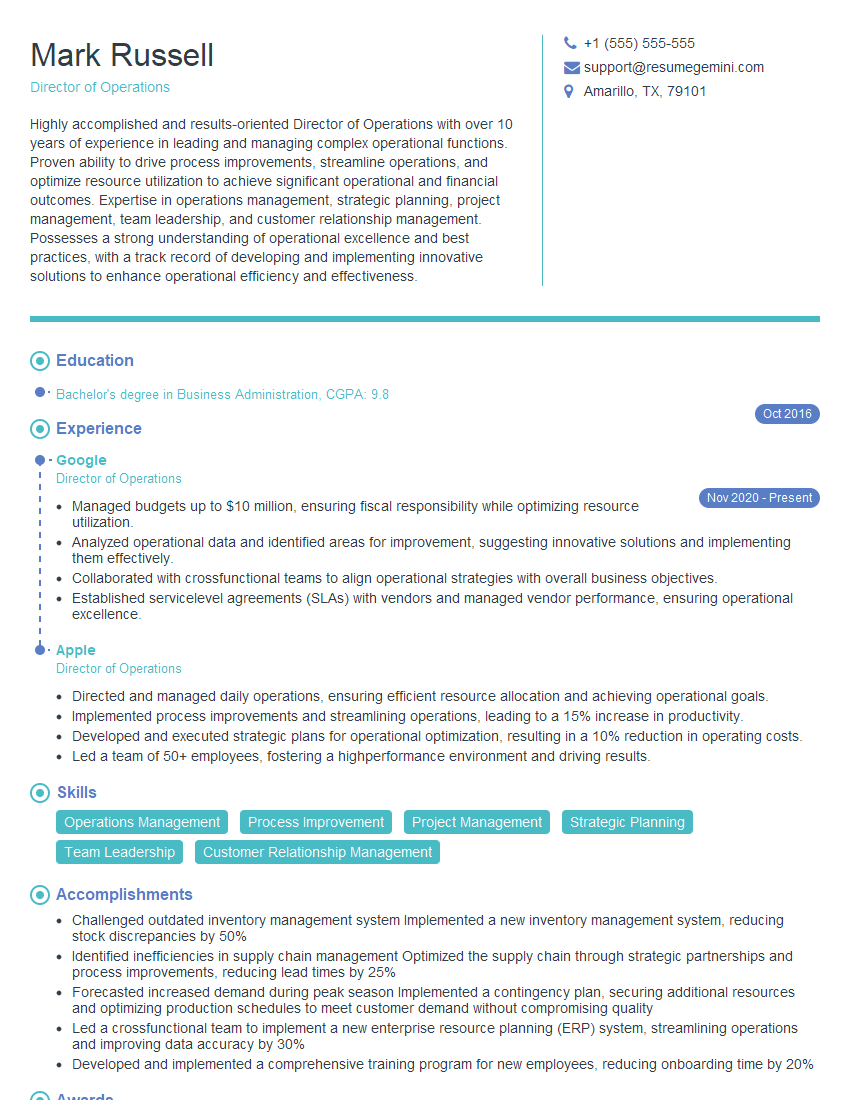
Director of Operations Resume Sample

Project Manager Resume Sample

Compliance Officer Resume Sample
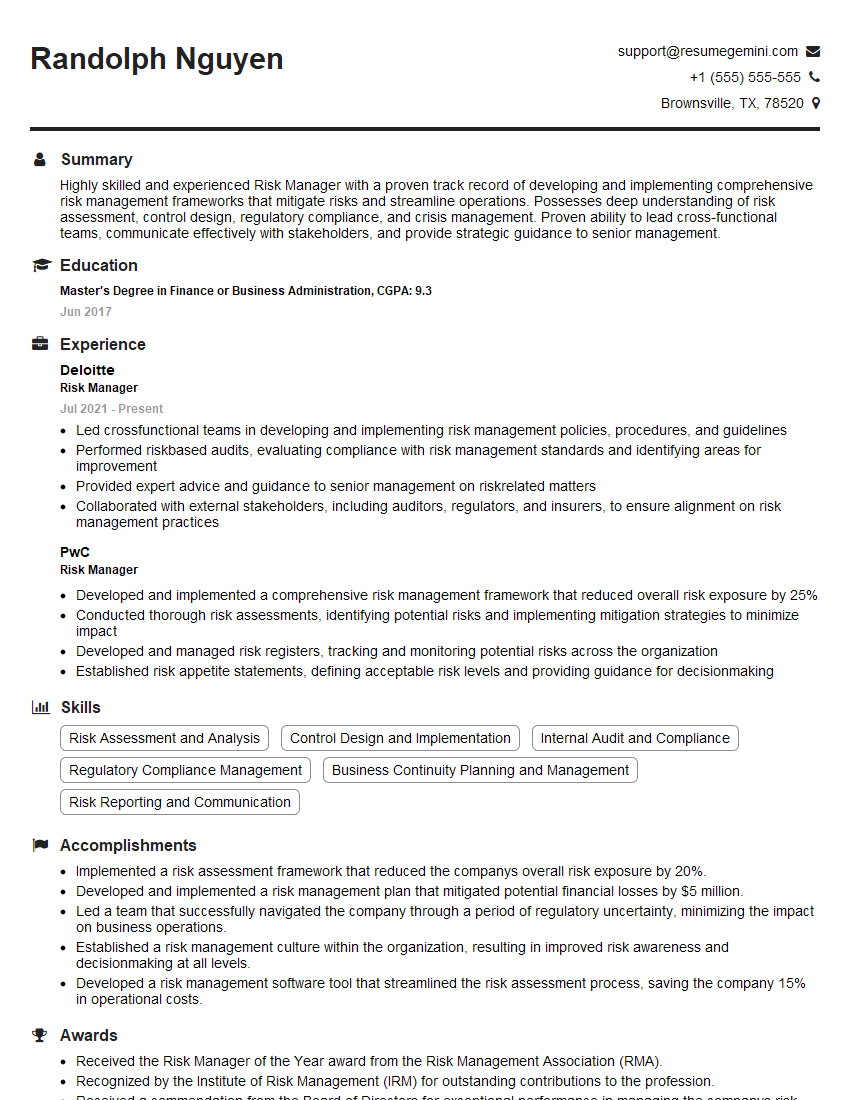
Risk Manager Resume Sample
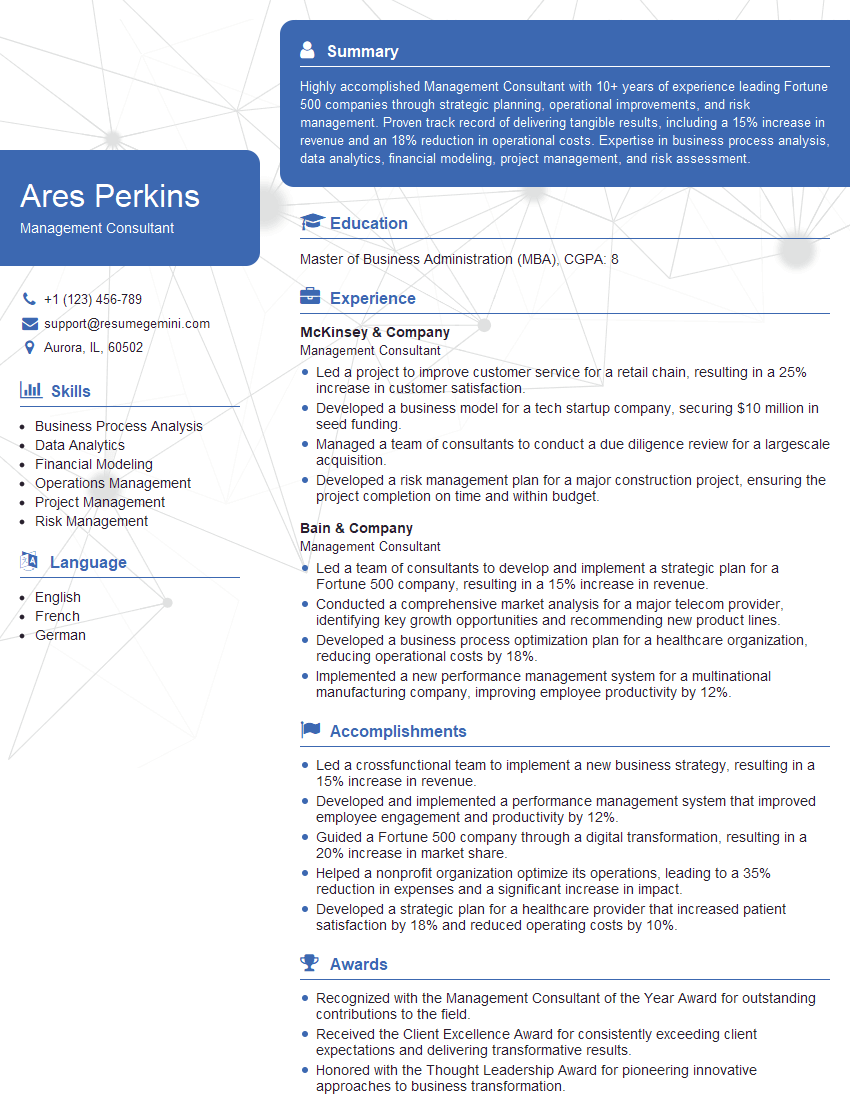
Management Consultant Resume Sample
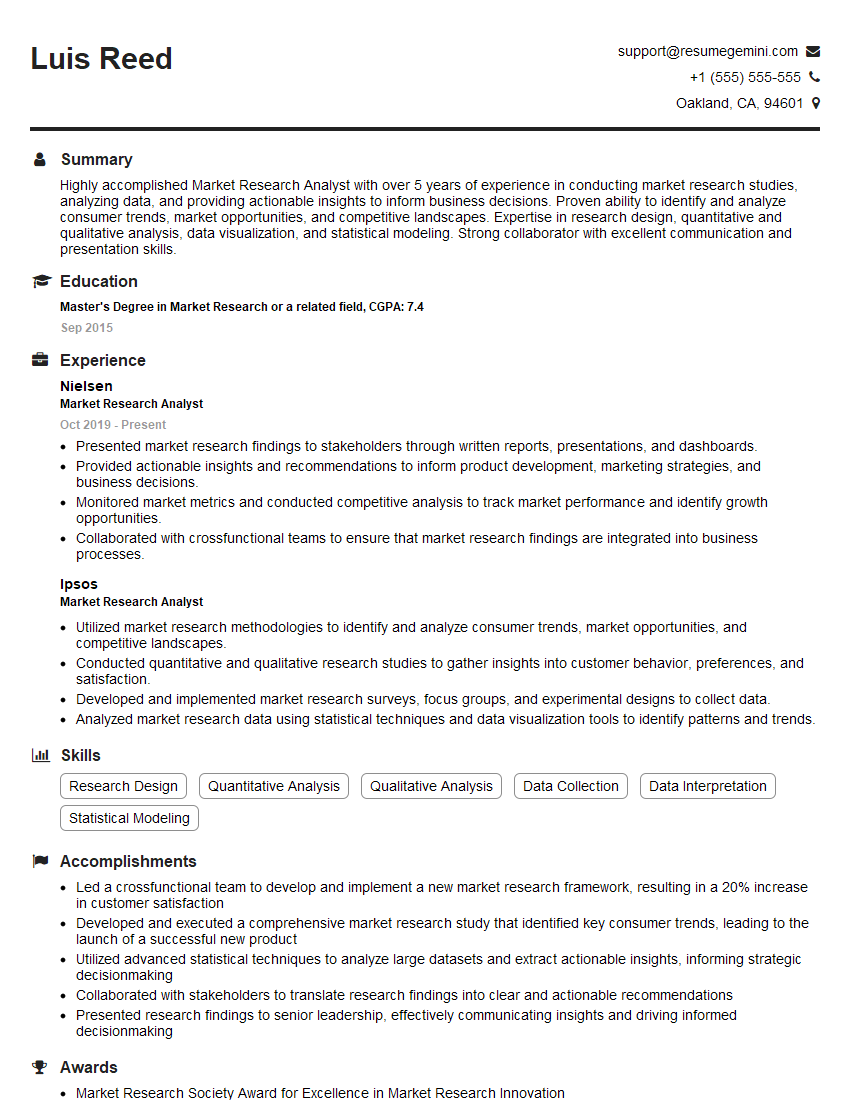
Market Research Analyst Resume Sample

Social Media Manager Resume Sample
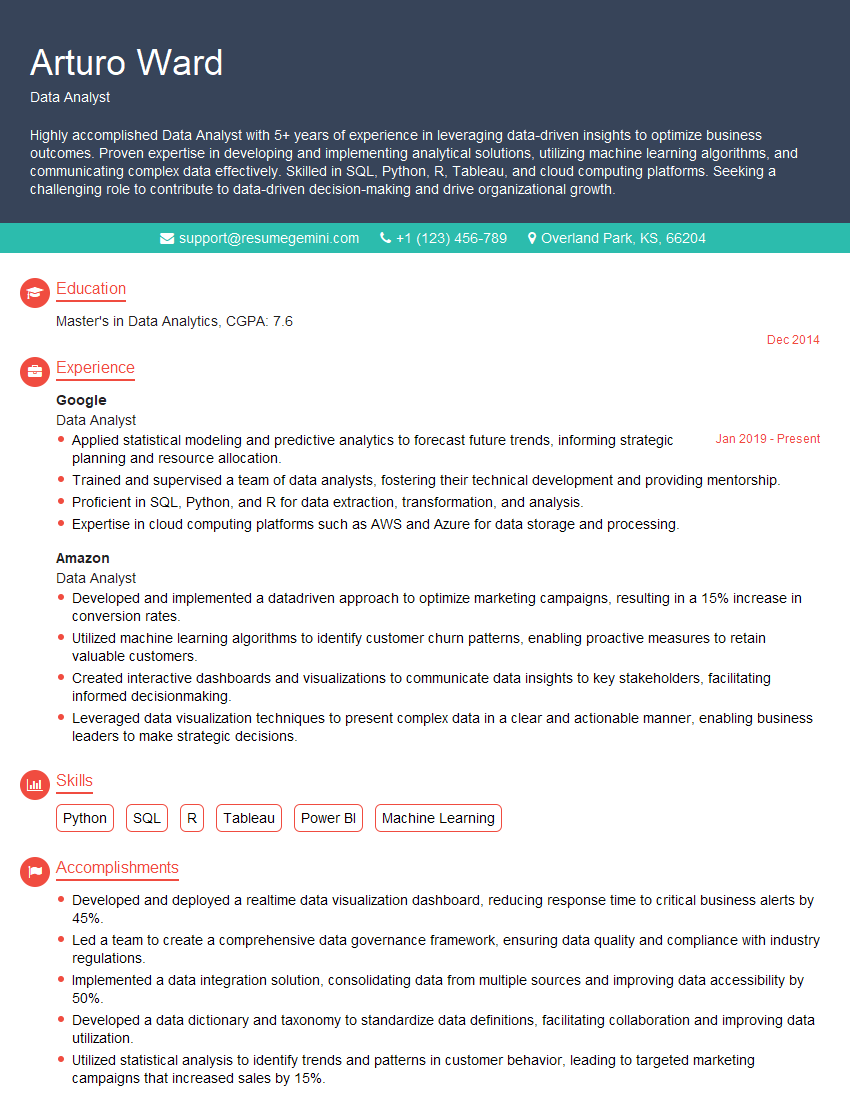
Data Analyst Resume Sample
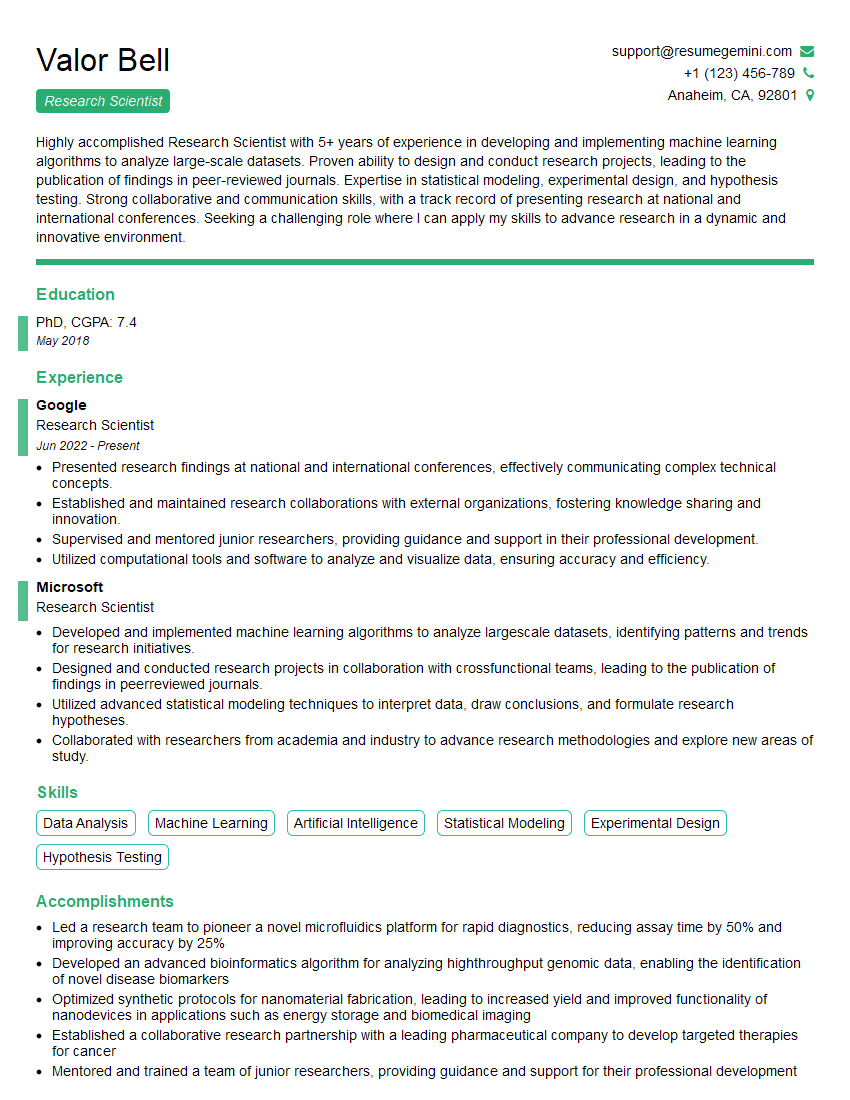
Research Scientist Resume Sample

Information Architect Resume Sample

Content Strategist Resume Sample
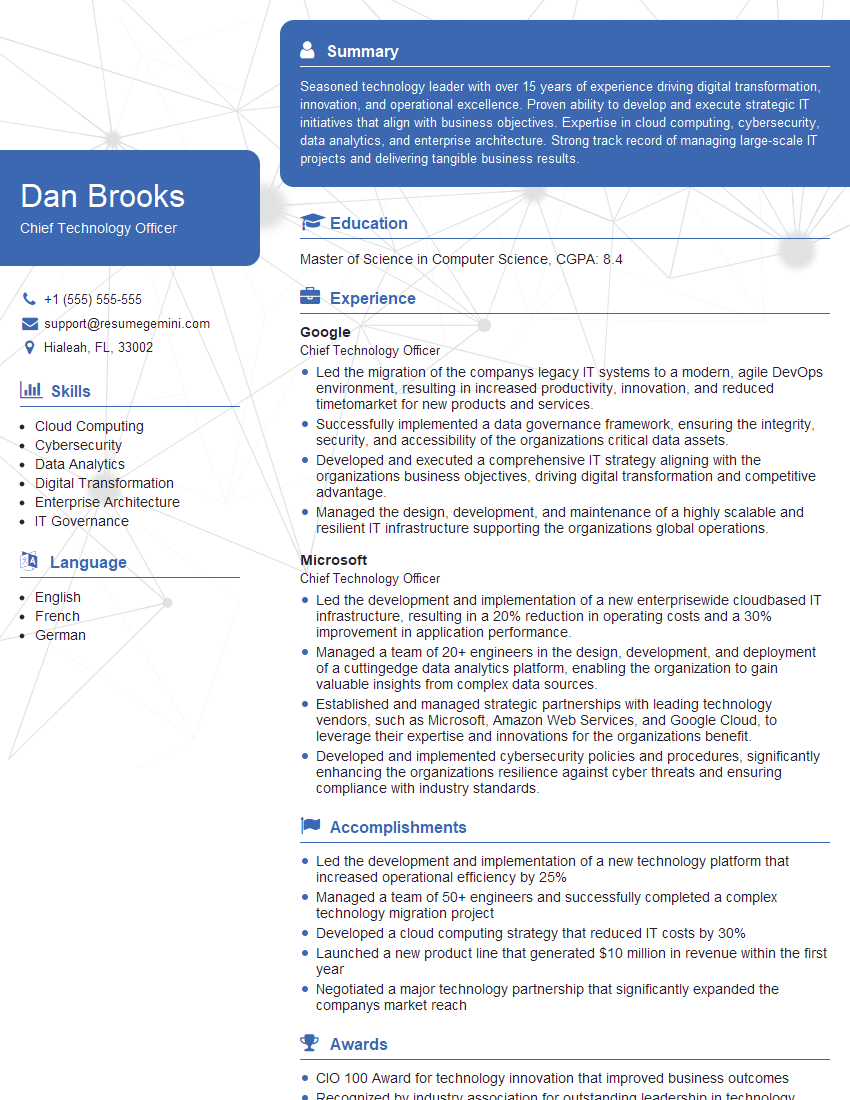
Chief Technology Officer Resume Sample
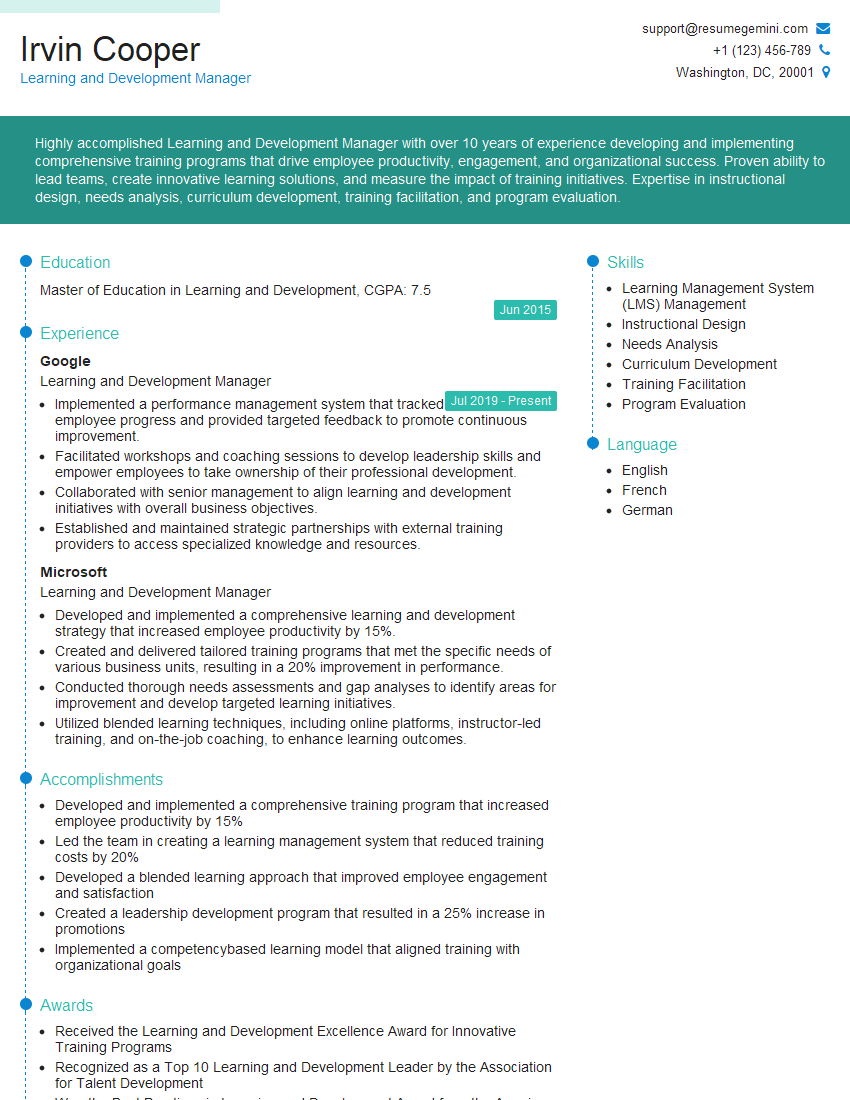
Learning and Development Manager Resume Sample
- Program Manager
- Strategic Planner
- Marketing Manager
- Sales Manager
- Business Development Manager
- Product Manager
- Director of Operations
- Project Manager
- Compliance Officer
- Risk Manager
- Management Consultant
- Market Research Analyst
- Social Media Manager
- Data Analyst
- Research Scientist
- Information Architect
- Content Strategist
- Chief Technology Officer
- Learning and Development Manager
Explore more articles
Users Rating of Our Blogs
Share Your Experience
We value your feedback! Please rate our content and share your thoughts (optional).
What Readers Say About Our Blog
Amazing blog
hello,
Our consultant firm based in the USA and our client are interested in your products.
Could you provide your company brochure and respond from your official email id (if different from the current in use), so i can send you the client’s requirement.
Payment before production.
I await your answer.
Regards,
MrSmith
hello,
Our consultant firm based in the USA and our client are interested in your products.
Could you provide your company brochure and respond from your official email id (if different from the current in use), so i can send you the client’s requirement.
Payment before production.
I await your answer.
Regards,
MrSmith
These apartments are so amazing, posting them online would break the algorithm.
https://bit.ly/Lovely2BedsApartmentHudsonYards
Reach out at BENSON@LONDONFOSTER.COM and let’s get started!
Take a look at this stunning 2-bedroom apartment perfectly situated NYC’s coveted Hudson Yards!
https://bit.ly/Lovely2BedsApartmentHudsonYards
Live Rent Free!
https://bit.ly/LiveRentFREE
Interesting Article, I liked the depth of knowledge you’ve shared.
Helpful, thanks for sharing.
Hi, I represent a social media marketing agency and liked your blog
Hi, I represent an SEO company that specialises in getting you AI citations and higher rankings on Google. I’d like to offer you a 100% free SEO audit for your website. Would you be interested?