Are you ready to stand out in your next interview? Understanding and preparing for Understanding of Boat Design interview questions is a game-changer. In this blog, we’ve compiled key questions and expert advice to help you showcase your skills with confidence and precision. Let’s get started on your journey to acing the interview.
Questions Asked in Understanding of Boat Design Interview
Q 1. Explain the principles of buoyancy and Archimedes’ principle.
Buoyancy is the upward force exerted on an object submerged in a fluid (like water). Archimedes’ principle states that this buoyant force is equal to the weight of the fluid displaced by the object. Think of it like this: when you place a boat in water, it pushes some water out of the way. The weight of that displaced water is the upward force pushing the boat up. If this buoyant force is greater than or equal to the boat’s weight, the boat floats. If the buoyant force is less than the boat’s weight, it sinks.
For example, a large cargo ship displaces a massive amount of water, creating a significant buoyant force that supports its heavy weight. A small, dense object like a rock displaces relatively little water, resulting in insufficient buoyancy to counteract its weight, causing it to sink.
Q 2. Describe different hull forms and their respective advantages and disadvantages.
Hull forms are crucial to a boat’s performance. Several types exist, each with strengths and weaknesses:
- Displacement Hulls: These are designed to push water aside, creating a wave system. They are stable and fuel-efficient at low speeds but less efficient at higher speeds. Think of a traditional sailboat or a tugboat.
- Planing Hulls: These are designed to ride on top of the water at higher speeds. The bottom is flat or shallow to allow the hull to plane (lift out of the water) – reducing friction. Powerboats and speedboats are common examples. They are less fuel efficient at low speeds and can be less stable than displacement hulls.
- Semi-displacement Hulls: These are a compromise between displacement and planing hulls. They offer decent efficiency at lower speeds and reasonable performance at moderate speeds. Many fishing boats and smaller motor yachts utilize this design.
- Catamarans and Multihulls: These utilize multiple hulls to increase stability and reduce resistance. They offer excellent stability and speed but can be more complex and expensive to build.
The choice of hull form depends heavily on the intended use of the vessel. A fishing boat designed for stability in rough seas would likely use a displacement or semi-displacement hull, while a racing boat might opt for a planing hull to achieve high speeds.
Q 3. How do you calculate the displacement of a vessel?
Displacement is the weight of the water a vessel displaces when it floats. It’s directly related to the vessel’s weight. You can calculate it using the following:
Displacement (in tons) = Volume of water displaced (in cubic meters) × Density of water (approximately 1025 kg/m³)
To calculate the volume of water displaced, you need to know the underwater volume of the hull at the waterline. This often requires complex calculations or using specialized software. Simplified methods use waterline length, beam (width), and draft (depth) approximations, yielding an estimate but not a precise value. Accurate displacement calculations are typically done through detailed 3D modelling and hydrodynamic analysis software.
For example, if a vessel displaces 10 cubic meters of water, its displacement would be approximately 10.25 tons (10 m³ × 1025 kg/m³ = 10250 kg, which converts to approximately 10.25 tons).
Q 4. What are the key considerations in designing for stability?
Designing for stability involves considering several factors to prevent capsizing or excessive rolling. Key considerations include:
- Initial Stability: How easily the boat resists small heeling angles (tilting). A wider beam generally improves initial stability.
- Range of Stability: The angle through which the boat can heel before capsizing. A larger range of stability is desired.
- Righting Moment: The force that restores the boat to an upright position after being heeled. This is directly influenced by the shape of the hull and the distribution of weight.
- Metacentric Height (GM): A crucial parameter representing the boat’s initial stability (discussed in the next answer).
- Freeboard: The height of the deck above the waterline. Sufficient freeboard prevents water from entering the vessel in rough seas.
- Weight Distribution: Even weight distribution across the vessel minimizes the risk of instability.
A poorly designed boat with insufficient stability can easily capsize, posing significant danger. Understanding these factors is critical to ensure the safety and seaworthiness of the vessel.
Q 5. Explain the concept of metacentric height and its significance.
Metacentric height (GM) is the distance between the metacenter (M) and the center of gravity (G) of a floating vessel. The metacenter is a theoretical point where the lines of action of buoyant forces intersect when the boat heels. The center of gravity is the average location of the boat’s weight.
A positive GM indicates that the boat is initially stable; a negative GM means it is unstable and will capsize. A larger GM generally means greater initial stability but can lead to a harsher motion in waves. The ideal GM is a balance between stability and comfort. A too-large GM can result in a ‘stiff’ vessel that is uncomfortable to ride in rough seas. A too-small GM implies that the boat has a high propensity to capsize.
GM is calculated using the moment of inertia of the waterplane area and the boat’s displacement. This calculation is quite complex and often performed using specialized software.
Q 6. What are the different types of propulsion systems used in boats?
Boats utilize various propulsion systems, each with its own advantages and disadvantages:
- Outboard Motors: These are relatively inexpensive, easy to maintain, and highly portable. They are commonly used on smaller boats.
- Inboard Motors: These are installed inside the hull, offering better protection and quieter operation. They are commonly used in larger vessels and offer more power options.
- Sterndrive Engines: These combine features of both inboard and outboard motors, offering a compact design suitable for medium-sized boats. They provide good maneuverability.
- Sails: This ancient and environmentally friendly method relies on wind power. Sails offer a unique experience, though they are less efficient and dependent on wind conditions.
- Jet Propulsion: Uses a water jet to propel the boat, offering good maneuverability in shallow waters. However, it can be less fuel-efficient than propellers.
- Paddlewheels: These are mainly used on riverboats and offer a unique and historical method of propulsion.
The selection of propulsion depends on the size of the boat, intended use, environmental considerations, budget, and desired performance characteristics.
Q 7. Describe the process of designing a boat’s structural elements.
Designing a boat’s structural elements is a complex process that requires consideration of various factors, including the boat’s size, material, intended use, and environmental conditions. The process typically involves:
- Defining Load Cases: This involves identifying all the forces that the boat will experience, such as weight, waves, wind, and impact loads.
- Material Selection: Selecting appropriate materials based on strength, weight, cost, and durability. Common materials include fiberglass, aluminum, steel, and wood.
- Structural Analysis: Using computer-aided design (CAD) software and finite element analysis (FEA) to determine the stresses and strains on different parts of the hull and superstructure. This ensures that the structure can withstand the defined load cases.
- Detailed Design: Creating detailed drawings that specify dimensions, materials, and construction techniques.
- Construction: Building the boat according to the detailed design, using appropriate construction techniques and quality control measures.
- Testing: After construction, the boat undergoes various tests to verify its structural integrity, including static load tests and vibration tests.
Designing for strength and stiffness is paramount. A poorly designed structure can result in structural failure, posing significant safety risks. Therefore, experienced naval architects use advanced computational tools and rigorous testing procedures to ensure the structural integrity of a vessel.
Q 8. How do you ensure the structural integrity of a boat under various loading conditions?
Ensuring a boat’s structural integrity under various loading conditions is paramount. We achieve this through a combination of meticulous design, material selection, and rigorous testing. The process starts with a thorough understanding of the expected loads – this includes the weight of the boat itself, the crew, passengers, cargo, fuel, and the forces exerted by waves, wind, and currents.
Finite Element Analysis (FEA) is a crucial tool. This sophisticated software simulates how different parts of the boat will react under stress. By inputting the loading conditions into the FEA model, we can identify potential weak points and optimize the design accordingly. Think of it like building a virtual prototype and testing it to destruction without actually building the boat first. We adjust beam sizes, hull thickness, and the placement of bulkheads (internal walls) to distribute stress effectively.
Beyond FEA, we incorporate safety factors – multipliers that increase the design’s strength beyond the calculated minimum requirements. This is especially important for unpredictable factors, like encountering unexpected waves in a storm. Finally, rigorous testing, both in a controlled environment and on the water, validates the design’s ability to withstand real-world conditions.
Q 9. Explain the role of hydrostatics and hydrodynamics in boat design.
Hydrostatics and hydrodynamics are fundamental to boat design. Hydrostatics deals with the boat’s behavior when it’s stationary or moving slowly – essentially, its interaction with the water when there’s minimal motion. Key aspects include buoyancy (the upward force exerted by water), stability (the boat’s resistance to capsizing), and draft (the depth of the hull below the waterline).
Hydrodynamics, on the other hand, governs the boat’s behavior at higher speeds. It encompasses resistance (forces opposing the boat’s motion), propulsion (the forces that drive the boat forward), and the wave patterns created by the boat’s movement through the water. Understanding hydrodynamics is critical for optimizing speed, efficiency, and maneuverability.
For example, a stable, well-designed sailboat uses hydrostatics to ensure it won’t capsize, and hydrodynamics to minimize drag and maximize the use of wind power. A high-speed motorboat relies heavily on hydrodynamic principles to reduce resistance and achieve high speeds.
Q 10. What are the different types of materials used in boat construction?
A wide array of materials are used in boat construction, each with its own strengths and weaknesses. Common materials include:
- Fiberglass Reinforced Polymer (FRP): A composite material consisting of fiberglass strands embedded in a resin matrix (often polyester or epoxy). It’s known for its strength-to-weight ratio, durability, and relative affordability.
- Aluminum: Lightweight, strong, and relatively easy to work with, aluminum is often used in smaller boats and some larger vessels where weight is a major concern.
- Steel: Provides exceptional strength and durability, often used in larger commercial vessels and warships, but it’s heavier than other options.
- Wood: Traditional material offering a classic look and excellent strength properties when properly treated, but requires skilled craftsmanship and regular maintenance.
- Carbon Fiber: An extremely strong and lightweight composite material, increasingly used in high-performance racing boats and luxury yachts, but significantly more expensive.
Q 11. Describe the advantages and disadvantages of each material type.
The choice of material depends heavily on the boat’s intended use, size, and budget.
- Fiberglass: Advantages – strong, relatively inexpensive, easily molded into complex shapes; Disadvantages – can be brittle under impact, repairs can be challenging.
- Aluminum: Advantages – lightweight, strong, corrosion resistant (with proper alloying); Disadvantages – can be expensive, susceptible to denting, electrolytic corrosion possible.
- Steel: Advantages – extremely strong, durable, cost-effective for large vessels; Disadvantages – heavy, prone to corrosion (requires regular maintenance), can be difficult to work with.
- Wood: Advantages – strong, aesthetically pleasing, repairable; Disadvantages – requires significant maintenance, susceptible to rot and insect damage, can be expensive.
- Carbon Fiber: Advantages – extremely strong and lightweight; Disadvantages – very expensive, complex manufacturing process, requires specialized skills for repair.
Q 12. Explain the concept of resistance and its impact on boat performance.
Resistance is the collective term for forces that oppose a boat’s motion through the water. It’s a critical factor impacting boat performance, as overcoming resistance requires energy, directly affecting speed and fuel efficiency. Several types of resistance contribute to the overall drag:
- Frictional Resistance: Caused by the friction between the hull and the water. Minimizing surface roughness is crucial.
- Pressure Resistance (Form Drag): Arises from the pressure difference between the front and back of the hull. A streamlined hull shape is essential to reduce this.
- Wave Resistance: Generated by the waves the boat creates as it moves. This is particularly significant at higher speeds.
- Appendage Resistance: Caused by parts like rudders, propellers, and keels. Careful design of these components is vital.
High resistance means the boat needs more power to achieve the same speed, leading to reduced fuel efficiency and potentially lower top speed. Therefore, minimizing resistance is a key focus in boat design.
Q 13. How do you design for efficient hull form and reduce drag?
Designing for an efficient hull form and reducing drag involves a combination of techniques:
- Computational Fluid Dynamics (CFD): This sophisticated software simulates water flow around the hull, enabling engineers to optimize the shape for minimal resistance. It’s like having a virtual wind tunnel for boats.
- Hull Shape Optimization: Creating a streamlined hull, minimizing abrupt changes in shape, and using features like bulbous bows (protrusions at the front of the hull) to reduce wave resistance.
- Surface Finish: Ensuring a smooth hull surface reduces frictional resistance. This includes careful attention to the application of paint and the selection of materials.
- Appendage Design: Optimizing the shape and size of appendages (rudders, propellers, etc.) to minimize drag and maximize efficiency.
For instance, a racing sailboat might have a long, slender keel to reduce drag, while a fishing trawler may prioritize a more robust, wider hull for stability, accepting slightly higher drag.
Q 14. What are the key factors to consider when designing a boat’s stability?
Boat stability refers to its ability to resist capsizing. Several key factors influence a boat’s stability:
- Initial Stability: The boat’s resistance to small disturbances. It’s related to the beam (width) of the boat and the location of the center of gravity (CG) and the center of buoyancy (CB).
- Righting Moment: The force that tries to restore the boat to its upright position after being heeled (tilted). It increases with the boat’s displacement (weight of water displaced) and the distance between the CG and CB.
- Center of Gravity (CG): The average location of the boat’s weight. Lowering the CG increases stability.
- Center of Buoyancy (CB): The center of the volume of water displaced by the hull. Its location changes as the boat heels.
- Metacentric Height (GM): The distance between the CG and the metacenter (a point related to the CB’s movement as the boat heels). A larger GM indicates greater stability.
For example, a wide, shallow-draft boat will generally have better initial stability than a narrow, deep-draft boat, but may not have as much righting moment at larger heel angles. Designers use sophisticated calculations and simulations to achieve an optimal balance of stability for the specific purpose of the boat.
Q 15. How do you account for wave action in boat design?
Accounting for wave action in boat design is crucial for ensuring seaworthiness and passenger safety. We don’t simply design for calm water; we anticipate the forces and motions a vessel will experience in various sea states. This involves understanding wave characteristics like height, period, and direction, and then using this data to predict how the boat will respond.
This is done through a combination of techniques. Firstly, we use hydrodynamic modeling to simulate the interaction between the hull and waves. This helps us understand the forces generated by waves on the hull, predicting motions such as pitching (fore-and-aft movement), rolling (side-to-side), and heaving (vertical movement). Secondly, we incorporate seakeeping analysis, which uses mathematical models and computational fluid dynamics (CFD) to predict the vessel’s response to waves. This might involve analyzing the vessel’s motions in a simulated seaway to determine whether it will experience excessive accelerations or slamming (the impact of the hull on the water surface). Finally, the design incorporates features to mitigate the effects of wave action, such as proper hull form, sufficient freeboard (distance between the waterline and the deck), and effective ballast systems.
For example, a catamaran’s design is inherently better suited to rough seas because its twin hulls distribute the wave impact over a larger area, reducing the effects of slamming compared to a monohull of similar size. The design process often involves iterative simulations and refinements to optimize the boat’s performance in various wave conditions.
Career Expert Tips:
- Ace those interviews! Prepare effectively by reviewing the Top 50 Most Common Interview Questions on ResumeGemini.
- Navigate your job search with confidence! Explore a wide range of Career Tips on ResumeGemini. Learn about common challenges and recommendations to overcome them.
- Craft the perfect resume! Master the Art of Resume Writing with ResumeGemini’s guide. Showcase your unique qualifications and achievements effectively.
- Don’t miss out on holiday savings! Build your dream resume with ResumeGemini’s ATS optimized templates.
Q 16. Explain the importance of considering seakeeping in boat design.
Seakeeping, which refers to a vessel’s ability to maintain stability and comfort in waves, is paramount in boat design. Poor seakeeping leads to discomfort, reduced operational efficiency, and, in extreme cases, structural damage or even capsizing. Considering seakeeping involves a holistic approach, looking at how the vessel responds to wave action, wind, and currents.
The importance of seakeeping directly translates into several crucial aspects. Firstly, passenger comfort is greatly affected; a boat with poor seakeeping will experience excessive motions, leading to seasickness and a generally unpleasant experience. Secondly, operational efficiency is impacted; rough seas can affect the ability of the crew to work effectively, reducing productivity for fishing boats or cargo vessels. Thirdly, structural integrity is at risk; repeated exposure to extreme wave actions can cause stress fractures and structural fatigue, shortening the lifespan of the vessel. Lastly, safety is a primary concern; poor seakeeping can result in capsizing or damage in adverse weather conditions.
Imagine a small fishing boat designed without regard for seakeeping. It might be vulnerable to capsizing in even moderately rough seas due to its small size and lack of stability. Conversely, a well-designed ferry will minimize passenger discomfort during rough crossings thanks to features aimed at enhanced seakeeping.
Q 17. What are some common software tools used in boat design?
Several software tools are commonly employed in boat design, each with its strengths in specific areas. These can be broadly categorized into CAD (Computer-Aided Design), CAE (Computer-Aided Engineering), and CFD (Computational Fluid Dynamics) software.
- CAD software: Programs like Rhino, AutoCAD, and SolidWorks are used for creating the 3D model of the hull and other structural components. These packages allow for precise modeling, modification, and visualization.
- CAE software: Software like Maxsurf and ShipConstructor specialize in naval architecture and provide tools for structural analysis, stability calculations, and weight estimation. These help in assessing the boat’s strength and stability.
- CFD software: ANSYS Fluent, OpenFOAM, and Star-CCM+ are examples of CFD software used for simulating fluid flow around the hull. This helps analyze hydrodynamic performance, resistance, and wave generation.
The choice of software depends on the complexity of the design and the specific needs of the project. A simpler project might use a single CAD package for the whole process, while more complex projects will likely integrate multiple software packages for a comprehensive design and analysis.
Q 18. Describe your experience with CAD software relevant to boat design.
I have extensive experience using Rhino, specifically with the Marine plugin, for creating complex 3D hull forms. I’m proficient in creating NURBS (Non-Uniform Rational B-Splines) surfaces to model the hull efficiently and accurately. This allows for precise control over the hull shape, enabling optimization for hydrodynamic performance and structural integrity. I also use the software to generate plans and sections for construction documents.
Beyond Rhino, I’m familiar with SolidWorks for modeling smaller components and creating assemblies. My expertise also extends to using AutoCAD for creating detailed drawings for production and construction. I’m comfortable working with both parametric and direct modeling techniques, choosing the appropriate method based on the specific requirements of each task. For example, I used Rhino to design a high-speed catamaran, optimizing the hull shape for low wave resistance, and then used SolidWorks to model the engine mounts and other smaller components.
Q 19. How do you perform stability calculations?
Stability calculations are essential to ensure a boat’s safety and seaworthiness. These calculations determine a boat’s ability to resist overturning and to return to an upright position after being disturbed. We primarily use two main methods: hydrostatic and hydrodynamic stability analysis.
Hydrostatic stability focuses on the boat’s equilibrium in still water. It involves calculating the metacentric height (GM), which is a crucial parameter indicating the initial stability of a vessel. A higher GM signifies greater initial stability. This calculation relies on the boat’s geometry (displacement, center of buoyancy, and center of gravity) and is usually performed using specialized software or hand calculations based on well-established formulas.
Hydrodynamic stability considers the effects of waves and motion on the boat’s stability. This is more complex and often involves CFD simulations to predict the vessel’s response to external forces. We use hydrodynamic stability calculations to understand how the boat will behave during rolling, pitching, and yawing motions in waves and to make sure these motions remain within acceptable limits.
For instance, a sailboat will have different stability considerations compared to a barge. Sailboats rely on the sail plan, keel design, and the placement of ballast to achieve a high GM and excellent stability in waves and wind, while barges must be designed with a large metacentric height to resist capsizing during heavy cargo loading. We thoroughly verify these calculations to ensure the safety of the vessel.
Q 20. Explain your understanding of finite element analysis (FEA) in boat design.
Finite Element Analysis (FEA) is a powerful computational technique used extensively in boat design to analyze the structural strength and integrity of a vessel. It works by dividing the boat’s structure into many small elements, each with its own material properties and behavior. The software then solves equations based on these elements to determine stress, strain, and displacement under various loading conditions.
In boat design, FEA helps us assess the structural response to various forces, including wave loading, wind pressure, and the weight of the vessel and its contents. We can identify potential weak points or areas of high stress, enabling design modifications to enhance the boat’s strength and durability. For instance, FEA can be used to optimize the thickness of the hull plating, the design of bulkheads, or the reinforcement around critical structural elements.
FEA isn’t just used for static analysis. We also apply it for dynamic analysis, simulating the vessel’s behavior under the impact of waves or collisions. This dynamic analysis helps in designing a resilient hull to withstand the forces generated during operation. The results provide valuable insights to ensure compliance with safety standards and regulations.
Q 21. Describe your experience with hydrodynamic modeling and simulations.
My experience with hydrodynamic modeling and simulations is extensive. I’ve utilized CFD software like ANSYS Fluent and OpenFOAM to simulate the flow of water around a variety of hull forms. These simulations provide valuable data on resistance, lift, and wave generation, which are crucial for optimizing the vessel’s performance and fuel efficiency.
In a recent project involving the design of a high-speed patrol boat, I employed CFD simulations to analyze the hull’s resistance at different speeds. This analysis identified areas of flow separation and high pressure that contributed to excessive resistance. Based on the simulation results, we refined the hull form, reducing resistance by approximately 15% and improving the boat’s top speed and fuel efficiency.
Beyond resistance, I’ve also utilized hydrodynamic modeling to assess the propulsive efficiency of different propeller designs and to analyze the interaction between the hull and the propeller. This involved coupling CFD with specialized propeller design software to predict the thrust generated and the efficiency of the propulsion system. Such simulations are critical in optimizing the performance and efficiency of the complete vessel design.
Q 22. How do you incorporate regulatory compliance into boat design?
Incorporating regulatory compliance into boat design is paramount for safety and legality. It begins with identifying the relevant regulations from organizations like the U.S. Coast Guard (USCG) or international bodies like the International Maritime Organization (IMO). These regulations cover a vast range, from hull construction and stability calculations to fire safety and emission standards.
My process involves a thorough review of all applicable regulations before any design work commences. This includes checking for specific requirements based on the boat’s intended use (e.g., commercial fishing vessel vs. recreational sailboat), size, and passenger capacity. I utilize specialized software and calculation tools to ensure the design meets these criteria. For example, stability calculations using software like Maxsurf are crucial for complying with stability criteria. Any deviation from regulations requires detailed justification and potentially further analysis to demonstrate equivalent or improved safety levels.
Throughout the design process, I maintain meticulous documentation of all compliance checks and calculations. This documentation serves as proof of compliance during inspections and audits. This proactive approach minimizes delays and potential legal issues down the line. Think of it like building a house – you wouldn’t skip getting the necessary permits; similarly, neglecting regulatory compliance in boat design is risky and unacceptable.
Q 23. What are the key considerations for designing for specific environmental conditions?
Designing for specific environmental conditions is critical for ensuring both the boat’s performance and its longevity. Key considerations include:
- Sea state: The expected wave heights, periods, and directions significantly influence hull form and structural design. For example, a boat designed for rough seas in the North Atlantic will require a significantly stronger hull and more robust structural components than one designed for calm inland lakes.
- Water temperature and salinity: These affect material selection and corrosion prevention. Certain materials degrade faster in saltwater environments, requiring careful consideration of protective coatings and material choice.
- Ice conditions: In regions with ice, the hull needs to be reinforced to withstand ice impacts. This might involve incorporating ice-strengthened sections or specific hull forms to break ice effectively.
- Climate: Extreme temperatures (both hot and cold) can affect materials, systems (like electrical components), and the overall performance of the vessel. Proper ventilation and insulation are crucial considerations here.
- Environmental regulations: Some areas have specific regulations about boat design to minimize environmental impact (e.g., minimizing underwater noise or avoiding the use of certain hull coatings).
I utilize hydrodynamic modeling and Finite Element Analysis (FEA) to simulate the boat’s behavior in various environmental conditions. This allows me to optimize the design for safety and performance across a range of anticipated scenarios.
Q 24. Describe your process for creating detailed boat plans and specifications.
Creating detailed boat plans and specifications is a multi-stage process that starts with the initial concept design and culminates in comprehensive documentation ready for construction.
The process typically involves:
- Conceptual design: This phase focuses on the overall shape, size, and functionality of the boat. Sketches, 3D models, and preliminary calculations are used to explore different design options.
- Preliminary design: This involves refining the concept, creating more detailed drawings, and carrying out basic performance calculations (stability, speed, etc.).
- Detailed design: Here, all aspects of the boat are meticulously defined. This includes creating detailed drawings of all components, specifying materials, and creating a comprehensive bill of materials (BOM). This stage often involves sophisticated CAD software (e.g., AutoCAD, Rhino, or specialized marine design software).
- Specifications: A comprehensive document outlining all aspects of the boat’s design, including materials, dimensions, systems, and construction methods. This document serves as the primary reference during the construction phase.
Throughout this process, close collaboration with other stakeholders, such as naval architects, engineers, and builders, is critical to ensure the design is feasible, cost-effective, and meets all requirements. The end result is a set of plans and specifications that are clear, concise, and unambiguous, enabling the accurate and efficient construction of the boat.
Q 25. How do you manage design changes and revisions throughout the design process?
Managing design changes and revisions is an integral part of the boat design process. It requires a systematic approach to ensure that changes are tracked, evaluated, and implemented effectively.
My approach involves:
- Version control: Using a robust version control system (e.g., CAD software’s built-in version control or dedicated software) to track all changes and revisions to the design. This allows easy retrieval of previous versions if needed.
- Change requests: A formal system for submitting, reviewing, and approving design changes. This ensures that all changes are properly documented and considered before implementation.
- Impact assessment: Before implementing any change, I assess its potential impact on other aspects of the design, such as stability, performance, or cost. This avoids unintended consequences.
- Communication: Maintaining clear and consistent communication with all stakeholders to keep them informed of design changes and their impact.
Proper change management not only keeps the project organized but also minimizes errors and potential problems down the line. This process is particularly vital in large or complex projects.
Q 26. Describe a challenging boat design project you worked on and how you overcame the challenges.
One challenging project involved designing a high-speed patrol boat for a coastal security agency. The key challenge was balancing speed, stability, and seakeeping in a relatively small hull. The agency’s requirements were ambitious, demanding exceptional performance in rough seas while maintaining a stable platform for operations. Initial designs struggled with excessive roll in waves and insufficient speed in certain sea states.
To overcome these challenges, we employed advanced computational fluid dynamics (CFD) modeling to analyze the hull’s hydrodynamic performance and predict its behavior in various sea states. This allowed us to optimize the hull form for both speed and stability. We also integrated active stabilization systems into the design, further enhancing seakeeping capabilities. The use of lightweight composite materials helped reduce weight and improve performance, while structural analysis techniques ensured the hull could withstand the stresses of high-speed operation. The final design exceeded the agency’s expectations, demonstrating the effectiveness of our problem-solving approach.
Q 27. How do you stay up-to-date with the latest advancements in boat design technology?
Staying current with advancements in boat design technology requires a multifaceted approach.
- Professional organizations: I actively participate in professional organizations like the Society of Naval Architects and Marine Engineers (SNAME) and attend their conferences and workshops. These events offer opportunities to learn about the latest research, technologies, and industry best practices.
- Publications and journals: I regularly read industry publications and journals to keep abreast of new developments in materials, software, and design techniques.
- Online resources and webinars: Numerous online resources, including webinars and tutorials, provide valuable insights into new technologies and design methods.
- Industry events and exhibitions: Attending boat shows and industry exhibitions allows me to see new technologies in action and network with other professionals in the field.
- Continuing education: I participate in continuing education courses and workshops to enhance my skills and knowledge in specialized areas of boat design.
Continuous learning is crucial in this rapidly evolving field to remain competitive and provide clients with cutting-edge solutions.
Q 28. What are your salary expectations for this role?
My salary expectations for this role are in the range of $100,000 to $150,000 per year, depending on the specific responsibilities, benefits package, and overall compensation structure. This is based on my experience, expertise, and the current market rate for skilled boat designers with my qualifications.
Key Topics to Learn for Understanding of Boat Design Interview
- Hydrostatics and Buoyancy: Understanding Archimedes’ principle, calculating displacement, and analyzing stability characteristics.
- Hydrodynamics: Analyzing hull resistance, wave generation, and propeller efficiency. Practical application includes understanding how hull design impacts speed and fuel consumption.
- Structural Design: Understanding material selection (e.g., fiberglass, aluminum, wood), stress analysis, and load distribution in different boat types.
- Stability and Trim: Calculating centers of gravity and buoyancy, understanding metacentric height, and analyzing effects of loading and sea conditions. Practical application includes ensuring safe and stable operation.
- Boat Construction Methods: Familiarity with various construction techniques (e.g., fiberglass layup, stitch-and-glue, aluminum welding) and their impact on strength and cost.
- Naval Architecture Principles: Understanding fundamental principles of boat design, including aspects of seakeeping, maneuverability, and propulsion systems. This includes problem-solving related to design optimization.
- Regulations and Standards: Awareness of relevant safety regulations and industry standards impacting boat design and construction.
- CAD Software and Design Tools: Experience using relevant software for 3D modeling, analysis, and design visualization. Demonstrate problem-solving using these tools.
Next Steps
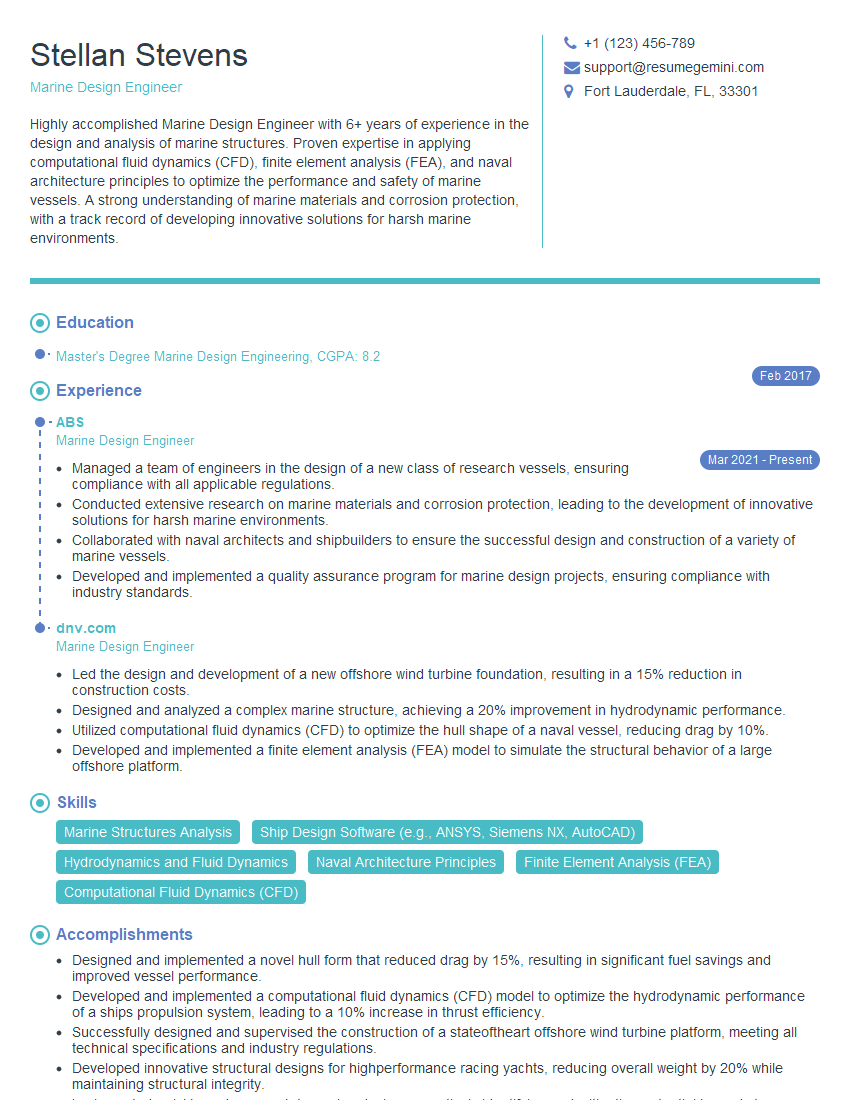
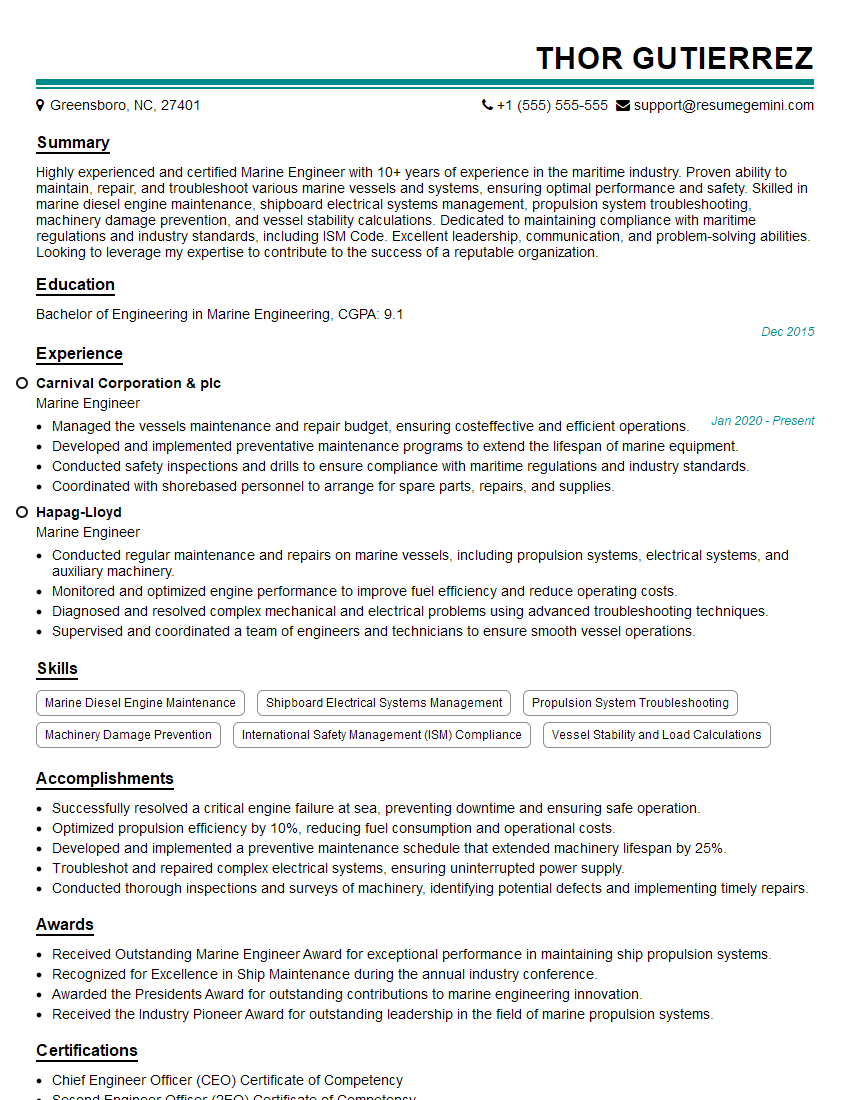
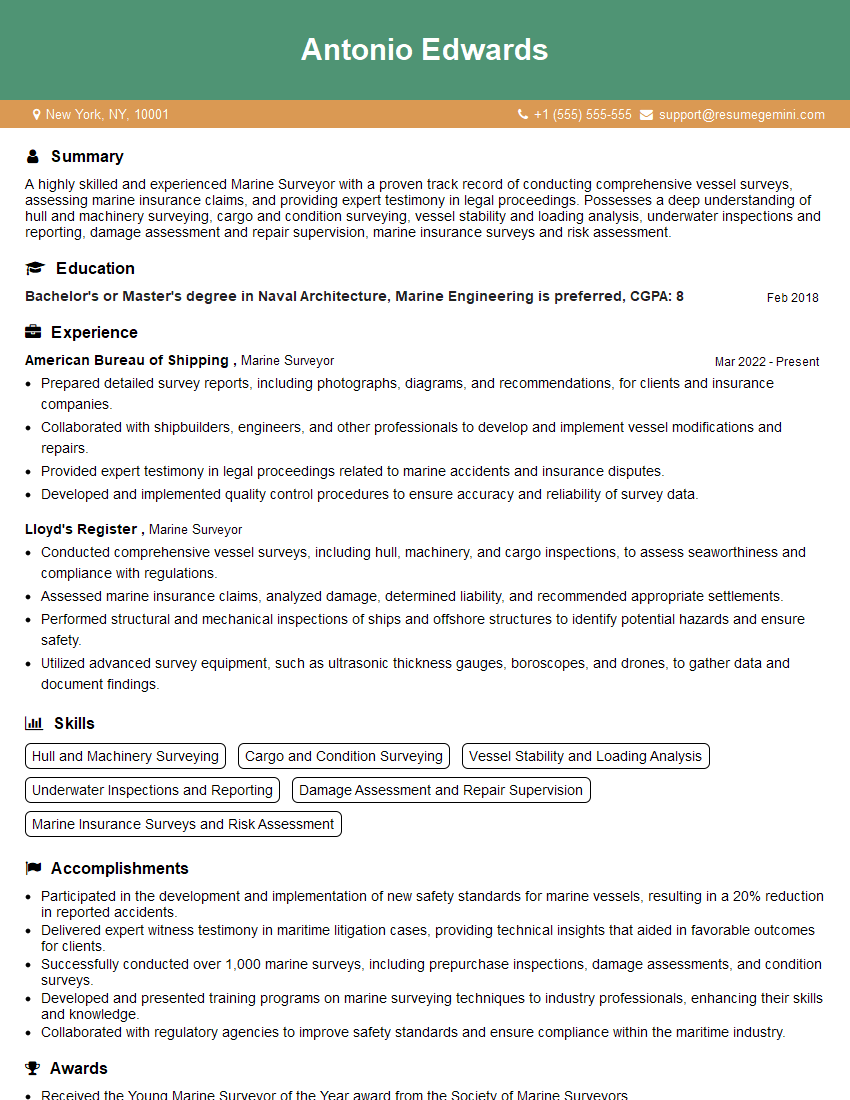
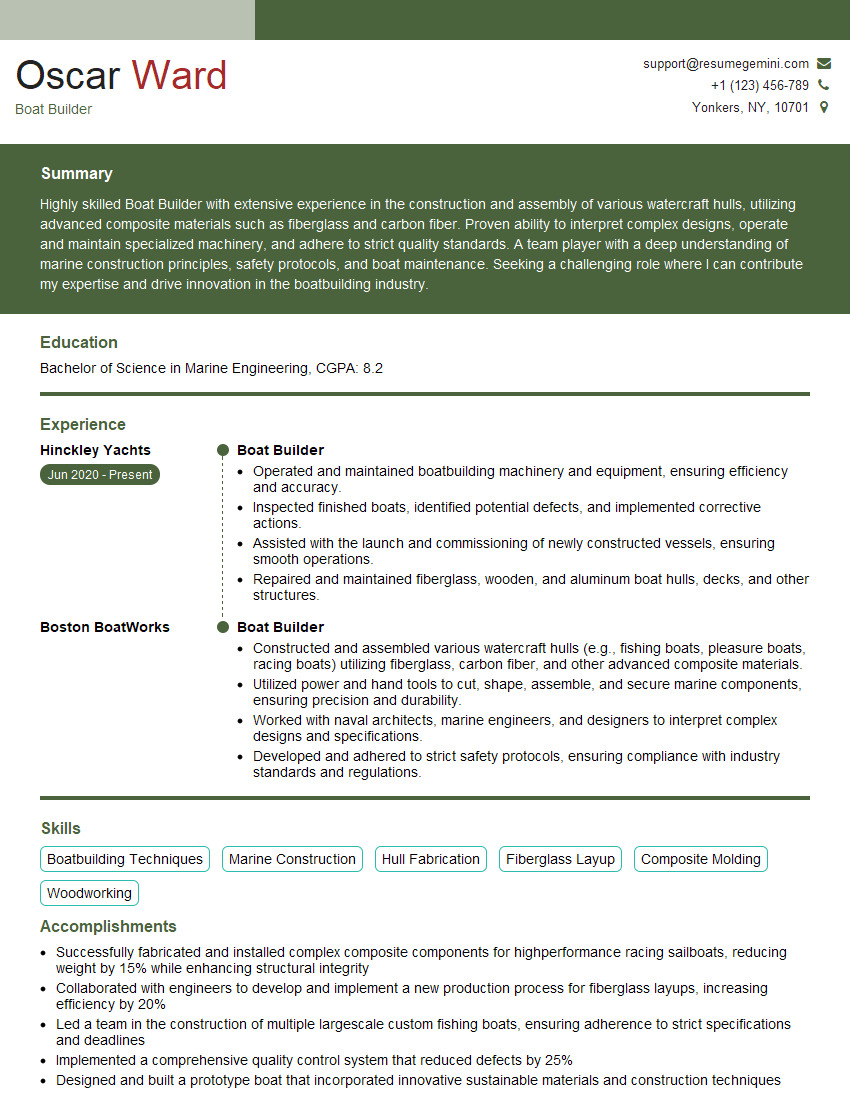
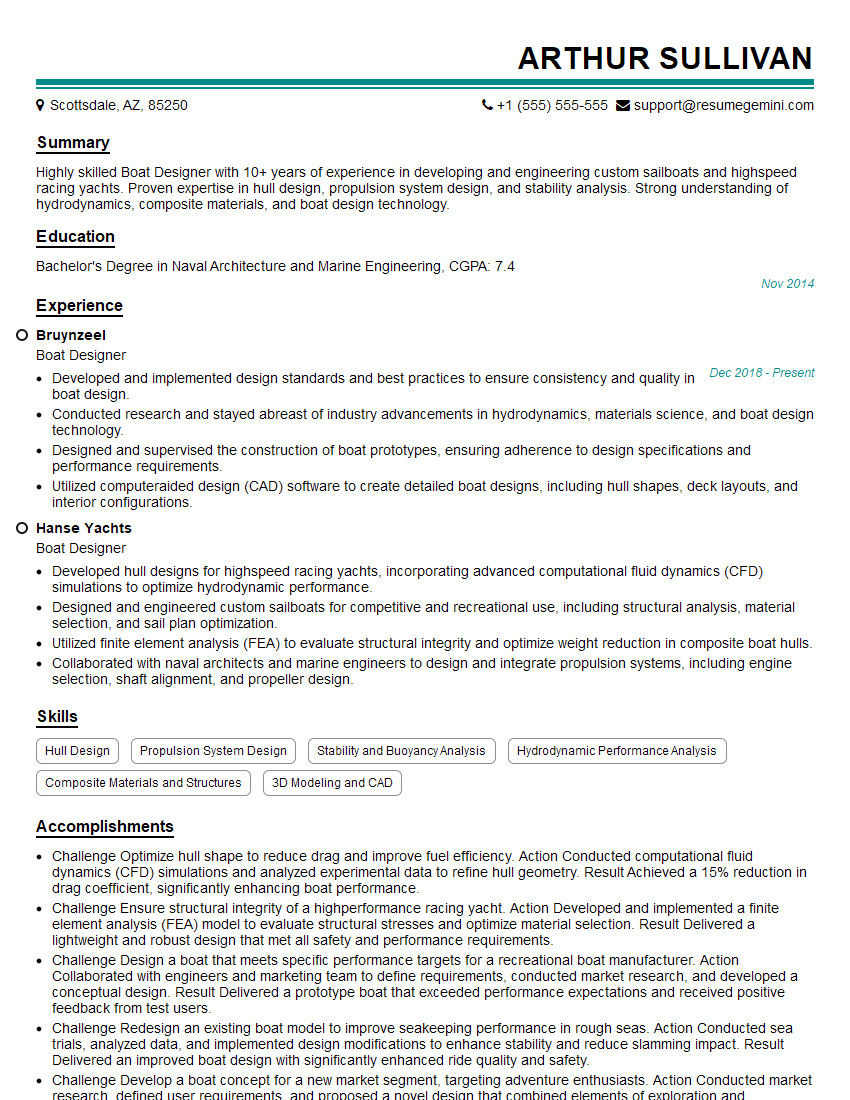
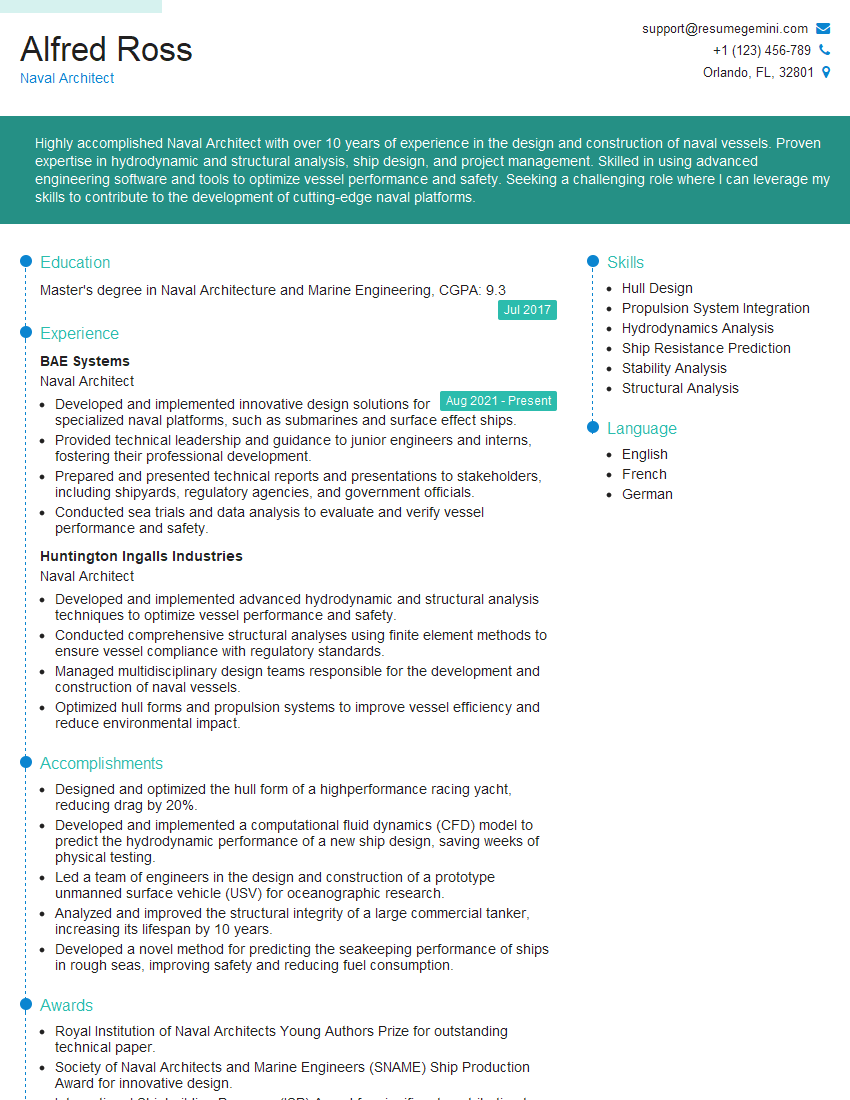
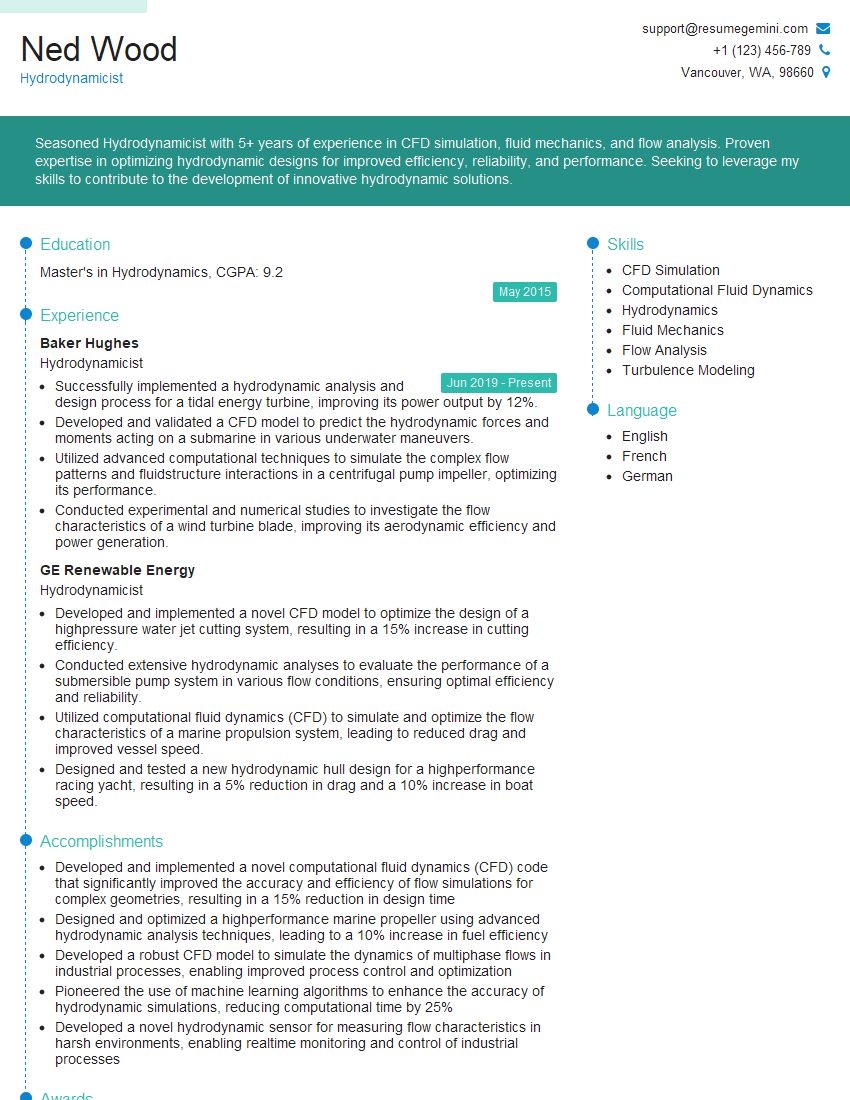
Mastering boat design principles is crucial for career advancement in the marine industry, opening doors to exciting opportunities in design, engineering, and construction. A strong resume is your key to unlocking these prospects. Creating an ATS-friendly resume is essential for getting your application noticed. ResumeGemini is a trusted resource that can help you build a professional and impactful resume tailored to the marine industry. Examples of resumes tailored to showcasing your Understanding of Boat Design are available within ResumeGemini to guide you.
Explore more articles
Users Rating of Our Blogs
Share Your Experience
We value your feedback! Please rate our content and share your thoughts (optional).
What Readers Say About Our Blog
Amazing blog
Interesting Article, I liked the depth of knowledge you’ve shared.
Helpful, thanks for sharing.