Cracking a skill-specific interview, like one for Ability to Read and Interpret Sail Plans, requires understanding the nuances of the role. In this blog, we present the questions you’re most likely to encounter, along with insights into how to answer them effectively. Let’s ensure you’re ready to make a strong impression.
Questions Asked in Ability to Read and Interpret Sail Plans Interview
Q 1. Explain the purpose and function of a sail plan.
A sail plan is a diagrammatic representation of a sailing vessel’s sails and rigging. Its primary purpose is to provide a visual record of the vessel’s sail configuration, including the size, shape, and placement of each sail. This is crucial for understanding the vessel’s sailing characteristics, performance potential, and for maintenance and repair purposes. Think of it as a blueprint specifically for the sailing aspects of the boat. It allows sailors, designers, and builders to visualize the interaction between the sails, the wind, and the hull, ultimately influencing design choices and optimizing sailing performance.
Q 2. Describe the different types of sail plans (e.g., gaff, cutter, yawl).
Sail plans are categorized by the arrangement of masts and sails. Some common types include:
- Gaff Rig: Features a gaff (a spar extending from the mast to the top of the mainsail) and a boom (a spar extending from the bottom of the mainsail to the stern). This is a traditional rig often found on smaller boats and classic designs. It’s known for its simple design and relative ease of handling.
- Cutter Rig: Characterized by two headsails (fore and jib), a mainsail, and often a smaller staysail. This arrangement provides more sail area and versatility in various wind conditions compared to a single headsail setup. They are well-suited for longer voyages and cruising.
- Yawl Rig: Similar to a ketch, but the mizzen mast (smaller aft mast) is located aft of the rudder post. This placement offers improved maneuverability and balance, making them popular for larger vessels.
- Ketch Rig: Also featuring two masts, the mizzen mast is placed forward of the rudder post. This provides better sail control in strong winds and increased stability. Often found on larger cruising vessels.
- Sloop Rig: The most common type, this features one mast positioned roughly amidships with a mainsail and one headsail (jib).
These are just a few examples; many variations and hybrid designs exist.
Q 3. How do you determine the sail area of a vessel using its sail plan?
Determining sail area from a sail plan involves calculating the area of each individual sail and then summing those areas. While sail plans don’t always provide precise dimensions, they usually give enough information to make a reasonable estimate. You typically need the sail’s luff (height) and foot (width) measurements. For simple rectangular sails, the calculation is straightforward (length x width). However, many sails are trapezoidal or more complex shapes, requiring breaking them down into simpler geometric shapes or using approximation techniques.
For example, if the mainsail is roughly trapezoidal, you might divide it into a rectangle and a triangle, calculate the area of each, and then add them together. More advanced methods, including software and specialized tools, exist for highly accurate area calculations, particularly important in racing where sail area is regulated. Remember to always double-check the units (square feet or square meters) to ensure consistent measurements.
Q 4. What information is typically included in a sail plan?
A typical sail plan will include:
- Outline of the hull: Showing the overall shape and dimensions of the boat.
- Location of masts and rigging: Indicating the position of masts, shrouds, stays, and other rigging components.
- Sail shapes and sizes: Showing the dimensions and shape of each sail, usually with labels identifying each sail (e.g., mainsail, jib, staysail).
- Sail numbers or names: for easier identification and reference.
- Scale: Indicating the ratio between the drawing and the actual vessel’s dimensions.
- Notes and specifications: Might include information on sail materials, sail area, and other relevant details.
The level of detail varies depending on the purpose of the sail plan – a simple sketch for a small boat might differ significantly from a detailed drawing used in yacht design.
Q 5. How do you identify the points of sail on a sail plan?
Points of sail are relative angles between the boat’s heading and the wind direction. While not explicitly marked on all sail plans, their relationship to the sail configuration is implied. By considering the wind direction (often indicated by an arrow) and the position of the sails relative to the mast and boat’s centerline, you can determine the points of sail. For instance, if the wind is coming from directly behind the boat, it’s ‘running’; if it’s coming from 90 degrees to the boat’s side, it’s ‘beam reach’; and if it’s coming directly from the front, it’s ‘close-hauled’. The sail plan itself doesn’t show the points of sail directly but provides the essential information to determine them based on sail trim and wind direction.
Q 6. Explain how wind direction and sail trim are depicted on a sail plan.
Wind direction is usually indicated on a sail plan by an arrow, often with a notation specifying the wind’s direction in degrees relative to North. This arrow helps determine the apparent wind direction, which is the wind experienced by the boat, affected by the boat’s motion. Sail trim is shown by the shape and angle of the sails, relative to the boat’s hull and the wind direction. A well-trimmed sail is shown efficiently catching and channeling the wind. For instance, a close-hauled sail (sailing into the wind) will be shown relatively flat to minimize wind spillage, whereas a running sail will be more full and loose to catch the wind effectively from behind.
Q 7. Describe how to interpret the various sail symbols on a sail plan.
Sail symbols on a sail plan are usually straightforward: they depict the sails’ shapes and positions. Different sail types (mainsail, jib, spinnaker, etc.) are often clearly labeled. Sometimes shading or line weight can indicate the degree of fullness or the type of sail material. For example, a heavier line weight might represent a heavier-duty sail used in stronger winds. The key is to pay close attention to the labels and the overall context of the diagram. If there’s any ambiguity, referring to accompanying documentation or consulting with an experienced sailor or designer will clarify the meaning.
Q 8. How does the sail plan relate to the vessel’s stability and performance?
A sail plan is a crucial blueprint that dictates a vessel’s sailing characteristics, directly influencing its stability and performance. It illustrates the size, shape, and placement of sails relative to the hull. A well-designed sail plan ensures a balance between power (driving force) and stability (resistance to capsizing).
For example, a boat with a large sail area relative to its displacement will be fast but potentially less stable, more prone to heeling (leaning) significantly. Conversely, a smaller sail area means less speed but greater stability. The sail plan’s interaction with the hull’s shape and underwater body determines how effectively the vessel harnesses wind energy and maintains equilibrium.
Think of it like this: the sail plan is the wings of an airplane; a large wingspan creates lift (speed) but requires more careful management (stability).
Q 9. Explain how to determine the center of effort (CE) and center of lateral resistance (CLR) from a sail plan.
The Center of Effort (CE) and Center of Lateral Resistance (CLR) are critical for understanding a vessel’s sailing behavior. The CE represents the average position of the aerodynamic pressure acting on the sails. The CLR represents the average position of the hydrodynamic force opposing lateral movement of the hull through the water. Both are crucial for balance and steering.
Determining the CE from a sail plan involves visually estimating the average position of all sail areas. It’s a weighted average, considering the size of each sail. For a simpler sail plan, this might be a straightforward calculation, but for complex sail plans with many sails, software or more complex calculations are often necessary.
Determining the CLR is more complex and typically relies on the hull shape and its interaction with the water. It’s usually found via calculations or hydrodynamic modelling based on the hull’s design, rather than directly from the sail plan alone. The difference between the CE and CLR (CE-CLR) dictates the heeling moment; a large separation signifies increased heeling tendency.
Q 10. How do you use a sail plan to assess the effectiveness of different sail combinations?
A sail plan allows for the evaluation of various sail combinations’ effectiveness by visualizing how different sail configurations will alter the CE, resulting in altered performance. For instance, comparing a full main and jib combination against just a jib shows how the CE shifts forward (with just a jib), reducing power but improving maneuverability in tight spaces.
By examining the sail areas and their projected positions on the sail plan, one can anticipate the impact on speed, stability, and point of sail performance. A smaller jib may be more suitable for close-hauled sailing (sailing into the wind), while a larger genoa might be better for reaching or running (sailing downwind).
Sail plans, when accompanied by polar diagrams (showing boat speed at various points of sail), offer the most comprehensive comparison of sail effectiveness, as you can see the relationship between wind angle, sail configuration, and boat speed.
Q 11. How does a sail plan assist in determining appropriate sail handling techniques?
The sail plan directly influences appropriate sail handling techniques. A larger sail area implies a greater potential for excessive heeling and demands more care in handling to prevent overpowering the vessel. The position and size of sails affect how they react to wind shifts and gusts.
For example, a tall, narrow sail plan might be more susceptible to wind gusts, requiring more frequent adjustments to maintain control. Conversely, a shorter, wider sail plan may be less sensitive to gusts but might demand a different trim to achieve optimal efficiency.
Understanding the sail plan allows sailors to anticipate the boat’s response to different wind conditions and refine their techniques accordingly. This includes appropriate sail trim, reefing (reducing sail area), and sail handling maneuvers.
Q 12. Explain how to determine the sail plan’s impact on the vessel’s maneuverability.
A vessel’s maneuverability is greatly impacted by its sail plan. A sail plan with a relatively small and balanced sail area usually offers better maneuverability, especially in confined spaces or close-hauled sailing. A more forward-placed CE might mean the boat will turn more readily.
In contrast, boats with large sail plans often show less maneuverability, especially at higher wind speeds. The greater the sail area, the slower the response to steering inputs might be. This is because the large sail area has significant inertia. A longer boom will also affect maneuverability around docks.
Consider a racing sailboat designed for quick tacking (changing direction) versus a large cruising vessel. The racing boat will often have a more compact sail plan for improved responsiveness, while the cruiser prioritizes stability and a larger sail area.
Q 13. What are the limitations of relying solely on a sail plan for navigation?
While a sail plan provides valuable information, relying solely on it for navigation is inadequate. A sail plan doesn’t account for real-time wind conditions, currents, or other navigational factors. It’s a static representation of the vessel’s potential, not its actual performance in dynamic conditions.
A sail plan alone won’t show you the actual wind speed and direction, the presence of waves, or the location of other vessels or hazards. Navigation requires charts, instruments (compass, GPS, wind instruments), weather forecasting, and an understanding of seamanship to safely and effectively reach a destination.
Therefore, the sail plan is only one component of the overall navigation strategy. It’s a valuable piece of the puzzle but not the entire solution.
Q 14. How does the sail plan influence the selection of appropriate rigging?
The sail plan strongly influences the choice of rigging. The size, shape, and placement of sails directly determine the required strength and configuration of the masts, spars, and standing rigging. A larger sail plan necessitates stronger and more robust rigging to withstand the increased loads.
For example, a tall, slender mast will be required for a large sail plan to support the height and weight of the sails. The size and type of halyards, sheets, and other running rigging also depend on the sail plan. Similarly, the type and number of stays and shrouds are determined by the sail plan’s loads.
Sail plan design and rigging design are interconnected and must be compatible to ensure the vessel’s structural integrity and safe operation. Rigging failure is a serious safety concern.
Q 15. Describe how you would use the sail plan in conjunction with other navigational aids.
The sail plan is a crucial starting point, but it’s only one piece of the navigational puzzle. I would use it in conjunction with other navigational aids like GPS, charts, compass, and weather forecasts to create a holistic picture. For instance, the sail plan shows the sail area and center of effort, giving me an idea of the boat’s potential performance. However, the actual performance depends on real-time conditions. I’d compare the wind direction and speed from my instruments with the wind data I’ve considered when planning my sail route. This might involve adjusting my course or sail configuration based on the actual conditions versus the conditions predicted when designing my passage.
Imagine planning a trip across the Atlantic. The sail plan helps me understand the boat’s capabilities, but I wouldn’t set sail without factoring in weather forecasts (from sources like GRIB files or weather routing software) which might indicate strong headwinds or currents affecting my estimated arrival time. The GPS helps confirm our position against the planned route based on sail plan assumptions. Combining these sources ensures a safer and more efficient voyage. The compass ensures I maintain my heading, working in tandem with the course predicted from the sail plan and influenced by the current wind and current data from my instruments.
Career Expert Tips:
- Ace those interviews! Prepare effectively by reviewing the Top 50 Most Common Interview Questions on ResumeGemini.
- Navigate your job search with confidence! Explore a wide range of Career Tips on ResumeGemini. Learn about common challenges and recommendations to overcome them.
- Craft the perfect resume! Master the Art of Resume Writing with ResumeGemini’s guide. Showcase your unique qualifications and achievements effectively.
- Don’t miss out on holiday savings! Build your dream resume with ResumeGemini’s ATS optimized templates.
Q 16. Explain how changes in weather conditions would affect your interpretation of the sail plan.
Weather conditions drastically alter how I interpret a sail plan. A sail plan assumes certain wind speeds and directions. If the actual conditions differ significantly, I must adjust my strategy. For example, stronger winds might require reefing (reducing sail area) to prevent the boat from heeling (tilting) excessively, which is not explicitly shown in a standard sail plan. Similarly, shifting winds might call for changing course to maintain optimal sail trim and speed, something the sail plan gives a starting point for but must be altered based on real-time input.
Conversely, lighter winds might require me to loosen the sails to capture the available breeze. I always cross-reference the information on the sail plan with my actual weather observations. Perhaps I’ll need to alter my planned course or even change destinations to take advantage of favourable wind conditions not accounted for during the initial planning phase. I always err on the side of caution, especially in adverse weather conditions. For example, during a storm, I would rely more heavily on weather forecasts and prioritize safety over speed, even if it deviates considerably from the ideal course suggested by the sail plan.
Q 17. How do you adjust sail trim based on the information provided in the sail plan?
The sail plan provides a baseline for sail trim, indicating the ideal shape and position of each sail for various points of sail (the angle between the boat’s heading and the wind). However, the plan doesn’t account for real-time variables. The actual adjustment involves a hands-on process of fine-tuning. For instance, the sail plan might show that at a beam reach (wind coming from the side), the mainsail should be eased slightly. I’d then check the boat’s behavior — its speed, heel angle, and responsiveness. If the boat feels sluggish, I might ease the mainsail further. If it’s heeling too much, I might tighten it. It’s an iterative process of observation and adjustment.
Think of sail trim as sculpting the airflow. We aim to create a smooth, efficient flow across the sails. I rely on telltales (small pieces of yarn attached to the sails) and visual observation of the sail shape to fine-tune this. The information in the sail plan provides the starting point for these adjustments; it is not a strict recipe, but a guideline that I fine-tune on the water based on real-time observations of the boat’s reaction to the wind and sea conditions.
Q 18. What are the key factors to consider when interpreting a sail plan for different types of vessels?
Sail plans vary significantly across different vessel types. Key factors to consider include the vessel’s hull shape, the type and size of sails, and the overall rig (the mast and sail arrangement). A monohull sailboat, for instance, might have a more traditional sail plan with a large mainsail and smaller jib, whereas a catamaran might have a more symmetrical setup with two hulls and corresponding sails. The sail area relative to the vessel’s displacement (weight) is crucial; it affects its speed potential, its tendency to heel, and its maneuverability.
A large, heavy cruiser will have a different sail plan compared to a lightweight racing yacht. The racing yacht’s sail plan will prioritize high performance and speed and often have a greater sail area to displacement ratio. The cruiser would likely prioritize stability and ease of handling with a lower sail area to displacement ratio. I need to understand the specific design characteristics of the vessel to interpret the sail plan effectively. A detailed sail plan will list the key dimensions of each sail, the sail area for each sail and the total sail area, and possibly the center of effort for the sail plan.
Q 19. How can you use a sail plan to estimate the vessel’s performance in various wind conditions?
A sail plan, combined with the vessel’s polar diagrams (graphs showing speed potential at different wind angles and speeds), allows me to estimate performance. Polar diagrams are often produced based on the boat’s design and the sail plan parameters. The sail plan provides the key data—such as sail area and center of effort—that contributes to generating a boat’s polar diagram. I’d use the sail plan in conjunction with real-time weather data to predict potential speed and course made good (actual progress over ground). However, it’s just an estimate; factors like currents and sea state influence actual performance. For example, a strong headwind might reduce speed considerably, despite an optimized sail plan.
Imagine a scenario where the sail plan suggests a top speed of 8 knots at a beam reach in 15 knots of wind. Using this, and the boat’s polar diagram, I can estimate the speed at other points of sail. However, if the wind actually picks up to 20 knots, I’ll need to reef and reduce sail area, drastically affecting the anticipated speed, even if the wind direction is still ideal. Also, if there’s a strong current against our intended direction, the actual speed over ground will be less than the predicted speed through the water.
Q 20. Explain how to use a sail plan to predict the vessel’s behavior in different sea states.
Predicting a vessel’s behavior in different sea states using a sail plan alone is impossible. The sail plan offers an understanding of the boat’s potential response to wind; however, the sea state (the condition of the ocean surface, described by wave height, period, and direction) significantly impacts its behavior, particularly its stability, motion, and speed. A rough sea state can dramatically reduce speed, cause excessive pitching (bow-to-stern motion) and rolling (side-to-side motion), and create challenging sailing conditions, regardless of the sail plan’s predictions. It’s crucial to assess the sea state separately, using visual observations, wave forecasts, and onboard instruments.
For instance, a heavy sea state with large waves coming from the stern could lead to the boat surfing down waves uncontrollably. The sail plan offers no information on how to handle this specific situation. Instead, I’d consult weather forecasts for wave predictions, adjust the sails to prevent excessive speed, and use prudent seamanship techniques to manage the challenging conditions. In such situations, safety overrides the considerations mentioned in the sail plan and I’d rely on experience and expertise to handle the boat safely and efficiently.
Q 21. Describe how you would communicate sail plan information to the crew effectively.
Effective communication of sail plan information is crucial for teamwork and safety. I use a combination of methods, starting with a pre-sail briefing. This includes discussing the planned course based on wind and weather forecasts (informed by the sail plan’s predictions), the expected points of sail, sail configurations and trim adjustments, and potential challenges. I’d use visual aids like the sail plan itself, charts with the planned route, and maybe even a simple diagram illustrating the sail trim and expected wind angle. During the voyage, I’d use clear and concise language, providing updates on wind and weather conditions, and directing crew to make necessary adjustments to the sails or boat’s course.
Clear communication is key; for example, instead of saying ‘ease the mainsail’, I might specify ‘ease the mainsail by two feet’, making the instruction more precise and less open to misinterpretation. I’d also emphasize the importance of continuous observation and communication within the team, allowing for quick and appropriate responses to changes in conditions. During emergencies, concise and rapid communication of critical information is essential, often relying on established protocols and hand signals in addition to verbal instructions.
Q 22. How can you identify potential hazards based on the information presented in the sail plan?
Identifying potential hazards from a sail plan involves a careful examination of several key aspects. It’s not just about the plotted course; it’s about understanding the environmental context.
Water Depths and Obstructions: The sail plan should indicate charted depths. Shallow water, rocks, reefs, and wrecks are clearly marked and should be meticulously checked against the planned route. A discrepancy between the planned route and known hazards is a serious issue needing immediate attention.
Weather Conditions: While a sail plan might show a predicted wind pattern, it’s crucial to consult up-to-date weather forecasts. Strong winds, storms, or sudden shifts in wind direction can create significant hazards. The plan should be adjusted based on the most recent meteorological data. For example, a sail plan that shows a favorable light wind might become extremely dangerous if a sudden squall is predicted.
Navigation Aids: Sail plans often show the location of buoys, lighthouses, and other navigational aids. Understanding the significance of each aid is crucial. A misunderstanding of buoyage systems, for instance, could lead to grounding or collision.
Traffic Density: The plan should account for areas of high vessel traffic, such as shipping lanes or popular boating areas. Failing to account for other vessels could result in a collision.
In essence, identifying hazards involves cross-referencing the sail plan with real-time information and a thorough understanding of nautical charts and navigational practices.
Q 23. Explain the importance of understanding the limitations of the sail plan’s information.
Understanding the limitations of a sail plan is paramount. It’s a snapshot in time, a best-guess prediction, not a guarantee. Several factors highlight these limitations:
Assumptions Made: Sail plans often rely on assumed conditions (e.g., predicted wind speed, current). These assumptions can be inaccurate, leading to unexpected deviations from the planned route.
Data Age: Chart data, weather forecasts, and other information used to create the sail plan can become outdated quickly. A change in water conditions, for instance, due to dredging or unexpected sedimentation, might render the depth data on the sail plan inaccurate.
Unforeseen Circumstances: The sail plan cannot predict every possible eventuality – equipment failure, sudden changes in weather, or unforeseen obstacles (e.g., floating debris). A strong emphasis on adaptability and contingency planning is vital.
Human Error: The sail plan itself may contain errors, whether due to data entry mistakes or misinterpretations. Always double-check the information.
Recognizing these limitations promotes a safety-first mindset, emphasizing constant vigilance and the importance of ongoing situational awareness. A good sailor always plans for contingencies, checking for weather updates, and remaining flexible enough to adapt to changing conditions.
Q 24. How do you ensure that the sail plan is up-to-date and accurate?
Ensuring a sail plan’s accuracy and timeliness requires a multi-pronged approach.
Regular Updates: Weather forecasts should be checked frequently, especially before departure and at regular intervals during the voyage. Significant changes in predicted wind, sea state, or visibility demand immediate adjustments to the sail plan.
Chart Updates: Nautical charts must be regularly updated to reflect changes in water depths, navigational aids, or other hazards. Using the latest electronic chart data is an efficient way to achieve this.
Cross-Referencing Data: Always cross-reference information from multiple sources. Don’t rely solely on one source, such as a single weather forecast. Compare several sources and use your judgment to determine the best course of action.
Pre-Departure Checks: Before setting sail, conduct a thorough review of the sail plan, confirming that all information is current and consistent with the latest weather forecasts and chart data. Involve the whole crew in this process to ensure everyone understands the plan and potential hazards.
Post-Voyage Review: After completing a voyage, reviewing the sail plan and noting any discrepancies between the plan and actual conditions can highlight areas for improvement in future planning.
By implementing these strategies, you can maintain an up-to-date and accurate sail plan, significantly improving navigation safety.
Q 25. Describe a situation where you had to use a sail plan to solve a navigation problem.
During a transatlantic crossing, we encountered unexpectedly strong headwinds and high seas several hundred nautical miles offshore. Our initial sail plan anticipated lighter winds. Using the electronic charts on board, I cross-referenced the actual wind conditions (obtained from weather satellites) with the planned route and identified a sheltered area, marked as a less frequented shipping lane but with sufficient water depth. We adjusted the course to take advantage of the relatively calm conditions within this area, significantly improving the comfort and safety of the crew while reducing the risk of equipment damage.
This required not only understanding the sail plan’s limitations but also the ability to swiftly adapt to unanticipated challenges by referring to and interpreting additional data from various sources.
Q 26. How would you explain the concept of sail plan to someone with no sailing experience?
Imagine a map for a journey at sea, but instead of roads, it shows planned routes for a sailboat. That’s a sail plan. It outlines the best path for a boat to travel from a starting point to an ending point, considering things like wind, currents, water depth, and other boats in the area.
Think of it like planning a road trip; you’d check a map, look at traffic conditions, and plan your route to avoid delays or dangerous areas. A sail plan does the same thing, but for a boat on the water. It helps keep the boat safe and on course to its destination.
Q 27. What resources do you utilize to interpret sail plans effectively?
Effective sail plan interpretation relies on a combination of resources. These include:
Nautical Charts: Essential for identifying water depths, obstructions, navigational aids, and other relevant geographical information. Electronic charts (ECDIS) are now the standard, providing dynamic information and integration with other navigational systems.
Weather Forecasts: Crucial for assessing predicted wind speed, direction, sea state, visibility, and other weather-related factors impacting navigation. Multiple weather sources should be consulted to create a comprehensive picture.
Navigation Software/Apps: These tools enhance the analysis and planning process, often including features for route optimization, weather routing, and collision avoidance.
Tide and Current Predictions: Accurate predictions are crucial, particularly in areas with strong tidal flows or currents. This information often comes in the form of tidal atlases or dedicated online services.
Pilot Books/Sailing Directions: These provide detailed information about local conditions, harbors, anchorages, and other features relevant to navigation.
Proficiency in using these resources, combined with a strong understanding of nautical principles, is what truly elevates one’s ability to create and interpret sail plans effectively.
Key Topics to Learn for Ability to Read and Interpret Sail Plans Interview
- Point of Sail Identification: Understanding how wind direction relates to boat heading and sail trim for optimal performance. This includes recognizing various points of sail (e.g., close-hauled, beam reach, broad reach, running).
- Sail Trim and Adjustment: Knowing how to adjust sail shape and tension based on wind conditions and point of sail. Practical application includes understanding the effects of halyard, sheet, and outhaul adjustments.
- Sail Plan Components: Familiarizing yourself with the different sails on a boat (e.g., mainsail, jib, spinnaker) and their respective functions and characteristics. This includes understanding sail nomenclature and terminology.
- Wind and Current Interpretation: Analyzing wind speed, direction, and shifts, as well as current influences on boat performance and course planning. Practical application includes utilizing weather information and making navigational decisions.
- Tactical Decision Making: Understanding how sail plan interpretation informs strategic decisions in racing or cruising scenarios, such as choosing the optimal course or adjusting sail trim for optimal speed and efficiency.
- Troubleshooting Sail Issues: Identifying and addressing common sail problems, such as sail flogging, twists, or inefficient trim. This includes understanding the relationship between sail shape and boat performance.
- Navigation and Chartwork: Integrating sail plan interpretation with navigational skills to plan routes and make course corrections effectively. This includes understanding how wind and current affect boat speed and heading.
Next Steps
Mastering the ability to read and interpret sail plans is crucial for career advancement in sailing-related fields, opening doors to more challenging and rewarding roles. A strong understanding of these concepts demonstrates key technical skills and enhances your problem-solving abilities, making you a highly valuable candidate. To maximize your job prospects, creating an ATS-friendly resume is essential. ResumeGemini can help you build a professional and impactful resume that showcases your skills effectively. ResumeGemini provides examples of resumes tailored to highlight expertise in reading and interpreting sail plans, ensuring your application stands out. Take the next step toward your dream career and leverage the power of a well-crafted resume.
Marine Consultant Resume Sample
Marine Engineer Resume Sample

Marine Surveyor Resume Sample
Naval Architect Resume Sample
Sailing Instructor Resume Sample
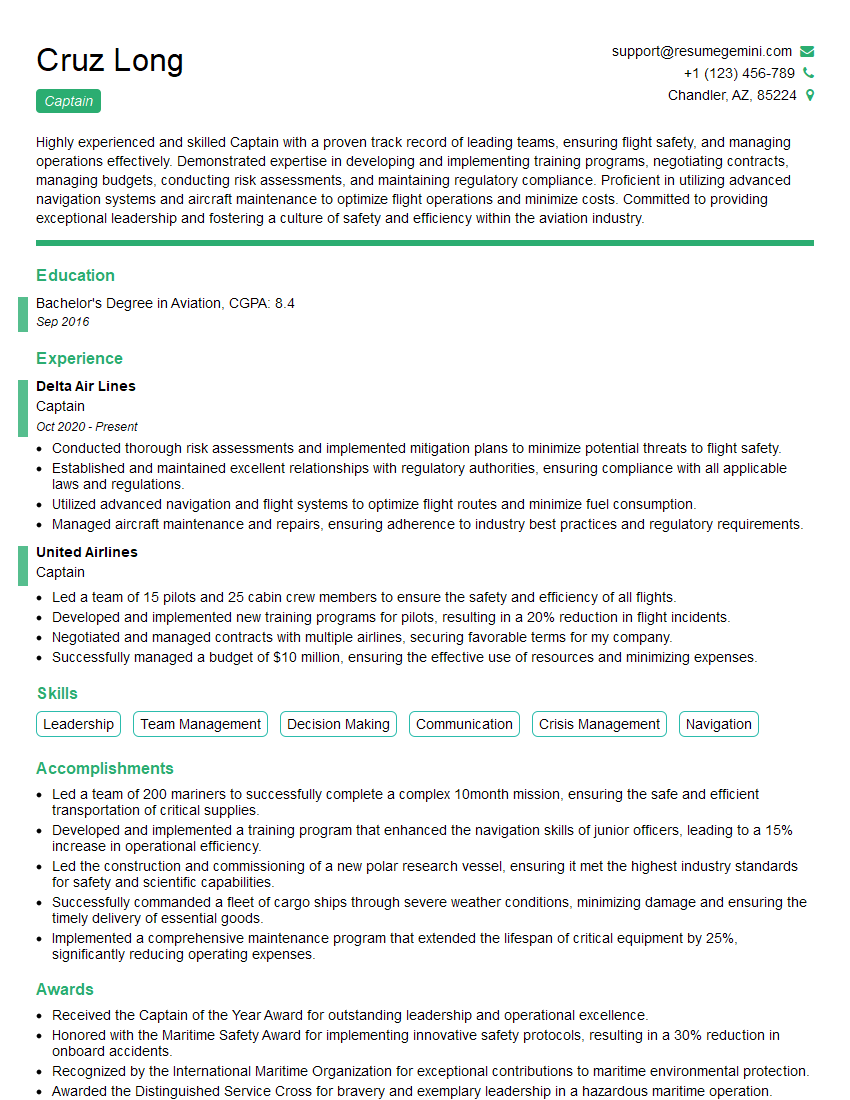
Captain Resume Sample
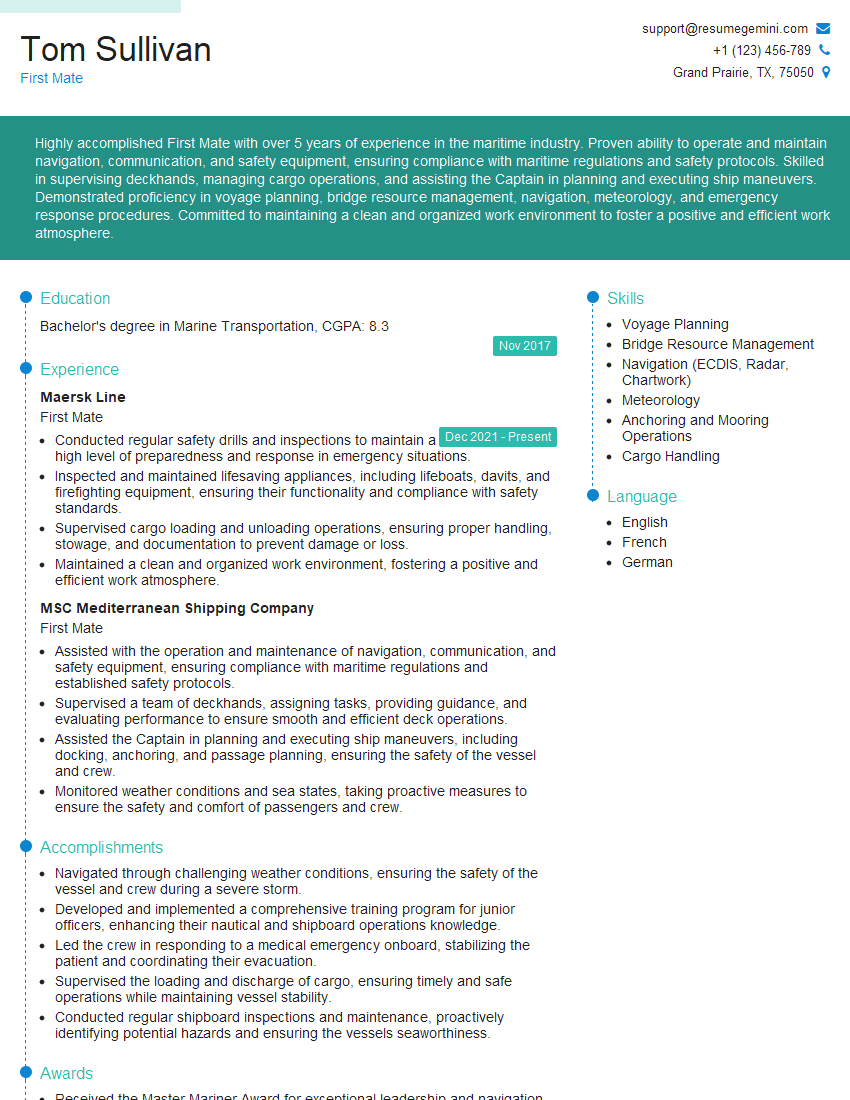
First Mate Resume Sample
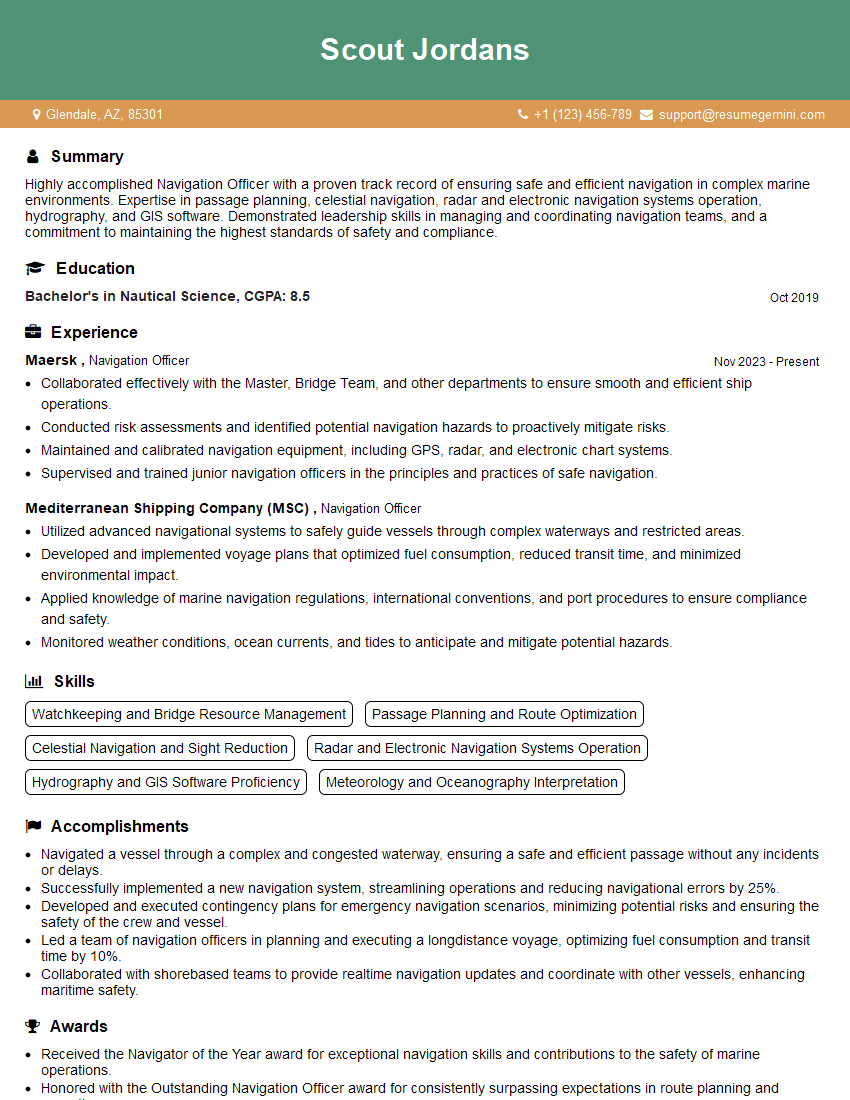
Navigation Officer Resume Sample
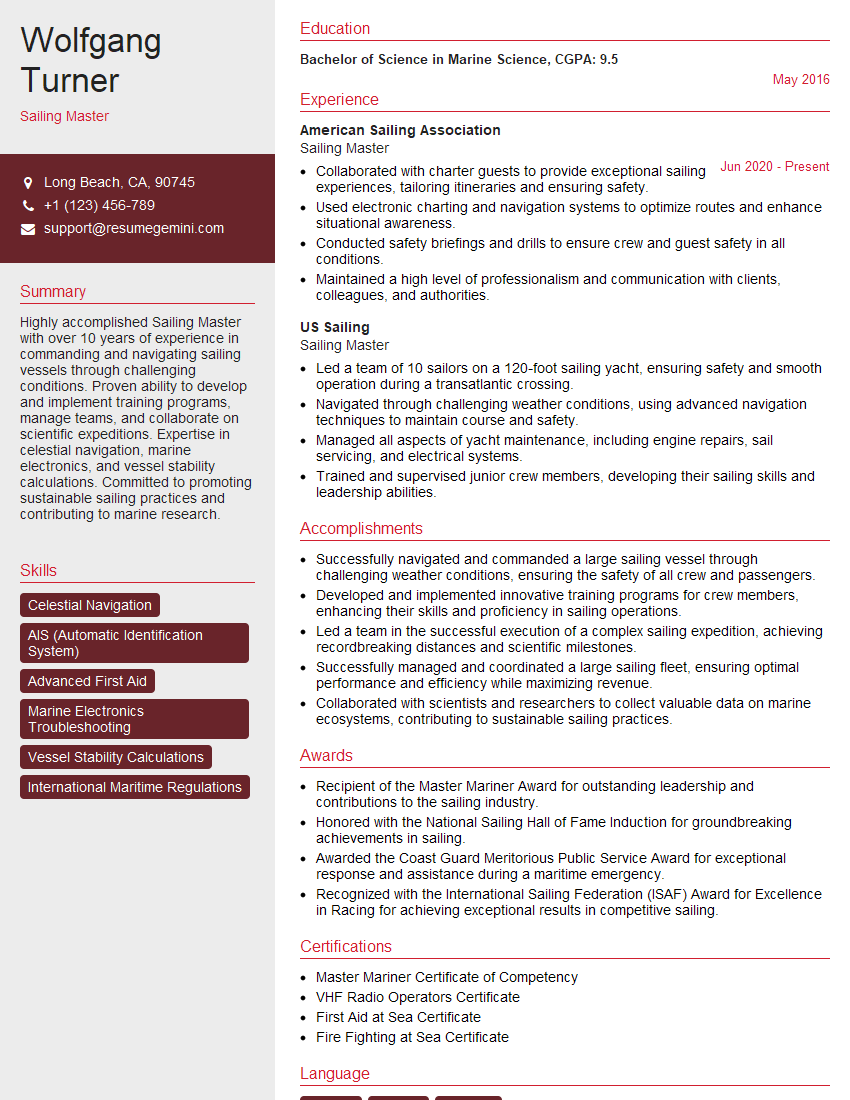
Sailing Master Resume Sample
Yacht Captain Resume Sample
Explore more articles
Users Rating of Our Blogs
Share Your Experience
We value your feedback! Please rate our content and share your thoughts (optional).
What Readers Say About Our Blog
Amazing blog
Interesting Article, I liked the depth of knowledge you’ve shared.
Helpful, thanks for sharing.