Every successful interview starts with knowing what to expect. In this blog, we’ll take you through the top SEO and marketing knowledge interview questions, breaking them down with expert tips to help you deliver impactful answers. Step into your next interview fully prepared and ready to succeed.
Questions Asked in SEO and marketing knowledge Interview
Q 1. Explain the difference between on-page and off-page SEO.
On-page and off-page SEO are two sides of the same coin, both crucial for improving your website’s ranking in search engine results pages (SERPs). Think of it like building a house: on-page SEO is the work done directly on your property (the house itself), while off-page SEO is everything happening outside your property that influences its value (the neighborhood and its reputation).
- On-page SEO focuses on optimizing elements within your website. This includes things like keyword optimization in your content and meta descriptions, improving website structure and internal linking, ensuring fast loading speeds, and creating high-quality, engaging content. For example, carefully selecting relevant keywords for your page title and headings, ensuring your content is well-structured and easy to read, and optimizing images with descriptive alt text are all part of on-page SEO.
- Off-page SEO focuses on activities outside your website that influence your search engine rankings. This primarily revolves around building your website’s authority and reputation through backlinks from other reputable websites, social media engagement, brand mentions, and online PR. A high-quality backlink from a relevant and authoritative website is a strong signal to search engines that your website is trustworthy and valuable.
In short, on-page SEO is about directly improving your website’s content and structure, while off-page SEO is about building your website’s reputation and authority through external factors.
Q 2. Describe your experience with keyword research tools and techniques.
My experience with keyword research is extensive, encompassing both free and paid tools. I’m proficient in using tools like SEMrush, Ahrefs, and Google Keyword Planner. My approach is multifaceted and goes beyond simply identifying high-volume keywords.
- Keyword Research Process: I start by understanding the client’s business goals and target audience. Then, I use a combination of brainstorming, competitor analysis, and keyword research tools to identify relevant keywords with a good balance of search volume, competition, and relevance to the client’s offerings. I don’t just focus on primary keywords; I also identify long-tail keywords (more specific phrases) which often have less competition and higher conversion rates.
- Tool Selection: My choice of tools depends on the project’s specific needs and budget. For example, Google Keyword Planner is excellent for initial brainstorming and understanding search volume, while Ahrefs and SEMrush provide more in-depth competitive analysis and backlink data. I often combine data from multiple tools to get a more holistic view.
- Beyond Keywords: Keyword research isn’t just about finding words; it’s about understanding user intent. I analyze search queries to understand what users are looking for and tailor content accordingly to meet those needs. This includes considering different keyword match types (broad, phrase, exact) and incorporating them strategically into content.
For example, instead of solely targeting the keyword “shoes,” I might investigate long-tail keywords like “best running shoes for women with flat feet” or “comfortable walking shoes for men over 50.” This approach allows for more targeted content and potentially higher conversion rates.
Q 3. How do you measure the success of an SEO campaign?
Measuring the success of an SEO campaign requires a holistic approach, tracking both quantitative and qualitative metrics over time. Simply looking at rankings alone is insufficient; we need to understand the impact on the overall business objectives.
- Website Traffic: Tracking organic traffic from search engines using Google Analytics is paramount. We look at changes in overall traffic, traffic from specific keywords, and the source of that traffic.
- Keyword Rankings: Monitoring keyword rankings over time, using tools like SEMrush or Ahrefs, helps assess the campaign’s impact on visibility. We need to track both increases in rankings for target keywords and improvements in overall search engine visibility.
- Conversions: Ultimately, the goal is to drive conversions, whether that’s sales, leads, or sign-ups. We track these metrics closely to determine the campaign’s effectiveness in achieving business objectives.
- User Engagement: Metrics like bounce rate, time on site, and pages per visit provide insights into user experience. Improving these metrics suggests better content quality and relevance, indirectly impacting search engine rankings.
- Brand Mentions & Social Media Engagement: Off-page successes are important! Tracking brand mentions and social media engagement can provide a broader picture of brand awareness and its indirect impact on SEO.
For a client selling handmade jewelry, success might be measured by increased website traffic from relevant keywords like “artisan earrings” and a significant increase in sales originating from organic search.
Q 4. What are the key ranking factors in Google’s algorithm?
Google’s algorithm is incredibly complex and constantly evolving, but some key ranking factors consistently remain important.
- Content Quality and Relevance: Google prioritizes high-quality, original, and user-friendly content that satisfies search intent. Thin content or duplicate content is penalized.
- Technical SEO: Website speed, mobile-friendliness, and proper site structure are essential. Technical issues can significantly hinder rankings.
- Backlinks: High-quality backlinks from authoritative websites are a strong indicator of trustworthiness and relevance. The number of backlinks is less important than their quality and relevance.
- User Experience (UX): Factors like bounce rate, time on site, and pages per visit influence rankings. A positive user experience signals that your website is valuable and useful.
- Page Experience: This incorporates Core Web Vitals (metrics related to page load speed, interactivity, and visual stability), mobile-friendliness, and secure HTTPS.
- Keyword Optimization: While keyword stuffing is harmful, relevant keyword usage within content, meta descriptions, and titles remains important for conveying topic relevance.
- E-A-T (Expertise, Authoritativeness, Trustworthiness): Google values content from reliable sources with demonstrated expertise in the subject matter. This is especially crucial for YMYL (Your Money or Your Life) topics like health and finance.
It’s crucial to remember that Google’s algorithm is constantly updated, so staying informed about algorithm changes and best practices is crucial for continued success.
Q 5. Explain the concept of schema markup and its benefits.
Schema markup is a structured data vocabulary that allows you to provide search engines with additional information about your website’s content. Think of it as providing search engines with a detailed summary of your content, helping them understand it better.
- How it works: Schema markup is added to your website’s HTML code using specific tags. This code provides information about your content, such as the type of content (article, product, event), key attributes, and other relevant details.
- Benefits: The main benefit is improved search engine understanding of your content. This can lead to richer snippets in SERPs (results with additional information like star ratings, prices, or images), increased click-through rates (CTR), and improved rankings.
- Example: For a recipe website, schema markup could include details like the preparation time, cooking time, ingredients, and nutritional information. This enhances the search result and makes it more appealing to users.
<script type="application/ld+json">{"@context":"https://schema.org","@type":"Recipe","name":"Chocolate Chip Cookies","description":"A classic recipe for delicious chocolate chip cookies."}</script>
Schema markup isn’t a direct ranking factor, but it helps search engines understand your content better, leading to improved visibility and user engagement, indirectly positively influencing your rankings.
Q 6. How do you handle negative SEO attacks?
Negative SEO attacks aim to damage your website’s ranking through manipulative tactics. These can include building low-quality backlinks, creating negative content about your brand, or even hacking your website.
- Detection: Regular SEO audits are crucial for early detection. Tools like SEMrush and Ahrefs help identify unnatural backlinks and sudden drops in rankings.
- Mitigation: If a negative SEO attack is detected, the first step is to identify the source of the attack. This often involves analyzing backlinks and identifying suspicious websites or content.
- Disavow Tool (Google Search Console): If you identify harmful backlinks, you can use Google’s disavow tool to inform Google that you don’t endorse them. However, this should be used cautiously, as improperly using it can also harm your rankings.
- Content Remediation: If negative content is discovered, consider creating high-quality content to counteract its impact. Address any inaccuracies or misleading information.
- Website Security: Strengthening your website’s security is essential to prevent further attacks. This includes regularly updating software, using strong passwords, and employing a web application firewall (WAF).
- Monitor and Adapt: Regularly monitor your website’s rankings and backlink profile for any further suspicious activity. Be proactive and adapt your SEO strategy as needed.
Remember, prevention is better than cure. Focusing on building a strong, high-quality website and earning legitimate backlinks is the best defense against negative SEO attacks.
Q 7. What are your preferred SEO audit tools and why?
My preferred SEO audit tools are a combination of free and paid options, each offering unique strengths.
- SEMrush: A comprehensive SEO tool that provides in-depth analysis of keyword rankings, backlink profiles, website traffic, and on-page optimization opportunities. Its detailed reports are invaluable for identifying areas for improvement.
- Ahrefs: Similar to SEMrush, Ahrefs offers powerful tools for keyword research, competitor analysis, and backlink analysis. Its backlink explorer is particularly robust.
- Google Search Console (GSC): A free tool directly from Google, GSC provides valuable data on your website’s performance in Google’s search results, including crawl errors, indexation issues, and manual actions. It’s essential for monitoring your website’s health and identifying potential problems.
- Google Analytics: While not strictly an SEO tool, Google Analytics is crucial for tracking website traffic, user behavior, and conversion rates. Understanding how users interact with your website is critical for optimizing your SEO strategy.
- PageSpeed Insights: This free tool from Google analyzes your website’s loading speed and provides recommendations for improvement. Fast loading speed is a critical ranking factor.
I choose these tools based on their ability to provide a holistic view of website performance, both on-page and off-page. The combination allows me to identify technical issues, assess keyword strategy, and analyze the competitive landscape.
Q 8. Describe your experience with technical SEO, including sitemaps and robots.txt.
Technical SEO is the backbone of any successful online presence. It involves optimizing your website’s infrastructure to ensure search engines can easily crawl, index, and understand your content. Sitemaps and robots.txt are crucial components of this process.
Sitemaps are XML files that list all the important pages on your website, acting like a roadmap for search engine crawlers. They help ensure that all your content, even pages not easily linked to from other pages, gets discovered. Think of it as giving Google a detailed table of contents for your website. For example, a large e-commerce site might have separate sitemaps for product pages, categories, and blog posts.
robots.txt is a text file that instructs search engine crawlers which parts of your website they shouldn’t access. This is important for preventing sensitive data, such as staging areas or internal documents, from being indexed. It’s like putting a ‘Do Not Enter’ sign on certain parts of your website. A simple robots.txt might look like this:
User-agent: *
Disallow: /admin/
Disallow: /private/
In my experience, meticulously crafting both sitemaps and robots.txt files is essential. I’ve seen instances where poorly configured robots.txt files blocked valuable content, hindering organic search performance. Conversely, well-structured sitemaps have dramatically improved the crawl efficiency and indexing of large websites I’ve worked on.
Q 9. Explain the importance of mobile-friendliness in SEO.
Mobile-friendliness is no longer a ‘nice-to-have’; it’s an absolute necessity in SEO. Google uses mobile-first indexing, meaning they prioritize the mobile version of your website when ranking your pages. A slow, clunky, or difficult-to-navigate mobile experience will severely impact your search rankings. It’s like having a storefront with a broken door – nobody can get in!
The importance stems from the fact that a vast majority of internet searches now originate from mobile devices. If your website doesn’t offer a seamless mobile experience, users will bounce quickly, leading to higher bounce rates, reduced engagement, and ultimately, lower search rankings. Google rewards websites that provide a fast, user-friendly experience on all devices.
In my work, I ensure websites are responsive—meaning they adapt to different screen sizes—and adhere to Google’s mobile-friendliness testing guidelines. This involves optimizing images, minimizing page load times, and ensuring proper navigation across all devices.
Q 10. How do you identify and fix broken links on a website?
Broken links, or 404 errors, negatively affect user experience and SEO. They signal to search engines that your website is poorly maintained and unreliable. Imagine navigating a store where half the signs point to nonexistent aisles – frustrating, right?
Identifying broken links involves several steps. I typically use a combination of methods:
- Website Crawlers: Tools like Screaming Frog or Sitebulb crawl your website and identify broken links. These tools provide comprehensive reports including the location and context of the broken links.
- Google Search Console: This free tool from Google highlights crawl errors, including broken links, offering detailed insights into the nature and scope of the problem.
- Manual Checks: Regularly checking your website’s internal links and navigating through different sections can uncover broken links that automated tools may miss.
Once identified, fixing broken links involves:
- Redirects: If a page has moved, implement a 301 redirect from the old URL to the new URL. This ensures users and search engines are seamlessly directed to the correct content.
- Removal: If a page is no longer relevant, remove the broken link altogether.
- Link Updates: Update broken internal links by replacing them with the correct URLs.
Regularly auditing and fixing broken links is an ongoing process that is key for maintaining a healthy website and strong SEO performance.
Q 11. What is the difference between organic and paid search results?
Organic and paid search results are two distinct ways websites appear on search engine results pages (SERPs).
Organic search results appear because a website’s content naturally ranks well based on relevant keywords and search engine algorithms. Think of it as earning your spot through hard work and providing valuable content. It takes time and effort to rank organically, but the rewards can be substantial and sustainable.
Paid search results, also known as Pay-Per-Click (PPC) advertising, appear because a website pays to have its ads displayed in prominent positions on the SERP. This is like buying your spot on the front page. PPC ads provide immediate visibility but require ongoing budget investment.
The key difference lies in how they are achieved: organic relies on optimization and content quality, while paid relies on financial investment. A successful SEO strategy often incorporates both organic and paid approaches for a more comprehensive reach.
Q 12. What are your thoughts on the use of AI in SEO?
AI is revolutionizing SEO. It offers both opportunities and challenges.
On the positive side, AI-powered tools can automate tedious tasks like keyword research, content optimization, and link building. They can also analyze vast amounts of data to identify trends and patterns, helping SEOs make data-driven decisions. For example, AI can predict which keywords are likely to perform well in the future, allowing for proactive content planning.
However, relying solely on AI can be risky. AI algorithms can sometimes produce generic or low-quality content lacking the human touch and originality that search engines value. Furthermore, over-reliance on AI-driven automation can lead to a lack of creative strategies and insightful interpretations.
My approach is to leverage AI as a powerful tool to enhance, but not replace, human expertise. I use AI for tasks like analyzing large datasets and streamlining processes, but always retain human oversight to ensure the quality, originality, and strategic direction of SEO efforts.
Q 13. Explain the concept of content marketing and its role in SEO.
Content marketing is a strategic marketing approach focused on creating and distributing valuable, relevant, and consistent content to attract and retain a clearly defined audience—and, ultimately, to drive profitable customer action. Its role in SEO is paramount.
High-quality content is the fuel that drives organic search rankings. Search engines prioritize websites that offer valuable and engaging content that satisfies user search intent. Content marketing ensures you’re creating that valuable content. Think of it as building a strong foundation for your online presence.
For instance, a blog post explaining a complex topic in a simple way can attract users searching for information on that topic, thereby improving organic rankings. A series of videos demonstrating product use can enhance brand awareness and engagement, indirectly boosting SEO efforts.
A successful content marketing strategy requires careful keyword research, understanding audience needs, and creating diverse content formats (blog posts, videos, infographics, etc.). It is an iterative process involving continuous content creation, analysis, and optimization based on performance data.
Q 14. How do you create high-quality, SEO-friendly content?
Creating high-quality, SEO-friendly content involves a multifaceted approach. It’s not just about stuffing keywords into text; it’s about providing real value to the reader while also optimizing for search engines.
Keyword Research: Start by identifying relevant keywords with strong search volume and relatively low competition. Tools like SEMrush, Ahrefs, or Google Keyword Planner can assist with this.
User Intent: Understand what users are looking for when they search for these keywords. Are they seeking information, looking to make a purchase, or trying to solve a problem? Tailor your content to answer their specific needs.
Content Structure: Structure your content logically with clear headings, subheadings, bullet points, and visuals to improve readability and comprehension. Use short paragraphs and break up long text to prevent user fatigue.
On-Page Optimization: Optimize your content by incorporating your target keywords naturally throughout the text, in headings, meta descriptions, and image alt text. Ensure your content is well-formatted and easy for both users and search engines to understand.
Content Promotion: Promote your content across different channels, including social media, email marketing, and other relevant online platforms. This increases visibility and helps build backlinks, further boosting your SEO performance.
Regular Updates: Keep your content fresh and up-to-date by regularly revising and adding new information. This keeps your content relevant and encourages search engines to recrawl and re-index your pages.
In essence, creating high-quality, SEO-friendly content is about crafting valuable information for users while strategically implementing SEO best practices to improve visibility and ranking.
Q 15. Describe your experience with link building strategies.
Link building is the cornerstone of successful SEO. It’s about strategically acquiring high-quality backlinks from reputable websites to your own. Think of it like getting recommendations from trusted friends – the more endorsements you have from respected sources, the more credibility you gain in Google’s eyes. My experience encompasses a wide range of strategies, including:
Guest Blogging: Contributing valuable content to relevant blogs in my niche, naturally including a link back to my client’s site. For example, I secured a guest post on a popular tech blog for a client in the SaaS industry, resulting in a significant boost in organic traffic.
Broken Link Building: Identifying broken links on authoritative websites and offering my client’s content as a suitable replacement. This strategy leverages the existing authority of the linking site.
Resource Link Building: Creating comprehensive resources like infographics, guides, or checklists that are valuable to other websites and naturally attract backlinks. I once created an in-depth guide to social media marketing that attracted hundreds of backlinks from relevant websites.
Outreach: Directly contacting website owners and bloggers to propose collaborations and link exchanges. This often involves crafting personalized pitches showcasing the value proposition of the link for the recipient.
Internal Linking: Strategically linking internal pages within a website to improve site architecture and distribute link equity. This is crucial for improving user experience and search engine crawlability.
I always prioritize ethical and white-hat link-building techniques to avoid penalties from search engines. My focus is on building relationships and earning links organically, ensuring long-term SEO success.
Career Expert Tips:
- Ace those interviews! Prepare effectively by reviewing the Top 50 Most Common Interview Questions on ResumeGemini.
- Navigate your job search with confidence! Explore a wide range of Career Tips on ResumeGemini. Learn about common challenges and recommendations to overcome them.
- Craft the perfect resume! Master the Art of Resume Writing with ResumeGemini’s guide. Showcase your unique qualifications and achievements effectively.
- Don’t miss out on holiday savings! Build your dream resume with ResumeGemini’s ATS optimized templates.
Q 16. Explain your understanding of Google Analytics and its key metrics.
Google Analytics is my go-to tool for understanding website performance. It’s a powerful platform that provides invaluable insights into user behavior, traffic sources, and conversion rates. Key metrics I regularly analyze include:
Website Traffic: Analyzing the total number of users, sessions, and page views to understand overall website reach. I look at trends over time to identify growth or decline and pinpoint potential issues.
Acquisition Channels: Identifying where website traffic originates (organic search, social media, paid advertising, referrals etc.) to understand the effectiveness of different marketing efforts. This helps prioritize marketing budget allocation.
User Behavior: Analyzing metrics like bounce rate (percentage of users who leave after viewing only one page), average session duration, and pages per session to understand user engagement and identify areas for improvement on the site’s usability. A high bounce rate might indicate a problem with content or site design.
Conversions: Tracking key actions users take on the website (e.g., form submissions, purchases, newsletter sign-ups) to measure the effectiveness of marketing campaigns and identify areas for optimization. This is crucial for assessing ROI.
Goal Completions: Defining specific goals within Google Analytics allows for precise tracking of user actions crucial to business objectives, enabling data-driven decision making.
By analyzing these metrics together, I can develop data-driven strategies to improve website performance and achieve business objectives. For example, if the bounce rate is high from a specific landing page, I might redesign the page or improve its content to increase engagement.
Q 17. How do you track and analyze the performance of social media marketing campaigns?
Tracking and analyzing social media marketing campaigns involves using the built-in analytics tools of each platform (Facebook Insights, Twitter Analytics, Instagram Insights, etc.) alongside other tools like Google Analytics. The key is to set clear goals and track relevant metrics to measure success.
Reach and Impressions: Measuring the number of unique users who saw your posts and the total number of times your posts were displayed. This helps gauge the visibility of your campaigns.
Engagement: Tracking likes, comments, shares, and other interactions to assess user interest and engagement with your content. High engagement often correlates with better brand recall and customer loyalty.
Website Traffic: Analyzing the amount of traffic driven to your website from social media platforms. This is important for measuring the effectiveness of social media in driving conversions.
Conversion Rates: Tracking conversions originating from social media, such as purchases or form submissions. This helps quantify the return on investment (ROI) of your campaigns.
Brand Mentions: Monitoring brand mentions across social media platforms to understand sentiment and identify potential PR opportunities or crises. Tools like Brand24 or Mention can assist in this.
A/B testing different ad creatives, post types, and posting times is crucial for optimizing social media campaigns. For example, I might test different images or ad copy to see which performs better in terms of engagement and conversions.
Q 18. Explain the concept of A/B testing and how it applies to SEO and marketing.
A/B testing is a method of comparing two versions of something (a webpage, email, ad, etc.) to determine which performs better. It’s a cornerstone of data-driven decision-making in SEO and marketing, allowing for continuous improvement.
In SEO, A/B testing can be used to optimize:
Title tags and meta descriptions: Testing different variations to see which generates the most clicks from search engine results pages (SERPs).
Landing page content and design: Testing different layouts, headlines, calls-to-action (CTAs), and images to see which drives the highest conversion rates.
Website structure and navigation: Testing different website structures to see which improves user experience and reduces bounce rates.
In marketing, A/B testing is used to optimize:
Email subject lines and body copy: Testing different variations to see which leads to higher open and click-through rates.
Paid advertising creatives: Testing different ad copy, images, and targeting options to optimize campaign performance.
A/B testing provides statistically significant data to make informed decisions, leading to higher ROI and improved campaign performance. It’s an iterative process; we continually test and refine based on results.
Q 19. Describe your experience with PPC advertising (Google Ads, etc.).
I have extensive experience managing PPC campaigns, primarily using Google Ads. My expertise encompasses all aspects of campaign management, from keyword research and ad copywriting to bidding strategies and performance analysis.
Keyword Research: Identifying the most relevant and profitable keywords to target, using tools like Google Keyword Planner and SEMrush.
Ad Copywriting: Crafting compelling ad copy that resonates with the target audience and drives clicks.
Campaign Structure: Organizing campaigns into well-structured ad groups, using relevant keywords and match types to ensure effective targeting.
Bidding Strategies: Implementing various bidding strategies (e.g., manual CPC, automated bidding) to optimize campaign performance and budget allocation.
Landing Page Optimization: Creating high-converting landing pages that align with the ad copy and target keywords.
Performance Tracking and Analysis: Regularly monitoring campaign performance, analyzing key metrics (clicks, impressions, conversion rates, cost per acquisition (CPA)), and making data-driven adjustments to improve ROI.
For example, for a client in the e-commerce industry, I implemented a Google Ads campaign that increased their conversion rate by 30% within three months by optimizing ad copy, improving landing page design, and refining targeting parameters.
Q 20. What is your experience with different SEO reporting tools?
I’m proficient in using a variety of SEO reporting tools to monitor website performance and track the effectiveness of SEO strategies. My experience includes:
Google Search Console: For monitoring website indexing, identifying technical SEO issues, and analyzing search queries that lead to the website.
Google Analytics: As previously mentioned, for comprehensive website performance analysis, including traffic sources, user behavior, and conversions.
SEMrush: For keyword research, competitor analysis, site audit, and backlink analysis.
Ahrefs: Similar to SEMrush, providing powerful SEO tools for keyword research, competitor analysis, backlink profile analysis, and rank tracking.
Moz: Another comprehensive SEO suite offering tools for keyword research, rank tracking, site audits, and backlink analysis.
Rank Tracker: For monitoring keyword rankings across various search engines.
The choice of tool depends on the specific needs of the client and the project requirements. I tailor my reporting to highlight key performance indicators (KPIs) and provide actionable insights for improvement.
Q 21. How do you stay up-to-date on the latest SEO trends and algorithm updates?
Staying current in the ever-evolving world of SEO is critical. My approach is multi-faceted:
Following Industry Blogs and Publications: I regularly read leading SEO blogs (e.g., Search Engine Journal, Moz Blog, Neil Patel) and publications to stay informed about algorithm updates and industry trends.
Attending Industry Conferences and Webinars: Participating in conferences and webinars provides access to the latest insights from experts and allows networking opportunities.
Monitoring Google’s Official Announcements: Keeping a close eye on Google’s official blog and webmaster guidelines for announcements regarding algorithm updates and best practices.
Experimentation and Data Analysis: Continuously testing different SEO strategies and analyzing data to understand their effectiveness. This hands-on experience is invaluable.
Networking with Other SEO Professionals: Engaging with the SEO community through online forums, social media, and professional organizations helps share insights and learn from others’ experiences.
By combining these methods, I ensure I’m always ahead of the curve, adapting my strategies to stay compliant and maximize results for my clients.
Q 22. How do you manage and prioritize multiple SEO projects simultaneously?
Managing multiple SEO projects effectively requires a structured approach. Think of it like conducting an orchestra – each project is an instrument, and you’re the conductor. My process begins with a clear project prioritization matrix. This involves assessing each project based on factors like potential ROI, client urgency, and available resources. I utilize project management tools like Trello or Asana to visually track progress, deadlines, and assigned tasks. For instance, I might prioritize a project with a high potential ROI and a tight deadline over one with lower potential but a more flexible timeline. This allows me to allocate my time and resources strategically. Regular client communication is key to ensure alignment and address any arising issues promptly. Finally, I schedule dedicated time blocks for each project, preventing context switching and improving focus. This methodical approach ensures that each project receives the necessary attention while maintaining overall efficiency.
Q 23. Describe your process for identifying and targeting the right audience for a marketing campaign.
Identifying the right audience is crucial for a successful marketing campaign. It’s like aiming a dart – without knowing the target, you’ll never hit the bullseye. My process starts with in-depth research. This involves analyzing existing customer data, conducting market research, creating buyer personas (detailed representations of ideal customers), and identifying their pain points, needs, and online behavior. Tools like Google Analytics, social media analytics, and survey platforms provide valuable insights into demographic data, interests, and online engagement. For example, if we’re launching a new fitness app, we’d identify our target audience as health-conscious individuals aged 25-45, who are active on social media platforms like Instagram and are interested in health and wellness content. Once the target audience is defined, we tailor our messaging and choose appropriate marketing channels to reach them effectively. This ensures that our marketing efforts are focused and impactful.
Q 24. How do you measure the ROI of a marketing campaign?
Measuring the ROI of a marketing campaign is essential to demonstrate its value and inform future strategies. It’s not just about clicks and impressions; it’s about translating those metrics into tangible business outcomes. My approach involves defining clear, measurable goals before the campaign starts, such as increased website traffic, lead generation, or sales. Then, I track key performance indicators (KPIs) relevant to those goals. These KPIs might include website conversions, cost per acquisition (CPA), customer lifetime value (CLTV), and return on ad spend (ROAS). For example, if the goal is to increase sales, we’d track the number of sales generated by the campaign, the cost of acquiring those customers, and compare it to the revenue generated. By comparing the return with the investment, we can accurately calculate the ROI. This data-driven approach enables continuous optimization and demonstrates the efficacy of the marketing investment.
Q 25. Explain your understanding of conversion rate optimization (CRO).
Conversion rate optimization (CRO) is the systematic process of improving the percentage of website visitors who complete a desired action, such as making a purchase, filling out a form, or signing up for a newsletter. Think of it as making your website a well-oiled machine, designed to guide users towards conversion. My approach involves A/B testing different versions of website elements – headlines, calls-to-action (CTAs), images, and forms – to see which performs best. I use heatmaps and session recordings to identify areas of friction on the website, where users might be abandoning the conversion process. This helps me understand user behavior and identify areas for improvement. For instance, if users are abandoning the checkout process, we might simplify the form, add clear instructions, or offer multiple payment options. By continually analyzing data and making data-driven improvements, we can significantly improve conversion rates and maximize the website’s effectiveness.
Q 26. How would you approach improving the SEO of a low-performing website?
Improving the SEO of a low-performing website requires a thorough and systematic approach. First, I’d conduct a comprehensive SEO audit, which involves analyzing the website’s technical aspects (e.g., site speed, mobile-friendliness, broken links), content quality, and backlink profile. This audit helps identify areas for improvement. For example, a slow website speed could be harming rankings. Similarly, duplicate content or thin content could be hindering search engine visibility. Then, I’d address technical issues, optimize website content (ensure it’s relevant, engaging, and keyword-rich), and build high-quality backlinks from reputable sources. I’d also monitor the website’s performance using tools like Google Search Console and Google Analytics to track progress and make necessary adjustments. This holistic approach, focusing on both on-page and off-page optimization, ensures consistent improvement in the website’s search engine rankings and organic visibility.
Q 27. What is your experience with local SEO?
Local SEO is crucial for businesses targeting customers within a specific geographic area. I have extensive experience optimizing websites for local search engines, focusing on factors like Google My Business (GMB) optimization, citation building (ensuring consistent business information across online directories), and local link building (acquiring links from local websites and publications). For instance, I’ve helped numerous clients improve their GMB profiles, ensuring accurate business information, high-quality photos, and positive customer reviews, leading to increased visibility in local search results. I also focus on optimizing website content with location-based keywords and integrating location schema markup to help search engines better understand the business’s location and service area. This ensures that their business appears prominently in local search results when customers search for relevant services or products in their area.
Q 28. Describe your experience with website analytics tools beyond Google Analytics
While Google Analytics is a powerful tool, I also utilize other analytics platforms to gain a more comprehensive understanding of website performance and user behavior. For instance, I’ve used SEMrush for keyword research, competitor analysis, and backlink analysis. This provides insights beyond Google Analytics’ capabilities, allowing me to identify new keyword opportunities and understand the competitive landscape better. I also use Hotjar for heatmaps and session recordings, allowing me to visualize user behavior on the website and identify areas for improvement. Furthermore, I’m proficient with tools like Ahrefs and Majestic, providing a deeper dive into backlink analysis and identifying potential link-building opportunities. This multi-platform approach provides a more nuanced and thorough understanding of website performance and user behavior, enabling more effective data-driven decision-making.
Key Topics to Learn for SEO and Marketing Knowledge Interview
- On-Page SEO Optimization: Understanding title tags, meta descriptions, header tags (H1-H6), keyword research and implementation, URL structure, and image optimization. Practical application: Analyze a website’s existing on-page SEO and suggest improvements to boost rankings.
- Off-Page SEO Optimization: Building high-quality backlinks, link building strategies, understanding link equity and authority, managing online reputation. Practical application: Develop a backlink strategy for a fictional client, considering ethical and effective approaches.
- Technical SEO: Website architecture, sitemaps, robots.txt, crawling and indexing, page speed optimization, mobile-friendliness, schema markup. Practical application: Troubleshoot common technical SEO issues and propose solutions to improve search engine crawlability and indexability.
- Keyword Research and Analysis: Utilizing keyword research tools, identifying relevant keywords with high search volume and low competition, understanding long-tail keywords. Practical application: Conduct keyword research for a specific niche and create a prioritized keyword list for a marketing campaign.
- SEO Analytics and Reporting: Utilizing Google Analytics and Google Search Console to track website performance, interpreting key metrics like organic traffic, keyword rankings, and click-through rates. Practical application: Analyze SEO data to identify areas for improvement and demonstrate a positive ROI of SEO efforts.
- Content Marketing Strategy: Creating high-quality, engaging, and valuable content tailored to target audiences, understanding content pillars and topic clusters. Practical application: Develop a content calendar and strategy for a specific business goal.
- Digital Marketing Channels: Understanding the strengths and weaknesses of various channels like social media marketing, email marketing, paid advertising (PPC), and influencer marketing. Practical application: Compare and contrast the effectiveness of different digital marketing channels for a given product or service.
- Marketing Analytics and ROI: Measuring the effectiveness of marketing campaigns, analyzing data to optimize campaigns, and demonstrating a return on investment. Practical application: Develop a marketing report that showcases campaign performance and identifies key learnings.
Next Steps
Mastering SEO and marketing knowledge is crucial for career advancement in today’s digital landscape. It opens doors to exciting opportunities and higher earning potential. To maximize your job prospects, create an ATS-friendly resume that highlights your skills and experience effectively. ResumeGemini is a trusted resource that can help you build a professional and impactful resume. Examples of resumes tailored to SEO and marketing knowledge are available to guide you.
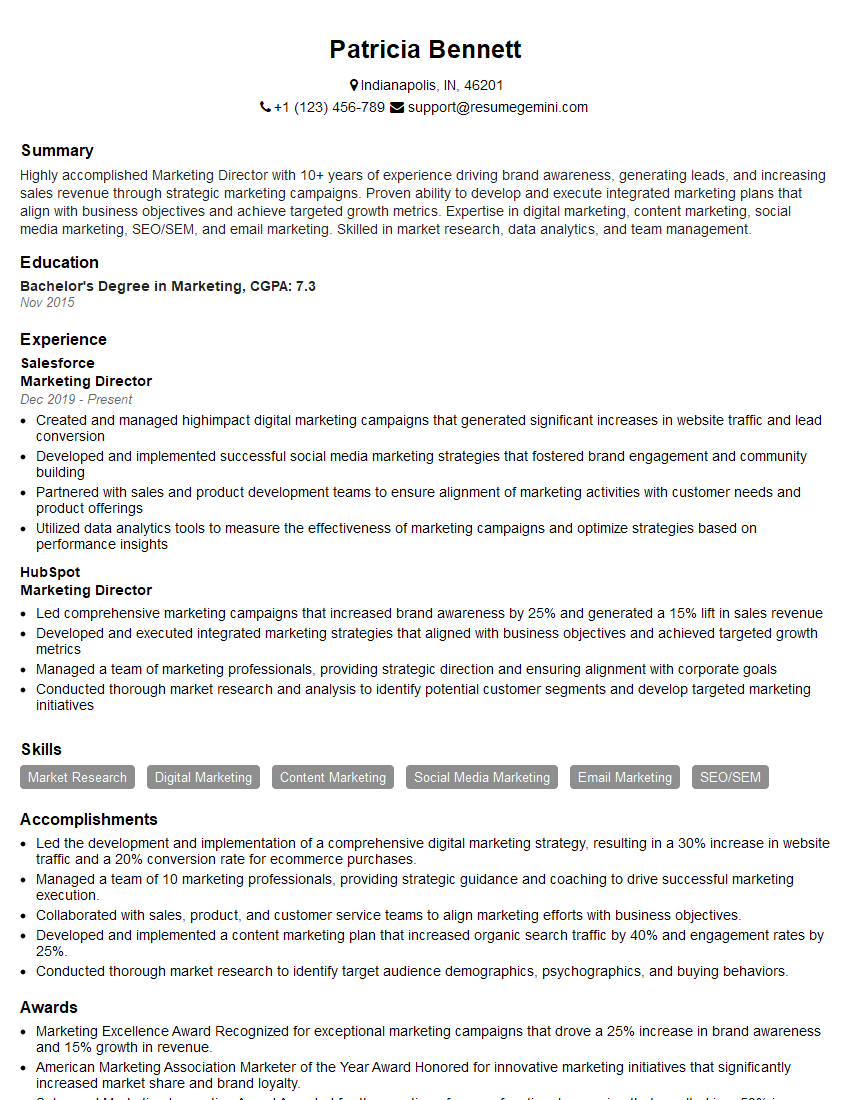
Marketing Director Resume Sample
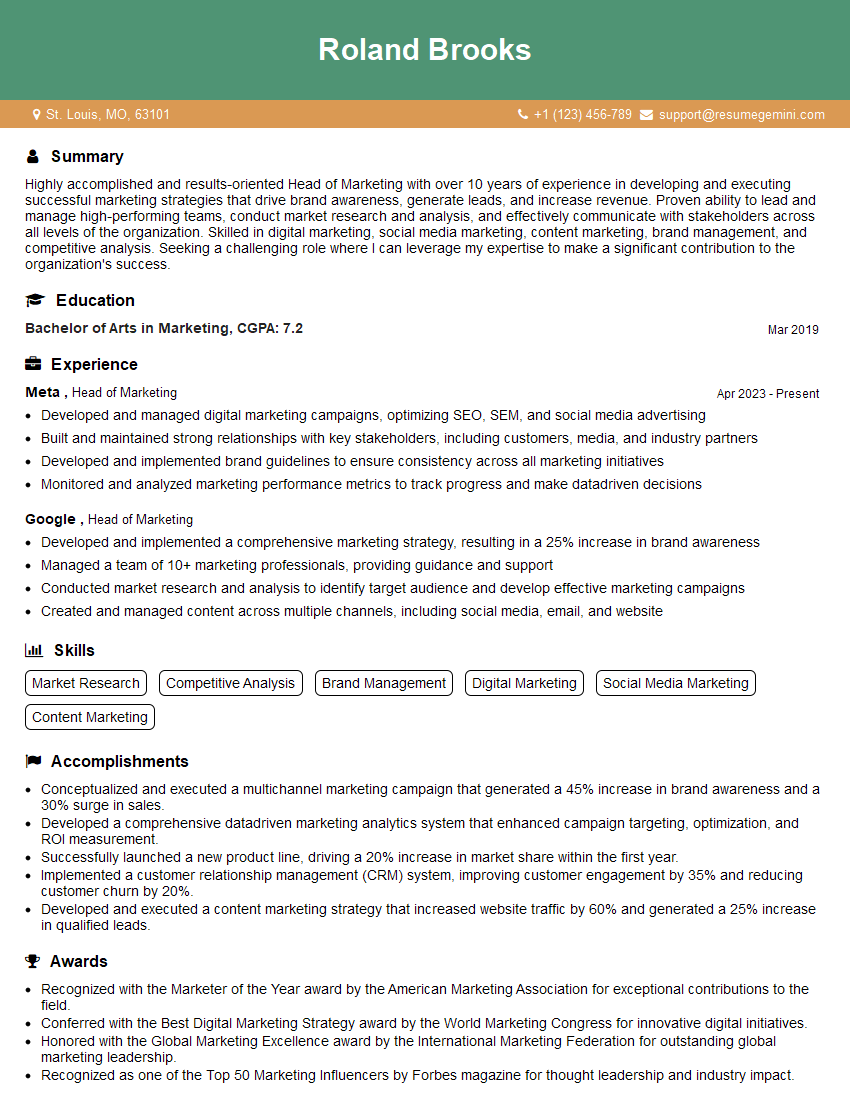
Head of Marketing Resume Sample
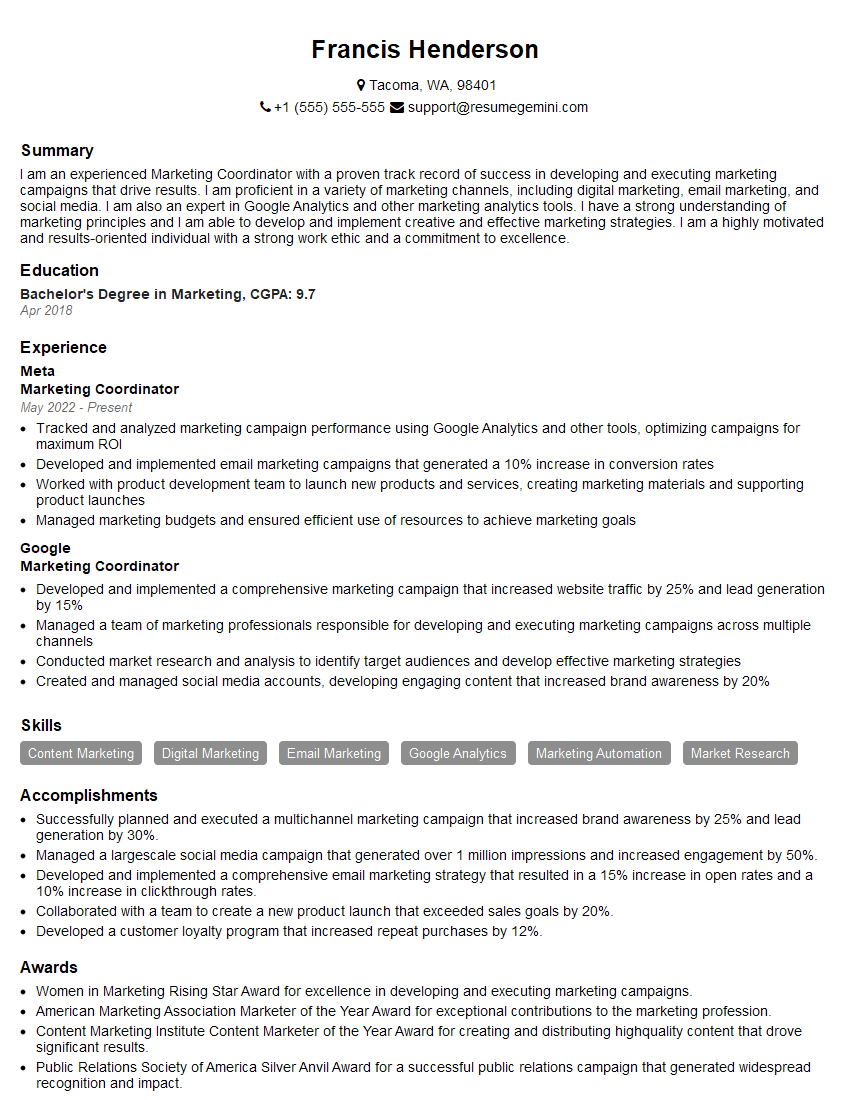
Marketing Coordinator Resume Sample
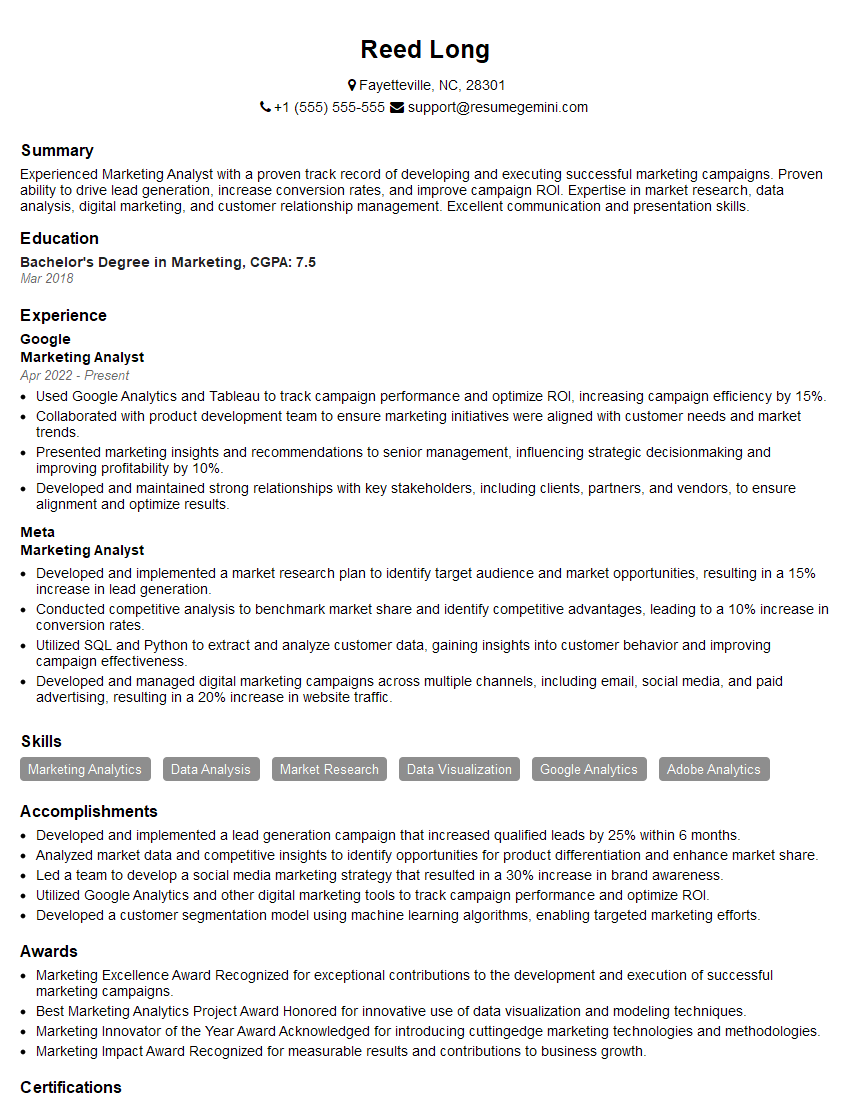
Marketing Analyst Resume Sample
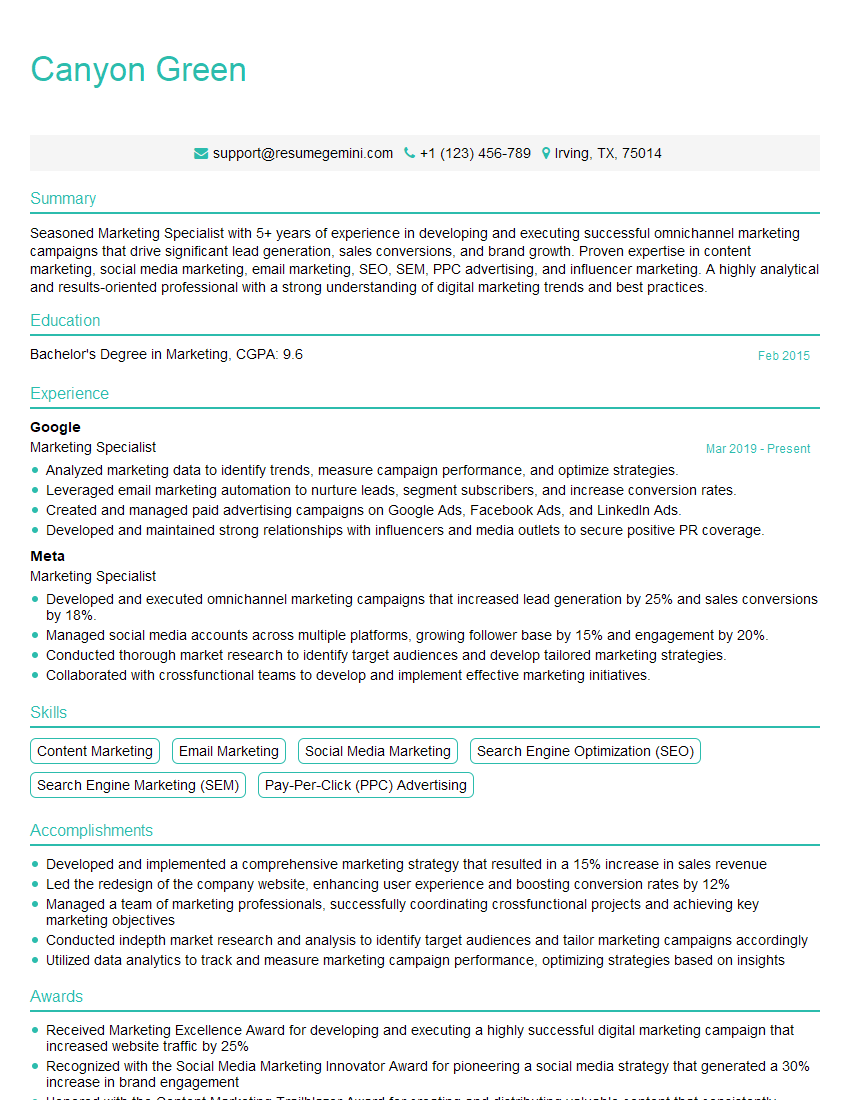
Marketing Specialist Resume Sample

Social Media Manager Resume Sample
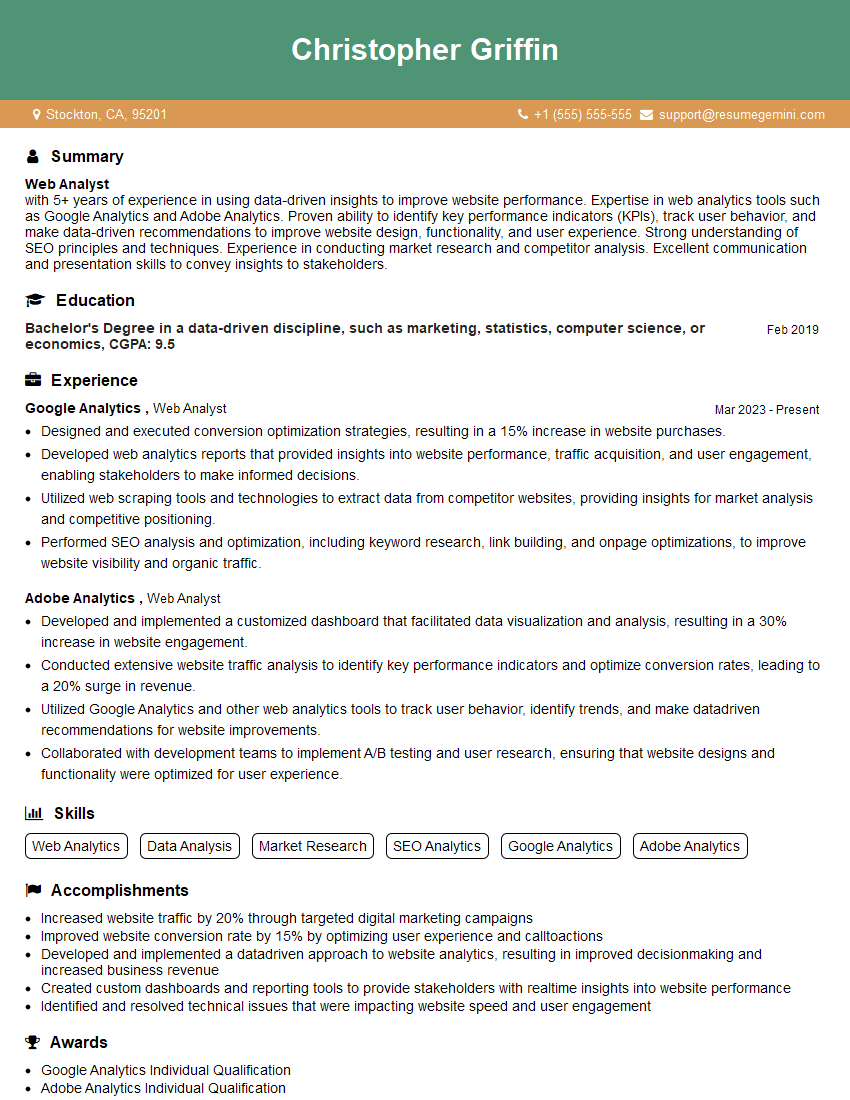
Web Analyst Resume Sample

Content Strategist Resume Sample

Growth Hacker Resume Sample
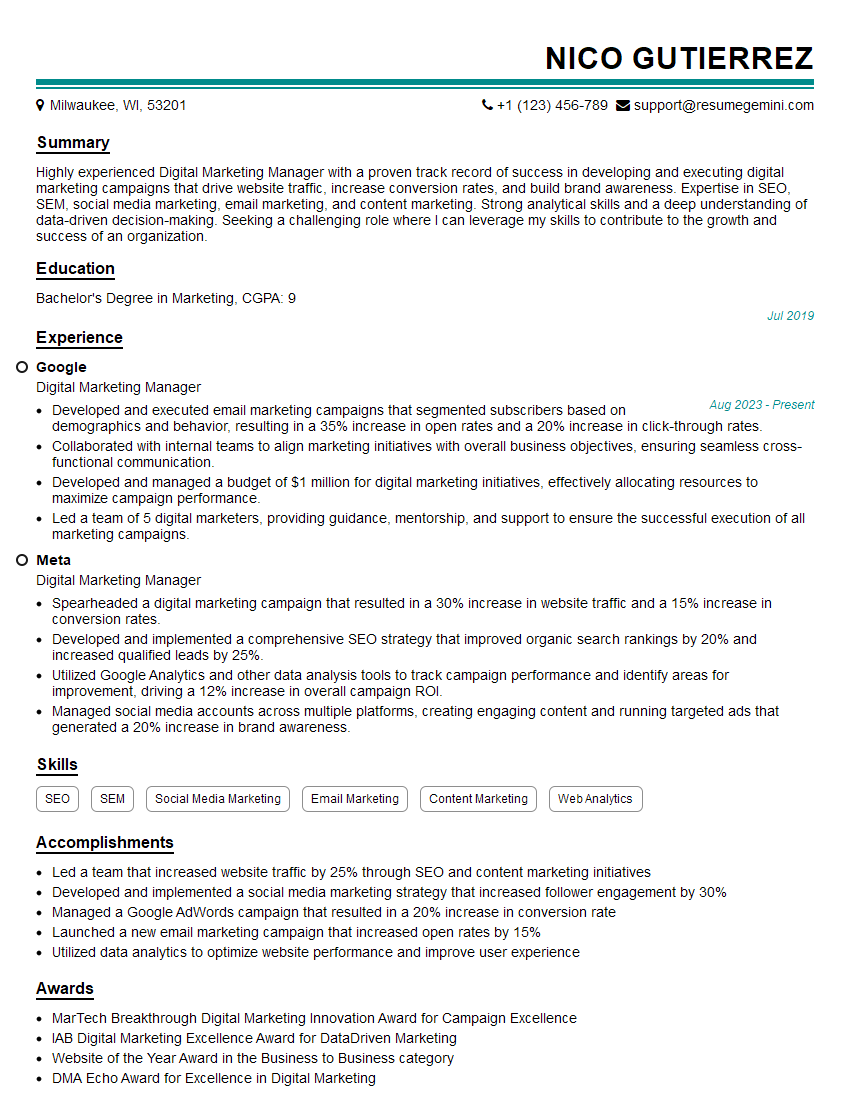
Digital Marketing Manager Resume Sample
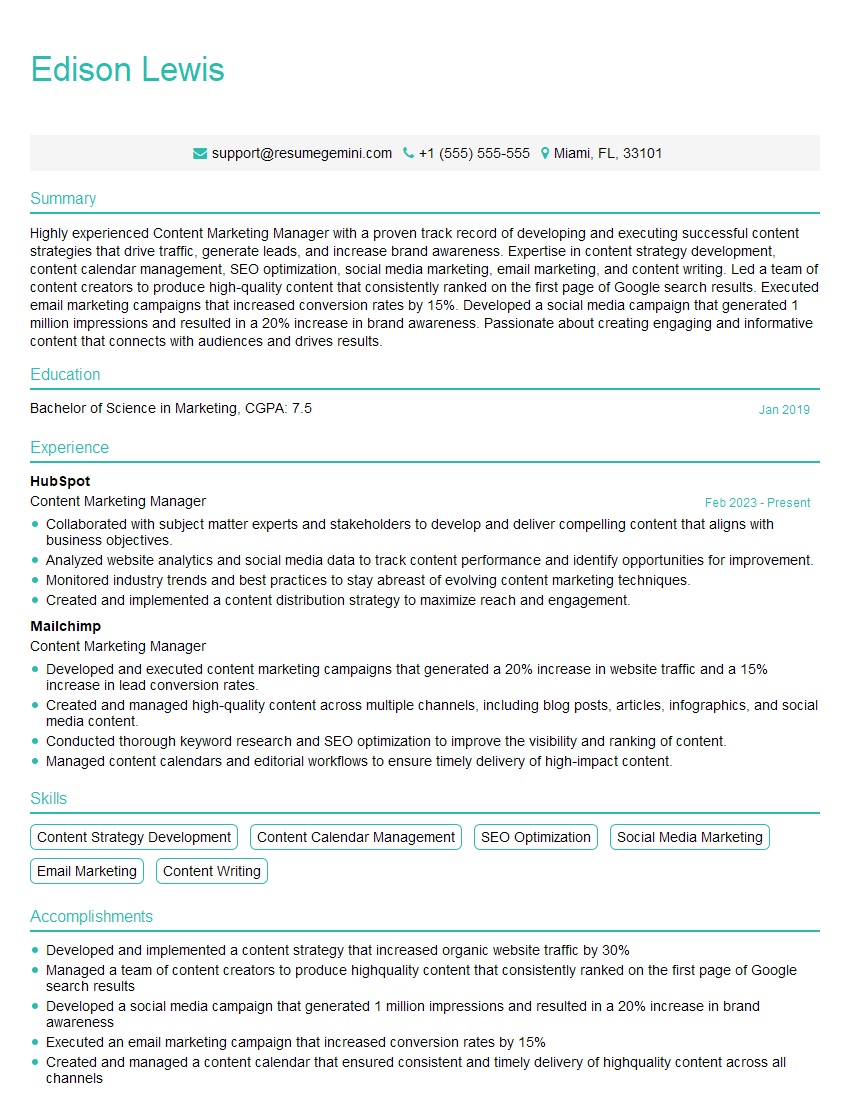
Content Marketing Manager Resume Sample
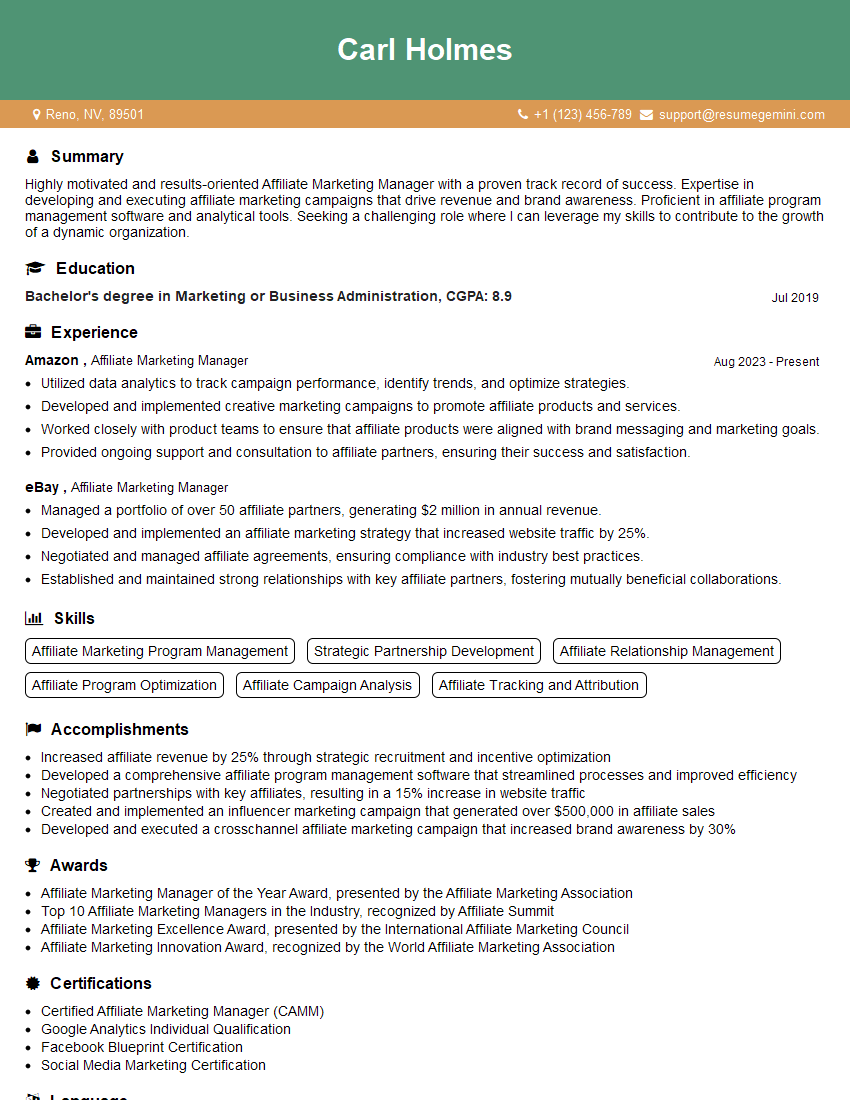
Affiliate Marketing Manager Resume Sample
Explore more articles
Users Rating of Our Blogs
Share Your Experience
We value your feedback! Please rate our content and share your thoughts (optional).
What Readers Say About Our Blog
Amazing blog
Interesting Article, I liked the depth of knowledge you’ve shared.
Helpful, thanks for sharing.