Cracking a skill-specific interview, like one for Proficient in industry-standard software and equipment, requires understanding the nuances of the role. In this blog, we present the questions you’re most likely to encounter, along with insights into how to answer them effectively. Let’s ensure you’re ready to make a strong impression.
Questions Asked in Proficient in industry-standard software and equipment Interview
Q 1. Describe your experience with Agile development methodologies.
Agile development methodologies prioritize iterative progress, collaboration, and flexibility. Instead of following a rigid waterfall approach, Agile embraces short development cycles (sprints), frequent feedback, and continuous adaptation. I’ve extensively used Scrum, a popular Agile framework, in several projects.
In one project, developing a customer relationship management (CRM) system, we used Scrum’s daily stand-up meetings to track progress, identify roadblocks, and ensure everyone was aligned. Two-week sprints allowed us to deliver functional modules frequently, gathering user feedback after each sprint to refine the product. The iterative nature of Agile enabled us to adapt to changing client requirements smoothly, delivering a system that precisely met their evolving needs. We utilized tools like Jira for task management and Kanban boards to visualize workflow. This ensured transparency and facilitated efficient collaboration across the team.
Q 2. Explain your proficiency in version control systems like Git.
Git is my go-to version control system. I’m proficient in all its core functionalities, from basic branching and merging to more advanced techniques like rebasing and cherry-picking. I understand the importance of a well-structured commit history for easy collaboration and efficient debugging. I’m comfortable using Git both through the command line and with graphical user interfaces like Sourcetree or GitHub Desktop.
For example, during the development of a large-scale e-commerce platform, our team used Git extensively. Branching allowed individual developers to work on features concurrently without disrupting the main codebase. Pull requests facilitated code reviews, ensuring code quality and catching potential bugs before merging into the main branch. Using Git’s features like git stash allowed us to temporarily save our changes without committing, streamlining our workflow when switching between tasks.
Q 3. How familiar are you with cloud platforms like AWS, Azure, or GCP?
I have considerable experience with AWS (Amazon Web Services), Azure, and GCP (Google Cloud Platform). My experience spans various services, including compute (EC2, Azure VMs, Compute Engine), storage (S3, Azure Blob Storage, Cloud Storage), databases (RDS, Azure SQL Database, Cloud SQL), and networking (VPC, Azure Virtual Networks, Virtual Private Cloud). I understand the strengths and weaknesses of each platform and can select the most appropriate one based on project requirements and cost considerations.
In a recent project, we chose AWS for its mature ecosystem and extensive services. We leveraged EC2 for hosting our application servers, S3 for storing static assets, and RDS for our relational database. Understanding AWS’s security features, like IAM roles and security groups, was crucial in setting up a secure and robust infrastructure. My experience also extends to deploying and managing applications using serverless technologies like AWS Lambda and Azure Functions.
Q 4. What experience do you have with containerization technologies like Docker and Kubernetes?
Docker and Kubernetes are integral parts of my DevOps workflow. I’m experienced in building and deploying applications using Docker containers, leveraging their portability and consistency across different environments. Kubernetes allows me to orchestrate containerized applications at scale, managing deployments, scaling, and networking efficiently.
For instance, in a project involving microservices architecture, we used Docker to containerize each individual service. This ensured that each service could be built, tested, and deployed independently. Kubernetes then managed the deployment, scaling, and health of these containers across multiple nodes. This approach simplified deployment, improved scalability, and enhanced the overall resilience of our application.
Q 5. Describe your experience with database management systems (e.g., SQL, NoSQL).
I have extensive experience with both SQL and NoSQL databases. My SQL experience includes MySQL, PostgreSQL, and SQL Server; I’m comfortable with relational database design, normalization, and query optimization. With NoSQL, I’ve worked with MongoDB and Cassandra, understanding their strengths in handling large volumes of unstructured or semi-structured data. The choice between SQL and NoSQL depends heavily on the specific needs of the application.
For a project tracking real-time sensor data, we chose MongoDB due to its scalability and flexibility in handling unstructured data. For a customer relationship management system requiring complex relationships and transactional consistency, we opted for PostgreSQL’s robust relational model. I understand the trade-offs involved in choosing between different database systems and can design efficient database schemas to suit various application requirements. I’m proficient in writing optimized queries and employing techniques like indexing to enhance database performance.
Q 6. How do you troubleshoot network connectivity issues?
Troubleshooting network connectivity issues involves a systematic approach. I start by identifying the scope of the problem: Is it affecting a single machine, a specific application, or the entire network? I then use tools like ping, traceroute, and netstat to diagnose the problem. These tools help pinpoint where the connectivity is breaking down – is it a DNS resolution issue, a firewall problem, a routing issue, or a problem with the network cable itself?
For example, if a server is unreachable, I would first check if it’s reachable via its IP address using ping. If that fails, I would use traceroute to see where the connection is failing along the path. If the problem is a firewall issue, I’d check the firewall rules to ensure the necessary ports are open. I would also check network cables, switches, and routers to rule out physical connectivity issues.
Q 7. Explain your understanding of cybersecurity best practices.
Cybersecurity best practices are paramount. My understanding encompasses several key areas, including access control (using strong passwords, multi-factor authentication, and least privilege principles), data protection (encryption, regular backups, and data loss prevention), and network security (firewalls, intrusion detection systems, and regular security audits). Regular security patching and vulnerability scanning are also critical.
A recent project involved securing a web application. We implemented measures like HTTPS to encrypt communication, used a web application firewall (WAF) to protect against common web attacks, and enforced strong password policies. Regular penetration testing and vulnerability scans helped identify and address potential security weaknesses proactively. Implementing secure coding practices is also crucial, mitigating risks like SQL injection and cross-site scripting vulnerabilities.
Q 8. What experience do you have with scripting languages (e.g., Python, Bash)?
Scripting languages are essential for automation and streamlining various tasks in software development and system administration. My experience encompasses both Python and Bash, each suited to different needs. Python, with its rich libraries like Pandas and NumPy, excels in data manipulation, analysis, and complex automation. For instance, I’ve used Python to build a script that automatically processes large datasets, cleaning them, performing statistical analysis, and generating insightful reports. This significantly reduced manual effort and improved efficiency. Bash, on the other hand, is my go-to for system-level tasks and quick automation within a Linux environment. I regularly utilize Bash scripting for automating deployments, managing server configurations, and creating custom utilities. For example, I wrote a Bash script to monitor server logs for specific error messages and automatically trigger alerts if thresholds were exceeded. This proactive approach ensured faster issue resolution.
In short, my proficiency in both Python and Bash allows me to tackle a wide spectrum of automation challenges, whether it’s data-centric tasks or system-level operations.
Q 9. Describe your experience with CI/CD pipelines.
CI/CD (Continuous Integration/Continuous Delivery) pipelines are the backbone of modern software development, enabling rapid and reliable releases. My experience involves designing, implementing, and maintaining CI/CD pipelines using Jenkins, GitLab CI, and Azure DevOps. I understand the importance of each stage, from code integration and testing to deployment and monitoring. For example, in a previous role, we utilized Jenkins to automate the build, test, and deployment process for a web application. We integrated automated testing frameworks like Selenium and JUnit into the pipeline, ensuring code quality before deployment. This significantly reduced deployment time and improved the frequency of releases while minimizing the risk of introducing bugs.
Moreover, I have experience with implementing various strategies within CI/CD, such as blue/green deployments, canary deployments, and feature flagging, to ensure minimal disruption during releases and allow for easy rollbacks if necessary. I also have hands-on experience with infrastructure as code (IaC) tools like Terraform to manage and automate the provisioning of infrastructure for the CI/CD pipeline itself.
Q 10. How familiar are you with software testing methodologies?
Software testing methodologies are crucial for ensuring software quality. My experience covers a broad range of methodologies, including unit testing, integration testing, system testing, and user acceptance testing (UAT). I’m also familiar with various testing types like functional testing, non-functional testing (performance, security, usability), and regression testing. I have practical experience with both black-box and white-box testing techniques. For example, in one project, I developed a comprehensive suite of unit tests using JUnit for a Java application, ensuring that each individual component functioned correctly. In addition, we performed integration tests to verify that different modules interacted seamlessly. We also conducted thorough system and UAT testing to validate that the application met user requirements and performed reliably under various conditions. I believe in a holistic approach to testing, starting from the unit level and progressing to end-to-end system testing to guarantee software robustness and reliability.
Q 11. Explain your experience with specific software development tools (mention specific tools based on the target role).
My experience with software development tools is extensive and depends heavily on the specific target role. However, some consistently used tools include:
- Version Control: Git (GitHub, GitLab, Bitbucket) – I’m proficient in branching strategies, pull requests, and code reviews.
- Integrated Development Environments (IDEs): IntelliJ IDEA (Java), VS Code (Python, JavaScript), Eclipse (Java). My IDE choice depends on the project’s programming language and framework.
- Build Tools: Maven (Java), Gradle (Java, Kotlin), npm (JavaScript) – Expertise in building, packaging, and managing dependencies efficiently.
- Debugging Tools: Debuggers integrated into IDEs, as well as specialized profiling tools for performance analysis.
- Containerization: Docker and Kubernetes – I have experience building and deploying applications using containers, enabling efficient resource utilization and portability.
The specific tools I’ve utilized heavily have been dictated by project needs. For example, in a microservices architecture project, Docker and Kubernetes were essential for managing and scaling individual services. In other projects focusing on Java development, Maven and IntelliJ IDEA were my primary tools.
Q 12. How do you handle conflicting priorities in a project?
Conflicting priorities are inevitable in project management. My approach involves a structured process to address them effectively. First, I prioritize tasks based on their impact and urgency using a prioritization matrix, such as MoSCoW (Must have, Should have, Could have, Won’t have). This provides a clear ranking of tasks based on their business value. Second, I clearly communicate the prioritization to the team, explaining the rationale behind each decision. Transparent communication is crucial in managing expectations. Third, I proactively identify potential conflicts early in the project lifecycle by thoroughly reviewing project requirements and dependencies. Finally, I actively seek collaborative solutions with stakeholders to find compromises when necessary, potentially using techniques like negotiation and trade-off analysis. For example, in one project, we faced a conflict between delivering a feature on time and maintaining code quality. Through discussion with the stakeholders, we decided to prioritize code quality and slightly adjust the delivery timeline, ensuring a more robust and maintainable product in the long term.
Q 13. Describe your experience with project management tools (e.g., Jira, Asana).
I have extensive experience with project management tools like Jira and Asana. Jira, in particular, is a powerful tool for managing agile projects, and I’ve used it extensively for sprint planning, task assignment, bug tracking, and progress monitoring. I’m comfortable using Jira’s various features, including Kanban boards, Scrum boards, and custom workflows. My experience extends to configuring and customizing Jira workflows to suit specific project needs. Asana, on the other hand, is great for managing simpler projects or collaborating across multiple teams on tasks that don’t necessarily require the complexity of Jira’s features. I’ve used Asana for project overview, task delegation, and collaboration on smaller initiatives.
Beyond these tools, I understand the importance of adopting the appropriate project management methodology based on project scope and complexity and can adapt to different tools as needed.
Q 14. What is your experience with data analysis and visualization tools?
Data analysis and visualization are crucial for deriving insights from raw data. My experience encompasses several tools and techniques, including:
- Programming Languages: Python (with Pandas, NumPy, and Matplotlib) for data manipulation, analysis, and visualization.
- Data Visualization Tools: Matplotlib and Seaborn (Python libraries) for creating charts, graphs, and other visual representations of data. Tableau and Power BI for creating interactive dashboards and reports for easier communication of insights.
- Databases: SQL for querying and retrieving data from relational databases (MySQL, PostgreSQL).
For instance, in a previous project, I used Python with Pandas to clean and analyze a large dataset of customer transactions. Then, using Matplotlib, I generated various visualizations, such as bar charts showing sales trends and scatter plots identifying correlations between different variables. These visuals helped the business team identify key trends and make data-driven decisions. I also have experience using Tableau to create interactive dashboards that allow stakeholders to explore the data themselves and derive personalized insights.
Q 15. Describe your experience with different types of hardware and their functionalities.
My experience with hardware spans a wide range, from embedded systems to high-performance computing clusters. I’m proficient with various server architectures, including blade servers, rack servers, and cloud-based infrastructure. I’ve worked extensively with networking equipment like routers, switches, and firewalls, understanding their configuration and troubleshooting. My experience also includes storage solutions – SANs, NASs, and cloud storage – and their performance optimization. I understand the intricacies of different operating systems, from embedded real-time operating systems (RTOS) to Linux and Windows Server, and how they interact with the underlying hardware.
- Embedded Systems: I’ve worked with microcontrollers like Arduino and ESP32, understanding their memory limitations and real-time constraints. For example, I optimized firmware for a smart irrigation system, reducing power consumption by 15% through efficient scheduling.
- Server Hardware: My experience includes installing, configuring, and maintaining servers with various CPUs (Intel Xeon, AMD EPYC), RAM capacities, and storage configurations. I’ve handled RAID configurations and ensured data redundancy for high availability.
- Networking: I’ve configured VLANs, implemented firewalls using both hardware appliances and software solutions, and troubleshot network connectivity issues using tools like Wireshark.
Career Expert Tips:
- Ace those interviews! Prepare effectively by reviewing the Top 50 Most Common Interview Questions on ResumeGemini.
- Navigate your job search with confidence! Explore a wide range of Career Tips on ResumeGemini. Learn about common challenges and recommendations to overcome them.
- Craft the perfect resume! Master the Art of Resume Writing with ResumeGemini’s guide. Showcase your unique qualifications and achievements effectively.
- Don’t miss out on holiday savings! Build your dream resume with ResumeGemini’s ATS optimized templates.
Q 16. How do you stay up-to-date with the latest technologies and industry trends?
Staying current in this rapidly evolving field requires a multi-pronged approach. I actively participate in online communities like Stack Overflow and Reddit, engaging in discussions and learning from others’ experiences. I subscribe to industry newsletters and follow key influencers on platforms like LinkedIn and Twitter. Attending conferences and webinars is crucial for gaining exposure to new technologies and networking with industry experts. Additionally, I dedicate time to personal projects, experimenting with emerging technologies and applying theoretical knowledge to practical scenarios. This hands-on approach allows me to solidify my understanding and build a portfolio of real-world applications.
For example, I recently completed a personal project using Kubernetes to orchestrate containers, solidifying my understanding of cloud-native architectures. This project helped me gain practical experience with a technology that’s increasingly relevant in modern software development.
Q 17. What is your experience with debugging and troubleshooting complex software issues?
Debugging and troubleshooting are integral parts of my workflow. My approach is systematic and follows a structured process. I begin by replicating the issue, gathering relevant logs, and analyzing error messages. I use debugging tools like debuggers (GDB, LLDB), profilers, and logging frameworks to pinpoint the root cause. My experience with different programming languages and operating systems aids in identifying the source of errors effectively. I am also skilled in using monitoring tools to track system performance and identify bottlenecks.
For instance, I once resolved a critical performance issue in a high-traffic web application by systematically analyzing the application logs and database queries. Using a profiler, I identified a specific function that was consuming excessive resources. After optimizing the code, the application’s performance improved significantly, reducing response times by over 70%.
Q 18. Describe a time you had to learn a new technology quickly.
During a previous project, we needed to integrate a new payment gateway within a tight deadline. While I had experience with payment processing, this particular gateway had a unique API and authentication mechanism. To quickly acquire the necessary skills, I leveraged the gateway’s official documentation, sample code, and online tutorials. I also actively participated in their developer forums, asking questions and engaging with their support team. Within a week, I had successfully integrated the gateway, meeting the project’s deadline and ensuring a seamless user experience. This experience highlighted the importance of efficient learning techniques and the value of community support in tackling unfamiliar technologies.
Q 19. How do you ensure the security of sensitive data?
Data security is paramount. My approach to ensuring the security of sensitive data involves a layered security model, encompassing various aspects from data at rest to data in transit. This includes using encryption techniques like AES-256 for data at rest, employing secure protocols like HTTPS and TLS for data in transit, and implementing access control measures to limit access to authorized personnel. Regular security audits and penetration testing help identify and address vulnerabilities proactively. I’m familiar with security best practices and compliance regulations such as GDPR and HIPAA, adapting my strategies to specific requirements.
For example, I’ve implemented multi-factor authentication (MFA) and intrusion detection systems (IDS) to enhance the security posture of several applications. I also helped develop a data loss prevention (DLP) strategy, ensuring sensitive data is not inadvertently shared or leaked.
Q 20. Explain your understanding of software design patterns.
Software design patterns are reusable solutions to common software design problems. They provide a blueprint for structuring code, improving maintainability, and promoting code reusability. I’m familiar with various creational, structural, and behavioral patterns. Creational patterns, such as Singleton and Factory, deal with object creation mechanisms. Structural patterns, like Adapter and Decorator, focus on class and object composition. Behavioral patterns, such as Observer and Strategy, address object interactions and algorithms.
- Example (Singleton Pattern): A Singleton pattern ensures only one instance of a class exists. This is useful for managing resources like database connections.
public class DatabaseConnection { private static DatabaseConnection instance; private DatabaseConnection() {} public static DatabaseConnection getInstance() { if (instance == null) { instance = new DatabaseConnection(); } return instance; } // ...other methods... }
Understanding and applying appropriate design patterns is crucial for building robust and scalable software applications. Choosing the right pattern depends on the specific context and requirements of the project. Incorrect application can lead to unnecessary complexity.
Q 21. How do you handle pressure and deadlines?
Handling pressure and deadlines effectively is a skill honed through experience. My approach involves meticulous planning, prioritization, and proactive communication. I break down large tasks into smaller, manageable components, setting realistic timelines for each. I utilize project management tools like Jira or Trello to track progress and identify potential roadblocks. Open communication with my team and stakeholders ensures everyone is informed about progress and potential challenges. If a deadline seems unattainable, I proactively communicate the situation and propose alternative solutions, prioritizing the delivery of critical features first.
For example, in a previous project with a tight deadline, I identified a potential delay in one component. I proactively communicated this to the team and stakeholders, suggesting a phased rollout to meet the most crucial deliverables on time, while addressing the delayed component later. This prevented a larger project delay and preserved the overall project timeline.
Q 22. What is your experience with performance optimization techniques?
Performance optimization is crucial for creating efficient and responsive software. My experience encompasses a range of techniques, from profiling and code analysis to database tuning and caching strategies. I’m proficient in using tools like JProfiler and YourKit for Java applications, and Valgrind for C/C++.
For example, in a previous project involving a high-traffic e-commerce website, we identified a bottleneck in the database queries. By optimizing the database schema, adding appropriate indexes, and implementing connection pooling, we reduced query execution time by over 60%, resulting in a significant improvement in page load times and overall user experience. Another example involved optimizing a computationally intensive algorithm. By leveraging multithreading and implementing memoization techniques, we achieved a substantial speedup, reducing processing time from several hours to mere minutes.
My approach to optimization is always data-driven. I start by profiling the application to pinpoint performance bottlenecks. This allows me to focus my efforts on the areas that will yield the greatest improvements. I then employ a combination of techniques, tailoring my approach to the specific problem at hand. This often includes code refactoring, algorithm optimization, and utilizing appropriate caching mechanisms.
Q 23. Describe your experience with different operating systems (e.g., Windows, Linux, macOS).
I have extensive experience working with Windows, Linux (primarily Ubuntu and CentOS), and macOS. My familiarity extends beyond basic usage to include system administration tasks, such as user and group management, package installation, and network configuration. I’m comfortable working in both command-line and graphical interfaces.
On Windows, I’ve worked extensively with the .NET framework and various development tools. With Linux, I’ve leveraged its strengths in server-side development, using tools like SSH and scripting languages such as Bash and Python for automation. On macOS, I’ve utilized its development tools and its integration with other Apple technologies. This cross-platform experience allows me to adapt quickly to different environments and leverage the strengths of each operating system for different projects.
For instance, when developing a high-performance server application, the robustness and control offered by Linux are ideal. However, for developing desktop applications with a user-friendly interface, the ease of development on macOS or Windows might be preferred. My ability to work effectively across these systems makes me a versatile asset to any team.
Q 24. How do you collaborate effectively with team members?
Effective collaboration is paramount in software development. I believe in open communication, active listening, and a proactive approach to teamwork. I actively participate in team meetings, providing constructive feedback and offering support to my colleagues. I use collaborative tools such as Jira for task management, Git for version control, and Slack for instant communication.
For example, in a previous project, our team faced a critical deadline. By proactively identifying potential roadblocks and working closely with other team members, we were able to adjust our workflow and deliver the project on time and within budget. This involved frequent check-ins, code reviews, and sharing best practices. I also believe in a mentorship aspect, offering guidance to junior developers and learning from senior members of the team. I always strive to create a positive and collaborative environment where everyone feels comfortable sharing ideas and asking for help.
Q 25. Explain your understanding of software architecture principles.
Software architecture principles guide the design and structure of software systems. My understanding encompasses various architectural patterns, including microservices, MVC (Model-View-Controller), and layered architectures. I prioritize designing systems that are modular, scalable, maintainable, and robust. This includes careful consideration of factors such as data flow, security, and error handling.
For instance, when choosing an architectural pattern, I consider the specific requirements of the project. A microservices architecture might be suitable for a large, complex system that requires scalability and independent deployments, while a layered architecture might be better suited for a smaller, simpler application. Regardless of the chosen pattern, I always strive to design systems that are well-documented and easy to understand, facilitating collaboration and future maintenance.
Key considerations include loose coupling between modules, single responsibility principle (each component has a specific purpose), and using appropriate design patterns to address common software challenges. This ensures the system is flexible and adaptable to future changes and requirements.
Q 26. Describe a time you had to solve a challenging technical problem.
In a past project, we encountered a critical bug in a production system that caused significant data corruption. The root cause was a race condition in a multithreaded component. Initially, debugging was challenging due to the system’s complexity and the intermittent nature of the bug.
To solve this, I systematically approached the problem. First, I employed advanced logging and monitoring tools to gather detailed information about the system’s behavior during the occurrence of the bug. Next, I used a combination of debugging tools, including debuggers and profiling tools, to identify the specific lines of code responsible for the race condition. I then carefully analyzed the code to understand the flow of execution and pinpoint the exact timing issue.
The solution involved adding appropriate synchronization mechanisms to prevent concurrent access to the shared data. We implemented these changes in a controlled environment, thoroughly tested them, and then deployed the fix to the production system. This meticulous approach allowed us to resolve the issue quickly, minimizing further data loss and restoring system stability. This experience reinforced the importance of robust error handling and thorough testing in software development.
Q 27. What are your strengths and weaknesses as a software engineer?
My strengths include a strong problem-solving ability, a proactive approach to challenges, and the capacity to quickly learn and adapt to new technologies. I’m a highly effective communicator, able to articulate complex technical concepts clearly and concisely, and I thrive in collaborative environments. My experience across various technologies and platforms makes me a versatile asset to any team.
One area I am continually working on is improving my time management skills, especially in balancing multiple competing priorities. While I’m efficient and effective, managing my time across several projects simultaneously can sometimes be challenging. I’m actively implementing time management techniques and project management methodologies to address this, improving my prioritization skills and ensuring I deliver high-quality work consistently.
Key Topics to Learn for Proficient in Industry-Standard Software and Equipment Interview
Demonstrating proficiency in industry-standard software and equipment is crucial for success in many technical roles. To excel in your interview, focus on a deep understanding of these key areas:
- Software Proficiency: Go beyond simply listing software; understand the underlying principles. This includes data structures used, algorithms employed, and efficient workflows within the software. Practice complex tasks and troubleshoot common issues.
- Equipment Operation and Maintenance: Detail your experience operating relevant equipment safely and efficiently. Be prepared to discuss preventative maintenance, troubleshooting malfunctions, and adhering to safety protocols. Showcase your ability to optimize equipment usage for improved results.
- Data Analysis and Interpretation: Many roles require interpreting data generated by software and equipment. Focus on your ability to analyze results, identify trends, and draw meaningful conclusions. Practice presenting your findings clearly and concisely.
- Industry-Specific Applications: Research the specific software and equipment used within the target company or industry. Understanding their unique applications and challenges will significantly enhance your interview performance.
- Problem-Solving and Troubleshooting: Prepare examples showcasing your ability to diagnose and resolve technical issues related to both software and equipment. Highlight your systematic approach and ability to learn from past experiences.
- Workflow Optimization: Demonstrate your understanding of efficient workflows involving both software and equipment. Discuss strategies for streamlining processes and maximizing productivity.
Next Steps
Mastering industry-standard software and equipment is essential for career advancement. It demonstrates your technical skills and commitment to continuous learning, opening doors to more challenging and rewarding opportunities. To maximize your job prospects, crafting an ATS-friendly resume is paramount. ResumeGemini can help you create a professional and impactful resume that highlights your skills effectively. We provide examples of resumes tailored to showcasing proficiency in industry-standard software and equipment, helping you present your qualifications in the best possible light. Use ResumeGemini to build a resume that gets noticed!
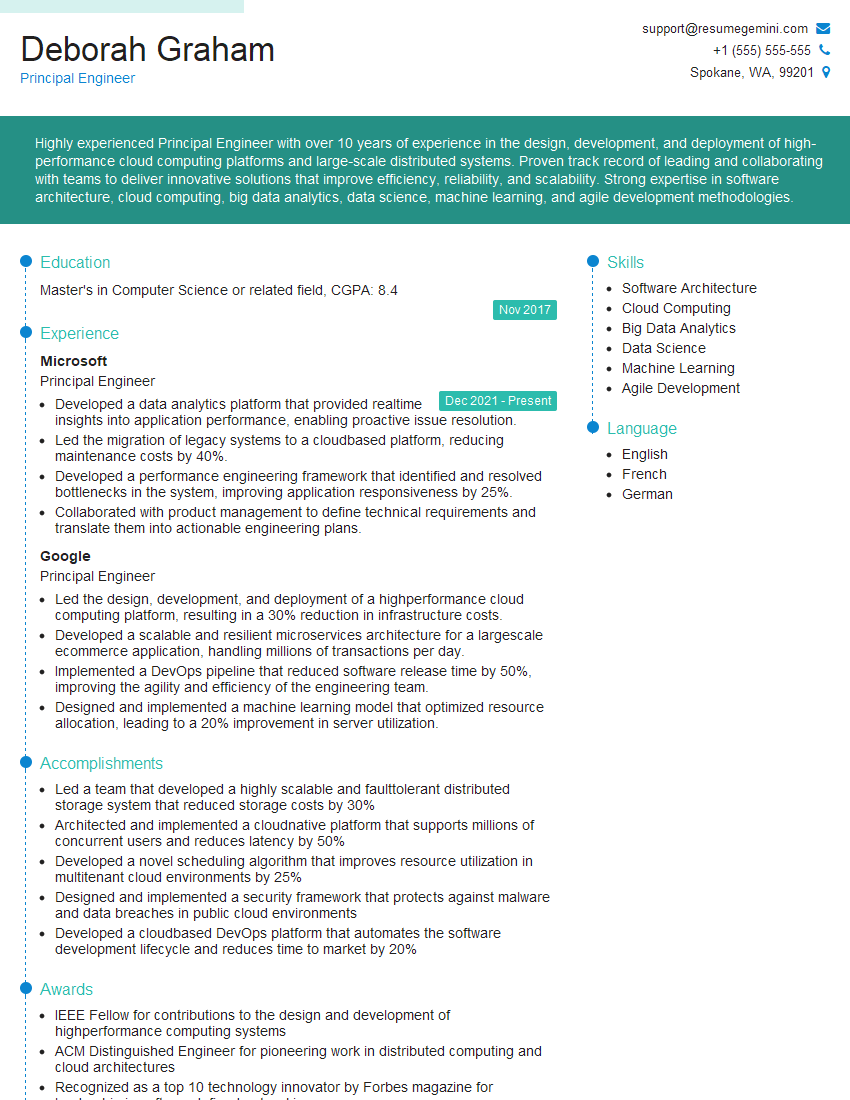
Principal Engineer Resume Sample
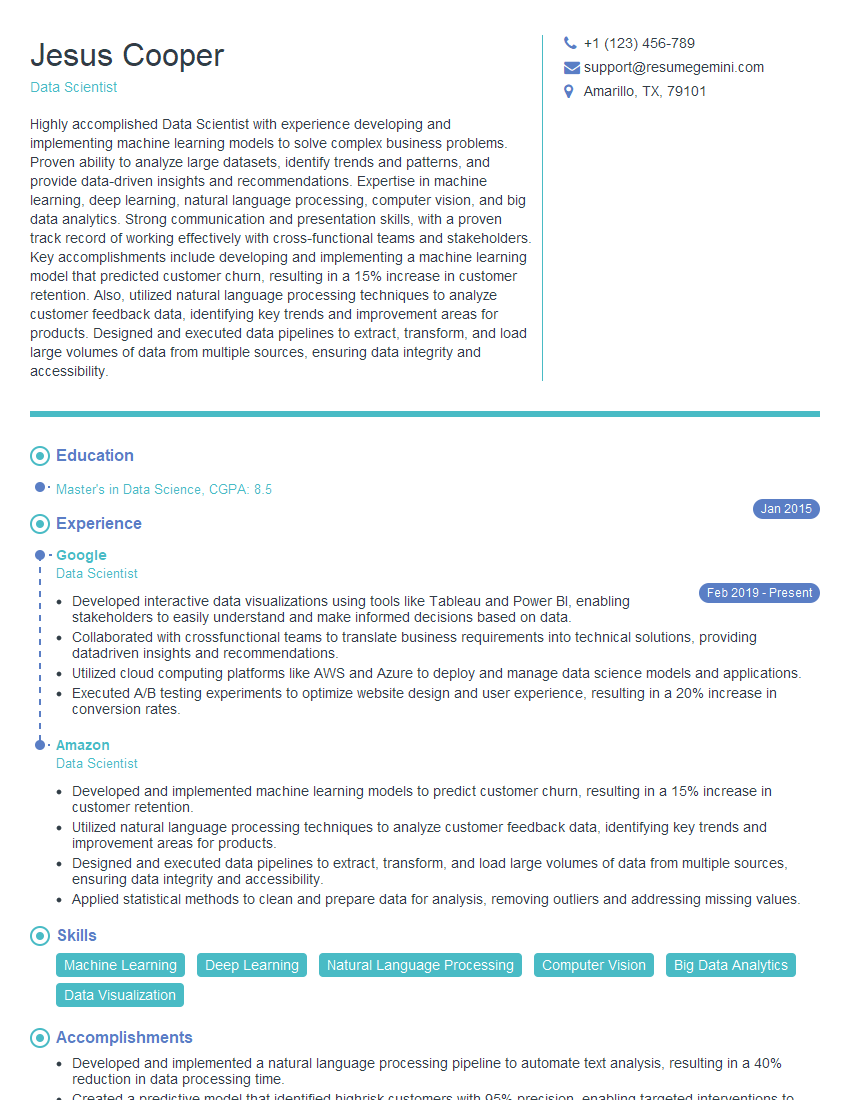
Data Scientist Resume Sample
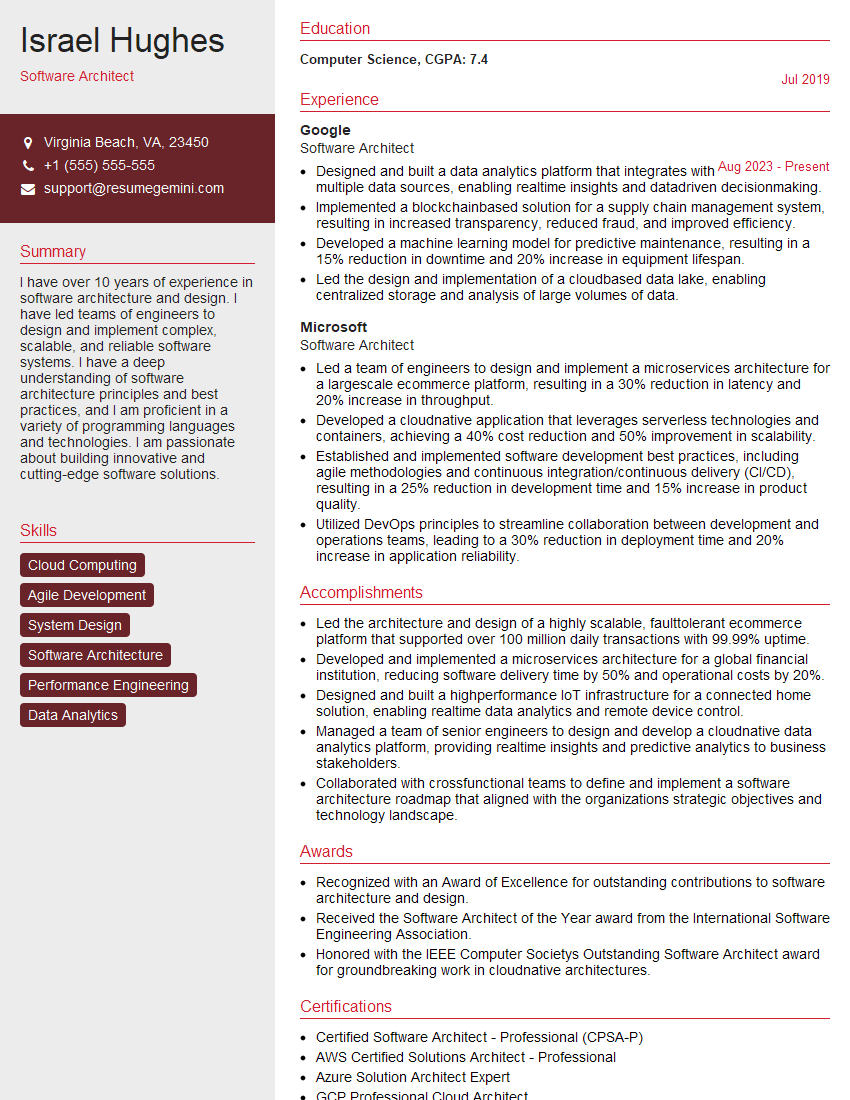
Software Architect Resume Sample
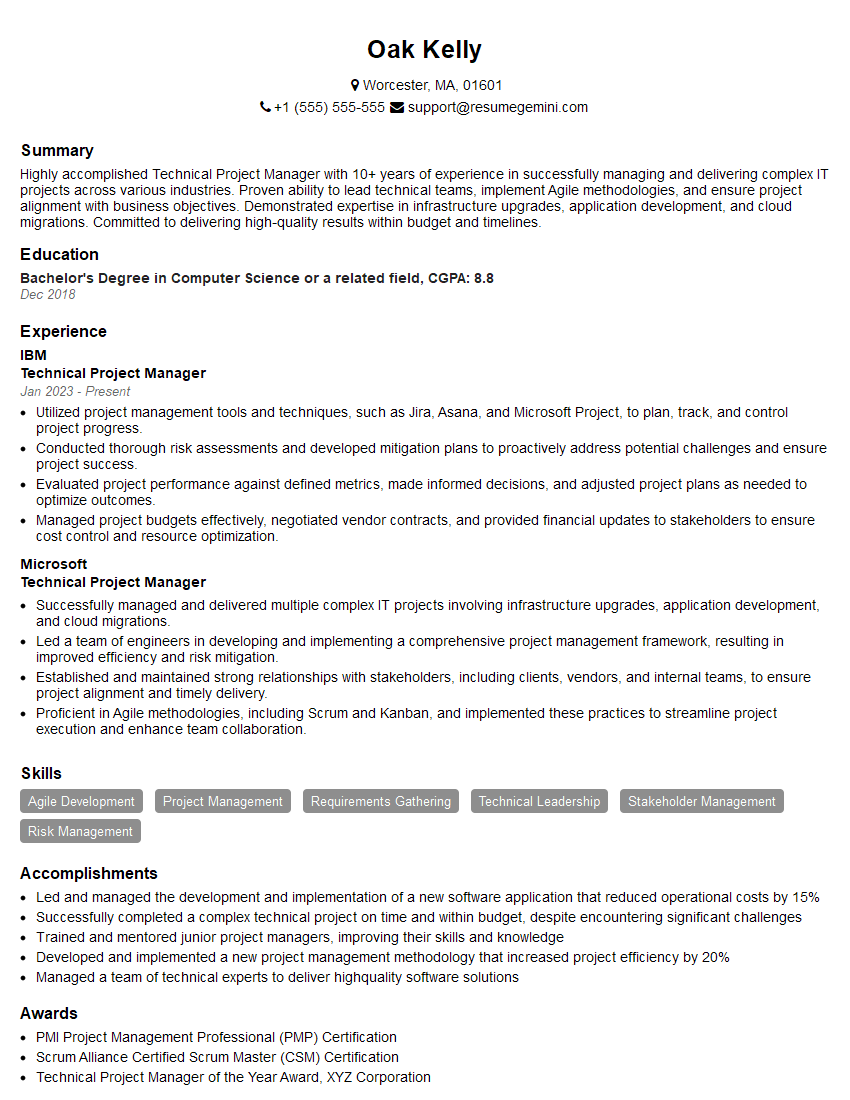
Technical Project Manager Resume Sample
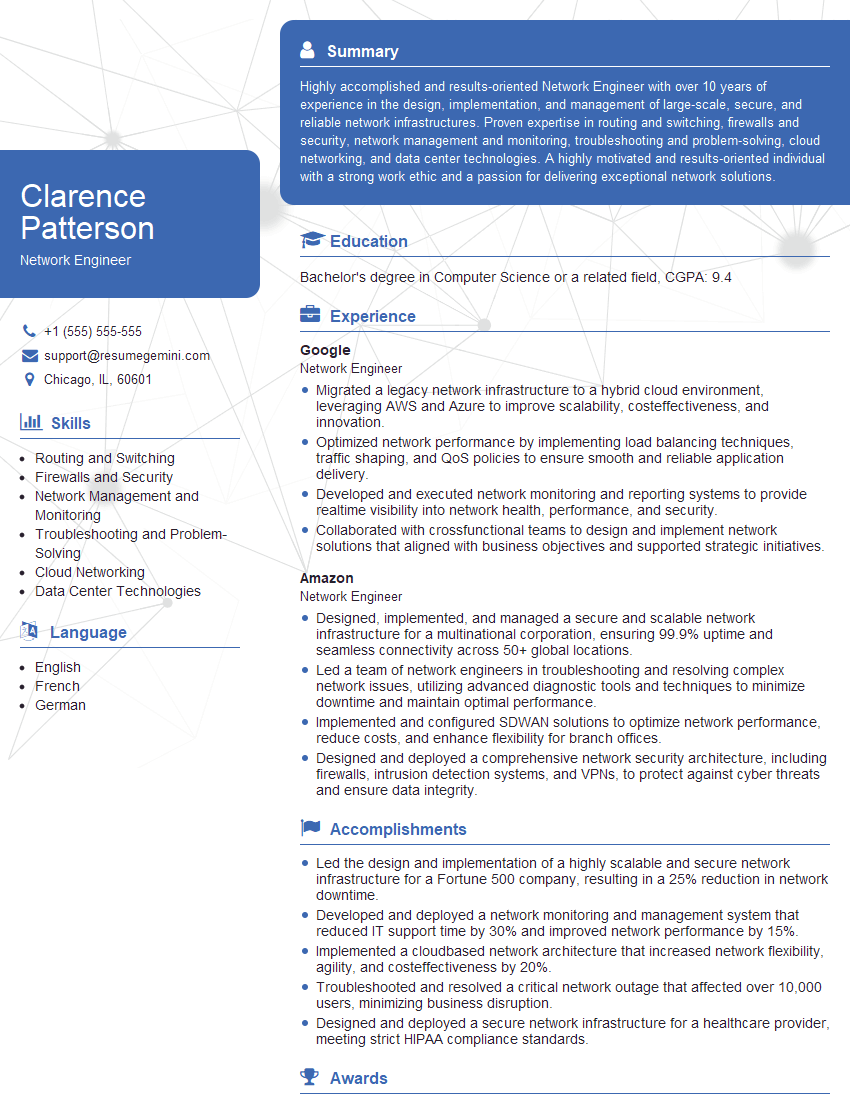
Network Engineer Resume Sample
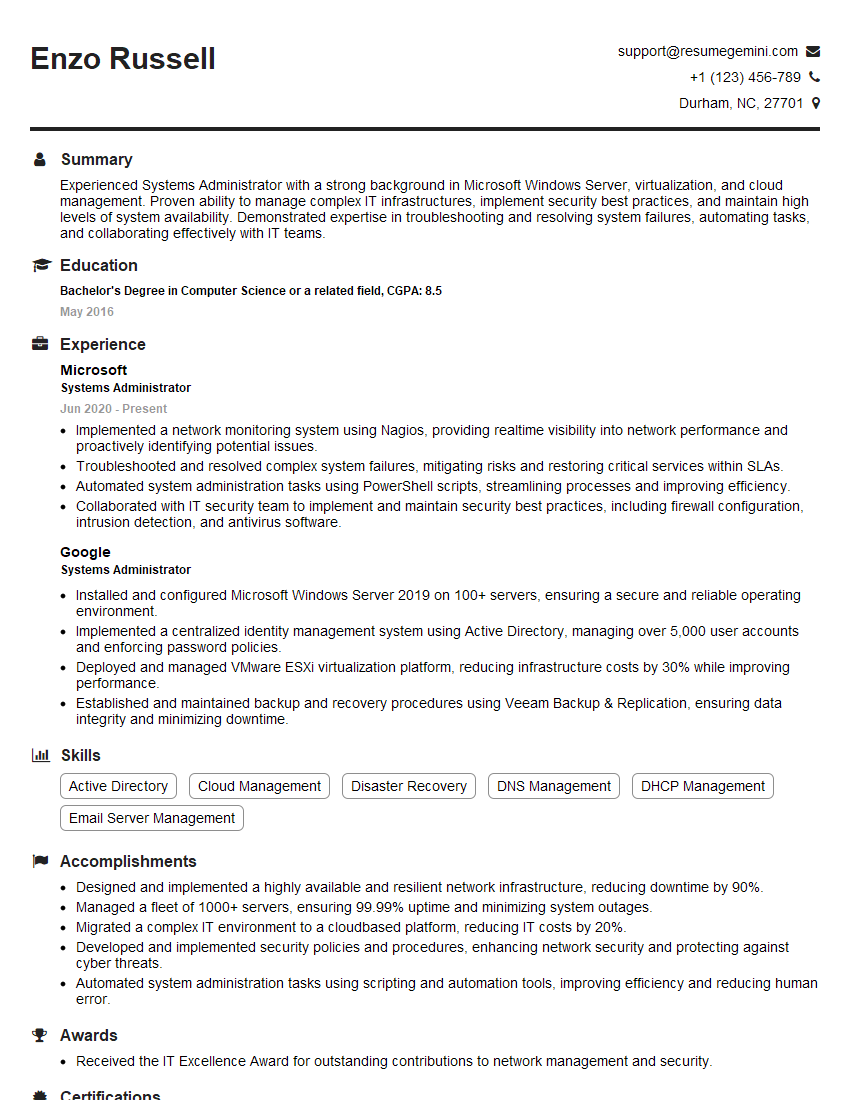
Systems Administrator Resume Sample
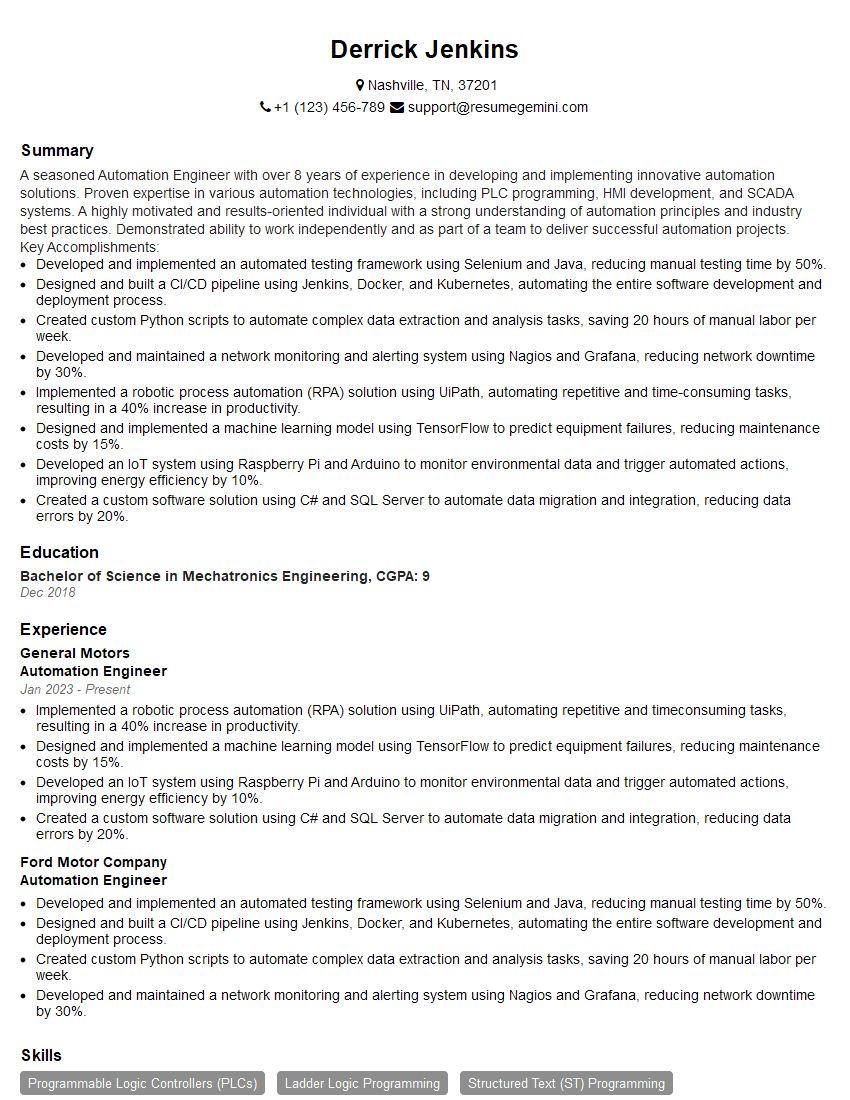
Automation Engineer Resume Sample
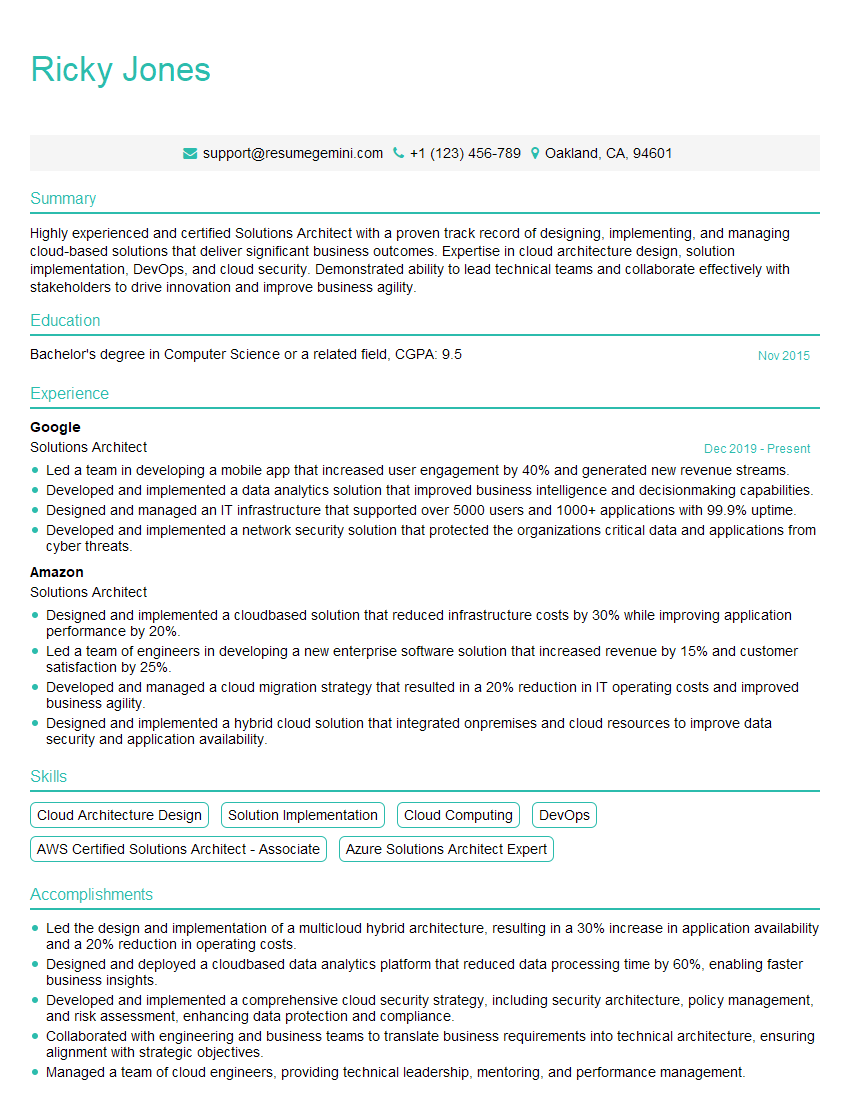
Solutions Architect Resume Sample
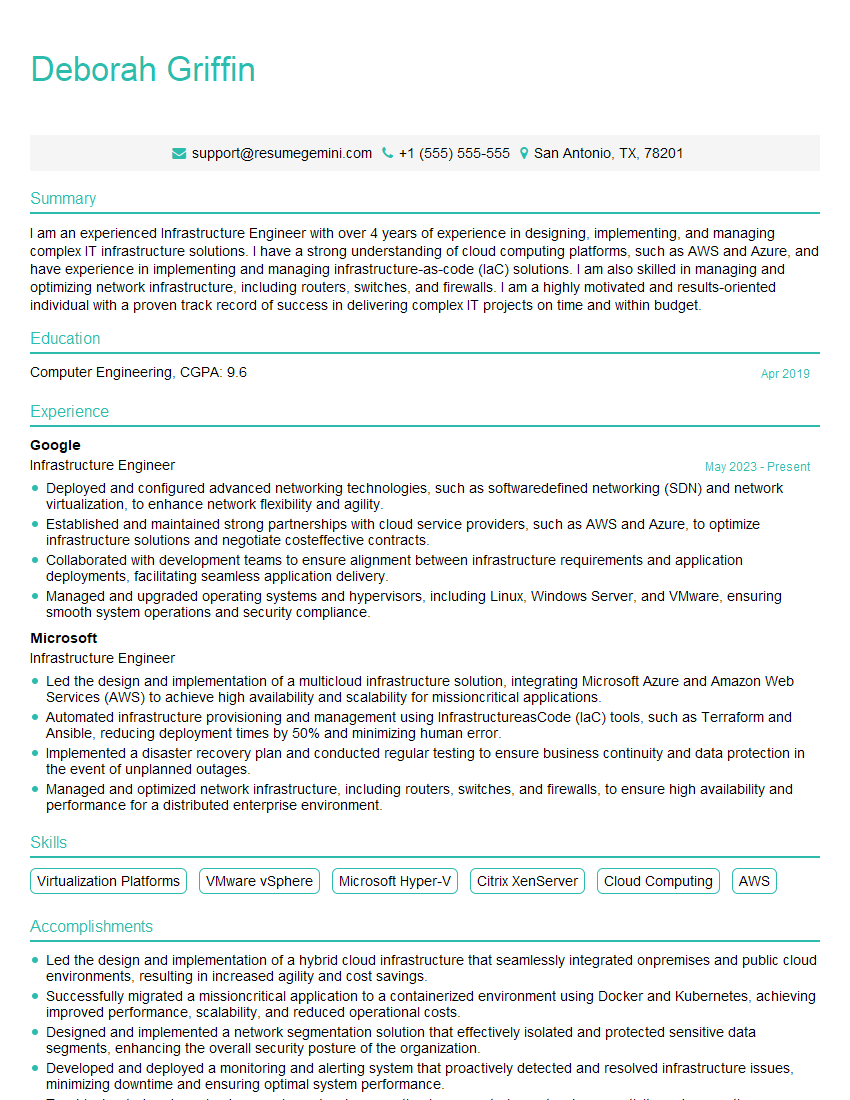
Infrastructure Engineer Resume Sample

Senior Software Engineer Resume Sample
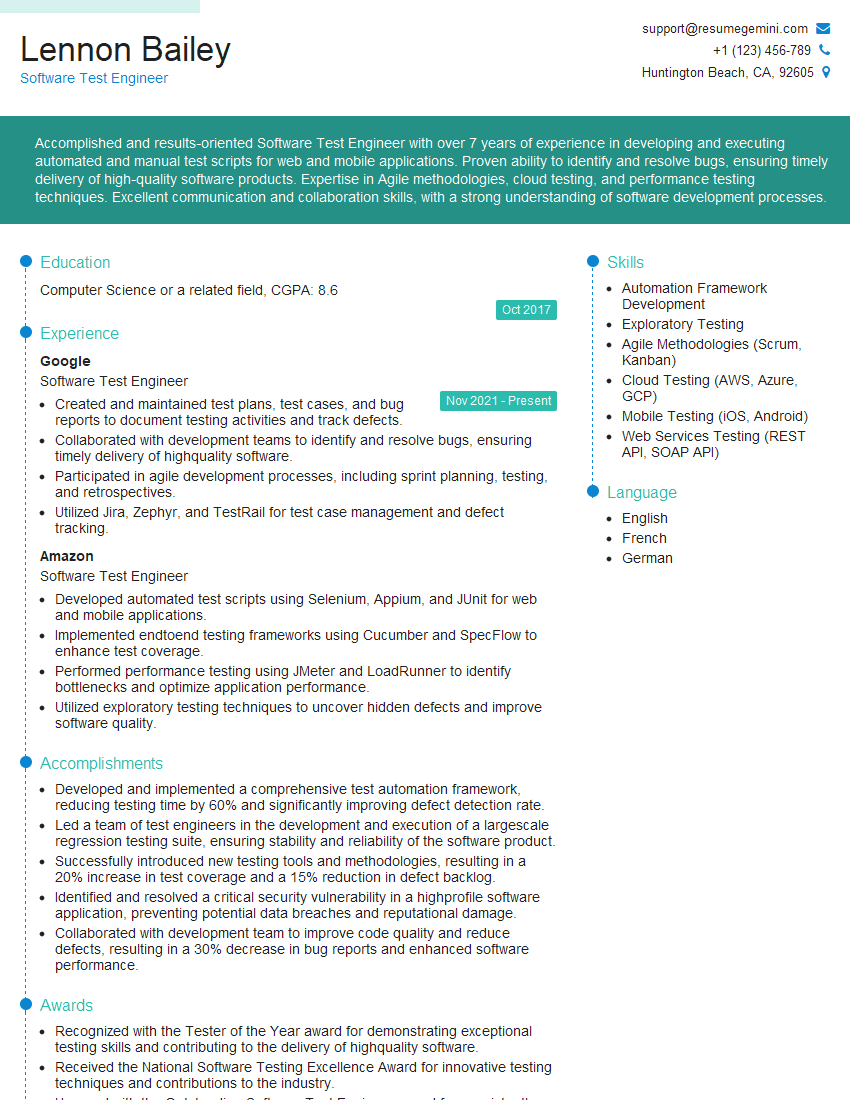
Software Test Engineer Resume Sample
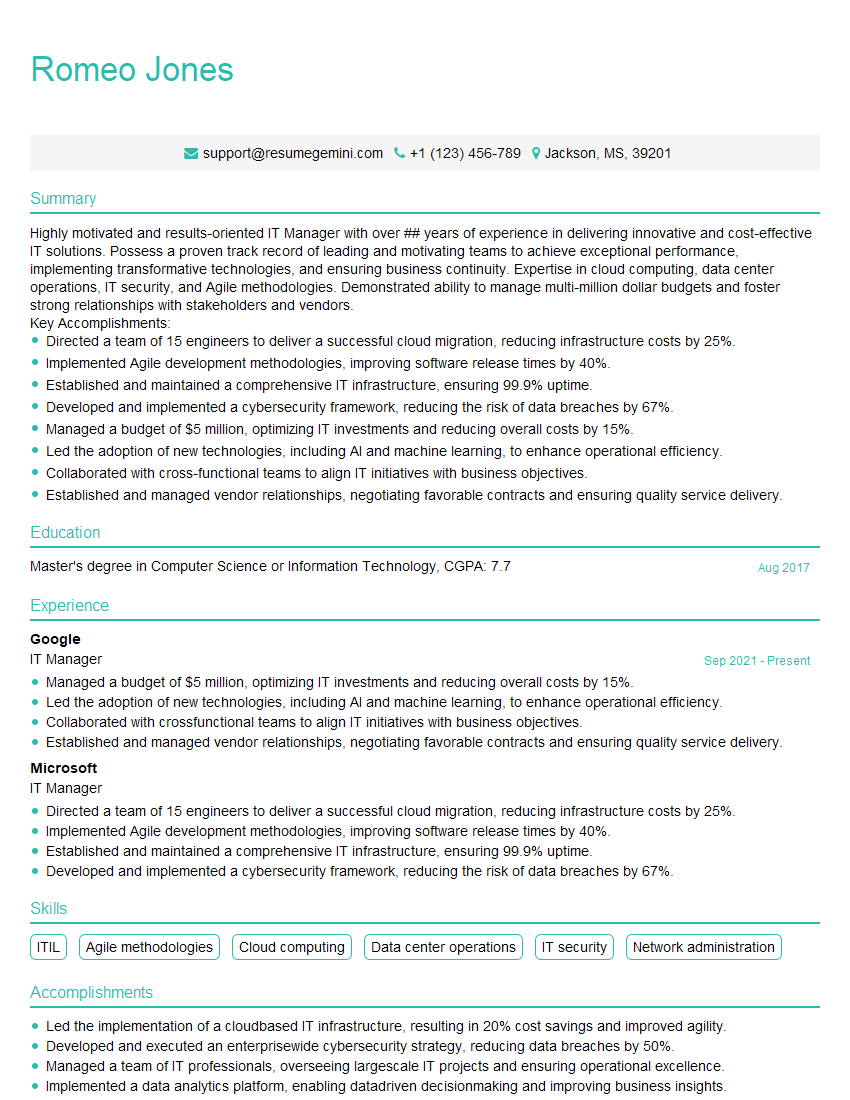
IT Manager Resume Sample
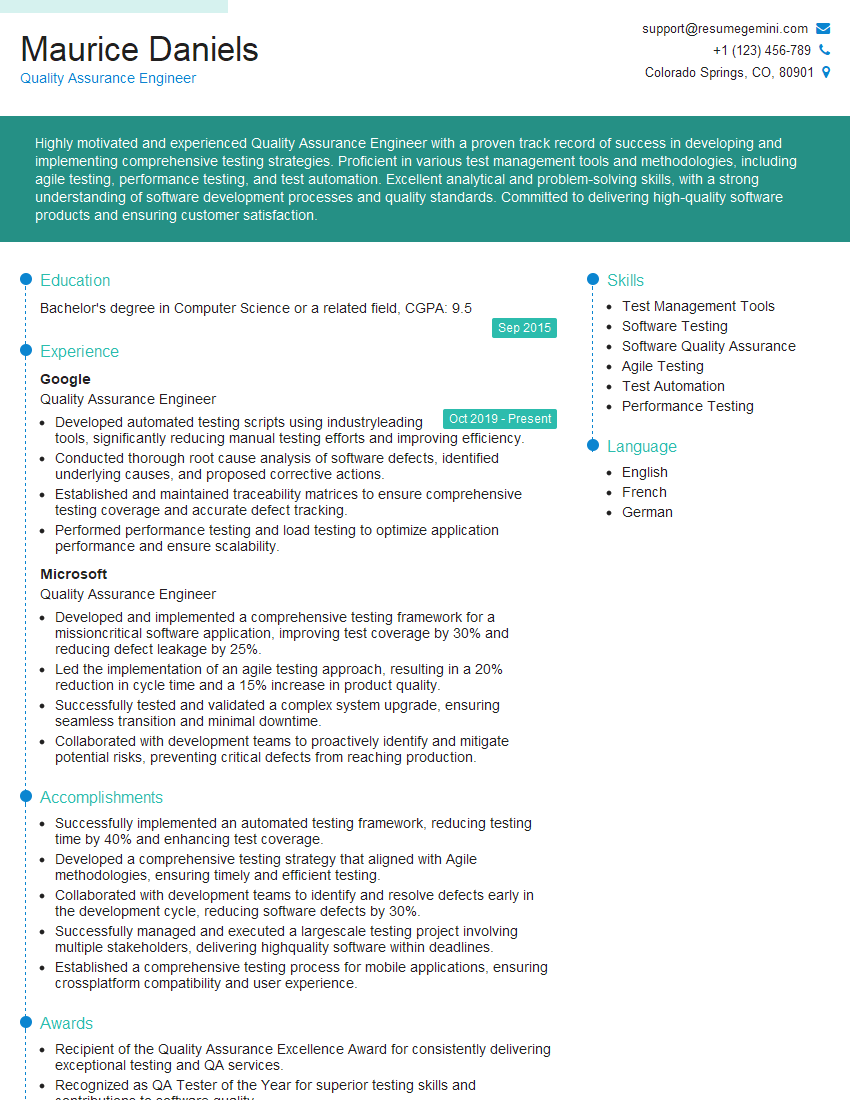
Quality Assurance Engineer Resume Sample

Technical Writer Resume Sample
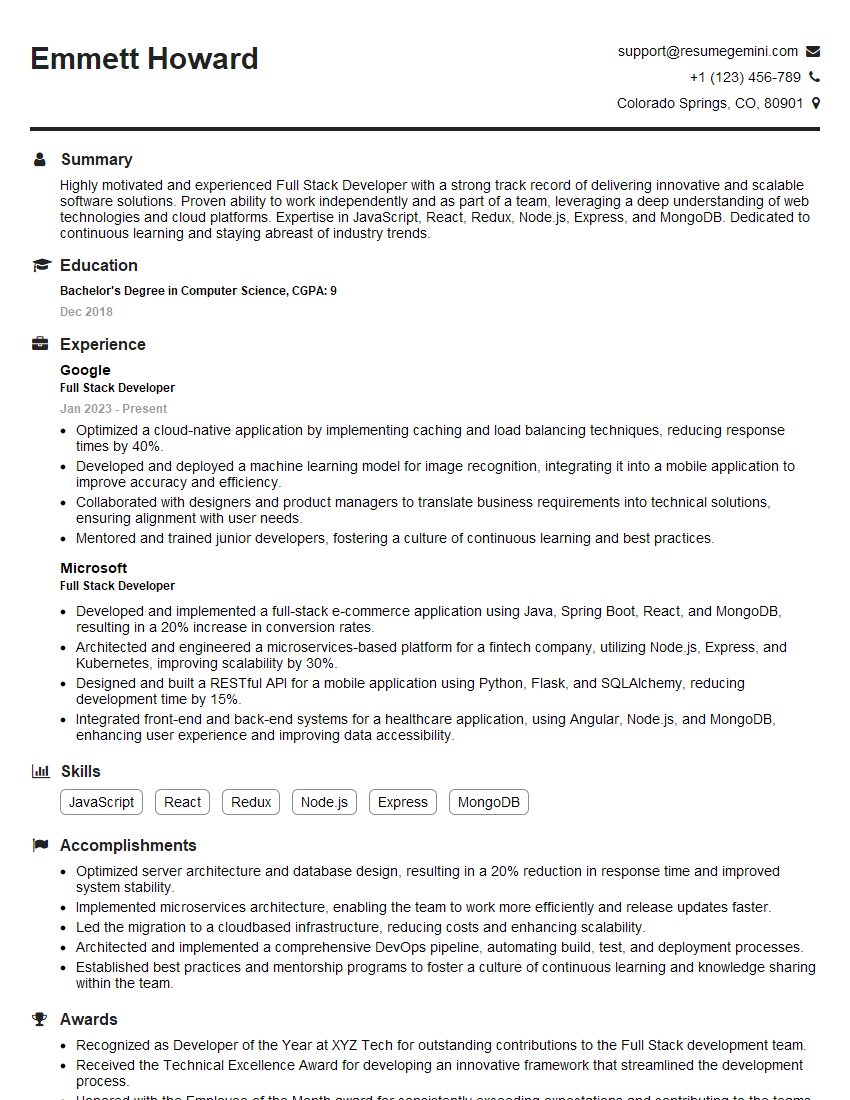
Full Stack Developer Resume Sample
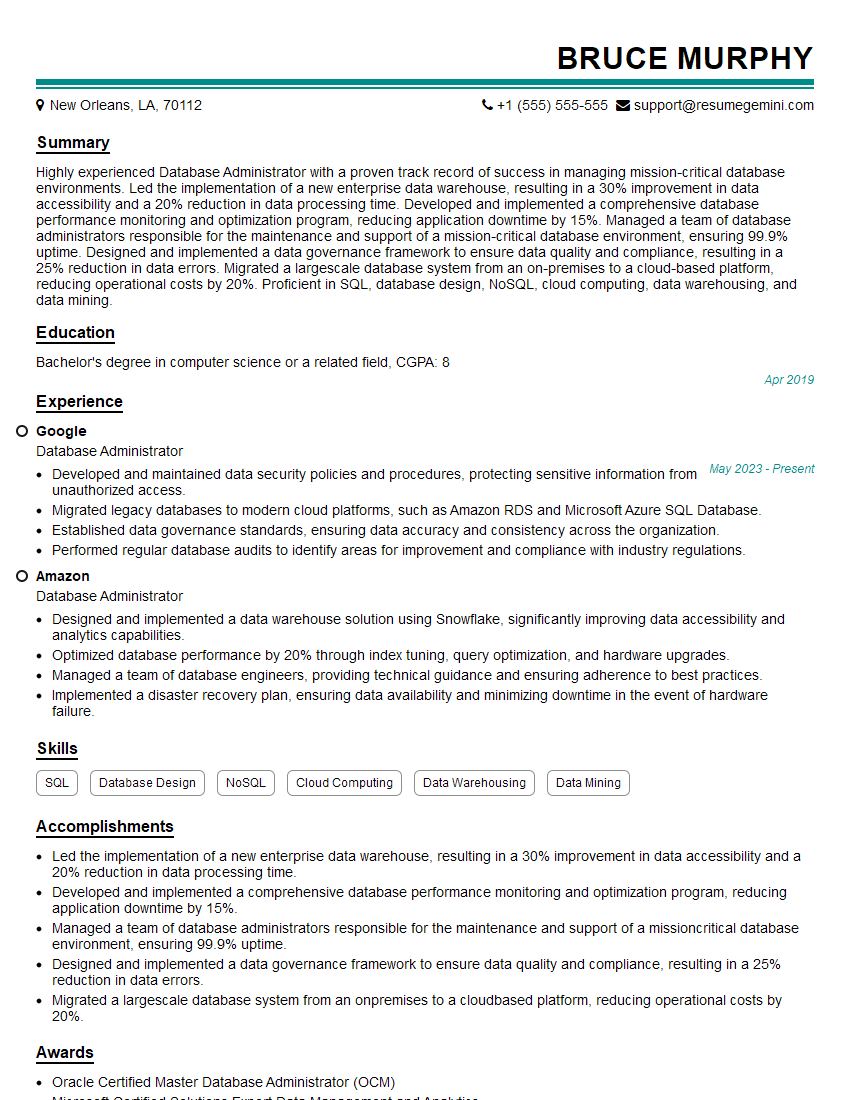
Database Administrator Resume Sample
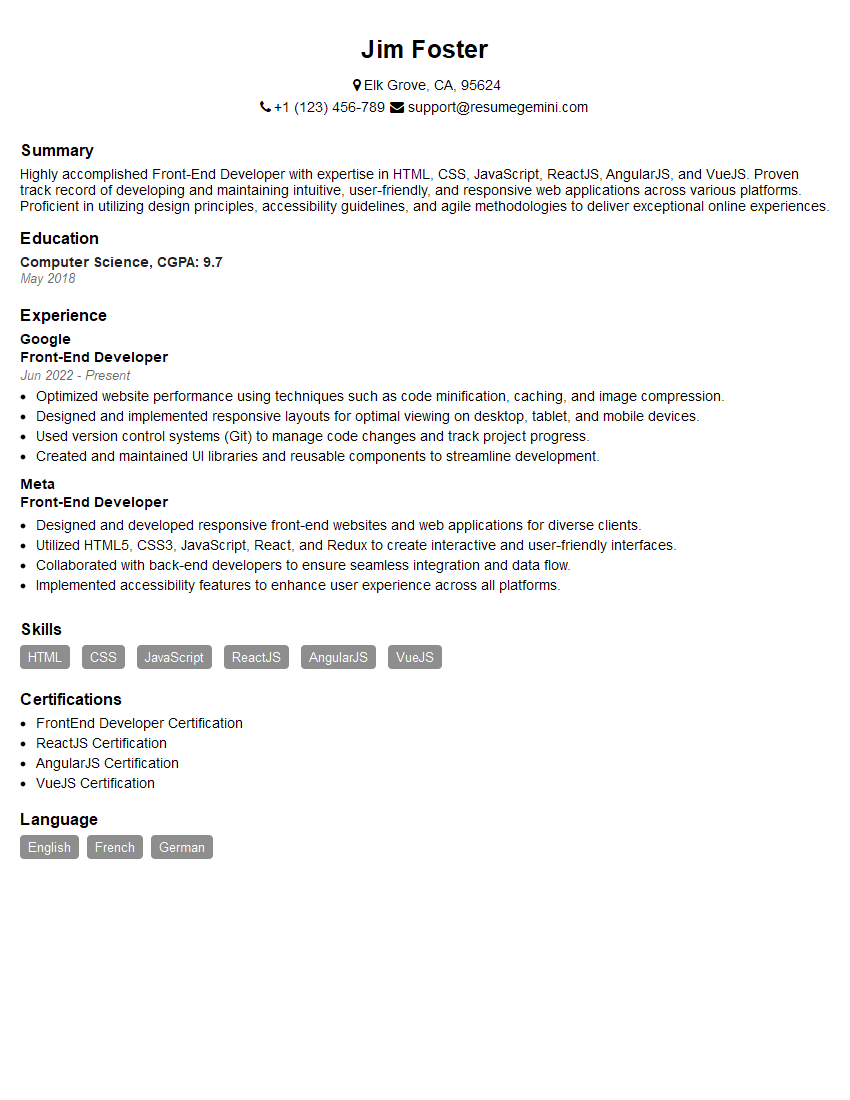
Front-End Developer Resume Sample
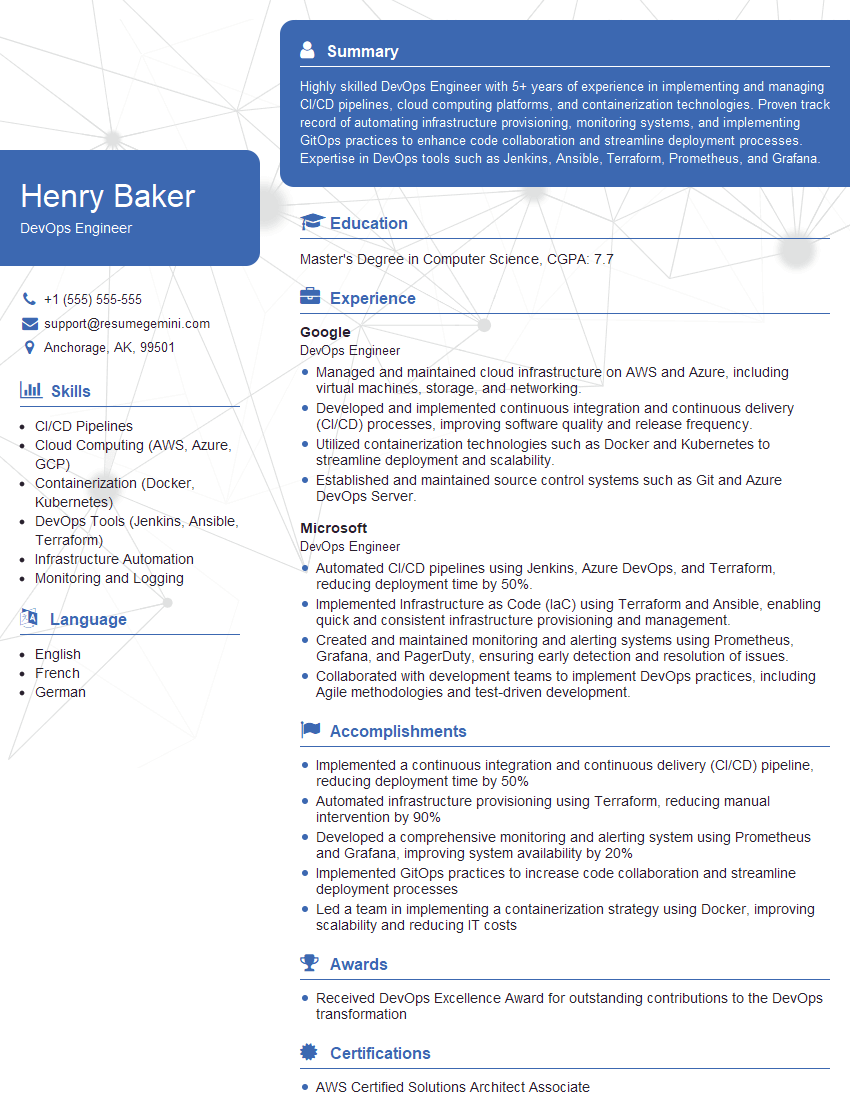
DevOps Engineer Resume Sample
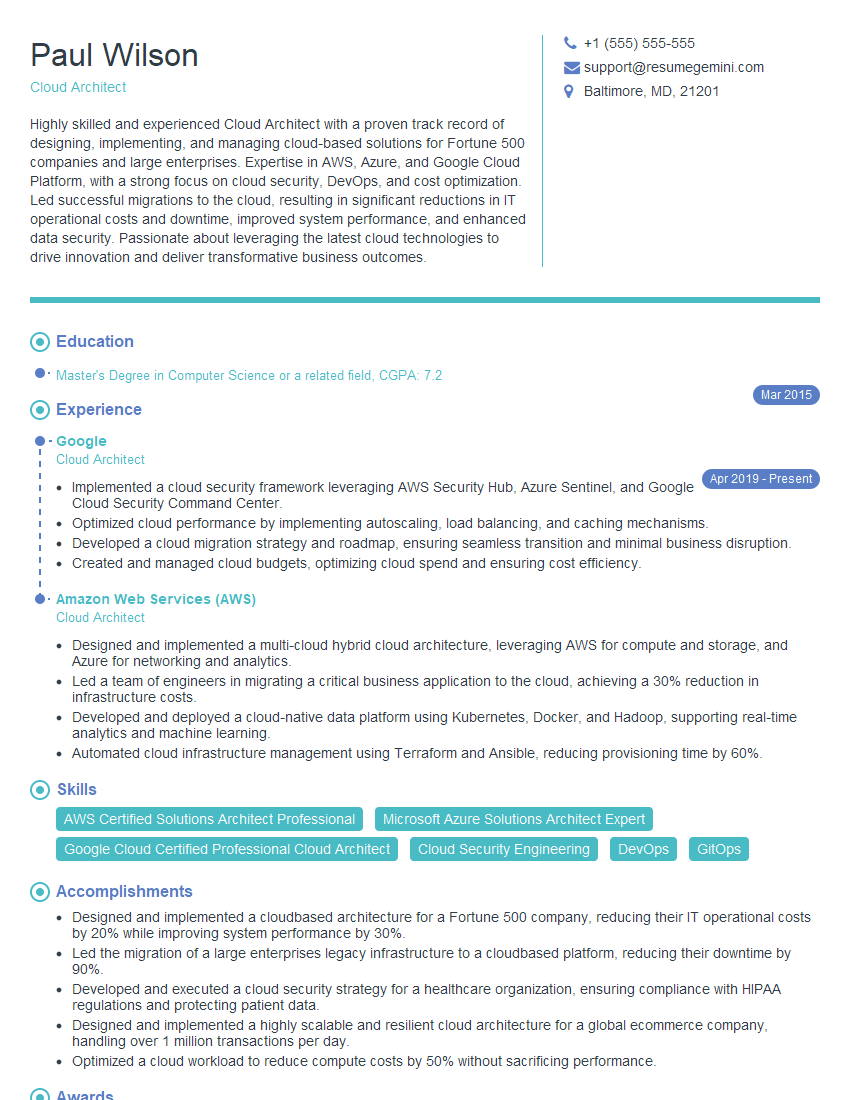
Cloud Architect Resume Sample
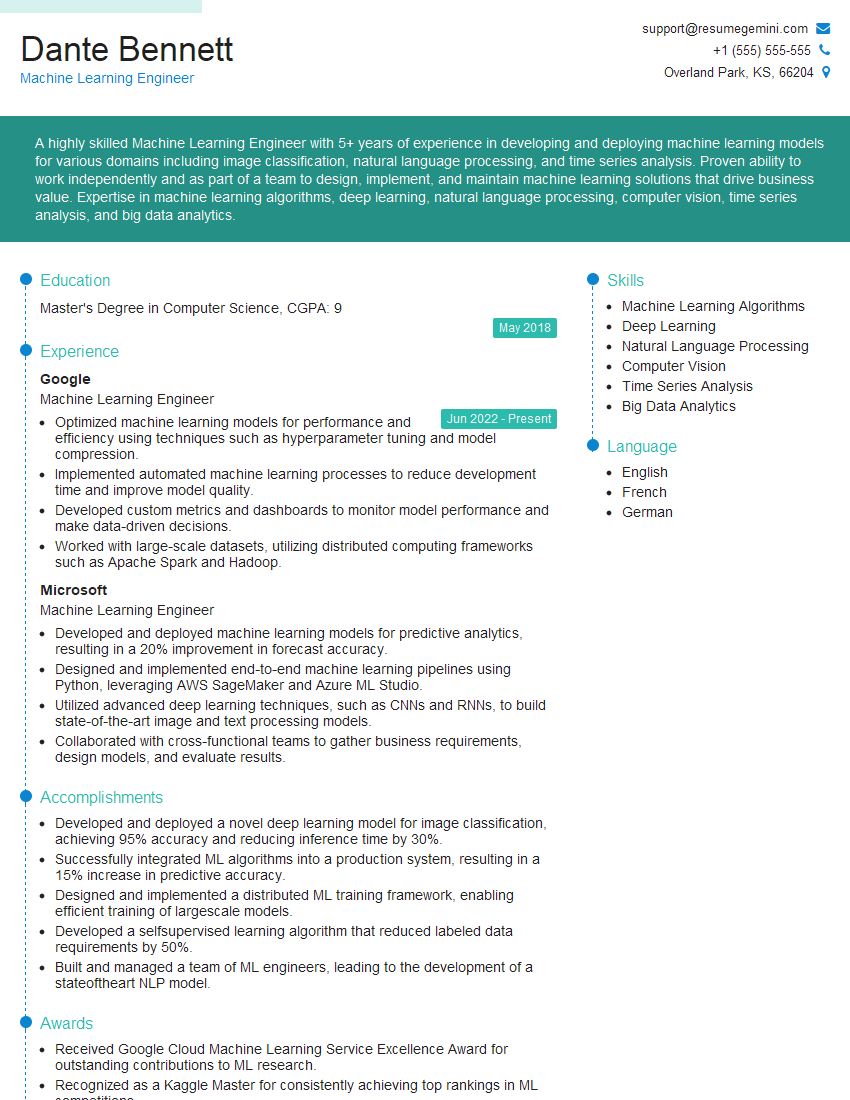
Machine Learning Engineer Resume Sample
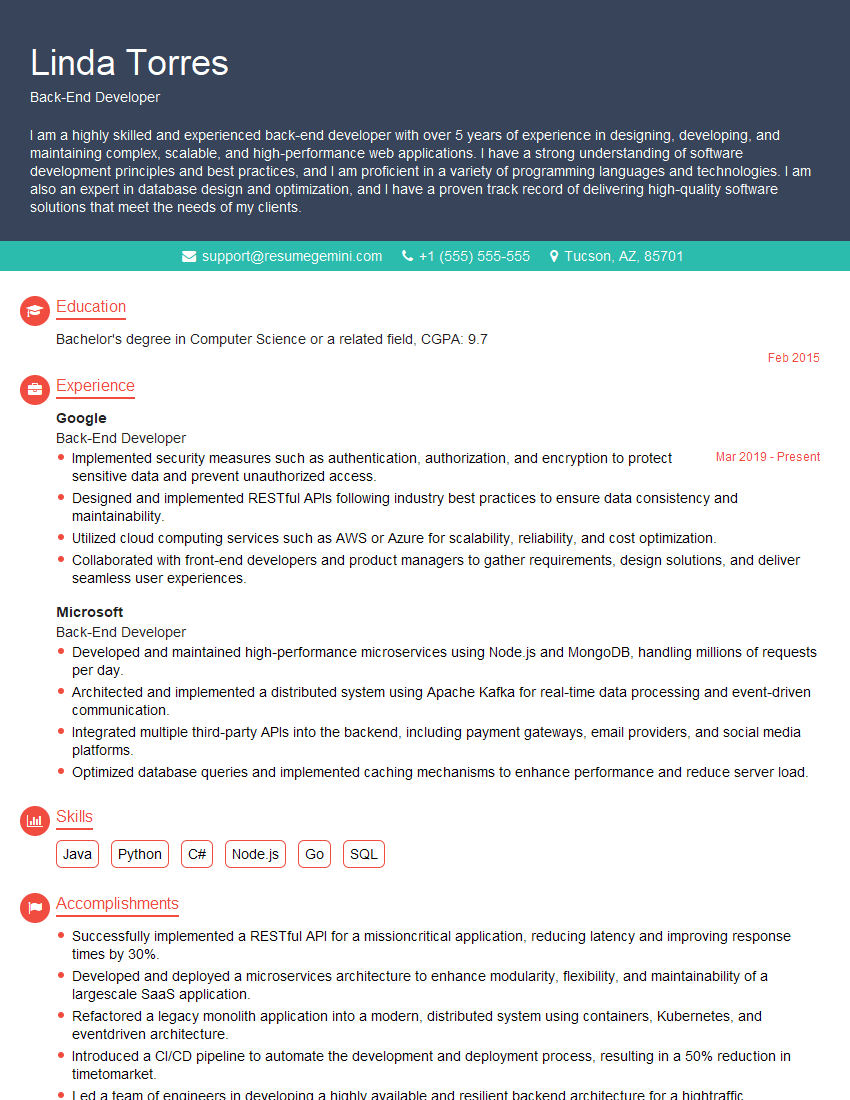
Back-End Developer Resume Sample
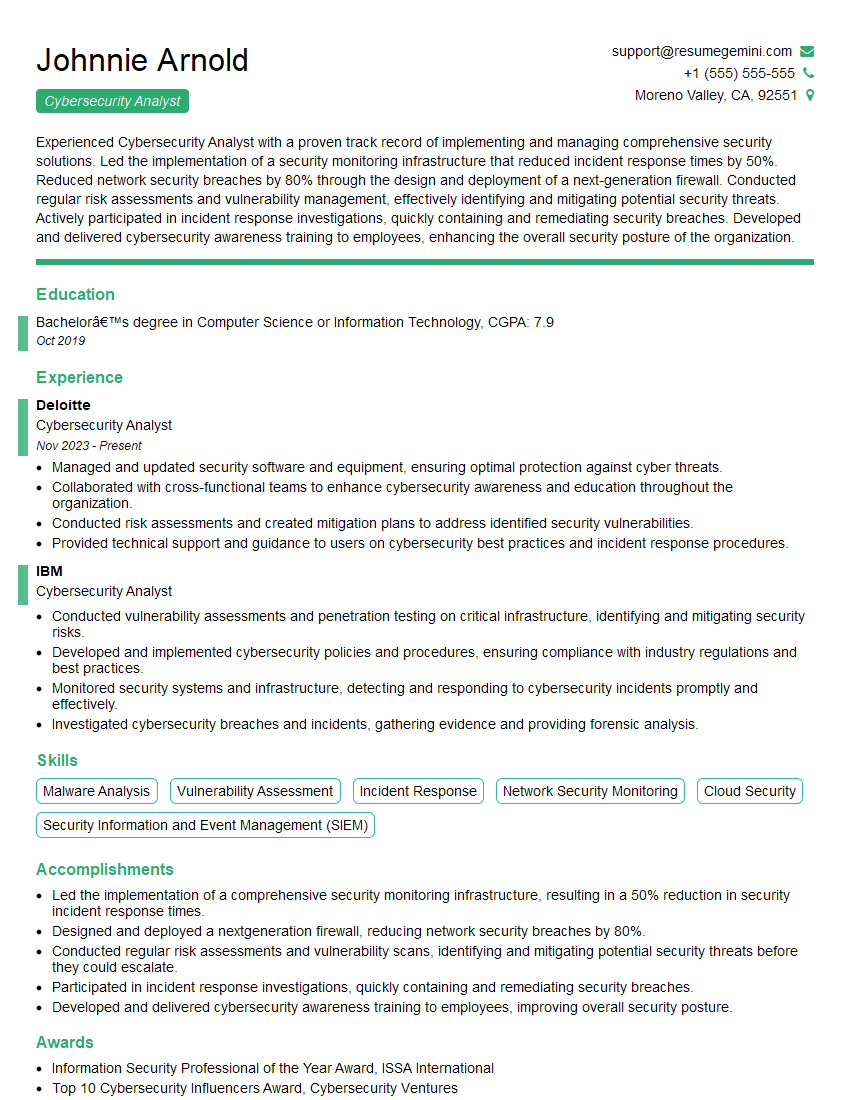
Cybersecurity Analyst Resume Sample
- Principal Engineer
- Data Scientist
- Software Architect
- Technical Project Manager
- Network Engineer
- Systems Administrator
- Automation Engineer
- Solutions Architect
- Infrastructure Engineer
- Senior Software Engineer
- Software Test Engineer
- IT Manager
- Quality Assurance Engineer
- Technical Writer
- Full Stack Developer
- Database Administrator
- Front-End Developer
- DevOps Engineer
- Cloud Architect
- Machine Learning Engineer
- Back-End Developer
- Cybersecurity Analyst
Explore more articles
Users Rating of Our Blogs
Share Your Experience
We value your feedback! Please rate our content and share your thoughts (optional).
What Readers Say About Our Blog
Amazing blog
Interesting Article, I liked the depth of knowledge you’ve shared.
Helpful, thanks for sharing.