Preparation is the key to success in any interview. In this post, we’ll explore crucial Participate in training and development programs interview questions and equip you with strategies to craft impactful answers. Whether you’re a beginner or a pro, these tips will elevate your preparation.
Questions Asked in Participate in training and development programs Interview
Q 1. Describe your experience designing and delivering training programs.
Designing and delivering training programs is a multifaceted process that requires a deep understanding of adult learning principles, instructional design, and the specific needs of the target audience. My approach involves a structured process, starting with a thorough needs analysis to identify skill gaps and learning objectives. Then, I leverage various instructional design models, such as ADDIE (Analysis, Design, Development, Implementation, Evaluation), to create engaging and effective training materials. This includes developing learning activities, assessments, and delivering the training itself, whether in-person, virtually, or through blended learning formats.
For example, I once developed a training program on project management for a team of engineers. The needs analysis revealed a lack of proficiency in using project management software and in applying agile methodologies. The resulting training program integrated both hands-on software training and interactive workshops simulating real-world project scenarios, leading to a measurable improvement in project delivery times and team efficiency. Another project involved creating an onboarding program for new sales representatives. Here, I designed a modular e-learning course, supplemented by in-person mentoring and role-playing exercises, to provide a blended learning experience that caters to different learning styles and paced learning.
Q 2. What training methodologies are you most familiar with?
I’m proficient in a variety of training methodologies, adapting my approach based on the specific learning objectives and audience. My most frequently used methodologies include:
- Instructor-led training (ILT): This traditional method allows for real-time interaction, Q&A, and immediate feedback, making it ideal for complex topics or hands-on skill development.
- E-learning: I utilize authoring tools to create engaging online courses with interactive elements, videos, and assessments, allowing for flexible learning at the learner’s own pace.
- Blended learning: This combines the best of both ILT and e-learning, often incorporating online modules with in-person workshops or coaching sessions, creating a dynamic and comprehensive learning experience.
- Gamification: Incorporating game mechanics, such as points, badges, and leaderboards, can significantly increase engagement and motivation, especially for younger audiences or those learning new software.
- Microlearning: This approach breaks down training into short, focused modules, making it easier to digest and retain information, particularly for busy professionals.
Choosing the right methodology is crucial for successful training; a poorly chosen method can lead to low engagement and ineffective learning. I always consider the audience, content complexity, and available resources when selecting the most suitable approach.
Q 3. How do you assess the effectiveness of a training program?
Assessing the effectiveness of a training program is crucial for demonstrating its ROI and identifying areas for improvement. My assessment strategy is multifaceted and includes:
- Pre- and post-training assessments: These measure knowledge and skill levels before and after the training, quantifying the learning gains.
- Surveys and feedback forms: These gather qualitative data on participant satisfaction, perceived usefulness, and suggestions for improvement.
- On-the-job observation: This involves observing trainees applying their newly acquired skills in their work environment, providing a realistic measure of transfer of learning.
- Performance metrics: Measuring key performance indicators (KPIs) related to the training objectives, such as sales figures, error rates, or project completion times, demonstrates the impact of the training on business outcomes.
For example, in the project management training mentioned earlier, we tracked project completion times and the number of project-related issues before and after the training. The results showed a significant improvement in both, validating the program’s effectiveness. The feedback received from participants also helped us refine the content and delivery for future sessions.
Q 4. Explain your process for identifying training needs.
Identifying training needs is the foundational step in designing effective training programs. My process involves:
- Performance analysis: Identifying performance gaps between actual and expected results, using data from performance reviews, incident reports, and other sources.
- Needs assessments: Conducting surveys, interviews, and focus groups with employees, managers, and subject matter experts to gather insights into skill gaps and training requirements.
- Job analysis: Examining job descriptions and tasks to identify essential skills and knowledge needed for successful job performance.
- Organizational analysis: Reviewing strategic goals, business needs, and industry trends to align training with overall organizational objectives.
Through a combination of these methods, I build a comprehensive understanding of the organization’s learning needs, ensuring that the training is relevant, impactful, and aligned with the overall business strategy. I often use a combination of quantitative and qualitative data to create a holistic picture of the training needs.
Q 5. How do you handle resistance to training within an organization?
Resistance to training is a common challenge. Addressing it requires empathy, understanding, and a proactive approach. My strategies include:
- Addressing concerns: Openly acknowledging and addressing employees’ concerns about time commitment, relevance, or perceived difficulty. This often involves one-on-one conversations to understand their perspective and tailor the training to their specific needs.
- Highlighting benefits: Clearly demonstrating the benefits of the training for both the individual and the organization, connecting it directly to career advancement, improved performance, and increased job satisfaction.
- Making it relevant: Designing training that is directly applicable to employees’ day-to-day work, using real-world examples and scenarios.
- Providing support and resources: Offering ongoing support and resources, such as mentoring or coaching, to help employees apply their new skills on the job and overcome any challenges they encounter.
- Leadership buy-in: Ensuring that leadership actively promotes and participates in the training, demonstrating its importance and value.
For example, if employees resist a new software training, showing them real-world case studies of how the software improved efficiency and productivity for others can significantly change their perspective. Addressing their concerns about the learning curve through hands-on practice and ongoing support can also help overcome their resistance.
Q 6. What experience do you have with different learning styles?
I recognize that people learn in different ways, and designing effective training requires catering to diverse learning styles. I’m familiar with the various learning styles, including:
- Visual learners: These individuals learn best through seeing, using diagrams, charts, videos, and presentations.
- Auditory learners: These individuals learn best through hearing, using lectures, discussions, and audio recordings.
- Kinesthetic learners: These individuals learn best through doing, using hands-on activities, simulations, and role-playing exercises.
When designing training, I incorporate a variety of learning activities to cater to all learning styles. For example, an e-learning course might include videos, interactive exercises, and downloadable summaries. An in-person workshop might incorporate lectures, group discussions, and hands-on activities. Incorporating diverse methods ensures that all participants have an opportunity to learn effectively.
Q 7. How do you incorporate technology into your training programs?
Technology plays a crucial role in modern training programs. I leverage technology to enhance engagement, accessibility, and effectiveness. My experience includes:
- Learning Management Systems (LMS): Using platforms like Moodle or Canvas to deliver online courses, track progress, and manage assessments.
- Authoring tools: Utilizing tools like Articulate Storyline or Adobe Captivate to create interactive e-learning modules.
- Video conferencing: Conducting virtual training sessions using platforms like Zoom or Microsoft Teams, facilitating collaboration and real-time interaction.
- Virtual reality (VR) and augmented reality (AR): Exploring the potential of immersive technologies for enhancing training experiences in specific contexts, such as simulations or hands-on practice.
- Mobile learning: Designing training that is accessible on mobile devices, allowing for flexible and on-demand learning.
Technology isn’t just about using flashy tools; it’s about choosing the right technology to support the learning objectives and enhance the learner experience. I carefully select technologies to improve accessibility, personalize learning, and provide a seamless experience.
Q 8. Describe your experience developing e-learning content.
Developing engaging e-learning content requires a blend of instructional design principles and technical skills. My experience spans various platforms, from authoring tools like Articulate Storyline and Adobe Captivate to learning management systems (LMS) such as Moodle and Canvas. I begin by conducting a thorough needs analysis to understand the target audience’s learning styles and the specific knowledge or skills to be imparted. Then, I design interactive modules incorporating various media like videos, simulations, quizzes, and gamified elements to enhance learner engagement and knowledge retention. For example, for a sales training program, I developed a branching scenario simulation where trainees had to negotiate a deal, facing different customer objections and making choices that impacted the outcome. This allowed for immediate feedback and practical application of the learned sales techniques. I also meticulously track learner progress and performance data within the LMS to make continuous improvements to the content. Finally, I ensure accessibility by following WCAG guidelines to make the e-learning materials usable for everyone.
Q 9. What is your experience with blended learning approaches?
Blended learning combines online and offline learning methods, creating a more holistic and effective learning experience. My experience with blended learning approaches often involves designing programs that leverage online modules for self-paced learning, complemented by in-person workshops, mentoring sessions, or group projects. For instance, I developed a leadership development program where participants completed online modules on topics like strategic thinking and emotional intelligence. These modules were followed by a two-day workshop focused on applying the concepts through case studies and group discussions. The post-workshop phase included individual coaching sessions and collaborative projects to reinforce learning and encourage knowledge sharing. The effectiveness of this approach was evident in the increased engagement and improved performance demonstrated by participants. Careful planning is critical to ensure the online and offline components complement each other and seamlessly integrate for a cohesive learning journey.
Q 10. How do you ensure training programs align with business objectives?
Aligning training programs with business objectives is crucial for maximizing ROI. My approach starts with a clear understanding of the organization’s strategic goals and key performance indicators (KPIs). I then conduct a thorough needs analysis, identifying skill gaps and performance issues that hinder the achievement of those objectives. For example, if a company’s goal is to increase sales by 15%, I’d analyze sales performance data to identify areas for improvement, perhaps focusing on sales techniques or product knowledge. The training program will then be specifically designed to address these identified skill gaps, incorporating measurable outcomes that directly contribute to the sales target. Regular communication with stakeholders, including monitoring progress against set objectives, ensures the program stays aligned with the evolving business needs.
Q 11. How do you manage the training budget?
Managing a training budget requires careful planning and resource allocation. I begin by identifying all anticipated costs, including instructor fees, training materials, technology, and venue rentals. I then prioritize training initiatives based on their alignment with business objectives and potential ROI. I actively seek cost-effective solutions, such as leveraging free or low-cost online resources, negotiating favorable contracts with vendors, and exploring alternative training delivery methods, such as virtual workshops. Regular monitoring of expenses against the budget ensures timely identification and resolution of any potential overspending. Finally, I utilize data analysis to demonstrate the value of training investments and justify budget requests for future initiatives. This includes tracking both direct and indirect costs to create a comprehensive financial picture.
Q 12. How do you measure the ROI of a training program?
Measuring the ROI of a training program requires a robust evaluation strategy that goes beyond simple satisfaction surveys. I employ a Kirkpatrick’s four-level model, evaluating the reaction (participant satisfaction), learning (knowledge gained), behavior (changes in on-the-job performance), and results (impact on business objectives). For instance, if a sales training program aims to increase sales conversion rates, I’d track conversion rates before and after the training to assess the impact. I would also collect data on employee feedback, knowledge tests, and changes in sales behaviors. Qualitative data, such as observations of improved performance and anecdotal feedback, adds valuable context. By quantitatively and qualitatively evaluating these aspects, I create a complete picture of the training’s value and demonstrate its contribution to business success. The data is used for continuous improvement and to support future training investments.
Q 13. Describe your experience with performance management systems.
My experience with performance management systems encompasses the entire process, from setting goals and providing feedback to conducting performance reviews and identifying development needs. I’ve worked with various systems, from simple spreadsheets to sophisticated software platforms that integrate with HR systems. I ensure systems are fair, transparent, and aligned with organizational values. I focus on coaching and mentoring employees to help them improve their performance and achieve their goals. I believe that performance management should be a continuous process, with regular check-ins and feedback to track progress and address any challenges. Furthermore, I emphasize the importance of using performance data to inform training and development initiatives, creating a continuous cycle of improvement.
Q 14. What is your experience with needs analysis?
Needs analysis is the cornerstone of effective training design. It involves systematically identifying the knowledge, skills, and abilities (KSAs) required for successful job performance, comparing those requirements to the current capabilities of the workforce, and pinpointing the gaps that need to be addressed through training. My approach typically involves using a combination of methods, including interviews with stakeholders, surveys of employees, observations of job performance, and analysis of performance data. For example, I recently conducted a needs analysis for a customer service team experiencing high customer churn. Through interviews and performance data analysis, I discovered a significant lack of empathy and problem-solving skills. This understanding led to the design of a training program focusing on these critical areas, directly addressing the root cause of the high churn rate. A well-executed needs analysis ensures that training is targeted, relevant, and ultimately effective in achieving its objectives.
Q 15. How do you stay current with the latest training and development trends?
Staying current in the dynamic field of training and development requires a multi-pronged approach. I actively participate in professional development activities such as attending conferences like ATD ICE (Association for Talent Development International Conference & Exposition) and SHRM (Society for Human Resource Management) annual conferences. These events offer invaluable insights into the latest trends, methodologies, and technologies. I also subscribe to industry-leading publications like Training Magazine and Chief Learning Officer, and regularly listen to podcasts dedicated to learning and development. Furthermore, I actively engage with online learning communities and professional networking platforms like LinkedIn, participating in discussions and sharing best practices. This combination of formal and informal learning ensures I remain at the forefront of the field, ready to adapt and implement the most effective strategies.
Career Expert Tips:
- Ace those interviews! Prepare effectively by reviewing the Top 50 Most Common Interview Questions on ResumeGemini.
- Navigate your job search with confidence! Explore a wide range of Career Tips on ResumeGemini. Learn about common challenges and recommendations to overcome them.
- Craft the perfect resume! Master the Art of Resume Writing with ResumeGemini’s guide. Showcase your unique qualifications and achievements effectively.
- Don’t miss out on holiday savings! Build your dream resume with ResumeGemini’s ATS optimized templates.
Q 16. What is your experience with different adult learning theories?
My experience encompasses several prominent adult learning theories. I frequently apply Knowles’ Andragogy, which emphasizes the self-concept, experience, readiness to learn, and orientation to learning of adult learners. This means focusing on relevant, practical, and problem-centered learning experiences rather than teacher-centric lectures. For example, instead of lecturing on project management, I’d design a simulation where participants manage a project with real-world constraints. I also incorporate principles from Kolb’s Experiential Learning Cycle, facilitating learning through concrete experience, reflective observation, abstract conceptualization, and active experimentation. This cycle helps learners internalize knowledge through active engagement. Furthermore, I utilize Gagne’s Nine Events of Instruction, ensuring that learning experiences are structured to optimize learning outcomes, considering factors such as gaining attention, informing learners of objectives, and providing feedback. The selection of the most appropriate theory depends on the specific learning objectives and the characteristics of the learners involved.
Q 17. How do you create engaging and interactive training experiences?
Creating engaging and interactive training experiences is paramount. I leverage various techniques to achieve this. Firstly, I incorporate active learning strategies like group discussions, brainstorming sessions, case studies, and role-playing. For example, instead of a simple PowerPoint presentation on customer service, I might create a role-playing scenario where participants handle difficult customer interactions. Secondly, I utilize gamification techniques, introducing elements of competition, rewards, and feedback to increase learner motivation and engagement. Leaderboards, points systems, and badges can be incredibly effective. Thirdly, I incorporate technology effectively, utilizing interactive simulations, e-learning modules, and virtual reality experiences where appropriate. Finally, I ensure the content is relevant, practical, and directly applicable to learners’ jobs, making the learning experience meaningful and valuable. Regular check-ins, quizzes, and open forums encourage participation and address immediate questions.
Q 18. Describe your experience with instructional design models (ADDIE, SAM, etc.)
I have extensive experience with various instructional design models, most notably ADDIE and SAM. The ADDIE model (Analysis, Design, Development, Implementation, Evaluation) provides a structured framework for creating training programs. I use this model to systematically analyze learner needs, design effective learning objectives, develop training materials, implement the training, and evaluate its effectiveness. The SAM model (Successive Approximation Model) is particularly useful for iterative development, allowing for adjustments based on feedback throughout the process. I often blend aspects of both models, employing ADDIE for the initial structure and SAM for ongoing refinement. For instance, in designing a compliance training program, I’d use ADDIE to establish the core curriculum and then utilize SAM to iteratively improve the modules based on feedback from pilot groups and post-training assessments.
Q 19. How do you adapt training materials for different audiences?
Adapting training materials for diverse audiences requires a deep understanding of learning styles and cultural differences. I begin by analyzing the audience’s prior knowledge, learning preferences, and technological proficiency. For example, training materials for a technical team will differ greatly from those for a sales team. I use a variety of methods to cater to different learning styles. Visual learners benefit from diagrams, infographics, and videos. Auditory learners prefer audio lectures and discussions. Kinesthetic learners engage best with hands-on activities and simulations. I also consider cultural nuances, ensuring the language, imagery, and examples are appropriate and inclusive. Translation and localization might be necessary for global audiences. Using multiple modalities and tailoring the content based on audience analysis ensures that everyone can effectively participate and learn.
Q 20. How do you use data and analytics to improve training programs?
Data and analytics play a crucial role in improving training programs. I use various metrics to track the effectiveness of training, including pre- and post-training assessments to measure knowledge gain, learner satisfaction surveys to gauge engagement, and performance data to evaluate the impact of training on the job. This data provides valuable insights into areas for improvement. For example, if post-training scores are low, it indicates a need for revised content or delivery methods. Low satisfaction scores might suggest the need for more engaging activities. I use learning analytics dashboards to visualize this data and identify trends. This data-driven approach enables me to continuously refine training programs, ensuring they are effective, efficient, and meet the needs of the organization and its employees.
Q 21. Describe your experience with learning management systems (LMS).
I have extensive experience with various Learning Management Systems (LMS), including Moodle, Blackboard, and Cornerstone OnDemand. My expertise extends beyond simply uploading content; I’m proficient in designing and deploying effective e-learning courses within the LMS framework. This includes customizing learning paths, creating engaging course content within the LMS, integrating assessments, managing user accounts, and generating reports to track learner progress and program effectiveness. I understand the importance of user experience, ensuring the LMS is intuitive and easy to navigate for learners. I also leverage the LMS’s reporting capabilities to track key performance indicators (KPIs), such as completion rates, time spent on modules, and assessment scores, providing valuable data for program optimization and demonstrating ROI.
Q 22. How do you handle difficult or challenging trainees?
Handling challenging trainees requires a multi-faceted approach focusing on understanding the root cause of the difficulty. It’s rarely about a lack of ability; often, it’s about motivation, learning style, or underlying anxieties.
My strategy begins with active listening. I strive to understand their perspective, concerns, and learning preferences. For example, if a trainee is struggling with a particular concept, I don’t just repeat the explanation. I ask probing questions to pinpoint their specific area of confusion. Is it a lack of prior knowledge? A misunderstanding of terminology? Or perhaps a fear of failure?
Once I understand the root cause, I tailor my approach. This might involve: providing additional resources, adjusting the teaching method (e.g., offering more hands-on practice or visual aids), offering one-on-one mentoring, or connecting them with peer support. In cases of persistent disruptive behavior, I address it directly and privately, focusing on solutions rather than blame. Documentation of these interactions is crucial, of course.
Finally, celebrating small victories and providing positive reinforcement is essential. Building confidence and a positive learning environment can significantly impact a trainee’s success.
Q 23. What is your experience with creating training evaluations?
Creating effective training evaluations is crucial for measuring the impact of a program and identifying areas for improvement. My approach involves a blended strategy using both formative and summative assessments.
Formative evaluations, conducted throughout the training, use methods like quizzes, polls, and short assignments to gauge comprehension and identify knowledge gaps *during* the learning process. This allows for immediate feedback and adjustments. For example, I might incorporate short quizzes after each module to ensure trainees are grasping the key concepts before moving on.
Summative evaluations assess overall learning outcomes at the end of the training. These might include written exams, practical demonstrations, or case studies. I carefully design these assessments to align directly with the learning objectives. For example, if a training objective is to ‘master a specific software,’ the summative assessment would require trainees to perform tasks within that software, demonstrating their proficiency.
Beyond traditional assessments, I frequently incorporate feedback mechanisms like post-training surveys and performance reviews to gather insights on learner satisfaction, perceived effectiveness, and application of learned skills on the job. Data analysis of this feedback is vital for iterative improvement.
Q 24. How do you maintain training records and documentation?
Maintaining accurate training records and documentation is paramount for compliance, accountability, and continuous improvement. My approach leverages a combination of digital and physical tools.
I utilize a Learning Management System (LMS) – like Moodle or Cornerstone – to track learner progress, store training materials, manage certifications, and generate reports. The LMS provides a centralized repository, making it easy to access and audit training data. Attendance records, assessment results, and feedback forms are all meticulously logged within the system.
For physical documentation, I maintain a secure filing system for hard copies of important documents like training contracts, participant feedback forms, and any necessary compliance certifications. A clear and consistent naming convention is crucial for easy retrieval. Regular backups of both digital and physical records are essential.
Data privacy is a top priority. All data is handled according to relevant regulations and company policies, ensuring confidentiality and security.
Q 25. Describe your experience with onboarding programs.
I have extensive experience designing and delivering effective onboarding programs. My focus is on creating a seamless and engaging experience that quickly integrates new hires into the company culture and equips them with the necessary skills and knowledge to succeed.
A well-structured onboarding program typically includes:
- Pre-boarding: This phase begins before the employee’s start date, involving tasks like sending a welcome package, setting up accounts, and providing essential information about the company and their role.
- Orientation: This covers company policies, culture, and introductions to key personnel. I aim to make this engaging and informative, avoiding an overload of information.
- Role-specific training: This focuses on the tasks and responsibilities of the new role, often involving hands-on training, mentoring, and shadowing.
- Ongoing support and feedback: Regular check-ins and performance reviews ensure continuous growth and identify areas for improvement.
For example, in my previous role, I developed an onboarding program that utilized interactive online modules, buddy systems, and regular team lunches to foster a sense of community and belonging. This resulted in a significant increase in employee retention and faster ramp-up times.
Q 26. What software and tools are you proficient with?
My proficiency extends across several software and tools commonly used in training and development. I’m highly experienced with Learning Management Systems (LMS) such as Moodle, Cornerstone, and TalentLMS. I’m also adept at using authoring tools like Articulate Storyline and Adobe Captivate for creating engaging e-learning courses.
For data analysis and reporting, I’m proficient in Microsoft Excel and Google Sheets. I also have experience with various video conferencing and collaboration tools such as Zoom, Microsoft Teams, and Google Meet. Finally, I’m comfortable using project management software such as Asana and Trello for managing training projects effectively.
Q 27. How do you ensure training content is accessible to all learners?
Ensuring accessibility is critical for inclusive learning. My approach involves adhering to accessibility guidelines and best practices throughout the training development and delivery process.
This includes using:
- Alternative text for images: Providing descriptive text for all images to aid visually impaired learners using screen readers.
- Closed captions and transcripts for videos: Making video content accessible to individuals who are deaf or hard of hearing.
- Keyboard navigation: Designing e-learning modules that are fully navigable using only a keyboard.
- Color contrast: Ensuring sufficient contrast between text and background colors for readability.
- Simplified language: Using clear and concise language, avoiding jargon and technical terms whenever possible.
- Multiple formats: Offering training materials in various formats, such as audio, video, and print, to cater to different learning styles and abilities.
Regular accessibility checks are essential, preferably by involving learners with disabilities in the review process. Following established guidelines like WCAG (Web Content Accessibility Guidelines) is crucial.
Q 28. Describe a time you had to modify a training program due to unforeseen circumstances.
In one instance, a significant software update was released unexpectedly just days before a critical product training session. This update altered key functionalities that were central to the training curriculum.
My immediate response was to assemble a team to assess the impact of the update. We quickly identified the affected sections of the training materials and decided against a complete overhaul given the time constraints. Instead, we opted for a two-pronged approach.
First, we developed a concise supplementary module covering the new software features. This module was designed to be easily integrated into the existing training materials and delivered via a short, focused session at the beginning of the planned training. Second, we incorporated ‘hands-on’ troubleshooting scenarios into the existing training exercises, allowing participants to experience and resolve issues with the updated software directly. This proved remarkably effective, transforming the unexpected challenge into a practical learning opportunity.
This experience highlighted the importance of flexibility, quick problem-solving, and a collaborative approach to ensure training remains relevant and effective in dynamic environments.
Key Topics to Learn for Participate in training and development programs Interview
- Proactive Learning & Development: Understanding your role in seeking out and participating in relevant training opportunities. This includes identifying skill gaps and suggesting training solutions.
- Training Program Evaluation: Demonstrating the ability to assess the effectiveness of training programs and providing constructive feedback. This involves considering ROI and practical application of learned skills.
- Knowledge Transfer & Application: Showcasing how you apply newly acquired knowledge and skills to improve your performance and contribute to team goals. Provide examples of successful implementation.
- Adaptability and Continuous Learning: Highlighting your willingness to embrace new technologies, methodologies, and adapt to changing work environments through ongoing professional development.
- Collaboration & Teamwork in Training: Describing how you engage with colleagues during training sessions, share knowledge, and contribute to a positive learning environment.
- Goal Setting & Achievement through Training: Demonstrating how you set realistic goals related to professional development and track progress towards achieving those goals through participation in training programs.
- Problem-Solving using Training Resources: Showcasing instances where you’ve leveraged training materials and resources to overcome challenges or improve work processes.
Next Steps
Mastering the art of participating in training and development programs is crucial for career advancement. It showcases your commitment to growth, adaptability, and continuous improvement – highly valued attributes in today’s dynamic work environment. To maximize your job prospects, focus on building an ATS-friendly resume that clearly highlights your training participation and resulting skill enhancements. ResumeGemini is a trusted resource to help you craft a professional and impactful resume that showcases your capabilities effectively. Examples of resumes tailored to highlight participation in training and development programs are available to guide you.
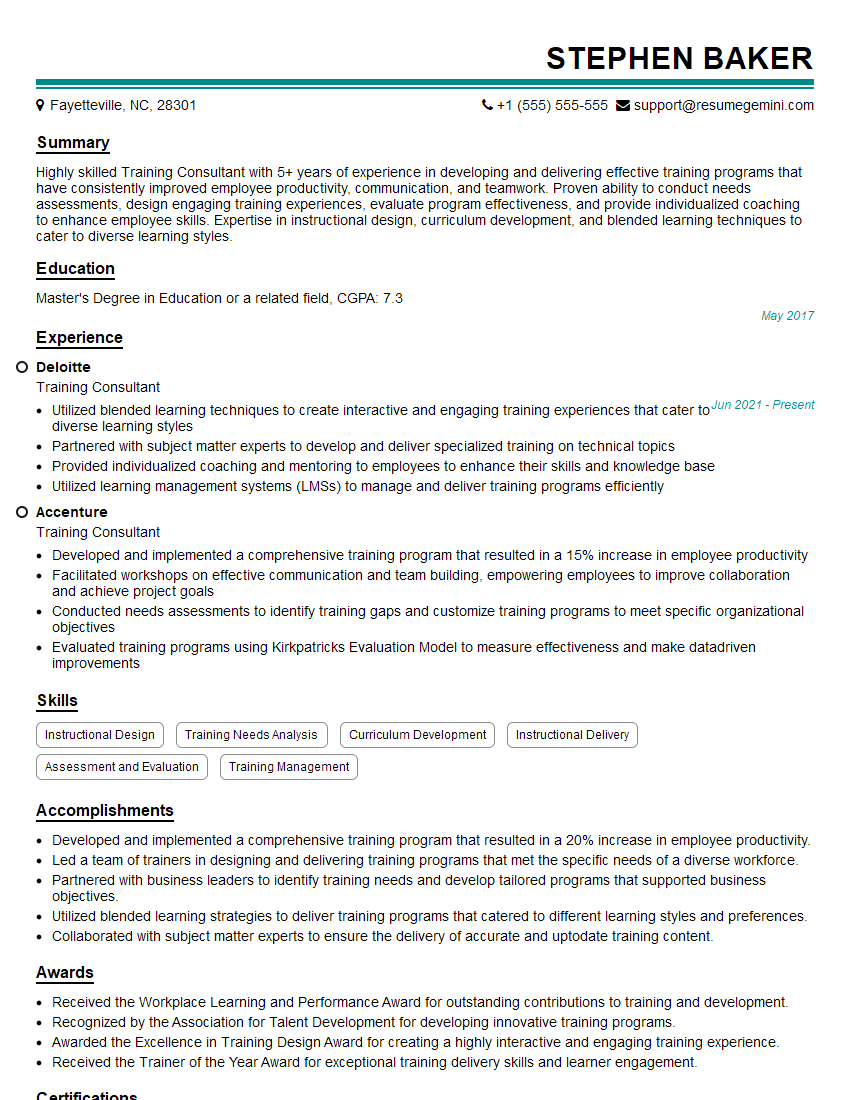
Training Consultant Resume Sample
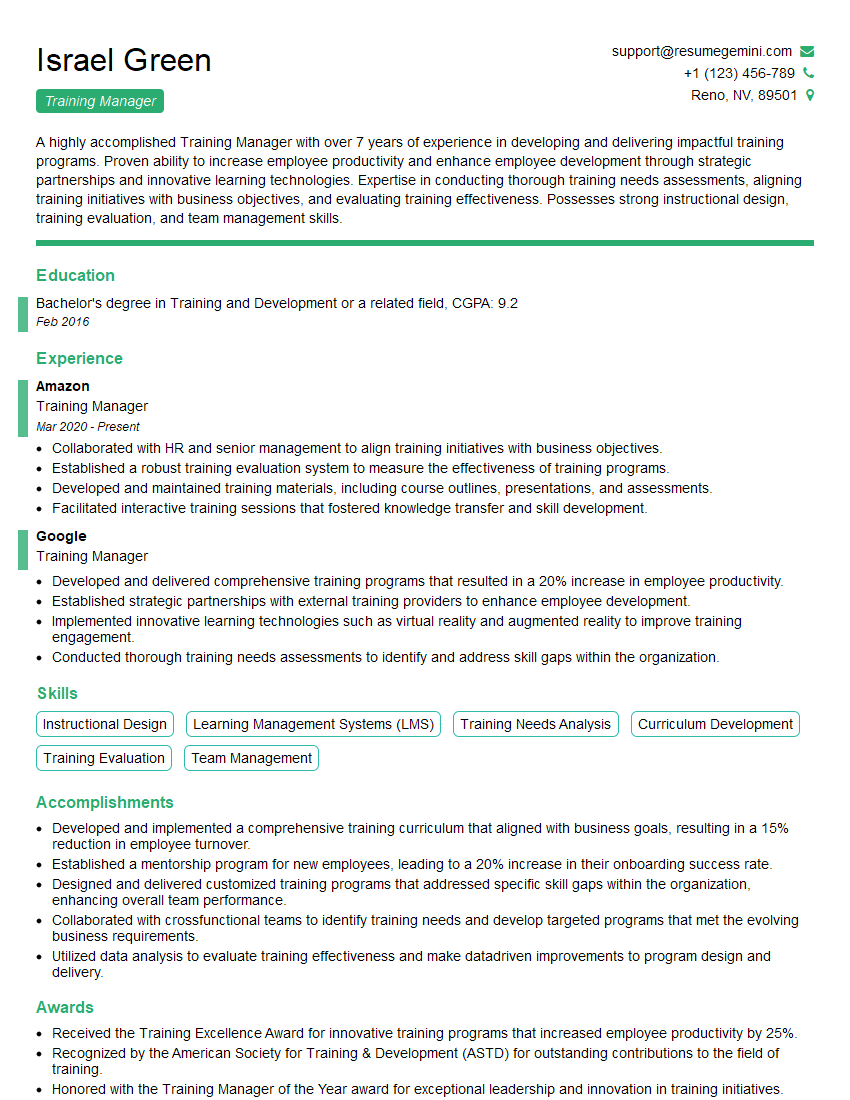
Training Manager Resume Sample
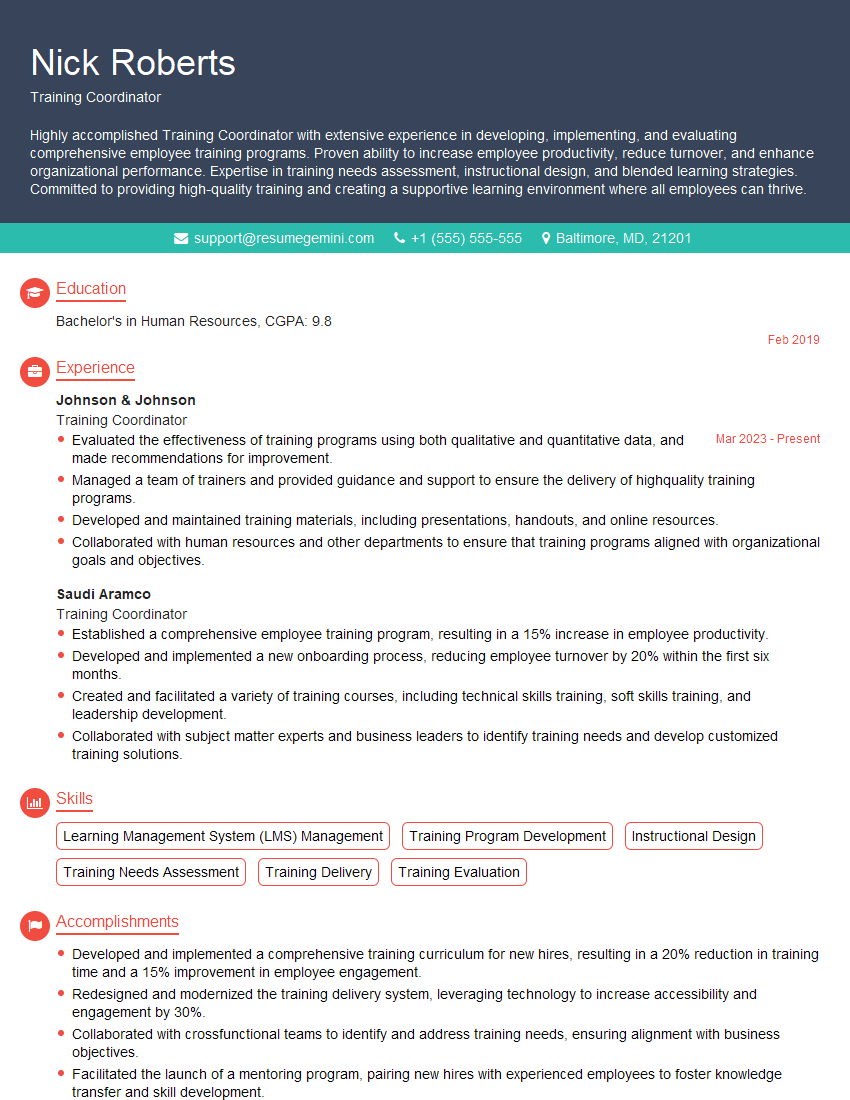
Training Coordinator Resume Sample
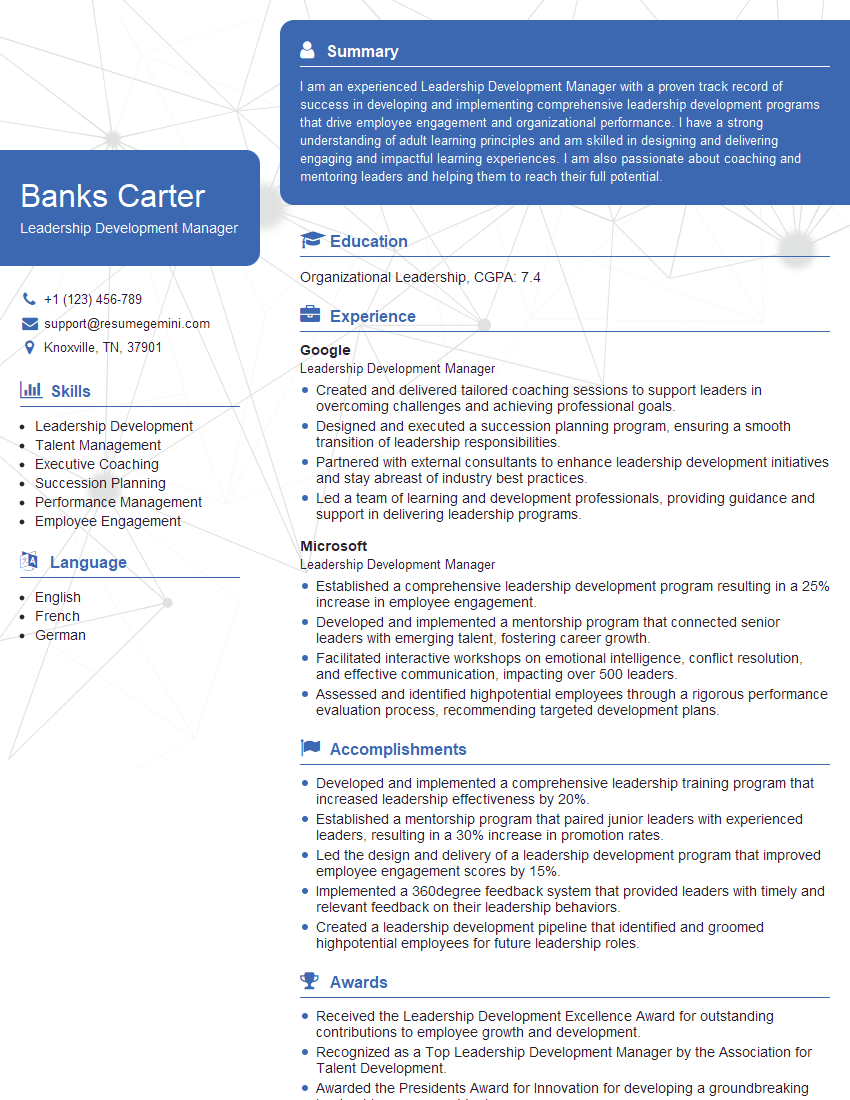
Leadership Development Manager Resume Sample
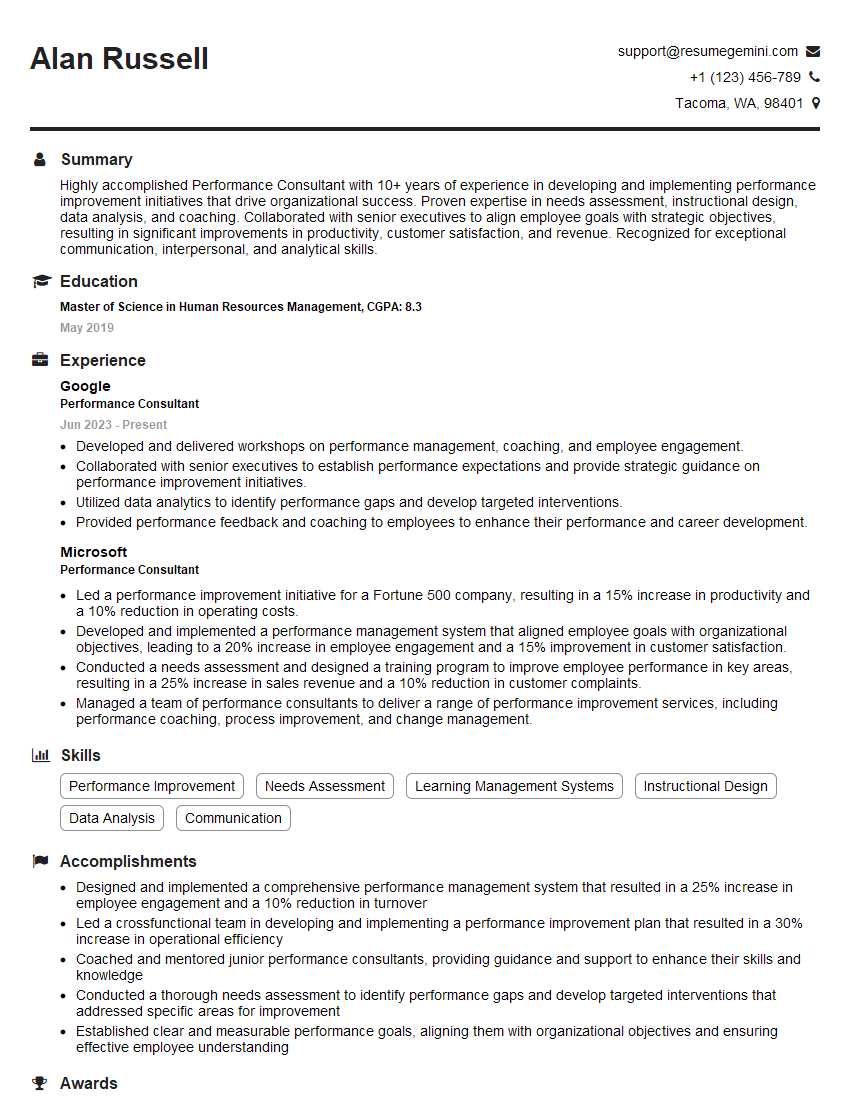
Performance Consultant Resume Sample
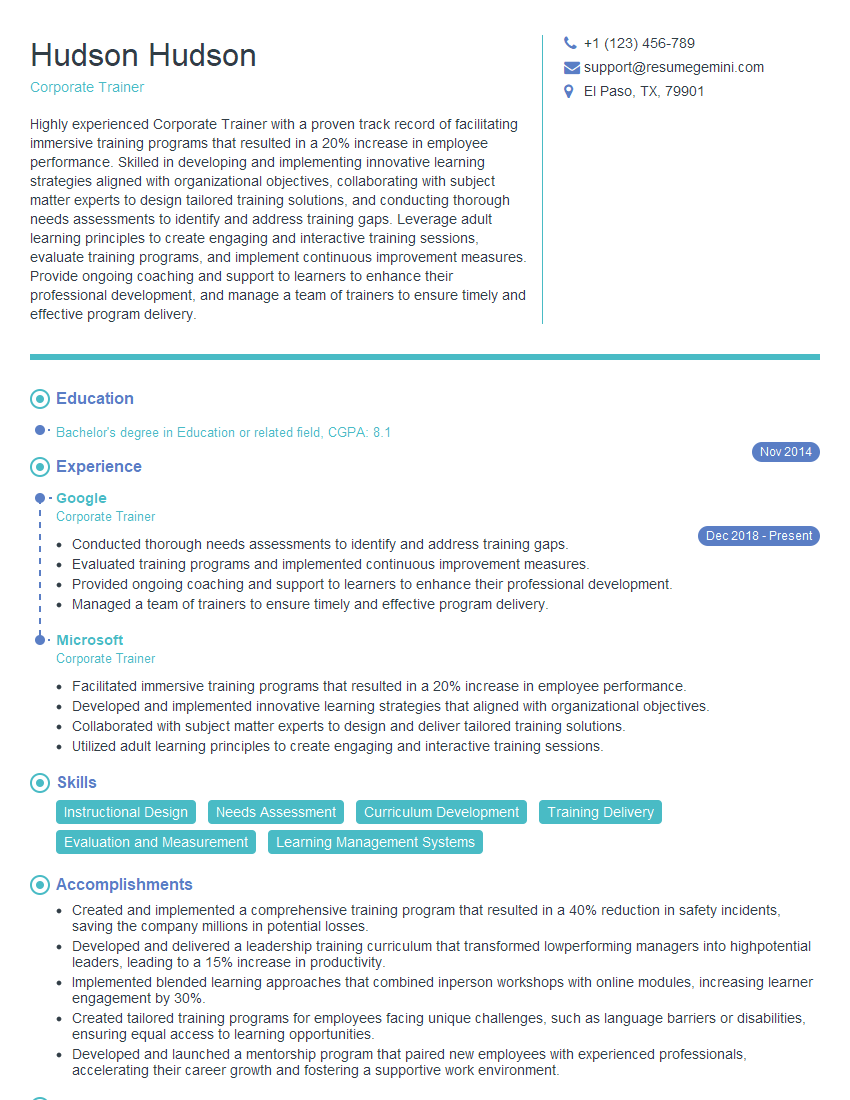
Corporate Trainer Resume Sample

Curriculum Developer Resume Sample
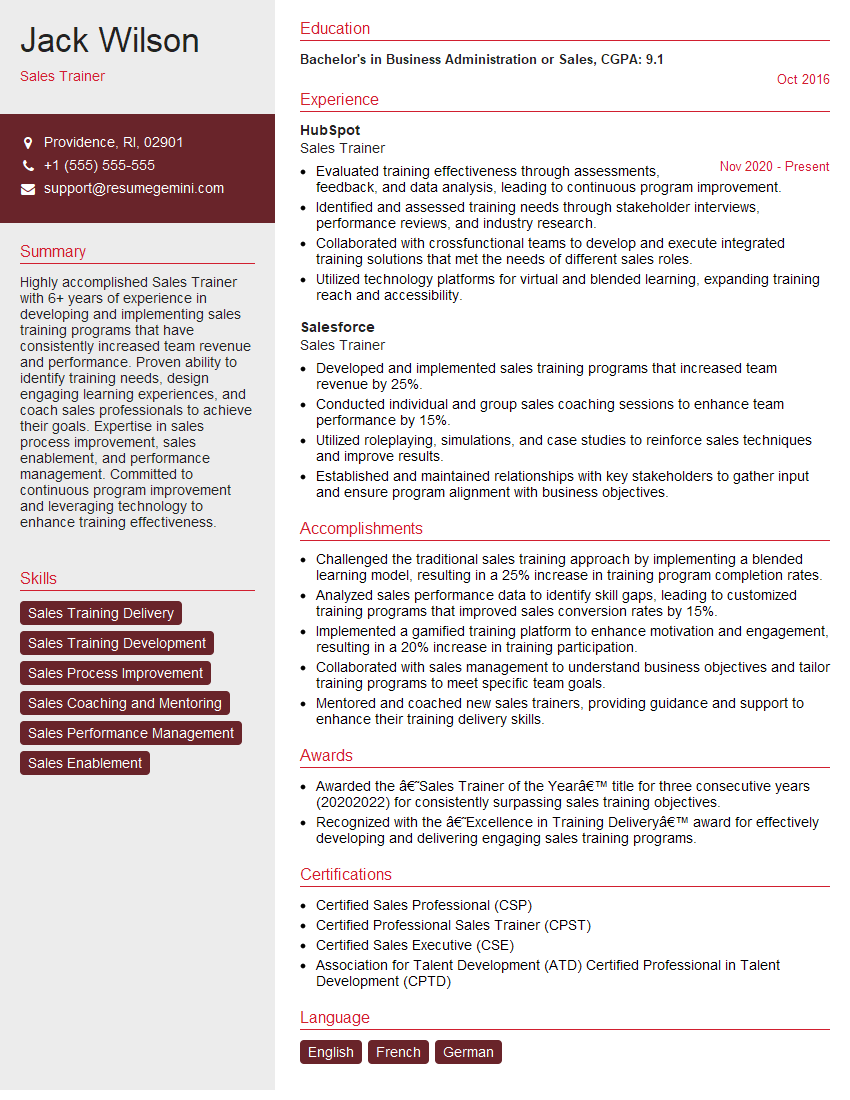
Sales Trainer Resume Sample
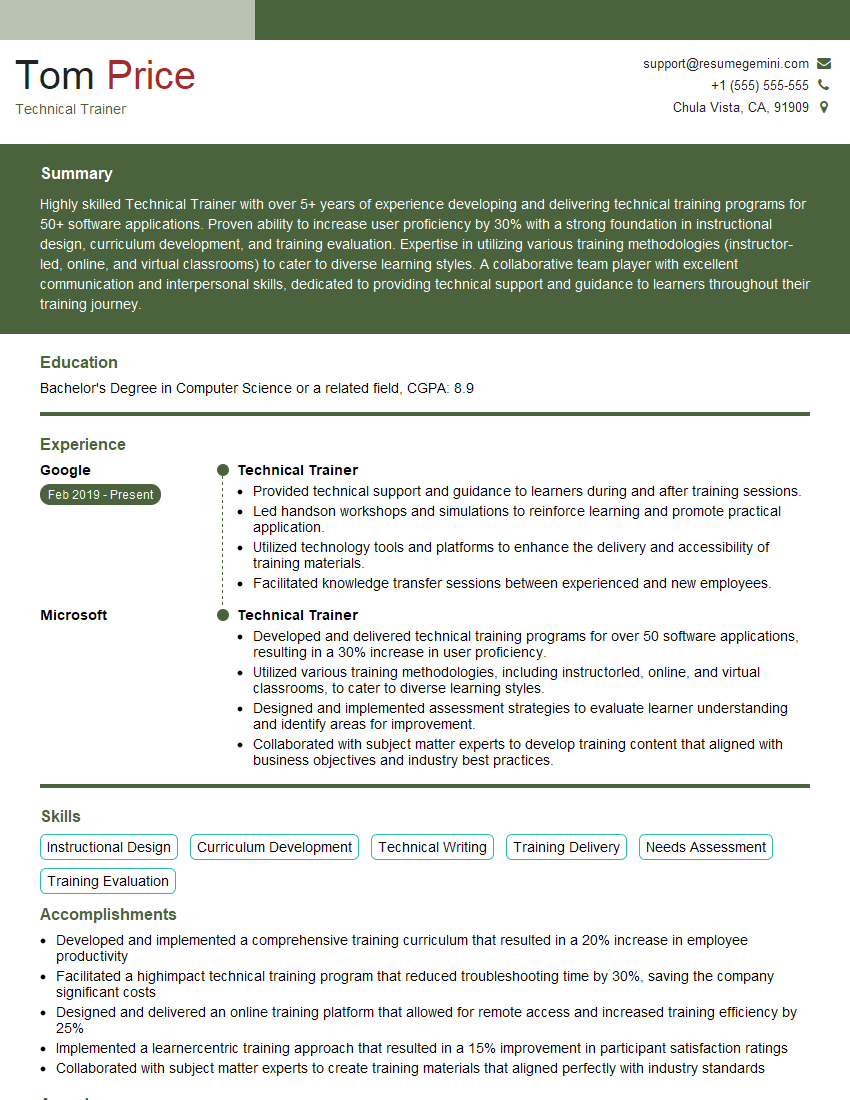
Technical Trainer Resume Sample

Training Specialist Resume Sample
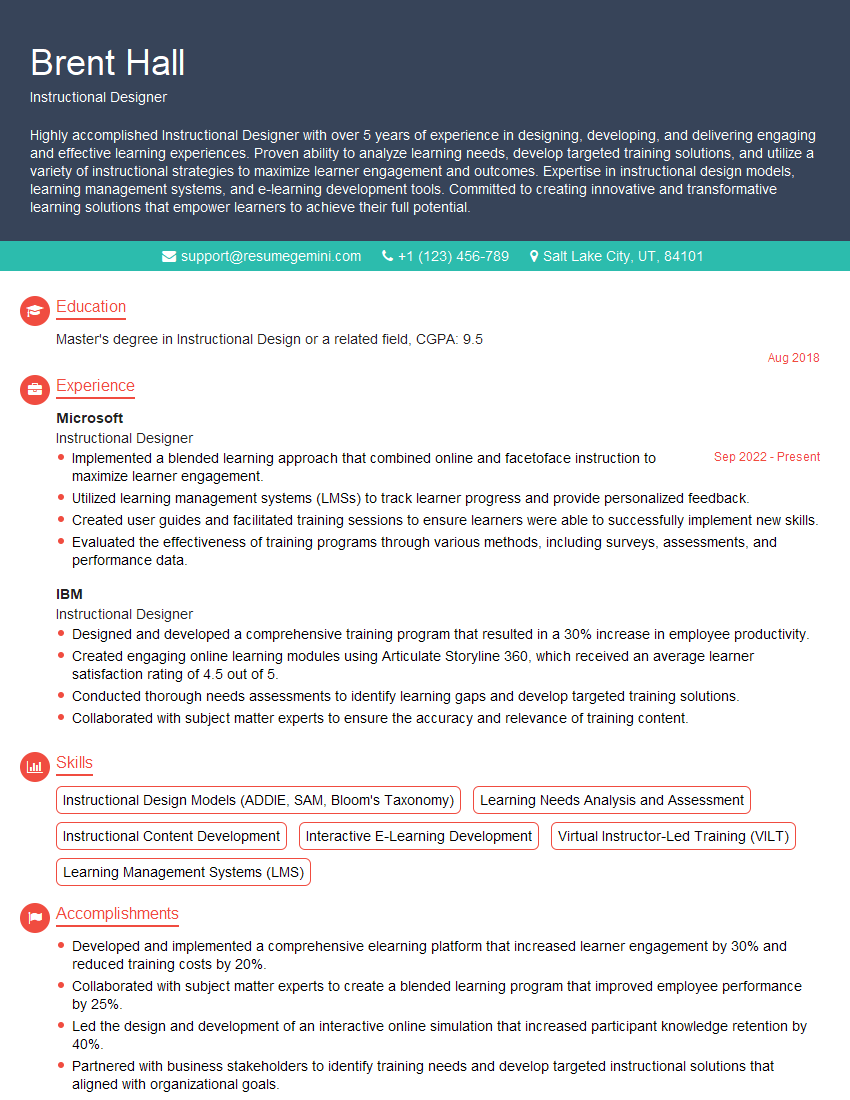
Instructional Designer Resume Sample
Explore more articles
Users Rating of Our Blogs
Share Your Experience
We value your feedback! Please rate our content and share your thoughts (optional).
What Readers Say About Our Blog
Amazing blog
Interesting Article, I liked the depth of knowledge you’ve shared.
Helpful, thanks for sharing.