The right preparation can turn an interview into an opportunity to showcase your expertise. This guide to Metal Material Handling and Inspection interview questions is your ultimate resource, providing key insights and tips to help you ace your responses and stand out as a top candidate.
Questions Asked in Metal Material Handling and Inspection Interview
Q 1. Describe your experience with various metal handling equipment (forklifts, cranes, etc.).
My experience with metal handling equipment spans over 15 years, encompassing various types of machinery and operational environments. I’m proficient in operating and maintaining forklifts, both counterbalance and reach trucks, with certifications covering different weight capacities and attachments. My experience extends to overhead cranes, including both bridge and gantry cranes, where I’ve been involved in load planning, rigging, and safe operation procedures. I’ve also worked extensively with smaller handling equipment like pallet jacks, conveyor systems, and magnetic lifters, adapting my approach to the specific needs of the material and the job at hand. For instance, I once had to devise a custom lifting solution using a combination of a crane and vacuum lifter to handle a large, oddly-shaped stainless steel component without causing damage.
I’m familiar with the relevant safety regulations and preventative maintenance schedules for all these types of equipment. Regular inspections, understanding operational limits, and proactive maintenance are critical to preventing accidents and maximizing equipment lifespan. I always prioritize safety and ensure that all equipment is in good working order before commencing any operation.
Q 2. Explain the different types of Nondestructive Testing (NDT) methods used in metal inspection.
Nondestructive testing (NDT) is crucial for ensuring the integrity of metal materials without causing damage. Several methods are commonly employed:
- Visual Inspection (VT): The simplest method, involving a thorough visual examination for surface defects like cracks, corrosion, or deformation.
- Liquid Penetrant Testing (LPT): A dye penetrant is applied to the surface, revealing cracks by capillary action. This is effective for detecting surface-breaking flaws.
- Magnetic Particle Testing (MT): Suitable for ferromagnetic materials, this method uses magnetic fields to detect surface and near-surface flaws. Iron particles are applied, and flaws are indicated by particle buildup.
- Ultrasonic Testing (UT): Uses high-frequency sound waves to detect internal flaws. The reflected waves reveal the size, location, and nature of defects.
- Radiographic Testing (RT): Employs X-rays or gamma rays to penetrate the material and reveal internal flaws. This method is particularly useful for detecting volumetric defects.
- Eddy Current Testing (ECT): Uses electromagnetic induction to detect surface and subsurface flaws in conductive materials. It’s commonly used for detecting corrosion or cracking in tubing.
The choice of NDT method depends on factors such as material type, desired sensitivity, and the type of defect expected. Often, multiple methods are used in combination for a comprehensive assessment.
Q 3. How do you identify and handle damaged or defective metal materials?
Identifying damaged or defective metal materials involves a combination of visual inspection and, if necessary, NDT methods. Surface damage, such as scratches or dents, might be acceptable depending on the application and relevant specifications. However, more serious flaws like cracks, corrosion, or significant dimensional variations would necessitate further investigation.
The handling of damaged materials depends on the severity of the defect and its potential impact. Minor defects might be addressed through surface treatment or localized repair. Materials with significant flaws would be rejected and removed from the production process to prevent defects in the final product. Proper documentation, including photographs and detailed descriptions of the defects, is crucial for tracking and analysis. This ensures that the root cause of the defect can be identified and corrective actions implemented to prevent recurrence.
For example, if we discover a crack in a critical structural component, we wouldn’t attempt a repair; instead, that component would be immediately segregated, labelled, and reported for appropriate disposal or return to the supplier.
Q 4. What are the common quality control standards in the metal industry (e.g., ISO 9001)?
Common quality control standards in the metal industry ensure consistency and reliability. ISO 9001 is a widely adopted standard focusing on quality management systems. It provides a framework for organizations to demonstrate their ability to consistently provide products and services that meet customer and regulatory requirements. Other relevant standards include:
- ASME (American Society of Mechanical Engineers) standards: Cover various aspects of metal fabrication and testing, including pressure vessels and boilers.
- ASTM (American Society for Testing and Materials) standards: Define materials specifications, testing methods, and performance criteria.
- Military specifications (MIL-SPEC): Apply to materials and processes used in defense applications.
Adherence to these standards necessitates detailed documentation, regular audits, and continuous improvement initiatives to maintain high quality and customer satisfaction. Compliance is often a prerequisite for supplying materials to many industries.
Q 5. Describe your experience with inventory management systems for metal materials.
My experience includes working with various inventory management systems, from simple spreadsheets to sophisticated enterprise resource planning (ERP) systems. These systems help track the quantity, location, and quality of metal materials, providing real-time visibility into inventory levels. I’ve used systems that incorporate barcoding or RFID technology for efficient tracking and identification of individual items. Effective inventory management is essential for minimizing waste, optimizing production schedules, and ensuring materials are available when needed.
In a previous role, I implemented a new ERP system that significantly improved our inventory accuracy. This involved training staff on the new system, refining data entry procedures, and integrating the system with our production planning software. The result was reduced material waste, streamlined production flow, and improved overall efficiency.
Q 6. How do you ensure the safety of workers during metal material handling operations?
Ensuring worker safety during metal material handling is paramount. My approach involves implementing and enforcing a robust safety program, which includes:
- Training: Providing thorough training on safe operating procedures for all equipment and the hazards associated with handling metal materials.
- Personal Protective Equipment (PPE): Enforcing the use of appropriate PPE, such as safety glasses, gloves, steel-toed boots, and hard hats.
- Safe Work Practices: Implementing clear procedures for lifting, moving, and stacking materials to prevent injuries.
- Regular Inspections: Conducting regular inspections of equipment and work areas to identify and address potential hazards.
- Emergency Procedures: Establishing and practicing emergency procedures in case of accidents or equipment malfunctions.
- Communication: Promoting clear communication between workers and supervisors to address safety concerns promptly.
A strong safety culture, where employees are empowered to report hazards and participate in safety improvements, is crucial for minimizing workplace accidents.
Q 7. Explain your understanding of different metal alloys and their properties.
My understanding of metal alloys and their properties is extensive. I’m familiar with various alloying elements and their effects on the properties of base metals like iron, aluminum, copper, and titanium. For example, adding carbon to iron creates steel, with the carbon content influencing its hardness, strength, and ductility. Alloying elements can improve strength, corrosion resistance, weldability, and other desirable properties.
- Stainless Steels: Contain chromium for corrosion resistance, often with nickel and molybdenum for enhanced performance.
- Aluminum Alloys: Used in aerospace and automotive applications due to their lightweight and high strength-to-weight ratio. Various alloying elements tailor the properties for specific applications.
- Copper Alloys (Brass, Bronze): Offer excellent corrosion resistance, conductivity, and machinability.
- Titanium Alloys: Known for their high strength, corrosion resistance, and low density, often used in aerospace and medical implants.
Selecting the right alloy for a specific application requires considering factors like strength, ductility, corrosion resistance, cost, and machinability. My experience allows me to choose the appropriate metal alloy based on the required properties and operating conditions.
Q 8. How do you interpret and document inspection results?
Interpreting and documenting inspection results is crucial for ensuring quality control in metal material handling. It involves a systematic approach, starting with a clear understanding of the inspection criteria defined in the specifications or drawings. This typically includes dimensions, surface finish, material composition, and any other relevant quality characteristics.
My process begins with a thorough visual inspection, noting any visible defects such as cracks, scratches, or corrosion. I then utilize precision measuring instruments like calipers and micrometers to verify dimensional accuracy. The results are meticulously recorded in a standardized inspection report, often using a checklist or a dedicated software system. This report includes:
- Unique identification of the material: This could be a batch number, heat number, or part number.
- Date and time of inspection: Ensuring traceability.
- Specific inspection criteria: Clearly stating what was checked.
- Measured values: Recorded with appropriate units and precision.
- Deviations from specifications: Highlighting any discrepancies found.
- Photographs or sketches: Visual documentation of defects or unusual findings.
- Inspector’s signature and approval: Confirming the validity of the inspection.
For example, if inspecting a batch of steel rods for diameter, I would record the measured diameter of each rod, noting any instances where the diameter falls outside the specified tolerance. Any deviations are flagged, and the severity of these deviations is classified (e.g., minor, major, critical) based on the impact on the final product. The entire process is documented thoroughly for future reference and audit trails.
Q 9. Describe your experience with using measuring instruments (calipers, micrometers, etc.).
I have extensive experience using various measuring instruments, including dial calipers, vernier calipers, micrometers, and height gauges. My proficiency extends beyond simple measurement; I understand the principles of measurement uncertainty, calibration procedures, and the selection of appropriate instruments for different applications.
For instance, I use dial calipers for quick measurements of external dimensions, but I rely on vernier calipers for greater precision. Micrometers are indispensable for accurately measuring very small dimensions, while height gauges are crucial for determining the height or depth of components. I regularly check the calibration of these instruments using certified standards to ensure accuracy. It’s important to understand the limitations of each instrument and select the appropriate one for the task at hand. Using a micrometer to measure a large part would be inefficient, and using calipers to measure a very small part could lead to significant errors.
For example, when inspecting a machined part, I would use a micrometer to check the precise diameter of a shaft and a caliper to verify the overall length. I’d meticulously record all measurements, including the instrument used, and cross-reference them against the specifications. Any discrepancies are meticulously noted and investigated.
Q 10. How do you handle discrepancies between inspection results and specifications?
Discrepancies between inspection results and specifications require careful investigation and documented resolution. My approach follows a structured process:
- Verify the measurement: Repeat the measurement using the same or a different instrument to rule out errors in the initial measurement process.
- Check the calibration: Ensure that the measuring instruments are properly calibrated and within their acceptable tolerances.
- Review the specifications: Confirm that the specifications are correctly interpreted and applied.
- Investigate potential causes: This could involve examining the manufacturing process, material properties, or even environmental factors that could have contributed to the discrepancy.
- Document findings: All findings, including the initial discrepancy, the investigation steps, and the conclusion, should be meticulously documented.
- Determine corrective actions: Depending on the nature and severity of the discrepancy, corrective actions may range from minor adjustments to complete rejection of the material or product.
- Implement and verify corrective actions: Once corrective actions are implemented, verification measurements are conducted to ensure that the problem has been resolved.
For example, if a batch of steel plates showed a thickness outside the specified tolerance, I’d first verify the thickness measurements using multiple instruments. I’d then check the calibration of the instruments. If the discrepancy persists, I’d investigate potential issues in the rolling mill’s process, looking for inconsistencies in the rolling parameters or material properties. The findings would be documented and used to adjust the manufacturing process to ensure future compliance with specifications. Any non-compliant plates would be handled according to company procedures, potentially requiring rework or rejection.
Q 11. What are the common causes of metal defects and how can they be prevented?
Common causes of metal defects are multifaceted and depend on the manufacturing process and material type. Here are a few examples:
- Inclusions: These are foreign particles trapped within the metal during the manufacturing process. They can weaken the material and cause premature failure.
- Porosity: Small voids or holes within the metal structure, often resulting from trapped gases during casting or welding. This reduces strength and can compromise the material’s integrity.
- Cracks: Fractures within the metal, which can be caused by stresses during processing, welding, or service. They are serious defects and can lead to catastrophic failure.
- Surface imperfections: Scratches, pits, and other surface defects can weaken the material and affect its aesthetic appeal.
- Dimensional inaccuracies: Inconsistent dimensions due to processing errors can make the parts unusable.
Prevention strategies focus on controlling the manufacturing process and using quality materials. This includes:
- Careful material selection: Selecting appropriate materials with the required properties.
- Process optimization: Fine-tuning manufacturing processes to minimize defects, such as refining casting parameters or welding techniques.
- Regular equipment maintenance: Ensuring that machinery is functioning properly and consistently.
- Operator training: Properly training personnel to follow procedures and identify potential defects.
- Quality inspections: Implementing rigorous quality inspection procedures at various stages of the process.
For example, using appropriate fluxes and preheating techniques during welding can prevent porosity and cracking. Regular inspection and maintenance of casting equipment can reduce the likelihood of inclusions.
Q 12. Describe your experience with different types of metal finishes.
My experience encompasses a range of metal finishes, each serving a specific purpose. These include:
- Polished: Achieves a highly reflective surface, often used for aesthetic reasons or to minimize friction.
- Buffed: Similar to polished but with less reflectivity and a smoother finish.
- Anodized: An electrochemical process used to create a protective oxide layer on aluminum, enhancing corrosion resistance and providing a decorative color.
- Powder coated: A durable finish providing excellent corrosion protection and a wide range of color options.
- Painted: Used for protection and aesthetics; various paints provide different levels of durability and corrosion resistance.
- Plated: Applying a thin layer of a different metal, such as chromium or nickel, to improve corrosion resistance, hardness, or appearance. Examples include chrome plating or zinc plating.
The selection of a metal finish depends on the application’s specific requirements. For example, parts operating in harsh environments might require anodizing or powder coating for superior corrosion protection, while parts needing a high-quality reflective surface might opt for polishing. Understanding the properties and limitations of different finishes is essential in making the correct selection.
Q 13. How do you maintain accurate records of metal material movement and storage?
Maintaining accurate records of metal material movement and storage is critical for inventory management and traceability. My approach involves a combination of physical and digital methods:
- Barcoding or RFID tagging: Each material batch is labeled with a unique identifier, facilitating tracking throughout its lifecycle.
- Inventory management software: A database system records material receipts, movements, and usage, providing real-time tracking and inventory visibility.
- Designated storage areas: Organized storage areas with clear labeling minimize the risk of material mix-ups or misplacement.
- Regular inventory checks: Regular physical counts are performed to reconcile the physical inventory with the software records.
- First-in, first-out (FIFO) system: Implementing FIFO ensures that the oldest materials are used first, minimizing the risk of material degradation.
- Detailed documentation: All transactions are recorded, including date, time, quantity, location, and responsible personnel.
For instance, when receiving a shipment of aluminum sheets, I would scan the barcode of each pallet and update the inventory management system. Subsequent movements of these sheets, such as transferring them to the production floor, are also recorded. This system allows for efficient tracking, preventing loss and ensuring materials are always accounted for.
Q 14. What is your experience with using Computerized Maintenance Management Systems (CMMS)?
My experience with Computerized Maintenance Management Systems (CMMS) is extensive. I’ve utilized CMMS software in various roles, managing preventative maintenance schedules, tracking equipment repairs, and generating reports on maintenance costs and equipment performance. I am proficient in using CMMS to manage work orders, track inventory of spare parts, and schedule preventative maintenance for critical equipment used in material handling processes such as cranes, forklifts, and conveyors.
For example, I’ve used CMMS to create preventative maintenance schedules for overhead cranes, ensuring regular inspections and lubrication to prevent malfunctions. This proactive approach minimizes downtime and increases operational efficiency. The CMMS also facilitates tracking of maintenance costs associated with each piece of equipment and helps in identifying trends and patterns that can inform future maintenance strategies. Data analysis derived from the CMMS can help in optimizing maintenance schedules and reducing overall maintenance costs.
Q 15. Explain the importance of proper labeling and identification of metal materials.
Proper labeling and identification of metal materials are paramount for efficient material handling, inventory management, and preventing errors throughout the entire production process. Think of it like organizing a vast library – without proper labels, finding the right book (metal) becomes incredibly difficult and time-consuming.
- Traceability: Clear labels allow us to trace the material’s origin, processing history, and quality certifications. This is crucial for quality control and addressing any potential defects.
- Inventory Management: Accurate labeling enables efficient inventory tracking, reducing waste from material loss or obsolescence. We can quickly identify what we have on hand and what needs to be reordered.
- Safety: Labels can highlight potential hazards associated with specific metals, such as toxicity or flammability, enabling workers to handle them safely.
- Compliance: Many industries have strict regulations regarding material labeling and traceability. Proper labeling ensures compliance and avoids potential penalties.
For example, a label might include the material grade (e.g., 304 stainless steel), batch number, heat number (indicating the specific melt), and any relevant certifications or safety warnings. A consistent labeling system, using barcodes or RFID tags, streamlines the process and minimizes human error.
Career Expert Tips:
- Ace those interviews! Prepare effectively by reviewing the Top 50 Most Common Interview Questions on ResumeGemini.
- Navigate your job search with confidence! Explore a wide range of Career Tips on ResumeGemini. Learn about common challenges and recommendations to overcome them.
- Craft the perfect resume! Master the Art of Resume Writing with ResumeGemini’s guide. Showcase your unique qualifications and achievements effectively.
- Don’t miss out on holiday savings! Build your dream resume with ResumeGemini’s ATS optimized templates.
Q 16. How do you prioritize tasks in a fast-paced metal handling environment?
Prioritizing tasks in a fast-paced metal handling environment requires a structured approach. I utilize a combination of techniques including urgency, impact, and resource availability.
- Urgency: Tasks with immediate deadlines or those that could halt production if delayed are given top priority. For instance, if a critical part is needed immediately for assembly, that task takes precedence.
- Impact: Tasks with a significant impact on the overall production process or project timeline are prioritized. This might involve handling a large order that will affect multiple downstream processes.
- Resource Availability: Consider the resources required for each task (equipment, personnel, etc.). Tasks that can be completed efficiently with available resources are prioritized to maximize output.
I often use a Kanban board or a similar visual management system to track progress and prioritize tasks in real-time. This allows the entire team to see the current workload and identify potential bottlenecks.
Furthermore, effective communication is key. I maintain open lines of communication with supervisors, colleagues, and other departments to ensure everyone is aware of priorities and to address any unexpected delays or challenges.
Q 17. Describe your experience with different types of metal storage systems.
My experience encompasses a variety of metal storage systems, each suited for different materials and operational needs. The choice of system depends on factors such as material type, quantity, access frequency, and space constraints.
- Racking Systems: These are widely used for storing long pieces of metal, such as bars, tubes, or sheets. Selective pallet racking, cantilever racking, and drive-in racking are common examples. I have experience optimizing rack layout for efficient storage and retrieval.
- Bulk Storage: For large quantities of loose metal, bulk storage solutions like silos or bins are employed. This requires careful consideration of material segregation to prevent contamination or degradation.
- Automated Storage and Retrieval Systems (AS/RS): These advanced systems use automated cranes or robots to handle and retrieve materials from high-density storage. I’ve worked with AS/RS systems in high-throughput facilities, significantly improving efficiency and reducing manual handling.
- Vertical Carousels: These systems utilize vertical rotating carousels to store materials, optimizing space utilization in areas with limited floor space. I find them particularly useful for smaller components or frequently accessed items.
Choosing the right storage system requires a detailed assessment of the specific requirements. I always prioritize safety and accessibility while optimizing space and operational efficiency. For instance, selecting a racking system with appropriate load capacities is crucial for preventing accidents and ensuring the integrity of the stored material.
Q 18. How do you ensure the traceability of metal materials throughout the production process?
Ensuring traceability of metal materials throughout the production process is essential for quality control, accountability, and regulatory compliance. Think of it as leaving a digital breadcrumb trail for every piece of metal.
This is typically achieved through a combination of:
- Unique Identification: Assigning each batch of material a unique identification number (e.g., heat number, batch number) from its origin at the mill.
- Barcode/RFID Tagging: Attaching barcodes or RFID tags to materials at various stages. This allows for automated tracking and data capture using scanners or readers.
- Database Management: Maintaining a centralized database to record the complete history of each material, including its origin, processing steps, location, and any quality inspections.
- ERP/MRP Integration: Integrating the tracking system with enterprise resource planning (ERP) or materials requirements planning (MRP) systems to provide a comprehensive view of material flow and inventory.
This system allows us to quickly pinpoint the source of any defect, identify the processing steps that might have contributed to the defect and facilitate recalls if necessary. In case of an audit, it provides complete documentation of the entire material journey.
Q 19. What is your experience with using Material Requirements Planning (MRP) systems?
My experience with Material Requirements Planning (MRP) systems is extensive. I’ve worked with various MRP systems to plan and manage inventory, optimizing production schedules and minimizing waste. MRP systems are the backbone of efficient manufacturing.
Specifically, I am proficient in:
- Demand Forecasting: Utilizing historical data and market trends to predict future material needs.
- Inventory Management: Optimizing inventory levels to meet production demands while minimizing storage costs and obsolescence.
- Production Scheduling: Creating and managing production schedules based on material availability and capacity constraints.
- Purchase Order Management: Generating and managing purchase orders for raw materials based on MRP calculations.
- Capacity Planning: Assessing production capacity to ensure that sufficient resources are available to meet planned production schedules.
In practice, I’ve used MRP systems to streamline procurement, reduce lead times, and prevent stockouts. For instance, by accurately forecasting demand for specific metal grades, I was able to prevent production delays and avoid costly rush orders. MRP systems also help identify potential bottlenecks and inefficiencies within the production process, allowing for proactive adjustments to improve overall productivity.
Q 20. How do you address safety concerns related to specific metal hazards (e.g., sharp edges, heavy loads)?
Safety is paramount in metal handling. Addressing safety concerns associated with specific metal hazards requires a multi-faceted approach, combining proactive measures with rigorous adherence to safety protocols.
- Sharp Edges: Handling materials with sharp edges requires the use of appropriate personal protective equipment (PPE), such as cut-resistant gloves, safety glasses, and protective clothing. Materials should be handled carefully, and sharp edges should be deburred or protected whenever possible. We also use proper handling techniques and utilize safety guards on machinery.
- Heavy Loads: Heavy loads should always be handled using appropriate lifting equipment, such as forklifts, cranes, or hoists. Workers must be trained in the safe operation of this equipment, and load capacity limits must be strictly adhered to. We use proper lifting techniques to prevent injuries and utilize safety harnesses or other restraints where necessary.
- Toxicity/Flammability: When handling toxic or flammable metals, proper ventilation must be ensured, and appropriate PPE must be worn. Special storage and handling procedures may be required, in accordance with safety regulations and material safety data sheets (MSDS).
- Falling Objects: Areas where metal materials are handled overhead must be clearly marked and access restricted. Use of proper safety nets and barriers is essential.
Regular safety training and inspections are critical. We conduct regular safety audits, enforce safety protocols, and promote a safety-conscious culture among all team members. Addressing safety concerns proactively reduces the risk of accidents and fosters a safe and productive work environment. Reporting and investigation of any incidents are essential for continuous improvement.
Q 21. Describe your experience with different types of metal joining processes (e.g., welding, riveting).
My experience encompasses various metal joining processes, each with its unique strengths and applications. The choice of process depends on factors like material type, required strength, aesthetics, and cost.
- Welding: I am experienced in various welding techniques, including Gas Metal Arc Welding (GMAW), Gas Tungsten Arc Welding (GTAW), and Shielded Metal Arc Welding (SMAW). The choice of process depends on the material and required weld quality. For example, GTAW is often preferred for high-quality welds on thin materials, while GMAW is more suitable for high-speed, high-volume applications.
- Riveting: Riveting is a mechanical fastening technique suitable for joining metal sheets or components. It’s commonly used in applications where high strength and durability are needed, but where welding might not be feasible. I have experience in both solid and blind riveting techniques.
- Bolting/Screwing: These are simpler joining methods, suitable for applications where quick assembly and disassembly are required. We utilize high-strength bolts and proper torque specifications to ensure a secure joint.
- Adhesives: In certain applications, structural adhesives can be used to join metal components, offering advantages in terms of weight reduction and design flexibility. This is often used in combination with other methods to enhance strength and durability.
Regardless of the chosen method, proper joint design, material selection, and quality control procedures are essential to ensure the structural integrity and reliability of the joined components. Understanding the strengths and limitations of each method is key to selecting the most appropriate technique for the specific application.
Q 22. Explain your understanding of different types of corrosion and its prevention in metals.
Corrosion is the deterioration of a metal due to its reaction with its environment. Different types exist, each with unique characteristics and prevention strategies.
- Uniform Corrosion: This is the most common type, where the metal degrades evenly across its surface. Think of a rusty nail – the rust forms relatively uniformly. Prevention involves using corrosion-resistant materials like stainless steel, applying protective coatings like paint or galvanizing (coating with zinc), or controlling the environment (e.g., reducing humidity).
- Galvanic Corrosion: Occurs when two dissimilar metals are in contact in the presence of an electrolyte (like saltwater). The more active metal corrodes preferentially. Imagine a steel bolt in a brass fitting submerged in seawater; the steel will corrode faster. Prevention involves using similar metals or employing electrical isolation techniques.
- Pitting Corrosion: Highly localized corrosion leading to small pits or holes. This is often difficult to detect early. Think of small holes appearing on a stainless steel surface exposed to chlorides. Prevention involves using corrosion inhibitors or choosing materials with higher resistance to pitting.
- Crevice Corrosion: Concentrated corrosion within crevices or gaps where stagnant solutions accumulate. This often occurs in bolted joints or under gaskets. Prevention focuses on designing components to minimize crevices and ensuring proper cleaning and drainage.
- Stress Corrosion Cracking (SCC): Corrosion enhanced by tensile stress. This can lead to sudden and catastrophic failure. Prevention involves reducing stress levels in the material through proper design and heat treatments, and using corrosion-resistant materials.
Overall, corrosion prevention is a multi-faceted approach involving material selection, surface treatments, environmental control, and proper design.
Q 23. How do you handle customer complaints related to metal material quality?
Handling customer complaints about metal quality begins with a thorough investigation. I follow a structured approach:
- Gather Information: I start by collecting all relevant information from the customer, including details about the defect, quantity affected, and the application where the metal was used. Pictures or samples are invaluable.
- Internal Investigation: I then collaborate with the production and quality control teams to trace the material’s history. This involves reviewing production records, inspection reports, and material certificates.
- Root Cause Analysis: Identifying the root cause is critical. This may involve metallurgical analysis, testing for chemical composition, and evaluating processing parameters. Techniques like 5 Whys or fishbone diagrams are helpful.
- Corrective Action: Once the root cause is identified, appropriate corrective actions are implemented to prevent recurrence. This could range from adjusting production parameters to modifying quality control procedures.
- Resolution and Communication: I then work with the customer to find a mutually agreeable solution, which may include replacement, credit, or compensation. Throughout the process, maintaining open communication is key to building and preserving customer relationships.
In my experience, prompt and transparent communication is crucial in managing customer complaints effectively.
Q 24. Describe your experience with using statistical process control (SPC) techniques.
Statistical Process Control (SPC) is a powerful tool for monitoring and improving processes. My experience includes using various SPC charts like:
- Control Charts (X-bar and R charts): These are used to monitor the average and range of a process characteristic over time. They help identify trends and shifts that may indicate a process going out of control. For example, I’ve used them to monitor the thickness of metal sheets during rolling operations.
- Control Charts for Attributes: These are used for quality characteristics that can be classified as either conforming or non-conforming (e.g., number of defects per unit). I’ve used these to track the number of surface imperfections on a batch of castings.
Using SPC, I’ve been able to identify potential problems early, reduce variability in processes, and ultimately improve the quality of our metal products. For example, by monitoring the tensile strength of steel bars using control charts, we were able to identify a slight decrease in strength related to a change in the heat treatment process. This allowed us to correct the process and prevent the production of substandard material.
Q 25. What are your experience with various types of metal surface treatments?
My experience encompasses a wide range of metal surface treatments, each serving a different purpose:
- Electroplating: This involves depositing a thin layer of metal onto a substrate to enhance corrosion resistance, improve appearance, or increase hardness. For instance, I’ve worked with chromium plating for wear resistance and nickel plating for corrosion protection.
- Anodizing: An electrochemical process that forms a protective oxide layer on aluminum and its alloys. It improves corrosion resistance, durability, and appearance. This is commonly used in aerospace applications.
- Powder Coating: A dry process where a powdered coating is applied electrostatically and then cured by heat. It provides excellent protection against corrosion and environmental factors. Used for structural components and automotive parts.
- Painting: Provides a barrier against corrosion and enhances aesthetics. The choice of paint depends on the environment and the material.
- Shot Peening: This process involves blasting the surface with small metal shots to induce compressive residual stresses, enhancing fatigue life and corrosion resistance. Used for high-stress components like springs and turbine blades.
The selection of an appropriate surface treatment depends on several factors including the base metal, desired properties, and environmental conditions.
Q 26. How familiar are you with relevant safety regulations and standards (e.g., OSHA)?
I’m very familiar with relevant safety regulations and standards, most notably OSHA (Occupational Safety and Health Administration) in the United States. My understanding covers aspects such as:
- Personal Protective Equipment (PPE): This includes eye protection, hearing protection, respiratory protection (especially in welding and grinding operations), and safety footwear. I ensure our team uses the appropriate PPE for each task.
- Material Safety Data Sheets (MSDS): I’m proficient in understanding and interpreting MSDS for various chemicals and metals used in our processes. This knowledge is essential for safe handling and storage.
- Lockout/Tagout Procedures: These procedures are crucial for preventing accidental energization of machinery during maintenance or repair. I’m trained in safe lockout/tagout practices.
- Emergency Procedures: I’m well-versed in emergency procedures, including fire safety, chemical spills, and first aid response. Regular training and drills ensure our team’s preparedness.
- Hazard Communication: Effective communication of hazards is essential. I ensure proper labeling, signage, and employee training are in place to inform everyone of potential risks.
Compliance with safety regulations is paramount, and I actively contribute to maintaining a safe working environment.
Q 27. Explain your understanding of the concept of First In, First Out (FIFO) in metal inventory management.
First In, First Out (FIFO) is a crucial inventory management principle that ensures the oldest stock is used first. In metal inventory management, this is vital to prevent material degradation and obsolescence. Metals can degrade over time due to oxidation, reaction with the environment, or even just physical changes.
Implementing FIFO helps avoid using older, potentially deteriorated materials. It ensures that the newest materials are kept in reserve. This is particularly important for metals with limited shelf life or those sensitive to environmental conditions. For instance, reactive metals like magnesium or titanium require stricter adherence to FIFO to minimize corrosion. We use a combination of clear labeling, organized storage, and a robust tracking system to ensure FIFO compliance. Regular inventory audits help to maintain the FIFO methodology and identify any deviations. Failing to use FIFO can lead to significant material loss, which is costly and impacts production schedules.
Q 28. Describe a time you identified a critical quality issue during metal inspection. How did you resolve it?
During a routine inspection of a batch of aluminum alloy castings intended for aerospace components, I noticed an unusually high number of micro-porosity defects. These small pores compromise the structural integrity of the casting and are unacceptable for aerospace applications.
My investigation involved:
- Detailed Examination: I carefully examined several castings, documenting the location and size of the pores using microscopy.
- Metallurgical Analysis: Samples were sent for metallurgical analysis to determine the root cause of the porosity. This revealed an issue with the melting and pouring process, with insufficient degassing leading to trapped gases during solidification.
- Process Review: I collaborated with the foundry team to review the pouring parameters and degassing procedures.
- Corrective Actions: We implemented changes in the melting process, including the use of a more efficient degassing technique and stricter temperature control. This ensured complete gas removal before pouring.
- Re-inspection and Verification: A new batch of castings was produced and thoroughly inspected to confirm the effectiveness of the implemented corrective actions. The issue was resolved by improving the casting process, leading to components meeting the required quality standards.
This experience highlighted the importance of thorough inspection and a proactive approach to identifying and resolving quality issues. This successful resolution prevented the use of defective components, avoiding potentially catastrophic consequences.
Key Topics to Learn for Metal Material Handling and Inspection Interview
- Safe Material Handling Practices: Understanding and applying principles of ergonomics, load capacity, and proper lifting techniques for various metal types and forms (sheets, coils, bars, etc.). Consider the use of different handling equipment (cranes, forklifts, etc.).
- Metal Identification and Properties: Knowledge of common metal alloys (steel, aluminum, titanium, etc.), their respective properties (strength, ductility, corrosion resistance), and appropriate inspection methods for each.
- Non-Destructive Testing (NDT) Methods: Familiarity with techniques such as visual inspection, magnetic particle inspection, liquid penetrant inspection, ultrasonic testing, and radiographic testing. Understand the applications and limitations of each method.
- Defect Recognition and Classification: Ability to identify common metal defects (cracks, porosity, inclusions, etc.) and classify their severity based on industry standards and codes.
- Quality Control and Documentation: Understanding of quality control procedures, documentation requirements (inspection reports, certifications), and adherence to relevant industry standards (e.g., ISO 9001).
- Inventory Management and Tracking: Knowledge of inventory control systems and techniques for tracking metal materials throughout the handling and inspection process.
- Problem-Solving and Troubleshooting: Demonstrating the ability to analyze issues related to material handling or inspection, identify root causes, and propose effective solutions.
- Health and Safety Regulations: Familiarity with relevant health and safety regulations pertaining to metal handling and inspection, including personal protective equipment (PPE) requirements.
Next Steps
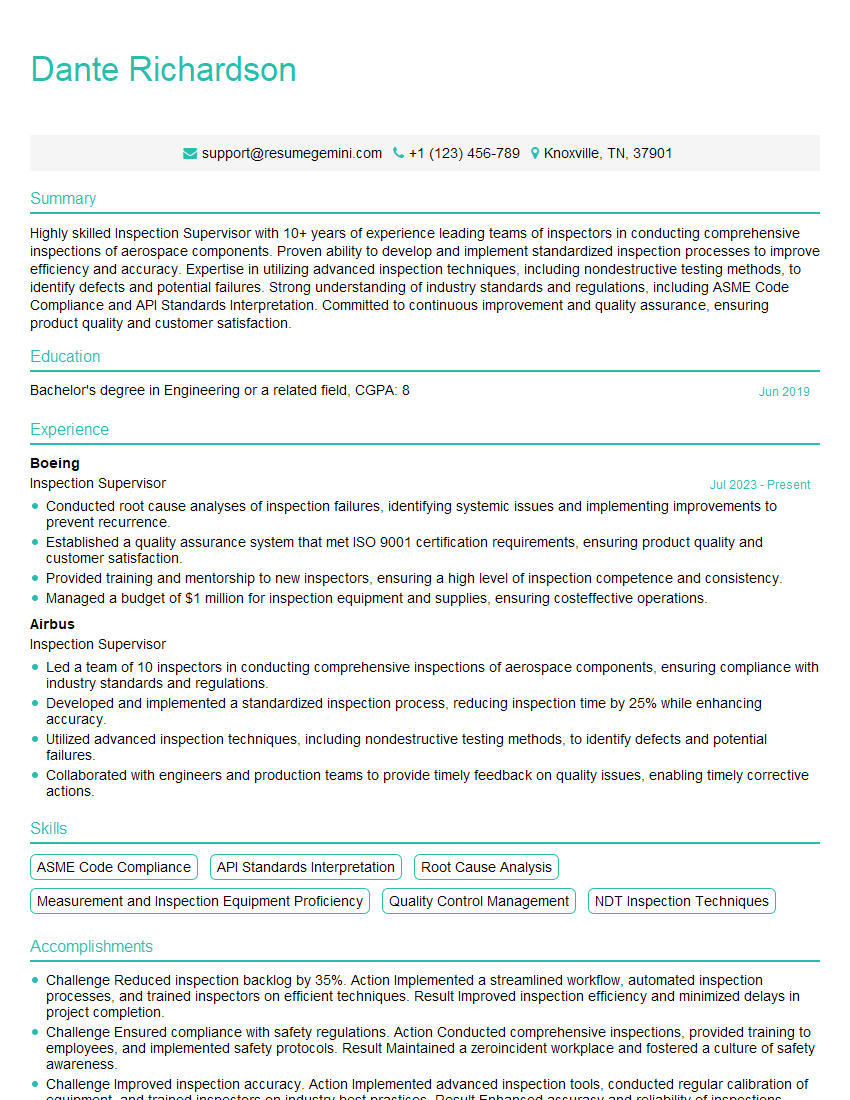
Mastering Metal Material Handling and Inspection opens doors to rewarding careers in manufacturing, construction, and various engineering fields. Proficiency in these areas demonstrates valuable skills employers seek: attention to detail, safety consciousness, and problem-solving abilities. To maximize your job prospects, focus on creating an ATS-friendly resume that highlights your relevant skills and experience. ResumeGemini is a trusted resource to help you build a professional and impactful resume. Examples of resumes tailored to Metal Material Handling and Inspection are available to guide you. Invest the time to craft a compelling resume – it’s your first impression on potential employers.


Explore more articles
Users Rating of Our Blogs
Share Your Experience
We value your feedback! Please rate our content and share your thoughts (optional).
What Readers Say About Our Blog
Amazing blog
Interesting Article, I liked the depth of knowledge you’ve shared.
Helpful, thanks for sharing.