Interviews are more than just a Q&A session—they’re a chance to prove your worth. This blog dives into essential Asphalt Pavement Repair and Maintenance interview questions and expert tips to help you align your answers with what hiring managers are looking for. Start preparing to shine!
Questions Asked in Asphalt Pavement Repair and Maintenance Interview
Q 1. Explain the different types of asphalt mixes and their applications.
Asphalt mixes are carefully formulated blends of aggregates (rocks, sand, etc.), asphalt binder (the sticky stuff that holds it together), and sometimes fillers like mineral dust. The type of mix used depends heavily on the application and the expected traffic load. Think of it like choosing the right type of glue for a specific job – you wouldn’t use super glue to hold together a bookshelf!
- Hot Mix Asphalt (HMA): This is the most common type, produced at high temperatures and laid down while still hot. It’s durable and flexible, suitable for high-traffic roads and highways. Different HMA types exist, varying in aggregate gradation and asphalt binder content to meet specific project needs. For example, a denser HMA might be used on a heavily trafficked interstate, while a more open-graded mix might be used for a quieter residential street.
- Cold Mix Asphalt: This is pre-mixed at a lower temperature and doesn’t require heating on-site. It’s faster and easier to use for smaller repairs or temporary fixes. Think of patching a small pothole in a parking lot – cold mix is perfectly adequate. It is less durable than HMA, however.
- Open-graded Asphalt: Designed with larger voids between aggregates, allowing for better drainage. This type is frequently used for pavements where water runoff is a major concern, such as in areas with heavy rainfall.
- Stone Mastic Asphalt (SMA): A high-performance mix with a high binder content and fine aggregate, giving excellent resistance to rutting (deformation under heavy loads). It’s commonly used on highways and heavily trafficked areas where durability is crucial. Imagine this as the ‘heavy-duty’ solution for high-stress areas.
Q 2. Describe the process of crack sealing in asphalt pavement.
Crack sealing is a preventative maintenance technique that prevents water from entering cracks in the asphalt pavement, which helps prevent further deterioration. Think of it as applying a bandage to a small cut before it gets infected. The process typically involves:
- Cleaning: The crack is thoroughly cleaned of dirt, debris, and loose asphalt using compressed air or brushes to ensure proper adhesion.
- Priming (Optional): A specialized primer may be applied to improve the adhesion of the sealant to the asphalt.
- Sealing: A hot-pour or cold-pour sealant is applied to fill the crack. Hot-pour sealants are usually more durable and longer-lasting but require specialized equipment. Cold-pour sealants are more convenient for smaller jobs.
- Finishing: Once the sealant is applied, it needs to be smoothed out and allowed to cure according to the manufacturer’s instructions. Excess sealant should be removed.
The success of crack sealing relies on proper preparation and selecting the right sealant for the crack’s size and type. Ignoring cracks and delaying sealant application allows water infiltration, accelerating pavement failure.
Q 3. What are the common causes of asphalt pavement deterioration?
Asphalt pavement deterioration is a complex process influenced by various factors. It’s like watching a building slowly decay due to a variety of factors.
- Traffic Loads: Heavy vehicles cause rutting (formation of grooves in the asphalt surface) and cracking. Think of a constantly driven road – it will naturally show more wear and tear.
- Environmental Factors: Freeze-thaw cycles (water freezing and expanding in cracks), UV radiation, and extreme temperatures can cause significant damage. Imagine the harsh impact of winter ice on asphalt versus a mild climate.
- Moisture Intrusion: Water entering cracks weakens the asphalt binder, leading to potholes and other distresses. Water infiltration is a major cause of premature aging and damage.
- Poor Construction Practices: Insufficient compaction, inadequate drainage, and improper material selection contribute to premature pavement failure. Just like a building with a poor foundation will eventually show problems.
- Lack of Maintenance: Timely maintenance, such as crack sealing and patching, can significantly extend the pavement’s lifespan. Regular check-ups and minor fixes can prolong the pavement’s life, just as regular car maintenance keeps your car running smoothly.
Q 4. How do you identify and assess potholes and other pavement distresses?
Identifying and assessing pavement distresses requires a systematic approach. It’s like performing a thorough medical examination to diagnose a patient’s illness.
- Visual Inspection: This involves a careful visual survey of the pavement to identify potholes, cracks, rutting, and other distresses. Note their location, severity, and type.
- Measurement and Documentation: The size and depth of potholes and cracks should be measured. Photographs and detailed notes should be taken to document the findings.
- Specialized Tools (Optional): For a more comprehensive assessment, tools like pavement scanners or Falling Weight Deflectometers (FWD) may be used to evaluate the pavement’s structural integrity. This is like using X-rays to assess the health of bones.
- Severity Classification: Pavement distresses are often classified based on their severity using standardized rating systems, such as the Pavement Condition Index (PCI). This gives a quantifiable score to the severity.
Once the distresses have been identified and assessed, appropriate repair strategies can be planned. Using a standardized system makes it easier to compare different sections and prioritize repair efforts.
Q 5. Explain the different methods of asphalt pavement patching.
Various patching methods exist, each suitable for different types of distresses and project scales. Think of it as having different tools in your toolbox for different tasks.
- Full-Depth Patching: This method involves removing the damaged asphalt completely down to the base layer and replacing it with fresh asphalt mix. It is the most effective method for large potholes or extensive damage. This method is analogous to replacing a rotting support beam in a house.
- Partial-Depth Patching: This method involves removing only the damaged asphalt surface and filling the void with new asphalt mix. It is used for shallower potholes or cracks. Think of this as patching a small hole in a wall with spackle.
- Cold Patching: This uses pre-mixed cold asphalt, which is convenient for small repairs but may not be as durable as hot mix asphalt. Ideal for quick fixes and minor repairs – like applying a temporary bandage to the problem.
- Crack Filling: This method is primarily for cracks, preventing water infiltration and further damage. It involves carefully filling the crack with sealant.
Q 6. What are the safety precautions involved in asphalt repair work?
Safety is paramount in asphalt repair work. It is crucial to prioritize safety measures to prevent accidents and injuries.
- Traffic Control: Properly placing cones, barricades, and warning signs to divert traffic and protect workers from moving vehicles is essential. Proper traffic control is critical.
- Personal Protective Equipment (PPE): Workers must wear appropriate PPE, including safety helmets, safety glasses, gloves, and high-visibility clothing. Protecting workers from potential hazards.
- Equipment Safety: All equipment, such as rollers, excavators, and trucks, must be properly maintained and operated. Regular maintenance of the equipment prevents unexpected failure.
- Emergency Response Plan: A clear emergency response plan should be in place in case of accidents or incidents. Ensuring safety protocols are in place in case of unforeseen incidents.
- Training: All workers should be adequately trained in safe work practices and emergency procedures. Well trained workers are less likely to have accidents.
Q 7. How do you determine the appropriate amount of asphalt needed for a repair project?
Determining the appropriate amount of asphalt for a repair project requires careful planning and accurate measurements. Think of this as carefully planning the materials for a construction project.
- Assess the Damage: Accurately measure the volume of damaged asphalt to be removed. This might involve measuring the length, width and depth of potholes, for example.
- Consider Compaction: Asphalt compacts after placement, reducing its volume. Account for this compaction factor when calculating the required amount of asphalt. The compaction factor varies depending on the mix design and placement method.
- Add Waste Factor: Add a small percentage (typically 5-10%) to account for waste and material loss during handling and placement. This allows for minor errors and prevents running out of materials mid-project.
- Consult Specifications: Check the project specifications for any specific requirements or recommendations for asphalt quantities. Project specifications may have specific requirements for the mix design and quantities.
- Use Calculation Tools: Software and online calculators can assist in determining accurate asphalt quantities based on area, depth, and compaction factors.
Precise asphalt quantity calculation prevents material shortages or over-ordering, optimizing project costs and efficiency. Accurate calculations allow for cost-effective and timely project completion.
Q 8. What equipment is used for asphalt pavement repair and maintenance?
Asphalt pavement repair and maintenance require a range of specialized equipment, varying depending on the scale and type of work. Think of it like a well-equipped toolbox for a skilled craftsman. For smaller repairs, hand tools like shovels, rakes, and tampers are essential. Larger projects involve more sophisticated machinery:
- Asphalt Cutters: These precisely cut out damaged sections of pavement, allowing for clean and accurate repairs.
- Asphalt Crack Sealers: These machines apply hot or cold crack sealants to prevent water infiltration and further damage.
- Pavement Breakers: Used for removing large areas of damaged pavement, often for more extensive repairs or reconstruction.
- Rollers (Static and Vibratory): Compaction is key to a long-lasting repair, and rollers ensure the asphalt is properly densified.
- Asphalt Distributors: These trucks distribute hot asphalt evenly across the area being repaired or overlaid.
- Finishers: These machines spread and level the asphalt to the desired thickness and smoothness.
- Sweepers: Crucial for removing debris and ensuring a clean surface before and after repairs.
The choice of equipment depends on the specific project; a pothole repair requires far less equipment than a full-scale road resurfacing.
Q 9. Explain the importance of proper compaction in asphalt paving.
Proper compaction is paramount in asphalt paving; it’s the foundation of a durable and long-lasting road surface. Imagine building a sandcastle – if the sand isn’t compacted enough, it will crumble easily. Similarly, insufficient compaction in asphalt leads to instability, creating voids that weaken the structure and contribute to premature failure.
Compaction eliminates air voids, increasing the asphalt’s density and strength. This improves its resistance to rutting, cracking, and other forms of damage caused by traffic loads and environmental factors. The level of compaction is crucial and needs to be carefully monitored, often using a nuclear density gauge to ensure the asphalt meets the required density specifications. Under-compaction leads to instability, while over-compaction can damage the asphalt binder and lead to cracking.
Q 10. Describe the process of performing a pavement condition assessment.
A pavement condition assessment systematically evaluates the state of an asphalt pavement to identify areas needing repair or maintenance. It’s like a health check-up for a road. This assessment involves a combination of visual inspections, measurements, and data analysis. The process typically includes:
- Visual Inspection: Identifying cracks, potholes, rutting, shoving, and other distress manifestations.
- Distress Measurement: Quantifying the severity and extent of identified distresses, often using standardized scales.
- Data Collection: Recording location, type, and severity of pavement distress using specialized software or mapping tools.
- Data Analysis: Using collected data to evaluate the overall condition of the pavement and prioritize areas for repair or maintenance.
- Reporting: Creating a comprehensive report that summarizes the findings and provides recommendations for future maintenance or repairs.
Various technologies like Falling Weight Deflectometer (FWD) and ground-penetrating radar (GPR) are employed to assess underlying structural conditions. These assessments help determine the most cost-effective and appropriate maintenance strategies.
Q 11. How do you address issues with rutting and shoving in asphalt pavement?
Rutting (formation of depressions) and shoving (lateral movement of asphalt) are common distresses in asphalt pavements, often caused by heavy traffic loads and high temperatures. Addressing these issues requires a tailored approach based on the severity and extent of the damage.
Mild rutting and shoving can often be addressed through surface treatments like crack sealing and chip sealing, which improve pavement stability. More severe cases may necessitate a full-depth repair or reconstruction, potentially including the use of stronger asphalt mixes or the incorporation of geotextiles to improve the pavement’s structural support. In some cases, a mill-and-fill approach (removing and replacing the damaged asphalt layer) is required. Careful consideration must be given to addressing underlying issues like poor subgrade support, which can be a contributing factor to rutting and shoving.
Q 12. What are the best practices for maintaining asphalt pavements in different climates?
Maintaining asphalt pavements effectively across diverse climates requires adapting strategies to account for varying temperature extremes and weather conditions. Think of it like caring for different plant species – each needs specific care based on its environment.
- Hot Climates: Focus on preventing rutting and oxidation by using asphalt mixes with high-performance binders, implementing proper compaction, and minimizing exposure to direct sunlight.
- Cold Climates: Prioritize protection against freeze-thaw cycles by ensuring proper drainage to prevent water accumulation, using appropriate crack sealing materials, and addressing any existing cracks to prevent water ingress.
- Wet Climates: Effective drainage systems are vital to prevent water accumulation which can lead to significant distress. Regular inspections for early signs of damage and prompt repair are crucial.
Regular maintenance, including crack sealing, pothole patching, and periodic overlaying, is crucial regardless of the climate to extend the pavement’s lifespan.
Q 13. Explain the different types of pavement markings and their application.
Pavement markings play a critical role in enhancing road safety and traffic management. They’re the silent guides on our roads. Different types serve specific purposes:
- Center Lines: Solid or dashed lines separating opposing traffic flows.
- Lane Lines: Separate adjacent lanes of traffic in the same direction.
- Edge Lines: Mark the edge of the traveled roadway.
- Crosswalks: Designated pedestrian crossing areas.
- Stop Lines: Indicate where vehicles must stop at intersections.
- Arrows: Guide traffic flow in specific directions.
- Symbols: Convey warnings, instructions, or information to drivers (e.g., speed limits, school zones).
Application techniques vary depending on the marking type and the volume of traffic. Methods include painting with thermoplastic or paint, applying preformed thermoplastic markings, or using pavement markers (buttons).
Q 14. How do you handle unexpected issues during an asphalt repair project?
Unexpected issues are part and parcel of construction projects; the key is having a plan to deal with them. When unexpected issues arise during an asphalt repair project, a systematic approach is vital:
- Assessment: Thoroughly assess the nature and extent of the unexpected issue. Document it with photos and notes.
- Risk Evaluation: Determine the potential impact on the project schedule, budget, and safety.
- Problem Solving: Develop several potential solutions, considering technical feasibility, cost-effectiveness, and safety implications.
- Solution Selection: Choose the best solution, keeping in mind project goals and potential risks.
- Implementation: Implement the chosen solution, adhering to safety regulations.
- Documentation: Thoroughly document the unexpected issue, the chosen solution, and its implementation.
- Communication: Keep all stakeholders (clients, engineers, inspectors) informed.
Having contingency plans and a flexible approach are crucial to handle such situations effectively and minimize project disruption.
Q 15. What is your experience with different types of asphalt emulsions?
My experience with asphalt emulsions encompasses a wide range of types, each suited for specific applications in pavement repair and maintenance. Understanding the nuances of each type is crucial for optimal performance and longevity.
- Slow-setting emulsions (CSS-1h, CSS-1): These are ideal for surface treatments, seal coats, and tack coats due to their slower break time, allowing for proper adhesion and distribution. I’ve extensively used these in projects requiring a flexible, durable surface layer. For example, I oversaw a project where we used a CSS-1h emulsion to rejuvenate an aging parking lot, significantly improving its skid resistance and extending its lifespan.
- Medium-setting emulsions (CMS-2): These offer a balance between setting time and workability, making them suitable for crack sealing, patching, and prime coats. Their faster break time than slow-setting emulsions allows for quicker project completion. In one instance, we employed a CMS-2 emulsion for a large-scale crack sealing operation on a heavily trafficked highway, efficiently addressing the issue before it progressed to more extensive damage.
- Rapid-setting emulsions (CRS-2): Used for situations requiring quick drying times, such as patching potholes in high-traffic areas. The faster set time minimizes disruption. I recall a project where a sudden rainstorm threatened to delay a crucial road repair. Utilizing CRS-2 emulsion, we were able to quickly patch the potholes, minimizing traffic delays and preventing further damage.
- Polymer-modified emulsions: These enhance durability, flexibility, and adhesion compared to standard emulsions. I’ve found them particularly effective in challenging conditions, like repairing pavements subjected to heavy loads or freeze-thaw cycles. A recent project involving a heavily used industrial area benefited significantly from using a polymer-modified emulsion, resulting in a significantly more resilient surface.
My selection of emulsion always depends on the specific project needs, considering factors such as temperature, traffic volume, and the type of repair required. A thorough understanding of each emulsion’s properties is essential for achieving optimal results.
Career Expert Tips:
- Ace those interviews! Prepare effectively by reviewing the Top 50 Most Common Interview Questions on ResumeGemini.
- Navigate your job search with confidence! Explore a wide range of Career Tips on ResumeGemini. Learn about common challenges and recommendations to overcome them.
- Craft the perfect resume! Master the Art of Resume Writing with ResumeGemini’s guide. Showcase your unique qualifications and achievements effectively.
- Don’t miss out on holiday savings! Build your dream resume with ResumeGemini’s ATS optimized templates.
Q 16. Describe your knowledge of relevant safety regulations and standards.
Safety is paramount in asphalt pavement repair and maintenance. My knowledge encompasses a wide range of relevant regulations and standards, including OSHA guidelines, state and local regulations, and industry best practices. I ensure that all work adheres to these standards.
- Personal Protective Equipment (PPE): This includes hard hats, safety glasses, high-visibility clothing, gloves, and respiratory protection, depending on the task. I meticulously enforce PPE use on all sites.
- Traffic Control: Proper traffic control is essential for worker and public safety, particularly during road repairs. This involves using cones, barricades, signage, and flaggers, and adhering to all traffic control plans. I’ve developed expertise in designing effective traffic control plans to minimize disruption while ensuring safety.
- Hot Mix Asphalt (HMA) Safety: Working with hot asphalt poses significant burn risks. We use specialized equipment, follow established procedures, and provide comprehensive training to minimize these risks.
- Emergency Response: I’ve ensured that all teams are trained in emergency procedures, including first aid, fire safety, and communication protocols. We maintain a detailed emergency response plan for all projects.
- Environmental Regulations: We adhere strictly to environmental regulations regarding waste disposal, air emissions, and stormwater management. I have extensive experience with environmental permits and reporting requirements.
Regular safety meetings, toolbox talks, and site inspections are key to maintaining a safe working environment. I consistently strive to create a safety-conscious culture on every project.
Q 17. How do you ensure quality control during asphalt repair and maintenance work?
Quality control is a cornerstone of successful asphalt repair and maintenance. My approach involves a multi-faceted strategy, implemented throughout the entire project lifecycle.
- Material Testing: Before commencing any work, we conduct rigorous testing of all materials to ensure they meet specified requirements. This includes density tests, gradation analysis, and viscosity checks for asphalt emulsions.
- In-Process Inspection: Throughout the project, regular inspections are conducted to monitor the quality of workmanship and adherence to specifications. This includes checks on the compaction levels, surface smoothness, and the proper application of materials.
- Compaction Control: Achieving optimal compaction is vital for the long-term performance of the pavement. We use nuclear density gauges and other testing methods to ensure that the compacted asphalt meets the required density specifications.
- Documentation: Detailed records are maintained throughout the entire process, including material quantities, test results, and inspection reports. This documentation serves as a valuable tool for tracking progress, identifying potential issues, and ensuring accountability.
- Post-Construction Inspection: A final inspection is performed after the project’s completion to verify that all specifications have been met and to identify any areas requiring attention.
By employing a comprehensive quality control program, we can ensure that the repaired or maintained asphalt pavement meets the highest standards of quality and durability, providing long-term value for the client.
Q 18. Explain your experience with different asphalt paving techniques.
My experience with asphalt paving techniques is extensive and encompasses various methods, each chosen based on project requirements and site conditions.
- Full-depth reclamation (FDR): This technique involves recycling the existing pavement layer by pulverizing it and mixing it with new aggregates and asphalt binder. It’s cost-effective and environmentally friendly, as it reduces the amount of material sent to landfills. I’ve successfully used FDR to rehabilitate several sections of highway, significantly extending their service life.
- Cold in-place recycling (CIR): Similar to FDR, but the existing pavement is processed without significant heating. This is advantageous in situations where significant heat is undesirable or impractical. I’ve utilized CIR for various parking lot and road repairs, demonstrating its adaptability and efficiency.
- Hot mix asphalt (HMA) paving: This involves placing and compacting a new layer of asphalt mixture. Precise control of temperature and compaction is crucial. I’ve overseen numerous HMA paving projects, ranging from small residential streets to major highway construction. My experience includes managing different HMA mix designs tailored to specific traffic conditions and climate factors.
- Micro-surfacing: A thin surface treatment applied to improve pavement texture and extend its life. It’s ideal for preventative maintenance. I’ve incorporated micro-surfacing as a cost-effective solution in numerous projects aiming to improve skid resistance and extend pavement life.
The selection of the appropriate technique requires a thorough understanding of pavement condition, budget constraints, and environmental considerations. My experience allows me to make informed decisions and optimize the outcome of each project.
Q 19. What are the environmental considerations related to asphalt pavement?
Environmental considerations are integral to my approach to asphalt pavement repair and maintenance. We strive to minimize the environmental impact of our operations through several strategies.
- Sustainable Materials: We prioritize using recycled materials in asphalt mixtures whenever possible, reducing reliance on virgin aggregates and lowering the carbon footprint. This includes using reclaimed asphalt pavement (RAP) in the mix design.
- Waste Management: Proper disposal of asphalt waste is critical. We adhere to strict regulations, minimize waste generation, and ensure that any waste materials are handled responsibly and recycled where possible.
- Air Quality: We utilize equipment that meets air emission standards and implement measures to control dust during construction and demolition activities.
- Water Management: Controlling stormwater runoff and preventing pollution are essential. We implement erosion and sediment control measures on all project sites.
- Noise Pollution: We take steps to minimize noise disruption to the surrounding community, especially during nighttime operations.
By incorporating these environmentally conscious practices, we can contribute to sustainable infrastructure development while ensuring the long-term health of our communities and the environment.
Q 20. How do you manage a team during asphalt repair and maintenance projects?
Effective team management is crucial for successful asphalt projects. I foster a collaborative and supportive environment, emphasizing open communication and mutual respect.
- Clear Communication: I ensure clear communication of project goals, expectations, and safety protocols to the team. Regular meetings and toolbox talks are vital for addressing concerns and maintaining alignment.
- Delegation & Empowerment: I delegate tasks effectively, assigning responsibilities based on individual skills and experience. I empower team members to take ownership of their work and make decisions within their areas of expertise.
- Training & Development: Continuous training and development are prioritized. I ensure that team members receive the necessary training on safety procedures, equipment operation, and new technologies.
- Conflict Resolution: I address any conflicts or disagreements promptly and fairly, promoting open dialogue and finding mutually acceptable solutions.
- Motivation & Recognition: I create a positive and rewarding work environment, recognizing and appreciating the contributions of each team member.
By fostering a strong team dynamic, I can leverage the collective expertise and dedication of my team to achieve project goals safely and efficiently. A motivated and well-trained team is the key to successful project delivery.
Q 21. Describe your experience with project planning and scheduling in asphalt work.
Project planning and scheduling in asphalt work requires meticulous attention to detail and a proactive approach. My experience involves a structured process that ensures timely completion and optimal resource utilization.
- Needs Assessment: A thorough assessment of the project requirements, including scope, budget, timeline, and site conditions, forms the foundation of the plan.
- Sequencing & Scheduling: Tasks are sequenced logically to optimize workflow and minimize delays. I utilize critical path method (CPM) and other scheduling techniques to create realistic and achievable schedules. This includes incorporating buffer times to account for unforeseen delays.
- Resource Allocation: Equipment, materials, and personnel are allocated effectively to meet the project demands. I develop resource schedules and ensure the timely acquisition of necessary materials.
- Risk Management: Potential risks and challenges are identified and mitigation strategies are developed. This includes weather contingencies, material availability, and unexpected site conditions.
- Monitoring & Control: Regular monitoring of progress against the schedule is crucial. I use project management software and regular progress meetings to track performance and make necessary adjustments.
Through careful planning and proactive management, I can mitigate potential delays and ensure that the project stays on track, within budget, and to the highest quality standards. A well-defined project plan is the cornerstone of success in asphalt work.
Q 22. How do you handle conflicts or disagreements within a work team?
Conflict resolution is crucial in any team, especially in high-pressure environments like asphalt pavement repair. My approach is based on open communication and collaboration. I believe in actively listening to understand all perspectives before offering solutions. For instance, if there’s a disagreement on the best repair method for a particular pothole, I’d first ensure everyone explains their reasoning. Then, we’d weigh the pros and cons of each approach – considering factors like cost, longevity, and the urgency of the repair – before reaching a consensus. If a consensus can’t be immediately reached, I facilitate a structured discussion, focusing on finding common ground and exploring alternative solutions. I firmly believe that respecting diverse opinions and finding solutions collaboratively yields better results than imposing a single viewpoint.
I’ve found that clearly defining roles and responsibilities upfront also minimizes potential conflicts. When everyone understands their contribution, misunderstandings are less likely. If necessary, I involve a supervisor to help mediate, ensuring fair and objective decision-making. Ultimately, the goal is to find the most effective solution while maintaining a positive and productive work environment.
Q 23. Explain your experience with budgeting and cost control in asphalt projects.
Budgeting and cost control are paramount in asphalt projects. My experience involves meticulously planning every aspect, from material procurement to labor costs. I’m proficient in using various software to create detailed budgets and track expenses in real-time. For example, in a recent project involving a major road resurfacing, we initially estimated a budget of $500,000. Through careful planning and negotiation with suppliers, we managed to secure better material pricing, leading to savings of approximately $20,000. We also implemented efficient scheduling to minimize labor costs and downtime, further reducing the overall expenditure.
I regularly analyze cost variances, identifying potential overruns and implementing corrective measures. This includes negotiating better terms with subcontractors, exploring cost-effective alternatives for materials without compromising quality, and optimizing the workflow to increase efficiency. Detailed reporting to supervisors and stakeholders ensures transparency and allows for timely adjustments to keep the project within budget. It’s about being proactive rather than reactive, always anticipating potential cost overruns and developing strategies to mitigate them.
Q 24. What software or tools do you use for asphalt pavement design or analysis?
I utilize a range of software and tools for asphalt pavement design and analysis. These include:
- AutoCAD: For creating detailed pavement designs and drawings, including cross-sections and plan views.
- Civil3D: For advanced 3D modeling and analysis, allowing for more accurate estimations and visualization of the project.
- AASHTOWare Pavement ME Design: A sophisticated software package used for pavement structural design, considering traffic loads, material properties, and environmental factors. It helps determine the optimal pavement thickness and layer composition to ensure long-term performance.
- Various Spreadsheet Software (Excel, Google Sheets): For budget management, data analysis, and tracking project progress.
My proficiency with these tools allows me to perform comprehensive pavement assessments, develop optimized designs, and effectively communicate design specifications to contractors.
Q 25. Describe your knowledge of pavement design principles.
My understanding of pavement design principles encompasses several key areas. It starts with understanding the structural design, considering the anticipated traffic loads, soil conditions, and climate. This involves determining the optimal thickness and layer composition of the pavement structure using established design methods like the AASHTO design guide. This ensures the pavement can withstand anticipated stresses and provide a long service life. Material selection is crucial, requiring knowledge of the properties of different asphalt binders and aggregates, ensuring compatibility and optimal performance.
Furthermore, drainage design is critical to prevent water damage. This involves proper grading, cross-slopes, and the use of effective drainage systems. Finally, construction methodology impacts the longevity and performance of the pavement. Understanding compaction techniques, quality control measures, and construction sequencing are essential aspects of ensuring a well-constructed and durable pavement. These elements working in concert ensure pavements that are safe, durable, and cost-effective.
Q 26. How do you prioritize different pavement repair tasks?
Prioritizing pavement repair tasks involves a systematic approach that balances urgency, safety, and long-term cost-effectiveness. I use a multi-criteria approach. Firstly, I assess the severity of the damage. For example, large potholes posing a significant safety risk to drivers take precedence over minor cracking. Secondly, I consider the location of the damage. High-traffic areas require quicker attention than less-used roads. Thirdly, I evaluate the potential for escalation. Ignoring minor cracks might lead to larger, more expensive repairs later on.
I often employ a scoring system, assigning weights to each criterion based on factors like the impact on traffic flow and the potential for liability issues. This allows for objective prioritization and provides a rationale for repair decisions. I document this process and share it with supervisors and clients for transparency. This systematic approach ensures timely repairs while making the most efficient use of resources. I consider this crucial for managing a repair backlog effectively and for optimizing resource allocation.
Q 27. How do you communicate effectively with clients and supervisors?
Effective communication is paramount. With clients, I prioritize clear and concise explanations, ensuring they understand the proposed repair methods, timelines, and costs. I actively listen to their concerns, answering their questions patiently and thoroughly. I provide regular updates on progress, ensuring transparency throughout the project. I use visuals like maps, photos, and diagrams to enhance understanding, and I make myself readily available for their inquiries.
With supervisors, I maintain open and honest communication, providing regular reports on project status, budget, and any potential challenges. I proactively communicate any delays or unforeseen issues, offering solutions and seeking guidance as needed. I also strive to maintain a professional and collaborative relationship, valuing their input and experience.
In both cases, I tailor my communication style to the audience, using jargon only when appropriate and defining any technical terms clearly. Clear and consistent communication is crucial for successful project delivery and strong working relationships.
Q 28. What are your career goals in the field of asphalt pavement repair and maintenance?
My career goals focus on continuous professional development and leadership within the field of asphalt pavement repair and maintenance. I aspire to enhance my expertise in advanced pavement design techniques and materials, specifically exploring sustainable and environmentally friendly solutions. I aim to lead teams on large-scale projects, leveraging my experience in budgeting, project management, and team leadership to deliver cost-effective and high-quality results. I also want to contribute to the industry’s knowledge base by sharing my insights and participating in professional organizations.
Ultimately, I envision a career path where I can contribute to building safer, more resilient, and environmentally responsible infrastructure, while mentoring and developing the next generation of asphalt pavement professionals.
Key Topics to Learn for Asphalt Pavement Repair and Maintenance Interview
- Asphalt Properties and Behavior: Understanding the characteristics of asphalt, including its rheological properties, aging, and susceptibility to environmental factors. Practical application: Explaining how temperature affects asphalt’s workability and performance.
- Pavement Distress Identification and Diagnosis: Mastering the ability to identify various types of pavement distress (e.g., cracking, rutting, potholes) and correctly diagnose their underlying causes. Practical application: Differentiating between alligator cracking and fatigue cracking and explaining the repair methods for each.
- Repair Techniques and Materials: Familiarizing yourself with various repair methods (e.g., crack sealing, patching, pothole repair, overlays) and the appropriate materials for each. Practical application: Describing the process of selecting the right patching material based on the severity of the damage and environmental conditions.
- Maintenance Strategies and Preventative Measures: Understanding preventative maintenance techniques to extend pavement lifespan, such as regular crack sealing, surface treatments, and pavement preservation. Practical application: Developing a preventative maintenance plan for a specific section of roadway.
- Equipment and Technology: Demonstrating knowledge of the equipment used in asphalt repair and maintenance, including paving machines, rollers, and specialized tools. Practical application: Describing the operation and maintenance of a crack sealing machine.
- Safety Regulations and Best Practices: Understanding and adhering to all relevant safety regulations and best practices related to asphalt repair and maintenance. Practical application: Explaining the importance of proper personal protective equipment (PPE) and traffic control measures.
- Project Management and Cost Estimation: Ability to manage projects effectively, including scheduling, resource allocation, and budget control. Practical application: Estimating the cost of a pothole repair project based on material and labor costs.
Next Steps
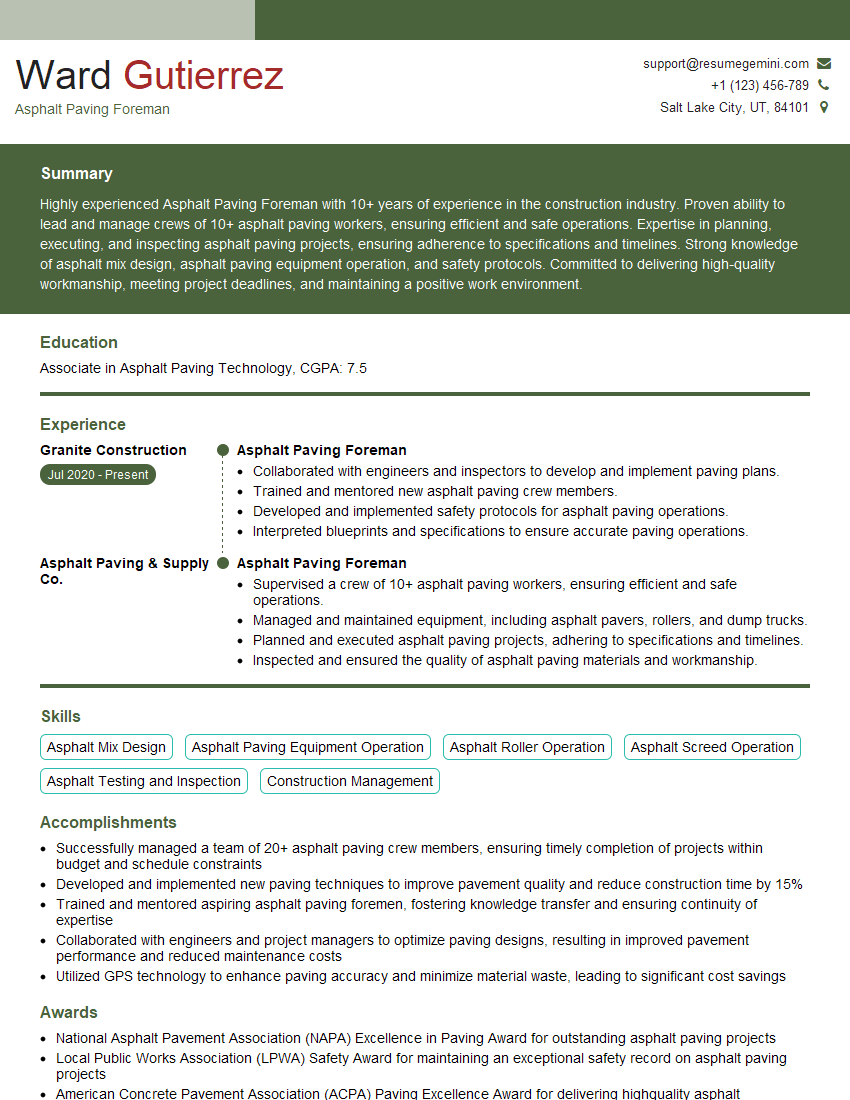
Mastering Asphalt Pavement Repair and Maintenance opens doors to rewarding and stable careers with excellent growth potential. To significantly increase your chances of landing your dream job, focus on creating an ATS-friendly resume that highlights your skills and experience effectively. ResumeGemini is a trusted resource to help you build a professional and impactful resume. We provide examples of resumes tailored to Asphalt Pavement Repair and Maintenance to guide you. Invest time in crafting a strong resume – it’s your first impression to potential employers.



Explore more articles
Users Rating of Our Blogs
Share Your Experience
We value your feedback! Please rate our content and share your thoughts (optional).
What Readers Say About Our Blog
Amazing blog
Interesting Article, I liked the depth of knowledge you’ve shared.
Helpful, thanks for sharing.