The thought of an interview can be nerve-wracking, but the right preparation can make all the difference. Explore this comprehensive guide to Drug Analysis interview questions and gain the confidence you need to showcase your abilities and secure the role.
Questions Asked in Drug Analysis Interview
Q 1. Explain the principles of High-Performance Liquid Chromatography (HPLC).
High-Performance Liquid Chromatography (HPLC) is a powerful analytical technique used to separate, identify, and quantify components in a mixture. Think of it like a sophisticated race track for molecules. The principle relies on the differential partitioning of analyte molecules between a mobile phase (a liquid solvent) and a stationary phase (a solid material packed in a column).
The mobile phase carries the sample through the column. Different molecules interact differently with the stationary phase. Molecules with stronger interactions with the stationary phase will travel slower through the column, while those with weaker interactions will travel faster. This results in the separation of the components based on their different affinities for the stationary and mobile phases. Different column chemistries (e.g., reversed-phase, normal-phase, ion-exchange) allow for separation based on various properties of the analytes, like polarity, charge, or size.
For instance, in drug analysis, HPLC can separate the active pharmaceutical ingredient (API) from its impurities or metabolites. The separated components are then detected using a suitable detector, which provides a chromatogram showing the retention time (time taken for a component to elute) and peak area (proportional to the concentration) of each component.
Q 2. Describe the different types of mass spectrometry detectors used in drug analysis.
Mass spectrometry (MS) detectors are crucial for identifying and quantifying the separated components in HPLC and Gas Chromatography (GC). Several types exist, each with its strengths and weaknesses:
- Quadrupole MS: This is a common and relatively inexpensive type. It uses oscillating electric fields to filter ions based on their mass-to-charge ratio (m/z). It’s versatile and provides good sensitivity for many applications.
- Time-of-Flight (TOF) MS: This type measures the time it takes for ions to travel a known distance under an electric field. It’s known for its high mass accuracy and resolution, useful for identifying unknowns and resolving complex mixtures.
- Triple Quadrupole MS (QQQ): This sophisticated system contains three quadrupoles; the first two select specific precursor ions, and the third analyzes the resulting fragment ions. It allows for targeted analysis (selected reaction monitoring or SRM) which significantly enhances sensitivity and selectivity, making it ideal for quantifying specific drugs in complex matrices.
- Ion Trap MS: This type traps ions in an electric or magnetic field, allowing for multiple stages of fragmentation and analysis (MSn). This is valuable for structural elucidation of unknown compounds.
The choice of MS detector depends on the specific analytical needs of the drug analysis. For example, QQQ is favored for quantitative analysis due to its high sensitivity and selectivity, whereas TOF might be preferred for the identification of unknown metabolites.
Q 3. What are the key differences between GC-MS and LC-MS?
Both GC-MS and LC-MS are powerful hyphenated techniques combining separation (GC or LC) with mass spectrometry detection. However, they differ significantly in their application and capabilities:
- GC-MS: Suitable for volatile and thermally stable compounds. The separation occurs in a gas chromatograph using a heated column. It excels in analyzing small, non-polar molecules. Sample preparation often involves derivatization to enhance volatility.
- LC-MS: More versatile and handles a wider range of compounds, including non-volatile, thermally labile, and polar molecules. The separation happens in a liquid chromatograph. It’s the preferred method for many drugs and metabolites.
In short: Choose GC-MS if your analytes are volatile and thermally stable; choose LC-MS for more diverse compounds, particularly polar or non-volatile ones. For example, GC-MS might be used to analyze volatile organic compounds (VOCs) in a forensic toxicology setting, while LC-MS would be ideal for analyzing complex pharmaceutical formulations.
Q 4. How do you validate an analytical method for drug analysis?
Method validation is crucial to ensure the reliability and accuracy of drug analysis. It’s a systematic process to demonstrate that an analytical method is suitable for its intended purpose. This involves several parameters:
- Specificity/Selectivity: The ability to accurately measure the analyte in the presence of potential interferents (e.g., matrix components, other drugs).
- Linearity: A linear relationship between analyte concentration and signal response over a specified range.
- Range: The concentration interval over which the method provides acceptable accuracy and precision.
- Accuracy: The closeness of measured values to the true value.
- Precision: The reproducibility of measurements.
- Limit of Detection (LOD): The lowest concentration that can be reliably detected.
- Limit of Quantification (LOQ): The lowest concentration that can be reliably quantified.
- Robustness: The method’s ability to remain unaffected by small variations in parameters (e.g., temperature, pH).
Validation typically involves analyzing a series of samples with known concentrations and assessing the method’s performance according to the parameters listed above. Comprehensive documentation is essential for regulatory compliance.
Q 5. Explain the concept of linearity, range, and accuracy in analytical method validation.
These three parameters are fundamental to analytical method validation:
- Linearity: Describes the relationship between the analyte concentration and the instrument response (e.g., peak area). Ideally, this relationship is linear within a specified range, meaning a straight line can be fitted to the calibration curve. A good linear relationship ensures accurate quantification.
- Range: The concentration interval over which the method demonstrates acceptable linearity, accuracy, and precision. It should encompass the expected concentrations of the analyte in the samples being analyzed.
- Accuracy: The closeness of the measured value to the true value. It reflects the trueness of the method. We assess accuracy through recovery experiments, comparing the amount of analyte recovered to the amount initially added.
Imagine shooting arrows at a target. Linearity is like the consistent grouping of your arrows (all in a roughly straight line). Range is the area around the bullseye where you consistently hit. Accuracy is how close your arrows are clustered around the bullseye itself. All three are essential for ensuring reliable and accurate results.
Q 6. What are the common matrix effects encountered in drug analysis and how are they addressed?
Matrix effects are interferences caused by components in the sample matrix (e.g., biological fluids, pharmaceutical formulations) that affect the ionization or detection of the analyte. These effects can lead to inaccurate quantitation.
- Ion suppression/enhancement: Co-eluting matrix components can compete for charge in the ionization source of a mass spectrometer, leading to reduced (suppression) or increased (enhancement) signal intensity of the analyte.
- Chemical interference: Matrix components can react with the analyte, altering its properties and affecting its detection.
Addressing matrix effects is critical for accurate results. Strategies include:
- Sample preparation techniques: Techniques like solid-phase extraction (SPE) or liquid-liquid extraction (LLE) can remove or reduce the interfering components. Proper sample cleanup steps minimize matrix effects.
- Isotope dilution: Adding a stable isotope-labeled internal standard compensates for matrix effects by providing a reference signal unaffected by the matrix.
- Calibration strategies: Matrix-matched calibration standards (prepared in a matrix similar to the samples) help correct for matrix effects.
For example, in blood drug analysis, proteins and other components in plasma can significantly suppress the ionization of the drug molecule, leading to underestimation of its concentration. Using a matrix-matched calibration curve or SPE can improve accuracy.
Q 7. Describe your experience with sample preparation techniques for drug analysis.
My experience encompasses a wide range of sample preparation techniques, crucial for obtaining clean and representative extracts for drug analysis. The choice of technique depends on the matrix, analyte properties, and required sensitivity. I have extensive hands-on experience with:
- Liquid-liquid extraction (LLE): A classic method where the analyte is partitioned between two immiscible solvents. It’s relatively simple but can be time-consuming and less efficient than other techniques.
- Solid-phase extraction (SPE): A powerful technique where the analyte is selectively adsorbed onto a solid phase and then eluted. SPE offers better cleanup and higher recovery than LLE, making it widely used for complex matrices like biological fluids.
- Protein precipitation: A simple method to remove proteins from biological samples, often used as a preliminary step before other extraction methods.
- Solid-phase microextraction (SPME): A miniaturized technique where the analyte is adsorbed onto a fiber coated with a specific stationary phase. It’s useful for direct extraction from various samples and requires minimal solvent use.
I’m also proficient in optimizing extraction conditions, such as selecting appropriate solvents, pH, and sorbents, to maximize analyte recovery and minimize matrix effects. For instance, I successfully optimized an SPE method for the extraction of a highly polar drug from plasma, improving its sensitivity and reducing detection limits by 2-fold compared to traditional LLE.
Q 8. How do you ensure data integrity in drug analysis?
Data integrity in drug analysis is paramount to ensure the reliability and validity of results. It’s all about maintaining the accuracy and completeness of data throughout the entire analytical process, from sample collection to reporting. We achieve this through a multi-pronged approach.
Chain of Custody: Meticulous documentation of every step, including sample handling, storage conditions, and analysis performed. This ensures the sample’s integrity is maintained and prevents tampering or misidentification.
Calibration and Validation: Regular calibration of instruments and validation of methods are essential. This ensures that our equipment is functioning correctly and our analytical methods are accurate, precise, and reliable. We utilize standard reference materials to check for accuracy.
Standard Operating Procedures (SOPs): Detailed SOPs guide every aspect of the analysis, promoting consistency and reproducibility. Deviation from SOPs must be documented and justified.
Electronic Data Management Systems (EDMS): Using EDMS helps to maintain an auditable trail, preventing data manipulation and ensuring data security. Electronic signatures and access controls enhance integrity.
Quality Control (QC): Regular QC checks, such as analyzing control samples alongside experimental samples, help identify and correct any systematic errors or biases in the analytical process.
For example, imagine a scenario where a sample was mishandled, leading to degradation. A robust chain of custody and proper storage conditions would immediately reveal this. Similarly, using validated methods and performing regular QC checks helps us detect and account for any instrumental drift or errors, providing trustworthy results.
Q 9. Explain the principles of Good Laboratory Practices (GLP).
Good Laboratory Practices (GLP) are a set of principles that provide a framework for conducting non-clinical laboratory studies that generate data for regulatory submissions. Think of it as a guide for performing reliable and reproducible experiments. The core principles revolve around:
Personnel Qualification: Scientists must be properly trained and qualified to perform their assigned tasks.
Facilities and Equipment: Laboratories must be suitably equipped and maintained to conduct the analyses. This includes appropriate temperature control, storage conditions, and instrument maintenance.
Equipment Calibration and Validation: All equipment must be calibrated and validated to ensure accuracy and reliability.
Test System Validation: The analytical method needs to be rigorously validated to prove its suitability for the intended purpose. This includes evaluating parameters such as accuracy, precision, specificity, linearity, and limit of detection.
Standard Operating Procedures (SOPs): Detailed written SOPs should be followed meticulously to ensure consistent and reproducible results.
Quality Control: Implementing a robust QC program which includes appropriate samples, procedures, and documentation to maintain data integrity.
Record Keeping: Comprehensive, accurate, and readily retrievable records must be maintained throughout the study. This documentation ensures traceability and accountability.
GLP adherence is crucial as it ensures that the data generated is reliable and trustworthy, contributing to the safety assessment of pharmaceutical products and enabling regulatory authorities to have confidence in the results.
Q 10. Explain the principles of Good Manufacturing Practices (GMP).
Good Manufacturing Practices (GMP) are regulations that govern the manufacturing processes of pharmaceutical products to ensure quality, safety, and efficacy. Unlike GLP, which focuses on the testing phase, GMP focuses on the production phase. Key aspects of GMP include:
Quality Management System: A comprehensive system encompassing all aspects of manufacturing, ensuring consistent adherence to quality standards.
Personnel Training: All personnel involved in manufacturing must receive adequate training on GMP principles and relevant procedures.
Facility Design and Maintenance: Manufacturing facilities must be designed and maintained to prevent contamination and ensure product quality. This involves aspects such as hygiene, cleaning, and sanitation.
Equipment Qualification and Maintenance: Manufacturing equipment must be properly qualified and regularly maintained to ensure its proper operation and prevent product defects.
Raw Material Control: Rigorous control of incoming raw materials, including their identification, testing, and storage, to ensure they meet quality standards.
Process Validation: Ensuring manufacturing processes consistently produce high-quality products that meet predetermined specifications.
Documentation and Record Keeping: Maintaining detailed records of all manufacturing activities to enable traceability and accountability.
Product Release Testing: Thorough testing of finished products before release to ensure they meet quality standards and are safe for use.
Non-compliance with GMP can lead to product recalls, regulatory actions, and serious health consequences. For instance, contamination during the manufacturing process could compromise product quality and pose a significant risk to patients.
Q 11. What are the regulatory requirements for drug analysis in your region?
Regulatory requirements for drug analysis vary depending on the specific region. However, globally, regulatory bodies like the FDA (United States), EMA (Europe), and PMDA (Japan) set the standards. These requirements generally cover aspects such as:
Method Validation: Rigorous validation of analytical methods to ensure accuracy, precision, specificity, and robustness. This often involves demonstrating compliance with regulatory guidelines like ICH Q2(R1).
Quality Control: Implementing a comprehensive QC program to ensure data quality and reliability. This includes using reference standards, blanks, and control samples.
Good Laboratory Practices (GLP): Adherence to GLP principles for non-clinical studies, particularly for impurity profiling and stability studies.
Good Manufacturing Practices (GMP): Compliance with GMP for the manufacturing of reference standards and reagents used in drug analysis.
Data Integrity: Maintaining the integrity of all data generated throughout the analytical process. This involves detailed record keeping, electronic data management, and appropriate audit trails.
Reporting: Submitting comprehensive and well-documented reports that clearly present the analytical findings and support conclusions.
Specific requirements can differ based on the type of drug, its intended use, and the phase of drug development. For instance, requirements for a new drug application (NDA) are much more stringent than for a generic drug application.
Q 12. How do you identify and quantify impurities in a drug sample?
Identifying and quantifying impurities in a drug sample is crucial for ensuring drug safety and efficacy. This is typically achieved using a combination of techniques, primarily chromatography coupled with mass spectrometry.
Chromatography (e.g., HPLC, GC): Separates the drug substance from its impurities based on their physical and chemical properties. This allows for individual identification and quantification.
Mass Spectrometry (MS): Identifies and quantifies the separated compounds based on their mass-to-charge ratio. This provides structural information about the impurities, aiding in their identification.
Steps involved:
Sample Preparation: Dissolving the drug sample in a suitable solvent.
Chromatographic Separation: Separating the drug and its impurities using a suitable chromatographic column (e.g., C18 for HPLC).
Mass Spectrometric Detection: Detecting and identifying each separated component using MS.
Data Analysis: Quantifying the impurities using appropriate calibration curves and reporting the results.
For example, if we detect an unknown peak during HPLC analysis, MS helps identify its structure based on its fragmentation pattern and accurate mass, allowing us to determine its chemical nature and potential toxicity. We use a validated method to ensure the reliability of the quantification.
Q 13. Describe your experience with different types of chromatographic columns.
I have extensive experience with various chromatographic columns, each tailored for specific applications. The choice of column depends heavily on the properties of the analyte and the matrix.
Reversed-Phase HPLC Columns (C18, C8): These are the workhorses of HPLC, commonly used for separating non-polar compounds. The stationary phase is non-polar (e.g., octadecylsilyl silica for C18) and the mobile phase is polar (e.g., water-acetonitrile mixture). I’ve used these extensively for analyzing drug substances and impurities.
Normal-Phase HPLC Columns (silica): Used for separating polar compounds. The stationary phase is polar (silica) and the mobile phase is non-polar (e.g., hexane). This is less common for drug analysis but can be useful for certain applications.
Ion-Exchange Columns: Used to separate charged compounds based on their ionic interactions with the stationary phase. These columns are used less frequently in routine drug analysis but are important for separating ionized analytes.
Size-Exclusion Columns: These separate compounds based on their molecular size. They are useful for separating large molecules like proteins, but their use in drug analysis is limited.
Chiral Columns: Crucial for separating enantiomers (mirror-image isomers), which is essential in drug development as different enantiomers may have different pharmacological activities or toxicities. I have experience working with various chiral stationary phases including cyclodextrin and polysaccharide-based columns.
The selection of the appropriate column is crucial for achieving optimal separation and accurate quantification. For instance, a C18 column might be ideal for a relatively non-polar drug, while a chiral column is necessary when analyzing a chiral drug substance. Column selection is also impacted by factors like the sample matrix and the desired resolution.
Q 14. Explain the principles of mass spectrometry fragmentation.
Mass spectrometry fragmentation is a process where a molecule is broken down into smaller fragments by collisions with energetic electrons or other ions. This fragmentation pattern is unique to each molecule and acts as a “fingerprint” for identification. In MS, the analyte ions are bombarded with energy (usually in a collision cell), causing them to break apart into smaller, charged fragments.
Principles:
Ionization: The analyte molecules are first ionized, typically by electrospray ionization (ESI) or atmospheric pressure chemical ionization (APCI). This creates charged ions that can be manipulated by electric and magnetic fields.
Fragmentation: The ions are then subjected to fragmentation, typically by collision-induced dissociation (CID). This involves colliding the ions with an inert gas (e.g., argon) at high energy. The collision causes the molecule to break apart into smaller, characteristic fragments.
Mass Analysis: The mass-to-charge ratio (m/z) of the resulting ions (both parent and fragments) is measured by the mass analyzer. This data is used to create a mass spectrum.
Interpretation: The mass spectrum shows the abundance of each ion at a specific m/z value. This spectrum is then interpreted to determine the structure of the analyte and its fragments.
Fragmentation pathways: The fragmentation process is not random and depends on the structure of the molecule and the energy of the collision. Certain bonds are more prone to breakage than others. For example, the cleavage of bonds adjacent to heteroatoms (e.g., N, O) is a common fragmentation pathway. The interpretation of fragmentation patterns requires a strong understanding of organic chemistry and mass spectrometry principles.
The fragmentation patterns obtained from MS are used for both qualitative (identification) and quantitative (quantification) analysis of drug compounds and impurities. The unique fragmentation patterns serve as fingerprints, enabling the confirmation of drug identity and the identification of unknown impurities.
Q 15. How do you troubleshoot common problems encountered in HPLC or GC-MS?
Troubleshooting HPLC and GC-MS is a crucial skill in drug analysis. It involves systematically investigating deviations from expected results. Problems can range from instrument malfunctions to sample preparation issues. For HPLC, common issues include poor peak shape (tailing, fronting), low sensitivity, and retention time shifts. In GC-MS, problems often involve poor chromatographic resolution, low mass spectral signal, and instrument instability.
HPLC Troubleshooting Steps:
- Check the system’s integrity: Examine the mobile phase for air bubbles, ensure proper column temperature, verify the pump pressure, and inspect the detector settings.
- Inspect the column: Check for column blockage or degradation. Consider column equilibration or replacement.
- Analyze the sample preparation: Verify correct sample dilution and filtration to eliminate particulate matter.
- Evaluate peak shape issues: Tailing peaks might indicate column overloading or poor peak symmetry, addressed by reducing sample injection volume or altering mobile phase composition. Fronting peaks often stem from column issues or excessive mobile phase strength.
- Examine the detector: Check for baseline noise, drift, or detector saturation. Calibration may be required.
GC-MS Troubleshooting Steps:
- Check the carrier gas flow and pressure: Ensure proper gas flow and pressure for optimal chromatographic separation.
- Inspect the injector and column: Look for contamination or column degradation. Proper liner maintenance and injector septum are essential.
- Evaluate the mass spectrometer: Verify the vacuum system, detector settings, and mass calibration. Instrument tuning and maintenance are critical.
- Assess the sample preparation: Ensuring proper derivatization (if needed) and eliminating interfering compounds in the sample matrix is crucial.
- Investigate the mass spectra: Check for fragmentation patterns and library matching to confirm analyte identity.
Remember to keep detailed records of each step and observation for efficient troubleshooting and future reference. A methodical approach, combined with a solid understanding of the instrument’s operating principles, is key to successfully resolving these issues.
Career Expert Tips:
- Ace those interviews! Prepare effectively by reviewing the Top 50 Most Common Interview Questions on ResumeGemini.
- Navigate your job search with confidence! Explore a wide range of Career Tips on ResumeGemini. Learn about common challenges and recommendations to overcome them.
- Craft the perfect resume! Master the Art of Resume Writing with ResumeGemini’s guide. Showcase your unique qualifications and achievements effectively.
- Don’t miss out on holiday savings! Build your dream resume with ResumeGemini’s ATS optimized templates.
Q 16. What are the different types of standards used in drug analysis?
Drug analysis relies on various types of standards for accurate quantification and qualification. These include:
- Primary Reference Standards (PRS): These are highly purified substances with precisely known purity, certified by a reputable organization (e.g., USP). They serve as the ultimate reference point for calibration and are used to prepare secondary and working standards.
- Secondary Reference Standards (SRS): Prepared from a PRS, the purity of these standards is established by comparison to a PRS. They are useful for routine analysis.
- Working Standards: These are prepared from PRS or SRS by serial dilution to create a range of concentrations used in day-to-day analysis. They are used in analytical methods to quantify drug substances.
- Internal Standards: A known amount of a compound, structurally similar to the analyte but not naturally present in the sample, is added to both the sample and the standard solutions. It helps correct for variations in sample recovery and instrument response, improving accuracy.
- External Standards: A series of solutions with known analyte concentrations are separately analyzed to create a calibration curve. Simpler to prepare than using an internal standard but more susceptible to errors.
The choice of standard depends on the specific analytical method, regulatory requirements, and desired level of accuracy. For example, in regulatory testing for pharmaceutical products, a PRS is usually required.
Q 17. How do you prepare standard solutions for drug analysis?
Preparing accurate standard solutions is fundamental to reliable drug analysis. The process involves meticulous steps to ensure precision and accuracy:
- Weighing: Accurately weigh the required amount of the standard substance using an analytical balance. Consider the hygroscopic nature of the compound and use appropriate weighing techniques to minimize errors.
- Solvent Selection: Choose a solvent that completely dissolves the standard without affecting its stability or integrity. The solvent should be of high purity (e.g., HPLC grade).
- Dissolution: Gently dissolve the weighed standard in the chosen solvent. Sonication or gentle heating might be necessary for complete dissolution, but care should be taken to prevent degradation. Use a volumetric flask to prepare solutions with precise volumes.
- Dilution: Prepare serial dilutions using volumetric flasks and pipettes to create a range of concentrations. Always use appropriate volumetric glassware and follow good pipetting techniques.
- Quality Control: After preparation, store the solutions in appropriate containers under controlled conditions (e.g., refrigeration) to maintain stability. Documentation is crucial, recording details such as date, concentration, and storage conditions.
Example: To prepare a 100 ppm stock solution of a drug with a molecular weight of 300 g/mol, you would weigh 0.03g of the drug (100 ppm = 100 μg/mL = 0.1 mg/mL = 0.0001 g/mL, 0.0001g/mL * 100 mL = 0.01 g, considering the MW, 0.01 g / (300 g/mol) * (1 mol/1000 mmol) * (1000 mmol/ 1 L) * (1L/1000mL) = 0.03 g) and dissolve it in 100 mL of solvent. Further dilutions can then be made from this stock solution.
Q 18. How do you calculate the concentration of a drug in a sample?
Calculating the concentration of a drug in a sample involves comparing its response (e.g., peak area in HPLC or GC-MS) to that of a standard. The most common approach is using a calibration curve.
Calibration Curve Method:
- Prepare a series of standard solutions with known concentrations.
- Analyze the standard solutions using the selected analytical method (e.g., HPLC or GC-MS) and record the peak area or other relevant response for each concentration.
- Plot the response versus concentration. This will generate a calibration curve (often linear but can be quadratic depending on the analyte and the concentration range).
- Analyze the sample using the same method, recording the response of the drug.
- Determine the concentration of the drug in the sample by interpolating the sample response on the calibration curve.
The equation of the calibration curve (often linear: y = mx + c, where y is the response, x is the concentration, m is the slope, and c is the y-intercept) can be used to calculate the concentration directly. For example, if the calibration curve is y = 1000x + 10, and the sample response (y) is 2010, then the concentration (x) is (2010 - 10) / 1000 = 2 ppm.
Internal Standard Method: This method involves using an internal standard and calculating the concentration using the ratio of analyte peak area to internal standard peak area. The ratio from the sample is then compared to the ratio from standards to determine concentration. This method is more robust against variations in injection volume and instrument sensitivity.
Q 19. Explain the concept of limit of detection (LOD) and limit of quantification (LOQ).
The limit of detection (LOD) and limit of quantification (LOQ) are crucial parameters that define the sensitivity of an analytical method. They represent the lowest amount of analyte that can be reliably detected and quantified, respectively.
Limit of Detection (LOD): The LOD represents the lowest concentration of an analyte that can be reliably distinguished from background noise. It’s usually expressed as the concentration that produces a signal-to-noise ratio (SNR) of 3:1 or greater. A lower LOD indicates higher sensitivity.
Limit of Quantification (LOQ): The LOQ represents the lowest concentration of an analyte that can be reliably quantified with acceptable accuracy and precision. It’s usually defined as an SNR of 10:1. The LOQ indicates the lowest amount of analyte that can be measured with acceptable error. The LOQ is always higher than the LOD.
Practical Significance: The LOD and LOQ are essential for method validation. They help determine the suitability of a method for a particular application. For instance, if a method has a high LOQ, it might not be suitable for analyzing trace amounts of a drug in a biological sample. These parameters are crucial in determining the efficacy of different drug delivery formulations and systems.
Q 20. How do you handle out-of-specification (OOS) results?
Out-of-specification (OOS) results in drug analysis indicate that a test result falls outside the predefined acceptance criteria. Handling OOS results requires a rigorous investigation to determine the root cause and ensure data integrity. The process typically includes:
- Immediate actions: Isolate the batch, initiate an investigation, and document all findings.
- Review the analysis: Check the raw data, calculations, and instrument performance records. Verify the calibration and the integrity of the analytical method.
- Investigate the sample preparation: Examine the sample collection, handling, and preparation procedures for any potential errors or contamination. Retesting of a sample is essential.
- Re-analyze the sample: Perform a complete re-analysis of the original sample using the same method and additional samples from the same batch if needed. The re-analysis should be conducted by different analysts if possible.
- Investigate the instrument: Inspect the instrument’s performance, checking for calibration, maintenance records, and any potential issues that may have contributed to the OOS result.
- Determine the root cause: Document the entire investigation process. A thorough investigation should identify the cause of the OOS result. Based on this, corrective and preventive actions should be identified.
- Corrective and Preventive Actions (CAPA): Implement corrective actions to resolve immediate problems, and preventive actions to prevent future occurrences. Document the entire process and its findings.
- Report and Documentation: Prepare a comprehensive report that documents the entire investigation, including the root cause analysis, corrective and preventive actions, and conclusions. This documentation is essential for regulatory compliance.
A thorough investigation of OOS results ensures data reliability and patient safety. Ignoring OOS results can have serious consequences.
Q 21. Describe your experience with different software used in drug analysis.
Throughout my career, I’ve extensively used various software packages in drug analysis. My experience encompasses:
- Chromatography Data Systems (CDS): I am proficient in using CDS software from various vendors (e.g., Agilent OpenLab, Waters Empower, Thermo Xcalibur) for data acquisition, processing, and reporting in HPLC and GC-MS analysis. This includes peak integration, calibration curve generation, and report generation which are all essential for accurate data analysis.
- Mass Spectrometry Software: I have experience with software for mass spectral data analysis, including compound identification using spectral libraries (e.g., NIST, Wiley), quantification, and data processing. This is essential for complex mixtures analysis.
- Laboratory Information Management Systems (LIMS): I am familiar with LIMS software for managing samples, tracking analysis results, and ensuring regulatory compliance. This streamlines the workflows and improves organization.
- Statistical Software: I utilize statistical software packages (e.g., GraphPad Prism, R) for data analysis, method validation, and statistical assessment of results. The ability to perform statistical analysis provides an objective overview of data reliability.
My experience extends to the use of specialized software for specific analytical techniques, enabling efficient data processing and reporting, critical in adhering to regulatory guidelines and maintaining data integrity. Proficiency in these software packages is essential for efficient and accurate drug analysis.
Q 22. What are the ethical considerations in drug analysis?
Ethical considerations in drug analysis are paramount, ensuring the integrity of the entire process. This involves maintaining confidentiality of patient data, adhering to strict regulations like GLP (Good Laboratory Practice) and GCP (Good Clinical Practice), and ensuring the unbiased and objective interpretation of results. For instance, a conflict of interest, such as a financial stake in a particular drug’s outcome, must be disclosed and mitigated to avoid biased analysis. Accuracy and precision are crucial; reporting inaccurate results could have serious health consequences, leading to incorrect diagnoses or treatment plans. Another key aspect is data security. Protecting analytical data from unauthorized access, alteration, or destruction is essential to preserve its integrity and avoid potential misuse.
Furthermore, ethical considerations extend to the proper handling and disposal of samples and chemicals. We must follow established protocols for waste management to protect the environment and laboratory personnel. Finally, it’s ethically crucial to acknowledge limitations of the analytical methods used and to clearly communicate any uncertainties or potential biases in the report. Transparency and honesty are vital to maintaining public trust in the scientific process.
Q 23. How do you ensure the quality and reliability of your analytical results?
Ensuring the quality and reliability of analytical results involves a multi-faceted approach. We begin by using validated analytical methods, meaning they’ve been thoroughly tested and proven to be accurate, precise, and specific for the intended purpose. This involves meticulously documenting every step of the method, from sample preparation to data analysis. We also implement stringent quality control procedures, including using certified reference materials and performing regular instrument calibration and maintenance. Regular participation in proficiency testing programs helps us compare our results against those of other laboratories, confirming the accuracy and reliability of our methods.
For example, in analyzing a specific drug in plasma, we would use validated chromatography (HPLC or LC-MS) methods with appropriate internal standards. We’d run quality control samples at different concentration levels alongside the patient samples to monitor the performance of the entire analytical process. Any deviation from predetermined acceptance criteria would prompt an investigation to identify and correct the source of error. This meticulous approach, combined with careful documentation and data management, helps ensure that our results are both accurate and trustworthy.
Q 24. Describe your experience with method development and optimization.
Method development and optimization are crucial aspects of my work. I’ve extensive experience developing and validating methods for various analytical techniques, including HPLC, LC-MS, GC-MS, and spectrophotometry. For example, I recently developed a new HPLC method to analyze a novel drug candidate in preclinical toxicology studies. This involved selecting the appropriate column, mobile phase, and detection method based on the drug’s physicochemical properties. We then carefully optimized the method parameters, such as flow rate, gradient profile, and injection volume, to achieve optimal sensitivity, selectivity, and resolution. The validation process included evaluating parameters like linearity, accuracy, precision, and limit of detection and quantification, all documented in a detailed method validation report.
In another project, I optimized a previously established LC-MS method to improve its sensitivity and throughput. We explored different columns, mobile phases, and ionization techniques. Using design of experiments (DoE), we systematically investigated the impact of each parameter on the method performance. This approach led to a significant improvement in sensitivity, reducing the limit of quantitation by a factor of five. Optimization also included automation where appropriate, improving turnaround time and reducing human error.
Q 25. How do you interpret and report analytical data?
Interpreting and reporting analytical data requires careful attention to detail and a thorough understanding of statistics and analytical chemistry principles. We first assess the quality of the data, looking for any outliers or systematic errors. We then perform statistical analysis, such as calculating means, standard deviations, and confidence intervals, to quantify the uncertainty associated with our measurements. The results are then interpreted in the context of the analytical method’s limitations and the study’s objectives. For instance, a concentration below the limit of quantification is reported as “below the limit of quantification,” not as zero. This is crucial to avoid misleading conclusions.
Reporting involves presenting the results in a clear and concise manner, often using tables and figures to summarize the data. The report must include a detailed description of the analytical methods used, the quality control results, and the statistical analysis performed. Any limitations of the methods or potential sources of error must also be clearly stated. The report should be written in a way that is easily understandable to the intended audience, whether it’s scientists, clinicians, or regulatory agencies. In simpler terms, imagine baking a cake – the recipe is the method, the ingredients are the samples, and the final product analysis is the report.
Q 26. Explain your understanding of different types of drug metabolites.
Drug metabolites are molecules formed when the body processes a drug. They can be categorized in several ways. Phase I metabolism usually involves functionalization reactions, such as oxidation, reduction, or hydrolysis, often mediated by cytochrome P450 enzymes. These reactions introduce or unmask polar functional groups into the parent drug molecule, making it more water-soluble and easier to excrete. Phase II metabolism involves conjugation reactions, where endogenous molecules like glucuronic acid, sulfate, or glutathione are attached to the drug molecule or its phase I metabolites. This further increases water solubility and facilitates excretion.
Examples include the glucuronide conjugates of morphine and acetaminophen, which are major metabolites excreted in the urine. Understanding drug metabolism is crucial for drug development and clinical pharmacology. Knowing the major metabolites helps to assess potential toxicities and predict drug-drug interactions. For example, if a metabolite has significant pharmacological activity, it could contribute to the overall therapeutic or toxic effect of the drug. This metabolic profiling forms an essential part of a drug’s pharmacokinetic and pharmacodynamic characterization.
Q 27. Describe your experience with different types of drug formulations.
My experience encompasses a wide range of drug formulations. This includes tablets, capsules, injectables, creams, ointments, and transdermal patches. Each formulation presents unique analytical challenges. For example, analyzing a tablet requires dissolution studies to determine the drug’s release profile, while analyzing an ointment may involve extraction techniques to separate the drug from the excipients. The analytical method chosen must be appropriate for the specific formulation and matrix. For instance, analyzing a sustained-release tablet might require a different HPLC method than analyzing an immediate-release tablet due to the different drug release kinetics.
Injectables require sterility testing and particulate matter analysis in addition to drug content determination. Transdermal patches present the challenge of quantifying drug permeation across the skin, requiring specialized analytical techniques. The formulation’s physical and chemical properties, along with the regulatory requirements for each type of drug delivery system, influence the analytical approach. Analyzing complex formulations often involves the use of sophisticated techniques like high-performance liquid chromatography coupled with tandem mass spectrometry (HPLC-MS/MS) to separate and identify the drug substance and its potential degradation products within a complex mixture.
Q 28. How would you approach analyzing a novel drug substance?
Analyzing a novel drug substance requires a systematic approach. It begins with a thorough understanding of its physicochemical properties, including its solubility, stability, and potential degradation pathways. Based on this understanding, appropriate analytical methods are selected or developed. The initial phase focuses on identifying and characterizing the drug substance. This may involve techniques like NMR, mass spectrometry, and elemental analysis to determine its structure and purity. Then, methods are developed for its quantification in different matrices like formulations, biological fluids, or environmental samples. This often involves optimizing techniques like HPLC or LC-MS to achieve sufficient sensitivity and selectivity.
Method validation is a critical step, involving assessment of parameters like specificity, linearity, accuracy, precision, limit of detection and quantification, and robustness. Stability-indicating assays are developed to evaluate the drug’s degradation behavior under various conditions (temperature, light, pH). Furthermore, the development of a robust and reliable analytical method for a novel drug substance is usually a collaborative effort, involving synthetic chemists, pharmacologists, and regulatory affairs specialists, and often takes several months to complete.
Key Topics to Learn for Drug Analysis Interview
- Chromatographic Techniques: Understanding principles of HPLC, GC, and GC-MS, including method development, optimization, and troubleshooting. Practical application: analyzing drug metabolites in biological samples.
- Spectroscopic Techniques: Mastering UV-Vis, IR, and Mass Spectrometry for drug identification and quantification. Practical application: confirming the identity of an unknown substance using a combination of techniques.
- Sample Preparation and Extraction: Familiarize yourself with various extraction methods (liquid-liquid, solid-phase) and their applications in different matrices (blood, urine, tissue). Practical application: Optimizing an extraction procedure to maximize recovery and minimize interference.
- Data Analysis and Interpretation: Proficiency in interpreting chromatograms, spectra, and statistical data to draw accurate conclusions. Practical application: Identifying and quantifying multiple drugs in a complex mixture.
- Regulatory Affairs and GLP/GMP: Understanding Good Laboratory Practices (GLP) and Good Manufacturing Practices (GMP) as they apply to drug analysis. Practical application: Ensuring data integrity and compliance with regulatory standards.
- Validation of Analytical Methods: Knowledge of method validation parameters (accuracy, precision, linearity, etc.) and their importance in ensuring reliable results. Practical application: Developing and validating a new analytical method for a specific drug.
- Pharmacokinetics and Pharmacodynamics: A foundational understanding of how drugs are absorbed, distributed, metabolized, and excreted, and how these processes relate to their therapeutic effects. Practical application: Interpreting drug concentration data in relation to clinical outcomes.
Next Steps
Mastering drug analysis opens doors to exciting and impactful careers in pharmaceutical companies, forensic science labs, and regulatory agencies. To maximize your job prospects, invest time in crafting a compelling and ATS-friendly resume. ResumeGemini is a trusted resource that can help you build a professional resume that showcases your skills and experience effectively. Examples of resumes tailored to Drug Analysis are provided to help guide you. Take the next step towards your dream career today!

Laboratory Manager Resume Sample
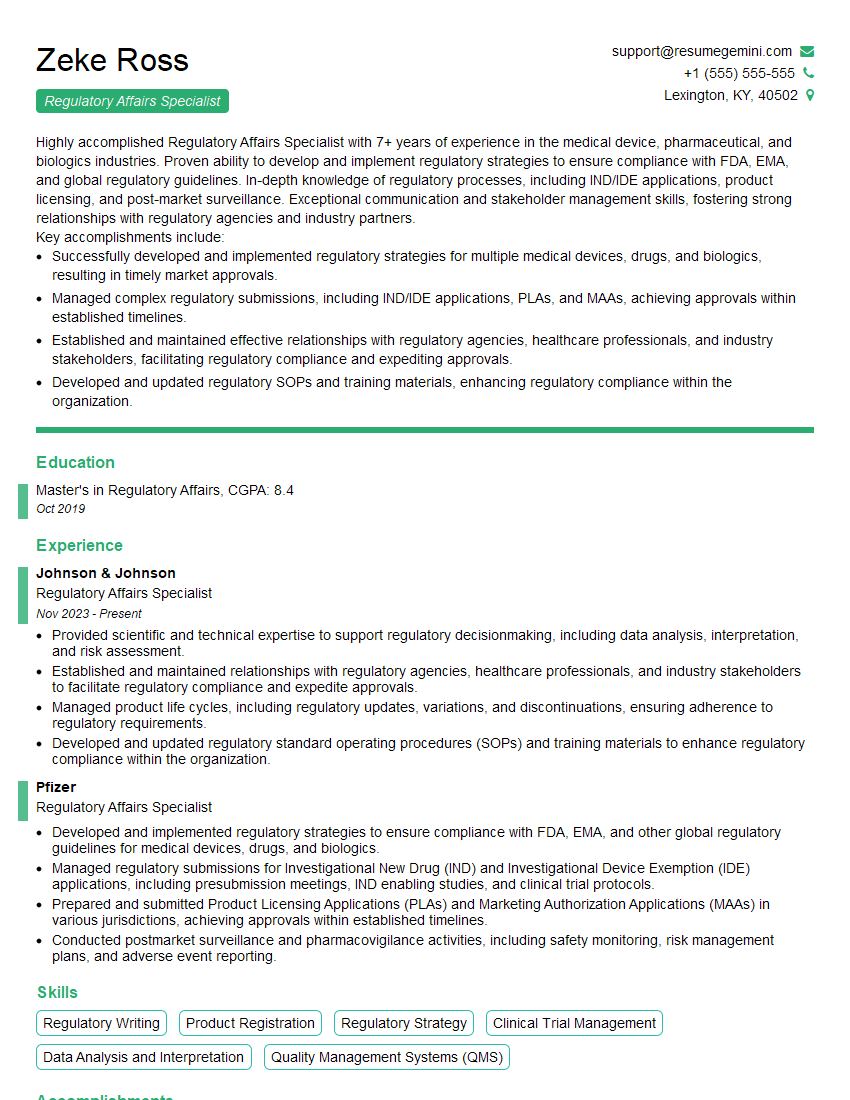
Regulatory Affairs Specialist Resume Sample

Quality Control Analyst Resume Sample

Research Scientist Resume Sample
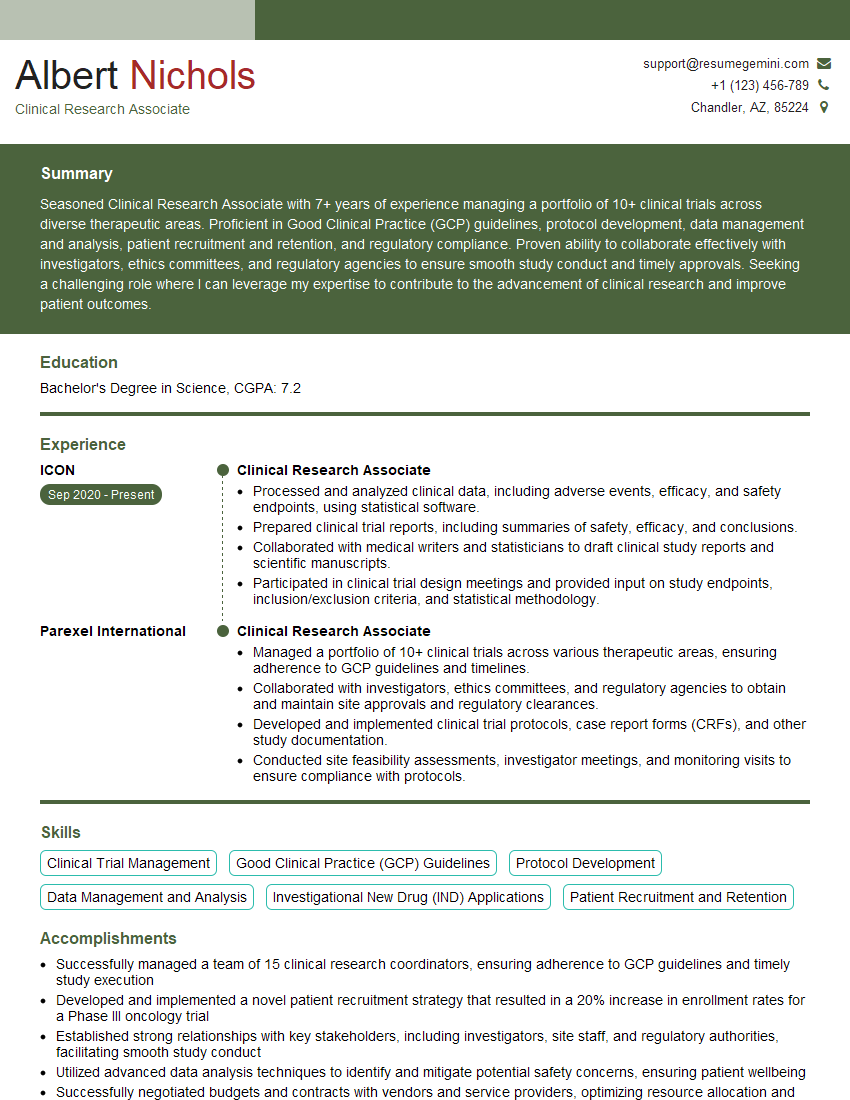
Clinical Research Associate Resume Sample

Validation Specialist Resume Sample

Toxicologist Resume Sample
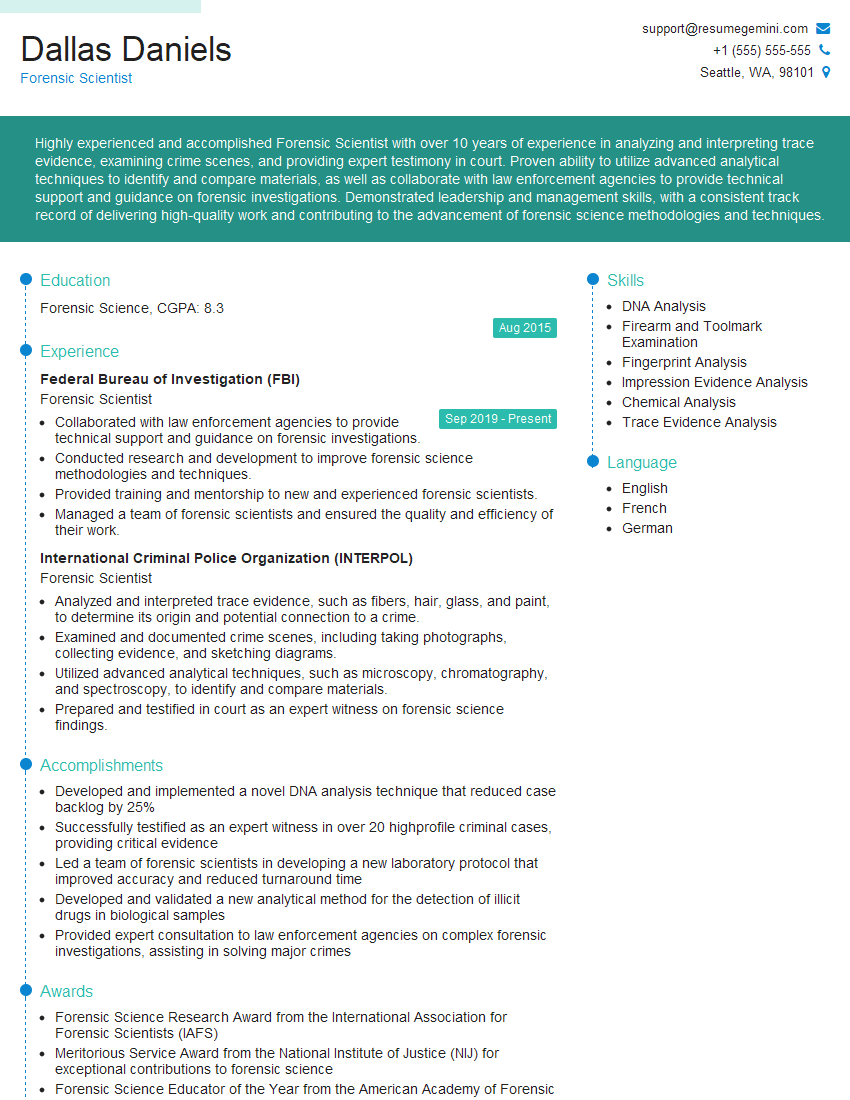
Forensic Scientist Resume Sample

Analytical Chemist Resume Sample
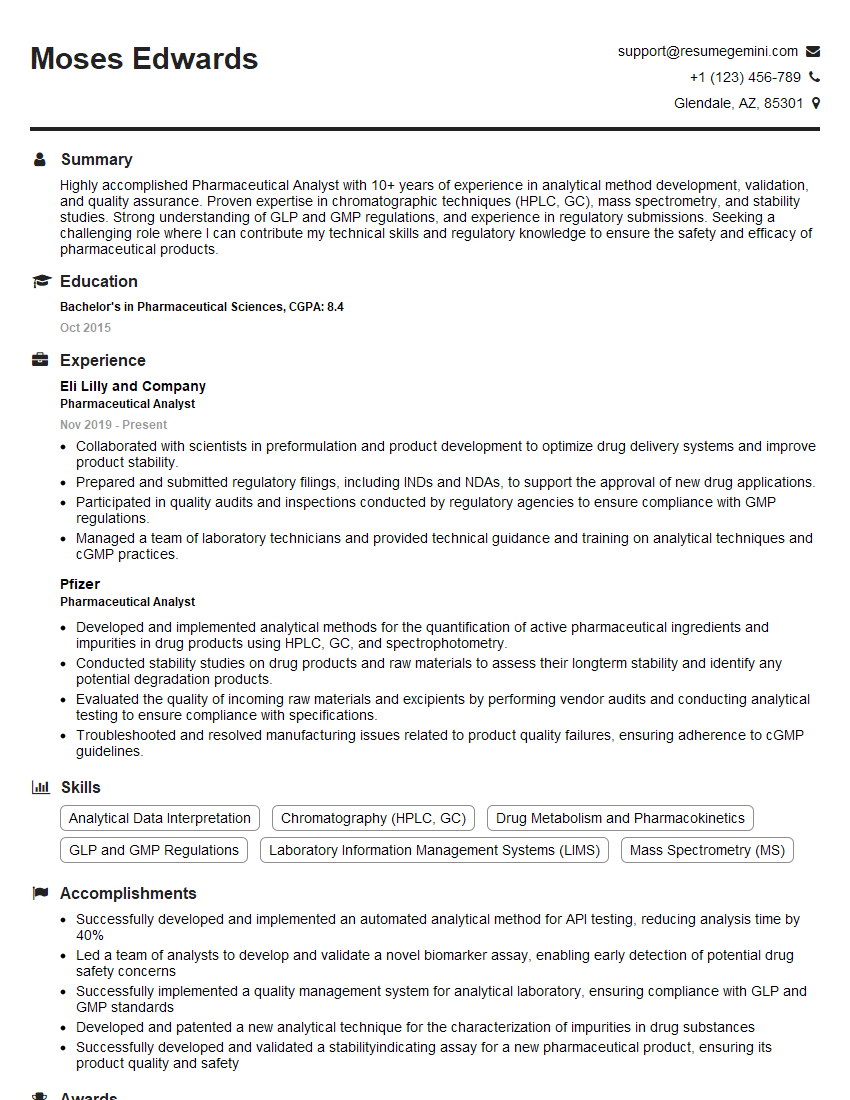
Pharmaceutical Analyst Resume Sample

Principal Scientist Resume Sample
Explore more articles
Users Rating of Our Blogs
Share Your Experience
We value your feedback! Please rate our content and share your thoughts (optional).
What Readers Say About Our Blog
Amazing blog
hello,
Our consultant firm based in the USA and our client are interested in your products.
Could you provide your company brochure and respond from your official email id (if different from the current in use), so i can send you the client’s requirement.
Payment before production.
I await your answer.
Regards,
MrSmith
hello,
Our consultant firm based in the USA and our client are interested in your products.
Could you provide your company brochure and respond from your official email id (if different from the current in use), so i can send you the client’s requirement.
Payment before production.
I await your answer.
Regards,
MrSmith
These apartments are so amazing, posting them online would break the algorithm.
https://bit.ly/Lovely2BedsApartmentHudsonYards
Reach out at BENSON@LONDONFOSTER.COM and let’s get started!
Take a look at this stunning 2-bedroom apartment perfectly situated NYC’s coveted Hudson Yards!
https://bit.ly/Lovely2BedsApartmentHudsonYards
Live Rent Free!
https://bit.ly/LiveRentFREE
Interesting Article, I liked the depth of knowledge you’ve shared.
Helpful, thanks for sharing.
Hi, I represent a social media marketing agency and liked your blog
Hi, I represent an SEO company that specialises in getting you AI citations and higher rankings on Google. I’d like to offer you a 100% free SEO audit for your website. Would you be interested?