Feeling uncertain about what to expect in your upcoming interview? We’ve got you covered! This blog highlights the most important Ability to Understand Technical Drawings and Specifications interview questions and provides actionable advice to help you stand out as the ideal candidate. Let’s pave the way for your success.
Questions Asked in Ability to Understand Technical Drawings and Specifications Interview
Q 1. What are the common types of lines used in technical drawings and their meanings?
Technical drawings utilize various line types to convey specific information. Think of them as a visual language for engineers and designers. Each line type has a distinct meaning and weight, crucial for accurate interpretation.
- Object Lines: These thick, solid lines define the visible outlines of an object. Imagine drawing the silhouette of a car – those are your object lines.
- Hidden Lines: These are thinner, dashed lines indicating features that are not directly visible from the chosen view. Like seeing the internal structure of a car engine through its exterior.
- Center Lines: Thin, alternating long and short dashes representing axes of symmetry or central features. Think of the line running down the middle of a symmetrical part.
- Dimension Lines: Thin lines with arrowheads at both ends, used to indicate measurements. They’re like the rulers on your drawing, showing lengths, widths, and depths.
- Extension Lines: Thin lines extending from the object to the dimension lines, helping to clearly indicate what is being measured. They are like guides for your dimension lines.
- Section Lines (Hatching): Used to indicate the cross-section of a material or the internal structure in a sectional view. Various patterns are used to differentiate different materials.
- Leader Lines: Lines with an arrowhead at one end, used to connect notes or dimensions to specific features on the drawing. They’re like little pointers to highlight important details.
- Cutting Plane Lines: Thick, solid lines showing the imaginary plane used to create a sectional view. Imagine slicing through an object to see its interior.
Q 2. Explain the purpose of a dimension line, extension line, and leader line.
Dimension, extension, and leader lines work together to accurately and clearly communicate measurements and annotations on a technical drawing. They are essential for ensuring the part is manufactured correctly.
- Dimension Lines: These lines indicate the size of a feature (length, width, diameter, etc.). They always have arrowheads at both ends and a dimension value placed neatly above the line. For example, a dimension line with ’25mm’ written above it shows a length of 25 millimeters.
- Extension Lines: These extend from the object to the dimension lines, making it crystal clear which feature the dimension refers to. Think of them as carefully placed guides to the dimension.
- Leader Lines: These lines connect notes or symbols to specific features on the drawing. They provide additional information, such as material specifications or surface finishes. The arrow points to the feature being referenced.
Example: A dimension line would show the length of a bolt, extension lines would extend from the bolt’s ends to the dimension line, and a leader line might point to the bolt’s head and refer to a note specifying the thread type.
Q 3. How do you interpret sectional views in a technical drawing?
Sectional views are like slicing through an object to reveal its internal structure. They are crucial for understanding how components fit together and how the internal features are shaped. Imagine cutting an apple in half – the sectional view shows you the inside.
Interpreting sectional views involves understanding the cutting plane line (which shows where the imaginary cut was made), the direction of the cut, and the use of section lines (hatching) to differentiate materials. The hatching patterns vary depending on the material, making it easy to identify different substances within the object.
For example, a sectional view of a pipe might show the internal diameter and the thickness of the pipe wall. Different hatching patterns might be used to indicate the pipe material and any internal insulation.
Q 4. What is the difference between isometric and orthographic projections?
Isometric and orthographic projections are two different ways to represent a three-dimensional object on a two-dimensional drawing. They each have their strengths and are used in different contexts.
- Orthographic Projection: This uses multiple views (typically top, front, and side) to show the object from different perspectives. Imagine taking photos of a building from the front, top, and side. Each photo is a separate orthographic view. It provides complete and accurate dimensional information.
- Isometric Projection: This shows a three-dimensional view of the object at once. All three axes are at 120-degree angles. It offers a quick visual representation of the object’s shape and features but can sometimes be less accurate dimensionally.
In essence, orthographic views are like building plans providing precise details, whereas isometric views are like a quick sketch providing a general shape overview.
Q 5. Describe how to identify different materials on a technical drawing.
Identifying materials on a technical drawing usually involves a combination of methods. Material specifications are often found in a parts list, in material callouts, or through the use of standard symbols and hatching.
- Material Callouts: These are annotations directly on the drawing that specify the material for each part. For instance, ‘Steel AISI 1018’ would clearly identify the material.
- Parts Lists: These tables list each part in the assembly, along with its material specification. Think of it like an ingredient list for a complex object.
- Section Lines (Hatching): Different patterns are typically used to represent different materials in sectional views. A key or legend on the drawing will explain which pattern represents which material. This is like a color-coded map for the internal materials.
- Material Symbols: Standardized symbols might sometimes be employed to represent common materials.
Q 6. Explain the importance of tolerances in technical drawings.
Tolerances in technical drawings specify the permissible variations in dimensions. They’re crucial because it’s impossible to manufacture parts with perfect precision. Think of it like allowing a small margin of error that won’t affect the overall functionality.
Tolerances define acceptable ranges of deviation from the specified nominal dimensions. For example, a dimension of ’10mm ± 0.1mm’ means that the actual dimension can be anywhere between 9.9mm and 10.1mm without affecting the design’s quality or functionality. Without tolerances, manufacturing would be extremely difficult and costly.
Properly specified tolerances are essential for ensuring the correct fit and function of assembled components. Incorrect tolerances can lead to parts that are too loose, too tight, or otherwise unusable.
Q 7. How do you interpret a scale on a technical drawing?
The scale on a technical drawing indicates the ratio between the dimensions on the drawing and the actual dimensions of the object. It’s like a map’s scale indicating the relationship between the map’s distances and the real-world distances.
A scale of 1:10 means that 1 unit on the drawing represents 10 units on the actual object. For example, if a line on the drawing is 5 cm long and the scale is 1:10, the actual length is 50 cm (5 cm * 10). Different scales are used depending on the object’s size and the level of detail required.
Understanding the scale is critical for accurately interpreting the dimensions and overall size of the object represented in the drawing. Otherwise, you could easily misinterpret the dimensions.
Q 8. What are the common symbols used to represent pipes, valves, and fittings in a piping and instrumentation diagram (P&ID)?
Piping and Instrumentation Diagrams (P&IDs) use a standardized set of symbols to represent various components. Think of them as a universal language for process engineers. These symbols ensure clarity and consistency across different projects and companies. For pipes, you’ll commonly see different line thicknesses to represent pipe sizes and materials. Valves are represented by specific shapes indicating their function – for example, a circle for a globe valve, a diamond for a check valve, and a square for a gate valve. Fittings, such as elbows, tees, and reducers, also have their own unique symbols indicating their geometry and purpose. Many standards exist (like ISA standards), but the core symbols remain relatively consistent. For example, a simple straight line usually represents a pipe, while a circle with a line through it typically indicates a valve.
- Pipe: A simple line, with thickness indicating size and possibly dashed lines for instrument lines.
- Globe Valve: A circle.
- Gate Valve: A square.
- Check Valve: A diamond.
- Elbow: A curved line.
- Tee: A ‘T’ shaped symbol.
Understanding these symbols is crucial for interpreting P&IDs and understanding the flow of materials within a system.
Q 9. How would you interpret a schematic diagram?
Interpreting a schematic diagram involves systematically breaking down the visual representation into its constituent parts and understanding their relationships. Think of it like reading a map – you need to understand the symbols and how they connect to grasp the big picture. First, I identify the main components and their functions. Then, I trace the flow or connection between these components. I look for labels and annotations to clarify the purpose of different elements. Next, I analyze the overall structure and look for patterns or logical groupings. Finally, I check for any inconsistencies or missing information. For example, if I’m reviewing a schematic for an electrical circuit, I would first identify the power source, components like resistors and capacitors, and then trace the flow of electricity to understand the circuit’s functionality. Any missing connections or incorrect component placements will be immediately obvious.
The process often involves cross-referencing with other documents, like parts lists or specifications, to get a complete picture. It’s not just about visualizing the parts; it’s understanding how they work together as a whole.
Q 10. Explain your process for identifying potential design flaws or inconsistencies in a technical drawing.
My process for identifying potential design flaws or inconsistencies in a technical drawing involves a methodical approach. I start with a thorough visual inspection, checking for dimensioning errors, missing information, or unclear notations. I then verify the drawing against relevant standards and specifications. Next, I cross-reference the drawing with other related documents, ensuring consistency. I pay special attention to critical areas like interfaces and connections where problems frequently arise. I use dimensional analysis to check for geometric conflicts and to verify clearances. Finally, I create a checklist to help me systematically evaluate specific aspects of the design and document any discrepancies or potential issues found.
For example, during a review of a mechanical assembly drawing, I might notice a clash between two components due to an incorrect dimension or a lack of sufficient clearance. Such inconsistencies would necessitate revisions to maintain proper functioning of the assembly. This systematic process helps ensure the design’s integrity and manufacturability.
Q 11. How do you use technical drawings to determine the quantity of materials needed for a project?
Technical drawings are essential for determining material quantities. The process involves carefully examining the drawing to extract all the necessary information. I would start by identifying all the components and their materials. Next, I’d extract the dimensions required to calculate the volume or area of each component. Then, I’d use this information, along with material densities or unit weights, to calculate the total quantity required for each material. I would account for waste factors in the calculations to ensure there’s enough material for the project. For complex assemblies, I might use a Bill of Materials (BOM) to organize and summarize the information, creating a clear and manageable list of everything needed, including quantities.
For example, If the drawing shows a steel plate with specific dimensions, I can easily calculate its area and then its weight based on the specified steel grade’s density. Similarly, for pipework, I can calculate the total length needed and multiply it by the pipe’s unit weight to determine the total material required.
Q 12. How do you interpret assembly drawings?
Assembly drawings show how individual parts fit together to form a complete assembly. Interpreting them requires understanding the relationship between each part and the overall functionality. I start by identifying the main components and sub-assemblies. Then, I trace the assembly sequence, step by step, following the sequence of operations that were used to create the finished product. I’ll look for exploded views to see how parts are arranged and how they interrelate. Next, I look at parts lists and callouts to identify specific components and their properties. Finally, I check for tolerances and surface finish requirements to ensure proper assembly and functionality. The goal is to gain a complete understanding of the assembly’s structure and how it functions. It’s like a recipe for building something, showing the ingredients and how to combine them.
Q 13. How are parts referenced in a detailed assembly drawing?
Parts in a detailed assembly drawing are referenced using a system of alphanumeric identifiers and callouts. These can involve part numbers, unique identifiers, or a combination. The reference system often appears in a parts list that accompanies the drawing. Callouts will typically point to a specific part on the drawing, using a balloon or leader line connected to the part with the reference number or identifier directly next to it. This allows easy identification and tracking of each component within the assembly. For example, a part might be labeled ‘Part A-123’ in a parts list and this identifier appears next to that part in the assembly drawing itself.
This clear referencing system is crucial for manufacturing, assembly, and maintenance purposes because it ensures that everyone involved can unambiguously identify each component and its role within the assembly.
Q 14. Describe your experience working with different CAD software.
I have extensive experience with various CAD software packages, including AutoCAD, SolidWorks, and Inventor. My proficiency encompasses 2D drafting and 3D modeling, allowing me to create and modify technical drawings efficiently. In AutoCAD, I’m comfortable working with drawings of various complexities. I utilize its features for creating accurate and detailed 2D representations. With SolidWorks and Inventor, I have created and simulated complex 3D models, performing analysis like interference checks and stress simulations to optimize design solutions. I am skilled in using all of the software to generate manufacturing-ready drawings with accurate dimensions, tolerances, and bill of materials. My experience also includes working with different file formats and integrating CAD data with other software systems. I’m a confident user of these tools and adapt quickly to new CAD software as needed.
Q 15. How do you handle discrepancies between different drawings or revisions?
Discrepancies between drawings or revisions are a common challenge in engineering. My approach involves a systematic investigation to identify the root cause and ensure the correct information is used. First, I meticulously compare the conflicting drawings, noting the differences in dimensions, tolerances, materials, or any other discrepancies. I then check the revision history to understand the context of each change. This often involves reviewing revision logs, change notices, or communicating with the designers or engineers responsible for the revisions. If the discrepancy remains unresolved after this, I escalate the issue to a senior engineer or project manager to facilitate a collaborative review and decision on the correct version or resolution. This often involves creating a formal discrepancy report that documents the findings and proposed solutions.
For example, if one drawing shows a component with a 10mm diameter hole and another shows a 12mm diameter hole, I’d first check the revision dates to see which is the latest. If both are current, I’d consult the design specifications or contact the design engineer to clarify the intended dimension. Failure to resolve this could lead to costly errors during manufacturing.
Career Expert Tips:
- Ace those interviews! Prepare effectively by reviewing the Top 50 Most Common Interview Questions on ResumeGemini.
- Navigate your job search with confidence! Explore a wide range of Career Tips on ResumeGemini. Learn about common challenges and recommendations to overcome them.
- Craft the perfect resume! Master the Art of Resume Writing with ResumeGemini’s guide. Showcase your unique qualifications and achievements effectively.
- Don’t miss out on holiday savings! Build your dream resume with ResumeGemini’s ATS optimized templates.
Q 16. Explain your experience interpreting technical specifications alongside drawings.
Interpreting technical specifications alongside drawings is crucial for accurate comprehension and execution. I approach this by viewing the specifications as the overarching ‘recipe’ and the drawings as the ‘visual instructions’. The specifications provide detailed information on materials, tolerances, finishes, and performance requirements, whereas the drawings provide the geometrical representation and assembly instructions. I always cross-reference the two – ensuring that every aspect shown in the drawing is accounted for and validated by the specifications and vice-versa. Any inconsistencies need to be clarified with the design engineer or other relevant stakeholders before proceeding.
For instance, a specification might state that a part must be made of ‘AISI 304 Stainless Steel’ and meet a specific tensile strength. The drawing then provides the exact dimensions, tolerances, and surface finish. I ensure that the material selected on the bill of materials matches the specification and the dimensions of the part in the drawing meet the required tolerances. Any discrepancies would trigger a clarification process.
Q 17. How do you interpret geometric dimensioning and tolerancing (GD&T) symbols?
Geometric Dimensioning and Tolerancing (GD&T) symbols are a precise language for communicating engineering tolerances. My understanding includes familiarity with symbols like position, perpendicularity, flatness, and runout. I utilize ASME Y14.5 standard as a reference. For example, a positional tolerance might be denoted by a circle with a diameter indicating the allowable deviation from a specified location. Understanding these symbols is crucial to avoid misinterpretations. A simple mistake in understanding GD&T can lead to components not fitting together correctly.
Let’s say a drawing shows a ⌀10 ±0.1 symbol with a positional tolerance symbol. This indicates that the diameter of the hole must be between 9.9 and 10.1, and its center must remain within a specific positional tolerance zone. Ignoring or misinterpreting the positional tolerance would mean that the hole might be correctly sized, but still improperly located causing assembly problems.
Q 18. Describe a situation where you had to clarify a drawing’s ambiguity.
In a previous project, the assembly drawing for a complex mechanism lacked clarity on the orientation of a specific component. The drawing showed the component, but its positioning relative to adjacent parts was ambiguous. This could potentially lead to incorrect assembly. To clarify, I first reviewed the relevant detail drawings for that component and also cross-referenced the bill of materials to confirm the correct part. I then carefully studied the assembly sequence described in the instructions. Finally, I contacted the design engineer and, using screenshots of the ambiguous section, we discussed the intended orientation. This resulted in a minor drawing revision ensuring that the assembly would be unambiguous for future use.
Q 19. How familiar are you with different drawing standards (e.g., ISO, ANSI)?
I am proficient in interpreting drawings from various standards, including ISO and ANSI standards. While the core principles remain consistent, the specific conventions for notation, tolerancing, and representation vary. Understanding these nuances is essential to ensure accurate interpretation. I’m also familiar with other industry-specific standards which may be in use depending on the project context.
For example, ISO standards often use a different notation for surface finish compared to ANSI standards, understanding these differences is critical for avoiding misinterpretations. This proficiency avoids costly mistakes in projects using international collaboration.
Q 20. How do you ensure you are using the latest revision of a drawing?
Ensuring I use the latest revision of a drawing is a paramount concern. My approach involves utilizing a document management system (DMS) that tracks revisions efficiently. Before starting any work, I verify the revision number against the DMS and also confirm with the project manager or the design engineer about the latest revision in use. Using outdated drawings can have serious consequences, leading to incorrect fabrication or assembly.
For example, if I were relying on an older revision and it contained an obsolete part number, this could lead to procurement of the wrong component, causing delays and potentially even compromising the integrity of the product. Regularly checking and updating my reference documents are key to my workflow.
Q 21. How do you communicate effectively about technical drawings with non-technical team members?
Communicating technical drawings to non-technical team members requires simplification and clear visualization. I avoid using technical jargon as much as possible, relying instead on plain language and visual aids. I use analogies to explain complex concepts, making the information more relatable. For instance, I might explain tolerances using a simple analogy of fitting a key into a lock, demonstrating how small discrepancies can affect functionality. I often use annotated drawings or create simplified diagrams to highlight important aspects without overwhelming them with detail.
Imagine explaining a complex assembly to a procurement manager. Instead of just showing the technical drawing, I might create a simplified flowchart of the assembly process and highlight critical dimensions or components using annotations and highlighting. This ensures they fully understand what is needed without being overloaded with technical detail.
Q 22. What are the key elements of a good working drawing?
A good working drawing is the cornerstone of any successful project. It’s more than just a picture; it’s a precise communication tool that guides every stage, from design and manufacturing to assembly and quality control. Key elements include:
- Title Block: Contains crucial information like drawing number, revision level, project name, date, and drafter’s details – essential for traceability and version control.
- Revision History: Tracks changes made to the drawing, ensuring everyone works from the latest version. Think of it as a drawing’s version control system.
- Scales and Units: Clearly stated scales (e.g., 1:10) and units (e.g., mm, inches) prevent misinterpretations and ensure accurate measurements. Imagine building a house with inconsistent scaling – disaster!
- Views: Multiple views (front, side, top, isometric) provide a complete picture of the object from different angles. It’s like looking at an object from all sides before building it.
- Dimensions and Tolerances: Precise measurements and acceptable variation ranges are crucial for manufacturing. This is crucial for ensuring components fit together as intended.
- Material Specifications: Clearly define the materials to be used. Imagine using the wrong type of steel for a bridge – a serious safety issue.
- Surface Finish Specifications: Details about surface texture and finish (e.g., roughness, paint) are included for appearance and functionality. A rough surface might affect functionality, while a smooth finish might be needed for aesthetics.
- Notes and Annotations: Clear explanations clarify ambiguous aspects of the design. These act like helpful instructions, guiding the builder.
- Bill of Materials (BOM): (Often a separate document, but related) lists all components needed, their quantities, and part numbers. It’s the shopping list for the project.
A well-executed drawing minimizes ambiguity and errors, saving time and resources throughout the project lifecycle.
Q 23. Describe your experience using drawings for quality control inspections.
I’ve extensively used drawings for quality control inspections in various projects. My approach involves a systematic comparison of the manufactured product against the engineering drawing. This is done using different measuring instruments and tools including calipers, micrometers, height gauges and even 3D scanners.
For example, in a recent project involving the manufacturing of precision machined parts, I used the engineering drawings to verify dimensions, tolerances, surface finishes, and material specifications. Discrepancies were documented, analyzed, and reported to the manufacturing team. Any deviations outside the specified tolerances were highlighted and investigated to determine root cause, ensuring that corrective actions could be implemented effectively. This meticulous approach ensured that only components meeting the required quality standards were accepted. A clear and detailed drawing is crucial in this process as it removes any ambiguity during the inspection.
Q 24. How do you use drawings to estimate costs and timelines for a project?
Drawings are essential for accurate cost and timeline estimation. By analyzing the drawing, I can determine the complexity of the design, the quantity and type of materials needed, the required labor hours, and potential challenges.
For instance, a detailed drawing allows me to identify the number of components, their individual manufacturing times, and the overall assembly process. This information feeds directly into labor cost estimations. The drawing also dictates the material quantities, helping me accurately determine material costs. Complex geometries or tight tolerances might require specialized tools or skilled labor, influencing both cost and timeline. Analyzing the drawing’s complexity can reveal potential bottlenecks and delays, allowing for more realistic timeline projections.
Software tools can further assist in this process, some even automatically generating cost estimations based on the drawing’s specifications and material databases.
Q 25. How familiar are you with Bill of Materials (BOM) extracted from technical drawings?
I am very familiar with BOMs extracted from technical drawings. A BOM is a critical document that lists all components required for a product or assembly. It’s typically generated either manually or using specialized software that parses the information from the drawing itself. The software often employs image recognition and other advanced techniques to extract data about each component automatically.
My experience involves both manual creation and software-assisted extraction of BOMs. I understand the importance of accurate BOMs for procurement, inventory management, and cost control. Errors or omissions in the BOM can lead to significant delays and increased costs. The key is verifying the extracted data against the original drawing to ensure accuracy and completeness.
Q 26. How would you approach deciphering a drawing with missing information?
Encountering a drawing with missing information is a common challenge. My approach is systematic and prioritizes safety and functionality.
First, I’d identify the missing information. Is it a dimension, a material specification, a tolerance, or a note? Then, I’d consult available resources: the project specifications document, previous revisions of the drawing, related drawings, or the design engineer. If the missing information is critical for understanding or manufacturing the component, I would always seek clarification from the design engineer before proceeding. The alternative might be to make reasonable assumptions (documented clearly) based on established engineering practices and similar components, but this should be a last resort and only used for minor, non-critical aspects. Incomplete drawings should never be used to manufacture critical parts without confirmation from the design engineer.
Q 27. Can you describe a time you identified an error in a technical drawing?
During a project involving the design and manufacture of a complex mechanical assembly, I identified a critical error in a technical drawing. The drawing specified a clearance between two rotating shafts that was insufficient to prevent interference and potential damage. This was not readily apparent at first glance and was only noticed during a detailed review of the drawing in preparation for manufacturing.
The error was caught before manufacturing began, preventing costly rework and potential safety hazards. The issue was immediately reported to the design team, and the drawing was revised accordingly. This experience highlighted the importance of thorough drawing review and cross-checking, especially for critical components. It also underlined the importance of collaboration and effective communication to prevent such errors from impacting the project.
Q 28. Explain how you would use technical drawings in the manufacturing process.
Technical drawings are the blueprints of the manufacturing process. They provide the instructions that guide every step, from material selection and cutting to assembly and final inspection.
In manufacturing, drawings are used by:
- CNC Machining: CNC machines use the drawing data to automatically cut and shape components to the precise specifications.
- 3D Printing: The drawing serves as the model for additive manufacturing processes.
- Assembly: Assembly teams use drawings to correctly position and connect components.
- Quality Control: Inspectors use drawings as the reference standard for verifying product quality.
A complete and accurate drawing ensures that the manufactured product meets the design intent. It’s the single source of truth, guiding the entire manufacturing process from start to finish, ultimately determining product quality and success.
Key Topics to Learn for Ability to Understand Technical Drawings and Specifications Interview
- Interpreting Schematics and Diagrams: Understanding different types of technical drawings (e.g., orthographic projections, isometric views, exploded diagrams) and their conventions. This includes recognizing symbols, dimensions, and tolerances.
- Dimensioning and Tolerancing: Applying knowledge of GD&T (Geometric Dimensioning and Tolerancing) principles to analyze drawing specifications and understand acceptable variations in manufactured parts. This includes understanding limits and fits.
- Material Specifications: Identifying and interpreting material properties and specifications as indicated on drawings, including material selection rationale and implications for manufacturing processes.
- Manufacturing Processes and their Representation: Recognizing how different manufacturing processes (e.g., machining, casting, welding) are reflected in technical drawings and specifications. Understanding the implications of these processes on design and tolerances.
- Problem-Solving with Drawings: Analyzing drawings to identify potential design flaws, manufacturing challenges, or assembly issues. This involves critical thinking and the ability to visualize 3D objects from 2D representations.
- Working Drawings and Assembly Drawings: Differentiating between these types of drawings, understanding their purpose, and effectively using them to understand component interactions and overall assembly.
- CAD Software Familiarity (if applicable): Demonstrating basic understanding of common CAD software and file formats if relevant to the position. This might include understanding how dimensions and specifications are incorporated into digital design.
Next Steps
Mastering the ability to understand technical drawings and specifications is crucial for career advancement in many technical fields. It demonstrates a strong foundation in engineering principles and problem-solving skills, opening doors to more challenging and rewarding roles. To maximize your job prospects, it’s essential to create a resume that effectively highlights this skill. Building an ATS-friendly resume ensures your qualifications are accurately captured by applicant tracking systems. ResumeGemini is a trusted resource to help you craft a compelling and effective resume, showcasing your abilities to prospective employers. Examples of resumes tailored to highlight expertise in understanding technical drawings and specifications are available to guide you through the process.
Construction Manager Resume Sample

Project Engineer Resume Sample
Estimator Resume Sample
Design Engineer Resume Sample
Surveyor Resume Sample

Engineering Technician Resume Sample
Aerospace Engineer Resume Sample
Civil Engineer Resume Sample
Geotechnical Engineer Resume Sample
Structural Engineer Resume Sample

Electrical Engineer Resume Sample

Environmental Engineer Resume Sample
Manufacturing Engineer Resume Sample
Mechanical Engineer Resume Sample
Automotive Engineer Resume Sample
Architectural Drafter Resume Sample
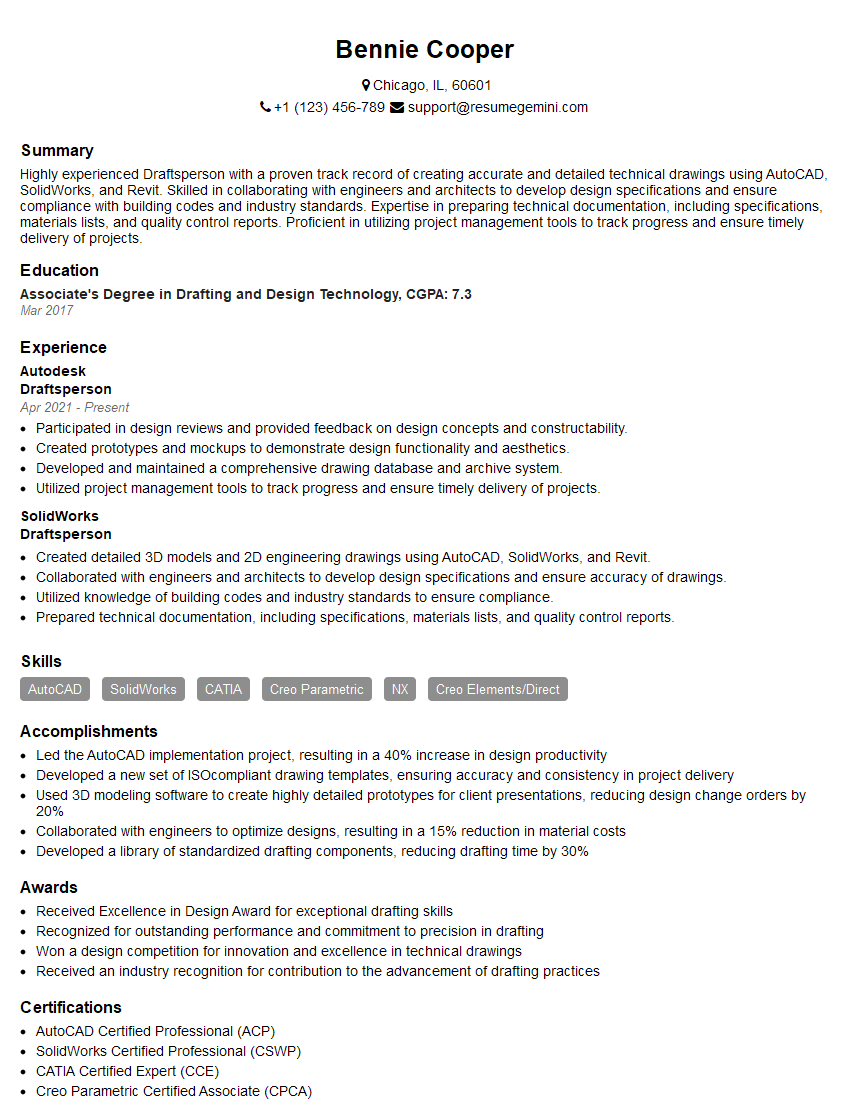
Draftsperson Resume Sample
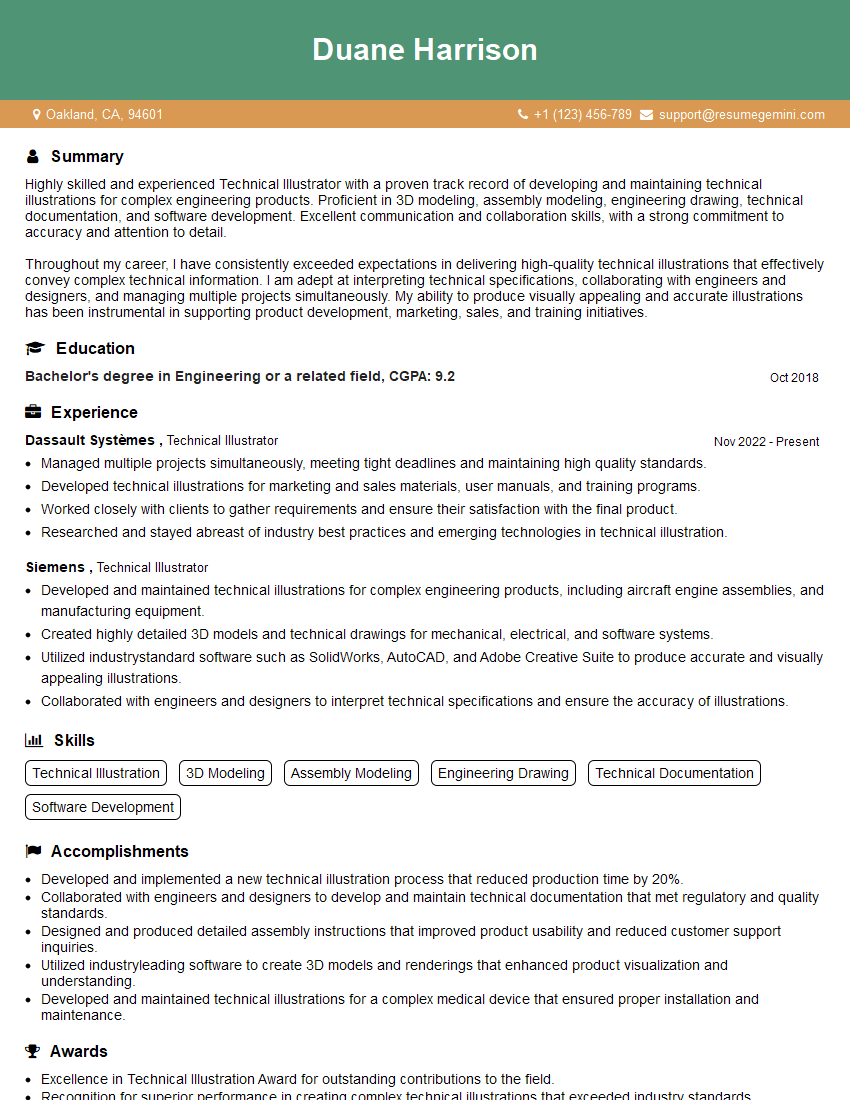
Technical Illustrator Resume Sample
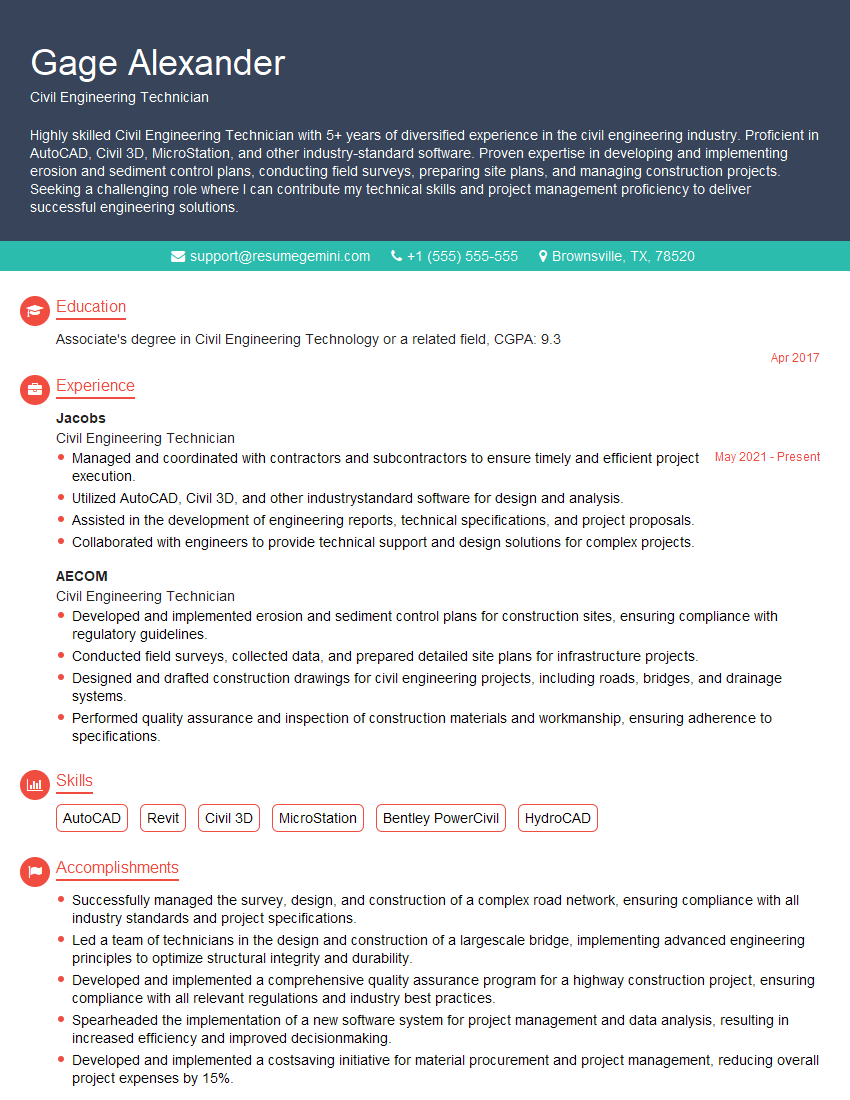
Civil Engineering Technician Resume Sample
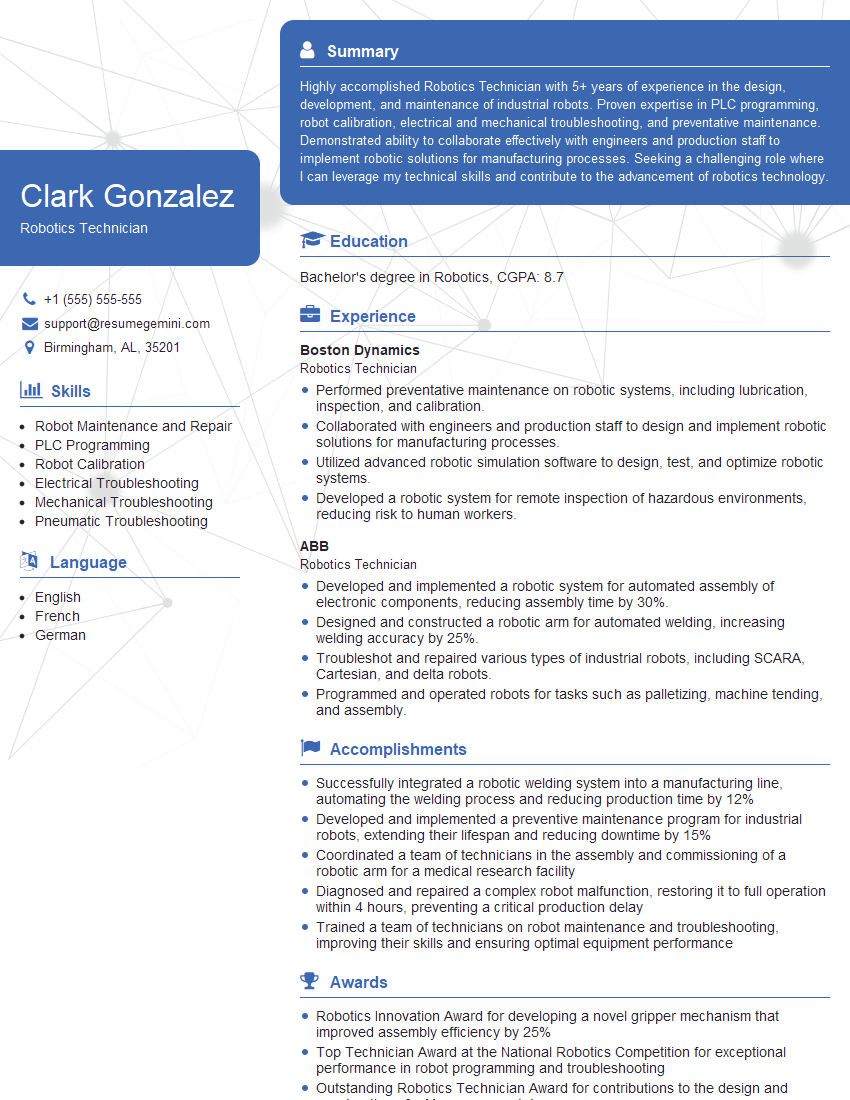
Robotics Technician Resume Sample

Technical Writer Resume Sample

Quality Control Inspector Resume Sample
- Construction Manager
- Project Engineer
- Estimator
- Design Engineer
- Surveyor
- Engineering Technician
- Aerospace Engineer
- Civil Engineer
- Geotechnical Engineer
- Structural Engineer
- Electrical Engineer
- Environmental Engineer
- Manufacturing Engineer
- Mechanical Engineer
- Automotive Engineer
- Architectural Drafter
- Draftsperson
- Technical Illustrator
- Civil Engineering Technician
- Robotics Technician
- Technical Writer
- Quality Control Inspector
Explore more articles
Users Rating of Our Blogs
Share Your Experience
We value your feedback! Please rate our content and share your thoughts (optional).
What Readers Say About Our Blog
Amazing blog
Interesting Article, I liked the depth of knowledge you’ve shared.
Helpful, thanks for sharing.