Preparation is the key to success in any interview. In this post, we’ll explore crucial Basic Knowledge of Optical Physics interview questions and equip you with strategies to craft impactful answers. Whether you’re a beginner or a pro, these tips will elevate your preparation.
Questions Asked in Basic Knowledge of Optical Physics Interview
Q 1. Explain Snell’s Law and its implications.
Snell’s Law describes the relationship between the angles of incidence and refraction when light passes from one medium to another. Imagine throwing a ball from air into water – it changes direction! Snell’s Law quantifies this change. It states that the ratio of the sines of the angles of incidence and refraction is equal to the ratio of the refractive indices of the two media.
Mathematically, it’s expressed as: n₁sinθ₁ = n₂sinθ₂, where n₁ and n₂ are the refractive indices of the first and second media, and θ₁ and θ₂ are the angles of incidence and refraction, respectively.
Implications: Snell’s Law is fundamental to understanding how light behaves in various optical systems. It’s crucial for designing lenses, prisms, and optical fibers. It explains phenomena like rainbows (refraction of sunlight in water droplets) and the apparent bending of objects viewed through water.
Q 2. Describe the difference between reflection and refraction.
Reflection and refraction are two fundamental ways light interacts with a surface or boundary between different media. Think of shining a laser pointer at a mirror versus shining it into a glass of water.
- Reflection: This occurs when light bounces off a surface. The angle of incidence (the angle between the incoming light ray and the normal to the surface) equals the angle of reflection (the angle between the reflected ray and the normal). A mirror provides a perfect example of specular reflection (where light reflects in a single direction).
- Refraction: This occurs when light passes from one medium to another (e.g., from air to water). The light changes direction due to the change in the speed of light in the different media. The amount of bending is governed by Snell’s Law.
In short, reflection involves a change in the direction of light without changing the medium, while refraction involves a change in direction *and* medium.
Q 3. What is total internal reflection and where is it applied?
Total internal reflection (TIR) is a phenomenon that occurs when light travels from a denser medium (higher refractive index) to a less dense medium (lower refractive index) at an angle greater than the critical angle. At this critical angle, the refracted ray travels along the boundary between the two media. Beyond the critical angle, no light is refracted; instead, all the light is reflected back into the denser medium.
Applications: TIR is extensively used in optical fibers, which are thin strands of glass or plastic that transmit light over long distances with minimal loss. It’s also used in prisms for binoculars and periscopes to redirect light efficiently. Medical endoscopes also rely on TIR to transmit images from inside the body.
Q 4. Explain the concept of diffraction.
Diffraction is the bending or spreading of waves (including light waves) as they pass through an aperture (opening) or around an obstacle. Think of water waves passing through a narrow gap – they spread out after passing through.
When light waves encounter an obstacle or opening comparable to or smaller than their wavelength, they don’t simply travel in straight lines. Instead, they bend around the edges and spread out into the geometrical shadow region. This phenomenon arises from the wave nature of light.
Examples: Diffraction is responsible for the colorful patterns seen when light passes through a narrow slit (single-slit diffraction) or a diffraction grating (multiple slits). It’s also crucial in various applications such as X-ray crystallography, where diffraction patterns reveal the structure of crystals.
Q 5. Define and explain the concept of interference.
Interference is a phenomenon that occurs when two or more waves overlap. The resulting wave depends on the phase difference between the individual waves. If the waves are in phase (peaks align with peaks), they constructively interfere, resulting in a wave with a larger amplitude. If they are out of phase (peaks align with troughs), they destructively interfere, resulting in a wave with a smaller amplitude or even cancellation.
Types of Interference: There are two main types: constructive interference (resulting in brighter light or a louder sound) and destructive interference (resulting in dimmer light or a quieter sound). Interference patterns are observed in phenomena like thin-film interference (e.g., oil slicks on water) and the double-slit experiment, which demonstrated the wave nature of light.
Q 6. What are the different types of lenses and their properties?
Lenses are transparent optical components that refract light to focus or diverge it. There are two main types:
- Convex lenses (converging lenses): These lenses are thicker in the middle than at the edges. They converge parallel rays of light to a single point called the focal point. They form real and inverted images when the object is beyond the focal point.
- Concave lenses (diverging lenses): These lenses are thinner in the middle than at the edges. They diverge parallel rays of light, making them appear to originate from a virtual focal point. They always form virtual, upright, and diminished images.
The properties of a lens are determined by its shape and refractive index. Focal length, which is the distance between the lens and its focal point, is a crucial characteristic.
Q 7. How does a prism work?
A prism is a transparent optical element with at least two flat, polished surfaces that are inclined at an angle. When light passes through a prism, it is refracted (bent) twice – once as it enters the prism and again as it exits. Because different colors of light have slightly different refractive indices, they are refracted at slightly different angles. This separation of white light into its constituent colors is called dispersion.
This is why prisms are used to create a spectrum of colors from white light, like in a rainbow. The amount of dispersion depends on the prism’s material and angle.
Q 8. Explain the concept of polarization of light.
Polarization of light refers to the orientation of the electric field oscillations within a light wave. Unlike sound waves which are longitudinal (oscillations parallel to the direction of wave propagation), light waves are transverse, meaning the oscillations are perpendicular to the direction of travel. A completely unpolarized light wave has its electric field vector oscillating in all possible directions perpendicular to the direction of propagation. Polarization, then, is a way of constraining these oscillations to a specific orientation.
Imagine a rope oscillating up and down. This is analogous to vertically polarized light. Now imagine the same rope oscillating side-to-side; this is horizontally polarized light. Polarized sunglasses utilize this principle – they have a polarizing filter that only allows light oscillating in a specific direction to pass through, effectively reducing glare (which is often partially polarized).
Types of polarization include linear (oscillations along a single line), circular (oscillations trace a circle), and elliptical (a combination of linear and circular).
Q 9. Describe the electromagnetic spectrum.
The electromagnetic spectrum encompasses all types of electromagnetic radiation, arranged by frequency (or equivalently, wavelength). It’s a continuous spectrum, meaning there are no distinct boundaries between the different regions. The regions are defined based on typical wavelengths and how the radiation interacts with matter.
- Radio waves: Longest wavelengths, lowest frequencies. Used in broadcasting, communication, and radar.
- Microwaves: Shorter than radio waves, used in cooking, communication, and radar.
- Infrared (IR): Detected as heat; used in thermal imaging and remote controls.
- Visible light: The narrow band of frequencies our eyes can detect, ranging from red (longest wavelength) to violet (shortest wavelength).
- Ultraviolet (UV): Shorter than visible light; causes sunburns and can damage DNA.
- X-rays: Very short wavelengths, high energy; used in medical imaging.
- Gamma rays: Shortest wavelengths, highest frequencies and energy; emitted by radioactive materials and some astronomical sources.
Q 10. What is the relationship between wavelength, frequency, and speed of light?
The relationship between wavelength (λ), frequency (f), and the speed of light (c) is fundamental in physics and is given by the equation:
c = λf
where:
cis the speed of light in a vacuum (approximately 3 x 10⁸ m/s).λis the wavelength (measured in meters).fis the frequency (measured in Hertz, Hz, or cycles per second).
This equation shows an inverse relationship between wavelength and frequency: as wavelength increases, frequency decreases, and vice-versa. The speed of light in a vacuum is a constant, however, it changes when light travels through a medium other than a vacuum.
Q 11. Explain the principles of geometrical optics.
Geometrical optics simplifies the behavior of light by treating it as rays that travel in straight lines. This approach is valid when the wavelengths of light are much smaller than the size of the optical elements involved. The principles of geometrical optics are based on a few key concepts:
- Rectilinear propagation: Light travels in straight lines in a homogeneous medium.
- Reflection: When light encounters a surface, it changes direction according to the law of reflection (the angle of incidence equals the angle of reflection).
- Refraction: When light passes from one medium to another (e.g., from air to glass), it changes speed and bends according to Snell’s law (n1sinθ1 = n2sinθ2, where n is the refractive index and θ is the angle of incidence/refraction).
These principles form the basis for understanding the function of lenses, mirrors, and other optical instruments. For example, the formation of images in a camera lens relies on the principles of refraction and reflection.
Q 12. What is the difference between a real and virtual image?
The key difference between real and virtual images lies in whether the light rays actually converge at the image location or not.
- Real image: Formed when light rays from an object converge at a point after reflection or refraction. A real image can be projected onto a screen. Think of the image projected onto a movie screen by a projector.
- Virtual image: Formed when light rays from an object appear to diverge from a point, but the rays do not actually converge there. A virtual image cannot be projected onto a screen. The image you see in a plane mirror is a virtual image.
In simpler terms, a real image is ‘there’ while a virtual image is ‘apparent’—it only seems to exist at a specific location.
Q 13. Explain the working principle of a simple optical microscope.
A simple optical microscope uses a combination of lenses to magnify small objects. It typically consists of two main lenses:
- Objective lens: A short focal length lens located near the object being viewed. It forms a real, inverted, and magnified image of the object.
- Eyepiece lens (ocular): A longer focal length lens located near the observer’s eye. It acts as a simple magnifier, taking the real image formed by the objective lens and magnifying it further to create a virtual, magnified image that the observer sees.
The total magnification of the microscope is the product of the magnifications of the objective and eyepiece lenses. The object is placed slightly beyond the focal point of the objective lens, resulting in the formation of a magnified real image. This image then lies within the focal length of the eyepiece lens, which further magnifies this real image to create the final magnified, virtual image.
Q 14. Describe the function of an optical fiber.
An optical fiber is a thin, flexible, transparent fiber made of glass or plastic that transmits light signals over long distances with minimal signal loss. This is achieved through a principle called total internal reflection.
The fiber consists of a core (with a higher refractive index) surrounded by a cladding (with a lower refractive index). When light enters the core at an angle greater than the critical angle (the angle at which total internal reflection occurs), it bounces repeatedly off the core-cladding interface, traveling along the length of the fiber. This prevents light from escaping the core, enabling efficient long-distance transmission. Optical fibers are used extensively in telecommunications, medical imaging (endoscopes), and other applications where high-bandwidth, low-loss signal transmission is required.
Q 15. What are the different types of optical fibers?
Optical fibers are thin, flexible strands of glass or plastic that transmit light signals over long distances with minimal loss. They are categorized primarily by their refractive index profile and mode of operation.
- Single-mode fibers: These fibers have a very small core diameter (around 8-10 micrometers), allowing only one mode of light propagation. This results in low dispersion (spreading of the light pulse) and is ideal for long-distance, high-bandwidth communication, like undersea cables carrying internet traffic.
- Multi-mode fibers: These fibers have a larger core diameter (50-100 micrometers), allowing multiple modes of light to propagate simultaneously. This leads to higher dispersion and limits the transmission distance, but they are simpler and less expensive to manufacture. They are commonly used in shorter-distance applications, such as local area networks (LANs).
- Step-index fibers: These fibers have a sudden change in refractive index at the core-cladding boundary. Light travels in straight lines, but multimode fibers experience significant modal dispersion.
- Graded-index fibers: These fibers have a gradual change in refractive index across the core. This allows different modes to travel at different speeds, reducing modal dispersion compared to step-index multimode fibers and extending transmission distance.
The choice of fiber type depends on the application’s specific requirements, balancing cost, bandwidth, and distance needs.
Career Expert Tips:
- Ace those interviews! Prepare effectively by reviewing the Top 50 Most Common Interview Questions on ResumeGemini.
- Navigate your job search with confidence! Explore a wide range of Career Tips on ResumeGemini. Learn about common challenges and recommendations to overcome them.
- Craft the perfect resume! Master the Art of Resume Writing with ResumeGemini’s guide. Showcase your unique qualifications and achievements effectively.
- Don’t miss out on holiday savings! Build your dream resume with ResumeGemini’s ATS optimized templates.
Q 16. Explain the concept of chromatic aberration.
Chromatic aberration is a lens defect that causes different wavelengths of light to focus at different points. Think of a prism separating white light into a rainbow – that’s essentially chromatic aberration in action, but in a lens, it causes blurry images.
It arises because the refractive index of the lens material varies with wavelength. Blue light, for instance, bends more than red light when passing through a lens. This results in a blurry image with color fringing, particularly noticeable around high-contrast edges.
There are two main types:
- Axial (longitudinal) chromatic aberration: Different colors focus at different distances along the optical axis.
- Lateral (transverse) chromatic aberration: Different colors focus at different points in the image plane.
Chromatic aberration is corrected using achromatic lenses, which combine lenses of different materials with different dispersive properties to minimize the effect. High-quality camera lenses and microscopes utilize achromatic or even apochromatic designs to achieve sharp, color-corrected images.
Q 17. How does a laser work?
Lasers, an acronym for Light Amplification by Stimulated Emission of Radiation, produce highly directional, monochromatic, and coherent light through a process called stimulated emission.
Here’s a breakdown:
- Spontaneous Emission: An excited atom spontaneously releases a photon (light particle) as it transitions to a lower energy level.
- Stimulated Emission: A photon of the correct energy interacts with an excited atom, causing it to release another photon identical to the first in terms of phase, frequency, and direction. This is the key to laser operation.
- Population Inversion: A higher number of atoms are in the excited state than in the ground state, making stimulated emission more probable than absorption.
- Optical Cavity: Mirrors at each end of the laser medium reflect the photons back and forth, causing them to stimulate further emission and amplify the light.
- Output Coupling: One mirror is partially transparent, allowing a portion of the amplified light to escape as a laser beam.
In essence, lasers harness the principles of quantum mechanics to create an intense, highly controlled beam of light.
Q 18. What are the different types of lasers?
Lasers are categorized in several ways, including by the lasing medium, wavelength, and power output.
- Gas lasers (He-Ne, CO2): Use a mixture of gases as the lasing medium. He-Ne lasers are common in barcode scanners, while CO2 lasers are used in industrial cutting and welding.
- Solid-state lasers (Ruby, Nd:YAG): Employ a solid crystal or glass doped with rare-earth ions as the gain medium. Nd:YAG lasers are versatile and find applications in medicine, material processing, and research.
- Liquid lasers (Dye lasers): Utilize organic dye solutions as the lasing medium, offering tunable wavelengths.
- Semiconductor lasers (diode lasers): Made from semiconductor materials and are compact, efficient, and widely used in CD players, laser pointers, and fiber-optic communications.
- Fiber lasers: Use optical fibers as the gain medium, combining the advantages of fiber optics with laser technology.
Each laser type offers unique characteristics, making them suitable for specific applications. The choice depends on factors such as required wavelength, power level, beam quality, and cost.
Q 19. Explain the concept of coherence in light.
Coherence in light refers to the correlation between the phase and frequency of different light waves. A coherent light source produces waves that maintain a constant phase relationship over time and space. Imagine a perfectly synchronized marching band – that’s analogous to coherent light.
There are two types of coherence:
- Temporal coherence: Refers to the correlation between the phase of a light wave at different points in time. A highly temporally coherent source produces a long, well-defined wave train. This determines the spectral purity; a highly monochromatic (single color) source has high temporal coherence.
- Spatial coherence: Describes the correlation between the phase of a light wave at different points in space. A highly spatially coherent source produces a highly directional beam, like a laser.
Incoherent light sources, like incandescent bulbs, emit waves with random phases and frequencies, leading to a less directional and less monochromatic light.
Q 20. Describe the applications of optical spectroscopy.
Optical spectroscopy analyzes the interaction of light with matter to determine the composition, structure, and properties of materials. It’s a powerful tool with applications across numerous fields.
- Astronomy: Analyzing the light from stars and galaxies to determine their composition, temperature, and velocity.
- Chemistry: Identifying and quantifying molecules in a sample based on their unique spectral fingerprints (absorption or emission spectra).
- Medicine: Diagnosing diseases by analyzing the light absorbed or emitted by biological tissues. Examples include blood glucose monitoring and cancer detection.
- Environmental science: Monitoring pollutants in air and water samples.
- Material science: Characterizing the properties of new materials and studying their structure.
Different spectroscopic techniques exist, such as absorption spectroscopy, emission spectroscopy, Raman spectroscopy, and fluorescence spectroscopy, each offering insights into various aspects of the sample.
Q 21. What are some common optical materials and their properties?
Many materials are used in optics, each with specific properties influencing their application.
- Glass: Commonly used in lenses, prisms, and optical fibers due to its transparency and ability to be easily shaped. Different types of glass (e.g., crown glass, flint glass) have varying refractive indices and dispersions.
- Crystals (Quartz, Sapphire): Offer high transparency and resistance to scratching, making them suitable for high-precision optical components and windows for lasers.
- Plastics (PMMA, Polycarbonate): Less expensive and lighter than glass, but typically have lower refractive indices and are less resistant to scratches. Used in lenses for everyday applications and in some optical fibers.
- Semiconductors (Silicon, Gallium Arsenide): Used in lasers, detectors, and integrated optical circuits due to their unique electronic and optical properties.
The selection of the optimal material depends on factors like transmission range, refractive index, dispersion, durability, cost, and the intended application.
Q 22. Explain the concept of optical resolution.
Optical resolution refers to the ability of an optical system, like a microscope or telescope, to distinguish between two closely spaced objects. It’s essentially how much detail the system can reveal. A higher resolution means finer details are visible. Think of it like the pixel density on a screen – higher resolution means a sharper, more detailed image.
Quantitatively, resolution is often described by the Rayleigh criterion, which states that two point sources are just resolvable when the center of the Airy disk (the central bright spot in the diffraction pattern of a point source) of one source falls on the first minimum of the Airy disk of the other source. This depends on the wavelength of light and the numerical aperture (NA) of the optical system. The smaller the wavelength and the larger the NA, the higher the resolution.
For example, a high-resolution microscope uses short wavelengths (e.g., blue or ultraviolet light) and high-NA lenses to achieve better image detail compared to a lower resolution system using longer wavelengths (e.g., red light) and lower NA lenses. This explains why electron microscopes, which utilize even shorter wavelengths, can achieve dramatically higher resolutions than optical microscopes.
Q 23. Describe different methods for measuring the refractive index of a material.
Several methods exist for measuring the refractive index (n), which is a measure of how much a material slows down light compared to a vacuum. The refractive index dictates how much light bends when passing from one medium to another.
- Prism Method (Minimum Deviation Method): This classic technique involves passing a light beam through a prism made of the material of interest. By measuring the angle of minimum deviation, along with the prism’s apex angle, the refractive index can be calculated using Snell’s law and simple geometry. It’s a relatively simple and widely used method for transparent materials.
- Abbe Refractometer: This instrument utilizes the critical angle phenomenon. A sample is placed in contact with a prism of known higher refractive index. The critical angle, where total internal reflection begins, is measured, and the refractive index of the sample is calculated. It’s fast and accurate, suitable for liquids and solids.
- Interferometry: This precise technique employs interference patterns of light waves. By comparing the interference pattern of a light beam passing through a known medium and the material of interest, the refractive index can be precisely determined. Interferometry offers extremely high accuracy but requires specialized equipment.
- Ellipsometry: This method analyzes the polarization changes of light reflected from a sample’s surface. It’s particularly useful for thin films and surfaces, providing information on both refractive index and thickness.
The choice of method depends on the material’s properties, the required accuracy, and the available equipment. For instance, a quick check of a liquid’s refractive index might be suitable with an Abbe refractometer, whereas high-precision measurements of a thin film would necessitate ellipsometry.
Q 24. What are the advantages and disadvantages of different types of optical systems?
Different optical systems, such as refractive (using lenses), reflective (using mirrors), and diffractive (using gratings), each possess distinct advantages and disadvantages.
- Refractive Systems:
- Advantages: Compact design, relatively inexpensive for simple systems, good for wide-field imaging.
- Disadvantages: Chromatic aberration (color fringing), spherical aberration (blurring due to lens shape), limited aperture size, can be heavy.
- Reflective Systems:
- Advantages: No chromatic aberration, can handle higher powers, large aperture systems possible, lighter than refractive systems for comparable aperture.
- Disadvantages: Can be bulky, more complex to design and align, stray light can be a problem.
- Diffractive Systems:
- Advantages: Compact design, potential for high diffraction efficiency, possibility of creating unusual functionalities (e.g., beam shaping).
- Disadvantages: Sensitivity to wavelength, typically operate at a specific wavelength or narrow range, fabrication can be challenging.
Choosing the best system depends on the application. For example, a high-quality camera lens might use a combination of refractive and diffractive elements to correct for aberrations and improve image quality. A large astronomical telescope usually relies on a reflective design to gather light effectively over a large area. Diffractive elements are often found in specialized optical systems where unusual beam shaping or wavelength selection is needed.
Q 25. Explain the design considerations of an optical system.
Designing an optical system involves careful consideration of several factors to ensure the system meets its intended performance specifications. These considerations include:
- System Requirements: Define the system’s purpose (e.g., imaging, spectroscopy, beam shaping), specifications (e.g., magnification, resolution, field of view, wavelength range), and tolerances (acceptable deviations from specifications).
- Component Selection: Choose appropriate optical components (lenses, mirrors, filters, etc.) based on their properties (e.g., material, shape, coatings). Factors like cost, availability, and environmental robustness need to be considered.
- Aberration Correction: Minimize optical aberrations (distortions of the image) such as chromatic aberration, spherical aberration, coma, astigmatism, etc. This often involves complex lens designs or the use of aspheric lenses.
- Mechanical Design: The mechanical structure must be stable and precisely aligned to maintain the optical performance. This includes considerations of mounting, adjustment mechanisms, and environmental protection.
- Tolerance Analysis: Assess the impact of manufacturing tolerances on the system’s performance. Monte Carlo simulations are often used to evaluate the robustness of the design.
- Optimization: Use optimization techniques and simulation software to fine-tune the design parameters and achieve the desired performance within the constraints.
For instance, designing a high-resolution microscope objective requires meticulous consideration of lens materials, shapes, spacing, and coatings to minimize aberrations and maximize resolution. The mechanical design would ensure stable mounting and precise focusing.
Q 26. How do you test the quality of an optical component?
Testing the quality of an optical component involves several methods, often depending on the type of component and required precision.
- Visual Inspection: A simple check for scratches, dust, or other physical imperfections on the surface. This is usually the first step in quality control.
- Transmission/Reflection Measurements: Measuring the amount of light transmitted or reflected at different wavelengths using a spectrophotometer. This provides information about the component’s spectral characteristics and any coatings applied.
- Surface Roughness Measurement: Using techniques like atomic force microscopy (AFM) or interferometry to measure the surface roughness, which impacts scattering and image quality.
- Aberration Testing: Assessing the presence and magnitude of optical aberrations using interferometry or other techniques that measure the wavefront shape.
- Focal Length/Power Measurement: Determining the focal length or power of lenses or other focusing elements, usually using precise optical benches and sensors.
- Stress Birefringence Testing: Testing for internal stresses within the optical component, particularly in materials prone to stress-induced birefringence.
For example, testing a lens for use in a high-precision imaging system might involve interferometric testing to precisely measure its aberrations, transmission measurements to verify its spectral properties, and surface roughness measurement to ensure low scattering losses. The specific tests chosen depend on the required tolerances and the application.
Q 27. Describe your experience with optical simulation software.
I have extensive experience using various optical simulation software packages, including Zemax, Code V, and LightTools. I’m proficient in using these tools to design and analyze complex optical systems, including ray tracing, tolerancing analysis, and optimization. For example, I used Zemax to design a custom lens system for a spectral imaging application, optimizing its performance across a wide wavelength range while meeting constraints on size and cost. My work with Code V focused on the analysis and tolerancing of a high-power laser beam delivery system, ensuring its robustness against manufacturing variations. In LightTools, I created realistic simulations to visualize the illumination performance of an LED lighting system. I’m comfortable with both the theoretical underpinnings of these simulations and their practical application in designing and optimizing optical systems.
Q 28. What are your strengths and weaknesses in the field of optical physics?
My strengths lie in my solid theoretical understanding of optical physics, coupled with significant practical experience in optical system design and analysis using simulation software. I possess strong problem-solving skills and a keen eye for detail, essential for identifying and addressing design challenges. I am also a quick learner and adapt readily to new technologies and challenges. For instance, I recently solved a challenging problem involving minimizing ghost reflections in a complex optical assembly, combining my theoretical knowledge with iterative design optimization using Zemax.
One area where I am actively developing my skills is in the field of non-linear optics. While I have a foundational understanding, I seek further experience in practical applications and advanced simulation techniques. I am actively pursuing opportunities to expand my knowledge in this area through coursework, research, and collaborations.
Key Topics to Learn for Basic Knowledge of Optical Physics Interview
- Fundamental Properties of Light: Understanding wave-particle duality, electromagnetic spectrum, polarization, and coherence is crucial. Consider how these properties manifest in different optical systems.
- Geometric Optics: Master concepts like reflection, refraction, Snell’s Law, and the thin lens equation. Practice applying these principles to solve problems involving mirrors, lenses, and optical instruments.
- Physical Optics: Explore diffraction, interference, and the principles behind phenomena like the double-slit experiment. Understand how these concepts impact the resolution and performance of optical systems.
- Optical Instruments: Familiarize yourself with the working principles of microscopes, telescopes, spectrometers, and fiber optics. Be prepared to discuss their design, limitations, and applications.
- Lasers and their Applications: Understand the principles of laser operation, including stimulated emission and population inversion. Be ready to discuss various laser types and their use in fields like telecommunications, medicine, and manufacturing.
- Optical Materials and their Properties: Know the characteristics of different optical materials (e.g., refractive index, dispersion, absorption) and their impact on light propagation. Consider how material selection influences optical system design.
- Problem-Solving Techniques: Develop your ability to apply optical physics principles to solve practical problems. Practice using ray diagrams, calculations, and simulations to analyze optical systems.
Next Steps
Mastering the basics of optical physics opens doors to exciting careers in diverse fields like photonics, biomedical imaging, telecommunications, and optical engineering. To significantly enhance your job prospects, creating a strong, ATS-friendly resume is paramount. This ensures your qualifications are effectively communicated to potential employers. We highly recommend using ResumeGemini to build a professional and impactful resume tailored to your specific skills and experience. ResumeGemini offers examples of resumes specifically designed for candidates with a background in Basic Knowledge of Optical Physics, providing you with a valuable resource to craft a compelling application.
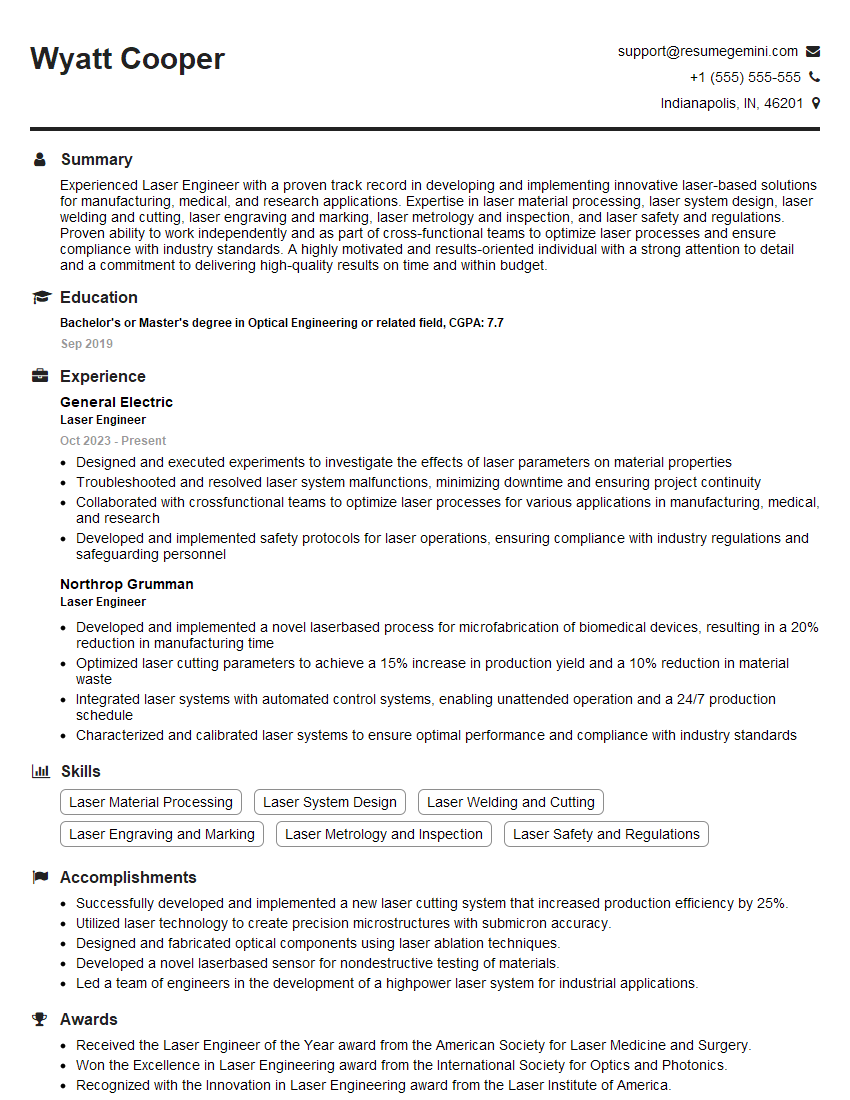
Laser Engineer Resume Sample
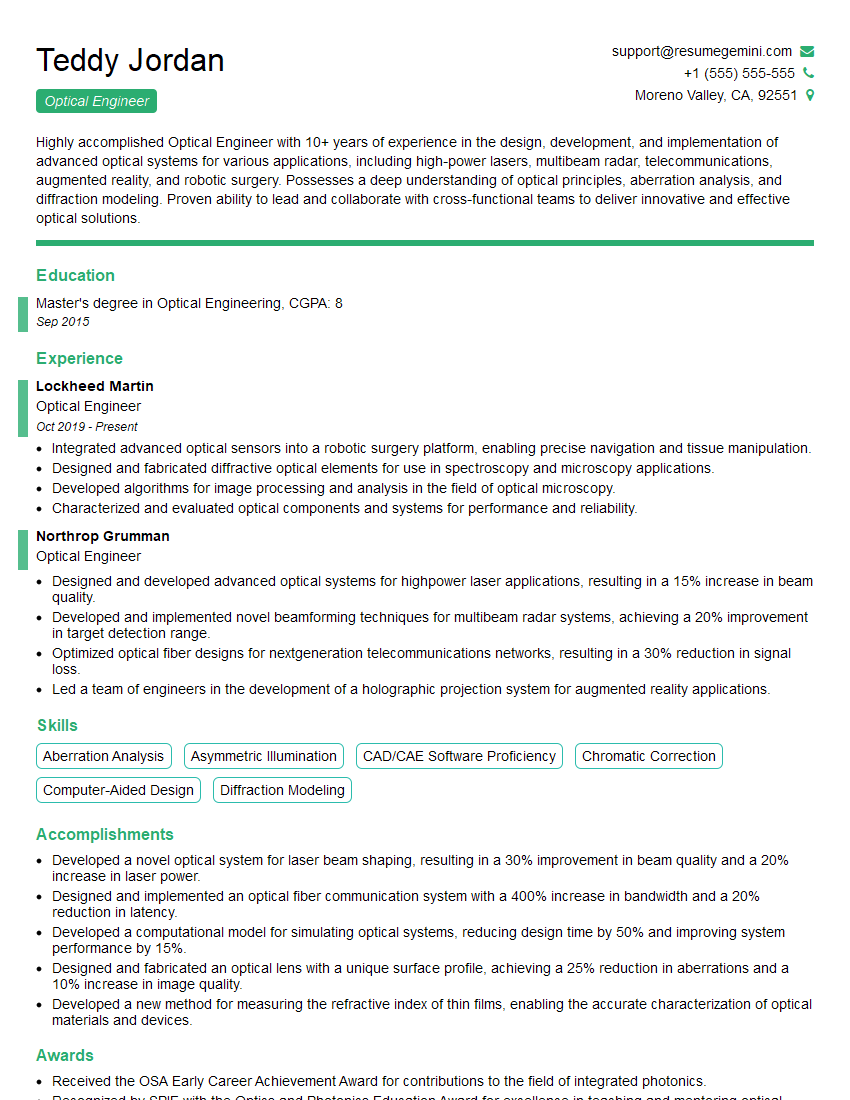
Optical Engineer Resume Sample
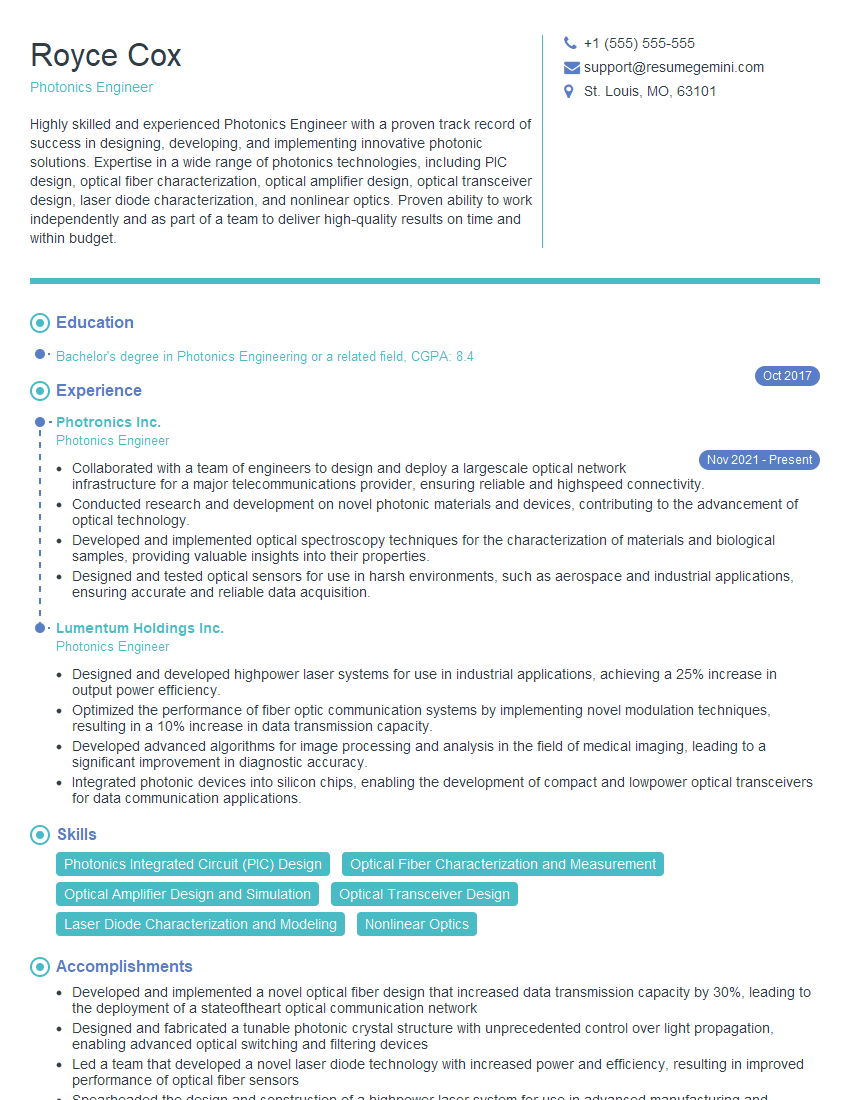
Photonics Engineer Resume Sample
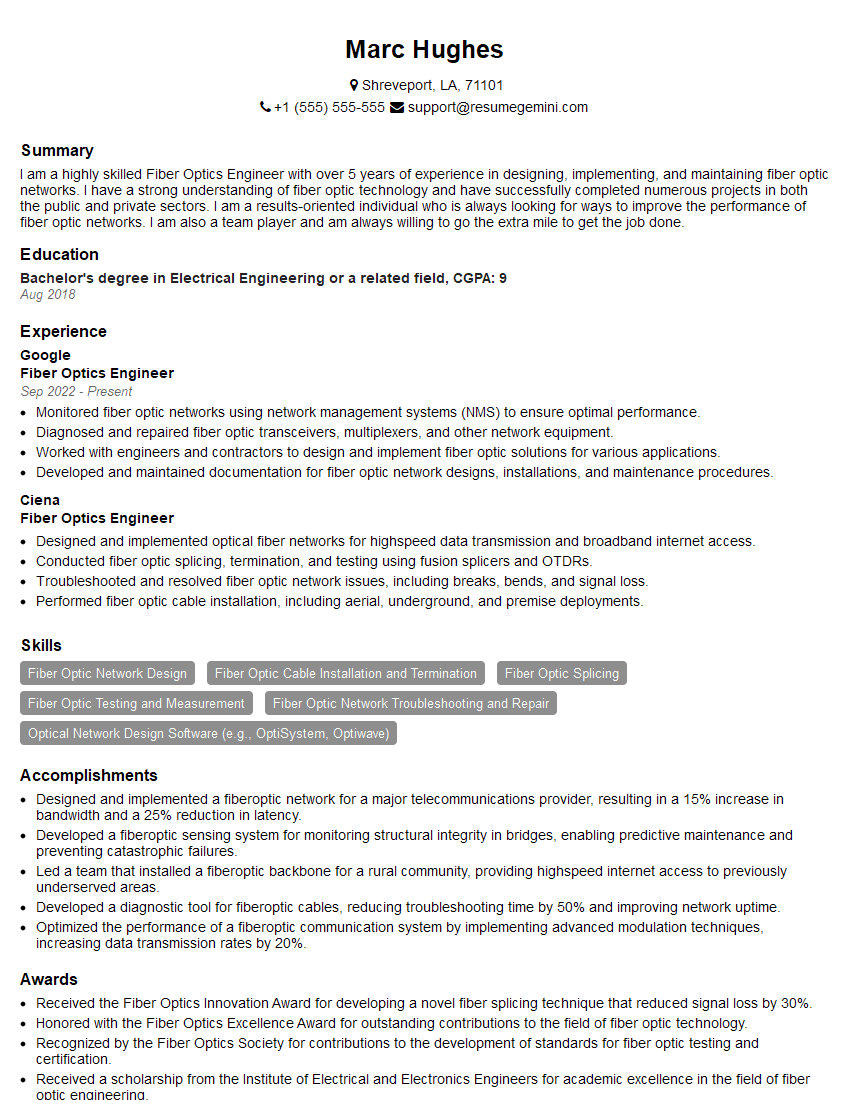
Fiber Optics Engineer Resume Sample
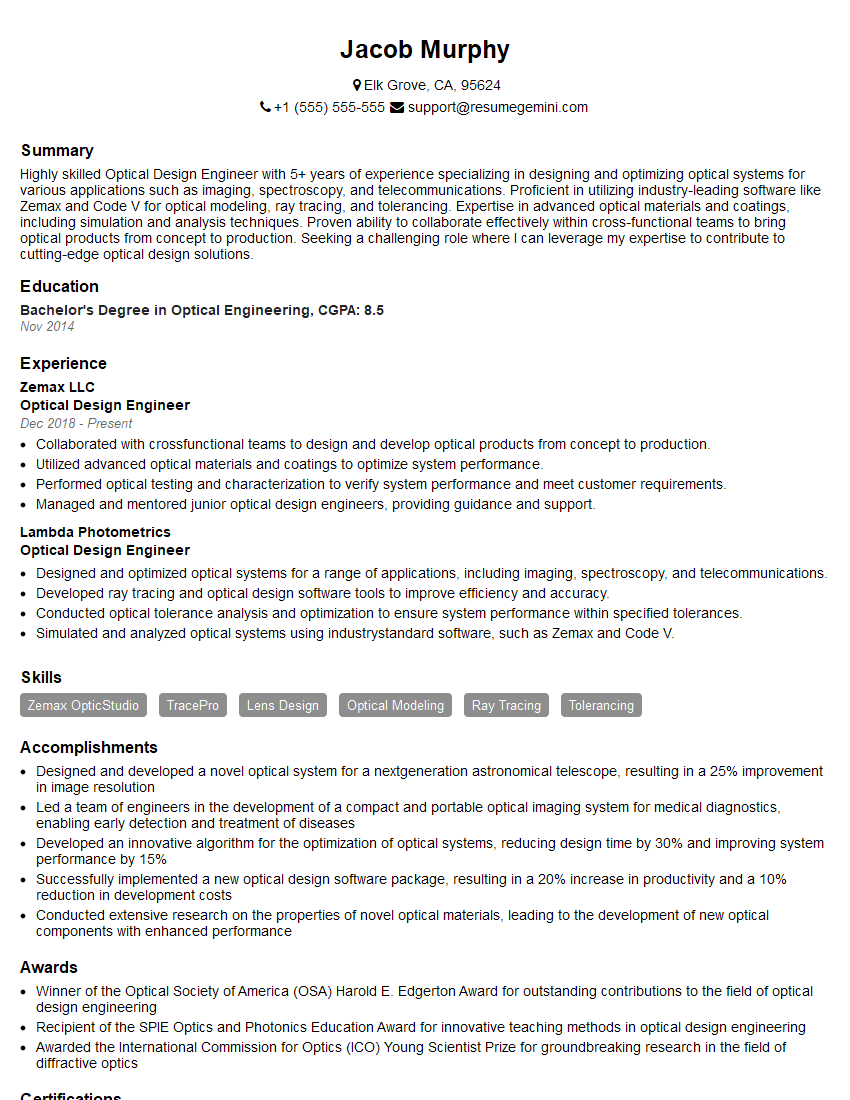
Optical Design Engineer Resume Sample

Optical Systems Engineer Resume Sample
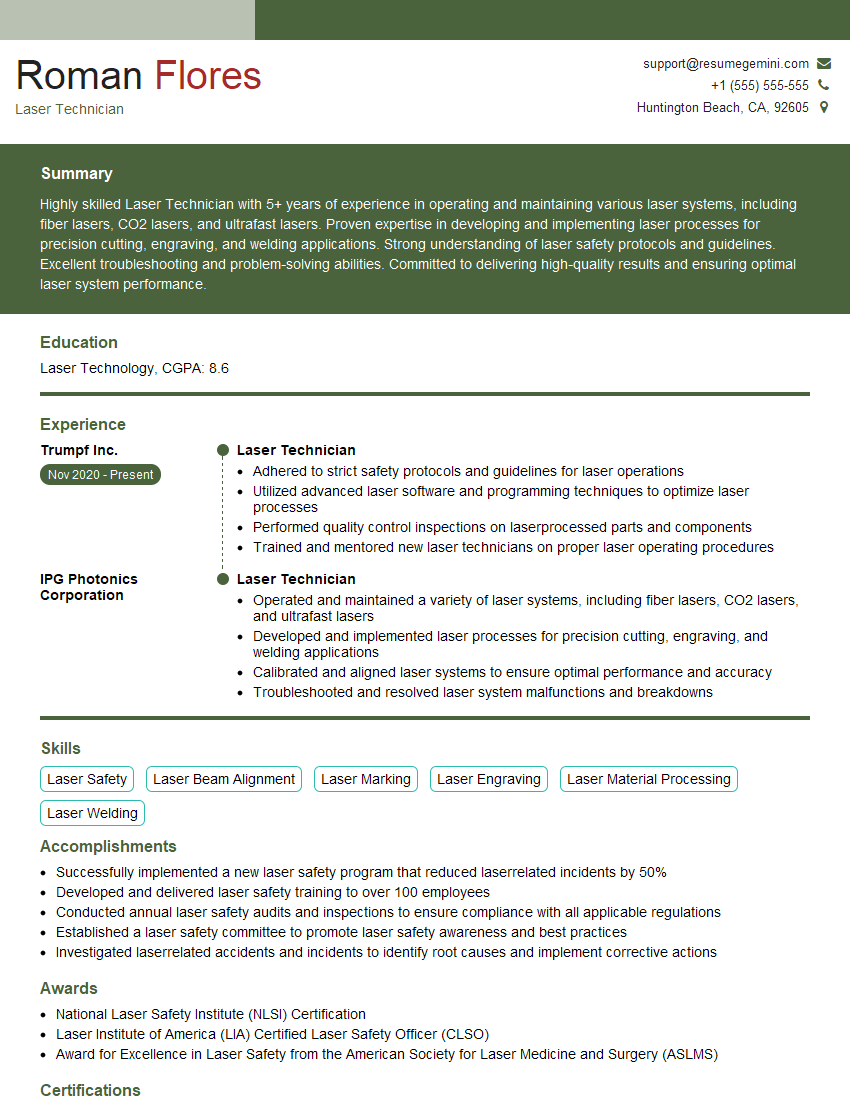
Laser Technician Resume Sample
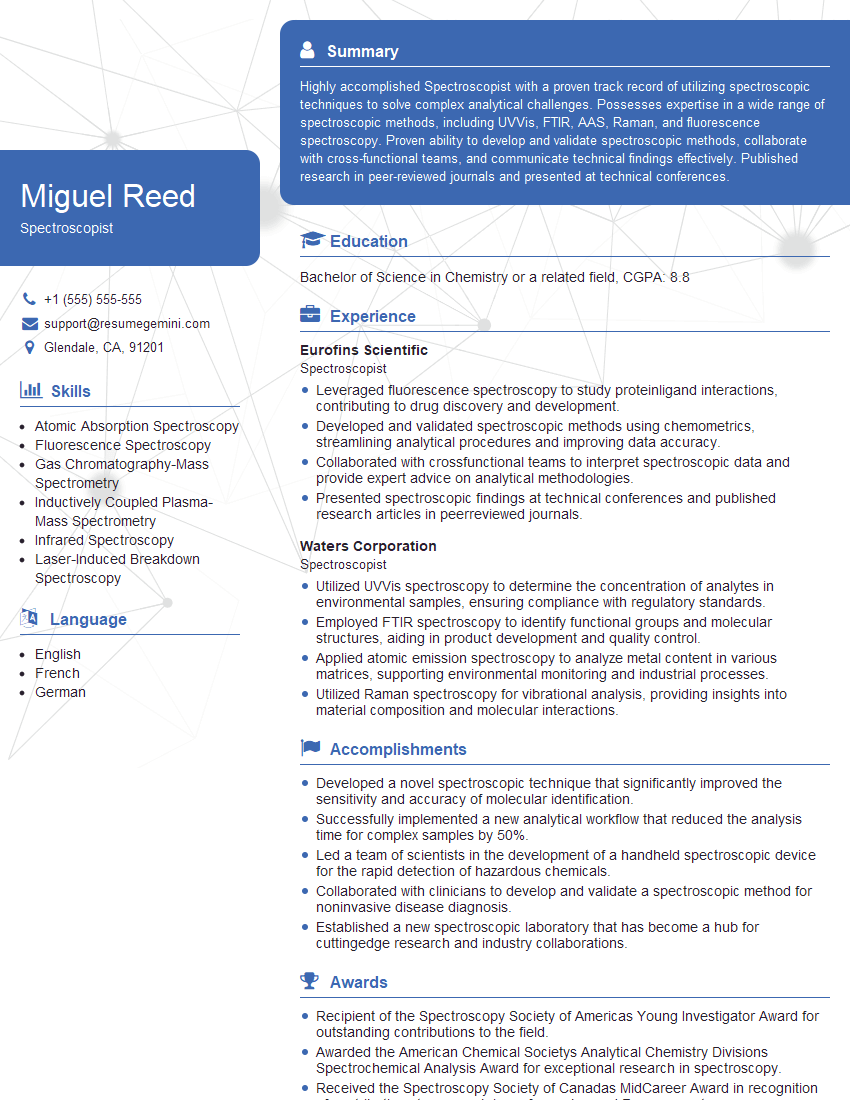
Spectroscopist Resume Sample

Optometrist Resume Sample

Ophthalmologist Resume Sample
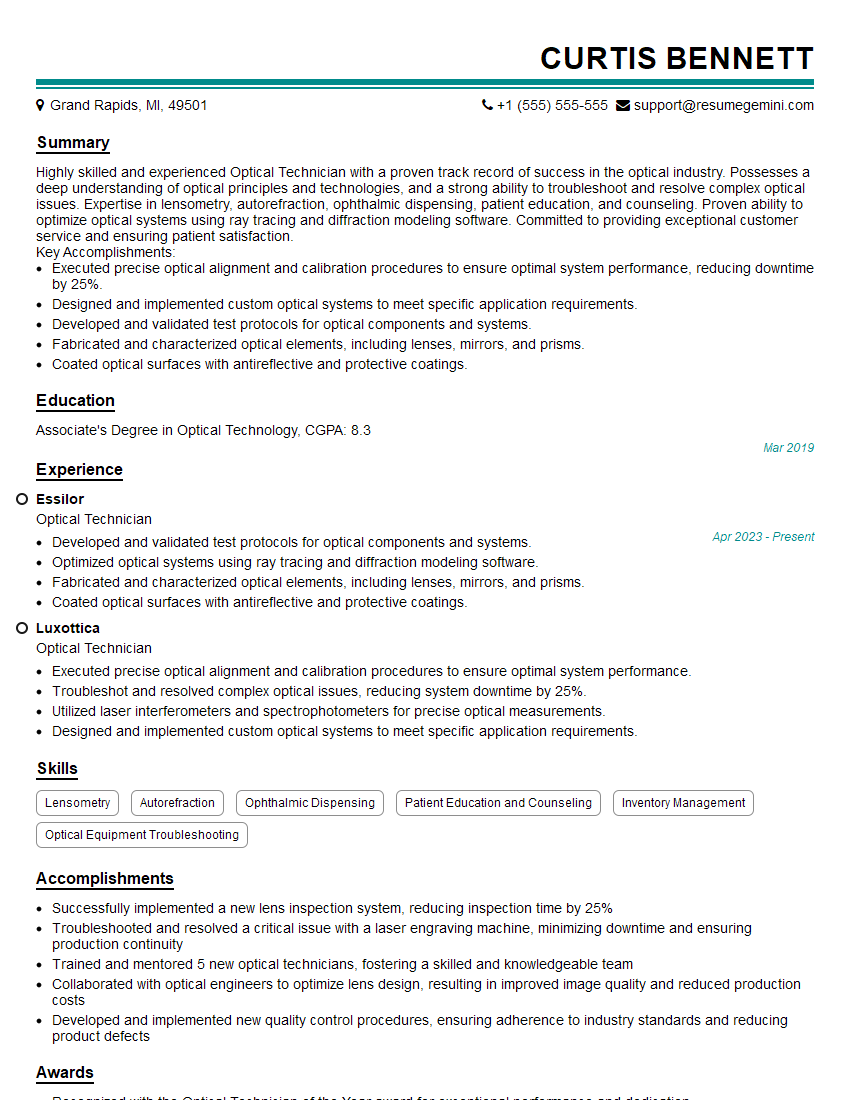
Optical Technician Resume Sample
Explore more articles
Users Rating of Our Blogs
Share Your Experience
We value your feedback! Please rate our content and share your thoughts (optional).
What Readers Say About Our Blog
Amazing blog
hello,
Our consultant firm based in the USA and our client are interested in your products.
Could you provide your company brochure and respond from your official email id (if different from the current in use), so i can send you the client’s requirement.
Payment before production.
I await your answer.
Regards,
MrSmith
hello,
Our consultant firm based in the USA and our client are interested in your products.
Could you provide your company brochure and respond from your official email id (if different from the current in use), so i can send you the client’s requirement.
Payment before production.
I await your answer.
Regards,
MrSmith
These apartments are so amazing, posting them online would break the algorithm.
https://bit.ly/Lovely2BedsApartmentHudsonYards
Reach out at BENSON@LONDONFOSTER.COM and let’s get started!
Take a look at this stunning 2-bedroom apartment perfectly situated NYC’s coveted Hudson Yards!
https://bit.ly/Lovely2BedsApartmentHudsonYards
Live Rent Free!
https://bit.ly/LiveRentFREE
Interesting Article, I liked the depth of knowledge you’ve shared.
Helpful, thanks for sharing.
Hi, I represent a social media marketing agency and liked your blog
Hi, I represent an SEO company that specialises in getting you AI citations and higher rankings on Google. I’d like to offer you a 100% free SEO audit for your website. Would you be interested?