The thought of an interview can be nerve-wracking, but the right preparation can make all the difference. Explore this comprehensive guide to Newsroom Collaboration interview questions and gain the confidence you need to showcase your abilities and secure the role.
Questions Asked in Newsroom Collaboration Interview
Q 1. Describe your experience with different newsroom collaboration tools (e.g., Slack, Trello, Asana).
My experience with newsroom collaboration tools is extensive, encompassing a range of platforms designed for different aspects of the workflow. I’ve leveraged Slack extensively for real-time communication, quick updates, and informal discussions among reporters, editors, and designers. Its channel system allows for efficient segregation of conversations – dedicated channels for specific stories, breaking news, and general announcements. This significantly reduces email clutter and allows for quicker responses.
Trello has proven invaluable for project management, particularly in visualising the stages of a story’s production. I’ve used its Kanban board functionality to track article progress, from initial assignment to fact-checking, editing, and publishing. The ability to assign tasks and track deadlines visually makes it easy to monitor workflow and identify potential bottlenecks.
Finally, Asana‘s strength lies in its ability to manage larger, more complex projects with multiple dependencies. For instance, coordinating a large investigative piece often involves numerous interviews, data analysis, and legal review. Asana’s task dependencies and timeline views provided clarity and kept everyone accountable.
Q 2. How do you manage conflicting priorities and deadlines in a fast-paced newsroom environment?
Managing conflicting priorities and deadlines in a fast-paced newsroom demands a strategic approach. I begin by clearly prioritizing tasks based on news value and deadlines. This involves using a combination of techniques like the Eisenhower Matrix (urgent/important), and simply ranking tasks by deadline proximity. For instance, a breaking news story always takes precedence over a long-term feature piece.
I utilize tools like Trello or Asana to visualize all deadlines and dependencies. Transparency is key; the entire team needs to understand the priority order. Open communication with reporters helps manage expectations and ensure everyone understands the constraints. Sometimes, difficult choices are necessary – re-allocating resources or adjusting deadlines might be required, but open communication prevents misunderstandings and ensures team cohesion.
Q 3. Explain your approach to resolving conflicts between team members.
My approach to resolving conflicts between team members emphasizes open communication, active listening, and finding mutually agreeable solutions. I initiate a private conversation with the involved parties, creating a safe space where they feel comfortable expressing their perspectives without interruption. I actively listen to understand the root cause of the conflict, focusing on understanding their individual needs and concerns.
Once I have a clear grasp of the situation, I facilitate a collaborative discussion to find a common ground. This might involve brainstorming solutions or suggesting compromises that meet the needs of everyone involved. If the conflict involves factual disagreements, I would ensure that everyone is working with the most accurate information.
I always aim for a win-win scenario, but sometimes compromise is necessary. The key is to focus on the shared goal of producing high-quality journalism, reminding everyone that the conflict resolution process is just as important as the work itself.
Q 4. How do you ensure consistency in style and tone across different platforms?
Maintaining consistent style and tone across different platforms requires a multifaceted approach. First and foremost, a comprehensive style guide is crucial. This document should cover everything from grammar and punctuation to tone of voice and terminology. The style guide should be easily accessible to all team members, possibly even embedded within the CMS or other collaborative platforms.
Regular style checks and training sessions help ensure everyone is adhering to the established guidelines. Having a dedicated editor responsible for style and consistency can be immensely beneficial. Tools such as Grammarly or other style-checking software can also assist in maintaining consistency across various platforms.
Finally, using a centralized content management system (CMS) significantly helps. The CMS can enforce style rules, provide templates, and ensure consistency in formatting and publication processes across web, social media, and other channels.
Q 5. Describe a time you improved newsroom workflow efficiency.
In a previous newsroom, we struggled with slow turnaround times for photo editing. The process involved multiple handoffs between photographers, editors, and the web team. To address this, we implemented a centralized digital asset management (DAM) system. This system allowed photographers to upload high-resolution images directly, editors could access and edit them online, and the web team could directly pull images for publication.
This streamlined the entire process, eliminating email chains and manual file transfers. We saw a significant reduction in turnaround time, allowing us to publish stories more quickly and efficiently. The DAM also improved image organization and searchability, saving time in the long run.
Q 6. What strategies do you use to foster effective teamwork and communication in a newsroom?
Fostering effective teamwork and communication requires a blend of proactive strategies. Regular team meetings, both formal and informal, are crucial for information sharing and problem-solving. These meetings should not only cover deadlines but also create space for brainstorming, knowledge sharing, and team building.
Open-door policies and accessible leadership encourage feedback and foster a culture of trust and mutual respect. Recognizing and celebrating team accomplishments is equally important for boosting morale and enhancing collaboration. Encouraging informal social interactions, perhaps through team lunches or after-work gatherings, can strengthen interpersonal relationships and improve team dynamics.
Regular feedback sessions, both individual and group, provide opportunities for improvement and address performance issues promptly. Providing opportunities for professional development enhances team members’ skills and increases their contributions to the team’s overall success.
Q 7. How do you handle breaking news situations and coordinate team efforts?
Handling breaking news requires a well-defined emergency protocol and seamless communication. Pre-established roles and responsibilities are vital, ensuring that everyone understands their duties during a crisis. We typically have a designated breaking news editor who coordinates the team’s efforts, assigning tasks, and ensuring fact-checking and accuracy.
Real-time communication is paramount. Tools like Slack or dedicated newsroom communication systems allow for instant updates, facilitating quick decision-making and coordinated actions. A clear escalation path is crucial – everyone should know who to contact if they encounter a problem or require assistance. Regular training and drills simulate breaking news scenarios, refining our response mechanisms and ensuring team readiness.
Accuracy and verification remain paramount throughout a breaking news event. We implement rigorous fact-checking protocols and cross-referencing of information to prevent the dissemination of inaccurate or misleading information.
Q 8. What experience do you have with content management systems (CMS)?
My experience with Content Management Systems (CMS) is extensive. I’ve worked with various platforms, including WordPress, Drupal, and proprietary newsroom systems. My expertise spans beyond basic content entry; I’m proficient in template customization, workflow configuration, user role management, and plugin/module integration. For example, in a previous role, I integrated a social media plugin into our WordPress CMS, allowing reporters to directly schedule posts across multiple platforms, significantly boosting our reach and efficiency. I understand the importance of choosing the right CMS for a newsroom’s specific needs, considering factors like scalability, security, and integration with other tools.
I’m also well-versed in using CMS features to manage different content types – text, images, videos, audio – and ensuring metadata is properly applied for SEO and archiving. A key aspect of my work involves optimizing the CMS to streamline the editorial workflow, from content creation to publication, improving collaboration and reducing bottlenecks.
Q 9. How do you ensure accurate and timely information dissemination?
Ensuring accurate and timely information dissemination requires a multi-faceted approach. It starts with a rigorous fact-checking process involving multiple editors and verification of sources. We utilize a structured workflow with clearly defined roles and responsibilities to ensure no step is missed. Deadlines are established and communicated clearly, and progress is tracked through the CMS or project management tools. Think of it as an assembly line, where each step is crucial for the final product’s quality. For urgent breaking news, we have established rapid response protocols that allow us to get the information out quickly while maintaining accuracy. This involves using a dedicated team and prioritizing verification processes alongside speed.
Furthermore, we rely on automated alerts and monitoring tools to detect and correct any misinformation that might slip through. Transparency is key; we openly acknowledge and correct errors when they occur, maintaining credibility with our audience. This commitment to accuracy is paramount to our brand’s reputation.
Q 10. Describe your process for reviewing and editing content from multiple contributors.
My content review and editing process for multiple contributors follows a structured approach. It begins with a clear set of style guidelines and editorial standards that are distributed to all contributors upfront. This ensures consistency in tone, style, and factual accuracy across all content. I often use collaborative editing tools, which allow for real-time feedback and annotations. We then employ a tiered review system. Contributors first review their own work for clarity and accuracy, then a junior editor reviews for style and consistency, followed by a senior editor or editor-in-chief for final approval. This system is like a quality control check, ensuring each piece of content meets our high standards.
This process is particularly critical when managing large projects involving numerous contributors. For instance, during a major election coverage, where multiple reporters are filing stories simultaneously, our workflow ensures all content adheres to our editorial standards and deadlines.
Q 11. How familiar are you with different media formats (text, audio, video)?
I’m highly familiar with various media formats, including text, audio, and video. My experience encompasses not only working with these formats but also optimizing them for different platforms. For text, I’m proficient in various writing styles, from concise news reports to in-depth features. For audio, I have experience in editing podcasts and radio segments, including sound design and mixing. For video, I’m skilled in video editing software, creating and editing news packages, and optimizing videos for online distribution. Moreover, I understand how to integrate different media formats seamlessly within a story to create a more engaging and comprehensive experience for the audience – using photos, videos, and embedded audio clips to enrich narrative. The ability to work fluently with different formats is crucial in today’s multimedia news environment.
Q 12. Explain your understanding of newsroom legal and ethical considerations.
Understanding newsroom legal and ethical considerations is fundamental to my work. This includes a thorough understanding of libel laws, copyright regulations, and privacy rights. I’m trained to identify potential legal issues and ensure that all published content complies with relevant laws and regulations. We maintain strict procedures for verifying information and attributing sources correctly to avoid plagiarism and copyright infringement. Furthermore, ethical considerations, such as impartiality and avoiding conflicts of interest, are always at the forefront of my decision-making process. We have regular training sessions to reinforce these ethical guidelines. A strong ethical compass is crucial for maintaining the public trust and upholding the integrity of the news organization.
Q 13. How do you prioritize tasks and delegate responsibilities effectively?
I prioritize tasks and delegate responsibilities effectively using a combination of strategies. I start by creating a detailed project plan, outlining all tasks, deadlines, and individual responsibilities. This plan is often visualized using a Kanban board or a similar project management tool. I then assign tasks based on individual skill sets and workload, ensuring a balanced distribution of responsibilities. Regular check-ins and communication are crucial for tracking progress, addressing roadblocks, and adapting the plan as needed. This is a dynamic process; priorities may shift based on breaking news or urgent situations. For example, during a crisis situation, we may re-prioritize tasks to focus on delivering critical information to the public. Effective delegation and communication are essential for managing a team efficiently and delivering high-quality work under pressure.
Q 14. Describe your experience with data visualization and infographic creation.
My experience with data visualization and infographic creation is significant. I’m proficient in using various tools to transform complex data into visually compelling and easily understandable infographics and charts. This involves not only technical skills in software like Adobe Illustrator or Tableau, but also a strong understanding of data analysis and storytelling. I can interpret data sets, identify key trends, and then translate those findings into visually appealing formats that effectively communicate information to the audience. This is crucial for presenting complex information in a digestible way for our audience. For instance, I recently created an infographic illustrating the impact of climate change on local communities using data from several sources, effectively conveying the significance of the issue.
Q 15. How do you utilize social media to enhance newsroom output and engagement?
Social media is no longer just a news distribution channel; it’s a vital tool for engagement and shaping the narrative. We use it strategically across multiple platforms. For example, Twitter is perfect for breaking news and quick updates, while Facebook allows for longer-form content and community building. Instagram and TikTok are crucial for visual storytelling and reaching younger demographics. We don’t just post – we actively listen. Monitoring comments and mentions provides invaluable feedback, allowing us to understand audience reactions and adjust our content accordingly. We also use social listening tools to identify trending topics and emerging stories, directly influencing our editorial calendar. Finally, engaging directly with our audience – responding to questions and comments – fosters trust and loyalty. For instance, during a local election, we used Facebook live to host a candidates’ debate, generating huge engagement and providing a platform for community discussion. This proactive approach significantly enhanced our reach and audience understanding.
Career Expert Tips:
- Ace those interviews! Prepare effectively by reviewing the Top 50 Most Common Interview Questions on ResumeGemini.
- Navigate your job search with confidence! Explore a wide range of Career Tips on ResumeGemini. Learn about common challenges and recommendations to overcome them.
- Craft the perfect resume! Master the Art of Resume Writing with ResumeGemini’s guide. Showcase your unique qualifications and achievements effectively.
- Don’t miss out on holiday savings! Build your dream resume with ResumeGemini’s ATS optimized templates.
Q 16. How do you track and analyze the performance of news content across various platforms?
Tracking and analyzing content performance is crucial for measuring our success and informing future strategies. We use a combination of platform-specific analytics (like Facebook Insights, Google Analytics, and Twitter Analytics) and dedicated newsroom analytics dashboards. These tools provide a comprehensive view of key metrics such as reach, engagement (likes, shares, comments), website traffic, and audience demographics. We analyze trends over time to understand what resonates with our audience and identify areas for improvement. For example, if we find a particular type of story consistently underperforms, we might adjust our writing style, presentation, or topic selection. We also A/B test different headlines and image formats to optimize click-through rates. This data-driven approach allows us to make informed decisions, ensuring our resources are allocated effectively and our content is reaching the intended audience.
Q 17. What methods do you use to ensure diversity and inclusion in the newsroom?
Diversity and inclusion are not just buzzwords; they are fundamental to producing accurate and representative journalism. We actively work to build a newsroom that reflects the diversity of our community. This includes actively recruiting from diverse backgrounds, implementing inclusive hiring practices, and providing ongoing diversity and inclusion training for all staff. We also strive for equitable representation in our news coverage, ensuring that marginalized voices are heard and their stories are told accurately and respectfully. We establish clear guidelines for diverse storytelling and regularly review our content to ensure it reflects our commitment to fair and equitable representation. For example, we might review the gender and racial representation of our sources to ensure a balanced perspective in our reporting.
Q 18. Describe your experience with crisis communication and management within a newsroom.
Crisis communication requires swift, accurate, and empathetic responses. My experience includes managing communication during several significant local incidents, including a major power outage and a severe weather event. Our established protocol involves a dedicated crisis communication team, a clear chain of command, and pre-defined communication channels. We prioritize verifying information before disseminating it to prevent misinformation. We use multiple platforms, including social media, our website, and press releases, to keep the public informed. Transparency and empathy are crucial; we aim to provide timely updates and address public concerns directly and honestly. During the power outage, our proactive communication helped prevent panic and kept the public informed about restoration efforts, demonstrating the importance of well-rehearsed crisis protocols.
Q 19. How do you use technology to enhance collaborative workflows in a newsroom?
Technology is the backbone of our collaborative workflows. We leverage a Collaborative Content Management System (CMS) that allows multiple journalists to work simultaneously on articles, with version control and integrated workflow tools. We use project management software to track deadlines and assign tasks. Real-time communication platforms like Slack facilitate quick internal communication and brainstorming. Video conferencing tools allow us to connect seamlessly with remote reporters and experts. Additionally, transcription services help to speed up the production process and ensure accuracy. For instance, our CMS allows reporters to easily share drafts, receive feedback, and track edits, ensuring collaboration across different geographical locations or time zones. This enhances efficiency and ensures a high level of editorial quality.
Q 20. How do you maintain a positive and productive work environment under pressure?
Maintaining a positive and productive environment under pressure requires strong leadership, open communication, and a focus on well-being. We foster a culture of mutual support and teamwork, encouraging collaboration and open dialogue. We prioritize clear communication of expectations and deadlines. We also emphasize the importance of work-life balance, encouraging breaks and utilizing flexible work arrangements where possible. Regular team meetings provide opportunities for feedback, problem-solving, and celebrating successes. During periods of high stress, we might implement mindfulness exercises or offer access to employee assistance programs. A supportive and understanding environment is key to maintaining morale and productivity, even under intense pressure. Recognizing individual contributions and accomplishments goes a long way in maintaining a positive atmosphere.
Q 21. Describe your experience with training and mentoring other newsroom staff.
I have extensive experience in training and mentoring newsroom staff. This includes providing onboarding support for new hires, conducting workshops on specific journalistic skills (like data journalism or social media strategy), and offering individual mentoring on career development. I utilize a blended approach to training, combining formal instruction with hands-on practical exercises and real-world case studies. I believe in a supportive and constructive mentoring approach, focusing on strengths, providing constructive feedback, and fostering a culture of continuous learning. For example, I’ve mentored several junior reporters, guiding them through their first major assignments and helping them develop their skills in interviewing, writing, and reporting. This mentorship approach fosters a positive and productive learning environment, contributing to the overall quality of our news coverage.
Q 22. How do you stay updated on industry best practices and emerging technologies?
Staying ahead in the dynamic world of newsroom collaboration requires a multi-pronged approach to continuous learning. I actively participate in industry conferences like the Online News Association (ONA) conference and the Society of Professional Journalists (SPJ) events. These provide invaluable opportunities to network with peers and learn about the latest trends and best practices.
Furthermore, I regularly subscribe to and read industry publications such as Nieman Reports, Journalism.co.uk, and various newsletters focused on media technology and newsroom management. These publications offer insights into successful strategies and emerging technologies. Beyond formal channels, I actively engage in online communities and forums, participating in discussions and learning from the experiences of others. Finally, I dedicate time to exploring new tools and technologies firsthand through trials and experimentation, ensuring a practical understanding of their capabilities and limitations in a newsroom context.
Q 23. How familiar are you with various newsroom budgeting and resource allocation practices?
Newsroom budgeting and resource allocation are critical for operational efficiency and achieving journalistic goals. My familiarity spans various models, from traditional fixed-budget approaches to more agile, project-based budgeting. I understand the importance of balancing expenditures across different areas such as personnel, technology, training, and content production. I’m experienced in using data-driven decision-making, analyzing metrics like audience engagement and content performance to optimize resource allocation. For example, in a previous role, we shifted resources from print-centric activities to digital content creation based on data demonstrating a significant audience migration to online platforms. This involved careful planning, stakeholder communication, and a phased transition to ensure minimal disruption.
Furthermore, I’m proficient in identifying and securing funding sources, whether through grants, advertising revenue, or membership programs. The key is to develop a budget that is both financially sustainable and strategically aligned with the newsroom’s mission and objectives. This requires close collaboration with management, editorial staff, and finance teams.
Q 24. What is your approach to managing feedback and constructive criticism from team members?
Managing feedback is crucial for fostering a collaborative and productive environment. My approach prioritizes open communication and a culture of psychological safety. I encourage team members to express their thoughts and concerns openly, whether positive or negative. I believe in active listening, making sure I fully understand the perspective being shared, even if I don’t initially agree. Constructive criticism is treated as an opportunity for growth and improvement. I aim to respond thoughtfully, acknowledging the feedback and outlining concrete steps to address the concerns raised.
For example, if a team member suggests a workflow improvement, I would not only thank them but also initiate a discussion on its feasibility, outlining potential challenges and collaboratively seeking solutions. If the suggestion is implemented, I would ensure the team member receives appropriate recognition for their contribution. Regular check-ins and one-on-one meetings also provide a platform for addressing concerns and providing ongoing feedback, ensuring that everyone feels heard and valued.
Q 25. Explain your strategy for adapting to rapidly changing media landscapes and technologies.
Adaptability is paramount in today’s media landscape. My strategy involves continuous monitoring of industry trends, technological advancements, and audience behavior. This includes staying informed about the latest social media platforms, content formats, and data analytics tools. I leverage this knowledge to anticipate potential disruptions and proactively adapt our processes and strategies. For example, the rise of short-form video content required us to invest in training and equipment to support the creation of compelling video content for platforms like TikTok and Instagram Reels.
Furthermore, I cultivate a culture of experimentation and learning within the newsroom. This involves encouraging the exploration of new technologies and tools, allowing space for controlled experimentation and iterative improvement. We conduct regular reviews to assess the effectiveness of our adaptations and make adjustments as needed. Essentially, continuous learning and a willingness to embrace change are the cornerstone of our strategy.
Q 26. Describe your experience with implementing new technologies or processes in a newsroom setting.
I have extensive experience implementing new technologies and processes in newsroom environments. One notable example was the transition from a traditional content management system (CMS) to a more modern, cloud-based platform. This involved a thorough assessment of the current system’s limitations, identifying the needs and requirements of the newsroom, and evaluating various CMS options. We then developed a detailed implementation plan that included training for staff, data migration, and testing. The project was managed using an agile approach, allowing us to adapt to unexpected challenges and incorporate user feedback throughout the process.
Another project involved the integration of a new social media management tool that streamlined content scheduling, monitoring, and engagement analysis. This required not only technical setup but also training on best practices for social media engagement. Successful implementation in both cases involved meticulous planning, effective communication with all stakeholders, and a phased rollout to minimize disruption to daily operations.
Q 27. How do you ensure the accessibility of news content to diverse audiences?
Ensuring accessibility is crucial for reaching diverse audiences and fulfilling our journalistic responsibility. Our approach encompasses various strategies, beginning with content creation. We strive to use clear and concise language, avoiding jargon and complex sentence structures. We also incorporate multimedia elements like images, videos, and audio to cater to different learning styles. Beyond content, we employ technical measures to enhance accessibility. This includes using alt text for images, providing transcripts for videos, and ensuring our website conforms to WCAG (Web Content Accessibility Guidelines) standards. We also translate content into multiple languages to reach non-English speaking communities.
Regular accessibility audits and user testing are conducted to identify and address any gaps in our approach. We collaborate with accessibility experts to ensure our efforts are effective and align with best practices. Accessibility isn’t just a technical issue; it’s a matter of inclusivity and ensuring that our news reaches everyone, regardless of their abilities or background.
Q 28. What is your approach to measuring the success of newsroom collaboration initiatives?
Measuring the success of newsroom collaboration initiatives requires a multi-faceted approach that considers both qualitative and quantitative data. Quantitative metrics can include improvements in productivity, such as reduced turnaround times for stories or increased content output. We might also track metrics related to audience engagement, like website traffic, social media shares, and reader comments. These provide valuable insights into the effectiveness of our collaborative efforts.
Qualitative measures are equally important. We regularly conduct surveys and focus groups to assess team satisfaction, collaboration effectiveness, and identify areas for improvement. We also use informal feedback mechanisms such as team meetings and one-on-one conversations to gather insights. By combining both quantitative and qualitative data, we gain a holistic understanding of the success of our initiatives and identify areas for ongoing improvement. This approach ensures that our efforts are not only efficient but also contribute to a positive and productive work environment.
Key Topics to Learn for Newsroom Collaboration Interview
- Workflow Management & Coordination: Understanding and optimizing newsroom workflows, including content creation, editing, publishing, and distribution processes. Practical application: Describe your experience streamlining a collaborative project, highlighting efficiency improvements.
- Content Management Systems (CMS): Familiarity with various CMS platforms used in newsrooms (e.g., WordPress, Drupal). Practical application: Detail your experience using a specific CMS, focusing on your skills in content creation, updates, and management.
- Communication & Collaboration Tools: Proficiency in tools like Slack, Microsoft Teams, or similar platforms for efficient team communication and project management. Practical application: Explain how you’ve utilized such tools to foster effective collaboration and communication within a team setting.
- Digital Asset Management (DAM): Knowledge of organizing, storing, and retrieving digital assets (images, videos, audio) effectively within a newsroom environment. Practical application: Describe your experience managing a large library of digital assets, emphasizing organization and retrieval efficiency.
- Conflict Resolution & Teamwork: Ability to navigate disagreements and conflicts constructively within a fast-paced newsroom environment. Practical application: Share an example of resolving a conflict within a team setting, focusing on your approach to collaboration and problem-solving.
- Newsroom Ethics & Standards: Understanding journalistic ethics, fact-checking procedures, and adhering to editorial guidelines. Practical application: Describe your understanding of ethical considerations in news reporting and your experience in ensuring accuracy and fairness in content.
Next Steps
Mastering newsroom collaboration is crucial for career advancement in journalism and related fields. It demonstrates essential skills highly valued by employers: teamwork, communication, problem-solving, and adaptability. To significantly improve your job prospects, creating an ATS-friendly resume is key. ResumeGemini is a trusted resource to help you build a professional and impactful resume that showcases your skills effectively. Examples of resumes tailored to Newsroom Collaboration are available to help guide you.
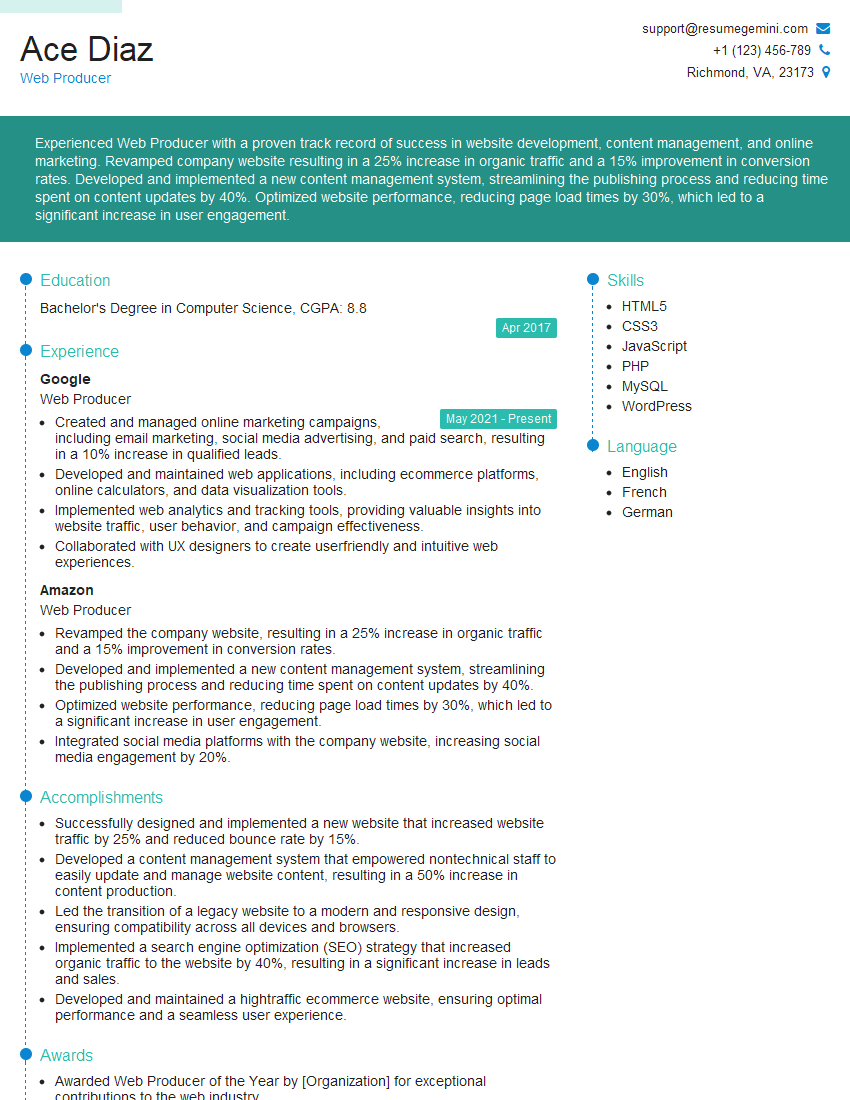
Web Producer Resume Sample

Content Strategist Resume Sample
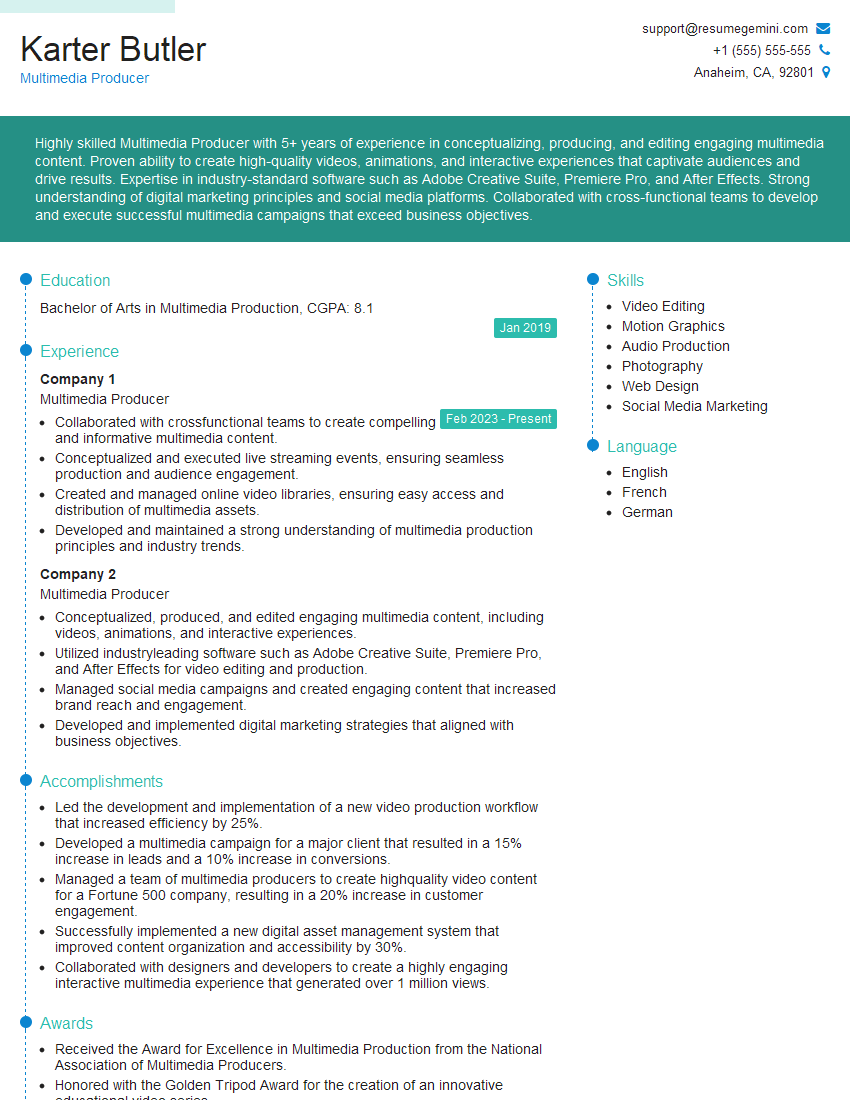
Multimedia Producer Resume Sample
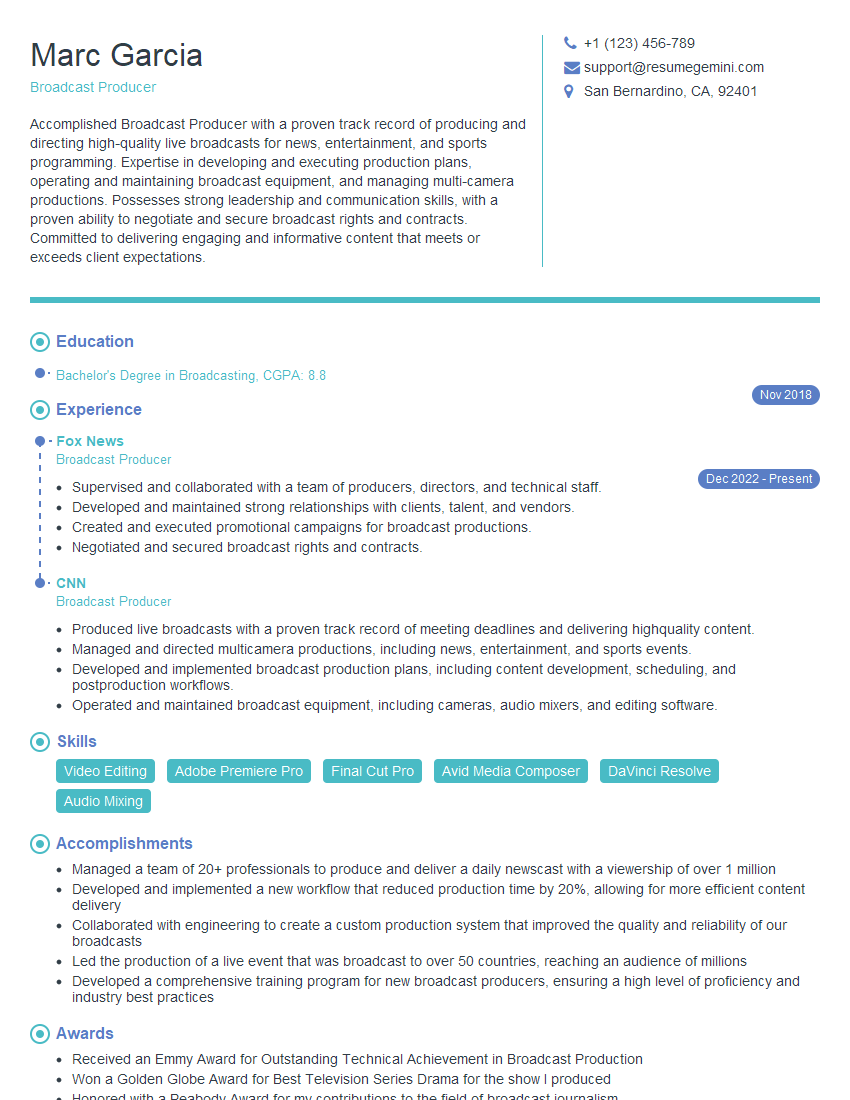
Broadcast Producer Resume Sample

Assignment Editor Resume Sample
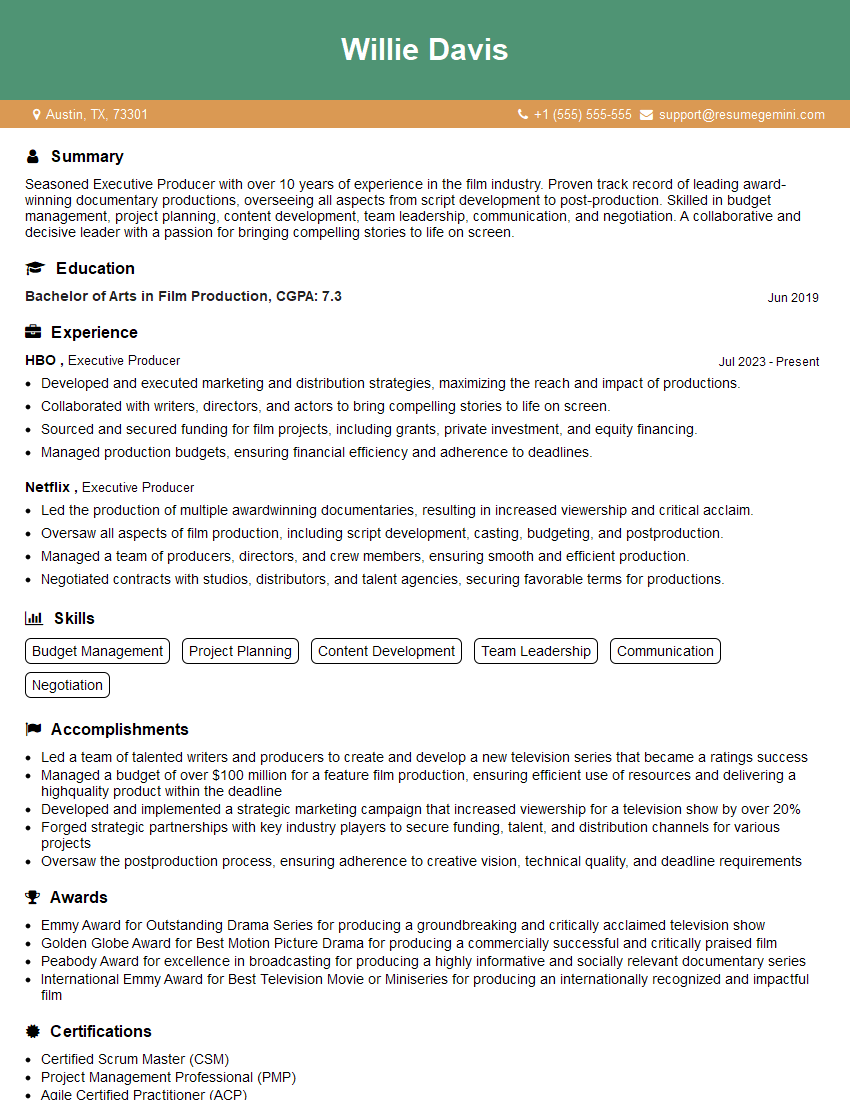
Executive Producer Resume Sample
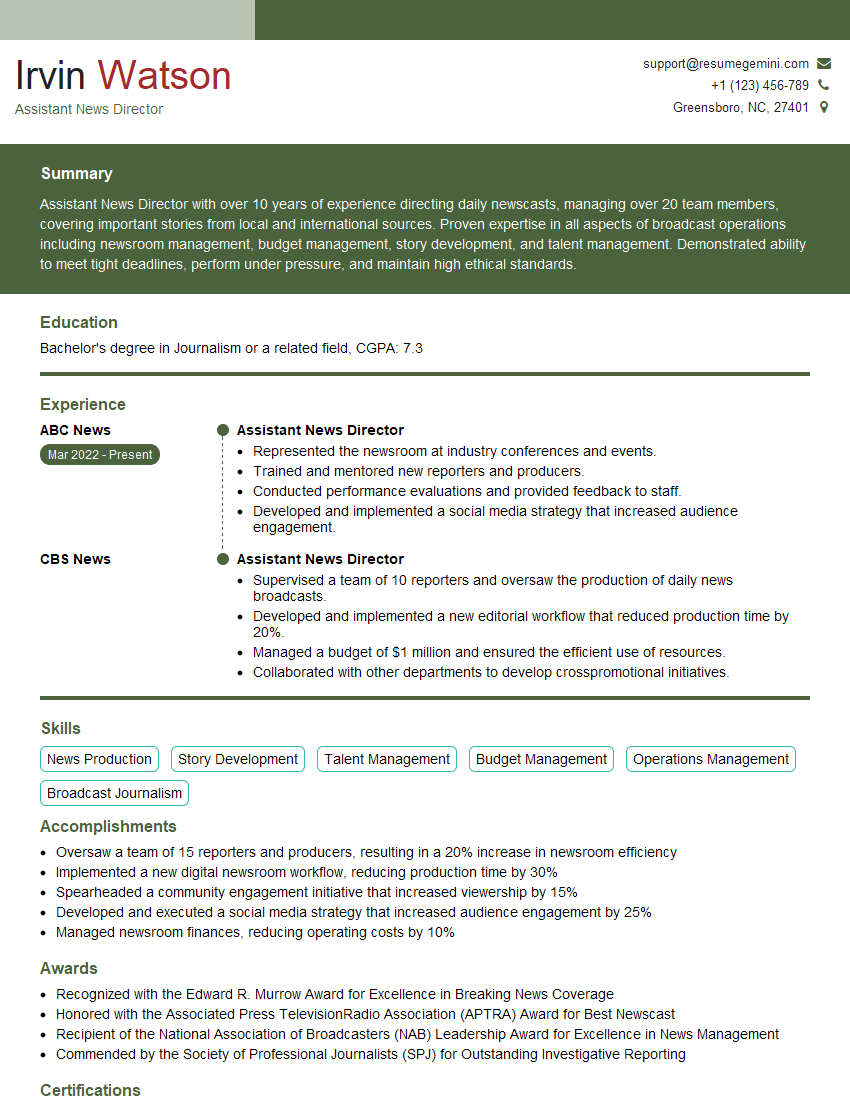
Assistant News Director Resume Sample
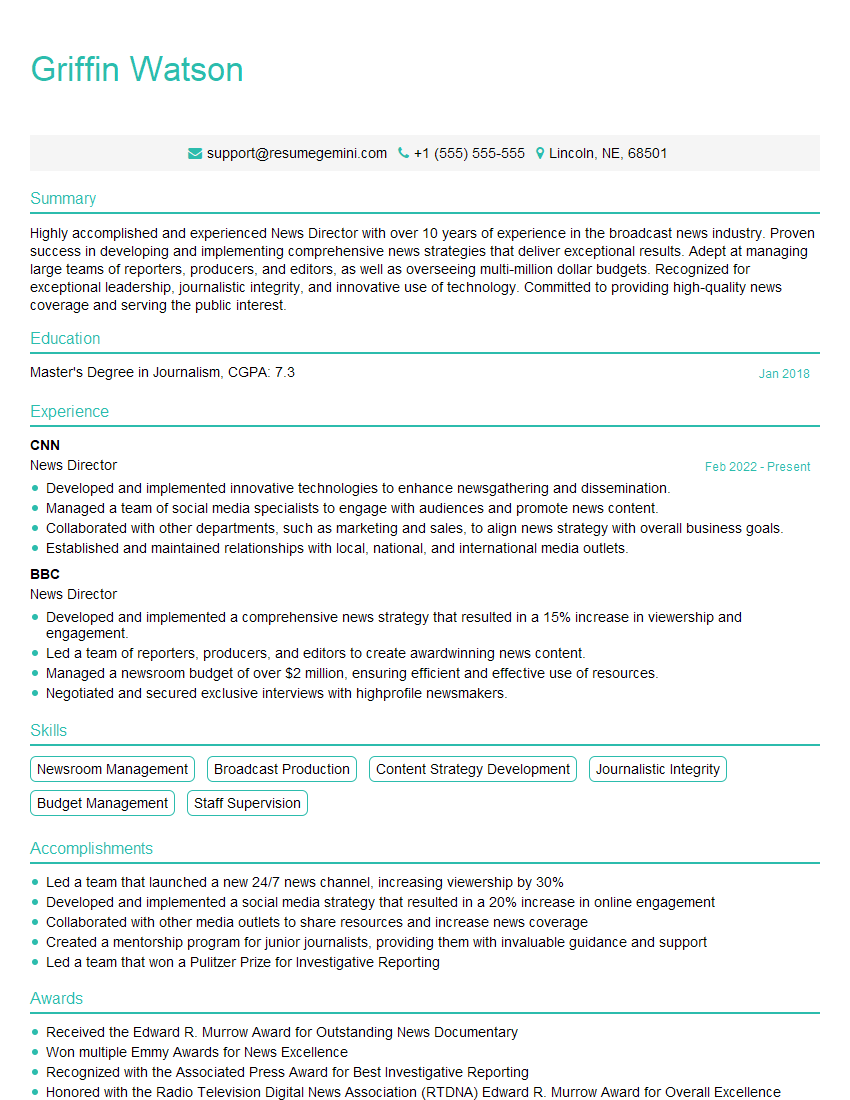
News Director Resume Sample
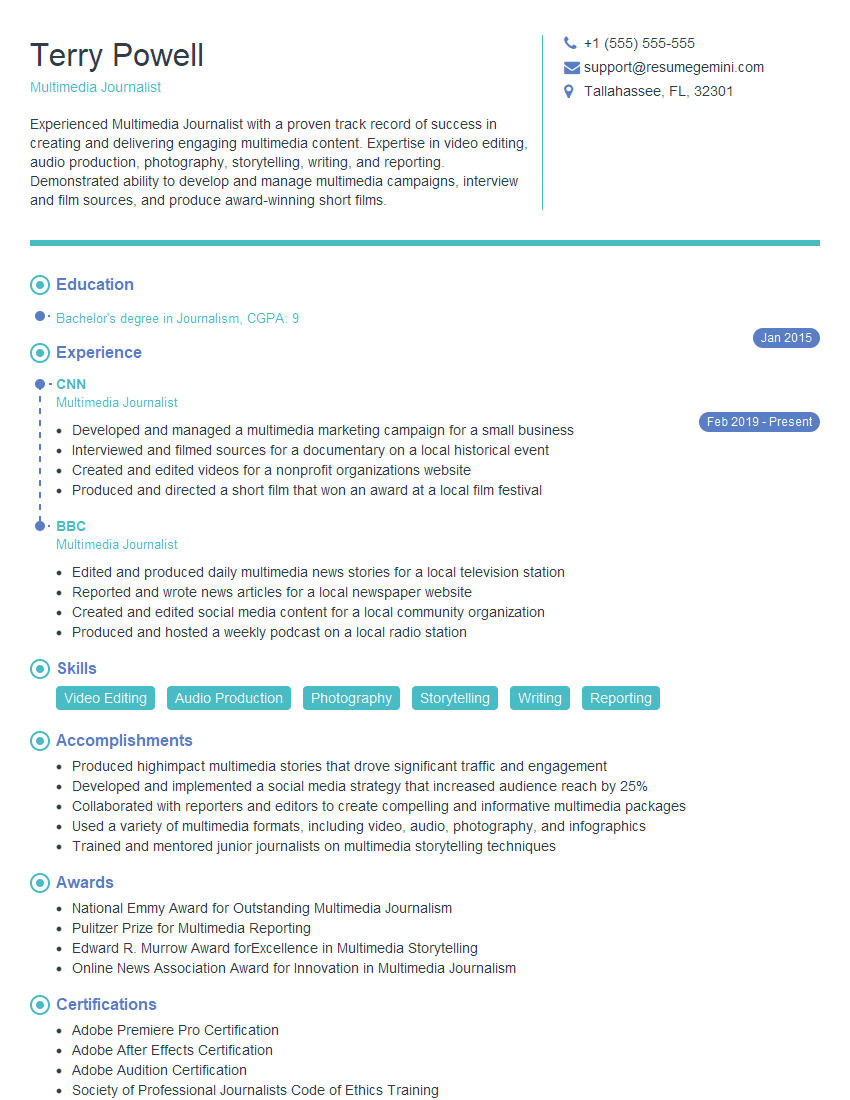
Multimedia Journalist Resume Sample
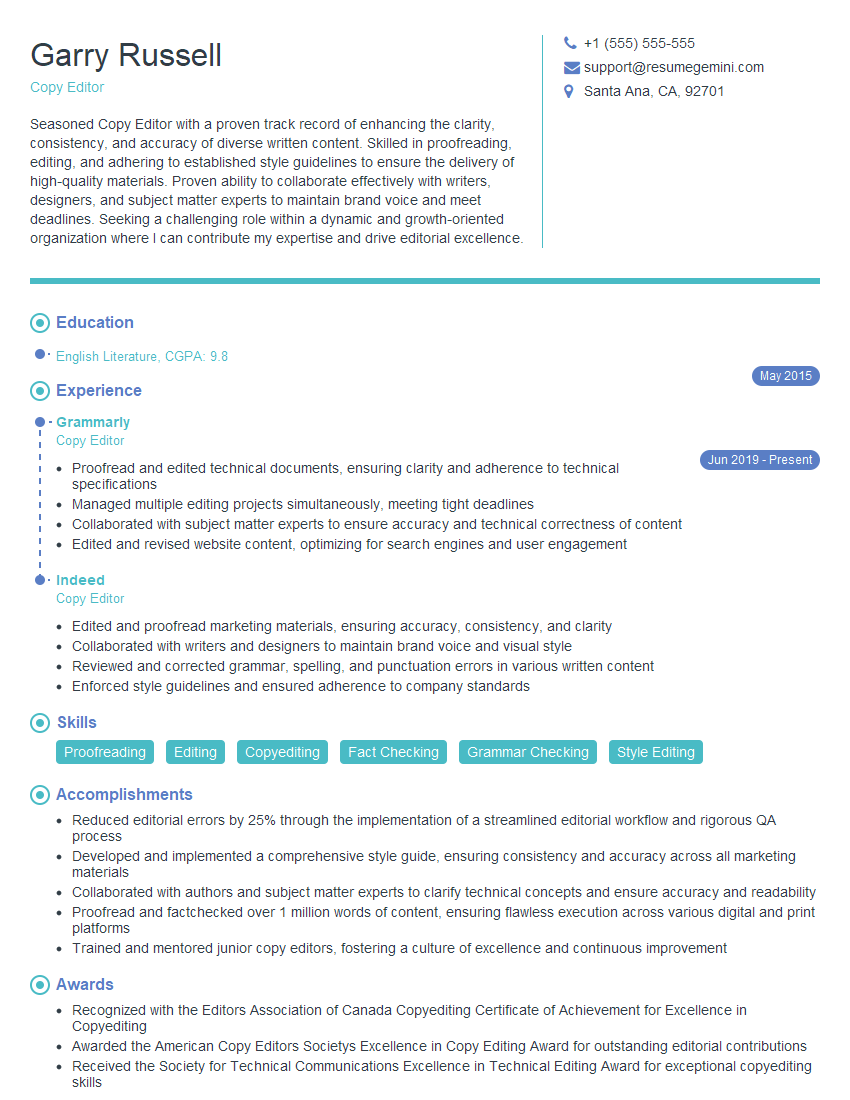
Copy Editor Resume Sample
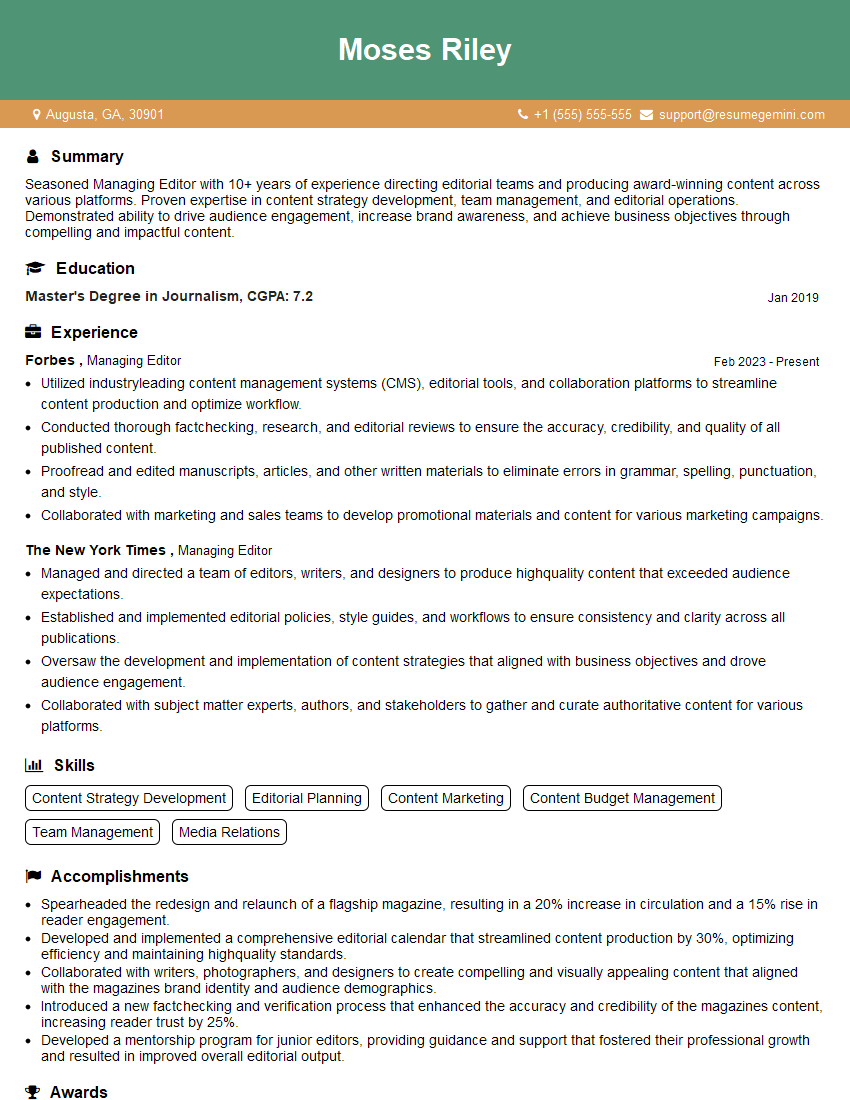
Managing Editor Resume Sample
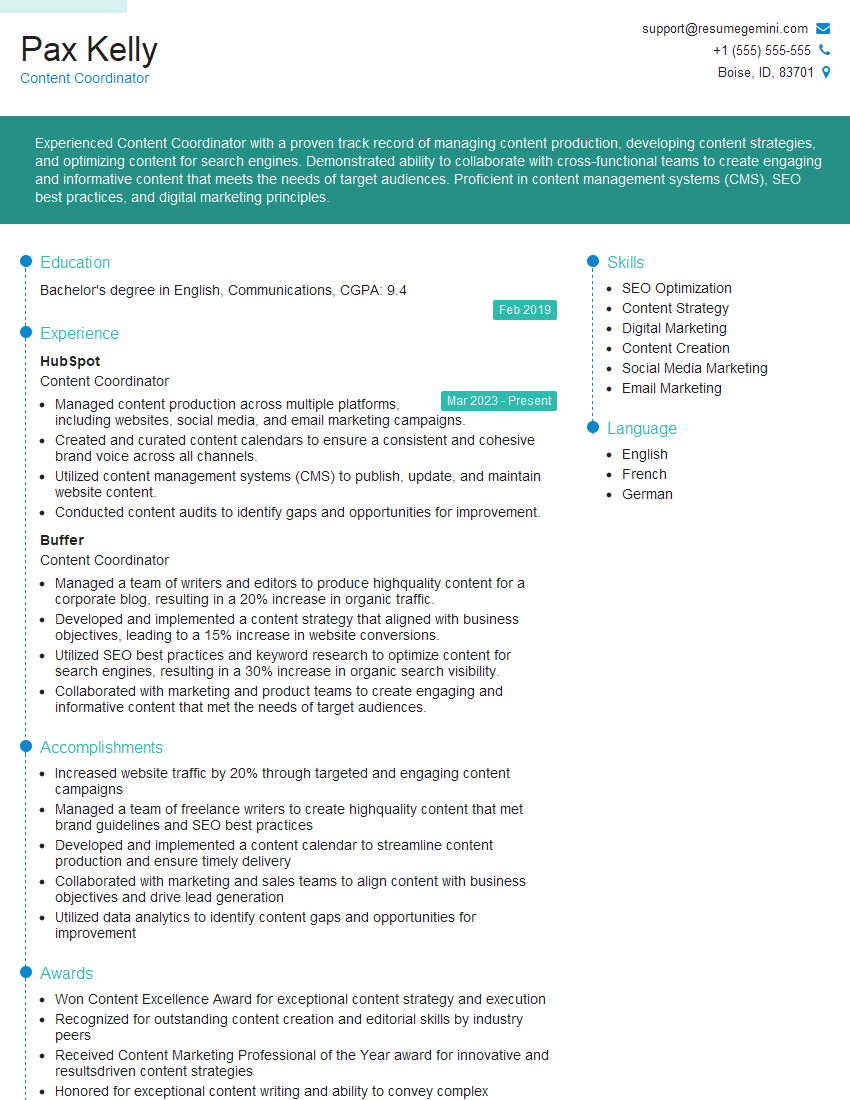
Content Coordinator Resume Sample
Explore more articles
Users Rating of Our Blogs
Share Your Experience
We value your feedback! Please rate our content and share your thoughts (optional).
What Readers Say About Our Blog
Amazing blog
hello,
Our consultant firm based in the USA and our client are interested in your products.
Could you provide your company brochure and respond from your official email id (if different from the current in use), so i can send you the client’s requirement.
Payment before production.
I await your answer.
Regards,
MrSmith
hello,
Our consultant firm based in the USA and our client are interested in your products.
Could you provide your company brochure and respond from your official email id (if different from the current in use), so i can send you the client’s requirement.
Payment before production.
I await your answer.
Regards,
MrSmith
These apartments are so amazing, posting them online would break the algorithm.
https://bit.ly/Lovely2BedsApartmentHudsonYards
Reach out at BENSON@LONDONFOSTER.COM and let’s get started!
Take a look at this stunning 2-bedroom apartment perfectly situated NYC’s coveted Hudson Yards!
https://bit.ly/Lovely2BedsApartmentHudsonYards
Live Rent Free!
https://bit.ly/LiveRentFREE
Interesting Article, I liked the depth of knowledge you’ve shared.
Helpful, thanks for sharing.
Hi, I represent a social media marketing agency and liked your blog
Hi, I represent an SEO company that specialises in getting you AI citations and higher rankings on Google. I’d like to offer you a 100% free SEO audit for your website. Would you be interested?