Interviews are opportunities to demonstrate your expertise, and this guide is here to help you shine. Explore the essential Blogs interview questions that employers frequently ask, paired with strategies for crafting responses that set you apart from the competition.
Questions Asked in Blogs Interview
Q 1. Explain your understanding of SEO best practices for blog posts.
SEO best practices for blog posts center around making your content easily discoverable and valuable to search engines and readers alike. It’s a multifaceted approach, not a one-size-fits-all solution.
Keyword Research: Before writing, I thoroughly research relevant keywords using tools like SEMrush or Ahrefs. Understanding search intent (what users are *actually* looking for) is crucial. For example, instead of just targeting “coffee,” I might target “best coffee beans for espresso” or “how to make cold brew coffee at home.” This ensures my content aligns with user needs.
On-Page Optimization: This involves optimizing the content itself. I focus on using keywords naturally within the title, headings (H1-H6), meta description, and throughout the body text. I also ensure the content is well-structured, readable, and provides value.
Content Quality: High-quality, original, and in-depth content is paramount. Thin content or duplicate content will hurt your rankings. Think comprehensive guides, helpful tutorials, or insightful analyses.
Internal and External Linking: Linking relevant blog posts within your own website (internal linking) improves navigation and distributes link juice. Linking to authoritative external sources (external linking) adds credibility and demonstrates expertise.
Image Optimization: I optimize images by using descriptive alt text, compressing files for faster loading, and using relevant file names. This helps search engines understand the content of the image.
Mobile Friendliness: Ensuring the blog is responsive and displays correctly on all devices is crucial, as Google prioritizes mobile-first indexing.
Page Speed: A slow-loading blog will negatively impact SEO. I optimize images, use caching plugins, and minimize HTTP requests to improve page speed.
By consistently applying these practices, I ensure my blog posts rank higher in search engine results pages (SERPs), driving more organic traffic.
Q 2. Describe your experience with different content management systems (CMS).
I have extensive experience with various Content Management Systems (CMS), each with its own strengths and weaknesses. My expertise includes:
WordPress: This is my go-to CMS due to its flexibility, extensive plugin ecosystem (allowing for customization and SEO optimization), and large community support. I’m proficient in using various themes and plugins, managing users, and ensuring site security.
Squarespace: A user-friendly platform ideal for simpler blogs and websites. It’s excellent for visual appeal and ease of use but offers less customization compared to WordPress.
Ghost: A headless CMS known for its clean interface and focus on writing. It’s powerful but requires more technical knowledge for complex setups.
My choice of CMS depends on the project’s specific needs and client requirements. For larger, more complex blogs requiring extensive customization, WordPress is usually the best choice. For smaller projects or those prioritizing ease of use, Squarespace might be preferred.
Q 3. How do you measure the success of a blog post?
Measuring the success of a blog post goes beyond just looking at page views. I utilize a multifaceted approach:
Website Traffic: I track organic traffic from Google Analytics to see how many visitors the post receives and from which sources.
Engagement Metrics: Time on page, bounce rate, and scroll depth reveal how engaging the content is. A high bounce rate suggests the content may not be meeting reader expectations.
Social Shares: Shares on platforms like Twitter, Facebook, and LinkedIn indicate how well the content resonates with the audience.
Comments and Feedback: Engaging comments and feedback demonstrate reader interaction and provide valuable insights.
Lead Generation: If the blog post is designed to generate leads (e.g., through email sign-ups), I track conversion rates.
Keyword Rankings: Tracking keyword rankings over time helps assess the post’s SEO performance.
By combining these metrics, I get a holistic view of a blog post’s success and can identify areas for improvement.
Q 4. What strategies do you use to increase blog engagement?
Increasing blog engagement requires a multi-pronged strategy focused on creating valuable content and fostering community.
Interactive Content: Incorporating quizzes, polls, and surveys encourages reader participation and keeps them engaged.
Visual Appeal: Using high-quality images, videos, and infographics makes the content more appealing and shareable.
Call to Action (CTA): Clear CTAs encourage readers to comment, share, subscribe, or take other desired actions.
Community Building: Responding to comments promptly and fostering discussions creates a sense of community.
Social Media Promotion: Sharing the blog post across relevant social media platforms increases visibility and drives traffic.
Email Marketing: Promoting the blog post to email subscribers ensures a wider reach.
Content Promotion: Guest posting on other relevant blogs and participating in online communities can bring in new readers.
It’s essential to analyze what works best for your specific audience and adapt your strategies accordingly. A/B testing different approaches can reveal what resonates most strongly with your readers.
Q 5. How do you handle writer’s block?
Writer’s block is a common challenge, but I have several strategies to overcome it:
Freewriting: I start by writing whatever comes to mind, even if it’s not directly related to the topic. This helps break through the initial mental barrier.
Mind Mapping: Visually organizing my thoughts and ideas helps me identify key points and create a structured outline.
Change of Scenery: Working in a different environment can stimulate creativity. A coffee shop or park can be a refreshing change.
Research and Inspiration: Reading articles, watching videos, or listening to podcasts related to the topic can reignite my interest and provide new perspectives.
Take a Break: Sometimes, stepping away from the work for a while is the best solution. A walk, exercise, or a hobby can help clear my head.
Collaborate: Discussing the topic with a colleague or friend can spark new ideas and approaches.
The key is to find what works best for you and to not get discouraged. Writer’s block is temporary; persistence is key.
Q 6. Describe your process for editing and proofreading blog content.
My editing and proofreading process is meticulous and involves several stages:
First Pass: I review the content for clarity, flow, and overall structure, ensuring the main points are well-supported and logically presented.
Second Pass: I focus on grammar, spelling, punctuation, and style consistency. I use grammar-checking tools like Grammarly to catch errors but also rely on my own careful reading.
Fact-Checking: I verify all facts, figures, and data sources to maintain accuracy.
Readability Check: I assess the readability of the text, using tools that measure sentence length and complexity, ensuring the content is accessible to the target audience.
Style Guide Adherence: I ensure consistency with the chosen style guide (e.g., AP, Chicago).
Final Proofread: A final, thorough read-through helps catch any remaining errors.
I also often have a second set of eyes review the content before publication, ensuring a high standard of quality and accuracy.
Q 7. How do you optimize blog posts for different search engines?
Optimizing blog posts for different search engines involves a combination of on-page and off-page techniques, but the core principles remain consistent across engines like Google, Bing, and others.
Schema Markup: Implementing schema markup helps search engines understand the content’s structure and context, improving visibility and click-through rates.
Structured Data: Using structured data markup (like JSON-LD) for key information like article publication date, author, and keywords improves search engine understanding.
International SEO: For reaching global audiences, I adapt content to different languages and regions, considering cultural nuances and local SEO best practices.
Bing Webmaster Tools: In addition to Google Search Console, I utilize Bing Webmaster Tools to monitor performance on Bing and address any technical issues.
Mobile-First Indexing: All optimization efforts must account for Google’s mobile-first indexing approach, prioritizing mobile-friendliness.
While specific algorithms vary, focusing on high-quality content, relevant keywords, and user experience is crucial for ranking well across all major search engines. Regular monitoring of analytics provides insight into what’s working and where adjustments are needed.
Q 8. What are some common SEO mistakes you’ve seen on blogs?
One of the most common SEO mistakes I see on blogs is neglecting keyword research. Many bloggers write excellent content but fail to optimize it for search engines. This means their posts don’t rank well, limiting their visibility to potential readers. Another frequent error is keyword stuffing – cramming keywords into the text unnaturally, which actually hurts SEO. Google’s algorithms are sophisticated and penalize sites for this practice. Poor internal linking is another issue. Internal links connect different pages on your website, helping search engines understand your site’s structure and improve navigation for users. Failing to build a strong internal link structure prevents search engines from efficiently crawling and indexing your content. Finally, ignoring mobile optimization is a critical mistake. A significant portion of internet users access websites via mobile devices; a blog that isn’t mobile-friendly will lose a large chunk of potential readers and suffer in search rankings.
For instance, I once worked with a client whose blog, while beautifully written, had almost zero organic traffic. After a thorough SEO audit, we discovered they weren’t using relevant keywords, their internal linking was haphazard, and their site was not optimized for mobile. By implementing keyword research, building a structured internal link network and ensuring mobile responsiveness, we saw a dramatic increase in organic traffic within a few months.
Q 9. How familiar are you with keyword research tools?
I’m highly familiar with a range of keyword research tools. My go-to tools include SEMrush, Ahrefs, and Google Keyword Planner. Each tool offers different strengths. SEMrush excels at competitor analysis, allowing me to identify keywords my competitors rank for and uncover opportunities. Ahrefs provides deep insights into backlinks and keyword difficulty. Google Keyword Planner, while simpler, is invaluable for understanding search volume and trends. I also frequently use tools like Moz Keyword Explorer and AnswerThePublic to gain a more comprehensive understanding of user search intent.
For example, when planning a content strategy for a client’s blog focused on sustainable living, I used Ahrefs to identify related keywords, analyzing search volume and competition. This data-driven approach informed the creation of content that targeted high-potential keywords, leading to increased visibility and improved organic traffic.
Q 10. How do you identify your target audience for a blog?
Identifying the target audience is crucial for a successful blog. It’s not about guessing; it’s about research. I typically employ a multi-pronged approach. First, I analyze the blog’s existing audience (if any) through website analytics. Tools like Google Analytics provide valuable data on demographics, geographic location, and user behavior. Secondly, I conduct thorough competitor analysis, studying their audience engagement and content strategy. This helps to pinpoint potential overlaps and identify underserved niches within the target market. Thirdly, and equally important, is creating buyer personas – detailed profiles representing the ideal reader. These profiles consider factors like age, occupation, interests, challenges, and online behavior.
For example, when developing a blog for a company selling organic baby food, we identified our target audience as millennial parents concerned about healthy eating and sustainable practices. This helped tailor our content – from blog post topics to the tone of voice used – to resonate with this specific group. We then created a detailed persona, ‘Sarah,’ a 32-year-old working mother who prioritizes organic and eco-friendly products for her child.
Q 11. How do you create a content calendar for a blog?
Creating a content calendar is essential for maintaining consistent blog posting. I typically use a spreadsheet or a dedicated project management tool like Asana or Trello. The process starts with brainstorming ideas based on keyword research, current trends, and audience interests. Then, I prioritize these ideas based on their potential impact and align them with the overall marketing strategy. Once the topics are selected, I assign deadlines and assign tasks – from writing and editing to image creation and social media promotion. Regularly reviewing and updating the calendar is crucial to adapt to changing circumstances and maintain consistency.
For example, a typical entry in my content calendar might look like this: ‘October 26th – Blog Post: ‘Top 5 Eco-Friendly Baby Products’ – Keyword: eco-friendly baby products – Author: John – Status: Draft – Social Media Promotion Plan: scheduled posts on Instagram and Facebook.’
Q 12. What is your experience with social media promotion of blog posts?
Social media promotion is a critical component of a successful blog strategy. I leverage multiple platforms, tailoring the approach to each platform’s unique features and audience. For example, on platforms like Twitter and LinkedIn, I focus on concise, engaging updates that link back to the blog post. On Instagram and Pinterest, I use high-quality images and videos to drive traffic. Facebook allows for more in-depth engagement and community building. I also employ paid social media advertising campaigns when appropriate, targeting specific demographics and interests to maximize reach and engagement. Analyzing social media analytics is crucial – tracking metrics like engagement, reach, and click-through rates helps optimize future campaigns and measure the effectiveness of the strategy.
For instance, in a recent campaign, we used a mix of organic and paid social media posts promoting a blog post about sustainable fashion. Through careful targeting and compelling visuals on Instagram, we saw a significant increase in website traffic and engagement. We then used the data from the analytics to refine our targeting for future campaigns.
Q 13. Explain your understanding of different blog post formats.
Blogs utilize various formats to cater to different preferences and content needs. List posts (‘Top 10…’, ‘5 Ways to…’) are highly popular and easily digestible. How-to guides provide step-by-step instructions. Case studies showcase real-world examples and success stories. Infographics present data visually, making complex information easy to understand. Listicles blend the appeal of lists with in-depth content. Interviews feature insights from experts in the field. Reviews offer objective assessments of products or services. And finally, opinion pieces provide a unique perspective on a relevant topic.
The choice of format depends heavily on the topic and the intended audience. For example, a blog post on ‘How to Optimize Your Blog for SEO’ would benefit from a how-to guide format, while a post comparing different SEO tools might be best suited as a comparative review.
Q 14. How do you ensure the consistency and quality of a blog’s voice and style?
Maintaining consistent voice and style is vital for brand identity and reader experience. I start by defining a style guide, outlining the tone (formal, informal, humorous, etc.), vocabulary, and sentence structure. This guide serves as a reference point for all writers contributing to the blog. Regular editorial reviews and feedback are essential to ensure consistency. Using a single author or a small team with a shared understanding of the style guide helps maintain uniformity. Finally, employing a consistent content template, including headings, subheadings, and image placement, reinforces the visual consistency of the blog.
For example, I once worked with a company that had inconsistent branding across its various platforms. By creating a comprehensive style guide that clarified the tone of voice and formatting guidelines, we managed to create a cohesive brand identity that resonated with readers and strengthened their online presence.
Q 15. How do you handle negative comments or feedback on a blog?
Handling negative comments requires a balanced approach focusing on engagement and maintaining a professional tone. Ignoring negative feedback is never a good strategy; it can damage your blog’s reputation and deter potential readers.
My strategy involves:
- Responding promptly and professionally: Acknowledge the commenter’s concerns, even if you don’t agree with them. A simple “Thank you for your feedback. I understand your point of view.” can go a long way.
- Addressing the specific issues raised: If the comment is constructive criticism, use it as an opportunity to improve. Explain your reasoning, offer clarifications, or apologize if an error occurred.
- Moderating inappropriate comments: Remove comments that are abusive, offensive, spammy, or irrelevant. A clear moderation policy is essential.
- Turning negativity into a learning opportunity: Analyze recurring negative comments to identify areas for improvement in your blog’s content, design, or overall strategy.
- Engaging in constructive dialogue (where appropriate): Sometimes, a respectful conversation can help resolve misunderstandings and even foster a stronger community.
For example, if someone criticizes an article for factual inaccuracies, I would immediately investigate, correct the error (if any), and politely reply to the commenter explaining the correction and expressing my gratitude for pointing out the mistake. This shows transparency and commitment to quality.
Career Expert Tips:
- Ace those interviews! Prepare effectively by reviewing the Top 50 Most Common Interview Questions on ResumeGemini.
- Navigate your job search with confidence! Explore a wide range of Career Tips on ResumeGemini. Learn about common challenges and recommendations to overcome them.
- Craft the perfect resume! Master the Art of Resume Writing with ResumeGemini’s guide. Showcase your unique qualifications and achievements effectively.
- Don’t miss out on holiday savings! Build your dream resume with ResumeGemini’s ATS optimized templates.
Q 16. Describe your experience with using analytics to improve blog performance.
Analytics are crucial for understanding blog performance and guiding strategic decisions. I extensively use tools like Google Analytics to track key metrics, including:
- Website traffic: Analyzing sources, demographics, and user behavior to understand audience preferences.
- Content performance: Identifying popular and underperforming posts to optimize content strategy.
- Conversion rates: Measuring the effectiveness of calls to action (CTAs), such as email subscriptions or product purchases.
- Bounce rate: Determining whether users find the content engaging or leave quickly.
- Time on page: Assessing reader engagement with specific articles.
For instance, I once noticed a significant drop in engagement with a specific type of blog post. By analyzing the data in Google Analytics, I discovered that the length and formatting were deterring readers. I adjusted the content’s structure, added more visual elements, and shortened the length, which resulted in a considerable improvement in reader engagement and time on page.
Q 17. What is your experience with link building for blogs?
Link building is a critical aspect of SEO (Search Engine Optimization) and blog promotion. It involves strategically acquiring high-quality backlinks from reputable websites to increase your blog’s authority and visibility in search engine results.
My approach to link building is multifaceted and ethical:
- Creating high-quality content: This is the foundation of successful link building. Exceptional content naturally attracts backlinks.
- Guest blogging: Contributing articles to relevant blogs within your niche, including a link back to your own blog.
- Outreach: Identifying websites relevant to my blog’s content and reaching out to their owners, suggesting links where appropriate.
- Broken link building: Finding broken links on authoritative websites and suggesting my relevant content as a replacement.
- Directory submissions: Listing my blog on relevant online directories.
For example, if I write an in-depth guide on a specific topic, I’ll proactively reach out to other bloggers and websites in that niche, highlighting the value of my resource and suggesting a link.
Q 18. How do you ensure a blog’s content is original and avoids plagiarism?
Originality and plagiarism prevention are paramount. I use a multi-pronged approach to ensure my content is unique and ethical:
- Developing original ideas: I focus on providing unique perspectives and insights, rather than simply rehashing existing information.
- Thorough research: I conduct extensive research to gather information, but always cite my sources appropriately.
- Paraphrasing and summarizing: Even when referencing existing material, I always paraphrase and summarize information in my own words.
- Using plagiarism detection tools: Tools like Grammarly and Copyscape can help identify potential plagiarism issues before publishing.
- Attributing sources properly: I consistently cite all sources using proper formatting (e.g., APA, MLA).
I consider plagiarism a serious breach of ethics and intellectual property rights, and I maintain a zero-tolerance policy towards it.
Q 19. Describe your experience with content repurposing.
Content repurposing is a highly efficient strategy that involves transforming existing content into different formats to reach a wider audience and maximize its value.
My repurposing techniques include:
- Turning blog posts into infographics: Visualizing key data and insights from lengthy blog posts.
- Creating short videos from blog posts: Summarizing main points in a concise and engaging video format.
- Developing podcasts from blog posts: Sharing information in an audio format, convenient for listeners.
- Converting blog posts into social media posts: Creating bite-sized content for various platforms.
- Creating ebooks or white papers from a series of blog posts: Combining related posts into a more comprehensive resource.
For instance, a detailed blog post about SEO best practices can be transformed into a concise infographic for visual learners or an engaging video tutorial for those who prefer audio-visual content.
Q 20. How do you collaborate with designers and developers on blog projects?
Collaboration with designers and developers is fundamental to creating a successful blog. Effective communication and a clear project scope are essential.
My approach involves:
- Clear briefings: Providing designers and developers with detailed briefs, including design specifications, content outlines, and functional requirements.
- Regular communication: Maintaining consistent communication throughout the project lifecycle, using tools like Slack or project management software.
- Providing timely feedback: Offering constructive feedback on design mockups and development progress.
- Version control: Using version control systems (e.g., Git) to track changes and collaborate efficiently.
- Joint testing and review: Collaborating on testing and reviewing the final product before launch.
For a recent blog redesign project, I worked closely with the designers and developers using a shared online document to track changes and provide feedback on the design and functionality, ensuring the final product aligned perfectly with my vision.
Q 21. What is your preferred method for managing multiple blog assignments?
Managing multiple blog assignments requires a systematic and organized approach. I rely on project management techniques and tools to maintain efficiency and productivity:
- Prioritization: I prioritize tasks based on deadlines, importance, and impact.
- Project planning: I create detailed project plans outlining tasks, timelines, and responsibilities.
- Task management tools: I utilize tools like Trello or Asana to manage tasks, track progress, and collaborate with team members.
- Time blocking: I allocate specific time slots for working on each blog assignment.
- Regular reviews: I conduct regular reviews of my progress and adjust my plan as needed.
By using a combination of these strategies, I can effectively manage several blog projects concurrently, ensuring that each one receives the attention and resources it requires to succeed.
Q 22. How do you stay up-to-date on the latest blogging trends and best practices?
Staying current in the dynamic world of blogging requires a multi-pronged approach. I actively engage in several strategies to ensure I’m always abreast of the latest trends and best practices. This includes regularly reading industry publications like Search Engine Journal, Neil Patel’s blog, and Content Marketing Institute’s resources. I also follow influential bloggers and marketing experts on platforms like Twitter and LinkedIn, participating in relevant conversations and absorbing their insights. Furthermore, I subscribe to newsletters and podcasts dedicated to blogging, SEO, and content marketing, and I attend webinars and online conferences focused on these topics. Finally, I analyze successful blogs across various niches, identifying common elements and innovative approaches. This combination of passive and active learning ensures I’m not just aware of trends, but also understand their practical implications.
Q 23. Explain your understanding of content strategy and its role in blogging.
Content strategy is the backbone of a successful blog. It’s a planned approach to creating and delivering valuable, relevant, and consistent content to a defined audience. It’s not just about writing posts; it’s about understanding your target audience’s needs, identifying keywords they’re searching for, and creating a content calendar that addresses those needs strategically over time. For example, if I’m blogging about sustainable living, my content strategy might involve creating a series of posts on reducing plastic waste, followed by posts on eco-friendly cleaning solutions, and then moving into posts on sustainable fashion. This creates a cohesive narrative and keeps the audience engaged. A strong content strategy also includes defining key performance indicators (KPIs) to measure success, such as website traffic, engagement rates, and conversions. Without a well-defined content strategy, a blog can quickly become fragmented and lose its direction.
Q 24. How do you identify and address potential ethical concerns in blogging?
Ethical considerations are paramount in blogging. Transparency is key. I always disclose any sponsored content clearly and explicitly, using labels like “sponsored post” or “affiliate link.” I avoid plagiarism by properly citing sources and always creating original content. I’m careful to avoid making misleading claims or promises, ensuring all information presented is accurate and verifiable. If I’m reviewing a product or service, I strive to offer an honest and unbiased assessment, highlighting both pros and cons. Furthermore, I am mindful of privacy, avoiding sharing personal information about individuals without their consent. Maintaining ethical standards builds trust with readers, which is essential for long-term success. If I encounter an ethical dilemma, I prioritize consulting relevant guidelines and resources before proceeding.
Q 25. Describe your experience with using blog analytics to inform future content strategies.
Blog analytics are instrumental in shaping future content strategies. I utilize tools like Google Analytics to track various metrics, including website traffic, bounce rate, time on page, and conversion rates. For example, if I notice a high bounce rate on a particular post, I might analyze its content and presentation to identify areas for improvement. If a specific topic consistently performs well, I might dedicate more resources to creating similar content. Understanding which posts resonate most with the audience, which keywords are driving traffic, and which channels are most effective allows me to optimize content for better performance and refine my overall strategy. This data-driven approach ensures I’m not simply guessing what content will work, but rather basing my decisions on concrete evidence.
Q 26. How do you manage and prioritize comments on a blog?
Managing and prioritizing blog comments requires a systematic approach. I typically moderate comments daily, approving relevant and constructive contributions, while removing spam, offensive content, or comments that violate my blog’s community guidelines. I prioritize responding to comments that raise important points or questions, as engaging with the audience fosters a sense of community and encourages further interaction. I might even feature particularly insightful comments in future posts. I use a combination of automated tools and manual review to manage the comment flow efficiently. The goal is to create a welcoming and respectful environment for discussion, while maintaining a high level of quality control.
Q 27. How do you create compelling headlines and meta descriptions for blog posts?
Compelling headlines and meta descriptions are crucial for attracting readers. Headlines should be concise, informative, and engaging, using strong verbs and keywords to capture attention and accurately reflect the content of the post. For instance, instead of “Tips for Saving Money,” a more compelling headline might be “10 Genius Money-Saving Hacks You Haven’t Tried.” Meta descriptions should provide a concise summary of the post, including relevant keywords, enticing readers to click through. Both headlines and meta descriptions should be optimized for search engines, improving the blog’s visibility in search results. A/B testing different headlines and meta descriptions can help determine which versions perform best.
Q 28. What is your experience with A/B testing blog post elements?
A/B testing is a vital part of optimizing blog performance. I regularly use A/B testing to experiment with different elements of blog posts, such as headlines, images, calls to action, and even the overall layout. For example, I might test two different headlines for the same post to see which one generates more clicks. Or, I might test different image placements to see which one improves engagement. Tools like Google Optimize allow for easy A/B testing, providing data-driven insights to improve the effectiveness of blog posts. By continuously A/B testing, I can identify the elements that resonate most with the audience and refine my content creation process accordingly.
Key Topics to Learn for Blogs Interview
- Content Strategy & Planning: Understanding the process of developing a content calendar, identifying target audiences, and aligning content with business goals. Practical application includes creating sample content strategies for different blog niches.
- SEO & Keyword Research: Mastering techniques for optimizing blog posts for search engines. This includes keyword research, on-page optimization, and understanding search engine algorithms. Practical application involves conducting keyword research for a hypothetical blog and suggesting relevant keywords.
- Content Creation & Editing: Developing engaging and informative blog posts, including writing headlines, structuring content logically, and ensuring readability. Practical application involves crafting compelling blog post outlines and understanding different content formats (e.g., listicles, how-to guides).
- Social Media Promotion: Understanding how to promote blog content through social media platforms to increase reach and engagement. Practical application involves developing a social media strategy for a specific blog post.
- Blog Analytics & Reporting: Interpreting website analytics to measure the success of blog content and identify areas for improvement. Practical application includes analyzing sample blog analytics data and drawing relevant conclusions.
- Content Management Systems (CMS): Familiarity with popular CMS platforms like WordPress, understanding their functionalities, and managing blog content effectively. Practical application involves discussing the advantages and disadvantages of different CMS platforms.
- Visual Content & Design Principles: Understanding the importance of visuals in blog posts, and applying basic design principles to create visually appealing content. Practical application involves discussing the role of images, videos, and infographics in blog post engagement.
Next Steps
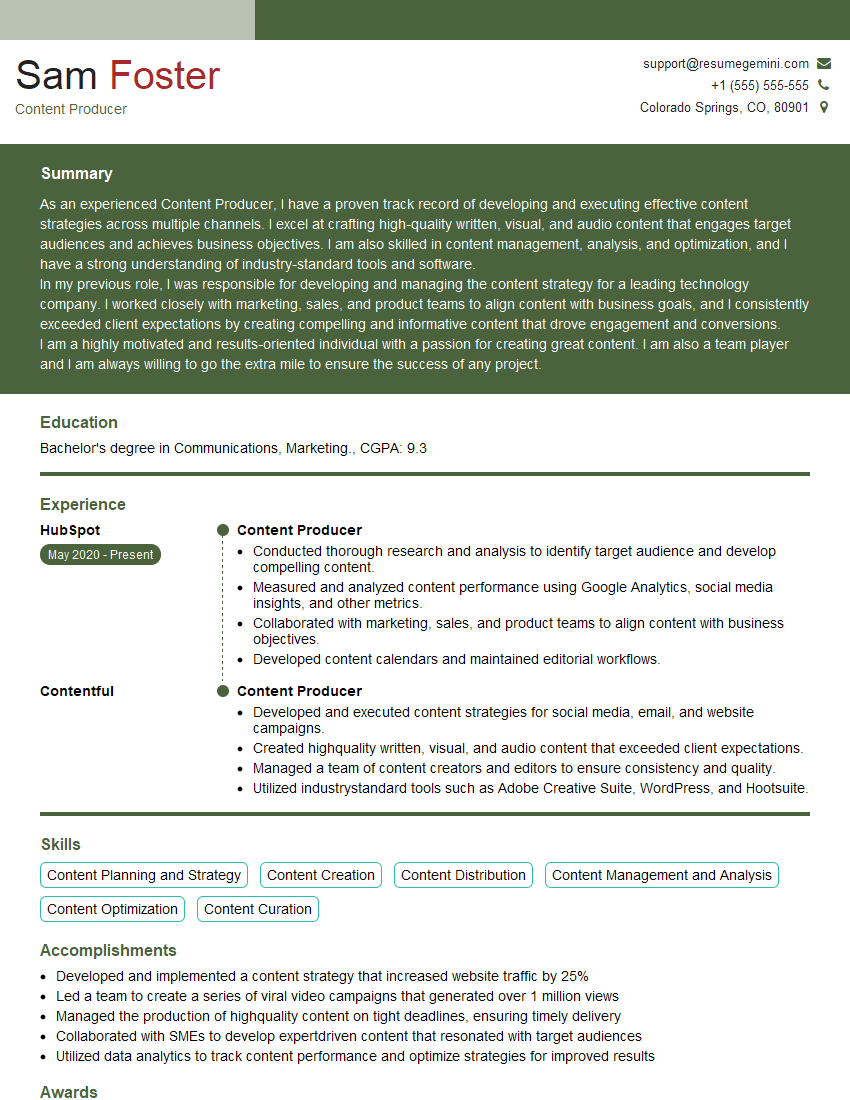
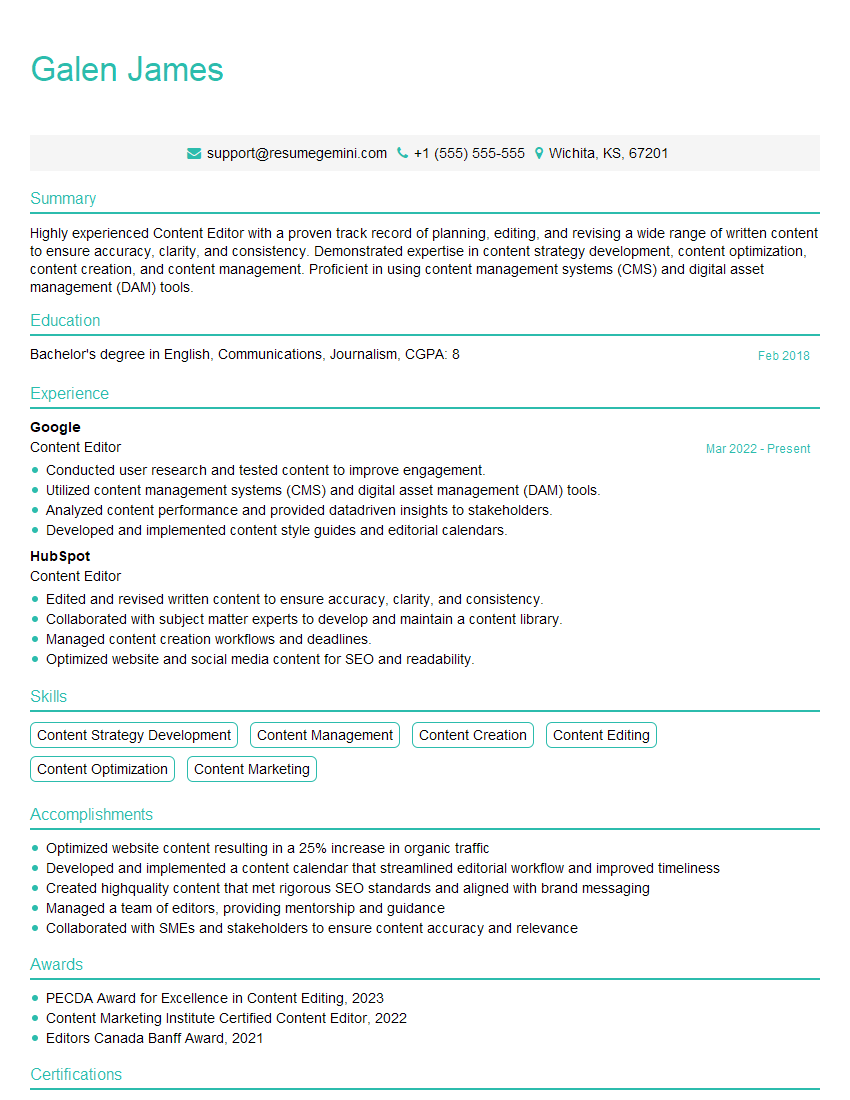
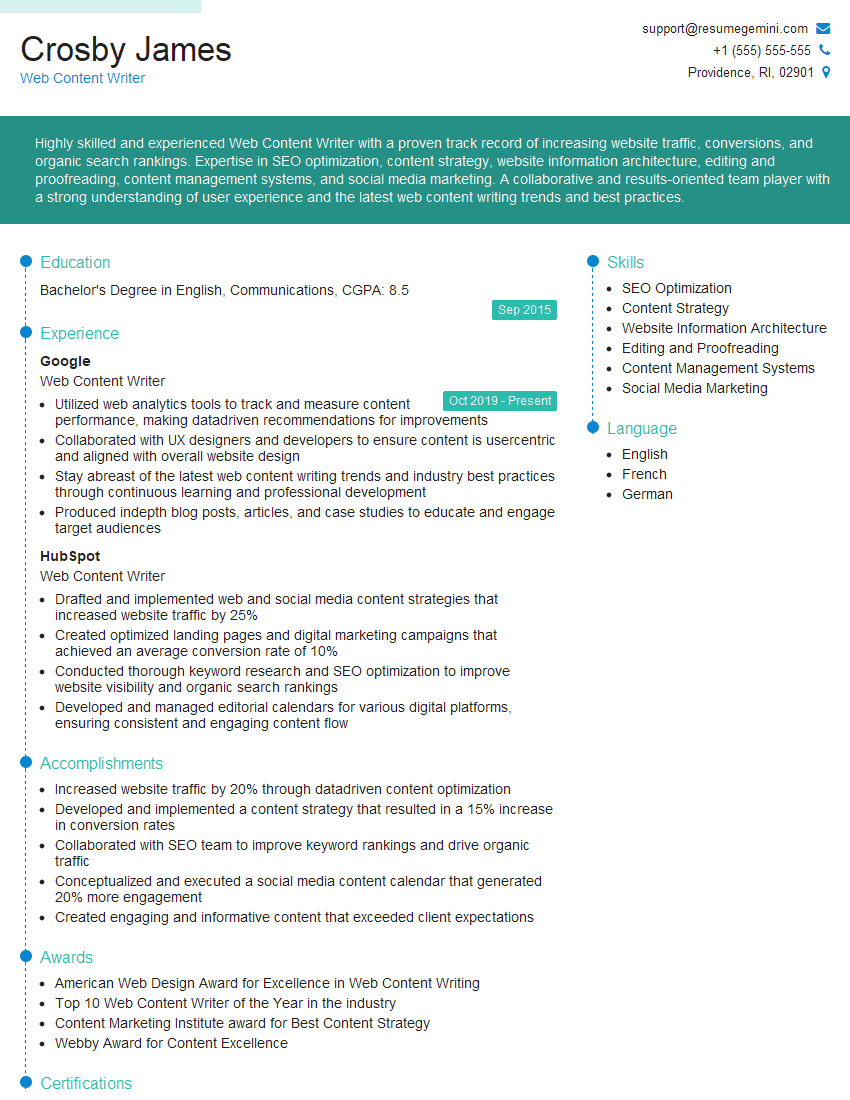
Mastering the art of blogging is crucial for career advancement in today’s digital landscape. A strong understanding of content strategy, SEO, and audience engagement can significantly boost your prospects in various roles. To maximize your chances of landing your dream job, focus on crafting an ATS-friendly resume that showcases your skills and experience effectively. ResumeGemini is a trusted resource that can help you build a professional and impactful resume, ensuring your qualifications shine. Examples of resumes tailored to blogging roles are provided to guide your resume creation process.


Explore more articles
Users Rating of Our Blogs
Share Your Experience
We value your feedback! Please rate our content and share your thoughts (optional).
What Readers Say About Our Blog
Amazing blog
hello,
Our consultant firm based in the USA and our client are interested in your products.
Could you provide your company brochure and respond from your official email id (if different from the current in use), so i can send you the client’s requirement.
Payment before production.
I await your answer.
Regards,
MrSmith
hello,
Our consultant firm based in the USA and our client are interested in your products.
Could you provide your company brochure and respond from your official email id (if different from the current in use), so i can send you the client’s requirement.
Payment before production.
I await your answer.
Regards,
MrSmith
These apartments are so amazing, posting them online would break the algorithm.
https://bit.ly/Lovely2BedsApartmentHudsonYards
Reach out at BENSON@LONDONFOSTER.COM and let’s get started!
Take a look at this stunning 2-bedroom apartment perfectly situated NYC’s coveted Hudson Yards!
https://bit.ly/Lovely2BedsApartmentHudsonYards
Live Rent Free!
https://bit.ly/LiveRentFREE
Interesting Article, I liked the depth of knowledge you’ve shared.
Helpful, thanks for sharing.
Hi, I represent a social media marketing agency and liked your blog
Hi, I represent an SEO company that specialises in getting you AI citations and higher rankings on Google. I’d like to offer you a 100% free SEO audit for your website. Would you be interested?