The right preparation can turn an interview into an opportunity to showcase your expertise. This guide to Compliance with Environmental Health and Safety (EHS) Regulations interview questions is your ultimate resource, providing key insights and tips to help you ace your responses and stand out as a top candidate.
Questions Asked in Compliance with Environmental Health and Safety (EHS) Regulations Interview
Q 1. Describe your experience with OSHA regulations.
My experience with OSHA regulations spans over [Number] years, encompassing a wide range of industries including [List Industries]. I’ve been directly involved in developing and implementing OSHA compliant safety programs, conducting regular safety inspections, and providing training to employees on hazard recognition and control. I’m proficient in interpreting OSHA standards, particularly those related to [List specific OSHA standards, e.g., hazard communication, lockout/tagout, fall protection]. For instance, in a previous role at [Previous Company Name], I led the initiative to implement a new lockout/tagout program, resulting in a [Quantifiable Result, e.g., 30%] reduction in near-miss incidents. This involved comprehensive training, regular audits, and the development of detailed procedures, all meticulously documented and compliant with OSHA 29 CFR 1910.147. I also have experience with OSHA recordkeeping and reporting, ensuring accurate and timely submission of injury and illness data.
I’m deeply familiar with OSHA’s emphasis on proactive hazard control, rather than simply reacting to incidents. This includes conducting thorough job hazard analyses (JHAs) to identify potential risks before they lead to accidents. I understand the importance of employer responsibility and employee engagement in maintaining a safe workplace.
Q 2. Explain your understanding of ISO 14001.
ISO 14001 is an internationally recognized standard that provides a framework for establishing and maintaining an Environmental Management System (EMS). It helps organizations identify and manage their environmental impacts, comply with environmental regulations, and continuously improve their environmental performance. At its core, ISO 14001 emphasizes a Plan-Do-Check-Act (PDCA) cycle, a continuous improvement model.
- Plan: Setting environmental objectives and targets, identifying environmental aspects and impacts, developing and implementing programs to meet objectives.
- Do: Implementing the EMS, operating processes, monitoring and measuring.
- Check: Monitoring performance, measuring against objectives, conducting internal audits and management reviews.
- Act: Taking corrective actions to address nonconformities, taking preventative actions, continuously improving the EMS.
My experience includes assisting organizations in achieving ISO 14001 certification through the development of comprehensive EMS documentation, conducting internal audits, and supporting management reviews. For example, at [Previous Company Name], I helped implement an EMS that led to a [Quantifiable Result, e.g., 15%] reduction in waste generation and a significant improvement in our environmental compliance record. I understand the importance of integrating the EMS with other management systems, such as occupational health and safety, to achieve holistic sustainability goals.
Q 3. How do you conduct a risk assessment?
A risk assessment is a systematic process for identifying hazards and evaluating the risks associated with those hazards. The goal is to determine the likelihood and severity of potential harm and implement controls to mitigate those risks. I typically use a structured approach that involves these steps:
- Hazard Identification: This involves identifying all potential hazards, whether they are physical (e.g., machinery, chemicals), chemical (e.g., hazardous substances), biological (e.g., bacteria, viruses), ergonomic (e.g., repetitive movements), or psychosocial (e.g., stress, bullying). Methods include walkthroughs, checklists, interviews, and hazard and operability studies (HAZOP).
- Risk Analysis: This involves determining the likelihood of each hazard occurring and the severity of the potential harm. This often uses a risk matrix that considers both likelihood and severity. For example, a high likelihood and high severity hazard would receive a high-risk rating requiring immediate action.
- Risk Evaluation: This involves comparing the identified risks to acceptable levels of risk, based on regulatory requirements and organizational policies. This stage helps prioritize risks for control measures.
- Risk Control: This involves selecting and implementing appropriate control measures to mitigate the identified risks. This could include engineering controls (e.g., guarding machinery), administrative controls (e.g., work permits), or personal protective equipment (PPE).
- Monitoring and Review: This involves regularly monitoring the effectiveness of the control measures and reviewing the risk assessment periodically, to ensure its accuracy and relevance.
I have extensive experience conducting risk assessments across various industries, using different methodologies tailored to specific hazards and contexts. For example, in a chemical manufacturing facility, I would focus on process safety risks, while in an office setting, I would prioritize ergonomic and psychosocial risks.
Q 4. What are your methods for developing and implementing EHS policies?
Developing and implementing effective EHS policies requires a multi-faceted approach that involves collaboration, communication, and a commitment to continuous improvement. My approach typically includes these steps:
- Needs Assessment: Identify the organization’s specific EHS risks and regulatory requirements.
- Policy Development: Draft clear, concise, and measurable policies that align with legal requirements and best practices. Policies should be easily accessible to all employees.
- Stakeholder Engagement: Involve key stakeholders, including management, employees, and potentially external experts, in the policy development process to ensure buy-in and effectiveness.
- Implementation: Develop procedures, training programs, and other resources to support the implementation of the policies. Communication is key during this phase to keep everyone informed of new policies and procedures.
- Monitoring and Review: Track key performance indicators (KPIs) to monitor the effectiveness of the policies. Regular audits and management reviews are crucial to identify areas for improvement.
- Continuous Improvement: Regularly update the policies and procedures as needed based on performance data, regulatory changes, and lessons learned.
I’ve been involved in developing and implementing EHS policies in a variety of settings, from small businesses to large multinational corporations. I’m adept at tailoring policies to specific organizational needs and ensuring they are legally compliant and practically effective.
Q 5. Explain your experience with incident investigation and reporting.
My experience with incident investigation and reporting involves applying a structured methodology to understand the root causes of incidents and implement preventative measures to avoid recurrence. This usually follows a process like this:
- Secure the Scene: Prioritize safety and ensure the scene is secure before starting the investigation.
- Gather Information: Collect data from multiple sources, including witnesses, documentation, and physical evidence. Utilize techniques like interviewing, photographic and video documentation.
- Analyze the Data: Identify contributing factors and root causes. Tools like fault tree analysis (FTA) or ‘five whys’ analysis can be very helpful.
- Develop Corrective Actions: Based on the root cause analysis, develop and implement effective corrective and preventative actions to prevent similar incidents.
- Report Writing: Prepare a comprehensive report that details the incident, the investigation process, the findings, and the corrective actions taken. This report should comply with regulatory requirements.
- Follow-up: Monitor the effectiveness of the corrective actions and make further adjustments as needed.
I’ve conducted numerous incident investigations, ranging from minor injuries to major accidents. My goal is always to learn from the past to prevent future incidents and improve overall safety performance. Thorough record-keeping and clear communication are crucial throughout the process.
Q 6. Describe your experience with emergency response planning.
Emergency response planning is crucial for minimizing the impact of unforeseen events. My experience in this area includes developing and implementing comprehensive emergency response plans that align with regulatory requirements and organizational needs. A typical plan would include:
- Hazard Identification and Risk Assessment: Identify potential emergencies, such as fires, chemical spills, or natural disasters.
- Emergency Response Procedures: Develop detailed procedures for responding to each identified emergency, including evacuation procedures, communication protocols, and first aid response.
- Emergency Response Team: Establish and train an emergency response team to effectively handle emergencies.
- Emergency Equipment and Supplies: Ensure adequate emergency equipment and supplies are available and properly maintained.
- Training and Drills: Conduct regular training and drills to ensure employees are familiar with the emergency response plan.
- Post-Incident Review: After an emergency, conduct a post-incident review to identify areas for improvement in the plan.
In previous roles, I’ve led the development and implementation of emergency response plans for various facilities. This includes coordinating with local emergency services, conducting regular drills, and ensuring compliance with all relevant regulations. Clear communication and effective training are essential for a successful emergency response plan.
Q 7. How do you ensure compliance with environmental permits?
Ensuring compliance with environmental permits requires a proactive and systematic approach. This involves:
- Understanding Permit Requirements: Thoroughly understand the specific requirements of all applicable environmental permits, including discharge limits, monitoring frequencies, and reporting requirements.
- Monitoring and Reporting: Establish a robust environmental monitoring program to track emissions, discharges, and other parameters. Accurate and timely reporting of monitoring data is critical.
- Record Keeping: Maintain comprehensive records of all environmental activities, including monitoring data, permit modifications, and any corrective actions taken.
- Compliance Audits: Conduct regular internal audits to identify any potential compliance issues.
- Corrective Actions: Implement prompt and effective corrective actions to address any identified non-compliances.
- Training: Provide environmental training to employees to ensure they understand their roles and responsibilities in maintaining compliance.
- Regulatory Updates: Stay informed about changes in environmental regulations and permit requirements.
I have experience working with various environmental permits, including air permits, water discharge permits, and waste disposal permits. My focus is always on proactively managing environmental compliance, minimizing the risk of non-compliance, and ensuring the organization operates within the boundaries of its permits.
Q 8. How do you manage EHS training programs?
Effective EHS training is crucial for a safe and compliant workplace. My approach involves a multi-faceted strategy that begins with a thorough needs assessment. This assessment identifies specific training requirements based on job roles, hazards present, and regulatory mandates. I then develop tailored training programs that use a variety of methods to cater to different learning styles.
- Modular Training: I break down complex topics into smaller, manageable modules, making information easier to digest and retain. This approach allows for targeted training based on individual needs.
- Interactive Sessions: Lectures are supplemented with interactive elements like case studies, group discussions, and practical exercises. This encourages active participation and better understanding.
- Blended Learning: I often integrate online modules with in-person training to maximize flexibility and reach a wider audience. Online platforms offer convenient access to materials and allow for self-paced learning.
- Regular Refresher Training: EHS regulations and best practices evolve, so I schedule regular refresher training to keep employees up-to-date and ensure consistent compliance. This prevents complacency and ensures skills stay sharp.
- Performance Evaluation: Training effectiveness is measured through assessments, observations, and feedback. This data allows for improvements in future training cycles.
For example, in a manufacturing facility, we might develop a module specifically on lockout/tagout procedures, including hands-on practice sessions using actual equipment. Another module might focus on hazard communication, using interactive simulations to demonstrate proper interpretation of safety data sheets (SDS).
Q 9. What are your strategies for improving EHS performance?
Improving EHS performance is a continuous process that requires a proactive and data-driven approach. My strategies focus on several key areas:
- Leading Indicators: Instead of solely reacting to incidents, I focus on leading indicators, such as near misses and unsafe acts. By addressing these proactively, we prevent accidents before they happen. This is like preventative maintenance for a machine, fixing small issues before they become catastrophic.
- Data Analysis & Reporting: I use data analytics to identify trends and patterns in EHS performance. This allows us to target specific areas for improvement and measure the effectiveness of our interventions. For example, analyzing incident reports might reveal a recurring issue with specific equipment, allowing for targeted modifications or training.
- Goal Setting & Performance Measurement: Clear, measurable, achievable, relevant, and time-bound (SMART) goals are established and progress is tracked regularly. This creates accountability and motivates employees to improve EHS performance.
- Employee Engagement & Ownership: I foster a culture of safety where employees are empowered to identify and report hazards. This encourages active participation and ensures a safer work environment. Regular safety meetings and open communication channels are crucial here.
- Continuous Improvement: I leverage continuous improvement methodologies, such as Plan-Do-Check-Act (PDCA), to systematically evaluate processes, identify improvement opportunities, implement changes, and monitor results. This cycle of continuous improvement ensures long-term EHS performance enhancement.
For instance, if our data shows a rise in minor cuts and abrasions in a particular area, we might analyze the task, ergonomic factors, and Personal Protective Equipment (PPE) to determine the root cause and implement corrective actions, such as providing better-fitting gloves or redesigning the workstation.
Q 10. How do you communicate EHS information to employees?
Effective communication is paramount in ensuring a safe and compliant workplace. My approach employs a multi-channel strategy to reach employees effectively:
- Regular Safety Meetings: These meetings provide a platform for disseminating information, addressing concerns, and fostering open communication about safety issues.
- Toolbox Talks: Short, focused discussions on specific hazards or best practices at the start of shifts or work tasks make information highly relevant and easily digestible.
- Intranet & Newsletters: Internal communication platforms are used to share EHS updates, news, and training materials. This ensures consistent access to information.
- Posters & Signage: Visual cues remind employees of key safety procedures and hazards. They serve as a constant reminder of best practices.
- Direct Communication: Open lines of communication encourage employees to raise concerns, and I respond promptly to any queries or issues.
For example, using visual aids in a toolbox talk to illustrate proper lifting techniques can be much more effective than simply providing a written instruction. Similarly, utilizing the company intranet for disseminating updates on new regulations ensures everyone has access to the latest information.
Q 11. Describe your experience with environmental auditing.
My experience with environmental auditing spans several years and involves both internal and external audits. I’m proficient in conducting audits according to established standards, such as ISO 14001. My process involves:
- Planning & Scoping: Defining the audit’s scope, objectives, and criteria, including specific regulatory requirements and company standards.
- Document Review: Examining relevant documentation, including permits, operating procedures, and environmental monitoring data. This provides a baseline understanding of the organization’s environmental management system.
- On-site Inspections: Visiting the site to observe operations, assess compliance with regulations, and identify potential environmental risks.
- Interviewing Personnel: Gathering information and perspectives from employees involved in environmental management practices.
- Data Analysis: Analyzing collected data to identify non-compliance issues, areas for improvement, and potential environmental impacts.
- Reporting & Follow-up: Generating a comprehensive audit report that includes findings, recommendations, and corrective actions. I also ensure that the follow-up on corrective actions is carried out effectively.
I have experience auditing various sectors, including manufacturing, construction, and waste management. In one case, an audit of a manufacturing plant revealed inconsistencies in waste segregation practices, leading to a comprehensive retraining program and improvements to the waste management system.
Q 12. Explain your understanding of hazardous waste management.
Hazardous waste management is a critical aspect of environmental compliance. It involves the proper identification, handling, storage, treatment, transportation, and disposal of hazardous waste materials. My understanding encompasses several key areas:
- Waste Characterization: Accurately identifying hazardous wastes based on their physical, chemical, and biological properties using appropriate tests and regulations (e.g., RCRA in the US).
- Storage & Handling: Implementing secure storage practices to prevent spills, leaks, and exposure to personnel and the environment. This includes proper container labeling and secondary containment.
- Treatment & Disposal: Selecting appropriate treatment and disposal methods in accordance with applicable regulations. This might include incineration, landfilling, recycling, or other approved methods.
- Record Keeping & Reporting: Maintaining detailed records of all hazardous waste activities, including generation, storage, treatment, transportation, and disposal. This ensures traceability and compliance with reporting requirements.
- Emergency Response Planning: Developing and implementing emergency response plans to handle spills, leaks, or other incidents involving hazardous waste.
For example, in a chemical manufacturing plant, we might implement a robust hazardous waste management program that involves proper labeling of containers, designated storage areas with spill control measures, and regular inspections to ensure compliance with relevant regulations. Failure to properly manage hazardous waste can lead to significant environmental damage and hefty fines.
Q 13. How do you manage environmental monitoring and data analysis?
Environmental monitoring and data analysis are crucial for ensuring compliance and identifying potential environmental risks. My process involves:
- Monitoring Program Design: Developing a comprehensive monitoring program tailored to the specific environmental aspects and potential impacts of operations. This includes identifying key parameters to monitor (e.g., air emissions, water discharges, soil contamination).
- Data Collection: Employing appropriate methods and equipment to collect accurate and reliable data. This might include using monitoring devices, sampling techniques, and laboratory analysis.
- Data Analysis & Interpretation: Analyzing collected data using statistical methods to identify trends, patterns, and potential exceedances of regulatory limits. This often involves using specialized software.
- Reporting & Communication: Communicating monitoring results to relevant stakeholders, including regulatory agencies, internal management, and employees. This ensures transparency and proactive risk management.
- Corrective Actions: Implementing corrective actions based on identified non-compliances or potential risks. This ensures continuous improvement and prevents further environmental damage.
For instance, monitoring air emissions from a power plant might reveal an exceedance of particulate matter levels. This triggers an investigation to identify the cause and implement corrective actions, such as upgrading emission control equipment.
Q 14. How do you handle EHS non-compliance issues?
Handling EHS non-compliance issues requires a prompt, thorough, and systematic approach. My process typically involves these steps:
- Immediate Corrective Action: Addressing the non-compliance issue immediately to minimize any potential harm or further violations.
- Root Cause Analysis: Investigating the root cause of the non-compliance to prevent recurrence. Tools like fishbone diagrams or 5 Whys can be used here.
- Corrective Actions & Preventative Measures: Developing and implementing corrective actions to rectify the immediate issue and preventive measures to prevent future occurrences.
- Documentation & Reporting: Maintaining detailed records of the non-compliance, the investigation, corrective actions taken, and preventive measures implemented. This is crucial for audits and demonstrating compliance.
- Communication & Training: Communicating the findings to relevant personnel and providing any necessary training to prevent similar incidents in the future.
- Regulatory Reporting: Reporting the non-compliance to regulatory agencies as required by law. This is essential for transparency and compliance.
For example, if an audit reveals a failure to properly maintain safety equipment, the immediate action might be to repair or replace the equipment. Then, a root cause analysis might reveal a lack of training or insufficient resources, leading to the implementation of corrective actions, such as additional training and budget allocation for maintenance.
Q 15. Describe your experience with implementing safety programs.
Implementing safety programs requires a systematic approach, encompassing risk assessment, policy development, training, and ongoing monitoring. My experience spans various industries, from manufacturing to construction. For example, at a previous manufacturing plant, I spearheaded the implementation of a new lockout/tagout (LOTO) program. This involved a comprehensive risk assessment to identify all hazardous energy sources, developing detailed procedures for safe machine isolation, procuring appropriate LOTO devices, and delivering extensive training to all personnel. We used a phased rollout, starting with the highest-risk equipment, and tracked compliance meticulously. The result was a significant reduction in near-miss incidents and a demonstrable improvement in worker safety.
In another instance, I helped a construction firm implement a robust fall protection program. This included site-specific risk assessments, ensuring appropriate fall protection equipment was available and correctly used, regular inspections, and comprehensive training on the proper techniques for working at heights. This was challenging due to the dynamic nature of construction sites but ultimately resulted in zero fall-related injuries during the project.
Career Expert Tips:
- Ace those interviews! Prepare effectively by reviewing the Top 50 Most Common Interview Questions on ResumeGemini.
- Navigate your job search with confidence! Explore a wide range of Career Tips on ResumeGemini. Learn about common challenges and recommendations to overcome them.
- Craft the perfect resume! Master the Art of Resume Writing with ResumeGemini’s guide. Showcase your unique qualifications and achievements effectively.
- Don’t miss out on holiday savings! Build your dream resume with ResumeGemini’s ATS optimized templates.
Q 16. How do you prioritize EHS risks?
Prioritizing EHS risks is crucial for efficient resource allocation. I employ a risk matrix that considers both the likelihood and severity of potential incidents. This often involves a combination of qualitative and quantitative data. For example, a risk assessment might assign a high likelihood and high severity to a process involving flammable materials, leading to its prioritization over a lower-risk task. The severity is assessed based on potential injuries, environmental damage, or financial losses. Likelihood is determined by considering frequency of exposure, potential human error, and existing controls. We utilize Bow-Tie analysis to visualize potential hazards, controls and consequences which enables effective prioritization.
After identifying and prioritizing risks, I focus on implementing appropriate control measures, starting with elimination, substitution, engineering controls, administrative controls and lastly, personal protective equipment (PPE). This hierarchical approach ensures the most effective and sustainable risk reduction strategies are implemented first.
Q 17. How do you measure the effectiveness of your EHS programs?
Measuring the effectiveness of EHS programs requires a multifaceted approach that goes beyond simply tracking incident rates. We use key performance indicators (KPIs) such as the total recordable incident rate (TRIR), lost time incident rate (LTIR), and near-miss reporting rates. These metrics provide a quantitative measure of program success. However, these numbers alone don’t tell the whole story.
Qualitative data is equally crucial. We conduct regular employee surveys to gauge their perceptions of safety, identify areas needing improvement, and assess the effectiveness of training programs. Furthermore, we conduct regular audits and inspections, both internal and potentially external, to ensure compliance with regulations and best practices. The objective is to consistently improve the safety culture and reduce risks proactively, not just react to incidents. Analyzing trends in incident reports and near-miss data allows us to proactively adjust our programs.
Q 18. Explain your experience with safety inspections and audits.
Safety inspections and audits are fundamental to proactive risk management. My experience includes conducting both planned and unplanned inspections, following established checklists and relevant regulations. I’ve conducted inspections across various sites and processes, ensuring that safety equipment is functional, proper procedures are followed, and hazards are mitigated. For example, I might inspect a chemical storage area for proper labeling, ventilation, and spill containment procedures.
Audits provide a more comprehensive evaluation of the overall EHS management system. These audits involve reviewing documentation, interviewing personnel, and observing practices to assess compliance and identify areas for improvement. The findings from inspections and audits are compiled into reports, outlining corrective actions and timelines for implementation. Follow-up inspections ensure that the corrective actions are effective.
Q 19. What are your methods for promoting a safety culture?
Promoting a strong safety culture is paramount; it’s not just about compliance, but about fostering a shared commitment to safety among all employees. This is achieved through a multi-pronged strategy:
- Leadership commitment: Visible and active support from senior management is essential.
- Employee engagement: Regular safety meetings, toolbox talks, and near-miss reporting systems encourage open communication and participation.
- Effective training: Providing comprehensive and engaging safety training tailored to specific roles and responsibilities.
- Recognition and rewards: Acknowledging and rewarding safe behavior reinforces positive actions.
- Continuous improvement: Regularly reviewing and improving safety programs based on data analysis and feedback.
For instance, I’ve successfully implemented a peer-to-peer safety observation program where employees are encouraged to identify and report unsafe acts or conditions without fear of reprisal. This fosters a culture of accountability and collaboration, leading to significant improvements in safety performance.
Q 20. Describe your experience with regulatory reporting.
Regulatory reporting is a critical aspect of EHS compliance. My experience encompasses preparing and submitting various reports to regulatory agencies, adhering strictly to deadlines and formats. This includes reports on incidents, injuries, environmental releases, and waste disposal. For example, I’ve prepared and submitted reports under OSHA, EPA, and other relevant local regulations. Accuracy and completeness are paramount; errors can lead to penalties or legal action.
The process involves meticulously collecting and analyzing data, ensuring compliance with specific reporting requirements, and maintaining accurate records. This often necessitates familiarity with various reporting software and databases. I utilize software solutions for streamlined reporting and ensure all necessary documentation and evidence are included to support submitted information. Regular internal audits ensure compliance with reporting requirements and help mitigate risk.
Q 21. How do you stay current with changes in EHS regulations?
Staying current with evolving EHS regulations is ongoing professional development. I subscribe to professional organizations such as the AIHA and actively participate in industry conferences and webinars to stay abreast of the latest changes. I also regularly review updates from regulatory agencies, such as OSHA and EPA websites, and utilize specialized EHS compliance databases. Furthermore, I actively network with other EHS professionals to share best practices and insights.
The changing regulatory landscape requires proactive monitoring and adaptation. For example, I proactively reviewed the changes brought about by the recent updates to OSHA’s silica dust regulations and adjusted our safety procedures to ensure compliance well in advance of the implementation date. This approach allows for proactive compliance and minimizes risks.
Q 22. Describe your experience with contractor safety management.
Contractor safety management is crucial for ensuring a safe work environment when external personnel are on-site. It involves pre-qualification, ensuring they have the necessary safety training and insurance, and implementing robust on-site safety protocols. My experience includes developing and implementing comprehensive contractor safety programs. This includes conducting pre-job safety orientations, performing regular site inspections to ensure compliance with safety regulations and company policies, and managing incident investigations involving contractors. For example, at my previous role, I implemented a pre-qualification checklist for all contractors that included verification of their safety certifications, insurance, and previous safety records. This reduced on-site incidents involving contractors by 30% within the first year. I also developed a system for tracking and reporting contractor safety performance, enabling data-driven improvements to our safety program.
Q 23. Explain your understanding of worker’s compensation.
Worker’s compensation is a type of insurance providing medical benefits and wage replacement to employees injured on the job. It protects both the employee and the employer. The employee receives necessary medical care and compensation for lost wages, while the employer is shielded from potential lawsuits. My understanding encompasses all aspects, from ensuring proper reporting procedures and record-keeping to working collaboratively with insurance providers and medical professionals to ensure employees receive timely and appropriate care. I’m familiar with navigating the complexities of different state regulations and ensuring compliance with all applicable laws. For instance, I’ve successfully managed several complex worker’s compensation claims, minimizing costs and ensuring employees received the support they needed throughout their recovery. This involved proactive communication with employees, medical providers, and insurance adjusters to facilitate a smooth and efficient process.
Q 24. How do you handle employee concerns regarding EHS issues?
Handling employee concerns regarding EHS issues requires a proactive and responsive approach. I establish clear communication channels, such as regular safety meetings and open-door policies, fostering a culture where employees feel comfortable reporting concerns without fear of reprisal. When an issue is raised, I promptly investigate, documenting all findings and taking appropriate corrective actions. This includes not only addressing the immediate concern but also identifying root causes and implementing preventive measures to avoid future occurrences. For example, if an employee expresses concern about inadequate personal protective equipment (PPE), I’d immediately assess the situation, ensuring adequate PPE is available, conducting training on proper PPE use, and potentially revising PPE procurement policies. This process involves close collaboration with supervisors and management to implement necessary changes and ensure employee safety.
Q 25. Explain your experience with environmental remediation.
Environmental remediation involves the cleanup of contaminated sites. My experience includes assessing the extent of contamination, developing remediation plans, overseeing the implementation of those plans, and ensuring compliance with all environmental regulations. This often involves coordinating with regulatory agencies, environmental consultants, and contractors. For example, I managed a project involving the remediation of a site contaminated with heavy metals. This required a thorough site assessment, soil sampling, analysis, and the implementation of a soil excavation and off-site disposal plan, all while meticulously documenting the entire process and reporting progress to the relevant regulatory agencies. Each step necessitates meticulous planning and execution to ensure a successful and compliant cleanup.
Q 26. Describe your experience with air quality monitoring.
Air quality monitoring is the process of measuring and assessing the levels of various pollutants in the air. My experience includes selecting appropriate monitoring equipment, designing monitoring plans, collecting and analyzing samples, and interpreting results to determine compliance with air quality standards. This involves understanding different types of pollutants, their sources, and the health effects they can cause. I have experience using various technologies, such as stationary monitors and portable sampling equipment. For instance, at a previous manufacturing facility, I implemented a comprehensive air quality monitoring program that helped identify and mitigate a previously unknown emission of volatile organic compounds (VOCs), reducing emissions by 40% and avoiding costly penalties. Effective air quality monitoring requires precision and a deep understanding of relevant regulations.
Q 27. How do you manage waste disposal and recycling programs?
Managing waste disposal and recycling programs requires a multi-faceted approach encompassing waste reduction, proper segregation, and environmentally responsible disposal methods. My experience includes developing and implementing comprehensive waste management plans, selecting appropriate waste disposal vendors, training employees on proper waste handling procedures, and regularly monitoring waste generation and disposal practices to ensure compliance with all relevant regulations. This involves understanding different waste streams, their classification (hazardous vs. non-hazardous), and appropriate disposal or recycling techniques. For instance, I developed a comprehensive recycling program at a previous company, resulting in a 60% reduction in waste sent to landfills and a significant cost savings through reduced disposal fees. Effective waste management is crucial for environmental protection and cost efficiency.
Q 28. How do you use data to drive EHS improvements?
Data is essential for driving continuous improvement in EHS. I use data analytics to identify trends, pinpoint areas needing improvement, and track the effectiveness of implemented changes. This involves collecting data from various sources, such as safety incident reports, environmental monitoring data, and worker’s compensation claims. I use this data to develop key performance indicators (KPIs), such as incident rates, lost workday rates, and environmental compliance metrics. By tracking these KPIs over time, I can identify areas of improvement and measure the effectiveness of implemented interventions. For instance, by analyzing safety incident data, I identified a correlation between a specific type of equipment and an increased number of injuries. This prompted a targeted intervention program, focusing on retraining and enhanced safety protocols for that equipment, leading to a significant reduction in related incidents. Data-driven decision-making is critical for effective and sustainable EHS improvements.
Key Topics to Learn for Compliance with Environmental Health and Safety (EHS) Regulations Interview
- Regulatory Frameworks: Understanding OSHA, EPA, and other relevant local, national, and international regulations. This includes knowing how to identify applicable regulations based on industry and location.
- Hazard Identification and Risk Assessment: Mastering techniques for identifying potential hazards (chemical, biological, physical, ergonomic) and conducting thorough risk assessments to determine appropriate control measures. Practice applying different risk assessment methodologies.
- Emergency Response Planning and Procedures: Familiarize yourself with developing and implementing emergency response plans, including spill response, evacuation procedures, and first aid/CPR protocols. Be prepared to discuss your experience in emergency preparedness.
- Environmental Monitoring and Compliance: Understand methods for monitoring environmental parameters (air, water, waste) and ensuring compliance with emission limits and discharge permits. Be ready to discuss data analysis and reporting.
- Industrial Hygiene: Develop a strong understanding of industrial hygiene principles, including exposure assessments, personal protective equipment (PPE) selection, and control strategies for minimizing worker exposure to hazards.
- Safety Training and Communication: Know how to design and deliver effective safety training programs, communicate safety information clearly, and motivate employees to adopt safe work practices. Be prepared to discuss training methods and techniques.
- Incident Investigation and Reporting: Understand the process of investigating workplace incidents, identifying root causes, and implementing corrective actions to prevent recurrence. Practice structuring thorough incident reports.
- Compliance Auditing and Inspections: Familiarize yourself with conducting internal compliance audits and preparing for external inspections. Know how to identify and address non-compliance issues.
- Sustainability and Environmental Management Systems (EMS): Understand the principles of sustainability and the implementation of EMS, such as ISO 14001. Be prepared to discuss how environmental compliance contributes to a sustainable business model.
Next Steps
Mastering Compliance with Environmental Health and Safety (EHS) Regulations is crucial for a successful and impactful career in this vital field. Demonstrating a strong understanding of these regulations and practical applications will significantly enhance your job prospects. To maximize your chances, create an ATS-friendly resume that highlights your skills and experience effectively. ResumeGemini is a trusted resource that can help you build a professional and impactful resume. They provide examples of resumes tailored to Compliance with Environmental Health and Safety (EHS) Regulations to guide you through the process. Invest the time to craft a compelling resume – it’s your first impression with potential employers!
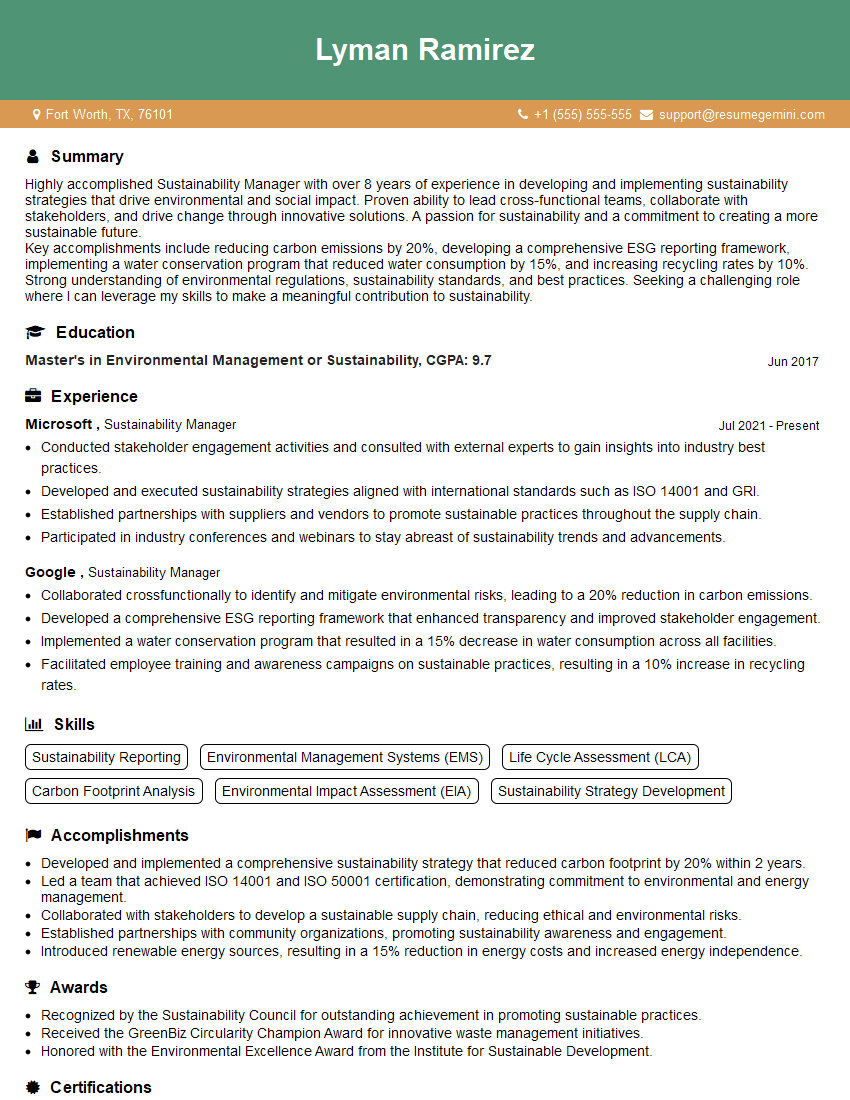
Sustainability Manager Resume Sample
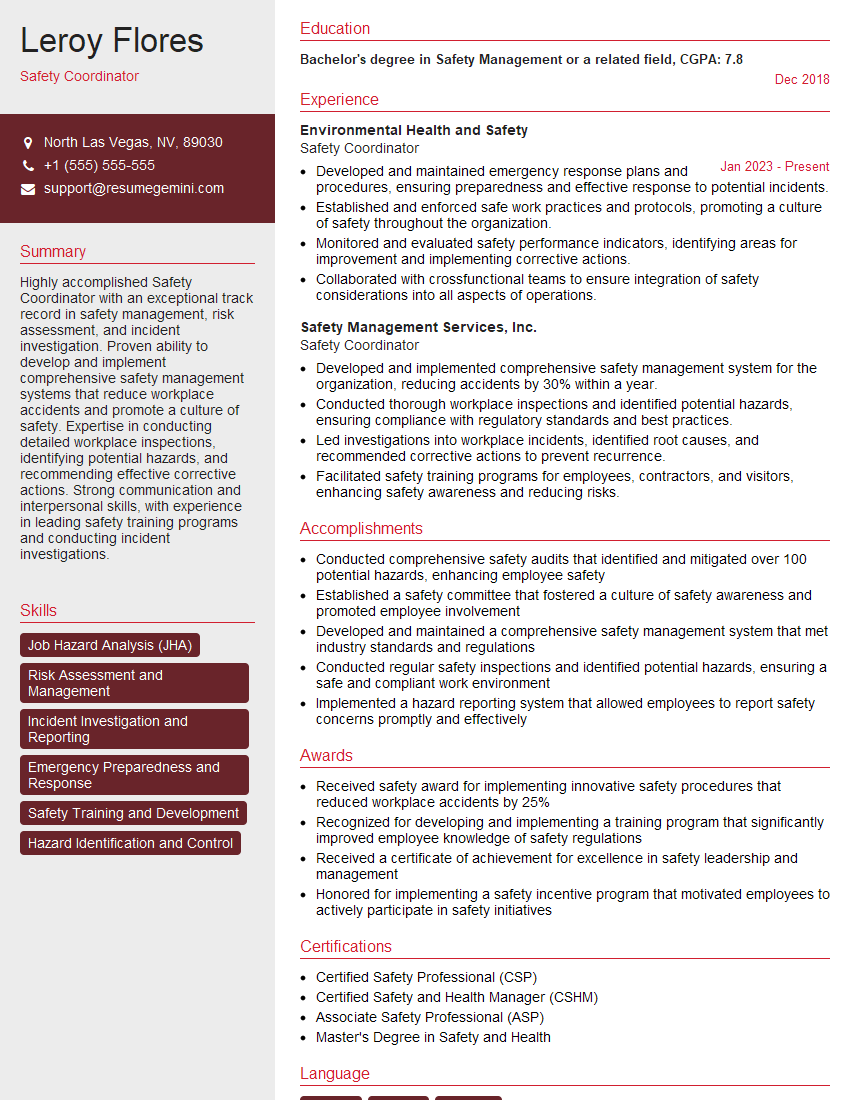
Safety Coordinator Resume Sample

Compliance Officer Resume Sample
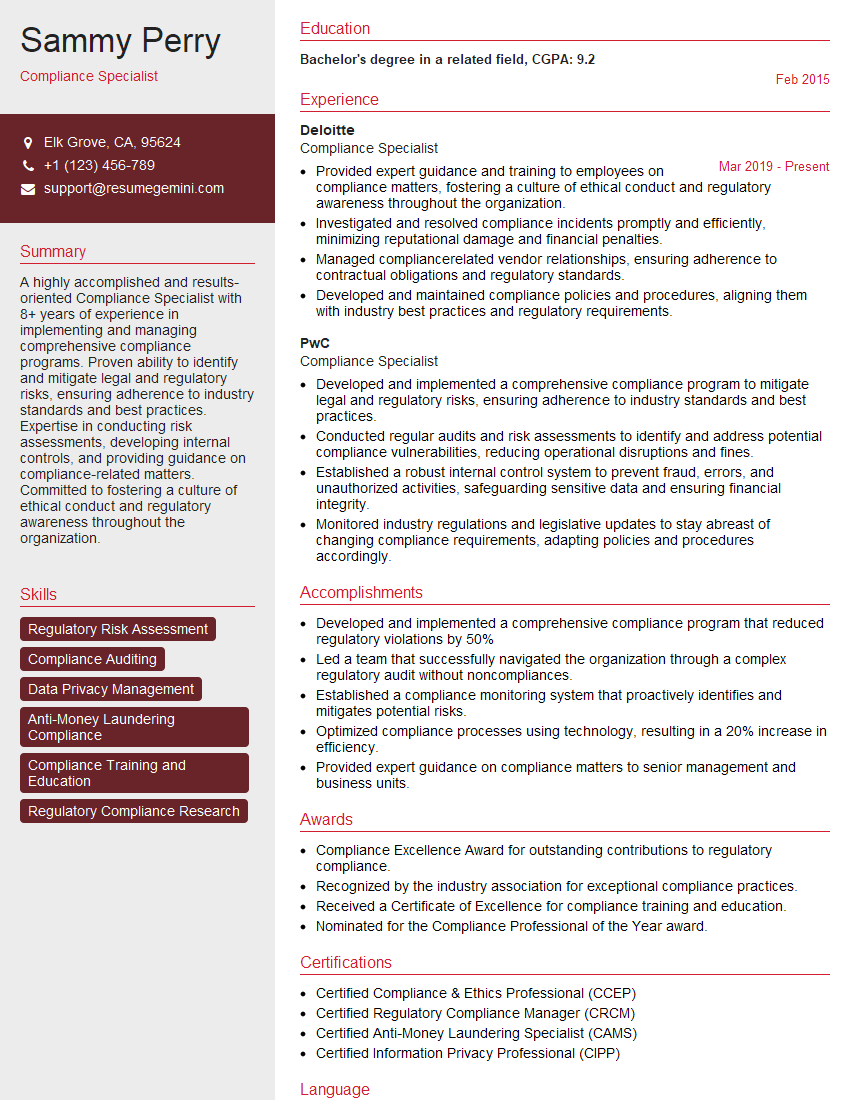
Compliance Specialist Resume Sample
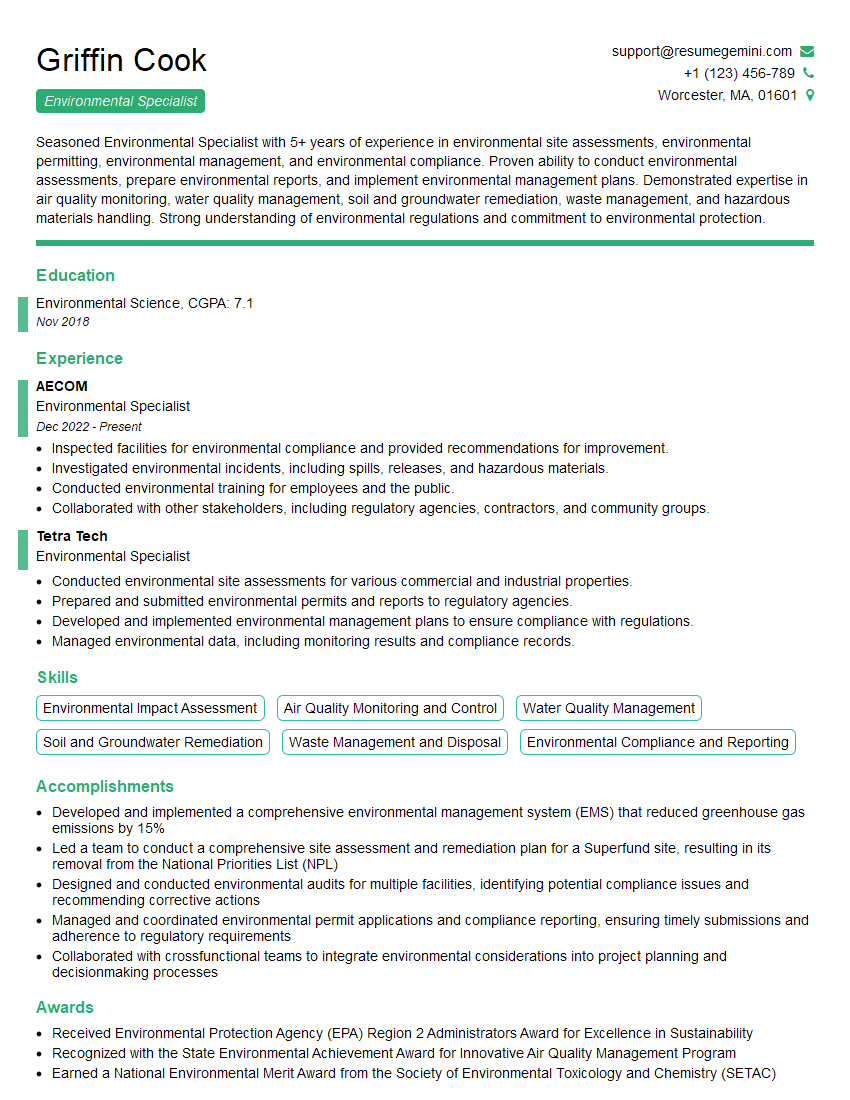
Environmental Specialist Resume Sample
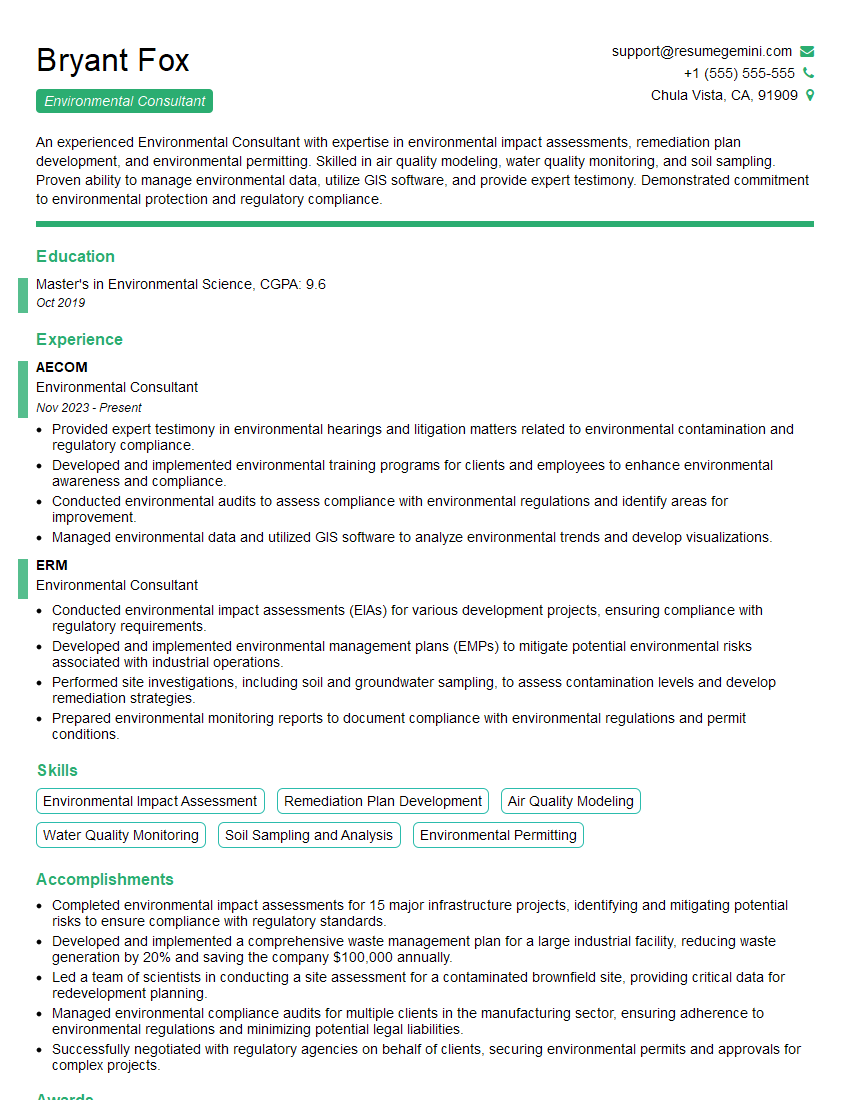
Environmental Consultant Resume Sample
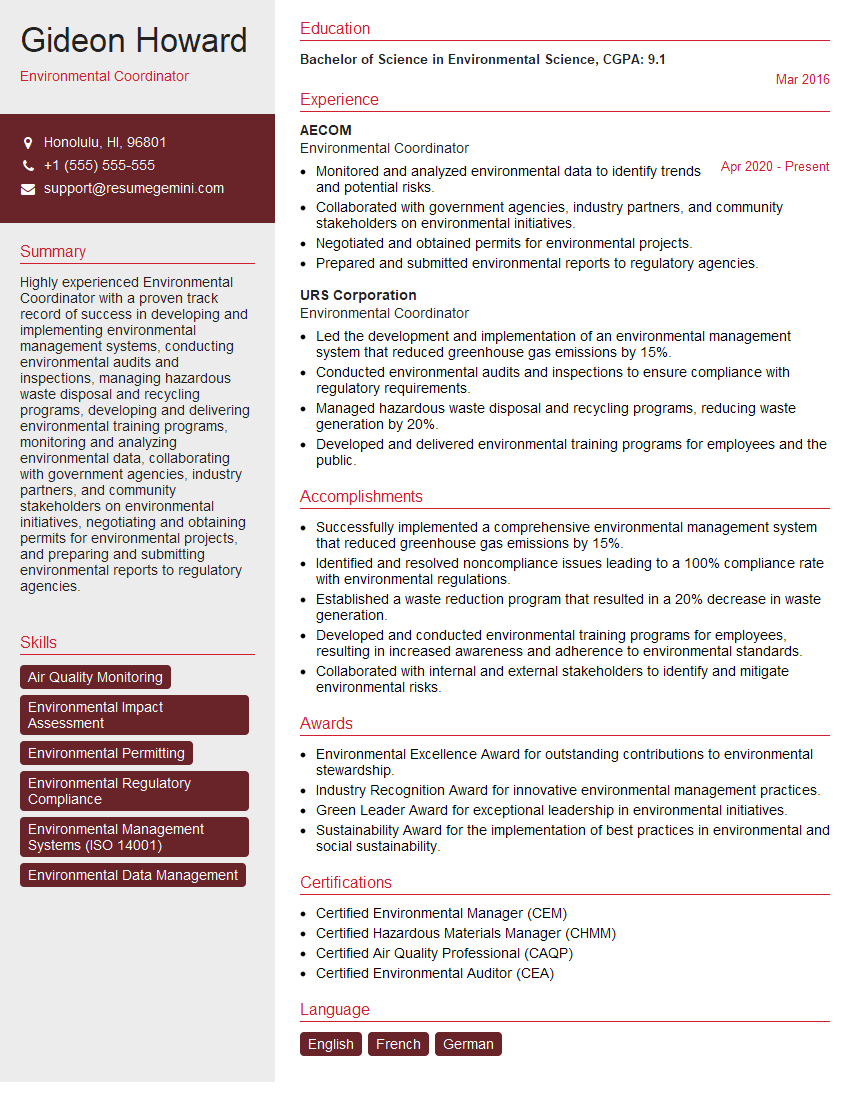
Environmental Coordinator Resume Sample
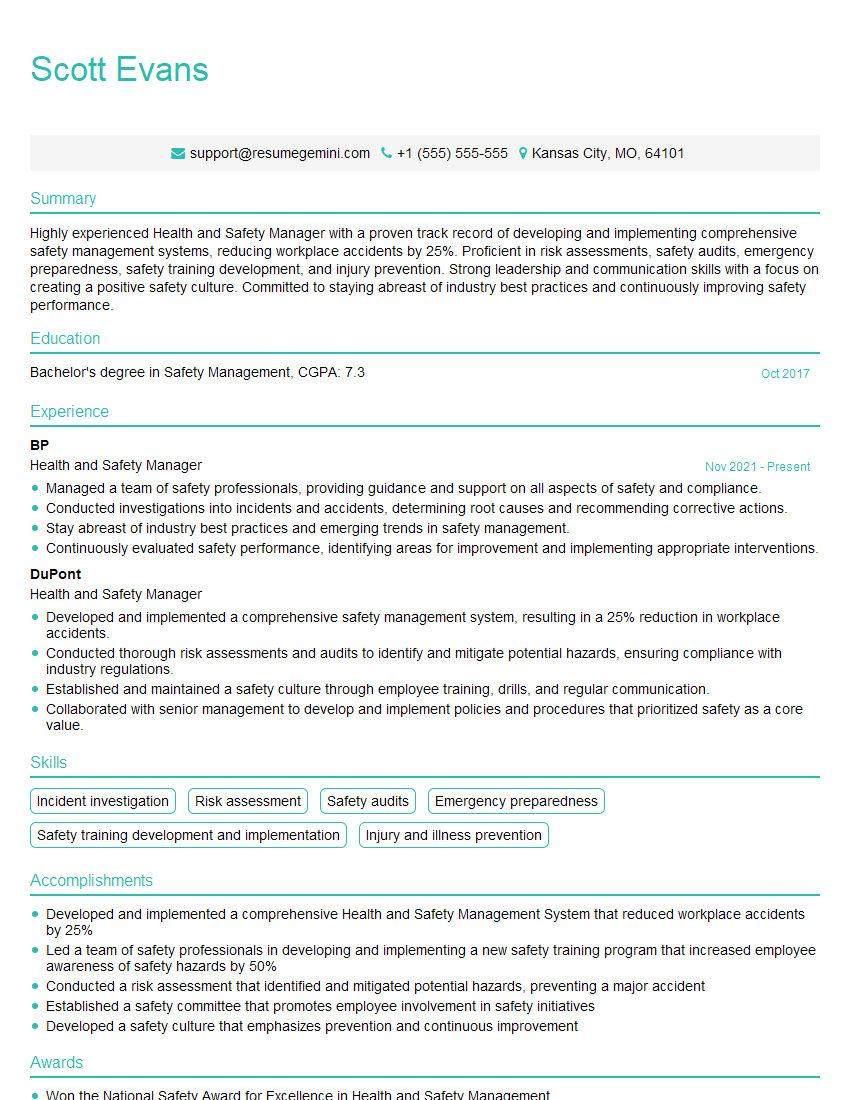
Health and Safety Manager Resume Sample
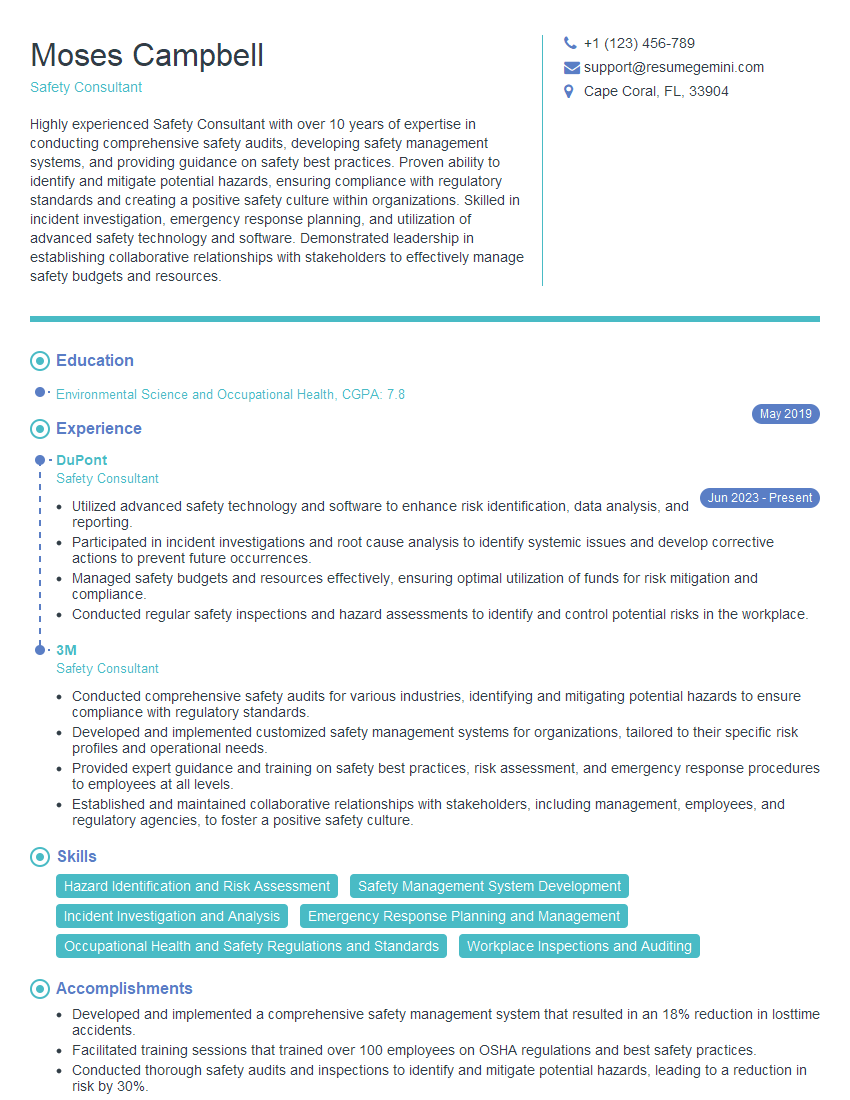
Safety Consultant Resume Sample
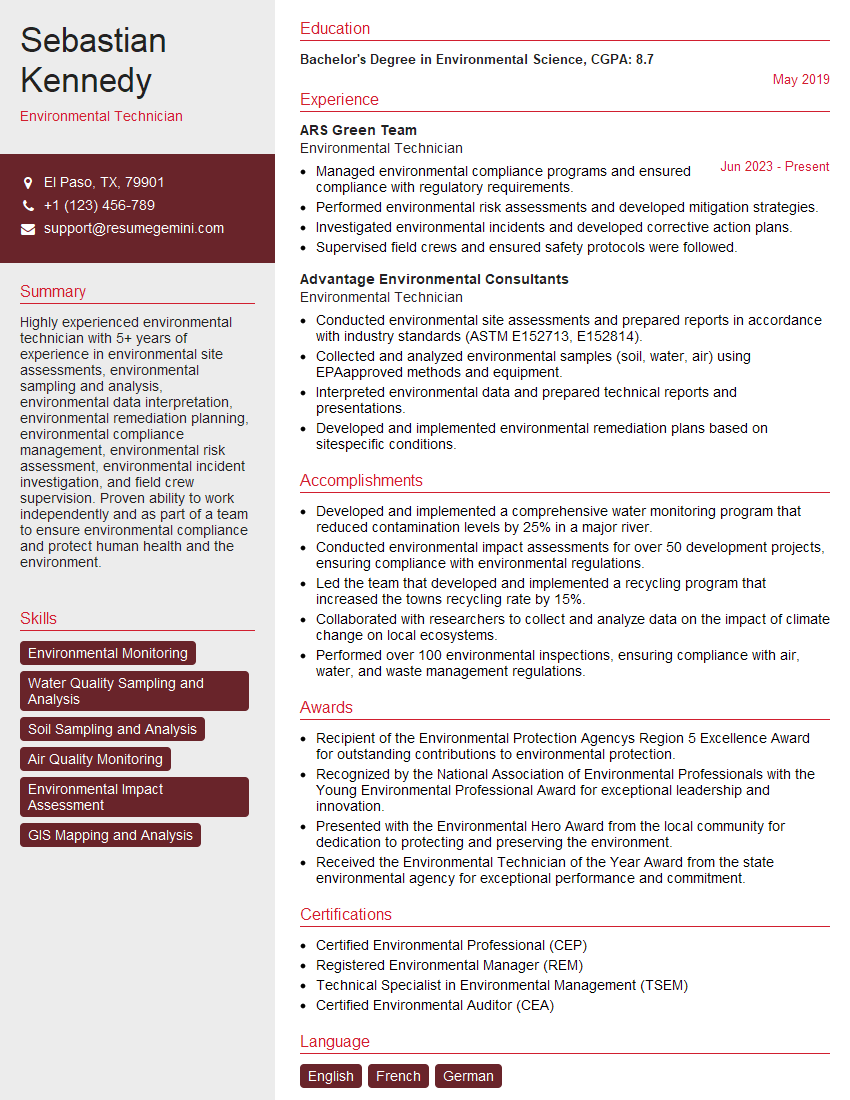
Environmental Technician Resume Sample
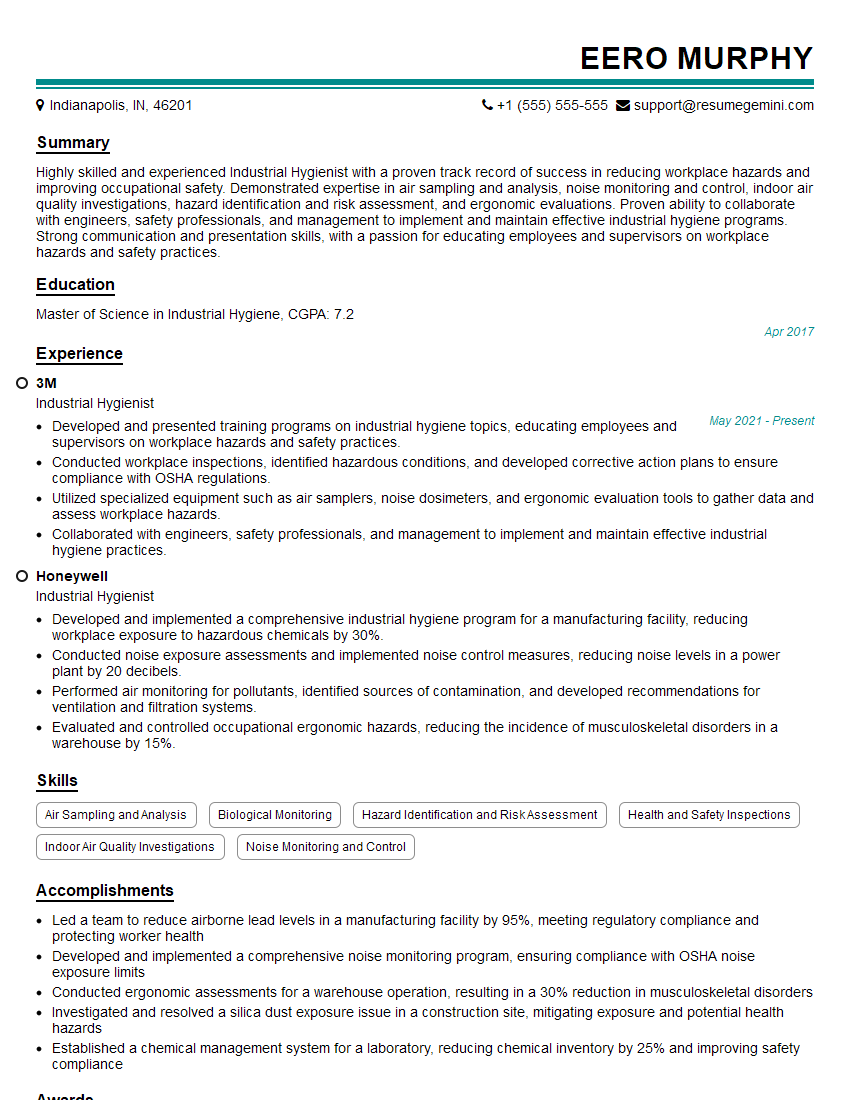
Industrial Hygienist Resume Sample
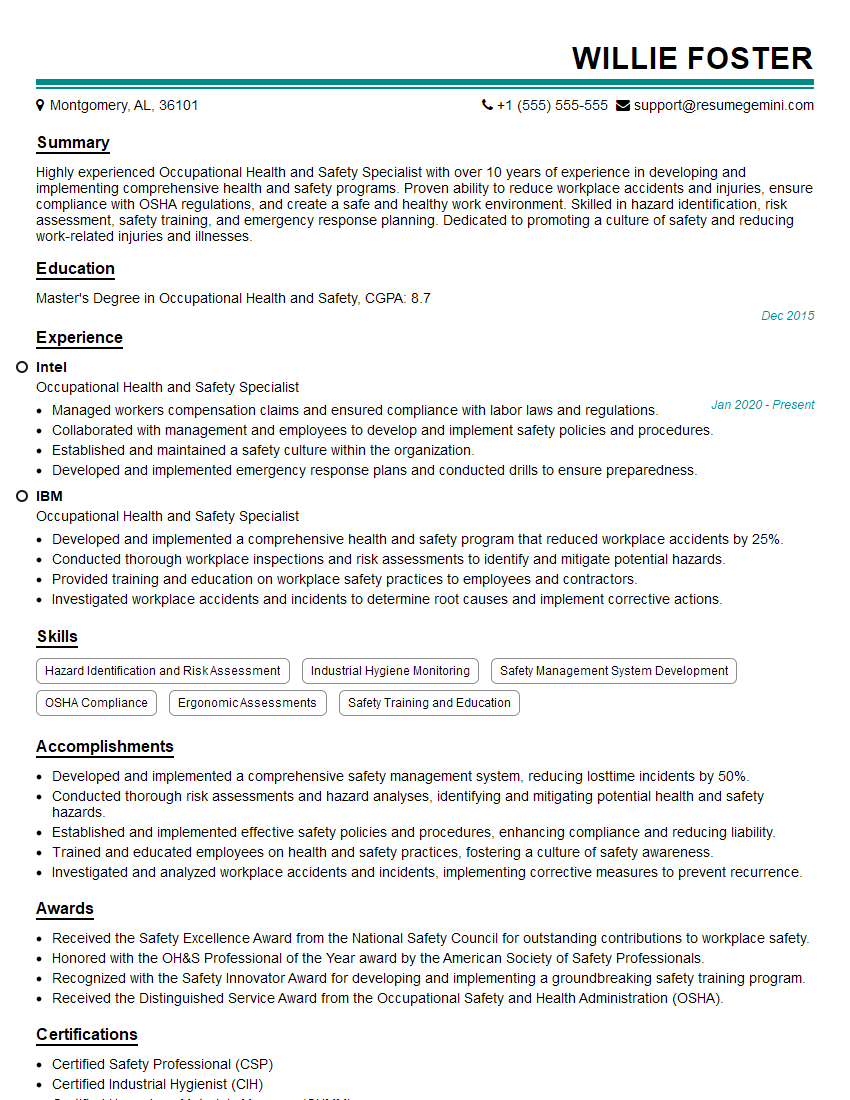
Occupational Health and Safety Specialist Resume Sample
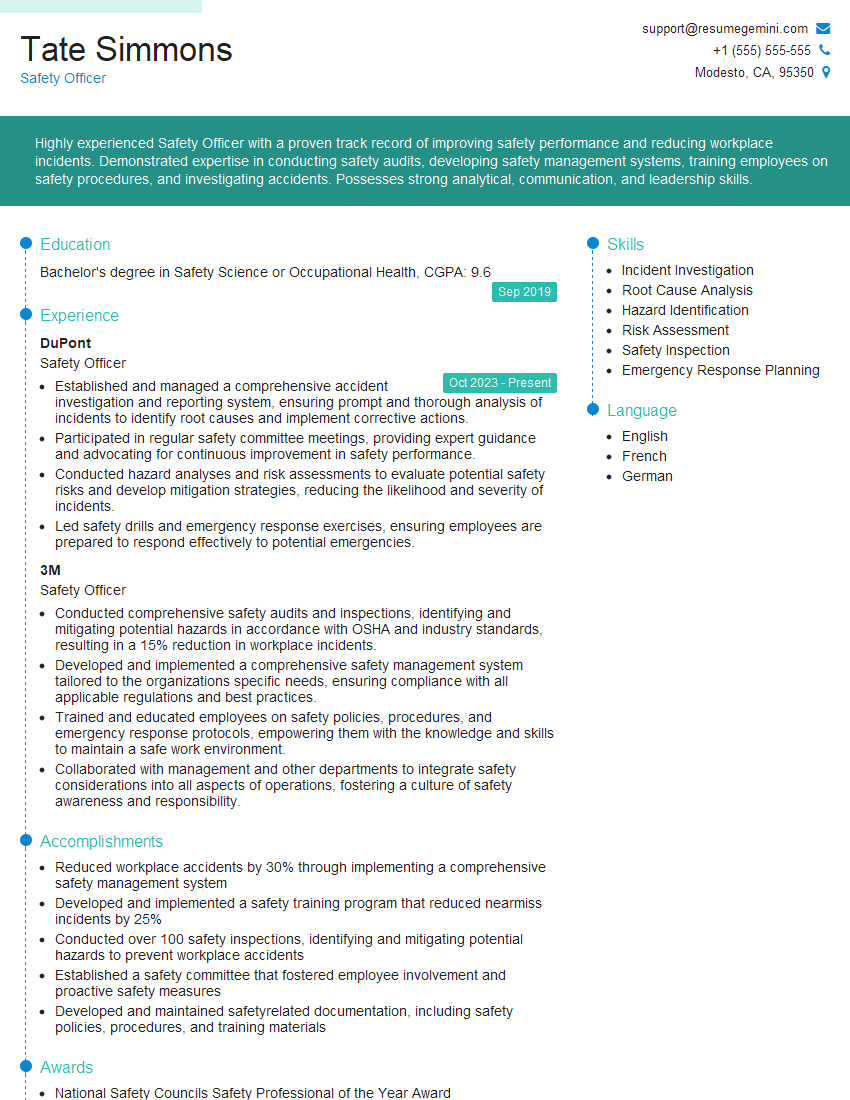
Safety Officer Resume Sample
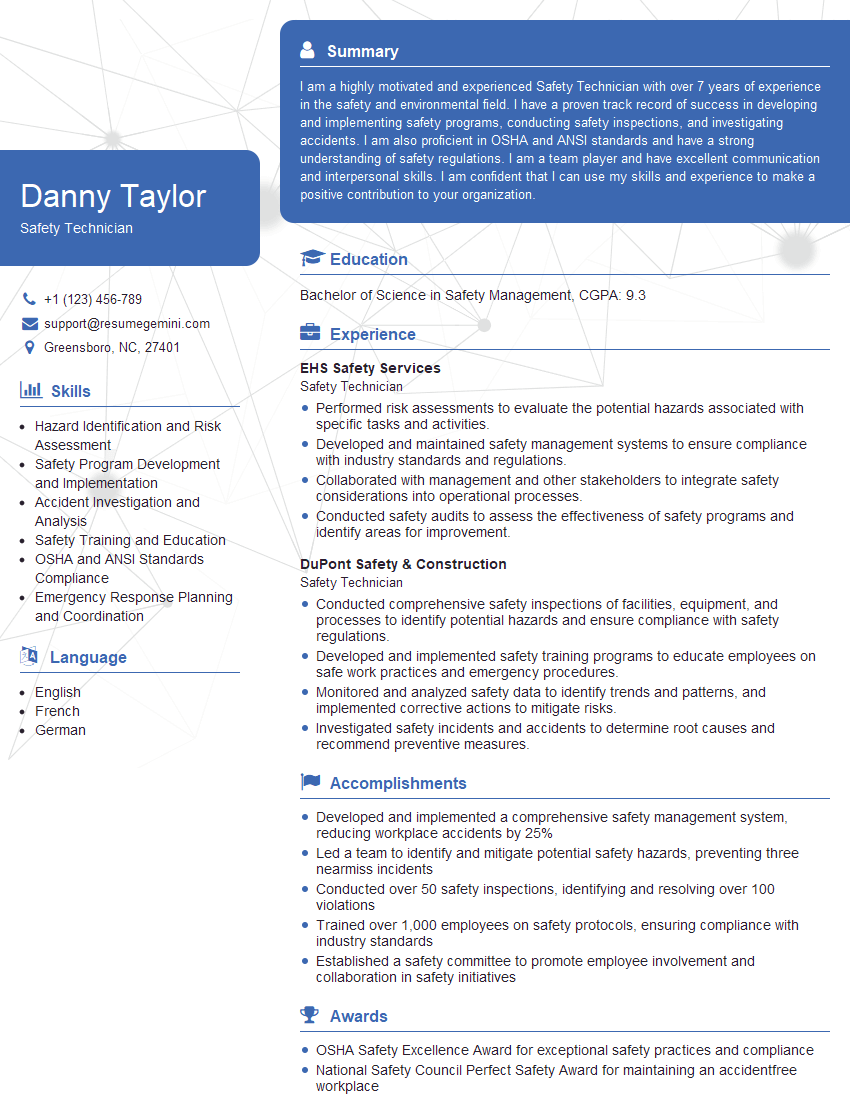
Safety Technician Resume Sample
- Sustainability Manager
- Safety Coordinator
- Compliance Officer
- Compliance Specialist
- Environmental Specialist
- Environmental Consultant
- Environmental Coordinator
- Health and Safety Manager
- Safety Consultant
- Environmental Technician
- Industrial Hygienist
- Occupational Health and Safety Specialist
- Safety Officer
- Safety Technician
Explore more articles
Users Rating of Our Blogs
Share Your Experience
We value your feedback! Please rate our content and share your thoughts (optional).
What Readers Say About Our Blog
Amazing blog
Interesting Article, I liked the depth of knowledge you’ve shared.
Helpful, thanks for sharing.