Every successful interview starts with knowing what to expect. In this blog, we’ll take you through the top Custom Furniture Building interview questions, breaking them down with expert tips to help you deliver impactful answers. Step into your next interview fully prepared and ready to succeed.
Questions Asked in Custom Furniture Building Interview
Q 1. Describe your experience with different wood types and their properties.
My experience with various wood types is extensive, spanning over 15 years of crafting custom furniture. Understanding wood properties is crucial for selecting the right material for each project. For instance, hardwoods like oak and walnut are known for their strength, durability, and beautiful grain patterns, making them ideal for high-end pieces that need to withstand daily wear and tear. I often use oak for dining tables due to its resilience to scratches and dents. Walnut, with its rich dark tones, is perfect for luxurious bedroom sets.
In contrast, softer woods like pine and poplar are more affordable and easier to work with, often used for less demanding projects or where a lighter aesthetic is preferred. Pine is excellent for painting, as it accepts paint very well, and poplar is a good choice for carving because it’s less prone to chipping. Then there are exotic hardwoods like mahogany and cherry, prized for their unique grain patterns and rich colors, suitable for statement pieces. Each wood’s characteristics – its hardness, grain, density, and workability – dictate how I approach the design and construction process. I’ll always carefully consider the client’s budget and desired aesthetic when making my selection.
- Hardwoods: Oak, Walnut, Mahogany, Cherry (strong, durable, beautiful grain)
- Softwoods: Pine, Poplar (affordable, easy to work with)
Q 2. Explain your process for creating detailed shop drawings.
Creating detailed shop drawings is paramount to successful custom furniture building. It’s not just about sketching; it’s about precise, scaled representations that guide every step of the process. I begin by carefully sketching the piece based on the client’s design and specifications, noting all dimensions, joinery details, and material choices. Then, I use CAD software to translate these sketches into highly accurate, detailed drawings. These digital drawings include multiple views – front, side, top, and often detailed cross-sections – that reveal the construction methods precisely.
For instance, when designing a complex curved back chair, the CAD software allows me to model the curve accurately and create cut lists for each individual component with exact measurements. The drawings also detail the type and dimensions of hardware and any special finishing notes. These comprehensive plans serve as my blueprint, ensuring consistent quality and minimizing errors during construction. I always share these drawings with the client for approval before beginning work, allowing for any adjustments before construction starts.
I usually include:
- Overall dimensions
- Detailed views of each component
- Cut lists with exact measurements
- Joinery details
- Hardware specifications
- Finishing notes
Q 3. What are your preferred joinery techniques and why?
My preferred joinery techniques are a blend of traditional and modern methods, chosen based on the specific design and its functional requirements. For strong, visually appealing joints in furniture intended for high-use, I favor mortise and tenon joints. They offer exceptional strength and durability. For example, the legs and aprons of a dining table often rely on these robust joints. Dovetail joints, particularly through-dovetails, are my go-to for drawers and boxes, where precision and strength are essential for longevity and smooth operation. I also utilize techniques like pocket hole joinery for less visible joints, suitable for interior parts where strength is still important, but aesthetics aren’t the primary concern. The choice of joinery is always a balance between strength, aesthetics, and efficiency.
In cases where a more modern look is desired, I’ll use dado joints, especially when constructing shelving units. Each technique provides a distinct advantage based on the piece’s design and purpose. My years of experience enable me to assess the ideal joinery based on the wood type, design, and the piece’s intended function.
Q 4. How do you ensure accuracy in your measurements and cuts?
Accuracy is non-negotiable in custom furniture making. I employ a multi-layered approach to ensure precise measurements and cuts. First, I meticulously measure the space where the furniture will be placed, accounting for any irregularities or constraints. Then, I use a combination of high-quality measuring tools – including steel tapes, squares, and digital calipers – to transfer these measurements to my shop drawings and workpieces.
For cutting, I rely on precise machinery like table saws, miter saws, and routers, all carefully calibrated and maintained. Prior to making any cuts, I double-check my measurements and markings, and always practice using test pieces on the selected wood to ensure the proper settings before tackling the final cuts. This prevents mistakes and waste. Additionally, I regularly check for squareness and accuracy using various tools to ensure everything aligns perfectly throughout the building process. This detailed approach is crucial for achieving the high standards demanded of bespoke craftsmanship.
Q 5. What finishing techniques are you proficient in?
I’m proficient in a variety of finishing techniques, tailored to the specific wood and the client’s desired aesthetic. This encompasses everything from simple stains to elaborate multi-step finishes. I frequently use oil-based stains to enhance the natural beauty of the wood’s grain, providing depth and richness. For a more durable and protective finish, I often apply multiple coats of polyurethane varnish or lacquer, chosen based on the desired level of sheen (gloss, satin, or matte).
I also have experience with milk paint for a more rustic or antique look, and I’m skilled in applying various waxes for additional protection and a unique feel. Every project demands careful consideration of the finish, as it significantly impacts the final piece’s appearance, durability, and longevity. For example, a high-gloss finish is often desired for formal dining tables, whereas a more matte finish might be appropriate for a rustic coffee table. The choices depend heavily on the piece and the client’s vision.
Q 6. Describe your experience with upholstery techniques.
While my primary expertise lies in woodworking, I possess a strong understanding of upholstery techniques, allowing me to integrate upholstered elements into my custom furniture designs. I collaborate closely with skilled upholsterers for complex projects, ensuring a seamless blend of woodworking and upholstery. My knowledge extends to selecting appropriate fabrics, foams, and support structures based on comfort, durability, and aesthetic considerations.
I’m intimately familiar with various stitching techniques and understand how to prepare the wooden frames for upholstery, ensuring a proper fit and finish. Whether it’s a simple chair cushion or a complex headboard, I ensure the upholstery complements the overall design, creating a harmonious and aesthetically pleasing final product. This allows me to offer a complete and cohesive furniture-making service to my clients.
Q 7. How do you manage a project timeline and budget?
Managing project timelines and budgets effectively is crucial. I start by creating a detailed project schedule, breaking down the process into manageable phases with assigned timelines. This schedule accounts for all aspects, from initial design consultations to final delivery and installation. This detailed schedule is shared with the client and is flexible enough to adapt to unforeseen circumstances.
Budget management involves a comprehensive cost breakdown, encompassing materials, labor, and any external services like upholstery or hardware. I maintain detailed records of expenses and provide regular updates to clients to ensure transparency and prevent cost overruns. Through meticulous planning and consistent communication, I strive to deliver projects on time and within budget, providing value and exceeding client expectations. If unforeseen delays or cost increases occur, I immediately notify the client to discuss and find solutions together.
Q 8. Explain your problem-solving approach when encountering unexpected issues during a project.
My problem-solving approach starts with a calm assessment. I never panic; instead, I systematically analyze the issue. Think of it like troubleshooting a complex machine – you need a methodical approach. First, I carefully examine the problem, documenting all aspects – measurements, material, and the nature of the defect. Then, I brainstorm potential solutions, considering the impact on the project’s timeline and budget. This often involves consulting reference materials, blueprints, or even reaching out to experienced colleagues for a second opinion. Once I’ve identified a viable solution, I meticulously execute it, carefully documenting each step. Finally, I review the results, not only to ensure the problem is solved but also to learn from the experience for future projects. For example, once, a crucial mortise-and-tenon joint proved weaker than anticipated. Instead of discarding the entire piece, I reinforced it using strategically placed dowels and epoxy, completely resolving the structural issue and learning a valuable lesson about wood grain orientation for that joint type.
Q 9. How do you handle customer feedback and revisions?
Customer feedback is paramount. I view revisions not as setbacks but as opportunities for improvement and to truly meet the client’s vision. I actively solicit feedback throughout the project – from initial design discussions to final inspections. I encourage open communication, making myself readily available to answer questions and address concerns. For revisions, I provide a detailed proposal outlining the changes, the associated costs (if any), and the revised timeline. I always maintain transparency with pricing. For instance, a client once requested a change in the wood type mid-project. I explained the implications for cost and timeline, provided options, and worked collaboratively to find a solution that satisfied both aesthetic and budgetary needs.
Q 10. What safety precautions do you adhere to in your workshop?
Safety is my top priority. My workshop adheres to stringent safety protocols. This includes having a well-maintained and organized workspace to prevent accidents caused by clutter. All machinery is equipped with the necessary safety guards and regularly inspected. I always wear appropriate personal protective equipment (PPE), including safety glasses, hearing protection, and dust masks. I’m trained in the safe operation of all machinery and follow strict procedures for handling sharp tools and potentially hazardous materials like finishes. Proper ventilation is crucial when using chemical-based finishes to avoid inhaling harmful fumes. Regular safety training keeps my knowledge and skills current. It’s not just about rules; it’s about building a safety-first culture in my workspace. A clean and organized space is the first line of defense against accidents.
Q 11. What types of woodworking machinery are you familiar with and proficient in operating?
I’m proficient in operating a wide range of woodworking machinery, including:
- Table saw: For ripping and crosscutting lumber.
- Planer: For surfacing and smoothing lumber.
- Jointer: For creating perfectly flat and straight surfaces.
- Shaper: For creating intricate profiles and moldings.
- Router: For creating various cuts, including rabbets, dados, and decorative edges.
- Band saw: For intricate curves and resawing.
- Drill press: For accurate drilling of holes.
- Mortising machine: For creating precise mortise and tenon joints.
My skills extend beyond basic operation; I understand the nuances of each machine, including blade selection, speed adjustments, and feed rates, crucial for achieving precise and safe results.
Q 12. Describe your experience with CNC machining (if applicable).
While I primarily work with traditional woodworking techniques, I have experience using CNC machining for specific tasks, particularly for creating intricate components or repetitive cuts requiring high precision. This is often used for things like creating custom inlays or very complex joinery. I’m familiar with CAM software (Computer-Aided Manufacturing) to design and generate the necessary CNC programs. I understand the importance of proper material clamping, tool selection, and feed rates to ensure accurate cuts and prevent damage to the machine or workpiece. For instance, I used CNC carving to create a series of uniquely patterned panels for a recent project, a task that would have been incredibly time-consuming and difficult using only hand tools.
Q 13. What is your experience with different types of wood finishes (e.g., lacquer, polyurethane, shellac)?
My experience encompasses various wood finishes, each with its unique properties and application techniques:
- Lacquer: A fast-drying finish known for its durability and clear coat. It requires a clean, dust-free environment for application.
- Polyurethane: A popular choice offering excellent protection and durability. It comes in various sheens, from satin to high gloss.
- Shellac: A natural resin-based finish that offers a warm, amber tone and is easily repaired. It’s more sensitive to moisture than polyurethane or lacquer.
I also understand the importance of proper surface preparation – sanding and cleaning – before applying any finish. Choosing the right finish depends heavily on the type of wood, intended use, and desired aesthetic. I carefully consider these factors before making a selection for every project.
Q 14. Describe your approach to designing custom furniture pieces.
My design process is collaborative and iterative. It begins with an in-depth consultation with the client to understand their needs, style preferences, and budget. I gather detailed measurements and discuss the functionality and intended use of the piece. I then create initial sketches and 3D renderings (using software like SketchUp) to visually communicate my design ideas. This allows the client to see the piece before it’s built. We iterate on the design based on feedback, refining details until a final design is approved. I focus on creating designs that are both aesthetically pleasing and functionally sound, utilizing appropriate joinery and construction techniques. Before starting construction, I always create detailed shop drawings with precise dimensions and cut lists to ensure accuracy and efficiency throughout the building process. The entire process is focused on building a close relationship with the client to ensure their vision comes to life.
Q 15. How do you ensure the structural integrity of your furniture builds?
Ensuring structural integrity in custom furniture is paramount. It’s not just about aesthetics; it’s about safety and longevity. My approach is multifaceted, starting with meticulous design and extending through every stage of construction.
Joint Selection: I choose joinery techniques appropriate for the style, material, and load-bearing requirements. For instance, mortise and tenon joints offer exceptional strength for traditional pieces, while dowel joints are efficient for mass-produced designs. For modern designs, I might utilize pocket-hole joinery for its speed and strength.
Material Selection: The right wood for the job is crucial. Hardwoods like oak, maple, and cherry offer greater strength and durability compared to softer woods like pine. I always consider the intended use and stress points when selecting lumber.
Proper Fasteners: The correct screws, bolts, and dowels are chosen based on material density, joint type, and load expectations. I avoid over-tightening, which can lead to cracking or splitting.
Reinforcement: Where necessary, I incorporate additional reinforcement, such as corner blocks, braces, or even metal supports to increase stability and prevent racking (twisting) in larger pieces. Think of the extra support needed for a long, overhanging shelf.
Testing and Inspection: Before final finishing, I thoroughly inspect the structure, looking for any weaknesses or potential issues. I often stress-test pieces, especially those intended for high-use applications like tables or chairs.
For example, I recently built a large dining table with a single, expansive tabletop. To ensure its stability, I incorporated a strong apron, carefully selected hardwood, and strategically placed support beams within the tabletop itself, preventing sagging over time.
Career Expert Tips:
- Ace those interviews! Prepare effectively by reviewing the Top 50 Most Common Interview Questions on ResumeGemini.
- Navigate your job search with confidence! Explore a wide range of Career Tips on ResumeGemini. Learn about common challenges and recommendations to overcome them.
- Craft the perfect resume! Master the Art of Resume Writing with ResumeGemini’s guide. Showcase your unique qualifications and achievements effectively.
- Don’t miss out on holiday savings! Build your dream resume with ResumeGemini’s ATS optimized templates.
Q 16. How familiar are you with different design software (e.g., SketchUp, AutoCAD)?
I’m proficient in several design software packages, including SketchUp, AutoCAD, and Fusion 360. Each serves a unique purpose in my workflow.
SketchUp: I primarily use SketchUp for its intuitive 3D modeling capabilities. It’s excellent for visualizing the overall design, creating client presentations, and developing detailed plans. I can easily generate realistic renderings to showcase the finished piece.
AutoCAD: AutoCAD is invaluable for creating precise technical drawings, particularly for complex projects involving detailed joinery or custom metalwork. The precision of AutoCAD helps ensure accurate cutting and assembly.
Fusion 360: Fusion 360 is particularly useful for designing more complex components or integrating custom-designed hardware. Its parametric modeling abilities let me iterate and refine designs quickly.
I find the combination of these software programs allows me to seamlessly transition from initial design concepts to detailed construction plans, minimizing errors and maximizing efficiency. Think of it as a toolbox; each tool has its specific purpose, but together, they create a powerful and comprehensive workflow.
Q 17. Explain your understanding of ergonomics in furniture design.
Ergonomics is the science of designing things so people and their bodies interact efficiently and comfortably. In furniture design, it’s crucial to consider the user’s physical comfort and well-being. My approach encompasses several key aspects:
Seat Height and Depth: Chairs must have appropriately sized seats to support proper posture and prevent strain. The seat height should be such that feet rest comfortably flat on the floor.
Back Support: Adequate lumbar support is essential for avoiding back pain. The backrest should provide support in the lower back region.
Armrests: Properly positioned armrests reduce strain on the shoulders and neck. They should be at the right height to allow for relaxed arm positioning.
Table Height: Table height needs to be suited to the chairs and intended use. A dining table should allow for comfortable elbow and arm positioning while seated.
Material Selection: The choice of materials impacts comfort. Smooth, non-abrasive surfaces, proper padding, and breathability are factors to consider.
For example, I recently designed a custom office chair for a client with back problems. I incorporated adjustable lumbar support, a carefully contoured backrest, and breathable fabric to ensure maximum comfort and prevent exacerbating their condition. Understanding ergonomics is about designing for the user, not just the look of the piece.
Q 18. What are the key differences between solid wood and plywood construction?
Solid wood and plywood are both common materials in furniture making, but they have distinct characteristics that influence their suitability for different projects.
Solid Wood: Solid wood is made from a single piece of lumber. It’s strong, durable, and beautiful, with unique grain patterns. However, it’s more expensive, susceptible to warping and movement with changes in humidity, and often requires more complex joinery.
Plywood: Plywood is a layered composite material made from thin sheets of wood veneer glued together. It’s less expensive, more stable and less prone to warping than solid wood, and it can be easier to work with. However, it may lack the visual appeal of solid wood and is not as strong in bending. Different grades of plywood exist, so you choose the strength and aesthetic needed.
The choice between solid wood and plywood often depends on budget, aesthetic preferences, and the project’s structural requirements. For example, I might use solid wood for a high-end, heirloom-quality table, emphasizing its beauty and strength, while plywood could be ideal for drawers or less visible structural elements where strength-to-cost is a priority.
Q 19. How do you maintain the quality of your tools and equipment?
Maintaining the quality of my tools and equipment is essential for efficient and precise work. My routine includes:
Regular Cleaning: After each use, I clean my tools, removing sawdust and debris. This prevents rust and prolongs their lifespan. A quick wipe-down with a damp cloth is usually sufficient. I keep a dedicated brush for this task.
Sharpening and Honing: Sharp tools are crucial for clean cuts and preventing damage to materials. I regularly sharpen my chisels, planes, and hand saws using a combination of sharpening stones and honing guides.
Lubrication: Moving parts of machinery, such as table saws and jointers, require regular lubrication to ensure smooth operation and prevent wear. I use the manufacturer-recommended lubricants.
Storage: Tools are stored properly to prevent damage or rust. I use tool chests and cabinets to keep them organized and protected from the elements.
Preventative Maintenance: I perform regular checks on my equipment, ensuring blades are aligned, belts are tight, and any other potential issues are addressed promptly.
Think of it like a car; regular maintenance keeps it running smoothly and prevents costly repairs down the line. Regular tool care increases their lifespan and keeps my work quality high.
Q 20. Describe your experience with different types of hardware and fasteners.
My experience with hardware and fasteners encompasses a wide range of materials and applications. I select the right hardware based on the specific requirements of the project.
Wood Screws: Various types of wood screws are available, each designed for specific applications. I use coarse-threaded screws for hardwoods and fine-threaded screws for softer woods. I also consider the screw head type, selecting ones that complement the overall design and finish.
Bolts and Nuts: For applications requiring high strength, I often use bolts and nuts, particularly in larger pieces of furniture where substantial loads need to be supported. These are especially important in projects with significant stress or where disassembly may be needed.
Dowels: Wooden dowels are used to reinforce joints in furniture construction. They provide excellent strength and stability, particularly when combined with glue.
Cabinet Hardware: I have experience with various cabinet hardware, including hinges, drawer slides, knobs, and pulls. The choice depends on the style and quality level of the piece. I often work with clients to select the perfect hardware to complement their style and preferences.
Specialty Fasteners: Depending on the design, I may use other types of fasteners like cam locks, shelf pins, or specialized metal connectors for added strength or ease of assembly.
Choosing the right hardware is more than just function; it’s about durability and aesthetics. I ensure that the chosen fasteners are not only strong enough but also blend seamlessly into the overall design of the piece.
Q 21. How do you handle complex projects with multiple components?
Managing complex projects with multiple components requires careful planning and organization. My approach involves several key steps:
Detailed Drawings and Plans: I create comprehensive drawings and plans showing every component, its dimensions, and how it fits within the overall design. This detailed plan acts as a roadmap throughout the project.
Component Fabrication: I prioritize the fabrication of components in a logical sequence, starting with those that form the foundation of the piece and progressively assembling more intricate elements.
Assembly Jigs and Templates: For repetitive components or complex joints, I create jigs and templates to ensure accuracy, consistency, and repeatability. This helps ensure perfect alignment and reduces errors.
Test Assembly: Before final assembly, I often do a test fit of major components to ensure they fit correctly and identify any potential issues early on. This prevents costly rework later in the process.
Progressive Assembly: I work on the assembly in stages, focusing on one area or section at a time. This approach prevents overwhelming complexity and allows for adjustments or corrections as needed.
For instance, I recently completed a custom entertainment center with multiple cabinets, shelves, and drawers. Using detailed plans and jigs, I was able to produce each component accurately and efficiently, ultimately creating a piece that looked seamless and functioned flawlessly. Efficient organization is as important as skill in managing complex projects.
Q 22. What is your process for selecting appropriate materials for a given project?
Selecting the right materials is paramount in custom furniture building. It impacts the final product’s durability, aesthetics, and cost. My process begins with a thorough understanding of the client’s vision and the intended use of the piece. I consider factors like the piece’s intended location (humidity, sunlight exposure), desired style, and the client’s budget.
- Wood Selection: For example, if the client wants a durable, rustic coffee table for a high-traffic area, I might suggest a hardwood like oak or walnut, known for their strength and resistance to scratches. For a more delicate, elegant piece like a bedroom vanity, I might recommend cherry or maple, which are easier to work with and have beautiful grain patterns.
- Finishes: The finish protects the wood and enhances its appearance. I discuss options like oil-based polyurethane for a durable, glossy finish, or a natural oil finish for a more subtle, matte look. The choice depends on the wood type and desired aesthetic.
- Hardware: Handles, hinges, and other hardware are chosen to complement the overall design. I might suggest brushed nickel for a modern look or antique brass for a traditional style. Quality and durability are always important considerations.
Ultimately, the material selection is a collaborative process involving close communication with the client to ensure the final piece meets their expectations and withstands the test of time.
Q 23. Describe your experience working with clients to finalize design details.
Collaborating with clients on design details is a crucial and enjoyable part of my process. I begin by actively listening to their needs and preferences, asking clarifying questions, and offering suggestions based on my expertise. I utilize sketches, 3D models, and material samples to visually represent the design concepts.
For example, I recently worked with a client who wanted a custom dining table. We discussed their desired size, shape (they preferred a round table), wood type (they loved walnut), and the desired style (a modern, minimalist design). Through several iterations of sketches and 3D models, we refined the design, adjusting leg styles and table thickness to achieve the perfect balance between aesthetics and functionality. We also selected the finish and hardware together, ensuring everything aligned seamlessly.
This iterative process ensures the final design perfectly reflects the client’s vision while incorporating my professional expertise to guarantee functionality and durability. The goal is a collaborative design process, resulting in a piece the client truly loves.
Q 24. Explain your understanding of different wood drying techniques.
Wood drying is a critical step that significantly impacts the quality and longevity of the final furniture piece. Improper drying can lead to warping, cracking, and other defects. There are several techniques, each with its own advantages and disadvantages:
- Air Drying: This traditional method involves stacking lumber in a well-ventilated area, allowing it to dry slowly over several months or even years. It’s a cost-effective method but takes significant time and requires careful monitoring to prevent defects.
- Kiln Drying: This accelerated method uses a controlled environment within a kiln to dry the lumber more quickly. It reduces drying time significantly but requires specialized equipment and careful control of temperature and humidity to prevent defects. Different kiln schedules are used depending on the wood species and desired moisture content.
- Solar Drying: A more sustainable approach utilizing sunlight and airflow. It’s generally slower than kiln drying but offers a more natural and environmentally friendly method.
The choice of drying technique depends on the species of wood, the project’s timeline, and the budget. For example, I might use air drying for a project with a longer timeline and a focus on sustainability, while kiln drying would be appropriate for a project requiring faster turnaround.
Q 25. How do you stay current with new trends and techniques in custom furniture building?
Staying current in custom furniture building requires continuous learning and engagement with the industry. I regularly attend woodworking conferences and workshops, both in-person and online. I subscribe to trade magazines and follow influential woodworkers and designers on social media.
Furthermore, I actively seek out new tools and technologies. For instance, I recently invested in a CNC router which has significantly increased my efficiency and allowed me to create more intricate designs. I also participate in online forums and communities to share knowledge and learn from other professionals in the field. Staying updated on new techniques and materials ensures I can deliver high-quality, innovative pieces that meet the evolving demands of the market.
Q 26. What are some common challenges in custom furniture building and how do you overcome them?
Custom furniture building presents unique challenges. One common hurdle is managing client expectations. Clear communication and realistic timelines are crucial from the outset. Another challenge is working with wood – natural variations in grain and color can require creative problem-solving during construction. Occasionally, unforeseen issues arise during the process, such as discovering defects in the wood after it’s been cut.
To overcome these challenges, I employ several strategies:
- Detailed planning: Thoroughly reviewing plans and addressing potential issues before starting the build minimizes surprises.
- Open communication: Keeping clients informed throughout the process prevents misunderstandings and manages expectations.
- Problem-solving skills: Adaptability and creative solutions are vital when unexpected issues arise. I may need to adjust designs or explore alternative material solutions.
- Quality control checks: Regular inspections of the work throughout the process help identify and rectify problems early on.
By proactively addressing potential challenges and employing robust problem-solving techniques, I ensure the successful completion of each project.
Q 27. Describe your experience working independently and as part of a team.
I have extensive experience working both independently and as part of a team. In my previous role, I often worked independently on smaller projects, managing every stage from design to delivery. This experience honed my organizational skills and problem-solving abilities. I’m comfortable taking initiative and working autonomously to meet deadlines.
However, I also value the collaborative nature of team work. On larger projects, I have thrived in team environments, contributing my skills while learning from others’ expertise. I believe effective teamwork requires clear communication, mutual respect, and a shared commitment to a common goal. My experience working on larger projects has improved my communication and coordination skills, enabling me to effectively collaborate with colleagues of different skill sets. I am equally adept at both independent work and seamless team collaboration.
Q 28. What is your desired salary range for this position?
Based on my experience and skills, and considering the requirements of this position, my desired salary range is $75,000 to $90,000 per year.
Key Topics to Learn for Custom Furniture Building Interview
- Design & Blueprint Reading: Understanding client briefs, translating them into detailed designs, and interpreting technical drawings. Practical application: Sketching furniture designs, using CAD software, and understanding scale and proportion.
- Material Selection & Sourcing: Knowledge of different wood types, finishes, hardware, and other materials; understanding their properties, cost, and sustainability. Practical application: Specifying materials based on project needs and budget constraints, researching suppliers.
- Construction Techniques & Joinery: Mastery of various woodworking techniques, including joinery methods (mortise and tenon, dovetail, etc.), assembly procedures, and finishing processes. Practical application: Explaining the advantages and disadvantages of different joinery techniques, demonstrating knowledge of appropriate tools and machinery.
- Project Management & Timelines: Planning, scheduling, and managing resources (materials, time, budget) for successful project completion. Practical application: Developing project timelines, managing material ordering, and tracking progress.
- Quality Control & Problem Solving: Identifying and addressing potential issues during the construction process, ensuring high-quality craftsmanship, and adapting to unexpected challenges. Practical application: Troubleshooting common woodworking problems, implementing quality control checks, and making effective repairs.
- Health & Safety Regulations: Understanding and adhering to relevant safety procedures and regulations in a workshop environment. Practical application: Demonstrating knowledge of safe tool operation, personal protective equipment (PPE), and workshop safety protocols.
- Client Communication & Collaboration: Effectively communicating with clients, managing expectations, and addressing concerns throughout the project lifecycle. Practical application: Describing strategies for clear and professional communication with clients.
Next Steps
Mastering custom furniture building opens doors to a rewarding career with excellent growth potential, offering opportunities for specialization, entrepreneurship, and high earning potential. To maximize your job prospects, create an ATS-friendly resume that highlights your skills and experience effectively. ResumeGemini is a trusted resource to help you build a professional and impactful resume that stands out. Examples of resumes tailored to the custom furniture building industry are available to guide you.
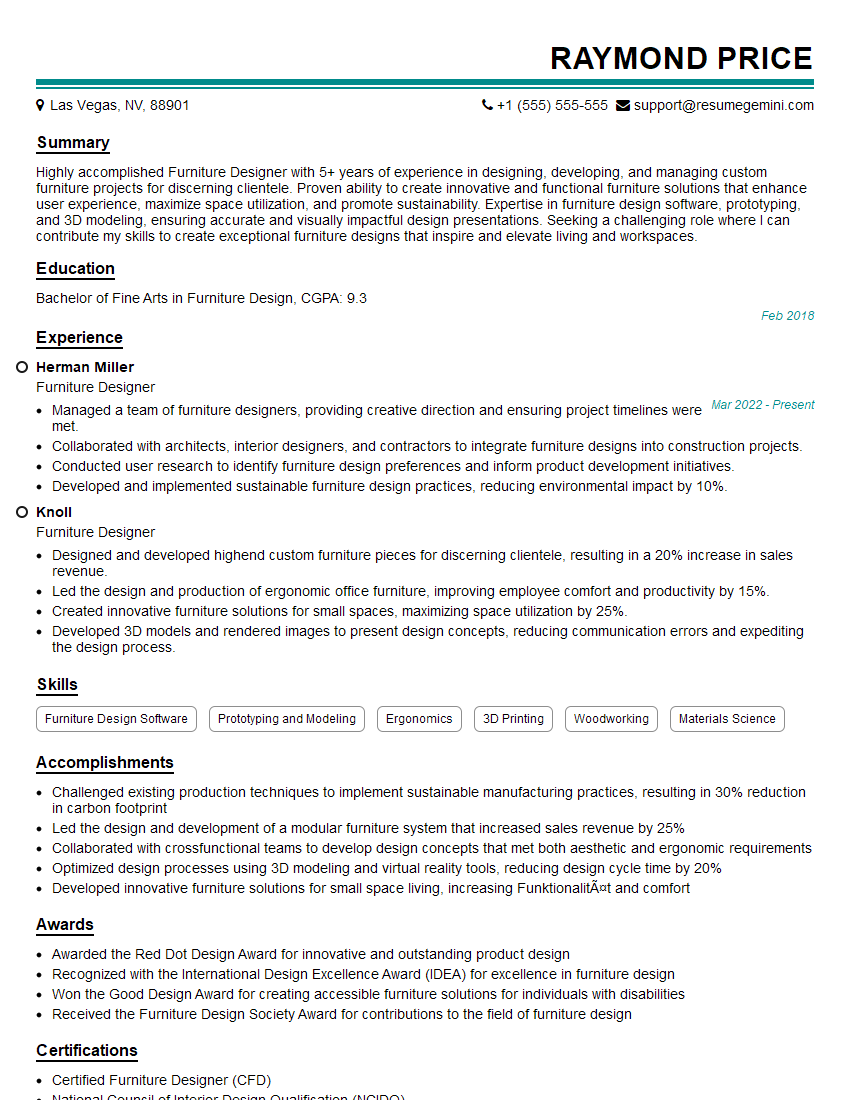
Furniture Designer Resume Sample
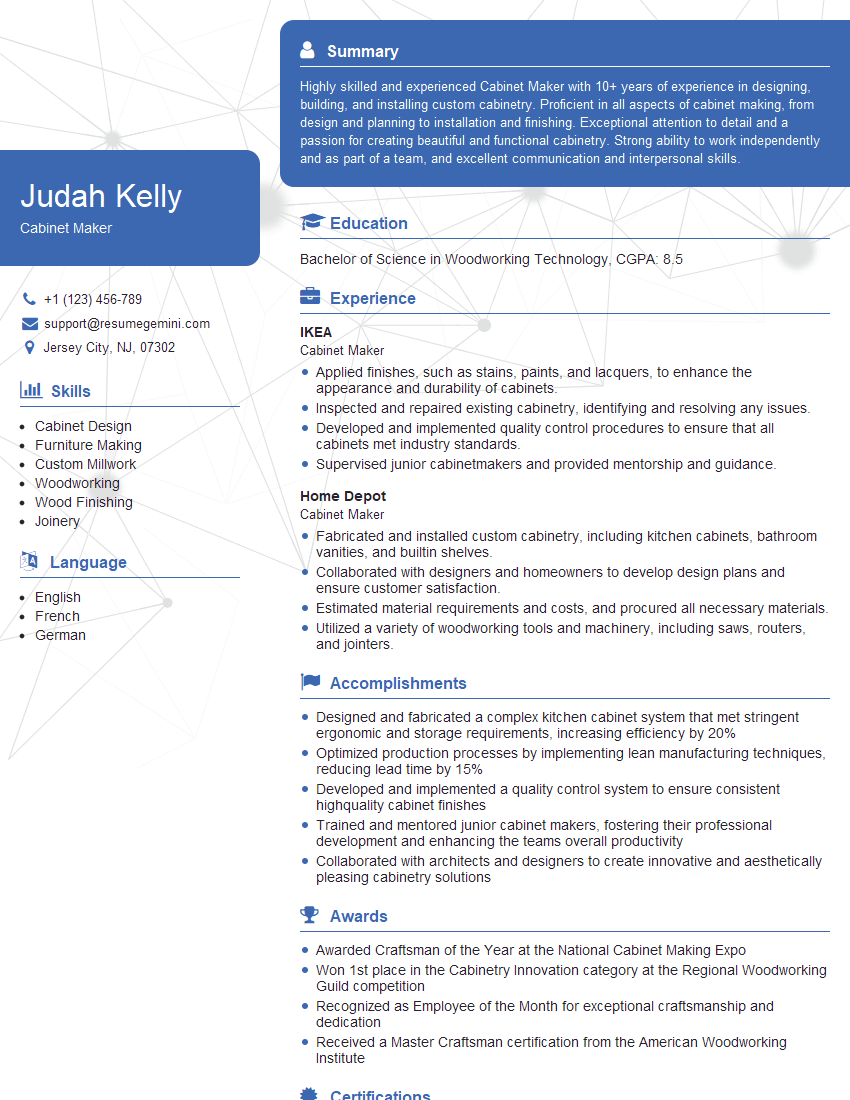
Cabinet Maker Resume Sample
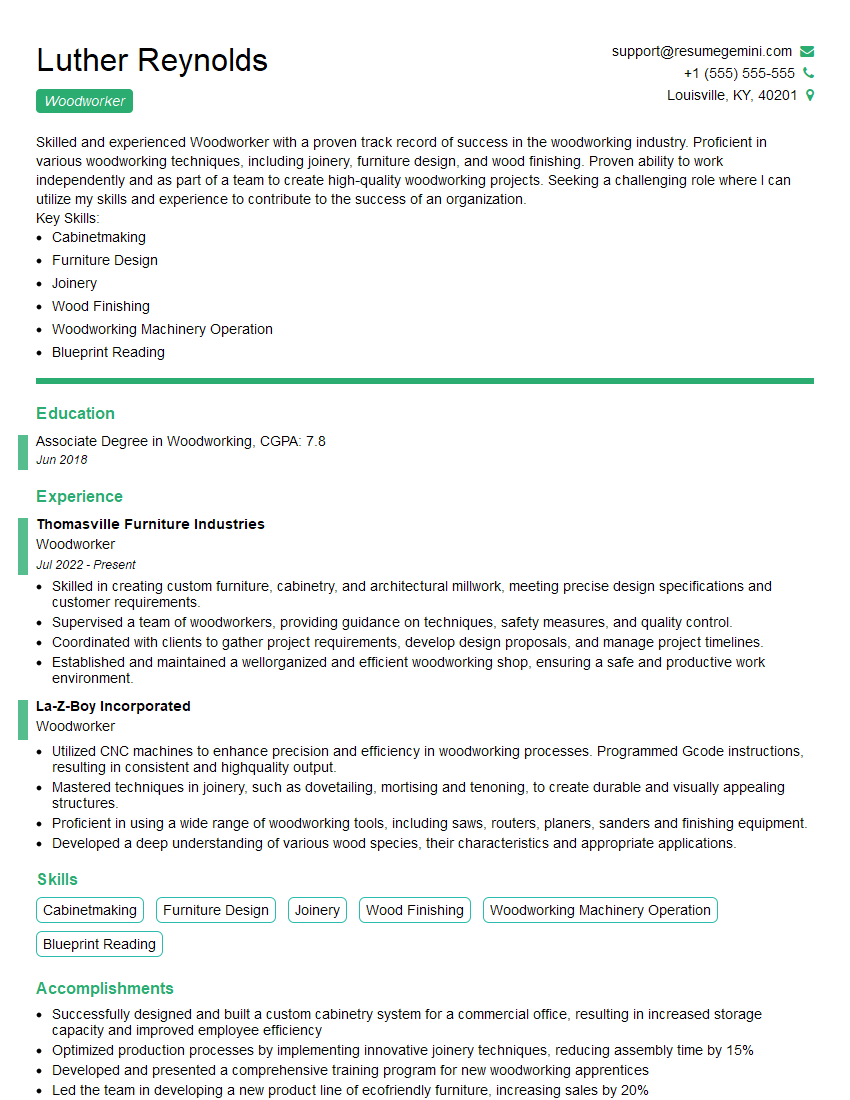
Woodworker Resume Sample
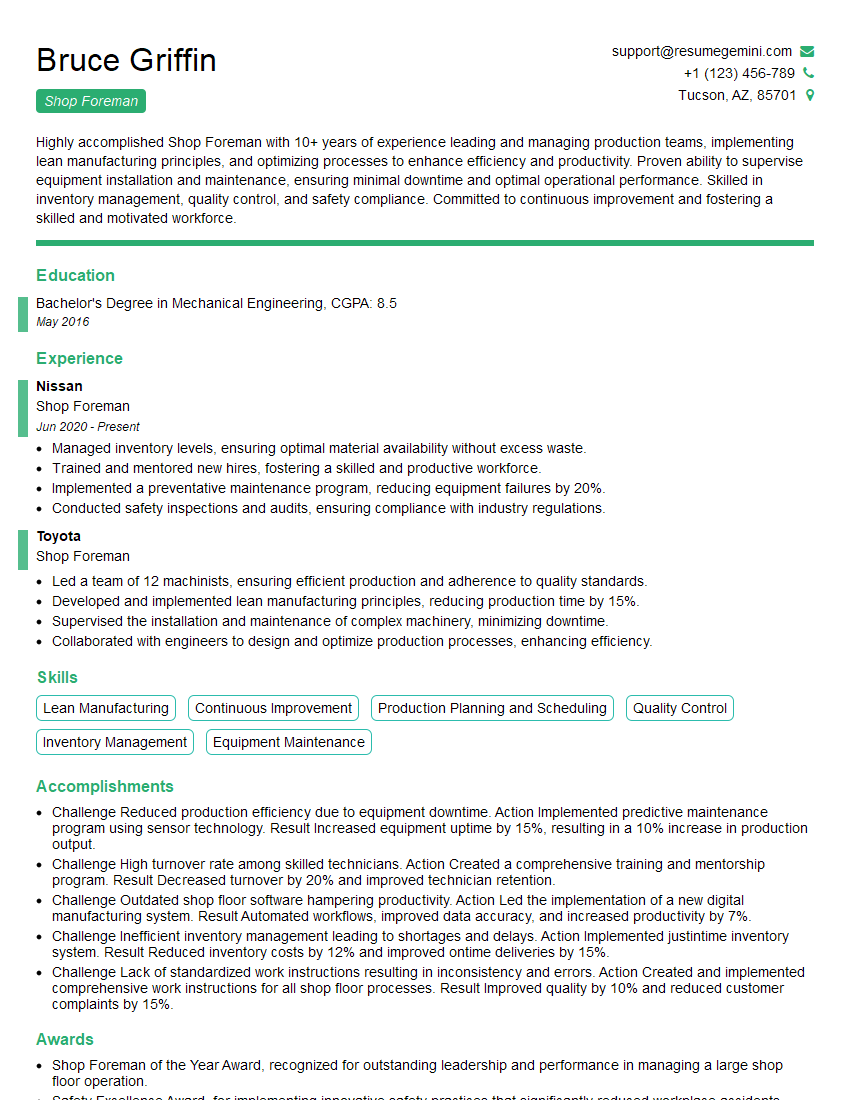
Shop Foreman Resume Sample
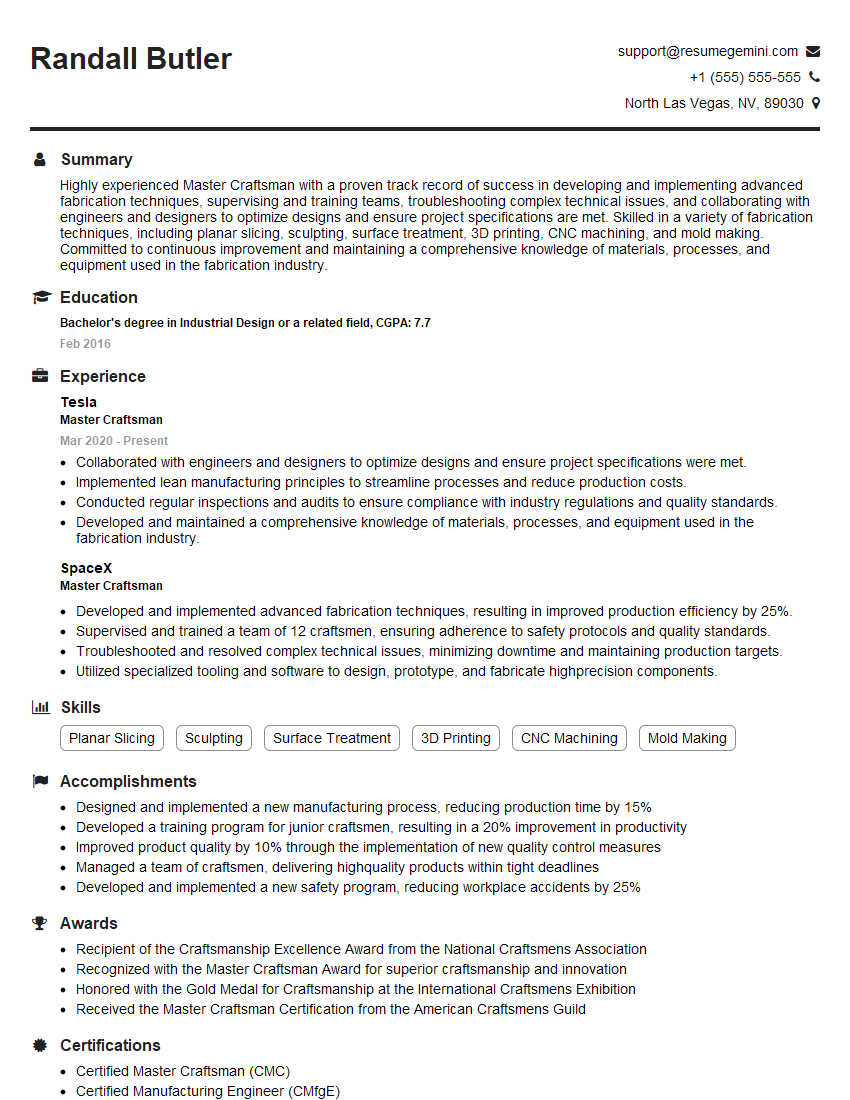
Master Craftsman Resume Sample
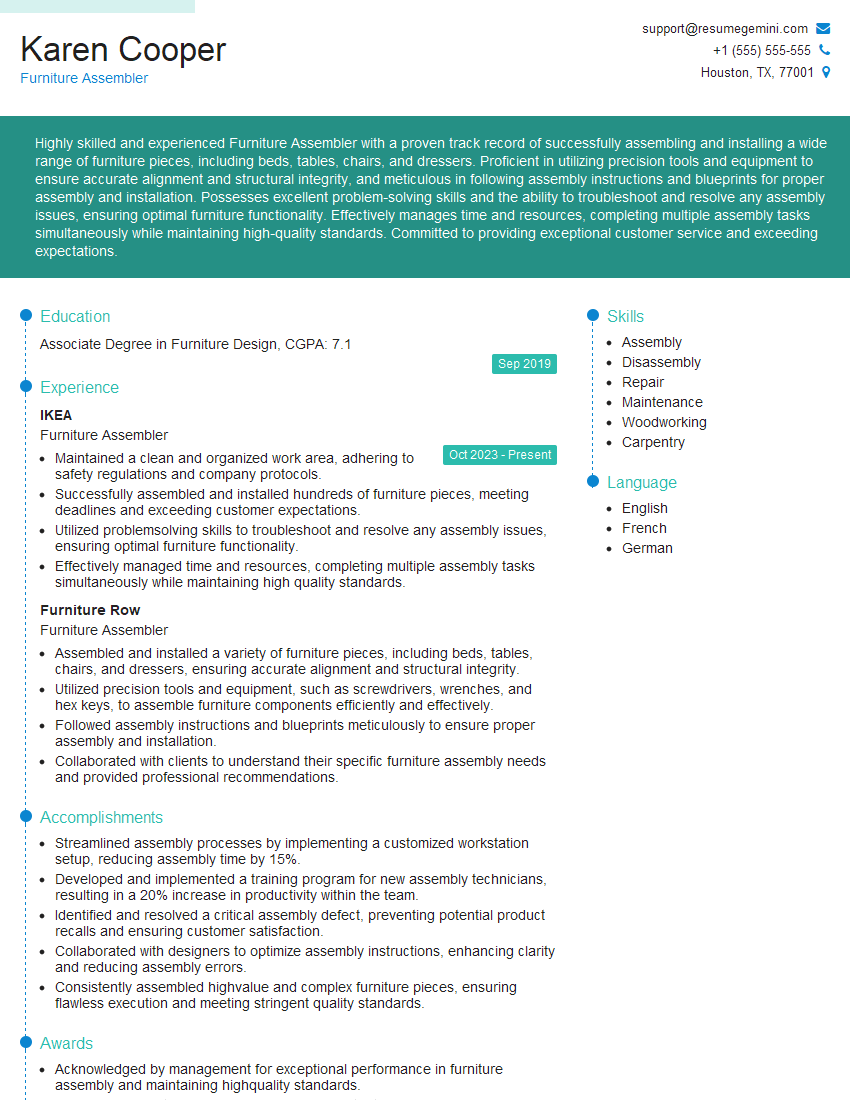
Furniture Assembler Resume Sample
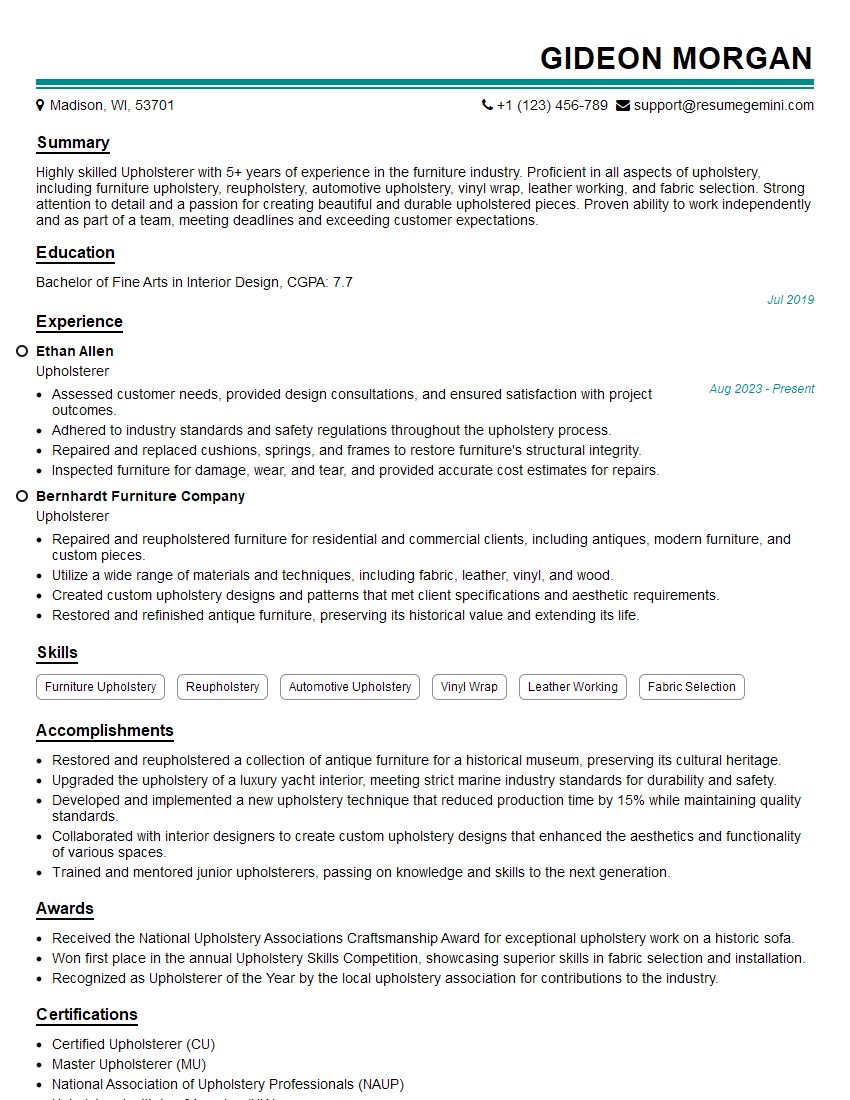
Upholsterer Resume Sample
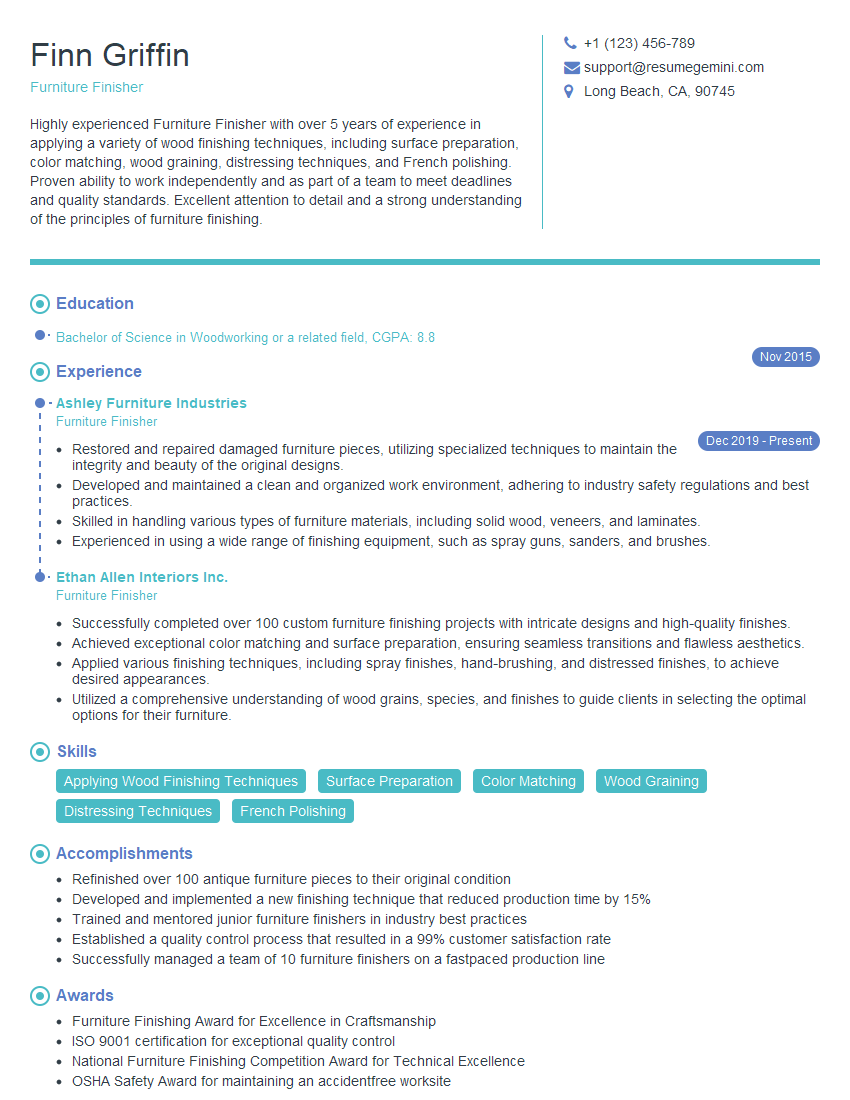
Furniture Finisher Resume Sample
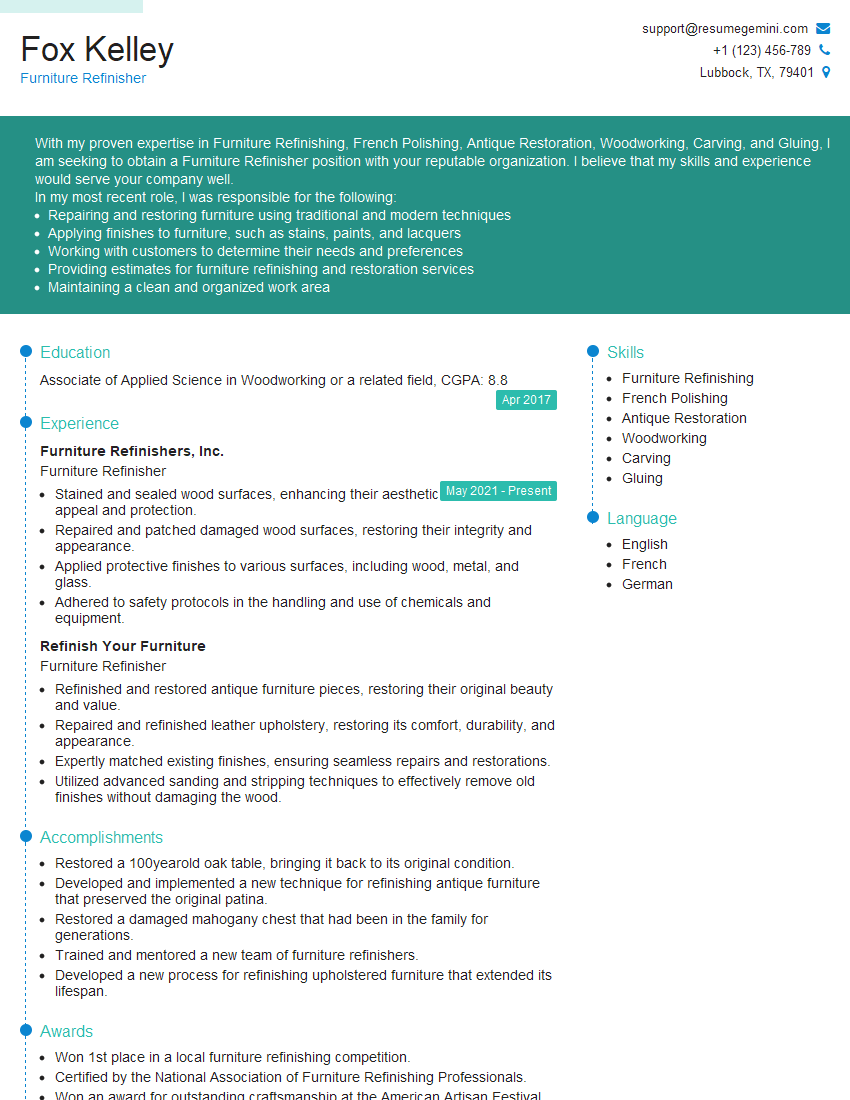
Furniture Refinisher Resume Sample
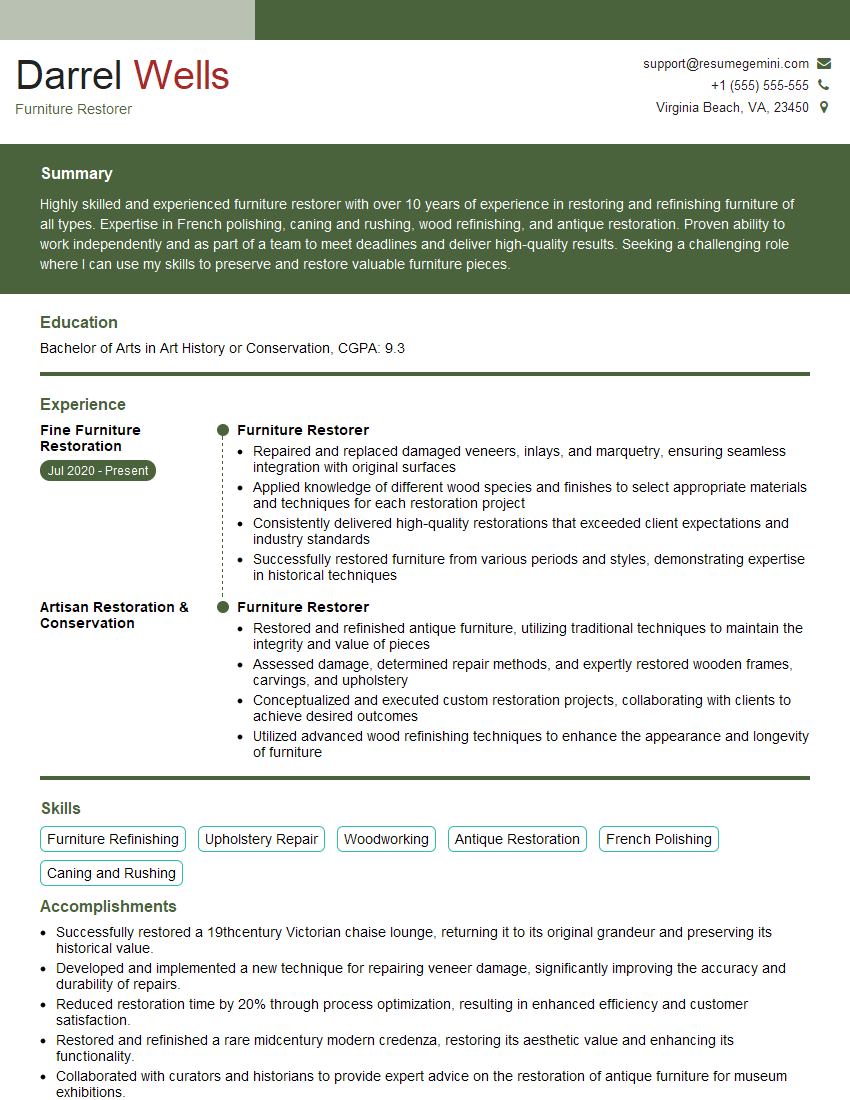
Furniture Restorer Resume Sample
Explore more articles
Users Rating of Our Blogs
Share Your Experience
We value your feedback! Please rate our content and share your thoughts (optional).
What Readers Say About Our Blog
Amazing blog
Interesting Article, I liked the depth of knowledge you’ve shared.
Helpful, thanks for sharing.