Cracking a skill-specific interview, like one for Custom Home Design, requires understanding the nuances of the role. In this blog, we present the questions you’re most likely to encounter, along with insights into how to answer them effectively. Let’s ensure you’re ready to make a strong impression.
Questions Asked in Custom Home Design Interview
Q 1. Explain your experience with different architectural styles.
My experience spans a wide range of architectural styles, from the classic elegance of Georgian and Victorian homes to the modern minimalism of contemporary designs and the rustic charm of farmhouse styles. I’m equally comfortable working with traditional architectural details like crown molding and intricate woodwork, as I am incorporating sustainable materials and energy-efficient designs in modern constructions. For instance, I recently completed a project that seamlessly blended craftsman-style elements with modern, open-plan living, resulting in a home that felt both timeless and fresh. Another project saw me adapting a traditional Cape Cod style to meet the needs of a growing family, increasing square footage whilst retaining the original character.
- Georgian: Symmetrical facades, large central doorways, and multi-paned windows.
- Victorian: Ornate detailing, steep pitched roofs, and decorative gables.
- Contemporary: Clean lines, open floor plans, and the use of natural light.
- Farmhouse: Rustic charm, exposed beams, and a focus on natural materials.
This diverse experience allows me to cater to a variety of client preferences and adapt different styles to suit specific site conditions and local contexts.
Q 2. Describe your proficiency in CAD software (AutoCAD, Revit, SketchUp).
I’m proficient in several CAD software packages, including AutoCAD, Revit, and SketchUp. My choice of software depends on the specific project requirements and phase of design. For example, I often use SketchUp for initial concept modeling and client presentations due to its intuitive interface and rendering capabilities. This allows for quick visualization and iterative design changes with the client. AutoCAD excels in precise 2D drafting and detailed construction documentation, while Revit is my go-to for complex 3D modeling, building information modeling (BIM), and coordination with other disciplines during the construction phase. I leverage Revit’s capabilities to simulate building performance, optimize energy efficiency, and minimize conflicts during the construction process.
For example, in a recent project, I utilized Revit’s clash detection feature to identify potential conflicts between the HVAC system and structural elements before construction began, saving significant time and cost. Example of Revit code for clash detection (simplified): [Revit API code would be placed here for detailed illustration. This is omitted for brevity, as this is a text response]
Q 3. How do you manage project timelines and budgets?
Managing project timelines and budgets effectively is critical in custom home design. I use a combination of project management software and established processes to ensure projects stay on track. My approach starts with a detailed project schedule created in collaboration with the client, outlining key milestones and deadlines. This schedule is then integrated into a comprehensive budget breakdown, outlining all anticipated costs, including materials, labor, permits, and contingencies. Regular progress meetings are held to track progress, address any issues, and make necessary adjustments. I also employ value engineering techniques to identify cost-saving opportunities without compromising the design’s quality or functionality. This might involve exploring alternative materials or construction methods, always keeping the client informed and involved in the decision-making process. Think of it like baking a cake – a precise recipe (budget) and a carefully timed process (schedule) are crucial for the perfect result!
Q 4. How do you incorporate client feedback into the design process?
Client feedback is central to my design process. I believe in a collaborative approach where clients actively participate in shaping their dream homes. I use various methods to gather feedback, including regular design review meetings, online collaboration tools (like shared cloud-based design models), and detailed questionnaires. I encourage clients to express their preferences and provide detailed descriptions of their vision. I’m adept at translating their ideas into tangible design elements, offering multiple options and iterations to ensure the final design aligns perfectly with their needs and preferences. For example, I recently worked with clients who initially struggled to articulate their style. By using mood boards and image collections, we collaboratively refined their vision, leading to a beautiful, uniquely personal design.
Q 5. Explain your understanding of building codes and regulations.
Understanding building codes and regulations is paramount for creating safe, functional, and legally compliant homes. I possess extensive knowledge of local, state, and national building codes and regularly update my knowledge to stay current on any changes. Before initiating the design process, I conduct thorough site assessments to determine any applicable zoning restrictions, environmental considerations, and accessibility requirements. I incorporate these regulations into every stage of the design, ensuring compliance with energy efficiency standards, structural integrity requirements, and fire safety regulations. Ignoring building codes can lead to costly delays, project re-work, and legal issues, so adhering to them is fundamental to the success of each project. This proactive approach helps to avoid potential delays and ensures a smooth permitting process.
Q 6. Describe your experience with sustainable design principles.
Sustainable design is a core principle in my practice. I strive to create homes that minimize their environmental impact while maximizing efficiency and comfort. I incorporate sustainable materials such as reclaimed wood, recycled content, and locally sourced materials wherever possible. My designs incorporate passive solar heating and cooling strategies to reduce energy consumption. This might involve strategic window placement, proper insulation, and the use of high-performance glazing. I also incorporate water-saving fixtures and rainwater harvesting systems. For example, I recently designed a home with a green roof, which helps regulate the building’s temperature, reduce stormwater runoff, and improve air quality. Prioritizing sustainability not only benefits the environment but also results in cost savings for the homeowner in the long term.
Q 7. How do you handle design conflicts or disagreements with clients?
Design conflicts or disagreements are sometimes unavoidable. My approach is to foster open communication and collaboration to reach mutually agreeable solutions. When a disagreement arises, I facilitate a discussion to understand the root cause of the conflict. I actively listen to both sides, offering alternative solutions and design options to address concerns. I encourage clients to articulate their reasons and preferences clearly, and I present design rationale and supporting data to explain my choices. Sometimes, compromise is necessary. It’s about balancing the client’s vision with functional, feasible, and aesthetically pleasing results. Often, presenting various options with pros and cons side-by-side helps resolve differences, ensuring that the client feels heard and actively involved in the final decision.
Q 8. What is your experience with 3D modeling and visualization software?
My experience with 3D modeling and visualization software is extensive. I’m proficient in several industry-leading programs, including SketchUp, Revit, and Lumion. SketchUp is my go-to for initial conceptualization and client presentations due to its intuitive interface and powerful rendering capabilities. Revit is crucial for the development of detailed construction documents, ensuring accuracy and coordination between different building systems. Finally, Lumion allows me to create photorealistic renderings and walkthroughs, giving clients a truly immersive experience of their future home. For example, I recently used Lumion to create a virtual tour for a client, showcasing the natural light and spaciousness of their new kitchen design – it significantly aided their decision-making process. My skills extend beyond basic modeling; I’m comfortable with advanced techniques like creating custom materials, lighting simulations, and generating walkthrough videos.
Q 9. How familiar are you with construction documents and specifications?
I possess a deep understanding of construction documents and specifications, having worked closely with contractors and builders throughout my career. I’m familiar with all phases, from schematic design and design development to construction drawings and specifications. My expertise includes creating detailed plans, elevations, sections, and details, along with comprehensive specifications that clearly outline material requirements, finishes, and construction methods. For instance, I recently worked on a project where specifying the correct type of flashing around windows was crucial to prevent water damage; the precise language in the specification document ensured the contractor understood the requirement. I’m adept at using industry-standard formats like CSI MasterFormat to organize and present information effectively.
Q 10. Describe your approach to space planning and functionality.
My approach to space planning prioritizes functionality and client needs. I begin by having in-depth conversations with clients to understand their lifestyle, family dynamics, and how they envision using each space. Then, I create multiple conceptual layouts, exploring various configurations to optimize flow, light, and views. I utilize space planning software and hand sketches to quickly iterate on designs and explore different options. For example, for a family with young children, I’d prioritize creating a distinct play area within close proximity to the main living spaces but separated for a sense of quiet. The goal is always to design a home that feels both comfortable and functional for years to come. We use techniques like bubble diagrams to initially represent the relationships between different areas and adjacency matrices to analyze the efficiency of the layouts.
Q 11. Explain your experience with material selection and specification.
Material selection is a crucial aspect of my design process. I carefully consider factors like durability, sustainability, cost-effectiveness, and aesthetic appeal. I work closely with clients to understand their preferences and budgetary constraints. I present them with a range of options, providing samples and information about the properties of different materials. For example, when selecting flooring, I’d compare the durability and maintenance requirements of hardwood, tile, and engineered wood. I also research and specify sustainable and locally sourced materials whenever possible, aiming for a balance between quality, design, and environmental responsibility. I create detailed material schedules that are integrated into the construction documents, ensuring that the chosen materials are accurately reflected in the final product.
Q 12. How do you ensure the design meets accessibility standards?
Ensuring accessibility is paramount in my designs. I adhere strictly to ADA (Americans with Disabilities Act) guidelines and relevant local codes. This includes incorporating features such as wider doorways, ramps instead of steps where appropriate, accessible bathrooms and kitchens, and appropriate grab bars and lever handles. Furthermore, I consider universal design principles, creating spaces that are usable and enjoyable for people of all ages and abilities. For example, I would ensure that light switches and electrical outlets are placed at accessible heights. I always collaborate with accessibility consultants when dealing with more complex needs or when designing for specific client requirements. Thorough knowledge and adherence to codes are essential, as it is critical that any design meets safety and regulatory needs.
Q 13. Describe your process for creating detailed design drawings.
My process for creating detailed design drawings is methodical and precise. It starts with a thorough understanding of the client’s needs and the project’s requirements. I then create a series of drawings, including site plans, floor plans, elevations, sections, and detailed construction drawings. I use digital drafting software (Revit) for accuracy and to facilitate collaboration with other professionals. Each drawing is meticulously labeled and dimensioned, ensuring clarity and preventing errors. I also create detailed schedules, such as door and window schedules, to provide a comprehensive overview of the project’s components. Finally, I thoroughly review and revise each drawing before releasing it, ensuring the drawings accurately convey design intent and buildability.
Q 14. How do you handle changes in scope during a project?
Handling changes in scope during a project is a crucial aspect of my work. When a client requests a change, I first document the change thoroughly, outlining its impact on the design, schedule, and budget. I then present the client with a clear and concise proposal, including revised drawings, specifications, and a cost estimate for the modifications. I make sure the client understands the implications of the changes before proceeding. Throughout this process, open communication and transparency are key. I utilize change orders to formally document all revisions, maintaining clear records for both client and contractor. This meticulous approach minimizes conflicts and ensures that everyone is informed and in agreement about the scope of the project.
Q 15. What are your preferred methods for communicating with clients and contractors?
Effective communication is paramount in custom home design. With clients, I prioritize clear, consistent, and multi-faceted communication. This includes regular in-person meetings, detailed email updates, and the use of project management software like Asana or Monday.com where clients can access design plans, revisions, and schedules. I also find that utilizing digital platforms for sharing images, videos, and 3D models significantly enhances visualization and understanding, reducing misunderstandings. With contractors, clear, concise communication via detailed specifications, regularly scheduled site visits, and prompt responses to queries is key. I use project management software to track progress, manage timelines, and ensure everyone is on the same page. This approach fosters trust, collaboration, and efficiency.
Career Expert Tips:
- Ace those interviews! Prepare effectively by reviewing the Top 50 Most Common Interview Questions on ResumeGemini.
- Navigate your job search with confidence! Explore a wide range of Career Tips on ResumeGemini. Learn about common challenges and recommendations to overcome them.
- Craft the perfect resume! Master the Art of Resume Writing with ResumeGemini’s guide. Showcase your unique qualifications and achievements effectively.
- Don’t miss out on holiday savings! Build your dream resume with ResumeGemini’s ATS optimized templates.
Q 16. How do you stay updated on current design trends and technology?
Staying current in this dynamic field requires a multi-pronged approach. I regularly subscribe to and actively read leading design publications like Architectural Digest and Dwell. Attending industry conferences, workshops, and webinars allows me to network with peers and learn about cutting-edge techniques and materials. Online platforms like Pinterest, Houzz, and Instagram offer a wealth of visual inspiration and showcase innovative design solutions. Furthermore, I actively explore new technologies relevant to architectural design, such as Building Information Modeling (BIM) software, which streamlines the design and construction processes, and virtual and augmented reality tools, enhancing client visualization and collaboration. Continuous learning is essential, and I’m always searching for new knowledge and innovative solutions to incorporate into my projects.
Q 17. Describe your experience with different types of construction materials.
My experience encompasses a wide range of construction materials, from traditional to cutting-edge. I’m proficient in working with various types of wood, including hardwoods like oak and walnut, and softwoods such as pine and cedar, understanding their properties and applications. I’m familiar with a variety of stone, including granite, marble, and limestone, recognizing their durability and aesthetic appeal. My experience extends to concrete, both for its structural integrity and its potential for creative finishes. I’m also well-versed in the use of sustainable materials like bamboo and recycled materials, always considering environmental impact alongside design considerations. I understand the thermal and acoustic properties of different materials, and I select materials with the longevity, budget, and environmental impact in mind for each project.
Q 18. How familiar are you with universal design principles?
Universal design principles are integral to my design philosophy. I strive to create spaces that are accessible and usable by people of all ages and abilities. This includes incorporating features such as wider doorways and hallways, ramps instead of stairs where appropriate, lever-style door handles, and adaptable kitchen and bathroom fixtures. I pay close attention to creating clear sightlines, avoiding visual clutter, and ensuring adequate lighting and contrast. I utilize ergonomic principles in furniture placement and design to create comfortable and functional spaces for everyone. For example, in a recent project, I designed a master bathroom with a walk-in shower with a built-in seat and grab bars, ensuring it’s suitable for all mobility levels. I believe that good design should be inclusive and accommodating.
Q 19. How do you balance aesthetic design with structural integrity?
Balancing aesthetics and structural integrity is crucial in custom home design; they are not mutually exclusive but rather complementary aspects. My approach involves close collaboration with structural engineers throughout the design process. The initial design phase involves exploring different aesthetic options while simultaneously considering their structural feasibility. For instance, a dramatic cantilevered roofline might look stunning, but it requires careful engineering to ensure stability and safety. We use advanced software to model structures and analyze stresses, ensuring that the design remains both visually appealing and structurally sound. The material selection process also considers both aesthetics and structural properties – choosing a material that meets both design goals and structural requirements is a priority. This iterative approach ensures that the final design is both beautiful and safe.
Q 20. Explain your experience with working with subcontractors.
Successful project execution relies heavily on effective subcontractor management. I’ve built strong relationships with a network of trusted and reliable subcontractors—electricians, plumbers, HVAC specialists, and more—each with proven expertise in their field. Clear and detailed contracts outlining scopes of work, payment schedules, and deadlines are essential. Regular on-site communication and meetings ensure coordination and problem-solving. I frequently review progress, address any concerns promptly, and facilitate collaboration between different subcontractors to maintain project workflow. This proactive approach prevents delays and conflicts, ensuring a smooth and efficient construction process. Trust and open communication are paramount for a successful collaboration with the subcontractors.
Q 21. Describe a challenging design project and how you overcame the challenges.
One challenging project involved designing a custom home on a steeply sloped lot with significant environmental constraints. The initial challenge was navigating the complex topography while minimizing site disruption. The solution involved a terraced design that incorporated retaining walls and strategically placed landscaping to mitigate erosion and preserve existing trees. Further challenges arose due to limited access and strict building codes. We overcame the access issues by implementing a phased construction approach and carefully coordinating material deliveries. We worked closely with the local authorities to ensure compliance with all building codes. This project emphasized the importance of proactive planning, creative problem-solving, and a collaborative spirit to achieve successful outcomes even in the face of significant hurdles. The result was a stunning home seamlessly integrated into its environment.
Q 22. What are your strengths and weaknesses as a custom home designer?
My greatest strength as a custom home designer lies in my ability to seamlessly blend client vision with practical design solutions. I excel at active listening, understanding not just what clients say they want, but also the underlying needs and lifestyle preferences driving those desires. This allows me to create truly bespoke designs that exceed expectations. For example, I recently worked with a family who wanted an ‘open-concept’ kitchen. Through careful questioning, I uncovered their desire for both communal family time and individual workspaces. The final design incorporated a large central island perfect for gatherings, but also included a dedicated homework nook and a separate coffee bar area. My weakness? I sometimes get so invested in a project that I have to consciously make myself step back and reassess progress. To mitigate this, I’ve implemented regular project check-ins, incorporating client feedback at each stage and utilizing project management tools to stay organized and avoid burnout.
Q 23. How do you ensure the structural integrity of your designs?
Ensuring structural integrity is paramount. My approach involves a multi-step process beginning with thorough site analysis, considering soil conditions, potential hazards (e.g., floodplains, seismic activity), and local building codes. I collaborate closely with structural engineers from the outset—they’re not just a consultant at the end, but an integral part of the design team. We use advanced software like Revit to create detailed 3D models, simulating loads and stresses to ensure the design can withstand anticipated forces. I also incorporate robust quality checks at each design phase, reviewing calculations and drawings meticulously. For example, I’ll have the engineer verify all connections between framing members, ensuring they can handle anticipated live and dead loads, based on the specified materials. This collaborative and rigorous process guarantees the safety and longevity of the structure.
Q 24. How do you handle client expectations that exceed the budget?
Managing client expectations is crucial. When a client’s aspirations exceed the budget, my strategy focuses on open and honest communication. First, I carefully review the budget breakdown with them, explaining each line item in detail. Then, I propose a collaborative approach. We prioritize features according to their importance to the client, creating a prioritized list. Sometimes, we explore value engineering – finding cost-effective alternatives that maintain the design’s aesthetic and functionality without sacrificing quality. For instance, instead of using high-end Italian marble, we might opt for a domestic stone that has a similar look and feel but a lower price point. We can also suggest phasing the construction, completing the highest-priority elements initially and adding others later. This transparent process ensures the client understands the choices and feels involved in making the project a reality, even with budget constraints.
Q 25. What is your experience with permitting and approvals process?
I possess extensive experience navigating the permitting and approvals process. My familiarity spans various jurisdictions and building codes, allowing me to anticipate and address potential challenges proactively. I prepare detailed submittal packages adhering to the specific requirements of each authority having jurisdiction. This includes providing accurate construction documents, energy calculations, and site plans. Furthermore, I manage communication effectively with building inspectors and other regulatory bodies, addressing their queries promptly and efficiently. I’ve successfully navigated many complex permitting processes, including those involving historic districts or environmentally sensitive areas. This experience has taught me the importance of proactive planning and meticulous documentation to ensure timely approvals.
Q 26. Explain your understanding of different foundation types.
Understanding foundation types is critical for structural integrity and suitability to the site. Common foundation types include slab-on-grade, crawl space, and basement foundations. A slab-on-grade foundation is a poured concrete slab directly on the ground, suitable for stable soil and simpler constructions. A crawl space foundation elevates the structure above the ground, providing access for plumbing and utilities but requires good drainage and ventilation. A basement foundation is a fully enclosed, below-grade space, ideal for extra living area or storage, but demands careful waterproofing and excavation planning. My expertise extends beyond these common types; I also consider factors like soil bearing capacity, frost lines, and water table levels to recommend the most suitable foundation for each project. For example, in areas with high water tables, I might specify a raised foundation with a waterproof membrane, or in areas prone to earthquakes, I would collaborate with the structural engineer to incorporate features to withstand seismic activity.
Q 27. Describe your experience with creating detailed construction drawings.
I am proficient in creating detailed construction drawings using AutoCAD and Revit. My drawings are comprehensive, including floor plans, elevations, sections, details, and specifications. They’re not just pretty pictures; they are precise and unambiguous, ensuring the builders understand exactly what to construct. I employ clear labeling, dimensioning, and notes to avoid any ambiguity. For example, each door will be clearly labeled and sized, including its swing direction, specifying material and hardware. My drawings incorporate all necessary information for obtaining permits and bidding the project. I meticulously review and check these drawings for accuracy before releasing them, minimizing errors and rework. Furthermore, I can readily adjust the drawings as needed during the construction process, responding to unforeseen site conditions or client requests, while maintaining the integrity of the overall design.
Q 28. How familiar are you with energy-efficient design strategies?
I am very familiar with energy-efficient design strategies. My designs incorporate passive solar design principles, maximizing natural light and minimizing heat gain. I specify high-performance windows and insulation to reduce energy loss. I use advanced modeling software to analyze the building’s energy performance and identify areas for improvement. For example, I might strategically place windows to maximize solar gain during winter and minimize it in summer. Incorporating features like solar panels, rainwater harvesting systems, and efficient HVAC systems are also common strategies. My aim is to design homes that are both comfortable and environmentally responsible, balancing aesthetics with functionality and sustainability. This often involves choosing materials with a low carbon footprint and incorporating sustainable building practices throughout the design and construction process.
Key Topics to Learn for Custom Home Design Interview
- Client Communication & Needs Assessment: Understanding client vision, translating their needs into design solutions, and effectively managing expectations throughout the process.
- Space Planning & Functionality: Creating efficient and aesthetically pleasing layouts that maximize space utilization and accommodate client lifestyles. Consider practical applications like kitchen workflows or optimal bedroom placement.
- Design Software Proficiency: Demonstrating expertise in relevant software (AutoCAD, SketchUp, Revit, etc.) and showcasing your ability to create detailed drawings and 3D models.
- Building Codes & Regulations: Understanding and adhering to local building codes, zoning regulations, and accessibility standards. This includes practical application in design choices and material selection.
- Material Selection & Specification: Knowledge of various building materials, their properties, and cost-effectiveness. This involves practical application in creating detailed specifications for construction.
- Budgeting & Cost Estimation: Developing accurate cost estimates, managing budgets effectively, and proposing cost-saving solutions without compromising design quality.
- Sustainable Design Principles: Incorporating environmentally friendly materials and practices into your designs, demonstrating understanding of energy efficiency and resource conservation.
- Problem-Solving & Design Iteration: Demonstrating your ability to address design challenges creatively, adapt to changing client needs, and iterate on designs for optimal solutions.
- Presentation & Visualization: Effectively communicating your design ideas to clients through compelling presentations, renderings, and models. This involves technical proficiency and clear communication skills.
Next Steps
Mastering custom home design opens doors to exciting career opportunities with significant growth potential. A strong understanding of these key areas will set you apart. To maximize your job prospects, create an ATS-friendly resume that highlights your skills and experience effectively. ResumeGemini is a trusted resource to help you build a professional and impactful resume. Examples of resumes tailored specifically to Custom Home Design are available to guide you.
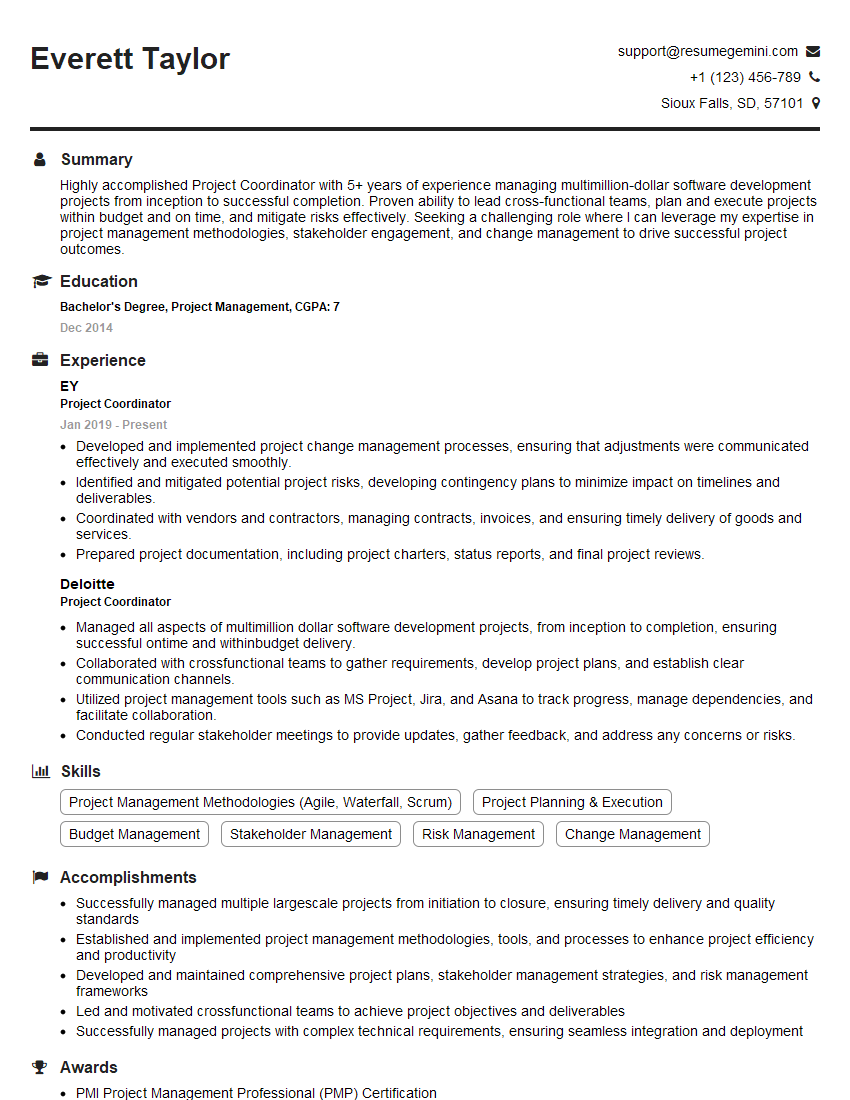
Project Coordinator Resume Sample
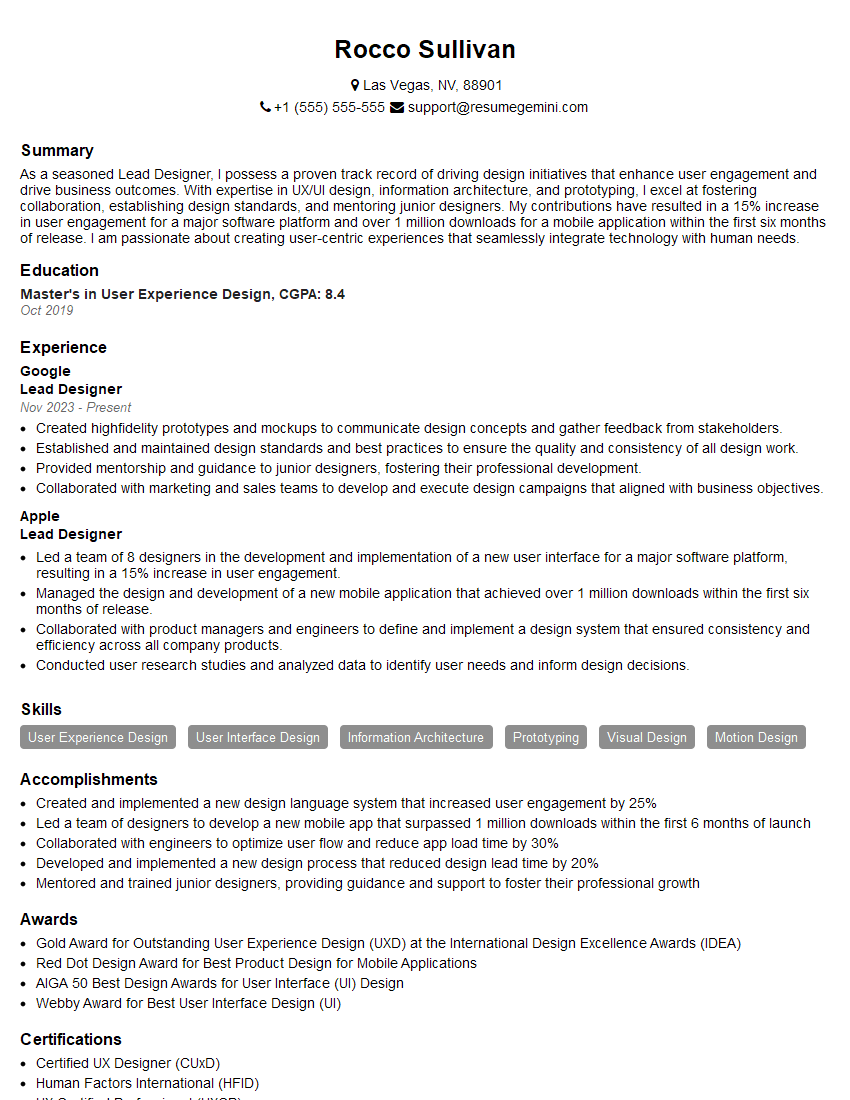
Lead Designer Resume Sample
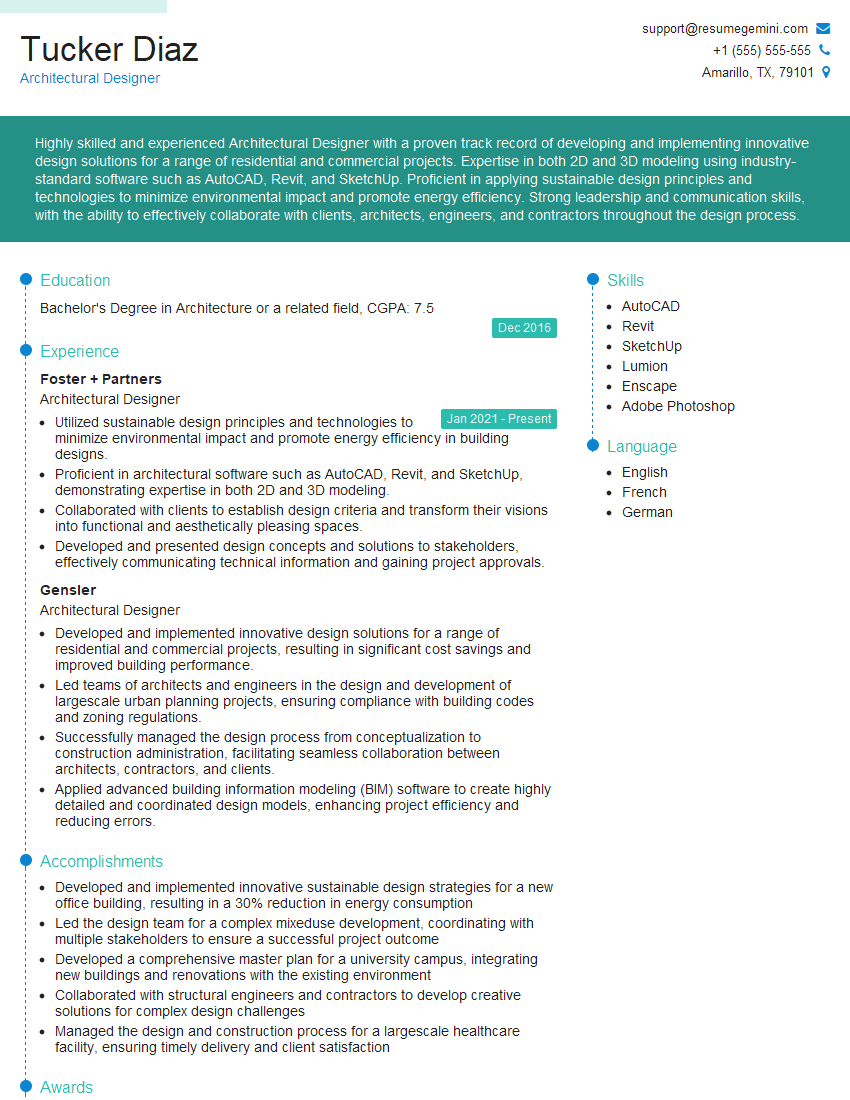
Architectural Designer Resume Sample
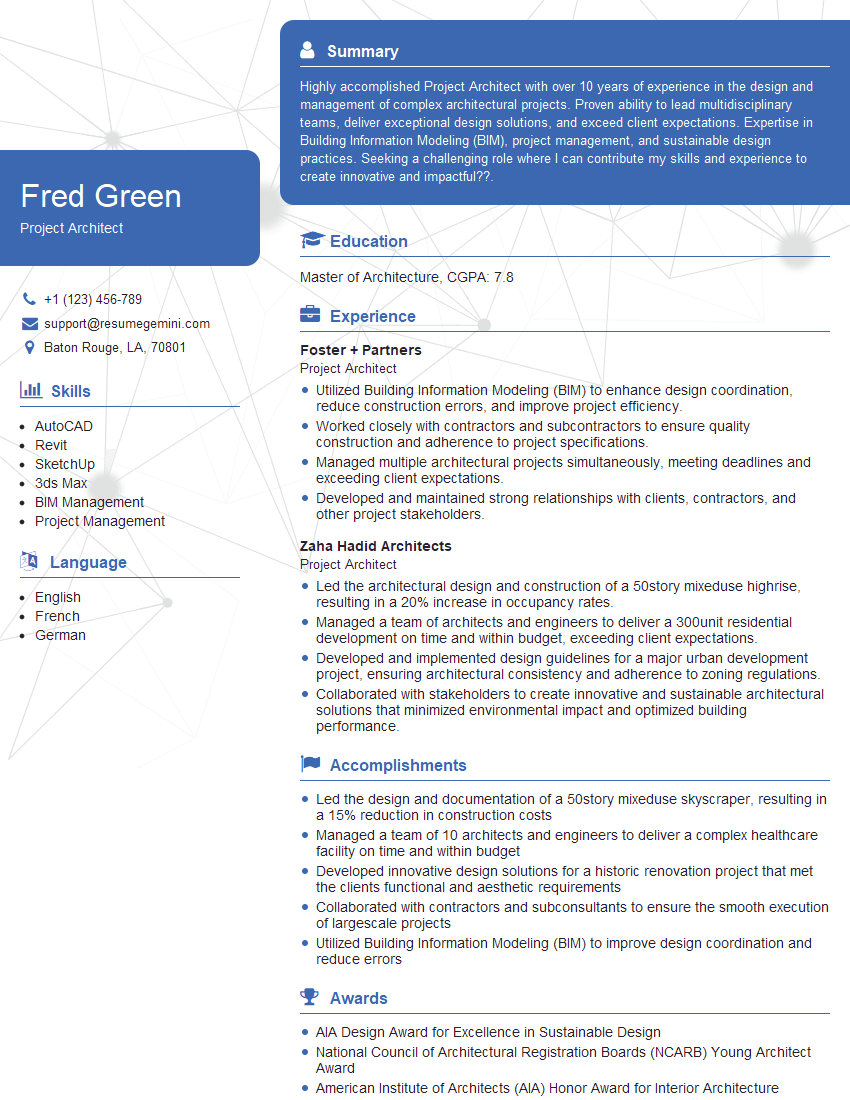
Project Architect Resume Sample
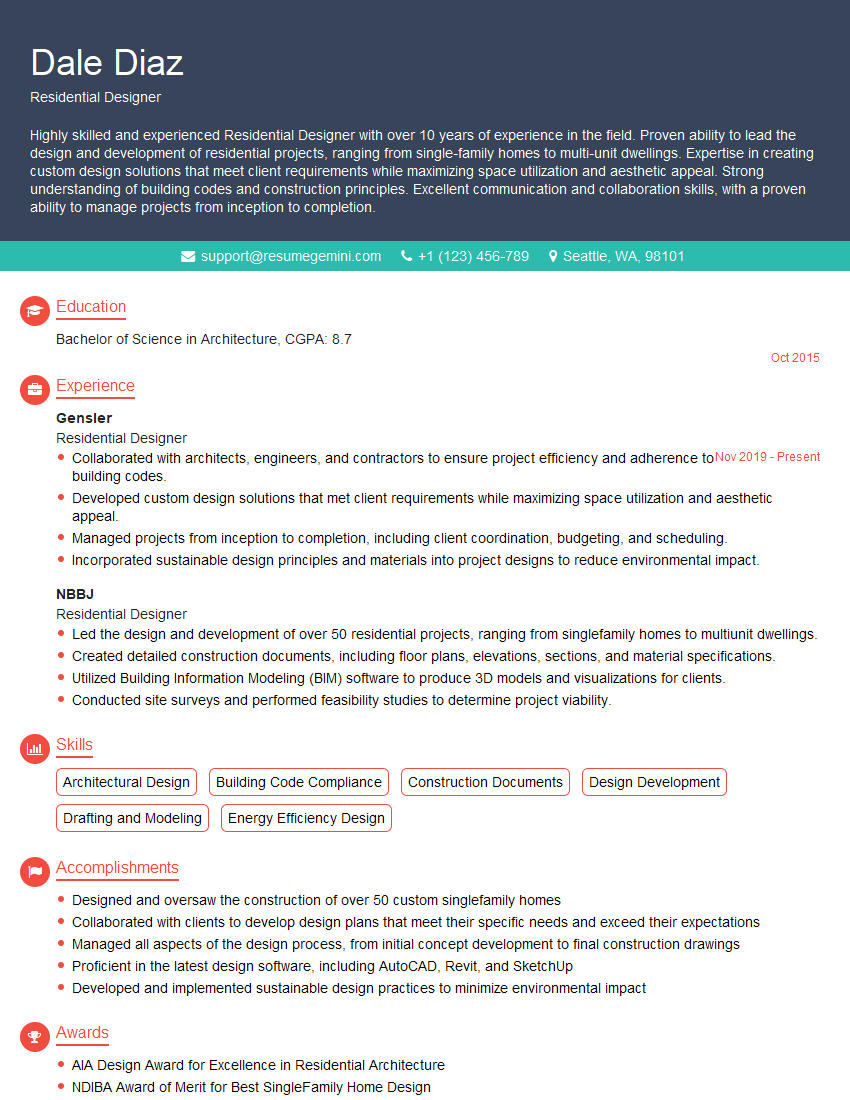
Residential Designer Resume Sample
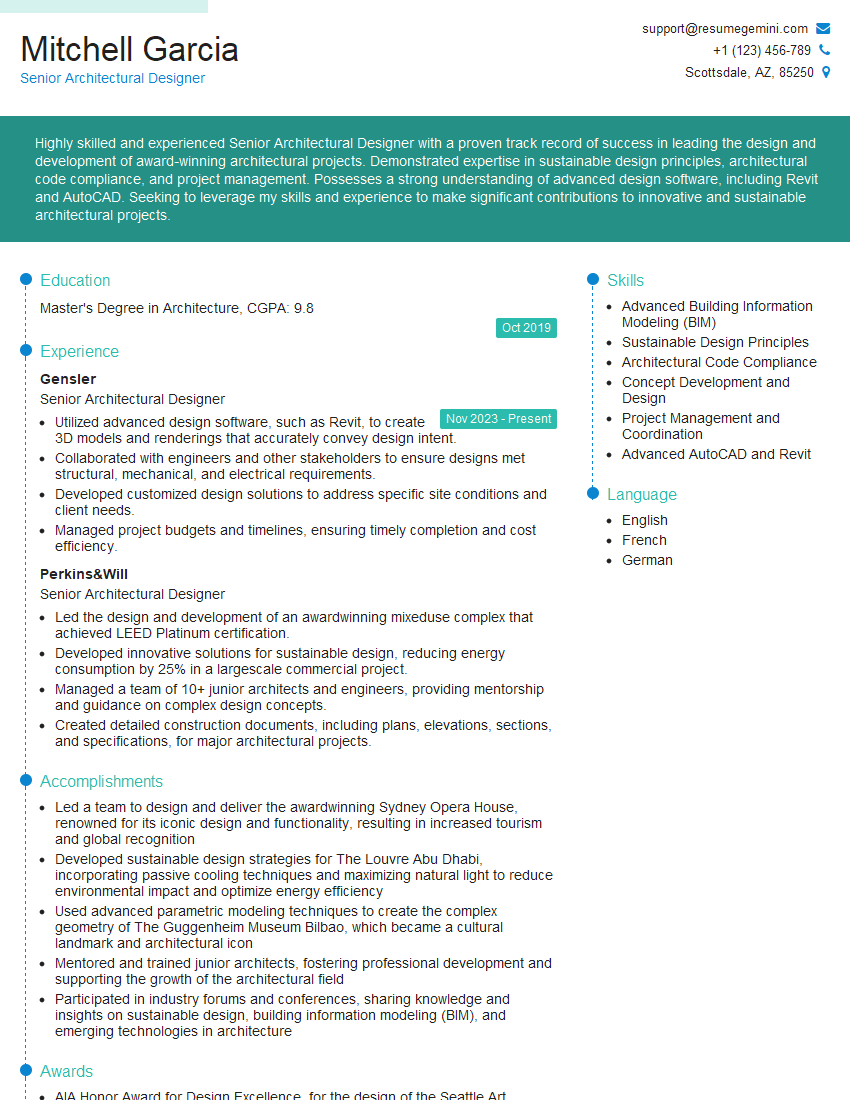
Senior Architectural Designer Resume Sample
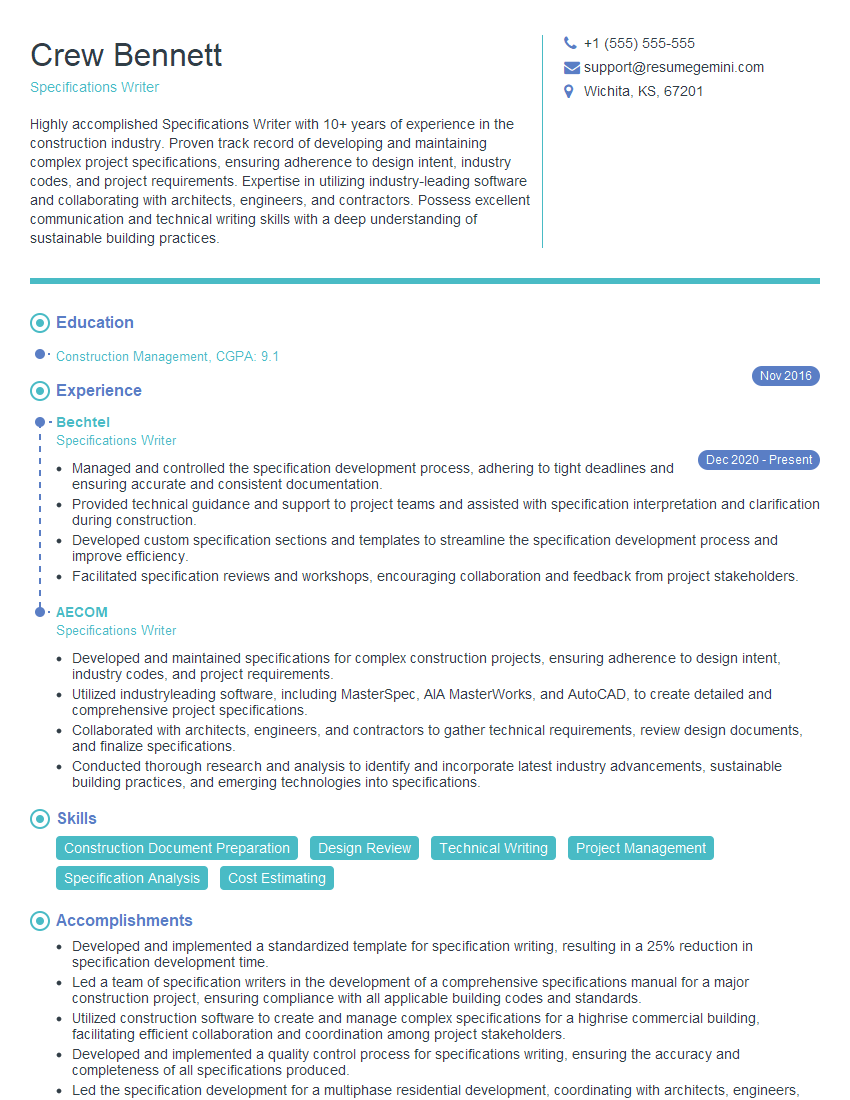
Specifications Writer Resume Sample
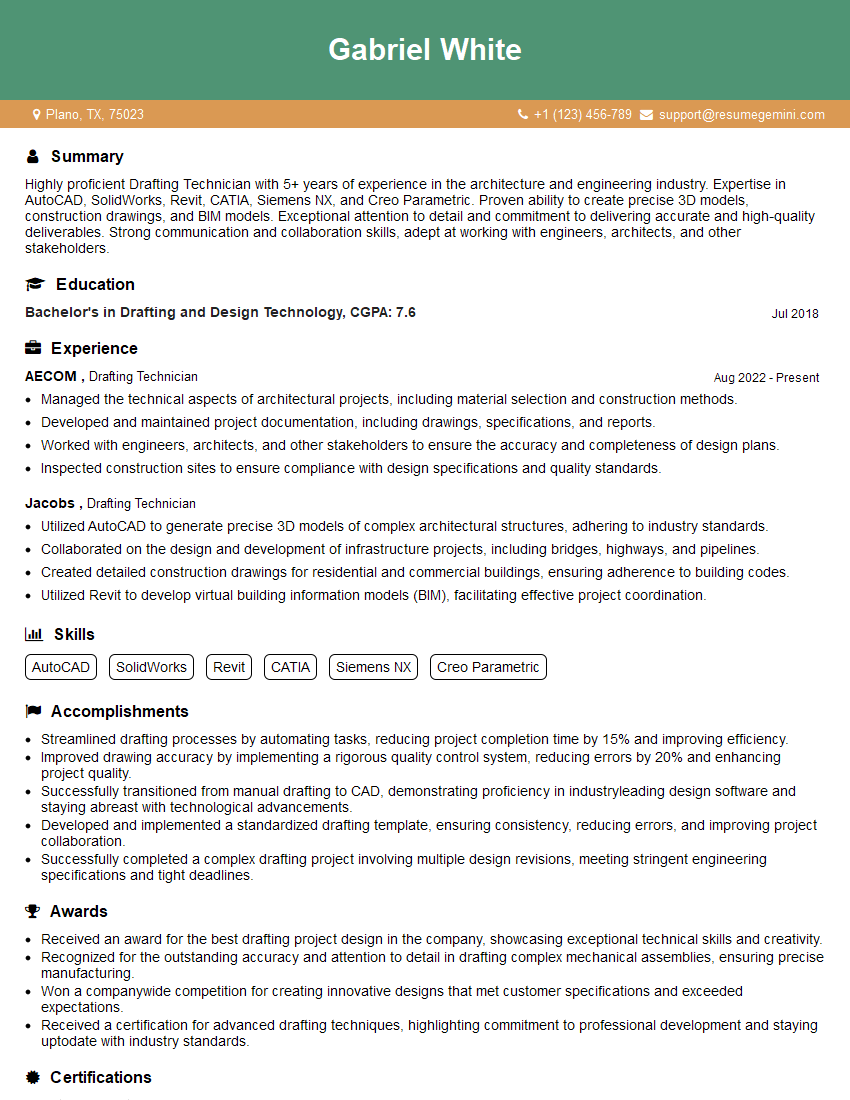
Drafting Technician Resume Sample
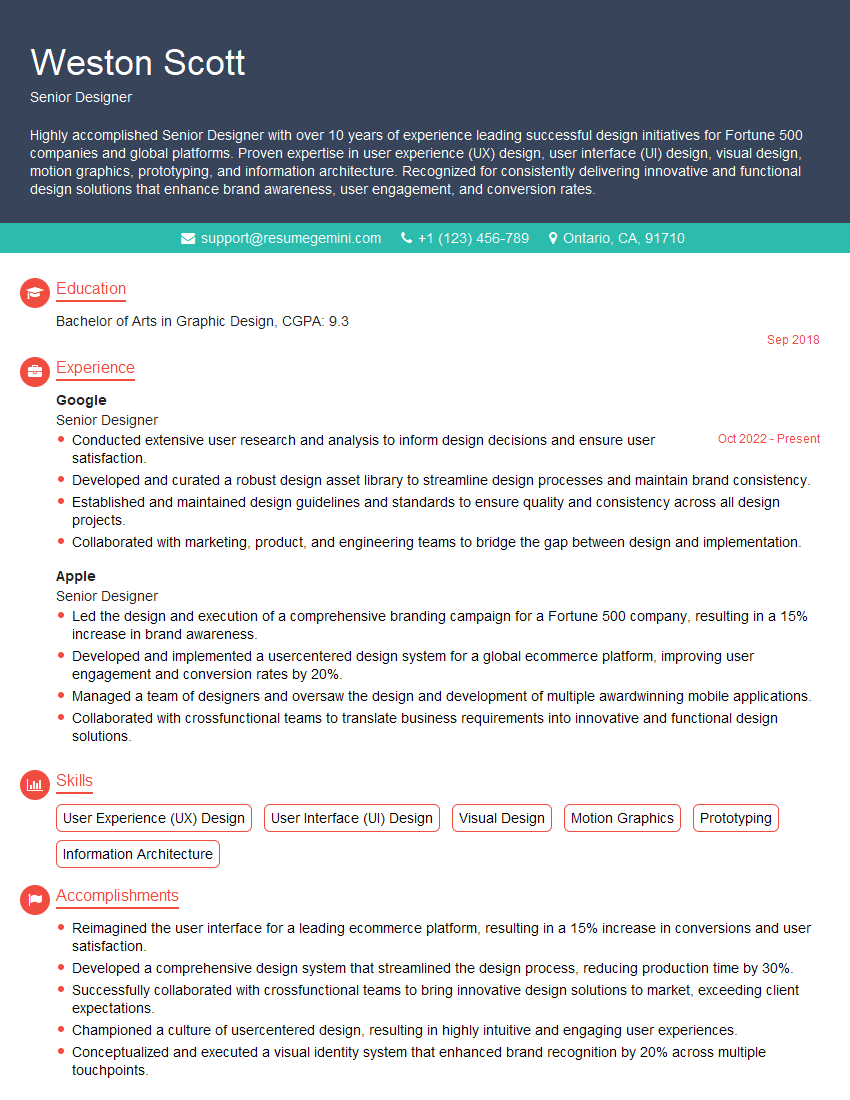
Senior Designer Resume Sample
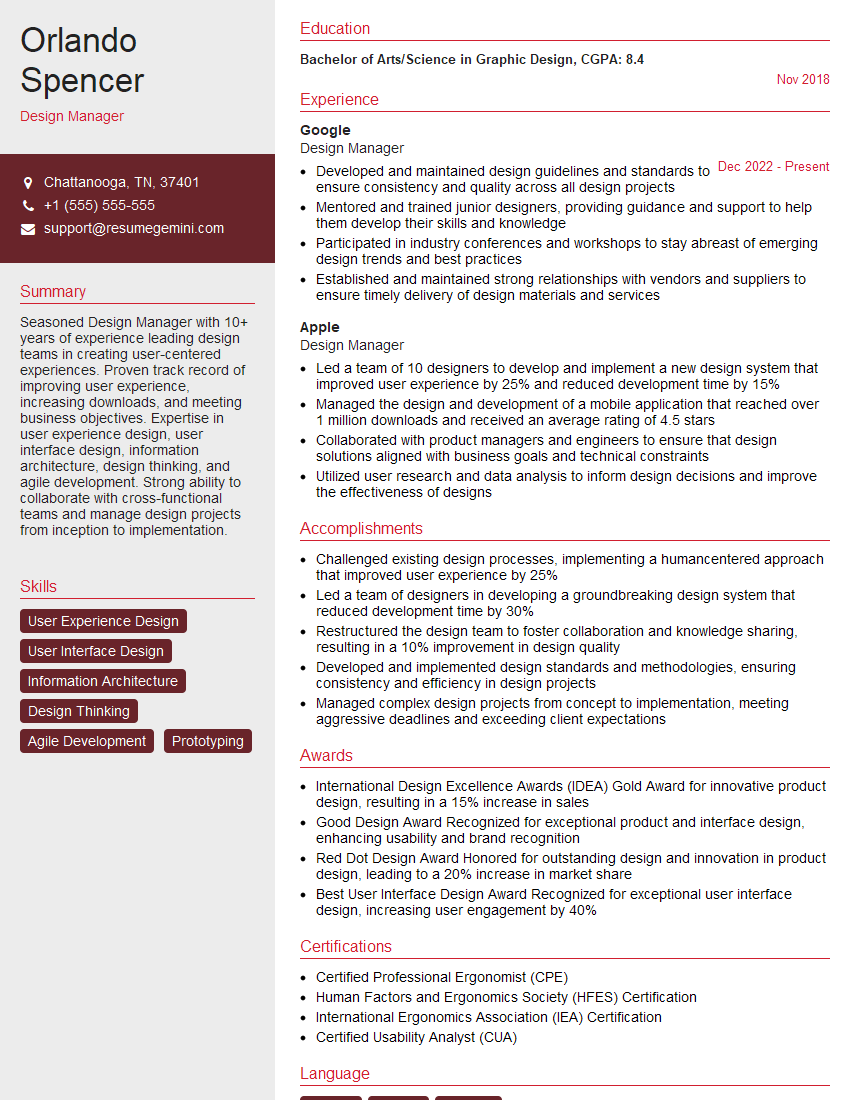
Design Manager Resume Sample
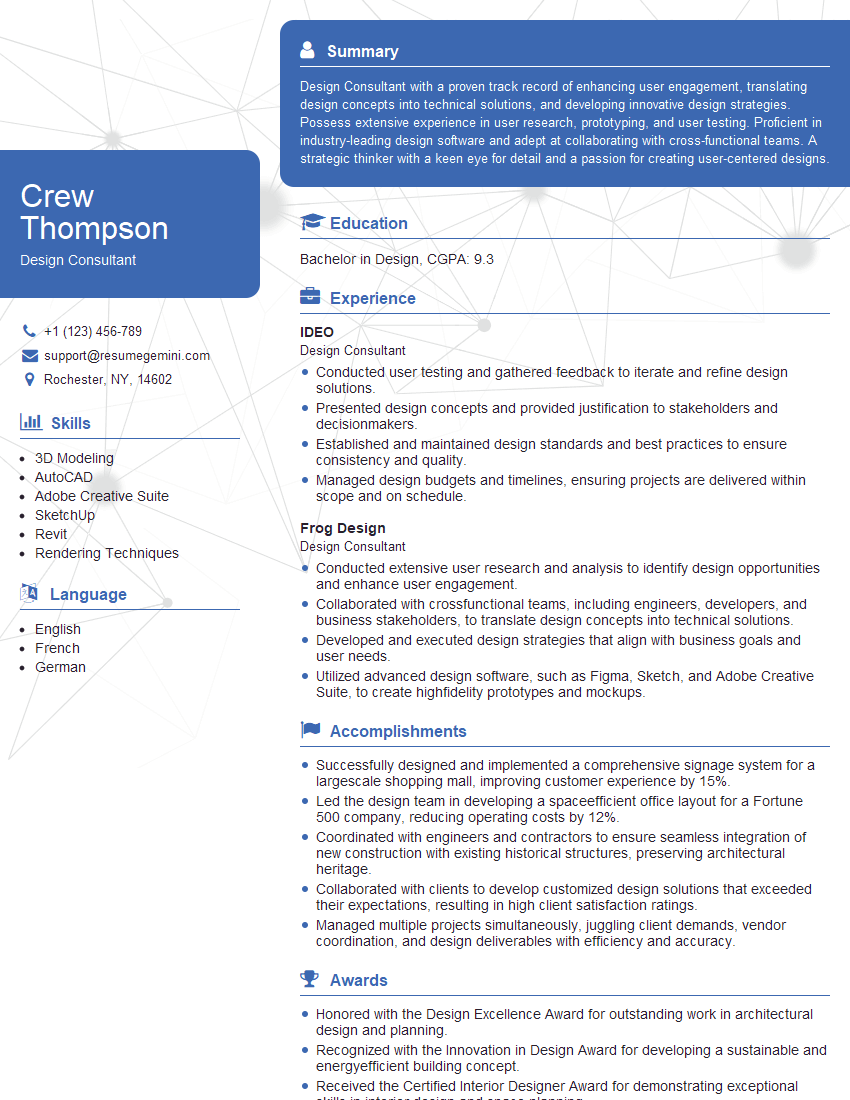
Design Consultant Resume Sample
Explore more articles
Users Rating of Our Blogs
Share Your Experience
We value your feedback! Please rate our content and share your thoughts (optional).
What Readers Say About Our Blog
Amazing blog
Interesting Article, I liked the depth of knowledge you’ve shared.
Helpful, thanks for sharing.