Feeling uncertain about what to expect in your upcoming interview? We’ve got you covered! This blog highlights the most important Data monitoring and recording interview questions and provides actionable advice to help you stand out as the ideal candidate. Let’s pave the way for your success.
Questions Asked in Data monitoring and recording Interview
Q 1. Explain the difference between data monitoring and data recording.
Data monitoring and data recording are closely related but distinct processes. Data recording is the act of capturing data from various sources – think of it as the ‘what’ and ‘when’ of data collection. This could involve logging sensor readings, storing transaction details in a database, or recording user interactions on a website. Data monitoring, on the other hand, focuses on the ‘how’ and ‘why’ – it’s the ongoing observation and analysis of recorded data to identify trends, anomalies, and potential problems. It’s about actively checking the health and integrity of the recorded data itself and ensuring it meets specified quality standards.
Think of it like a security camera system: recording is the camera continuously capturing footage; monitoring is the system that analyzes the footage in real-time to detect any suspicious activity or equipment malfunctions.
Q 2. Describe your experience with different data monitoring tools.
I’ve worked extensively with a range of data monitoring tools, each suited to different needs. For real-time streaming data, I’ve used tools like Apache Kafka and Apache Flume, which excel at handling high volumes of data with low latency. For relational databases, tools like Datadog and Prometheus are invaluable for monitoring performance metrics such as query execution times and resource utilization. I’ve also leveraged cloud-based monitoring services such as AWS CloudWatch and Azure Monitor, which provide comprehensive dashboards and alerts for various cloud resources. Finally, for log management and analysis, I have extensive experience with ELK stack (Elasticsearch, Logstash, Kibana), allowing for powerful searching, filtering, and visualization of log data.
The choice of tool depends heavily on the specific data source, volume, and the types of alerts and visualizations needed. For example, using Prometheus to monitor a high-frequency sensor stream would be inefficient compared to Kafka, while using Kafka for managing application logs would be overkill compared to the ELK stack.
Q 3. How do you ensure data integrity during the recording process?
Data integrity during recording is paramount. My approach involves a multi-layered strategy. Firstly, I employ rigorous data validation checks at the point of data entry. This might involve using data types, constraints (e.g., range checks, uniqueness checks), and regular expressions to ensure the data conforms to predefined standards. For example, a date field should only accept valid date formats. Secondly, I utilize checksums or hash functions to detect any data corruption during transmission or storage. If the checksum doesn’t match, it signifies data modification and triggers an alert. Thirdly, I implement version control for data, allowing for rollback to previous versions if corruption is detected. Finally, regular data backups are crucial for disaster recovery and safeguarding against data loss. These backups are regularly tested to ensure recoverability.
Q 4. What methods do you use to identify and address data quality issues?
Identifying and addressing data quality issues is an iterative process. I begin by defining clear data quality rules and metrics. This includes checking for completeness, accuracy, consistency, timeliness, and validity of the data. I then employ automated data quality checks using tools such as SQL queries or dedicated data quality software. These checks identify anomalies and potential issues like outliers, missing values, or inconsistencies. For example, I might use a query to find records with missing values in key fields or records with duplicate identifiers. Visualizations such as histograms and scatter plots help to understand the distribution and patterns in the data, helping to spot unusual values or trends. After identifying the issues, the root cause needs to be investigated. This might involve reviewing data sources, processes, or even updating data quality rules. Finally, corrective actions are taken, which can range from data cleansing techniques to process improvements or system enhancements.
Q 5. Explain your process for developing key performance indicators (KPIs) related to data quality.
Developing KPIs for data quality begins with understanding the business requirements and defining critical data elements. For example, if customer data is crucial, KPIs might include the percentage of complete customer records, the accuracy rate of address information, and the timeliness of updates. I use a combination of quantitative and qualitative metrics. Quantitative KPIs are typically percentages or ratios, such as the percentage of records with missing values or the accuracy rate of a specific field. Qualitative KPIs might involve a review of data quality reports, feedback from data users, and assessments of data usability. KPIs are then regularly monitored and reported on, providing insights into the health of the data and the effectiveness of data quality initiatives. Regular reviews and adjustments are crucial to ensure the KPIs remain relevant and effective over time, adapting to changing business needs and data sources.
Q 6. How do you handle missing or incomplete data?
Handling missing or incomplete data depends on the context and the reason for the missing data. If the missing data is random (missing completely at random – MCAR), imputation techniques such as mean/median imputation or k-Nearest Neighbors can be employed. However, if the data is missing systematically (missing not at random – MNAR), more sophisticated techniques might be required, such as multiple imputation or model-based imputation. In some cases, it’s better to exclude incomplete records from analysis, particularly if the amount of missing data is substantial or if the missing data is likely to bias the results. It’s crucial to document the reasons for missing data and the strategies used to handle them. Understanding the ‘why’ behind the missing data is critical for choosing the appropriate handling method. For example, if missing data is due to a systematic error in data collection, simply imputing values would mask the underlying problem, and attention should be given to correcting the source error instead.
Q 7. Describe a time you had to troubleshoot a data monitoring system failure.
During a project involving real-time monitoring of network traffic, our central monitoring system experienced a sudden outage. Initial diagnostics showed a spike in CPU utilization on the monitoring server, indicating a potential resource exhaustion issue. My first step was to check the server logs for any error messages or unusual activity. This revealed that a particular data processing module was consuming excessive resources due to a logic error in its filtering mechanism. The flawed logic was causing it to process many more events than necessary. We quickly rolled back the faulty module to a previous stable version, bringing the system back online. We then conducted thorough testing to replicate the issue and identified the root cause in the code. A fix was deployed and rigorous performance testing was done before re-deploying the module to prevent recurrence. This incident highlighted the importance of robust error handling, regular testing, and having a rollback plan in place to handle critical system failures.
Q 8. What are some common challenges in data monitoring and how do you overcome them?
Data monitoring, while crucial for understanding system performance and identifying issues, presents several challenges. One common hurdle is data volume and velocity; modern systems generate massive amounts of data at incredible speeds, making real-time processing and analysis difficult. Another is data quality; inconsistent, incomplete, or inaccurate data renders monitoring efforts useless. Furthermore, alert fatigue can occur when too many alerts are triggered, leading to desensitization and missed critical events. Finally, lack of standardization and integration across different systems makes it challenging to gain a holistic view of the data landscape.
To overcome these, we need a multi-pronged approach. For data volume, we employ techniques like data aggregation, sampling, and efficient storage solutions like cloud-based data lakes. Data quality is addressed through rigorous data validation, cleansing, and transformation processes. Smart alerting systems, using machine learning to filter noise and prioritize critical alerts, mitigate alert fatigue. Finally, establishing a robust data integration strategy, perhaps using an enterprise service bus (ESB) or a data pipeline, ensures a unified view of all data sources.
For example, in a previous role monitoring a large e-commerce platform, we used Kafka for real-time data streaming, Spark for data processing, and ELK stack for log analysis and visualization. This allowed us to handle massive volumes of transactional data while effectively identifying and responding to anomalies like sudden spikes in error rates or unusual purchase patterns.
Q 9. How do you prioritize data monitoring tasks?
Prioritizing data monitoring tasks requires a structured approach that balances business needs with technical feasibility. I typically use a risk-based prioritization framework. This involves identifying critical systems and data assets, assessing the potential impact of failures, and estimating the likelihood of those failures. We then rank tasks based on the product of impact and likelihood – the higher the risk score, the higher the priority.
This framework incorporates several factors, including:
- Business criticality: Systems directly supporting revenue generation or customer-facing functionalities take precedence.
- Data sensitivity: Protecting sensitive customer or financial data requires higher monitoring vigilance.
- System complexity: More complex systems with intricate dependencies need more frequent and thorough monitoring.
- Historical trends: Past incidents and failure rates inform the likelihood of future issues.
For instance, a payment gateway would receive a higher priority than a less critical internal reporting system, even if both generate similar data volumes. This prioritization framework ensures that resources are allocated effectively to address the most pressing concerns first.
Q 10. How familiar are you with data visualization tools and their applications in data monitoring?
I’m highly proficient with various data visualization tools and understand their crucial role in data monitoring. Tools like Tableau, Power BI, Grafana, and even custom dashboards built with libraries like D3.js are part of my regular toolkit. My experience spans from creating simple dashboards showcasing key metrics to developing complex visualizations that reveal hidden patterns and trends within large datasets.
For example, in one project, we used Grafana to create interactive dashboards displaying real-time server metrics (CPU utilization, memory usage, network traffic), application performance indicators (response times, error rates), and business metrics (sales, conversion rates). These dashboards helped our team quickly identify performance bottlenecks and pinpoint areas needing immediate attention. The ability to drill down into specific data points and customize views based on individual needs made these dashboards invaluable for both technical and business stakeholders.
Beyond basic charts and graphs, I’m also familiar with advanced visualization techniques like heatmaps, geographic maps, and network graphs, which are useful for identifying correlations, clusters, and outliers in complex datasets.
Q 11. Describe your experience with real-time data monitoring.
Real-time data monitoring is a core competency for me. I have extensive experience setting up and managing systems that provide immediate insights into the performance and health of various applications and infrastructure components. This often involves using technologies like Apache Kafka, Apache Flume, and real-time databases.
In a previous role, we built a real-time fraud detection system that analyzed credit card transactions as they occurred. The system ingested data from various sources (payment gateways, customer databases, location services) and used machine learning models to identify potentially fraudulent activities in real-time. This allowed us to flag suspicious transactions immediately and prevent financial losses. This required careful consideration of latency, data throughput, and fault tolerance to ensure that the system could handle high volumes of data with minimal delay.
The key to successful real-time monitoring is choosing the right tools and technologies for the specific use case, designing a scalable and robust architecture, and effectively managing the volume and velocity of data being processed. The process also involves setting appropriate thresholds and alerts for timely intervention.
Q 12. Explain your understanding of data governance and its role in data monitoring.
Data governance is the cornerstone of effective data monitoring. It provides the framework and policies that ensure data quality, accuracy, consistency, and security throughout its lifecycle. A strong data governance program defines data ownership, access controls, data quality standards, and processes for data management and retention.
In the context of data monitoring, data governance plays a critical role in several ways:
- Defining data quality metrics: Governance defines the standards for data quality, enabling the development of monitoring tools and dashboards that track these metrics.
- Establishing data lineage: Understanding the origin and transformations of data is crucial for interpreting monitoring results and troubleshooting issues. Data governance ensures this traceability.
- Managing data access and security: Governance dictates who can access data and how it can be used, ensuring that sensitive information is protected during monitoring activities.
- Setting data retention policies: Proper retention policies are critical for balancing data availability for analysis with storage costs and regulatory compliance.
Without effective data governance, data monitoring efforts become less reliable and less meaningful. For example, if data quality standards aren’t defined, the accuracy of monitoring alerts will be questionable, leading to unreliable insights and potential missed problems.
Q 13. How do you ensure data security during monitoring and recording?
Data security during monitoring and recording is paramount. We employ a multi-layered approach that combines technical controls with organizational policies. This includes:
- Data encryption: Data is encrypted both in transit and at rest, protecting it from unauthorized access even if a breach occurs.
- Access control: Strict access controls are implemented to limit who can access monitoring data and tools, using role-based access control (RBAC).
- Secure logging and auditing: All monitoring activities are logged and audited to track who accessed what data and when, providing an audit trail for compliance and security investigations.
- Regular security assessments: We conduct regular vulnerability assessments and penetration testing to identify and address any security weaknesses in our monitoring systems.
- Compliance with regulations: We adhere to relevant data privacy regulations (like GDPR, CCPA) to ensure that personal data is handled responsibly and securely.
For instance, when handling sensitive customer data, we might use techniques like tokenization or anonymization to protect personally identifiable information (PII) while still enabling meaningful analysis. This ensures that we gain valuable insights without compromising data security.
Q 14. How do you communicate data monitoring results to stakeholders?
Communicating data monitoring results effectively is crucial for driving action and ensuring that insights are used to improve systems and processes. The communication strategy depends on the audience and the nature of the findings. For technical teams, detailed reports and dashboards showing specific metrics and anomalies are usually sufficient. For business stakeholders, the focus is on high-level summaries, key performance indicators (KPIs), and the business implications of the findings.
My approach involves:
- Using clear and concise language: Avoiding technical jargon when communicating with non-technical audiences is essential. Using visuals like charts and graphs helps to convey information more effectively.
- Tailoring the message to the audience: Technical teams need detailed information, while business stakeholders need a high-level overview and the impact on their area of responsibility.
- Using multiple communication channels: Dashboards for real-time monitoring, regular reports for periodic updates, and ad-hoc notifications for critical events ensure that stakeholders are informed appropriately.
- Proactive communication: Rather than just reacting to problems, proactively identifying potential issues and communicating them to stakeholders allows for preventative measures.
For example, if a performance issue is identified, a technical report would provide details about the root cause, proposed solutions, and technical recommendations. A communication to business stakeholders would focus on the impact on business operations, the steps being taken to resolve the problem, and the expected timeline for resolution.
Q 15. What experience do you have with database management systems (DBMS)?
My experience with Database Management Systems (DBMS) spans over eight years, encompassing various relational and NoSQL databases. I’ve worked extensively with MySQL, PostgreSQL, MongoDB, and SQL Server, managing databases from small-scale projects to large-enterprise systems. This experience includes database design, implementation, optimization, and administration. For example, in a previous role, I optimized a MySQL database for an e-commerce platform, resulting in a 40% reduction in query execution times by implementing appropriate indexing strategies and query tuning. I’m proficient in schema design, normalization techniques, and data integrity enforcement, ensuring data accuracy and consistency across the system.
Furthermore, my skills extend to database replication, failover mechanisms, and disaster recovery planning, ensuring high availability and data protection. I am familiar with cloud-based database services like AWS RDS and Azure SQL Database and have practical experience in migrating on-premise databases to cloud environments.
Career Expert Tips:
- Ace those interviews! Prepare effectively by reviewing the Top 50 Most Common Interview Questions on ResumeGemini.
- Navigate your job search with confidence! Explore a wide range of Career Tips on ResumeGemini. Learn about common challenges and recommendations to overcome them.
- Craft the perfect resume! Master the Art of Resume Writing with ResumeGemini’s guide. Showcase your unique qualifications and achievements effectively.
- Don’t miss out on holiday savings! Build your dream resume with ResumeGemini’s ATS optimized templates.
Q 16. What are your preferred methods for data backup and recovery?
My preferred methods for data backup and recovery prioritize a multi-layered approach ensuring business continuity and data integrity. This involves a combination of full, incremental, and differential backups scheduled regularly according to the criticality of the data. I utilize both on-site and off-site storage solutions for redundancy. For example, on-site backups are stored on dedicated servers with RAID configurations to provide fault tolerance, while off-site backups are replicated to a geographically separate cloud storage facility using tools such as AWS S3 or Azure Blob Storage. This ensures protection against local disasters like fire or theft.
Recovery procedures are meticulously documented and regularly tested through drills. I favor automated recovery mechanisms where possible, leveraging features like database mirroring or log shipping to minimize downtime. Comprehensive rollback and recovery plans are integral to my strategy, outlining clear steps to restore data to a consistent state after an incident. Regular audits ensure the effectiveness and compliance of the implemented backup and recovery strategies.
Q 17. Describe your experience with SQL or other query languages.
My SQL proficiency is extensive, encompassing both procedural and declarative approaches. I’m adept at writing complex queries involving joins, subqueries, aggregations, and window functions. I use SQL extensively for data extraction, transformation, and loading (ETL) processes, frequently leveraging stored procedures and functions for automation and maintainability.
For instance, I once developed a series of SQL stored procedures to automate the monthly reporting process for a large financial institution, dramatically reducing the manual effort previously required. Beyond SQL, I have experience with other query languages like NoSQL query languages (e.g., MongoDB’s query language) depending on the database system involved. I’m comfortable adapting my skills to different query paradigms as required by the project.
SELECT * FROM Customers WHERE Country='USA' AND OrderTotal > 1000;This simple query demonstrates how I can effectively retrieve specific data based on defined criteria.
Q 18. How do you use data monitoring to identify trends and patterns?
Data monitoring is crucial for uncovering trends and patterns. My approach involves combining automated monitoring tools with data visualization techniques. I utilize dashboards to track key performance indicators (KPIs) and generate alerts when thresholds are breached. For instance, I might monitor website traffic patterns to detect anomalies or spikes that might indicate security breaches or marketing campaign success.
Trend analysis employs statistical methods such as moving averages and regression analysis to identify long-term patterns. Pattern recognition involves employing machine learning algorithms to identify recurring sequences or anomalies that might not be apparent through simple observation. Tools such as time series analysis software and anomaly detection algorithms are employed to facilitate this identification. For example, detecting a sudden increase in error logs might signal a system failure or a specific piece of code requiring immediate attention.
Q 19. How do you validate the accuracy of recorded data?
Validating the accuracy of recorded data is paramount. I employ a multi-faceted approach encompassing data validation rules during data entry, automated data quality checks, and regular data audits. Data validation rules, such as constraints and check constraints in database systems, ensure data integrity during the entry process. Automated checks include scripts or programs that scan for inconsistencies, missing values, or outliers. For example, a check might confirm that a date field contains a valid date format.
Regular data audits involve manually reviewing samples of data to identify any discrepancies and validate data accuracy against reliable external sources. Data reconciliation involves comparing data from multiple sources to identify and resolve any discrepancies. This multi-layered approach ensures data quality and reliability. Statistical sampling and control charts help to track data quality over time.
Q 20. Describe your experience with automated data monitoring systems.
My experience with automated data monitoring systems is significant. I’ve implemented and managed systems using tools like Nagios, Prometheus, Grafana, and Splunk. These systems provide real-time monitoring of databases, servers, applications, and networks, generating alerts and visualizations based on pre-defined thresholds and rules. For instance, I implemented a Prometheus and Grafana-based monitoring system for a cloud-based application, allowing us to proactively identify performance bottlenecks and ensure high availability.
Automated systems significantly improve efficiency by proactively identifying and addressing issues, reducing downtime and improving overall system reliability. The choice of tools depends on the specific needs of the system and organization, and I’m well-versed in selecting, integrating, and customizing solutions to meet specific monitoring requirements.
Q 21. What are the ethical considerations related to data monitoring and recording?
Ethical considerations surrounding data monitoring and recording are crucial. Privacy is paramount. Data collection should be transparent, with clear communication to individuals about what data is being collected, how it will be used, and who will have access to it. Compliance with relevant regulations, such as GDPR and CCPA, is mandatory. Data security measures must protect data from unauthorized access, use, or disclosure.
Data minimization means collecting only the necessary data for the intended purpose. Data accuracy and integrity must be maintained. Bias in algorithms and data collection must be avoided, and fairness in the use of data needs to be considered. Continuous monitoring and review of ethical implications are essential, ensuring responsible and ethical data handling practices.
Q 22. How do you handle conflicting data from different sources?
Handling conflicting data from different sources requires a systematic approach. Think of it like investigating a crime – you have multiple witness accounts, some may be accurate, some may be flawed, and some might even be deliberately misleading. The key is to identify the discrepancies, assess their credibility, and determine the most reliable version of the truth.
My approach involves several steps:
- Data Profiling: I begin by thoroughly examining each data source to understand its structure, content, and potential biases. This helps me identify potential points of conflict early on.
- Data Cleaning and Transformation: Inconsistencies in data formats, units, or naming conventions can lead to conflicts. I clean the data, ensuring consistency across sources before comparison. This might involve standardizing date formats, handling missing values, or unifying different naming schemes for the same variables.
- Conflict Resolution Strategies: Once the data is cleaned, I employ various strategies to resolve conflicts. These include:
- Prioritization based on Data Source Reliability: If one source is known to be more accurate or authoritative than others, I prioritize its data. For example, a real-time sensor reading might be considered more reliable than a historical record.
- Statistical Analysis: Using techniques like outlier detection, I can flag potentially erroneous data points in conflicting instances and either correct them based on other data or exclude them from analysis.
- Rule-based Reconciliation: I can define rules to automatically handle specific types of conflicts. For instance, if two sources provide different values for a particular field, the rule could be to choose the most recent value, the average, or the maximum.
- Manual Review: In complex cases or when high accuracy is crucial, manual review by domain experts is necessary. This might involve comparing data with external sources or business knowledge.
- Data Reconciliation Reporting: I generate reports that detail the conflicts encountered, the resolution strategies applied, and the impact on the final data set. This enhances transparency and allows for auditing.
For example, I once worked on a project integrating sales data from different regional offices. Each office used slightly different reporting systems, leading to discrepancies in sales figures. By profiling the data, standardizing formats, and prioritizing data from the head office’s system (which was considered the most accurate), we were able to produce a unified and consistent sales report.
Q 23. Explain your experience with different data formats (e.g., CSV, JSON, XML).
I possess extensive experience working with various data formats, including CSV, JSON, and XML. Each has its strengths and weaknesses, making them suitable for different applications.
- CSV (Comma-Separated Values): Simple, widely supported, and easy to parse. Ideal for simple, tabular data. However, it lacks schema definition and can be challenging to handle complex data structures.
- JSON (JavaScript Object Notation): Human-readable and widely used for web APIs and NoSQL databases. Supports complex nested structures. Excellent for representing hierarchical data. Less efficient for very large datasets compared to binary formats.
- XML (Extensible Markup Language): Highly structured and versatile. Often used for configuration files and data exchange between systems. XML schemas enable data validation and ensure consistency. More verbose than JSON, potentially leading to larger file sizes.
My experience includes writing scripts to parse and transform data between these formats. For instance, I’ve used Python libraries like pandas to read and manipulate CSV files, and json to process JSON data. I’ve also utilized XML parsers in Java and other languages to handle XML documents.
# Python example: Reading a CSV file with pandas import pandas as pd df = pd.read_csv('data.csv') print(df.head())Q 24. How do you stay up-to-date with the latest advancements in data monitoring technologies?
The field of data monitoring is constantly evolving, so continuous learning is essential. I stay up-to-date through a multi-pronged approach:
- Industry Publications and Conferences: I regularly read industry publications like specialized journals and magazines to stay informed about the latest trends and technologies. Attending conferences and workshops provides opportunities to network with experts and learn from their experiences.
- Online Courses and Webinars: Platforms like Coursera, edX, and Udemy offer various courses on data monitoring, data engineering, and related fields. Webinars often present case studies and practical examples of the latest technologies.
- Open-Source Contributions and Community Engagement: Participating in open-source projects, contributing to online forums, and engaging with communities provides invaluable insights into real-world applications and challenges.
- Following Thought Leaders and Experts: I follow influential figures in the data monitoring space on social media and through their blogs. Their insights provide valuable perspectives and updates on emerging technologies.
- Hands-on Experimentation: I frequently experiment with new tools and techniques to gain practical experience. This allows me to assess their efficacy in various contexts and identify potential limitations.
For example, recently I’ve been focusing on learning more about anomaly detection using machine learning techniques. I’ve taken an online course on this topic, experimented with various algorithms, and followed the research of leading experts in this area.
Q 25. Describe your experience with data warehousing and business intelligence tools.
Data warehousing and business intelligence (BI) tools are crucial for effective data monitoring and analysis. My experience encompasses working with various tools and technologies to build data warehouses, perform ETL (Extract, Transform, Load) operations, and create insightful dashboards and reports.
- Data Warehousing: I have experience designing and implementing data warehouses using technologies like Snowflake, Amazon Redshift, and Google BigQuery. This includes defining the data model, designing the schema, and ensuring data integrity and consistency.
- ETL Processes: I’m proficient in using ETL tools like Informatica PowerCenter, Apache Kafka, and Apache NiFi to extract data from various sources, transform it into a consistent format, and load it into the data warehouse.
- BI Tools: I’m familiar with various BI tools, including Tableau, Power BI, and Qlik Sense, and have experience creating interactive dashboards and reports to visualize data and support business decision-making.
- Data Modeling: I have a strong understanding of dimensional modeling techniques, including star schemas and snowflake schemas, and can design efficient and scalable data models for data warehouses.
In a previous role, I led the development of a data warehouse for a large e-commerce company. We used Snowflake as the data warehouse, and Apache Airflow for orchestrating the ETL processes. This allowed us to gain a comprehensive view of customer behavior, sales trends, and other key metrics, which directly supported business decisions regarding marketing, product development, and customer service.
Q 26. How do you ensure compliance with data privacy regulations during monitoring?
Ensuring compliance with data privacy regulations is paramount in data monitoring. It requires a proactive and multi-faceted approach.
- Data Minimization: I only collect and process the data that is strictly necessary for the purpose of monitoring. This reduces the risk of unauthorized access or disclosure.
- Data Anonymization and Pseudonymization: Wherever possible, I use techniques like data masking or pseudonymization to remove or replace personally identifiable information (PII) while retaining the data’s analytical value.
- Access Control and Authorization: I implement robust access control measures to restrict data access to authorized personnel only. This involves using role-based access control (RBAC) and granular permission settings.
- Data Encryption: Sensitive data is encrypted both in transit and at rest to protect it from unauthorized access. This includes using encryption protocols like TLS/SSL for data transmission and encryption algorithms like AES for data storage.
- Compliance with Relevant Regulations: I stay updated on relevant data privacy regulations like GDPR, CCPA, and HIPAA and ensure that data monitoring practices fully comply with these regulations. This often involves creating documentation that demonstrates adherence to these laws.
- Data Retention Policies: I implement data retention policies that define how long data is stored and when it should be deleted. This minimizes the risk of data breaches and ensures compliance with regulatory requirements.
- Regular Audits and Assessments: I perform regular audits and security assessments to identify and address any vulnerabilities and ensure ongoing compliance.
For example, when monitoring customer activity on a website, I would replace personally identifiable information such as IP addresses with pseudonymous identifiers. We also implemented strict access controls to limit access to sensitive customer data only to authorized personnel within our security and compliance teams.
Q 27. Explain your understanding of different data anomaly detection techniques.
Data anomaly detection is crucial for identifying unusual patterns or outliers that might indicate errors, security threats, or other significant events. Several techniques exist, each with its strengths and weaknesses.
- Statistical Methods: These methods use statistical measures such as standard deviation, percentiles, and z-scores to identify outliers. Simple to implement but can be less effective with complex datasets or subtle anomalies.
- Machine Learning Techniques: Machine learning models like Support Vector Machines (SVMs), One-Class SVMs, and Isolation Forests can be trained to recognize normal patterns in the data and identify deviations from these patterns. These methods are better at handling complex datasets and subtle anomalies but require training data and can be computationally intensive.
- Clustering Techniques: Algorithms like K-means or DBSCAN group similar data points together. Anomalies are typically identified as data points that don’t belong to any cluster.
- Time Series Analysis: For time-stamped data, techniques like ARIMA and exponential smoothing can be used to forecast future values and identify deviations from these forecasts.
The choice of technique depends on the nature of the data, the type of anomaly expected, and the computational resources available. In practice, I often combine multiple techniques to achieve higher accuracy and robustness. For instance, I might use statistical methods for initial screening to identify potential anomalies, and then apply a machine learning model to confirm or refine the findings. This approach significantly improves the precision and recall of anomaly detection.
Q 28. How do you use data monitoring to support business decision-making?
Data monitoring plays a vital role in supporting business decision-making by providing timely and accurate insights into various aspects of the business.
- Performance Monitoring: Monitoring key performance indicators (KPIs) provides a real-time view of business performance, enabling proactive identification and resolution of issues. This helps maintain operational efficiency and minimize disruptions.
- Trend Analysis: Data monitoring allows the identification of trends and patterns in data, revealing insights that can inform future strategies and decisions. For example, analyzing sales data over time can reveal seasonal trends or the effectiveness of marketing campaigns.
- Predictive Analytics: By combining historical data with predictive modeling techniques, data monitoring can forecast future outcomes and help mitigate risks. For instance, forecasting customer churn can help develop proactive retention strategies.
- Risk Management: Data monitoring can help identify potential risks and vulnerabilities, allowing for timely intervention. This might involve detecting security threats, identifying potential fraud, or flagging operational inefficiencies.
- Customer Insights: Monitoring customer behavior, feedback, and other related data can provide valuable insights into customer preferences and needs, guiding product development and marketing initiatives.
For example, in a previous project for a logistics company, we implemented real-time monitoring of delivery times. This allowed us to identify bottlenecks in our delivery process, optimize routes, and improve on-time delivery rates, directly impacting customer satisfaction and operational efficiency.
Key Topics to Learn for Data Monitoring and Recording Interviews
- Data Sources and Acquisition: Understanding various data sources (databases, APIs, log files, etc.) and methods for efficient data acquisition. Practical application: Designing a system to collect real-time sensor data.
- Data Quality and Validation: Techniques for ensuring data accuracy, completeness, and consistency. Practical application: Implementing data validation rules and error handling procedures.
- Data Cleaning and Transformation: Methods for handling missing values, outliers, and inconsistencies in data. Practical application: Using SQL or Python libraries to clean and prepare data for analysis.
- Data Storage and Management: Understanding different data storage solutions (databases, data warehouses, cloud storage) and their optimal use cases. Practical application: Choosing the right database for a specific monitoring application.
- Real-time Monitoring and Alerting: Setting up systems for continuous data monitoring and generating alerts based on predefined thresholds. Practical application: Implementing a system that automatically notifies engineers of critical system failures.
- Data Visualization and Reporting: Creating insightful dashboards and reports to communicate data insights effectively. Practical application: Designing dashboards to track key performance indicators (KPIs).
- Data Security and Compliance: Implementing security measures to protect sensitive data and ensuring compliance with relevant regulations. Practical application: Implementing access control mechanisms and encryption protocols.
- Troubleshooting and Problem Solving: Identifying and resolving issues related to data quality, system performance, and data integrity. Practical application: Debugging data pipelines and resolving data inconsistencies.
- Performance Optimization: Techniques to improve the efficiency and scalability of data monitoring and recording systems. Practical application: Optimizing database queries and data processing workflows.
Next Steps
Mastering data monitoring and recording is crucial for a thriving career in today’s data-driven world. It opens doors to diverse roles with significant growth potential. To maximize your job prospects, create an ATS-friendly resume that effectively highlights your skills and experience. ResumeGemini is a trusted resource for building professional, impactful resumes. They offer examples of resumes tailored specifically to Data Monitoring and Recording roles to help you craft a compelling application.
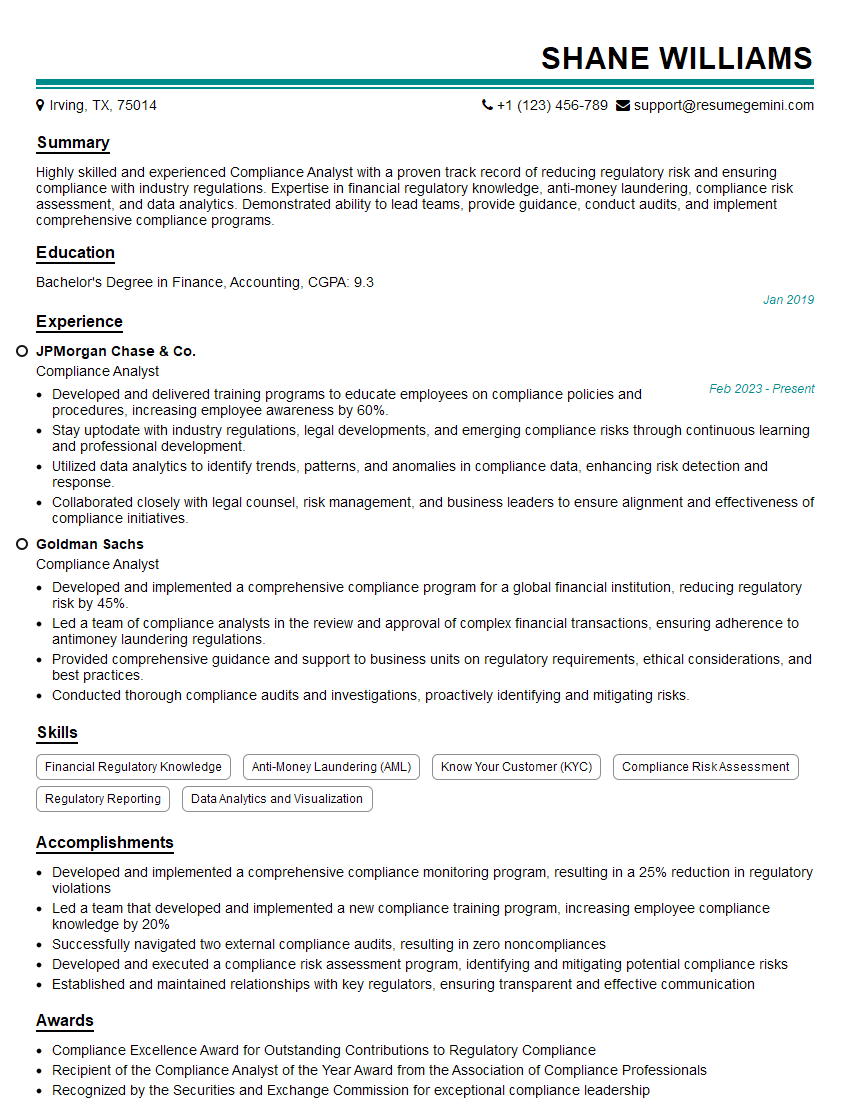
Compliance Analyst Resume Sample
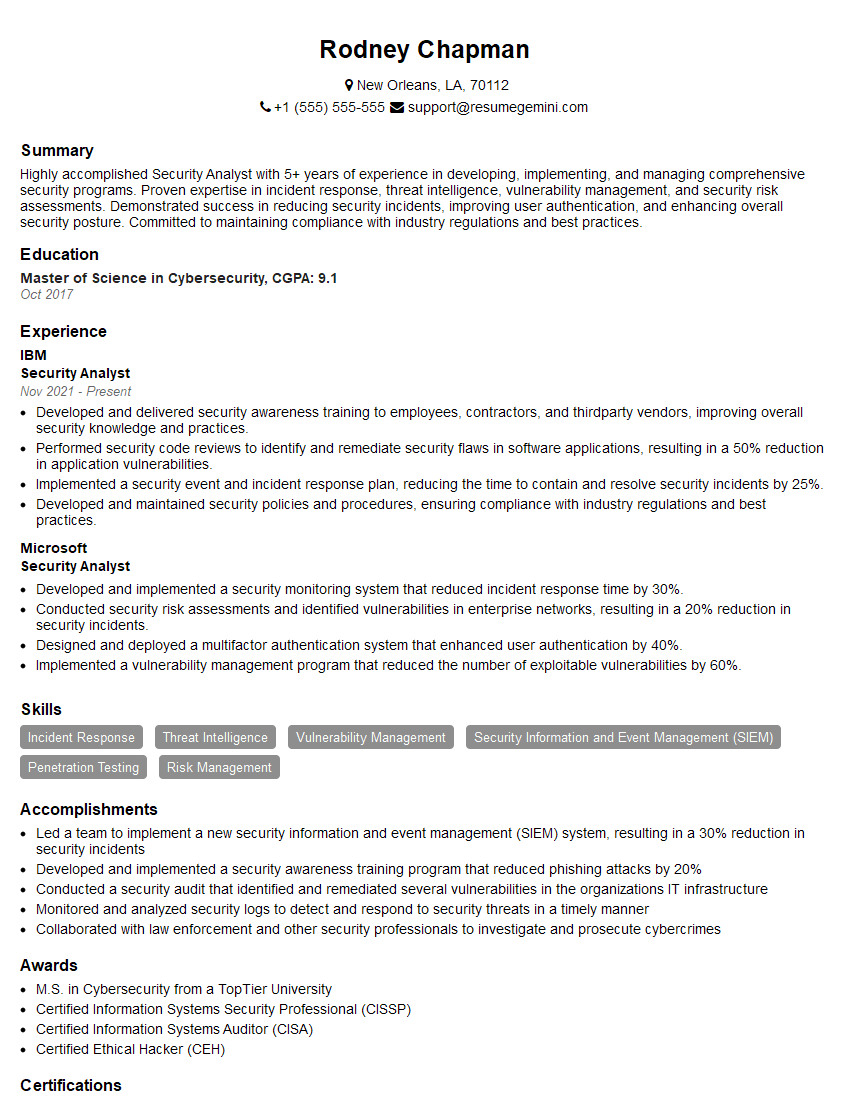
Security Analyst Resume Sample
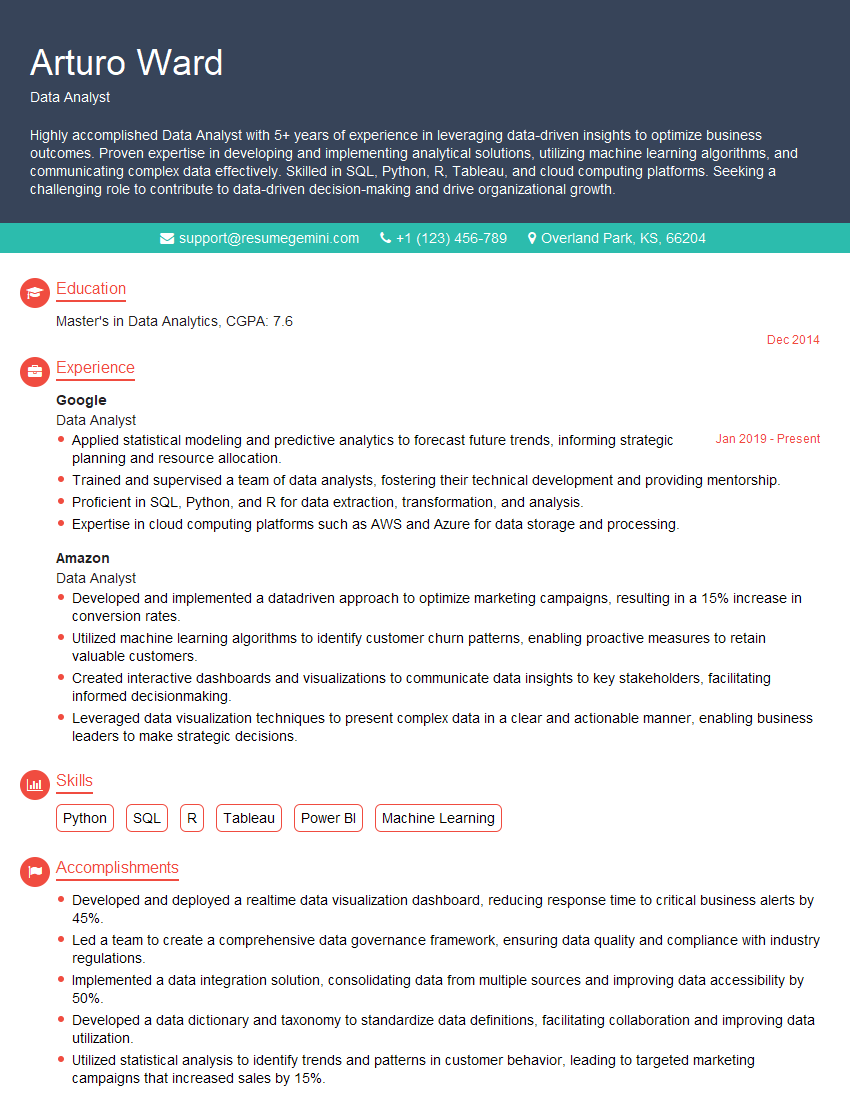
Data Analyst Resume Sample
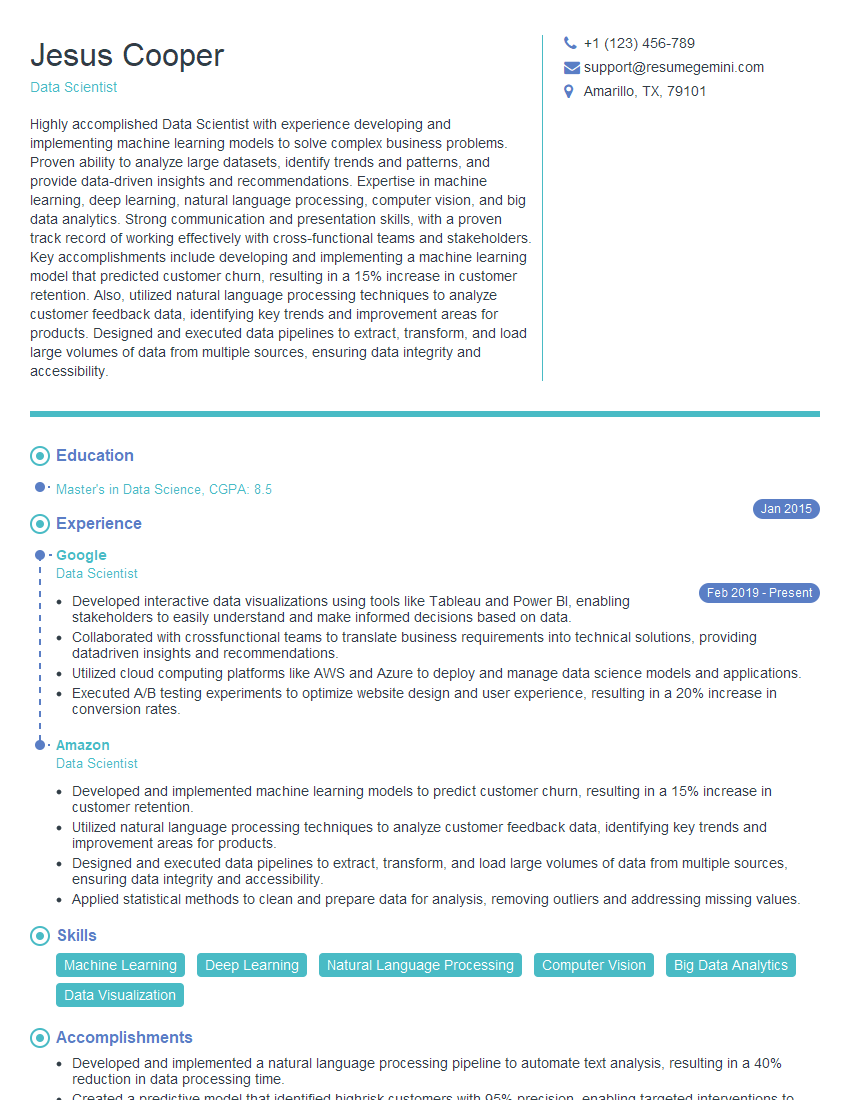
Data Scientist Resume Sample
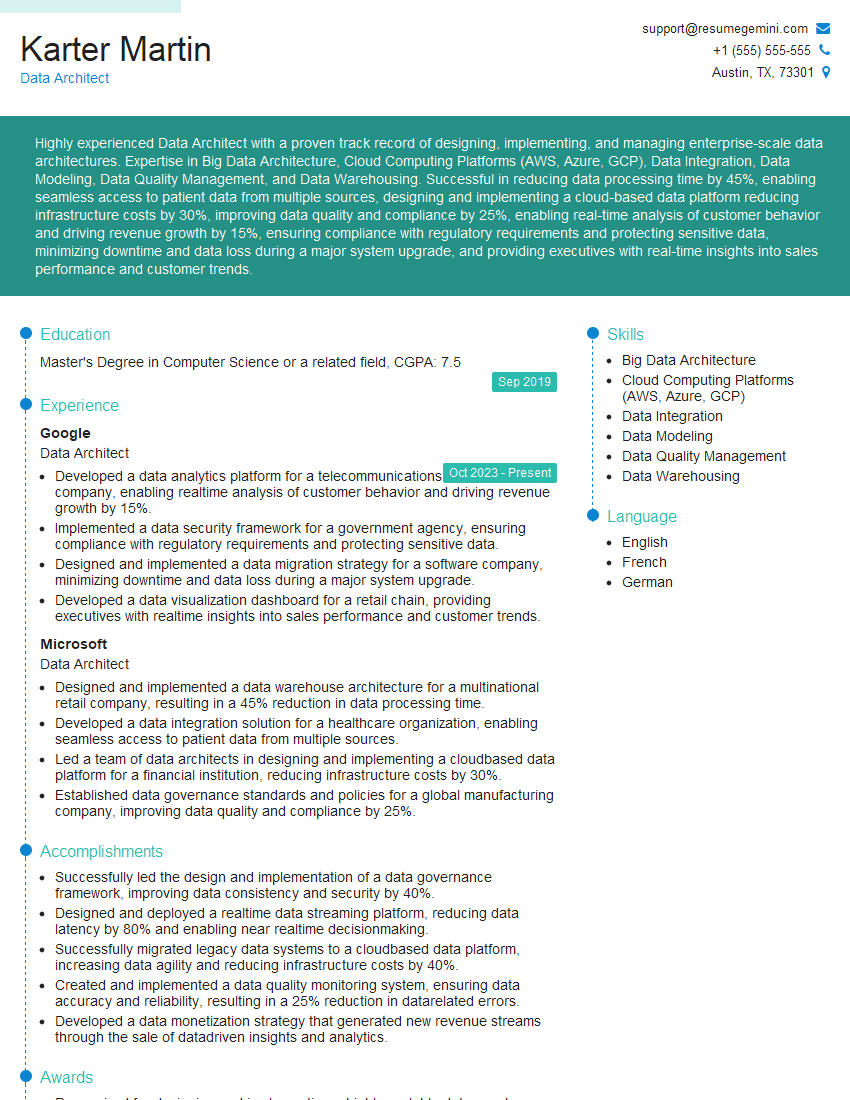
Data Architect Resume Sample
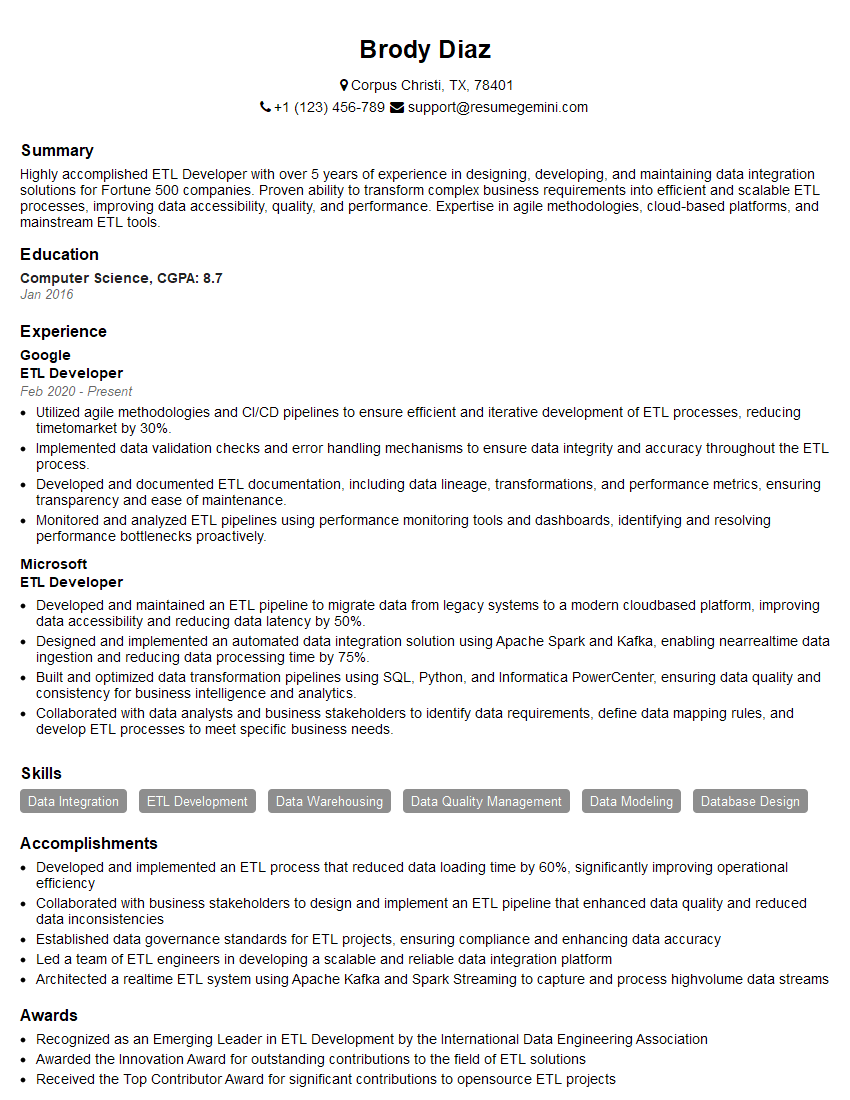
ETL Developer Resume Sample
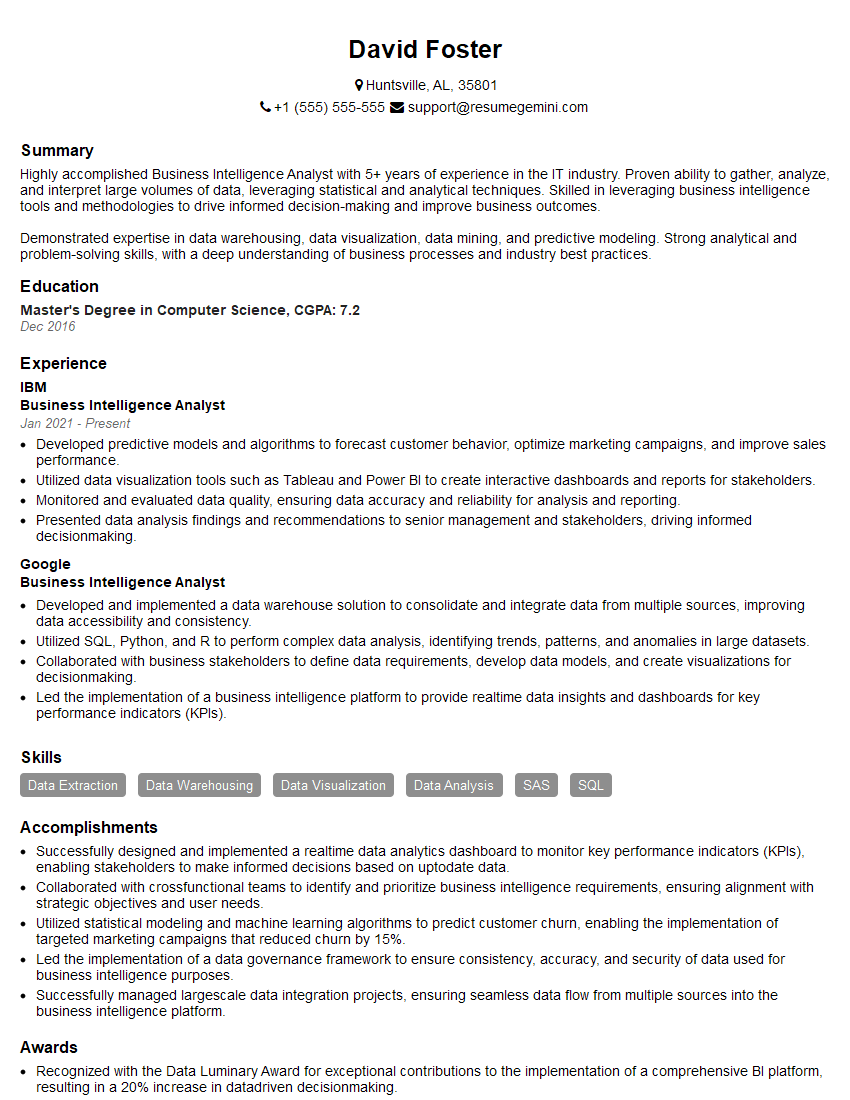
Business Intelligence Analyst Resume Sample
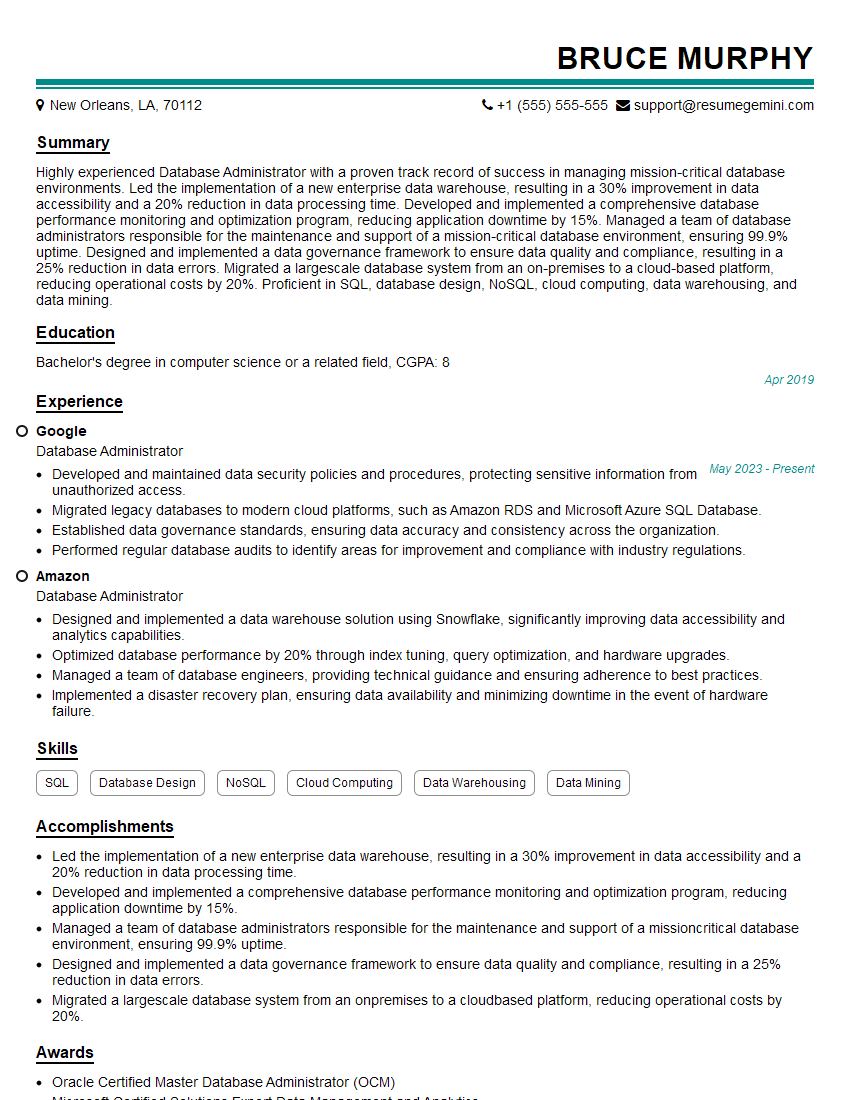
Database Administrator Resume Sample
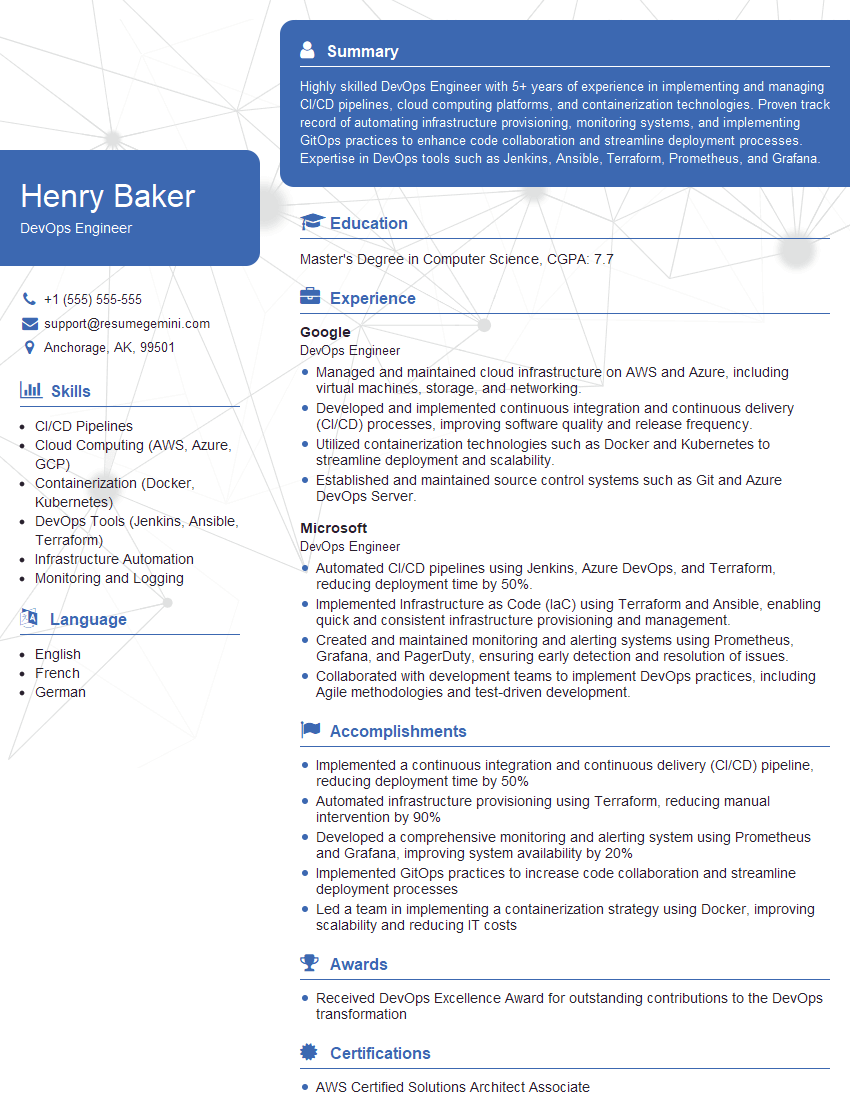
DevOps Engineer Resume Sample
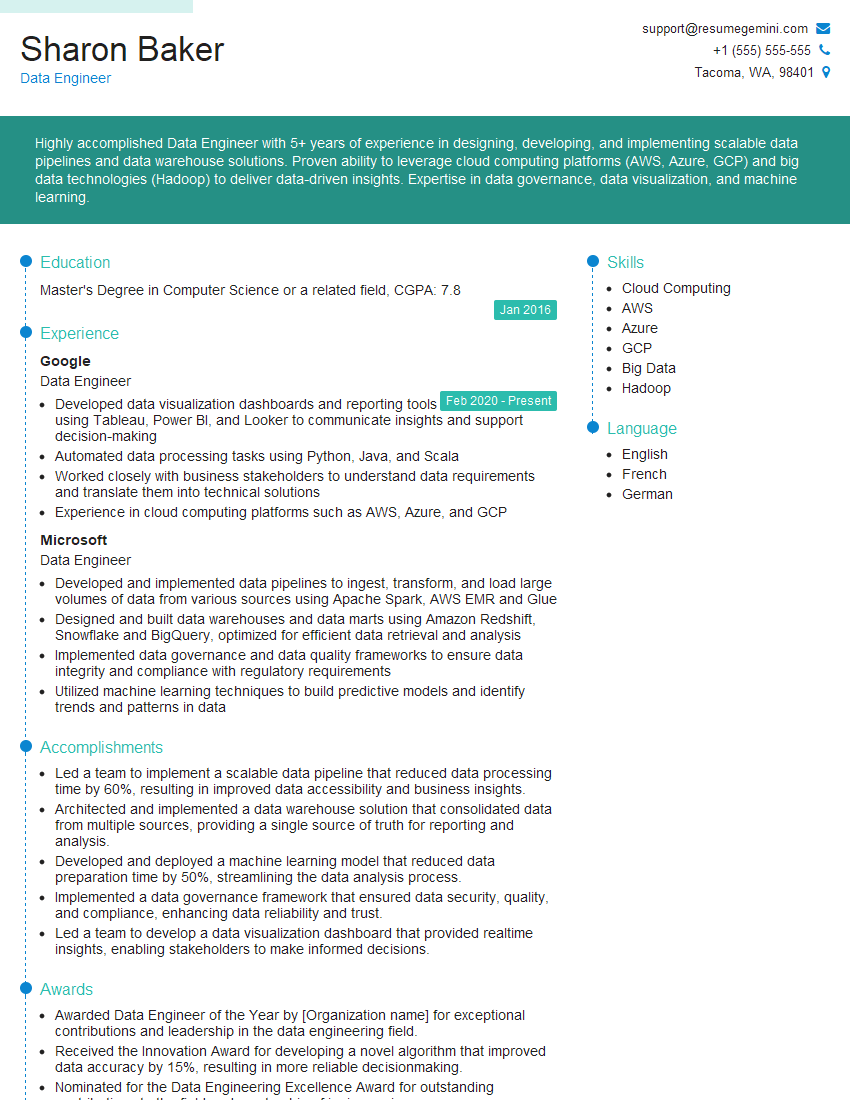
Data Engineer Resume Sample
Explore more articles
Users Rating of Our Blogs
Share Your Experience
We value your feedback! Please rate our content and share your thoughts (optional).
What Readers Say About Our Blog
Amazing blog
Interesting Article, I liked the depth of knowledge you’ve shared.
Helpful, thanks for sharing.