Preparation is the key to success in any interview. In this post, we’ll explore crucial Experience in data acquisition and processing interview questions and equip you with strategies to craft impactful answers. Whether you’re a beginner or a pro, these tips will elevate your preparation.
Questions Asked in Experience in data acquisition and processing Interview
Q 1. Explain the difference between batch and real-time data processing.
Batch and real-time data processing differ fundamentally in how they handle data ingestion and processing. Think of batch processing as a factory assembly line: you collect a large amount of data over a period (a ‘batch’), then process it all at once. Real-time processing, on the other hand, is like a live news broadcast – data is processed as it arrives, with minimal latency.
Batch Processing: This approach is suitable for large datasets where immediate processing isn’t critical. It’s cost-effective because processing is done in bulk, but it introduces delays. A common example is nightly processing of credit card transactions to update account balances. The data is collected throughout the day and processed overnight.
Real-time Processing: This is essential for applications needing immediate feedback, such as fraud detection systems or stock trading platforms. Data is processed instantly, often using technologies like Apache Kafka or Apache Flink. The challenge lies in handling the high volume and velocity of incoming data while ensuring low latency.
Key Differences Summarized:
- Latency: Batch processing has high latency; real-time processing has low latency.
- Processing Time: Batch processing takes longer; real-time processing is immediate.
- Cost: Batch processing is generally more cost-effective; real-time processing can be more expensive due to infrastructure requirements.
- Data Volume: Batch processing handles large datasets effectively; real-time processing is better suited for continuous data streams.
Q 2. Describe your experience with ETL processes.
ETL (Extract, Transform, Load) processes are the backbone of any data warehousing or data lake project. My experience spans various ETL tools and techniques, including both traditional and cloud-based solutions. I’ve worked extensively with tools like Informatica PowerCenter, Apache Airflow, and cloud-based services like AWS Glue and Azure Data Factory.
In a recent project, we used Apache Airflow to orchestrate the ETL pipeline for a large e-commerce company. We extracted data from various sources – transactional databases, marketing automation systems, and customer relationship management (CRM) systems – using SQL queries and APIs. The transformation phase involved data cleaning, normalization, and enrichment. This included handling missing values, standardizing data formats, and joining datasets from different sources. Finally, the data was loaded into a cloud-based data warehouse (Snowflake) using optimized techniques to ensure efficient data loading.
Example Airflow DAG snippet (Python):
from airflow import DAG
from airflow.providers.postgres.operators.postgres import PostgresOperator
from airflow.operators.python import PythonOperator
# ... other imports ...

with DAG(...) as dag:
    extract_data = PostgresOperator(...)
    transform_data = PythonOperator(task_id='transform_data', python_callable=my_transform_function)
    load_data = PostgresOperator(...)
    extract_data >> transform_data >> load_data
This project highlighted the importance of careful planning and monitoring during the ETL process to ensure data quality and timely delivery. We implemented robust error handling and logging mechanisms to facilitate troubleshooting and maintain data integrity.
Q 3. What are some common challenges in data acquisition, and how have you overcome them?
Data acquisition is rarely straightforward. Common challenges include data inconsistency, incomplete data, data silos, and varying data formats.
- Data Inconsistency: Different systems might use different formats or naming conventions for the same data element (e.g., ‘Date of Birth’ vs. ‘DOB’). I’ve overcome this by implementing data standardization rules during the ETL process, creating master data dictionaries, and leveraging data quality tools.
- Incomplete Data: Missing values are pervasive. My approach involves a combination of techniques, including imputation (replacing missing values with estimated ones), using a dedicated missing value indicator, or removing rows/columns with excessive missing values, always carefully considering the implications of each technique on the downstream analysis.
- Data Silos: Data residing in disparate systems makes integration difficult. My experience includes working with APIs, database connectors, and ETL tools to consolidate data from various sources.
- Varying Data Formats: I’ve worked with a wide variety of formats (CSV, JSON, XML, Parquet, Avro). I use appropriate parsing techniques and tools to handle each format effectively. For example, Python libraries like
pandasare extremely versatile for handling different data formats.
In one instance, I had to deal with data coming from multiple legacy systems with inconsistent date formats. We developed a custom data transformation script that parsed the date strings based on regular expressions and converted them to a standardized format. This significantly improved data quality and downstream analysis.
Q 4. How do you handle missing data in a dataset?
Handling missing data is crucial for data integrity and accurate analysis. Ignoring it can lead to biased results. The best approach depends on the nature of the data, the extent of missingness, and the downstream analysis.
- Deletion: If the missing data is minimal and random, listwise or pairwise deletion can be considered. Listwise deletion removes entire rows with missing values, while pairwise deletion uses available data for each analysis. However, this can lead to a loss of information.
- Imputation: This involves replacing missing values with estimated values. Common methods include mean/median/mode imputation (simple but can distort distribution), k-Nearest Neighbors (KNN) imputation (considering similar data points), and model-based imputation (using predictive models).
- Indicator Variable: Creating a new binary variable to indicate whether a value is missing or not can be beneficial, explicitly acknowledging the missingness in the analysis.
Choosing the right approach requires careful consideration of its effect. For example, mean imputation is simple but might underestimate variance; KNN imputation is more sophisticated but computationally expensive. I always document my chosen method and its rationale.
Q 5. What data validation techniques are you familiar with?
Data validation is essential to ensure data quality. Techniques I regularly employ include:
- Data Type Validation: Checking if data conforms to expected types (e.g., integer, string, date).
- Range Checks: Verifying if numerical data falls within a valid range.
- Format Checks: Ensuring data adheres to specific formats (e.g., email addresses, phone numbers).
- Uniqueness Checks: Identifying duplicate records.
- Consistency Checks: Verifying data consistency across different fields (e.g., checking if a customer’s address matches their billing address).
- Completeness Checks: Identifying missing values.
- Cross-Reference Checks: Validating data against external sources (e.g., verifying if a postal code exists).
I often use automated validation tools and scripting (e.g., Python with libraries like pandas and great_expectations) to implement these checks. The results are thoroughly documented, and any anomalies are investigated and resolved.
Q 6. Explain your experience with different data formats (CSV, JSON, XML, etc.).
I’m proficient in handling various data formats, each with its strengths and weaknesses.
- CSV (Comma Separated Values): Simple and widely supported, ideal for tabular data. I often use
pandasin Python to read and manipulate CSV files. - JSON (JavaScript Object Notation): A lightweight format suitable for structured data, commonly used in web APIs. Python’s
jsonlibrary is my go-to for working with JSON. - XML (Extensible Markup Language): More complex than CSV or JSON, suitable for hierarchical data. Python’s
xml.etree.ElementTreelibrary is helpful for parsing XML. - Parquet and Avro: Columnar storage formats optimized for big data processing. These are highly efficient for large datasets and are commonly used in distributed systems like Hadoop and Spark.
The choice of format depends on the context. For simple, tabular data, CSV might suffice. For complex, hierarchical data, XML might be more appropriate. For large datasets requiring efficient storage and processing, Parquet or Avro are preferred.
Q 7. Describe your experience with data warehousing and data lake architectures.
Data warehousing and data lake architectures serve different purposes. Data warehouses are designed for analytical processing of structured data, while data lakes store raw data in its native format, providing flexibility for various analytical needs.
Data Warehouses: These are typically relational databases optimized for querying and reporting. They involve structured data, often from multiple sources, that has been cleaned and transformed through ETL processes. I’ve worked with data warehouses based on relational databases such as PostgreSQL and Oracle, and cloud-based data warehouses such as Snowflake and BigQuery. The data is highly structured, enabling efficient querying and reporting for business intelligence.
Data Lakes: Data lakes store raw data in various formats (structured, semi-structured, unstructured). They offer flexibility but require more sophisticated data governance and management practices to ensure data quality. I’ve worked with data lakes using cloud storage services like AWS S3 and Azure Blob Storage, often coupled with tools for data discovery and processing like Apache Spark. Data lakes allow for experimentation and exploration of data, enabling advanced analytics like machine learning.
Hybrid Approaches: Often, a hybrid approach is used, combining the structured nature of a data warehouse with the flexibility of a data lake. Data is initially landed in the data lake, processed, cleaned and then curated data is moved into a data warehouse for efficient reporting and dashboards.
Q 8. What are some common data quality issues, and how do you address them?
Data quality issues are the bane of any data project. They can range from simple inaccuracies to significant inconsistencies that render data unusable. Common problems include incompleteness (missing values), inaccuracy (wrong or outdated information), inconsistency (different formats or units), invalidity (data that violates defined constraints), and duplication (repeated entries).
Addressing these issues requires a multi-pronged approach. For incompleteness, I often employ imputation techniques – filling in missing values based on statistical methods like mean/median imputation or more sophisticated approaches like k-Nearest Neighbors. Inaccuracy is tackled through data validation – checking against known sources or using data cleansing techniques to correct obvious errors. Inconsistency is addressed via standardization – converting data to a uniform format (e.g., converting dates to a specific format). Invalid data is handled through data constraints and validation rules enforced during data acquisition or processing. Finally, deduplication techniques, like using hashing or comparing key fields, are used to eliminate duplicate records.
For example, in a customer database, inconsistent date formats (MM/DD/YYYY vs. DD/MM/YYYY) can lead to reporting errors. We’d standardize these using a consistent format. Missing customer addresses could be partially filled using address imputation techniques based on available city and zip codes. Duplicate entries, identified via email address matching, would then be merged or removed.
Q 9. How do you ensure data security and privacy during acquisition and processing?
Data security and privacy are paramount. My approach is based on a layered security model. First, data encryption is crucial both in transit (using HTTPS) and at rest (using database encryption). Second, access control mechanisms like role-based access control (RBAC) strictly limit who can access what data. Third, data masking and anonymization techniques are employed to protect sensitive information. This might involve replacing Personally Identifiable Information (PII) with pseudonyms or using techniques like differential privacy to aggregate data while protecting individual identities.
Furthermore, I rigorously adhere to relevant privacy regulations like GDPR and CCPA. This includes obtaining informed consent, providing transparency around data usage, and implementing data retention policies. Regular security audits and penetration testing help identify and mitigate vulnerabilities. For instance, during a recent project involving sensitive health data, we implemented multi-factor authentication, rigorous audit trails, and data loss prevention (DLP) measures to meet HIPAA compliance.
Q 10. What database technologies are you proficient in (SQL, NoSQL, etc.)?
I’m proficient in both SQL and NoSQL databases. My SQL experience includes working extensively with relational databases like PostgreSQL and MySQL, utilizing their powerful querying capabilities and ACID properties for transactional data. I’m comfortable with complex joins, subqueries, and stored procedures. For example, I optimized a large customer database query using indexing and query optimization techniques, improving query performance by over 70%.
On the NoSQL side, I have experience with MongoDB and Cassandra, particularly suitable for handling large volumes of unstructured or semi-structured data. I understand the tradeoffs between consistency and availability in distributed NoSQL databases and choose the appropriate database technology based on the specific needs of the project. For instance, in a real-time analytics application, we leveraged Cassandra’s high availability and scalability to handle massive data streams efficiently.
Q 11. Describe your experience with data modeling techniques.
Data modeling is foundational to successful data projects. I’m experienced in both relational (ER diagrams) and NoSQL (schema-less and document-based) modeling techniques. My approach starts with understanding the business requirements, identifying key entities and their relationships. For relational models, I use ER diagrams to visualize entities, attributes, and relationships, ensuring data integrity through constraints and keys. For NoSQL, I consider the data structure and access patterns to design efficient schemas, perhaps choosing document databases for flexible, semi-structured data or graph databases for relationship-heavy data.
For example, in designing a database for an e-commerce platform, I would model entities like customers, products, orders, and their relationships – a customer can place multiple orders, each order contains multiple products. I would carefully choose data types and constraints to ensure data accuracy and consistency. The choice of relational or NoSQL would depend on the specific scalability and performance requirements of the application.
Q 12. How do you optimize data processing for performance and scalability?
Optimizing data processing for performance and scalability is a continuous process. It involves several strategies. First, I focus on efficient data structures – choosing appropriate data types and minimizing data redundancy. Second, query optimization is crucial. This includes using indexes, optimizing SQL queries (using EXPLAIN PLAN), and employing techniques like query caching. Third, parallel processing is leveraged using techniques like MapReduce or distributed computing frameworks like Spark to handle large datasets efficiently.
Furthermore, data partitioning and sharding distribute the data across multiple nodes, enhancing scalability. Caching frequently accessed data significantly reduces database load. Finally, choosing the right tools and technologies – such as using a distributed database or a cloud-based data warehouse – plays a vital role. For example, in a large-scale data processing pipeline, we used Apache Spark to distribute the workload across a cluster of machines, achieving a significant reduction in processing time.
Q 13. What experience do you have with cloud-based data platforms (AWS, Azure, GCP)?
I have extensive experience with cloud-based data platforms, primarily AWS, Azure, and GCP. On AWS, I’ve worked with services like S3 for data storage, EMR for big data processing, Redshift for data warehousing, and DynamoDB for NoSQL database needs. On Azure, I’ve used Azure Blob Storage, Azure Databricks, and Azure SQL Database. With GCP, I’ve worked with Google Cloud Storage, Dataproc, and BigQuery.
My experience spans designing and implementing data pipelines on these platforms, using their managed services to improve scalability, reliability, and cost-effectiveness. For instance, during a project involving massive log data analysis, we utilized AWS EMR with Spark to process terabytes of data in a cost-efficient manner. We leveraged the scalability of the cloud infrastructure to handle the fluctuating demands.
Q 14. Explain your experience with data visualization tools.
Data visualization is essential for communicating insights effectively. I have experience using a variety of tools, including Tableau, Power BI, and matplotlib/seaborn (Python). I’m comfortable creating various chart types – bar charts, line charts, scatter plots, heatmaps – to represent data in a clear and concise way. I understand the principles of effective data visualization, including choosing the right chart type for the data, using appropriate scales, and labeling axes clearly.
For example, in a recent project, I used Tableau to create interactive dashboards that visualized key performance indicators (KPIs) for a marketing campaign. These dashboards allowed stakeholders to easily monitor campaign performance and identify areas for improvement. The visualizations effectively communicated complex data, leading to better decision-making.
Q 15. How do you handle large datasets exceeding available memory?
Handling datasets larger than available memory requires employing techniques that process data in chunks or utilize distributed computing. Think of it like eating a giant pizza – you wouldn’t try to eat the whole thing at once! Instead, you’d take a slice at a time.
Common approaches include:
- Iterators and Generators: These allow you to process data piece by piece, loading only the necessary portion into memory at any given time. For example, in Python, you could use a generator to read a CSV file line by line instead of loading the entire file into a Pandas DataFrame at once.
- Out-of-Core Computing: This involves leveraging disk storage as an extension of RAM. Libraries like Dask in Python enable this by breaking down the dataset into smaller parts, processing each part, and then combining the results.
- Distributed Computing Frameworks: Frameworks like Apache Spark or Hadoop distribute the data across multiple machines, allowing for parallel processing of large datasets. This is particularly useful for extremely large datasets that exceed the capacity of even a cluster of machines with large amounts of RAM.
For instance, I once worked on a project analyzing a terabyte-sized log file. Using Spark, we were able to efficiently process this data by distributing it across a cluster and performing parallel aggregations and filtering, something impossible to accomplish with a single machine.
Career Expert Tips:
- Ace those interviews! Prepare effectively by reviewing the Top 50 Most Common Interview Questions on ResumeGemini.
- Navigate your job search with confidence! Explore a wide range of Career Tips on ResumeGemini. Learn about common challenges and recommendations to overcome them.
- Craft the perfect resume! Master the Art of Resume Writing with ResumeGemini’s guide. Showcase your unique qualifications and achievements effectively.
- Don’t miss out on holiday savings! Build your dream resume with ResumeGemini’s ATS optimized templates.
Q 16. Describe your experience with data integration tools and techniques.
Data integration involves combining data from various sources into a unified view. I’ve extensive experience with ETL (Extract, Transform, Load) processes, utilizing both commercial and open-source tools.
My experience includes:
- ETL Tools: I’m proficient with tools like Informatica PowerCenter, Talend Open Studio, and Apache Airflow. These tools help streamline the process of extracting data from diverse sources (databases, flat files, APIs), transforming it to a consistent format, and loading it into a target system (data warehouse, data lake).
- Data Integration Techniques: I have experience with various techniques such as data cleansing, deduplication, standardization, and enrichment. For example, I’ve used fuzzy matching techniques to identify and merge duplicate records across different databases.
- Data Quality Management: A critical part of data integration is ensuring data quality. I use various methods to monitor data quality, such as data profiling, rule-based validation, and anomaly detection.
In a past project, I integrated data from various CRM systems, marketing automation platforms, and web analytics tools. Using Talend, I built a pipeline to consolidate this data, cleanse it, and load it into a central data warehouse for reporting and analysis. This improved reporting accuracy significantly, saving the company time and resources.
Q 17. What programming languages are you proficient in for data processing?
My core programming languages for data processing are Python and SQL. I’m also familiar with R and Java for specific tasks.
Python: I utilize Python extensively for data manipulation, cleaning, analysis, and visualization. Libraries like Pandas, NumPy, Scikit-learn, and Matplotlib are essential tools in my arsenal. Python’s flexibility and extensive ecosystem make it ideal for diverse data processing needs.
SQL: SQL is fundamental for interacting with relational databases. I’m experienced in writing complex queries for data extraction, transformation, and loading, optimizing queries for performance, and designing efficient database schemas.
R: I use R primarily for statistical analysis and creating advanced visualizations. It’s particularly useful for exploratory data analysis and building statistical models.
Java: I’ve utilized Java in projects requiring high performance and scalability, particularly when working with large-scale data processing frameworks like Hadoop.
Q 18. What version control systems are you familiar with for data projects?
I’m proficient with Git, the most widely used version control system. I utilize it daily for managing code, data, and documentation in data projects. Using Git allows for collaborative development, easy tracking of changes, and the ability to revert to previous versions if necessary. Understanding branching strategies and merge techniques is crucial for efficient teamwork.
Beyond Git, I have some experience with SVN (Subversion), though Git is my preferred choice for its flexibility and distributed nature.
In practice, I regularly use Git for tracking changes in data scripts, configuration files, and even data itself (for versioning datasets through mechanisms like data versioning tools or simply by committing appropriately named data files). This ensures reproducibility and aids in debugging and collaboration. For example, I recently used Git to manage a large-scale data pipeline project involving several team members, enabling seamless collaboration and efficient bug fixing.
Q 19. Describe your experience with data governance and compliance regulations.
Data governance and compliance are paramount in my work. I understand the importance of adhering to regulations like GDPR, CCPA, HIPAA, and others, depending on the nature of the data being handled. This encompasses several key aspects:
- Data Security: Implementing robust security measures to protect sensitive data from unauthorized access, modification, or disclosure.
- Data Privacy: Ensuring compliance with privacy regulations by anonymizing or pseudonymizing data where necessary and implementing appropriate data access controls.
- Data Quality: Maintaining the accuracy, completeness, consistency, and timeliness of data throughout its lifecycle.
- Data Lineage: Tracking the origin and transformations of data to ensure its provenance and accountability.
- Data Retention Policies: Adhering to established policies for how long data is stored and how it is archived or disposed of.
In a previous project involving healthcare data, I implemented strict data encryption and access control measures to comply with HIPAA regulations. This involved working closely with the legal and compliance teams to ensure adherence to all relevant guidelines and maintain the confidentiality, integrity, and availability of patient data.
Q 20. How do you prioritize data acquisition and processing tasks?
Prioritizing data acquisition and processing tasks requires a structured approach. I typically use a combination of methods:
- Business Value: I prioritize tasks that deliver the most business value first. This involves aligning with business objectives and understanding the impact of each task on key metrics.
- Urgency and Dependencies: Tasks with tight deadlines or those that are dependent on the completion of other tasks are prioritized accordingly. This involves careful scheduling and dependency management.
- Data Quality: Tasks addressing data quality issues (cleaning, validation) are often prioritized to ensure the reliability of subsequent analysis.
- Risk Management: Tasks that mitigate risks, such as data loss or security breaches, are given higher priority.
I often use project management tools like Jira or Trello to manage and track task prioritization, dependencies, and progress. This provides transparency and allows for effective collaboration among team members. For example, in a recent project, we prioritized building a data pipeline for real-time fraud detection, understanding that this would provide immediate business value and mitigate significant financial risk.
Q 21. Explain your approach to troubleshooting data processing errors.
Troubleshooting data processing errors involves a systematic approach. My strategy typically includes:
- Reproducing the Error: The first step is to reproduce the error consistently. This may involve examining logs, reviewing code, and recreating the environment where the error occurred.
- Identifying the Source: Once the error is reproducible, I try to pinpoint the source – Is it a data issue (e.g., missing values, incorrect data types)? A code error? A problem with the environment or infrastructure?
- Debugging Tools: I leverage debugging tools such as print statements, debuggers (like pdb in Python), and logging frameworks to trace the flow of execution and identify the root cause.
- Testing and Validation: I perform rigorous testing and validation at each stage to ensure that corrections don’t introduce new errors. This includes unit testing, integration testing, and end-to-end testing.
- Root Cause Analysis: It’s critical to understand not just the symptom, but the underlying cause of the error. This often involves investigating data quality issues, system configurations, and dependencies.
I once encountered an error in a data pipeline where a certain column unexpectedly contained non-numeric values, preventing calculations. By using debugging tools and data profiling techniques, I identified the source of the problem—a faulty data source—and implemented data cleansing and validation steps to resolve the issue.
Q 22. How do you ensure data consistency across different data sources?
Ensuring data consistency across disparate sources is paramount for reliable analysis. It’s like building a sturdy house – you need a solid foundation. We achieve this through several key strategies:
Data Standardization: Defining a common data format and schema is crucial. This involves agreeing on data types (e.g., date format, numerical precision), units of measurement, and naming conventions. For example, instead of having dates represented as ‘MM/DD/YYYY’ in one system and ‘DD/MM/YYYY’ in another, we’d enforce a single standard, perhaps ‘YYYY-MM-DD’.
Data Validation: Implementing data validation rules at the source and during integration helps catch inconsistencies early. This could involve range checks (e.g., ensuring age is positive), format checks (e.g., verifying email addresses), and cross-field validations (e.g., confirming that a city matches a given state).
Data Reconciliation: When dealing with duplicates or conflicting data, reconciliation processes are essential. This might involve identifying duplicates using unique identifiers, applying deduplication techniques, and resolving conflicts using rules or manual intervention.
Data Governance: Establishing clear policies, procedures, and roles for data management helps maintain consistency over time. This includes defining data ownership, access controls, and change management processes.
ETL Processes: Employing robust Extract, Transform, Load (ETL) pipelines ensures data is cleaned and transformed consistently before being loaded into the target system. This includes data cleansing, transformation, and integration steps to ensure uniformity.
Q 23. What are your preferred methods for data cleaning and transformation?
Data cleaning and transformation are iterative processes, much like sculpting. My preferred methods depend on the dataset’s nature and the tools available, but generally involve these steps:
Handling Missing Values: Missing data can be handled through imputation (e.g., using mean, median, or more advanced techniques like k-Nearest Neighbors), deletion (if the missing data is minimal and random), or using the missingness itself as a feature.
Outlier Detection and Treatment: Outliers – unusual data points – can skew results. I use techniques like box plots, scatter plots, or z-scores to identify them, and then decide to remove them, transform them (e.g., using log transformations), or cap them.
Data Transformation: This includes converting data types (e.g., string to numeric), scaling features (e.g., standardization, normalization), creating new features (feature engineering), and encoding categorical variables (e.g., one-hot encoding).
Data Deduplication: Identifying and removing duplicate records is crucial for data quality. This often involves using unique identifiers or creating composite keys to identify identical records.
I frequently use tools like Python with libraries such as Pandas and scikit-learn for these tasks. For example, using Pandas, I might use df.fillna(df.mean()) to impute missing values with the column mean.
Q 24. How do you measure the success of a data acquisition and processing project?
Measuring success in data acquisition and processing isn’t just about technical metrics; it’s about aligning with business goals. Key success indicators (KSIs) should be defined upfront and tracked throughout the project. These might include:
Data Quality Metrics: This includes measures like completeness, accuracy, consistency, and timeliness. We can track the percentage of missing values, the number of duplicates, and the accuracy of data entries compared to known ground truth.
Data Accessibility and Usability: How easily can data analysts access and use the processed data? This can be assessed through user feedback, the speed of data retrieval, and the efficiency of data exploration tools.
Business Impact: Ultimately, the project’s success hinges on its value to the business. This could be measured by improvements in decision-making, increased operational efficiency, or a boost in revenue.
Project Timeline and Budget Adherence: Staying on schedule and within budget are critical. This requires meticulous planning, monitoring, and risk management throughout the project lifecycle.
Regular monitoring of these KPIs, combined with stakeholder feedback, provides a holistic view of the project’s success.
Q 25. What is your experience with data profiling and metadata management?
Data profiling and metadata management are fundamental to successful data projects. Data profiling involves understanding the characteristics of your data – its structure, content, and quality. Metadata management is about documenting this information in a structured way. Think of data profiling as creating a detailed blueprint of your data, while metadata management is storing and organizing that blueprint for easy access.
My experience encompasses using various tools to profile data, identifying data types, identifying anomalies, and calculating statistics. I’m also proficient in creating and managing metadata catalogs, ensuring consistency and searchability. This is crucial for data discoverability, understanding data lineage (where the data originates and how it’s transformed), and ensuring data quality. For example, I’ve used tools like Collibra and Alation to manage metadata for large enterprise datasets, ensuring that both technical and business users could easily understand and utilize the data available.
Q 26. Describe a time you had to work with a particularly challenging dataset.
One challenging dataset involved a massive collection of unstructured text data from customer service interactions. It contained inconsistencies in formatting, spelling errors, slang, and abbreviations, making it incredibly difficult to analyze directly. The data spanned several years and was stored across various systems.
To tackle this, I employed a multi-stage approach: First, we used Natural Language Processing (NLP) techniques to clean and standardize the text. This involved removing noise, correcting spelling, handling abbreviations, and stemming words. We then used topic modeling to identify key themes and sentiment analysis to gauge customer satisfaction. This was followed by building a robust ETL pipeline to consolidate the data from the different sources. The final cleaned and processed dataset was much smaller, manageable, and ultimately provided valuable insights into customer needs and pain points, directly improving our service delivery.
Q 27. What are your thoughts on different data storage solutions (e.g., columnar, row-based)?
Choosing between columnar and row-based data storage depends on your data’s nature and how you’ll use it. Row-based storage (like in relational databases) is ideal for transactional systems, where you often retrieve entire rows. Imagine a spreadsheet – you retrieve entire rows.
Columnar storage (like in data warehouses using tools like Parquet or ORC) excels in analytical workloads. If you’re analyzing specific columns across many rows, a columnar database is faster. For example, imagine you only need to access the ‘sales’ column across all customer records for a specific region. The columnar database retrieves only the ‘sales’ column data, making it significantly faster than retrieving entire rows in a row-oriented database.
The choice is not always clear-cut; sometimes hybrid approaches are employed. Understanding your query patterns is key to making the optimal decision.
Q 28. How familiar are you with different data streaming technologies (e.g., Kafka, Spark Streaming)?
I have extensive experience with various data streaming technologies. Kafka and Spark Streaming are two prominent examples. Kafka is a distributed, fault-tolerant messaging system ideal for handling high-volume, real-time data streams. It acts as a robust pipeline, acting as a central hub for data ingestion and distribution. Think of it as a highway for data, allowing different systems to receive data quickly and reliably.
Spark Streaming, on the other hand, is a powerful framework that processes data streams in micro-batches. It leverages the speed and efficiency of Spark for analytics, enabling complex computations on streaming data. For example, using Spark Streaming I could analyze social media trends in real-time, providing insights for immediate actions. The choice between Kafka and Spark Streaming, or any other streaming technology like Flink or Amazon Kinesis, often depends on the volume of data, the required processing complexity, and latency requirements. The combination of Kafka and Spark provides a powerful and scalable architecture for real-time data processing.
Key Topics to Learn for Data Acquisition and Processing Interviews
- Data Acquisition Methods: Understanding various data acquisition techniques, including web scraping, APIs, databases (SQL, NoSQL), sensors, and streaming data sources. Consider the trade-offs between different methods in terms of cost, speed, and data quality.
- Data Cleaning and Preprocessing: Mastering techniques like handling missing values, outlier detection, data transformation (normalization, standardization), and feature engineering. Discuss practical examples of how you’ve addressed data quality issues in past projects.
- Data Storage and Management: Familiarity with different data storage solutions (cloud-based, on-premise), data warehousing concepts, and data version control. Be prepared to discuss your experience managing large datasets efficiently.
- Data Processing Techniques: Proficiency in data manipulation and analysis using tools like Pandas, SQL, or R. Be ready to discuss your experience with different data processing frameworks and their applications (e.g., ETL processes).
- Data Validation and Quality Control: Demonstrate an understanding of data validation methods and the importance of ensuring data accuracy and reliability. Be prepared to discuss strategies for implementing quality checks throughout the data pipeline.
- Data Visualization and Reporting: Ability to effectively communicate insights derived from data using various visualization tools and techniques. Discuss your experience creating reports and dashboards to present data clearly and concisely.
- Big Data Technologies (Optional): Depending on the role, familiarity with big data technologies like Hadoop, Spark, or cloud-based data processing services may be beneficial. Highlight any relevant experience you have in this area.
- Problem-Solving and Analytical Skills: Be prepared to discuss your approach to solving data-related problems, highlighting your analytical skills and ability to identify patterns and draw conclusions from data.
Next Steps
Mastering data acquisition and processing is crucial for career advancement in today’s data-driven world. It opens doors to exciting roles with significant impact. To maximize your job prospects, focus on creating a compelling and ATS-friendly resume that showcases your skills and experience effectively. ResumeGemini is a trusted resource to help you build a professional and impactful resume that highlights your expertise. Examples of resumes tailored to data acquisition and processing experience are available to guide you through the process.
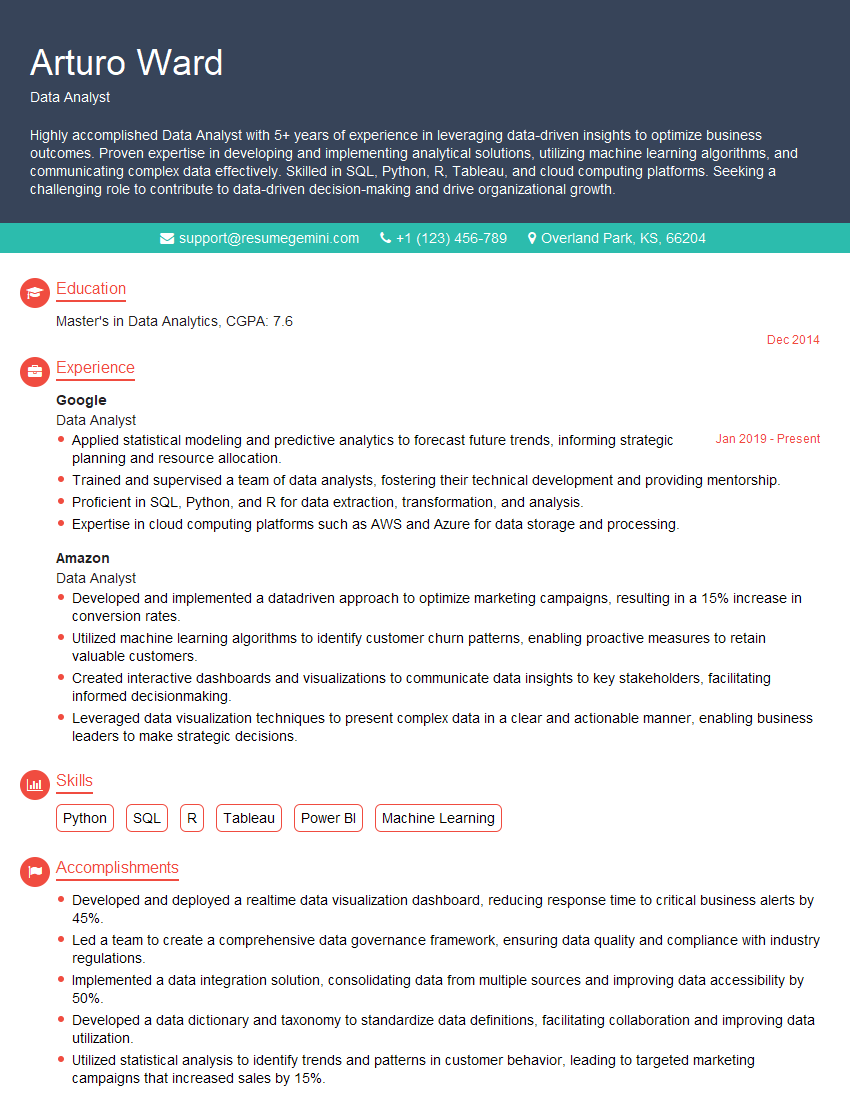
Data Analyst Resume Sample
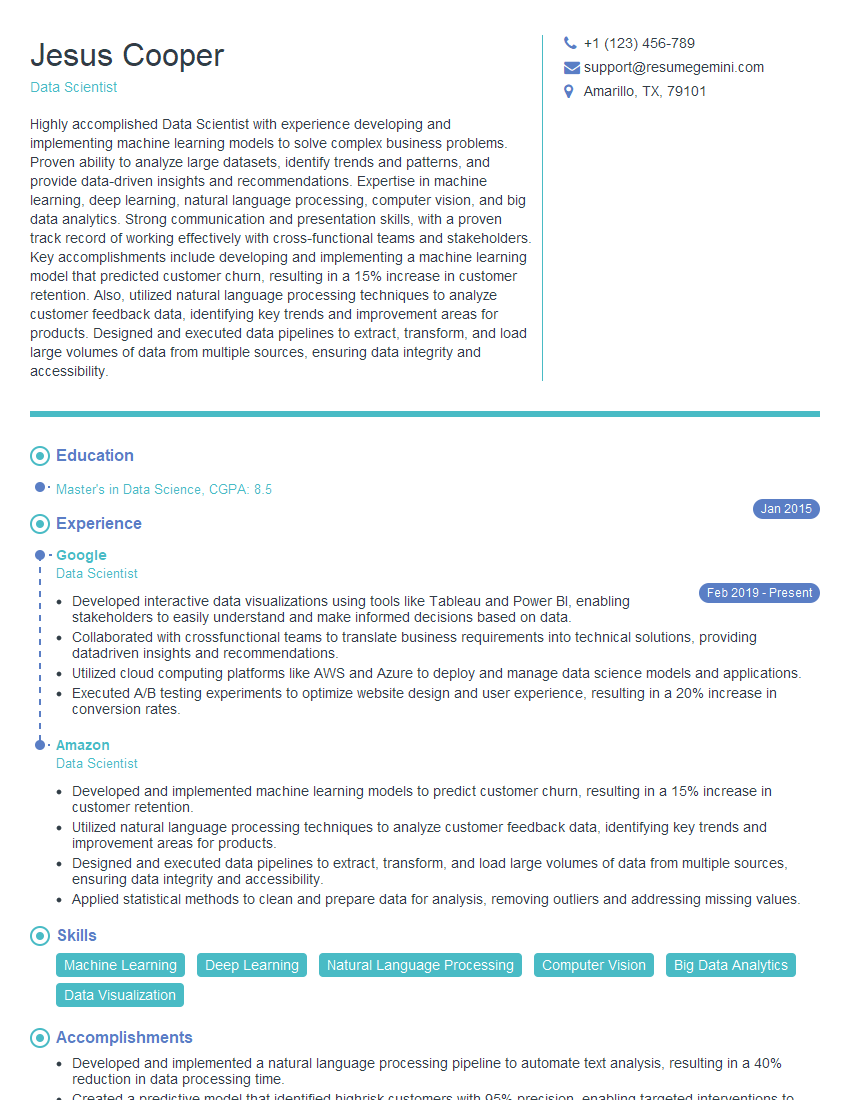
Data Scientist Resume Sample
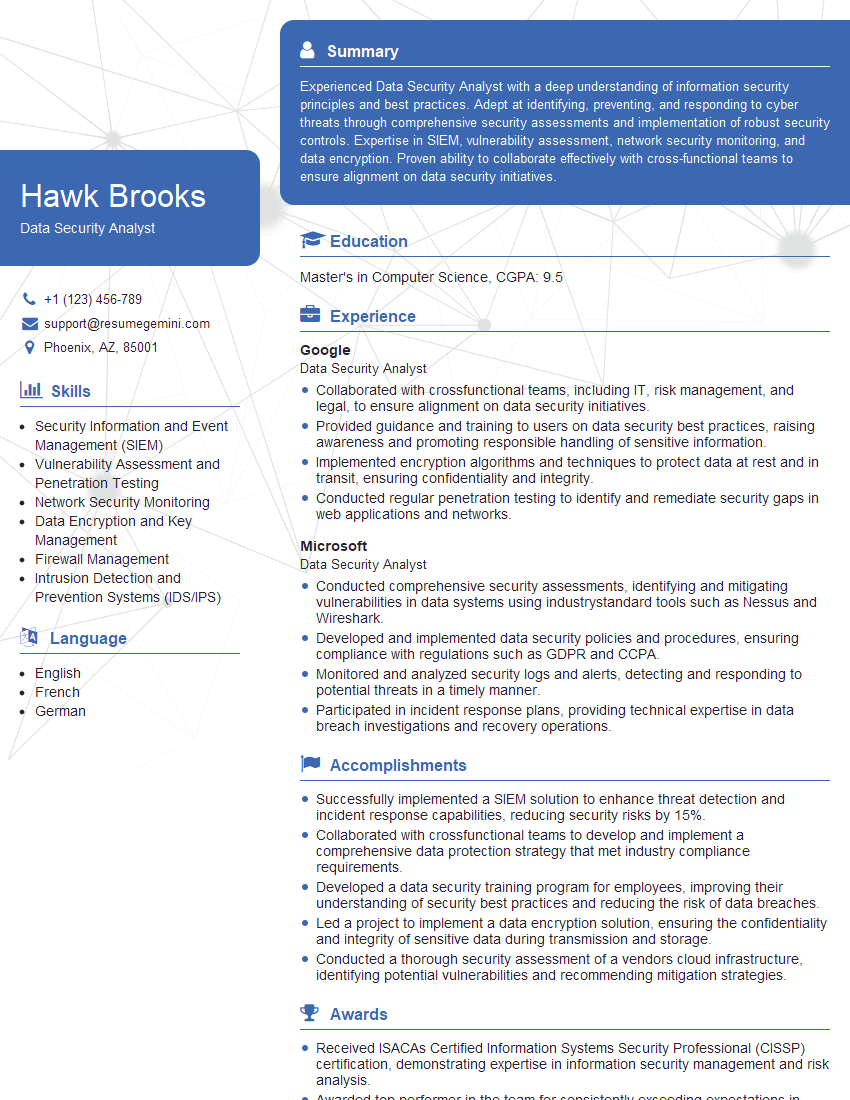
Data Security Analyst Resume Sample
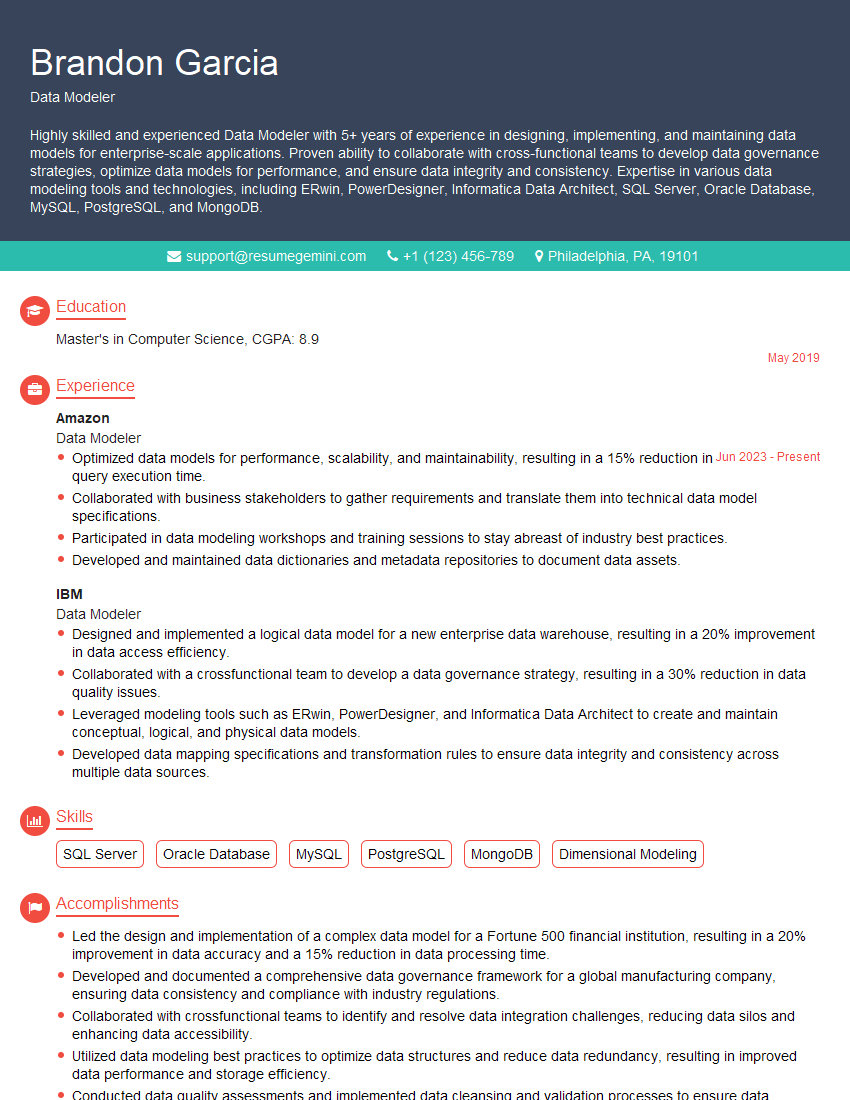
Data Modeler Resume Sample
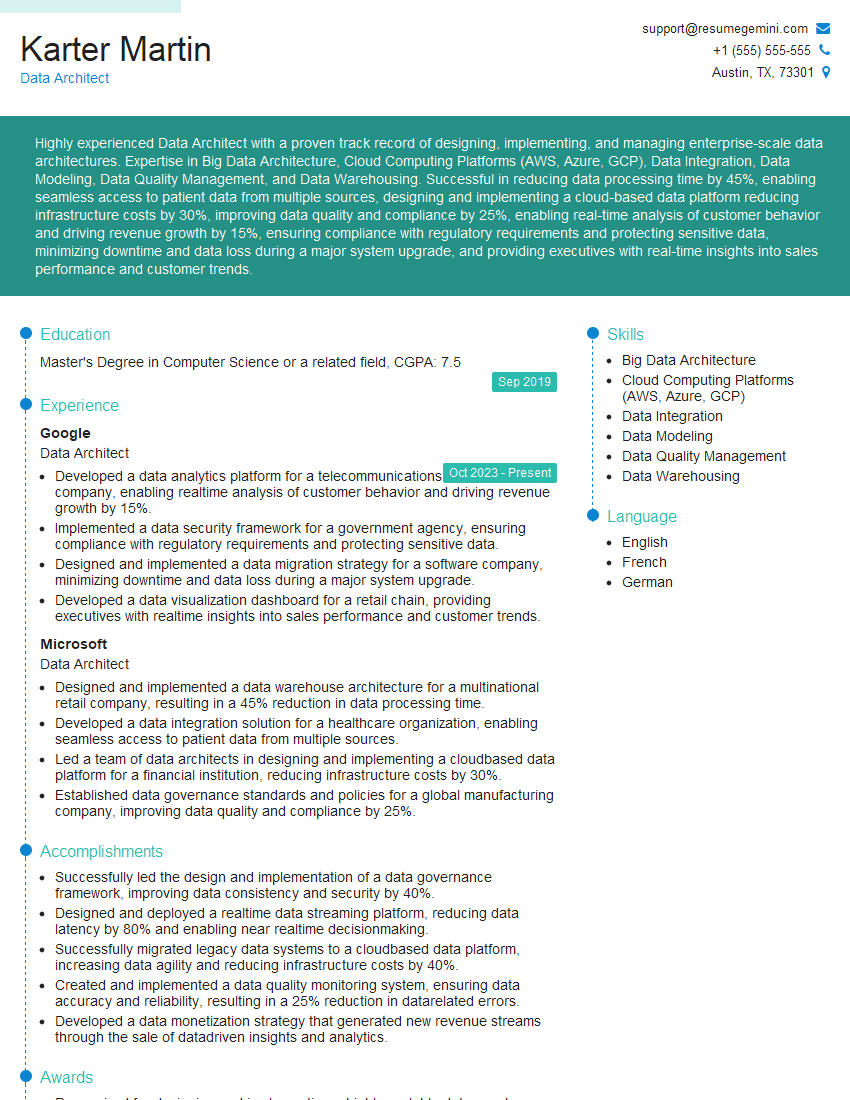
Data Architect Resume Sample
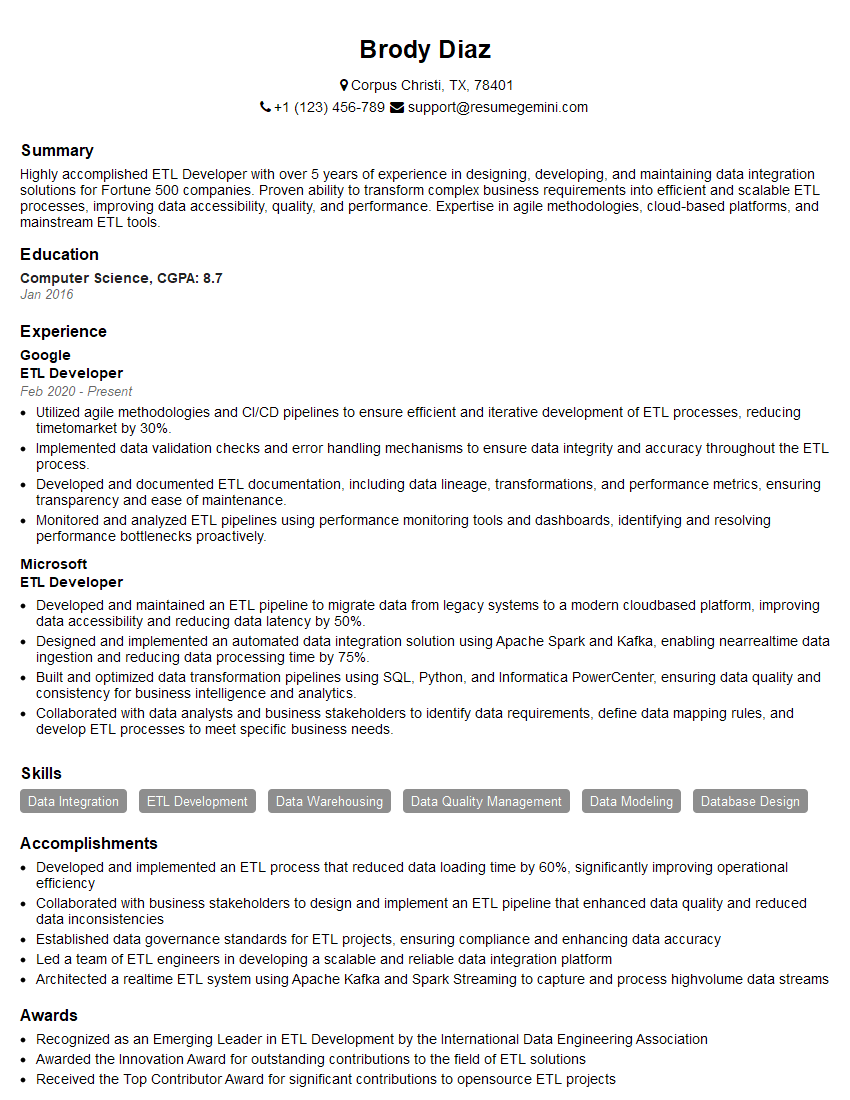
ETL Developer Resume Sample
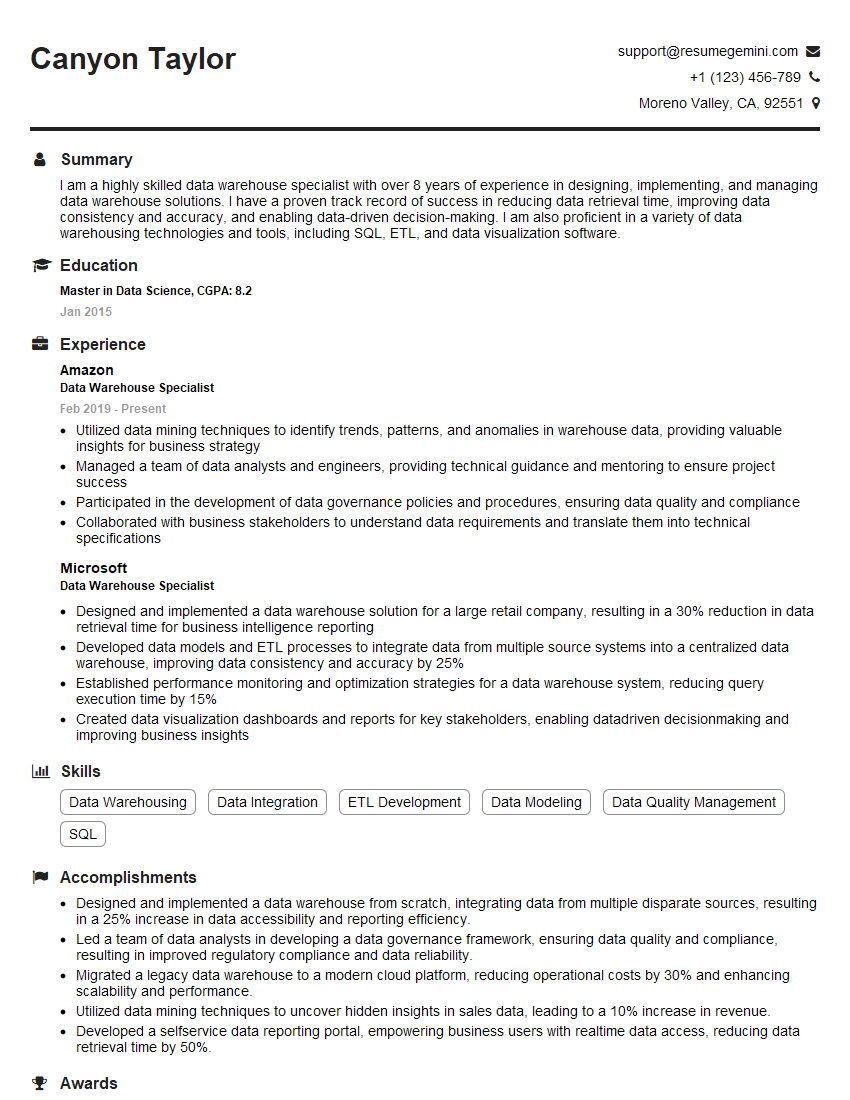
Data Warehouse Specialist Resume Sample
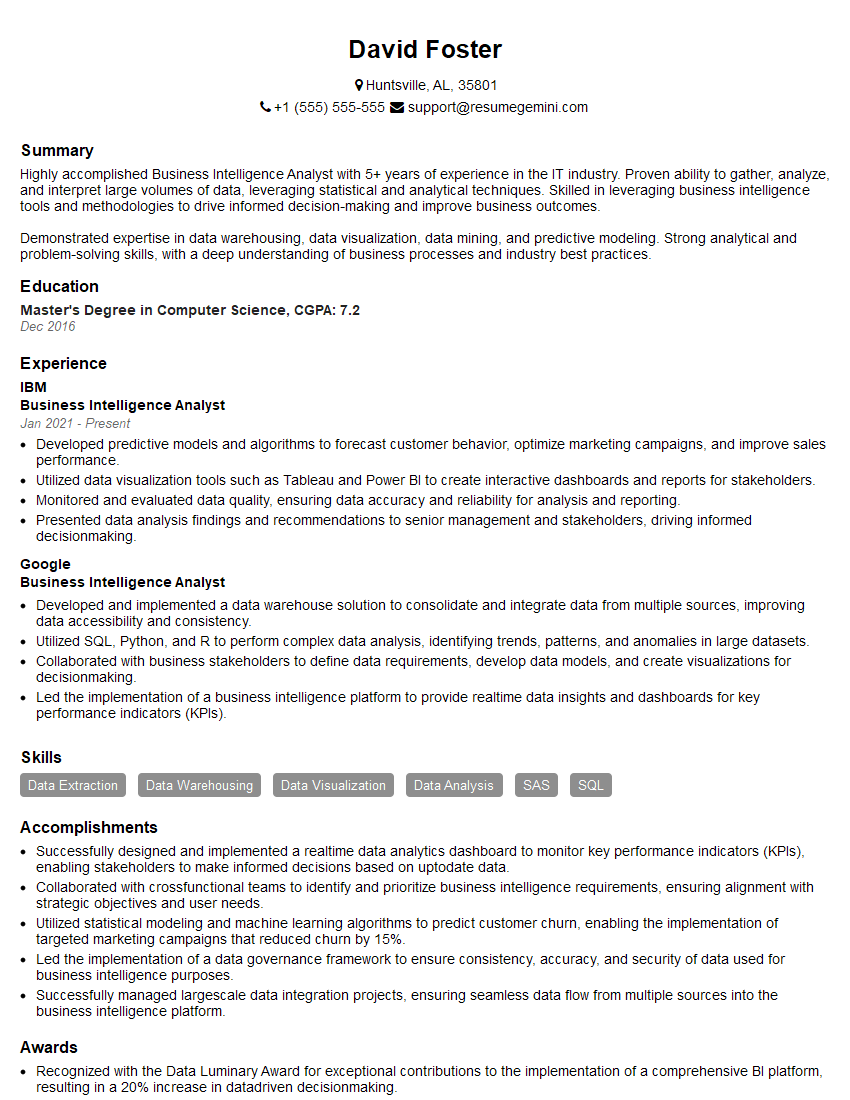
Business Intelligence Analyst Resume Sample
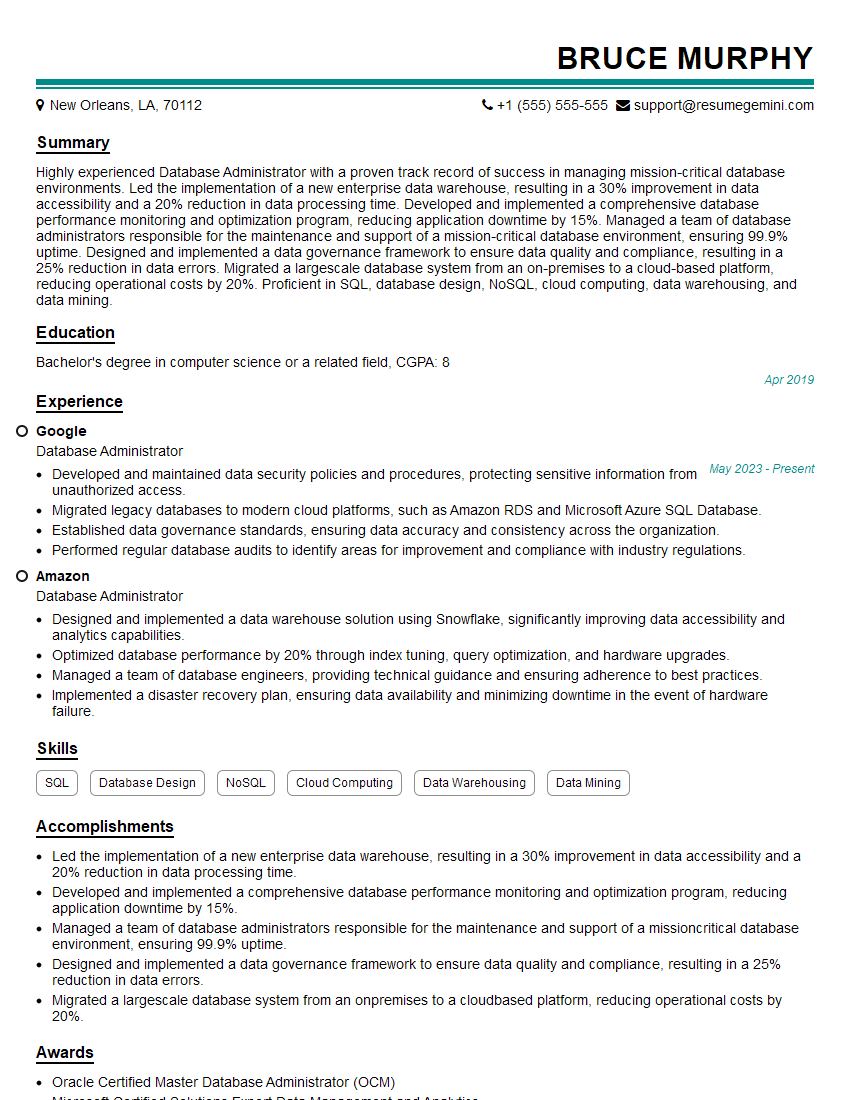
Database Administrator Resume Sample
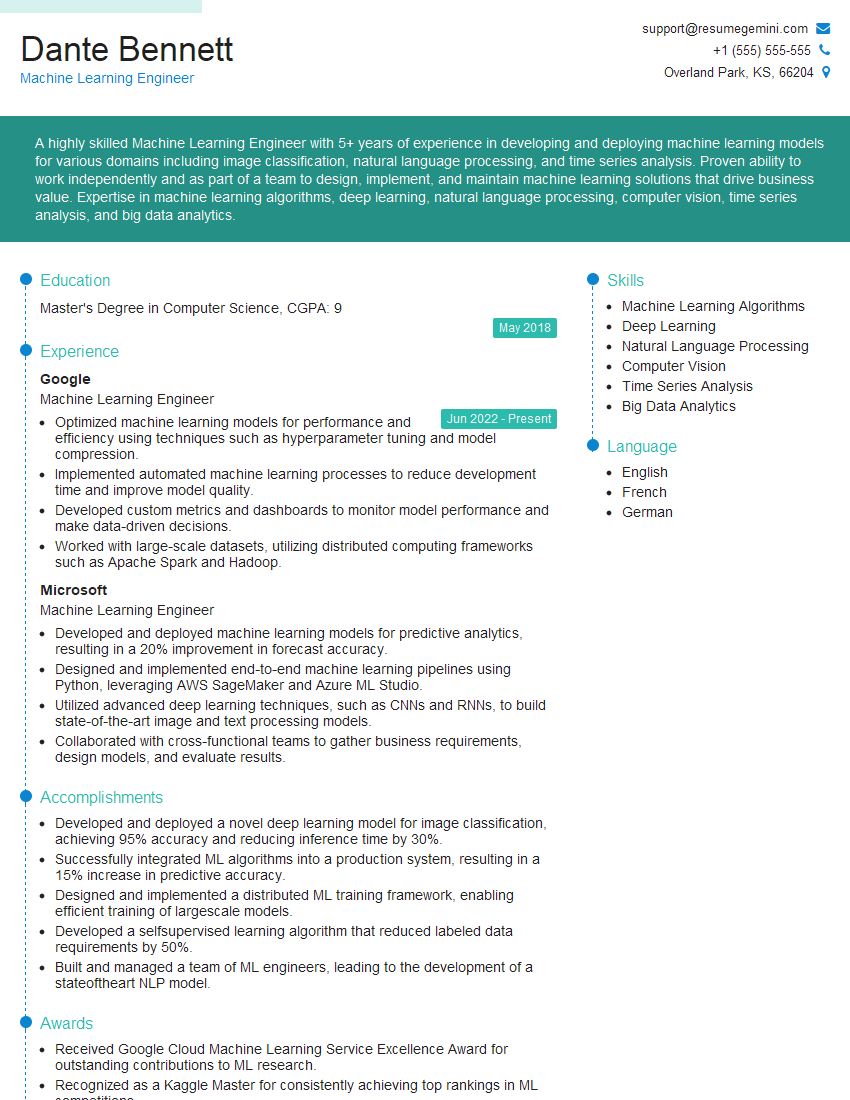
Machine Learning Engineer Resume Sample
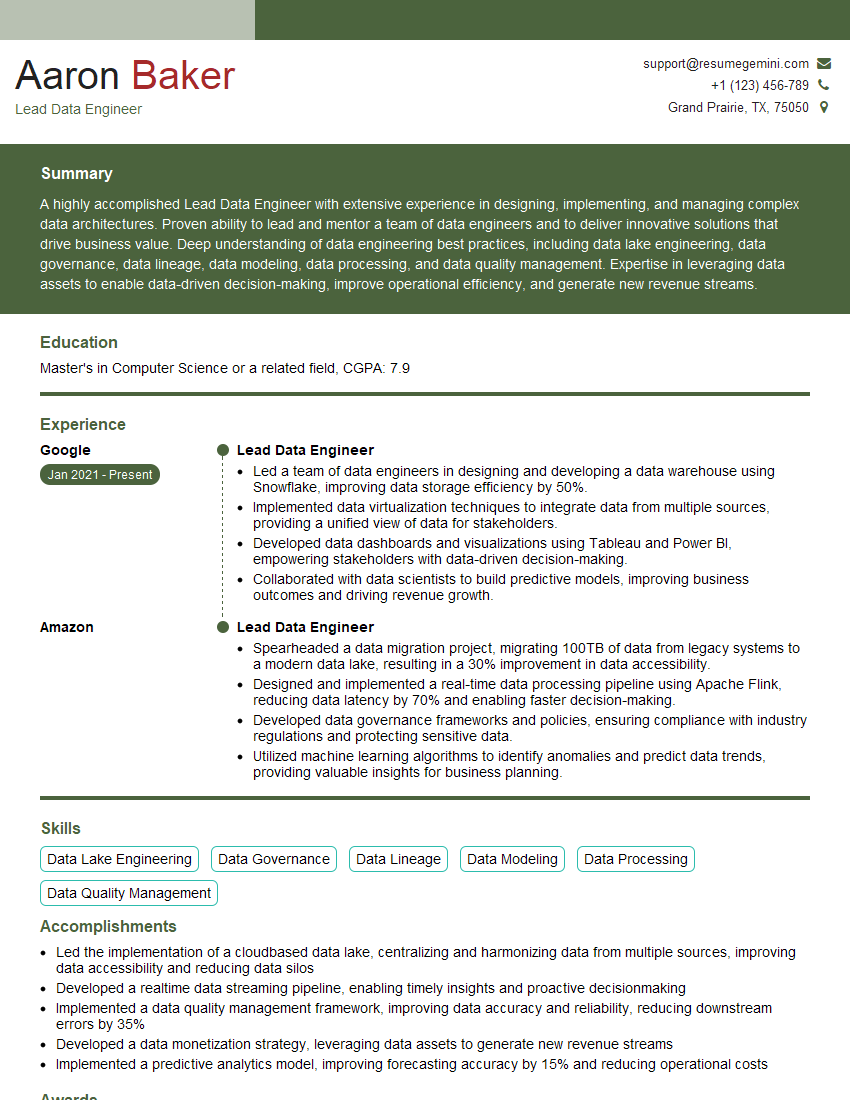
Lead Data Engineer Resume Sample
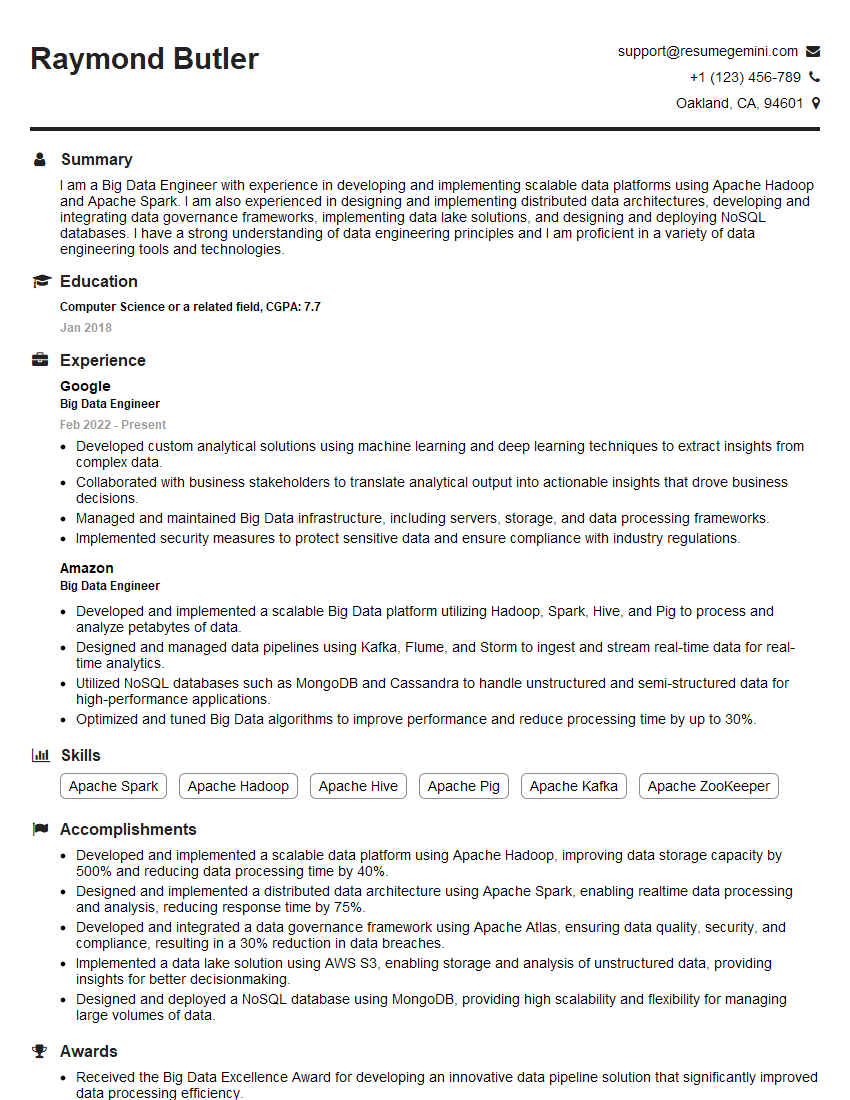
Big Data Engineer Resume Sample
Explore more articles
Users Rating of Our Blogs
Share Your Experience
We value your feedback! Please rate our content and share your thoughts (optional).
What Readers Say About Our Blog
Amazing blog
Interesting Article, I liked the depth of knowledge you’ve shared.
Helpful, thanks for sharing.